Search:the memory band

Styles
All
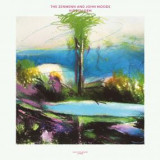
THE ZENMENN AND JOHN MOODS - HIDDEN GEM LP

'Hidden Gem' is the Zenmenn's first full album produced together with songwriter and vocalist John Moods and follows their much-loved debut record, 'Enter The Zenmenn'. Named after a country song that didn't quite make it to the final selection, 'Hidden Gem' is the result of an extended jam session at a friend’s studio, in a field of mystical meadows somewhere south of Hamburg, in which the band would experience a series of inexplicable phenomena.

It was their earlier collaboration on the future classic, 'Homage To A Friend' that kickstarted their idea to team up with John Moods again, and in the late summer of 2021 the band set to work on a full album of material together. Using The Zenmenn's trusted drum kit, good old DX7, an unusual Ukrainian bass and an almost discarded pedal steel guitar, combined with Moods’ uniquely fragile voice, the outcome resulted in six timeless songs. The resulting harmonic sound is, as the band put it, “something like Adult Oriented Rock with a teaspoon of Celtic sentimentalism, a pinch of big city Country wrapped in a late night '70s style jam”.

'Hidden Gem’, much like their previous LP, was recorded without pre-arranged songs or any fixed musical concept. Instead, it captures fleeting moments of creativity and reflects the joint musical sentiments of the band members at the time. “Some artists are amazing at vision and curating, our work-flow is opposite to that. We are pretty messy and all over the place in our creation, as in life. It has its advantages and disadvantages, but hopefully it comes out all right in the end.”

out of Stock

Order now and we will order the item for you at our supplier.

Last In: 3 months ago
18,45
Jamie Lenman - The Atheist

After a rollercoaster two years promoting his last offering King Of Clubs in the middle of a global pandemic, alt-rock legend Jamie Lenman returns with the most intimate, most ambitious and most accessible album of his career. Recorded at The Chapel studios in Chichester over January and February this year with producer Mark Roberts, The Atheist is eleven tracks of guitar driven indie-pop, each laden with enough hooks to catch Moby Dick. With themes ranging from toxic friendships to socio economics to the religious topics inherent in the title, Lenman eschews the aggressive approach of previous records for a more melodic mood. “I’ve had a few of these songs kicking around for years, just waiting for the right album,” says Lenman. “Some of them were written for my first solo project Muscle Memory, some of them were even written whilst I was still in my band, but they were all too pretty. After twenty years of hard edges, particularly the ugly overtones of my last record, it was a relief to mellow out and just revel in the pure joyfulness of the thing.” From the huge earworm of Talk Hard to the stadium-sized chorus of Lena (Don’t Leave Me), the sheer catchiness of the material is undeniable, and was proven when Lenman took his new-look three-piece band to this year’s Download and played a set of entirely unheard tracks. The capacity crowd erupted into spontaneous sing-alongs despite never having heard a single note before, resulting in one of the surprise highlights of the weekend. Combined with dazzling artwork from renowned Washington Post/Wall St Journal illustrator Michael Parkin, Lenman will be unleashing his new softer side on an eager public later this year, alongside a string of live shows and the third iteration of his own mini-festival, Lenmania.

pre-order now25.11.2022

expected to be published on 25.11.2022

24,50
Darren Hayman - You Will Not Die

2LP black vinyl in a gatefold sleeve, polylined inners and download code. 2 x CD in 6 panel digifile sleeve.
When Darren Hayman made his debut in 1997 with the acclaimed indie band Hefner his lyrical remit was the broken hearted. His early songs told the story of the lonesome and lost, and broken dreams of love on the back streets of London. After Hefner, Hayman’s palette grew to include a unique take on place and memory. In the early 2000s he wrote a trilogy of albums around the history of Essex. In 2012 he made an instrumental album describing the tranquillity of Lidos. In 2016 Darren was awarded ‘Hardest Working Musician’ by the Association of Independent Music for his epic project on Thankful Villages, the 55 villages that survived the Great War with no casualties. His most recent record, 12 Astronauts, tells the personal story of the only men to have walked on the Moon. Darren is continually obsessed with the idea of what songs can be, and the stories they can tell. As he explains, “With projects like Thankful Villages, I became interested in what a record could be, using field recordings, interviews and songs to make sound collages. I wanted to return to the stricter art of song writing and try and make the twelve best compositions I could. I wanted to make useful songs, words that could be comfort, not just thoughts that would depress.” // "bold and unique" The Sunday Times // "Its delicately observed song cycle unfolds like a novella or short film, with tracks that might seem slight in isloation gaining resonance in situ." Q // “Bugbears is a rich and warming curio, and there’s something quietly noble about Hayman dragging the thoughts of these long-dead writers back into the light.” Mojo // “uniquely intimate and very satisfying” - BBC // “Hayman has hit a creative purple patch… a treat”. Mojo

pre-order now04.11.2022

expected to be published on 04.11.2022

33,57
VARIOUS - INTACT AND SMILING - THE WEIRD & WONDERFUL WORLD OF TAP LP (2x12")

20 years of Tapete Records - Our first release, if memory serves, was in 2002. Damn, time flies so fast when you"re having fun. The world has changed a lot in the last 20 years but one detail has remained the same: We"re still putting out great music. That"s a bit reassuring, isn"t it? So we thought in our Tapete Building at Stahltwiete 10 in Hamburg-Altona: Let"s look back and start a series of good, old-fashioned, fantastic label compilations in the style of "Shadow Facory", "Tamla Motown Is Hot! Hot! Hot!" or "Wanna Buy A Bridge?"...something like that. And so here is "Intact & Smiling - The Weird & Wonderful World Of Tapete Records Vol.1". It wasn"t that easy to choose 28 out of about 5000 released songs, but what"s easy? Therefore a series. "Intact & Smiling Vol. 1" concentrates on the poppy side of Tapete Records, the basic tone is upbeat and uplifting. Can"t hurt these days. The title comes from the John Howard & The Night Mail song which says: "Intact and smiling, an independent soul, nobody"s slave". What could be more fitting? We would like to thank all the great artists who have released music with us over the last two decades, especially the bands and artists who have so kindly and unbureaucratically made available their great songs for this compilation. And of course a big thank you to you who listen to, buy and stream (well, yes) Tapete Records albums and songs. So close your eyes, open your ears, open your hearts, open up a bottle and step into The Weird & Wonderful World Of Tapete Records Vol. 1.

pre-order now28.10.2022

expected to be published on 28.10.2022

27,69
KANSAS SMITTY'S - WE'RE NOT IN KANSAS ANYMORE LP

Giacomo Smith's critically acclaimed outfit Kansas Smitty's embark on a new chapter with a twist on their sound; modern jazz, African rhythms and classic cinema sculpt We're Not In Kansas Anymore. As the title suggests, We're Not In Kansas Anymore is the beginning of a new dawn for Kansas Smitty's. Their fifth studio album marks a progression from their swing led palette, instead pulling inspiration from modern jazz, African rhythms and classic cinema. Kansas Smitty's continues to be the primary outlet for bandleader, alto-saxophonist and clarinetist Giacomo Smith, a musician and producer whose tireless creativity continues to lift his reputation, recently producing albums for both Jamie Cullum and rising star Jas Kayser.

pre-order now21.10.2022

expected to be published on 21.10.2022

21,81
KANSAS SMITTY'S - WE'RE NOT IN KANSAS ANYMORE LP

Giacomo Smith's critically acclaimed outfit Kansas Smitty's embark on a new chapter with a twist on their sound; modern jazz, African rhythms and classic cinema sculpt We're Not In Kansas Anymore. As the title suggests, We're Not In Kansas Anymore is the beginning of a new dawn for Kansas Smitty's. Their fifth studio album marks a progression from their swing led palette, instead pulling inspiration from modern jazz, African rhythms and classic cinema. Kansas Smitty's continues to be the primary outlet for bandleader, alto-saxophonist and clarinetist Giacomo Smith, a musician and producer whose tireless creativity continues to lift his reputation, recently producing albums for both Jamie Cullum and rising star Jas Kayser.

pre-order now21.10.2022

expected to be published on 21.10.2022

23,82
Lee Tracy & Isaac Manning - Is it What You Want

As the sun sets on a quaint East Nashville house, a young man bares a piece of his soul. Facing the camera, sporting a silky suit jacket/shirt/slacks/fingerless gloves ensemble that announces "singer" before he's even opened his mouth, Lee Tracy Johnson settles onto his stage, the front yard. He sways to the dirge-like drum machine pulse of a synth-soaked slow jam, extends his arms as if gaining his balance, and croons in affecting, fragile earnest, "I need your love… oh baby…"

Dogs in the yard next door begin barking. A mysterious cardboard robot figure, beamed in from galaxies unknown and affixed to a tree, is less vocal. Lee doesn't acknowledge either's presence. He's busy feeling it, arms and hands gesticulating. His voice rises in falsetto over the now-quiet dogs, over the ambient noise from the street that seeps into the handheld camcorder's microphone, over the recording of his own voice played back from a boombox off-camera. After six minutes the single, continuous shot ends. In this intimate creative universe there are no re-takes. There are many more music videos to shoot, and as Lee later puts it, "The first time you do it is actually the best. Because you can never get that again. You expressing yourself from within."

"I Need Your Love" dates from a lost heyday. From some time in the '80s or early '90s, when Lee Tracy (as he was known in performance) and his music partner/producer/manager Isaac Manning committed hours upon hours of their sonic and visual ideas to tape. Embracing drum machines and synthesizers – electronics that made their personal futurism palpable – they recorded exclusively at home, live in a room into a simple cassette deck. Soul, funk, electro and new wave informed their songs, yet Lee and Isaac eschewed the confinement of conventional categories and genres, preferring to let experimentation guide them.

"Anytime somebody put out a new record they had the same instruments or the same sound," explains Isaac. "So I basically wanted to find something that's really gonna stand out away from all of the rest of 'em." Their ethos meant that every idea they came up with was at least worth trying: echoed out half-rapped exhortations over frantic techno-style beats, gospel synth soul, modal electro-funk, oddball pop reinterpretations, emo AOR balladry, nods to Prince and the Fat Boys, or arrangements that might collapse mid-song into a mess of arcade game-ish blips before rallying to reach the finish line. All of it conjoined by consistent tape hiss, and most vitally, Lee's chameleonic voice, which managed to wildly shape shift and still evoke something sincere – whether toggling between falsetto and tenor exalting Jesus's return, or punctuating a melismatic romantic adlib with a succinct, "We all know how it feels to be alone."

"People think we went to a studio," says Isaac derisively. "We never went to no studio. We didn't have the money to go to no studio! We did this stuff at home. I shot videos in my front yard with whatever we could to get things together." Sometimes Isaac would just put on an instrumental record, be it "Planet Rock" or "Don't Cry For Me Argentina" (from Evita), press "record," and let Lee improvise over it, yielding peculiar love songs, would-be patriotic anthems, or Elvis Presley or Marilyn Monroe tributes. Technical limitations and a lack of professional polish never dissuaded them. They believed they were onto something.

"That struggle," Isaac says, "made that sound sound good to me."

In the parlance of modern music criticism Lee and Isaac's dizzying DIY efforts would inevitably be described as "outsider." But "outsider" carries the burden of untold additional layers of meaning if you're Black and from the South, creating on a budget, and trying to get someone, anyone within the country music capital of the world to take your vision seriously. "What category should we put it in?" Isaac asks rhetorically. "I don't know. All I know is feeling. I ain't gonna name it nothing. It's music. If it grabs your soul and touch your heart that's what it basically is supposed to do."

=

Born in 1963, the baby boy of nine siblings, Lee Tracy spent his earliest years living amidst the shotgun houses on Nashville's south side. "We was poor, man!" he says, recalling the outhouse his family used for a bathroom and the blocks of ice they kept in the kitchen to chill perishables. "But I actually don't think I really realized I was in poverty until I got grown and started thinking about it." Lee's mom worked at the Holiday Inn; his dad did whatever he had to do, from selling fruit from a horse drawn cart to bootlegging. "We didn't have much," Lee continues, "but my mother and my father got us the things we needed, the clothes on our back." By the end of the decade with the city's urban renewal programs razing entire neighborhoods to accommodate construction of the Interstate, the family moved to Edgehill Projects. Lee remembers music and art as a constant source of inspiration for he and his brothers and sisters – especially after seeing the Jackson 5 perform on Ed Sullivan. "As a small child I just knew that was what I wanted to do."

His older brother Don began musically mentoring him, introducing Lee to a variety of instruments and sounds. "He would never play one particular type of music, like R&B," says Lee. "I was surrounded by jazz, hard rock and roll, easy listening, gospel, reggae, country music; I mean I was a sponge absorbing all of that." Lee taught himself to play drums by beating on cardboard boxes, gaining a rep around the way for his timekeeping, and his singing voice. Emulating his favorites, Earth Wind & Fire and Cameo, he formed groups with other kids with era-evocative band names like Concept and TNT Connection, and emerged as the leader of disciplined rehearsals. "I made them practice," says Lee. "We practiced and practiced and practiced. Because I wanted that perfection." By high school the most accomplished of these bands would take top prize in a prominent local talent show. It was a big moment for Lee, and he felt ready to take things to the next level. But his band-mates had other ideas.

"I don't know what happened," he says, still miffed at the memory. "It must have blew they mind after we won and people started showing notice, because it's like everybody quit! I was like, where the hell did everybody go?" Lee had always made a point of interrogating prospective musicians about their intentions before joining his groups: were they really serious or just looking for a way to pick up girls? Now he understood even more the importance of finding a collaborator just as committed to the music as he was.

=

Isaac Manning had spent much of his life immersed in music and the arts – singing in the church choir with his family on Nashville's north side, writing, painting, dancing, and working various gigs within the entertainment industry. After serving in the armed forces, in the early '70s he ran The Teenage Place, a music and performance venue that catered to the local youth. But he was forced out of town when word of one of his recreational routines created a stir beyond the safe haven of his bohemian circles.

"I was growing marijuana," Isaac explains. "It wasn't no business, I was smoking it myself… I would put marijuana in scrambled eggs, cornbread and stuff." His weed use originated as a form of self-medication to combat severe tooth pain. But when he began sharing it with some of the other young people he hung out with, some of who just so happened to be the kids of Nashville politicians, the cops came calling. "When I got busted," he remembers, "they were talking about how they were gonna get rid of me because they didn't want me saying nothing about they children because of the politics and stuff. So I got my family, took two raggedy cars, and left Nashville and went to Vegas."

Out in the desert, Isaac happened to meet Chubby Checker of "The Twist" fame while the singer was gigging at The Flamingo. Impressed by Isaac's zeal, Checker invited him to go on the road with him as his tour manager/roadie/valet. The experience gave Isaac a window into a part of the entertainment world he'd never encountered – a glimpse of what a true pop act's audience looked like. "Chubby Checker, none of his shows were played for Black folks," he remembers. "All his gigs were done at high-class white people areas." Returning home after a few years with Chubby, Isaac was properly motivated to make it in Music City. He began writing songs and scouting around Nashville for local talent anywhere he could find it with an expressed goal: "Find someone who can deliver your songs the way you want 'em delivered and make people feel what you want them to feel."

One day while walking through Edgehill Projects Isaac heard someone playing the drums in a way that made him stop and take notice. "The music was so tight, just the drums made me feel like, oh I'm-a find this person," he recalls. "So I circled through the projects until I found who it was.

"That's how I met him – Lee Tracy. When I found him and he started singing and stuff, I said, ohhh, this is somebody different."

=

Theirs was a true complementary partnership: young Lee possessed the raw talent, the older Isaac the belief. "He's really the only one besides my brother and my family that really seen the potential in me," says Lee. "He made me see that I could do it."

Isaac long being a night owl, his house also made for a fertile collaborative environment – a space where there always seemed to be a new piece of his visual art on display: paintings, illustrations, and dolls and figures (including an enigmatic cardboard robot). Lee and Issac would hang out together and talk, listen to music, conjure ideas, and smoke the herb Isaac had resumed growing in his yard. "It got to where I could trust him, he could trust me," Isaac says of their bond. They also worked together for hours on drawings, spreading larges rolls of paper on the walls and sketching faces with abstract patterns and imagery: alien-like beings, tri-horned horse heads, inverted Janus-like characters where one visage blurred into the other.

Soon it became apparent that they didn't need other collaborators; self-sufficiency was the natural way forward. At Isaac's behest Lee, already fed up with dealing with band musicians, began playing around with a poly-sonic Yamaha keyboard at the local music store. "It had everything on it – trumpet, bass, drums, organ," remembers Lee. "And that's when I started recording my own stuff."

The technology afforded Lee the flexibility and independence he craved, setting him on a path other bedroom musicians and producers around the world were simultaneously following through the '80s into the early '90s. Saving up money from day jobs, he eventually supplemented the Yamaha Isaac had gotten him with Roland and Casio drum machines and a Moog. Lee was living in an apartment in Hillside at that point caring for his dad, who'd been partially paralyzed since early in life. In the evenings up in his second floor room, the music put him in a zone where he could tune out everything and lose himself in his ideas.

"Oh I loved it," he recalls. "I would really experiment with the instruments and use a lot of different sound effects. I was looking for something nobody else had. I wanted something totally different. And once I found the sound I was looking for, I would just smoke me a good joint and just let it go, hit the record button." More potent a creative stimulant than even Isaac's weed was the holistic flow and spontaneity of recording. Between sessions at Isaac's place and Lee's apartment, their volume of output quickly ballooned.

"We was always recording," says Lee. "That's why we have so much music. Even when I went to Isaac's and we start creating, I get home, my mind is racing, I gotta start creating, creating, creating. I remember there were times when I took a 90-minute tape from front to back and just filled it up."

"We never practiced," says Isaac. "See, that was just so odd about the whole thing. I could relate to him, and tell him about the songs I had ideas for and everything and stuff. And then he would bring it back or whatever, and we'd get together and put it down." Once the taskmaster hell bent on rehearsing, Lee had flipped a full 180. Perfection was no longer an aspiration, but the enemy of inspiration.

"I seen where practicing and practicing got me," says Lee. "A lot of musicians you get to playing and they gotta stop, they have to analyze the music. But while you analyzing you losing a lot of the greatness of what you creating. Stop analyzing what you play, just play! And it'll all take shape."

=

"I hope you understood the beginning of the record because this was invented from a dream I had today… (You tell me, I'll tell you, we'll figure it out together)" – Lee Tracy and Isaac Manning, "Hope You Understand"

Lee lets loose a maniacal cackle when he acknowledges that the material that he and Isaac recorded was by anyone's estimation pretty out there. It's the same laugh that commences "Hope You Understand" – a chaotic transmission that encapsulates the duality at the heart of their music: a stated desire to reach people and a compulsion to go as leftfield as they saw fit.

"We just did it," says Lee. "We cut the music on and cut loose. I don't sit around and write. I do it by listening, get a feeling, play the music, and the lyrics and stuff just come out of me."

The approach proved adaptable to interpreting other artists' material. While recording a cover of Whitney Houston's pop ballad "Saving All My Love For You," Lee played Whitney's version in his headphones as he laid down his own vocals – partially following the lyrics, partially using them as a departure point. The end result is barely recognizable compared with the original, Lee and Isaac having switched up the time signature and reinvented the melody along the way towards morphing a slick mainstream radio standard into something that sounds solely their own.

"I really used that song to get me started," says Lee. "Then I said, well I need something else, something is missing. Something just came over me. That's when I came up with 'Is It What You Want.'"

The song would become the centerpiece of Lee and Isaac's repertoire. Pushed along by a percolating metronomic Rhythm King style beat somewhere between a military march and a samba, "Is It What You Want" finds Lee pleading the sincerity of his commitment to a potential love interest embellished by vocal tics and hiccups subtlely reminiscent of his childhood hero MJ. Absent chord changes, only synth riffs gliding in and out like apparitions, the song achieves a lingering lo-fi power that leaves you feeling like it's still playing, somewhere, even after the fade out.

"I don't know, it's like a real spiritual song," Lee reflects. "But it's not just spiritual. To me the more I listen to it it's like about everything that you do in your everyday life, period. Is it what you want? Do you want a car or you don't want a car? Do you want Jesus or do you want the Devil? It's basically asking you the question. Can't nobody answer the question but you yourself."

In 1989 Lee won a lawsuit stemming from injuries sustained from a fight he'd gotten into. He took part of the settlement money and with Isaac pressed up "Saving All My Love For You" b/w "Is It What You Want" as a 45 single. Isaac christened the label One Chance Records. "Because that's all we wanted," he says with a laugh, "one chance."

Isaac sent the record out to radio stations and major labels, hoping for it to make enough noise to get picked up nationally. But the response he and Lee were hoping for never materialized. According to Isaac the closest the single got to getting played on the radio is when a disk jock from a local station made a highly unusual announcement on air: "The dude said on the radio, 107.5 – 'We are not gonna play 'Is It What You Want.' We cracked up! Wow, that's deep.

"It was a whole racist thing that was going on," he reflects. "So we just looked over and kept on going. That was it. That was about the way it goes… If you were Black and you were living in Nashville and stuff, that's the way you got treated." Isaac already knew as much from all the times he'd brought he and Lee's tapes (even their cache of country music tunes) over to Music Row to try to drum up interest to no avail.

"Isaac, he really worked his ass off," says Lee. "He probably been to every record place down on Music Row." Nashville's famed recording and music business corridor wasn't but a few blocks from where Lee grew up. Close enough, he remembers, for him to ride his bike along its back alleys and stumble upon the occasional random treasure, like a discarded box of harmonicas. Getting in through the front door, however, still felt a world away.

"I just don't think at the time our music fell into a category for them," he concedes. "It was before its time."

=

Lee stopped making music some time in the latter part of the '90s, around the time his mom passed away and life became increasingly tough to manage. "When my mother died I had a nervous breakdown," he says, "So I shut down for a long time. I was in such a sadness frame of mind. That's why nobody seen me. I had just disappeared off the map." He fell out of touch with Isaac, and in an indication of just how bad things had gotten for him, lost track of all the recordings they'd made together. Music became a distant memory.

Fortunately, Isaac kept the faith. In a self-published collection of his poetry – paeans to some of his favorite entertainment and public figures entitled Friends and Dick Clark – he'd written that he believed "music has a life of its own." But his prescience and presence of mind were truly manifested in the fact that he kept an archive of he and Lee's work. As perfectly imperfect as "Is It What You Want" now sounds in a post-Personal Space world, Lee and Isaac's lone official release was in fact just a taste. The bulk of the Is It What You Want album is culled from the pair's essentially unheard home recordings – complete songs, half-realized experiments, Isaac's blue monologues and pronouncements et al – compiled, mixed and programmed in the loose and impulsive creative spirit of their regular get-togethers from decades ago. The rest of us, it seems, may have finally caught up to them.

On the prospect of at long last reaching a wider audience, Isaac says simply, "I been trying for a long time, it feels good." Ever the survivor, he adds, "The only way I know how to make it to the top is to keep climbing. If one leg break on the ladder, hey, you gotta fix it and keep on going… That's where I be at. I'll kill death to make it out there."

For Lee it all feels akin to a personal resurrection: "It's like I was in a tomb and the tomb was opened and I'm back… Man, it feels so great. I feel like I'm gonna jump out of my skin." Success at this stage of his life, he realizes, probably means something different than what it did back when he was singing and dancing in Isaac's front yard. "What I really mean by 'making it,'" he explains isn't just the music being heard but, "the story being told."

Occasionally Lee will pull up "Is It What You Want" on YouTube on his phone, put on his headphones, and listen. He remembers the first time he heard his recorded voice. How surreal it was, how he thought to himself, "Is that really me?" What would he say to that younger version of himself now?

"I would probably tell myself, hang in there, don't give up. Keep striving for the goal. And everything will work out."

Despite what's printed on the record label, sometimes you do get more than one chance.
out of Stock

Order now and we will order the item for you at our supplier.

Last In: 3 years ago
11,72
Ara Pacis - Ara Pacis To the Westcoast / My Fate (Revisited)  7"

With "To the Westcoast / My Fate (Revisited)" by Ara Pacis we are proud to officially release two of the most exciting AOR tracks hailing from Germany.

Ara Pacis, a group from the island Föhr in the North Sea, was originally founded in 1971. Initially influenced by blues and classic rock by The Rolling Stones, The Who, and the like, they were also inspired by bands such as Steely Dan as well as the German/British group Lake. However, Ara Pacis created a style of their own when their privately pressed and self-distributed "To the Westcoast" LP was released in 1979. The songs were mainly characterized by two-part guitar riffs by Töns Brautlecht-Deppe and Wolfgang Schiffner, who also were the core songwriters of the band.

The freshly remastered single starts with the title track "To the Westcoast". Due to its sunny and yacht-y vibe it is easily amongst the best and most authentic tunes out of the "Westcoast rock" genre recorded in Germany. With family connections in California, lead singer Töns Brautlecht-Deppe was able to create and capture the feeling of the Pacific sea shore just perfectly.

The single is backed with a revised studio version of "My Fate". Here, lead singer Töns Brautlecht tells his story about getting into playing guitar as a young boy. The track is also featured on the album but the version we present on the 7" vinyl is an unreleased, even quite funky and more powerful take. It was recorded in 1981 at the Rüssl studio in Hamburg where Brautlecht had just started to work as an engineer.

As the "To the Westcoast" LP was released during a time when styles like New Wave, Synth Pop and Punk became popular in Germany and the interest in organic and soulful rock declined, Ara Pacis' debut remained relatively unnoticed until today and even the Krautrock collector's scene does not seem to be fully aware of this hard to find gem yet of which only 1000 copies were originally pressed. The band is still kept in good memory by their fans as a quite legendary live act and although they officially split in 1982, the group still served their fan base with revival concerts in 1990 and 2002 plus a website with full band story and lots of images from the early days.

We hope this single sheds new light on this great band. It is limited to 350 copies and released in a beautiful picture sleeve which shows the original LP artwork.

out of Stock

Order now and we will order the item for you at our supplier.

Last In: 3 years ago
12,23
October Drift - I Don't Belong Anywhere LP

October Drift embark on their second album campaign after the acclaimed ‘Forever Whatever’ LP and ‘Naked’ EP in 2020. Their most successful single to date ‘Airborne Panic Attack’ was released late 2021. I Don’t Belong Anywhere, is a taut, visceral record, a step forward for the band into an even more powerful, brutal sound following their highly acclaimed debut album forever Whatever 2018. Far less introspective than their debut, I Don’t Belong Anywhere is October Drift’s totem for bringing all of us together again. “A feeling of not belonging is something everyone feels or has felt,” explains Kiran. I Don’t Belong Anywhere features previously released singles including dark grungy‘Insects’, “a coming-of-age song, about feeling life pull you in different directions”, and the biting reflection on the harsh backdrop of 21st Century living airborne Panic Attack’. The album is about connection and one that’s truly from the heart, rich with added layers of meaning it finds the band poised to explode across 2022 with their most thoughtful and exciting record yet.

pre-order now14.10.2022

expected to be published on 14.10.2022

23,49
Heart To Gold - Tom

Heart To Gold

Tom

12inchMM28LPC2
Memory Music
14.10.2022
  • A1: Gimme A Call
  • A2: Overwhelmed
  • A3: Respect
  • A4: Sonic
  • A5: Tigers Jaw
  • B1: Wave
  • B2: Capo
  • B3: Moon River Rock
  • B4: Miserable
  • B5: Mary

Heart to Gold is a band from Minneapolis, Minnesota. To be even more specific, they’re three guys from Fridley and Columbia Heights, two towns on the north end of the Twin Cities. These facts are important: the three members of Heart to Gold share an intimate and reciprocal relationship with their hometowns. They celebrate and support one another.

The band’s upcoming second full-length record, Tom, is a swaggering, scrappy punk rock love letter to their hometowns and all the glory, pain, conflict, and reward that come from being of a place and a community and seeing both through, even to bittersweet ends. (Plus, it’s got an I Think You Should Leave reference.) It’s named for and dedicated to their best bud, Thomas Vescio, though his is not the mug leering goofily on the record’s cover. “That’s our bass player Sidian Johnson,” says singer and guitarist Grant Whiteoak. It’s an intentional feint: “It’s kinda silly, we knew people would think, ‘Oh, that must be Tom.’ Nope.”

pre-order now14.10.2022

expected to be published on 14.10.2022

24,50
MICHAEL BEACH - 2022 EP

Michael Beach

2022 EP

12inch185GONE
Goner Records
30.09.2022

Following the highly acclaimed album Dream Violence
(2021) and the recent LP re-issue of his modern underground
classic Gravity/ Repulsion, Michael Beach has announced
a new self-titled 12-inch EP, to be released via Goner and
Poison City Records.
Recorded during the winter of 2021, the new record is
made up of both 8-track tape and full studio recordings,
interspersed with experimental, moody interludes, and
features Beach’s Australian bandmates Bonnie Mercer
(guitar), Peter Warden (drums) and Carla Oliver (bass)
throughout. The EP’s stunning closer “Only A Memory”
is a collaboration with Lloyd Swanton of renowned
Australian minimalist trio The Necks, recorded in NSW’s
Blue Mountains.
“Out In A Burning Alley,” the EP’s lead single, combines
Beach’s soulful abstracted lyrics over two minutes and fifty
eight seconds of blazing garage-rock, where the sounds
of the Melbourne and Oakland / Bay Area underground
collide.
In support of the upcoming EP and recent Dream
Violence album, Beach will be returning to tour the US in
September/ October, headlining dates on the East and West
coast and performing at the iconic Gonerfest in Memphis,
TN. The touring outfit will also feature Beach’s long time
collaborator Utrillo Kushner (Comets On Fire / Personal
and The Pizzas) on drums.

pre-order now30.09.2022

expected to be published on 30.09.2022

26,85
Lee Tracy & Isaac Manning - Is it What You Want LP

As the sun sets on a quaint East Nashville house, a young man bares a piece of his soul. Facing the camera, sporting a silky suit jacket/shirt/slacks/fingerless gloves ensemble that announces "singer" before he's even opened his mouth, Lee Tracy Johnson settles onto his stage, the front yard. He sways to the dirge-like drum machine pulse of a synth-soaked slow jam, extends his arms as if gaining his balance, and croons in affecting, fragile earnest, "I need your love… oh baby…"

Dogs in the yard next door begin barking. A mysterious cardboard robot figure, beamed in from galaxies unknown and affixed to a tree, is less vocal. Lee doesn't acknowledge either's presence. He's busy feeling it, arms and hands gesticulating. His voice rises in falsetto over the now-quiet dogs, over the ambient noise from the street that seeps into the handheld camcorder's microphone, over the recording of his own voice played back from a boombox off-camera. After six minutes the single, continuous shot ends. In this intimate creative universe there are no re-takes. There are many more music videos to shoot, and as Lee later puts it, "The first time you do it is actually the best. Because you can never get that again. You expressing yourself from within."

"I Need Your Love" dates from a lost heyday. From some time in the '80s or early '90s, when Lee Tracy (as he was known in performance) and his music partner/producer/manager Isaac Manning committed hours upon hours of their sonic and visual ideas to tape. Embracing drum machines and synthesizers – electronics that made their personal futurism palpable – they recorded exclusively at home, live in a room into a simple cassette deck. Soul, funk, electro and new wave informed their songs, yet Lee and Isaac eschewed the confinement of conventional categories and genres, preferring to let experimentation guide them.

"Anytime somebody put out a new record they had the same instruments or the same sound," explains Isaac. "So I basically wanted to find something that's really gonna stand out away from all of the rest of 'em." Their ethos meant that every idea they came up with was at least worth trying: echoed out half-rapped exhortations over frantic techno-style beats, gospel synth soul, modal electro-funk, oddball pop reinterpretations, emo AOR balladry, nods to Prince and the Fat Boys, or arrangements that might collapse mid-song into a mess of arcade game-ish blips before rallying to reach the finish line. All of it conjoined by consistent tape hiss, and most vitally, Lee's chameleonic voice, which managed to wildly shape shift and still evoke something sincere – whether toggling between falsetto and tenor exalting Jesus's return, or punctuating a melismatic romantic adlib with a succinct, "We all know how it feels to be alone."

"People think we went to a studio," says Isaac derisively. "We never went to no studio. We didn't have the money to go to no studio! We did this stuff at home. I shot videos in my front yard with whatever we could to get things together." Sometimes Isaac would just put on an instrumental record, be it "Planet Rock" or "Don't Cry For Me Argentina" (from Evita), press "record," and let Lee improvise over it, yielding peculiar love songs, would-be patriotic anthems, or Elvis Presley or Marilyn Monroe tributes. Technical limitations and a lack of professional polish never dissuaded them. They believed they were onto something.

"That struggle," Isaac says, "made that sound sound good to me."

In the parlance of modern music criticism Lee and Isaac's dizzying DIY efforts would inevitably be described as "outsider." But "outsider" carries the burden of untold additional layers of meaning if you're Black and from the South, creating on a budget, and trying to get someone, anyone within the country music capital of the world to take your vision seriously. "What category should we put it in?" Isaac asks rhetorically. "I don't know. All I know is feeling. I ain't gonna name it nothing. It's music. If it grabs your soul and touch your heart that's what it basically is supposed to do."

=

Born in 1963, the baby boy of nine siblings, Lee Tracy spent his earliest years living amidst the shotgun houses on Nashville's south side. "We was poor, man!" he says, recalling the outhouse his family used for a bathroom and the blocks of ice they kept in the kitchen to chill perishables. "But I actually don't think I really realized I was in poverty until I got grown and started thinking about it." Lee's mom worked at the Holiday Inn; his dad did whatever he had to do, from selling fruit from a horse drawn cart to bootlegging. "We didn't have much," Lee continues, "but my mother and my father got us the things we needed, the clothes on our back." By the end of the decade with the city's urban renewal programs razing entire neighborhoods to accommodate construction of the Interstate, the family moved to Edgehill Projects. Lee remembers music and art as a constant source of inspiration for he and his brothers and sisters – especially after seeing the Jackson 5 perform on Ed Sullivan. "As a small child I just knew that was what I wanted to do."

His older brother Don began musically mentoring him, introducing Lee to a variety of instruments and sounds. "He would never play one particular type of music, like R&B," says Lee. "I was surrounded by jazz, hard rock and roll, easy listening, gospel, reggae, country music; I mean I was a sponge absorbing all of that." Lee taught himself to play drums by beating on cardboard boxes, gaining a rep around the way for his timekeeping, and his singing voice. Emulating his favorites, Earth Wind & Fire and Cameo, he formed groups with other kids with era-evocative band names like Concept and TNT Connection, and emerged as the leader of disciplined rehearsals. "I made them practice," says Lee. "We practiced and practiced and practiced. Because I wanted that perfection." By high school the most accomplished of these bands would take top prize in a prominent local talent show. It was a big moment for Lee, and he felt ready to take things to the next level. But his band-mates had other ideas.

"I don't know what happened," he says, still miffed at the memory. "It must have blew they mind after we won and people started showing notice, because it's like everybody quit! I was like, where the hell did everybody go?" Lee had always made a point of interrogating prospective musicians about their intentions before joining his groups: were they really serious or just looking for a way to pick up girls? Now he understood even more the importance of finding a collaborator just as committed to the music as he was.

=

Isaac Manning had spent much of his life immersed in music and the arts – singing in the church choir with his family on Nashville's north side, writing, painting, dancing, and working various gigs within the entertainment industry. After serving in the armed forces, in the early '70s he ran The Teenage Place, a music and performance venue that catered to the local youth. But he was forced out of town when word of one of his recreational routines created a stir beyond the safe haven of his bohemian circles.

"I was growing marijuana," Isaac explains. "It wasn't no business, I was smoking it myself… I would put marijuana in scrambled eggs, cornbread and stuff." His weed use originated as a form of self-medication to combat severe tooth pain. But when he began sharing it with some of the other young people he hung out with, some of who just so happened to be the kids of Nashville politicians, the cops came calling. "When I got busted," he remembers, "they were talking about how they were gonna get rid of me because they didn't want me saying nothing about they children because of the politics and stuff. So I got my family, took two raggedy cars, and left Nashville and went to Vegas."

Out in the desert, Isaac happened to meet Chubby Checker of "The Twist" fame while the singer was gigging at The Flamingo. Impressed by Isaac's zeal, Checker invited him to go on the road with him as his tour manager/roadie/valet. The experience gave Isaac a window into a part of the entertainment world he'd never encountered – a glimpse of what a true pop act's audience looked like. "Chubby Checker, none of his shows were played for Black folks," he remembers. "All his gigs were done at high-class white people areas." Returning home after a few years with Chubby, Isaac was properly motivated to make it in Music City. He began writing songs and scouting around Nashville for local talent anywhere he could find it with an expressed goal: "Find someone who can deliver your songs the way you want 'em delivered and make people feel what you want them to feel."

One day while walking through Edgehill Projects Isaac heard someone playing the drums in a way that made him stop and take notice. "The music was so tight, just the drums made me feel like, oh I'm-a find this person," he recalls. "So I circled through the projects until I found who it was.

"That's how I met him – Lee Tracy. When I found him and he started singing and stuff, I said, ohhh, this is somebody different."

=

Theirs was a true complementary partnership: young Lee possessed the raw talent, the older Isaac the belief. "He's really the only one besides my brother and my family that really seen the potential in me," says Lee. "He made me see that I could do it."

Isaac long being a night owl, his house also made for a fertile collaborative environment – a space where there always seemed to be a new piece of his visual art on display: paintings, illustrations, and dolls and figures (including an enigmatic cardboard robot). Lee and Issac would hang out together and talk, listen to music, conjure ideas, and smoke the herb Isaac had resumed growing in his yard. "It got to where I could trust him, he could trust me," Isaac says of their bond. They also worked together for hours on drawings, spreading larges rolls of paper on the walls and sketching faces with abstract patterns and imagery: alien-like beings, tri-horned horse heads, inverted Janus-like characters where one visage blurred into the other.

Soon it became apparent that they didn't need other collaborators; self-sufficiency was the natural way forward. At Isaac's behest Lee, already fed up with dealing with band musicians, began playing around with a poly-sonic Yamaha keyboard at the local music store. "It had everything on it – trumpet, bass, drums, organ," remembers Lee. "And that's when I started recording my own stuff."

The technology afforded Lee the flexibility and independence he craved, setting him on a path other bedroom musicians and producers around the world were simultaneously following through the '80s into the early '90s. Saving up money from day jobs, he eventually supplemented the Yamaha Isaac had gotten him with Roland and Casio drum machines and a Moog. Lee was living in an apartment in Hillside at that point caring for his dad, who'd been partially paralyzed since early in life. In the evenings up in his second floor room, the music put him in a zone where he could tune out everything and lose himself in his ideas.

"Oh I loved it," he recalls. "I would really experiment with the instruments and use a lot of different sound effects. I was looking for something nobody else had. I wanted something totally different. And once I found the sound I was looking for, I would just smoke me a good joint and just let it go, hit the record button." More potent a creative stimulant than even Isaac's weed was the holistic flow and spontaneity of recording. Between sessions at Isaac's place and Lee's apartment, their volume of output quickly ballooned.

"We was always recording," says Lee. "That's why we have so much music. Even when I went to Isaac's and we start creating, I get home, my mind is racing, I gotta start creating, creating, creating. I remember there were times when I took a 90-minute tape from front to back and just filled it up."

"We never practiced," says Isaac. "See, that was just so odd about the whole thing. I could relate to him, and tell him about the songs I had ideas for and everything and stuff. And then he would bring it back or whatever, and we'd get together and put it down." Once the taskmaster hell bent on rehearsing, Lee had flipped a full 180. Perfection was no longer an aspiration, but the enemy of inspiration.

"I seen where practicing and practicing got me," says Lee. "A lot of musicians you get to playing and they gotta stop, they have to analyze the music. But while you analyzing you losing a lot of the greatness of what you creating. Stop analyzing what you play, just play! And it'll all take shape."

=

"I hope you understood the beginning of the record because this was invented from a dream I had today… (You tell me, I'll tell you, we'll figure it out together)" – Lee Tracy and Isaac Manning, "Hope You Understand"

Lee lets loose a maniacal cackle when he acknowledges that the material that he and Isaac recorded was by anyone's estimation pretty out there. It's the same laugh that commences "Hope You Understand" – a chaotic transmission that encapsulates the duality at the heart of their music: a stated desire to reach people and a compulsion to go as leftfield as they saw fit.

"We just did it," says Lee. "We cut the music on and cut loose. I don't sit around and write. I do it by listening, get a feeling, play the music, and the lyrics and stuff just come out of me."

The approach proved adaptable to interpreting other artists' material. While recording a cover of Whitney Houston's pop ballad "Saving All My Love For You," Lee played Whitney's version in his headphones as he laid down his own vocals – partially following the lyrics, partially using them as a departure point. The end result is barely recognizable compared with the original, Lee and Isaac having switched up the time signature and reinvented the melody along the way towards morphing a slick mainstream radio standard into something that sounds solely their own.

"I really used that song to get me started," says Lee. "Then I said, well I need something else, something is missing. Something just came over me. That's when I came up with 'Is It What You Want.'"

The song would become the centerpiece of Lee and Isaac's repertoire. Pushed along by a percolating metronomic Rhythm King style beat somewhere between a military march and a samba, "Is It What You Want" finds Lee pleading the sincerity of his commitment to a potential love interest embellished by vocal tics and hiccups subtlely reminiscent of his childhood hero MJ. Absent chord changes, only synth riffs gliding in and out like apparitions, the song achieves a lingering lo-fi power that leaves you feeling like it's still playing, somewhere, even after the fade out.

"I don't know, it's like a real spiritual song," Lee reflects. "But it's not just spiritual. To me the more I listen to it it's like about everything that you do in your everyday life, period. Is it what you want? Do you want a car or you don't want a car? Do you want Jesus or do you want the Devil? It's basically asking you the question. Can't nobody answer the question but you yourself."

In 1989 Lee won a lawsuit stemming from injuries sustained from a fight he'd gotten into. He took part of the settlement money and with Isaac pressed up "Saving All My Love For You" b/w "Is It What You Want" as a 45 single. Isaac christened the label One Chance Records. "Because that's all we wanted," he says with a laugh, "one chance."

Isaac sent the record out to radio stations and major labels, hoping for it to make enough noise to get picked up nationally. But the response he and Lee were hoping for never materialized. According to Isaac the closest the single got to getting played on the radio is when a disk jock from a local station made a highly unusual announcement on air: "The dude said on the radio, 107.5 – 'We are not gonna play 'Is It What You Want.' We cracked up! Wow, that's deep.

"It was a whole racist thing that was going on," he reflects. "So we just looked over and kept on going. That was it. That was about the way it goes… If you were Black and you were living in Nashville and stuff, that's the way you got treated." Isaac already knew as much from all the times he'd brought he and Lee's tapes (even their cache of country music tunes) over to Music Row to try to drum up interest to no avail.

"Isaac, he really worked his ass off," says Lee. "He probably been to every record place down on Music Row." Nashville's famed recording and music business corridor wasn't but a few blocks from where Lee grew up. Close enough, he remembers, for him to ride his bike along its back alleys and stumble upon the occasional random treasure, like a discarded box of harmonicas. Getting in through the front door, however, still felt a world away.

"I just don't think at the time our music fell into a category for them," he concedes. "It was before its time."

=

Lee stopped making music some time in the latter part of the '90s, around the time his mom passed away and life became increasingly tough to manage. "When my mother died I had a nervous breakdown," he says, "So I shut down for a long time. I was in such a sadness frame of mind. That's why nobody seen me. I had just disappeared off the map." He fell out of touch with Isaac, and in an indication of just how bad things had gotten for him, lost track of all the recordings they'd made together. Music became a distant memory.

Fortunately, Isaac kept the faith. In a self-published collection of his poetry – paeans to some of his favorite entertainment and public figures entitled Friends and Dick Clark – he'd written that he believed "music has a life of its own." But his prescience and presence of mind were truly manifested in the fact that he kept an archive of he and Lee's work. As perfectly imperfect as "Is It What You Want" now sounds in a post-Personal Space world, Lee and Isaac's lone official release was in fact just a taste. The bulk of the Is It What You Want album is culled from the pair's essentially unheard home recordings – complete songs, half-realized experiments, Isaac's blue monologues and pronouncements et al – compiled, mixed and programmed in the loose and impulsive creative spirit of their regular get-togethers from decades ago. The rest of us, it seems, may have finally caught up to them.

On the prospect of at long last reaching a wider audience, Isaac says simply, "I been trying for a long time, it feels good." Ever the survivor, he adds, "The only way I know how to make it to the top is to keep climbing. If one leg break on the ladder, hey, you gotta fix it and keep on going… That's where I be at. I'll kill death to make it out there."

For Lee it all feels akin to a personal resurrection: "It's like I was in a tomb and the tomb was opened and I'm back… Man, it feels so great. I feel like I'm gonna jump out of my skin." Success at this stage of his life, he realizes, probably means something different than what it did back when he was singing and dancing in Isaac's front yard. "What I really mean by 'making it,'" he explains isn't just the music being heard but, "the story being told."

Occasionally Lee will pull up "Is It What You Want" on YouTube on his phone, put on his headphones, and listen. He remembers the first time he heard his recorded voice. How surreal it was, how he thought to himself, "Is that really me?" What would he say to that younger version of himself now?

"I would probably tell myself, hang in there, don't give up. Keep striving for the goal. And everything will work out."

Despite what's printed on the record label, sometimes you do get more than one chance.

out of Stock

Order now and we will order the item for you at our supplier.

Last In: 3 years ago
23,49
Billy Childish & The Singing Loins - At the Bridge

In Memory of Chris Broderick of the Singing Loins, who passed away earlier this year. We proudly present a vinyl reissue of this Medway folk classic! A re-issue of one of our favourite early releases and a rather overlooked classic album, a one off collaboration between Billy Childish and legendary Medway folkies The Singing Loins. This was recorded in 1993 when Billy was in Thee Headcoats and The Singing Loins were in their first incarnation. The Singing Loins formed in late 1990, a two piece band playing “Authentic raw folk from the Medway Delta”. They were Chris Broderick on vocals/stick and Chris ‘Arfur’ Allen on guitar. They had recorded two classic albums before this both of which were released on Billy’s own Hangman records. The album features a few Childish classics reworked including ‘You Make Me Die’ and ‘Every Bit Of Me’ as well as 4 tracks written by Billy & The Loins especially for this album. TRACKLISTING 1. The Bitter Cup 2. Pocahontas Was Her Name 3. The Hanged Man's Dance 4. You Make Me Die 5. I Don't Like The Man That I Am 6. The Double Axe 7. At The Bridge 8. Every Bit Of Me 9. Somebody Else 10. The Ferry Man (Zeebrugge) 11. One Day You Die 12. Brimfull of Hate 13. Dragging Through This 14. One More Bottle to Drink

pre-order now23.09.2022

expected to be published on 23.09.2022

20,97
WHITNEY - SPARK LP

Whitney

SPARK LP

12inchSCLP437
Secretly Canadian
16.09.2022

Das neue Album "SPARK" stellt WHITNEY als zeitgemäßes Syndikat des klassischen Pops vor, dessen Dutzend fantasievoller und liebenswerter Tracks bezaubernde Melodien um Dilla-Beats im Paisley-Stil und üppige Electronic-Elemente wickeln. So überraschend es auch klingen mag - "SPARK" ist für WHITNEY weniger eine radikale Neuerfindung als vielmehr eine ehrliche Abrechnung damit, wie es sich anfühlt, wenn man aus der Vergangenheit in die Gegenwart aufbricht, wenn man die nächsten Schritte im Leben und in der Karriere auf einmal und ganz ohne Entschuldigung macht. "SPARK" behält dabei jedoch die Wärme und Leichtigkeit von WHITNEYs früheren Werken bei. Diese Songs glühen mit der Neuheit des Hier und Jetzt. Die Anfänge von "SPARK" gehen auf den Überraschungserfolg von WHITNEYs Debütalbum "Light Upon the Lake" aus dem Jahr 2016 zurück. Die sanft verzerrten Psych-Folk-Träume fanden schneller ein breites Publikum, als die beiden je erwartet hatten. Nach Jahren des ununterbrochenen Tourens fühlten sie sich gezwungen, denselben Sound auch für ihren Zweitling "Forever Turned Around" (2019) zu verwenden. Je weiter die Aufnahmesessions voranschritten, desto mühsamer wurden diese, da Julien und Max daran arbeiteten, Versionen von sich selbst zu sein, die sie nicht mehr waren; um Songs in einer Form zu schreiben, die einfach nicht mehr passte. Es fühlte sich nicht mehr wie ihre Musik an, sondern lediglich wie ein Überbleibsel ihrer anfänglichen Begeisterung. Sie hatten kaum genug Material oder Energie, um fertig zu werden. Max und Julien wussten, dass eine drastische Veränderung notwendig war, aber sie hätten nie gedacht, dass Lockdowns im Zuge der Pandemie dies erleichtern würden. Wochen nachdem Julien nach dem Ende einer jahrelangen Beziehung nach Portland gezogen war, um einen klaren Kopf zu bekommen, folgte ihm Max in der Hoffnung, mit seinem besten Freund und Co-Autor dem langen Winter in Chicago zu entkommen. Vier Tage später wurden die Flüge gestrichen. Anstehende Tourneen wurden abgesagt. In den nächsten 14 Monaten arbeitete die Band mit einem Eifer und einer Entschlossenheit, die an ihre Anfänge erinnerten, bevor der Erfolg die Erwartungen bestimmte. Aufgenommen in Texas mit den Produzenten Brad Cook und John Congleton ist "SPARK" ein inspirierendes Zeugnis für Durchhaltevermögen und Erneuerung geworden, für beste Freunde, die einander genug vertrauen, um sich gegenseitig auf die andere Seite zu tragen.

pre-order now16.09.2022

expected to be published on 16.09.2022

21,22
WHITNEY - SPARK LP

Whitney

SPARK LP

12inchSCLPC1437
Secretly Canadian
16.09.2022

Das neue Album "SPARK" stellt WHITNEY als zeitgemäßes Syndikat des klassischen Pops vor, dessen Dutzend fantasievoller und liebenswerter Tracks bezaubernde Melodien um Dilla-Beats im Paisley-Stil und üppige Electronic-Elemente wickeln. So überraschend es auch klingen mag - "SPARK" ist für WHITNEY weniger eine radikale Neuerfindung als vielmehr eine ehrliche Abrechnung damit, wie es sich anfühlt, wenn man aus der Vergangenheit in die Gegenwart aufbricht, wenn man die nächsten Schritte im Leben und in der Karriere auf einmal und ganz ohne Entschuldigung macht. "SPARK" behält dabei jedoch die Wärme und Leichtigkeit von WHITNEYs früheren Werken bei. Diese Songs glühen mit der Neuheit des Hier und Jetzt. Die Anfänge von "SPARK" gehen auf den Überraschungserfolg von WHITNEYs Debütalbum "Light Upon the Lake" aus dem Jahr 2016 zurück. Die sanft verzerrten Psych-Folk-Träume fanden schneller ein breites Publikum, als die beiden je erwartet hatten. Nach Jahren des ununterbrochenen Tourens fühlten sie sich gezwungen, denselben Sound auch für ihren Zweitling "Forever Turned Around" (2019) zu verwenden. Je weiter die Aufnahmesessions voranschritten, desto mühsamer wurden diese, da Julien und Max daran arbeiteten, Versionen von sich selbst zu sein, die sie nicht mehr waren; um Songs in einer Form zu schreiben, die einfach nicht mehr passte. Es fühlte sich nicht mehr wie ihre Musik an, sondern lediglich wie ein Überbleibsel ihrer anfänglichen Begeisterung. Sie hatten kaum genug Material oder Energie, um fertig zu werden. Max und Julien wussten, dass eine drastische Veränderung notwendig war, aber sie hätten nie gedacht, dass Lockdowns im Zuge der Pandemie dies erleichtern würden. Wochen nachdem Julien nach dem Ende einer jahrelangen Beziehung nach Portland gezogen war, um einen klaren Kopf zu bekommen, folgte ihm Max in der Hoffnung, mit seinem besten Freund und Co-Autor dem langen Winter in Chicago zu entkommen. Vier Tage später wurden die Flüge gestrichen. Anstehende Tourneen wurden abgesagt. In den nächsten 14 Monaten arbeitete die Band mit einem Eifer und einer Entschlossenheit, die an ihre Anfänge erinnerten, bevor der Erfolg die Erwartungen bestimmte. Aufgenommen in Texas mit den Produzenten Brad Cook und John Congleton ist "SPARK" ein inspirierendes Zeugnis für Durchhaltevermögen und Erneuerung geworden, für beste Freunde, die einander genug vertrauen, um sich gegenseitig auf die andere Seite zu tragen.

pre-order now16.09.2022

expected to be published on 16.09.2022

21,22
WHITNEY - SPARK LP

Whitney

SPARK LP

CassetteSCCASS437
Secretly Canadian
16.09.2022

Das neue Album "SPARK" stellt WHITNEY als zeitgemäßes Syndikat des klassischen Pops vor, dessen Dutzend fantasievoller und liebenswerter Tracks bezaubernde Melodien um Dilla-Beats im Paisley-Stil und üppige Electronic-Elemente wickeln. So überraschend es auch klingen mag - "SPARK" ist für WHITNEY weniger eine radikale Neuerfindung als vielmehr eine ehrliche Abrechnung damit, wie es sich anfühlt, wenn man aus der Vergangenheit in die Gegenwart aufbricht, wenn man die nächsten Schritte im Leben und in der Karriere auf einmal und ganz ohne Entschuldigung macht. "SPARK" behält dabei jedoch die Wärme und Leichtigkeit von WHITNEYs früheren Werken bei. Diese Songs glühen mit der Neuheit des Hier und Jetzt. Die Anfänge von "SPARK" gehen auf den Überraschungserfolg von WHITNEYs Debütalbum "Light Upon the Lake" aus dem Jahr 2016 zurück. Die sanft verzerrten Psych-Folk-Träume fanden schneller ein breites Publikum, als die beiden je erwartet hatten. Nach Jahren des ununterbrochenen Tourens fühlten sie sich gezwungen, denselben Sound auch für ihren Zweitling "Forever Turned Around" (2019) zu verwenden. Je weiter die Aufnahmesessions voranschritten, desto mühsamer wurden diese, da Julien und Max daran arbeiteten, Versionen von sich selbst zu sein, die sie nicht mehr waren; um Songs in einer Form zu schreiben, die einfach nicht mehr passte. Es fühlte sich nicht mehr wie ihre Musik an, sondern lediglich wie ein Überbleibsel ihrer anfänglichen Begeisterung. Sie hatten kaum genug Material oder Energie, um fertig zu werden. Max und Julien wussten, dass eine drastische Veränderung notwendig war, aber sie hätten nie gedacht, dass Lockdowns im Zuge der Pandemie dies erleichtern würden. Wochen nachdem Julien nach dem Ende einer jahrelangen Beziehung nach Portland gezogen war, um einen klaren Kopf zu bekommen, folgte ihm Max in der Hoffnung, mit seinem besten Freund und Co-Autor dem langen Winter in Chicago zu entkommen. Vier Tage später wurden die Flüge gestrichen. Anstehende Tourneen wurden abgesagt. In den nächsten 14 Monaten arbeitete die Band mit einem Eifer und einer Entschlossenheit, die an ihre Anfänge erinnerten, bevor der Erfolg die Erwartungen bestimmte. Aufgenommen in Texas mit den Produzenten Brad Cook und John Congleton ist "SPARK" ein inspirierendes Zeugnis für Durchhaltevermögen und Erneuerung geworden, für beste Freunde, die einander genug vertrauen, um sich gegenseitig auf die andere Seite zu tragen.

pre-order now16.09.2022

expected to be published on 16.09.2022

9,20
OLIVER SIM - HIDEOUS BASTARD LP

Oliver Sim hatte eigentlich nicht den Wunsch, es seinen The xx-Bandkollegen Romy Madley Croft und Jamie Smith gleichzutun und ein Soloprojekt zu starten. Er dachte auch nicht, dass er wirklich den Mut dazu hätte. Als er mit Jamie xx an einem Stück namens "Romance with a Memory" arbeitete, sagte dieser jedoch: "Ich denke, du solltest eine komplette Platte machen". Und das war der Beginn der langen und schmerzhaften Geburt von "Hideous Bastard", Oliver Sims Solo-Debütalbum, das am 09.09.22 auf Young erscheinen wird. "Fast drei Jahre lang habe ich mir Fragen gestellt und war beim Schreiben auf der Suche nach Antworten", beschreibt Sim den Entstehungsprozess des Albums. Die Enthüllung seiner HIV-Erkrankung verfolgt die Platte thematisch, so wie sie sein Leben stets überschattet hat. In diesem ersten Song "Hideous" fragt sich Sim, ob seine entwaffnende Ehrlichkeit ihn wohl befreien wird. Die Hoffnung und die Spannung spiegeln sich in der musikalischen Umgebung wider, die er zusammen mit seinem Freund Jamie xx geschaffen hat. Oliver begann zu Hause in London mit dem Schreiben und Aufnehmen von Songs, inspiriert von seiner Vorliebe für Horrorfilme und seinem eigenen Leben, wobei er Themen wie Angst und Scham durch die Brille eines queeren Mannes in den Dreißigern anpackte. Einige Monate später kehrte er mit einer Sammlung von Demos zu Jamie zurück, und die beiden begannen, sie gemeinsam zu produzieren. Er holte sich unter anderem die Hilfe seines lebenslangen Helden und jetzigen Freundes Jimmy Somerville, um dem Album den letzten Schliff zu geben und sprach zudem mit Elton John über seine Musik. Anschließend war es an dem französischen Regisseure Yann Gonzales eine visuelle Welt mit dem Kurzfilm "Hideous" zu erschaffen. Der Film feiert seine Premiere bei den diesjährigen Filmfestspielen von Cannes. "Hideous Bastard" ist ein audiovisuelles Ereignis geworden, wie es sich Oliver Sim anfangs selber nie zugetraut hätte, umso beeindruckender ist nun das Ergebnis.

out of Stock

Order now and we will order the item for you at our supplier.

Last In: 3 years ago
19,12
LEAN YEAR - SIDES LP

Lean Year

SIDES LP

12inchWVLP217
Western Vinyl
09.09.2022

There is a moment on Sides, the new album from Richmond, Virginia-based duo Lean Year, in which a hospital room floor is filled with white chrysanthemums. This imagery, based on an opiate-induced hallucination experienced by vocalist Emilie Rex's mother as she recovered from surgery, is a perfect encapsulation of the band's second album: dreamlike and beautiful, yet burdened with cold, stark reality. Sides is a harrowing journey through realms of grief and memory, a meditation woven into a tapestry of synth pads, woodwinds, and Rex's instantly recognizable voice. The duo of Rex and Rick Alverson - who also works as a film director (The Mountain, Entertainment, The Comedy) - originally set out to write an album about conflict, but during the writing and recording process, they were confronted with a number of personal tragedies. Alverson lost both of his parents in rapid succession, Rex's mother received a cancer diagnosis, and the couple's beloved family dog, Orca, died. These events transformed the album into an exploration of loss - an attempt at processing the painful, complex, and private emotions that bubble to the surface when confronted with death. "We thought we'd do a concept album called Sides where we could reflect on all of the division in the world, and some in our own families, but then COVID transformed everything / everyone, and we suffered our own specific losses. The record became about loss and grief," Rex explains. "In this way, the title Sides was still appropriate: our individual grief and collective grief, the margins of before and after, the act and feeling of during and enduring. It felt like straddling a threshold between two opposing sides - the moment before conflict and the moment after it passes, life and death, the act of living and the memory of the act. Grief feels like a contention between what you knew and what you now know, and often both feel real and unreal at once." Sides - produced by Alverson alongside Erik Hall (In Tall Buildings) and featuring contributions from Elliot Bergman (Nomo, Wild Belle) and Joseph Shabason (Destroyer, The War on Drugs) - as a distinctly cinematic quality, perhaps due in part to Alverson's other career. Moments of jazz, slowcore, and dirgelike R&B find their way into the sorrowful, ambient suite, lulling the listener into a state of calm while the lyrics speak of ghosts, childhood, and mortality. Despite the gravity of the subject matter, Sides succeeds in mastering a balancing act between pathos and pop. Each song is indelible and haunting, with melodies that have the kind of broad appeal reminiscent of Karen Dalton, Aldous Harding, and FKA twigs.

out of Stock

Order now and we will order the item for you at our supplier.

Last In: 3 years ago
22,48
KRAMER - MUSIC FOR FILMS EDITED BY MOTHS LP

A legendary indie audio artist blurring his lifelong attachments, from spontaneous composition (in the late 70's with John Zorn) to experimental rock (with Bongwater and other bands in the 80's) alongside his recent inquiries into the intricacies of ambient-folk songcraft (with his most recent solo LP, "And The Wind Blew It All Away"), Kramer continues to explore the possibilities of shaping naturally occuring aural landscapes into intoxicatingly affecting music. Sound and language - not just melody and ambient textures - has been his raw material for decades. He nowjuggles them more deftly than ever on his newest ambient opus. In the ten compositions that comprise this new LP, mournful at times yet mysteriouslylife-affirming and generous in their scope, Kramer sees films where there arenone, and composes his accompanying ambient soundtracks in a state of interrupted grace. Words, text, complete screenplays, character arcs, shooting scripts and storyboards swirl through his head as he puts his imagery to sound, and the results evoke a world in which moths, drawn to the bright flickering lightsof Cinema and the low humming lights of Dreams, in Kramer's own words, "...might never die". The LP's nature reveals an interior dialogue between musician and choice. Each piece represents Kramer's encounter with the blank canvas of silence that greets him as a composer. Embracing sounds as objects and instruments of Truth, the end result of his process is as much about what is absent and what has been removed or edited away than what is left in its wake as artifacts of emotion. These pieces are the Spring frost of lost imaginings, vanitas to broken connections, visions nearly unrecordable by the human eye. Kramer envisions a music that functions to stoptime, as an event that always plays in the present and never needs a past to give it a reference point. It is music that communicates in the most intimate way possible, as intricately and as deeply as the way it blossoms and shifts and evades categorizationwhen exposed to thin air. Drawn toward the light of a multitude of influences, we hear echoes of the feverishly frozen dreams of composers Morton Feldman, Terry Riley, Brian Eno and Arvo Part, melting alongside the surreal cinemas of David Lynch and The Brothers Quay, all parts converging to evoke a time and place that does not exist outside of the mind's eye of the listener. These ten works are fluid adventures in fathomless landscapes, emotions distilled and offered as a paintless painting without a physical home. Each individual composition is an offering to a future memory, a chalice to be filled with the listener's own reactions to them. As a whole, the ten pieces form an image of ten circling planets in an expanding galaxy that colors itself anew with each subsequent listen. Movement, grace, and Peace.

pre-order now09.09.2022

expected to be published on 09.09.2022

22,48
OLIVER SIM - HIDEOUS BASTARD LP
also available

Red Vinyl[19,12 €]


Oliver Sim hatte eigentlich nicht den Wunsch, es seinen The xx-Bandkollegen Romy Madley Croft und Jamie Smith gleichzutun und ein Soloprojekt zu starten. Er dachte auch nicht, dass er wirklich den Mut dazu hätte. Als er mit Jamie xx an einem Stück namens "Romance with a Memory" arbeitete, sagte dieser jedoch: "Ich denke, du solltest eine komplette Platte machen". Und das war der Beginn der langen und schmerzhaften Geburt von "Hideous Bastard", Oliver Sims Solo-Debütalbum, das am 09.09.22 auf Young erscheinen wird. "Fast drei Jahre lang habe ich mir Fragen gestellt und war beim Schreiben auf der Suche nach Antworten", beschreibt Sim den Entstehungsprozess des Albums. Die Enthüllung seiner HIV-Erkrankung verfolgt die Platte thematisch, so wie sie sein Leben stets überschattet hat. In diesem ersten Song "Hideous" fragt sich Sim, ob seine entwaffnende Ehrlichkeit ihn wohl befreien wird. Die Hoffnung und die Spannung spiegeln sich in der musikalischen Umgebung wider, die er zusammen mit seinem Freund Jamie xx geschaffen hat. Oliver begann zu Hause in London mit dem Schreiben und Aufnehmen von Songs, inspiriert von seiner Vorliebe für Horrorfilme und seinem eigenen Leben, wobei er Themen wie Angst und Scham durch die Brille eines queeren Mannes in den Dreißigern anpackte. Einige Monate später kehrte er mit einer Sammlung von Demos zu Jamie zurück, und die beiden begannen, sie gemeinsam zu produzieren. Er holte sich unter anderem die Hilfe seines lebenslangen Helden und jetzigen Freundes Jimmy Somerville, um dem Album den letzten Schliff zu geben und sprach zudem mit Elton John über seine Musik. Anschließend war es an dem französischen Regisseure Yann Gonzales eine visuelle Welt mit dem Kurzfilm "Hideous" zu erschaffen. Der Film feiert seine Premiere bei den diesjährigen Filmfestspielen von Cannes. "Hideous Bastard" ist ein audiovisuelles Ereignis geworden, wie es sich Oliver Sim anfangs selber nie zugetraut hätte, umso beeindruckender ist nun das Ergebnis.

pre-order now09.09.2022

expected to be published on 09.09.2022

23,11
Items per Page:
N/ABPM
Vinyl


