A mutant beat manifesto from Miami luminaries Jonathan Trujillo (Jonny from Space) and Pablo Arrangoiz (El Gusano, DJ Fitness, Baüzer Vep), Crespi Drum Syndicate’s Colada Talk follows the duo’s debut on Sonido Isla with a freshly freaked collection of percussive oddities. Rooted in foundational clave rhythms and avant-garde experimentation, Crespi Drum Syndicate emerges from the amphibious underbelly of Miami’s Latin-infused club scene with their singular electro-acoustic vision.
Extensive live recording sessions, free improvisation, and a ritualistic studio practice
— countless hours spent twisting and rearranging sounds from found objects and Buchla modular systems — coalesce into new rhythmic forms. Atonal saxophone, bass clarinet, and slide whistle further expand upon Trujillo and Arrangoiz’s ever-evolving sonic palette, while NYC’s AceMo lends a hand on the heavily syncopated “Siu,” and closer “Boubow” might be the duo’s most hook-driven production to date with its mangled pop vocal and lewd drum-line bounce.
Landing somewhere between Steve Reich’s polyrhythmic “Six Marimbas,” Moebius & Plank’s industrial Krautrock sessions, and Ricardo Villalobos’ hypnotic techno minimalism, Colada Talk delivers on a world of subtropical rhythmic futurism and experimental body music that’s as heady as it is culo-shaking.
Search:the migh
In the pantheon of classic free jazz, Noah Howard's The Black Ark looms large. Recorded at Bell Sound Studios in New York City in 1969 – just prior to the alto saxophonist's relocation to Europe – the album was eventually released in 1972.
The Black Ark exhibits not only the power and imagination of Howard's playing, but also his breadth as a composer and bandleader. Listeners expecting unrelenting blasts of "energy music" might be surprised to find a cohesion atypical of free jazz; amidst the wild, impassioned solos, Howard weaves in Latin rhythms and fat-bottomed grooves.
The first side, consisting of "Domiabra" and “Ole Negro,” sets the album's tone. Both tracks sound as if they could have appeared on some of Blue Note's proto-spiritual jazz, groove-heavy releases – evoking the likes of Lou Donaldson or Horace Silver – before ceding the floor to the horn players' anarchic firepower.
As John Corbett writes in the liner notes, "Two players stand out. Bassist Norris Jones – who would soon consolidate his name into a one-word reversed amalgamation/permutation of the two, Sirone – is given ample room, largely unaccompanied; his corporal approach foreshadows later work with the Revolutionary Ensemble. But the secret weapon on The Black Ark is Arthur Doyle. Straight from basement rehearsal sessions with Milford Graves, whose ensemble he had joined and who remained a favorite of the drummer for decades, Doyle is a human flamethrower."
Trumpeter Earl Cross' guttural, vocal effects complement Doyle's take-no-prisoners approach, while the estimable combination of Muhammad Ali (Rashied's brother) on drums and Juma Sultan on congas adds an ever-shifting propulsion. The septet is rounded out by the enigmatic pianist Leslie Waldron, who anchors the group with imaginative accompaniment and occasional boppish flourishes.
Every bit worthy of its reputation as an "out-jazz" holy grail, The Black Ark only sounds better with age. It remains the ideal record to convert the remaining free-jazz skeptics.
- 01: Le Bleu Du Ciel Central
- 02: Ils Chevauchaient Le Vent
- 03: La Mémoire De La Mer
- 04: Fin De Partie
- 05: Le Dialogue Des Machines
- 06: Autoroute B
- 07: Le Lendemain De L&Apos;Explosion
- 08: Perdus Dans Des Rêves Inutiles
- 09: En Attendant L&Apos;Envahisseur
- 10: Les Contrées Solitaires
- 11: L&Apos;Ancienne Voie Romaine
- 12: L&Apos;Ultime Archipel
Michel Houellebecq is, of course, well-known for his novels, translated into more than 40 languages, and his Goncourt Prize (The Map and the Territory, 2010), but perhaps less so for his debut album, released exactly a quarter of a century ago on Tricatel label. One can sense the influence of Serge Gainsbourg's L'Homme à la Tête de Chou, a disillusioned Procol Harum and a world-weary Burt Bacharach hovering over Houellebecq's poems in Présence Humaine, a now cult classic album orchestrated by Bertrand Burgalat and the musicians of Eiffel. Twelve thousand copies sold and a few concerts later, the writer decided (or so we thought) to bid farewell to the stage, only to generate more media attention though his literary success. Frédéric Lo is, of course, known as an exceptional lyricist, composer, arranger, and producer, author of a sublime fourth solo album (L'Outrebleu, released last March) and a master of collaborative work, notably with Bill Pritchard, Peter Doherty and Daniel Darc. Initially, Michel Houellebecq and Frédéric Lo met for the tribute album that the latter was planning for the tenth anniversary of Daniel Darc's death, but their recording of "Psalm XXIII" was, to their great disappointment, rejected by the label and therefore did not appear on the final version of Cœur Sacré (2023). Fortunately, every cloud has a silver lining, and the two men decided to take their collaboration a step further. Lo decided to set the writer's words to music, in his studio in Pantin. Raw, stripped-down music draped in electronica, adorned with piano and antediluvian drum machines, often minimalist, sometimes repetitive, provides the perfect backdrop for twelve tracks that question and reflect on humanity's past and future (if indeed there is one). Reflections on the human condition, 21st-century style, a work of speculative fiction conceived by two eternally modern "young lads," Souvenez-Vous de l'Homme (Remember Man) is an album that might occasionally evoke The Stranglers' La Folie, and, given the title, that's probably no coincidence. But above all, it's a hypnotic and melancholic album, uncompromising and captivating. Most importantly, it's an album like no other.
Matryoshka has already built a reputation as a producer for DJ Loser's Magdalena's Apathy imprint as well as work for the Nostalgians, an under-the-radar ambient rap collective featuring Yungwebster, Mdb, tnotsobad, Nopaprr and ogpra1. Her musical roots – dubstep, trance and hard dance – tell some of the story here, but she transmogrifies those influences into haunted, Basinski-esque memories like the gaseous traces and decelerated remnants of the club.
On album opener »Lifelover«, Burial's hazed interludes spring to mind, or perhaps the 4am cityscapes of Space Afrika's now mythical »Somewhere Decent to Live«. Background ambiance simmers below Lawson's pensive FM pads, but once she establishes the mood, things take an unexpected turn with a pitch-bent bassline that might have been lifted straight from a 6LACK loosie, and a rhythmic pulse that traces the thin red line of Shinichi Atobe. If it's dub techno, it's a strand that hasn't been codified quite yet.
»Surface Tension« uses deep, Maybach Music-coded bass womps to twist through her skittering slow rhythms and sadcore pads. But it’s Matryoshka’s harmonic instinct that stands out; if you heard the airy »otr« or »fantasize« from Yungwebster's '»II' you'll know exactly what we mean«, and she takes it even further here, weaving cinematic, languid harmonies that bridge the gap between Steve Roach and Future.
Check »Where the Dancers are Spinning« with its levitational, almost orchestral sweeps that Lawson counterbalances with thudding subs, or the brief title track, an Akira Yamaoka-style save room loop that dissipates into a dreamy, dissociated fog, for further proof. Then there's the second side's centrepiece »Parted by the Sea«, where a ratcheting Chain Reaction-style rhythm builds to a tense crescendo only to get splintered unrecognisably in the second half, its broken pieces pillowed by Lawson's billowing time-stretched chords.
Just when you thought Kevin Richard Martin's music couldn’t go any slower, lower or deeper, Sub Zero emerges. A slow-motion excavation of drug-tech, dub, dreamy noise and frozen ambience, the album gradually mutates into hypnotic pulsations and melodic melancholia. It is arguably Martin’s most striking release to date under his given name.
Originally released digitally on Bandcamp only in the depths of winter 2022, amid the final year of the COVID-19 pandemic and Russia’s initial invasion of Ukraine, this desolate epic went on to become KRM's best-selling digital album on the platform. With persistent demand for a vinyl pressing and a full DSP release from fans, Martin thought the time was right for Sub Zero to finally surface in its full glory: remastered and paired with fresh new artwork.
Unnervingly, the album is as beautiful as it is solemn, as glacial as it is relentless, and as subtle as it is terrifying. A trip into a sonic abyss, with a tour of a philosophical void, it’s to my ears, KRM’s most seductive work yet, and also his most emotionally resonant. Martin expertly balances tear-jerking motifs with heavier than hell rhythmic weight. With its melodic fog, eternal drones and eerie atmospherics, the peripheral throb of distant kick drums, the heartbeat punctuation of cavernous subs and the snowstorm blizzard of fuzz absolutely envelopes the mind, whilst crushing the soul.
In terms of lineage, Sub Zero might recall a more paranoid Porter Ricks, a dystopian GAS, or a brutally dubbed-out Pan Sonic. Most fitting, however, is its kinship with the deepest dub terrain Martin previously explored on In Blue, The Bug’s acclaimed 2020 collaboration with Dis Fig for Hyperdub, where he obsessively probed subaqueous pulses and low-end modulations.
Sub Zero is possibly the most minimal, desolate, and deviant dub record yet released on Martin’s PRESSURE label. It marks the point at which dub disappears into its own effects trails. Dub music capturing frozen moments in time. Dub as an addictive painkiller, that sounds both sacred and ocean deep.
- 1: This List
- 2: The Meaning
- 3: Don’t Worry Desmond Dekker
- 4: To California
- 5: The One With The Woes All Over It
- 6: So Many Ways
- 7: Who’s Fooling Who?
- 8: Katie
- 9: This Time Of Year
- 10: Chocolate Pudding
- 11: Is It?
- 12: Favorite Records
- 13: A Reason To Toast
Medium Rare showcases The Mighty Mighty Bosstones at their finest — a dynamic mix of B-sides, unreleased gems, and three brand-new songs that bridge the band’s early ska-punk roots with their mature, horn-driven sound. Bursting with energy, grit, and heart, this collection captures the spirit of the Bosstones’ Boston-bred attitude and their unmatched ability to blend melody, muscle, and message into timeless ska-core anthems.
- A.mun Dun Gu
- B.mun Dun Gu (Mighty Massa Dub Mix)
Celebrating their 40th anniversary in 2025, Japan's ska scene pioneers The SKA FLAMES - still going strong and continuing to exert a huge influence
both domestically and internationally - will release five 7-inch singles over three consecutive months!!
The third installment concludes with a cover of SOUND DIMENSION's “MUN-DUN-GU,” featuring guest artist mi-nepercussions.
Additionally, the B-side includes a DUB MIX by MIGHTY MASSA.
This release is essential for selectors and collectors alike!
From out of nowhere comes a unique collaborative album from Edvard Graham Lewis (WIRE) & Mark Spybey (ZOVIET FRANCE). Mixing lush electronic rhythms, sonic collage, ambient soundscapes and manipulated field recordings, these six compositions form an album with a strong identity. That this is such a vital and fertile partnership should come as no surprise. After all, both men have made careers out of creating confidently questing musics. Lewis with Wire, He Said, Hox, Dome etc. and Spybey with Dead Voices on Air, Beehatch, Altered Statesmen, Zoviet France and so on. This new album however, is something different again: experimental, yet tightly focused, and not averse to the groove or the sly hook. The pair met via an appearance on a podcast in November 2022, hosted by cEvin Key of Skinny Puppy. They hit it off immediately. “We did a live chat with Graham - which I think, went on for about three days” jokes Spybey. It was Spybey who first broached the idea of collaboration. “It was a bit like shy bairns get nowt: I just said ‘maybe we should make something together.’” And so, with no plan other than to see what might develop, the duo began to assemble the compositions at long distance. Indeed, Lewis and Spybey only met in the real world after the album had been completed. “Mark sent half a dozen tracks in a stereo mix,” says Lewis. “And I looked at the ’topography’, to see where the spaces might be. So then I’d add to those areas. But then, when do you take it away? Sometimes you let it drop off a cliff, land in the shingle, and it gets washed out to sea again.” The process moved at a pace. “Almost everything each of us brought, ending up being incorporated in some way.” Says Spybey. “We didn’t really go down any cul-de-sacs.” As Lewis observes “We have such a sympathetic tone.” Full of inventive sonics that draw on both men’s previous work, ‘Lewis/Spybey’ offers up a richly detailed soundworld
- A1: Give It To Me Baby
- A2: Ghetto Life
- B1: Make Love To Me
- B2: Mr. Policeman
- C1: Super Freak
- C2: Fire And Desire
- D1: Call Me Up
- D2: Below The Funk (Pass The J)
Rick James Blends Brazen Attitude, Fearless Sexuality, and Shrewd Charisma on Street Songs:
Punk-Funk Album Aims for the Hips and Head, Includes the Timeless Hit “Super Freak”
Sourced from the Original Master Tapes and Strictly Limited to 4,000 Numbered Copies:
Mobile Fidelity’s 180g 45RPM 2LP Set Presents 1981 Smash in Audiophile Sound for the First Time
1/4” / 30 IPS analogue master to DSD 256 to analogue console to lathe
“Punk funk” was a relatively unknown concept before 1981. But once Street Songs took the charts by storm that year, the world soon knew about what became Rick James’ signature style. And how. True to its name, Street Songs blends outspoken sexuality, brazen attitude, and edgy commentary amid contagious R&B-fueled arrangements that simultaneously aim for the hips, head, and various nether regions. And it’s never sounded better.
Sourced from the original master tapes, strictly limited to 4,000 numbered copies, pressed at Fidelity Record Pressing, and housed in a Stoughton gatefold jacket, Mobile Fidelity’s 180g 45RPM 2LP set presents James’ platinum-certified effort in audiophile quality for the first time. Playing with crisp dynamics, lively textures, airy headroom, and revealing clarity, this collectible edition of the record that stayed at the No. 1 spot on the R&B Album Charts for 20 weeks invites you to get closer to music that beckons you to turn your space into a private dance floor.
Then again, you’ll likely be so taken by how the taut bass lines, snappy rhythms, and four-on-the-floor beats — all rendered in stunning detail and with full-bodied architecture — come across with such accuracy and presence, you might stay pinned to your seat. On this pressing, the soundstaging, imaging, and lit-fuse energy of Street Songs reach new heights. Everything from the rubbery feel of the guitar lines to the depth of James’ temperature-raising vocals to the scale of the horn charts emerges as if James and his ace session crew set up in your room.
The Buffalo native and his ensemble waste no time getting their message across. On the album-opening “Give It to Me Baby,” James and company lay down a mix of sleek funk and pulsing disco that practically activates the bright lights of a discotheque and stimulates the libido of anyone within earshot. Having reached No. 1 on the Billboard Hot Soul charts, the song is pure sex — and just one of the carnal delights on a record that embraces the subject as fearlessly as James does his identity.
Of course, the most famous of James’ erotic excursions — the timeless “Super Freak” — hit No. 1 on Hot Dance Club Play charts, No. 16 on the Hot 100, and, later, No. 153 on Rolling Stone’s list of the Top 500 Songs of All Time. Bolstered by a quavering keyboard theme and electro riffs, the much-sampled track worms itself inside your muscles with smile-inducing subject matter, gliding vocals, nimble movements, a hot tenor-saxophone solo, and backing vocals by the Temptations.
The iconic Motown group isn’t the only celebrated guest artist on the Grammy-nominated Street Songs. James’ then-labelmate, Stevie Wonder, lends harmonica to the frank sociopolitical narrative on “Mr. Policeman,” a protest tune that also manages to stroll ’n’ strut via simmering organ, staggering brass accents, and James’ gritty vocal performance. In addition to contributing backing vocals on several cuts, Teena Marie turns in one of the album’s signature moments on “Fire and Desire,” a romantic old-school duet with James that impresses with smoothness, sensitivity, and smokiness.
High-profile colleagues aside, James remains the undisputed star, a figure whose leather-and-latex attire, braided hair, and natural swagger made him misunderstood by some in the mainstream and embraced by everyone in the know as a true original. As a testament to his magnetism and skills, his charisma and rawness seemingly seep through every note, whether on the balladic sweep of the risqué “Make Love to Me” or strident, poke-and-prod persuasion of the moonwalking “Call Me Up.”
On the closing “Below the Funk (Pass the J),” an uptempo autobiographical tale that addresses the visionary musician’s second-favorite love, the singer acknowledges his upbringing and inseparable connection with his roots — an homage to where he began and a toast to where he’s gone.
Rick James, keepin’ it real on Street Songs, still as real as it gets.
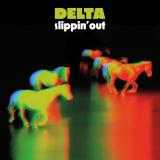
“From Birmingham and centred around the extraordinary songwriting talent of James and Patrick Roberts – initially as The Sea Urchins and since 1993 as Delta – they’ve only just got round to releasing their debut album, Slippin’ Out. It is a work of some beauty”. 9/10 NME ALBUM OF THE MONTH, 2000
“It’s classicist for sure, shot through with the influence of The Beatles, Byrds and Buffalo Springfield. In James’ downright beautiful closing ballad ‘I Want You’ one can also discern the school of ambitious English balladry that peaked in about 1968: The Casuals, Love Affair, Barry Ryan. The impression of accomplished old-schoolery is only furthered by the dizzying string arrangements penned by Louis Clark Jnr, son and namesake of the one-time orchestral chief of Electric Light Orchestra” – Mojo lead review, 2000
Having ended the 90s with the spirited ‘Laughing Mostly’ compilation of singles and demos (Guardian Album Of The Week) Delta finally released their debut studio album of twelve songs in the summer of 2000 on the Dishy Recordings label. Accepting that this might be their sole studio album the band threw everything at these recordings allowing it to exist in its own sphere, unbothered by their contemporary generation and disregarding the idea of even releasing a single.
Recorded at DEP International there was a notable difference to the scruffier, looser charm of their 1990s recordings, a tighter focus developed by having the experienced Lenny Franchi mixing the LP with them. Lenny had been working with a number of Island artists including My Bloody Valentine and Tricky so knew his way around a desk. There was also the question of budget (a few months passed between recording and mixing whilst funds were raised) so every day counted. Ultimately though you can hear the joy in the recordings, even amongst the melancholy and angst. As James recently recalled in an interview in Shindig! Magazine: “It was such a big deal for us. It’s one of my fondest memories doing that record. Everyone was happy. If there’s anything that I’d stand by, I think it would be that”
Louis Clark Jr joined the band towards the end of the ‘90s and brought a classically-trained element to the recordings particularly with his string arrangements. For ‘Cuckoo’, ‘I Want You’ and the prophetic ‘We Come Back’ Louis brought in eight players from the Birmingham Conservatoire; the baroque style is partly why the record often receives comparisons to Love’s ‘Forever Changes’.
On release ‘Slippin’ Out’ was a big favourite with writers at the NME, Mojo and The Guardian again and before long the band were signed to Mercury/Universal for their second studio album ‘Hard Light’, a far more expensive and expansive love affair. It was a temporary palatial home where things quietly fell apart again, but that’s another chapter.
“If long-term memory is nothing more than selective editing and only pop’s most weighty visceral works are built to last then it’s quite possible that in 50 years the Britpop era will be best recollected for the two bands it ostracised. Earlier this year we met Shack and thought their story of mercurial brilliance indicated the biggest music biz oversight of the 90s. We were wrong because we hadn’t met Delta yet. This is richer and more engrossing than anything by Shack”
- A1: Lazy Love
- A2: The Best
- A3: Like The Sun
- A4: Bitter Medicine
- A5: Hunned Bandz
- B1: Natural
- B2: The Blue Sky
- B3: Sundays
- B4: Perfect
- B5: This Time
Sundays is the debut full length from Oakland-based Tanukichan, aka multi-instrumentalist Hannah van Loon. At surface level, the album sounds just how the title describes: hazy, dreamy, reflective, just like a lazy Sunday afternoon. Upon second and third listens, the dreamy music unveils a deeper world: an ever present sense of longing, an endless state of summer and a period of instability that plagues us all at one point or another in our lives.
Raised in San Francisco, van Loon started out making classical, bluegrass and jazz music as well as playing in numerous bands in the area before deciding to make something more personal. What started with a few unfocused demos, with van Loon playing all the instruments herself in her house, became a studio experience and viable collection of music after her friend Anthony Ferraro of Astronauts, Etc. introduced her to Company Records founder Chaz Bear (Toro Y Moi, Les Sins). After collaborating on her 2016 EP Radiolove, van Loon and Bear set out to make a much more sonically cohesive release, with both the producer and artist playing all the instruments on the record. The result is a slice of dream pop that could only come from the combination of the laid back atmosphere of California and the nostalgic and often difficult memories that are generally associated with coming of age.
To van Loon, the tracks of Sundays are a form of contemplation and approaching life’s issues from a different and less complicated perspective. “Sometimes for me, it feels easier to write songs about things than to talk. A lot of things in life are layered and paradoxical, but with songs it always seems simpler.”
Opening track “Lazy Love” sets the stage, sonically and lyrically, for the rest of the album, combining vulnerable lyrics with gorgeous, fuzzy tones. Above pummeling synths and guitar tones, van Loon sings “you know I'd do anything/don't you know I try my best/if I could wake up when the sun is rising” showing the album’s constant theme of balancing always wanting to be the best person you can be, while also feeling a low level joy at letting life play out as it wants to. “Natural” is a track that feels perfect for a road trip, a track that hums away with a driving beat, culminating in the sheer excitement of finally having a night alone with someone you’ve loved for a while, among many highs and lows: “a window too bright/it's natural sunlight/grey fades to white lie/kiss you tonight/it's natural delight/help me feel right.” The tracks collectively address a deep rooted sense of yearning for someone, something new, while also feeling content with your life; a realization that maybe the places you’ve always belonged aren’t where you should be anymore, that suddenly you might be looking for something completely different.
“I settled on the name Sundays as the title of the record because it encapsulated how the record felt to me,“ van Loon says. “I was thinking about the laziness, and dreamy clarity that you can feel after a late night, waking up having to face the world with a new perspective.” Sundays encapsulates this feeling, a nostalgic way of looking at the world, waking up feeling like a slightly different person than before, looking back on life, not sure if you can tackle what’s next, but doing your best, day in and day out
Synthpop, minimal wave, post-punk, goth, new romantic - fans and critics alike have dug deeply into their vintage thesauruses to describe the beguiling work of Nation of Language. And if you can't precisely define the band, that's the point. Frontman Ian Richard Devaney has become prodigious in expanding what synthesizer-driven music can evoke, such that his output is as much an extrasensory journey as it is an all-too-human destination. With that experience in mind, he wrote the band's fourth album - the spectral, spacious Dance Called Memory - in the most humble of ways: chipping away at melancholia by sitting around and strumming his guitar. Nation of Language's first two albums, Introduction, Presence (2020), and A Way Forward (2021), came as pandemic godsends: gorgeous, relatable soundtracks to our collective doldrums. But it was their last LP, Strange Disciple (2023), that catapulted the group from cultural standouts to critical darlings, with the album being named Rough Trade's Album of the Year. With that release, Pitchfork wrote that the band "are learning what it means to get bigger and better." This is Devaney's calling: soulfully translating individual despair into a comforting, collective mourning. The single "Now That You're Gone," which radiates and reverberates with a devastating wistfulness, was inspired by witnessing his godfather's tragic death from ALS, and his parents' role as caretakers for this ailing friend. At its heart, the song is a reflection of how friends can be there for each other, and also highlights a theme throughout the record: the pain and lost promise of friendships that fall apart. On Dance Called Memory, the band once again collaborated with friend and Strange Disciple producer Nick Millhiser (LCD Soundsystem, Holy Ghost!). "What's so great about Nick is his ability to make us feel like we don't need to do what might be expected of us," says synth player Aidan Noell, who, along with bassist Alex MacKay, rounds out the Nation of Language lineup. They imbued Dance Called Memory with a shifted palette - sampling chopped-up drum breaks on "I'm Not Ready for the Change" for a touch of Loveless-era My Bloody Valentine or smashing all of the percussion of "In Another Life" through a synthesizer to cast a shade of early-2000s electronic music. Ultimately, the hope was to weave raw vulnerability and humanity into a synth-heavy album. "There is a dichotomy between the Kraftwerk school of thought and the Brian Eno school of thought, each of which I've been drawn to at different points. I've read about how Kraftwerk wanted to remove all the humanity from their music, but Eno often spoke about wanting to make synthesized music that felt distinctly human," Devaney says. "As much as Kraftwerk is a sonically foundational influence, with this record I leaned much more towards the Eno school of thought. In this era quickly being defined by the rise of AI supplanting human creators I'm focusing more on the human condition, and I need the underlying music to support that_ Instead of hopelessness, I want to leave the listener with a feeling of us really seeing one another, that our individual struggles can actually unite us in empathy."
Don’t believe your ears - Pepper’s Ghost is the latest offering from NYC project Nuke Watch.
Whatever you think it is - it is not. By the same token it really can be whatever you want - electronica, jazz, improv, noise, new age, ambient - it’s none and all of these. Like the primitive visual illusion it’s named for - Pepper’s Ghost is a projection of a thing, it’s not the thing.
The Nuke Watch method - like that of Aaron Anderson and Chris Hontos’ other primary project Beat Detectives - leans almost entirely on live improvisation, with some advanced studio alchemy in post. Where the Beat Detectives palette draws from club music tropes, Nuke Watch blends recognizable tones (hand drums, woodwinds, keys, fretless bass) with sounds of providence unknown, the line between organic and synthesized instrumentation unintelligibly smudged. What is real and what is projection? It’s hard to say. What do our ears tell us? This is where we arrive at Pepper’s Ghost.
Warped as the sounds may be, the playing belies a crew of deeply expressive, learned improvisers who have their craft honed. Their friendship and psychic connection enhances the ritualistic rhythms, mutant modular synthesis, nimble keyboard runs, absurdist sampling and unidentified skronk. They’re wonderfully complemented across several tracks on this set by Cole Pulice’s levitational, sublime saxophone.
As unhinged as this might all appear, once the mind and music meet on the same wavelength this is profoundly moving, energizing and uplifting Alive Music that recalibrates the sense of what music can be.
Nuke Watch is Aaron Anderson and Chris Hontos, with an array of friendly guests. They’ve released records as Nuke Watch on The Trilogy Tapes, Commend and Moon Glyph. As Beat Detectives they’ve released records on Not Not Fun, 100% Silk and their own studio imprint NYPD Records.
Pepper's Ghost was written and produced by Aaron Anderson and Chris Hontos. Additional instrumentation on these recordings by Cole Police, Leonard King, Eric Timothy Carlson, Chris Farstad and William Statler. It was mixed by Chris Hontos and mastered by Jack Callahan. Painting on the cover is “The Unity Of Being” (2020), by Ry Fyan. Design and layout by Aaron Anderson.
RIYL - Musical illusions, puzzles and magic tricks, downtempo, music of the spheres, good journey, Eddie Harris, Ketron, "world building", orange sunshine, suspension of disbelief.
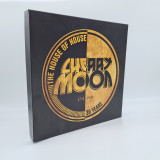
- A1: Cherry Moon Trax - The House Of House
- A2: Cj Bolland - Camargue
- B1: System-D - Trancefusion (Marnix Trance Mix)
- B2: The Moon - Blow The Speakers (The Mighty Ghost Mix)
- C1: Emmanuel Top - Turkish Bazar
- C2: Insider - Destiny
- D1: Mikerobenics - Julika (Comes Too Late Mix)
- D2: Hardcell & Grindvik - Square
- E1: Marmion - Schöneberg
- E2: Laurent Garnier - Crispy Bacon
- F1: Solo - La Cocaïna
- F2: Dj Dave Davis - Transfiguration
- G1: Dj Funk - Run (Uk Extended Mix)
- G2: Musix - No Dope (Ruch Edit)
- H1: Q-Ic & Ghost - Desire Go Higher
- H2: Dune - Can't Stop Raving (Montini Experience Remix)
- I1: Paragliders - Oasis
- I2: Traxcalibur - The Dreamer
- J1: Dj Esp Woody Mcbride - Off The Ceiling
- J2: Cherry Moon Trax - Needle Destruction (Insider Remix)
“Mi Manifesto” = “I just show up”. No warning.
MI MANIFESTO is an album slow-cooked—actually, really slow-cooked—pretty much over a match flame. It’s a little peek into my everyday life. If you stumble into it, you might bolt… or sit down, watch it unfold, and let this train hit you head-on. It’s not an album for everyone—only for those who walked in, got it, and decided to stay.
Pressed on a brilliant acid-yellow 12”, this special release is packed with surprises:
Each copy includes a custom insert by Pan Dan featuring the album’s lyrics. Inside every package, you’ll also find a personalized surprise gift — a small creative token straight from Pan Dan’s imagination. It might be playful, poetic, unexpected… or all of these at once. In any case, it will always be yours alone.
West Mineral returns with lushly amorphous actions by Shiner, Pontiac Streator & Ben Bondy aka Shinetiac; together fused for an immersive flux of vapoured dub, chopped and droned Billie Eilish, and fidgety algorithmic jams.
There's not a single, specific sound you can peg to the West Mineral axis at this stage in the label’s evolution - it's rather a set of shared aesthetics that freely bend into various interconnected shapes. Shinetiac's contemptuous, critic-baiting gear is the ideal example; on their last album, 2023's 'Not All Who Wander Are Lost', skittery, ketamized IDM sparkled over Spice Girls samples and the Foo Fighters' 'Everlong' was transmuted into Sneaker Pimps-style trip-hop. 'Infiltrating Roku City' might be a little less blatant with its out-and-out poptimism, but it takes a similarly dim view of conservative "big ambient" snobbishness. Just a few minutes of 'Bluemosa' should be enough to let you know what's up; the overall character of the sound is hazed, with frozen pads and garbled, dubbed-out voices smudged into a mess of effects and samples. But it sups up different nuances as it wriggles, absorbing scampering breaks, dizzy acoustic guitar strums and half-heard wordless vocals, flipping in the third act to emerge from its shell as minimalist balearic folk-pop - something like Bon Iver doing 'Electric Counterpoint'.
Brooklyn's Shiner, Philly's Pontiac Streator and Berlin-based Ben Bondy navigate the labyrinthine streaming landscape, guided by their own private experiences of mindless doom-scrolling and cruising the darkest corners of YouTube. They formulated 'Infiltrating Roku City' while they were rehearsing last year and spent the winter stitching together various recordings and jams into a layered, dry-witted commentary on our algorithmic reality. Laden with inside jokes and refried memes, it's surprisingly elegant gear; handling the most unseemly elements like sonic recyclers, earnestly repurposing pop and nostalgia to create an atmospheric echo of contemporary reality.
Screwing Chief Keef's enduring 'Citgo', 'Clublyfe (hulu)' emphasises the original's AFX-pilled euphoria with Robert Miles-style piano hits, replacing Young Ravisu's brittle 128kbps trap rhythm with a glitchy rattle that picks up dembow spikes as it rolls. 'I Hate Being Sober' vaporises the Chicago drill pioneer's 'Hate Bein' Sober', blocking out his voice with glitchy, downsampled interference and elasticated Rhodes. The trio team up with Orange Milk's goo age on the sublime 'Crisis Angel', catching a ray of Malibu's sunshine in the process, and reduce Billie Eilish's voice to a Romance-does-Celine cinder on 'Billie', stretching it to fit next to gassed Future ad-libs and swooping 808 Mafia sub womps. And although the album takes a murky diversion on 'Roku Axes Ultra’, and a cloud-stepping centrepiece ‘Purelink’ in homage to the eponymous dubbed ambient dynamos, it's back on course with 'Jiafei (NETFLIX)', taking aim at TikTok bot videos and welding screams from Florida metal band Underoath to AI-strength vocal curlicues.
- A1: Blue Prelude
- A2: Children Go Where I Send You
- A3: Tomorrow (We Will Meet Once More)
- A4: Stompin’ At The Savoy
- A5: It Might As Well Be Spring
- A6: You’ve Been Gone Too Long
- B1: That’s Him Over There
- B2: Chilly Winds Don’t Blow
- B3: (Theme From) Middle Of The Night
- B4: Can’t Get Out Of This Mood
- B5: Willow Weep For Me
- B6: Solitaire
The Amazing Nina Simone reveals Nina Simone at the dawn of her recorded legacy—already assured, deeply expressive, and impossible to categorize. Moving effortlessly between jazz, blues, folk, and classical influences, Simone delivers performances of striking intimacy and emotional precision, pairing a distinctive, searching voice with elegant, commanding piano work. This special repressing on 180g orange vinyl brings renewed warmth and presence to these recordings, enhancing their dynamic range and tactile immediacy. A timeless listening experience, The Amazing Nina Simone remains a powerful introduction to one of the most singular voices in modern music
Buoyed by an ever-evolving collage of pop influences, Mumble Tide’s work has regularly swung between the sweet and savage, the grungy and glistening. But at its heart is the meeting of two minds; singer-songwriter Gina Leonard and multi-instrumentalist Ryan Rogers. Over the last few years they have honed their distinctive brand of kaleidoscopic indie, all anchored by Leonard’s crystalline, plaintive voice.
Now, following a series of acclaimed singles and EPs, they return with new single ‘Pea Soup’, the third to be previewed from their upcoming debut album ‘Might As Well Play Another One’, to be released on the 1st May via Breakfast Records. Produced by Stew Jackson (Massive Attack), it’s their most self-assured and compelling work to date, a sweeping, orchestral vision of struggle, sadness, and the beauty in between.