Spearheaded by brothers Sakis & Themis Tolis, Rotting Christ have remained one of the strongest & most respected forces in the black metal scene since their debut release 'Passage Of Arcturo'. Their legacy towards greatness was cemented even further by the genre classic follow- up 'Thy Mighty Contract', helping to firmly establish the Greek scene as being among the most essential black metal movements of the early 90's.
'Thy Mighty Contract' was originally released in 1993 & featured a brutal, yet also melodic & atmospheric approach, incorporating different elements of extreme metal mixed with haunting keys & dark/ occult themes. With a clear distinction between their sound & what was appearing in Scandinavia at the time, Rotting Christ were highly influential & revered for forging their own sound while retaining the rawness of the old-school masters such as Celtic Frost & Venom. The band also notably embarked upon the infamous 'Fuck Christ' tour in 1993 with then label-mates Blasphemy & Immortal.
This limited vinyl edition of 'Thy Mighty Contract' marks 30 years since release & is presented on limited double red/black vinyl with gatefold sleeve. The second LP contains tracks from the infamous 'Fuck Christ' tour of 1993, which Rotting Christ shared with two other legends of black metal; Blasphemy & Immortal
quête:the movements
Already in the early stages of the label, Stijn Hüwels joined Dauw after a string of self-released albums. It was very much at the beginning of his artistic career but his Dauw debut – centered around melancholic narratives - was exactly what we wanted to bring with the label. During the years, Hüwels gradually found his place into the field of ambient with numerous releases and collaborations (Chihei Hatakeyama, Michel Banabila, Ian Hawgood...). While his sound definitely changed over the years - coming from a direct or transparent sound to his current more abstract sound design - his work still evokes the same familiar sentiments. For a label, this is one of the most interesting movements you can see in the artistic practice of the people you’re working with and ‘Décalages’ perfectly illustrates this. To coincidence this release, we made a second edition of his Dauw-debut 'If you remember me then I don't care if everyone else forgets', released 9 years ago.
»Arches« is the first collaborative album by brothers Simon and Tobias Lanz. It was written for and performed on self-built prototypes of wind instruments that were inspired by the classic pipe organ, but allowed the two composer-performers to go beyond its limitations in several ways. The music on this 40-minute long album for the Swiss Hallow Ground label was conceived and recorded by the two co-founders of the CRTTR collective and label during an artist residency in May 2022 in their home town of Bern. More than a mere document of a performance however, »Arches« combines the artists’ interest in exploring uncharted new creative and tonal ground inside of and beyond the realm of drone music with their background in visual art and design as a conceptually concise whole.
Simon and Tobias have a combined background in electronic music as well as a shared penchant for drone music. They hence designed these novel instruments in a way that allows for microtonal tuning to be able to overcome the restrictions inherent to the dominance of a twelve tone-based scale in Western music and work with a sonic palette that is much wider and nuanced than that of the conventional pipe organ. Furthermore, the physical design of these instruments widely differs from that of those which inspired them. This allows—or more precisely, forces—the musicians to freely invent and explore entirely novel playing techniques.
These factors, of course, also have an impact on the compositional process, which by design needs to be unconventional. The Lanz brothers worked with a graphic score for the four movements of the piece that forms »Arches« so as to adequately visualise the manifold tonal nuances of their instruments. This graphic score in turn was reinterpreted for the album release by Ramon Keiming, adding another dimension to it. Read from left to right, this remix of the score allows the listeners to follow an interpretation of the evolution of these dronescapes while the record plays, urging them to add their own interpretation.
This retroactive visualisation and thus spatialisation of the music is perfectly in line with its performance, which at all times factored in the acoustic affordances of the Prozess Bar in Bern. In many different ways, the Lanz brothers now invite their audience to join them there and explore the near-infinite possibilities of their curious instruments together with them. Much like Hallow Ground label mates such as Kali Malone or FUJI||||||||||TA, they are dedicated to enriching and expanding upon the musical and sonic qualities of pipe organs, but with widely different aesthetical results. To call »Arches« a unique record with an unheard-of sound is not hyperbole, but only factually correct.
‘Double Pink’ is the debut album by And Is Phi (Andrea Isabelle Phillips), a multidisciplinary artist from Norway and the Philippines now based in South East London. ‘Double Pink’ is a nuanced world that draws on colours and texture; with influences of Joni Mitchell and Frank Zappa, 90's R&B and Madlib’s ‘Shades Of Blue’ blending languidly to produce a base for uncovering layers of self, a deep release, and fragile new form.
Written by Andrea and co-produced with Fiona Roberts and Lorenz Okello over a nine month period; ‘Double Pink’ thematically explores the many movements of internal change, speaking from a deep inner voice inside the body. The title track is an invitation to be as unapologetically hungry as you please after a long absence of life giving passion and trust in oneself. ‘White Noise’ is a recovery song playing in your soul the first time you made it back out to the dance floor after a heart break so massive it laid rest to the person you used to be. Songs like ‘Working’ and ‘Staaar’ come from a candid and contemplative aspect. Stages of grief and resilience and wonder and wisdom are all touched upon.
“The album explores metamorphosis, liminal spaces, and the multiple faces of love”, says Andrea. “I mention love as a key ingredient, because anyone who has had to push and pull and hold and yield themselves through great loss and transformation knows it ain’t gonna happen without love. Tough times ask for double love, a stronger heart, something like a double pink”.
Andrea’s story dots between periods spent living in Norway, the Philippines and England - experiencing joy and beauty battling corruption and violence in Manila, DJing in Oslo, losing her sizable record collection in a warehouse fire before making friends and family in the jazz scene in London. Every story needs a scene, a landscape, an environment; all things Andrea visualises when writing songs.
“At my heart I am emotional and imaginative, searching for freedom for my spirit. What grounds it all is coming from a family of storytellers. My father played drums and percussion, he was a great dancer and a true collector and connoisseur of music from everywhere. My wise mother instilled in me a sense of faith and grace”.
Andrea is far from new to the scene, having performed with Steamdown, Emma Jean Thackray, Hector Plimmer, Scrimshire, William Florelle and many more as a valuable and inspiring creative force within the South London music scene. Andrea also created the album’s artwork and music videos: musicality and painting evolved from her initial creative languages of drawing and dance. All aspects are dialects of her common language: singing what can’t be painted and painting what can’t be sung.
Color Vinyl[20,97 €]
In the decade or so that hard-working New York quartet Sunwatchers have operated, the group has steadily & subtly refined their sound - a brain-blasting mixture of jazz, psychedelia, krautrock, punk, noise, & Saharan blues - into something that is avant-leaning enough to appeal to the discerning jazz & experimental music fan & weird & wooly enough to get the true heads' toes tapping. "Music Is Victory Over Time" is the band's 5th album, and fourth for Chicago-based Trouble In Mind Records, seeing the long-running lineup of Peter Kerlin (bass guitar), Jim McHugh (guitars), Jason Robira (drums), and Jeff Tobias (alto saxophone and keyboards) in prime form. Album opener "World People" is a classic Sunwatchers number whose title expresses their Anarcho-Internationalist ideology (and the atypically multi-culti make up of their crowds), with an underlying melodic resonance to New Orleans funeral marches à la Albert Ayler _ a triumphant call to arms to all peoples. Live fave "Too Gary"'s gang vocal shout punctuates a motorik rager named for a phrase often uttered by a badass eight year old skateboarder McHugh knew with a speech impediment (it means "that's too scary"). "T.A.S.C." (or "Theme For Anarchist Sports Center") is inspired by Sonny Sharrock's maligned 80's output & sounds exactly like a wrathful, mutant version of a prime-time athletic show theme, replete with the requisite "sitcom ending." The sun- scorched "Foams" - a longform piece intended to depict natural stuff like tides, nightfall, and time slowly passing, ancient, peaceful and slightly gross all at once - practically jumps out of the speakers, its palpable intensity crackling in your eardrums. The title of "Tumulus" might reference an ancient burial mound, but the music itself might be the group's most high-tech song to date, complimented by an arpeggiating sequencer, three different forms of tape delay and an electric saxophone; ecstatic, fiery & deeply spiritual. "There Goes Ol' Ooze" is a smoky creeper that lets Tobias & Kerlin take a walk for a while, with respectful nods to the Stones and Steve Reich. "Song For The Gone" closes out the album, showcasing a sincerely tender moment for the gang, as an expression of love and resolve for dear friends who had recently, tragically died. Its cascading, bluesy melody attuning itself to our own collective unconscious grief. Having the distinct pleasure of being the first band to record in John Dwyer 's new LA-based recording studio Discount Mirrors, "Music Is Victory Over Time" boasts a beefed up sound. The band worked closely with in-house engineer Eric Bauer - facilitator, troubleshooter, sonic obsessive, a legendary freak and a DIY lifer. The band also had full access to the studio's epic armory of gear: amps, axes (it's Dwyer's Eddie Harris model electric sax), synths, a bass guitar once belonging to Klaus Flouride of the Dead Kennedys. Crucial for the sounds and the vibe. The album art was created by Josh MacPhee, the activist artist, author, archivist and founding member of both the radical artist collective Just Seeds and Interference Archive, a public collection of materials from social movements based in Brooklyn. MacPhee's participation in the project works as a statement of Sunwatchers' progressive utopian intentionality, and organically underscores their involvement in revolutionary projects within and without of their hometown. Listening to "Music Is Victory Over Time", Sunwatcher's rebellious spirit & unbridled enthusiasm remain fully intact, but the secret sauce is their infectious irreverence in the face of the horrors of this world. Much of our best cultural commentary is Trojan-horsed to the general public via humor & satire & the band has a knack for lacing the ridiculous with the radical. It's good to have them back. "Music Is Victory Over Time" is released worldwide digitally via most DSPs, on CD, black vinyl & a limited "Sunflare" blue/red splatter vinyl while supplies last.
Black Vinyl[20,97 €]
In the decade or so that hard-working New York quartet Sunwatchers have operated, the group has steadily & subtly refined their sound - a brain-blasting mixture of jazz, psychedelia, krautrock, punk, noise, & Saharan blues - into something that is avant-leaning enough to appeal to the discerning jazz & experimental music fan & weird & wooly enough to get the true heads' toes tapping. "Music Is Victory Over Time" is the band's 5th album, and fourth for Chicago-based Trouble In Mind Records, seeing the long-running lineup of Peter Kerlin (bass guitar), Jim McHugh (guitars), Jason Robira (drums), and Jeff Tobias (alto saxophone and keyboards) in prime form. Album opener "World People" is a classic Sunwatchers number whose title expresses their Anarcho-Internationalist ideology (and the atypically multi-culti make up of their crowds), with an underlying melodic resonance to New Orleans funeral marches à la Albert Ayler _ a triumphant call to arms to all peoples. Live fave "Too Gary"'s gang vocal shout punctuates a motorik rager named for a phrase often uttered by a badass eight year old skateboarder McHugh knew with a speech impediment (it means "that's too scary"). "T.A.S.C." (or "Theme For Anarchist Sports Center") is inspired by Sonny Sharrock's maligned 80's output & sounds exactly like a wrathful, mutant version of a prime-time athletic show theme, replete with the requisite "sitcom ending." The sun- scorched "Foams" - a longform piece intended to depict natural stuff like tides, nightfall, and time slowly passing, ancient, peaceful and slightly gross all at once - practically jumps out of the speakers, its palpable intensity crackling in your eardrums. The title of "Tumulus" might reference an ancient burial mound, but the music itself might be the group's most high-tech song to date, complimented by an arpeggiating sequencer, three different forms of tape delay and an electric saxophone; ecstatic, fiery & deeply spiritual. "There Goes Ol' Ooze" is a smoky creeper that lets Tobias & Kerlin take a walk for a while, with respectful nods to the Stones and Steve Reich. "Song For The Gone" closes out the album, showcasing a sincerely tender moment for the gang, as an expression of love and resolve for dear friends who had recently, tragically died. Its cascading, bluesy melody attuning itself to our own collective unconscious grief. Having the distinct pleasure of being the first band to record in John Dwyer 's new LA-based recording studio Discount Mirrors, "Music Is Victory Over Time" boasts a beefed up sound. The band worked closely with in-house engineer Eric Bauer - facilitator, troubleshooter, sonic obsessive, a legendary freak and a DIY lifer. The band also had full access to the studio's epic armory of gear: amps, axes (it's Dwyer's Eddie Harris model electric sax), synths, a bass guitar once belonging to Klaus Flouride of the Dead Kennedys. Crucial for the sounds and the vibe. The album art was created by Josh MacPhee, the activist artist, author, archivist and founding member of both the radical artist collective Just Seeds and Interference Archive, a public collection of materials from social movements based in Brooklyn. MacPhee's participation in the project works as a statement of Sunwatchers' progressive utopian intentionality, and organically underscores their involvement in revolutionary projects within and without of their hometown. Listening to "Music Is Victory Over Time", Sunwatcher's rebellious spirit & unbridled enthusiasm remain fully intact, but the secret sauce is their infectious irreverence in the face of the horrors of this world. Much of our best cultural commentary is Trojan-horsed to the general public via humor & satire & the band has a knack for lacing the ridiculous with the radical. It's good to have them back. "Music Is Victory Over Time" is released worldwide digitally via most DSPs, on CD, black vinyl & a limited "Sunflare" blue/red splatter vinyl while supplies last.
The band’s true skill, though, lies in how their instruments interlock, the structuring of movements that grow songs from rotted dirges to triumphant war cries, rhythmic tension building until a riff explodes it into something unexpected and completely satisfying. Notably, the band welcomes Andre Sanabria to take over vocal duties, “Andre has been a musical force in all his previous bands. His vocal intensity is compelling,” Howell says. Sanabria screams like he’s trying to tear the songs apart, though he manages to find moments of almost zen-like contemplation. It’s a deft and mesmerising performance, aided by his deeply thoughtful lyrics about, as Howell says, the steady dismembering of the things that bind us.Whilst the album is a depiction of people losing connection with each other, the shows that the band put on see their audiences coming together in catharsis and fighting back against this separation. In this case, hope inspires action - a knock-on effect of community through art.
"There could barely be a better figurehead for Belgrade's simmering multi-limbed music scene than Jan Nemeèek" The Quietus `Dissolved', a new album by Serbian synthesist and sound designer Jan Nemeèek, began its life cycle in a studio live room. It unpacks the paradigm of the individualistic act of computer music creation, transporting it into the communal setting of a band, its performers contributing elements ranging from prepared piano to Turkish lyre. The album opens with an unexpected falter, a false start that imbues the album with a sense of vulnerability. It's as if the album itself is finding its footing, mirroring the dissonance of an orchestra tuning. This digital ensemble, an assembly of electronic voices, seems to search for its harmony, its discord, its pitch, its timbre - much like a traditional counterpart would. As it unfolds, `Dissolved' further taps into the raw tonalities of partially defunct digital synthesizers, ranging from early 2000s' attempts at neural networks to precursors of oscillator-laden software synthesizers, in order to build its cloud of suspended tension and alternate histories. Through this clash of wistful piano and biting frost of digital pads with the iridescent hum of tube amps, the album reflects New Age tropes through the prism of metal (machine) music. Hailing from Belgrade, Serbia, Jan Nemeèek has been releasing electronic music since 2005, with a particular focus on ambient and bass-heavy electronic compositions. Nemeèek's music is characterized by his use of a wide range of sound generating tools, including neural networks, analog synthesizers, and granular synthesis. His approach to music production allows his work to unfold with patience, influenced by borderline dub sub-bass movements and heavily based on deconstructed recordings. Jan has released several albums, most notably 2014's Fragmented and later Recurrences. Prior to that, he co-founded the Creative Commons-based net label Norbu. `Dissolved' is set to be released on vinyl and digital on 10th November 2023 via Refractions, a new imprint founded by Nemeèek.
ele
- 01: Letter To My Countrymen Feat. Dr. Cornel West
- 02: Only Life I Know
- 03: Stop The Press
- 04: Mourning In America
- 05: Gather Round Feat. Amir Sulaiman
- 06: Work Everday
- 07: Need A Knot
- 08: Won More Hit
- 09: Say Amen
- 10: Fajr
- 11: Namesake
- 12: All You Need
- 13: My Beloved Feat. Choklate And Tone Trezure
- 14: Singing This Song
Originally released in 2012 following unprecedented changes in the music industry, Mourning in America and Dreaming in Color found Brother Ali reborn and rejuvenated. Teaming up with famed platinum-selling producer Jake One (Drake, J. Cole, Wiz Khalifa, MF DOOM), Brother Ali was prepared to tell the American story from a very different viewpoint. Inspired by his first trip to Mecca, the 2011 uprisings in the Middle East, and the Occupy movements that were building steam worldwide, Ali linked with Jake One during a two-month sabbatical in Seattle to create this brave new phase in his remarkable discography. The album presented a scathingly honest critique of America and its many flaws while simultaneously presenting a hopeful outlook for the future and its possibilities. At a time when many felt powerless against an overreaching government with all its militarist and corporate interests, Mourning In America and Dreaming In Color provided the voice of a critical American consciousness, as well as a beacon of hope for those that hold fast to its ideals and potential. In honor of its 10th anniversary, we've pressed this limited edition 2xLP vinyl offering with redesigned packaging and layout that features a custom-built slash case with an illustrated flag, a full-color jacket housing tri-color red/white/blue galaxy effect vinyl, printed record sleeves and a 4-panel lyric booklet.
Orchestral Manoeuvres In The Dark (OMD) return with their 14th studio album Bauhaus Staircase, over six years after the triumph of their Top 4-charting record The Punishment of Luxury. The album was born from the impetus to kickstart new explorations during lockdown when as Andy McCluskey admits: “I rediscovered the creative power of total boredom.”
The album’s first offering as a single is the title track which serves as a nod both to Andy McCluskey’s love of the Bauhaus era & the power of protest art. “I am a huge lover of visual arts especially mid 20th century movements” Andy comments. “The song is a metaphor for strength and artist passion in the face of criticism and adversity. When times are hard there is a tendency for Governments to look at cutting funding for creativity just at the moment when the arts are most needed to nourish our souls. It seems appropriate that the song and its eponymous album were created during Covid Lockdown.”
Ranging further from the beautiful film noir ballad of ‘Veruschka’ and the dance stylings of ‘Anthropocene’ - a term for the current epoch in Earth’s evolution to the sinister ‘Evolution Of Species’ and the hectic ‘Kleptocracy’ - OMD’s greatest straight-up protest song - the new album is a broad electronic sonic masterpiece that lyrically tackles the topics of the future. The record closes on ‘Healing’ - a moment of reflective calm.
By rights OMD should be in semi-retirement performing classics like Enola Gay and Maid Of Orleans on the nostalgia festival circuit like so many peers. Instead they’ve created a landmark album worthy of their finest work. Bauhaus Staircase remains unmistakably the work of a duo who are still perfectly in sync 45 years after their first gig at legendary Liverpool club Eric’s.
“I’m very happy with what we’ve done on this record" McCluskey summarises. “I’m comfortable if this is OMD’s last statement.”
Mia Gargaret” is an ambient, (mostly) instrumental album by Chicago, IL singer, songwriter, multi-instrumentalist & producer Gia Margaret. It’s also not the follow-up she intended after the critical success of her 2018 debut, “There’s Always Glimmer”. But after she suddenly found herself without use of her primary instrument, she had to rethink her methods, at least temporarily. Gia explains: “After having to cancel tours because of illness, I was unable to sing for nearly half of the year. This left me feeling like a shell of myself, so I turned to my synthesizer for comfort. These compositions helped me hold onto my identity as a music maker. At times this music helped soothe my anxiety more than therapy or anything else could.” Documenting her self-healing and without singing or lyrics to steal the focus, the instrumental tracks on “Mia Gargaret” shine a light on Gia’s skills as a musician, composer & producer. Spare but immersive arrangements of synthesizer, piano & acoustic guitar simultaneously ache & soothe, building emotional landscapes that rise & recede like scenery through a train window. “Mia Gargaret” is a gorgeous experiment & a memorable meditation on the healing power of music. This version is a limited edition of 200 – pressed on pale blue vinyl with an exclusive lithograph print.
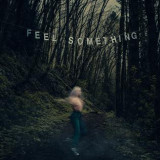
Limited repress of the post-hardcore quartets debut album """"Feel Something""""
Music and emotion share a timeless physiological, psychological, and spiritual bond. A chord, a melody, or a lyric can lift spirits and inspire. Movements achieve that sort of reaction on their full-length debut, Feel Something Fearless Records. In the sessions, their signature style crystallized and coalesced. Bolstered by intricate instrumentation and explosive vocal delivery, these 11 tracks signify the musicians' evolution and bring emotion to life in each note.
"
German musician Mary Yalex debuts on A Strangely Isolated Place depicting a storied transition from our recognizable surroundings, into a vision of the future.
With releases and music styles across a variety of labels over the years, it has been Yalex’s more experimental ambient work that has stood out amongst her catalog, and in Fantasy Zone, we find Mary fine-tuning this sound to reflect the work of a true architect of storytelling, mood and atmosphere.
Drawing influences from her day-to-day surroundings, Fantasy Zone begins with more vivid pieces; softer melodies and clearer instrumentation, represented as much in song titles such as Air, After Rain Comes Sun, and Half Light of Dawn. The second half of the album transitions into a future state, as Yalex draws on darker manifestations - perhaps intrinsically influenced by the state of the world, and in particular her love of nature, we play witness to more storied, haunting atmospheres, distant voices and slowly shifting gravitational chord movements. Dystopian-bound or pure fantasy, Yalex depicts a future that mirrors some of the more poignant, thought-provoking work of great synthesizer soundtracks of the past.
The influential Detroit pianist’s sole 1970s album. Remastered and lacquered by Bernie Grundman. Now-Again presents the denitive Tribe Records reissues. Deep, Spiritual Jazz of the highest order. The Tribe label, one of the brightest lights of America’s 1970s jazz underground, receives the Now-Again reissue treatment. This is your chance to indulge in the music and story of one of the most meaningful, local movements of the 20th Century Black American experience, one that expanded outwards towards the cosmos. In the words of the collective themselves, “Music is the healing force of the universe.” Included in an extensive, oversized booklet, Larry Gabriel and Jeff “Chairman” Mao take us through the history of the Tribe, in a compelling story that delves not just into the history of the label and its principals, but into the story of Black American empowerment in the latter half of the 20th Century. The booklet features never-before-seen archival photos and rare ephemera from Tribe’s mid-1970s heyday.
In 1995 the self-titled full-length debut of Die Anarchistische Abendunterhaltung (DAAU) was released. The band consisted of four young, 'classically derailed' musicians who played their own compositions with acoustic instruments such as violin, cello, clarinet and accordion. Their work contained influences from Roma music, Eastern European folk, klezmer and jazz, but was performed with the energy, rebellious spirit and Sturm und Drang of a bona fide punk band. DAAU was part of the fertile Antwerp scene, which also produced dEUS, Zita Swoon and Kiss My Jazz, and soon signed an international record deal with Sony Classical.
The group's influential first record, which has been out of print for a while, is now finally being released again and is available on vinyl for the very first time.
In those early days, DAAU consisted of four young, classically trained musicians who tackled their instrumental compositions with a true punk spirit. 'If we'd had guitars, bass or drums at that time, we would probably have been just another rock band', says accordionist Roel Van Camp, who, together with his schoolmates Buni Lenski on violin, the latter's brother Simon on cello and Han Stubbe on clarinet made up the Antwerp quartet. 'With our acoustic instruments we tried to create our own version of the music we loved listening to, from sixties rock and prog to new wave.'
The quartet, which initially played in streets and cafes, appealed to a diverse audience and sometimes joked that they were a classically trained unit that had 'gone off the rails'. 'As befits teenagers, we wanted to shake things up', Stubbe remembers, 'even though we always kept cherishing our classical backgrounds.' Van Camp: 'Our education was never supposed to feel like a straitjacket. We were free-spirited enough to ignore the laws and regulations of the music academy and to create our own sound. Our compositions were open to influences from Roma music, Eastern European folk, klezmer and jazz'. 'That eclecticism was a direct result of the zeitgeist', Han Stubbe adds. 'We loved different styles and happily mixed them together'.
The monniker Die Anarchistische Abendunterhaltung was derived from Steppenwolf, a novel by German writer Hermann Hesse about a character who was outside society. 'In the book, the narrator talks of a theatre', Van Camp explains. 'And at the entrance there is a warning sign sign that says: if you go in here, you are guaranteed to lose your mind. That was an apt description of the way our music worked'.
Almost all tracks on DAAU's first album were 'Drieslagstelsels' (or 'three-course rotations'). The term referred to an agricultural method of the early Middle Ages, but also to the fact that each song of the group consisted of three major movements. Van Camp: 'The titles of those pieces referred to our method of writing. We piled up a huge bunch of ideas, because we wanted to tell more than just one story. With each composition, we took the listener for a ride'.
In 1995 the self-titled full-length debut of Die Anarchistische Abendunterhaltung (DAAU) was released. The band consisted of four young, 'classically derailed' musicians who played their own compositions with acoustic instruments such as violin, cello, clarinet and accordion. Their work contained influences from Roma music, Eastern European folk, klezmer and jazz, but was performed with the energy, rebellious spirit and Sturm und Drang of a bona fide punk band. DAAU was part of the fertile Antwerp scene, which also produced dEUS, Zita Swoon and Kiss My Jazz, and soon signed an international record deal with Sony Classical.
The group's influential first record, which has been out of print for a while, is now finally being released again and is available on vinyl for the very first time.
In those early days, DAAU consisted of four young, classically trained musicians who tackled their instrumental compositions with a true punk spirit. 'If we'd had guitars, bass or drums at that time, we would probably have been just another rock band', says accordionist Roel Van Camp, who, together with his schoolmates Buni Lenski on violin, the latter's brother Simon on cello and Han Stubbe on clarinet made up the Antwerp quartet. 'With our acoustic instruments we tried to create our own version of the music we loved listening to, from sixties rock and prog to new wave.'
The quartet, which initially played in streets and cafes, appealed to a diverse audience and sometimes joked that they were a classically trained unit that had 'gone off the rails'. 'As befits teenagers, we wanted to shake things up', Stubbe remembers, 'even though we always kept cherishing our classical backgrounds.' Van Camp: 'Our education was never supposed to feel like a straitjacket. We were free-spirited enough to ignore the laws and regulations of the music academy and to create our own sound. Our compositions were open to influences from Roma music, Eastern European folk, klezmer and jazz'. 'That eclecticism was a direct result of the zeitgeist', Han Stubbe adds. 'We loved different styles and happily mixed them together'.
The monniker Die Anarchistische Abendunterhaltung was derived from Steppenwolf, a novel by German writer Hermann Hesse about a character who was outside society. 'In the book, the narrator talks of a theatre', Van Camp explains. 'And at the entrance there is a warning sign sign that says: if you go in here, you are guaranteed to lose your mind. That was an apt description of the way our music worked'.
Almost all tracks on DAAU's first album were 'Drieslagstelsels' (or 'three-course rotations'). The term referred to an agricultural method of the early Middle Ages, but also to the fact that each song of the group consisted of three major movements. Van Camp: 'The titles of those pieces referred to our method of writing. We piled up a huge bunch of ideas, because we wanted to tell more than just one story. With each composition, we took the listener for a ride'.
The Tribe co-founder’s masterpiece, lacquered directly from his master tapes in an all analog transfer by Bernie Grundman. The denitive reissue of this Spiritual Jazz album, one of the most sought after artifacts of the 1970s jazz underground. The Tribe label, one of the brightest lights of America’s 1970s jazz underground, receives the Now-Again reissue treatment. This is your chance to indulge in the music and story of one of the most meaningful, local movements of the 20th Century Black American experience, one that expanded outwards towards the cosmos. In the words of the collective themselves, “Music is the healing force of the universe.” Included in an extensive, oversized booklet, Larry Gabriel and Jeff “Chairman” Mao take us through the history of the Tribe, in a compelling story that delves not just into the history of the label and its principals, but into the story of Black American empowerment in the latter half of the 20th Century. The booklet features never-before-seen archival photos and rare ephemera from Tribe’s mid-1970s heyday.
Farewell To The Welfare is now available in a limited edition teal vinyl pressing. The Tribe Records co-founder’s lost album, rumored to exist no more. Mastered from the original tapes and lacquered by Bernie Grundman. “As I thought about reflecting on an aggregate of music for this album, I projected my attitude and spirit while living and working here, in Detroit, Michigan. We are earning and learning a new way of life, which explicitly tells us to become self-reliant in taking care of our families and each other. Government hand-outs are not an option for us.” Wendell Harrison. The first ever issue of this Spiritual Jazz album. The Tribe label, one of the brightest lights of America’s 1970s jazz underground, receives the Now-Again reissue treatment. This is your chance to indulge in the music and story of one of the most meaningful, local movements of the 20th Century Black American experience, one that expanded outwards towards the cosmos. In the words of the collective themselves, “Music is the healing force of the universe.” Included in an extensive, oversized booklet, Larry Gabriel and Jeff “Chairman” Mao take us through the history of the Tribe, in a compelling story that delves not just into the history of the label and its principals, but into the story of Black American empowerment in the latter half of the 20th Century. The booklet features never-before-seen archival photos and rare ephemera from Tribe’s mid-1970s heyday.
The story of the invention of the term, 'deepfunk' is probably only known among fans and practitioners of this niche-genre. In short, it all started in the 1990s when DJs like Keb Darge, Mark 'Snowboy' Cotgrove and others began spinning obscure and feral Funk 45 RPM singles from local American bands, ostensibly generating another sub-category branch off of the mighty Northern Soul tree. The dance-club phenomenon inevitably spilled over to contemporary groups on the funk scene which immediately tried to record their music the way their idols did. The 'rare groove' and 'acid jazz' movements had run their course and there was a concerted effort to reinstate primitive idiomatic styles and techniques into the music, most notably by 90s funk collective The Poets of Rhythm. As more years passed by the number of bands steadily increased (although in tiny numbers, compared to the mainstream market). Almost every country had a representative with the majority of them coming from the United Kingdom. The deepfunk sound was still a niche, however a very few bands made it onto the mainstream charts, most notably Sharon Jones & the Dap Kings.
At the height of the retro-soul movement a questionable development took place. As more bands arrived on the scene, the production became more and more polished and pop-ish. Some of that squeaky-clean tidiness began to creep into the recordings, encouraged in part by the signature sounds of the digital recording technology available at that time. Some bands even tried to jump onto the possibility of promoting their music as 'deepfunk' although they were actually playing slick, funky pop music. This way some people who thought they were listening to raw, energetic funk actually felt quite ambushed when hit with real deepfunk. In fact, a certain percentage of funk music produced within the past 20 years does not deserve to be described as 'deepfunk' at all. Fortunately there were (and are) some pleasant exceptions which did not just imitate but actually rendered amazing funk music just like some of the finest funk combos of the 1960s and 70s.
One of those creative minds is without a doubt Joel Ricci aka Lucky Brown. Originally from Seattle, Washington, USA, he has enriched the deepfunk community since the mid-2000s with his stellar abilities. He is not only an amazing musician playing multiple instruments, but also a brilliant composer, arranger, and producer too. But for us here at Tramp he is much more, a close friend and remarkable human being. Whenever we were struggling, whether with the label or in private life, Joel and his musical work helped us to overcome everything and to keep going our path.
So here we are in 2023. The songs you are listening to right now are the complete Space Dream collection, split into two parts, representing the two living-room recording sessions from which his 2011 Tramp Records debut was compiled. Each fully remastered album contains unreleased material and comes with brand new, beautifully reimagined artwork by Ricci himself, housed in an authentic 1960s tip-on cover. A first class product from a first class musician for the discerning funk enthusiast.
The story of the invention of the term, 'deepfunk' is probably only known among fans and practitioners of this niche-genre. In short, it all started in the 1990s when DJs like Keb Darge, Mark 'Snowboy' Cotgrove and others began spinning obscure and feral Funk 45 RPM singles from local American bands, ostensibly generating another sub-category branch off of the mighty Northern Soul tree. The dance-club phenomenon inevitably spilled over to contemporary groups on the funk scene which immediately tried to record their music the way their idols did. The 'rare groove' and 'acid jazz' movements had run their course and there was a concerted effort to reinstate primitive idiomatic styles and techniques into the music, most notably by 90s funk collective The Poets of Rhythm. As more years passed by the number of bands steadily increased (although in tiny numbers, compared to the mainstream market). Almost every country had a representative with the majority of them coming from the United Kingdom. The deepfunk sound was still a niche, however a very few bands made it onto the mainstream charts, most notably Sharon Jones & the Dap Kings.
At the height of the retro-soul movement a questionable development took place. As more bands arrived on the scene, the production became more and more polished and pop-ish. Some of that squeaky-clean tidiness began to creep into the recordings, encouraged in part by the signature sounds of the digital recording technology available at that time. Some bands even tried to jump onto the possibility of promoting their music as 'deepfunk' although they were actually playing slick, funky pop music. This way some people who thought they were listening to raw, energetic funk actually felt quite ambushed when hit with real deepfunk. In fact, a certain percentage of funk music produced within the past 20 years does not deserve to be described as 'deepfunk' at all. Fortunately there were (and are) some pleasant exceptions which did not just imitate but actually rendered amazing funk music just like some of the finest funk combos of the 1960s and 70s.
One of those creative minds is without a doubt Joel Ricci aka Lucky Brown. Originally from Seattle, Washington, USA, he has enriched the deepfunk community since the mid-2000s with his stellar abilities. He is not only an amazing musician playing multiple instruments, but also a brilliant composer, arranger, and producer too. But for us here at Tramp he is much more, a close friend and remarkable human being. Whenever we were struggling, whether with the label or in private life, Joel and his musical work helped us to overcome everything and to keep going our path.
So here we are in 2023. The songs you are listening to right now are the complete Space Dream collection, split into two parts, representing the two living-room recording sessions from which his 2011 Tramp Records debut was compiled. Each fully remastered album contains unreleased material and comes with brand new, beautifully reimagined artwork by Ricci himself, housed in an authentic 1960s tip-on cover. A first class product from a first class musician for the discerning funk enthusiast.