Search:the music improvisation company

Styles
All
Rejoicer feat. Sam Wilkes & Tamir Barzilay - California Space Craft (LP)

Yuvi Havkin aka Rejoicer returns with an exceptional collaborative album, California Space Craft. On this aptly titled record, he joins forces with seasoned LA bass polymath Sam Wilkes — known for his inspired studio work with Sam Gendel and his dynamic live performances alongside Louis Cole and KNOWER — and drummer Tamir Barzilay, completing the LA-connected trifecta alongside a select handful of key featured guests. The idea for California Space Craft was born out of a series of inspired live sessions in Los Angeles between 2019 and 2022, notably at Listen to Music Outside in the Daylight Under a Tree, where the trio’s natural chemistry first began to bloom. The resulting recordings encompass a wide variety of inspired sound stylings, as one would expect from any of these accomplished artists on their own; however, the sum is truly greater than the parts here, with the fluidity of their freeform improvisations over a dedicated three-day recording session feeling remarkably focused as a cohesive whole. Opening track “Traveling Light” sets the LP’s tone with equal parts Sly & Robbie-style, space echo– drenched rhythms and the cozy kosmische, guitar-led feel of early-2000s genre-fluid explorers like Tortoise. As we continue on to “Ritual in G#,” we are reminded that this is indeed a unique and timeless sonic space the trio has created, as Havkin’s crisp Rhodes chords anchor an ever-evolving psychedelic sound bed. The soaring trumpet of Avishai Cohen adorns the Afrobeat-indebted “Lion Water,” with Barzilay laying down a proper Allen-esque groove, while “Further (with you),” featuring Nitai Hershkovits on keys, offers a defining look at the titular concept of the album — with pure Cali feels coalescing effortlessly into sciNew Release Information fi narrative modes and a proper dose of Rejoicer futurism. Elsewhere, “Her Hair in the Air” shines with fresh polyrhythmic intention, illustrating the balanced bond between the three collaborators at their conversational peak, and the brisk synth strokes of “Early Porpoises,” alongside LP closer “Oceanic Friends” — again ideally named — double as a grand, in-stereo ride into the blissful Pacific sunset horizon. California Space Craft embodies the power of open, collective intention and musical kinship, offering memorable, uplifting moments and an aural glimpse of hope, warmth, and loving melodious calm in an otherwise quite chaotic time for humanity.

pre-order now16.10.2026

expected to be published on 16.10.2026

25,00 €
Alwin Nikolais - Electronic Dance Music, 1966-1989 (Tape)
  • 01: Revels: Dance III (1986)
  • 02: Ten Legs: Dance I (1989)
  • 03: Mechanical Organ: Dance II (1980)
  • 04: Mechanical Organ: Dance IV (1980)
  • 05: Frail Demons: Dance I (1984)
  • 06: Tribe: Dance I (1975)
  • 07: Pierrot: Dance II (1986)
  • 08: Blank on Blank: Excerpt I (1987)
  • 09: Pierrot: Dance III (1986)
  • 10: Aviary: Dance I (1978)
  • 11: Aviary: Dance II (1978)
  • 12: Graph: Overture (1984)
  • 13: Chimera: Dance I (1966)
  • 14: Styx: Excerpt (1976)
  • 15: Gallery: Overture (1978)
  • 16: Frail Demons: Dance II (1984)
  • 17: Aviary: Dance III (1978)
  • 18: Graph: Dance III (1984)
  • 19: Contact: Excerpt (85)
  • 20: Blank on Blank: Excerpt II (1987)
  • 21: Crucible: Excerpt (1985)
also available

2x12"[30,21 €]


Often credited as the father of multi-media theatre, Alwin Nikolais (1910-1993) took complete creative control over his productions - including cutting-edge approaches to lighting and costume that transformed human bodies into shifting sculptural shapes, while also composing wildly innovative electro-acoustic and synth-based audio as accompaniment.

After initially experimenting with musique concrète and tape manipulation (as demonstrated on the 1959 LP Choreosonic Music of the New Dance Theatre of Alwin Nikolais) Nikolais became the first owner of Robert Moog's synthesizer at the Audio Engineering Society convention in New York in late 1964. Relying heavily on the Moog and later the Synclavier synth/sampler, these 21 tracks document Nikolais' highly-prescient compositions across the mid 1960s through to the late 1980s - existing not only as extensions of his other-worldly choreographic productions, but standalone pieces of foundational mid-century American electronic and experimental music.

"Born in Southington, Connecticut in 1910, Nikolais’s early years and early career were in acting, music and puppetry. It was not until the late 1930s that he began his work as dancer/choreographer in Hartford, Connecticut, where he was commissioned by the Avery Memorial Theatre, a part of the Wadsworth Atheneum, to create an evening-length work to the music of Ernst Krenek. Previously his work and study as a pianist-organist found him accompanying silent films. This sort of accompaniment required from the musician not only a playing skill but also a versatility in improvisation, matching movement to sound, and evoking mood to situation.

Nik was drawn initially to dance by his involvement with the percussion scores used by the illustrious early twentieth century German dancer Mary Wigman. In trying to learn more about percussion, he was lured into dance class and thus his career began. His development of music and dance occurred simultaneously. His introduction to the twelve-tone technique opened his mind to the expanding areas of atonal music, and his dealing with music as sound per se. In 1948, after being appointed director of the Henry Street Playhouse in New York, Nikolais formed the Playhouse Dance Company, later known as the Nikolais Dance Theater, and began his aesthetic orientation toward dance as a study of motion. By the 1950s, he had ceased creating literal dances and began his explorations and eventual milieu as an abstractionist.

Sound became an important part of his abstract theatre. For his first dances, which involved his new thinking of dance as both a visual and kinetic art, he used live percussion scores in which he directed his dancers to play instruments of all nature. There was a combination of children’s toy instruments as well as harsh and resonant automobile brake drums, and other pitched auto parts which he also used to accompany classes. Once he installed his own tape recording machines, he quickly used the limited range these instruments provided in a new way, slowing and increasing speed and reversing sound. He also made the sounds adhere to the choreographic structure (not the other way around), thereby giving the dance its independence from the musical phrasing. But the real need remained: the search for new sound. Nik made a sound library, recording noises and percussion and vocal sounds, which the French aptly called musique concrète. Needless to say, he became a master at splicing bits and pieces.

From 1956 to 1962 Nikolais composed eleven major scores for his theatre pieces using such techniques. In 1963, James Seawright, who at the time was assisting Nik in his productions and also working at the Columbia-Princeton Center for Electronic Music, recorded a sound bank for the production Imago (1963). With this material, Nikolais created his first synthesizer score. Imago won the Paris Grand Prix in 1968 and launched the Nikolais Dance Theatre towards its national and primarily international acclaim.

During the same period, Seawright came to Nik and told him of a young man who had invented and constructed a simplified synthesizer and insisted that Nik visit the electronic fair currently being held in New York. Nik did so and met Robert Moog. He was completely taken by the new machine and after making some suggestions to Moog, (which Moog made), Nik bought the inventor’s first machine with the aid of a Guggenheim Fellowship. Moog himself was astonished by what his machine could produce for Nik. This machine was later acquired by the Museum of Musical Instruments at the University of Michigan at Ann Arbor as the first Moog synthesizer. The Synclavier was Nik’s next source of sound and since the mid-1970s remained the major instrument in the Nikolais soundroom.

Alwin Nikolais has been honored and awarded throughout the world. He has received the French Legion of Honor, the Kennedy Center Honors, National Medal of the Arts, two Guggenheim Fellowships, as well as Mellon, Ford, and Rockefeller grants. He has been a recipient of NEA grants since 1966, been awarded five honorary doctorates, all for his remarkable achievements in Dance Theater. His genius has influenced several generations of artists."
—Murray Louis

pre-order now19.10.2026

expected to be published on 19.10.2026

16,60 €
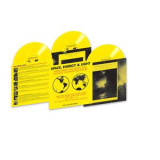
Alwin Nikolais - Electronic Dance Music, 1966-1989 (2x12")

Often credited as the father of multi-media theatre, Alwin Nikolais (1910-1993) took complete creative control over his productions - including cutting-edge approaches to lighting and costume that transformed human bodies into shifting sculptural shapes, while also composing wildly innovative electro-acoustic and synth-based audio as accompaniment.

After initially experimenting with musique concrète and tape manipulation (as demonstrated on the 1959 LP Choreosonic Music of the New Dance Theatre of Alwin Nikolais) Nikolais became the first owner of Robert Moog's synthesizer at the Audio Engineering Society convention in New York in late 1964. Relying heavily on the Moog and later the Synclavier synth/sampler, these 21 tracks document Nikolais' highly-prescient compositions across the mid 1960s through to the late 1980s - existing not only as extensions of his other-worldly choreographic productions, but standalone pieces of foundational mid-century American electronic and experimental music.

"Born in Southington, Connecticut in 1910, Nikolais’s early years and early career were in acting, music and puppetry. It was not until the late 1930s that he began his work as dancer/choreographer in Hartford, Connecticut, where he was commissioned by the Avery Memorial Theatre, a part of the Wadsworth Atheneum, to create an evening-length work to the music of Ernst Krenek. Previously his work and study as a pianist-organist found him accompanying silent films. This sort of accompaniment required from the musician not only a playing skill but also a versatility in improvisation, matching movement to sound, and evoking mood to situation.

Nik was drawn initially to dance by his involvement with the percussion scores used by the illustrious early twentieth century German dancer Mary Wigman. In trying to learn more about percussion, he was lured into dance class and thus his career began. His development of music and dance occurred simultaneously. His introduction to the twelve-tone technique opened his mind to the expanding areas of atonal music, and his dealing with music as sound per se. In 1948, after being appointed director of the Henry Street Playhouse in New York, Nikolais formed the Playhouse Dance Company, later known as the Nikolais Dance Theater, and began his aesthetic orientation toward dance as a study of motion. By the 1950s, he had ceased creating literal dances and began his explorations and eventual milieu as an abstractionist.

Sound became an important part of his abstract theatre. For his first dances, which involved his new thinking of dance as both a visual and kinetic art, he used live percussion scores in which he directed his dancers to play instruments of all nature. There was a combination of children’s toy instruments as well as harsh and resonant automobile brake drums, and other pitched auto parts which he also used to accompany classes. Once he installed his own tape recording machines, he quickly used the limited range these instruments provided in a new way, slowing and increasing speed and reversing sound. He also made the sounds adhere to the choreographic structure (not the other way around), thereby giving the dance its independence from the musical phrasing. But the real need remained: the search for new sound. Nik made a sound library, recording noises and percussion and vocal sounds, which the French aptly called musique concrète. Needless to say, he became a master at splicing bits and pieces.

From 1956 to 1962 Nikolais composed eleven major scores for his theatre pieces using such techniques. In 1963, James Seawright, who at the time was assisting Nik in his productions and also working at the Columbia-Princeton Center for Electronic Music, recorded a sound bank for the production Imago (1963). With this material, Nikolais created his first synthesizer score. Imago won the Paris Grand Prix in 1968 and launched the Nikolais Dance Theatre towards its national and primarily international acclaim.

During the same period, Seawright came to Nik and told him of a young man who had invented and constructed a simplified synthesizer and insisted that Nik visit the electronic fair currently being held in New York. Nik did so and met Robert Moog. He was completely taken by the new machine and after making some suggestions to Moog, (which Moog made), Nik bought the inventor’s first machine with the aid of a Guggenheim Fellowship. Moog himself was astonished by what his machine could produce for Nik. This machine was later acquired by the Museum of Musical Instruments at the University of Michigan at Ann Arbor as the first Moog synthesizer. The Synclavier was Nik’s next source of sound and since the mid-1970s remained the major instrument in the Nikolais soundroom.

Alwin Nikolais has been honored and awarded throughout the world. He has received the French Legion of Honor, the Kennedy Center Honors, National Medal of the Arts, two Guggenheim Fellowships, as well as Mellon, Ford, and Rockefeller grants. He has been a recipient of NEA grants since 1966, been awarded five honorary doctorates, all for his remarkable achievements in Dance Theater. His genius has influenced several generations of artists."
—Murray Louis

In Stock

On Stock and ready to ship

Last In: 45 days ago
30,21 €
Tony Kofi - Another Kind Of Soul
  • A1: A Portrait Of Cannonball
  • A2: Operation Breadbasket
  • A3: Another Kind Of Soul
  • A4: Stars Fell On Alabama
  • B1: Things Are Getting Better
  • B2: Sack O' Woe
  • B3: Work Song

BBC and Parliamentary Jazz Awards winner Tony Kofi 's ANOTHER KIND OF SOUL traces the explosive music of Cannonball Adderley from his first session as leader in 1955 through his work with Miles Davis to the soul-jazz of the 1960's. Recorded live at Luton's Bear Club in 2019, it also features Andy Davies on trumpet, pianist Alex Webb, bassist Andrew Cleyndert and Alfonso Vitale on drums. This is the distilled version of two very special nights, immortalised by Paul Riley's recordings. The album is available in limited edition 180 gm vinyl the medium of Adderley's erato best replicate the ambience of this remarkable live recording, and in digital format. The album is not called A Portrait of Cannonball as there is already one bearing that name by the great man himself. It is however, without a doubt,

Another Kind of Soul by Tony Kofi.

Kofi has performed with the World Saxophone Quartet, Clifford Jarvis, Courtney Pine, Donald Byrd, Dr. Lonnie Smith, Eddie Henderson, Jamaaladeen Tacuma and Ornette Coleman. The Guardian has described his improvisational skill as having "an arrestingly raw power".

In Stock

On Stock and ready to ship

Last In: 3 months ago
22,65 €
Joseph Schiano di Lombo - Le tact (Sound piece for Fondation Henri Cartier-Bresson) (LP)

With Le Tact, Joseph Schiano di Lombo delivers a work of rare finesse, conceived as a posthumous conversation with photographer Henri Cartier-Bresson. Through seven meditative pieces - whose evocative titles echo the photographer's words when describing the art of creating an image - this album explores the instinctive and delicate relationship that connects music and photography to our everyday lives.

Presented for the first time on stage during the 20th anniversary of the Henri Cartier-Bresson Foundation, Le Tact draws its inspiration from the photographer’s art: a sensitive and respectful approach, capturing the essence of things without altering them. This spirit of discretion and precision is distilled by Joseph into his music, blending composition and improvisation with intuitive elegance. While Joseph composed and performed the piano, organ, synthesizer, clarinet, and guitar himself, he opened his arrangements for the first time to other musicians. Agnes Wasniewska (oboe), Barbara Misiewicz (cello), and Tomasz Baye Zietek (trumpet) bring their sonic textures, enriching this work, which is both intimate and collaborative. The album was recorded between Paris and Sopot (Poland) during a residency organized by the CNM.

The album’s title perfectly encapsulates its essence: Le Tact. This simple word, evoking both the sense of touch and artistic intuition, reflects the way Joseph composes—with respect, humility, and attention to detail. Each note seems to float lightly, as if to preserve the serenity of the moment. Le Tact transcends genre boundaries. Between ambient music and contemporary art, this album invites listeners to slow down and truly listen. It is a tribute to the beauty of the world, captured with the subtlety of a photographer and the sensitivity of a musician.

In Stock

On Stock and ready to ship

Last In: 6 months ago
24,79 €
bad lsd trips - ultrafest

Bad Lsd Trips

ultrafest

12inchENMB-17
enmossed
24.02.2025

Oversized custom cut LP jackets (13” / 33.02 cm width)
Silkscreened with bespoke iridescent citrus green ink by Mark Rice
Short story by Natalia Zuluaga

Flexi 7”:
steaming mescaline (extended mix by bad lsd trips)
Citrus green metallic foil stamp
Pressed in full stereo
Edition of 150

I.

bad lsd trips is the collaborative duo of makers doris dana and domingo castillo flores. Respectively the two have fostered practices that have sprawled out through various approaches and, whether in the lanes of the musical or the contemporary arts, the phenomenology of the social and inclusive prevails. On ultrafest, this motif continues through the psychedelia of its eight time-defying recordings, welcoming the listener into an open temporal architecture of the stereo field as a signifier of environment. It is worth noting that the group began collaborating in Miami, Florida with longer form improvisations recorded to a stereo cassette deck. In these recordings, the paved geographical sprawl and oceanic view permeated the approach to amassing long swaths of sound material. Listening back on that work at the time of this writing, each track feels as though one is walking into an active space, arriving to an event already in full swing and finding your place inside of it. On ultrafest (this album) something different occurs. The space and events are built around you as you move through the record.

II.

The name of the album is ultrafest, which should effectively provoke your mind's eye the imagery of young people dancing, salivating, grinding, and imbibing chemical compounds to the perversely formalized musical genres of “Electronic Dance Music” and latter-era Dubstep often heard in European Uber rides and energy drink commercials. A far distance from the icy and machinic reverie of Techno’s finest rave eras or the notable historical contributions of Miami’s cerebral producers to IDM’s global output, ultrafest is a libidinal catharsis as festival scaled to a multinational corporation of hedonistic excess. The festival has been a hallmark of Miami cultural industry production and optical enticement for tourism, purportedly bringing in nearly a billion dollars in revenue to the city since 2012. Scores of documentation exist wherein this decadent escapism leaves the concertgoer, usually in some neon garment on a near nude body potentially adorned with fluffy faux fur leg warmers, facing a comedown from the combination of volume, sun, dehydration, and methylenedioxy-methylamphetamine. This MDMA experience characterizes an aspect of the way bad lsd trips employs vocals and pitch on this album. The detached, high octaved longing of a high pitched vocal is decoupled from its typical auditory body of song. High-pass clicks and pops touch the (h)air on the back of the neck, promising goosebumps and teasing towards euphoric rushes of dopamine, yet also exist decoupled from the body of song. As the dopamine depletes and the sun imposes itself, Miami’s downtown of skeleton real estate is your company as you meander towards your parked vehicle to rest your fatigued senses, elevated heart rate, and quench the need for air conditioning on your skin. The immediacy of bombastic social immersion to architectural alienation palpable here.

III...

- Nick Klein

In Stock

On Stock and ready to ship

Last In: 19 months ago
32,35 €
Derek Bailey & Jamie Muir - Dart Drug

Percussionist Jamie Muir was a member of King Crimson during the recording of Larks' Tongues In Aspic, in 1973. Staying less than a year with Robert Fripp, the Scot had already cut his teeth with another master guitarist, Derek Bailey, as part of the Music Improvisation Company, along with Evan Parker, Hugh Davies and Christine Jeffrey, whose eponymous 1970 album was one of the first releases on ECM. Muir and Bailey recorded Dart Drug eleven years later, in 1981.There's no shortage of great percussionists in the brief history of free improvised music but on the strength of Dart Drug alone Jamie Muir deserves a place at High Table. Unlike for example Han Bennink and John Stevens, though, you can't hear echoes of any particular jazz drummer in Muir's playing, even if he has expressed appreciation for Milford Graves (who himself sounded like nobody else who'd come before him).What on earth did Muir's kit consist of Some instruments are clearly identifiable (bells, gongs, chimes, woodblocks); others could be... well, anything. Old suitcases thwacked with rolled up newspapers Tin cans and hubcaps inside a washing machine Who cares It sounds terrific - but if you're the kind of person who faints at the sound of nails scraping a blackboard, you might want to nip out and put the kettle on towards the end of the title track.Dart Drug is consistently thrilling, and often very amusing - but it's certainly not easy listening. In music we talk about playing with other musicians, whereas in sport you play against another opponent (or with your team against another team). Why not play against in music, too That's precisely what happens very often in improvised music, and Bailey was particularly good at it. How can a humble acoustic guitar hope to compete with a Muir in full flight Sometimes Bailey's content to sit on those open strings, teasing out yet another exquisite Webernian constellation of ringing harmonics and wait for the dust to settle in Muir's junkyard, but elsewhere he sets off into uncharted territory himself.'The way to discover the undiscovered in performing terms is to immediately reject all situations as you identify them (the cloud of unknowing) - which is to give music a future.' Bailey evidently concurred with this spoken statement by Muir, including it in his book Improvisation.Derek Bailey is no longer with us, of course, and Muir gave up performing music back in 1989. All the more reason for seeking out this magnificent, wild album.

In Stock

On Stock and ready to ship

19,54 €
Salamat Ali Khan - Metamusik Festival Berlin ‘74 Vol.II (LP)

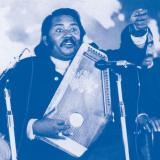
Black Truffle is thrilled to announce a second volume of unheard concert performances from legendary Pakistani kyhal singer Salamat Ali Khan, recorded at Berlin’s Neue Nationalgalerie as part of the MetaMusik festival in 1974. Like the first volume, the immaculate recording by Michael Hönig (of krautrock legends Agitation Free) captures Khan performing a single extended raag in the company of Shaukat Hussein Khan on tabla and Hussein Bux Khan on harmonium. In addition to his stunningly inventive and moving vocal performance, Khan is heard accompanying himself on a specially tuned alpine zither (in place of the traditional swarmandal, an Indian style of zither). The lack of an underlying tanpura drone gives the music its characteristic floating quality, with the three instruments and voice masterfully dancing around one another as they sketch the outlines of this grand, 40-minute Raag Chandrakauns.

If anything, this epic performance of the late-night Raag Chandrakauns is even more seductively spacious and psychedelic than the music heard on the first volume. Obeying the traditional shape of Hindustani classical vocal music performance, a gradual rise in both pitch and rhythmic activity, the music hovers for twenty minutes in a reflective calm, the pulse only gently stated by the tabla while harmonium ornamentation and zither strums float by. In this meditative space, Khan gradually orients us to the contours of the raag, beginning with long notes at the bottom of his register. His improvisation at once builds with a stunningly firm sense of internal logic and seems liberated to explore every melodic and ornamental byway that comes up along the way. By the time we turn to the record’s second side, the music has grown into something far more frenetic, with virtuoso tabla passages at times occupying centre stage between Khan’s increasingly rhythmic melodic variations. Concluding with a sequence of unison tabla and voice passages of breathtaking complexity, the performance is met with rapturous applause. Arriving in a blue-toned variant of the first volume’s sleeve, with acclaimed musicologist Peter Pannke’s liner notes in the original German, Metamusik Festival Berlin ’74 Volume II is not to be missed. Essential listening not just for Hidustanti classic aficionados, but for anyone who needs reminding of the magic of collective music making in the moment.

pre-order now09.10.2026

expected to be published on 09.10.2026

24,79 €
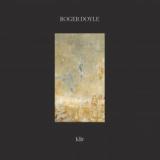
ROGER DOYLE - IDIR

ROGER DOYLE

IDIR

12inchACRDLPX3
ALLCHIVAL
08.10.2026

We welcome back one of Ireland’s most important electronic music pioneers, Roger Doyle for his third solo release on our Allchival label. For those who don’t know, Doyle is a composer, producer, founding member of the influential music-theatre company Operating Theatre, and friend to the label. Doyle has been exploring the possibilities of electronic sound since the 1970s which we have been mining.
Idir brings together new fixed electronic works, software piano improvisations and voice, alongside a new recording of music from Operating Theatre’s 1986 production of Sebastian Barry’s The Pentagonal Dream, performed by Olwen Fouéré. Also included is a response to the dreamlike language of James Joyce’s Finnegans Wake.
Meaning “between” in Irish, Idir feels like a fitting title for an album that moves between eras, technologies, theatre and electronic composition: connecting Doyle’s pioneering past with his continuing practice. Returning back to an electronic foundation, the majority of tracks were composed between 2023 and 2025.

pre-order now08.10.2026

expected to be published on 08.10.2026

19,96 €
DANIEL VILLARREAL - LADOS B

"Lados B" is a deep dive into the high-level spontaneous music made by Villarreal, Parker, and Butterss across those two days in 2020. Villarreal is heard leading the group through various rhythmic modes and structures for improvisation - flow as informed by the Latin funk of Fania Records as it is by the otherworldly humanity trance of Brain Records - while Parker and Butterss draw on their extensive experience playing free together (as heard on their ETA IVtet LPs) to build harmonic buoys for their spontaneous melodicism. The result is a beautifully vivid illustration of context, creativity, and collective composition from a particularly rich moment in history.

out of Stock

Order now and we will order the item for you at our supplier.

Last In: 29 days ago
24,33 €
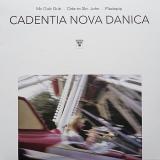
Cadentia Nova Danica - Mc Gub Gub / Ode To Skt. John / Pladepip

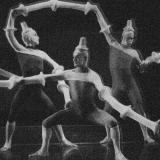
John Tchicai (1936 – 2012) was one of the most important free improvising saxophonists of the 20th Century: an artist of rare vision and aptitude whose lines soared and stood out even in the most hallowed company, and whose body of work as a leader / composer is among the most singular and distinct within the entire canon of that music. But Tchicai’s importance doesn’t end there. Born in Copenhagen, Denmark, to a Danish mother and a Congolese father, his life and career represent a crucial bridge between the European and American traditions of free jazz. Initially trained on violin as a child, Tchicai shifted his focus to the clarinet and alto saxophone during his mid-teens, and began touring Europe as a professional musician by his early 20s, which landed him at a socialist youth festival in Helsinki, Finland, where he met the trumpeter Bill Dixon and saxophonist Archie Shepp. Impressed by what they heard, Dixon and Shepp encouraged the young saxophonist to move to New York, and in so doing changed the history of jazz forever.

Tchicai’s arrival in New York marks the rare occurrence of a European player joining the intimate circle that was first wave of American free jazz. Following his landing in the city in November of 1962, in addition to regularly sitting in with Don Cherry’s group, Tchicai began playing with Bill Dixon's band alongside Archie Shepp and Roswell Rudd, forming the nucleus of the foundation of the New York Contemporary Five - one of the most important groups of the era - which counted Tchicai, Shepp, Cherry, Don Moore, and J. C. Moses as its members. From the ashes of this group, Tchicai would go on to found the legendary ensemble, New York Art Quartet, with Roswell Rudd, Milford Graves, and Lewis Worrell, as well as working within Albert Ayler's band, recording “New York Eye and Ear Control”, Shepp’s band, recording “Four for Trane”, the ensemble that recorded John Coltrane's “Ascension”, and the Jazz Composer's “Orchestra”.

By the time he decided to return to Denmark in 1966, had Tchicai chosen to record little else, his legacy within the history of music would have been ensured. Incredibly ambitious, his arrival home marked the beginning of an incredible period of activity which saw him radically expanding his creative explorations, which by the end of the decade would include becoming a founding member of Amsterdam's Instant Composers Pool and helping to record John Lennon and Yoko Ono's “Unfinished Music No.2: Life with the Lions”. This, however, was proceeded the formation of a new orchestra, Cadentia Nova Danica, led by Tchicai, dedicated to radical cross-disciplinary exploration. Remaining together between 1966 and 1971, the group and its shifting membership regularly fell into collaboration with artists and composers, notably Musica Elettronica Viva, who existed beyond the realms of jazz, as well as participating within multi-media events that incorporated the visual realms.

Cadentia Nova Danica’s only two LPs - “Cadentia Nova Danica” (Polydor, 1968), and “Afrodisiaca” (MPS, 1969) - are effectively Tchicai recorded efforts as a leader, and are legendary. There’s little mystery, once heard, why the later landed on Thurston Moore’s iconic “Top Ten from the Free Jazz Underground”, published by Grand Royal in 1996. Sadly, despite playing extensively during their five year run, with exception of a CD documenting a performance at Jazzhus Montmartre, in 1966, until now there has been no other publicly available recordings that allow us to capture a glimpse of this astounding band at work. Alga Marghen / Formalibera’s vinyl pressing of a never before released body of recordings, made in Copenhagen between 1969 and 1970, changes that in the most exciting of ways.

Comprising three pieces - “Mc Gub Gub, (I–VIII)”; “Ode to Skt. John”; and “Pladepip” - the material on this stunning LP comes from two specific events. The first, which encompasses the first side, “Mc Gub Gub, (I–VIII)” was recorded by Cadentia Nova Danica - in this instance, Tchicai, Sune Weimar, Theo Rahbek, Christian Kyhl, Niels Holt, Jørgen Thorup, Michael Schou, Morgens Bollerup, Allan Gregersen, Ole Matthiessen, Pierre Dørge, Willy Jaegert, Anthony Barnett, and Jon Finsen - on May 29th, 1969, at the ABC-Theatre in Copenhagen. Penned by Tchicai, the piece is a sprawling, evolutionary composition at the outer reaches of free jazz, rooted in large blocks of colliding tonality and rhythm - a sound only accessible to larger ensembles - that push territories explored by Charles Mingus to previously unimagined heights, threaded by moments of hard blown fire. Writhing like a stormy sea - skronking and devilish - “Mc Gub Gub, (I–VIII)” is a work of profound complexity that singlehandedly illuminates not only Tchicai’s singular vision as a composer, but also the power and uniqueness of Cadentia Nova Danica during the band’s most vital period.

The two pieces - “Ode to Skt. John” and “Pladepip” - taking up the flip side, were recorded on February 21st, 1970, at the Danish Broadcasting Corporation’s Radio House, and are the outcome of Cadentia Nova Danica’s extended residency there between 1969 and 1970. In many ways, these two recordings offer some of the best insights into the broad collaborative approaches that defined the band, in this case encountering them working with Danish experimental composer, Svend Erik Werner, who was among the earliest in his country to embrace stylistic pluralism and the use historical forms within a modern context. “Ode to Skt. John” - based on aspects of Gregorian music - was penned by Werner, incorporating heady improvisation by the members of Cadentia Nova Danica, this time made up by Tchicai, Sune Weimar, Hugh Steinmetz, Theo Rahbek, Christian Kyhl, Michael Schou, Morgens Bollerup, Ole Kühl, Torben Enghoff, Mauritz Tchikai, Kjeld Ipsen, Willy Jaegert, Ole Matthiessen, Ole Thilo, Pierre Dørge, Steffen Andersen, Jon Finse, and Clause Bøje. The piece is a fascinating binary of the composed and improvised, utilising the band’s large scale to introduce a remarkable sound within its slow progressions and furious, driving free moments, in this incredible meeting of worlds.

The album’s final piece, “Pladepip”, is arguably its most historically significant: an entirely singular piece, unlike anything in Tchicai’s recorded canon as his foray into musique concréte. Drawing upon two recordings of full-band improvisations by Cadentia Nova Danica, for its creation Tchicai also gouged the surfaces of 78rpm records in his collection to skip and create repeated phrases and patterns, creating a stunning sound collage of hard angles and abrupt phrase, that creates a striking counterpoint to the band’s flowing improvisations that bookend those passages. The result is an engrossing listen and easily one of the most unique and culturally important gestures in the entire history of musique concréte.

Truly incredible, Alga Marghen / Formalibera’s vinyl pressing of this never before released body of recordings, made by John Tchicai’s Cadentia Nova Danica, in Copenhagen between 1969 and 1970, offers an unprecedented window into one of the most important groups working in Europe during that period, significantly expanding their rare and slim discography to date. Accompanied by extensive exploratory liner notes by veteran jazz writer, Ed Hazell, this is easily one of the most historically important archival releases of the year and is impossible to recommend enough. Absolutely essential on every count.

pre-order now28.08.2026

expected to be published on 28.08.2026

28,15 €
SML - SPONTANEOUS MUSIC LIVE

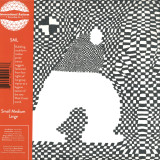
SML is a Los Angeles based quintet featuring Anna Butterss, Jeremiah Chiu, Josh Johnson, Booker Stardrum, and Gregory Uhlmann. Spontaneous Music Live contains two side-length pieces of unedited improvisation, recorded live at Los Angeles venue Zebulon during SML"s December 2025 three-night residency, just weeks after the release of the band"s second album HOW YOU BEEN. It was recorded and mixed live to stereo tape by Bryce Gonzales (the same engineer/wizard known for his gorgeous live captures/mixes of Jeff Parker"s ETA IVtet). Between HOW YOU BEEN and their 2024 debut SMALL MEDIUM LARGE (both of which were heavily edited, shaped and post-produced) the band has developed a reputation for records that are heavily fused, polished, and punchy. The medium is on full post-modern display on those LPs, and the band"s post-production knife can be responsible for much of the perspective - the tastiest morsels collected, arranged, and rearranged just so. But the source material from both those albums were live recordings. Longform, unwieldy, ebbing and flowing. On top of that, every performance the band has ever done has been fully improvised in that spirit. So in the sphere of live performance the band"s esteem has grown down a different path - one of linear, hypnotic, expansion. It"s a perceived split persona shared by some of SML"s most inspiring conceptual bedfellows: compare the extended madness of Can"s Live in Paris 1973 to the relative tight form of Future Days from the same year; the speed-funk chaos of Miles Davis" Dark Magus to the heavily deconstructed On The Corner or Big Fun. Spontaneous Music Live removes the curatorial perspective and pulls the curtain back on that search-pluck-reconstruct editing process. What we"re left with is the psychedelic realism of the band in situ, in their home town, collectively improvising, fully in-the-moment, mining for that moment of discovery. We hear, in macro, each nugget of sound which could be the basis for a future SML album track, spattered amongst the collective chaos-and-control like stars in the night sky.

out of Stock

Order now and we will order the item for you at our supplier.

Last In: 33 days ago
23,49 €
Angel Bat Dawid - The Oracle (IA11 Edition) LP
  • A1: Destination (Dr. Yusef Lateef)
  • A2: Black Family
  • A3: What Shall I Tell My Children Who Are Black (Dr. Margaret Burroughs)
  • A4: Impepho
  • A5: We Are Starzz
  • A6: London
  • B1: Capetown (feat. Asher Simiso Gamedze)
  • B2: The Oracle

Angel Bat Dawid's International Anthem debut The Oracle introduced her multifaceted voice to the world. The response to its modest, initial cassette/digital release in January of 2019 was immediate, and immense. Within a month of its announcement, Dawid was being featured on magazine covers and receiving offers from international festivals; and her subsequent activity marked the beginning of an epic run of creative output (including 2020's LIVE double LP, the same year's EP Transition East, 2021's Hush Harbor Mixtape Vol. 1 Doxology, and the sprawling opus Requiem for Jazz, released in 2023) that continues through the present.

The collection of compositions on The Oracle present a deep blend of powerful and emotive songs alongside heavy and free improvisation. In true DIY fashion, Dawid recorded and mixed the album using only her cell phone.

"Angel's fieldnote approach affirms that the everyday remains a legitimate site of creative production," says South Africa based percussionist, collaborator, and IARC labelmate Asher Gamedze in his liner notes for the album's IA11 Edition. Gamedze - the only other musician to appear on The Oracle besides Dawid, who constructed most of the album's tracks by layering, overdubbing, and arranging lo-fi symphonies of her own voice, wind instruments, percussions, and keyboards - waxes extensively about Dawid's significance in his notes, calling her "a living exemplar and extension of the spacious sonic horizons opened by the likes of the AACM and their refusal of any limitations on their creative vision and the destruction of the demarcation between composer and improviser."
"...a masterpiece, rich with dense improvisation and Afrocentric themes." - Suraya Mohamed, NPR

out of Stock

Order now and we will order the item for you at our supplier.

Last In: 5 years ago
22,06 €
BEN LAMAR GAY - YOWSERS LP

Yowzers is a new album by Chicago composer, improvisor, and musical folklorist Ben LaMar Gay. Yowzers features Gay"s working quartet with Tommaso Moretti (drums, percussion, voice), Matthew Davis (tuba, piano, bells, voice), and Will Faber (guitar, ngoni, bells, voice), as well as guest instrumentalist Rob Frye and a mini-choir. The album recalls the high-minded freedom of Liberation Music Orchestra, the glitched-out electronic webs of Robert Aiki Aubrey Lowe, the unbridled rhythms and sandpaper bellows of Bukka White, and the harmolodic cartoon glory of Arthur Blythe"s Illusions. It"s all there, filtered through an improvisational approach and a lifetime of secrets embodied. For a man who has inhabited and traveled these continents so extensively, it"s safe to call this work true "Americana", despite what that word might mean to the average person in the United States.

out of Stock

Order now and we will order the item for you at our supplier.

Last In: 14 months ago
21,81 €
BEN LAMAR GAY - YOWSERS LP
  • Yowzers
  • The Glorification Of Small Victories
  • There, Inside The Morning Glory
  • Roller Skates
  • For Breezy
  • I Am (Bells)
  • Promontory
  • John, John Henry
  • Damn You Cute
  • Cumulus
  • Touch
  • Leave Some For You
also available

Black Vinyl[21,81 €]


Yowzers is a new album by Chicago composer, improvisor, and musical folklorist Ben LaMar Gay. Yowzers features Gay"s working quartet with Tommaso Moretti (drums, percussion, voice), Matthew Davis (tuba, piano, bells, voice), and Will Faber (guitar, ngoni, bells, voice), as well as guest instrumentalist Rob Frye and a mini-choir. The album recalls the high-minded freedom of Liberation Music Orchestra, the glitched-out electronic webs of Robert Aiki Aubrey Lowe, the unbridled rhythms and sandpaper bellows of Bukka White, and the harmolodic cartoon glory of Arthur Blythe"s Illusions. It"s all there, filtered through an improvisational approach and a lifetime of secrets embodied. For a man who has inhabited and traveled these continents so extensively, it"s safe to call this work true "Americana", despite what that word might mean to the average person in the United States.

pre-order now06.06.2025

expected to be published on 06.06.2025

24,33 €
Miles Davis - Black Beauty: Miles Davis At Fillmore West LP 2x12"

Dateline: April 10, 1970. Setting: The storied Fillmore West in San Francisco, CA. Context: Miles Davis, three days removed from his first session for Jack Johnson and, with newly recruited soprano saxophonist Steve Grossman in tow, opening shows for countercultural heroes the Grateful Dead on the latter’s home turf. Result: The initial rumblings of a thrilling era in which Davis and his cohorts would again upend jazz and popular conceptions of the genre with music steeped in groove, improvisation, and hang-on-for-your-life adventurousness. All captured on Black Beauty: Miles Davis at Fillmore West.

Mastered at MoFi’s California studio, pressed at Fidelity Record Pressing in California, and housed in a Stoughton gatefold jacket, Mobile Fidelity's numbered-edition 180g 33RPM 2LP set helps bring what went down that spring evening in Bill Graham’s venue to your listening room with exceptional clarity, balance, and presence. Originally only released in Japan in 1973 and unavailable in the United States until the late ‘90s on compact disc, this marks the first time Black Beauty has been issued on domestic vinyl. The wait is worth it.

Benefitting from quiet surfaces and excellent definition, these LPs present the band’s livewire energy and torrential storm of notes with captivating dynamics, pacing, and fullness. At its core, this audiophile reissue takes you into the walls of sound erected by a band learning on-the-fly the sheer power, will, and breadth of the electric jazz Davis was orchestrating and realizing, on the spot, would reach rock audiences that until that point had only a faint awareness of his mad-scientist experimentation. The sense of release and reach conveyed by these carefully restored records make it clear the veteran bandleader was in the process of a permanent shift that he’d chase for the next five years.

Given Davis was only a few months away from releasing the pioneering double album Bitches Brew, it shouldn’t come as a surprise that much of the fare here adheres to similar explorative approaches. Turbulent rhythms, provocative trumpet passages, and rich, saturated tonal colors that seemingly splash against a blank canvas take precedence over any traditional attempts at organization and melody. Davis and Co. intentionally play everything on a line with the bandleader signaling changes with his horn via coded phrases. The group speaks a common language — with each member having gone to achieve iconic status for their career contributions and technical prowess.

In the company of Grossman, Chick Corea (piano), Dave Holland (bass), Jack DeJohnette (drums), and Airto Moreira (percussion), Davis constructs themes around “Directions,” “Miles Runs the Voodoo Down,” “It’s About That Time,” the title track to Bitches Brew, and more from his then most-recent studio works and the in-progress Jack Johnson. His farewell to the popular standards that for nearly two decades remained a part of his repertoire arrive via a brief dalliance with “I Fall in Love Too Easily,” a shortened albeit aggressive “Masqualero,” and the “Theme” finale of “Spanish Key.” Initially, Black Beauty lacked specific track listings due to Davis’ increasing frustration with listeners over-analyzing his music.

In retrospect, it’s difficult to blame anyone for wanting to view what’s on display here with the aural equivalent of a magnifying glass. Leaning in rock directions, yet maintaining an ear for spaciousness and solos, Black Beauty survives as a snapshot of a thrilling moment amid a transitory period in which evolution came fast and furious. Just two months later, Davis would add another instrumentalist to the lineup in the form of organist Keith Jarrett, and the perpetually restless visionary would blast off to a more atmospheric and arguably more chaotic universe.

Consider, then, this live document a bridge to that galaxy and a breathtaking example of the possibilities of jazz itself.

pre-order now30.04.2025

expected to be published on 30.04.2025

88,19 €
Imperial Triumphant - Goldstar LP
 
3

Goldstar takes perennial New Yorkers, IMPERIAL TRIUMPHANT's exploration of the extreme and arcane and delivers the band’s most focused, authentic and accessible work to date. While the triumvirate has expanded the language of extreme music with albums including Alphaville (2021) and Spirit of Ecstasy (2023) via musical improvisation and a visual obliqueness that extends to their haunting masked performances, this is their defining moment. Also joining the Decibel magazine vaunted ensemble are Meshuggah drummer Thomas Haake and legendary drummer, Dave Lombardo, both of whose presence makes it clear that musically, IMPERIAL TRIUMPHANT are in a class by themselves. From album opener “Eye of Mars” to the stirring “Hotel Sphinx” and the death metal scraping “Rot Moderne”, this is the sound of IMPERIAL capitalizing on months of churning up the road in the company of Behemoth, Carcass and Zeal & Ardor. In their vision of urban disorder, IMPERIAL TRIUMPHANT's monolithic cityscapes are dark as any of their extreme or black metal brethren.

out of Stock

Order now and we will order the item for you at our supplier.

Last In: 18 months ago
25,63 €
GREGORY UHLMANN, JOSH JOHNSON, SAM WILKES - UHLMANN JOHNSON WILKES LP
  • Marvis
  • Fumarole
  • Arpy
  • Frica
  • Hoe Down
  • Jicama
  • Unsure
  • Fields
  • Shwa
  • Rewinded
  • The Fool on the Hill
also available

Black Vinyl[22,27 €]


Uhlmann Johnson Wilkes is the debut album from Gregory Uhlmann (SML, Anna Butterss, Duffy x Uhlmann, Perfume Genius), Josh Johnson (SML, Jeff Parker ETA IVtet & New Breed, Meshell Ndegeocello, Anna Butterss, Leon Bridges), and Sam Wilkes (Sam Gendel, Louis Cole, Chaka Khan). The three improviser/arranger/producers' impressive individual credits encompass such a wide stylistic pendulum swing that a collection of group music from the trio could mine any number of musical territories with masterful results. I n these 11 instrumental songs, the trio explores a spacious lyrical curiosity that could b e described as a jazz-informed take o n progressive electro-acoustic chamber music.

Conceived during two live shows at ETA and a session at Uhlmann's house in Los Angeles, the album maintains a focus on beauty, melody, and rhythm as the pieces unfold, with the trio pushing their instruments and highly-dialed effects to sculpt otherworldly sounds with the collective sensibility o f a rhythm section. The ethos of these instant compositions is arrangement-minded improvisation that showcases the mournful beauty of Uhlmann's fingerpicked electric guitar, the hybrid rhythm-lead of Wilkes' bass chording, and the textural harmonic worldbuilding of Johnson's effect-laden alto saxophone.

pre-order now14.03.2025

expected to be published on 14.03.2025

27,31 €
GREGORY UHLMANN, JOSH JOHNSON, SAM WILKES - UHLMANN JOHNSON WILKES LP

Uhlmann Johnson Wilkes is the debut album from Gregory Uhlmann (SML, Anna Butterss, Duffy x Uhlmann, Perfume Genius), Josh Johnson (SML, Jeff Parker ETA IVtet & New Breed, Meshell Ndegeocello, Anna Butterss, Leon Bridges), and Sam Wilkes (Sam Gendel, Louis Cole, Chaka Khan). The three improviser/arranger/producers' impressive individual credits encompass such a wide stylistic pendulum swing that a collection of group music from the trio could mine any number of musical territories with masterful results. I n these 11 instrumental songs, the trio explores a spacious lyrical curiosity that could b e described as a jazz-informed take o n progressive electro-acoustic chamber music.

Conceived during two live shows at ETA and a session at Uhlmann's house in Los Angeles, the album maintains a focus on beauty, melody, and rhythm as the pieces unfold, with the trio pushing their instruments and highly-dialed effects to sculpt otherworldly sounds with the collective sensibility o f a rhythm section. The ethos of these instant compositions is arrangement-minded improvisation that showcases the mournful beauty of Uhlmann's fingerpicked electric guitar, the hybrid rhythm-lead of Wilkes' bass chording, and the textural harmonic worldbuilding of Johnson's effect-laden alto saxophone.

out of Stock

Order now and we will order the item for you at our supplier.

Last In: 18 months ago
22,27 €
DANIEL VILLARREAL - LADOS B

On October 15th & 16th 2020, drummed Daniel Villarreal was joined by guitarist Jeff Parker and bassist Anna Butterss for two afternoons of recording in the backyard of Chicali Outpost in Los Angeles. For all three musicians, it was the first ensemble recording session they"d done in-person since the pandemic locked the world down just seven months prior. Some choice moments from the sessions made it onto Villarreal"s critically-acclaimed 2022 album Panamá 77, bust most of the music remained unreleased. Lados B is a deep dive into the high-level spontaneous music made by Villarreal, Parker and Butterss across those two days in 2020. Villarreal is heard leading the group through various rhythmic modes and structures for improvisation - flow as informed by the Latin soul of Fania Records as it is by the otherworldly trance of Brain Records - while Parker and Butterss draw on their extensive experience playing free together (as heard on Parker"s recently-released Mondays at the Enfield Tennis Academy, and the LA side of Makaya McCraven"s 2018 LP Universal Beings) to build harmonic buoys for their spontaneous melodicism. The result is a beautifully vivid illustration of context, creativity, and collective composition from a particularly rich moment in history.

out of Stock

Order now and we will order the item for you at our supplier.

Last In: 19 months ago
26,26 €
DAMON LOCKS - LIST OF DEMANDS

List of Demands, Damon Locks" first foray into creating an entire album from spoken and text-based work, finds the Chicago-based musician and educator collecting cultural abstractions and reorganizing them into a firm truth. The album lays out a vision of Black liberation and transmits it outward as a song cycle of bite-sized MF DOOM-meets-Nikki Giovanni rhythm experiments. The sample-based constructions are steeped in a lifetime of not only keen cultural observation, but direct communal participation in the culture. Locks" decades-long resume connects the dots between experimental improvisation, sample based hip hop, punk, and poetry - each done at the highest level and with a list of collaborators that could spin the head of even the most jaded listener. And that seems to be the point. To jump-start the entire personality spectrum into action. Ecstatic positivity examined via his nuanced grasp of reality, all working toward that ever-evasive concept of what could be.

out of Stock

Order now and we will order the item for you at our supplier.

Last In: 19 months ago
24,79 €
SML - Small Medium Large LP

SML is bassist Anna Butterss (Jeff Parker, Daniel Villarreal, Makaya McCraven), synthesist Jeremiah Chiu (Ariel Kalma, Marta Sofia-Honer), saxophonist Josh Johnson (Jeff Parker, Makaya McCraven, Nate Mercereau, Marquis Hill), percussionist Booker Stardrum (Amirtha Kidambi, Carl Stone, Lee Ranaldo, Patrick Shiroishi), and guitarist Gregory Uhlmann (Sam Wilkes, Meg Duffy, Perfume Genius). Their debut album Small Medium Large began as a collection of long-form improvisations recorded during two

separate two-night stands at beloved Highland Park venue ETA, a major development site for the burgeoning new LA jazz & improvised music sound, which unfortunately closed its doors permanently at the end of 2023.

The venue, perhaps best known outside of LA for Jeff Parker’s 2022 album Mondays at the Enfield Tennis Academy, was the perfect location for the start of SML, especially given that both bassist Anna Buterss and saxophonist Josh Johnson are in the quartet featured on that record. Small Medium Large was engineered and recorded in stereo direct to Nagra by Bryce Gonzales and compiled, arranged, and edited with additional production, recording, and
studio composition by SML.

While editing, chopping, and rearranging stereo mixed improvisations is hardly a new concept (for a modern and relevant example we can look to Makaya McCraven’s output on IARC) these results are a stunning expansion of the Teo Macero / Miles Davis editing concept explored on classics like Bitches Brew, On The Corner, and Get Up With It. Stylistically though, these recordings have more in common with the proto trance repetitions of Harmonia, and with Holgar Czukay’s re-assemblage technique used in his work with Can. Throw in a supremely intuitive utilization of Susumu Yokota’s floating patterns polyrhythm concept and we have a truly entrancing take on time-clocked electronic rhythms augmenting with live percussion, yet maintaining that elusive human sway.

out of Stock

Order now and we will order the item for you at our supplier.

Last In: 21 months ago
23,49 €
Nitai Hershkovits & Daniel Dor - The Garden Suite (LP)

Acclaimed musicians Nitai Hershkovits and Daniel Dor will release their highly anticipated album, “The Garden Suite”, on Circus Company. Following their previous collaboration on Daniel Dor’s debut album, “Four Petals”, this new project sees the duo exploring uncharted musical territory with an innovative, Moog-based sound.
Inspired by the groundbreaking work of synth pioneer Malcolm Cecil, “The Garden Suite” marries electronic textures with the richness of orchestral sound. Drawing from a vast range of influences, including the works of Benjamin Britten and Fredrick Delius, Hershkovits and Dor meticulously composed each track, layering Moog synthesizer melodies to emulate various instruments from the orchestra - from French horn to percussion, guitar, brass, and woodwinds. The result is a sound that is lush yet light, deeply textured yet not dense.
“The Garden Suite” marks a significant evolution in the partnership between Hershkovits and Dor, with their new compositions shifting from the rhythmic focus of “Four Petals” to a more texture-driven approach. The album showcases their ability to create genre-defying soundscapes, blending Daniel’s rhythmic system, “The Flower,” with lush, ambient layers of sound created on the Moog.
Nitai Hershkovits, known for his extensive work in jazz and classical music, began his musical journey as a clarinetist before transitioning to piano at the age of 15. His early passion for improvisation and jazz earned him several jazz competition awards in Tel Aviv. Nitai’s career highlights include his fiveyear tenure with the Avishai Cohen Trio, and his numerous projects as a solo artist, including work with ECM and his band Apifera.
Daniel Dor, a drummer and multi-instrumentalist, was born into a family of musicians in Tel Aviv. He began exploring rhythm at the age of 10, building his first drum set out of household objects. His innovative rhythmic method, “The Flower”, gained attention with his debut solo piano album, “Four Petals”, which led to his collaboration with Hershkovits. Daniel has performed with notable artists such as NOA, Avishai Cohen, and Chano Dominguez, and regularly lectures on rhythmic symmetry and music.
With “The Garden Suite”, Hershkovits and Dor offer a unique listening experience that challenges traditional genre boundaries. Their seamless fusion of rhythm, melody, and texture creates a soundscape that is as experimental as it is captivating.

out of Stock

Order now and we will order the item for you at our supplier.

Last In: 21 months ago
21,81 €
Sussan Deyhim & Richard Horowitz - The Invisible Road: Original Recordings, 1985–1990 LP

The Invisible Road: Original Recordings, 1985–1990 compiles an unheard, previously unreleased body of recordings by Sussan Deyhim and Richard Horowitz, dissidents from diametric backgrounds who met during the heady days of Downtown New York in the 1980s. This collection reveals the creative and life partners’ radical shared vision of avant-garde pop in all of its boundary pushing freedom, combining Deyhim’s singular approach to vocalization, Horowitz’s invention of new musical languages, and touchstones of traditional music from around the world, creating a new music that ultimately retains a voice entirely its own. Despite their difference in backgrounds and respective journeys, at the time of their meeting in the early 1980s in New York City, Sussan Deyhim and Richard Horowitz were both products of the search for freedom and understanding (and resultant awakenings) that swept the globe and helped culturally define the late 1960s and 70s. Deyhim, born and raised in Tehran, spent her teens dancing with Iran’s Pars National Ballet company, performing weekly on Iranian national television, and travelling her home country studying with master folk musicians and dancers, before relocating to Belgium and joining Maurice Béjart’s prestigious Béjart Ballet of the 20th Century. Horowitz, born and raised in Buffalo, New York, had spent much of the decade before abroad, first departing for Paris under the shadows of the Vietnam War, where he studied piano, Eastern philosophy, and became entrenched the city’s free jazz scene, playing with the likes of Steve Lacy, Anthony Braxton, and Alan Silva, before embarking south to Morocco where his friendship with Paul Bowles helped cultivate a deep passion for the country’s musical traditions and a shift in his musical practice.


The pair met by chance sometime in 1981 at Noise New York, a small studio on West 34th Street founded by the musician and recording engineer, Frank Eaton, as a utopian creative laboratory that beckoned artists and bands like Arthur Russell, Christian Marclay, Liquid Liquid and Butthole Surfers into its orbit. Both artists had recently relocated to the city, Horowitz having recently released his debut album, Oblique Sequences (Solo Nai Improvisations), on the legendary Paris based imprint Shandar, and fallen in with members of New York avant-garde like La Monte Young, Jon Hassell, David Byrne, and Brian Eno, and Deyhim having begun to more actively incorporate singing into her practice, notably recording a vocal score for choreography she was doing at La MaMa Experimental Theatre.


Initially bonding over a cassette tape of field recordings made by Paul Bowles that had been given to mutual friend and writer Brian Cullman (seeking answers for Ornette Coleman’s question “what is the sound of sound”), their earliest collaboration was documented on Horowitz’s 1981 album, Eros In Arabia, with Deyhim contributing vocals to the track “Queen Of Saba.” Over the coming years, their deep connection would routinely gravitate them into the studio, culminating in the body of recordings that would appear on their 1986 album for Crammed Discs, Desert Equations: Azax Attra. Unknown to nearly all but the artists, laying in wait over the decades on numerous multi-track and stereo reels, DAT tapes, and reference cassettes, were a vast array of recordings made by Deyhim and Horowitz bookending Desert Equations. The 13 pieces represented on The Invisible Road: Original Recordings, 1985–1990 were recorded largely between Noise New York and Daylight Studio in Brussels, during a period that Deyhim describes the partnership between herself and Horowitz’s as seeking a music “free of any specific cultural reference, with a personal musical signature,” blossoming into a body of sonority that embraced the energy of contemporary boundary pushing pop and the avant garde, filtered through their mutual love and study of various musical traditions from across the globe and deep engagement with the ideas and tactics of experimental music.


Undeniably rooted in Horowitz’s study of the North Africa ney and the music of the Berber and Gnawa cultures during his time in Morocco, Deyhim’s deep engagement with the folk traditions of Iran, and the couple’s immersion in the interconnected Downtown underground music scenes, each piece on The Invisible Road offers its own vision creative and cultural hybridity. Deyhim sings in both English and Farsi, as well as a composite tongue that she developed by drawing upon numerous indigenous vocal techniques from around the world, intuitively responding to Horowitz’s simultaneous sound syntax forming and combining a wide range synthetic and acoustic instrumentation, and experimental tape techniques, within a visionary series of free-standing expressions.

out of Stock

Order now and we will order the item for you at our supplier.

Last In: 19 months ago
23,49 €
Forgetting You Is Like Breathing Water - S/T

Forgetting You Is Like Breathing Water, the self-titled debut from the duo of trumpeter Will Evans and guitarist, synthesist, producer and multi-instrumentalist Theo Trump, arrives like a vault revelation. It feels like a decades-old yet newly unearthed masterwork of gorgeous ambient improvisation, the sort of thing scholars live to research and shepherd into deluxe reissue.

The patient, crystalline chords that swell and resonate like a series of confessions; the textured brass murmurs that suggest a ’60s or ’70s Fire Music master at their most poignant. Provocative found-sound experiments threading arcane religious recordings through dystopian soundscapes. Ear-shattering free-noise tumult. Where and when did this music come from? Who are these voices?

As it turns out, Forgetting You Is Like Breathing Water springs from an engrossing human story, though it isn’t necessarily the one you’d expect. This work of stunning maturity is in fact an entrance by two little-known explorers in their early 20s, who grew up together in Virginia, in the shadow of the Blue Ridge Mountains. It documents one of those perfect, sparkling moments in post-adolescence when big decisions and responsibilities are right around the corner, but for a spell, two young artists are able to create among the comforts and nostalgia of their shared past.

It also represents a reunion of sorts, as Evans and Trump connected as toddlers, became inseparable as boys, then pursued independent lives and creative paths as young adults. “Theo is my oldest friend,” Evans says, “and I feel like that’s what this band is — us meeting right in the middle of our interests.”

Now, having conjured this magic, they’ve detached once again: Evans, whose other works include the indie/avant-jazz unit Angelica X, is currently based in New York City. Trump recently moved to England, where he’d participated in his family’s theatre company, to go to school and further his solo ambient project. “This album didn’t start out as something super ambitious,” Evans explains. “It was more just an excuse to spend time together again and make music.”

***

In conversation, Evans and Trump are a delight, especially for cynics who might think that Gen-Z is only capable of doomscrolling. They come across as kindly young intellectuals who grew up using the internet as it was intended, for exposure to ideas and art across genres and generations. Trump points to indie-folk and the oracular post-rock of late Talk Talk, Bark Psychosis and Gastr del Sol. Pressed for his guitar heroes, he cites Bill Orcutt, Mary Halvorson and Marc Ribot, and mentions his devotion to alt-country. Heyday electro-industrial stuff like Skinny Puppy and Nine Inch Nails also meant a lot to him.

Evans is equally intrepid, though his background has a greater jazz focus. Ambrose Akinmusire, among today’s most thoughtfully commanding trumpeters, is a favorite. As for the soulful murmur he offers throughout Forgetting You, Pharoah Sanders’ wistful and lyrical contributions to Floating Points’ work is a touchstone.

The two grew up down the street from each other in the northern Piedmont town of Batesville, Virginia. Their families were friends, holidays were celebrated together and they became the most loyal of pals. As children they had a pretend band.

Then life unfolded, they attended different schools and their paths diverged. Evans discovered John Coltrane and became a jazz obsessive, as Trump found punk and hardcore and later began making ambient music. As a dedicated jazz trumpeter, Evans studied formally and widely; Trump was an autodidact, teaching himself guitar and absorbing synthesis and production techniques. The late teens and very early 20s brought moves away from home and back to home, as well as plenty of listening and learning. The Covid pandemic meant an opportunity to reconnect on long walks. Through it all, together and apart, they remained reverent of each other.

By early 2023, they found themselves living again among the Blue Ridge Mountains. In the evening, after giving trumpet lessons in Charlottesville, Evans would make the eerily beautiful trek “over the mountain” to Trump’s home in Staunton, Virginia. They’d talk and eat and begin to improvise, deep into the night. Evans played trumpet and sometimes drums. (Given the wee-hours recording schedule, the neighbors didn’t appreciate the latter.) Trump plugged a rickety, junk-store Telecaster-style guitar into a cheap solid-state amp and explored open tunings; he also layered on lap steel, electric bass, synths and electronics.

They locked in and relished each other’s gifts. In Trump, those include patience and intentionality and sonic decision-making; for Evans, a distinctive trumpet sound that both musicians think of as a singer’s voice. “Will’s playing is so thoughtful and well placed,” Trump says. “My goal from a producer’s mindset is that the trumpet will occupy the space that vocals would take.”

Often, they got lost in the best way. “The thing I look for most when I’m playing is that feeling of disappearing into what you’re doing,” Evans says. “Usually when that happens, the music is good.”

By the same token, they didn’t pursue free improvisation as an ethic, or as a pure process. Their goal was something closer to spontaneous composition. “We were trying to make good songs,” Evans says simply. Later, Trump did brilliant post-production work, expanding a modest setup into an enthralling soundworld. Under his judicious editorship, music that was wholly improvised sounds at times like a carefully composed new-music commission.

The results speak for themselves. “A Happy Death” summons up a swath of American desolation through the viewfinder of Wim Wenders. “Flesh of Lost Summers” and “Partings” are highlights from an essential ECM LP that never was. “A Collapse of Horses” infuses those seminal post-rock influences with the plod of doom metal or slowcore. The album’s final track, “The Mountains Are a Dream That Calls to Me,” was in fact the first thing the duo recorded, as an evocation of those twilit drives across the Blue Ridge Mountains. “Looking back at what we chose to name the songs,” Evans says, “and some of the sounds and how they make me feel, there is an air of impermanence and loss to this album.”

“I’m excited for everything that’s to come,” he adds, “but I recently thought, ‘Damn — that’s not going to happen again.’ It was a privilege for us to have that time together.”

pre-order now11.10.2024

expected to be published on 11.10.2024

23,49 €
Guests - I wish I was special LP

Guests are Jessica Higgins and Matthew Walkerdine of Glasgow, UK, both formerly of the bands Vital Idles and Mordwaffe. They have been closely tied with DIY music, art and publishing for over a decade. Using (amateur) electronics, singing, speaking and field recording they make songs which blend the rhythms of popular music and contemporary approaches to collage, sampling, improvisation and repetition. As inspired by film and art as they are the legacies of twee underground and avant garde experimentalism, their loose, domestically twinged compositions explore feelings, atmospheres and moments which are hard to articulate and the quite literal notion of being a “guest”.

“I wish I was special” is their debut record, and with it a chance taken to explore terrain not previously covered by their other groups. The ideology of DIY practice appears integral to these eleven compositions, side-stepping virtuosity in favour of instinct and impression, unafraid to press unknown buttons and walk head first into mistake, finding inspiration where convention might not otherwise allow one to tread. The results are confoundingly fresh, sharp-of-mind, and unusually intimate. There’s an obvious intelligence at play here, and no little humour of course, but crucially there’s also a sense of the personal, a first-thought/best-thought (auto)didacticism that celebrates shared understanding and implicit trust. What, ultimately, we might view as the fearlessness in radically being yourself around another. It’s an approach that draws some comparison with the private musings of Flaming Tunes, Idea Fire Company’s domestic electronics, or perhaps even Annea Lockwood’s framing of emotional connection within avant garde structures. More so, Guests represent a compelling continuation of DIY post-punk experimentation that values intuition over prowess, and with it guides the listener into unexpected spaces that somehow comfort as much as they challenge.


d Arrangements, as in Making Them [VIDEO]

pre-order now05.04.2024

expected to be published on 05.04.2024

25,63 €
MILES DAVIS - Milestones LP

Miles Davis created just one studio album with his original sextet: Milestones. And he made every moment count. Pairing with Cannonball Adderley, John Coltrane, Red Garland, Paul Chambers, and Philly Joe Jones, Davis not only laid the groundwork for the modalism that immediately followed but tailored a genuine modern-jazz masterwork laden with performances among the most explosive of his distinguished career. Sandwiched between the more famous 'Round About Midnight and the epochal Kind of Blue, Milestones remains a seminal work of art.

Sourced from the original master tapes and pressed on dead-quiet SuperVinyl, Mobile Fidelity's numbered-edition 180g LP grants each musician their own space amid broad soundstages. Afforded the benefits of a nearly non-existent noise floor and supreme groove definition, this vinyl reissue doubles as a time machine back to the February-March 1958 recording sessions.

Colors, shapes, and dimensions appear in the manner that resembles what you'd glean from behind a studio control room's window. Davis' burnished trumpet is rendered in three-dimensional perspective and seemingly coaxes the band to play with unburdened zest. Coltrane's trademark saxophone teems with lifelike tonality and images with specificity; his solos work in tandem with and against the driving rhythms. Garland's swaggering piano lines? Visualize the keys as he hits full stride, the chords and fills slithering around skeletal frameworks.

Inducted into the Grammy Hall of Fame and selected as a "Core Collection" record by the Penguin Guide to Jazz, Milestones is as famous for its title track – widely considered ground zero for modalism and bolstered by Jones' hallmark "Philly Lick" rim shot – as the players that produced it. The launching pad for many of Davis' improvisational flights, the album teases the explorations Coltrane would soon chase. Davis' own solo work broaches territories that far exceed what he had done in his bop-rooted past. Every song is a highlight.

Take the bravado "Dr. Jackle," featuring a hot-foot pace and bebop strains, or "Sid's Ahead," which continues the album's blues theme while juggling edgy harmonics and inside-out structures. On "Billy Boy," distinguished with an arco bass solo from Chambers, Garland gets a turn in the spotlight and channels the openness practised by one of his heroes, Ahmad Jamal. Even more instructive is the band's reading of Dizzy Gillespie's "Two Bass Hit." Three years removed from the version Davis and company recorded for the trumpeter's Columbia debut, this interpretation demonstrates the extent to which the group had jelled in a relatively short amount of time.


Then there's "Straight, No Chaser," the definitive rendition of Thelonious Monk's signature piece. Coltrane's marbled playing pulls at the tune's borders, Adderley takes liberty with solos, and Davis dances around his mates, at one point quoting "When the Saints Go Marching In" while demonstrating his knowledge of tradition and casting an eye towards the future.

About that future. Garland already had one foot out the door during the Milestones sessions to the extent Davis spells him on "Sid's Ahead." Jones would stick around for a bit longer but soon plot his exit. History proves Davis navigated the changes with visionary aplomb. Yet the chemistry, excitement, and beauty the sextet achieves on Milestones cannot be overstated. This reissue helps put the album in proper perspective – and presents the music the fidelity it deserves.

pre-order now15.03.2024

expected to be published on 15.03.2024

100,80 €
JOHN COLTRANE - Giant Steps LP 2x12"

Released in 1960, Giant Steps was a watershed album for John Coltrane, solidifying the saxophone legend's reputation as one of the most influential and innovative musicians in jazz history, as well as delivering jazz to an increasingly mainstream audience, while garnering significant critical acclaim.

Although this was John Coltrane's debut for Atlantic, he was concurrently performing and recording with Miles Davis. Within the space of less than three weeks, Coltrane would complete his work with Davis and company on another genre-defining disc, Kind of Blue, before commencing his efforts on this one.

Coltrane (tenor sax) is flanked here by essentially two different trios. Recording commenced in early May of 1959 with a pair of sessions that featured Tommy Flanagan (piano) and Art Taylor (drums), as well as Paul Chambers — who was the only bandmember other than Coltrane to have performed on every date. When recording resumed in December of that year, Wynton Kelly (piano) and Jimmy Cobb (drums) were instated — replicating the alternate non-Bill Evans lineup featured on "Freddie the Freeloader" on Kind of Blue, sans Miles Davis of course. At the heart of these recordings, however, is the laser-beam focus of Coltrane's tenor solos.

All seven pieces issued on the original Giant Steps are Coltrane compositions. He was, in essence, beginning to rewrite the jazz canon with material that would be centered on solos — enabling the solo to become infinitely more compelling. This would culminate in a frenetic performance style using melodic phrasing that noted jazz journalist Ira Gitler accurately dubbed "sheets of sound."

The Giant Steps chord progression consists of a distinctive set of chords that create key centers a major third apart. Jazz musicians ever since have used it as a practice piece, its difficult chord changes presenting a "kind of ultimate harmonic challenge", and serving as a gateway into modern jazz improvisation. Several pieces on this album went on to become jazz standards, most prominently "Naima" and "Giant Steps."

The Penguin Guide to Jazz selected this album as part of its suggested "Core Collection" calling it "Trane's first genuinely iconic record." In 2003, the album was ranked No. 102 on Rolling Stone magazine's list of The 500 Greatest Albums of All Time, 103 in a 2012 revised list, and 232 in a 2020 revised list.

Undeniable music perfection deserves definitive sound and top-notch packaging. This reissue was mastered directly from the original master tape by Ryan K. Smith at Sterling Sound and cut at 45 RPM. Pressed on 180-gram vinyl at Quality Record Pressings, and housed in tip-on old style gatefold double pocket jackets with film lamination by Stoughton Printing.

Overall, Giant Steps is not only a critical triumph but also a defining moment in John Coltrane's career. Its innovative compositions, masterful performances, and profound influence on jazz make it an essential entry in Coltrane's discography and a timeless masterpiece in the history of the genre.

pre-order now29.02.2024

expected to be published on 29.02.2024

88,19 €
CARLOS NIÑO & FRIENDS - (I'M JUST) CHILLIN' LP 2x12"

An evolved, ecosystemic love expression of Carlos Niño"s self-described "Spiritual, Improvisational, Space, Collage" expression - (I"m just) Chillin", on Fire is the prolific percussionist/producer"s most singular, intentional work ever, featuring a vibrant and abundant gathering of his "friends" (i.e. the highly skilled and accomplished musicians and improvisers that make up Niño"s extensive network of collaborators)

out of Stock

Order now and we will order the item for you at our supplier.

Last In: 2 years ago
27,94 €
Zen Widow - IV - From One Dark Age To Another LP

Provocative percussion from the jazz trio Zen Widow!
Recorded live to 2-track analogue tape at Capitol Studios (CAP A)
Produced by Tone Poet's Joe Harley, recorded by Mike Ross
100% analogue mastering* by Kevin Gray at Cohearent Audio
Pressed on 180-gram ultra-quiet vinyl at RTI
Deluxe Old Style Tip-On single pocket gatefold jacket by Stoughton Printing

*Track 8 finished from high-resolution digital for vocal track
Intervention Records presents a special collaborative distribution effort with Italian objet-a records, Zen Widow IV – (from one dark age to another). This AAA 180G vinyl release is the fourth recording of Zen Widow, and it places an emphasis on highly melodic, spacious, and engaging treatments of medieval compositions ranging from Gesualdo Da Venosa, the Burana and Chantilly Codex, Welsh Gower folk melodies and texts, as well as the Bach Cello suites. These rich compositions are then reimagined through the lens of a highly accomplished and adventuresome jazz-improvised music trio.

Zen Widow is an international improvisational music-jazz super group. They have recorded and performed in clubs and festivals throughout the United States and Europe for that last 20 years. The trio consists of Gianni Gebbia (Bb soprano saxophone – cornettophone ) from Sicily, Italy, Matthew Goodheart (grand piano – transducer-actuated gong) from New York, Garth Powell (drums, percussion, and gongs) from Los Angeles, and is joined by special guest Dwight Trible (vocals) for this recording. Their previous release featured trumpet and jazz master Wadada Leo Smith, and like this recording was produced by Joe Harley (Blue Note – Tone Poet Series, Charles Lloyd, and Music Matters Jazz).

Garth Powell is also an audio industry legend, and AudioQuest’s Sr. Director of Engineering. Garth is the driving force behind the company’s multi award-winning line of Niagara series power conditioners and its Mythical Creatures ultra high-performance cables.

As powerful as these performances are, the sonic results created by this production/engineering team is equally stunning – a truly reference quality analogue experience.

This recording is captured live-to-two-track analogue, 30ips tape at Capitol Studios (studio “A”) by Mike Ross and Steve Genewick. 7 of the 8 tracks are AAA, while the last track alone is finished high-res digital to accommodate the vocal track. Mastering and lacquers cut by Kevin Gray at CoHEARent Audio, with 180-gram pressings by RTI (Camarillo, California).

The single-gatefold jacket is a deluxe Old Style “tip-on” from Stoughton, designed by Intervention’s longtime Art Director Tom Vadakan.

pre-order now15.12.2023

expected to be published on 15.12.2023

53,74 €
Evan Parker & Paul Lytton - Collective Calls LP

LP reissue of Collective Calls, the first duo LP from Evan Parker and percussionist Paul Lytton. Mythically alluded to as ‘An Improvised Urban Psychodrama In Eight Parts”, Collective Calls utilises electronics, pre-records and homemade instruments to wryly in/act self investigation. Having just recorded the cliff jumping Music Improvisation Company with Derek Bailey, Christine Jeffrey, Hugh Davies and Jamie Muir, Parker was at the point where he was thinking, ‘what’s the next thing?’ On Collective Calls, only the 5th release to appear on the newly minted Incus label, percussionist Paul Lytton arrives with an arsenal of sound making sources to push Parker into ever new territory. Recorded in the loft of The Standard Essenco Co on Southwark Street by Bob Woolford (Topography of the Lungs, AMM The Crypt), Collective Calls has more in common with noise or music concrete than with jazz; sitting comfortably alongside Italian messrs Gruppo di Improvvisazione Nuova Consonanza or the husband-wife duo of Anima Sound. According to Martin Davidson, it was a Folkways record that Lytton was obsessed with around the time of this release - Sounds of the Junkyard - its track titles like “Steel Saw Cutting Channel Iron in Two Places” working to give you a good idea of the atmosphere of Collective Calls. Paul Lytton had encountered the use of electronics in music in 1968 when he was invited to play drums on the recording of An Electric Storm by White Noise (along with David Vorhaus, Delia Derbyshire and Brian Hodgson). He had seen Hugh Davies using contact mics in the Music Improvisation Company, and soon set about assembling a Dexion frame akin to drummer John Stevens’, except that his own was armed with several single-coil electric guitar pickups, long wires and strings with connected foot-pedals to modulate pitch. Influenced as much by Stockhausen, Cage and David Tudor as he was by Max Roach and Milford Graves, Lytton’s percussion is abstract, expressionist and at times totally mutant. Sometimes rolling extremely fast, then screeching almost backwards over feedback, Lytton gives Parker room to play some of his weirdest work. Parker is listed as performing both saxophones, but also his own home made assemblages, including one dubbed the ‘Dopplerphone’ - a length of soft rubber tubing (activated by a saxophone mouthpiece and manipulated to alter the rate of airflow) attached to a longer length of clear plastic tubing (whirled around the head whilst being played) ending in a plastic funnel. Thickening the brew even more, Parker would also add a cassette recorder, on which he would play back collected sounds and previous recordings of the duo. Imagining the set up in a 70s loft, it’s an assemblage more akin to what today's free ears might see at a Sholto Dobie show, spread out on the floor of the Hundred Years Gallery, the shadow of Penultimate Press lurking in the corner. It’s a testament to Parker’s shape shifting sound - the ever present link to birdsong being at its most warped here - terrifically free and unfussy, wild and loose from any of the dogma that might come in later Brit-prov years

pre-order now12.12.2023

expected to be published on 12.12.2023

24,79 €
Joe McPhee / Mette Rasmussen / Dennis Tyfus - Oblique Strategies

Black Truffle is pleased to welcome free jazz legend Joe McPhee back to the fold with Oblique Strategies, a wild trio recorded in Antwerp in 2018 in the company of Mette Rasmussen’s fire-breathing alto saxophone and Dennis Tyfus’s post-Fluxus antics on tape, voice, and percussion. Rasmussen and Tyfus have previously recorded together as Bazuinschal, and some similar strategies are on display here: mysterious metallic scrapes, extended tones in which voice and sax become indistinguishable, comic explosions of varispeed tape. With McPhee on board, however, proceedings are more sumptuous, with the two horns moving fluidly from expeditions into the extremes of their instruments’ registers to pointillistic note-splatter and Ayler-esque folk melodies; we even get to bask in some of the slow-motion free blues that McPhee has now been playing for half a century. McPhee is heard primarily on tenor, Rasmussen mainly on alto, but with Rasmussen doubling on sundry objects, and the whole trio contributing vocals, certainty about who is doing what becomes nigh impossible.

The recording and production add to this hazy unclarity. Where much contemporary improvised music aims at dryly clinical hi-fi, the lively reverberant space of Oblique Strategies calls to mind the less-than-pristine sonics of classic free jazz artefacts like John Tchicai’s Afrodisiaca or McPhee’s own Underground Railroad. A further dimension of oblique unpredictability is added by subtle changes in the sense of space: at times merely a reverb tail glimpsed between phrases, at other points the whole mix seems to be momentarily swallowed up in slap-back, blurring the lines between acoustic instruments and the decayed fidelity of Tyfus’ tape playback. Spread across four pieces ranging from four to nineteen minutes in length, Oblique Strategies moves with anarchic swagger from explosions of clattering cymbals and bellowing horns to near-silent episodes of mysterious rumble and clunk. ‘Death or Dinner?’ opens the record with a lovely duet of climbing melodic patterns shared between the two saxophones, played with a buzzing oboe-like tone. A long, wavering note sung by Tyfus cues the first of countless changes of direction, eventually leading to a crescendo of watery splutters and duelling saxes. At points Tyfus’ keening resemble the signature moves of his friend and collaborator, Ghédelia Tazartès; at others, his tape-sped huffs and puffs possess a rawness reminiscent of Henri Chopin or Gil Wolman. The dialogue between wailing saxophones and vocal cries, punctuated by percussive thuds and crashes, can at times feel less like a musical performance and more like the calls of some mysterious forest creatures, possessing a primordial energy that might remind some listeners of the outdoor antics of Brötzmann and Bennink’s Schwarzwaldfahrt.

Oblique Strategies can also be delicate at times, as on the beautiful third piece, ‘Destilled Edible’, dominated by a slow, microtonal melody played with a breathy tone resembling a shakuhachi. The closing side-long ‘Light My Fire’ ranges across classic improv call and response, skittering trumpet blurts, inept cymbal clatter, mock-operatic vocals, and crude tape manoeuvres. Momentarily pausing at the ten-minute mark for an interlude of ghostly room sound and crackling texture, its closing moments unfurl a glorious dual saxophone finale, the almost epic tone subtly undermined by Tyfus quietly tapping out swing rhythms. Arriving in a striking sleeve adorned with Tyfus’ drawings, Oblique Strategies is an invigoratingly free-spirited blast of improvisation.
Downloads

out of Stock

Order now and we will order the item for you at our supplier.

Last In: 3 years ago
21,22 €
MILES DAVIS - Milestones

Miles Davis created just one studio album with his original sextet: Milestones. And he made every moment count. Pairing with Cannonball Adderley, John Coltrane, Red Garland, Paul Chambers, and Philly Joe Jones, Davis not only laid the groundwork for the modalism that immediately followed but tailored a genuine modern-jazz masterwork laden with performances among the most explosive of his distinguished career. Sandwiched between the more famous 'Round About Midnight and the epochal Kind of Blue, Milestones remains a seminal work of art.

Sourced from the original master tapes and pressed on dead-quiet SuperVinyl, Mobile Fidelity's numbered-edition 180g LP grants each musician their own space amid broad soundstages. Afforded the benefits of a nearly non-existent noise floor and supreme groove definition, this vinyl reissue doubles as a time machine back to the February-March 1958 recording sessions.

Colors, shapes, and dimensions appear in the manner that resembles what you'd glean from behind a studio control room's window. Davis' burnished trumpet is rendered in three-dimensional perspective and seemingly coaxes the band to play with unburdened zest. Coltrane's trademark saxophone teems with lifelike tonality and images with specificity; his solos work in tandem with and against the driving rhythms. Garland's swaggering piano lines? Visualize the keys as he hits full stride, the chords and fills slithering around skeletal frameworks.

Inducted into the Grammy Hall of Fame and selected as a "Core Collection" record by the Penguin Guide to Jazz, Milestones is as famous for its title track – widely considered ground zero for modalism and bolstered by Jones' hallmark "Philly Lick" rim shot – as the players that produced it. The launching pad for many of Davis' improvisational flights, the album teases the explorations Coltrane would soon chase. Davis' own solo work broaches territories that far exceed what he had done in his bop-rooted past. Every song is a highlight.

Take the bravado "Dr. Jackle," featuring a hot-foot pace and bebop strains, or "Sid's Ahead," which continues the album's blues theme while juggling edgy harmonics and inside-out structures. On "Billy Boy," distinguished with an arco bass solo from Chambers, Garland gets a turn in the spotlight and channels the openness practised by one of his heroes, Ahmad Jamal. Even more instructive is the band's reading of Dizzy Gillespie's "Two Bass Hit." Three years removed from the version Davis and company recorded for the trumpeter's Columbia debut, this interpretation demonstrates the extent to which the group had jelled in a relatively short amount of time.


Then there's "Straight, No Chaser," the definitive rendition of Thelonious Monk's signature piece. Coltrane's marbled playing pulls at the tune's borders, Adderley takes liberty with solos, and Davis dances around his mates, at one point quoting "When the Saints Go Marching In" while demonstrating his knowledge of tradition and casting an eye towards the future.

About that future. Garland already had one foot out the door during the Milestones sessions to the extent Davis spells him on "Sid's Ahead." Jones would stick around for a bit longer but soon plot his exit. History proves Davis navigated the changes with visionary aplomb. Yet the chemistry, excitement, and beauty the sextet achieves on Milestones cannot be overstated. This reissue helps put the album in proper perspective – and presents the music the fidelity it deserves.

pre-order now14.08.2023

expected to be published on 14.08.2023

100,80 €
Alberto Lizarralde - Haizetxe LP

Timeless minimalist approach to composition braced by repetition and playfulness.Alberto’s music reflects calm, focus and intimacy. Ethereal and atmospheric, his pieces operate within the digital as well as the analogue realm in equal measures. Sampling, Midi sequencing and field recordings are the instrumentation used in these 15 songs recorded on a four track reel to reel tape. Highest possible recommendation for fans of Suso Saiz,Jon Hassel, Eno or Harold Budd

“Haizetxe” which stands for wind house, is the first ever record consisting of unreleased material recorded between mid 80’s and 90’s by musicianAlberto Lizarralde in Zaldibia, Basque Country.

One of the founders of the first school of Improvisational jazz and contemporary music (Jazzle) established in San Sebastián to In the early 1990s,Alberto is a well-known figure among Basque musicians but not so much among the general public. In his professional curriculum we find the direction of the Plaza Festival, the Zirrara record company, his work as a producer, editor (editions 3e argitalpenak), the direction of the audiovisual installation JAArtzeren Unibertsoa, the arrangements and composition for the Iparraguirre 7 project, etc...And even so, he has managed to stay away from the spotlight.

In all this time he was composing and recording music, but the right circumstances never arose for its release.Thus, it has remained stored in a drawer all these years. Finally the music of Alberto Lizarralde sees the light on Hegoa label in a limited run of 300 LPs.

out of Stock

Order now and we will order the item for you at our supplier.

Last In: 3 years ago
24,58 €
Bjarte Eike & Barokksolistene - The Playhouse Sessions LP 2x12"

From Alehouse to Playhouse Bjarte Eike and his barnstorming Barokksolistene capture the vital spark of Restoration London’s entertainment scene with a captivating new recording for Rubicon Classics! The Playhouse Sessions will be released on 23 September 2022 to coincide with Barokksolistene’s concert double-bill at London’s Southbank Centre.

‘A smattering of Purcell, dances from Playford’s Dancing Master, shanties, reels and ballads succumb to a nine-piece ensemble drawing on Baroque, jazz and folk styles for a no holds barred hooley of riotous improvisatory give and take,’ (BBC Music Magazine review of The Alehouse Sessions, August 2019)

London’s musicians, pushed in the 1650s, to the margins of society by order of Oliver Cromwell, found room for new forms of entertainment in city-centre taverns and alehouses. They remained there long after the restoration of the monarchy, performing sets of dances, theatre songs and bawdy ballads to audiences glad to be free from Puritan constraints on pleasure.

Norwegian violinist Bjarte Eike and his Barokksolistene have restored the spirit and substance of those long-forgotten performances with their Alehouse Sessions, hailed by The Times as ‘irresistible’ and ‘fabulously unrestrained’ by The Guardian. Five years ago the Norwegian violinist and his band scored a best-selling album with The Alehouse Sessions on Rubicon Classics. They return to the label with another compelling collection of music and words of the kind on offer more than three centuries ago at Henry Purcell’s favourite Westminster watering holes. The Playhouse Sessions, set for release on Rubicon Classics on 23 September 2022, reflects the uplifting energy and engaging emotional contrasts of Barokksolistene’s Alehouse performances.

“The album contains a sort of inner narrative that runs through the recording,” says Bjarte Eike. “It has become like a play in its own right, with each track being a small tale within a larger story.” The recording’s tracklist includes Eike’s beguiling arrangements of music from Purcell’s semi-opera The Fairy Queen and his own original compositions on words from the play on which it is based, Shakespeare’s A Midsummer Night’s Dream; popular songs and ballads such as ‘The Irish Washerwoman’, ‘I often for my Jenny strove’ and ‘The Three Ravens’; tunes from Purcell’s welcome odes and stage shows, Come ye sons of art and Dido and Aeneas among them; the ‘Willow Song’ from Shakespeare’s Othello; Eike’s own voice in Puck’s monologue from Act 5 of A Midsummer Night’s Dream; and John Dowland’s sublime air ‘Can she excuse my wrongs’.

London’s theatres were closed at the start of the English Civil War in 1642 and remained shut until the Restoration. Alehouses offered redundant musicians, actors and dancers a place to scrape a precarious living and soon became their creative refuge. “Although a few surviving theatres reopened in 1660 with the return of Charles II, there was little money around to rebuild those that had been demolished,” observes Bjarte Eike. “And a generation of musicians had already found an audience in places like the Black Horse in Aldersgate Street. So popular were their alehouse sessions that Cromwell tried to abolish them! But they outlived him and became part of Restoration musical life.” The form of a Barokksolistene Alehouse, he adds, is like a creative room. “Within its framework I can frequently refurbish the show with new contents. The Playhouse project is likewise an extension of the ever-evolving Alehouse Sessions. Together they tell the story of music and theatre in London during Cromwell’s time and after the Restoration. Of course there’s an historical context to what we do. But there’s also the practical context – which is even more important to me – of connecting with a contemporary twenty-first century audience. An Alehouse / Playhouse performance is not something for the museum; it's about music made in the present moment, just as it was in the London alehouses of Purcell’s day -- with their playhouses annexed to the rear of the beer-drinking saloons. The encounter of musicians onstage and the audience in the hall is the real magic of it. We have to fuse the audience into the action of our performance!”

The Playhouse Sessions will be launched on Friday 23 September with a late-night concert at the Purcell Room and a post-concert Alehouse Session in the foyer of the Queen Elizabeth Hall. Soprano Mary Bevan is set to join Eike and his Alehouse Boys for the first half of their Southbank Centre double-bill, offering unique interpretations of songs from Purcell shows and other hits from the late seventeenth-century London stage. “The Southbank Centre is a direct descendant of concerts given in the 1650s in the alehouses of London,” notes Eike. “These alehouses after all staged some of the world’s first public concerts. Later, after the Restoration, it became common for promoters to advertise alehouse concerts in the press and offer subscription tickets. Purcell and his fellow musicians were thus just as at home performing there as they were in the chambers of the royal court or in London’s new theatres.”

Bjarte Eike launched his Alehouse Sessions in company with like-minded musicians 15 years ago. The ensemble comprises a core of regular performers, all of whom have committed to memory a huge setlist of up to four hours of music. Typically they meet a day or so before a concert tour to share a meal and make music together; then next day, re-grouping thirty minutes before the show, they discover Eike’s select-menu for the evening. “That ensures that every show is fresh,” he notes. “I make sure we never repeat the same programme twice. It’s therefore essential to work with people who share my outlook and dare to adventure. We’re into a high-risk sport, with lots of traps and places where the unexpected appears - for good or for ill. And so the audience knows we’re vulnerable. But our skill is seen in how we re-act on the hoof to the unpredictable. That’s authenticity and honesty - and above all it’s a performance that’s genuine.”

Armed with a classical training and a background in folk music and improvisation, Bjarte Eike was drawn naturally to Early Music in all its stylistic variety. “I never really felt at home with only one genre,” he recalls. “Early Music allowed me to study profound, complicated compositions, but performing it has also opened up the chance of rebellion and uproar! Early music offers wide, multi-faceted areas of musical exploration for me. You find, for instance, links to different types of music wherever you look in seventeenth-century English repertoire. And I am fascinated by all these connections. They offer a foundation for the Alehouse Sessions and for all Barokksolistene performance more generally. Every member of the group plays, sings, dances and improvises without limitation. We’re all interested in the many different fields of being a stage performer and pushing hard at the ‘normal’ boundaries of what it means to be a classical musician.”

pre-order now30.06.2023

expected to be published on 30.06.2023

32,98 €
Sonny Rollins - Live at Finlandia Hall, Helsinki 1972 2x12"

Svart Records proudly presents Sonny Rollins with the Heikki Sarmanto trio, in an extremely rare live performance at Finland Festival in the summer of 1972. Available for the first time, fifty years after it was initially recorded, this incredible show features Sarmanto on the Fender Rhodes electric piano, his brother Pekka Sarmanto on bass and Esko Rosnell on drums. Legend of American Jazz, “Saxophone Colossus” Sonny Rollins hand picked Heikki Sarmanto and his Finnish trio for this night of improvisation and mutual respect that culminated in years of collaboration after. The music conjured throughout this live extravaganza is everything a Jazz aficionado could have hoped for, with extensive improvisations and incredible soloing by the musicians. Two standards and one original by Rollins, which last between sixteen and twenty-four minutes, illustrate both the quartet’s vibe and supreme virtuosity. Taking place at the magnificent Finlandia Hall, an architectural marvel, which was completed only a few months earlier, and recorded by the YLE (The Finnish Broadcasting Company), this legendary concert has been expertly mastered by Pauli Saastamoinen at the infamous Finnvox Studios in 2022 to perfectly highlight the magic that was in the air all those years ago. Rollins seems to be especially in high spirits throughout the show and his powerful and expressive playing, full of humor, is simply marvelous. He even manages to quote some hints of Jean Sibelius’ “Finlandia” tone poem as a tribute to the venue. Through our tireless efforts at Svart Records to preserve our musical culture, you can now be re-introduced to an important piece in the jigsaw of Finnish Jazz history, immortalised on double vinyl gatefold and CD and both limited to only 1000 copies.

pre-order now02.06.2023

expected to be published on 02.06.2023

27,31 €
Black Artist Group - In Paris, Aries 1973

Repress!

Outstanding free jazz session recorded in 1973 in Paris by Chicago outfit BAG.

It was Lester Bowie, trumpeter with the Art Ensemble of Chicago, who suggested that the Black Artists' Group (BAG) should head for Paris. In 1972 several members of BAG took his advice and flew to France for an extended stay. The following year a concert featuring saxophonist Oliver Lake, trumpeters Baikida Carroll and Floyd LeFlore, drummer Charles Bobo Shaw and trombonist Joseph Bowie (Lester's younger brother) was recorded and subsequently issued as In Paris, Aries 1973, a strictly limited edition LP on the group's own label.

Since the formation of Black Artists' Group in 1968, the home of this multidisciplinary arts collective had been St Louis, Missouri, the city where the Bowie brothers had grown up. It was there that Lester Bowie had started to investigate the expanding horizons of jazz before moving, in 1966, to Chicago where he joined the recently established Association for the Advancement of Creative Musicians (AACM). His close friend Oliver Lake visited Bowie, attended AACM concerts and meetings and was inspired not only by their artistic vision and integrity but also by their efficient organisation. In Chicago musicians were making things happen for themselves, taking control of their own destinies and giving shape to their lives as creative artists.

In June 1969, the Art Ensemble of Chicago had taken their music to France. During the preceding decade Paris had established a reputation for audiences that were unusually well-informed and open-minded, receptive to the uncompromising music of black American innovators such as Cecil Taylor, Ornette Coleman, Albert Ayler and Sun Ra. The city that had nurtured not only Cubism and Surrealism, but also Jean-Luc Godard and contemporary cinema's Nouvelle Vague was well prepared for the sonic collage forms and stylistic dislocations of the Art Ensemble. During that same month violinist Leroy Jenkins, trumpeter Leo Smith and saxophonist Anthony Braxton also arrived in Paris, three further emissaries from the AACM.

The adventure of collective improvisation resonated with the Parisian zeitgeist. Enthusiastic audiences attended their concerts and coverage in the media. In Paris, Aries 1973 offers an isolated and fascinating glimpse into that phase of the group's existence. The album is dedicated to the memory of Kada Kayan, a bassist who had hoped to make the trip from St Louis to France but, tragically, had grown ill and died. His absence adds special poignancy to the sound of the bass when it appears on this recording, played by Baikida Carroll. Listeners keen to hear Kayan himself in the company of Lake, Bowie, Shaw, LeFlore and Carroll should seek out Red, Black and Green by the 10-piece Solidarity Unit, Inc. That album, recorded on 18th September 1970 and dedicated to Jimi Hendrix, who died on that day, features an earlier version of Shaw's composition 'Something to Play On.'

In Paris, Aries 1973 reveals BAG's musical affinities with the Art Ensemble of Chicago. Both groups preserved an independently minded approach to the notion of free jazz and a carefully filtered awareness of pan-African musical practices, while their creative interest in space, mobile structure, chance occurrences and simultaneity also suggests parallels with the concerns of leading experimental composers working at that time. These performances in Paris of Shaw's 'Something to Play On' and Lake's 'Re-Cre-A-Tion,' plus two collective compositions/improvisations, display the dedication to structural fluency and sensitivity to coloration that accompanied BAG's unorthodox group dynamics and their unconventional instrumental combinations. In this case the musicians embrace congas, log drums, marimbas, woodblocks, cowbells and gongs. This is not a showcase for solos, but a shape-shifting and multi-centred statement of togetherness, quest and discovery. Removed from BAG's original multidisciplinary context the music still exudes an exhilarating spirit of collaborative exploration and shared excitement.
out of Stock

Order now and we will order the item for you at our supplier.

24,75 €
VARIOUS - SPACE, ENERGY & LIGHT 3x12"

New edition of this Soul Jazz Records out-of-print classic album available now as a new limited-edition one-off pressing triple yellow vinyl album (plus download code), and limited-edition one-off pressing special yellow CD edition. Soul Jazz Records" Space, Energy and Light is a collection of music by early electronic and synthesizer pioneers (from the 1960s through the 1970s), mid-1970s proto-new age gurus and 1980s guerrilla D-I-Y cassette-era electronic artists, spanning in total over a near 30-year time frame. All of these artists used electronic advancements in music technology as a means of exploring not only space and the idea of the future, but also of looking inwards to the soul and of creating music in harmony with the natural world.

pre-order now17.02.2023

expected to be published on 17.02.2023

39,29 €
Various - SPACE, ENERGY & LIGHT 3x12"

New edition of this Soul Jazz Records out-of-print classic album available now as a new limited-edition one-off pressing triple yellow vinyl album (plus download code), and limited-edition one-off pressing special yellow CD edition.
Soul Jazz Records’ Space, Energy and Light is a collection of music by early electronic and synthesizer pioneers (from the 1960s through the 1970s), mid-1970s proto-new age gurus and 1980s guerrilla D-I-Y cassette-era electronic artists, spanning in total over a near 30-year time frame. All of these artists used electronic advancements in music technology as a means of exploring not only space and the idea of the future, but also of looking inwards to the soul and of creating music in harmony with the natural world.
From computer software and hardware experimentalists and sound pioneers such as Laurie Spiegel and Kevin Braheny, as well as Mother Mallard’s Portable Masterpiece Company – the first synthesizer ensemble created in collaboration with Robert Moog – through to musique concrète experimentation, the album shows how technological advancements and creative artistic expression often went hand in hand. 
In the mid-1970s artists Steven Halpern and Iaxos were instrumental in creating proto-new age music, experimenting in both the healing properties of sound and its relationship with the natural world. These artists also pioneered a new self-contained and underground D-I-Y approach to music, creating their own record labels, forming new distribution networks (with albums sold in meditation centres, health food stores and ashrams) far away from the commercialism of the mainstream music industry. In the early 1980s after the revolution of punk, these D-I-Y attitudes and ideas appeared once more in the growth of the distinctly anti-commercial and underground cassette-only careers of artists such as Germany’s Stratis and Carl Matthews in Britain.
Artwork includes some of the earliest photography of the Plieades star cluster dating from the 1880s.

"Listening to Space, Energy & Light in one sitting is a bit like experiencing constellations exploding within constellations inside your brain." Record Collector
"Incredible collection of spacey electronics and meditative soundscapes dating from the early 60s to the late 80s here, lovingly assembled by the Soul Jazz team. This compilation has it all if you like your music deep. Big names such as Iasos and Laurie Spiegel feature, but even if you think yourself a bit of a nerd in this field, there are some lesser known pearls to be found." Bleep
"Quite simply an amazing mix of some quite bizarre and interesting pieces of music, no way to describe it other than to buy it, put on some headphones and drift off to inner space.” Amazon
"New compilation charting almost three decades of experimental
electronic and synthesizer music from the most influential and often
unsung composers of their generation. Beginning and 1961 and
following the story until 1988, Space, Energy and Light connects
proto-new age gurus and DIY tape vigilantes who were equally
inspired by the advancements of new technology and its potential to
unlock utopian futures in both the music and the soul." Vinyl Factory

out of Stock

Order now and we will order the item for you at our supplier.

Last In: 3 years ago
43,07 €
TAKEHISA KOSUGI & AKIO SUZUKI - NEW SENSE OF HEARING LP

Available from Blank Forms for the first time since its original 1980 release on ALM-Uranoia, New Sense of Hearing documents a collaboration between Takehisa Kosugi and Akio Suzuki, two luminaries of Japanese experimental music in the lineage of Fluxus. Blank Forms's high-quality reissue of the sought-after, long out of print LP, is produced by musician-artist Aki Onda and mastered from the original tapes recorded on April 2, 1979, at Tokyo's Aeolian Hall. Described by Suzuki as the "culmination" of their sound,New Sense of Hearing features the two musicians improvising together in that empty Tokyo theater, Kosugi on vocals, violin, and radio transmitter and Suzuki on the Analapos, his namesake glass harmonica, spring cong, and kikkokikiriki, all apparatuses of his own invention. Suzuki and Kosugi first met at the city's Minami Gallery in 1976 on the occasion of "Sound Objects and Sound Tools," an exhibition of Suzuki's homemade instruments. Two years later, at the Festival d'Automne in Paris, Suzuki invited Kosugi to join him for a suite of performances as part of the exhibition "MA: Espace - Temps au Japon," organized by architect Arata Isozaki and composer-writer Toru Takemitsu. Suzuki and Kosugi performed together at the Musée des Arts Décoratifs, Paris, nearly fifty times, honing their approach to mutual improvisation, before traveling with the exhibition to Stockholm and New York_critic Tom Johnson wrote in the Village Voice that he had "seldom seen two performers so completely tuned in on the same types of sounds, the same performance attitude, the same philosophy, the same sense of what music ought to be."For New Sense of Hearing, the duo reunited in Japan and produced an extraordinary dispatch from their collaboration of arioso violin, echoing vocals and bangs, and metallic twangs. As Johnson observed in 1979, Kosugi and Suzuki are "in a very subtle artistic world where there can be no direct relationships. . . . Only coincidence." Takehisa Kosugi (1938-2018) was a composer, artist, and violinist from Tokyo. In 1960, Kosugi founded Group Ongaku, the country's first improvisational performance collective dedicated to Happenings, with Mieko Shiomi and Yasunao Tone. Four years later, Fluxus leader George Maciunas published Events, an eighteen-piece set of his text compositions. Between 1971 and '74, his band the Taj Mahal Travelers produced four live albums. In 1977, the Merce Cunningham Dance Company invited Kosugi to be their resident musician; from 1995 to 2011 he served as the company's musical director. The Whitney Museum of American Art presented "Takehisa Kosugi: Music Expanded," a two-day retrospective of Kosugi's work, in 2015. Akio Suzuki (b. 1941) was born in Pyongyang, North Korea, to Japanese parents. For the artist-musician's first Fluxus-style work Kaidan ni Mono wo Nageru (Throwing Things at the Stairs), 1963, Suzuki tossed a bucket of miscellaneous objects down a flight of stairs in Nagoya Station and listened to the sounds it produced. During the next decade, he would create original instruments including the Suzuki-type glass harmonica and the echo instrument Analapos. In 1976, Tokyo's Minami gallery hosted his first exhibition, "Akio Suzuki's World: Sound Objects and Sound Tools." For his 1988 performance piece Space in the Sun, Suzuki spent twenty-four hours listening to his surroundings on the meridian line which runs through Amino, Kyoto. Suzuki has performed and exhibited at many venues and music festivals, including Documenta 8 (Germany, 1987), the British Museum (2003), Musée Zadkine (France, 2004), Kunstmuseum Bonn (Germany, 2018), and the Museum of Contemporary Art Tokyo (2019).

pre-order now11.11.2022

expected to be published on 11.11.2022

25,17 €
Items per Page:

Language