Francoise Hardy's Vogue years have marked the history of French and international music. Even today, the five years between 1962-67 remain an exceptional moment in her career, the one when she exploded in the eyes of a generation that was born during or just after the Second World War, the generation that would be part of the May 1968 Paris protests. Hardy exploded not only in France alongside her fellow 'Yeyes', but also internationally where she became the symbol of French elegance, talent and charm: the United States, Japan, the United Kingdom, Germany, Italy, Spain... no one could resist Francoise, and she recorded most of her hits in English, Italian and German. 'Tous les garcons et les filles', 'Mon amie la rose', 'L'amitie', 'Le temps de l'amour', etc. are songs that have crossed generations and can be heard in recent movies (Wes Anderson loves Francoise Hardy and has included her songs several times in his films), international television series ('The Walking Dead', 'Industry', 'Week-end family') and advertising spots (Dior 2022 campaign). Available on x24 trk, double Black LP Vinyl & single CD formats. Marketing activity.
“Music is my forever cove,” writes Portland, Oregon’s Luke Wyland of the ideas that give shape to Kuma Cove, his latest album under his own name. Though named after a real place on the Oregon coast, Kuma Cove casts its gaze far beyond the sightseer’s line of vision. Recorded live in the studio and blurring obvious lines between computer-based composition and electro-acoustic instrumentation, it is an album about flow, borders, transitory states, and shelter. Composed of discontinuous ripples and repetitions (“I’m forever searching for a better descriptor than looping, which feels too simple and flattened by overuse,” Wyland says), shaped into richly emotive arcs, and informed by his experience as a person who stutters, it is also an album about identity, self-expression, and the energies that sluice through and across what we perceive as linear time—like floodwaters seeking an exit, like streams running into the sea.
Artist’s Statement:
I made this record while spending significant time in the woods by the Sandy River in Corbett, Oregon,
where I've had my studio for the last five years. It is a diary of spontaneous live recordings edited to highlight the moments of clarity that emerge from long-form improvisations. These compositions express a slowing internal rhythm. An unwinding. A somatic recalibration as I enter middle age. A newly empowered vulnerability.
Here are the internalized cadences of my stutter, flowing freely from my fingers. The musicality of my disfluency is revealed in its frictions, elongations, and foreshortenings. Disruptions in linear time, where the bubbling cadences of my stutter find unexpected pathways, reveal the elasticity of the present moment. This is my idiosyncratic language, shaped and inspired by my disability. Subliminally mirroring internal processes, neural firings, cognitive entanglements...
The title, Kuma Cove, refers to a beloved cove on the coast of Oregon my wife and I return to yearly. There has always been something so magnetic about coves. The way they cradle one from the overwhelming enormity of the ocean beyond, muting a primordial fear. I experience these improvisations as ecosystems I'm able to inhabit for stretches of time, embodying the particular rhythms and sensorial textures within each. Music is my forever cove. Everything you hear is created live in Ableton on a setup I've been honing for 15 years. I celebrate MIDI and computer music as an extension of self and strive to make it as expressive as any analog instrument. I was a visual artist for the first half of my life and quickly adapted those skills to composing and producing on a computer. The transition felt natural within the landscape of DAW's interfaces, especially as a synesthete. Ableton and its community of Max creators continue to surprise me with its expansiveness.
I'm forever searching for a better descriptor than looping, which feels too simple and flattened by overuse. I envision sonic loops as tangled masses of time, three-dimensional knots spinning on tilted axes, or overlapping wreaths refracting out a myriad of colors. My practice is continually refocusing my ear to what is revealed in the repetitions, searching for the fingerprint of each. I find it incredible how technology lets us manipulate time like this. Nothing on this record is quantized or locked to a universal bpm. Experiencing numerous tempos at once feels important. Recordings as mirrors. Freedom from expected (conversational) flow as we hold time for each other.
-Luke Wyland, August 2024
Artist Bio:
Luke Wyland is an interdisciplinary artist, composer, and performer based in Portland, OR (USA). Wyland has been releasing critically acclaimed records for the past 20 years in the groups AU and Methods Body, as LWW, and under his own name, working with such labels as New Amsterdam, Beacon Sound, Balmat, The Leaf Label, and Aagoo Records. As a person who stutters, Wyland’s approach to music is informed by his idiosyncratic relationship with language. Wyland believes deeply in the cathartic power of live performance as a means for collective healing. Through an interdisciplinary art practice that focuses on improvisation, somatic embodiment, bespoke tuning systems, the cadences of disfluent speech, and time manipulation technologies, he’s collaborated with choreographers, high-school choirs, filmmakers, sound designers, and renowned musicians such as John Niekrasz, Holland Andrews, Colin Stetson, and Abraham Gomez-Delgado. He’s also the co-creator of the “It’s A Fucking Miracle” dance class with Tahni Holt.
Wyland has toured nationally and internationally and performed at the Whitney Museum, Ecstatic Music Festival, Issue Project Room, PICA’s Time-Based Arts Festival, End of the Road Festival, and Les Nuits Botanique, among others.
out of Stock
Last delivered 20 months ago available to reorder, subject to availability
Brother and sister, Citron Citron is the new revelation of the Geneva underground scene! "Chagrin Bleu" explores the melancholy of the night and the joy of a flight under the sun. Songs with transcendent refrains, and synthetic laments with romantic melodies, carried by groove box-like rhythms.
out of Stock
Last delivered 8 months ago available to reorder, subject to availability
The legendary Lagoa club, a temple of techno in Menin, is celebrating its 34th anniversary in style with the exclusive release of LAGOA TRAX Vol. 1, a vinyl compilation featuring four unreleased tracks composed by four of the club's iconic resident DJs: Manu Kenton, DJ HS, Jamie Dill, and Max Walder. These artists, who have made their mark in Lagoa's history with their memorable performances, pay tribute to the soul and energy of the club through compositions that are true to its unique musical style, known for its powerful beats and dynamic sounds.
This vinyl captures the essence of Lagoa's legendary nights, offering fans four exclusive tracks to once again vibe to the intense rhythm that has shaped the club's reputation.
Le légendaire club Lagoa, temple de la techno à Menin, célèbre son 34ème anniversaire en grande pompe avec la sortie exclusive de LAGOA TRAX Vol. 1, un vinyle regroupant quatre titres inédits, composés par quatre des DJ résidents emblématiques du club : Manu Kenton, DJ HS, Jamie Dill et Max Walder. Ces artistes, qui ont marqué l’histoire de Lagoa avec leurs performances mémorables, rendent hommage à l'âme et à l'énergie du club à travers des compositions fidèles à son style musical unique, reconnu pour ses rythmes puissants et ses sonorités dynamiques.
Ce vinyle capture l'essence des nuits légendaires de Lagoa, offrant aux fans quatre morceaux exclusifs pour vibrer à nouveau sur le rythme intense qui a forge la reputation du club.
out of Stock
Last delivered 3 months ago available to reorder, subject to availability
"L'œil De La Tigresse" by Delphine Dora & Anaïs Tuerlinckx presents six different sonic explorations of hidden aspects of perception and past experiences. Song titles that conjures images of freedom and exploration in untamed spaces. A raw experience that explores jazz and free improvisation, the contrast between tranquility and underlying longing.
Released under the Possible Motive label the album features six pieces that explore sound and identity.
Anaïs Tuerlinckx, a pianist and sound artist from Brussels, is involved in the Berlin improvised music scene. Her performances blend intensity with open spaces, achieved through her play on the piano and found objects, including a string box that adds depth to her sound.
Delphine Dora is a French musician and composer known for her work with keyboard instruments and field recordings. Her performances, often improvised, showcase her voice alongside various instruments, creating a rich blend of sounds. Over 15 years, she has developed a unique musical universe that crosses genres and languages, exploring themes of identity and the sacred. A prolific artist, she has participated in over thirty recordings and founded the Wild Silence label.
The 2nd EP from producers and DJ duo Housecall, "Transmissions" is full of irresistible energy, influenced as much by American disco as by German and French house.
Sprinkled with samples illustrating a dreamlike and colorful universe, these 5 tracks are made for the dancefloor: between the effervescence of 'Planeta Za', the power of 'Transmissions', the groove of 'Liquid' and the euphoria of '2 Nuits, 3 Jours'.
out of Stock
Last delivered 23 months ago available to reorder, subject to availability
Recorded in the southwest of France, O’o’s second album broadens the group's musical horizons, enriched by the contrasts and surprises of rural life. Revisiting the animal parables from their first album Touche, Victoria Suter's lyrics draw inspiration from literature where humor and eccentricity blend with the mystery and supernatural elements of rural life, making her voice resonate in all its uniqueness. Mathieu Daubigné's productions serve as an ideal expressionist backdrop, showcasing incredible musical versatility by combining his expertise in club atmospheres, dynamic synthpop melodies, and contemplative experiments. Songs of Wishes and Bones is an album of chiaroscuro tones and a new centerpiece of the French indie-dance scene.
The Intercommunal Free Dance Music Orchestra was created in 1971 by French free jazz pianist legend, François Tusques. Free Jazz, was also the name of the 1965 recording Tusques made along with and other Michel Portal, François Jeanneau, Bernard Vitet, Beb Guérin and Charles Saudrais. Six years later, in 1971 Tusques would go ahead of free jazz.
Wondering if free jazz wasn’t a bit of a dead end together with Barney Wilen (Le Nouveau Jazz) or even solo (Piano Dazibao and Dazibao N°2), Tusques formed the Inter Communal Free Dance Music Orchestra, an association under the banner of which the different communities of the country would come together and compose, quite simply. If at first the structure was made up of professional musicians from the jazz scene it would rapidly seek out talent in the lively world of the MPF (Musique Populaire Française).French Popular Music, ndlt
As with L’Inter Communal a few years earlier, Le Musichien follows on from the group of varying musicians that Tusques had conceived as a “people’s jazz workshop”. In 1981, at the famous Paris address, 28 rue Dunois, the pianist sang with his partner Carlos Andreu “Le Musichien”, an Afro-Catalan tale over an exceptional bass line from Jean-Jacques Avenel backed by percussion from Kilikus, saxophones from Sylvain Kassap and Yebga Likoba and trombone from Ramadolf which presented a myriad of constellations. The sky has no limits, let’s make the most of it.
“Les Amis d’Afrique” is recorded the following year, at the ‘Tombées de la Nuit’ festival in Rennes, bassist Tanguy Le Doré would weave with Tusques the fabric on which would evolve an explosive “brotherhood of breath”: Bernard Vitet on trumpet, Danièle Dumas and Sylvain Kassap on saxophones, Jean-Louis Le Vallegant and Philippe Le Strat on... bombards. With hints of modal jazz inspired by Coltrane or Pharoah Sanders, the Intercommunal Free Dance Music Orchestra is an ecumenical project which speaks to the whole world.
out of Stock
Last delivered 23 months ago available to reorder, subject to availability
Sexe Fort is the seventh studio album by Patricia Kaas. With this album, the singer has maintained her status as one of the most important chansonniers of her generation. The album is notable for its many collaborations with important French singers and songwriters such as Jean-Jacques Goldman, Stephan Eicher, Pascal Obispo, Patrick Fiori, Louis Bertignac and Renaud. The album was a huge success in Belgium, France and Switzerland and had "Où Sont Les Hommes" as a popular single. This is the first time the album has been released as an LP. Sexe Fort is a limited edition of 1000 numbered copies on white coloured vinyl.
Dame Area's highly anticipated fourth studio album, "Toda la verdad sobre Dame Area" ("The Whole Truth about Dame Area"), a collaboration with the renowned labels Mannequin Records and Humo Records.
Formed in 2017 within the vibrant underground scene of Barcelona's Màgia Roja club, Dame Area comprises the Italian-Catalan duo Silvia Konstance and Viktor Lux Crux. They fuse industrial-tribal polyrhythms with minimalist synth basslines, drawing profound inspiration from avant-garde masters such as Esplendor Geometrico, Throbbing Gristle, Suicide, Einstürzende Neubauten, Can, Coil, Swans, Big Black, and Wolf Eyes.
This record represents a new phase in Dame Area's discography. It's a big step up in terms of sound, composition and ideas. This record it's the perfect representation of what they have been playing live the last three years and what most people know them for. Also it serves as a companion piece to 2022’s Toda la mentira sobre Dame Area ("All The Lies About Dame Area"), which had a stronger focus on melody, while this latest record is more aggressive and industrial-influenced, with a greater emphasis on percussion.
Tracks like the Suicide-influenced "Si no es hoy cuando es" and "Sempre Cambiare" are an onslaught of industrialism and experimentalism—formidable, volatile, and unpredictable avant-garde subversion. Silvia explains, "One of our biggest influences is doing what our influences wouldn't do. We're more into dynamics and structures atypical of electronic music, with changes in time signatures, starts and stops, and dynamics more typical of rock music. We use any musical idea from any genre. Some songs on the album are based on flamenco rhythms, others influenced by '60s experimental pop, heavy metal, or contemporary electronic music."
The confrontational "Vengo dall'aldilà" accelerates with heavy percussion, while "Tu me hiciste creer" builds into a rhythmic, transcendent noise of yelled vocals and hypnotic beats. Viktor adds, "This song took us more time to complete than any other we have recorded. It was a very organic process, evolving slowly from some instrumental percussive stuff we were doing live. Then we started using feedback as a rhythmic element (through a metallic sheet), and this was the first song where we incorporated this element, typical of noise-rock and experimental rock."
Elsewhere, "Esto Es Nuestro Ruido" represents a manic, eclectic form of contemporary industrial music, post-punk, and EBM. Silvia notes, "It's the first album we recorded outside a studio. Although we've been playing live with metallic percussion and floor tom from the very start, in the studio, with some exceptions, it was mostly sample-based until now. On Toda la verdad sobre Dame Area, all drums and almost all metallic percussion have been recorded live."
With a growing reputation as one of the best live bands around since their inception, Dame Area has toured extensively across Europe, performing at renowned festivals like Atonal, CTM, Nuits Sonores, Dour, and Fusion, as well as legendary clubs such as Berghain, Tresor, Apolo, and Spook Factory.
Recorded at Sol de Sants Studios and Estudio Hermetic between August and November 2023
Silvia Konstance: vocals, synths, percussions, electronics, production
Viktor L. Crux: synths, drums, percussions, electronics, production
Mixing and additional production by Guillermo Sánchez Rojo
Mastering by Paul Mac at Hardgroove Mastering
Designed by Leo Sousa
Photography by Fabio Calabretta
Photo concept by Dame Area
out of Stock
Last delivered 2 years ago available to reorder, subject to availability
EP on 12" vinyl with insert. Pianist Orson Claeys is a refreshing new presence on the Belgian jazz scene.The music takes cues from the rich sounds of the Middle East, influenced by artists like Dhafer Youssef and Anouar Brahem, and also from the fresh, creative styles of contemporary jazz musicians.
Pianist Orson Claeys is a refreshing new presence on the Belgian jazz scene. After being featured on the third instalment of the 'Lefto presents Jazz Cats' compilations with his track 'Conversations', Orson Claeys is set to release his 5-track debut EP 'Odyssey to Self' on Sdban Ultra.
Spellbound by the allure of the piano at a young age, Claeys joined art school, where his more profound exploration really began. However, it wasn't until a later age, when he discovered the melodies of Herbie Hancock, that he was drawn to jazz and changed his musical course. Under the guidance of renowned artists, Claeys had the opportunity to immerse himself in this new sound atthe Royal Conservatory of Music in Brussels. He developed his own style, learning to weave different cultural influences and musical genres. These days, Claeys is constantly searching for his own unique sound in today's modern jazz, fusing different musical traditions into one harmonious expression.
"Odyssey to Self" isn't just an EP; it's a story about life-the ups, downs, and the personal journey we all experience. "From the start, I wanted this project to go beyond my own artistry and connect with more people. That's why I decided to create a visual counterpart to the music, a way to see the journey that you hear in the record."
This is Orson Claeys' first EP, released under Ghent's well-known Sdban Records. It's a deep dive into Claeys' own life, honestly sharing his path through major changes. "Odyssey to Self" captures his personal journey, giving listeners a look at the universal human experience of dealing with life's challenges and embracing change.
The music takes cues from the rich sounds of the Middle East, influenced by artists like Dhafer Youssef and Anouar Brahem, and also from the fresh, creative styles of contemporary jazz musicians such as Aaron Parks, Brad Mehldau, and Ambrose Akinmusire. Claeys aimed to blend these diverse musical influences into one cohesive sound. "Odyssey to Self" invites listeners to experience Claeys' emotions, experiences, and artistic vision, weaving stories that touch on themes we all understand.
The principles of pleasure radiate a knowing, carnal heat throughout the genre-fluid sound of LSDXOXO. His decade of dedication to the sensibility of underground club culture has brought forth club classics interwoven with pop music hooks and subversive, tongue-in-cheek lyrics.
After four years of what LSDXOXO, real name RJ Glasgow, calls a period of “healing and self-discovery,” he is consolidating his multiplicitous sound with one compelling masterstroke: the debut album DOGMA, to be released on his own imprint F.A.G. DOGMA marks a complete paradigmatic shift: it is a poetic and fantastical performance, a route for deep escapism through an expanded musical palette including piano and guitar, and a deeply personal confessional through a fresh approach to songcrafting.
Within DOGMA, RJ meditates on the interlinked qualities of fame, infamy, lust and submission, as he rediscovers a pure, unadulterated approach to music-making, all the while adopting a futurist approach to pop music appreciation. RJ’s unmistakable signatures—the smutty dancefloor caller, the maker of irresistible bangers, the latter-day electroclash and DnB nostalgist—take on even more shades and intricacies. Despite his widespread acclaim as a collaborator with and songwriter for other artists, RJ strips DOGMA down almost exclusively to himself, carving out intentional space as a chameleonic vocalist and performer. He breathes life into the album with private thoughts, external fears and a red thread through personal themes that crystallise the album’s narrative from front to back.
The album’s promo single “Bloodlust” offers angsty, intimate indie-tronica, and musings on the intoxicating nature of love and infatuation. The lead single “Ghost” reaches beyond RJ’s Philadelphia origins to find itself in the deep south, in a sultry fever dream of coquettish R&B featuring backing vocals from close collaborator Kelela. Elsewhere on the album futuristic love, pensive pop earworms, evocative vintage dance styles and sleazy club tracks intermingle. While the DOGMA era will eventually explore remixes and reworks, the album is RJ’s purest embrace of himself and his artistry.
RJ first garnered attention as LSDXOXO in New York City with his on-the-pulse Soundcloud edits and then as part of the cult GHE20GOTH1K collective. His DJ sets and productions quickly earned him acclaim across globally-linked underground scenes. His decision to shift from sampled vocals to picking up the pen and microphone pushed his reach out to the stratosphere; his association with XL Recordings via the Dedicated 2 Disrespect EP in 2021 was a turning point for the burgeoning superstar.
This multiplicity of the LSDXOXO sound has led to enviable co-signs. These include being selected as the opening DJ for Beyoncé’s German Renaissance tour dates, remixing Lady Gaga, Pink Pantheress and Shygirl and producing five tracks for Kelela's highly acclaimed 2023 album for Warp Records, Raven. His fully-realised live show has also taken to the stage, serving fierce charisma to huge audiences at festivals including Primavera, Nuits Sonores and Rewire.
out of Stock
Last delivered 2 years ago available to reorder, subject to availability
After a While Away From His Machines, Ringard Became a Lord in the Meantime. This Ep features 4 Tracks Released Digitally in the Past 2 Years. They Deserved to Be on Wax !...
out of Stock
Last delivered 2 years ago available to reorder, subject to availability
Bolbec, brand new project of childhood friends and multi-instrumentalists Axel Concato and Barth Corbelet, present their debut record, "Victime De L"aube", on Batov Records. Drawing on their wide blend of musical tastes, from spiritual jazz and folk to classical and electronic sounds, to create an imaginary soundtrack that could easily sit beside the best of Piero Piccioni or Michel Legrand.
Nach der Veröffentlichung des bewegenden Konzeptalbums "Gates of Europe" (2023) über den russischen Überfall auf die Ukraine und einer anschließenden intensiven Europatour, ging Jerome Reuter - kreativer Kopf und Frontman von ROME - in Klausur und meldet sich nun mit einem brandheißen wie brandaktuellen, musikalischen Faustschlag zurück.
Die offensichtliche thematische Quellenlage dieses Kleinods vermindert nicht deren Wirkkraft beim Hörer. "World in Flames" ist ein drastisches, auf das Wesentliche verdichtete Werk. Im Gegensatz zu so manchem Vorgängeralbum ist "World in Flames" kein intimes Drama, sondern eine rücksichts- und schonungslose Sezierung der Großwetterlage.
Wie die Welt an sich, ist auch dieses schlagkräftige Mini-Album zweigeteilt. Wuchtige Industrial-Brachialkunst trifft auf ROME-typisches und hervorragendes Singer-Songwriting. Textlich wird eine zutiefst verstörende Einsicht von Reuter behutsam und genau nachgezeichnet: Der Zivilisationsbruch als neue Signatur dieser Epoche. Was die Lyrik dabei auszeichnet ist eine ganz eigene Art der apodiktischen Darstellung, eine hauseigene Poetik der Zäsur.
Es ist 6 Jahre her, dass wir das letzte Mal von Adrienne Pauly gehört haben. 6 Jahre sind lang und kurz zugleich, die Zeit, die ihre Lieder brauchten, um zu reifen und zu reifen, um veröffentlicht zu werden, um uns angeboten zu werden. Dieses dritte Album ist ein persönliches Werk, in dem Adrienne sich uns mit Poesie anvertraut und uns in ihr Universum hineinzieht, das sofort identifizierbar und doch so ganz anders ist. Es ist ein Album, an dem die langjährigen Weggefährten Gaby Concato (Melissa Mars, Jacques Dutronc, Vanessa Paradis) und Axel Concato (PY JA MA) sowie die Seele der Stranglers, Jean-Jacques Burnel, mitwirken. Die Schauspielerin und Sängerin feierte ihren ersten musikalischen Erfolg 2006 mit ihrem Debütalbum, das von den Singles "La fille du prisunic" und vor allem "J'veux un mec" getragen wurde. Diese brachten ihr im selben Jahr eine Nominierung bei den Victoires de la Musique in den Kategorien "Album Revelation of the Year" und "Artist of the Year" ein. 2024 freut sich Kuroneko nun Neues der Künstlerin veröffentlichen zu können.
CHBB was a project by Beate Bartel and Chris Haas that developed from their collaboration in 1981, while working on the self-titled album 'Liaisons Dangereuses‘. They released their music only on four limited cassettes.
This compilation presents the complete works of CHBB, including all recordings from their original cassettes alongside previously unreleased tracks produced by both artists.
out of Stock
Last delivered 10 months ago available to reorder, subject to availability
As the years go by, the ranks of Degiheugi's fans continue to swell: each time a new solid-gold disc is added to their already impressive discography, the result is a unique and impressive work in the French beatmaking landscape.
Endless smile, the sixth instalment, once again proves to be a great vintage, immediately limpid, but above all long in the mouth, charged with intense melodic persistence and loops that take the ear hostage.
And what a variety of aromas in the art of sampling: languorous strings, oriental flutes, bouncy brass, exotic percussion, intimate piano, samples of antediluvian blues or forgotten French chanson. This Grand Ouest varietal finds its perfect balance in a classic, timeless hip-hop spirit that runs like a red thread throughout the album.
When other beatmakers give in too quickly to the sirens of the dancefloor, Degiheugi always transports us back to his first hip-hop loves, for the pure pleasure of the “beautiful loop”. And he knows how to surround himself with the right people: his guests, whether faithful compatriots (Ghostown, Andrre, Astrid Van Peetersen) or newcomers (Ceschi, Josh Martinez), join in the party with high-flying featurings. The album title sounds like a prophecy: smile eternally as you listen to Degiheugi.
Available on ltd edition transparent purple vinyl.
We are delighted to bring you Alber Jupiters incredible 2nd album ‘Puis vient la nuit”!!
Founded in Rennes in 2017, instrumental bass-drums two-piece ALBER JUPITER draw inspiration from Berlin’s 70s krautrock scene and Godspeed You! Black Emperor’s hallucinatory post-rock to craft a unique soundscape. Their motorik rhythm wanders between plaintive delays and intergalactic reverbs. Magic happens immediately!
Following the release of their stunning debut album We Are All Floating In Space’, the band took advantage of the forced covid break tocompose and record a second album which sees them pursuing their psychedelic exploration. A looper, a few pedals and the journey becomes limitless! The bass morphs into guitars, trippy violins, screams, ethereal or distorted layers. The synths are also part of the adventure, completing the already rich sonic spectrum and propelling the band into new territories.
out of Stock
Last delivered 2 years ago available to reorder, subject to availability
Longtime music activists Rawmance and Asymmetrical from Rome have joined forces to create new music under the name 'La Nuit Je Mens'. Their debut work, titled 'Les Nuits Magnétiques', features two
of their songs on a hand-stamped 7" vinyl. Utilizing a bass guitar, analog synthesizers and vintage drum machines, their music is infused with French vocals, lending it a cinematic touch and a sense of depth.
While strongly inspired by the sound of the 80s, this record establishes its own unique identity, offering something new and refreshing.
out of Stock
Last delivered 2 years ago available to reorder, subject to availability
For the second release of the Back to Back series of Stolen Goods goes for two stables of the scene: label manager and old school pillar of the Italian scene Lele Sacchi and Italo Spanish beat master Bawrut.
After B2B1 saw the funky deep sound of Rogue D feat Joe Le Groove and the raw house grooves of Ruff Stuff got played by Laurent Garnier on his show and by peeps like Jamie Jones and Oliver Dollar in their sets and chosen by Beatport in most of their weekend picks here we are ready for two bangers for clubbing prime time! Bawrut's fame goes a long way back to in the best of Europe's crossover of electronic dancefloor music and indie and urban flavours. An album on Ransome Note, hits for Life & Death, Correspondant and tracks supported by Dixon, Jennifer Cardini, Ricardo Villalobos Sven Bath and playing B2B with Kink and Skream in festival and clubs like Sonar, Nuits Sonores, Fabric, Sub Club, Nitsa, etc. and now this massive hands in the hair, goosebumps in the back monster of retro future rave piece of music!
Lele Sacchi is known to have an ear for bangers having been behind the decks all over the world for nearly 30 years, so whenever and with various aliases he turns into producer is quite normal to find his music out on labels like Snatch, Soul Clap, Nervous, Internasjonal, Crosstown Rebels, Pokerflat, Rebirth and more and more classic underground dance stables. This time he keeps his know funkier deep groove but adds a kille stab in the breakdown to represent a vein of peaktime monster attitude.
Again a message 'From Clubbers to Clubbers' as we love to say here at Stolen Goods records.
out of Stock
Last delivered 9 months ago available to reorder, subject to availability
The music from LES TONTONS FLINGUEURS (aka Crooks in Clover aka Monsieur Gangster) is as instantaneously recognizable as the James Bond theme thanks to a short and recurring melodic motif that can still stick in the heads of 21th century kids. Monothematism is a word used by musicologists to refer to the use of stylistic variations based on a single musical theme as can be heard in the Tontons : on the banjo, during the nose punch sequences, played jazz, blues, gloria or Hully Gally style. Though the Tontons music may on first listen sound nothing different than a straightforward yet catchy soundtrack, it turns out to be a real exercise in style. When reading Michel Magne's autobiography " L'amour de vivre " it clearly appears that mixing folk music and sound experiments was a mindful artistic choice. In the movie, Antoine Delafoy (Claude Rich) who is engaged to Patricia (the Mexican's daughter) is merely a Michel Magne caricature. He embodies a contemporary music composer in search of the " absolute anti-chord " by using a water tap. " We don't really know what it is but it's amusing ". In reality and despite his classical musical education, Michel Magne has indeed had a venture into avant-garde music, going as far as organizing an infrasounds concert at the Salle Gaveau venue (Paris) on July 15th, 1954. Infrasonic frequencies which quickly made the audience run for the toilets. On December 3rd,² 1956 his low-frequency sounds contributed to an " empirique " show at the Théâtre des Trois Baudets (Paris) with Alexandro Jodorowsky, Jean Michel Rankovitch and Tinguely. At the same time he wrote music on words by Françoise Sagan for Mouloudji. Again with this desire to cross the boundaries of musical genres. He recorded in 1959 an album of " musiques tachistes " from which a show with dances was staged by Michel Descombey. His taste for provocation and avant-garde did not prevent Michel Magne from composing and arranging popular music. He hence wrote the music for six Georges Lautner movies including the famous Tontons Flingueurs in 1963.Being part of the avant-garde long-haired world what could Michel Magne think of Michel Audiard ? A most kind character who had nevertheless been burned by supporters of the " nouvelle vague " including journalist Henry Chapier who described Les Tontons Flingueurs as being " chansonnier " cinema (in Combat 1963), meant for disenchanted quinquagenarians. Audiard had responded to Truffaut, another of his dispisers : " Dad's movies filled theaters, son's movies empty them. We should have been warned : with its seaside sounding name the Nouvelle Vague (new wave) drove millions of viewers out on the countryside ". In between melodic effectiveness and daring arrangements and tonality, Michel Magne's work is worth being listened to with fresh ears, cleared of clichés !
Noir Brésil is the debut album from Franco-Brazilian artist, composer and producer Yndi. Formerly known as Dream Koala, she decided to retire the moniker back in 2017 and began writing what ultimately became Noir Brésil, a modern pop album where afro-Brazilian percussion meets French and Portuguese poetry to create an immersive soundscape. As Dream Koala, Yndi released EPs Odyssey (2013,) Earth. Home. Destroyed. (2014,) and Exodus (2015,) as well as popular single "We Can't Be Friends", gaining her international success and garnering multi-millions of streams across platforms. In 2020, there were so many images of black people suffering on social media. After that traumatizing year, Yndi needed images showing that being black wasn't only about suffering, she wanted healing images. It's exactly what the Afro-Brazilian culture has been doing for centuries, it conveys a strength that keeps us alive in a dehumanizing society. The title track "Noir Brésil" is a poem for her ancestors. Yndi wrote "Amazona" on an atabaque (Afro-Brazilian percussion) rhythm inspired by the myth of the Amazons, warrior women, and Douanier Rousseau's painting La Guerre. The violence of the lyrics contrasts with the melancholic harmonies. The song pays tribute to the anger and strength required by women to live in the contemporary world. The song "Novo Mundo" and its animated video directed by Nina-Lou Giachettia are a reflection of Brazil, through luminous and colorful landscapes. Here the evocation of the divine, the beauty and the violence of nature reflects perfectly the essence of Yndi'sdebut album.
Advitam Aeternamour, Cléa Vincent's third album, will be released on 29 March 2024 by Midnight Special.
If the 90s gave us “French touch,” then the 2010s ushered in “French pop,” and it was in the midst of this revival that Cléa began her artistic journey. As early as the music video for
“Achète-le-moi” from her debut LP Retiens mon désir (2016), we witness the singer striking selfie-like poses with her French pop comrades (La Femme, Bertrand Burgalat), appearing pell-mell on screen in the form of their vinyl records. Since then, whether singing with Philippe Katerine or co-producing (and composing) Jeanne Balibar's D'ici là tout l'été (2023), Cléa Vincent has effortlessly carved out a niche for herself in the French pop scene. The advantage of being a “jack-of-all-trades” — Cléa is a writer, composer, and producer — is that her music casts a wide net. Both highly acclaimed in the indie circuit and “as seen on TV” (on Quotidien, among others), she has also enjoyed a stint as the host for web-TV show Sooo Pop, for which she regularly interviewed a plethora of French artists. Beyond France, the singer tours extensively. After a run of concerts in Europe, Asia, North and South America, it was her visit to Latin and Central America that inspired Tropi-cléa (2017-2020-2022). The three EPs bathed in a tropicalist glow do more than just dip their toes in the water; they mark a deep desire to escape in a post-lockdown world.
In between these projects emerged Cléa’s LP Nuits sans sommeil (2019). The album quickly became an instant classic and lives up to its name, since Clea never seems to stop — writing, composing, singing, or dancing. Mixed by Stephane ALF Briat, who has lent his magic touch to records by Phoenix, Bonnie Banane, Air, and Flavien Berger, Cléa Vincent's third LP Advitam Aeternamour proves once again that her music is in perpetual renewal. The artist takes risks both in her pursuit for innovative sounds and in the themes she tackles: coming out, incest, grief...and of course, she will always be a true romantic at heart; there’s no need to be ashamed of loving love. Cléa’s songs are full of “explicit lyrics,” but not in the typical sense: rather than ringing harsh and raw, her words are tinged with sweetness and melancholy, at the risk of shocking less sentimental listeners.
Written hand-in-hand with Raphaël Léger, her creative soulmate for the last ten years who also recorded and produced the album, Advitam Aeternamour features lyrics charged with Epinal and equinox imagery. On the poignantly sober title track, sudden flashes of light are padded by tinkling synthesizers swathed in the voices of an angelic choir, as also heard on “Nuit de Yalda.” Cléa offers a modern take on 90s house music (“C'est Ok”) and 2-step garage (“Free Demain”). Particularly influenced by The Beloved, she is not above dipping pop songs into the electronic melting pot to get them through the club door (“État Second,” where we “turn up the BPM”). And whether on “Shut down ma tête,” or “Douce Chavirée,” Cléa pushes the champagne cork down even further so that the party never stops. The bass gets louder, the rhythm intensifies — the melodies of these eternal hits are an invitation onto the dance floor, lit up by her smile.
As depicted in the soothing embrace that appears on the album artwork, the bright psychedelic hues are the perfect complement to her therapeutically inclined synthetic pop. Even if they tackle themes such as breakups, Cléa's songs, which are vitamin-packed and deep on the surface, are intended to heal and repair. “Se laisser partir,” with its light vocoder echoes, emulating the vocal shadow of a loved one, is an optimistic breakup song. Advitam Æternamour gives us life, from birth to grief — and in the middle, wild, beating passion. If her songs resonate with us, it's because Cléa speaks to us in her songs, as heard on the girl power anthem “Free demain,” where she addresses the listener as a friend (“put the pedal to the metal and you’ll take off for the stars”). When she shares the microphone with Jacques on “État Second,” enveloped by the sounds of unidentified musical objects, the complementary nature of the two artists is evident. The album is as much a tribute to the healing virtues of music as it is a self-portrait of Cléa inhabited by her art. Ad vitam æternam and with love.
If 2022’s The Children Of Scorpio was the debut album that turned people onto the world of Project Gemini aka Paul Osborne, Colours & Light is the body of work that will be buried deep into their hearts. It is a majestic album, bringing together the worlds of folk rock, psych soundtracks and hazy cinematic funk.
A growing confidence and ease emanate from the writing and production of this sophomore LP, bolstered by the reception to his standout debut. “It’s a more layered and diverse record” Paul mentions, “with a more outward-looking, global sound, born out of the records I was listening to and the musicians I was lucky enough to collaborate with”. It feels relaxed yet self-assured, with a kaleidoscope of sounds that twist together in a mesmerising fashion.
The theme of the album developed naturally through the lyrics Paul began writing. A creative process both plagued and fed by insomnia, nourished by relationships, entwined in emotions, nights out, nights in and the after-effects on the human condition. Relatable themes yet seen through the prism of a soundscape that takes in many a different culture and scene. From acid folk to psych-funk, Francophile elements to Anatolian and Eastern inspirations, all interlocking and rotating as one.
Drawing inspiration from those he admires, Colours & Light radiates with collaborations. The title track, which tips its hat to a live 1973 TV version of Pentangle’s ‘Wedding Dress’, features the folk rock, guitar brilliance of Jack Sharp from Wolf People/Large Plants.
Elsewhere, two tracks are blessed by the sultry, smokey French vocals of Gloria’s Wendy Martinez, ‘Extra Nuit’ and ‘Entre chien et loup’. The former echoes Paul's love of classic French psych-pop from the late ’60s and early ’70s and artists such as Laurance Vanay, Calcium, Leonie, and Serge Gainsbourg. Martinez's sublime vocal work nestles perfectly within Paul's psych-folk-funk productions, as her Gloria partner, Alexis Morel (aka Kid Victrola) sprinkles a dose of entrancing guitar line magic on proceedings.
The list of collaborations extends further with Raz and Markey Funk, drummer Tony Coote and percussionist Paul Elliott all featuring. Regular collaborator and underground icon Barrie Cadogan (Little Barrie) returns along with Bert Page from The Cromagnon Band, who between them provide a hit of whacked-out, fuzzed-up country guitar and Moog madness respectively on ‘Lost In The Woods (Bacchanal)’.
Rounding off the record Paul’s daughter, Olivia Osborne, supplies the keyboard intro on the penultimate track ‘Twilight’. Dorian Conway from The Soundcarriers (whose bandmate Paul Isherwood returns on mixing duties) then layers echoing heavy flute parts to magically capture the psychedelic sunrise images brought to mind.
Balancing light and shade on this record, there is beauty and tension all wrapped up in Paul’s vivid and visceral, storytelling gift.
If 2022’s The Children Of Scorpio was the debut album that turned people onto the world of Project Gemini aka Paul Osborne, Colours & Light is the body of work that will be buried deep into their hearts. It is a majestic album, bringing together the worlds of folk rock, psych soundtracks and hazy cinematic funk.
A growing confidence and ease emanate from the writing and production of this sophomore LP, bolstered by the reception to his standout debut. “It’s a more layered and diverse record” Paul mentions, “with a more outward-looking, global sound, born out of the records I was listening to and the musicians I was lucky enough to collaborate with”. It feels relaxed yet self-assured, with a kaleidoscope of sounds that twist together in a mesmerising fashion.
The theme of the album developed naturally through the lyrics Paul began writing. A creative process both plagued and fed by insomnia, nourished by relationships, entwined in emotions, nights out, nights in and the after-effects on the human condition. Relatable themes yet seen through the prism of a soundscape that takes in many a different culture and scene. From acid folk to psych-funk, Francophile elements to Anatolian and Eastern inspirations, all interlocking and rotating as one.
Drawing inspiration from those he admires, Colours & Light radiates with collaborations. The title track, which tips its hat to a live 1973 TV version of Pentangle’s ‘Wedding Dress’, features the folk rock, guitar brilliance of Jack Sharp from Wolf People/Large Plants.
Elsewhere, two tracks are blessed by the sultry, smokey French vocals of Gloria’s Wendy Martinez, ‘Extra Nuit’ and ‘Entre chien et loup’. The former echoes Paul's love of classic French psych-pop from the late ’60s and early ’70s and artists such as Laurance Vanay, Calcium, Leonie, and Serge Gainsbourg. Martinez's sublime vocal work nestles perfectly within Paul's psych-folk-funk productions, as her Gloria partner, Alexis Morel (aka Kid Victrola) sprinkles a dose of entrancing guitar line magic on proceedings.
The list of collaborations extends further with Raz and Markey Funk, drummer Tony Coote and percussionist Paul Elliott all featuring. Regular collaborator and underground icon Barrie Cadogan (Little Barrie) returns along with Bert Page from The Cromagnon Band, who between them provide a hit of whacked-out, fuzzed-up country guitar and Moog madness respectively on ‘Lost In The Woods (Bacchanal)’.
Rounding off the record Paul’s daughter, Olivia Osborne, supplies the keyboard intro on the penultimate track ‘Twilight’. Dorian Conway from The Soundcarriers (whose bandmate Paul Isherwood returns on mixing duties) then layers echoing heavy flute parts to magically capture the psychedelic sunrise images brought to mind.
Balancing light and shade on this record, there is beauty and tension all wrapped up in Paul’s vivid and visceral, storytelling gift.
London based DJ and producer Dan Shake is set to announce details of his new EP ‘Mosquito’, due for release on 13th March 2020 via his Shake Records imprint.
Dan’s latest outing offers three driving, thoughtful Detroit house influenced club tracks: from the synth-heavy adrenaline rush of title track Mosquito, to the jacking, motoric resolve of The Deep
End, and Hide Seek’s kinetic, sample-driven house groove.
Since debuting on Moodymann’s Mahogani Music in 2014 with 3AM Jazz Club / Thinkin About U, Dan made it into a springboard for his ambitions to work crowds the world over. His love of groove – ranging from sparky acid to Brazilian samba, itchy funk to heavyweight house – fuels his drive to make those around him dance as keenly as he does. At a party, Dan Shake isn’t just loaded with peak time weapons: he is one.
This will be the seventh release on Dan’s Shake imprint, following a string of dance floor-igniting releases, the most recent of which continues to scorch the airwaves from Radio 1 to NTS, garnering DJ support from the likes of Annie Mac, Gilles Peterson, Honey Dijon and The Black Madonna, and a searing set of disco-house releases last year on his own Shake imprint and Denis Sulta’s Sulta Selects.
Dan’s infectious charm and expert ear has resulted in a truly international list of shows in locations as far flung from home as Beirut to Buenos Aires, plus armfuls of Balearic visits, including closing the main stage at Dimensions Festival and playing b2b shows with Jeremy Underground, Marcellus Pittman & DJ Boring to name a few. With a never-ending tour schedule ahead, including his debut U.S. and Australia tour, stops at Nuits Sonores, Love International, Printworks, Kingdom Festival, Fly, Boardmasters, Dimensions, Pikes Ibiza and more new music planned for 2020, Dan Shake is set to have an exceptional year.
out of Stock
Last delivered 6 years ago available to reorder, subject to availability
"L'idée nous est venu lors d'une conversation un peu arrosée dans un pub du sud de Londres avec Philippe du label Tapeworm" dixit François Kirmann Gamaury alias Franz Kirmann alias Dj Salinger – producteur français établi à Londres depuis plus d'une vingtaine d'années.
"Voyage voyage voyage" est une mixtape. Mais pas dans le sens traditionnelle du terme. Kirmann l'appelle une mixtape subjective, où les morceaux ne sont pas joués tels quels mais présentés tels qu'ils sont ressentis par l'artiste.
Un peu comme le DJ Vladimir Ivkovic qui ralentit certain morceaux sur ses platines pour en révéler un autre aspect, Kirmann zoom dans l'étoffe même des enregistrements, étire les notes et les sons à l'infini, pour en mettre à jour un sens caché, altérer notre perception de ces chansons qui peuvent parfois sembler un peu désuètes. Ici elles sont transformées en nappes fantomatiques et envoutantes qui évoquent un souvenir d'une période de sa vie, une trace sonore d'une époque un peu naive, qui revient aujourd'hui sous forme d'echo, une musique nostalgique trempée dans la reverb et la distortion.
Kirmann a grandit au Sénégal pendant les années 80 et il se souvient des étés de son enfance passé chez ses grand parents, les chansons à la radio, dans le bus du centre aéré, dans un Prisunic en Dordogne, où une fête de camping en Alsace: Catherine Lara, Elsa, Veronique Jeannot et bien sûr Desireless et son fameux tube "Voyage voyage".
Les chansons sélectionnées pour la cassette ont toutes en commun une incitation au départ, une recherche de l'ailleurs, un amour perdu, un souvenir, les thèmes de predilection d'une certaine pop française que l'on nommait variété.
Ces idées d'évasion sont accentuées ici par le traitement sonore qui leur est appliqué. Les chansons sont paralysés dans le temps, figées dans le son, comme si l'on avait souligné certain passages dans un roman pour les détacher du texte intégral.
Distortion, écho, réverbération et autres effets sont appliqués et donnent à la musique et au son une qualité rêveuse et distante. Certains passages reconnaissables se dévoilent et sortent de la brume sonore, ils se révèlent plus net, d'autres sont noyés dans un brouillard imprécis, une musique proche de l'ambient qui enveloppe l'auditeur.
Kirmann: "Chaque track est basé sur une chanson de variété française des années 80, je voulais re-créer une impression de distance, quelque chose de lointain. Les morceaux deviennent des sortes de tapisseries sonores mais dont l'essence de la chanson originelle est toujours présente. Il y'a un roman de Patrick Modiano où les personnages lancent des avis de recherche pour la France à partir d'une station de radio d'un pays lointain. Le son est brouillé, les voix étouffées. J'avais un peu cette idée en tête de faire quelque chose de similaire, comme si les chansons étaient entendus sur un vieux poste de radio mais émises d'une station lointaine et d'un autre temps."
Le résultat est un voyage nostalgique, une musique ambient et nébuleuse façonnée à partir de tubes synthétiques 80's. Imaginez Fennesz ou My Bloody Valentine jouant des reprises de Laurent Voulzy et vous y êtes presque…
Loveless non, Desireless oui!
DJ Salinger. Voyage Voyage Voyage – Disponible en cassette uniquement. 100 exemplaires sur le label Tapeworm.
—
Franz Kirmann is a French music producer living in London. He has made albums for various labels including Denovali, Bytes, Mercury KX. He also writes music for film and TV and is a lecturer in music production at Point Blank Music school.
With 8 tableaux, I tried to give musical form to a painting. Music is an art that takes place over time. Painting is a freeze-frame at a precise moment in the painter's creative flow.
So how do you combine these two art forms? Do you have to stop time? How do you stop time in music? By basing the structure of the pieces on cycles that recur again and again, we can make the listener believe that the music was there before, and that it will also be there afterwards.
With no beginning and no end, all that's left is this musical freeze-frame. In taking this approach, it became clear to me that music and painting both appeal to contemplation. Another concept I worked on for this record is the notion of randomness in music. Riopelle is often associated with the Automatist movement.
For me, his major works from the 50s are more reminiscent of romantic abstraction or even a great organic and organized chaos (a link to be made with nature here). It was on the basis of this reflection that I tried to integrate the notion of controlled chance or, rather, of chaos filtered through emotion.
Sylvain Chauveau's debut album "Le livre noir du capitalisme" is a melancholic milestone – and a precursor of what later would become the Modern Classical genre. With his release in 2000, Chauveau created a landmark of contemporary electronic music, parallel to the first releases of Jóhann Jóhannsson and Max Richter.
Inspired by John Cage's reflections on silence and Mark Hollis' solo album of the same name, on "Le livre noir du capitalisme" Chauveau assembles contemplative, repetitive piano and string arrangements with electronic sound layers and discreet field recordings to create an other-worldly but seductive Musique Noir. Midway between ambient, jazz and post-rock, Chauveau lays out a new paradigm of electro-acoustic music that functions as much atmospherically as compositionally, and whose parameters keep the boundaries between academic and non-academic music dissolved to this day.
Originally released on the small French experimental label Noise Museum in 2000, the album got reissued by Type Records in 2008 with the English title “The Black Book of Capitalism”. Being out of print for a while, Sonic Pieces now rereleases the classic with its original French title, plus new remastering by Loop-O and in an ultra-limited, handmade edition with black bookcloth cover on both CD and vinyl.
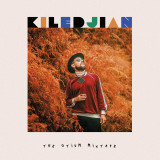
Lyon-based David Kiledjian is the creator behind a number of projects such as Fowatile, HILA and Dowdelin. Beside that he is producer of albums by Armenian pianist Tigran Hamasyan and Malian band BKO, and collaborator with Talib Kweli, Piers Faccini, Miguel Atwood-Ferguson and Vaudou Game. David is now releasing 'The Otium Mixtape', his first opus under his own name. These ten tracks build bridges between languages and folklore from world, jazz, hip-hop and electronic avant-garde.
This music unites our common love for the essence of music, which contains harmonic structures and emotionality without borders." — Musique Infinie
Musique Infinie, the new duo consisting of Noémi Büchi and Feldermelder, is rooted in a shared desire to intertwine two composing veins, and to merge them into a new, massive core. While Büchi combined her background in classical and electro-acoustic music with a bold approach to composition on her highly acclaimed debut album 'Matter' (-OUS, 2022), multi-disciplinary musician and artist Feldermelder has been expanding his artistic practice into unexplored realms for over 20 years. Mutually, they've challenged themselves to fully engage on an artistic exploration aimed at making use of the elementary forces that unfold between them.
Their debut album, simply titled 'I', is a musical hybridization. The compositions make use of simple motives that are radically transformed by expanding them into intricate structures and fantastic layerings. The overcoming of genres with eclectic elements from classical music, jazz, film music and traditional music, combined with the vocabulary of experimental electronic music, complete the vertical plunge into this thickness. The emerging pieces lead into a paradoxical world, both disturbing and euphoric. Pieces that don't give in to calculations and expectations, but progress through ruptures and repetitions. The richness of the compositions and their analog, acoustic and orchestral character reflect the density of the world with its violence, its decadence, its fragility, but also its power, its ingenuity and its beauty.
Composer and sound artist Noémi Büchi creates electronic, symphonic maximalism. Her music is defined by a delicate synthesis of textural rhythms and electroacoustic-orchestral abstraction. She explores the potential of consonance and dissonance, contrasts rhythmic physicality with disruption and playfully emphasizes irregularities, creating an expansive listening experience marked by detail and elevation.
Feldermelder is a polymathic creative whose artistry spans composition, sound design, installation and code. He is co-founder of -OUS Records and an active member of Encor.studio, a collective specialising in creating immersive audio-visual installations. Through his work, he explores the idea of secrecy and its impact on our lives, using music and sound to create a thought-provoking and immersive experience for his audience.
out of Stock
Last delivered 2 years ago available to reorder, subject to availability
High Roller Records, reissue 2023, 2 mixes! 5c printed slipcase, 24 page booklet, double-sided poster. All tracks mastered by Patrick W. Engel at TEMPLE OF DISHARMONY in September 2022. The ultimate reissue of this eternal French Metal classic!