After seventeen years, four albums and thirty-something 7" singles, some bands would be taking it easy but there continues to be little break in the determination and activity of UK's The Hip Priests Roden House Blues is the highly awaited fifth album from The Hip Priests, the legendary masters of anthemic, visceral, Garage/Punk Rock N Roll. 11 Glorious tracks of High Energy RnR, filled to the brim with huge choruses, colossal dual guitar rifferama, more hooks than a fishing shop, and one hell of an attitude.
Cerca:the priests
- 1
After seventeen years, four albums and thirty-something 7" singles, some bands would be taking it easy but there continues to be little break in the determination and activity of UK's The Hip Priests Roden House Blues is the highly awaited fifth album from The Hip Priests, the legendary masters of anthemic, visceral, Garage/Punk Rock N Roll. 11 Glorious tracks of High Energy RnR, filled to the brim with huge choruses, colossal dual guitar rifferama, more hooks than a fishing shop, and one hell of an attitude.
- A1: Silver Line
- A2: Tango Del Fuego
- A3: Pink Dragon
- A4: Purple Moon
- B1: Black Marlin
- B2: Red Cat
- B3: Crush & Crumble
- B4: The Voodoo Engine
- B5: Sophie & The Hacker
- C1: Voodoo Sonic
- C2: Brass Devil
- C3: Come Back Home
- C4: Piano Boy
- D1: Don't You Forget (Feat Lilja Bloom & Anduze)
- D2: Fade To Red (Feat Esches)
- D3: Number One Mc
- D4: Go Wake Up (Feat Lilja Bloom)
- D5: The Fall (Feat Lilja Bloom)
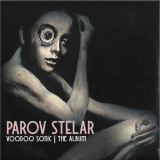
The Voodoo Universe is now complete! The masterpiece combining the Trilogy 1-3 will be released on November 27th and is a magnificent work show of the multifaceted genius.
Concerts by successful musicians often have an air of church-mass: Fans pay homage to their idols, hailing them, giving the impression of following them blindly. Parov Stelar, a globally successful musician from Austria, is one such artist. Is this art of seduction a kind of Voodoo, Black Magic even? Who can tell? It makes no difference whatsoever, as to his fans Parov Stelar easily passes as a High-Priest of grooves that perfectly understands how to put them in ecstasy.
In Voodoo, Bondieu, a higher being communicates to the masses through priests called Loas. Parov Stelar manages to do so with his music. Voodoo Sonic was born and delivered with the idea to replace the conventional album with several EPs, allowing greater musical freedom and the possibility to explore the many sonic landscapes of Voodoo Sonic.
Now the Voodoo Sonic Universe is complete and celebrated with all three parts combined into one ultimate and highly demanded package. It's a Parov Stelar work show which makes it possible to enjoy his diverse sound world in all of its facets.
The Artwork for Voodoo Sonic was designed and painted by Parov Stelar himself. From the art studio to the recording studio, on to the dance floor in the form of art and beats. Parov Stelar is an all in one king of art.
The icing on the cake is the Voodoo Sonic documentary, which can be seen on all Parov Stelar channels available. (coming September 2020).
If you want to see Parov Stelar live, you will get the chance in summer 2021 at festivals in many countries following by a headliner tour across Europe towards the end of the year.
- 1: Priests Of Sodom
- 2: Scalding Hail
- 3: To Decompose
- 4: A Cauldron Of Hate
- 5: Beheaded And Burning
- 6: Evidence In The Furnace
- 7: Carnivorous Swarm
- 8: Evisceration Plague
- 9: Shatter Their Bones
- 10: Carrion Sculpted Entity
- 11: Unnatural
- 12: Skewered From Ear To Eye
- 01: Tafese Tesfaye - The Dove &Amp; The Pigeon
- 02: Yetemwork Mulat - Heathen &Amp; Earth
- 03: Alemu Aga - The World Is But A Place Of Survival
- 04: Sosena Gebre Eyesus - Save Us From Our Death
- 05: Abiy Seyoum - The Last Judgement
- 06: Tafese Tesfaye - You Who Take Good Care Of Me
- 07: Sosena Gebre Eyesus - When I Say Your Name
- 08: Akalu Yossef - Who Can Doubt
- 09: Abiy Seyoum - We Are All Mortals
- 10: Yetemwork Mulat - The Second Coming Of Christ
- 11: Akalu Yossef - Our Father
- 12: Alemu Aga - Song Of Praise Played With A Plectrum
LP 2x12"[28,36 €]
The begena is a large ten-stringed lyre which is part of the traditional Amharic heritage of Ethiopia. The Amharas, who have long formed the politically and culturally dominant people of Ethiopia, mainly inhabit the central and northern part of the country. In the majority, they follow the monophysite Orthodox Tewahido Church established in the early fourth century AD.
Music plays a very important part in the life of the church. Most of the liturgy is sung and, contrary to secular music, it is accompanied by percussion instruments only. The begena occupies a special place because it is the one melodic instrument exclusively dedicated to the spiritual repertory. Because of its mythical origin, it is highly respected. Tradition holds that the begena was given to king David by God, and brought to Ethiopia by Menelik I, together with the Ark of the Covenant. It has always been the instrument of kings and nobles. Played by pious men and women of letters, it never became widespread. But it never disappeared either, not even under the Derg regime (1974-1991) which had banned the instrument.
Among Amhara string instruments, the begena is the most carefully crafted, especially with regard to the ornately sculpted crossbar. Its ten gut strings are cleaned and twisted several times. The characteristic buzzing timbre equalled by no other Amhara instrument is due to the enzirotch, that is, small bits of leather placed between each string and the bridge. This plays an important part in the sound production by creating a brief contact between the string and the upper rim of the bridge, thus modifying the vibrating properties of the string. In this manner, the spectrum of the sound is considerably enhanced (up to over 10 kHz).
The begena is a very powerful instrument, it keeps the devil thirty steps away, and its presence in the home wards off malicious spirits. Priests and preachers recommend its presence, especially during Lent (Fassika Tsom) when the Orthodox Amharas ponder their sins and repent. Because of its spiritual import, the begena generates intense emotion. According to some musicians, playing the begena brings them into direct contact with God or the Virgin Mary. The religious role of the begena is underscored by the shape of the instrument, each part symbolises an important element of the faith. The crossbar for instance, which reaches across the entire width of the instrument, represents God who is above all things. The belly which "gives birth" to the sound represents the Virgin Mary, and the ten strings recall the Ten Commandments.
Recorded by Stéphanie Weisser in Addis Ababa, Ethiopia, March 2002-December 2005.
Mastered by Renaud Millet-Lacombe.
Issued under license from VDE-Gallo, Switzerland.
- A1: Tafese Tesfaye - The Dove &Amp; The Pigeon
- A2: Yetemwork Mulat - Heathen &Amp; Earth
- A3: Alemu Aga - The World Is But A Place Of Survival
- B1: Sosena Gebre Eyesus - Save Us From Our Death
- B2: Abiy Seyoum - The Last Judgement
- B3: Tafese Tesfaye - You Who Take Good Care Of Me
- C1: Sosena Gebre Eyesus - When I Say Your Name
- C2: Akalu Yossef - Who Can Doubt
- C3: Abiy Seyoum - We Are All Mortals
- D1: Yetemwork Mulat - The Second Coming Of Christ
- D2: Akalu Yossef - Our Father
- D3: Alemu Aga - Song Of Praise Played With A Plectrum
Cassette[16,18 €]
The begena is a large ten-stringed lyre which is part of the traditional Amharic heritage of Ethiopia. The Amharas, who have long formed the politically and culturally dominant people of Ethiopia, mainly inhabit the central and northern part of the country. In the majority, they follow the monophysite Orthodox Tewahido Church established in the early fourth century AD.
Music plays a very important part in the life of the church. Most of the liturgy is sung and, contrary to secular music, it is accompanied by percussion instruments only. The begena occupies a special place because it is the one melodic instrument exclusively dedicated to the spiritual repertory. Because of its mythical origin, it is highly respected. Tradition holds that the begena was given to king David by God, and brought to Ethiopia by Menelik I, together with the Ark of the Covenant. It has always been the instrument of kings and nobles. Played by pious men and women of letters, it never became widespread. But it never disappeared either, not even under the Derg regime (1974-1991) which had banned the instrument.
Among Amhara string instruments, the begena is the most carefully crafted, especially with regard to the ornately sculpted crossbar. Its ten gut strings are cleaned and twisted several times. The characteristic buzzing timbre equalled by no other Amhara instrument is due to the enzirotch, that is, small bits of leather placed between each string and the bridge. This plays an important part in the sound production by creating a brief contact between the string and the upper rim of the bridge, thus modifying the vibrating properties of the string. In this manner, the spectrum of the sound is considerably enhanced (up to over 10 kHz).
The begena is a very powerful instrument, it keeps the devil thirty steps away, and its presence in the home wards off malicious spirits. Priests and preachers recommend its presence, especially during Lent (Fassika Tsom) when the Orthodox Amharas ponder their sins and repent. Because of its spiritual import, the begena generates intense emotion. According to some musicians, playing the begena brings them into direct contact with God or the Virgin Mary. The religious role of the begena is underscored by the shape of the instrument, each part symbolises an important element of the faith. The crossbar for instance, which reaches across the entire width of the instrument, represents God who is above all things. The belly which "gives birth" to the sound represents the Virgin Mary, and the ten strings recall the Ten Commandments.
Recorded by Stéphanie Weisser in Addis Ababa, Ethiopia, March 2002-December 2005.
Mastered by Renaud Millet-Lacombe.
Issued under license from VDE-Gallo, Switzerland.
Adey Omotade, a sound artist and cultural cartographer rooted in Lagos and shaped by diasporic experiences in Paris, Johannesburg, Berlin and Ivory Coast, brings a rare sensibility to this work: walking between worlds, bringing with him the cadence of home and the dissonance of diaspora. In his hands, sound becomes ritual: a migration of soul, an assemblage of bells, melodies and chants woven from Ifa shrines, river banks and Yoruba festivals. Playing the dual role of griot and cartographer, Omotade, who works across acoustic ecology, experimental music and sound design, builds each track like a shrine: layered, intentional, alive with breath and blood, each track a libation, each break an invocation. Each track unfurls like aso-oke, the celebratory fabric of the Yoruba people: drums that speak in polyrhythms, synths bending like waves, incantations layered like memory, fading then returning, gently like the water at the banks of the Osun River.
The influence of experimental sound design is evident throughout, but ‘Ni'ran’ is no cold abstraction. It pulses with life, with the heartbeat of talking drums, the breath of ambient textures and the warmth of the voices of babalawos, priests of Ifa, invoking ire (blessings) on all. ‘Oori : Ogbe’ invokes the sacred Odu Ifá — a divination verse that speaks of beginnings, clarity and destiny. In ‘Ofo : 'Nkantation’, polyrhythms unfold like verses, each beat a coded message inviting listeners to reflect on destiny and alignment.The title track ‘Ęęro : Eeşu’ begins with the haunting voice of a priest reciting the Odu Ifá, a calling to give unto Eesu his due. Percussive patterns unfold like verses, each beat both a memory and a prayer.
- Prime Evil
- Parasite
- Blackened Are The Priests
- Carnivorous
- Skeletal Dance
- Megalomania
- Insane
- Harder Than Ever
- Into The Fire
- Skool Daze
Official vinyl reissue of Venom's 'Prime Evil', originally released in 1989, recorded after the departure of lead singer and bassist Cronos, replaced for these recordings by Tony 'The Demolition Man' Dolan.
Red w/ black splatter LP. Superb live album recorded on Venom's 1986 tour of the USA. Includes the classics Countess Bathory, Black Metal, Buried Alive, Teacher's Pet and more!
- A1: Ravi Shankar/On The Wire (Theme) - Dub Syndicate
- A2: I Walked With A (Live) Bugs Bunny Bendy Toy - The Mel-O-Tones
- A3: Wings - The Fall
- A4: Scratch On The Wire - Lee "Scratch" Perry
- A5: Please Give Me Something - The Riverside Trio
- A6: Black And Strange - Rhonda
- B1: The Need To Live - Bim Sherman And Singers & Players
- B2: What's That? - General Strike
- B3: Tall Dark Stranger - "Chop" Walker And Brenda "Beach Ball" Kenny
- B4: Ed's Original Funky Diner - It's Immaterial
- B5: Brujo Magic - Suns Of Arqa And Price Far I
- B6: Forget It All - The Whisky Priests
Celebrating 40 years of the legendary radio show "On The Wire" comes the first repress of "Bugs On The Wire", a collection of tracks donated by friends and associates, compiled by presenter Steve Barker and originally issued in 1987 on Leghorn Records via Skysaw. Featuring tunes from Dub Syndicate, The Fall, Lee Perry, Bim Sherman with Singers & Players, General Strike (David Toop + Steve Beresford), and The Suns Of Arqa with Prince Far I and more. A Lantern Rec exclusive.
- A1: Sex Is Personal
- A2: Call Call
- A3: Victim Convenience
- A4: The Passives
- B1: Worked Up So Sexual
- B2: Cars Pass In Cold Blood
- B3: Casual Sex
- B4: In Concert
- B5: Sealed Human
- C1: Cars Pass In Cold Blood (Recordist Remix)
- C21: Worked Up So Sexual (The Laces Remix)
- C3: The Passives (Aj/Dj Remix)
- C4: In Concert (The New Gender Remix)
- C5: Call Call (Transistor3 Remix)
- D1: Sealed Human (]
- D2: Sex Is Personal (The Faint 2024 Remix)
- D3: Brokers, Priests, And Analysts
- D4: Cars Pass In Cold Blood (Live)
- D5: In Concert (The New Gender Remix (Live))
- D6: Call Call (Live)
o d1. Sealed Human (’m Remix)
- False Jesii Part 2
- Half Idiot
- Dream Smotherer
- Pleasure Race
- She Is Science Fiction
- Request For Masseuse
- Human Upskirt
- Lip Ring
- Spent
- R-Rated Movie
- Dominate Yourself
- Goodbye (Hair)
Sub Pop and Pissed Jeans mark 15 years of King of Jeans, Pissed Jeans' thunderous third album, with a fresh clear-vinyl pressing, limited to 1,000 copies. If 2005's Shallow was Pissed Jeans coping with moving out of their parents' homes, and 2007's Hope for Men their initial reaction to the mechanical lifestyle of a wage-earner, King of Jeans is their formal and uneasy acceptance of adulthood, by way of one hell of a rock record. Working with renowned producer Alex Newport (who holds a Fudge Tunnel pedigree and has worked with such luminaries as At the Drive-In, The Locust and Sepultura), Pissed Jeans have pushed further into the raw, minimal core of heavy rock music with King of Jeans. Masters of the mundane, beasts of the banal, high priests of the humdrum: these four, white, male high school graduates hardly look further than their own appendages for artistic inspiration, content to execute their own brand of brash and heavy punk music in the Joe Carducci-approved standard rock formation of guitar, bass, drums and vocals. From simple minds and simple fabrics comes this King of Jeans. And there can be only one.
Repress!
Redolent with the spirit of such high priests of effects and delay as Loop, Spaceman 3, and My Bloody Valentine, not to mention a fair dollop of the Jesus and Mary Chain . Methodrone clearly is the sum of its influences. Thankfully BJM does a very solid job with them throughout the album's course of over 70 minutes.
With this release the label celebrates the return to the ranks of the founder Worg. A triumphant homecoming comparable to that of Jason, the main character of the Argonautica, who travelled in search of the Golden Fleece (Il Vello d'Oro) aboard the ship Argo. After many vicissitudes, the hero returned to Iolco, his homeland, to reclaim the throne usurped by his half-brother Pelias.
This new chapter in the Lykos saga focuses on the deeds of Jason and the Argonauts, but also on a key figure who was indispensable to the success of this quest, Medea. Thanks to her and her magical skills, the fellowship of heroes succeeded in grabbing the Golden Fleece. Through careful sound design, hinted melodic cells and complex rhythms, Il Piano di Medea by Worg, sums up details and facts related to this extraordinary legend. Starting from the prophecies of the Oracles, to the tragic and bloody ending of the epic poem, which took place with the death of King Pelias by his own daughters, hypnotized and manipulated by Medea's magic.
The narrative begins with the track Oracolo, characterized by a syncopated groove, nebulous atmospheres and the presence of a dark anthropomorphic synth, which alludes to the solemn, grave and authoritative voice of an entity. A prophetic spirit that warns the listener of the dangers that lurk for those who dare to enter this new sonic adventure. In order to foretell the future and to spread their word, the gods took possession of the bodies of priests who had fallen into ecstasy, using them as intermediaries. In his reinterpretation of Oracolo Neel, the grand Maestro of techno, in a similar way uses musical elements such as a harsh and acid bass line or a tight rhythm to lead the listener into a psychic state of suspension and mystical elevation.
In the music piece Il Vello d'Oro, Worg draws attention to the rare preciousness of this magical relic, rumored to have the power to heal all wounds and for this reason longed by Jason. To evoke the purity of the golden mantle, the artist uses shimmering percussion, radiant textures and the omnipresence of an FM synth bass, full of brilliant harmonics. All enhanced by sound details scattered throughout the arrangement.
Eryx, the record's final track, has a fluid and sinuous flow, with sound elements that recall water, a natural element, protagonist of the Argonauts' journey to the remote Colchis. A melody echoes in the distance, disappears and resurfaces to then collide, like waves on the rocks, with the complex and jagged rhythms that mark the gradual evolution of the
track.
Highly recommended. About the album Blind Emperor Through wetland, winters, rubble and fallout come horizons new; civilisation shattered under a vengeful cataclysm, eventually led to dawn from the light of a blighted leader. Every action has a reaction, and those who wish to prosper must first be willing to offer something of intrinsic value. As one empire crumbles, another takes its place. The struggle for a fleeting utopia comes at a cost, and those who strive towards golden gates must trek along a solemn valley. The Allegorist Berlin-based artist, The Allegorist, has been meandering through stories with her purposeful and introspective take on electronic music. Each release explores themes that require joint participation from the listener as they look to flood your mind with images of fabled characters and places through her artistic soundscapes. Her carefully build worlds that straddle sci-fi and fantasy, feeding off of the light and dark dualism are the perfect blend of reflective contemplation and storytelling. As a holistic artist, Anna Jordan (The Allegorist) encapsulates a myriad of her talents within her work. Her previous albums, Hybrid Dimensions I. and Hybrid Dimensions II., established her aesthetic and detailed fictitious stories, along with the language ‘Mondoneoh’, a language to unite all nations. Her latest endeavour, and 4th album, The Blind Emperor, portrays the essence of a mythical land that tells of struggle that will lead to prosperity. The protagonist, Blind Emperor, leads the charge into a brighter tomorrow. Like chapters from a novel, each track allows the listener to be carried by the story. It is an epic, cinematic, choral, ambient techno album. The album combines her depictive, written and musical storytelling with a concept portrayed visually, orally and audibly to deliver another saga in her ever-evolving figments of fantasy. It comes as an entire artistic project, as The Allegorist created the album art, wrote the included story and composed a poem that all combine to tell the tale of Blind Emperor.
Ancient Africa represents Nat Birchall’s official follow-up to last year’s universally acclaimed Mysticism of Sound.
Nat once again plays all the instruments here, tenor and soprano saxophone, bass clarinet, bass, drums and percussion. But this time around the Korg synth is replaced by piano as
Nat wanted to utilise a more “classic” Jazz sound to express his musical visions. He has also arranged the songs for multiple horns, with melodies and harmonies played by up to five different instruments to achieve a fuller and often glorious sound.
An exception to this is Mirror Mind, a ‘duet’ featuring tenor saxophone and piano, hence the title.
With most of his compositions Nat tends to come up with titles depending on the thoughts or images the music manifests within him as he listens back to the recording.
The title track conjures up images of an African sunrise, the horns perhaps invoking the sun as it begins to illuminate the land which was the origin of the human story on Earth.
“Africa is the root of everything, and is the source of civilization, art, music, you name it.”
Paladins is so titled for the African heroes of the past and the present, in all walks of life, social, political, the arts etc.
“Anyone who fights against oppression, whether it be through activism or art, not only in Africa but throughout the whole diaspora, is a Paladin in my book.”
Song for John Blanke is named for the African trumpeter who played in the court of Henry VIII. The horn line sounding
a little like a fanfare, but in a lower register than the Tudor trumpets might have played for the court of the king!
Malidoma is named in honour of the African writer Malidoma Patrice Some. His excellent book ‘Of Water and The Spirit’ is a deeply
moving and illuminating narrative of his life’s journey. From his abduction by Jesuit priests at an early age from his village in Burkina Faso to
his being reunited with his people and subsequent assignment to spread his people’s ancient knowledge to the Western world.
The final song, Ancestral Dance, is a musical reminder to both celebrate life as and when the occasion demands, but also to not forget where we came from, as individuals and as a species.
WOLF JAW were born in the depths of the Black Country, UK. Home to greats such as Black Sabbath, Judas Priest and half of Led Zeppelin to name a few. These bands are heavy influences that have sparked The raging fuzz fueled, groove fired, Riff machine WOLF JAW Having toured with bands such as Crobot, Scorpion child, Jared James Nichols, Tyler Bryant and the Shakedown, Stone Broken among others, as well as festivals such as Download, Amplified, Steelhouse and Stone Free under their belt its given Wolf Jaw time to truly master their own unique twist on the power trio formula. 2019 brought a new album entitled 'The Heart won't listen' that is full of muscular riffs mixed with soulful vocals and pounding rhythm. Initially released in 2018, WOLF JAW are re-issuing their debut album ’Starting Gun’ with bonus tracks : "We're super excited to be re-releasing our debut album, 'Starting Gun' via Listenable records. This album was an amazing starting point for us and we still love playing these songs live. In fact we've added 2 live tracks to this version of the album, both were recorded at a live streamed show we did in the first UK lockdown of 2020. We have also recorded a cover of Judas Priests 'You've Got Another Thing Coming' which will be on the CD and available digitally. We're glad this record has got a new home and can't wait to get out there and play these songs live again! » Coming from the same area that gave birth to Black Sabbath, Judas Priest, Led Zeppelin, WOLF JAW display the similar class of a future great in English Metal/ heavy rock !. WOLF JAW were born in the depths of the Black Country, UK. Home to greats such as Black Sabbath, Judas Priest and half of Led Zeppelin to name a few. These bands are heavy influences that have sparked The raging fuzz fueled, groove fired, Riff machine WOLF JAW Having toured with bands such as Crobot, Scorpion child, Jared James Nichols, Tyler Bryant and the Shakedown, Stone Broken among others, as well as festivals such as Download, Amplified, Steelhouse and Stone Free under their belt its given Wolf Jaw time to truly master their own unique twist on the power trio formula. Kerrang! Magazine stated Wolf Jaw housed “riffs dirtier than a bucket of double-fried chicken !! ” .
- A1: You're No Good
- A2: Talkin New York
- A3: In My Time Of Dyin
- A4: Man Of Constant Sorrow
- A5: Fixin' To Die
- A6: Peggy
- B1: Highway 51 Blues
- B2: Gospel Plow
- B3: Baby, Let Me Follow You Down
- B4: House Of The Risin Sun
- B5: Freight Train Blues
- B6: Song To Woody
- B7: See That My Grave Is Kept Clean
- C1: Mixed-Up Confusion
- C2: Introduction
- C3: Poor Lazarus
- C4: Mean Old Southern Railroad
- C5: Fixin’ To Die
- D1: Smokestack Lightnin’
- D2: Hard Travellin’
- D3: The Death Of Emmett Till
- D4: Standing On The Highway
- D5: Baby Please Don’t Go
Robert Zimmerman, aka the rock-folk singer-songwriter Bob Dylan, was born in Duluth, Minnesota in 1941. His first three albums – Bob Dylan, The Freewheelin’ Bob Dylan, The Times They Are A-Changing – reoriented both folk music and rock. His early songs were largely inspired by Woody Guthrie, and in turn provided inspiration (and soon a religion) to many music fans around the globe.
There is no doubt that the baby-boomers of 1968 – a whole generation – were seeking an ideal, and the promise of change in Dylan’s first songs transformed a merely average nasal-toned folk singer into a figurehead of the protest movement, and later one of its high priests.
But there are also those who will remember how Dylan invented his own life-story as an orphan with Indian blood who spent his childhood in a circus/ Or how he happily explained to 'Time' why their magazine was pointless (and to CBS News why opinions expressed by media were useless and harmful.) Of course they were, and so Bob was there to change the world. Times, indeed, they were changing, and Bob began wearing silk shirts way before he was handed the Nobel Prize for Literature. We need more Jesus Christs and Bob Dylans as world-changers.
500 only LP. One of the first full-length recordings of Hauka ritual music. Praise songs and sacred incantations to the spirits to inhabit the body. Call and response chants, the pluck of a monochord lute and relentless pounding percussion combine in a dizzying nonstop session. The Hauka movement started nearly a century ago and has persisted on the fringes of Nigerien society. Documented in the 1955 Jean Rouch film Les maitres fous, the Hauka are a pantheon on spirits mirrored on colonial and military figures. Central to the religion is the "Holley Hori" possession ceremony, a ritual driven by militaristic percussive music, wherein spirits come into the body in powerful and violent manifestations. Lingo Seini has played ritual music for almost 60 years, learning from his father. He is joined by his son Youssouf on the calabass and Issaka Moulla, playing his homemade kuntigi. The group regularly accompanies Hauka priests in ceremonies. Recorded with a single microphone in the outskirts of Niamey.
On his first full length effort, singer / songwriter Mav Karlo, otherwise known as Menno Versteeg, offers up a much more elaborately realized, yet no less intensely intimate body of work. With its gracefully sparse arrangements, the album centres on Versteeg’s lyrical storytelling, revealing a narrative voice deeply attuned to the beauty in the ordinary and routinely overlooked. Strangers Like Us closely documents an especially tough period in Versteeg’s life but the album ultimately showcases an undeniable courage in its commitment to truth-telling and unsparing self- examination. He is supported by spirited guest performances from Katy Goodman of Vivian Girls (on vocals), Charlie Spencer of Dizzy (keys, drums) and Versteeg’s Hollerado bandmate Nixon Boyd (guitar, bass). Album produced by Chris Coady (Yeah Yeah Yeahs, Amen Dunes, Beach House) and recorded at Sunset Sound and Sonic Ranch. Menno Versteeg is the owner of Royal Mountain Records and a former member of both Hollerado and Anyway Gang.
Tibor Szemző returns with a new album, based on the music for his film about historic figure Alexander Csoma.
Tibor Szemző is a Hungarian composer, performer, media artist. Recently his album Snapshots From The Island (1987) gained renewed interest. Over the years Tibor Szemzo continued composing classical / electronic works. His pieces often include spoken texts, film and other media. He creates installations and composes music for his own and others’ films.
Csoma, his new album, is based on the music for this film about Alexander Csoma. Alexander set up to research the origin of the Hungarians 200 years ago. During his student years, before he enrolled in college, he and two fellow students vowed to go to Central Asia to discover the origins of their nation. In the first thirty-five years of his life, he spent his humble pilgrimage in Asia traveling and studying with Buddhist priests in Tibet in isolation, and devoted the remaining eleven years of his life to publishing some of the material he had collected in India.
Now on the 200th anniversary, Szemző’s Cinematic Opera wishes to pay tribute to Alexandar Csoma. Over the course of two vinyl sides classical and acoustic instruments are mixed with angelic voices, spoken word in German, Hungarian & English. Sounding like vintage Tibor Szemzo compositions, vividly performed by the Gordian Knot Company and the Voces Aequales Ensemble.
Favorite Recordings presents an exclusive reissue of the first private press eponymous LP by Sacbé, a Mexican Jazz Fusion masterpiece from 1977. Unique and beautifully recorded, with a breezy feel brought by the synthesizers, Sacbé could be likened to what Azymuth was doing at the same time in Brazil. Available as a vinyl-only limited pressing Deluxe Tip-On LP, coming with its original printed innersleeve, remastered by The Carvery.
Sacbé was composed of Eugenio (keyboards), Enrique (electric bass) & Fernando Toussaint (drums), three brothers hailing from the huge Mexico city, and their friend and sax player Alejandro Campos. Growing up in a family of musicians, they quickly became familiar with jazz music. However they were mostly self-taught, most of them choosing at first to work and study outside the music industry, but somehow, Eugenio had the opportunity to start studies at the Berklee Music University. Before leaving, he deeply wanted to play jazz with his brothers. That’s how Sacbé was created on a hot day of October 1976.
The band then built step by step a challenging repertoire including Chick Corea, Herbie Hancock, Weather Report, Milton Nascimento, Focus, Passport, and many more… Gradually, Eugenio started to compose more tracks, and through a cooperative work of arrangement, Sacbé ended up playing only their own compositions. That was not an easy choice for the band, resulting in a lot fewer opportunities to play in bars and clubs at night, while they were cumulating small jobs during the daytime. But their dedication, tightness, and integrity started to attract a wider audience thanks to their sessions at the Musicafé and helped Sacbé to assert its imprint within Mexico’s creative artistic circles. A group of artists with similar attitudes was created and they began working almost as a team, holding live shows, exhibitions, and dance performances, all with a very unique and creative proposal. It’s at this period that the band met Luis Gil, a young designer and recording engineer, who had access to one of the best studios of the city called LAGAB. Recording at nights and weekends for free, the Toussaint brothers had, therefore, the chance to really put their band quite literally under the microscope.
With tenacity, they explored all the possibilities of interpretations, structures and improvisations, collaborating with great musicians and finding themselves in the position of being their own producers, despite being only around 20 years old! This album is the result of this perfectionism ethics, shared by everyone involved. “Sacbé” means white road in the Mayan culture, it was the name for the roads connecting the main ceremonial centres with the jungle, made of roughly three feet of coral limestone. They were sacred roads used by high priests and warriors, which echoed the musical path of the three brothers. Putting the pieces together, they managed to create their own label and pressed 1000 copies of their reunited recordings in 1977. The artwork was painted by Enrique, inspired by the work of Le Douanier Rousseau and the Mayan jungle. Hopefully, the LP met some success in Mexico and California, opening many radio and TV doors for them. It was the starting point for a whole career of recordings, with a total of seven albums including various guests.
Edition of 100 copies only.
Side A: 'Vodou'. Head priest: Gran Sèvitè Jean-Daniel Lafontant. Vodou priests: Oungan Eddy Saint-Jean and Anperè Jean Céus. Vodou priestesses: Manbo Françoise Célestin, Manbo Christine Lamour, Manbo Marie-Marthe Similien and Manbo Jacqueline Thélus. Other participants: Ounsi and members of Sosyete Na-Ri-VéH. Percussionists: Ountògi and the drummers of The Sacred Temple Na-Ri-VéH 777. Side B: 'Rara'. All-female rara band: Forever Rara Fanm of Belair.
Grand Rue recordings made by AMé in front of the Atis Rezistans, Port-au-Prince on 21 December 2015, 4:54pm to 5:18pm. Vodou ceremony and all-female rara band recorded by AMé at Temple Na-Ri-VéH 777 in Port-au-Prince, 16 December 2015, 9pm to 1am. Edited by Philip Marshall with AMé in Cologne, 16 May 2016. Mastered by Zachary James Watkins at Stank House, 3 August 2016. Artwork by Stefan Fähler. AD&D by Don Wyrm.
With thanks to: Ghetto Biennale, Leah Gordon, Atis Rezistans, Gabriel Toso, the priests and priestesses, the members of the all-female rara band, the percussionists, Clocktower Radio and all the Haitian People.
An introduction to Vodou music and Rara, by Gabriel Toso:
"Tanbou prete pa janm fè bon dans" ("A borrowed drum never makes good dancing")
"Music is to Vodou what water is to our bodies or fire to our hearts: all embracing, all inflaming. The spirits of Vodou are called upon and energised by the inexhaustible rhythms of Africa. Brought by the slaves to the New World, and merged with indigenous and European traditions, their magical power is the soundtrack of Vodou itself, its life-force.
Dancing, singing, praying are all fundamental aspects of Vodou; but above all it is the drumming that plays a major role during the ceremonies, an invitation to the lwas (gods) to join and partake in the rituals. Like the heartbeat of an infant in its mother's womb or the vibrations of our planet, the percussions of the tanbou (drum) are at once instrument and creator. Different batteries of drums correspond to different rites, countless rhythms to a multitude of nations of laws. The drum is not only a musical instrument but a sacred object, an expression of the divine. Its sound guides the initiates to their appointment with the spirit world.
Rara festivals are yearly celebrations that begin following Carnival during the Catholic Lent season, when the activity of the Vodou temples is at its quietest. During those six weeks Rara bands parade for miles playing music, dancing, and performing rituals for Afro-Haitian laws, while wearing specific costumes and using a variety of musical instruments. Probably originated in Haiti during the colonial period, Rara bands and their vast repertoire of songs are both politically and socially engaging while keeping an amusing, irreverent, and at times risqué personality. Traditionally connected with a Vodou temple, Rara bands leave the ceremonial spaces to interact in the public sphere through parading, thus reminding both participants and spectators of the physical presence of the lwas." – Gabriel Toso, London, 3 November.
FUN FARE is the experimental pop laboratory of Friedrich Günther, Julia Boehme, Joseph Heinze and Jakob Zander, which hails from Leipzig. In combining and distilling their respective influences they are constantly withdrawing from all possible expectations and presumptions. Krautrock meditations are interrupted by synth-pop intermezzi and bathed in waves of post-punk without laying false or random trails. It's more like an experiment under controlled conditions or an elaborate construction that is spontaneous and playful. In the autumn of 2015, Fun Fare recorded their debut album - Wrong Gong , which was released in February 2016 via Hartnack Records and played shows with Candelilla, Soft Grid, Friends Of Gas and Priests. Recently they released a split tape with Berlin post-punk band Plattenbau via Flennen and at the Trans Century Update Festival in UT Connewitz in Leipzig shared the stage with John Maus, Alex Cameron and Thurston Moore Group among others. Their second album Trifles & Events Are Your Concern' promises to deliver on the promise of their early releases and is a strong addition to the catalogue of Späti Palace.
- 1