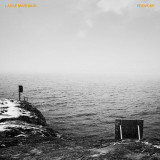
Red Brut’s third album, "On Bare Ground", is a sonic tapestry woven from the final threads of her Rotterdam existence. Entirely composed of soundscapes captured during her last two years in the city, the album evolves into a poignant farewell as its creation mirrors the passage of time, culminating in a profound departure from her life there.
A Coherent States, Dead Mind Records and Econore co-release. 200 copies on white vinyl, comes with obi-strip.
“On Bare Ground” is a sculptural work blending its lo-fi with haunting melodies, field recordings, and ethereal soundscapes. Uncompromising in its approach, the album evokes the echoes of experimental music from a spectrum that ranges from dark bedroom pop to rhythmic noise, crafting a cloudy and dreamlike atmosphere. With meticulous attention, it unfolds as a strong hypnotic journey, where intricate sounds emerge from a hidden center, while, in a parallel narrative, they gradually expose On Bare Ground’s underlying deep melancholic core.
Red Brut is the artistic alias of Dutch artist Marijn Verbiesen, who recently moved to Groningen and has been a vital force in Rotterdam's art scene. Her work reveals a particular sensitivity to everyday sounds, the soundscapes of cassette music, musique concrète, and spontaneous sound collage, combining these elements into a unique and truly personal avant-garde expression. This expression is present in various forms, in a wave of releases that began with limited-edition underground cassette releases in the mid-2010s and culminated in her two full-length albums, "Red Brut" (2018) on the Belgian label (K-RAA-K)³ and "Cloaked Travels" (2020) on the Finnish labels Lal Lal Lal and Ikuisuus. She has appeared at many important European festivals such as Rewire, KRAAK festival, Inversia, Colour Out Of Space and in numerous smaller venues worldwide. In addition to her career as Red Brut, Marijn is a member of the free improv/weirdo electronic pop duo Goldblum and before in the experimental no wave/noise trio Sweat Tongue.
“On bare Ground works as like an homage to self discovery amid urban malaise” The Wire
Suche:the rhythm
Carrying on a string of stunning archival releases from major figures of Indian classical tradition (including releases from members of the Dagar family and Amelia Cuni), Black Truffle is pleased to announce an unheard recording from tabla master Kamalesh Maitra (1924-2005). For over fifty years, Maitra devoted himself to the rare tabla tarang, a set of between ten and sixteen hand drums tuned to the notes of the raga to be performed. While the tabla tarang has its origins in the late 19th century, Maitra was the first to recognise its potential as a solo concert instrument, using the set of tuned drums to perform full-length raags. Seated behind a semi-circular array of drums, Maitra produced stunning waves of melodic improvisation enlivened with the rhythmic invention of a master percussionist.
Across his career, Maitra performed in ensembles led by Ravi Shankar, collaborated with George Harrison, and led his own East-West fusion group, the Ragatala Ensemble. However, it is in the solo setting that his remarkable artistry and the otherworldly timbral qualities of the tabla tarang are most strikingly on display. Recorded during the same 1985 Berlin sessions that produced Maitra’s self-released solo LP Tabla Tarang: Ragas on Drums, on Raag Kirwani on Tabla Tarang we are treated to Maitra stretching out for over forty minutes on the late night Raag Kirwani, accompanied by Laura Patchen on tabla and Mila Morgenstern and Marina Kitsos on tanpura. The performance begins with the traditional free-floating exposition section, where Maitra’s spacious melodic improvisation at times almost resembles a plucked string instrument (like the sarod, which Maitra also played). For the listener unaccustomed to the tabla tarang, the sound of these microtonally inflected melodic patterns played on drums has a magic quality. As Maitra begins to imply the rhythmic cycles more strongly, Patchen joins on tabla, beginning half an hour of rhythmic-melodic exploration, where virtuosity sits side by side with delicacy and meditative attention. Accompanied by beautiful archival images and extensive liner notes from Laura Patchen, for many listeners Raag Kirwani on Tabla Tarang will be the perfect introduction to the magical world of Kamalesh Maitra, released to coincide with the hundredth anniversary of the master musician’s birth.
After navigating the labyrinthine musical chambers of their 2023 modern exotica album 'Palace Of A Thousand Sounds', Reno. Nevada’s Whatitdo Archive Group has returned with their first-ever holiday offering—venturing into the darker side of Christmas folklore with their new ice-cold 45, 'Wild Man'. Drawing inspiration from a global archetypical myth of the same name, Whatitdo Archive Group examines the ancient story of the Wild Man—the hairy, half-human, half-beast that stalks the shadows of humanity’s shared primeval past. The myth of the Wild Man is a folktale that goes by many names: The Yeti of the Himalayas, the Bigfoot of North America, and, of course, Krampus of Eastern Europe—a yuletide beast with a reputation as a child-devouring "Anti-Claus" who now finds himself the subject of Whatitdo’s latest musical exploration.
‘Wild Man’ gives us a glimpse into the band’s newest sonic direction. With a heavy rhythm section carried by Alexander Korostinsky’s driving bass line, the sticky wah-guitar of Mark Sexton’s L-5, and the acrobatic lines of the Wurlitzer electric piano, “Wild Man” revels in the spiritual jazz flavors of Pharoah Sanders and grooves hard like the classic soul-jazz stylings of Ramsey Lewis. Much like the Krampus myth itself, 'Wild Man' is meant to weave an ominous spell over any Christmas cocktail party long after the kids have gone to bed. Hear the warning for yourself in the song’s haunting chant: "You better watch out for your life, when the Wild Man comes in the night".
But mythology isn’t abandoned on the B-side. The band takes the traditional English folk melody 'Greensleeves' and reimagines it through the musical lens of Ethio-jazz. Recorded live at the Archive Group Studios, the track exudes a dark, roomy atmosphere, drenched in unease and mystery courtesy of the wandering electric piano dancing above the hypnotic rhythm section and mesmeric groove of the distant Batá drums. This fresh reimagining taps into the ancient, cross-cultural lineage of the "Green Man" myth, a pagan symbol of rebirth and the power of the natural world, further blurring the lines between holiday cheer and the primal, elemental forces enshrined in our collective cultural memory.
After the band’s 'Palace Of A Thousand Sounds' was named 2023’s "Best Library Record" by PopMatters Magazine, their new 'Wild Man' 7” capitalizes on the same creative process that shaped their last record, while now exploring new conceptual territory. By drawing inspiration from archaic global folklore and again utilizing their peculiar recording techniques, W.A.G. has crafted a truly unique holiday offering that unearths the darker, more primal undercurrents of the Christmas tradition. The 'Wild Man' 7" is released as part of the Snowflakes Christmas Singles Club, pressed on snow-white bio-vinyl and limited to 300 copies.
- Workout
- Uh Huh
- Smokin
- The Best Things In Life Are Free
- Greasin' Easy
Black[26,85 €]
Workout features a mix of original compositions and jazz standards, highlighting Mobley's ability to blend sophisticated harmonies with rhythmic complexity and received critical acclaim upon release and is regarded as one of Mobley's finest works
The album has been praised for its engaging arrangements and the strong interplay between the musicians, the tracks often feature rhythmic grooves and vibrant solos, which became characteristic of the hard bop movement. Released in 1962, it is considered a classic in the jazz genre, particularly within the hard bop substyle and it's often recommended for both jazz enthusiasts and newcomers to the genre and showcases Hank Mobley's lyrical approach to the saxophone and is frequently included in lists of essential jazz albums. The album continues to influence contemporary jazz musicians celebrated for its artistry and innovation, making it a significant contribution to the jazz landscape of the 1960s. So Workout stands as a significant milestone in jazz history, exemplifying the creativity and musicianship of its time: with its engaging compositions and stellar performances, the album remains a beloved classic, inviting listeners to explore the depth and beauty of hard bop jazz, a treasure that continues to resonate within the jazz community.
Dalton was a band from Tunis, the capital of Tunisia. They came together as a band around 1968 when most of the members studied together at the University of Tunis. The band had five members. Faouzi Chekili on guitar, piano and vocals, Ridha Kouhen on bass guitar, Mustapha Rehouma and sax and percussion, Sadok Gharbi on trumpet and vocals and Skaner Alim on drums and vocals. They were active in the local scene, playing music that was heavily influenced by American soul and funk and at the same time regional musical traditions. In the early 70s the band got a regular gig at a beach hotel called Sahara Beach Resort on the coastline of Tunisia. They had six month contracts for a couple of years in the early 70s and during that time they would play every single night of the tourist season. While the hotel gig required the band to play sets leaning towards tourist entertainment, the regular work helped put some money into the band's accounts. Using those funds the band was able to travel to Rome to record their one and only 7' single release "Alech" around 1971/1972. The band eventually dismantled in the mid 70s and returned briefly as a new group with new members in the late 1970s under the name Carthago but that is a different story.
"That "Soul Brother" is my jam.... !!!!" Lefto
The single itself impressed us heavily when we first stumbled upon it through French collector Victor Kiswell. While the b-side "Soul Brother' sounds like a Tunisian version of modern soul / AOR with it's English lyrics and lush arrangements, the title track "Alech' is the one that will get every party started. An infectious 3/4 rhythm, a great horn arrangement and brillantly layered vocals that made us think of Brazillian music or the Georgian groove band Gaya. Luckily Faouzi Chekili, the former band leader and composer uses social media communication so he was easy to track down. He is still active as a renowned musician in the Tunisian jazz scene and remains active recording and playing concerts both in Tunisia and internationally.
- Vintage Collection
- La Flare
- Deep Ain't It
- Sooth Sayings
- Mollyamory
- Over The Phone
- Candyman
- Supanatural
- Brick That Broke The Window
- Space Blue
- Buttaflies & Brownies
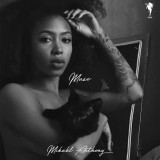
Hailing from the West side of St. Louis, Missouri, Mikahl Anthony’s sonic roots spread far across the global Alt-Soul / Hip-Hop scene. A highly soughtafter multidisciplinary artist (who has collaborated with the likes of Mick Jenkins, Chance The Rapper, Joey Purp, Smino and more), as well as being a founding member of Chicago’s THEMpeople collective, he now prepares to unveil his masterful full-length debut Muse via R&S Records.
Accompanied by several beautiful, self-directed film pieces, Muse is a record with storytelling at its core. Interspersed with commentary from a range of sources telling their stories to Mikhal, whilst collaboratively analysing their personal experiences, it speaks a candid and honest narrative, which reinforce the heartfelt lyrics within. With the project’s name anchored around a dual meaning acronym (1. Ms. Using sensual energy and 2. Making use of seclusion every day). The record is an audio version of docufilm, that creatively interprets the idea of self-therapy, an internal/interpersonal reflection of life experiences that serendipitously connect to Mikahl’s personal romantic relationships. Mikahl explains: ‘I wanted to use a unique style of songwriting, arrangement and filming with the intention of soundtracking my self-development/maturation process’.
On the project’s lasting impression on the listener, Mikahl elaborates ’The exploration of inner truth and vulnerability is key to the future of good music. I want this project to act as symbolism that highlights the mantra that honest approaches and authenticity still has the most value. I also want people to see how important the use of community is when you can connect them to your subject matter...I'd like my audience to observe and engage in their own self-reflections, approaches by way of listening or interacting with the story.’
Drifting to an elevated state of consciousness, Muse is a deeply intoxicating and engrossing listening experience from front to back. From the sliding, kaleidoscopic shadows of opening track ‘La Flare’, via the trepidation-laced atmosphere of ‘Polyamorous’ and the hazy, reverb drenched saxophone notes of LP closer ‘Eddie Kane’ - Mikahl channels moments of joy and pain, infused with spirit enriching instrumentation and gritty textures.
Visual stimuli play an integral role within Mikahl’s music. His songs represent transparency and openness dipped in funk. Layers of soft velvety vocals emerge from jazz harmonies, trap rhythms, and social commentary sourced from voiceovers/excerpts. His creations are the musical representation of documentary films. His art is imagery embodied.
NYC duo Straw Man Army return with their third LP, “Earthworks”, to complete a trilogy of records begun with 2020’s “Age of Exile,” and 2022’s “SOS”. Whereas “Age of Exile” dealt with the haunted landscapes of colonial history in the Americas, and “SOS” gave voice to a crisis of the present moment, like a prayer in bewildering times, 2024’s “Earthworks” signals the band’s attempt to close this trilogy by turning their gaze towards the future, where paradox, complexity and contradiction spiral in ascendance to an agonizing pitch. While continuing to develop their own style of anarcho-punk, “Earthworks” finds the band pulling once again from jazz and ambient influences, expanded Krautrock rhythms, and post-rock experiments, with a stronger emphasis on melodic vocals and varied song structures than on previous offerings. Taking cues from the wistful anti-war harmonies of The Byrds and the angry melodies of Zounds, tracks like “Turn the Wheel” and “Second Nature” mark new territory for a group whose messages and methods of experimentation have merged to form a singular sound equally at home on All the Madmen Records or in the spiritual legacy of ESP Disk. “Earthworks” is an album that holds and subverts many contradictions—juggling the weight of melancholy, grief, guilt, impunity, and the yearning for clarity against the backdrop of boiling wrath; the wrath of nature, the occupied, the dispossessed, and of the mind against itself. To quote the track “Spiral” — “Is this all that’s left for us these days? / Apathy and rage?”— Straw Man Army offers this record as a companion to our frustration, our sickness, our despair, and a lifeline for our fugitive attention in the struggle for peace.
- Too Much Sake
- Sayanora Blues
- The Tokyo Blues
- Cherry Blossom
- Ah! So
The Tokyo Blues is an album that reflects Horace Silver's deep musicality, cultural curiosity, and love for the blues
Its combination of relaxed grooves, melodic beauty, and hints of Eastern influence make it a unique and memorable work within Silver's extensive catalog. It's a perfect example of how jazz can both explore new territories and remain grounded in its own traditions, showcasing Silver's versatility as both a pianist and a composer. Released in 1962 it is considered a gem within Horace Silver's prolific career and offers an intriguing combination of Horace Silver's unique jazz language with the subtle influence of his experiences in Japan, producing a warm, thoughtful, and musically rich album. Horace Silver's The Tokyo Blues is the result of his quintet's tour of Japan in 1961, which left a strong impression on him. While on tour, Silver was struck by the culture, atmosphere, and aesthetics of Japan, which he sought to translate into the musical language he was deeply rooted in hard bop. The album, however, doesn't feature overt Japanese musical scales or instrumentation, but rather evokes a mood and a sense of place. Silver's approach was more about integrating his impressions of Japan, its serenity, beauty, and mood of reflection, into the compositions. He did this within the framework of the jazz tradition, creating music that remains unmistakably his own. His quintet was already known for its catchy themes, complex rhythms, and inventive solos, and The Tokyo Blues adds a layer of atmospheric and emotional depth to that established style. In the early 1960s, Horace Silver was at the height of his creative powers. His work was instrumental in shaping the hard bop movement, a style that emphasized blues, gospel, and soul influences over the more intricate, intellectual sounds of bebop. The Tokyo Blues stands as an example of Silver's ability to evolve his sound while staying true to the groove-based essence of hard bop.
Producer, designer, publisher, filmmaker, all-round scene phenom - Lasse Marhaug returns with his first album since relocating from Oslo to the Arctic Circle, surveying his 35-year career for a set of grizzled, doom-pocked rhythms and foghorn drones pulled from the aether. Expansive and hard to categorise, it's a precision-tooled set of ice-cold tonal productions that heavily lean into Mika Vainio’s rhythm experiments, with extra levels of growling bass and curious noises to send us deep into the uncanny.
Lasse Marhaug has put his mark on literally hundreds of albums - working with artists like Jenny Hval, Merzbow, Jim O'Rourke, Kevin Drumm, Hilary Woods - so many others - yet he still regards himself as a primarily visual artist who got diverted into an occasionally different path. If his last album 'Context' was a kiss goodbye to decades of life in Oslo, 'Provoke' turns a new page, but one that draws heavily from memories of the distant past, reflecting on the way the topographies of Norway's frozen north helped shape his creative worldview. Weaving electronics into environmental recordings captured in the bleak Arctic winter, the album was mixed during the Polar night season, when, for two straight months, the sun never rose past the horizon. Somehow, even at its bleakest, Marhaug avoids the usual aesthetic signifiers for this kinda thing, finding elements of queered beauty in all the severity, juxtaposing elements that shine a bright light on all the odd spaces in-between.
A consideration of noise music's place in 2024, and whether it can still be a tool for subversion when its aesthetics have been so commodified, ‘Provoke’ also refernces an experimental '70s Japanese art magazine that attempted to define a new language for photography. Operating somewhere between these two guiding poles, Lasse feels his way through a subtly altered mode of expression, a new approach to familiar concepts. Album opener ‘Plates’, for example, gives it the full Ø treatment, like some exceptional ‘Oleva’-outtake, but , eventually, shards of interference start to exhale like horses blowing, creating uncanny sensations that hit through ambiguous feeling rather than sheer noise terror. Ritualistic, corporeal - hard to know what you’re listening to and why it makes you feel that certain way - so much more than just machine cycles optimised for their ultimately hollow brutalist aesthetic.
Marhaug paints vivid pictures from a carefully chosen palette, drawing us into a soundworld that's rich with contradictions and contrasts. Even the relatively deafening 'New Topographics' offsets its wall of distortion with a muffled, perforating kick drum, cutting into the noise like a knife through butter. And all of this preparation makes the album's lengthy centrepiece 'Monochrome Head' even more impactful; hinging on a Pan Sonic-like alloy of bass and drums, the track snowballs through tempered feedback and improv scrapes and whistles that pick up into an orchestral din. Marhaug accents the bluster with rhythmic hums that gather in momentum until they're almost oppressively heavy, as if everything's about to collapse.
A masterclass in quietly subversive world-building, 'Provoke' invites us to peer at an expansive sonic landscape and marvel at its intricacies, but this time around there's a Lovecraftian behemoth lurking somewhere beneath its icy surface.
This is one of Ray Pérez’s most highly sought-after albums, not only for its strong salsa dura anthems and funky boogaloo numbers but also for its brave, quirky eclecticism and youthful, rebellious spirit, all of which are reflections of “El Loco” Ray’s unique genius, making him a beloved figure in rare record collector circles everywhere.
The original is not that easy to find today and carries a hefty price. Thankfully, it has been remastered from the original tapes, fully licensed, with the original artwork, preserving and presenting the legacy of this great Venezuelan music for today’s generation.
DESCRIPTION
The late 1960s was a very busy time when Pérez was juggling several different studio bands: Los Dementes, Los Calvos and Los Kenya.
The daring experiment Pérez created with Los Calvos laid the basis for Los Kenya, an actual working band that released six albums between 1968 and 1972. Despite being titled “Los Kenya, Vol. 2” because it was the second released by Discomoda, the record actually represents Los Kenya’s third album, and is perhaps the most mature, well-rounded venture in the lot.
In February 1969, on Discomoda, came “Los Kenya, Vol. 2” focused on the upcoming carnival season and was calculated to compete with rival bands Federico Y Su Combo Latino and Sexteto Juventud for the plethora of gigs offered at that time of year.
The album, like all Ray Pérez releases of the time, is short and powerful, with five tracks per side, showcasing a variety of singers, genres, rhythms, influences and arrangements, making this one of his more eccentric and interesting efforts. 1960s California “sunshine pop” rock (often referred to as ‘surf’ on Los Kenya records), guajiras, boogaloos, descargas and even Mexican mariachi corridos are all added to the pot of salsa cooked up by “El Loco Ray” and his band.
The album has been rescued from obscurity and lovingly restored, remastered from the original tapes, fully licensed, with its original artwork intact, preserving and presenting the legacy of this great Venezuelan music for today’s generation of global salsa dura fans.
As is now a well-established tradition, when 7 appears in the catalogue number it is the turn of handyman Asymmetrical.
The title takes its inspiration from a tag that appeared in the bathroom of the historical Knick Knack Yoda after one of the (in)usual nights, and is a leap in time, a project born from the layering of different sessions that took place between 2018 and 2020 and only sees the light of day today.
7 is also the number of inches of PVC on which this double is engraved, hosting on one side the track that gives the album its name, on whose rhythms the sound of Luigi Gargano’s saxophone echoes. On the other Estetica Della Notte, is a journey into the phenomenology of tumultuous nights in the shadow of Rome’s Dome. The covers of the 170 numbered records are embellished by Ester Reset’s photographic project, available for extended fruition in the editorial project accompanying the 30 limited edition copies.
- 1: Waste It With You
- 2: Long Way Down
- 3: Reach You
- 4: Forbidden Fruit
- 5: Sad Eyes
- 6: Anonymous In New York
- 7: The Golden Fleece
- 8: I Want More
- 9: Blue Ribbon
Recorded by long-time collaborator and producer Elliot Heinrich at the band’s own Pony Studios in East London, it’s clear that Tempesst spent time developing a sound tailored to the subject matter. Parallels can be drawn from the great alternative writers of the nineties (Stipe, Buckley, Cocker) by way of the storied lineage of the dark narrators (Cohen, Waits, Cave). “My process is mostly reactive, like writing a journal and reflecting on what I watch, read and listen to,” says Lyricist Toma Banjanin, citing “The Myth of Sisyphus” by Albert Camus as an influence of the record. Forbidden Fruit showcases a new sound, shedding their previous Spector-esque production for a modern hi-fi approach. Tempesst maintain a surrealist soundscape with precision, conjuring images of René Magritte: layered sounds within sounds to draw the listener deeper. They lean into chaos, with fuzz-infused, reverb-laden guitars that drone through the record indifferent to harmony, restrained by a swampy rhythm section. Tempesst reach for the bright lights of the expressionist late eighties while descending into the rawness of the early nineties.
- A1: Eternal Wheel (2020 Ed Wynne Remaster) 08 19
- A2: Toltec Spring (2020 Ed Wynne Remaster) 03 00
- A3: Tidal Convergence (2020 Ed Wynne Remaster) 07 14
- B1: Sunscape (2020 Ed Wynne Remaster) 04 01
- B2: Mysticum Arabicola (2020 Ed Wynne Remaster) 09 14
- B3: Crackerblocks (2020 Ed Wynne Remaster) 05 40
- C1: The Throbbe (2020 Ed Wynne Remaster) 06 21
- C2: Erpland (2020 Ed Wynne Remaster) 05 32
- C3: Valley Of A Thousand Thoughts (2020 Ed Wynne Remaster) 06 32
- D1: Snakepit (2020 Ed Wynne Remaster) 03 17
- D2: Iscence (2020 Ed Wynne Remaster) 04 33
- D3: A Gift Of Wings (2020 Ed Wynne Remaster) 09 45
THE CLASSIC 1990 ALBUM REISSUED & REMASTERED BY ED WYNNE ON COLOURED VINYL FOR FIRST TIME ON KSCOPE
One of the most influential bands to emerge from the UK’s festival scene, the Ozrics layer ambient and ethereal landscapes with freeform dub trips, incredible rave grooves and psychedelic progressive rock. It’s an open exploration of music and the soul.
For over 30 years, the Ozrics have experienced the vicissitudes of the rock and roll life. The band has flourished through a number of line-up changes, spawned several side projects, created their own record label, scored a hit record and sold over a million albums world-wide. And yet, the basic motivation behind the band’s existence has never wavered.
Their signature blend of hippy aesthetics and raver electronics with spiraling guitars, textured waves of keyboard and midi samplers, and super-groovy bass and drum rhythms continues to delight fans across the world to this day.
Erpland, the band’s 1990 eighth release, is considered one of their finest works. This 2LP set presented in wide spine packaging, will be released on turquoise heavyweight vinyl as the third title in t
- Part 1 - Creamcheese Düsseldorf - 1968
- Part 2 - Creamcheese Düsseldorf - 1968
The experimental project Pissoff was founded in the late 60s by multimedia-artist Eberhard Kranemann and some friends who studied together at the Düsseldorf Academy Of Fine Arts. The chaotic, loud and soundwise undisciplined band took part in various events at this location and other places. Due to the intense fluctuation of band-members the performances by Pissoff were characterized by continously changing participants and variations of the involved equipment: cello, violin, clarinet, tenor saxophone, flute, vocals, electric guitar, electric bass guitar, organ and drums. In 1968 Pissoff performed together with Joseph Beuys who was professor of sculpture at the Art Academy at that time. During this incomparable audiovisual interaction Joseph Beuys staged his Hndaktion: in concentrated manner he moved his hands in front of his head while listening and visually reacting to the very loud and abstract staccato-rhythms by Pissoff. The event was recorded by Eberhard Kranemann on a Telefunken mono-tape-recorder and remains the only existing audio-material by Pissoff until today. On that night Eberhard played cello, clarinet and tenor saxophone while the other members added sounds by electric guitar, electric bass and drums. Earliest musical experimentations that can be defined as the origins of the band Kraftwerk already started in 1967 by Eberhard Kranemann and Florian Schneider-Esleben. Sometimes Kranemann invited Florian Schneider-Esleben to join Pissoff.
Suffocating, the hidden child of Plastikman, Farmer's Manual and Warp. The glitches could just as well be the disgusting sound system of the club crackling under the humidity as a rhythmic pan too well timed to be honest. From durations to sound grain, the gloves are removed. The standards are far behind, the pleasure vibrates from the ears to the lower abdomen. The listener manages to get lost on a straight line, the perfect labyrinth according to Borges, but the exits flash red for those who want to escape. Will Elvis leave the building?.
The album SABABU is a vibrant ode to the quest for the opportunities that shape our existence. We are invited to seize the infinite chances open to us, capable of leading us to unsuspected horizons if we know how to recognize them. SABABU is a captivating blend of haunting rhythms and deep ballads, combining traditional heritage with contemporary sounds.
Aboubakar Traoré's heartfelt cries are both passionate and demanding, and he takes on universal themes of injustice, love, heritage and the quest for freedom. Through powerful lyrics, he denounces the exploitation of African resources, political and economic domination, while celebrating the resilience of peoples and the richness of traditions.
But SABABU is also an ode to life, love and the strength of family and community ties. Carried along by a deep groove, the album takes the listener on a musical journey where intimate emotions and collective reflections mingle, creating a bridge between past and present where each rhythm resonates as an invitation to move, to come together, and to celebrate life.
Debut album "Tama Tama" was nomitad by Octaves de la Musique 2021 and the band was selected to showcase at Visa For Music (2023) in Morocco and Belgian Worldwide Music Night (2023) in Brussels.
2025 Repress
Key Vinyl welcomes on board Turkish born and Amsterdam based Beste Hira, delivering an EP that brings together funky rhythms and soulful vocals. Known for her versatile style and vibrant approach to production, Beste Hiras new offering is an uplifting blend of loopy material, infused with percussive
elements and emotive atmospheres perfect for different moments across the night.
The A-side, Remember Me, opens the EP with a groovy, vocal driven track that sets the tone with its infectious energy. The funky vocal line is layered over a well structured rhythmic base, creating an upbeat, driving experience that feels both positive and dance floor ready. The track maintains a balance of groove and flow, offering a feel good excitement thats certain to resonate with diverse crowds. On the B side, Observe follows with yet another example of the producers inclination for blending vocals with polished production. This track leans on textured soundscapes, while percussive elements and subtle
layers bring depth and sophistication. Its a charming cut that works well in the mix, providing DJs with material thats both dynamic and versatile. Rounding out the EP is Flew of Cliffs, characterized by a thick bassline, while delicate atmospheres give it a sort of ethereal edge.
This ones for the diggers, the dancers, and those who appreciate a sound thats as uplifting as it is refined.
- The Way You Look Tonight
- I Want To Be Happy
- Work
- Nutty
- Friday The 13Th
Released in 1956 this album is a compilation of recordings from different sessions held between 1953 and 1954
Thelonious Monk and Sonny Rollins were both giants of jazz, each known for their individual approaches. Monk, with his unorthodox approach to rhythm and harmony, was one of jazz's most original composers and pianists. Rollins, one of the greatest saxophonists in jazz history, was known for his inventive and bold improvisations. Thelonious Monk was still establishing his reputation during this time. Though considered a genius by some, Monk's highly original style, marked by dissonant harmonies, abrupt rhythmic shifts, and a percussive attack on the piano, was still divisive among critics and audiences in the early '50s. It wasn't until later in the decade, when he started working with Columbia Records and gained wider recognition, that he achieved broader commercial success. Sonny Rollins, though younger, was already a notable figure in the jazz scene by this point, having played with Miles Davis, Charlie Parker, and Bud Powell. He was known for his inventive and bold improvisational style. In these recordings, Rollins was solidifying his status as one of the major voices on tenor saxophone. The album shows both musicians in their prime, experimenting with harmonies and extended forms. Even though the sessions were recorded at different times, there is a strong synergy between them, particularly in how Monk's percussive piano style complements Rollins' flowing saxophone. A record that captures a moment in jazz history, a testament to the artistic brilliance of both musicians and a significant piece of jazz history, blending the freewheeling spirit of jam sessions with complex, forwardthinking compositions.
- 1: Love You
- 2: In The Sky (Feat. Fat Ron)
- 3: You Ain't Ready (Feat. D Smoke)
- 4: The Real
- 5: Right By You
- 6: Jay Z
- 7: N.b.n
- 8: Liberation (Feat. Anderson .Paak)
- 9: Falling
- 10: Can We Still
- 11: The Perfect Remedy
- 12: Crashing Down
- 13: The Bullet And The Gun
- 14: He Deserves Your Love
Fresh Selects presents the 5 year anniversary re-issue of the underground classic debut LP from one of R&B's most promising stars, SiR. Now a member of Top Dawg Entertainment (alongside Kendrick Lamar, SZA, and more) and signed to RCA, SiR's independent debut features early appearances from both Anderson. Paak and SiR's brother D Smoke (now the winner of Netflix's hit show Rhythm & Flow), as well as production from Knxwledge, Iman Omari, Chris "Daddy" Dave, Tiffany Gouché and more. Long since out-of-print, this 2020 edition of the LP includes new artwork and a fold-out poster, including the original photo that was used for the album cover.
2024 Repress
“Live at Sound City” is an instrumental collaboration between bassist Pino Palladino, guitarist/multi-instrumentalist/producer Blake Mills, and LA-based saxophonist Sam Gendel. Recorded in one day at the legendary Sound City Studios in Van Nuys, the EP presents new versions of compositions from Palladino & Mills’ Grammy-nominated 2021 album “Notes with Attachments” in an intimate chamber trio setting. Across four tracks, the accomplished trio explores common musical vocabularies, then goes about the work of defamiliarizing them in search of something new, blending the sounds of West African and Cuban music, jazz, R&B, English folk, pop, and beyond.
Pino Palladino is a Grammy Award winning songwriter, producer and bassist who helped create the rhythm-section sound of D’Angelo’s Voodoo and Black Messiah, and over a four-decade career has worked with artists including Keith Richards, Erykah Badu, Eric Clapton, Nine Inch Nails, Questlove, John Mayer, Paul Simon, Jeff Beck, Herbie Hancock and Adele.
Blake Mills is a two-time Grammy Awards Producer of the Year nominee. He has released four solo albums and produced and recorded with artists such as Alabama Shakes, Fiona Apple, Bob Dylan, John Legend, Perfume Genius, Jim James, Moses Sumney, Laura Marling, Phoebe Bridgers, Cass McCombs, The Killers, Sara Bareilles, Weyes Blood and Randy Newman. His most recent album Mutable Set, released last year, was praised by Pitchfork as “a hushed collection that floats through the subconscious like a tender dream,” and earned their Best New Music title.
Sam Gendel is a musician living in Los Angeles, CA. He is most known for his work with the saxophone, though he is proficient on multiple instruments. His work is diverse and includes collaborations with a wide range of artists including Ry Cooder, Laurie Anderson, Mach-Hommy, Sam Amidon, Perfume Genius, Moses Sumney, Knower, Vampire Weekend, and inc. no world.