UILTY RAZORS, BONA FIDE PUNKS.
Writings on the topic that go off in all directions, mind-numbing lectures given by academics, and testimonies, most of them heavily doctored, from those who “lived through that era”: so many people today fantasize about the early days of punk in our country… This blessed moment when no one had yet thought of flaunting a ridiculous green mohawk, taking Sid Vicious as a hero, or – even worse – making the so-called alternative scene both festive and boorish. There was no such thing in 1976 or 1977, when it wasn’t easy to get hold of the first 45s by the Pistols or the Clash. Few people were aware of what was happening on the fringes of the fringes at the time. Malcolm McLaren was virtually unknown, and having short hair made you seem strange. Who knew then that rock music, which had taken a very bad turn since the early 1970s, would once again become an essential element of liberation? That, thanks to short and fast songs, it would once again rediscover that primitive, social side that was so hated by older generations? Who knew that, besides a few loners who read the music press (it was even better if they read it in English) and frequented the right record stores? Many of these formed bands, because it was impossible to do otherwise. We quickly went from listening to the Velvet Underground to trying to play the Stooges’ intros. It’s a somewhat collective story, even though there weren’t many people to start it.
The Guilty Razors were among those who took part in this initial upheaval in Paris. They were far from being the worst. They had something special and even released a single that was well above the national average. They also had enough songs to fill an album, the one you’re holding. In everyone’s opinion, they were definitely not among the punk impostors that followed in their wake. They were, at least, genuine and credible.
Guilty Razors, Parisian punk band (1975-1978). To understand something about their somewhat linear but very energetic sound, we might need to talk about the context in which it was born and, more broadly, recall the boredom (a theme that would become capital in punk songs) coupled with the desire to blow everything off, which were the basis for the formation of bands playing a rejuvenated rock music ; about the passion for a few records by the Kinks or the early Who, by the Stooges, by the Velvet mostly, which set you apart from the crowd.
And of course, we should remember this new wave, which was promoted by a few articles in the specialized press and some cutting-edge record stores, coming from New York or London, whose small but powerful influence could be felt in Paris and in a handful of isolated places in the provinces, lulled to sleep by so many appalling things, from Tangerine Dream to President Giscard d’Estaing...
In 1975-76, French music was, as almost always, in a sorry state ; it was still dominated by Johnny Hallyday and Sylvie Vartan. Local rock music was also rather bleak, apart from Bijou and Little Bob who tried to revive this small scene with poorly sound-engineered gigs played to almost no one.
In the working class suburbs at the time, it was mainly hard rock music played to 11 that helped people forget about their gruelling shifts at the factory. Here and there, on the outskirts of major cities, you still could find a few rockers with sideburns wearing black armbands since the death of Gene Vincent, but it wasn’t a proper mass movement, just a source of real danger to anyone they came across who wasn't like them. In August 1976, a festival unlike any other took place in Mont-de-Marsan – the First European Punk Festival as the poster said – with almost as many people on stage as in the audience. Yet, on that day, a quasi historical event happened, when, under the blazing afternoon sun, a band of unknowns called The Damned made an unprecedented noise in the arena, reminiscent of the chaotic Stooges in their early adolescence. They were the first genuine punk band to perform in our country: from then on, anything was possible, almost anything seemed permissible.
It makes sense that the four+1 members of Guilty Razors, who initially amplified acoustic guitars with crappy tape recorder microphones, would adopt punk music (pronounced paink in French) naturally and instinctively, since it combines liberating noise with speed of execution and – crucially – a very healthy sense of rebellion (the protesters of May 1968 proclaimed, and it was even a slogan, that they weren’t against old people, but against what had made them grow old. In the mid-1970s, it seemed normal and obvious that old people should now ALSO be targeted!!!).
At the time, the desire to fight back, and break down authority and apathy, was either red or black, often taking the form of leafleting, tumultuous general assemblies in the schoolyard, and massive or shabby demonstrations, most of the time overflowing with an exciting vitality that sometimes turned into fights with the riot police. Indeed, soon after the end of the Vietnam War and following Pinochet’s coup in Chile, all over France, Trotskyist and anarcho-libertarian fervour was firmly entrenched among parts of the educated youth population, who were equally rebellious and troublemakers whenever they had the chance. It should also be noted that when the single "Anarchy in the UK" was first heard, even though not many of us had access to it, both the title and its explosive sound immediately resonated with some of those troublemakers crying out for ANARCHY!!! Meanwhile, the left-wing majority still equated punks with reckless young neo-Nazis. Of course, the widely circulated photos in the mainstream press of Siouxsie Sioux with her swastikas didn’t necessarily help to win over the theorists of the Great Revolution. It took Joe Strummer to introduce The Clash as an anti-racist, anti-fascist and anti-ignorance band for the rejection of old-school revolutionaries to fade a little.
The Lycée Jean-Baptiste Say at Porte d’Auteuil, despite being located in the very posh and very exclusive 16th arrondissement of Paris, didn’t escape these "committed" upheavals, which doubled as the perfect outlet for the less timid members of this generation.
“Back then, politics were fun,” says Tristam Nada, who studied there and went on to become Guilty Razors’ frontman. “Jean-Baptiste was the leftist high-school in the neighbourhood. When the far right guys from the GUD came down there, the Communist League guys from elsewhere helped us fight them off.”
Anything that could challenge authority was fair game and of course, strikes for just about any reason would lead to increasingly frequent truancy (with a definitive farewell to education that would soon follow). Tristam Nada spent his 10th and 11th unfinished grades with José Perez, who had come from Spain, where his father, a janitor, had been sentenced to death by Franco. “José steered my tastes towards solid acts such as The Who. Like most teenagers, I had previously absorbed just about everything that came my way, from Yes to Led Zeppelin to Genesis. I was exploring… And then one day, he told me that he and his brother Carlos wanted to start a rock band.” The Perez brothers already played guitar. “Of course, they were Spanish!”, jokes their singer. “Then, somewhat reluctantly, José took up the bass and we were soon joined by Jano – who called himself Jano Homicid – who took up the rhythm guitar.” Several drummers would later join this core of not easily intimidated young guys who didn’t let adversity get the better of them.
The first rehearsals of the newly named Guilty Razors took place in the bedroom of a Perez aunt. There, the three rookies tried to cover a few standards, songs that often were an integral part of their lives. During a first, short gig, in front of a bewildered audience of tough old-school rockers, they launched into a clunky version of the Velvet Underground's “Heroin”. Challenge or recklessness? A bit of both, probably… And then, step by step, their limited repertoire expanded as they decided to write their own songs, sung in a not always very accurate or academic English, but who cared about proper grammar or the right vocabulary, since what truly mattered was to make the words sound as good as possible while playing very, very fast music? And spitting out those words in a language that left no doubt as to what it conveyed mattered as well.
Trying their hand a the kind of rock music disliked by most of the neighbourhood, making noise, being fiercely provocative: they still belonged to a tiny clique who, at this very moment, had chosen to impose this difference. And there were very few places in France or elsewhere, where one could witness the first stirrings of something that wasn’t a trend yet, let alone a movement.
In the provinces, in late 1976 or early 1977, there couldn’t be more than thirty record stores that were a bit more discerning than average, where you could hear this new kind of short-haired rock music called “punk”. The old clientele, who previously had no problem coming in to buy the latest McCartney or Aerosmith LP, now felt a little less comfortable there…
In Paris, these enlightened places were quite rare and often located nex to what would become the Forum des Halles, a big shopping mall. Between three aging sex workers, a couple of second-hand clothes shops, sellers of hippie paraphernalia and small fashion designers, the good word was loudly spread in two pioneering places – propagators of what was still only a new underground movement. Historically, the first one was the Open Market, a kind of poorly, but tastefully stocked cave. Speakers blasted out the sound of sixties garage bands from the Nuggets compilation (a crucial reference for José Perez) or the badly dressed English kids of Eddie and the Hot Rods. This black-painted den was opened a few years earlier by Marc Zermati, a character who wasn’t always in a sunny disposition, but always quite radical in his (good) choices and his opinions. He founded the independent label Skydog and was one of the promoters of the Mont-de-Marsan punk festivals. Not far from there was Harry Cover, another store more in tune with the new New York scene, which was amply covered in the house fanzine, Rock News (even though it was in it that the photos of the Sex Pistols were first published in France).
It was a favorite hang-out of the Perez brothers and Tristam Nada, as the latter explained. “It’s at Harry Cover’s that we first heard the Pistols and Clash’s 45s, and after that, we decided to start writing our first songs. If they could do it, so could we!”
The sonic shocks that were “Anarchy in the UK”, “White Riot” or the Buzzcocks’s EP, “Spiral Scratch” – which Guilty Razors' sound is reminiscent of – were soon to be amplified by an unparalleled visual shock. In April 1977, right after the release of their first LP, The Clash performed at the Palais des Glaces in Paris, during a punk night organised by Marc Zermati. For many who were there, it was the gig of a lifetime…
Of course, Guilty Razors and Tristam were in the audience: “That concert was fabulous… We Parisian punks were almost all dressed in black and white, with white shirts, skinny leather ties, bikers jackets or light jackets, etc. The Clash, on the other hand, wore colourful clothes. Well, the next day, at the Gibus, you’d spot everyone who had been at this concert, but they weren’t wearing anything black, they were all wearing colours.”
It makes sense to mention the Gibus club, as Guilty Razors often played there (sometimes in front of a hostile audience). It was also the only place in Paris that regularly scheduled new Parisian or Anglo-Saxon acts, such as Generation X, Siouxsie and the Banshees, the Slits, and Johnny Thunders who would become a kind of messed-up mascot for the venue. A little later, in 1978, the Rose Bonbon – formerly the Nashville – also attracted nightly owls in search of electric thrills… In 1977, the iconic but not necessarily excellent Asphalt Jungle often played at the Gibus, sometimes sharing the bill with Metal Urbain, the only band whose aura would later transcend the French borders (“I saw them as the French Sex Pistols,” said Geoff Travis, head of their British label Rough Trade). Already established in this small scene, Metal Urbain helped the young and restless Guilty Razors who had just arrived. Guitarist for Metal Urbain Hermann Schwartz remembers it: “They were younger than us, we were a bit like their mentors even if it’s too strong a word… At least they were credible. We thought they were good, and they had good songs which reminded of the Buzzcocks that I liked a lot. But at some point, they started hanging out with the Hells Angels. That’s when we stopped following them.”
The break-up was mutual, since, Guilty Razors, for their part, were shocked when they saw a fringe element of the audience at Metal Urbain concerts who repeatedly shouted “Sieg Heil” and gave Nazi salutes. These provocations, even still minor (the bulk of the skinhead crowd would later make their presence felt during concerts), weren’t really to the liking of the Perez brothers, whose anti-fascist convictions were firmly rooted. Some things are non-negotiable.
A few months earlier (in July 1978), Guilty Razors had nevertheless opened very successfully for Metal Urbain at the Bus Palladium, a more traditonally old-school rock night-club. But, as was sometimes the case back then, the night turned into a mass brawl when suburban rockers came to “beat up punks”.
Back then, Parisian nights weren’t always sweet and serene.
So, after opening as best as they could for The Jam (their sound having been ruined by the PA system), our local heroes were – once again – met outside by a horde of greasers out to get them. “Thankfully,” says Tristam, “we were with our roadies, motorless bikers who acted as a protective barrier. We were chased in the neighbouring streets and the whole thing ended in front of a bar, with the owner coming out with a rifle…”
Although Tristam and the Perez brothers narrowly escaped various, potentially bloody, incidents, they weren’t completely innocent of wrongdoing either. They still find amusing their mugging of two strangers in the street for example (“We were broke and we simply wanted to buy tickets for the Heartbreakers concert that night,” says Tristam). It so happened that their victims were two key figures in the rock business at the time: radio presenter Alain Manneval and music publisher Philippe Constantin. They filed a complaint and sought monetary compensation, but somehow the band’s manager, the skilful but very controversial Alexis, managed to get the complaint withdrawn and Guilty Razors ended up signing with Constantin with a substantial advance.
They also signed with Polydor and the label released in 1978 their only three-track 45, featuring “I Don't Wanna be A Rich”, “Hurts and Noises” and “Provocate” (songs that exuded perpetual rebellion and an unquenchable desire for “class” confrontation). It was a very good record, but due to a lack of promotion (radio stations didn’t play French artists singing in English), it didn’t sell very well. Only 800 copies were allegedly sold and the rest of the stock was pulped… Initially, the three tracks were to be included on a LP that never came to be, since they were dropped by Polydor (“Let’s say we sometimes caused a ruckus in their offices!” laughs Tristam.) In order to perfect the long-awaited LP, the band recorded demos of other tracks. There was a cover of Pink Floyd's “Lucifer Sam” from the Syd Barrett era – proof of an enduring love for the sixties’ greats –, “Wake Up” a hangover tale and “Bad Heart” about the Baader-Meinhof gang, whose actions had a profound impact on the era and on a generation seeking extreme dissent... On the album you’re now discovering, you can also hear five previously unreleased tracks recorded a bit later during an extended and freezing stay in Madrid, in a makeshift studio with the invaluable help of a drummer also acting as sound engineer. He was both an enthusiastic old hippie and a proper whizz at sound engineering. Here too, certain influences from the fifties and sixties (Link Wray, the Troggs) are more than obvious in the band’s music.
Shortly after a final stormy and rather barbaric (on the audience’s side) “Punk night” at the Olympia in June 1978, Tristam left the band ; his bandmates continued without him for a short while.
But like most pioneering punk bands of the era, Guilty Razors eventually split up for good after three years (besides once in Spain, they’d only played in Paris). The reason for ceasing business activities were more or less the same for everyone: there were no venues outside one’s small circuit to play this kind of rock music, which was still frightening, unknown, or of little interest to most people. The chances of recording an LP were virtually null, since major labels were only signing unoriginal but reassuring sub-Téléphone clones, and the smaller ones were only interested in progressive rock or French chanson for youth clubs. And what about self-production? No one in our small safety-pinned world had thought about it yet. There wasn’t enough money to embark on that sort of venture anyway.
So yes, the early days of punk in France were truly No Future!
Buscar:the right now
As Nathan Fake rises from the nocturnal subterranea and rave catharsis of his previous records, on Evaporator, he resurfaces into the domain of daylight, bringing a tangible sense of air rushing against your face, of big skies, and endless landscapes.
The idea of pop accessibility that trickled into 2023’s Crystal Vision is refracted here through the prism of sweeping ambient, deep electronica, and trance uplift. Evaporator is Fake’s idea of “airy daytime music”, with each track a different barometer reading across the album’s varying atmospheres, which range from vibrant sunbursts, bracing rainscapes, and fine mists of clement melodics. “It’s not overtly confrontational electronic club music,” states Fake. “It’s quite pleasant, it’s accessible. As I was progressing through making the tracklist, I called it a daytime album. It doesn’t feel like an afterparty album.” For the past decade Fake has been gingerly introducing collaborations with heroes and friends alike into his lone, idiosyncratic working process.
Border Community alumni Dextro AKA Ewan Mackenzie transmutes his ferocious drumming for Pigs Pigs Pigs Pigs Pigs Pigs Pigs into the blurred choral thump of ‘Baltasound’. ‘Orbiting Meadows’, meanwhile, is his second collaboration with Clark, an eerily idyllic duet where microtonal 18EDO piano clangs slowly twirl around wailing pads. Evaporator marks the junction point of old technology and ever fresh creativity for Nathan. The trusty “dinosaur” age software, particularly Cubase VST5, that has powered two decades of music is rarely updated. “I used to sort of feel a bit ashamed of using such old software, and then I kind of had an epiphany – that’s just how I work”, comments Fake. “That’s just how I play. I’m very fond of these old tools, and I get the most joy out of them, but now I’ve incorporated new technology too.” When an artist accumulates so much synergy with their instrument, music making becomes instinctual. By Fake’s account, much of Evaporator just fell into place. The album title arrived randomly in his head (“it felt completely perfect. Airy.”), ideas looped and developed until things locked into place and just felt right. ‘The Ice House’ is a fleeting glimpse of the sonic world he taps into in this creative state, its glassy FM synths built around a counterpoint between rough-hewn crystalline arpeggios and sparse yet gravitas-bearing bass. “That riff I just wrote out on the keyboard, I just played it forever and ever and ever.
The original track ended up being really short. Here you go, and it’s gone!” These unplanned channellings of sound call forth records from Fake’s past while he looks ahead, perhaps getting at the very essence of his musicianship. The opener ‘Aiwa’ (“the breeziest,” he muses) reminds of the introspection that characterised Providence, excited by the fire and grit of Steam Days’ textural experiments, its chunky slams and clatters surging into a flood of harmonic buzzing as they reach out for old wisdom. ‘Hypercube’ stampedes in a similar chronological confluence, infusing an incessant synth line reminiscent of the golden age of rave with the crackling, ecstatic energy of modern festival anthems. Like the vaporisation of liquid to particles, everything that Evaporator presents has a mutant desire to be amorphous. Sounds rarely settle; the irradiated garage beat of ‘Bialystok’ is pitched downwards to driving, rebounding effect, while ‘You’ll Find a Way’ warps static into shivering energy, cinematic synth strings building anticipation into a gradual gush of chords. This translates into a more expansive stereo field than Fake has explored before.
‘Slow Yamaha’ saves the wildest, most kinetic transformations for last with a cornucopia of crispy melodies and fried drums; a sibilance of cymbals on the left, a susurrus of shakers on the right, and kaleidoscopic lasers pulsing and fizzing all around. Evaporation culminating in pure excited atoms.
- 01: Father And Son
- 02: Traces Of Brown Rice
- 03: Love Train
- 04: Right Here Right Now
- 05: Do It (Again) – For Sofia Jernberg
2ND LP PRESSING
Cosmic Ear is a new group bringing together Christer Bothén, Mats Gustafsson, Goran Kajfeš, Kansan Zetterberg and Juan Romero. Their debut album TRACES is released by We Jazz Records on 23rd of May, 2025. Including 6 deep cuts, TRACES is an album that sees Cosmic Ear tracking down the "traces" of the legendary Don Cherry's legacy while paving their own way in contemporary creative music expression.
Christer Bothén, a collaborator with Don Cherry during his Swedish period in the 1970s, brings depth to the history of the band, while his bandmates each belong at the top of the game in Scandinavian jazz. Their music is meditative and deep, much recommended for fans of the likes of Don Cherry, Alice Coltrane, and Pharoah. That being said, listeners should approach Cosmic Ear only with openness and curiosity, without set stylistic boundaries, as it's the group's natural flow and togetherness that brings their music into a fresh territory of their own.
As John Corbett writes in his liner notes:
"The Cosmic Ear. Five souls, sometimes six, on the same road. The pied piper path of Mr. Cherry. Christer Bothén, one of Cherry's main collaborators in his Swedish period and one of the most beautiful bass clarinetists on planet earth, together with next-gen saxophonist Mats Gustafsson, who has carried so many torches in Cherry's procession, and younger Swedish stars trumpeter Goran Kajfes, bassist Kansan Zetterberg, and percussionist Juan Romero. Together a tempo is set, a path is charted. There are global grooves. A berimbau, a karignan (metal scraper from Guinea), donso n'goni. There are ET grooves. Synth, live-electronics, slide flute. The globe is a glove, a hand warmer that radiates with extraterrestrial power, returning the fingers to their place at the center of the galaxy; the Cherry path is a balm that restores essential moisture to the lips that blow life back into the megacosm. Let us all praise warm fingers and moist mouths."
- 1: It All Depends On The Pleasure Man
- 2: Watching Heroes Come And Go
- 3: Slide On
- 4: So It Goes
- 5: Let's Start Over Again
- 6: Taoist Tale
- 7: Welcome To Mass Media
- 8: Song
- 9: Advertisement For Amerika
Orange Vinyl with exclusive illustrated notes/lyric insert ltd to 300 w/w.“Zimmerman conjures up a kind of Arcadian folk surrealism that is utterly his own” MOJO Never released before collection featuring Ian A Anderson & Maggie Holland recorded 72-80 is among Tucker’s finest - Free-ranging, Playful, Intimate - his Songpoet imagination unbound and in full bloom now on colour Vinyl for first time with (exclusive to this version) illustrated lyric insert with notes from Tucker.Recorded between 1972-80 this is the first ever release for ‘I Wonder If I’ll Ever Come True’ a stunningly beautiful, homegrown collection by Songpoet Tucker Zimmerman and friends. The range and depth is astonishing. From the heady surreal journey of ‘It All Depends’ Upon the Pleasure Man’, to the uplifting Gene Clark-esque 'So It Goes’, to some of his most beautiful & touching love songs in ‘Let’s Start Over Again’ & ‘Song’. Only one song has seen the the light of day before now - ‘Taoist Tale’ from his 1984 album ‘Word Games’. This recording from a decade earlier loses no power in its folkier stripped down style driven by Tucker’s strong narrative.
While living in bucolic seclusion in Belgium with Marie-Claire, Tucker invited visiting musicians (Derroll Adams, Wizz Jones, Maggie Holland, Dave Evans, Ian Anderson) into his home studio to play and live tape whatever songs he had at hand. Maggie Holland and Ian A Anderson feature, while Tucker found a freeing simplicity in just guitar, ’70s organ, bass and piano. We are so grateful to Ian A Anderson, who carefully kept and curated these recordings from 50 years ago. “Every time I would leave, Tucker would hand me another tape full of songs”. Ian worked with Tucker and ourselves to present this wonderful album. The collection is among Tucker’s finest - free-ranging, playful, intimate - his Songpoet imagination unbound and in full bloom. The ethos, the playing, the freedom, feels like Ronnie Lane’s time in the Welsh Borders. Unhurried, liberated, down-home and cosmic. Extraordinary music made among friends.
"Startling collection of intimate, home-recorded songs from the cult singer-songwriter adored by David Bowie and Big Thief alike.
When I first interviewed Tucker Zimmerman back in 2015 neither of us had any idea that, a decade later, he would be venerated by a new coterie of young fans, touring with maximal folk-rockers Big Thief and recipient of a concerted reissue campaign by the wonderful Big Potato Records. Last year I eulogised the “Arcadian folk surrealism” of his 1974 LP *Over Here In Europe but, if anything, this informal collection of intimate home-studio recordings is even better. Recorded between 1973 and 76 whilst living in Belgium and hosting such visiting folk musicians as Derroll Adams, Wizz Jones, Maggie Holland, Dave Evans, and Ian A. Anderson this is the kind of assured, organic freewheeling folk music that has the mellow, introspective rough-edged feel of some lost private-press LP, the kind rightly revered by Endless Boogie’s Paul Majors as “real people” music. A true find.” Andrew Male MOJO 4/5
“Here's a charming oddity: an unreleased album dating from the mid-Seventies by an American-born songwriter beloved of David Bowie and, more recently, Adrianne Lenker of the folk-rock band Big Thief. Zimmerman's a bohemian type who eschewed the big time for a life of gigging around Europe. He, his wife, Marie-Claire, and a handful of friends recorded these songs in seclusion in the Belgian countryside, and what songs they are. Slide On could have come from the Byrds when they discovered country music, Let's Start Over Again captures the dreamlike experience of being in love with unsettling clarity. This is a real unearthed gem.” 4/5 The Times
- 1: Luv Is Fiction
- 2: Up And Down Under
- 3: We Only Came To Get High
- 4: Death March
- 5: Truth Is Stranger Than Fiction
- 6: Chains And Shackles
- 7: I'm Not Dead
- 8: Lockdown
- 9: Bad Boy For Love
- 10: M E 262
- 11: Revenge
Solid Red vinyl[23,11 €]
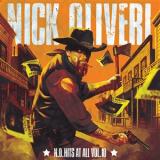
This Record you are holding is VOLUME 10 (The Best Of) the series of compilations in which I recorded the vocals. Bands that I like and bands that like my singing voice enough to have asked me to "guest vocal" on a song for their records. Some of these have been released and some have not until now. I have sang and/or recorded bass on 50+ releases of bands I love and had the great honor to work with. The good folks at HEAVY PYSCH SOUNDS RECORDS are releasing a series called "N.O. HITS AT ALL". All these songs and bands I've recorded with over the past 25 years are together and available to you to trip out on. So get your head right and put this record on and play it loud. That is all for now. All the Best, Nick Oliveri 2025 Los Angeles, California
Solid Red vinyl, limited to 400 copies. This Record you are holding is VOLUME 10 (The Best Of) the series of compilations in which I recorded the vocals. Bands that I like and bands that like my singing voice enough to have asked me to "guest vocal" on a song for their records. Some of these have been released and some have not until now. I have sang and/or recorded bass on 50+ releases of bands I love and had the great honor to work with. The good folks at HEAVY PYSCH SOUNDS RECORDS are releasing a series called "N.O. HITS AT ALL". All these songs and bands I've recorded with over the past 25 years are together and available to you to trip out on. So get your head right and put this record on and play it loud. That is all for now. All the Best, Nick Oliveri 2025 Los Angeles, California
- 1-: Fire Graphics
- 2: Secret Speech
- 3: Ex-Human Shield
- 4: History's Biggest T-Shirts
- 5: Not A Sound In Heaven
- 6: Company Town
- 7: You Can't Say Dallas Doesn't Love You
Bristol experimental band SUGAR HORSE are delighted to announce that their third album, Not A Sound In Heaven, will be released on 10th April 2026 via Fat Dracula Records.
To celebrate the news, the band are sharing the bruising lead single ‘Secret Speech’, available to stream on all good digital service providers from 12th February 2026.
Also announced today are a run of April 2026 UK album headline tour dates and an appearance at StrangeForms Festival 2026, with tickets on sale now (see below for full listings).
“We are fortunate enough to live in what is generally known as ‘The West’,” says front man Ash Tubb of the lyrical themes behind the new track. “I say fortunate with gritted teeth, because I know—as I’m sure the reader knows—that living in the West isn’t always rosy. The vast majority of people struggle everyday to feed, clothe and house themselves. Let alone receive adequate healthcare, schooling and workers’ rights.”
“We are, however, where all the world’s wealth is hoarded. We are at the centre of Empire. The people outside of this empire—those of the Global South—have had their resources extracted and their populations exploited by our own governments, with very little given back in return. This won’t go on forever. It will inevitably end, as all great empires do.”
“We in The West have a choice to make in the meantime; either help create a new, fairer world, or let the greed of our ruling classes become the undoing of all of us.”
The first glimpse of new material from the quartet, ‘Secret Speech’ starts as Not A Sound In Heaven means to go on—a politically-charged wrecking ball of a song that smashes its way through the often unbelievable chaos and brutality of the 21st century with vitriolic malice.
How do you capture the machinations of the geo-political industrial war machine—and all the horrors that go with it—in the studio, without seeming trite or crass? That’s the question that Sugar Horse have posed themselves on their forthcoming third album Not A Sound In Heaven, and they must surely be one of the only bands in existence capable of delivering on just that premise with both musical substance and cutting philosophical insight.
“Ever since I was born I can remember visions of war, famine, and death being beamed directly into my living room via the magic of television,” says Tubb of the record. “These visions were accompanied by newsreader narratives designed to either humanise or dehumanise the people involved. We humanise our government’s allies and dehumanise their enemies. This is taken as common sense, or even wisdom to some degree. People watch the news and accept it as fact, simple and true.”
“As a person gets older they move in one of three different directions with this acceptance of reality; They embrace what they’re being told, they fall into a kind of trust free nihilism or they learn that there are deeper narratives at play.”
“Not A Sound In Heaven is an aged acceptance of the latter. An acceptance of sitting at the centre of a global empire of both military and economic dimensions. An acceptance that the stories we’re told as a nation, or what’s generally in the zeitgeist, isn’t necessarily reality itself.”
“How does a person cope with the weight—and, frankly, the guilt—of a society that perpetuates such distinct inequalities? A society that thinks a bit of killing abroad is fine, as long as it improves the lives of people at home. You can see why so many choose to embrace it. Hell, nihilism seems pretty sensible. Once a person decides upon pursuing a degree of truth however, things get a bit depressing. Beyond depressing...maddening.”
“This album explores this kind of breezy, frivolous subject matter in a manner that will no doubt be uplifting to the listener and massively financially rewarding for the artist.”
The new album follows on from their standalone AA single ‘What’s Your ETA? Let’s Have A Tear Up’/‘Would You Like Me To Be The Cat?’ which was released late last year as a surprise double drop.
Multi Culti seasonal balance returns with Equinox III Kicking things off Guadalajara-based Bofo Dab (known for their blog 'Drops a Banger') does what their name suggests. This one has been getting caned by the Keinemusik crew, legions of phone-holders' shazam-prayers will only now be answered. It's a restrained big-room horn-loaded banger. Mehmet Aslan slides in to the proceedings with an awesome FM-sounding heads-down slice of clubby introspection. Long-time cult-hero Gilb'R of Versatile records fame spaces out the side with a deep, sparkly, live synth jam. On the flip, Mytron brings a fun stripped-back cover of a stone-cold classic with Higher (state of consciousness, that is). Brazillian hotboy Niev sounds right at home on the label with the aptly titled 'Professor Banjo.' Yuki Miyauchi lends an ethereal 90s bleep-inflected chunk of vibe with 'Donkey Conga.' Finally, fellow Japanese but London-based DJ Himitsu drops the deep, rollicking 'Waterfall.'
Recycled Cherry" (Red/Black) Vinyl[28,53 €]
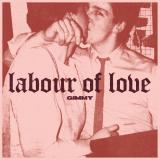
Australian indie and garage-rock firebrand, GIMMY unveils her new EP Labour of Love — a raw, emotionally charged collection that fuses gritty indie rock, post-punk bite and tender poetic expression, all powered by Gemma Owens’ unmistakable vibrato and fiercely honest songwriting.
Where her 2024 debut Things Look Different Now was a slow-burn, two-to-three–year voyage of change and introspection, Labour of Love hits with an entirely new force: intuitive, immediate and deeply connected to Owens’ emotional world. Written over six months and captured in an intense 4–5 day studio burst with producer Sam Joseph (King Gizzard), the EP moves with the urgency of something that needed to be felt and heard, right away.
Across seven compelling tracks, GIMMY dives into social anxiety, grief, falling in love and the chaotic beauty of everyday life, with each song arriving “on its own terms” — born from late-night home writing sessions, snippets of inspiration while travelling and moments of full-band electricity. Sonically, Labour of Love nods to Soft Play, Nick Cave, Fontaines D.C., The Preatures and The Smiths, yet remains unmistakably GIMMY: expressive, gritty, vulnerable, cheeky and alive in every moment.
Ultimately, the EP is an unfiltered snapshot of emotional truth, celebrating life’s highs, lows and everything in between, and showcasing GIMMY at her most dynamic, powerful and compelling to date.
Black Vinyl[27,31 €]
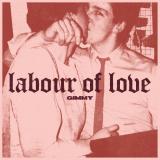
Australian indie and garage-rock firebrand, GIMMY unveils her new EP Labour of Love — a raw, emotionally charged collection that fuses gritty indie rock, post-punk bite and tender poetic expression, all powered by Gemma Owens’ unmistakable vibrato and fiercely honest songwriting.
Where her 2024 debut Things Look Different Now was a slow-burn, two-to-three–year voyage of change and introspection, Labour of Love hits with an entirely new force: intuitive, immediate and deeply connected to Owens’ emotional world. Written over six months and captured in an intense 4–5 day studio burst with producer Sam Joseph (King Gizzard), the EP moves with the urgency of something that needed to be felt and heard, right away.
Across seven compelling tracks, GIMMY dives into social anxiety, grief, falling in love and the chaotic beauty of everyday life, with each song arriving “on its own terms” — born from late-night home writing sessions, snippets of inspiration while travelling and moments of full-band electricity. Sonically, Labour of Love nods to Soft Play, Nick Cave, Fontaines D.C., The Preatures and The Smiths, yet remains unmistakably GIMMY: expressive, gritty, vulnerable, cheeky and alive in every moment.
Ultimately, the EP is an unfiltered snapshot of emotional truth, celebrating life’s highs, lows and everything in between, and showcasing GIMMY at her most dynamic, powerful and compelling to date.
- A1: Water
- A2: Come Back
- A3: Fighting
- A4: Wicked Boy
- A5: Candy
- B1: Mis
- B2: Master
- B3: New
- B4: Know Now
- B5: Rules
- B6: Message
VERY LIMITED TRANSPARENT PURPLE COLOURED VINYL - 100 UNITS ONLY FOR EUROPE
Lucky Number are thrilled to announce the release of both TRICK and RULES the latest albums to be released by the Philadelphia-based songwriter Alex Giannascoli, more commonly known as Alex G. Trick and Rules follow on the acclaimed heels of the November 2014 international release of Alex's fifth album, DSU. Recorded prior to DSU and previously only available via Alex's Bandcamp account, the albums have now been professionally mastered and are being made commercially available for the very first time.
Rules is soaked in the distinctive personality that is Alex G, the professionally mastered versions of these tracks further highlight that Alex has a serious knack for melodic songwriting.
In addition, Lucky Number are also thrilled to be releasing Trick, Alex's fourth album. Written and recorded just a few months after Rules, they both harbour a similar charm that makes it feel right for them to be released together.
Both Trick and Rules continue to showcase a prodigious song-writing talent, reaffirming that Alex G is one of the most promising and prolific American musicians today.
- 1: Fuenarinu
- 2: Kaendaiko
- 3: Tsubakishishaku No Yuigon
- 4: Tengindoujiken
- 5: Kindaichikousuke Nishie Yuku
- 6: Ougonno Furuuto (Flute)
- 7: Yubi
- 8: A=X, B=X A=B
- 9: Chi To Suna
- 10: Tabiyukumonoyo
- 11: Akuma Fuewo Fukite Owaru
We've got a bit of an obsession with Hozan Yamamoto here at Mr Bongo! A legend of Japanese jazz, he is rightly regarded as a true master and was recognised as a "living national treasure" by the Japanese government in 2002. Over five decades he pushed the genre into new directions, absorbing fusion, funk, spiritual jazz and many other sounds, resulting in a discography studded with gems of rare beauty. Exploring his back catalogue has taken us on an engrossing journey that now sees us reissuing another work from this ground-breaking musician.
Though not translating perfectly into English 'Akuma Ga Kitarite Fue Wo Fuku', (kitarite has not been a modern expression in Japanese) roughly means 'The Devil Comes Playing The Flute' / 'The Devil Is Coming While Blowing The Whistle' or 'Devils Flute’. It is the original soundtrack to Kôsei Saitô’s 1979 mystery and suspense movie, ‘Devil’s Flute’. The film is based on a story by the famous author, Seishi Yokomizo, and is centred around a much-loved fictional Japanese detective, Kosuke Kindaichi. A Japanese Sherlock Holmes that has been popular for generations.
Hozan Yamamoto was invited to compose the soundtrack directly by the producer of the film, Haruki Kadokawa. Mr Kadokawa also hired keyboard player and producer Yu Imai as assistant producer on the project, resulting in a stunning cosmic, breaks and beats-laden, funk, disco soundtrack extravaganza.
When it comes to the soundtrack and the technology of the time, Hozan Yamamoto and Yu Imai got inventive, tripped out, funked up, and experimented, creating a quirky soundtrack masterpiece that needed to be heard more outside of Japan. Differing from the more traditional Japanese music orientation of some of his other albums such as 'Beautiful Bamboo-Flute' (also released on Mr Bongo) the album showcases a number of genres, from lush atmospheric incidental music to disco and funk grooves, experimental nuggets, drum and flute workouts, to neo-classical and more.
A special record that showcases the further depths of this wonderful musician's talents.
BIG reissue for a BIG record!
Support from Gilles Peterson, Natasha Diggs, Osunlade, Rich Medina, Skratch Bastid, Bobbito Garcia, DJ Koco aka Shimokita, and GUTS ( Heavenly Sweetness ), amongst many others!
This is a landmark release from Maleet, the Northern NJ Producer, originally signed to Kenny "Dope" Gonzalez's ( Masters at Work ) label in the early 2000's
Now fresh off of a feature on the latest TEYMORI ( Amin Payne ) LP, Maleet creates his own blend of Afro-Cuban Orisha based music and Soulful House with vibrant live instrumentation
Synthesizers, Fender Rhodes, Percussion and Horns are the chosen ingredients here, while the thumping drums communicate directly with the Highest energies above! The results are songs that lift your spirit and move your body, simultaneously
Right on time for the season, these songs will be populating dance floors around the globe, through the Summer and beyond
Two dance floor heaters, one direct link to the HIGHEST!
- 01: Glass Mask On
- 02: Celebrity Culture Simp Farm
- 03: Please Just Make It Stop
- 04: No Laughter Left In Me
- 05: Weaponizing My Failures
- 06: Unthinking My Every Thought
- 07: Insignificant Other
- 08: It Keeps On Stinging
- 09: I Took A Pill In Vilvoorde
- 10: Suffering In Technicolor
DOODSESKADER clearly haven’t had enough of redefining boundaries – they’ve only just gotten started. Tim De Gieter and Sigfried Burroughs return on April 3rd, 2026 with their third full-length album, The Change Is Me, a rollercoaster that can only be described as the unstable lovechild between witch house, hip-hop, industrial dream pop, and stadium rock that can’t decide if it wants to watch the world burn or shout from the rooftops that we need to save it. Their combination of grungy 90s melodies with distorted synths, sludgy bass, hard tuned vocals, rapping, singing, and explosions of undiluted rage at the current state of the world leave you wondering just exactly what it was you smoked last night, and if it was too much or not enough. The Change Is Me is an album that grabs you by the arm and asks if you’re ready to go on a grand adventure, then pulls you into its chaos before you can say “yes” or “no.”
Tim and Sigfried aren’t just breaking the boundaries between genres; they’re breaking out of their own Year cycle, a path they had laid out for themselves at the band’s inception in 2020. Up until now, the duo had set out to document their “journey to getting better” through writing one album each year: Year Zero (2020), Year One (2022), and most recently Year Two (2024). After spending eight months throughout 2024 and 2025 writing, recording, producing and mixing Year Three, the band scrapped the finished record entirely. Playing shows while simultaneously navigating the process of mixing Year Three created a sort of disconnect – the people that they were when they wrote that record and the people that playing shows made them become were no longer one and the same. “We’re people with faults and strengths, and we realized we needed to accept it. That’s equal parts bleak and liberating. If you’re so focused on self-improvement, you can’t even applaud yourself for how far you’ve come,” the band explains. “This project is meant to be a document of us and of the human condition, not a self-improvement handbook designed to keep us all stuck on what may or may not have happened to us or because of us in the past.”
DOODSESKADER chose instead to embark anew on a week-long creative journey in Tim’s own Much Luv Studio with one goal in mind: to make an album that captures who they are right now. Finally writing everything together in the same room for the first time in years, the process of bringing "The Change Is Me" to life was captured by Diana Lungu in their latest documentary, "Now I Know You See Me", out December 2nd, 2025.
"The Change Is Me" marks the beginning of DOODSESKADER’s shift into a more positive era, both musically and conceptually. Over the course of the 40-minute record we hear the two friends unite in a fight against a world that grows more and more disappointing, a concept made crystal clear in tracks like “Celebrity Culture Simp Farm,” “It Keeps On Stinging,” and of course the album’s epic closer “Suffering In Technicolor.” While their previous albums saw them trying to outrun their pasts and arrive at a better version of themselves, here the search for some external or internal revelation that will “make them better” is no more. It’s been replaced by the realization that change isn’t something we force: it’s gradual, and more importantly, it’s something that’s already there – we just need to reach out and accept it.
The band’s live appearances over the last several years have been instrumental in shaping their ideology. On stage is where the duo find connection; not only with the audience, but also with each other. Their sold-out release shows at Ancienne Belgique (2022) and VierNulVier (2024) have proven that they are one of Belgium’s must-see acts. Abroad, their energy has translated into a month-long EU/UK tour with French band Alcest in 2024, as well as appearances at festivals such as Roadburn Festival (NL), Eurosonic (NL), Hellfest (FR), Mystic Fest (PL), Jera On Air (NL), ArcTanGent (UK), Fluff Fest (CZ) and more.
"The Change Is Me" is out April 3rd, 2026 on DOODSESKADER’s own label, 45 Records.
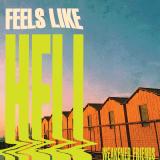
The Portland, ME trio returns with Feels Like Hell, their most self-assured and emotionally charged record yet. Despite the title, the album is a celebration of personal growth, creative freedom, and defiant joy in the face of a chaotic world.
Coming off the burnout and frustration captured in their 2021 album Quitter, Feels Like Hell finds Sonia Sturino (vocals/guitar), Annie Hoffman (bass/vocals), and Adam Hand (drums) leaning into clarity, gratitude, and renewed purpose. Sturino’s lyrics are as raw and honest as ever, but now they reflect strength rather than despair. It’s an album that drags existential dread into the daylight and sets it on fire.
“I decided to stop being such a sad-sap negative person,” Sturino says. “Now I practice being grateful, being proud, being happy, and not being envious.” That mindset shift shapes the tone of Feels Like Hell, which looks at darkness but chooses not to be consumed by it.
The record also marks the band’s first foray into co-writing, with Hoffman playing a significant role in shaping its sound. Embracing a more intuitive recording process, the trio stripped back the excess and focused on what felt right. The result is a record that’s resilient, cathartic, and brimming with creative energy.
While the world may still feel like it’s falling apart, Feels Like Hell pulses with the power of letting go. Letting go of fear, of perfectionism, of the illusion that vulnerability is weakness. With driving guitars, unflinching lyrics, and a renewed sense of purpose, Weakened Friends prove that it’s possible to stand in the wreckage and still find something worth singing about.
- A1: Ocean Side
- A2: Shadow Surfer
- A3: Blind Curve
- A4: Summer Eyes
- A5: Futari No Night Dive
- B1: Seishun No Ijiwaru
- B2: Evening Break
- B3: So Many Dreams
- B4: I Will
WRWTFWW Records is very excited to announce the first release from its new City Pop Series with Japanese singer, actress, entertainer, scholar and all-around legend Momoko Kikuchi’s sun-drenched classic Ocean Side album, available now as a limited-edition transparent vinyl LP in a heavyweight sleeve with obi.
A cult classic among Japanese music collectors, Ocean Side was originally released in 1984 by mythical label VAP and features lush compositions and arrangements by J-Pop icon Tetsuji Hayashi (Mariya Takeuchi, Miki Matsubara, Omega Tribe, Junichi Inagaki, Urusei Yatsura anime, soundtrack…). Momoko Kikuchi’s city pop gem is a flawless mix of heartwarming beachside funk, breezy grooves, and silky-smooth vocals - the feel-good music we all need in our life right now.
The 9-track summer-is-forever adventure notably includes the ultra-funky megahit “Blind Curve”, the fan-favorite title song, and the insanely romantic ballad “Futari No Night Drive”. A vibrant reflection of summer in 1980s Japan, Ocean Side masterfully balances nostalgia and elegance, and provides part of the origin story for revered modern music genres such as chillwave, and future funk, and vaporwave.
The official reissue licensed from VAP, Inc. is sourced from the original masters with an audiophile-cut by Sidney Meyer at Emil Berliner Studios.
WRWTFWW’s City Pop Series and its Lopetz/Büro Destruct-designed logo also includes jazz-fusion-AOR-mellow-funk treasure Safari (1984), a limited capsule collection of merch, and much more to come in the near future.
- A1: Gloria Lynne “The Jazz In You” 2.22
- A2: Joe Harrioj Quintet “Señor Blues” 4.02
- A3: Peggy Lee “Black Coffee” 3.05
- A4: Benny Golson “Tippin’ On Thru” 6.41
- B1: Sheila Jordan “Dat Dere” 2.42
- B2: Al ‘Jazzbo’ Collins “Max” 3.04
- B3: Nina Simone “Central Park Blues” 6.49
- B4: John Wright Trio ”South Side Soul” 5.03
- C1: Diane Maxwell “Love Charms” 2.16
- C2: David Michael And Chorale “Wow” 2.36
- C3: The Jimmy Heath Orchestra “Big ‘P’” 3.54
- C4: Bobby Timmons “So Tired” 6.11
- D1: Nappy Brown “My Baby” 2.32
- D2: Sonny Clark “Midnight Mambo” 7.12
- D3: Sabu MarNez And His Jazz-Espagnole “Enchantment” 4.27
- D4: Zoot Sims And His Orchestra “Recado Bossa Nova - Pt.1” 2.36
Step into the second chapter of the The Jazz Sinners saga dedicated to cool, groovy and sinful
Jazz. The Jazz In You goes deeper with richer grooves, glamorous moods, pure analog soul.
A cinemac journey through jazz’s most seducve decades, pressed and presented with
uncompromising audiophile standards. This is jazz that moves, seduces, and stays. Every cut is pure
jazz alchemy. Rare, prisne vintage first pressings and top-er sources only. No shortcuts, no
compromises. Mastered organically for a full 360° sound spectrum, where every nuance and every
breath feels as if the players were right there in the room. The mood is cinemac, midnight cool. Jazz with a;tude inspiring shadowed alleys, smoky clubs, late-night elegance.
Music that speaks equally to jazz lovers, lounge selectors, DJs, and serious collectors.
At the heart of the journey, instantly recognizable landmarks light the way:
Gloria Lynne’s “The Jazz In You”, Benny Golson’s “Tippin’ On Thru”,
Nina Simone’s “Central Park Blues”, Diane Maxwell’s “Love Charms”,
Sabu Marnez’s “Enchantment”, and Zoot Sims’ “Recado Bossa Nova – Pt.1”.
Timeless names, meless grooves, each cut is chosen for its power to move and to suggest feeling
and emoons. Behind the selecon stand true masters of mood, with over thirty years of digging,
taste, and style shaping every decision.
On this double vinyl, the experience is treated with the respect it deserves. Pressed under expert
supervision, housed in a premium 100% Italian-made cover on luxurious 350g cardstock, with polylined inner sleeves designed for long-term preservaon. Built for collectors. Made to last
generaons and here is the promise: Triumphant. Timeless. Deeply grooving.
Soulful vocals, hard-swinging combos, cinemac big bands, Afro-Lan heat, late-night Blues. Every
track is a winner. The Jazz In You is feeling. It’s a;tude. It’s moon and emoons.
Now, sit back, close your eyes and get ready to find something captured, once again, that escapes
explanaon … The Jazz Sinners’ way!
- The Golden Hour
- Nothing Can Hurt Me Anymore
- Die Of Shame
- A Field Of Our Own
- Grow Old With Me
- Just A Girl In The Summertime
- La Bamba In The Rain
- When I Grow Old
- A Mother's Pride
- Into The West
- Sally Sparkles
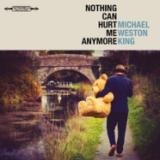
But, in the summer of 2024, a personal tragedy changed everything. Michael and Lou lost their six-year-old granddaughter, Bebe, in the Southport attacks in July that year, and, as much as they tried to carry on and make a My Darling Clementine album, with the weight of so much sadness and grief bearing down on them, it just didn't feel the right thing to do. The tragic events of summer 2024 not only changed the music they were making and the songs they were writing, it also altered their outlook on life. Recognising that everyone's grief is individual even that of a husband and wife Michael and Lou needed to channel their suffering via their own individual creativity and in their own way, rather than in collaboration, so they worked on two solo albums. Michael's "Nothing Can Hurt Me Anymore" is the first of the two to be released.
An album the defies genre, it is simply his instinctive musical reaction to the events of summer 2024. Michael writes "To be honest, it was impossible to write about anything else. It overwhelmed everything. I hope I am now creatively exhausted on the subject, but I think it will affect my writing forever, just as indeed, the loss of Bebe will". It features eleven brand new MWK songs Partly recorded in rural Wales and partly in not so rural Sheffield, "Nothing Can Hurt Me Anymore"was produced by Michael, along with wunderkind Clovis Phillips, and the brilliant Colin Elliot, who also mixed the album.
- A1: Choir Of Horrors
- A2: Akasha Chronicle
- A3: Weeping Willow
- A4: Lycantropus Erectus
- B1: Münchhausen Syndrom
- B2: Cautio Criminalis
- B3: Northern Command
- B4: Weena
- C1: Choir Of Horrors (Coh Pre-Production)
- C2: Weeping Willow (Coh Pre-Production)
- C3: Münchhausen Syndrom (Coh Pre-Production)
- C4: Lycantropus Erectus (Coh Pre-Production)
- C5: Northern Command (Coh Pre-Production)
- C6: Indescent Assault Of The Tribe (Coh Pre-Production)
- D1: Birth Of A Second Individual
- D2: Psychomorphia
- D3: Right For Unright
- D4: M.a.n.i.a.c
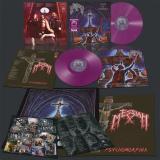
With bands such as Hellhammer/Celtic Frost and Coroner, but also more obscure formations such as Fear Of God, Excruciation, and Infected, Switzerland has always been a fertile breeding ground for extreme metal. Messiah, originally formed in 1984, also played a major role in the development of thrash and death metal in Switzerland. They released two groundbreaking albums on Chainsaw Murder Records: “Hymn To Abramelin” in 1986 and “Extreme Cold Weather” a year later. In the early nineties, Messiah signed a contract with Karl Walterbach's label Noise Records, on which three more albums were released: “Choir Of Horrors” (1991), “Rotten Perish” (1992), and “Underground” (1994). The classic lineup of Messiah during the Noise era consisted of vocalist Andy Kaina, who passed away far too early in 2022, Steve Karrer on drums, Patrick Hersche on bass, and band founder Brögi on guitar. Many consider “Choir Of Horrors” from 1991, produced by Sven Conquest at Sky Trak Studios in Berlin, to be the pinnacle of Messiah's work. Messiah Infernal Thrashing Records (MITR) is now releasing the 35th anniversary edition of this classic on vinyl
- 01: Maanitus &Amp; Tšiižik
- 02: Markka
- 03: Melkutus
- 04: Letška
- 05: Kuuen Parin Hoirola
- 06: Brišatka
- 07: Tšiižik
- 08: Kirkonkellot
- 09: Kirkonkellot Korkea
- 10: Hoirola, 3 Parin
- 11: Lippa
- 12: Kyngäkiža
- 13: Ristakondra
- 14: Vanha Polkka
- 15: Viistoista
- 16: Vanha Valssi
- 17: Kiberä
- 18: Maanitus Kuokan Kanteleella
- 19: Tuuti Lasta Nukkumahe
Vinyl[22,65 €]
Death Is Not The End present a further volume of Arja Kastinen's eerie amalgamations of 110 year old wax cylinders with her own meticulously transcribed takes, this time focussing in on Armas Otto Väisänen's field recordings of kantele player Iivana Mišukka (b. 1861 d.1919).
"Ivana Mišukka (1861–1919) was one of the Karelian kantele players recorded by the folk music researcher Armas Otto Väisänen on wax cylinders in 1916 and 1917. In the early 20th century, the remote areas of Border Karelia were undergoing the final phase of a transformation in musical culture, with the ancient runo song tradition giving way to newer forms of music. This transition is reflected in Mišukka's repertoire and choice of instrument. The ancient small kantele, hollowed out of a single piece of wood, was already rare at the turn of the century. Mišukka's kantele was a new type of instrument with 26 strings, constructed of several parts, but he played it using the traditional plucking technique. Like other Border Karelian kantele players, his repertoire consisted of music rooted in runosong culture, as well as newer dances and songs from the east and west. Most of the recorded material falls into the latter category.
Ivan Bogdanov Mišukka was born out of wedlock in Suursara village, Suistamo, on 1 May 1861. He began playing the kantele at the age of five or six, quickly mastering the instrument. In adulthood, he was considered one of the area's best master players. Mišukka was landless for most of his life and lived in different parts of the Suistamo parish. His first wife, Tekla Markintytär, died in 1897 at the age of 40, and his second wife, Jevdokia Filipintytär Jeminen, died in 1907 at the age of 50. Seven children were born from the first marriage, two of whom died young. The third wife, Maria Ignatintytär Gurnan (Kuurnanen), was a well-known master of lamentations. Together with Maria, Iivana Mišukka worked as a tenant farmer in the village of Suursara. Mišukka suffered from rheumatism, which prevented him from participating in physical work like Maria. This was apparently partly the reason why Iivana Mišukka went to earn extra money by playing the kantele on gig trips. He often had other traditional artists from Suistamo as his travelling companions, such as the runosingers Konstantin Kuokka and Iivana Onoila. Iivana Mišukka died in Leppäsyrjä village, Suistamo, on 18 May 1919 at the age of 58, and his kantele was donated to Teppana Jänis.
Mišukka only used 14 of the 26 strings on his kantele, playing the same tunes either a fourth higher or lower. He tuned his kantele to the major scale using fifths, except for a low seventh scale degree on the upper strings, but not below the fundamental. Since he did not use the seventh note of the scale on the upper strings at all, he could use the major scale both lower and a fourth higher with this tuning. According to Mišukka, the sound of higher, or 'finer', strings is 'more beautiful', while that of lower ones is 'greater'. Among runosingers, the size of the thirds varied, ranging from major to minor to neutral. A similar phenomenon can be observed in kantele tunings, where the third, sixth and seventh scale degrees vary in a comparable way.
During a meeting, Väisänen suggested that Mišukka play the smaller kantele belonging to Konstantin Kuokka. The idea was to bring it closer to the horn to improve the recording quality. However, the kantele was completely out of tune, and now Mišukka tuned it to the Lydian scale (track 18).
Using the old plucking technique, Mišukka placed his right middle finger on the fundamental tone, his right index finger on the second scale degree, his left middle finger on the third scale degree and his left index finger on the fourth scale degree, and his right thumb on the fifth. The thumb also played the notes above the fifth note of the scale. As Mišukka remarked to Väisänen: 'Peigaloll' tuloo enemb ruadoa' (the thumb has to do more work). However, he did not use the seventh note of the scale on the upper strings at all. Below the fundamental note, he played the seventh and sixth notes of the scale with his right middle finger of and the fifth note of the scale with his right ring finger. This fifth scale degree below the fundamental is almost always used as a drone. Sometimes, when the melody required it, Mišukka, like other players, also varied the fingering. He would also occasionally strike the same string with the side of his fingernail after plucking it.
The wax cylinder recordings of Karelian kantele players are kept in the archives of the Finnish Literature Society in Helsinki, Finland. Copies were made of them onto reel-to-reel tapes in both the 1960s and 1980s. The 1960s copies are mono and the 1980s copies are stereo. However, not all kantele recordings from these decades have survived.
The sound of the kantele is difficult to hear in wax cylinder recordings due to its low volume, and it occasionally becomes completely obscured by noise. During the copying process, the cylinder sometimes rotates unevenly, resulting in breaks or jumps in the music. Additionally, the rotation speed of the cylinder in the copies does not correspond to the performance speed of the original music, which alters the pitch. However, since Väisänen's precise notes are available in the archive, it is possible to deduce the melodies, their speed, and the tuning level of the kantele in the recordings. Of the copies of the original recordings from the 1960s and 1980s, I have selected the one that best met the requirements of this publication and adjusted the speed of the recording to align with Väisänen's notes. To enhance the listening experience, I have replayed the songs, which now partly overlap the old recordings on this release."
— Arja Kastinen