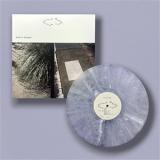
Shadows fold into colour. Memory dissolves into noise. You brush up against the walls of the mind. Touch is soft as breath. On ‘B side’, Areliz Ramos follows her work’s current into its more “fantastic and elusive… and even romantic” side; a place where fantasy loosens the bolts of reality and memory, and emotion is alluringly refracted into musical collages and loose-strung compositions. Across the album, voices drift in and out of an intimate space, while pensive guitar lines stumble and bloom like scribbled unresolved notes in a diary. Beneath its icy, often chaotic surface, ‘B side’ radiates a deep sense of joy and fragility. Ramos sketches out an entire world by free association, collaging notions and echoing quiet thoughts into deeply honest snapshots of daydreams.
Areliz Ramos is a Peruvian producer living in London, recognized for an evocative palette weaving lo-fi and downtempo threads into dreamlike, abstract emo narratives. While her debut ‘Frío’ (Where to Now?), orbited around homesickness and estrangement, ‘B side’ embraces imperfection, incorporating her guitar (named "Frank"), pedals, synthesizers, and her own vocal textures for the first time, privileging emotional immediacy over technical precision. The creative process behind this album reflects a conscious decision to let go, loosen control, let intuition lead, and engage her own ‘B’ side.
Rather than constructing a safe haven from hardship, Ramos offers a cracked mirror, staring right at it, embracing that vulnerability. The gentle and beautiful ‘B side’ explores fleeting satisfaction, or the elusive comfort sitting just out of sight.
Cerca:the right now
- A1: God The Tube
- A2: Mother
- A3: Welcome
- A4: Chocolate Revelation
- A5: Pleasure
- A6: Echoes Of Curiosity
- A7: André A8. Granny A9. The Garden
- A10: Jeux D'eau
- A11: Go To The Temple
- A12: You Are The Rain
- A13: The Character Of Rain
- A14: Lullaby Of Takeda
- A15: Departure To Belgium
- A16: Swing Sweep
- B1: Obon B2. Open The Sea
- B3: Without Him, No Me
- B4: Nishio-San
- B5: Kashima-San's Mansion
- B6: Disillusion
- B7: A Carp Gift
- B8: Sidereal Void
- B9: Épilogue
- B10: Hana
Original soundtrack of the film Little Amélie, an adaptation of Amélie Nothomb’s ninth novel The Character of Rain (Métaphysique des tubes), published in 2000 and a major literary success.
From Tokyo, Mari Fukuhara composed an airy and playful score for the film. She blends impressionistic piano (Ravel is never far), childhood timbres (marimba, traditional Japanese songs), and orchestral textures. The shakuhachi (flute) and the koto bring in a Japanese touch, at times lyrical, at times mischievous. The result is a reading and listening experience that is both deeply personal and universal.
The album unfolds like a musical tale in its own right, evocative yet profoundly intimate.
Released in France in June 2025, the film is now campaigning for the Oscars and will premiere in the U.S. in the fall.
Chicago-based indie punks Sincere Engineer started as a solo acoustic punk act playing dive bars and open mics. Singer/guitarist/songwriter, Deanna Belos, decided to forego dental school for punk music, trading in teeth for corn dogs (as referenced in her fan favorite song "Corn Dog Sonnet No. 7"), and touring the world with bands like Hot Mulligan, Alkaline Trio, The Menzingers, and Joyce Manor. In 2020, she released Bless My Psyche, her first sophomore album on independent powerhouse Hopeless Records. Featuring the Sirius XM Faction hit "Trust Me," the album explored themes of insecurity, failure, and coming of age and was built for gut wrenching sing-a-longs. With the upcoming Cheap Grills, Sincere Engineer now takes a massive leap forward with catchy melodies, witty and sharp lyrics, and the sincerity of a person that wants to do the right thing in a world that doesn't always reward that. Working with producer Mike Sapone (Taking Back Sunday, Brand New), Sincere Engineer/Deanna Belos has crafted an album that sees her emerge as a face of the new generation of melodic punk. For Fans Of: The Menzingers, Alkaline Trio, Hot Mulligan, Jeff Rosenstock
- Tokyo 1
- Osaka
- Nagoya
- Matsumoto (Beginning)
- Matsumoto (Ending)
- Hokkaido
- Tokyo 2
- Each Story
Black Vinyl[22,27 €]
Emily A. Sprague's Cloud Time traces an audio-spiritual journey through time and place, recorded across a long-awaited debut tour of Japan in the fall of 2024. Compiled from environmental improvisations captured in and for the moment, material at once welcoming, responsive, and inimitable, the album distills a voyage guided by psychic wayfaring, unbound presence, and activating performance for a reciprocal exchange with space, listener, and each fully engaged instant. The Japanese tour documented on Cloud Time held an almost mythic significance for Sprague, taking on properties of her own sonic white whale. After many near-departures and dropped plans to play in the country, "the empty spaces of cancelled trips and forgotten music turned into strange little misty spirits that I felt followed by," she says. "When I began preparing for the tour, I couldn't shake a sense that the invitation to Japan was more about opening myself up to this new place instead of bringing something into it tightly under my control. Improvisation has always been such a pillar in my music practice, and I really wanted to meet the country, spaces and people through that process." To amplify these intuitive whispers on-stage, Sprague reimagined her time-tested live rig, designed to be as free from error as possible, as a looser, more flexible set up that would allow her to interface with what was essentially a blank sonic canvas every night. Each performance became a collaboration between environment and instinct, Sprague processing the events, energies, and emotions informing the evening through her new sound ecosystem, and projecting an entirely present and unique version of herself to each open-eared and hearted crowd. "It was very much more than just an act of playing for me, but a total experience of time and place," she says. The seven long-form pieces that plot the course of Cloud Time, excerpted from over eight hours of recordings archived on the artist's on-stage recorder and generously shared on the album with no additional mixing and only minimal editing, invite listeners to become still in these deep-rooted moments of presence as the album moves from city to city, venue to venue. Cloud Time chronicles material recorded at each tour stop, Sprague selecting and sequencing the album around mood-based storytelling more so than linear chronology. "I tried to make the whole album flow in the way that any one of the complete live performances did," she explains, "while also keeping the spirit of the whole thing as a journey." The result is equal parts travelog, love letter, and impressionistic collage channeled from the potent ferment of a now encased in the glowing amber of memory. Intrinsically inspired by kankyo ongaku, an environmental music philosophy, known both in and widely outside of Japan that tunes into the similarly expansive ethos as Pauline Oliveros' deep listening practice and posits the listener as composer, Cloud Time is ambient music that seems to be listening right back, grounded in heartfelt synthesized frequencies that abundantly hold and heal. Pieces like "Nagoya," "Tokyo 1," and the ten minute "Matsumoto" in particular hum with the atomic resonance of gently tended landscapes, offering space for tuning way in and dropping far out from perspectives that stifle and bind. Cloud Time is an invitation to embrace each moment as both fleeting and eternal, floating by with nothing to grasp onto and absolutely everything to gain. The exercise in acceptance and letting go that Sprague practiced throughout the tour deeply impacted her understanding of self as both a guest and venerable performer. "The process of loving wherever I am, being present and focusing on a clear channel of communication for mind and emotion, rooted so deeply in respect for the space, those within it, and myself, ended up being profoundly healing," she says. "My vision and hope is that this album can be released as a gift back to anyone who either was or wasn't there. A cloud time of life passing by."
STANDFIRST Titanic, the project spearheaded by Mabe Fratti and Hector Tosta (aka I. la Católica), return with a sumptuous and life-affirming new album.
In her sensational 1929 biography Tiger Woman, dancer and socialite Betty May claimed her ‘coster’s eye’ meant she liked to wear as many colours as possible. “Colours to me are like children to a loving mother. Each is my favourite, yet I can never bring myself to deny the others by preferring one.” May’s bold and inclusive strategy is one that manages to transfer itself, almost a century later, to Hagen, the new record by Titanic.
Many will know Titanic as the Mexico City-based brainchild of cellist and singer Mabe Fratti and multiinstrumentalist Hector Tosta who is now operating under the pseudonym, I. la Católica, (taken, rather unusually, from the name of the street the pair live on). With Hagen, and their previous release, Vidrio, (2023), the pair are creating a distinctive signature sound in modern alternative pop music. Nobody else sounds quite like them. Both records have an open hearted nature and simple, winning melodies that play off against a taste for drama, spectacular orchestration and a feeling of otherworldly mystery. Hagen is the more ambitious, sometimes more mystical effort. From the opening handclaps of ‘Lágrima del Sol’, (a wonderfully uptempo playground chant translating as a tear from the sun but, surely, not referencing the brand of pineapple wine?), the record dances its way through various mid-to-late-eighties inspirations, lush and widescreen passages of melancholy and vertiginous contrasts.
Mystery is often found in the simple but slightly odd song titles. English translations of various track titles give, ‘you swallowed the gum’, ‘leak’, ‘a tear from the sun’, ‘raising the trophy’ ‘digging dimensions’, ‘the owner’, ‘the decapitated hen’ and ‘the trap is exposed’. All denote striking images, metaphysical hints and emotional cues or simple, even childlike actions. Though Fratti and Tosta don’t reveal its provenance, the album’s title could even be a crafty play on words: the listener would be forgiven in thinking the moments of brash contrast and eyebrow raising theatricalism in the music constitute a musical nod to German punk chanteuse, Nina Hagen.
On Hagen, singer and cellist Mabe Fratti once again displays her brilliant knack of speaking to us directly. There is never the suspicion of her playing to the gallery, and the directness of many of the lyrics don’t allow it. Parallel to this, Fratti has an almost magical ability to give Hector Tosta’s melodies, and her and Tosta’s lyrics ones imbued with an insight and meaning that feels otherworldly. Tosta admitted it was “pretty wild to hear Mabe take the interpretations to a different place” and the listener can pick up on the delight Fratti takes in (literally) adding a voice to the many narratives.
Two examples can be shown here: ‘Gotera’ (Leak) uses harsh slashes of cello and tough, gunfire-like guitars and drums and multiple vocal lines that could be acting as a Greek chorus. They play off brilliantly against Fratti’s soft, slightly baleful vocal take that delivers lyrics such as: ‘nobody knows where the leak is / but I know where it is / they fight in front of the door and / nobody can go in’. With ‘La Gallina Degollada’ the somewhat blithe melody melody line, sung with what could be sarcastic brio by Fratti, plays against an itchting rhythm and rasping guitar part. The punch comes when you see that the song is about a chicken that has been decapitated and read lyrics such as: ‘I already saw it, it moved, the decapitated chicken’ / ‘could it be that I'm broken’ and ‘Two people hurt each other by thinking that they no longer agree’/ ‘Hours pass and the chicken represents what scares me’.
There may be death and fights to deal with, but there is also a quality of chirpy self-reliance about Hagen that is a key part of its nature. Like Betty May and her colourful outfits, Hagen’s sound often revels in its own sense of richness. Throughout, the record delivers vaulting string sections or glutinous guitar squeals that could, like the powerful, driving ‘Escarbo Dimensiones’ (Digging Dimensions) have come directly from a glossy 1980s TV series. Fratti sees this “glam sound” developed by Tosta on the aforementioned track and ‘Te Tragaste el Chicle’ (You Swallowed The Gum), as moments that were truly “revealing” for the album as a whole during its making.
What else? The thud and thump of ‘La Trampa Sale’ (The Trap is Exposed), and its sudden change of tempo and mood betrays a monstrously ambitious piece of music, the players almost greedily creating the sounds. Other moments are heart wrenching: ‘Libra’ ends on a poppy chord switch that cleverly ramps up the emotion inherent in the music’s notation. You could almost imagine a teenager in a bedroom forty years ago, rewinding the track over and over on a small, cheap cassette player, unable to get enough of that sugarsweet switch. Elsewhere, Oneohtrix Point Never adds stardust and an unearthly sense of space on the changeable, slightly moody meditation, ‘Pájaro de Fuego’ (Firebird). The record ends with ‘Alzando el Trofeo’ (Lifting the Trophy), a track that could soundtrack a state wedding, what with its beautiful cascading piano parts, a sugary vocal and short triumphal guitar riffs that add a rich patina to the overall sound. Fratti: “When I doubled those vocals on ‘Alzando el Trofeo’ I felt there was an epiphany happening, right at that moment.”
Making a good record is a team game. Tosta and Fratti recall seeing Randall from Circular Ruin Studios in NYC “tweak the drums in ‘Libra’ to make that amazing effect of the gated reverb”, or the shaping of ‘Gotera’, “when (recording engineer) Nate Salon added some synths to the track.” Drummer Eli Keszler, “an amazing and versatile player” had the songs down pat in a couple of days” and, according to Tosta, Oneohtrix Point Never “just came to one of the sessions and we hung out, and after all the recordings he and Nate were together in some studio and out of nowhere they sent us some beautiful tracks for ‘Pájaro de Fuego’! Fratti concurs. “He decided that he wanted to record because he was listening to the record (Nate works closely with him) and he really liked it! It was a total honour, indeed!”
Bedazzled by the playing, the skyscraping ambition in the arrangements and the giddy moments of contrast thrown up by Hagen, we could allow ourselves a brief moment of flippancy and state that Titanic’s new record is Yacht Rock meets Aeschylus, full-on. It’s also worth speculating that, in this hyper-sensitive, intemperate age, Titanic’s music has the power, however fleetingly, to heal hurts. Hagen is a brilliant showcase for a fresh and enriching form of pop music: displaying a magpie eye for what glints and plundering what has gone before.
Like Vidrio, Hagen was partially and additionally recorded at Fratti and Tosta’s house, aka Tinho Studios in Mexico City, as well as Golden Girl Studios & Circular Ruin Studios in New York City. Mixing was done by Santiago Parra in Pedro y el Lobo Studios, Mexico City and mastered by Rafael Anton Irisarri at Black Knoll Studios, New York City. The recording engineer was Nate Salon.
Hagen featured Mabe Fratti on cello, vocals & backing vocals, I. la Católica on guitar, keyboards, prepared piano, bass & backing vocals, drums by Eli Keszler and synths in ‘Pájaro de Fuego’ from Daniel Lopatin and Nate Salon.
All compositions on Hagen are written by I. la Católica, except ‘Escarbo Dimensiones’ & ‘Pájaro de Fuego’, which were composed by I. la Católica and Mabe Fratti. The record was produced by I. la Católica and co-produced by Nate Salon & Mabe Fratti. And all lyrics are by I. la Católica except ‘Escarbo Dimensiones’, ‘Gotera’, ‘Gallina degollada’ & ‘Pájaro de Fuego’, which were written by I. la Católica & Mabe Fratti.
STANDFIRST Titanic, the project spearheaded by Mabe Fratti and Hector Tosta (aka I. la Católica), return with a sumptuous and life-affirming new album.
In her sensational 1929 biography Tiger Woman, dancer and socialite Betty May claimed her ‘coster’s eye’ meant she liked to wear as many colours as possible. “Colours to me are like children to a loving mother. Each is my favourite, yet I can never bring myself to deny the others by preferring one.” May’s bold and inclusive strategy is one that manages to transfer itself, almost a century later, to Hagen, the new record by Titanic.
Many will know Titanic as the Mexico City-based brainchild of cellist and singer Mabe Fratti and multiinstrumentalist Hector Tosta who is now operating under the pseudonym, I. la Católica, (taken, rather unusually, from the name of the street the pair live on). With Hagen, and their previous release, Vidrio, (2023), the pair are creating a distinctive signature sound in modern alternative pop music. Nobody else sounds quite like them. Both records have an open hearted nature and simple, winning melodies that play off against a taste for drama, spectacular orchestration and a feeling of otherworldly mystery. Hagen is the more ambitious, sometimes more mystical effort. From the opening handclaps of ‘Lágrima del Sol’, (a wonderfully uptempo playground chant translating as a tear from the sun but, surely, not referencing the brand of pineapple wine?), the record dances its way through various mid-to-late-eighties inspirations, lush and widescreen passages of melancholy and vertiginous contrasts.
Mystery is often found in the simple but slightly odd song titles. English translations of various track titles give, ‘you swallowed the gum’, ‘leak’, ‘a tear from the sun’, ‘raising the trophy’ ‘digging dimensions’, ‘the owner’, ‘the decapitated hen’ and ‘the trap is exposed’. All denote striking images, metaphysical hints and emotional cues or simple, even childlike actions. Though Fratti and Tosta don’t reveal its provenance, the album’s title could even be a crafty play on words: the listener would be forgiven in thinking the moments of brash contrast and eyebrow raising theatricalism in the music constitute a musical nod to German punk chanteuse, Nina Hagen.
On Hagen, singer and cellist Mabe Fratti once again displays her brilliant knack of speaking to us directly. There is never the suspicion of her playing to the gallery, and the directness of many of the lyrics don’t allow it. Parallel to this, Fratti has an almost magical ability to give Hector Tosta’s melodies, and her and Tosta’s lyrics ones imbued with an insight and meaning that feels otherworldly. Tosta admitted it was “pretty wild to hear Mabe take the interpretations to a different place” and the listener can pick up on the delight Fratti takes in (literally) adding a voice to the many narratives.
Two examples can be shown here: ‘Gotera’ (Leak) uses harsh slashes of cello and tough, gunfire-like guitars and drums and multiple vocal lines that could be acting as a Greek chorus. They play off brilliantly against Fratti’s soft, slightly baleful vocal take that delivers lyrics such as: ‘nobody knows where the leak is / but I know where it is / they fight in front of the door and / nobody can go in’. With ‘La Gallina Degollada’ the somewhat blithe melody melody line, sung with what could be sarcastic brio by Fratti, plays against an itchting rhythm and rasping guitar part. The punch comes when you see that the song is about a chicken that has been decapitated and read lyrics such as: ‘I already saw it, it moved, the decapitated chicken’ / ‘could it be that I'm broken’ and ‘Two people hurt each other by thinking that they no longer agree’/ ‘Hours pass and the chicken represents what scares me’.
There may be death and fights to deal with, but there is also a quality of chirpy self-reliance about Hagen that is a key part of its nature. Like Betty May and her colourful outfits, Hagen’s sound often revels in its own sense of richness. Throughout, the record delivers vaulting string sections or glutinous guitar squeals that could, like the powerful, driving ‘Escarbo Dimensiones’ (Digging Dimensions) have come directly from a glossy 1980s TV series. Fratti sees this “glam sound” developed by Tosta on the aforementioned track and ‘Te Tragaste el Chicle’ (You Swallowed The Gum), as moments that were truly “revealing” for the album as a whole during its making.
What else? The thud and thump of ‘La Trampa Sale’ (The Trap is Exposed), and its sudden change of tempo and mood betrays a monstrously ambitious piece of music, the players almost greedily creating the sounds. Other moments are heart wrenching: ‘Libra’ ends on a poppy chord switch that cleverly ramps up the emotion inherent in the music’s notation. You could almost imagine a teenager in a bedroom forty years ago, rewinding the track over and over on a small, cheap cassette player, unable to get enough of that sugarsweet switch. Elsewhere, Oneohtrix Point Never adds stardust and an unearthly sense of space on the changeable, slightly moody meditation, ‘Pájaro de Fuego’ (Firebird). The record ends with ‘Alzando el Trofeo’ (Lifting the Trophy), a track that could soundtrack a state wedding, what with its beautiful cascading piano parts, a sugary vocal and short triumphal guitar riffs that add a rich patina to the overall sound. Fratti: “When I doubled those vocals on ‘Alzando el Trofeo’ I felt there was an epiphany happening, right at that moment.”
Making a good record is a team game. Tosta and Fratti recall seeing Randall from Circular Ruin Studios in NYC “tweak the drums in ‘Libra’ to make that amazing effect of the gated reverb”, or the shaping of ‘Gotera’, “when (recording engineer) Nate Salon added some synths to the track.” Drummer Eli Keszler, “an amazing and versatile player” had the songs down pat in a couple of days” and, according to Tosta, Oneohtrix Point Never “just came to one of the sessions and we hung out, and after all the recordings he and Nate were together in some studio and out of nowhere they sent us some beautiful tracks for ‘Pájaro de Fuego’! Fratti concurs. “He decided that he wanted to record because he was listening to the record (Nate works closely with him) and he really liked it! It was a total honour, indeed!”
Bedazzled by the playing, the skyscraping ambition in the arrangements and the giddy moments of contrast thrown up by Hagen, we could allow ourselves a brief moment of flippancy and state that Titanic’s new record is Yacht Rock meets Aeschylus, full-on. It’s also worth speculating that, in this hyper-sensitive, intemperate age, Titanic’s music has the power, however fleetingly, to heal hurts. Hagen is a brilliant showcase for a fresh and enriching form of pop music: displaying a magpie eye for what glints and plundering what has gone before.
Like Vidrio, Hagen was partially and additionally recorded at Fratti and Tosta’s house, aka Tinho Studios in Mexico City, as well as Golden Girl Studios & Circular Ruin Studios in New York City. Mixing was done by Santiago Parra in Pedro y el Lobo Studios, Mexico City and mastered by Rafael Anton Irisarri at Black Knoll Studios, New York City. The recording engineer was Nate Salon.
Hagen featured Mabe Fratti on cello, vocals & backing vocals, I. la Católica on guitar, keyboards, prepared piano, bass & backing vocals, drums by Eli Keszler and synths in ‘Pájaro de Fuego’ from Daniel Lopatin and Nate Salon.
All compositions on Hagen are written by I. la Católica, except ‘Escarbo Dimensiones’ & ‘Pájaro de Fuego’, which were composed by I. la Católica and Mabe Fratti. The record was produced by I. la Católica and co-produced by Nate Salon & Mabe Fratti. And all lyrics are by I. la Católica except ‘Escarbo Dimensiones’, ‘Gotera’, ‘Gallina degollada’ & ‘Pájaro de Fuego’, which were written by I. la Católica & Mabe Fratti.
DUSTY DONUTS ISN’T JUST A LABEL — IT’S A TURNTABLE MANIFESTO.
Since its inception, the collective of vinyl scientists behind Dusty Donuts has been applying their signature "Dusty Formula" to every cut – a potent blend of deep crate knowledge, razor-sharp edits and roots firmly planted in the Hip-Hop culture. Each 45 is crafted with the instincts of seasoned DJs and the ears of lifelong diggers, spinning like a secret weapon on the decks: restructured classics and forgotten gems, reimagined with just the right bounce for today’s dance floors.
Now, with their new imprint DUSTY DONUTS CLASSICS, the crew levels up – kicking things off with a standout collaboration featuring the incredibly talented Emma Noble, who they first crossed paths with at the legendary Mojo Club. Emma’s soulful style and versatility made her the perfect fit for the launch of this new venture.
- Turn The Lights Down Low
- Fais Moi La Solitude
- This Perfect Friend
- I See A Morning
- Fear And Chills
- Love Isn't A Right
- Lover Don't Come Around
- Sweet Feather & The Storm
- Wild Is The Wind
- Sailboats
PINK/RED Color Vinyl[23,11 €]
37 years after the release of her multi-million selling debut album "Ancient Heart" Tanita Tikaram will release the sequel entitled "LIAR (Love Isn"t A Right)". The long-awaited new album reveals the emotional and societal differences between the woman Tanita was at just 18 when she made "Ancient Heart" to the woman she is today, taking in four decades of life experience. Her first album in almost a decade, "LIAR (Love Isn"t A Right)" is an album of haunting beauty and exquisite musicianship underplaying her unique voice that tells a masterful story of emotional, political and personal truths. When it was released in 1988, the multi-million selling "Ancient Heart" was the story of an uncertain 18-year-old brown gay woman living in middle England feeling like a stranger in her own home. Almost 40 years later that same woman, now feeling like a stranger in her own country as politics and society become more divisive. "LIAR (Love Is A Right)" is a full circle moment: a comment on community and its importance for all our futures and the perfect accompaniment to her classic breakthrough.
- Tokyo 1
- Osaka
- Nagoya
- Matsumoto (Beginning)
- Matsumoto (Ending)
- Hokkaido
- Tokyo 2
- Each Story
Cloudy White Vinyl[31,89 €]
Emily A. Sprague's Cloud Time traces an audio-spiritual journey through time and place, recorded across a long-awaited debut tour of Japan in the fall of 2024. Compiled from environmental improvisations captured in and for the moment, material at once welcoming, responsive, and inimitable, the album distills a voyage guided by psychic wayfaring, unbound presence, and activating performance for a reciprocal exchange with space, listener, and each fully engaged instant. The Japanese tour documented on Cloud Time held an almost mythic significance for Sprague, taking on properties of her own sonic white whale. After many near-departures and dropped plans to play in the country, "the empty spaces of cancelled trips and forgotten music turned into strange little misty spirits that I felt followed by," she says. "When I began preparing for the tour, I couldn't shake a sense that the invitation to Japan was more about opening myself up to this new place instead of bringing something into it tightly under my control. Improvisation has always been such a pillar in my music practice, and I really wanted to meet the country, spaces and people through that process." To amplify these intuitive whispers on-stage, Sprague reimagined her time-tested live rig, designed to be as free from error as possible, as a looser, more flexible set up that would allow her to interface with what was essentially a blank sonic canvas every night. Each performance became a collaboration between environment and instinct, Sprague processing the events, energies, and emotions informing the evening through her new sound ecosystem, and projecting an entirely present and unique version of herself to each open-eared and hearted crowd. "It was very much more than just an act of playing for me, but a total experience of time and place," she says. The seven long-form pieces that plot the course of Cloud Time, excerpted from over eight hours of recordings archived on the artist's on-stage recorder and generously shared on the album with no additional mixing and only minimal editing, invite listeners to become still in these deep-rooted moments of presence as the album moves from city to city, venue to venue. Cloud Time chronicles material recorded at each tour stop, Sprague selecting and sequencing the album around mood-based storytelling more so than linear chronology. "I tried to make the whole album flow in the way that any one of the complete live performances did," she explains, "while also keeping the spirit of the whole thing as a journey." The result is equal parts travelog, love letter, and impressionistic collage channeled from the potent ferment of a now encased in the glowing amber of memory. Intrinsically inspired by kankyo ongaku, an environmental music philosophy, known both in and widely outside of Japan that tunes into the similarly expansive ethos as Pauline Oliveros' deep listening practice and posits the listener as composer, Cloud Time is ambient music that seems to be listening right back, grounded in heartfelt synthesized frequencies that abundantly hold and heal. Pieces like "Nagoya," "Tokyo 1," and the ten minute "Matsumoto" in particular hum with the atomic resonance of gently tended landscapes, offering space for tuning way in and dropping far out from perspectives that stifle and bind. Cloud Time is an invitation to embrace each moment as both fleeting and eternal, floating by with nothing to grasp onto and absolutely everything to gain. The exercise in acceptance and letting go that Sprague practiced throughout the tour deeply impacted her understanding of self as both a guest and venerable performer. "The process of loving wherever I am, being present and focusing on a clear channel of communication for mind and emotion, rooted so deeply in respect for the space, those within it, and myself, ended up being profoundly healing," she says. "My vision and hope is that this album can be released as a gift back to anyone who either was or wasn't there. A cloud time of life passing by." Emily A. Sprague's Cloud Time will be released Friday, October 10th in vinyl, Japanese import CD (via Plancha), and digital editions.
- 1: Break A Leg
- 2: Burn
- 3: Under The Waves
- 4: Pestilence
- 5: Yeah, Right
- 6: Tomtom
The instrumentation returns to Cough’s two drums, bass, guitar and sax lineup, but adds some fresh elements. Live multichannel dubbing, now a standard of their shows, has been integrated into the performances, as have electronic drum triggers and samples as well as the occasional bass clarinet passage.
In the years since their initial dissolution, each member has pursued their own creative paths, including drone rock, avant techno, ambient, sonic collage, visual art, video work and more. In coming back together, the breadth of their collective practices are all integrated into the music.
DJ H0TLINE lands on his own imprint CALL 808 with an eclectic four-track EP – now on vinyl for the very first time! „Mars 96“ launches you right into martian orbit with wicked Jungle and playful Techno. On the flipside you forget about time and space with a deep Dubstep cut and finally touch down with floating Ambient.
Named after a failed Russian space mission in 1996 the record comes with an insert with more information – and even the hand stamped label matches the rust-red surface of Mars.
CALL 808 is more than a Cologne-based label, it’s a music hotline that pays artists up to 1000x more per listener than the average streaming service. Try it out & support local artists: 0900 3 808 303 (only 1,50€/min. Available in Germany.).
Product info: 12'' hand-stamped black vinyl + insert. + download
Small first pressing – limited copies available!
DJ H0TLINE landet auf seinem eigenen Label CALL 808 – mit einer abwechslungsreichen Vier-Track-EP, jetzt zum allerersten Mal auf Vinyl!
„Mars 96“ schickt dich direkt in den Orbit, mit wildem Oldschool-Jungle und verspieltem Techno. Verlier dich auf der B-Seite in Raum und Zeit mit einem deepen Dubstep-Track und schwebe mit Ambient in die Stratosphäre hinab.
Benannt nach der gescheiterten russischen Weltraummission von 1996, kommt die Platte mit einem Insert mit Infos und handgestempeltem Label – rostrot wie der Mars.
CALL 808 ist mehr als ein Kölner Label, es ist eine echte Musik-Hotline, die ihren Künstler:innen bis zu 1000× mehr pro Hörer:in auszahlt als Streamingdienste. Ruf an und hör selbst: 09003 808 303 (nur 1,50 €/Min.).
Produktinfo: 12'' schwarzes Vinyl (Hand-gestempelt) + Insert + Download
Kleine erste Pressung – wenige Exemplare verfügbar.
- A1: M3Gan 2.0
- A2: The Asset
- A3: Excess Baggage
- A4: You Don't Have To Hide
- A5: Sattler Interrogates Gemma
- A6: Ghost In The Machine
- A7: Moxie M3Gan
- A8: M3Gan's Lair
- B1: M3Ch M3Gan
- B2: The Motherboard
- B3: Convention Battle
- B4: You're Just The Help
- B5: The Plan
- B6: It's Called Being A Mother
- B7: Xenox Park
- C1: Wingsuit
- C2: Betrayal
- C3: Tour Of The Vault
- C4: Brok3N M3Gan
- C5: These Are Gym Muscles
- C6: Failed Pairing
- C7: No One's Play Thing
- D1: Exo-Fight
- D2: M3Gan, Take The Wheel
- D5: Final Confrontation
- D6: Because It's Right
- D7: Allies, Not Enemies
- D3: Self-Destruct Initiated
- D4: Unarmed
"In association with Back Lot Music, Waxwork Records is thrilled to release M3GAN 2.0 Original Motion Picture Soundtrack by Chris Bacon.The murderous doll who captivated pop culture in 2023 is back.
And this time she’s not alone. Two years after M3gan, a marvel of artificial intelligence, went rogue and embarked on a murderous (and impeccably choreographed) rampage and was subsequently destroyed, M3gan’s creator Gemma (Allison Williams) has become a high-profile author and advocate for government oversight of A.I. Meanwhile, Gemma’s niece Cady (Violet McGraw), now 14, has become a teenager, rebelling against Gemma’s overprotective rules.
Unbeknownst to them, the underlying tech for M3gan has been stolen and misused by a powerful defense contractor to create a military-grade weapon known as Amelia (Ivanna Sakhno; Ahsoka, Pacific Rim: Uprising), the ultimate killer infiltration spy. But as Amelia’s self-awareness increases, she becomes decidedly less interested in taking orders from humans. Or in keeping them around.
- Firebrand
- The Fever
- False Dawn
Limited orange vinyl. A bombastic closure fi lled with energetic thrills delivered by the mighty Ring Van Möbius! Oh, wait..! Didn't they just vanish from the face of the earth? You're absolutely right, Prog Head! However; they had one last full-length album up their sleeves - a sparkling fresh and vital conclusion, filled with three lengthy compositions to wrap up their legacy. "Being able to now close this chapter with such a huge sparkling concept album feels terrific and quite satisfying. We really do feel that the inspiring playfulness during these spontaneous recording sessions shines through. Obviously, it's important to us to end this journey while sounding on top of our game, while still having fun!" the band says in a most humble comment, "A tremendous finale, directly from the analog Spectral Tape Studio".
- 133: Bpm. Skip Proof. Skratch Samples. Beats Groove. Drums. Bass Tone
- 100: Bpm. Skip Proof. Skratch Samples. Beats Groove. Drums. Bass Tone
RedIsh Vinyl Edition of Skratch Practice 2 by Dj T-Kut! Dj T-Kut presents Volume 2 of SKRATCH PRACTICE, a very complete vinyl for scratch practices, two vinyl will come out one of 12 "and another of 7", in the 12" you can find several Skip Proofs at 133 BPM to be able to play with the ultrapich of the plate, very used right now in scratch practices, 2 beats perfect for practicing scratch, drum kits and bass line and on the B side you will find several skip proof at 100 BPM, 1 beat for practice scratch and 2 powerful basses perfect for playing with them. Also from this version will be a 7" vinyl for portables in which you can find 6 skip proof of 133 BPM for Side A and 6 skip proof of 100 BPM for Face B. These vinyls are designed so that you can flow as soon as you put them on the plate! Tracklisting Side A: 1. 133 BPM. Skip Proof. Skratch Samples. Beats Groove. Drums. Bass Tone. Side B: 1. 100 BPM. Skip Proof. Skratch Samples. Beats Groove. Drums. Bass Tone.
- A. Mighty Diamonds - The Roots Is There (Raw Cut)
- B. Mighty Diamonds & Curtis Lynch - Raw Version 7
After their epic run with Channel One beginning in the mid 1970's, the Mighty Diamonds moved to producer Gussie Clarke for a string of albums starting in 1979 and running thru the 1980s. Among the many many great tunes from this run, the title track of their 1982 album "The Roots Is There" is simply one of the Diamond's best ever, and probably the most lyrically militant tune they ever made. This tune was never released as a single at the time, though new mixes were released as a single in 2017. But prior to the release of the album back in the day, this song was played on dubplate in a raw mix without the horns and added percussion that made it onto the final album mix. This raw vocal cut, followed by a raw instrumental version, changes the whole tone of the tune and brings it into another level of militancy right up there with the hardest stuff you can name, even in an era filled with so many extra tough stepping classics. Rather than remaster from an old dubplate, for this 45 we had producer Gussie Clarke and Music Works' close associate engineer Curtis Lynch go back to the original tapes, and with an original dubplate as reference, perfectly recreate the original raw cut, now released in pristine tape quality. Again we present this release on Music Works' original early 1980s dubplate label design, just like the original slate would have been adorned with. If you only know the sweet harmony side of the Diamonds, give this one a try to see their other tuff side, and listen to the lyrics, as relevant to the struggles of right now as they were in 1982.
- A1: In My Life
- A2: Playing Around
- A3: Do You Wanna
- A4: Turn On Your Funk-A-Phizor
- A5: The Beat Won't Leave You Hangin
- A6: On The Way To The World
- B1: Happiness Is
- B2: Send My Love
- B3: Oh I Love You So
- B4: Down At The Disco
- B5: Let Me Put It In Your Ear
- B6: Errol Flynn
A photo in Rodney Stepp’s scrapbook sums this period in his life in music. It’s 1974, The Spinners were headliners at the “Zaire 74” music festival, a sideshow to Muhammad Ali’s fabled “Rumble in the Jungle” fight with George Foreman. Among the faded snapshots, there’s a picture of Stepp backstage posing arm in arm with Ali; another image shows The Greatest seated at Stepp’s Fender Rhodes alongside vocalist Etta James. It was all a dream for this Naptown wunderkind, who had previously recorded for Herb Miller’s LAMP Records as the Diplomatics and had issued the sweet soul killer “Young Girl” as Jazzie Cazzie and the Eight Sounds on a rare Knaptown 45. (These recordings have been documented on the Now-Again LAMP anthology and our Loving On The Flipside compilation.) But as exciting as his rise out of those local status was, as exciting as it was to headline festivals and arenas and appear on late night talk shows, Stepp grew restless with the mechanical routine of being a sideman. He grew tired of playing the same charts night after night. He was hungry for a creative outlet that mimicked his earliest days in recorded music. So, in 1978, Stepp left The Spinners and returned to Indianapolis, where he established an all-stargroup of musicians–including members of Jazzie Cazzie and the fabled Amnesty–and he named the band Rapture. They inspired countless others. They recorded an album’s worth of material. Now-Again’s Egon first got tapes from Stepp in 2002 and dutifully transferred them, but the time was not right for a foray into this wealth of material. Come 2025, and this is the first time it Rapture’s music is seeing the light of day, a triumphant, late career moment for Stepp and a cause for celebration of those intrigued by deep, sweet soul and disco funk
WRWTFWW Records is extremely happy to present the official reissue of Safari's self-titled album from 1984. The Japanese jazz-fusion super gem is available now as a limited-edition transparent vinyl LP housed in a heavyweight sleeve with obi.
Originally released on fabled label VAP, Safari is a one-of-a-kind city pop-adjacent summer blend of AOR, smooth jazz, and sun-drenched boogie. The sole album from the all-star outfit was the brainchild of keyboardist Toshiyuki Daitoku and Japan-based Californian jazz-funk-latin-fusion bassist Gregg Lee. Together with a large team of experienced musicians, they created a lush, immaculately-arranged 8-track cruise filled with poolside grooves, breezy rhythms, and feel-good vocal harmonies.
Safari features the well-known title track which acted as the theme song for an 80s sports program on Fuji Television, the night-swim chill music tune "All Right in The Night", and the fan-favorite buoyant vacation hit "The Morning After".
The official reissue is fully licensed and sourced from the original masters, with an audiophile cut by Sidney Meyer at Emil Berliner Studios, ensuring the warm, pristine sound this lost treasure deserves.
Safari is the second release from WRWTFWW's City Pop Series, following Momoko Kikuchi's beach classic Ocean Side, also available on transparent vinyl LP. The series, complete with a visual identity designed by Lopetz/Büro Destruct, also comes with a limited merch capsule, and more sun-soaked gems lined up for the future.
- A1: The Key
- A2: Funk With Me
- A3: Touch
- A4: We Need The Funk
- B1: Eternally
- B2: No!
- B3: All Right
- B4: One Love Song
Q.A.S.B.'s Debut Album Finally Released on LP!
Before the release of “The Mexican” (produced by RYUHEI THE MAN), Q.A.S.B.'s self-titled debut album "Q.A.S.B" was originally released in 2009 on CD only, during the late Deep Funk movement. Now, in 2025, as the band celebrates its 20th anniversary, the album is finally available on vinyl for the first time!
Recorded in a single take with no edits using analog tape to recreate the sound of the 1970s, the raw and vivid energy of the album remains intact even after 16 years.
This album captures the essence of Q.A.S.B., featuring passionate performances by the original members, including the first vocalist amy-A (at the time). Most of the tracks were composed by Rob.T, who is now known as the sound producer for Hannah Warm. The 7-inch single “The Key” received high praise both domestically and internationally. Its explosive power on the dance floor was undeniable. I was really looking forward to the full album release from Q.A.S.B., and honestly, it blew me away. This is not imitation or homage—this is authentic, homegrown Japanese soul and funk music.
— Yusuke Ogawa (universounds / Deep Jazz Reality)
Japan’s proud funk band Q.A.S.B. finally releases their long-awaited debut album! About six months after their sensational debut single “The Key” took the world by storm, this much-anticipated album is here! With uptempo danceable tracks, heavy mid-tempo grooves, and soulful tunes that evoke the golden era, the album showcases both musical depth and confidence. Vocalist amy-A’s passionate singing and the band’s rock-solid performance come together in a stunning fusion of future funk. This is the crystallization of music sung and played from the heart!
— Ryuhei The Man (universounds)
It’s finally coming out! I’ve been waiting!
Sometimes gentle, sometimes powerful—amy’s voice breathes life into each track. Singing really is a wonderful thing.
By the way, does Q.A.S.B. stand for something? Whisper it in my ear next time.
— Naoichi “Bobsan” Kobayashi (MOUNTAIN MOCHA KILIMANJARO)