Infinite Machine is proving again it's a label that refuses to sonically sit still. Having released everything from code-based compositions to bass-heavy techno in 2022, the imprint is readying the release of the black metal-tinged Ehkta by BOLT RUIN later this month. A musician whose work has been described as 'apocalyptic' more than once, on this new mini-album, the Belgian producer blends field recordings, twisted samples and rave signifiers with an eerie tonality born out of his nocturnal production sessions and time spent absorbing the silence of his studio garden.
Bridging the gap from his previous record to this one, 'Sktone' is a cinematic opener that unfolds like a bad dream in slow motion. Warped samples of Bulgarian choirs glide over synths wired in closed-circuit loops which feed back on themselves, degrading for infinity. Texture and space is added via field recordings of waves crashing over the ruins of Brighton West Pier. This track exemplifies the unexpected influence BOLT RUIN took from the wildlife he witnessed in the garden of his urban studio when working on Ehkta. Adapting to the material at their disposal, weasels and blackbirds create nests from organic waste and human trash - an astute metaphor for the Belgian producer's compositional approach.
Next up, BOLT RUIN drives up the tempo with the rave-ready 'Nehng', where a frenzy of trance arpeggios and frantic drum programming builds and intensifies over its 5-minute duration. Inspired by Yves Klein's 'Leap Into a Void', 'Nehng' definitely evokes that bodily rush of freefalling into the unknown. 'Nehng''s driving rhythm is switched out for the brooding 'Tzarhk' - an ode to the soundtracks of B-movies composed on a vintage Roland SH-2 (a prominent character of the Stranger Things soundtrack). BOLT RUIN runs thick, syrupy synth slabs and punishing drum patterns through a rain-soaked limiter the producer found lying on the street by chance.
Another master-class in self-destructive arrangements comes in the form of 'Rfohmdrá' as delicate pianos and synth tones atrophy through daisy chained pedals which erode the signal. Valgeir Sigurðsson's mastering skills shines through here, taking BOLT RUIN's sci-fi-meets-metal sonics and amping them up to a scale on par with the Björk or Ben Frost records he's previously worked on.
Conceived of as the mirror reflection of the LP's opener, 'Maevr' pushes the approach of 'Sktone' to an even more nightmarish extreme. Embracing chance, the clattering layers of beats are sampled of a knocked mic on a window as BOLT RUIN attempted to capture a recording of rain from his studio. A happy and very effective accident for the foreboding mood of the track!
BOLT RUIN rounds off Ehkta with 'Ekztamnh'; an ode to that specific sensation of entering through a corridor to a rave and hearing the rumble of a soundsystem from afar. Snarling melodies are run through a reverse granular delay effect which fragments the signal, reverses it and plays them back in irregular order; much like the shattered memories of a late night in a warehouse.
A musical magpie who finds inspiration in the most unlikely of sources, Ehkta is a restless exploration of salvage-punk aesthetics where doom-laden black metal melodies, amen breaks and an experimental approach to sound design sit in an irregular and uneven musical apocalypse. For fans of Blanck Mass or Caterina Barbieri - this is a must-listen material from a fresh producer establishing himself with a singular musical voice.
Suche:the shine
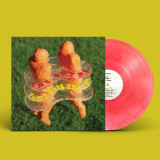
RED APPLE MARBLE VINYL REPRESS.
Everything changed for The Beths when they released their debut album, Future Me Hates Me, in 2018. The indie rock band had long been nurtured within Auckland, New Zealand’s tight-knit music scene, working full-time during the day and playing music with friends after hours. Full of uptempo pop rock songs with bright, indelible hooks, the LP garnered them critical acclaim from outlets like Pitchfork and Rolling Stone, and they set out for their first string of shows overseas. They quit their jobs, said goodbye to their home town, and devoted themselves entirely to performing across North America and Europe. They found themselves playing to crowds of devoted fans and opening for acts like Pixies and Death Cab for Cutie. Almost instantly, The Beths turned from a passion project into a full-time career in music.
Songwriter and lead vocalist Elizabeth Stokes worked on what would become The Beths’ second LP, Jump Rope Gazers, in between these intense periods of touring. Like the group’s earlier music, the album tackles themes of anxiety and self-doubt with effervescent power pop choruses and rousing backup vocals, zeroing in on the communality and catharsis that can come from sharing stressful situations with some of your best friends. Stokes’s writing on Jump Rope Gazers grapples with the uneasy proposition of leaving everything and everyone you know behind on another continent, chasing your dreams while struggling to stay close with loved ones back home.
"If you're at a certain age, all your friends scatter to the four winds,” Stokes says. “We did the same thing. When you're home, you miss everybody, and when you're away, you miss everybody. We were just missing people all the time.”
With songs like the rambunctious “Dying To Believe” and the tender, shoegazey “Out of Sight,” The Beths reckon with the distance that life necessarily drives between people over time. People who love each other inevitably fail each other. “I’m sorry for the way that I can’t hold conversations/They’re such a fragile thing to try to support the weight of,” Stokes sings on “Dying to Believe.” The best way to repair that failure, in The Beths’ view, is with abundant and unconditional love, no matter how far it has to travel. On “Out of Sight,” she pledges devotion to a dearly missed friend: “If your world collapses/I’ll be down in the rubble/I’d build you another,” she sings.
“It was a rough year in general, and I found myself saying the words, 'wish you were here, wish I was there,’ over and over again,” she says of the time period in which the album was written. Touring far from home, The Beths committed themselves to taking care of each other as they were trying at the same time to take care of friends living thousands of miles away. They encouraged each other to communicate whenever things got hard, and to pay forward acts of kindness whenever they could. That care and attention shines through on Jump Rope Gazers, where the quartet sounds more locked in than ever. Their most emotive and heartfelt work to date, Jump Rope Gazers stares down all the hard parts of living in communion with other people, even at a distance, while celebrating the ferocious joy that makes it all worth it -- a sentiment we need now more than ever.
Svart Records, by kind permission from Nuclear Blast, present a 10th anniversary repress of the band's fourth album Legend, pressed on 180 gram vinyl and with the original gatefold artwork. 2012's Legend was a departure for Witchcraft in many ways. Not only did they change half of their lineup and leave the previous label, also gone was the fuzzy warm analog sound of their previous three albums. Witchcraft have never made the same album twice, and Legend is certainly no exception. The album boasts a muscular modern production by Jens Bogren that really make the band's trademark doom riffs shine, and the songwriting is confident over the album's ten tracks of perfect retromodern revivalist doom.
- 1: Un Sandpiper
- 2: Shine
- 3: 50 Million Year Trip Downside Up
- 4: Mudfly
- 5: Demon Cleaner Best Of Edit
- 6: A Day Early And A Dollar Extra
- 7: I'm Not
- 8: Hurricane
- 9: Flip The Phase
- 10: Fatso Forgotso
- 11: El Rodeo
- 12: Gardenia Live - Edit Version
- 13: Thumb Live
- 14: Conan Troutman Live Edit Version
- 15: Freedom Run Live
The members of short lived Palm Desert, CA stoner/desert rock trailblazers Kyuss went their separate ways in 1995 after only four genre defining albums with Josh Homme and Nick Oliveri forming Queens of the Stone Age, John Garcia founding groups Unida, Slo Burn, and Hermana, and Brant Bjork joining Fu Manchu. 2000 posthumous compilation Muchas Gracias: The Best of Kyuss gathered a selection of 15 rare tracks, B-sides and live cuts. Available for the first time on vinyl in the U.S., Run Out Groove offers up a colored 2LP pressing of the hard to find album with deluxe packaging.
Over the years, Washington has recorded sporadically as a solo singer and extensively as a studio drummer and, has laid tracks for various artists. Simultaneously, Washington was a full-time drummer (sometimes singer) in several different bands, such as: The Avengers, The Titans, and Happiness Unlimited. With Happiness Unlimited he migrated to the USA to work with Stevie Wonder. The other Bands he played with are Calabash and Bands that backed Artists such as Leroy Sibbles, Shinehead, Junior Reid, Gregory Isaacs, Sister Carol and the Meditations.
Purple Vinyl
London’s abundant waterways and parks provide an oneiric muse for Cucina Povera and Ben Vince’s resounding debut full-length collaboration, an engrossing suite of weightless sax, synth and disklavier-bedded soundscapes that land somewhere between Grouper and Terry Riley.
As a newcomer to London, Rossi was caught up in a sort of wondrous reverie - a feeling that seeps through every movement of thia almost hour long album. Vince's plasmic echoes and Rossi's aerial delivery form a poetic union, twisting and painting each sound in pearlescent shades, finding a musical confluence between Rossi's words - fluid, dreamy, hazy ideations - and Vince's shadowy renditions.
Rossi's folk roots shine through like cracks of dawn sunlight on 'Sumu Puistossa' ("fog in the park"), reverberating over organ and dream-zone sax; her words tip into muted surrealism thanks to the controlled chaos of Vince's bleak treatments. His grasp of jazz is transfixing: bending sax motifs like ghostly memories of music from another timeline, smudging them into the soundfield. It’s most effective on the title tracx, where sickly, dissonant notes flicker like an almost-extinguished candle alongside motorised furniture music courtesy of a Disklavier.
From the Terry Riley-esque transcendence of '∞' to the sacred incantation of long-form closer 'Pikku Muurahaiskeko' ("little anthill"), the pair expose a new layer of creativity with each turn, gradually zooming out from discreet, vulnerable beauty to encompass a gently orchestrated chaos of sustained, sublime tension
[b] 02. [_]
Over the years, Washington has recorded sporadically as a solo singer and extensively as a studio drummer and, has laid tracks for various artists. Simultaneously, Washington was a full-time drummer (sometimes singer) in several different bands, such as: The Avengers, The Titans, and Happiness Unlimited. With Happiness Unlimited he migrated to the USA to work with Stevie Wonder. The other Bands he played with are Calabash and Bands that backed Artists such as Leroy Sibbles, Shinehead, Junior Reid, Gregory Isaacs, Sister Carol and the Meditations.
- A1: Danny - Maantielta Taloon (Nachts Scheint Die Sonne) (Nachts Scheint Die Sonne)
- A2: Koivistolaiset - On Siita Aikaa (Good Grief Christina) (Good Grief Christina)
- A3: Danny - Muuttokoon Maailma Taa (Cigarettes Women & Wine) (Cigarettes Women & Wine)
- A4: Virve Rosti - Antaudun (Giving Up Giving In) (Giving Up Giving In)
- A5: Mona Carita - Mona Carita Soita Mulle (Call Me - Theme From American Gigolo) (Call Me - Theme From American Gigolo)
- A6: Virve Rosti - Ohari (The Runner) (The Runner)
- B1: Markku Aro - Lady Lady Lady (Lady Lady Lady) (Lady Lady Lady)
- B2: Eini - Pista Valot Pois (Vamos A Bailar) (Vamos A Bailar)
- B3: Mona Carita - Mika Fiilis (Flashdance... What A Feeling) (Flashdance... What A Feeling)
- B4: Tarja Jykyla - Jos Valot Sammuttaisit (Turn Out The Night) (Turn Out The Night)
- B5: Seija Simola - Luotan Rakkauteen (Thief Of Hearts) (Thief Of Hearts)
- B6: Tauski Peltonen & Meiju Suvas - Kay Mun Vierellain (Hand In Hand) (Hand In Hand)
The pioneer of electric pop music, Giorgio Moroder (born April 26, 1940 in Ortisei, Italy) is an internationally acclaimed songwriter and producer who left his trace also in Finnish popular music. Several Moroder’s compositions and productions were released in Finland with Finnish lyrics in the 1970s and 1980s, when Moroder had his most creative peak. This compilation includes twelve Finnish Moroder covers from early bubblegum pop to electronic disco. Giorgio Moroder began his musical career as a singer. He gained success performing bubblegum pop in the late 1960s. He wrote some of his hits himself, but he also sang songs written by others. During his singer years he succeeded with songs Looky Looky (1969) and Son of My Father (1971). The latter became well known also in Finland, where it was covered by one of the most famous Finnish singers in 1960s and early 1970s, Ilkka Lipsanen alias Danny. The song found its way to Finland via Britain, where British band Chicory Tip had covered it first and made it to the charts with the song. Danny was not the only Finnish singer in the early 1970s who looked at Moroder’s repertoire when searching for good songs. Koivistolaiset was a singing and dancing duo of sisters Anja and Anneli Koivisto who were well-known celebrities in 1970s Finland. They released Moroder’s composition Good Grief Christina as On siitä aikaa in 1973. This song was also discovered from Chicory Tip’s repertoire. Cheerful and danceable bubblegum pop was an early 1970s phenomenon and in Finland it was the most popular music played in discos during those years.
Brit Taylor’s highly anticipated sophomore album, Kentucky Blue, is a drive down the famed Country Music Highway – Route 23 -- back to her Appalachian roots. Grammy-winner Sturgill Simpson and renowned engineer and producer David Ferguson caught wind of the Kentucky gem after her self-reflective debut album, Real Me, garnered praise from Rolling Stone, American Songwriter and NPR’s World Café. The two legends didn’t hesitate to jump in and get their hands dirty, producing the next musical chapter of Brit’s life story. The album is to be released on Brit’s own Cut A Shine Records in collaboration with Thirty Tigers. Having the courage to find her “real me” set Brit free. Kentucky Blue is a musical celebration of her healing and rebirth. It exudes confidence with a touch of attitude that replaces the melancholy, contemplative sound of Real Me. It is a progression of her life and her music and an introduction to the stand-your-ground and know-your-worth Brit of today. It is a shift back to her East Kentucky influences where the cry of the fiddle, the moan of the steel guitar, the twangy banjo and the atmospheric string section are like a journey floating through space and time. Brit continues to unabashedly write and sing about what she lives and what she knows and sees. It’s genuine. It’s who she is. Kentucky Blue is Brit’s personal invitation to you to join her at her cabin in the woods for a bourbon, a swing on the porch and a story-telling song.
Following up on reissues of the 2000 compilation »Multila« and 2001’s »Anima,« Sasu Ripatti has thoroughly revisited the classic »Whistleblower« for its first ever vinyl issue on the German Keplar label. Ripatti created entirely new mixes of previously unheard-of alternative versions of the tracks that first appeared on CD through his own Huume imprint in early 2007. He thus shines a new, different light on a record that was as much an expression of reaching a turning point in his life as it also showcased a new, more direct and perhaps more abrasive side of his Vladislav Delay project. »Whistleblower« was marked by the insertion of more noise and disruptive elements into Ripatti’s slowly moving take on intricate electronic music that heavily leaned on dub techniques. Fittingly for an album written at the threshold between one life and the other, »Whisteblower« seems at once melancholic and forward-looking in both tone and style.
»Whisteblower« was the follow-up record to 2005’s »The Four Quarters« and produced in the German capital. »I had quite a hard time in Berlin towards the end and I'm sure the track titles and the music reflect some of that uneasiness,« Ripatti says 15 years later. Changes in his personal life had a profound impact on him when making the record. The fifth track, »Lumi,« was dedicated to his daughter who was born shortly after the album was finished. »I had to reconsider what my life had been,« he recalls this watershed moment in his biography. Having already previously embraced a sober lifestyle—hinted at with the last piece’s title, »Recovery IDea«—Ripatti started questioning his life choices more thoroughly. This is also expressed in »He Lived Deeply,« a track inspired by Miles Davis’s love for Duke Ellington whose title can be read as an implicit question that Ripatti nowadays paraphrases thusly: »Had I been living fully, or fully not living?«
The seven tracks also marked a musical turning point in Ripatti’s work as a producer, not only because it was the last one for which he primarily used analogue and vintage equipment. They are also more straightforward on a music level, more demanding and at times more concerned with subtle rhythms than with the thick textures that were so integral to his earlier work. »Whisteblower« represented the first step in a process of focusing less on sonic abstraction and more on direct (self-)expression. While Ripatti admits that he found working on the album difficult back then, he also points out that he was surprised to hear how »gentle and peaceful« it sounded when he started revisiting the original files he used as a basis for these newly mixed versions. »It probably proves how much more comfortable I had become with sound.«
After two fiery albums, ‘Silence Slowly And Madly Shines’
in 2017 (Alter K), and ‘Private Meaning First’ in 2019
(Vicious Circle / FatCat Records), The Psychotic Monks
have never ceased to impress with their maturity and
determination to offer a singular stage and discographic
presence.
Although radical, ‘Pink Colour Surgery’ is truly accessible
to those who immerse themselves in its in depth. One is
unceasingly hypnotised, shaken as their soul flirts
dangerously with a furious and oppressive trance. Then
the journey becomes addictive, letting yourself slide from
one track to another, sometimes struck, sometimes set
ablaze with an unexpected epiphany, because its light
irradiates us.
Live, their music is an intimate, sensory experience, the
effects of which continue to be felt for a long time
afterwards.
Recorded and produced by Daniel Fox of Gilla Band, ‘Pink
Colour Surgery’ is composed, in part, of improvisations,
and is presented as an act of resistance to the ambient
violence. Disconcerting at first sight, this new opus
operates in the dark, a surgery of ethics which is fleshed
out of pink for a staggering metamorphosis. Its very
structure takes the listener on an initiatory trip full of secret
corners, provided they are prepared to dive into it, to
plunge into it.
‘Pink Colour Surgery’ is like a hidden room in a house that
we have never entered before, and the possibility of
feeling good there is not excluded.
Support from KEXP, Northern Transmissions, Kerrang,
Loud & Quiet.
UK and EU tour dates to be announced for early 2023.
The impact Belfast born duo Bicep have had on Irish music is unmeasurable, capturing the hearts and minds of the next-gen with their future-facing sonics. The pairing started their FMB label in 2012, going on to support a plethora of Irish artists in the process, from Cromby and Hammer to Brassica and Brame & Hamo.
The label's latest record comes from yet another Irish artist. Swoose, a name that should be familiar to any Irish electronic lover, began his career handing out flyers for legendary club Stiff Kitten. From here Swoose went on to become a resident of Shine and AVA Festival, and has released a string of killer records on Shall Not Fade and Lost Palms. Now residing in London, his record on FMB brings the OG Belfast dance music community back together for a fittingly euphoric release.
Title track ‘Breathe’ produces poignant undertones and contemplative thought, meditative breaks channeling the producer's fascination with wild flora and fauna. The track's interior begins to distort our sense of time and self, liquid textures forming over celestial harmonies like psilocybin. ‘Hyphae’ takes a 4/4 approach, while keeping the EP’s emotional personality present. Its pulsating bassline is balanced by far-reaching syths and dancing hi-hats, resting in a unified space of motion and colour.
Rotterdam via Belfast based artist Kessler has been on the tip of everyone's tongue since the return of clubbing. He has released music on Sherelle’s BEAUTIFUL black and LGBTQ+ label and his debut Shall Not Fade release was one of the most celebrated EPs of 2021. Kesslers knackt to create beautiful, other-wordly soundscapes that are both functional and edge on the side of melancholy are unmatched. His flip of title track ‘Breathe’ swaps gentler tones for his signature UK-sound inspired drums and crowd-evaporating atmospherics. The arrangements gentle ebb and flow, maintaining that signature blend of pace and etherealness.
Toronto’s Peach is on hand for the second remix – ‘Hyphae – a stripped-back early-morning groover that mixes psychedelia with flexible percussion. The track gives off a subtly uplifting vibe that blends heads-down club with minimal, punchy aesthetic. Just when you thought it was time to go home too...
Especial presents a 2 EP live concept collaboration with Berlin's Giraffi Dog. With live tours cancelled due the on-going changing world, the idea of bringing their live set to vinyl - an opera for your innerspace, while constrained from outerspace - was born.
Setting up Doom Chakra Tapes with DJ Deflektorschild in 2016, Max Webber's project first released the L'Existence Du Reve cassette album as a blueprint for the Giraffi Dog sound, with some tracks appearing on the acclaimed vinyl debut for Aiwo Recs, before a split 7" for the WARNING label series followed.
Teaming up with friend Max Heesen (Dessous, Poker Flat) to take the project live, their backgrounds in punk and hip-hop shine in their take on breakbeat driven club culture.
Recording live in the studio, as a different state of meditation, MCPs trigger drum machines, the duality of live synth and vocoder, while tape machines, reverb and FX looped, twisted and filtered for an inter-mind festival
Cut as a continuous mix, tracks like Concorida, Jam X and Multiverse, are a manifestation of their sets dropped from small basements in Berlin to fields in the outskirts of Paris, this first EP acts as a hypothesis for the parallel, the other, the alternate, the infinite.
Rubinho E Mauro Assumpção's 'Perfeitamente, Justamente Quando Cheguei' has to be up there as one of the finest Brazilian-psych-folk-MPB records we know. Unfortunately, it's very hard to find in the wild; even on digging trips to Brazil, an original copy rarely shows up, and when it does, it comes with a hefty price tag.
This highly sought-after rarity was released on the Brazilian label Tapecar Records in 1972 and is the one and only album by the sensational pairing of Rubinho and Mauro Assumpção. Effortlessly blending folk, MPB, funky-psych, rock, and relaxed, swaggering samba, this record ought to be heralded as a true Brazilian classic. However, maybe due to its scarcity and the previous reissue predominantly being only available to the Brazilian market, it has not had a chance to fully shine and find the wider audience it deserves. Through our reissue we hope to put things right. Fans of records by Milton Nascimento and Lô Borges are sure to enjoy the same magic and allure in 'Perfeitamente, Justamente Quando Cheguei'.
In addition to being the album’s songwriters, Mauro Assumpção took on the role of producer and Rubinho was co-producer as well as playing piano, organ, acoustic guitar and performing vocals. The record features the drummer Gegê who worked with Milton Nascimento, Edu Lobo, Nana Caymmi, Dom Um Romão and more. It also features guitarist Rick Ferreira, who played with Erasmo Carlos, Gal Costa and other greats. Rounding off the players on the album are Darcy Da Cruz and Formiga who have graced many a fine recording on horns.
'Perfeitamente, Justamente Quando Cheguei' is a truly stunning work that washes over you with beauty. Delve in and savour.
If naming is a form of claiming, of being claimed, how is one tethered to both the physical landscape that surrounds us, as well as our own internal emotional landscape at times calm, at times turbulent, and ever changing? H.C. McEntire’s new album Every Acre grapples with those themes that encompass grief, loss, and links to land and loved ones. And naming claiming land, claiming self, being claimed by ancestry and heritage permeates the hauntingly beautiful landscape that is this poignant collection of songs. The songs straddle the line between music and poetry. In “New View,” McEntire cites poets “Day, Ada, and Laux, Berry, and Olds” fixtures in the world of writing, whose works are beacons of light over bleak horizons. The beginning of the song is backed by soft guitar plucks that fall on the downbeat and spangle like stars, and, throughout, guitar, bass, and drums swell together gently, mimicking ebbing and flowing tides under the moon. McEntire’s voice (at once tender and fierce) intones the truth of both giving and taking, releasing and claiming: “Bend me, break me, split me right in two. Mend me, make me I’ll take more of you.” Permeated by heartbeat-like drums, “Shadows” develops quiet ruminations on surrender and loss reminiscing, moving on. This ponderous, dreamlike song asks the question of how “to make room.” How does one make room, for self and for renewal and surrender, when it is so difficult to leave what you know behind? Playing with slivers of descending chromatics, along with the occasional downward-stepping bass, here McEntire yearns for home, and for nesting. Perhaps one of the more grief-stricken songs, “Rows of Clover” is a lamentation, one that touches on the loss of a “steadfast hound.” The lone piano in the beginning of the song is rhythmically hymn-like. The stark verse arrangement gradually leads to a chorus that reads like a moody exhale, swollen with lush guitar strums and a Bill Withers–esque understated soul groove. But what stands out the most is an image of being “down on your knees, clawing at the garden” the only explicit mention of a person in the song. “It ain’t the easy kind of healing,” sings McEntire, seemingly from further and further away as her voice echoes; and healing takes time, time takes time truths that linger painfully. “Dovetail” is a song that tells of various women. The song moves back and forth between solo piano and the addition of bass and drums under vocals. McEntire’s gentle, trembling vibrato harmonized in thirds in a celebratory manner calls to mind a rejoicing psalm and shines through these images, leaving the listener cuttingly fraught with emotions such as wonder, sadness, nostalgia that can only arise with these juxtapositions. Gracious (and graceful) with its lilting melodies and lush harmonies, Every Acre explores the acres of our physical and emotional homes. These songs are reaching for the kind of home that we all seek: one where we can rest and lay down (or tuck away) our burdens of loss. And maybe, moving through every acre of a world that often tries to tear our sense of identity and heritage down, McEntire sheds light on what it is to be human in this life both stingy and gracious, both hurtful and kind.
If naming is a form of claiming, of being claimed, how is one tethered to both the physical landscape that surrounds us, as well as our own internal emotional landscape_at times calm, at times turbulent, and ever changing? H.C. McEntire's new album Every Acre grapples with those themes_themes that encompass grief, loss, and links to land and loved ones. And naming_claiming land, claiming self, being claimed by ancestry and heritage_permeates the hauntingly beautiful landscape that is this poignant collection of songs. The songs straddle the line between music and poetry. In "New View," McEntire cites poets "Day, Ada, and Laux, Berry, and Olds"_fixtures in the world of writing, whose works are beacons of light over bleak horizons. The beginning of the song is backed by soft guitar plucks that fall on the downbeat and spangle like stars, and, throughout, guitar, bass, and drums swell together gently, mimicking ebbing and flowing tides under the moon. McEntire's voice (at once tender and fierce) intones the truth of both giving and taking, releasing and claiming: "Bend me, break me, split me right in two. Mend me, make me_I'll take more of you." Permeated by heartbeat-like drums, "Shadows" develops quiet ruminations on surrender and loss_reminiscing, moving on. This ponderous, dreamlike song asks the question of how "to make room." How does one make room, for self and for renewal and surrender, when it is so difficult to leave what you know behind? Playing with slivers of descending chromatics, along with the occasional downward-stepping bass, here McEntire yearns for home, and for nesting. Perhaps one of the more grief-stricken songs, "Rows of Clover" is a lamentation, one that touches on the loss of a "steadfast hound." The lone piano in the beginning of the song is rhythmically hymn-like. The stark verse arrangement gradually leads to a chorus that reads like a moody exhale, swollen with lush guitar strums and a Bill Withers-esque understated soul groove. But what stands out the most is an image of being "down on your knees, clawing at the garden"_the only explicit mention of a person in the song. "It ain't the easy kind of healing," sings McEntire, seemingly from further and further away as her voice echoes; and healing ta;kes time, time takes time_truths that linger painfully. "Dovetail" is a song that tells of various women. The song moves back and forth between solo piano and the addition of bass and drums under vocals. McEntire's gentle, trembling vibrato_harmonized in thirds in a celebratory manner_calls to mind a rejoicing psalm and shines through these images, leaving the listener cuttingly fraught with emotions_such as wonder, sadness, nostalgia_that can only arise with these juxtapositions. Gracious (and graceful) with its lilting melodies and lush harmonies, Every Acre ex - plores the acres of our physical and emotional homes. These songs are reaching for the kind of home that we all seek: one where we can rest and lay down (or tuck away) our burdens of loss. And maybe, moving through every acre of a world that often tries to tear our sense of identity and heritage down, McEntire sheds light on what it is to be human in this life_both stingy and gracious, both hurtful and kind.
Orange Viny
If naming is a form of claiming, of being claimed, how is one tethered to both the physical landscape that surrounds us, as well as our own internal emotional landscape_at times calm, at times turbulent, and ever changing? H.C. McEntire's new album Every Acre grapples with those themes_themes that encompass grief, loss, and links to land and loved ones. And naming_claiming land, claiming self, being claimed by ancestry and heritage_permeates the hauntingly beautiful landscape that is this poignant collection of songs. The songs straddle the line between music and poetry. In "New View," McEntire cites poets "Day, Ada, and Laux, Berry, and Olds"_fixtures in the world of writing, whose works are beacons of light over bleak horizons. The beginning of the song is backed by soft guitar plucks that fall on the downbeat and spangle like stars, and, throughout, guitar, bass, and drums swell together gently, mimicking ebbing and flowing tides under the moon. McEntire's voice (at once tender and fierce) intones the truth of both giving and taking, releasing and claiming: "Bend me, break me, split me right in two. Mend me, make me_I'll take more of you." Permeated by heartbeat-like drums, "Shadows" develops quiet ruminations on surrender and loss_reminiscing, moving on. This ponderous, dreamlike song asks the question of how "to make room." How does one make room, for self and for renewal and surrender, when it is so difficult to leave what you know behind? Playing with slivers of descending chromatics, along with the occasional downward-stepping bass, here McEntire yearns for home, and for nesting. Perhaps one of the more grief-stricken songs, "Rows of Clover" is a lamentation, one that touches on the loss of a "steadfast hound." The lone piano in the beginning of the song is rhythmically hymn-like. The stark verse arrangement gradually leads to a chorus that reads like a moody exhale, swollen with lush guitar strums and a Bill Withers-esque understated soul groove. But what stands out the most is an image of being "down on your knees, clawing at the garden"_the only explicit mention of a person in the song. "It ain't the easy kind of healing," sings McEntire, seemingly from further and further away as her voice echoes; and healing ta;kes time, time takes time_truths that linger painfully. "Dovetail" is a song that tells of various women. The song moves back and forth between solo piano and the addition of bass and drums under vocals. McEntire's gentle, trembling vibrato_harmonized in thirds in a celebratory manner_calls to mind a rejoicing psalm and shines through these images, leaving the listener cuttingly fraught with emotions_such as wonder, sadness, nostalgia_that can only arise with these juxtapositions. Gracious (and graceful) with its lilting melodies and lush harmonies, Every Acre ex - plores the acres of our physical and emotional homes. These songs are reaching for the kind of home that we all seek: one where we can rest and lay down (or tuck away) our burdens of loss. And maybe, moving through every acre of a world that often tries to tear our sense of identity and heritage down, McEntire sheds light on what it is to be human in this life_both stingy and gracious, both hurtful and kind.
Crime & the City Solution’s fifth studio album,
‘Paradise Discotheque’, is reissued on transparent
orange vinyl. This is set to be released alongside
‘Shine’ and ‘The Bride Ship’.
A band out of time, Crime and the City Solution
were perennial outsiders who could not rest in their
native Australia, and instead found inspiration in
the colder climes of London and Berlin. Their
mesmeric, expressive music evolved through
many incarnations and a great deal of adversity.
The first incarnation of the band appeared in
1977/78, in the midst of Australia’s nascent punk
scene and re-grouped in London in 1984. The later
line-up of singer Simon Bonney, Einstürzende
Neubauten’s guitarist Alexander Hacke, DAF’s
synth player Chrislo Haas, jazz bassist Thomas
Stern, violinist Bronwyn Adams and Bad Seed’s
Mick Harvey on drums recorded three studio
albums in quick succession.
Crime and the City Solution’s freedom of
expression and adventurousness reached an apex
on 1990’s ‘Paradise Discotheque’ and its epic ‘Last
Dictator’ saga, which spanned four songs laid out
like chapters at the album’s conclusion. The album
and the variety of styles used on it, from the
metallic sounds of ‘I Have The Gun’ to the magic
realism of ‘The Last Dictator’ quartet, were
influenced by Bonney and Adams’ move to Vienna.
Unavailable on vinyl since 1994.


