A chance meeting in Mexico City set Points of Inaccessibility into motion. When Ibero-American composer Rafael Anton Irisarri crossed paths with Dutch media artist Jaco Schilp at MUTEK in 2024, a conversation about how technology shapes perception revealed an unexpected common ground. Schilp invited Irisarri to a spring 2025 residency at Uncloud, the Utrecht-based collective he co-founded, where Irisarri's sound began to take form amid an environment shaped by Schilp’s visual research.
The Uncloud studio was located inside the former Pieter Baan Centre, a forensic psychiatric prison where suspects of violent crimes were once confined. Its long history of silence and containment shaped the atmosphere in which the project developed. Within this setting, Irisarri coaxed long bowed-guitar tones through a network of pedals and looping systems. The raw gestures thickened into a vaporous and architectural field of sound. Schilp processed the material through a custom point-cloud software patch that produced images in continuous flux. The visuals flickered, dissolved and reformed like memories that resist coherence, functioning as a digital Rorschach that reflected the observer’s own perception.
Amid these spectral echoes, the project evolved into an examination of how the past persists within present signals. Memory endures as residue and interference, continually shaping perception even when its source has faded.
Schilp’s visual process required a continuous stream of sound in real time. Irisarri improvised throughout the residency, generating material that allowed the visuals to develop in parallel. Once back in his New York studio, he began shaping the recordings by carving pathways through the improvisations and mapping selected passages into MIDI. This process allowed him to build outward from the bowed-guitar material with minimal overdubs, adding Prophet 5 textures, Moog bass and strings that expanded the harmonic field while keeping the original performances at the center. To refine the structure, Abul Mogard provided editorial input, working with Irisarri’s stems to guide transitions and strengthen the overall pacing. The material, originally created under conditions of immediacy and constraint, evolved into a fully realized work through careful revision, patience and sustained reworking.
The title engages the geographic concept of the Poles of Inaccessibility, locations defined solely by their distance from all surrounding points. Irisarri adapts this idea to the conditions of digital life, where new forms of inaccessibility arise through the informational enclosures that structure perception. What appears to be a fully connected network often produces a deeper kind of separation, one shaped by the filtering logic of the systems that mediate experience. In this sense, the digital sphere mirrors its geographic counterpart. We inhabit spaces saturated with signals, yet the possibility of genuine contact becomes increasingly remote.
At its core, Points of Inaccessibility considers what can be understood as the new rituals of capitalist realism. Irisarri uses the term digital shamanism to describe the forms of simulated connection that organize contemporary life. These systems promise comfort through algorithms, influencers and AI interlocutors, yet they often reproduce the same conditions that generate loneliness in the first place. What appears as connection becomes the echo of connection, a sequence of gestures that imitate solidarity while withholding it. Like the geographic poles, these rituals are defined by distance. They pull us into environments where everything is illuminated, yet meaningful proximity becomes increasingly rare. In this sense, the work approaches a hauntology of the present, a reflection on futures that have stalled and intimacies that have been thinned by the algorithmic infrastructures that surround us.
This thematic tension unfolds across the album’s four movements. Faded Ghosts of Clouds introduces the work with textures that rise and dissipate in slow cycles, creating an atmosphere that resists clear definition. Breaking the Unison occupies a pivotal position in the sequence and focuses on the moment when the individual and the system fall out of alignment. Its shifting patterns trace the scattering of signals that once suggested connection, revealing the instability at the heart of contemporary perception. Signals from a Distant Afterglow forms the center of the album and features vocals by Karen Vogt, whose presence enters the sound field like a fragile transmission shaped by distance and delay. The closing piece, Memory Strands, follows motifs that appear, recede and briefly intersect before returning to quiet. Across these movements, the album outlines a landscape in which emergence and disappearance continually inform one another.
Listening to Points of Inaccessibility is an encounter with a sound field that is constantly in flux. Elements surface briefly, shift position and recede, creating a sense of motion that resists stable interpretation. The music moves between closeness and vastness, carrying traces of memory while withholding a clear point of resolution.
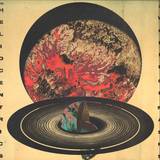
The album’s visual identity completes the project’s conceptual arc. In Mexico City, where Irisarri and Schilp first met, Daniel Castrejón transformed stills from Schilp’s point-cloud visuals into the cover image. The final artwork captures a single suspended frame of the digital material, a moment extracted from a field that is normally in constant motion. Its surface recalls the texture and abstraction found in the work of Catalan artist Antoni Tàpies, where material presence and erasure coexist within the same plane.
What emerges is a work that examines the tension between technological systems and human presence. Points of Inaccessibility asks whether connection is still possible within environments shaped by mediation and delay, or whether we have become isolated points within the very networks that promise proximity. What possibilities for relation persist within environments organized by algorithms and interruption? And how are we meant to understand presence when so much of it is constructed at a distance?
Points of Inaccessibility will be released on BioVinyl on February 6, 2026, with audiovisual performances planned throughout 2026.
Mastered by Stephan Mathieu
Artwork by Jaco Schilp
Design and layout by Daniel Castrejón
Artist photo by Iulia Alexandra Magheru.
Search:the stems
- A1: Pale Dogwood (4:21)
- A2: Field Drab (5:14)
- A3: Ceda Chast (5:10)
- A4: Wild Blue Yonder (8:39)
- B1: Inchworm (6:23)
- B2: Vetiver (3:50)
- B3: Orange Crayola (7:37)
- C1: Black Olive (5:19)
- C2: Wild Strawberry (4:00)
- C3: African Violet (6:39)
- C4: Deep Sky (4:52)
- D1: Permanent Geranium Lake (6:23)
- D2: Carnelian (4:09)
- D3: Helltrope (7:56)
Ivan The Tolerable returns with Chromophobia, an expansive new double album and his fourth for Riot Season after ‘Water Music’ & ‘Vertigo’ (both 2024) and ‘An Orphan Form’ (2025)
Chromophobia carries with it a deep personal history. The earliest recording sessions date back to 2018 at the IDI in Middlesbrough, engineered by longtime collaborator Nigel Crooks over the course of three weekends. The material was left unfinished for years, shelved for reasons that accumulated and compounded - until the tragic passing of Crooks in 2023. His unfinished work lingered, and the desire to complete it became a mission.
“In the end, I finished this record for Nigel, above all else,” says Oli Heffernan (Ivan The Tolerable). “It always annoyed him that it never got done.”
To bring the album to completion, the original stems were passed to producer Hugh Major (formerly of Benefits) in early 2024. Across a year of meticulous experimentation - countless versions, radical reconstructions, entire songs torn down and rebuilt - the album transformed into something wholly new. The final collection spans 14 tracks, reimagined from the ground up yet still anchored to the spirit of the sessions that began it.
“It’s a very different beast from where it started,” Heffernan adds, “but I think Nigel would really like it - and be glad it was finally finished.”
Chromophobia stands as both a reinvention and a tribute: a document of persistence, creative overhaul, and the enduring impact of a lost collaborator.
Brooklyn based baritone saxophonist Jonah Parzen-Johnson presents his new work "Imagine Giving Up" on Helsinki's We Jazz Records. The album, to be released on 17th January of 2020 sees Parzen-Johnson move into new domains of sound as he uncovers newfound energy and pulse in his music.
In addition to the sonically rich analog synth elements that accompany his earlier solo saxophone work, Jonah has layered heavily sound designed samples of his own saxophone to create truly one of a kind percussive snaps, reverberant basses, and warbling leads. At it's core, the music remains deeply devoted to almost vocal sounding melodic lines and patiently developed compositional ideas.
A compact set of 6 originals, "Imagine Giving Up" is Jonah Parzen-Johnson's most ambitious album yet. While taking a step away from the previous world of "ambient jazz", his new music stems from the use of drone-like sounds for baritone saxophone, a style which is uniquely his own. Electronics are blended in for good measure, creating a coherent vision of abstract jazz with depth. As with all of Parzen-Johnson's releases, the music comes with a deeper narrative which he will continually explore in live performance.
The manifesto for the album reads as follows: "Only a few people can really start over. Everyone else is left to struggle down the path they were assigned. The option to give up, to choose your own path, is power, and, hopefully, a call to action: take a risk to help someone." "Imagine Giving Up" by Jonah Parzen-Johnson, will be available via 'We Jazz Records' on violet and black vinyl versions, CD and digitally.
- 1: Motor Spirit (Live At The Gorge ’24)
- 2: Supercell (Live In Oregon ’4)
- 3: Converge (Live In New York City ’24)
- 4: Witchcraft (Live In Las Vegas ’2)
- 5: Gila Monster (Live At Red Rocks ’24)
- 6: Dragon (Live In New York City ’24)
- 7: Flamethrower (Live In St. Augustine ’24)
King Gizzard & The Lizard Wizard’s 2023 thrash metal epic ‘PetroDragonic Apocalypse’–their 24th studio album at the time–gets the Fuzz Club Bootleg treatment with this new live version pieced together out of recordings from their 2024 North American tour. Pulling from shows in/at The Gorge, Oregon, New York City, Las Vegas, Red Rocks and St Augustine, these live versions of the album tracks were recorded from the soundboard by the band’s crew and are exclusively mixed and mastered for this release by James Plotkin using the stems provided by the band. This is a double LP release on buzz-saw shaped vinyl, housed in a gatefold jacket with artwork by Elzo Durt.
Elations Recordings presents "Return of the Airpoets", an exploratory recording from longtime collaborators Reuben Lewis (I Hold The Lion's Paw) & Adam Halliwell (Mildlife, IHTLP), occupying a unique space between contemporary experimental music and avant jazz. Engineered and mixed by Reuben Lewis in 2023, and featuring guest appearances from acclaimed Australian drummer Ronny Ferella.
"Return of the Airpoets" continues a conversation begun with 'Cygon Dance', an extended duo between Lewis and Halliwell from Halliwell's 2023 LP "Freedom Lapse"; a dialogue that stems from a shared love and respect for Jon Hassell's Fourth World music. Sonic pioneer and adventurer, Hassell's futuristic vision advocated possible musics, stressing plurality and multiplicity. Faithful to his vision, Adam and Reuben, as trailblazers rather than imitators, delight in boundless musical possibilities, adopting Hassell's futurism as stock-in-trade, making it their own while augmented with neo noir hues and hints of the tilted electro-funk of Miles Davis' collaborations with Marcus Miller.
These nine tracks flow together as a unified suite, their shadowy presence stitched from fractured narratives: imaginary crimes, murders, dreams, the unspoken. At the same time, you can detect the artists' meticulous attention to sonic detail, feel the undercurrents, the complex layering. This music has been distilled, winnowed, from extended improv sessions, with the artists - as producers - zeroing in on offcuts, shards, and splinters, seamlessly patching together fragments in post-production to construct intricately layered sound collages, taking a leaf out of Tao Macero's book, building from the ground up.
Who are these airpoets? Their mystifying trial suggests the travails of Joseph K, sentenced for unspecified crimes. But I prefer to see them as fugitives escaped from Robert Bolaño's novel, "Savage Detectives". In Bolaño's book, poet Juan Garcia Madero is granted admission to the shadowy group of poets, the Visceral Realists, whose movement has no clear aims, and whose members "walked backward . . . gazing at a point in the distance, but moving away from it, walking straight toward the unknown." Like the visceral poets, these airpoets, Reuben Lewis and Adam Halliwell, set their sights on a point on the distant horizon, setting off without map or compass, drawing nearer and moving away, towards the unknown.
Xexa is still undefined, gliding over her origins, influences, and points of reference. Her music is informed by uploads from all that, processing heritage and future in much the same democratic way, sure of its (her!) path. Synthetic as it may sound, »Kissom« contains the very human element of Xexa's presence, not only through her instantly recognizable ethereal vocals but also manifest in the web of grooves stopping short of »dance«. »Kizomba 003« is the closest she comes to the dancefloor, a reduced take on the popular style of kizomba, a low-key interpretation but with the vocals atypically high in the mix. A brief breath of nostalgia. »Kissom« (title track) prolongs the slow pace, almost as an extended mix of »Kizomba 003«, stretching the sexy bounce for close to 4 extra-delightful minutes.
Everything seems to dissolve into space, as if every track gently expires only to be reconfigured somewhere else, molecule by molecule, perhaps in a different location within our mind. The artist somehow corroborates the feeling, particularly regarding »Será«, »Xtinti«, and »Txe«, which she says »finish exactly where I wanted. They all end with an EQ that mutes the frequencies until they cease to exist«. Here, there, sparse beats, successive waves of ambience, half-machine lips singing close to our ears, a blend of classic 4AD and a metallic environment warmly wrapping around the music. Extra-long, »Quem és tu?« poses the question – Who are we? Who is she? And the title »Kissom« stems from another question Xexa often hears from people, »Ki som é este?« (What is this music?). The answer might well be the artist's own paste of the words »kiss« and »som«. Lovely.
- Rattlesnake (Live At The Gorge '24) 12:25
- O.n.e. (Live At The Gorge '24) 3:35
- Sleep Drifter (Live At The Gorge '24) 4:36
- Open Water (Live At The Gorge '24) 7:02
- Magma (Live At The Gorge '24) 11:14
- The Reticent Raconteur (Live At The Gorge '24) 0:37
- The Lord Of Lightning (Live At The Gorge '24) 5:35
- The Balrog (Live At The Gorge '24) 6:52
- Hog Calling Contest (Live At The Gorge '24) 3:12
- Road Train (Live At The Gorge '24) 4:08
- Flight B741 (Live At The Gorge '24) 3:42
- Ice V (Live At The Gorge '24) 10:24
- Dirt (Live At The Gorge '24) 3:43
- Mirage City (Live At The Gorge '24) 3:41
- Let Me Mend The Past (Live At The Gorge '24) 5:36
- Mirage City (Live At The Gorge '24) 4:21
- Le Risque (Live At The Gorge '24) 6:32
- Magenta Mountain (Live At The Gorge '24) 8:27
- Gondii (Live At The Gorge '24) 7:38
- The Silver Cord (Live At The Gorge '24) 14:38
- Extinction (Live At The Gorge '24) 9:18
- Inner Cell (Live At The Gorge '24) 3:47
- Loyalty (Live At The Gorge '24) 4:22
- Horology (Live At The Gorge '24) 4:31
- Gaia (Live At The Gorge '24) 8:19
- The Great Chain Of Being (Live At The Gorge '24) 2:46
- Motor Spirit (Live At The Gorge '24) 10:58
- Venusian 1 (Live At The Gorge '24) 7:37
- Vegemite (Live At The Gorge '24) 3:06
King Gizzard & The Lizard Wizard 'Live at The Gorge Amphitheatre, Quincy, WA' was recorded when the Aussie psych-rock polymaths rained down on Washington on September 14th 2024, for a three-hour marathon set.
This is a 4xLP featuring the original poster art by Jason Galea and photos from the show by Maclay Heriot, and it is exclusively mixed and mastered by James Plotkin from the stems provided by the band. The master and pressing plates have been licensed from Fuzz Club. Housed in a deluxe quad fold jacket and comes on 140g coloured vinyl.
Label text:
"Conrad Pack returns to SELN Recordings with a three track EP threading the needle between London sonics and
something beyond.
The primary tracks Praise and Guidance were recorded during the height of the Scram events organised by
Leeway (Guy Gormley), and hosted by the late soundsystem luminary Julian Fairshare at Ormside Projects. The
influence of this period, and in particular of Fairshare himself, on the music is clear; both are stepper-esq, leaning
heavily on London’s musical legacy past and present, whilst still pushing a contemporary sound.
Praise is essentially a Dub track. The percussion and bass are of a familiar steppers nature, with the synths
evoking a true Big Smoke feeling. Although the melody itself wouldn’t sound out of place in a UK Drill number, the
song overall still touches on Industrial and DIY sonics, being all the stronger for doing so.
Guidance follows in solid form. Amongst the driving percussion and staunch bassline, droning pads lock in a dense
mood whilst sparse choral melodies echo throughout. Think Shaka meets Muslimgauze, but recorded in a
Woolwich Office Block.
Grotto was originally produced for the group show “The Grotto” held in January 2021 at Ridley Road Project Space.
Restructuring the track from the original stems, Pack presents a new and enchanted “stereo version” for Praise EP.
Angelic atmospheres flow amongst scattered hi-hats as sporadic Freetekno Kicks reverberate across the void.
Most accurately described as “what Curley in a K Hole might have sounded like”. "
Bendik Giske’s Beatrice Dillon-produced 2023 album gets an addendum with reworks from Carmen Villain, aya, Hanne Lippard, Hieroglyphic Being, Wacław Zimpel and Dillon herself.
Giske’s clearly got his ear to the ground; his last remix record was an invitation for Laurel Halo to put her stamp on »Cruising«, while 2018’s »Adjust EP« roped in Deathprod, Total Freedom, Lotic, and Rezzett. Now comes this new LP of remixes and it’s one of the best we’ve heard in aeons. Carmen Villain boots things off with a remix of »Slipping«, following her excellent (and way, way too underrated) »Nutrition EP« with a giddy, subtle roller that sounds as if it’s been constructed using only Giske’s raw stems. His breaths and leathery key presses – already amped up by Dillon’s detailed recording – are magicked into a dubby concrète groove that’s enhanced with the sparest melodic elements: echoing rainforest-at-night horn blasts, and lopped off decay trails that help fuel the momentum.
aya’s revision of the same track takes a different approach, forming forceful overlapping polyrhythms from Giske’s clanks, using the gamelan-like arpeggios for melodic weight and repetition. The result is a constantly shifting, hypnotic trancer that’s achingly organic – more Raja Kirik than Paul Van Dyke. Polish clarinetist and producer Wacław Zimpel, meanwhile, supplements his trippy recent collaboration with James Holden on a similarly levitational wrinkle of »Slipping« that twists Giske’s quivering sequences with microtonal synth prangs, and gusty echoes. But it’s Jamal Moss who plays fastest and loosest with Giske’s source material, calling back to April’s psy-house stunner »Dance Music 4 Bad People« with a powdery, sexualised banger that buries the breathy »Start« stems underneath neon synths, and brittle drum loops.
»I’m a digital nomad,« Lippard deadpans over Giske’s »Not Yet«. »I’m addicted you know that.« It’s a typically dry treatment from the conceptual artist that unexpectedly amps up the hypnotic qualities of Giske’s original, adding her circuitous charm to his concertina-ing sax sequences. And to tie things up perfectly, Beatrice Dillon returns with her diaphanous remix of »Rise and Fall«, built to emphasise the radically different approaches of each artist.
Transparent Seaweed Green Vinyl[22,27 €]
Maggot Mass, the fifth full-length album by Pharmakon on Sacred Bones Records, marks the project's return after a five-year hiatus. This album signifies a departure from the original rules and structures established by Margaret Chardiet for Pharmakon, evolving into a new form. It retains the project's experimental roots in power electronics and noise while incorporating industrial and punk influences. The album stems from a profound disgust with humanity's dysfunctional relationship with the environment and other life forms. It explores the loneliness resulting from this broken bond and challenges us to acknowledge our personal and systemic responsibility. What peace can we make with privilege when the true cost of our comfort is not measured in dollars but in death? How can we reconcile with death when we impose the same hierarchical structures on it that we do in life? Is life worth living in the isolation of this self-imposed species loneliness? Humans often measure worth by accumulation _ money, assets, objects _ mistaking this for power and influence. Western heritage dictates a hierarchy, placing humans at the top, separate from the natural world. This delusion turns bodies into objects, land into property, and people into expendable tools. If our value were instead determined by our contribution to the ecosystem, who could claim that a human is more valuable than a maggot? Maggots recycle death into life, breaking down matter and nourishing new growth. They transform into flies, pollinating plants and sustaining the Earth's flora. In contrast, humans pollute rather than pollinate, with a select few profiting from exploitation at the expense of biodiversity and the well-being of many. In grappling with grief and loss on both personal and global scales, Margaret sought solace in the idea of rebirth through death, celebrating the beauty of regeneration through decay. However, she had to confront the stark reality of the disconnection from the earth under oppressive systems. Pharmakon is here imagining a path where the final act is to give back what was received from creation, offering our lives and deaths to sustain existence. once I slough off this human skin I will find my home and ancestral kin_ in the coffin-birth of my cadaver's ecosystem
- Ete
- Kharita
- Baynana
- Mudun
- Haigazian (October 22)
- Burj Al Murr (October 25 To 27)
- Markaz Azraq (December 6)
- Markaz Ahmar (December 6 Suite)
- Al Hisar (December 8)
- Holiday Inn (January To March)
- Holiday Inn (March 21 To 29)
- Al Irth
Mayssa Jallad is a Beirut-based bilingual singer-songwriter, architectural researcher and teacher. Her work deals with the highly personal as well as the political, as with her first solo album "Marjaa: The Battle of the Hotels", which explores the histories of urban battles that occurred before she was born, during the Lebanese Civil War, through a collaborative musical and architectural lens. "(Marjaa) is, as one might expect, a sombre affair largely comprised of Jallad's delicate vocals backed by acoustic guitar and ethereal synthesizer. Elsewhere, co-composer and producer Fadi Tabbal adds the crackle of distant artillery and a ghostly wind between the high-rise blocks." - Daniel Spicer, Songlines, April 2023 "Historical trauma, strings, drones, metallophones and buzuks wrap around powerful stories and gossamer vocals on Lebanese singer's tender, intimate debut. With shades of Nico, Jarboe and Elizabeth Fraser, '80s' 4AD fans will rejoice." - Andy Cowan, MOJO `Marjaa_' (tr. `reference') combined Mayssa Jallad's two main vocations: music and urban research/architectural history. The album was co-written with Fadi Tabbal and based on Mayssa's Historic Preservation master's thesis (`Beirut's Civil War Hotel District: Preserving the World's First High-Rise Urban Battlefield'). The thesis examined a 5-month conflict that took place within Beirut's skyscraper-laden luxury hotel district of Minet El Husn near the start of the Lebanese Civil War. Addressing a post-war generation who have never been taught this difficult history, `Marjaa_' was an attempt to process trauma, and "a call to protest for the renewal, rather than the recycling of the political class that once destroyed the country and holds us, to this day, hostage of its violence". In 2013, Mayssa founded indie-pop band Safar with guitarist Elie Abdelnour, releasing debut album In Transit with Lebanese indie label Ruptured in 2017, and follow-up EP Studies of an Unknown Lover in 2019. Both albums were produced by Lebanese producer Fadi Tabbal at Tunefork Studios in Beirut. Mayssa's most recent multi-genre collaborations include "Madina min Baeed" (2022) with electronic musician/producer Khaled Allaf; "Bi Kheir" and "Fil Aatma" (2022) with indie supergroup Baada Ab (Dani Shukri, Ezra Tenenbaum and Omaya Malaeb), released by Thawra records and Found Sound Nation. Next is the Versions version of Marjaa, which sees Civilistjävel! (aka Swedish producer Tomas Bodén) apply a stripped, dub methodology to Mayssa's original rich stems, refracting the Arabic source through the hazy prism of Northern European electronica. 140gsm vinyl, jacket printed on 20pt board with aqueous gloss coating, with a 3.5mm spine and a black paper inner dust sleeve.
Sparkling Attitude revisit from stems poured from the original tapes two underground Italo Disco classics in crispy way, enriching them with arrangements and more nu disco-house drumming.
In ‘Dance My Dance’ conga and percussion give a driving beat and the synth solos of the last drop are the happy ending. ‘No Secrets’ by Gioia, which already contained very strong and modern elements in the original version, draws inspiration in the remix from ‘Company B – Fascinated’.
So, No Secrets …. Dance my Dance!
Civilistjävel! x Mayssa Jallad’s ‘Marjaa: The Battle of the Hotels (Versions)’ is a radical response to Mayssa Jallad’s 2023 original LP, a lyrical account of epochal events in Beirut at the dawn of Lebanon's civil war. ‘…(Versions)’ sees Civilistjävel! (aka Swedish producer Tomas Bodén) apply a stripped, dub methodology to Mayssa's rich stems, refracting the Arabic source through the hazy prism of Northern European electronica. Retaining ‘Marjaa…’s deep spatial framing and vaporous, shifting nature, traces are lifted and set down in a new landscape: a ghost of a ghost. Informed by Tomas' singular strand of ambient, minimalist, dub techno, ‘… (Versions)’ recalls the reductive, shimmering pulse of pioneering Berlin-based practitioners Basic Channel/Chain Reaction, but with the parameters stretched into the ether. Where versions typically focus on a rhythm, here the anchor is the tone and texture of Mayssa’s voice, around which a new world has been constructed. Disembodied and liminal, it conjures an eerie panorama that feels like a postscript to the original, further emphasizing the geopolitical events that have had such devastating effect in Mayssa’s homeland of Lebanon since that record’s release. ‘Marjaa…’ (tr. ‘reference’) combined Mayssa Jallad’s two main vocations: music and urban research/architectural history. The album was co-written with Fadi Tabbal and based on Mayssa's Historic Preservation master's thesis (‘Beirut’s Civil War Hotel District: Preserving the World’s First High-Rise Urban Battlefield’). The thesis examined a 5-month conflict that took place within Beirut's skyscraper-laden luxury hotel district of Minet El Husn near the start of the Lebanese Civil War. Addressing a post-war generation who have never been taught this difficult history, ‘Marjaa…’ was an attempt to process trauma, and “a call to protest for the renewal, rather than the recycling of the political class that once destroyed the country and holds us, to this day, hostage of its violence.” Often perceived as a mysterious, shadowy presence, Civilistjävel! has come increasingly to the fore in recent years through a consistently dazzling stream of records, released both anonymously and via Fergus Jones’ FELT imprint, often appearing with scant information and tracks for the most part untitled. Having featured tracks from ‘Marjaa…’ on mixes, and included the album in his picks of 2023, in early 2024 Tomas asked Mayssa to provide vocals for a track on his album ‘Brödföda’. Mayssa remembers, “Tomas asked me to choose one of the tracks he was working on. I was in Boston at the time, so I took a walk and chose a track. I wrote the lyrics at the public park, wondering if I was the only one around that was losing sleep over the genocide in Palestine and the war in South Lebanon. I went back to the apartment and recorded the vocals on my phone, while listening to the track on headphones. Tomas reworked it with the voice and sent it back. I liked it immediately.” Despite the geographical distance from Beirut to Uppsala, Sweden, where Tomas resides, Mayssa’s contribution sounds very much at home in Civilistjävel!’s atmospheric, contemplative sound-world. Tomas’ request was reciprocated by Mayssa soon after, resulting in the spectral, glassy ambience of ‘Etel, Kharita (Version)’. This was followed by an invitation to work on more tracks, which Tomas immediately embraced, intensively jamming out versions live to two-track tape in downtime between travelling. If not entirely dissimilar to his regular working practice, the immediacy of it was unusual. Much was improvised live with just a keyboard (not tethered to a grid), and a restricted set-up that largely forbade later edits - only the rhythm tracks are programmed. A sharp conceptual thinker and composer, Tomas takes creative liberties with Mayssa’s songs in a way that is deeply felt and sympathetically aligned, whilst unashamedly outside of the original context of the record. The voice is leaned into as an instrument, without the clear, specific details of language, and this axis provides an uncertain, amorphous footing - structure is often suggested or hinted at, before disappearing or collapsing into fog, and folding back into the message within the song. A somewhat unprecedented source for an album of versions, even those familiar with ‘Marjaa: The Battle of the Hotels’ may at points struggle to hear the songs these versions are rebuilt from, despite the vocal narratives remaining virtually intact. The light has shifted; eroded buildings are foregrounded; fragments of memories appear in chiaroscuro. Signs and signifiers have been replaced. Shorn of the original's warm guitar, ‘Baynana (Version)’ feels like an ominous visitation, the sun no longer visible. ‘Holiday Inn (March 21 to 29) (Version)’ is a molten, clattering invocation. The beat-less tracks nod towards the cold, otherworldly sound-scaping of late '90s isolationism. More propulsive and embodied, ‘Holiday Inn (January to March) (Version)’ and ‘Kharita (Dub)’ are strobing, iridescent techno - lithe, shifting and mutating with almost implausible finesse. A stunning addition to Civilistjävel!’s growing catalogue, ‘…(Versions)’ is a luminous counterpoint to ‘Marjaa…’, and a welcome reminder of how incredible that record remains.
- A1: Return To The River Ganges (Distant Green Shore Dub)
- A2: Mediolana (Ambrosirus Dub)
- A3: The Galicians Of Asia Minor
- B1: Indika Keltika (Fiery Pharoah Mix)
- B2: Dhaka Corinthia
- B3: Delfic Tongue (Hercynian Forest Dub)
- C1: Voyage Of The Pytheas (Pagan Dub)
- C2: Benares Eternal City (Eryri Dub)
- C3: Sumerian Odyssey
- D1: King Of The Faeries (Demnoriax ‘King Of The Lower World’ Dub)
- D2: Deer Hunter (Aeduan Druid Odyssey Mix)
- D3: Atmabodha (Ritual Focus Dub)
Coloured[32,73 €]
OVERVIEW: DUB TREES is one of Youth’s most revered dub projects, it helped define the Liquid Sound Design sound that fans around the world hold dear. This project is the third in a triptych of albums Youth has made with a specific Celtic / Hindu fusion. Starting out with the classic Celtic Cross ‘Hicksville’ 20 years ago, featuring the mythical Simon Posford (Shpongle) through to ‘East of the River Ganges’ (ft Klaus Shultz / Tangerine Dream amongst many others) in 2004 followed by the last piece of this mystical puzzle ‘Celtic Vedic’ ,released on compact disc only in 2016 , which charts the journey of the Celt from Northern India to Snowdonia. The idea stems from Youth’s firm belief that there is a strong correlation between Celtic and Vedic cultures and their Northern Indian roots. Youth has assembled a host of collaborators to weave their labrynthine magic on ‘Celtic Vedic’: Jah Wobble (PiL) on bass, Matt Black/Coldcut (Ninja Tunes) on warped soundscaping duties, Galician Celtic pipe and flute player Daniel Romar, Bollywood contemporary Indian singer Shridevi Keshavan and Elfic Circle. It features many field recordings made by Youth on his various Indian odysseys and is all harnessed together with cutting-edge electronica that the Liquid Sound Design team pioneered 20 years ago. The team today are still pioneering new directions within ‘Downtempo Electronica Music’ and beats that create 3 dimensional landscapes for the helioscopic imagination to explore and psychoactive maps for the inner astronaut in all of us. ‘Celtic Vedic’ promises unchartered bass annihilation and heliotropic soundscapes, pounding basslines overlayed on 3D holographic beats and wrestles with serpentine melodies and psychedelic textures.
- A1: Return To The River Ganges (Distant Green Shore Dub)
- A2: Mediolana (Ambrosirus Dub)
- A3: The Galicians Of Asia Minor
- B1: Indika Keltika (Fiery Pharoah Mix)
- B2: Dhaka Corinthia
- B3: Delfic Tongue (Hercynian Forest Dub)
- C1: Voyage Of The Pytheas (Pagan Dub)
- C2: Benares Eternal City (Eryri Dub)
- C3: Sumerian Odyssey
- D1: King Of The Faeries (Demnoriax ‘King Of The Lower World’ Dub)
- D2: Deer Hunter (Aeduan Druid Odyssey Mix)
- D3: Atmabodha (Ritual Focus Dub)
Black[30,21 €]
OVERVIEW: DUB TREES is one of Youth’s most revered dub projects, it helped define the Liquid Sound Design sound that fans around the world hold dear. This project is the third in a triptych of albums Youth has made with a specific Celtic / Hindu fusion. Starting out with the classic Celtic Cross ‘Hicksville’ 20 years ago, featuring the mythical Simon Posford (Shpongle) through to ‘East of the River Ganges’ (ft Klaus Shultz / Tangerine Dream amongst many others) in 2004 followed by the last piece of this mystical puzzle ‘Celtic Vedic’ ,released on compact disc only in 2016 , which charts the journey of the Celt from Northern India to Snowdonia. The idea stems from Youth’s firm belief that there is a strong correlation between Celtic and Vedic cultures and their Northern Indian roots. Youth has assembled a host of collaborators to weave their labrynthine magic on ‘Celtic Vedic’: Jah Wobble (PiL) on bass, Matt Black/Coldcut (Ninja Tunes) on warped soundscaping duties, Galician Celtic pipe and flute player Daniel Romar, Bollywood contemporary Indian singer Shridevi Keshavan and Elfic Circle. It features many field recordings made by Youth on his various Indian odysseys and is all harnessed together with cutting-edge electronica that the Liquid Sound Design team pioneered 20 years ago. The team today are still pioneering new directions within ‘Downtempo Electronica Music’ and beats that create 3 dimensional landscapes for the helioscopic imagination to explore and psychoactive maps for the inner astronaut in all of us. ‘Celtic Vedic’ promises unchartered bass annihilation and heliotropic soundscapes, pounding basslines overlayed on 3D holographic beats and wrestles with serpentine melodies and psychedelic textures.
At long last, Q Lazzarus says hello to Dark Entries. Q Lazzarus is the moniker of Diane Luckey, born in New Jersey in 1960. While living in the East Village in New York City in the 1980s, Diane met songwriter Bill Garvey at a party and they recorded “Goodbye Horses” in his home studio. As the story goes, Luckey met Hollywood director Jonathan Demme when she picked him up in her taxi during a snowstorm in 1986. Demme was wowed by her demo tape, which was playing in the cab, and they ended up hanging out at a restaurant for hours talking about life and music. “He liked it so much, I gave him the tape I was listening to, he said he would call me for one of his movies, but I didn’t really take it seriously.” said Luckey. Demme would have the song “Goodbye Horses” first appear in his offbeat comedy Married to the Mob, and then again more memorably in Silence of the Lambs when Buffalo Bill changes into women’s clothing while drowning out his intended victim’s pleas with loud music. Despite the exposure, both Luckey and Garvey languished in relative obscurity. “Goodbye Horses” is the definition of a cult classic, an ethereal tearjerker driven by Garvey’s lush synth work and Luckey’s unmistakably powerful voice. Garvey says, “the song is about transcendence over those who see the world as only earthly and finite.”
Over 15 years of effort have gone into the making of this release. All five songs on this record were previously unreleased and are sourced from original master tapes. The extended version of “Goodbye Horses” was newly mixed from the original stems by Alberto Hernandez at Fantasy Studios. Instrumental and acapella versions of the song are included, which are also available for the first time. Side B opens with “Hellfire,” a brooding number about the New York BDSM nightclub of the same name, showcasing the range and force of Luckey’s voice. “Summertime” follows, with a sauntering synth-reggae spin on the 1937 George Gershwin number. Both B-side tracks are also new mixdowns and edits from the original stems. This record is released alongside Eva Aridjis Fuentes’s documentary on Q Lazzarus, Goodbye Horses: The Many Lives of Q Lazzarus, a work chronicling the life of the enigmatic Luckey. It is an opportune moment to reflect on the underrecognized artists we have lost and the undeniable brilliance of both Diane Luckey and William Garvey.
Warm welcome to the label this time comes to the duo of producers from Netherlands called pH Project. The musical union formed by Pelle and Herra that are both have been doing what they do for many years and played alongside as well many admirable artists which you can find on the archives of the internet if the curiosity will get the best of you. The maestros of the project have provided us with 3 ready to tremor up the speakers cuts with their signature groove and knowledge that they have acquired in the trenches of rave during their activity on the scene. Finalising this 12” vinyl cut is Levat, the producer who doesn’t need introduction as his persona and non-stop dedication for music speaks for itself. Taking non-standard approach of taking stems from all the originals hence the name of the work is “Thritrakk”, combining the elements of all three tracks we have this dark electro monster audio gracing the B2 side. The work of a collaboration of styles and sonically dedicated minds have resulted into this EP “Obvitrip” coming to life for us to enjoy.
2025 Repress
AFAR is a Berlin based music duo consisting of Elena on vocals and guitar, and Joseph on synthesizers and live hardware. Their forthcoming album stems from the misty heights of the pyrenees, hidden and sheltered within thick, old walls. The whole album was written and recorded in four winter weeks. An intense and demanding period, yet liberating and empowering. »The Refuge« is the collection of stories, the process of it is a story on its own. All tracks are touching, drifting, driving. Soft and raw voices meet between rough synthesizer lines. The result ranges from powerful breakouts to fragile moments. Honest and vulnerable, bold and brave: A true journey, a real refuge.
Limited edition - 250 copies
Coming from the vaults of one of the label heads 'Golden Ivy'. This single presents a full circle, baleo-industrial experience that makes its mark as a firm revisit to the label after some time spent being harbored by other imprints.
The foundation upon which this release stands originally stems from a sample from the mindfulness record ’Sinnenas dans” by the renowned Scanian folk musician and multi-instrumentalist Ale Möller. With its re-illumination graciously blessed by the original creator, it quickly transcends into flute-laden fourth world grandeur, underpinned by synthesized meanderings and industrial motorik. Flip the record for the version, and you’ll find label friend and artist Philipp Otterbach taking us on a post-punk dub jaunt of sorts, carefully decorated with his signature of deep and enigmatic sounds—often both sculptural and contrasting.
This record serves as a reflection of the label’s long-standing affinity for subtle rhythmicism and is well suited for mindful low-tempo dances in the many years ahead.
The Heliocentrics are a group for which genres are meaningless and boundaries invisible. Since first appearing on DJ Shadow's 2006 album The Outsider the group have gone on to release a string of records that float through jazz, hip-hop, psych, krautrock, and musique concrete whilst collaborating with numerous genre heavyweights from Mulatu Astake to Gaslamp Killer and picking up prestigious fans along the way, such as Madlib and the recently departed David Axelrod.
The primarily instrumental group, who operate out of their vintage analogue studio in East London called the Quatermass Sound Lab, bring in a new singer on album number four - a young Slovakian singer called Barbora Patkova. The result is an album that takes the band, already solidified in ever-expanding grooves and rhythms into new previously unexplored dimensions.The group's deep-set ability to craft music intuitively and impulsively stems from a desire to avoid typical processes or generic structures. Since its conception, the band's music has mainly been created from live improvisation. This musical approach gives the band its own sound and identity -'for anything to happen it must be at that time from the people in the room, and on the spot'. A decade of such sonic adventures has resulted in a tightly knit bond that the group refer to as almost a form of telepathy' with musical changes that otherwise would be near impossible to write.