Free, Dancing . . . is the first release by a new trio with percussionist and producer Carlos Niño, luminary multi-instrumentalist Idris Ackamoor (of The Pyramids) and wizard guitarist, producer Nate Mercereau. They have been playing concerts together in California since June 2022, sharing a unique vibrant sound, findings and energetics... Including download code for the full album.
Artwork by Nep Sidhu.
Buscar:the tape
- A1: The Great Hen-Yuan’ River
- A2: Summer Will Not Come
- A3: Six Coral Devils (Part Ii)
- A4: Six Coral Devils (Part Iii)
- A5: Six Coral Devils (Part Iv)
- A6: Six Coral Devils (Part V)
- A7: Six Coral Devils (Part Vii)
- A8: Definitely That Ketsal
- A9: The Waltz Windows On The Floor
- B1: Blue
- B2: Kwolyj Twist (Slow Twist)
- B3: Argolida (Part I)
- B4: Argolida (Part Ii)
- B5: Argolida (Part Iii)
- B6: Argolida (Part V)
- B7: Argolida (Part Vi)
- B8: Argolida (Part Vii)
- B9: Argolida (Part Viii)
- C1: All Secrets Of A Poem (Part Iii)
- C2: All Secrets Of A Poem (Part Iv)
- C3: All Secrets Of A Poem (Part Vi)
- C4: All Secrets Of A Poem (Part Vii)
- C5: Poliuwannia (The Hunt)
- C6: Smilywo Chodit’ Do Zymy (Walk Brave To The Winter)
- D2: Widen Spyt’ (Vienna Is Sleeping)
- D3: Wartowyj (The Stand Guard)
- D4: Procesija Mertwych (Dead Ceremony)
- D5: Na Skryni (On The Basket)
- D6: Untitled (Bonus Track)
- C7: Zradnyky (The Traitors)
- D1: Obminaj Misce (Around This Place)
The founders of Cukor Bila Smert’ (Ukrainian: Цукор– Біла Смерть, English: Sugar – White Death) band were Svitlana Okhrimenko (a.k.a. Svitlana Nianio), Oleksandr Kohanovs’kyi, and Tamila Mazur, who studied at the Reinhold Glier Kyiv Academy of Music in 1984-1988. In the summer of 1988, they got acquainted with Eugene Taran, a young guitarist and artist. He joined the band and also became the ideologist of Sugar – White Death. Moreover, Eugene coined the name for the band: the irony towards the Yellow Press. The musicians gathered at Kohanovs’kyi’s house, where they spent their free time not only playing music but also listening to and discussing new records and thinking about the conception of their new project.
For two years, the band recorded a few home-made albums, such as “Rhododendrons Coral Aspides” in 1988 (which is considered lost), where Kostyantyn Dovzhenko took part as a guitarist and sound engineer. He also replaced Taran during the recording session because Eugene was passing an exam at that time. The band also recorded another album – “Lilies and Amaralises,” in 1989, which is also considered lost. Eugene remembers that the band made a lot of recordings but did not pay so much attention to them. Sugar – White Death played live occasionally but spent more time creating their own sound, which was named by Oleksii Dekhtyar (a founder of “Ivanov Down”) as a “sugar calypso sound.” At that time, the music was mostly created by Oleksandr Kohanovs’kyi, and the lyrics were written by Svitlana Okhrimenko and Eugene Taran.
In February 1990, a quartet came to the Scientists House Studio in Kyiv, where they had one studio session only, recorded by Valerii Papchenko. Musicians played live for about one take. This session was represented on the “Mannered Music” compilation by several blocks – “Venus with Long Neck,” “The New Sissies,” and “Rhododendrons Coral Aspides,” which was shortened to “Rhododendrons” on the cassette (two songs from which – “Summer Will Not Come” and “The Great Hen-Yuan’ River,” dedicated to Grigorii Khoroshylov, the sinologist from Kyiv). The compilation cover design was created by Eugene Taran. Later, this tape got to Vlodek Nakonechnyj, the founder of Koka Records, a young Polish label, who released “Mannered Music” on cassettes and made efforts to invite Sugar – White Death to play several gigs in Poland.
In November 1990, Sugar – White Death played their last gig as a quartet in Kharkiv. They were invited by Sergii Myasoyedov, who curated the art association “Nova Scena” (The New Scene). The band played selected tracks from the albums “The New Sissies” and “The Shellfishes in Gold Wrappers” (the last one is also considered lost). Due to Sergii Myasoyedov's efforts, the performance was documented: he saved a lot of photos and fragments of soundboard recordings on reel-to-reel tape.
Later, Oleksandr Kohanovs’kyi and Tamila Mazur left Sugar – White Death: Oleksandr founded his own project Pan Kifared, and Tamila became a bass player of Shake Hi-Fi (whose co-founder was Eugene Taran). Sugar became a duo of Svitlana and Eugene. They started to focus on their next work: “Antinoy Is Leaving” in late 1990.
In 1992, they were also invited by Sergii Myasoyedov for a studio session in Kharkiv, where due to the efforts of Oleksandr Vakulenko, Sugar recorded the new album called “All Secrets Of A Poem”. Some tracks from the work (“Dead Ceremony,” “Vienna Is Sleeping,” and “Untitled”) were released on their next and last album, “Selo” (“The Village”). The rest compositions were published as a part of the compilation for the first time.
In the autumn of 1992, the musicians went to Poland, where Vlodek Nakonechnyj, who wanted Sugar to come to a “real” studio, organized their last recording session. Although the journey’s beginning was unsuccessful (Eugene’s guitar was taken away by a customs officer when crossing the border), the musicians worked fast during the session at the Arek Was studio at Marki on an 8-track reel-to-reel machine. Boleslav Blazhchyk took part as a cellist, playing the parts created by Svitlana. The album was completed in three days – the musicians spent two days recording and one-day mixing, mostly done by Eugene Taran. In 1993, this work was released as “Selo” (“The Village”) album on cassette tapes by Koka Records (remastered by Tadeusz Sudnik). Later, Sugar – White Death was disbanded.
Credits:
Cukor Bila Smert’: Svitlana Okhrimenko (lyrics, keyboards, piano, vocals), Eugene Taran (lyrics, keyboards, guitar), Oleksandr Kohanovs’kyi (piano, A1-B2), Tamila Mazur (cello, A1-B2), Boleslaw Blaszczyk (cello, C5-D6)
Cover photo by Vlad Urazovs’kiy
Photo archive courtesy: Vlad Urazovs’kiy, Vlodek Nakonechnyj (Koka Records),
Oleh Yuhrinov, Sergii Myasoyedov
Audio archive courtesy: Vlodek Nakonechnyj (Koka Records), Guido Erfen,
Sergii Myasoyedov
Liner notes: Vlad Yakovlev
Compiled by Dmytro Nikolaienko, Dmytro Prutkin and Sasha Tsapenko
© ? Shukai / Cukor Bila Smert’
2024
Alternative pop duo, YOVA release their brand new album ‘Dreamcatchers’ on 1st March 2024. Featuring nine tracks the album was written over a nine year period stretching from the duo’s inception in 2014 through to 2022. The album was recorded and mixed 2021-23 between home studios in Dorset and London. Discussing the themes behind the record YOVA explain: “The lyrics of the songs delve deeply into our lost and unrealised dreams and ideals, whether from a personal perspective or within a more global context. The tracks relate to how our dreams are caught then nurtured, realised, abandoned or destroyed. This can apply to our personal lives, but it equally informs our helplessness and on-going quest for self-identity at a time of deep geopolitical and ecological uncertainty.” Produced by YOVA in collaboration with Rob Ellis, Alex Thomas and Martin McDougall, the record features the duo’s earlier singles “Dreamcatchers”, “Hurt Like No Hurt” and “Feel Your Fear” alongside six brand-new tracks. YOVA assembled a collective of like-minded musicians to create the sonic tapestry of Dreamcatchers including Terry Edwards (NIck Cave, Gallon Drunk, The Jesus & Mary Chain), James Sedwards (The Thurston Moore Group/ And This Is Not This Heat), Rob Ellis ( PJ Harvey, Marianne Faithfull), Daniel O’Sullivan ( Grumbling Fur, Tim Burgess), and Alex Thomas (John Cale, Anna Calvi). YOVA are Jova Radevska and Mark Vernon. With Vernon a seasoned veteran of the alternative music scene who has managed and recorded with John Cale and co-produced tracks on PJ Harvey’s debut album ‘Dry’, a chance encounter with Macedonian vocalist and songwriter Jova paved the way for their bewitching collaborative project. Their debut album ‘Nine Lives’ was released in late 2021 to praise from the likes of Louder Than War, Electronic Sound and MOJO, with the latter hailing the album as “a beguiling debut from a duo of sonic adventurers” in their four star review
THEODOR is a psychedelic sweet soul band formed by members with diverse musical backgrounds.
Whilst on a road trip to Italy Rob and Lui were listening to tapes of contemporary soul music. The idea was born to record an album channeling a moody and relaxed soundscape. „Right after our trip we called up our good friends Max and Greg, who were immediately on board. We wrote and recorded deep in the pandemic. Those weekend sessions captured this peaceful solitude“ The outcome was their self-titled debut album which will be released in February 2023 on the french label Broc Recordz.
The rich sonic texture and unconventional arrangements of their very first single SHEPARD’S LULLABY gives a hint on what is to be expected on their forthcoming LP. THEODOR created a perfect soundtrack for a hot and humid summer day having a magic dash in your twelve o’clock tea. Playful melodic bass lines and the soulful acoustic drums build the playground for the warm and dreamy keys such as farfisa organs, fender rhodes and 80's synths. The lush instrumentals are spiced by the very different yet complementary voices of Max and Lui.
2024 Repress
Steve Rachmad's subliminal debut album 'Secret Life Of Machines' was originally released way back in 1995. In 2012 the album was re-issued, although three tracks didn't make it to the vinyl re-issue. Now ten years later this new EP now re-issues also these three tracks after all: 'Satyricon', 'Hydroxy' and 'Draghixia'. Steve Rachmad's richly melodic strain of techno has resulted in a huge body of work he has been growing since the early 90s. His sound is the perfect distillation of machine soul - dubby atmospherics and crisp, danceable dynamics balanced in perfect unison. Amsterdam's Delsin Records gathers together some of the Dutch techno figurehead's most important, sought-after works in a new EP series, all remastered from the original DAT tapes from Steve's archives. Adding to the weight of this series, the accompanying artwork is being created by Boris Tellegen, aka legendary graffiti artist Delta who first began designing sleeves with Secret Life Of Machines. Since then he created many works for labels including Delsin.
Rare as hen's teeth digital dancehall from out of late 80s/early 90s NYC, via Cooly aka Koolindian aka Super Cat's cousin Andrew Maragh, originally released on his own Mad Indian Records - reissued here for Death Is Not The End sub-label 333.
Maragh sang in church choirs and on soundsystems in Jamaica before moving to New York in the 1980s where he quickly became involved on the underground music circuit, taking inspiration from his cousin the legendary Super Cat. "Freedom" was penned while he was incarcerated, and details the unfairness of the judicial system at that time, alongside the heartfelt need to "hustle everyday to make ends meet, whether that's picking up scrap metal or cutting lawns or voicing dubplates, whatever you do to make a dollar", says Maragh.
Having bought an Ampex tape in Manhattan, Maragh headed over to the legendary Philip Smart's HC&F studio on Long Island with the intention of laying down his lyrics on the version to Dennis Brown's "Children of Israel". After hearing the song however, Smart went ahead and built this one-away "Freedom" rhythm on the spot. The track was then carried to Count Shelly's Super Power Records where it was then pressed & distributed as the first and only release on the Mad Indian label around the turn of 1989/1990.
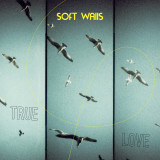
Soft Walls is the solo recording project of Dan Reeves, who has spent his entire adult life kicking around in the dust of the UK's underground music scenes. Cutting his teeth in the South West's post-hardcore scene; centred around Exeter's The Cavern club, before moving to the South East and forming his own record label; Faux Discx, and the propulsive post-punk band: Brighton via London's Cold Pumas. Projects have come and gone over the years, but Reeves' Soft Walls has remained, an outlet for whatever musical whim takes his fancy.
'True Love' is Soft Walls' 4th album. Written and recorded at home, during breaks in work. During the aftermath of you-know-what.
For this album Dan leaned heavily in to his guitar playing, searching for those purest moments of true emotion and connection. Aiming to strike an instant blow. "Emotional guitar music. But not Emo." The result of falling in love with an instrument again and playing for the joy of it, much like he did as a teenager. Just older, wiser(?) and certainly more world-weary / teary-eyed.
Thematically, 'True Love' revels in stating its love for everything that is dear to Reeves. Odes to marriage, romance, unconditional love, parenthood and creativity pierce through the record's down-swings that tackle existential crisis and the feeling of falling in to depression. Each song attempts to encapsulate a vivid feeling, be it positive or negative. It's all part of a life worth living.
Although recorded at home, this album marks a leap in to digital mid-fidelity for Soft Walls, embracing a wider, richer sound beyond the tape hiss of earlier releases. That same spirt is still in the mix, but is presented wide-eyed and caffeinated in to clarity. Elevated by the input of a handful of collaborators contributing to the performances and helping to shape it sonically, 'True Love' ends up being the truest version of Soft Walls committed to (digital) tape thus far.
If there ever was a monicker apt for describing an artist’s behavior, that is Ghost Lemurs. Manifesting spottily in compilations and limited edition tapes, then returning to the shadows without much fanfare, the project has indeed demonstrated a ghostly behavior and a nature as puzzling as the animal it takes its name from. Wombs And Alien Spirits represents now their most public outing, one in which the duo of visual artist / producer Kareem Lofty and Daniele Guerrini (better known as Heith and as Haunter’s co-founder) are happy to showcase all the discoveries in a process of musical and spiritual research begun in 2019. Described by the artists themselves as an experiment in mediterranean psi-trance, the album makes use of an incredibly diverse number of traditions, sonic sources and techniques of musical experimentation, keeping its psychedelic intentions central to the whole creative endeavor. Moments of meditative relaxation are brought to unsettling new levels by cavernous basses and spaced out drones, while tight polyrhythms bring beautiful granular melodies to a sidereal ceremonial dance. As beautiful and captivating as it is, Wombs And Alien Spirits remains as chimeric and unrestrained as any previous effort by the two artists. It’s a type of folk music devoid of a specific homeland, but resulting from the authors’ heritages, simultaneously divided and united by the mediterranean sea, injected with all the trajectories of their personal journeys. It ends up sounding profoundly human and uncannily inhuman, tapping into the undiscovered alien element at the beginning of the experience of life. Genre: Electronic / Experimental Listen:
- A1: Wear Your Love Like Heaven
- A2: Mad John's Escape
- A3: Skip-A-Long Sam
- A4: Sun
- A5: There Was A Time
- B1: Oh Gosh
- B2: Little Boy In Corduroy
- B3: Under The Greenwood Tree" (Words By William Shakespeare, Music By Leitch)
- B4: The Land Of Doesn't Have To Be
- B5: Someone Singing
- C1: The Enchanted Gypsy
- C2: Voyage Into The Golden Screen
- C3: Isle Of Islay
- C4: The Mandolin Man And His Secret
- C5: Lay Of The Last Tinker
- D1: The Tinker And The Crab
- D2: Widow With A Shawl (A Portrait)
- D3: The Lullaby Of Spring
- D4: The Magpie
- D5: Starfish-On-The-Toast
- D6: Epistle To Derrol
Donovan’s Original
A Gift From a Flower to a Garden made for a few firsts: the first double LP of Donovan’s
career, one of the first box sets in pop and, most importantly for Donovan himself; the first
pop album for the children of tomorrow.
He resolved to make A Gift From a Flower to a Garden an album of two halves. The first,
Wear Your Love Like Heaven, was intended for his own generation as they started to think
about the kind of world they wanted to leave behind. The second, For Little Ones, was for
the children they had or would have in the years to come. The result was a kaleidoscopic
folk-jazz suite on the power of love, imbued with all the romance and mystery of an Arthur
Rackham illustration for an ancient English fairy tale. The songs, remarkably adventurous
given Donovan was a globally famous singer at his commercial height, combined the
influences he had amassed so far.
There is something about A Gift From a Flower to a Garden that could never be repeated,
though. It is such an innocent evocation of the childlike imagination, so redolent of its time,
yet set apart from it too. All these years later, the peaceful qualities of this pioneering,
enchanting, deeply unusual album feel more valuable than ever.
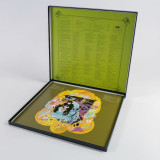
The state51 Box Set
With authenticity core to the project, The state51 Conspiracy engaged one of the UK’s
leading experts in box set design, Daniel Mason at Something Else, to painstakingly recreate
the box, records and accompanying ephemera. The first challenge was to find the deep blue
leatherette paper the original box set was covered in; a problem since it was no longer in
production. “I knew people who had stacks of it, gathering dust on top shelves, so I bought it
up wherever I could find it,” says Mason. Then came the reproduction of 12 loose leaf lyric
sheets on fine art watercolour paper, each of them featuring a watermark and a fairytale-like
illustration by Donovan’s artist friends Sheena McCall and Mick Taylor. Where, though, to
find the same paper stock? “I found out that it was made at a paper mill in North Wales
called Abbey Mills. Unfortunately the mill dissolved in the early 70s and very little of the
paper remained. However enough paper remained to allow us to produce the numbered
certificate also signed by Donovan that sits within the box.”
Then to the iconic cover image. Donovan and Jimi Hendrix’s personal photographer Karl
Ferris, used infra-red film to achieve the psychedelic effect on the cover, but the original
negatives couldn’t be found. Mason then used digital technology to ramp up the colour levels
on a reproduction from an original copy of the album while allowing it to remain a little bit
faded, as it would be after half a century. The same labour of love and care has gone into
producing all elements of the box; from the rebuilding of the famous front cover font to the
hand-numbered and signed certificate; letterpress printed on the original paper stock of the
1968 UK release lyric sheets.
To cap it all off the original mono master tapes were waiting safely in the EMI Donovan
Archive and transferred from tape to digital by Abbey Road Studios where new lacquers
were cut, ensuring Donovan's favoured mono version of the album would be presented both
physically (and digitally for the very first time) in striking audiophile quality. The final touch to
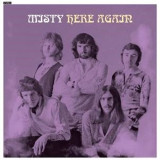
First ever vinyl release of the album recorded in 1969/70 by UK prog-psych band Misty. Including their terrific mod-psych “Hot Cinnamon” 45.
A dazzling fusion of classically-inspired progressive rock and song-based psychedelic pop with an organ-based sound, in the vein of Procol Harum and The Nice.
“In October 1969, King Crimson released their debut, In The Court Of The Crimson King, Pink Floyd unleashed Ummagumma and Led Zeppelin put out their second LP. At the same time, Misty were in London’s Regent Sound Studios recording what turned out to be the only album of their career with producer, Adrian Ibbetson, who had cut his teeth as an engineer working with everyone from the Beatles to the Equals.
After only a handful of gigs, Misty signed a deal with Parlophone and began to gather momentum with the release of Hot Cinnamon. Although they received a lot of airplay, the single failed to chart and the band’s hopes of releasing their debut album were dashed. Reluctantly, Misty went their separate ways and the Here Again master tapes sat gathering dust on a shelf until Gelardi came across the original acetate and decided it was time for the album to finally see the light of day.
Bridging late psych and early prog, songs like Life Has Just Begun, Witness For The Resurrection and the title track were played with a perfect mix of high-flying experimentation and virtuosic musicianship. Blurring the fine lines between rock, jazz, classical and chamber pop, Here Again is a transcendent kaleidoscope of colour that is beyond definition.
Maybe you can tell an album is truly timeless when it takes half a century for it to be properly appreciated. Misty were a rare bird, a brilliant, truly original band who should have left an indelible mark instead of joining what now seems like the never-ending line of half-remembered and long-forgotten flotsam and jetsam of the psychedelic era.
Both the first and the final statement from a group who never really got their chance to be heard, Here Again is a slice of pristine psychedelic pop that so embodies the dizzying energy and the progressive spirit of the time, it’s astonishing that it stays afloat under the weight of its own intentions. But float it does, like mist in the air - a half-forgotten diaphanous dream slowly coming back to you after 50 years of silence.” – Jonathan Wingate
Red Vinyl[20,97 €]
REKORDER is "a kind of retrospective of myself", says M.RUX about his second, long-awaited solo album. For over 10 years, Marten Rux aka M.RUX appears as a DJ, producer, editor, remixer and multi-instrumentalist all over the world and has developed an idiosyncratic sound that opens up subtle fields of tension: M.RUX mixes a sound between experimental sound design and hooklines that stay in your ears forever. Between wild percussion and contemplative harmonies, between ecstasy and meditative calm. In his DJ and live sets, M.RUX usually steps up to the controls with a smile, discreetly bobbing his head, while the audience goes wild. He circumnavigates clichés with trustworthy certainty and develops his very own guiding threads in his selection beyond BPM or genre straitjackets. One constant is his warm, often stoically slow kick drum, which holds all that playfulness together. REKORDER is a manifestation of this typical M.RUX sound. Similar to his concept album "Vermonische Melodien" from 2020 (on the Pingipung label), the artist's curiosity is directed towards the musical visions of the past. When new music technology projected great visions of the future and when new sounds had not yet solidi ed into clichés. REKORDER refers to the recording device, spelled in a German way, because most of the recordings were made in Germany (and in England as well). Phonography is a miracle that has only been around for 150 years: Technology gifts upon us prosthetics for remembering sound. Every recording is a process, and every playback a new performative act. Recordari (Latin) is a beautiful word. It literally means to take something to heart (cor) once again (re-). This doesn't just refer to remembering, but also to a ponderous, loving, sometimes doubtful contemplation. It is a perfect headline for M.RUX’ approach to processing sound. REKORDER draws deeply from its own archive, which has ourished quite splendidly during the pandemic. Multi-instrumentalist M.RUX mixes his own recordings of banjo, guitar, auto-harp, synths, percussion and jews harp with fragments from sessions with friends that have accumulated since 2020. They unfold in the process of re-listening in the mix and transform into a solid musical tapestry. A typical gesture for this album? M.RUX bows deeply to the history of pop music - especially the blues and its melancholy, coolness and shuf ing groove. The harmonic framework of the album is based on blues scales throughout. Instead of conveying blue emotions via lyrics or the tone of the voice, as the original genre does, the synthesizer takes on this role on REKORDER. With his sound design, M.RUX achieves an ecstatic sorrow in his melodies, this gurgling portamento that is reminiscent of R&B (or even the ingenious title melody of the series "Bojack Horseman”). If voices are heard on REKORDER, then as hypnotic fragments that guide us through the groove as conjunctions: "Because...", says the voice in the track of the same name. That's enough. There are no lyrics, no literal weariness, no love-songs or storytelling, REKORDER processes all of this into timbres and groove as vessels for the album’s individual, contemplative melancholy. Never forgetting, with a gentle smile, to swing a leg.
Black Vinyl[17,61 €]
LIMITED RED COLOURED VINYL!
REKORDER is "a kind of retrospective of myself", says M.RUX about his second, long-awaited solo album. For over 10 years, Marten Rux aka M.RUX appears as a DJ, producer, editor, remixer and multi-instrumentalist all over the world and has developed an idiosyncratic sound that opens up subtle fields of tension: M.RUX mixes a sound between experimental sound design and hooklines that stay in your ears forever. Between wild percussion and contemplative harmonies, between ecstasy and meditative calm. In his DJ and live sets, M.RUX usually steps up to the controls with a smile, discreetly bobbing his head, while the audience goes wild. He circumnavigates clichés with trustworthy certainty and develops his very own guiding threads in his selection beyond BPM or genre straitjackets. One constant is his warm, often stoically slow kick drum, which holds all that playfulness together. REKORDER is a manifestation of this typical M.RUX sound. Similar to his concept album "Vermonische Melodien" from 2020 (on the Pingipung label), the artist's curiosity is directed towards the musical visions of the past. When new music technology projected great visions of the future and when new sounds had not yet solidi ed into clichés. REKORDER refers to the recording device, spelled in a German way, because most of the recordings were made in Germany (and in England as well). Phonography is a miracle that has only been around for 150 years: Technology gifts upon us prosthetics for remembering sound. Every recording is a process, and every playback a new performative act. Recordari (Latin) is a beautiful word. It literally means to take something to heart (cor) once again (re-). This doesn't just refer to remembering, but also to a ponderous, loving, sometimes doubtful contemplation. It is a perfect headline for M.RUX’ approach to processing sound. REKORDER draws deeply from its own archive, which has ourished quite splendidly during the pandemic. Multi-instrumentalist M.RUX mixes his own recordings of banjo, guitar, auto-harp, synths, percussion and jews harp with fragments from sessions with friends that have accumulated since 2020. They unfold in the process of re-listening in the mix and transform into a solid musical tapestry. A typical gesture for this album? M.RUX bows deeply to the history of pop music - especially the blues and its melancholy, coolness and shuf ing groove. The harmonic framework of the album is based on blues scales throughout. Instead of conveying blue emotions via lyrics or the tone of the voice, as the original genre does, the synthesizer takes on this role on REKORDER. With his sound design, M.RUX achieves an ecstatic sorrow in his melodies, this gurgling portamento that is reminiscent of R&B (or even the ingenious title melody of the series "Bojack Horseman”). If voices are heard on REKORDER, then as hypnotic fragments that guide us through the groove as conjunctions: "Because...", says the voice in the track of the same name. That's enough. There are no lyrics, no literal weariness, no love-songs or storytelling, REKORDER processes all of this into timbres and groove as vessels for the album’s individual, contemplative melancholy. Never forgetting, with a gentle smile, to swing a leg.
A pioneer of the home recording movement, Linda Smith released several collections of delicate, bewitching solo music on cassette in the 1980s and 90s. The 2021 release of Till Another Time: 1988-1996, Captured Tracks' compilation of Smith's work, has helped bestow rightful critical acclaim to the ahead-of-her-time artist. Now, Captured Tracks dives deeper into Smith's catalog with the release of two full-length companion albums, Nothing Else Matters and I So Liked Spring, available for the first time on vinyl & streaming formats. Recorded at Smith's home in Baltimore in 1995, Nothing Else Matters chronicles the tension between the mundanity of daily life and the creative impulse: Traffic noises on the charmingly boisterous "Little To Be Won" showcase this levity, as does the addition of playful hand claps and a laugh track to her striking cover of Young Marble Giants' "Salad Days." I So Liked Spring, recorded the following year, saw Smith experimenting with the unique challenge of putting another artist's words to music. She'd come across a biography of the English poet Charlotte Mew and found her wistful poetry rife for musical interpretation. The songs on I So Liked Spring are delightfully unpredictable, full of upbeat melodies and spellbinding vocal harmonies. This is perhaps best showcased on the title track, one of Smith's most popular songs to date, a lovelorn anthem that recalls the airy melodies of early dream pop. Both of these albums showcase the mesmerizing charm of Smith's songwriting, often compared to the likes of the Velvet Underground and Laurie Anderson. Home recording technology has come a long way since Smith first began recording demos on her tape machine, but her influence reverberates through the work of today's bedroom artists. The release of these two essential albums seeks to further illuminate this connection, welcoming a new generation of listeners to the work of this trailblazing artist.
Fire! have always been about finding the essence by getting to the core of the music. Their 8th album sees the trio - for the first time on record - stripped down to the bare-bones essentials; with no flutes, no electronics, no guests and no extras, recorded live in the studio to analogue tape - the Steve Albini way - with the master himself at the controls in Electrical Audio in Chicago. Thus, this album stands as a true testament to the group's expressive power and glowing intimacy. Musically, Testament can be seen as an extension of their previous full length album Defeat, released two years ago, to the month. A solitary bass figure from Johan Berthling, quickly joined by a stout drum groove, gets it all going in a familiar fashion before Gustafsson adds desolate cries and whispers from his baritone sax. This approach is even more honed on the second track, with the most simplistic groove you're likely to hear in jazz and Gustafsson shifting between extended, lonely, tortured lines, only once abrupted by a series of short bursts. The third track starts with loose and relatively lively drums that continue throughout, but the mournful saxophone maintains a subdued atmosphere. Track four is a real beauty with the trio slipping into a trance-like dream state before shifting gear halfway into its nine minutes. The final track is the most dynamic of the lot, shifting between bursts of energy and lyrical beauty. Fire's debut album, You Liked Me Five Minutes Ago, was released in 2009 to wide international acclaim. "The basic strategy of pairing the expressive energy of free jazz with a sturdy sense of groove has yielded something potent and self-contained" (New York Times). Between this and Testament there's been six albums, including collaborations with Jim O'Rourke (Unreleased?) and Oren Ambarchi (In The Mouth A Hand), as well as the Requies EP with Stephen O'Malley and David Sandström in 2022. Testament was recorded and mixed during a three-day stint at Steve Albini's Electrical Audio studio in Chicago in December 2022. Mats Gustafsson - baritone sax Johan Berthling - bass Andreas Werliin - drums.
The Glass Hours are American songwriters Brad Armstrong and Megan Barbera. Their music blurs between Sunday afternoon country-folk and the Golden Age of the 1970s. With the exception of Sue Westcott on fiddle (Chet Atkins, Tom Jones), the album was written, performed, recorded and produced by Brad and Megan in Brad's home studio in Red Hook, New York.
Like much of the work they've done in their respective solo careers, the new album dances between this and that, drinking from the same wells as Gram Parsons and Emmylou Harris, Tom Waits and Lucinda Williams. The songs go where they want to go; Brad and Megan simply try to stay out of the way. Although it is nearly impossible, in this new world of niche artistry, not to pick a genre camp and pitch a tent, The Glass Hours seem intent on trying. Yet, there is a thread that ties the whole thing together: the constant tension and tapestry of their voices harmonizing. Every song on 'The Glass Hours' was written with the idea of this harmony and interaction, point and counterpoint. Two voices trying to come together as one.
2024 Repress
To celebrate its 30th anniversary, Plastikman's redefining acid techno masterpiece, Sheet One, has been mastered from the original tapes and reissued on vinyl via Mute and NovaMute.
Released in 1993 on Mute's subsidiary label NovaMute, this record was the debut for Richie Hawtin's alias Plastikman. 30 years on Sheet One is a landmark album in the field of electronic music, it changed the shape of what the genre could be and became.
Introducing one of techno's most recognisable logos, the album achieved a degree of notoriety for its acid blotter-style perforated artwork. Musically it focuses on laser-precise minimalist rhythms to drive a series of echo-box acid lines that gradually acquire power over the course of lengthy album tracks, with frequent use of the Roland TB-303, which gained prominence in the electronic music world as a staple of Chicago's acid house scene. Hawtin once described Sheet One perfectly in an interview with MusicRadar, saying "...It's music for the end of the party as you're melting into the floor, which is exactly what the name Plastikman was made to represent."
This seminal album helped to establish the template for minimal techno, and is a must listen for lovers of electronic music.
Available on double bio vinyl.
Drum-machine soul, funk, disco and boogie from Buffalo, NY. Rare 7" singles and previously unreleased tracks presented as a complete album. In the early 70s, Jessie Key and Sylvester Cleary - two passionate idealists living in Buffalo, New York - formed a close friendship based on a mutual mission to better their city. The Attica State Prison Riot of 1971 was a burning memory, and the Arthur vs. Nyquist lawsuit - brought against the City of Buffalo for creating and maintaining a racially segregated school system - was on the docket. Key was once a cotton-laborer in Mississippi, who journeyed north for school where he met his kindred spirit, Cleary. The two struck up an intense friendship, bought a drum machine and recorded their first 45, "A Man," a paean to self-actualization and Black American empowerment, which they custom pressed and issued privately. Dozens of recordings followed over a decade long span, issued on local labels and warehoused on cassette tapes. Perennial optimists, Key & Cleary tried any - perhaps every! - path they could demarcate in hopes of forwarding their agenda of self-effected, positive change. They formed Buffalo’s first minority-owned construction company, opened a health food restaurant in a building previously occupied by a fast food chain, and even concocted a candy bar called "The Buffalo Treat," which they manufactured and sold locally. Eventually they started their own label, Buffalo’s Reflection. On it they released their masterpiece, "What It Takes To Live," a sought-after disco and Northern Soul classic, which previously appeared on Now-Again”s Soul Cal anthology. This album collates the breadth of Key & Cleary’s recordings from 1970 until the mid 1980s, both with songs issued on rare 7" singles and previously unreleased. It presents a conjoined musical vision and tells the story of a duo years ahead of their time, both musically and culturally. Love Is The Way was their ethos - their goal was to enlighten humanity and to bend history in a more loving direction through communion.