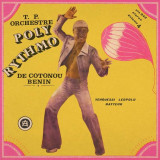
Acid Jazz Records are proud to announce an
exclusive licensing agreement with Albarika Store,
the legendary record label that defined the sound
of Benin and influenced the entire region of West
Africa and beyond.
This is the first exhaustive trawl of the archive and
will see the label presented in a way that ensures
its historical importance is recognized.
‘Segla’ is a hens’ teeth-rare Poly Rythmo album
from 1978 that was originally released without a
sleeve as ALS059. Recorded at EMI Lagos, Nigeria,
as per most of the Poly Rythmo recordings for
Albarika, the sound quality is from the tapes is
dynamic and fresh.
Transferred from the original tapes and
remastered by Grammy award-winning engineer
Frank Merritt at The Carvery, the album is
presented with beautiful artwork and packaging to
match the sonics. This is the music as it should be
heard.
Over the next few years a comprehensive reissue
campaign is planned, overseen by Florent
Mazzoleni and David Hill for Albarika Store, with
Dean Rudland as executive producer for Acid Jazz.
Search:the tape
Having already unearthed three collections of archival ‘70s recordings by Catherine Christer Hennix, Blank Forms continues their annual illumination of the visionary Swedish composer’s music by turning to more recent work with this first-time vinyl edition of Hennix’s “Blues Alif Lam Mim in the Mode of Rag Infinity/Rag Cosmosis,” a 2014 piece first released as a CD in 2016 (Important Records).
The double album captures the April 22, 2014 premiere of Hennix’s composition by by the Chora(s)san Time-Court Mirage, her expanded just intonation ensemble, featuring a brass section of Amir ElSaffar, Paul Schwingenschlögl, Hilary Jeffery, Elena Kakaliagou, and Robin Hayward; live electronics by Stefan Tiedje and Marcus Pal; and voice by Amirtha Kidambi, Imam Ahmet Muhsin Tüzer, and Hennix herself. Intended to reveal the blues’ origins in the eastern musical traditions of raga and makam, “Blues Alif Lam Mim in the Mode of Rag Infinity/Rag Cosmosis” has its roots in Hennix’s 2013 realization of an “Illuminatory Sound Environment,” a concept developed in 1978 by anti-artist Henry Flynt on the basis of Hennix’s own “The Electric Harpsichord.”
As Hennix explains in Other Matters, Blank Forms’ 2019 collection of her writings:
“Rag Infinity/Rag Cosmosis presents fragments of ‘raga-like’ frequency constellations following distinct cycles and permuting their order, creating a simultaneity of ‘multi-universes.’ When two such ‘universes’ come in proximity of each other and begin unfolding simultaneously along distinct cycles, there is a kaleidoscopic exfoliation of frequencies as one universe is becoming two, but not separated—the effect of cosmosis is entrained, binding two or more frequency universes into proximity where their modal properties interact and blend, creating in the process entirely new microtonal constellations in an omnidirectional simultaneous cosmic order with phenomenologically ‘transfinite’ Poincaré cycles (cyclic returns to initial conditions).”
As with Hennix’s best work, the organic unfolding of this quivering drone belies a precision that opens onto the infinitesimal. Upon its mesmerizing ebb and flow, the vocalists incant a devotional poem written in Arabic by Hennix and featuring quotations from the Quran. Also reproduced on the album’s gatefold jacket, Hennix’s reduction of the sacred text to its most elegant formulation invites the contemplator to bring their inner knowledge to the composition for use as a prompt for meditation. Yet the piece offers depth to even the most secular listener willing to immerse themselves in music brimming with such serene intensity.
Catherine Christer Hennix (b. 1948) started her creative life playing drums with her older brother Peter, growing up in Sweden where she heard jazz luminaries, such as John Coltrane, Eric Dolphy, Dexter Gordon, Archie Shepp, and Cecil Taylor perform from 1960 to 1967. Directly after high school, Hennix went to work at Stockholm’s pioneering Elektronmusikstudion (EMS), where she developed early tape music, incorporating computer generated speech done at the Royal Technological University (KTH), where she was an undergraduate student. After traveling to New York In 1968, she met artists Dick Higgins and Alison Knowles who invited her to stay at the Something Else Press Town House where she had the opportunity to meet, among others, composers John Cage, James Tenney, and Phil Corner. During the following years she developed fruitful collaborative relationships with many composers in the burgeoning American avant-garde, including, most significantly, Henry Flynt and La Monte Young. Young introduced Hennix to Hindustani raga master Pandit Pran Nath and she would later study intensively under him as his first European disciple. While Hennix continued to make music performing alongside Arthur Russell, Marc Johnson, Henry Flynt, and Arthur Rhames, she also served as a professor of Mathematics and Computer Science at SUNY New Paltz and as a visiting Professor of Logic (at Marvin Minsky’s invitation) at MIT’s Artificial Intelligence Laboratory. In recent years Hennix has led the just-intonation ensemble the Chora(s)san Time-Court Mirage, which has featured musicians Amelia Cuni, Amirtha Kidambi, Chiyoku Szlavnics, Hilary Jeffrey, Amir El-Saffar, Benjamin Duboc and Rozemarie Heggen. She currently resides in Istanbul, Turkey pursuing studies in classical Arabic and Turkish makam.
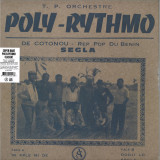
Acid Jazz Records are proud to announce an
exclusive licensing agreement with Albarika Store,
the legendary record label that defined the sound
of Benin and influenced the entire region of West
Africa and beyond.
This is the first exhaustive trawl of the archive and
will see the label presented in a way that ensures
its historical importance is recognized.
‘Ipa Boogie’ is a super rare LP from 1978 that
almost never surfaces in good shape. Today even
average condition copies can command £500 to
£1,000 on the collector's market and for good
reason. These are the only known recordings by
this obscure band and they present the listener
with some of the finest afro-boogie and afro funk
that the extensive Albarika Store catalogue has to
offer.
Transferred from the original tapes and
remastered by Grammy award-winning engineer
Frank Merritt at The Carvery, the album is
presented with beautiful artwork and packaging to
match the sonics. This is the music as it should be
heard.
Over the next few years a comprehensive reissue
campaign is planned, overseen by Florent
Mazzoleni and David Hill for Albarika Store, with
Dean Rudland as executive producer for Acid Jazz..
Albarika Store is home to many rare recordings, from more traditional folkloric and Sato styles, to the funk, blues and psych inspired workouts of the All Mighty Orchestre Poly Rythmo de Cotonou, as they referred to themselves. Many of the original records are sought after by DJs and collectors as prime examples of Afro-funk, Afro-Latin and Afropsych sounds.
The next in the series of reissues by Acid Jazz presents a straight reproduction of the incredibly hard to find Poly-Rythmo ‘Vol. 4’ album, originally from 1978.
For DJs and dancers this album has long been about the killer track ‘Aiha Ni Kpe We’, an incendiary Afrobeat recording which will activate any dancefloor anywhere. “Every time I listen to the Orchestre Poly Rythmo… Wow, I just discover something new in the music” - Gilles Peterson
This is the first exhaustive trawl of the archive and will see the label presented in a way that ensures its historical importance is recognized. Trips to West Africa have secured original master tapes and the process of transferring is ongoing. Over the next few years a comprehensive reissue campaign is planned.
Jazz N Palms selects 100% fusion, jazz, funk in full exotic effect, re-edited and retouched with a modern approach and new sounds to listen under the palms or simply imagining it.
Limited Mixtape, cassette only, including tracks from the first three vinyl releases (JNP 01-02-03) + 2 unreleased.
Download code included (unmixed tracks).
"Emotional Rescue and HMV Record Shop (Japan) present the 2nd DISCO REGGAE LOVERS with the music of Haile Maskel and his 101 Band and their cult Jamaica meets America reggae disco bomb Crazy Kind Of Feeling, in it's super rare 7" Mix.
Heralding from the furtive 60's Trenchtown, Jamaica, Michael Ashley aka Haile Maskel grew up around music, recording his first sessions with friend Bob Marley, alongside the likes of Peter Tosh, Robbie Shakespeare and Carlton Barrett.
Working with Lee Perry, he joined Light Of Saba, while touring with Dennis Brown and Sugar Minott led him overseas, settling in Los Angeles in 1983 and soon launching his Opulence (Sound) label.
The label's in house project, Maskel's 101 Band mixed a conscious message in love song, crafted around a boogie discodub. Coming as 7" and 12" (ERC101) releases, here the single is presented alongside the true dub version.
Dub Take 2 was discovered when the original master tapes were recently unearthed and while the recent 12" reissue featured an "instrumental alternative mix", Dub Take 1, this 7" includes a real dub version, cutting and dropping back and forth between drums, bass, key, vocals and horns in a cool excursion for the heads."
We're extremely proud to present HAPPENSTANCE, a sprawling jazz-concrète project produced by Johannesburg composer and double bass player Shane Cooper. Approached in 2020 by interdisciplinary arts space The Centre For The Less Good Idea to create audio work, Cooper drew on his network in the thriving South African jazz scene, bringing in Bokani Dyer (piano), Cara Stacey (bows), Daliwonga Tshangela (cello), Gontse Makhene (percussion), Jonno Sweetman (percussion) and Micca Manganye (percussion).
Two days of free-flowing composition, improvisation and investigative recording followed, with the results captured on a vintage reel-to-reel tape machine. This tape was fractured and reassembled by Cooper, bringing into surreal focus tiny ecosystems of sound, like curls of static clasped from the air and brought under the magnifying glass. The results - two long, standalone pieces - are dizzying, weightless; musique concrète melding with jazz-schooled virtuosity in a dubbed out bricolage of interludes and u-turns.
Recommended for fans of Abdullah Ibrahim, Tony Allen, Floating Points and Daphne Oram.
The Beastie Boys originally released Some Old Bullshit in 1994. It compiles several of their early EPs, recorded in the early 1980s. These recordings present a sound radically different from that of the hip-hop sound generally associated with the band. Instead, these songs represent the band’s part in the early New York hardcore scene. The album also features taped segments originally heard on Noise The Show, a popular hardcore radio show on WNYU in New York that played early recordings from the Beastie Boys. These segments feature the hyperbolic introductions of Noise The Show‘s host, Tim Sommer, an early supporter of the band.
Featuring Beastie Boys’ Earliest Recordings, Including “Egg Raid on Mojo”and “Cooky Puss” on 180g black vinyl.
More dancefloor dynamite from Benin's almighty Orchestre Poly-Rythmo de Cotonou Dahomey, this time in the form of 'Gbeti Ma Djro'. Confusingly described on the centre label of the 1971 original issue as ’Soul’, this is in fact a prime slice of Afro-psych-funk complete with wails and grunts over fierce drums and picked guitar. 'Angelina II’ is a much warmer affair that rides a shuffling mid-tempo pachanga groove. Both tracks were transferred, restored and mastered from the original 1/4 inch tape.
Transversales Disques proudly presents Archie Shepp – Live In Paris (1974), a never released before ORTF recording performed live at Studio 104, Maison de la Radio (Paris), remastered from the original tapes.
The musicians at the recording session were Archie Shepp (Saxophone), Noël McGhie (drums), Bob Reid (Double Bass), Pablo Kino (Percussion) ans Siegfried Kessler (Piano).
These exclusive recordings will be available as Deluxe Gatefold Tip-On Vinyl LP.
Tape
Ambient Music? Oh yes! Number two in the Frank Music tape series comes from the city of Leipzig yet again. Mary Yalex is a mainstay in various genres of dance music. Better go and check her records on KANN & Dial for instance if you haven't already. We are delighted to give you around 39 minutes of textures, sketches, warmth, weirdness and kindness. In other words: welcome to "Sentimental Journey". Mary guides us through a 10 tracks trip over calm pads ("November Strings"), steady bubbles ("Coral Reef"), postponed dreams ("Broken Café Blues"), ascending melodies ("Moonlight") and bitter realities ("Social Distance"). Tape format for the enthusiast, digital formats for all of us. Artwork by beloved illustrator Jana Marei.
"The Shape Of Jazz To Come" - Ornette Coleman (as); Don Cherry (crt); Charlie Haden (b); Billy Higgins (dr)
It was John Lewis, pianist of the Modern Jazz Quartet, who brought Ornette Coleman to the renowned Atlantic label, having heard him play in Los Angeles. »Ornette Coleman is doing the only really new thing in jazz …« he reportedly said. The present initial Atlantic album was released just in time to coincide with the New York debut of the Coleman Quartet in November 1959. Lewis was sure that Coleman would open up new paths for jazz, and his opinion is reflected in the title of the album – "The Shape Of Jazz To Come". After the rather worn-out hard bop routine of the past years, this music was like a breath of fresh air. The fast numbers ("Eventuality", "Chronology") remind one of wildly hyped-up bebop. Other numbers ("Congeniality", "Focus On Sanity") juggle with catchy, almost folk like short motifs. This album contains two of Coleman’s most beautiful compositions: "Peace" and "Lonely Woman", which was later given lyrics and often heard in its vocal version. The Mulligan-Baker Quartet provided the model for the pianoless quartet – and when the band swings along once in a while with a moderato tempo, it is truly reminiscent of cool jazz. Be that as it may, the two wind instrumentalists just love the frenetic 'cry' and the intentionally 'imprecise' interplay. Clearly defined stanzas or traditional harmonic forms were not for them. The jazz musicologist Peter N. Wilson wrote: »A record, which is not unjustifiably so entitled« about this LP which was given 5 stars by the magazine Rolling Stone.
This Speakers Corner LP was remastered using pure analogue components only, from the master tapes through to the cutting head. More information under pure-analogue
All royalties and mechanical rights have been paid.
Recording: May 1959 at Radio Recorders, Hollywood, CA, by Bones Howe
Production: Nesuhi Ertegun
Synth legend Suzanne Ciani, Demdike Stare’s Sean Canty & Finders Keepers’ Andy Votel come together on this killer hour-long 2014 synapse popper of a collaboration pooling the occasional group’s esoteric collage-based approach into a remarkably foreboding session pregnant with a dread that’s never quite resolved. Think Vladimir Ussachevsky, Todd Dockstader, Spectre and Company Flow melted thru the Deutsch-Italo industrial DIY tape era and funneled thru an almost impenetrable fog of Ann Arbor basement noizze.
Hustling some of Neotantrik’s most amorphous gestures, ’241014’ is a four-segment movement of reduced Buchla treatments, destroyed vinyl loops and scraping foley suspense; like a cosmic dream diary layered into a collage of drones and clatters. Little in Ciani’s extensive catalogue has hinted at what’s on display here; the joyful lullaby-pop of “Seven Waves” or metallic alien soundscraping of “Flowers of Evil” are only hinted at. She instead paints new sonic vistas, allowing space for her collaborators to make themselves known; Votel’s chiming toy autoharp and Bubul Tarang (a Punjab string instrument) add a distinctive flavor, while Canty’s grimy drones and noise-soaked textures drizzle pitch-black molasses into the cracks and crevices. Together, the effect is a bit like hearing Philip Jeck improvising over Popol Vuh’s peerless Moog-led debut “Affenstunde” or Demdike Stare knocking out impromptu reworks of Tangerine Dream’s abstrakt early run.
Perhaps unusually, the trio have still never set foot in a studio together, exclusively maintaining their practice in-the-moment and on stage when schedules intersect. So it’s all the more remarkable that their improvisations naturally find a democracy of role and such a heightened level of intuition, beautifully converging their thoughts to mutual, open-ended conclusions that leaves billowing room for interpretation. In a most classic sense, it’s like the sensation of sleep paralysis or dream/nightmare ambiguity, with a level of suggestiveness that’s disorienting from end to end.
For the first time the recordings are now available in high fidelity (there was a tape version a couple of years back) - now remastered by Rashad Becker to better represent the otherworldly scope of their actions on stage, from the NWW-like queues and drone of ‘Scanned Accents’ and keening silhouette of ‘Second Action,’ to new sections of subaquatic Porter Ricks-like murk in ‘Anti-Contraction’ and the levitating webs of synth and tactile, sampled textures in ‘Last Canción.’ Tape music and synth music have long shared a passionate embrace, and here turntablism coolly slides in on the action. Canty and Votel’s background in beat tape assembly and crate digging pays off: they’re keenly experimental creators but bring an unfussy sense of rhythm and performance that’s miles beyond any facile repetition of a nostalgia for vintage glory. Combined with Ciani’s delicate Buchla work - it’s a unique proposition.
- A1: Kebrou - Banjey ‘Boogie’
- A2: Ateg Ould Syed - L’ensijab
- A3: Jeich Ould Chighaly - Wezin
- A4: Kebrou - Banjey
- A5: Deye Ould Amartichitt - Paris
- A6: Mohammed Guitar - Banjey & Medh
- B1: Baba Ould Hembara & Mama Mint Hembara - Moulana, Laa Moulana
- B2: Luleide Ould Dendenni - Wezin
- B3: Mohammed Guitar & Sbeyniat - Gelbi Vatimetou
- B4: Mohammed Cheikh Ould Syed - El Horr & Az-Zrag
- B5: Kweli Ould Seyyid & Klayhid Ould Meylid - Wezin
Legendary psychedelic guitar music from the Islamic Republic of Mauritania finally available on vinyl!
Originally released as a double CD in 2010, Wallahi Le Zein! has persisted as a cult classic, a collection of a rarely heard and utterly unique underground music scene, raw and unfiltered.
For fans of the more raw side of Sublime Frequencies, Sahelsounds, the ripping tape-hiss psychedelia of Les Rallizes Denudes, and anyone remotely interested in GUITARS.
12” 160 gram black vinyl LP, with 2 spot color reverse-board jacket, and 8-page full sized booklet with extensive notes and photos, and a history of Mauritanian guitar playing.
‘’this is the first curated collection of unfiltered Mauritanian guitar music ever, and I'm glad it's been introduced with such thoroughness and care.’’ 8.0 Pitchfork
The LP version we now present is intended as an immersive entry into this music: gnarled and virtuosic electric guitars weave hypnotically throughout melismatic sung poetry and exclamations, pulsing hand drums, party chatter, buzzing rigged desert sound systems, and all manner of the ambient sounds of Nouakchott wedded to oversaturated cassette in all its swirling, breathing, psychedelic glory. Operating entirely outside of any local recording industry, these songs were collected from bootleg tape stalls, wedding souveniers, and networks of musicians, expertly curated, researched and produced by Matthew Lavoie.
Drawing from the deep well of Mauritanian classical music, the gamut of musical modes and the tidinitt lute repertoire are transposed to the electric guitar - often with frets removed or additional frets installed, “heavy metal” distortion pedals and phasers built into guitar bodies, blurring the lines between Haratine and Beydane musical cultures, the ancient and the futuristic. At times transcendent and transfixing, and conversely a furious and cascading intensity that commands jaw-dropping attention.
Cold crushed electronics and tape noise by iDEAL faithful, Altar of Flies, returning to his native Swedish label with a 3rd album of possessed and unsettling tonal abstraction and psychoacoustic isolationism.
Known to the reaper as Mattias Gustafsson, Alter of Flies is the Mjölby-based sound artist’s most prolific alias, responsible for dozens of tapes and LPs for Chondritic Sound and White centipede Noise beside his trio of turns for iDEAL since the mid ‘00s. ‘Bortom Reven’ sticks closely to what he does best, conjuring bleakly depressive atmospheres ripe for inhabitation by the harder-to-please followers of North European ambient and industrial musicks, with an alchemic application of field recordings, tape loops, and primitive oscillators that vividly brings his thoughts into the dark light.
‘Bottom Reven’ is perhaps reflective of a certain, ascetic and isolated Swedish characteristic, enacting solitary rituals that better connect Altar of Flies with his environment, or simply entertain him during long, cold, dark nights. With hints of CMvH’s EVP and John Duncan’s searching shortwave radio textures to ‘Hur regn uppstår,’ and more ruptured reception of scrambled ether voices in ‘Terapimusik,’ alongside the title track’s worn-out nub of intrigue, and the damp basement clangour of ‘Under vår livstid’; its not one for those who get shook by the sight of their own shadow, but a real treat for listeners of a lonelier disposition who get off on the sound of the house creaking at night.
“We’re proud to announce the release of our debut EP ‘Reporting
Live From The Living Room Floor’ via Nice Swan Records. A
prologue chapter within the world we call Hallan, ‘Reporting Live
From The Living Room Floor’ introduces the 21st Century to the
Gumshoe Boy. The boy is always the man for the job. He’s the man
on the inside. He’s the Agency’s number one frontman and he’s
armed with a tape provided by an anonymous source. An undercover
operative in a satirical, Orwellian world, ‘Reporting Live From The
Living Room Floor’ paints a semi-abstract but tangible image of the
new decade, holding a mirror up to not only our modern society but
our individual selves. The time is now right. From the corner of his
bleak bedroom the boy plans his plan, and from the corner of ours we
do the same.” - Hallan
The EP draws influence from everyday observation, mainstream pop
culture and laughable tabloid fiction. ‘Reporting Live From The Living
Room Floor’ paints an semi-abstract but tangible image of the new
decade, holding a mirror up to not only modern society but
individuals.
Frontman Conor speaks on the track: “Our sound changes depending
on our agenda at any time, finding a different stride with every step.
With ‘Hands Up’ we found ourselves dropped into a Western rerun
armed with a fiercely cowboyish twang on our six string shooter. We
wanted to forth a thematic, semi abstract prose, attacking
businessmen and penny pinchers in a flurry of suitably delirious
criticisms.”
While struggling to find a studio which didn’t just place Hallan in the
cogs of a much larger machine, the band found Rob Quickenden of
Ford Lane studios for their last single, ‘Modern England’. Returning to
the rural depths of Yapton, Hallan once again join forces with
Quickenden on their debut EP. In a studio setting where no ideas
were out of the question and experimentation and exploration were
the words of the day, expect ‘Reporting Live From The Living Room
Floor’ to be a no-holds-barred exploration into the minds of Hallan.
Back in the far forgotten world of live events, Hallan supported the
likes of Sports Team and Porridge Radio. Yet 2021 sees the band
carve their own path all together. Backed by Nice Swan Records
(Sports Team, Courting, Sprints) Hallan are finally ready to release
their latest imaginings to the world.
The ethereal harmonies of Eve were ever present, but the psychedelic girl group feel of their previous band, Honey Ltd, was replaced with funky grooves and a stoned country rock vibe that permeated Los Angeles in the early 1970s. In the late 1960s, four teenage girls from Detroit hitch-hiked to Los Angeles to follow their dream. Known as the Mama Cats, their combined voices, created a magical instrument, a holy harmonic vehicle built upon the inspiration and improvisation of four close friends. Their ethereal voices and heavenly harmonies sounded like no one. Upon meeting Lee Hazlewood in Los Angeles, he was bowled over, offering them a recording contract on his label, Lee Hazlewood Industries (LHI), renaming them, Honey Ltd. Their sole 1968 LP never saw the light of day. Out of the ashes of the group, the three remaining members continued on under the name Eve. In the spring of 1970, Eve and producer Tom Thacker went into the studio to record "Take It And Smile". The ethereal harmonies were ever present, but the psychedelic girl group feel of the Honey Ltd album were replaced with funky grooves and a stoned country rock vibe that permeated Los Angeles in the early 1970s (Think John Philips "Wolfking Of L.A.). Backed by another amazing group of musicians, the recording sessions included members of the Wrecking Crew, Elvis' TCB band, Ry Cooder, Sneaky Pete and Glenn Frey from the Eagles. Featuring songs by James Taylor, Fred Neil, The Gibb Brothers, Burt Bacharach, Bob Dylan, Mac Davis and a handful of amazing originals including the beautiful "Dusty Roads" and the title track "Take It And Smile," co-written with Glenn Frey. Upon its release, the album failed to find an audience. After recording one last song, "So Tired" for The Vanishing Point soundtrack, the girls went their separate ways, each continuing to sing professionally with artists that include Bob Seger, Neil Young, Tina Turner, Loretta Lynn and countless others. Remastered from the original analog tapes by GRAMMYr-nominated engineer John Baldwin, the reissue is complimented by a new Q&A interview with Eve members Laura Creamer, Temmer Darigan & Joan Glasser and GRAMMYr-nominated reissue producer Hunter Lea. This record is the first release in a new series of full albums reissues from the LHI (Lee Hazlewood Industries Records) catalogue that Munster will be releasing over the next months. All the releases include liner notes and exclusive interviews with the artists, rare photos, and restored original artwork
Before there was Rimarimba, Suffolk-born, Felixstowe-based musician and home recording enthusiast Robert Cox assembled a cast of friends, some musicians and some not so much, for an experiment in group exploration and ecstatic expression under the name The Same. Sonically and gravitationally defined by Cox’s collaboration with guitarist Andy Thomas (a partnership which formed in 1976 to record as General Motors), Sync or Swim, The Same’s one and only album, also featured keyboards by Florence Atkinson and Paul Ridout, and vocals by Robert’s sister Rebecca.
Originally released in small cassette and vinyl quantities on Unlikely Records, Cox’s imprint and a meeting point for many other musicians found at the fringe, the back cover of the original album jacket is as much a map of the personnel, place, and process
fundamental to Sync or Swim as it is a table of contents for DIY music-making at the beginning of the 80s: “Recorded in peaceful Wiltshire between September 18th and October 6th 1981 (using a miscellany of home made devices) onto a Teac A-3300SX via a Teac A-3440. No noise reduction systems were used.”
The additional equipment listed – a combination of consumer technology and DIY innovation – speaks to an unpretentious, improvisational ethos that pilots Sync or Swim, and Cox’s career as a whole. Rimarimba, whose near complete discography Freedom To Spend made available again in 2019, showcased Cox’s simultaneously hermetic and prolific creative process, while The Same celebrates making sound for sound’s sake and the serendipity surrounding those moments.
Wiltshire, home to the Stonehenge stone circles and a county of empty plains in the southwest of England, is worlds away from the commerce and industry of Glenn Branca’s New York City or Neu’s Düsseldorf. While The Same may feel in some ways like a British blend of these minimalist and motorik machinations, Cox and Thomas were curiously fascinated with The Grateful Dead and Frank Zappa’s brand of psychedelic music.
Cox’s own definition of British psychedelia is “folk music meeting technology and going bonkers.” It’s by this definition that Sync or Swim takes unexpected forms, from tape-speed tomfoolery, concrète sound collage and analog delayed marimbas, to the colorful spectrum of interwoven guitar play between Cox and Thomas reminiscent of Ghanaian Highlife but more accurately indebted to Jerry Garcia.
A limited edition of 500 copies on white vinyl. First ever reissue of Alternative TV's "Action Time Vision", compiled in 1980 and featuring the group's 7"es from 1977 to 1979. Including bonus track "You Bastard" and new liner notes by ATV singer Mark Perry, the founding editor of punk fanzine Sniffin' Glue.
What Mark Perry says:
"It wouldn't be an exaggeration to say that Punk turned my world upside down! In July 1976, after hearing and seeing the Ramones, I went from just another music fan, avid reader of the NME and Melody Maker, to become editor of punk's premier fanzine, Sniffin' Glue. It was almost an instant success and by December 1976, through our no nonsense approach, our position as the 'punk Bible' was assured. But it was never enough for me. As I saw the initial punk explosion subside into a succession of third-rate copycats, I wanted to have a go myself.
My first attempt at forming a band was in late '76. We called ourselves the 'New Beatles' and it ended after a couple of rehearsals. It wasn't until I met guitarist Alex Fergusson, a mate of Sounds writer Sandy Robertson, in early 1977, that I started putting together some more interesting ideas for a band. I worked on a bunch of lyrics and, pretty quickly, Alex had put tunes to them. Eventually calling ourselves Alternative TV, we had our first rehearsals at Throbbing Gristle's Industrial Studios in March '77.
That initial line-up was just me singing and Alex on guitar, with Genesis P-Orridge helping out on some bass and drums. We did ask Gen to join fulltime, but he decided against it and stuck with Throbbing Gristle. After more rehearsals, we played our first gig at the Nottingham Punk Festival in May 1977, joined by Mick Smith on bass and John Towe (ex-Generation X) on drums.
I started thinking about doing a record almost from the start because, by this time, I was running the Step Forward record label with Miles Copeland, who was also to become the band's manager. It seemed like a natural move to put out my own record, but it instead ended up on Deptford Fun City, another of Miles' labels. Before that actually happened, we made a slight detour by recording a demo for EMI. They didn't want to sign us, but we did end up with the tapes…"