Universal Eyes Ist Eine Experimentelle Noise-supergroup Der Detroiter Formationen Wolf Eyes Und Universal Indians, Bestehend Aus Nate Young, John 'inzane' Olson, Aaron Dilloway (pan, The Trilogy Tapes, Dais) Und Gretchen Gonzales Davidson (ex-slumber Party-mitglied/kill Rock Stars). "four Variations On Artificial Society" Ist Das Ergebnis Ihrer Reunion, Aufgenommen Und Produziert An Einem Wochenende Mit Der Detroiter Underground-legende Warren Defever (his Name Is Alive/4ad) Und Gepresst In Superlimitierten Auflagen. Cd Im Jewelcase, Lp Auf Farbigem Doppelvinyl Mit Download-code & Poster. Die Lp-erstauflage Erscheint Auf Weißem & Colaflaschen-klarem Vinyl, Eine Spätere Auflage Mit Roten Und Violetten Farbspritzern.
Buscar:the tape
Since 2008 Düsseldorf based producer and live wizard Stefan Schwander deeply concentrates on his always evolving electronic venture named Harmonious Thelonious. It besprinkles the world with fractional musical structures in the spirits of American minimal music, in order to immingle them with African rhythm patterns. Exceptional hypnotic opiates, enlarged with twisted harmonies and tricky rhythm archetypes. All heavy danceable!
After five magnetic albums for labels like Emotional Response and his old home base Italic as well as a highly acclaimed string of EPs for in-demand platforms like Asafa, Diskant, Disk, Kontra-Muzik, Meakusma, The Trilogy Tapes or Versatile Records, he now produced a heavy arresting 'Petrolia' LP for Marmo Music - a label that is not new to Harmonious Thelonious. Already on the label's second release Tru West: 'The DOWC part 2' his 'Sunset Liturgy' fingerprints are audible with a moving remix. Now he delivers six epic tunes that only partly dance the familiar Harmonious Thelonious dance. There are deeply traces from Africa and Arabia. There is the polyrhythmic witchery that makes his music special. But in contrast his new tunes are more mental then his former ones. They have a menacing industrial feel but yet continue to be enlarged with the enchanting spirits of the land of the Sahara. Furthermore, there is a slight manic touch arising from nervous electronic and foremost organic melodies. The live played jittery is coming from the Berlin based experimental musician Ghazi Barakat, also known under monikers like Pharoah Chromium or Crème de Hassan for mind shredding ambient, drone, experimental, noise, industrial, free jazz and free improvisation music from beyond. For Harmonious Thelonious Barakat, who also produced together with Marmo Music artist Günther Schickert the collaboration album 'OXTLR' in 2014, tuned his wind instruments Rauschpfeife and Kangling elflock-stricken the Master Musicians of Jajouka way. And instead of giving them a prominent lead position, Schwander deeply implements his tones into his propulsive creations to evoke a modern rhythmic meltdown of Occident versus Orient spheres that exhale a deeply absorbing soul.
A record, who's psychedelic energy fits perfect into the Marmo Music cosmos - a world where the progressiveness of the 70ties continues to live in the current to disband all white bread musical norms for the energy of music without classes. Dancers of the world, unite!
Soundway present something completely different, they are pleased to announce another Dutch artist to their roster, Felbm.
Having previously released more electronic music under the moniker Falco Benz, the multi-instrumentalist Eelco Topper moves towards a more acoustic, instrumental and sketch-like approach with the Felbm project.
The two-part project is being released as 2 separate digital EPs ("Tape 1" and "Tape 2"), the first of which will be released on 21 September. The second digital EP "Tape 2" will be released on the same date as the vinyl, 26 October.
Recorded direct to two cassettes, which comprise each side of the vinyl album, the cover art also reflects this - with both sides of the sleeve acting as separate front covers.
Domesica's collaboration with Dutch label Tope Tape, originally founded in the mid-80s by Menko Konings and recently reborn, allowed them to reissue the mythical S.M Nurse album-cassette.
And now - here is their first vinyl release: Boyz In Parx 'Passion', a selection of lovely never-released tracks by this mysterious Amsterdam act, active from 1983 to 1993, with the line-up of Peter van Garderen, founder of the legendary Nine Circles, and Robby Horsfall (†2013), also known from No Honey From These e.g.
Brooklyn based, DJ Monchan, steps up to perform some surgical edit wizardy on four mouth-watering tracks for the ever-dependable Razor-N-Tape.
'Reaction Control' kicks things off with a joyous disco gem, DJ Monchan extending and echoing those killer groovers to create a whirlwind of dancefloor delight. Next up, 'Dance It All Out' has a touch of the exotic highlife sound to it but reworked into a DJ friendly, irresistibly bouncing jam.
Flip it and it's back to the late-night NYC soirees of the 70's with 'Can't Promise' channelling that pure unadulterated fun into an ethereal edit of magnetic proportions. Taking the final slot of RNT042 'Get Down With Your Love' closes out proceedings with a silky smooth soulful heater.
33 years after it's first release Rick Clarke's street soul simmerdown on Local Records, 'Love With A Stranger', gets a much welcomed official reissue, lovingly remastered from the original tapes.
Just peep that OG artwork to get a taste of how this one's about to go down. Written and produced by John Collins, known for producing The Specials - 'Ghost Town', 'Love With A Stranger' perfectly encapsulates that '80s street soul sound. Distinctly soulful, synthy slow jams, heavy on the bass with a touch of the low-slung, lovers rock vibrations about them. Rick Clarke's sultry sweet nothings weave their way irresistibly through this five minute gem, but for those that want to provide their own rendition over the top, the dub has been affectionately cut to the flip.
Top tier tackle - reissued to serenade red dressed souls the world over once more.
Bill Brown and Al Hall jr met around 1971, they were both in south central L.A and shared the same apartment building, also in the same building was Doug Carn and brownstone singer billy Wilson.
These studio sessions were don't at Paramount studios Hollywood where Al Hall jr was working for producer Art Smith a&c music.
The main distributor for A&C was Accent records. So the Soul Injections very first single "Stay off the moon" was released via Accent, as was Bill Browns "Bip Bam" The group wasn't that pleased with how Accent handle the releases so Bill took it upon himself to set up his own label called Brownstone records. Many musicians were called in for studio sessions these included
Doug Carn, organ; Kirk Lightsey, keyboards; Mel Bolton,
guitars; Mel Lee, drums; Al Hall jr (trombones), Willaim 'Bill'Henderson strings.
The label was met with some confrontation from other Hollywood labels and many of the Brownstone releases were told not to hit the shops by Mafia run labels. Later around 1975 Brownstone released a track by Everyday people feat Alexis "world full of people"....A now cult soul 45 ....But wait, we at Super disco edits have unearthed the original tapes with the very first incarnation of that song and music, different lyric content and sung by Bill Brown. Not just this you get the instrumental on the b side!!
"Cliché's Principle' exhibits the two-sided aura of an artist long familiar with the cultivation of DIY ethos: an effortless expulsion of playful immediacy and the unfolding of a musician well versed in unpretentious composition. Lucy Cliché's five track EP for Fleisch Records is a jacking romp through 120-125bpm electro/new-beat, swooning through downcast ambience, lobotomised vocal samples and sweat-drenched hardware rhythms.
Lucy's musical oeuvre piles high; as a figure in the Sydney underground for the past 15 years she has always explored sounds that playfully antagonize the status-quo; the dysfunctional no-wave approach of her band Naked On The Vague and the manipulated tape ambience of Half High echo throughout Cliché's Principle in the form of chorus buzzed synth chords, abstract drones and ethereal evocation. While there is the strong presence of a live veteran at work behind the machines, Cliché's Principle holds five tracks produced purely with the intention of paving the dance-floor.
HINOSCH are a duo of Koshiro Hino from Osaka and Stefan Schneider from Düsseldorf, they first (met and) began their collaborative work of musical interaction and exploring contrasting possibilities in 2017. After a number of concerts in the EU and in Japan a debut EP (HINOSCH EP/TAL05) was released in late 2017. Fully instrumental, their first full-length album HANDS offers a more steeply focussed approach than its largely improvised predecessor.
Encouraged by the momentum generated during a number of on-the-spot recordings in Osaka, where Schneider had held a residency in April 2017, the overall sound of the album has been honed down through meticulous studio engineering. One of the outstanding qualities of HANDS certainly is an unprejudiced approach of sound and song structures. The instrumentation is condently reduced to a small range of analogue and digital machines. Snatches of tape-loops deliver lower-pitched vocal and drum machine samples. This characteristic technical set up soon proved ideal in order to dene a tactile vocabulary of fully unsynchronized rhythm patterns. The word tactile perfectly conjures that quality which is the very essence of HANDS. It is the result of the manner in which interdependent threads of rhythm units are deliberately disconnected to form a cohesive, soulful and exible whole. Most tracks on HANDS are devoid of a central motif and examine an unpredictable dialogue. A fantasy of constant change and a search for musical suggestions is the most vital ingredient in this abstract environment.
The album title HANDS refers to physical aspects of electronic music production. Every live concert of Hinosch usually starts out with a hand shake between Hino and Schneider. The general process of collective music making, programming, button pushing, playing, recording, decision making, all demand utmost concentration. The image on the front of the abum sleeve (designed by Takashi Makabe) reects the general approach of HANDS: layers of tuckled fabrics confronting one another to articulate a form for themselves to no other end than their own orchestration.
After having emerged from the ever thrilling Osaka music scene onto the international playgrounds of electronic music just a few years ago Koshiro Hino's solo activities as YPY and his involvement with the band GOAT have already garnered him a very favourable international reception. Stefan Schneider has over the years produced and collaborated with a.o. Joachim Roedelius (Cluster), Arto Lindsay, Klaus Dinger (NEU!), Dieter Moebius (Cluster), Alexander Balanescu, John McEntire (tortoise), Katharina Grosse, Bill Wells and St.Etienne.
'The U.K. Singles Volume One: 1972-1978' presents ELO's early output of hits and b-sides as originally experienced by the band's fans in their native U.K. This collector's box set features 15 groundbreaking 45 RPM singles plus 1978's "The ELO EP," each fully recreated from their original releases more than four decades ago.
All of the music on 'The U.K. Singles Volume One: 1972-1978' was remastered from the analogue source tapes while each of the 16 7" vinyl discs in the collection features detailed reproductions of the original sleeves and labels from the 1970s. Nine of these singles - including "Roll Over Beethoven," "Evil Woman," "Livin' Thing," "Telephone Line" and "Mr. Blue Sky" - reached the Top 10 of the British charts and remain among the world's most enduring classic rock songs. On rock radio and beyond, ELO's hits continue to permeate pop culture. In 2017, "Livin' Thing" was featured in a widely-seen advertisement for Volkswagen while "Mr. Blue Sky" underscored a pivotal scene in the Marvel Studios blockbuster Guardians Of The Galaxy Vol. 2.
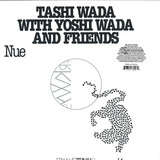
Composer Tashi Wada has performed for years with his father Yoshi Wada—artist, composer, and early member of the Fluxus movement. However, they have rarely appeared together in studio settings. Nue, the fourteenth entry in RVNG Intl.'s intergenerational FRKWYS series, finally brings Tashi and Yoshi, along with an eclectic group of close friends and extended family, together on tape.
Nue draws on aspects of Tashi's background for his widest vision to date—among them the minimalist bagpipe music of Yoshi, who co-composed three of the tracks, the psychoacoustic and perceptual explorations of his mentor, composer James Tenney, and reimagined forms of ancient and devotional music. The album, however, is not a tribute to the past or a recapitulation of familiar sounds. Instead, Nue is an intertwining of people and ideas as a means of growing, of looking inward to move outward, and of looking back to move forward.
To achieve this growth, Tashi assembled a core group of fellow travelers, including Yoshi, composer Julia Holter, producer Cole MGN, and percussionist Corey Fogel, to give life to this multifaceted suite. As an experience, Nue subtly navigates the interactions, intimacy and spaciousness of this group.
The album's title itself is a nod to Tashi's abiding interest in duality and the unknown: nue is a mythological Japanese chimera with the face of a monkey, the legs of a tiger, and a snake for a tail, a composite form, at once disturbing and otherworldly. But, as the composer points out, nue is also French for naked—stripped of complexity, bare and exposed, but also raw and essential.
From the doubling of tones—and the world of harmonic nuances such an action produces—to the rich interplay between individual musicians, all baring their own personalities and experiences through shared performance, Tashi's compositions allow space for these elements to join and grow. The multipartite creature that is an ensemble melds in the simplicity and purity of the music itself.
As explained by Tashi, each part was written with an individual in mind, not simply an instrument. And each individual performer makes their mark, from Holter's vocal performances on the cresting, oceanic 'Mutable Signs' and 'Ondine' with guest vocalists Simone Forti, Jessika Kenney and Laura Steenberge, to Fogel's resonant, precise percussion on 'Bottom of the Sky.' Producer Cole MGN, who has worked extensively with artists like Beck and Ariel Pink, helped to create a world of sound with minimal yet multi-dimensional materials. Like many of its influences, Nue uses deceivingly simple means to create complex, coherent worlds and narratives.
Tashi notes the influence of legendary Brazilian writer Clarice Lispector, whose work looked inward, investigating memory and emotion and dream, to understand the often overwhelming world outside the self. Like Lispector's classic novel Near to the Wild Heart, Nue cleaves these archetypal dualities—world/self, old/new, complex/simple—to create a work that allows them to coalesce into something singular.
As Tashi states in his liner notes: 'My desire was to create something both old and new sounding—ancient and futuristic—and ultimately something of its own world and other. Nue is a vision, an endless night of dreams, and a personal history of sorts, full of joys and demons.'
Following Merv's EP, Taped Artifact now presents a new outing by the label co-founder Kevin Arnemann. With three original cuts, showcasing the labels characteristic dub-influenced techno sound, the EP is complemented with two remixes by Jonas Kopp. Arnemann's 'Trash Polka EP' kicks off with saturated 808-grooves, driven by steady dub-chords and hard hitting claps. Next, the original track sees a special dub influenced treatment by Jonas Kopp. The in Spain residing Argentinian delivers a stripped down, yet high energized techno version. As a digital exclusive, Kopp prepares a second interpretation, following the tradition of a classic rooted dub sound. On the flipside, 'Revertigo' sees Arnemann utilise a rumbling break beat, topped with icy rides, blissful dub chords and cinematic pads, taking you on an energetic trip. 'Ideology' is bringing the EP to a closing. With heavily processed chords and hard hitting drums, Kevin Arnemann creates a suspense that leave you wanting for more. Vital Sales Points: - 3rd solo EP by Kevin Arnemann on Taped Artifact - Two remixes by Jonas Kopp - EP comes with download code for full EP + digital exclusive bonus remix by Jonas Kopp
RLydmor is Copenhagen based Jenny Rossander, an electronic producer, composer, singer, songwriter and general troublemaker. Now she's about to release her third solo album "I Told You I'd Tell Them Our Story", a multi-layered piece of modern electronic pop music.
In her sounds and with her words, Rossander captures a reflective description of her surroundings and invites the listener to follow her on a very personal journey.
After her first steps with her two solo albums, that have been released in Denmark only, to much applause, the first international coming out was the 'Seven Dreams Of Fire" album as Lydmor & Bon Homme (with Tomas Høffding from WhoMadeWho). In 2016 Lydmor suddenly disappeared to Shanghai for several months. Her life in the Chinese metropolis inspired her to write a piece of modern electronic pop music which will be released as her new solo album "I Told You I'd Tell Them Our Story" in September. "There is a fearless madness in her that might have waited for too long to finally break out." (Nothing But Hope And Passion). With lots of initiative, Lydmor has made her dream come true to tour most of the world with her music. No matter if she plays an acclaimed festival, a famous club or the tiny living room of her greatest fans, every single one of Lydmor's shows means a highly intense experience. With her irresistible voice and unabashed honesty Lydmor places the little hooks of her melodies and lyrics into the electronic soundscape and she will flirt, dance, cry, scream and hug her way into your heart.
After her first two albums - A Pile of Empty Tapes (2012) and Y (2015) - which were only released in Denmark, Lydmor's new record will be released internationally for the first time by hfn music. "I Told You I'd Tell Them Our Story" is a rite of passage captured in intense moments experienced on the edge of the world and on the edge of one self. Lydmor lived in Shanghai for several months in 2016 and the Chinese metropolis inspired her to completely redefine her artistic expression and to write this new album.
If you check the credits of The Rolling Stones' Goats Head Soup LP from 1973 you'll find a certain "Pascal" listed on the percussion section. That is none other than Los Angeles based artist Nicolas Pascal Raicevik (1933-1994), aka 107-34-8933, aka Head, aka Nik Pascal, aka Nik Raicevic. Besides his hitting the bongoes on the Stones album, Nik was a great artist on his own, both as a painter and as a musician. As a musician, he was a pioneer in the use of synthesizers, preceeding the Berlin school by some years when his Head LP was released on on Buddah in 1970. Buddah probably saw in Head the opportunity to cash in some money from the remains of the psychedelic scene - the three tracks on the LP are named after drugs used in the late sixties. The sounds, however, are accomplished works that show Raicevic as one of the most interesting pioneers in the use of synths. The album probably didn't do too well, since Buddah didn't renew the contract with Raicevic, who instead took his own way releasing his works on his very own Narco Records and Tapes label. Between 1968 and 1975 Narco would issue 4 LPs credited either to Nik Raicevic (Beyond The End... Eternity) or Nik Pascal (The Sixth Ear, Magnetic Web and Zero Gravity) plus one credited to 107-34-8933 (Numbers, which is in fact the same LP as Buddah's Head, albeit with different cover art). Copies of these LPs came with an ironic sticker over the shrinkwrap that read "Do not listen to this LP if you are stoned".
1972 saw the release of The Sixth Ear (Narco NR666), this time credited to Nik Pascal. A more complex work than Beyond The End..., it adds consistent rhythmic patterns to the mix with the addition of bongoes and also explores some interesting chord progressions.
Besides his musical explorations, Nik was also an interesting painter. His paintings are auctioned from time to time, and are consciousness expanding works influenced by abstract cubism and surrealism, some kind of Salvador Dalí on drugs exploring the outter and inner space. All the artwork on the sleeves of his LPs is done by himself. Spacey landscapes and psychedelic colours that fit perfectly to the music they contain.
"Nik Raicevic's music is at the intersection of radical psycho-electronic weirdness and kraut kosmische music (in particular the scifi-hypno-minimal modules of Conrad Schnitzler in Grun, Rot and Blau). It presents mega epic & tripped out electronic improvisations.
"This is an absolute must for collectors and fans of visceral, neurotic soundscapes." (progarchives)
"As far as late-60s / early-70s American Bedroom' Electronic Music goes, these LPS have to be among the first transmissions from this sector, made all the more attractive when coupled with Raicevic's alien topographIes - the covers are high-color portrayals of Venusian lanes, knotted growths, & future-past architecture in a style you might equate with Vintage' sci-fi pulp-novel covers - & copious Downer' sentiment. This music is imbued with a sort of lonely, anti-social sensibility that's about as far as you can get from the Academic' Early Electronic vector. I will say that if the Steve Birchall, Cellutron & the Invisible, and/or Pythagoron™ seed your garden, this will likely do the same." (twoheadeddog)
Never reissued before on vinyl format, the Wah Wah reissue features original sleeve artwork made of paintings and drawings by Nik himself and reproduction of the famous ironic "Do not listen if you are stoned" sticker. Limited edition, 500 copies only.
If you check the credits of The Rolling Stones' Goats Head Soup LP from 1973 you'll find a certain "Pascal" listed on the percussion section. That is none other than Los Angeles based artist Nicolas Pascal Raicevik (1933-1994), aka 107-34-8933, aka Head, aka Nik Pascal, aka Nik Raicevic. Besides his hitting the bongoes on the Stones album, Nik was a great artist on his own, both as a painter and as a musician. As a musician, he was a pioneer in the use of synthesizers, preceeding the Berlin school by some years when his Head LP was released on on Buddah in 1970. Buddah probably saw in Head the opportunity to cash in some money from the remains of the psychedelic scene - the three tracks on the LP are named after drugs used in the late sixties. The sounds, however, are accomplished works that show Raicevic as one of the most interesting pioneers in the use of synths. The album probably didn't do too well, since Buddah didn't renew the contract with Raicevic, who instead took his own way releasing his works on his very own Narco Records and Tapes label. Between 1968 and 1975 Narco would issue 4 LPs credited either to Nik Raicevic (Beyond The End... Eternity) or Nik Pascal (The Sixth Ear, Magnetic Web and Zero Gravity) plus one credited to 107-34-8933 (Numbers, which is in fact the same LP as Buddah's Head, albeit with different cover art). Copies of these LPs came with an ironic sticker over the shrinkwrap that read "Do not listen to this LP if you are stoned".
Magnetic Web was released in 1973. It appeared under the Nik Pascal monicker and showed a clear evolution in sound, favoured by the addition of an Arp 2600 and some rhythm boxes. It also included percussions and cymbals. The Two Headed Dog site thinks "this is his masterpiece in all of its acid-laced glory."
Besides his musical explorations, Nik was also an interesting painter. His paintings are auctioned from time to time, and are consciousness expanding works influenced by abstract cubism and surrealism, some kind of Salvador Dalí on drugs exploring the outter and inner space. All the artwork on the sleeves of his LPs is done by himself. Spacey landscapes and psychedelic colours that fit perfectly to the music they contain.
"Nik Raicevic's music is at the intersection of radical psycho-electronic weirdness and kraut kosmische music (in particular the scifi-hypno-minimal modules of Conrad Schnitzler in Grun, Rot and Blau). It presents mega epic & tripped out electronic improvisations.
"This is an absolute must for collectors and fans of visceral, neurotic soundscapes."
"As far as late-60s / early-70s American Bedroom' Electronic Music goes, these LPS have to be among the first transmissions from this sector, made all the more attractive when coupled with Raicevic's alien topographIes - the covers are high-color portrayals of Venusian lanes, knotted growths, & future-past architecture in a style you might equate with Vintage' sci-fi pulp-novel covers - & copious Downer' sentiment. This music is imbued with a sort of lonely, anti-social sensibility that's about as far as you can get from the Academic' Early Electronic vector. I will say that if the Steve Birchall, Cellutron & the Invisible, and/or Pythagoron™ seed your garden, this will likely do the same."
Never reissued before on vinyl format, the Wah Wah reissue features original sleeve artwork made of paintings and drawings by Nik himself, and reproduction of the famous ironic "Do not listen if you are stoned" sticker. Limited edition, 500 copies only.
If you check the credits of The Rolling Stones' Goats Head Soup LP from 1973 you'll find a certain "Pascal" listed on the percussion section. That is none other than Los Angeles based artist Nicolas Pascal Raicevik (1933-1994), aka 107-34-8933, aka Head, aka Nik Pascal, aka Nik Raicevic. Besides his hitting the bongoes on the Stones album, Nik was a great artist on his own, both as a painter and as a musician. As a musician, he was a pioneer in the use of synthesizers, preceeding the Berlin school by some years when his Head LP was released on on Buddah in 1970. Buddah probably saw in Head the opportunity to cash in some money from the remains of the psychedelic scene - the three tracks on the LP are named after drugs used in the late sixties. The sounds, however, are accomplished works that show Raicevic as one of the most interesting pioneers in the use of synths. The album probably didn't do too well, since Buddah didn't renew the contract with Raicevic, who instead took his own way releasing his works on his very own Narco Records and Tapes label. Between 1968 and 1975 Narco would issue 4 LPs credited either to Nik Raicevic (Beyond The End... Eternity) or Nik Pascal (The Sixth Ear, Magnetic Web and Zero Gravity) plus one credited to 107-34-8933 (Numbers, which is in fact the same LP as Buddah's Head, albeit with different cover art). Copies of these LPs came with an ironic sticker over the shrinkwrap that read "Do not listen to this LP if you are stoned".
Nik's last album, Zero Gravity (Narco NR123) came under the Nik Pascal name and had a fantastic side long piece on the title track which reminisces of the works of Cluster. B side features four tracks that also bear some Conrad Schnitzler reminiscences. This was to be Nik's last LP before he would sell all his synths to ex car racer and future electronic/ambient music star Steve Roach.
Besides his musical explorations, Nik was also an interesting painter. His paintings are auctioned from time to time, and are consciousness expanding works influenced by abstract cubism and surrealism, some kind of Salvador Dalí on drugs exploring the outter and inner space. All the artwork on the sleeves of his LPs is done by himself. Spacey landscapes and psychedelic colours that fit perfectly to the music they contain.
"Nik Raicevic's music is at the intersection of radical psycho-electronic weirdness and kraut kosmische music (in particular the scifi-hypno-minimal modules of Conrad Schnitzler in Grun, Rot and Blau). It presents mega epic & tripped out electronic improvisations.
"This is an absolute must for collectors and fans of visceral, neurotic soundscapes."
"As far as late-60s / early-70s American Bedroom' Electronic Music goes, these LPS have to be among the first transmissions from this sector, made all the more attractive when coupled with Raicevic's alien topographIes - the covers are high-color portrayals of Venusian lanes, knotted growths, & future-past architecture in a style you might equate with Vintage' sci-fi pulp-novel covers - & copious Downer' sentiment. This music is imbued with a sort of lonely, anti-social sensibility that's about as far as you can get from the Academic' Early Electronic vector. I will say that if the Steve Birchall, Cellutron & the Invisible, and/or Pythagoron™ seed your garden, this will likely do the same."
Never reissued before on vinyl format, the Wah Wah reissue features original sleeve artwork made of paintings and drawings by Nik himself, and reproduction of the famous ironic "Do not listen if you are stoned" sticker. Limited edition, 500 copies only.
- 1: Caribou
- 1: 2 Vamos
- 1: 3 Isla De Encanta
- 1: 4 Ed Is Dead
- 1: 5 The Holiday Song
- 1: 6 Nimrod's Son
- 1: 7 I've Been Tired
- 1: 8 Levitate Me
- 2: 1 Bone Machine
- 2: Break My Body
- 2: 3 Something Against You
- 2: 4 Broken Face
- 2: 5 Gigantic
- 2: 6 River Euphrates
- 2: 7 Where Is My Mind?
- 2: 8 Cactus
- 2: 9 Tony's Theme
- 2: 10 Oh My Gotty!
- 2: 11 Vamos
- 2: 1 I'm Amazed
- 2: 13 Brick Is Red
- 2: 14 Caribou
- 2: 15 Vamos
- 2: 16 Ista De Encarta
- 2: 17 Ed Is Dead
- 2: 18 The Holiday Song
- 2: 19 Nimrod's Son
- 2: 0 I've Been Tired
- 2: 1 Levitate Me
- 3: 1 Holiday Song(Live From The Fallout Shelter)
- 3: 2 I'm Amazed(Live From The Fallout Shelter)
- 3: Rock A My Soul(Live From The Fallout Shelter)
- 3: 4 Isla De Encanta(Live From The Fallout Shelter)
- 3: 5 Caribou(Live From The Fallout Shelter)
- 3: 6 Broken Face(Live From The Fallout Shelter)
- 3: 7 Subbacultcha(Live From The Fallout Shelter)
- 3: 8 Build High(Live From The Fallout Shelter)
- 3: 9 Ed Is Dead(Live From The Fallout Shelter)
- 3: 10 Nimrod's Son(Live From The Fallout Shelter)
- 3: 11 Down To The Well(Live From The Fallout Shelter)
- 3: 12 I've Been Tired(Live From The Fallout Shelter)
- 3: 1 Boom Chicka Boom(Live From The Fallout Shelter)
- 3: 14 Vamos(Live From The Fallout Shelter)
- 3: 15 In Heaven(Live From The Fallout Shelter)
Mit brachialen Tempowechseln und sägenden Gitarrenriffs sowie klebrig-süßen Arrangements und ungestümen Ausbrüchen zwischen Hardcore, Punk und Alternative stiegen die Pixies gegen Ende der Achtziger zu Independent-Superstars auf. 1987 nahmen Frank Black & Co. bei einer dreitägigen Session 17 Songs für das Demo "The Purple Tape" auf. Eines dieser lila Bänder fiel Ivo Watts-Russel in die Hände, der die Pixies schließlich bei 4AD unter Vertrag nahm. Acht der Demo-Stücke landeten auf der EP "Come On Pilgrim", der ersten Veröffentlichung der Band. Im Jahr 1988 entstand das Debütalbum der Pixies, "Surfer Rosa", produziert von Steve Albini. Wieder hielt sich das Quartett nicht lange im Studio auf, in vierzehn Tagen war alles im Kasten. "Surfer Rosa" enthält "Where Is My Mind?" und damit den sicherlich berühmtesten Song der Band. Das Debüt begeisterte die Kritiker, "Melody Maker" und "Sounds" zeichneten es als "Album des Jahres" aus. Auch rückblickend gilt die Platte als eines der wichtigsten Rockalben jener Zeit. Zum 30-jährigen Veröffentlichungsjubiläum bringt 4AD die beiden Meilensteine zusammen mit dem 1986 mitgeschnittenen Radiokonzert "Live From The Fallout Shelter" noch einmal als Triple-Album heraus.