Winston Hytwr is a co-release presented by K and Perennial. Born in Columbus, Ohio in March 1993, Winston Hightower is a prolific home recording artist with an expansive discography that crawls across space and genre. A staple in the Midwestern punk/DIY scene, his first work under the eponymous moniker was a self-released tape in January 2015. Since then, he has put out over 100 songs on tape, online and on video. The music defies easy categorization, and instead breezes through a landscape of synths that effortlessly blend pop, rock, rap and jazz. In doing so, Hightower continues to build a cohesive, ever-morphing experiment in pushing the boundaries of underground guitar music, all with his signature wit and charm. This body of work is almost entirely written and recorded alone in his room, causing many to refer to him as `the Black R Stevie Moore,' a fitting epithet as his influences likewise include modern "lo-fi" progenitors such as Guided by Voices and Vivian Girls. Hightower has released much of his own work and more on his tape label, the FAH-Q Catalog, which boasts over 12 releases He has also collaborated with numerous other Ohio legends such as members of Times New Viking, Slant 6, and Ron House. Both mysterious and effervescent, Winston shape shifts into roles that have also included pro skater (UNITY, Adidas) and touring hardcore guitarist/bassist (most recently with the groups Minority Threat and Twompsax). With such an extensive pedigree, and having toured ceaselessly since he was a teenager, it's shocking that Winston Hightower is largely unknown outside of the Midwest. K records is thus thrilled to be putting out his first ever record, "Winston Hytwr" KLP292/PRNL50 which will cull songs from his previous and impossible to find releases. Remixed by Capt. Tripps Ballsington and Remastered by Amy Dragon. This release continues the rich tradition of DIY bands crafting instant pop hits entirely on their own terms, which has long been the hallmark of the International Pop Underground. 1000 vinyl copies.
quête:the teenager
Nach bereits 6 veröffentlichten Soloalben erscheint nun das erste Bandalbum des amerikanischen Musikers und Songwriters (u.a. Bruce Springsteen, Sheena Easton) Tim Scott Mcconnell aka Ledfoot. Während sein ganz besonderer Gothic Blues Style weiterhin deutlich herauszuhören ist, trägt der Zusatz einer Band zu neuen Klängen auf dem Album bei, die stilistisch von Americana über Country bis Rock reichen.
Ledfoot, der seit 3 Jahrzehnten in Norwegen ansässig ist, begann seine musikalische Karriere bereits 1980 als Mitglied von The Rockats, als er noch Teenager war. Mitte der 80er Jahre nahm er zwei Soloalben auf, bevor er The Havalinas mitbegründete, die ebenfalls zwei Alben veröffentlichten und Industrielegende Bob Dylan auf seiner ´Oh Mercy´-Welttournee als Support Band begleiteten. Mcconnell, dessen Kompositionen in der Vergangenheit bereits von Rock / Pop -Größen wie Bruce Springsteen („High Hopes“) und Sheena Easton („Swear“) gecovert wurden, ist zweifacher Gewinner des Spellemann Awards (norwegischer Grammy) in der Blues-Kategorie, darunter auch für seine jüngste Aufnahme, „Coffin Nails“ aus dem Jahr 2022. Sein siebtes Album, „Outsiders“, ist eine Hommage an Ledfoots Einflüsse im Leben – sowohl musikalisch, als auch zwischenmenschlich. Es ist ein Album, das den Außenseiter thematisiert: Loser, Outcasts, Wannabes, einfache Menschen mit großen Träumen. Die neun Songs, die an Werke von Johnny Cash, Gram Parsons, Bruce Springsteen und sogar Mink DeVille erinnern, wurden in nur vier Tagen im Studio Nyhagen auf dem Land nördlich von Oslo aufgenommen. Die daraus resultierende "Live-Atmosphäre" steht als Zeugnis für wirklich großartige Musikalität. Ledfoot demonstriert, einmal wieder, sein ausgeprägtes Talent fürs Songwriting und Geschichtenerzählen, welches „Outsiders“, gepaart mit seiner einzigartigen Stimme, der ikonischen 12-saitigen (Slide-) Gitarre, sowie der zusätzlichen musikalischen Untermalung der Band, zu einem phänomenalen siebten Album des Künstlers macht. Aufgenommen und gemixed von Kjartan Hesthagen, Master von Winter Lazerus.
- The Witch
- Make It
- Long Green
- Bent Scepter
- There's Something On Your Mind
- Tall Cool One
- Straight Scepter
- Big Big Knight (On A Big White Horse)
- Little Sally Tease
- I'm Real
- Hey There Mary Mae
- Stagger Lee
- Blue Turns To Grey
- Louie Louie
- Turn On
- Money
- Jolly Green Giant
- Little Latin Lupe Lu
- You Were Just A Child
- Running Not Walking
- Lip Service
- You Did It Before
- High Heel Sneakers
- And It's So Good
- I Could Be So Good To You
"Rave-up & turn on! Fueled by a classy high-stepping image and hot instrumental licks born of old R&B and Northwest stalwarts the Kingsmen, Wailers and Sonics, this collection shows their always excellent material ranging from '60s punk to sunshine pop. Includes their debut single!
In many ways they were one of the quintessential Northwest bands. Their credentials were impeccable - leader Don Gallucci was a classically trained pianist who, as a younger teenager, played keyboards for the Kingsmen on "Louie, Louie." Early guitarist Pete Oulette had been in the Raiders and his replacement, Jim Valley, had founded the white hot Seattle band the Viceroys. When Valley got the call to become "Harpo," his slot was filled by Charlie Coe, who had played with the Raiders and Jack Ely and the Courtmen. And the last Goodtime guitarist was Joey Newman, who had made his mark with the Enchanters and Merrilee Rush and the Turnabouts.
Their only hit single, "I Could Be So Good to You," a Jack Nitzsche song, was their only national hit (#56) in spring 1967. Their Nitzsche-produced Epic album So Good was a curious amalgam of Overman originals and British Invasion covers.
Their earlier sound is much more raw – "You Were Just a Child" could have been a national hit. The dynamics and bridge in this are killer, as is the pulverizing fuzz bass. "I'm Real" may be the punkiest Don and the Goodtimes got; Note the cool reference to LA disc jockey "The Real" Don Steele. Other cuts like like "Make It" are as Northwest as they come. Rough and raunchy, this hot instrumental was the B side of their first single."
Wenn der 18-fache Grammy-Preisträger Béla Fleck über seine jahrelange Zusammenarbeit mit dem verstorbenen Pianisten Chick Corea spricht, klingt er manchmal wie ein schüchterner Musikstudent, der noch immer Ehrfurcht vor dem Jazz-Titan hat, dessen Einfluss ihn als Teenager in den 70er Jahren veränderte.
Remembrance, ein neues Doppelalbum, das am 10. Mai erscheint, ist ein bewegendes letztes Dokument der tiefen kreativen und persönlichen Beziehung, die Fleck und Corea erstmals auf Albumlänge mit dem 2007 mit dem Latin Grammy ausgezeichneten The Enchantment unter Beweis gestellt haben. Es ist auch eine wichtige Ergänzung zu Coreas Vermächtnis und enthält drei bisher unveröffentlichte Corea-Kompositionen sowie fünf kurze freie Improvisationen oder Impromptus, die Fleck mit selbst komponierter Musik unterlegt hat.
Coreas Tod im Jahr 2021, als er im Alter von 79 Jahren an Krebs starb, erschütterte die Jazzgemeinde, die in dem Pianisten eine ständige
internationale Präsenz sah, einen lebendigen Musiker, der nie aufhörte zu touren und Aufnahmen zu machen.
First Step Beyond by proto-metal quintet Medusa might have forever shifted the perception of Chicago rock history had it managed to make the leap from tape to its never-realized vinyl pressing. Instead, the conflagation of Sabbath, Hawkwind, and Amon Duul II remained petrified in the Corycian Caverns... otherwise known as the drummer's basement. Self-produced on four track in 1975, this lone transmission from Medusa's repertoire appeared on the extremely mysterious Pepperhead label, whose proprietor allegedly disappeared after a bad trip and was never been seen again. Forged in ceremonial mock-velvet, custom embossed in Gorgon-gold and blood-red, and art directed in accordance with the band's elaborate original stage props and artwork, Numero Group positioned this unreleased opus to finally reach its destination: the stereos of pot-smoking and leather-clad teenagers, young and old.
"A Dream Is All We Know" lässt die auf Nylonsaiten basierenden Arrangements von "Everything Harmony" hinter sich und kehrt zu dem Stil zurück, den die Brüder erstmals auf "Do Hollywood" vorstellten. "A Dream Is All We Know" verbindet die Theatralik und den Glam-Rock des Lennon-McCartney-Songbuchs mit zeitgenössischen Erzählungen, explosiven E-Gitarren-Riffs sowie den sonnigen Harmonien und ausgeklügelten Aufnahmetechniken der Wilson-Familie und bringt die Liebe zum Detail und die Fähigkeiten der Brüder als Multiinstrumentalisten zum Vorschein. Mit fast einem Jahrzehnt an Songwriting auf dem Buckel zeigt "A Dream Is All We Know" deutlich die Entwicklung der D'Addario-Brüder von rehäugigen Teenagern, die Musik machen wollten, die an ihre Helden erinnert, zu jungen Männern, die die Bühne mit PHOENIX, BLEACHERS, ARCTIC MONKEYS und ihrem musikalischen Helden TODD RUNDGREN teilten, von ELTON JOHN, THE ZOMBIES, GERARD WAY und IGGY POP gelobt wurden und sich zu visionären Songwritern und Arrangeuren entwickelten, deren Werk selbst eine Quelle der Inspiration für andere Künstler ist. "A Dream Is All We Know" wurde komplett mit historischem Equipment aufgenommen und von Brian und Michael selbst abgemischt und gemastert. Das Album zeigt THE LEMON TWIGS, wie sie nach Jahren der Perfektionierung ihres Handwerks mit einem neu entdeckten Sinn für Intuition spielen.
Die britische Musikerin Lucy Rose hat 2019 ihr drittes Album "No Words Left" veröffentlicht. Es wurde von den Kritikern am stärksten gelobt und gipfelte in einer ausverkauften Show im Londoner Barbican Theater. Es war eine Platte, die in einer Art stiller Ehrfurcht wiederkäute, emotional aufgeladen und geschickt vorgetragen.
Lucy hatte geplant, in der Zeit nach dem Album einige wohlverdiente Zeit zu Hause zu verbringen, nachdem sie seit ihren späten Teenagerjahren unermüdlich auf Tournee war. Zum Ausgleich gründete sie ihr eigenes Plattenlabel, Real Kind Records, und brachte neue Platten von Künstlern heraus, die sie bewunderte und von denen sie glaubte, dass sie die gebührende Aufmerksamkeit verdienten.
Inspiriert von einer Amerikareise mit ihrem Freund und Rapper Logic, arbeitete sie später mit dem renommierten Produzenten Kwes zusammen, um die Platte fertigzustellen.
This Ain't The Way You Go Out ist ein Album, das aus der Asche der Verzweiflung erschaffen wurde, das die kleinsten grünen Triebe nährte und etwas zum Leben erweckte, das sonst verbraucht aussah. Es ist eine neue Ära für Lucy, und zwar eine Ära im reinsten, wahrsten Sinne des Wortes. Eine Künstlerin, die sich der Kraft der Musik wieder bewusst wird und dabei eine Menge Spaß hat.
Feines Tier is entering its 60s together with Lithuanian lad Liudas Lazauskas aka Roe Deers and his „Landscape“ EP. We’re not exactly sure if those titular landscapes are to be understood literally, figuratively, metaphorically or all at once, nevertheless they are fascinating and a marvel to take in. Where and how do we start? With an (un)healthy dose of acid of course! „I’m very sorry (Acid)“ takes care of that, with the tune delivering everything the title promises, experience report included. Better make sure set and setting are right for this one! After that we’re taking a thrilling „Helicopter“ ride to „Glory“ and try not to loose our „Shoes“. Ok, that was a little cheap, I’m Very Sorry (Acid)! (Sorry again!) Anyway, to speak in strictly musical terms, „Helicopter“ is a banger. And „Glory“ is just beautiful with its gorgeous addictive swirling arps, while „Shoes“ keeps it cool tempo-wise and also mood-wise, creeping through some dark back-alleys with moody breakbeat drums and brooding synth chords. The penultimate „Silent Stories“ picks up the pace again a little bit, but gets even more grubby, hypnotic and seductive vocals included, before we get another face-melter with the closer „Sash“, which goes hard on the electric bass in your face, pitched-down vocals and some cowbells for good measure. Thank you Roe Deers for guiding us through these Landscapes for our 60th, the fresh air makes us feel like teenagers again.
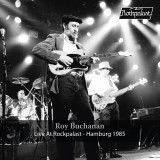
Roy Buchanan gilt bis heute als "der beste unbekannte Gitarrist der Welt". Die Rolling Stones wollten ihn als Nachfolger für Brian Jones, Eric Clapton als Gitarrist bei Derek & The Dominos - beides Angebote, die er ablehnte. Roy Buchanan war ein Meister auf der Fender Telecaster-Gitarre, sein Spiel beeinflusste Musiker wie z.B. Gary Moore, oder Jeff Beck maßgeblich. Roy Buchanan wuchs in Kalifornien auf, wo er auch Gitarre lernte. Als Teenager zog er nach Los Angeles und spielte mit Spencer Dryden (später der Drummer von Jefferson Airplane) in der Band Heartbeats. Danach tourte er mit Dale Hawkins und spielte mit Robbie Robertson (The Band), der Buchanan später als einen seiner Haupteinflüsse bezeichnete. In den 60er Jahren heiratete Roy Buchanan, zog nach Washington DC und arbeitete als Studiomusiker an mehr als 100 Produktionen, vornehmlich für Freddy Canon und Leiber/Stoller. Erst 1971 erschien sein erstes Solo-Album, was dazu führte, dass er und sein unnachahmliches Spiel auf der Fender Telecaster von Größen wie John Lennon, Eric Clapton oder den Rolling Stones als Geheimtipp gehandelt wurde. Die ab 1985 aufgenommenen Alben "When A Guitar Plays The Blues" (1985), "Dancing On The Edge" (1986) und "Hot Wires" (1987) gehören zu den Highlights seiner Karriere. Nur drei Jahre vor seinem tragischen Selbstmord wurde dieses Rockpalast-Konzert am 24. Februar 1985 in der Markthalle in Hamburg aufgenommen. Ein Auftritt, bei dem Roy Buchanans Genie als Gitarrist in einzigartiger Weise überzeugt - nicht zuletzt durch seine kongenialen Cover-Versionen u.a. von Jimi Hendrix oder Don Gibson. Es ist kein Geheimnis, dass Roy Buchanan seine Qualitäten vor allen Dingen bei seinen Auftritten ausleben konnte, von denen nur wenige aufgezeichnet wurden. Ein beeindruckendes Vermächtnis!
- 01: How Can I Help You
- 02: We`ll See
- 03: Away From The Loud Crowd
- 04: Tonight In My Dreams She Found Me And We Finally Fell In Love And It Was A Feeling Long Unknown
- 05: 15Mm Pb
- 06: Floats And Strings
- 07: End Of The Summer (Early Version)
- 08: Veronica
- 09: Louis Vuitton Vs. Guilliame Apollinaire
- 10: I Am The Monster
- 11: No Part
- 12: A Song For The Trees, For The Swell Swishy Trees
- 13: Vyznanie #1
On the outskirts of Bratislava, in the pulsating shadows of a refinery's burning chimneys, on the plot of a family house, there stood a small shack. Initially, it housed trials in domestic mushroom growing. Later, after a makeshift acoustic touch-up - lining the walls with old cardboard egg cartons - it became a shelter for music. Sensitive, evocative, nostalgic, lo-fi music by a man named Cadillac Face.
Today we would probably use the term 'safe space', but back then it was (in Cadillac's words) kutica, a cubbyhole. He hid there from a world that ached. Here, Cadillac secretly smoked, sang, and composed. And tried not to go crazy from anxiety. He wrote music unlike anything during his time.
Here, he struggled. With sound (unable to adjust it to his liking), with instruments (which he couldn't bring himself to play), with the world (with which, understandably, he was at odds).
Cadillac Face was a man who didn't belong here.
He wrote and sang in English (in a post-socialist and early-capitalist Slovakia, when command of English was no matter of course); he also wrote in Slovak (blogs and diaries, which, due to a stream-of-consciousness and surrealist style, were as incomprehensible as they were immersive and intimate); gave advice to teenagers (to their quasi-banal questions on talking forums about relationships, life and adolescence, where they were often met with ridicule and mockery); he composed electronic and noise music (at a time when no one had a clue what the abbreviation DAW meant).
This Cadillac's compilation album is not aiming to compete with/replicate Noizy Days - a compilation of Cadillac's contributions to the project Noize Konspiracy. Underground compilations circulated through a local proto-social network. Borderline music without rules - open but often inaccessible. There, Cadillac contributed mostly with experimental-electronic compositions. Noizy Days was compiled by Ďuro Ďurček, one of the initiators of Noize Konspiracy. Both Ďuro and Cadillac have been dead for years.
Songs For The Trees is a selection from Cadillac's songwriting. The most intimate of his intimate recordings. Cadillac at his most fragile, brittle, and quiet. The most romantic, the most tormented, the most painful and direct of his songs I know.
Cadillac became an anthropomorphic grotesque tree. Neither broadleaf nor conifer. Or perhaps it's a candle slowly incinerating – bored, sad, playing the guitar. A tragicomedy. Sometimes it kindles what it doesn't mean to, and it can't put itself out. Or can it?
Die britische Musikerin Lucy Rose hat 2019 ihr drittes Album "No Words Left" veröffentlicht. Es wurde von den Kritikern am stärksten gelobt und gipfelte in einer ausverkauften Show im Londoner Barbican Theater. Es war eine Platte, die in einer Art stiller Ehrfurcht wiederkäute, emotional aufgeladen und geschickt vorgetragen.
Lucy hatte geplant, in der Zeit nach dem Album einige wohlverdiente Zeit zu Hause zu verbringen, nachdem sie seit ihren späten Teenagerjahren unermüdlich auf Tournee war. Zum Ausgleich gründete sie ihr eigenes Plattenlabel, Real Kind Records, und brachte neue Platten von Künstlern heraus, die sie bewunderte und von denen sie glaubte, dass sie die gebührende Aufmerksamkeit verdienten.
Inspiriert von einer Amerikareise mit ihrem Freund und Rapper Logic, arbeitete sie später mit dem renommierten Produzenten Kwes zusammen, um die Platte fertigzustellen.
This Ain't The Way You Go Out ist ein Album, das aus der Asche der Verzweiflung erschaffen wurde, das die kleinsten grünen Triebe nährte und etwas zum Leben erweckte, das sonst verbraucht aussah. Es ist eine neue Ära für Lucy, und zwar eine Ära im reinsten, wahrsten Sinne des Wortes. Eine Künstlerin, die sich der Kraft der Musik wieder bewusst wird und dabei eine Menge Spaß hat.
- The Sage
- Deathwill
- 죽음이두려울때까지
- 풀이
- Confluence Loop
- 나락
- Noise And Cries
As part of Subtext's 20th anniversary, Subtext presents the debut album from bela as a co-release with Unsound.
bela was based in Seoul when they began to develop the framework for 'Noise and Cries (굉음과울음)'.Chewed up by a society that's slow to embrace those who exist on the margins, they and their close friends became fixated on the concept of death. "I wanted to cry, I Wanted to die," they recall. "The precariousness of living in South Korea hits different. I thought, let's share what is killing us." bela refused to lose hope, so they inventoried the sounds, experiences and emotions that had formulated their identity and wondered how this might form a different sort of South Korean musical expression. They considered the guttural death metal growls and industrial music they heard when they began to interface with Western culture as a teenager, the idiosyncratic folk rhythms that rattled away in the background of state events, the evocative, euphoric drones that had offered them solace, and the heady, cybernetic maximalism that's come to define contemporary queer club music.If this was going to be an album about death, bela knew wouldn't it be preoccupied with loss, but rooted in a deep desire to regain the will to live.
'Noise and Cries (굉음과울음)' is the first time bela has recorded their voice, and they metamorphose it from moment to moment, embracing a precarious vulnerability. Opener 'The Sage' references Jungtaryeong, two well-known arias from the Korean Pansori tradition - a folk form that is usually performed by a drummer and a singer. Screaming, whispering and rasping, bela twists borrowed words from the original arias, repurposing them to highlight the hypocrisy and brutality of patriarchal wisdom.
These bellowed phrases contrast with an abrasive rhythm that bela based on the eatmore jangdan, an irregular, traditional beat that's been remoulded into a jerky, electro-acoustic call to action. Even if the gargled Korean wordplay can't be fully understood, the mood translate flawlessly. On 'Death Will I', they reassemble the damaged relationship between a queer child and their
Die Band The Reds, Pinks & Purples aus San Francisco bleibt auf ihrem einmal eingeschlagenem Pfad und kündigt ein neues Album an, das im April erscheinen wird. RPPs Gehirn Glenn Donaldson hält es düster - wie könnte es anders sein - mit Titeln wie "What's Going On With Ordinary People", "We Only Hear The Bad Things People Say" und "Dead Stars In Your Eyes". Die DIY-Pop-Titanen The Reds, Pinks & Purples kristallisieren auf "Unwishing Well" den tragischen, sich selbst feiernden Reichtum der glücklichen Versager, der falschen Helden und der Menschheit mit all ihren romantisierten Sich-Wundern - und nehmen die Fäden der Hoffnung mit ungebremster Hingabe ins Visier. Das Album, das sich über 10 wunderschöne Stücke erstreckt, ist ein weiterer Beweis für Glenn Donaldsons makellose Beherrschung des intimen, aber dennoch ausladenden, niedergeschlagenen Pops. In den letzten fünf Jahren haben The Reds, Pinks & Purples sechs Alben, mehrere EPs und zahllose Singles veröffentlicht, die sich alle dem Ziel verschrieben haben, dem Independent-Guitar Pop neues Leben einzuhauchen, der die düsteren Teenager, College-Radio-DJs und Plattenladenangestellten der 80er und 90er Jahre animierte. Vorbilder wie The Go-Betweens, The Smiths, Magnetic Fields, Felt und andere sind offensichtliche Inspirationen, aber Donaldsons unermüdliches Talent für Stimmung und Melodie hat praktisch ein eigenes Genre geschaffen, und "Unwishing Well" ist dessen bisher reinste Verkörperung. Die erste Single des Albums ist ein großartiges Beispiel für die Weltanschauung von RPP, ein Blick auf die Zugeständnisse des Popstars durch die Augen eines Ausgestoßenen mit dem Titel "Your Worst Song Is Your Greatest Hit". Über verträumten, grauen Gitarren- und Synthie-Waschungen beklagt Donaldson: "Deine erste Idee wurde verwässert" und fügt hinzu: "Nur die schlimmsten Teile konnten gefunden werden." Weißes Vinyl und/oder CD, für Freunde von The Field Mice, Blue Boy, The Clientele, Cindy...
Original[31,89 €]
Midwestless is the fifth and newest album from St. Louis, Missouri rock failures The Conformists. Once again recorded with Steve Albini at the majestic Electrical Audio, this album marks their first recorded output as a trio. Formed in November of 1996 deep within a basement bedroom somewhere between the corn fields and strip malls of Southern Illinois, The Conformists began as four teenagers with a desire to create Ugly Rock Music. Eventually, they grew up and now dabble in moments which could even be described as quite beautiful and melodic. Elsewhere, elements of insistent repetition with an initial appearance of stasis reveal — with multiple listens — intricate details under the surface.
Recorded by award-winning mastering engineer Kevin Gray's record label, Anthony Wilson's Hackensack West is Cohearent Records' follow-up to Kirsten Edkins' Shapes & Sound album. Produced by Joe Harley and recorded all-analogue/all-tube at Gray's studio, Cohearent Recording, the AAA vinyl release is pressed on 180-gram vinyl at RTI and housed in a deluxe tip-on gatefold jacket.
From the liner notes:
The week before these sessions in the summer of 2023, I sat down each morning with the goal of composing one new song by day's end. I knew I'd soon be in the room with my dear friends Gerald Clayton, John Clayton, and Jeff Hamilton, three musicians whom I trust the most, and with whom I've played the most over the last couple of decades. I tried to imagine themes that would feel natural to us, the kinds of songs we could simply dive into without much thinking. When we headed to Kevin Gray's studio to record, I brought seven new songs along with me. Five are included on this album.
"Daido" is dedicated to Japanese photographer Daido Moriyama, who became known in the late 1960s for his grainy, sometimes blurry, high-contrast black and white images made throughout Japan. I love his pictures taken on the streets of various Tokyo neighbourhoods such as Shinjuku. His portrait of a menacing stray dong, from his series "A Hunter," is the kind of picture that, seen just once, is unforgettable. These days Daido is still out on the street making pictures, at the ripe young age of 85.
"Verdesse" has a sinuous, chorinho-like melody and rhythmic feel. The tune seems to weave and bob playfully in a space of brightness the way a grapevine seems to curl towards the sunlight. So I named it after a wine grape native to the pre-Alpine region of Isère, near Grenoble in eastern France, that makes a particularly delicious and drinkable white wine.
I wrote "Sunday," well...on Sunday. It unfolds slowly, like a good Sunday does when there's nothing to do, you can sleep in, you've got your person beside you, and you just relax into the day.
"The Lands" is dedicated to a family very dear to my heart: that of tenor saxophonist Harold Land. My mother met Harold when they were both teenagers growing up in San Diego, California. The two of them became lifelong friends, and a little later, Harold enjoyed a fruitful musical association and close friendship with my father, Gerald Wilson. Harold, his lovely wife Lydia, and their son Harold Jr. were extended family for us; they looked after me with love and care. Some of my first gigs ever as a young guitarist were with Harold's incredible band that included Oscar Brashear, Billy Higgins, Richard Reid, and Harold Land Jr.
I've loved Todd Rundgren's "Marlene" since I first heard it on his epic double-album Something/Anything. With its tender, well-contoured melody buoyed by a few special harmonic surprises, it almost seems like something from the pen of Burt Bacharach. It tells such a complete musical story. Rundgren's recorded version has a beautiful endlessly repeating tag. So we played the melody simply, and used the tag as a small staging area for a bit of improvising.
Hackensack West is our alias for engineer Kevin Gray's studio Cohearent Recording, a place inspired by Rudy Van Gelder's first studio in Hackensack, New Jersey. Located inside Van Gelder's parents' home, the musicians played in the living room! It was there, in 1954, that Thelonious Monk recorded his classic tune "Hackensack," a "contrafact" melody over the chord changes to the Gershwins' "Oh, Lady Be Good!" In contrafact-like fashion, my own bebop-spirited melody "Hackensack West" seems to nod toward the changes of a few recognizable standards, without corresponding to any particular one.
The first feature film based on the globally beloved Miraculous franchise, Miraculous: Ladybug & Cat Noir, The Movie follows ordinary teenager Marinette, whose life in Paris goes superhuman when she becomes Ladybug. Bestowed with magical powers of creation, Ladybug must unite with her opposite, Cat Noir, to save Paris as a new villain unleashes chaos unto the city.
Jeremy Zag is a producer and entrepreneur known as one of the co-founders of Zagtoon, a French animation production company. This company is behind the hit animated series Miraculous: the adventures of Ladybug and Cat Noir. He has produced over 500 episodes of TV series in his current career.
Recorded in 1957, Paris.
Original LP issue: Guilde du Jazz J-1239.
When Miles Davis heard Barney Wilen for the first time during a jam session at the Club Saint-Germain in Paris, he exclaimed: “This is the best tenor saxophone I’ve heard in Europe, he plays tenor in an authentic way, much better than many current stars in the States.”
Barney Wilen’s mother was French, his father a successful American dentist-turned-inventor. He grew up mostly on the French Riviera; the family left during World War II but returned upon its conclusion. According to Wilen himself, he was convinced to become a musician by his mother’s friend, the poet Blaise Cendrars. As a teenager he started a youth jazz club in Nice, where he played often.
He moved to Paris in the mid-’50s and worked with such American musicians as Bud Powell, Benny Golson, Miles Davis, and J.J. Johnson at the Club St. Germain. His emerging reputation received a boost in 1957 when he played with Davis on the soundtrack to the Louis Malle film Lift to the Scaffold. Two years later, he performed with Art Blakey and Thelonious Monk on the soundtrack to Roger Vadim’s Les Liaisons Dangereuses (1960). He’s probably the first non-US musician to play at the Newport Jazz Festival – it was in 1959.
In 1957 he made his very first album as leader, The Barney Wilen Quintet for the US label Guilde du Jazz / Jazztone at the age of 20. Unfortunately, this record was not widely distributed in France because Barney was under contract with the French label Vogue. This album reflects joy and sadness on an emotional level by the subtletly of Wilen’s musical imagination and physical releasing the essential siprit of jazz swing. On this so rare record, Barney plays with : on alto Hubert Fol, who recorded couple of times with Django Reinhardt. On Piano Nico Buninck, born in Amsterdam, is considered one of the best Young pianist in his country. Lloyd Thompson is a Young talented bassist who played with Lester Young, Dizzy Gillespie and Kenny Clarke. On drums Al Levitt, 25, has already toured in the USA with Charles Mingus, Lennie Tristano, Stan Getz and Lee Konitz.
For a few years Leo Robinson was the sort of hidden secret you sometimes come across in local music scenes. First in Manchester and now in Glasgow, he’d pop up regularly on DIY bills or as local support to a touring act, quietly blowing them off stage with his rich baritone vocal and homespun lo-fi tales of folklore and animism. With The Temple – his debut on PRAH Recordings – he looks set to cross over from being a cult concern.
“There's a spectrum within the album between fully mythologising or symbolising my lived experience, and just stating it in very matter of fact terms - that push and pull between the need to abstract and the need to break through the abstraction and have an honest moment with oneself” he explains. “This is one of the themes of the album as well as part of the process. The aim was to take all these anecdotal or symbolic elements and merge them into one narrative and one world, in a way that you can find your way through the record as if it were a landscape or language with its own logic.”
The record takes on a pastoral, slightly baroque nature that Robinson partly attributes to a friend screening a lot of ‘70s BBC material in his book shop that they used to hang out at. There are also elements of jazz, flickering to life in “The Spring”’s piano-led finale and coda.
Thematically, Robinson likens it to a Jungian ‘Hero's Journey’, his voice possessing a character who goes through several defined stages of consciousness. From conception and the beginning of an earthly life, the first half of the album recognises the development of the protagonist’s narrative and identity, before “The Pink Light”’s freeform departure from the hitherto more song-based suite devastatingly shatters this. The second half of the album then sees the protagonist witness “the uncontainable” water; learning that true divinity lies not in the individual self or lofty notions of gods and temples, but in the unremarkable nettles, insects and dogs on the roadside riverbank - referenced on tracks “The Cormorant” and “The Spring”.
Although now residing north of the border, The Temple was written while Robinson was finding his feet in Manchester, having moved there to go to art school as a teenager (as a visual artist, he has exhibited at the Tiwani Contemporary in London and Cardiff’s Chapter Arts Centre). As a result, many of the tracks bear out the shadows of his experiences in the northern city – at their most visible and explicit on the beautifully fragile storytelling of “The Pavement”. Written the day after the Manchester Arena Bombings, it recalls Robinson waking up to go to work on a hot summer’s day to discover that his street had been blocked off for terrorism investigations; it then progresses through the rest of his day, amidst the grimly surreal aftermath of the previous night.
Having written the chords, melodies and lyrics to the album, Robinson fleshed out the tunes by scoring out parts for the additional instrumentation, but it was only when a friend sent a demo to PRAH that he was able to fund its full recording. Guitars, vocals, piano and French Horn (the latter recorded by Lauren Reeve-Rawlings) were put down at Green Door Studios in Glasgow. Microphones were placed around the room and the sound of the musicians stepping on creaky floorboards and opening creaky doors were left audible to further the record’s live feel. The harpsichord heard on “The Serpent”, meanwhile, came from University of Glasgow lecturer David McGuinness. Strings were then recorded at PRAH Studios by Francesca Ter-Berg and Raven Bush, the Social Singing Choir adding their choral vocals to “Temple II”.
The result is an album that feels both luscious and yet intimately raw; as grand as Richard Dawson at his most panoramic but containing the rough edges and skeletal looseness of a Calvin Johnson work. At times Robinson lyrically moves towards the surreal, but ultimately this is a record grounded in reality; a true showcase of Robinson’s skill as a lyricist and songwriter.