New colour on Enter Shikari’s 2023 number 1 album.
Enter Shikari are a rock band from St Albans, UK. In 2020, they released their sixth album - Nothing Is True & Everything Is Possible - which also gave them their sixth album to debut in the UK Album Chart top 5. Frequently collecting Best Live Artist awards, Enter Shikari’s seventeen-year career thus far has seen them rise from teenagers touring the UK grassroots venues, to festival main stages and arena headliners worldwide.
It was in the Spring of 2022 that the band descended to the coastal town of Chichester, and a delipidated farmhouse, to rebuild their studio setup and capture their renewed momentum on record. Using only solar power to track the album–in what Reynolds says was to “bring back some sense of naivety” – the life-giving properties and Technicolor palate of A Kiss For The Whole World were made real. Reynolds continues: “Back to basics. This band - my best friends - bundled into an old farmhouse, miles away from anywhere. Off-grid, and ready to rediscover ourselves. This album is powered by the sun, the most powerful object in our solar system. And I think you can tell. It’s a collection of songs that represent an explosive reconnection with what Enter Shikari is. The beginning of our second act”.
Suche:the teenager
2025 Repress
Inexplicably, yet true, Lexx has never appeared in any way, shape, or form on International Feel recordings – until now. And it’s been worth the wait. Into the Stream is one of the finest endeavors of the Zurich record hound, DJ, musical mastermind, and Balearic baron to date. Bespoke for International Feel, it feels like a comforting blanket for hard times. Inspired by early 90s electronica and serene landscapes, the title track embodies those magical moments just before sunset on warm summer days — a light breeze carrying the sweet scent of earth as you cycle past a peaceful herd of white, black, and brown sheep moving in unison.
Revisiting stages of faith and devotion of one of the favorite bands of nearly every 1980s teenager, and using their formal vocabulary after a deep dive into their rich discography, Lexx delivers a respectful nod and a heartfelt bow, one that is not only a question of lust, but simply irresistible.
Last, but not least, Abun-dance is a celebration of life and love. It manages to tap into the stream and discover the true abundance of the (Balearic) bliss that surrounds us. A match made in heaven.
Lexx, we salute you. credits
- 1: In The Blood
- 2: Good
- 3: Southern Gurl
- 4: The Killer Inside
- 5: Rosealia
- 6: Cry In The Sun
- 7: Teenager
- 1: Untitled
- 2: Summerhouse
- 3: Porcelain
- 4: Heaven
- 5: This Time Of Year
- 6: Coyote
- 7: Streetside Jesus
Hard to believe that this multiplatinum record—boasting the #1 Modern Rock single “Good”—has never been widely available on vinyl. Originally self-released by Better Than Ezra in 1993 and re-released by Elektra in 1995, Deluxe provides a ticket back to that beloved jangle-pop, college radio sound. Also features the alternative hit singles “In the Blood” and “Rosealia.” 2-LP emerald vinyl pressing inside a gatefold jacket, reissued with the full support of the band!
- Everything Everywhere
- Totally
- Video (Right There With You)
- Red Sky
- Sunshine State
- Don't You Wanna Be Near Me?
- Part Of The Problem, Baby
- Take Me Away, I'm Dreaming
- Into The Wild
- Oceans Apart
Second album from North East indie rockers Fortitude Valley! "We're still very much the same band," says Fortitude Valley's Laura Kovic, describing the band's triumphant return with second album Part Of The Problem, Baby. "But the dials have all just been turned up a bit." That much is immediately apparent from the off - whereas 2021's self-titled debut was a breezily charming coalescence of effortless pop hooks and indie-punk energy, this new effort announces itself with guts and a road-earned sense of self-confidence. It's the sound of a band growing into itself; with a smartly effervescent approach to songwriting and a seemingly inexhaustible supply of swoon-inducing indiepop hooks. Over the course of Part Of The Problem, Baby's ten glorious offerings, we get treated to a miscellany of pop cultural sources of inspiration as a means of tackling themes like distance, personal growth and self-determination. For Kovic, an Australian-born musician living in the UK for almost two decades, the first of those is clearly a big one. "When I was a teenager I couldn't wait to get away," she explains, referencing her upbringing in Brisbane, "and now I can't wait to go back each time. My life is now just repeatedly visiting and then feeling sad when I leave, but knowing in my heart that I am where I'm supposed to be." Louder, wiser, in tune with each other and their identity as a collective_ Fortitude Valley may well remain the same band, but Part Of The Problem, Baby is a step forward on every level.
- B5:
- A1: Give-Upping (Ft. Julianna Barwick)
- A2: Blue Rags, Raging Wind (Ft. Amigone)
- A3: Serpentine (Ft. Cassandra Croft)
- A4: No More To See (Ft. June Mcdoom)
- A5:
- B1: It's Change (Ft. Willy Siegel, Katie Dey & Julianna Barwick)
- B2: Traces In The Window (Ft. Aspidistrafly)
- B3: Whole30 Fight Club
- B4: Disiniblud
- B6: My Flickering Gift To You (Ft. Tujiko Noriko)
Rachika Nayar und Nina Keith veröffentlichen am 18. Juli unter ihrem neuen Projekt Disiniblud ein selbstbetiteltes Album!
Rachika Nayar und Nina Keith, aka Disiniblud, treffen sich in Brooklyn, in einem Park, der so klein ist, dass man nicht aneinander vorbeigehen kann, ohne sich zu bemerken. Sie reden. Erst über Musik, dann über alles. Über das, was war, über das, was nicht mehr sein wird. Post-Lockdown-Liebe auf Distanz, als würde man sich an jemandem festhalten, den es nie ganz gab. Buddhismus, Hinduismus, ein Soundtrack, den sie beide als Teenager geliebt haben. Ein Gespräch ohne Worte. Eine Verbindung, die sich anfühlt wie eine längst vergessene Kindheitserinnerung. "Disiniblud", das selbstbetitetelte Album, das am 18.07.2025 via Smugglers Way erscheint, ist das Echo davon. Rachika Nayar und Nina Keith verfolgen unterschiedliche musikalische Ansätze, die sie im gemeinsamen Projekt Disiniblud zusammenführen. Rachika veränderte mit ihrer 2022er LP "Heaven Come Crashing" ihr Repertoire: Statt Ambient-Gitarren setzt sie nun auf maximalistische Synthesizer, tiefe Sub-Bässe und Amen Breaks. Diese Fusion aus Post-Rock und Elektronika wurde von Pitchfork als Best New Music ausgezeichnet und fand Anerkennung in Medien wie The New York Times, Stereogum, Fader und GQ - zudem eröffnete sie Tourneen mit M83. Nina Keith ist bekannt für ihren autodidaktischen Kompositionsstil. Ihr Debüt "MARANASATI 19111" präsentierte sie mit Instrumenten wie Cello, Klavier, Klarinette und Flöte, um persönliche Erfahrungen und Erlebnisse im Zusammenhang mit Gemeinschaftstraumata und paranormalen Ereignissen musikalisch zu verarbeiten. Mit neuen Veröffentlichungen wie "Come Back Different" featuring Julie Byrne erweitert sie ihr Spektrum durch den Einsatz modularer Synthesizer und komplexer Vokalarrangements.
e a5. [it could happen]
[j] b5. [as is most (bimbo it out)]
[e] a5. [it could happen]
[j] b5. [as is most (bimbo it out)]
Pioneering British electronic musician Mark Van Hoen is set to release his latest solo album, The Eternal Present, on 23 May 2025 via Dell'Orso, a remarkable collection of tracks spanning nearly three decades of recordings from 1998 to 2024.
The Eternal Present embodies its philosophical title, inspired by Joseph Campbell's concept that "Eternity isn't some later time... Eternity is that dimension of here and now that all thinking in temporal terms cuts off." The album explores music as the ultimate expression of existing in the present moment, transcending time and creating a sonic experience that is simultaneously "spectral, ghostly, melodic, harmonic, and decayed."
An influential contemporary of Aphex Twin, Autechre, LFO and Boards of Canada, Van Hoen is best known for his solo work as Locust in the mid-'90s, which helped push post-rave electronic music into newly challenging realms. His extensive discography spans releases on influential labels including R&S, Touch, and Editions Mego. Van Hoen has worked on numerous collaborations throughout his career, including with Nick Holton and Neil Halstead of Slowdive under the moniker Black Hearted Brother—their album Stars Are Our Home was released in 2013.
The Eternal Present continues the lineage of Van Hoen's most significant works, with artwork by Ian Anderson (Designers Republic) reflecting the album's "eternal present" concept with a mysterious visual approach, allowing listeners to form their own imaginary landscapes. The mastering by Stefan Betke (Pole) enhances this document of the evolution of the artist over the years as he continues to hone his signature sound. Using a host of instruments including analogue synthesisers and employing various recording approaches, Van Hoen's equipment changed dramatically over the years—from early DSP processing used on his first solo record on Apollo ‘Playing With Time’ to various synthesisers, modular systems, tape machines, and digital workstations—contributing to the album's rich sonic diversity.
Throughout The Eternal Present, ideas are woven together through spoken word quotations and abstract vocals featuring notable collaborations from Rachel Goswell on the Slowdive cover "Shine" (from 1998), Megan Mitchell (Cruel Diagonals) on "Somewhere", and session vocalists Clare Dove and Dorothy Takev on "No-One Leave" and "It's Not You (In A Way)" respectively. The use of cleverly assembled vocal samples from an "undisclosed but very famous female vocalist" on "Multiplex" (2016) and the indistinct vocalisations on the Cabaret Voltaire-influenced "Only Me" (2017), constantly challenges and disorientates the listener through fluctuating, ever-changing musical elements.
The album was recorded across multiple locations including Somerset, London, Los Angeles, and New York—even beginning compositions during flights and in airport lounges—reflecting Van Hoen's changing personal circumstances, environments, and situations throughout the years.
Of Indian-Jamaican descent, Van Hoen was born and raised in England, absorbing diverse musical influences from his neighbors—African-Jamaican on one side and Punjabi Indian on the other. "Each family played their own music frequently, and I absorbed it." His musical foundations include Brian Eno, Kraftwerk, OMD, Tangerine Dream, Japan, Cabaret Voltaire, and Cocteau Twins, later finding inspiration in My Bloody Valentine, LFO, and '90s producers Robert Leiner and CJ Bolland.
These eclectic influences are evident on The Eternal Present, which contains snapshots of different periods in his life, with changing circumstances across decades creating a variety of textures and sounds. As Mark explains: "It holds the same sonic signature as many of my solo releases and early Locust albums. It's a natural development that has taken place in the last few decades. It's even related to the earliest music I made as a teenager, although perhaps more sophisticated."
“What a remarkably affecting, majestically broad and captivating work it is..what strikes you most is the album’s myriad diversity. Outstanding” (Electronic Sound)
“Whether channelling mid- 70’s Eno, early Aphex Twin or Neu! his vivid sounds shimmer with emotional weight” (Mojo 4*)
"Musically, Van Hoen belongs to a distinguished family tree. Originally influenced by the likes of Brian Eno and Tangerine Dream, and later presaging both Autechre's glitch and Boards of Canada's pastoral IDM." (Pitchfork)
- A1: Travelin' Man
- A2: Poor Little Fool
- A3: Hello Mary Lou
- A4: Waitin' In School
- A5: Be-Bop Baby
- A6: I'm Walkin
- A7: Believe What You Say
- A8: I Got A Feeling
- A9: Young World
- A10: Lonesome Town
- B1: It's Late
- B2: Teenage Idol
- B3: It's Up To You
- B4: A Teenager's Romance
- B5: Stood Up
- B6: Never Be Anyone Else But You
- B7: Just A Little Too Much
- B8: A Wonder Like You
- B9: Everlovin
- B10: Sweeter Than You
When Elvis joined the Army in 1958, Ricky Nelson was the young man who, it was predicted, would fill the King’s blue suede shoes. He went on to become a country-rock pioneer, but everybody still remembered his pop hits. Ricky Nelson's teenage celebrity typecast him for life, but these recordings from his heyday reveal a solid musician who matured and grew over time. It’s also fair to say that his later music opened the door for the Eagles, featuring ex-Stone Canyon Band bass player Randy Meisner, to pass through. It was more than a sympathy vote that saw Nelson posthumously inducted into the Rock and Roll Hall of Fame in 1987.
- A1: Pharoah Jones
- A2: Ghost Gospel
- A3: Ill Feeling
- A4: Capital Punishment
- A5: Do Not Adjust
- A6: Cool Green Trees
- A7: Chill Scratch
- A8: Poisonous Fumes
- A9: Welcome Aboard The Starship
- B1: Keep On Runnin
- B2: Sounds Impossible
- B3: Painted Faces
- B4: The Knew Style
- B5: Chicken Wing Blues Sauce
- B6: Kool Breeze
- B7: Sexx Bullets
- B8: Soul Child
- B9: Take Off Runnin
- B10: Centurian
- B11: Bozack
- B12: Church
- B13: Splash One
- B14: Hank
- B15: 73 Goatee
"Chasing the funky symphonies that filled my head and my dreams..."
December 25th, 2023 - an Instagram post. Stimulator Jones shared half a dozen FIRE tracks from his beat tape archive. We were immediately drawn to the rough hewn boom bap.
"I'd release that", Rob commented.
Hours of material was shared and the result is this: Cool Green Trees (1999-2005). A collection of beats and loops Stimulator Jones created between the ages of 14-20 at home in his basement, bedroom and computer room in Roanoke, Virginia.
You will not believe the profound soulful genius contained within these naive schoolboy melodies.
December 25th, 1998 - 25 years ago to the day and his much-coveted Yamaha SU10 sampler was finally bestowed upon young Stimmy AKA Sam Lunsford: "I immediately hooked up a CD Walkman to the input jack and looped the beginning two bars of Grover Washington Jr.'s "Mercy Mercy Me". I don't know what exactly was so thrilling about hearing two measures of music repeating over and over but it was so infectious and hypnotizing and enthralling to me. I'll never forget that ecstatic rush of making my first loop - an uncontrollable, gleeful smile plastered all over my face." When you hear the pocket breakbeat symphonies featured here on Cool Green Trees, you'll feel the same sense of frisson.
In the wake of his Stones Throw breakthrough - Exotic Worlds & Master Treasures - Stimulator Jones was pegged by many as a 90s throwback artist. However, he literally IS a 90s artist. He's been recording music most of his life and he's now 40. He created the bulk of Cool Green Trees as a teenager. Everything before 2004 was recorded when Sam was still in school. He was in 8th grade when he made the 1999 tracks - he didn't even have his learner's permit. This album is a snapshot of a young man in a simpler time. Things were still mysterious back then and he was flying blind, relying on his ears and having to figure things out for himself: "I had no road map for becoming a beatmaker. I have been collecting music since I was a kid, I am a lifelong digger and seeker of cool and interesting sounds. I was there in the golden age of Hip Hop, and while I may have been a suburban white kid in Roanoke, Virginia, I was tuned in and I bought so many classic albums when they came out. I was attracted to Hip Hop because of the musical and poetic quality. I was hypnotized by the rhythms, partially because I was a drummer. I didn't brag about collecting my breakbeat records or making beats - it was something I did in isolation. It wasn't something I generally wanted to bring attention to and it didn't really score me any cool points. I certainly wasn't flexing on social media about it."
Hell, he can do that now!
Opener "Pharoah Jones" was inspired by Yesterday's New Quintet and Madlib's ability to capture that classic 70s sound whilst playing all the instruments. Sam created this one stoned afternoon by laying down a 2 bar loop and a shaker loop on his Yamaha SU700 sampler. He hung a microphone from the ceiling and played his Yamaha Stage Custom drum kit over the top before adding ender Rhodes and playing his dad's Selmer tenor sax through an Electro Harmonix Memory Man echo pedal. Yes! Up next, "Ghost Gospel" utilises a dope loop from a gospel record and adds some soul-funk drums overtop, whilst working that filter knob. Says Sam: "The loop reminded me of something Ghostface would rap over. The sample was in 3/4 waltz time but I flipped it for a 4/4 groove, a technique I picked up from RZA. "Ill Feeling" uses sped-up pieces from a dusty old funk record and putting them over a classic NOLA drum loop; gain chopping up a slow, bluesy 3/4 time signature and bending it to a 4/4 groove. Classy shit. "Capital Punishment" features drums tapped in live, inspired by MF Doom's Special Herbs series. "Do Not Adjust" consists loops found on a compilation of 70s French music at Happy's Flea Market, a classic Roanoke digging spot.
The sublime, evocative title track, "Cool Green Trees" was created when Sam was still living at home. He dumped samples off his SU10 into the family desktop and arranged them in a demo version of Pro Tools: "This track was sort of my ode to the DJ Shadow style of sample based production. Super spacey, slow, and moody. The heavily filtered drums were inspired by Alec Empire's 'Low on Ice' album. I later added some scratches and sounds from a Spider Man storybook record." "Chill Scratch" snags the final bit of a bossanova record and pairs it with a drum loop before adding experimental scratching run through an Electro Harmonix Memory Man echo pedal. "Poisonous Fumes" was made using a sampler, mixer and a turntable; a kind of mixtape beat collage with added scratches and sounds from various records. Using dialogue from superhero records was a nod to Madlib. "Welcome Aboard The Starship" is dark, downtempo trip-hop with a spooky bent. Sam paired a slow, hard drum loop with a guitar sample grabbed off a psychedelic rock record. To finish, he added various backwards sounds and weird atmospheric effects and a little scratching. Swoon.
Side B opens with "Keep On Runnin", made on a borrowed Roland SP202 sampler. Having always loved the sound of the Lo-Fi filter on those machines, reminiscent of the Emu SP1200, Sam always imagined Del or another of the Hieroglyphics crew rapping over this beat. You can certainly hear why. "Sounds Impossible" sees Sam experimenting with layering multiple kick samples at different volumes to create patterns similar to those heard by Showbiz and Lord Finesse during their God-level 1995 period. "Painted Faces" was made by chopping up a REDACTED record which he had gotten from Happy's Flea Market and paired it with a REDACTED drum loop. By the time Sam recorded "The Knew Style", he had acquired a shitty old 1960s portable turntable off eBay. It didn't function properly when he bought it but his brother opened it up, cleaned it out and got it working: "I remember he told me that there was a bunch of sand inside of it when he opened it up, as if its previous owner had taken it to the beach. I would take that turntable on my Happy's Flea Market digs so I could preview records...that's how I found this loop."
"Chicken Wing Blues Sauce" loops up a classic blues joint and pairs it with some REDACTED drums. A bit of filtering and arranging et voilà! "Kool Breeze", from 1999, is one of Sam's oldest surviving beats, as is "Sexx Bullets". The Roots sampled the same record, leaving Sam frustrated yet vindicated. "Soul Child" was an early SU10 creation, looping a dusty old Soul Children 45 and pairing it with 70s rock drum loops to great effect. "Take Off Runnin" was another loop found digging with a portable turntable. Paired with some boom bap drums it makes for a hypnotic head-nod groove. "Centurian" was intended to be a little beat interlude a la Pete Rock. The sample is from a sun-dappled soft-psych record and it's paired with a Robin Trower drum loop that just happens to fit perfectly. Sometimes you slap things together kind of haphazardly and magic happens. "Bozack" was the first beat Sam made using Pro Tools, his first foray into using chopped sounds instead of loops, an exciting new world. "Church" is beat interlude using a Phil Upchurch loop with the "Long Red" drums - a favourite break of Dilla et al. Sam was really on a tear in late 2004, probably because he was unemployed and phoneless and able to just make beats all day. He made "Splash One" on a borrowed Yamaha SU700 and again was experimenting with tapping the drums in live with his fingers, instead of using a loop or sequenced pattern. Channeling 9th Wonder, Sam used a water splash sound effect from a Batman record as a percussive element, hence the title (also a 13th Floor Elevators reference). The main loop is a backwards portion of one of his favourite Roy Ayers songs.
"Hank" is another fun little beat interlude thing, created on a borrowed Roland SP202 sampler with the fantastic Lo-Fi effect that resembled the Emu SP1200 at a fraction of the price. "73 goatee", from 99, is another of his oldest surviving beats, created in his bedroom with his Yamaha SU10 and his brother's Vestax MR-300 4-track recorder: "This one will always feel special. I can remember having a feeling all the way back then on the night that I created it that this was a solid beat with a catchy loop. There was something in the Fender Rhodes melody that resonated with me emotionally, and I had never heard a producer sample that portion before. I felt like I had found my own unique sound, my own unique loop. It came from an Ahmad Jamal '73. I actually even recorded myself rapping and scratching over this beat way back then, I still have that version in all its imperfect sloppy glory."
Sam explains just how much these tracks mean to him: "They all have immense historical and sentimental value and I'm proud of them. These beats come from an innocent, simple time when I was just figuring out how to craft these sounds. They're something very personal to me. They are the initial part of a journey that I really was taking *alone*. There was no YouTube. I couldn't Google shit. I didn't even know any other beatmakers, producers or DJs in my town that could teach me anything. It was always just me, alone, in a room with some equipment - chasing the funky symphonies that filled my head and my dreams. What I was doing wasn't cool. Most of my peers thought I was a weirdo and couldn't care less. Creating these sounds was an anti-social endeavour. In a sense, I felt like it was me against the world, and all I had to instruct and assist me were the recordings produced by my heroes - RZA, DJ Premier, Erick Sermon, Beatminerz, Showbiz, Diamond D, Beatnuts, Prince Paul, The Bomb Squad, Pete Rock, Q-Tip, E-Swift, Mista Lawnge, DJ Shadow, Cut Chemist, Peanut Butter Wolf, El-P and so many more...I dedicate this collection to them, and to my older brother Joe who has always been a musical and technical guiding light for me.
This was a time before every kid was a self-described producer and beatmaker, before everyone had a DAW, before Kanye and "chipmunk soul", before Red Bull beat battles, before there was any social media beyond chat rooms and AOL Instant Messenger, before Soundcloud, before SP-404 mania, before lo-fi beats to study to, before Splice, before targeted ads for MIDI chord packs, etc. In 99 when I told people that I had a sampler and made beats I was mostly met with bewildered confusion and indifference. Kids and adults alike would wonder why I got this weird machine for Christmas instead of something worthwhile like a Playstation or a mountain bike or even a guitar for that matter because at least that could be used to make "real music". Back then, sampling was still not widely respected as an art form - it was seen as lazy, talentless and unoriginal at best and outright criminal theft at worst. I had gotten respect for playing drums and guitar and things of that nature but this was a step in the wrong direction in the eyes of many."
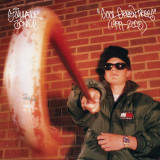
The cover photo is a picture of Sam standing on his back porch in the latter part of 1998, just before he got his first sampler. He was 13 years old, in 8th grade. His dad took the picture with his 35mm film camera: "I actually wanted to be pointing my dad's .22 pistol at the camera lens but he wouldn't let me. He gave me an old walking cane to use instead. The Tommy Hilfiger puffer jacket came from the lost and found at William Fleming High School where my mom worked as a secretary. I was thrilled when she brought it home because we never spent money on expensive name brand clothing like that - we were for the most part strictly a sale rack, bargain bin, thrift store, yard sale, flea market kind of family when it came to clothes. My watch is some cheap off-brand fake gold department store watch." Mastering for this vinyl edition was overseen by Be With regular Simon Francis and it was cut by the esteemed Cicely Balston at Abbey Road Studios to be pressed in the Netherlands by Record Industry.
The Southern Fold wurde 2014 in Kilkenny, Irland, von Sänger/Gitarrist/Songwriter Emlyn Holden gegründet. Die Band integriert Elemente aus Country, Blues und Gospel in einen Folk-/Roots-Sound und findet Einflüsse von so weit her wie Hank Williams, Nirvana und alles dazwischen. Holden griff mit zehn Jahren zum ersten Mal zur Gitarre, als er Elvis Presley hörte, und war in seinen frühen Teenagerjahren völlig in die alten Sun-Aufnahmen vertieft. Über die Roots-Rocker Creedence Clearwater Revival und den Punkrock schuf er sich eine vielseitige Inspirationsquelle. Die Entdeckung der Alt-Country-Pioniere Uncle Tupelo und Wilco brachte Country zurück in sein Songwriting und führte ihn auf den Weg zu The Southern Fold. Ursprünglich als Duo im Stil von Gram Parsons/Emmylou Harris gestartet, enthielt die erste EP der Band - "A True Ascension from the Wayward Path" aus dem Jahr 2016 - fünf eigene Songs sowie ein Cover von "Where Did You Sleep Last Night". Es war eine reduzierte Folk-Country-Nummer, gepaart mit sehr persönlichen Texten und zusätzlicher Instrumentierung durch Klavier, Cello und E-Gitarre. Es folgten einige Jahre intensiver Konzerttätigkeit, und bis zum Erscheinen des Albums "Bible Fear"s" im Jahr 2019 hatte sich die Band zu einer vollständigen fünfköpfigen Band entwickelt, die einen eher Folk-Rock-orientierten Sound hervorbrachte. In dieser Post-Covid-Zeit erlebten wir den Aufstieg der Southern Fold aus der Asche mit einigen neuen Singles ("Nothing to Fear" und "Before the Fall"), die 2024 im Eigenverlag veröffentlicht wurden. Zu Holden in einer neuen Live-Besetzung gesellen sich der ehemalige Blackbird & Crow-Gitarrist Stephen Doohan, die aus Mauritius stammende Madeline Leclezio am Gesang, der kanadische Schlagzeuger Gregor Beresford und der ehemalige Midnight Union Band-Bassist Brian McGrath. Diese Kernbesetzung spielte einige äußerst gut aufgenommene Konzerte bei den Kilkenny Roots 2024, im Whelan"s, Dublin mit den Frank and Walters und bei der britischen Ramblin" Roots Revue im April 2025.
J Mahon lässt sich von Künstlern wie Sparklehorse und Daniel Johnston inspirieren und erschafft eine erbauliche und zugängliche "Chamber-Pop"-Klanglandschaft, die an Bands wie Spiritualized und Sigur Ros erinnert, während seine gefühlvolle Stimme und seine Lyrik an andere Koryphäen wie Jeff Buckley, Townes Van Zandt und Joanna Newsome erinnern.
2023 machte sich J Mahon daran, ein Album zu kreieren, das sich wie ein "echtes" Album anfühlt. Ein Album, das Erinnerungen an die Stunden weckt, die man als Teenager mit Kopfhörern im Bett verbracht hat, während man an die Decke starrte und sich Gedanken über die Zukunft machte.
"Begin Again, Again" wird begleitet von Callum Brown (Ulrika Spacek) am Schlagzeug, Victoria RH am Gesang, Geige und Bratsche von Clementine Brown (The Penguin Cafe), wobei alle anderen Instrumente und Streicherarrangements von Jarrod geschrieben und gespielt wurden. Co-produziert und gemischt mit Syd Kemp und gemastert von Jason Mitchell (PJ Harvey, XTC, Aldous Harding).
- Pressed Flower
- One Of Each
- Against The Grain
- Bitch Heart
- Porcelain
- One! Grey! Hair!
- Vanity
- Not Long
- Margareta
- Your Take On
- High Five Handshake
- You Become
- Joyride
- Tomorrow
- Wonderland
- Life Back
- Pothole
Cassette[11,98 €]
"Different Talking", das sechste und bisher beste Album der vierköpfigen New Yorker Indie-Rock-Band Frankie Cosmos, scheint über Zeit und Raum hinweg zu existieren, so wie wir alle es irgendwie tun. Es ist eine Sammlung von Fragmenten und Erinnerungen, erinnerten Orten und neu interpretierten Gefühlen, die sich zu einem leuchtenden, summenden Ganzen zusammenfügen: eine robuste, weltgewandte Indie-Rock-Platte über das Altern und den Lauf der Zeit, die es dennoch schafft, sich hochaktuell zu fühlen. Die Sängerin, Gitarristin und Songschreiberin von Frankie Cosmos, Greta Kline, gilt seit langem als eine der gewandtesten und notwendigsten Autorinnen zeitgenössischer Indie-Musik, doch auf "Different Talking" werden ihre Texte etwas weicher, und der schräge Zynismus, der die letzten Alben prägte, weicht nun einer Anerkennung der großartigen und notwendigen Fehlbarkeit des menschlichen Gehirns und Herzens. "Different Talking" als Rückkehr zur alten Form oder zumindest zur üppigen Direktheit früherer Frankie Cosmos-Platten zu bezeichnen, wäre unhöflich, aber auch völlig falsch: Wie "Different Talking" deutlich macht, kann man nie mehr zu der Bequemlichkeit und dem Mut seiner frühen Zwanziger zurückkehren, aber diese Person lebt irgendwie immer in einem, egal wie sehr man sich verändert. Bei Different Talking geht es darum, diese Person zu finden, sie zu ehren und von ihr zu lernen. "Ein großer Teil des Albums handelt davon, erwachsen zu werden und herauszufinden, wie man sich selbst erkennt - wie zum Beispiel: 'Was ist ein Weitermachen?'", sagt Kline. "Wie kommen wir weiter, wenn wir süchtig nach einem Kreislauf sind, der uns in unserer Vergangenheit verfolgt? Das Schreiben von Songs ist nur ein Weg, um das zu überwinden". Kline ist seit ihren späten Teenagerjahren ein fester Bestandteil des amerikanischen Indie-Undergrounds. Ihre zahlreichen Bandcamp-Veröffentlichungen und ihr Debüt bei dem Indie-Label Zentropy aus dem Jahr 2014 führten dazu, dass sie als "Poet laureate of New York City DIY" bezeichnet wurde. Ein solches Etikett ist eine Menge für junge Schultern, aber es ist schwer zu leugnen, dass sie einen einzigartigen Einfluss auf die zeitgenössische Popmusik hatte. Wenn die Vorstellung, dass eine junge Frau in ihrem Schlafzimmer einen Synthesizer in die Hand nimmt, ein paar Songs ins Internet stellt und schnell zum Superstar wird, heute gang und gäbe ist, dann liegt das daran, dass Kline und ihre Kolleginnen das (weibliche) DIY-Genie normalisiert und verherrlicht haben, lange bevor sie in den Marketingbüros der Major-Labels an die Pinnwände geheftet wurden. Seitdem hat sich viel verändert: Nachdem Frankie Cosmos in den letzten zehn Jahren eine Handvoll verschiedener Permutationen durchlaufen hat, besteht die Band heute aus vier Mitgliedern: Greta Kline, Alex Bailey, Katie Von Schleicher und Hugo Stanley. Kline ist die einzige Konstante, aber Stanley, Bailey und Von Schleicher sind wichtige Mitstreiter, und es wäre falsch, die Namen "Greta Kline" und "Frankie Cosmos" synonym zu verwenden. Kline ist nach wie vor die primäre Songschreiberin, und die Musik auf "Different Talking" wurde von der Band als Ganzes arrangiert, aber dies ist das erste Album, das von der Band selbst aufgenommen und selbst produziert wurde. Nicht zufällig fühlt es sich wie eine reinere, destilliertere Aufnahme an. "Es fühlt sich an wie die beste Version von dem, was ich machen wollte, seit ich ein Teenager war", sagt Kline. "Obwohl dies in einem Wohnzimmer aufgenommen wurde, ist es so originalgetreu wie alles, was wir im Studio gemacht haben."
Lee Morgan war ein amerikanischer Jazztrompeter und Komponist. Als einer der wichtigsten Hard BopMusiker der 1960er Jahre wurde Morgan bereits in seinen späten Teenagerjahren bekannt. Er nahm mit Bandleadern wie John Coltrane, Curtis Fuller, Dizzy Gillespie, Hank Mobley und Wayne Shorter auf und spielte in Art Blakeys Jazz Messengers. Morgan blieb bis 1961 bei Blakey und begann in den späten 50er Jahren, als Leader Platten aufzunehmen. Seine Komposition „The Sidewinder“, die auf dem gleichnamigen Album enthalten ist, wurde 1964 zu einem überraschenden Crossover-Hit in den Pop- und R&B-Charts. Nach einem zweiten Engagement in Blakeys Band arbeitete Morgan bis zu seinem Tod 1972 sowohl als Leader als auch als Sideman weiter. Ursprünglich 1960 auf dem Vee-Jay-Label veröffentlicht, ist ”Here’s Lee Morgan” Lee Morgans 10. Album. Auf der Sammlung von 6 Hard Bop-Stücken wird Morgan von Clifford Jordan (Tenorsaxophon), Wynton Kelly (Klavier), Paul Chambers (Bass) und Art Blakey (Schlagzeug) unterstützt. Diese Neuauflage des Albums erscheint als Teil der Original Jazz Classics Series auf 180-Gramm-Vinyl, das bei RTI gepresst wurde, mit analogem Mastering von den Originalbändern bei Cohearent Audio und einem Stoughton TipOn Jacket.
- A1: The Town
- A2: Kick Off
- A3: Blue
- A4: Underground
- B1: Lost
- B2: Two Sips
Stirring, snaking riffs, set closer to Josh Homme’s sun-bleached Joshua Tree compound, than the English Channel-lashed grin-and-bear-it character of Cleethorpes, sound the return of Lincolnshire teen-trio, Revivalry as they get set for 2025. Rushing and rattling into 2025, targeting fresh terrain as last year’s land grab of main stage festival and support slots becomes yesterday’s news, most recent single "Lost"'s three-and-a-half minutes of abandon pushes at the door of another sunny season of big shows and wild memories. School was out in 2024 as the teenagers took off from their hometown to first tackle the festival fields of Kendal Calling last summer, becoming the youngest ever band to play the Main Stage, having been hand-picked by bookers who spotted them mid-flow at one of their earliest shows. With trailblazing single, The Town, accompanying them on their way as thousands of new music-hungry gig goers caught the band on stages of increasing scale, their online listeners kept pace. Touring from sweaty venues to major outdoor support slots, their impressive run included a first, major Manchester headline, playing at Deaf Institute as the year met it’s festive close. Delving into record collections and distinct individual tastes, the three members of Revivalry refer with comfort to Rage Against The Machine and Bring Me The Horizon, as easily as fellow documentarians of youth, Arctic Monkeys or Supergrass, when discussing their beyond-years writing.
- A1: Warfare-Bunny Lee All Stars
- A2: The Conquerer-Derrick Morgan
- A3: Bossa Moon-Ss Binns
- A4: The Return Of Jack Slade-Derrick Morgan
- A5: Annie Pama-Bunny Lee All Stars
- A6: Cutting Blade-King Horror
- A7: Revenge Of Eastwood
- B1: Melting Pot-Max Romeo
- B2: Clap Clap-The Hippy Boys Featuring Max Romeo
- B3: Walk With Des-The Des Allstars
- B4: Peace Maker-The Hippy Boys
- B5: Death Rides A Horse-The Hippy Boys
- B6: Dreams To Remember -The Hippy Boys
- B7: In The Spirit-Lloyd Chambers
2025 Repress
The Sound of Now...mentioned in 'The Return of Jack Slade' by Derrick Morgan was the sound of 1969/1970 and that sound was the sound of Jamaican Reggae.The look at the time was the Skinhead fashion borrowed heavily from the Jamaican Rude Boy style.
The Skinhead movement started around 1968 and by the following year of 1969 became the style and fashion of many British teenagers.The uniform of the Skinheads consisted of boots,braces and jeans and the upbeat Reggae sound seemed to match the style perfectly.
Never before has a music matched a look more perfectly than that of the Skinhead/Rude Boy and Jamaican Reggae sound.
So stand up and move your feet one more time to the Skinhead Reggae Sound!!!
Hope you enjoy the set....
- A1: Actarus
- A2: Connection Transpacifique Feat Sandra Zettpunkt
- A3: Wolkman
- A4: Donovan Magic Orchestra
- A5: Macadam Bubblegum
- A6: Pack Ur Patience Feat Sandra Zettpunkt
- B1: Fréquence Gaie Feat Maxwell Farrington
- B2: Lust Pill!
- B3: Memphis Sounds
- B4: Why Ya Wanna Wait Feat Eric D Clark
- B5: Danceteria Feat Alex Alkiu
Hologram Teen is the solo project (and anagram) of former Stereolab keyboardist Morgane Lhote. Her colourful playful songs are heavily influenced by disco and 80s French pop.
Initially from Paris, Morgane relocated to Los Angeles where she concentrated on her solo material. Captain Fluo is a disco-fuelled love letter to 1980s Paris and its underground nightlife, record store discoveries and the exhilaration of growing up as a gay teenager in a world of self-discovery.
Produced and mixed by Andrew Claristidge (Acid Washed) at Duca Sonora Studios in Brittany Captain Fluo is a vibrant fusion of propulsive beats, bouncy synths and funky basslines. Morgane’s signature keyboards weave through a constellation of guest vocalists including Sandra Zettpunkt, Maxwell Farrington, Eric D Clark and Alex Aikiu. From the euphoric pulse of ‘Lust Pill’ to the radio crooner nostalgia of ‘Fréquence Gaie’ each track is a portal to the dance floors and late-night airwaves of a bygone era.
Drawing inspiration from French pop icons like France Gall, Michel Berger and Louis Chedid alongside the sleek productions of Italo disco pioneers Kasso and the genre-defining touch of David Bowie, Nile Rogers, Quincy Jones and Depeche Mode, Captain Fluo is a heartfelt ride through an era when music was liberation.
The Black Parade, My Chemical Romance's follow-up to its 2004 platinum major-label debut Three
Cheers For Sweet Revenge, "is way more dramatic, way more theatrical, completely over the top, borderline
psychotic," says Gerard Way. "It's the most pure, intense thing we've ever been involved in." Producer by Rob Cavallo (Green Day), the album is a celebration of love and death and darkness. Join The Black Parade.
Girls At Our Best! were one of the greatest and most influential bands to emerge in the early 1980s as part of a new wave of independent acts. DJ John Peel championed them, playing their singles repeatedly and inviting them to record a session for his programme. Wry vocalist Judy Evans and brutal yet melodic guitarist James Alan who’d met at art college in Leeds fronted Girls At Our Best!, the proto-Indie band that formed from the ashes of Alan’s 1977 punk band SOS! Pleasure, the sole album, reached number two in the Indie Chart. It was an album so different from the rest of the post-punk indie pack that you can still play it now and completely baffle new listeners. As John Peel said about Roxy Music, it just doesn’t seem to relate to anything else.
- Breakdown
- Dying Witch
- Don't Wanna Go Home
- You Just Liked My Item
- Is It Even Gonna Snow
- Find Things Beautiful
- Dusk In The City
- Teenager
- Living In A World Like This
What We Have Now is a love-letter to New York City, written by a breaking heart weathering the deep indigo night of a soul realizing dawn will release it from the dried tears of youth. There is no brighter or harsher wasteland of self-discovery than the one in which we see that childhood is a dream and the now is something we will have to fabricate alone, from those broken mirror shards of memories in service to a world that does not seem to know how to care for us any longer. Full of feeling and shepherded by Clara's intensely honest vocals, these songs transcend place and time to share a universe of wonders beneath the hard-wrought questioning of the deeply human condition we are all living within. Clara Joy is a songwriter full of melody and vision. These home recordings were made by Clara in NYC between 2020 and 2024. The songs were then arranged, mixed & mastered by Kramer in December 2024 in his studio in the mountains of North Carolina. Clara is at the dawn of her career and Shimmy-Disc is proud to bring this amazing work to the world. This creation is a beacon on the murky horizon of this Pyrocene age landscape we find ourselves traversing.