Joshwa heads to Hot Creations for his label debut, unveiling his two-track ‘Bass Go Boom’ 12”.
After surging into the spotlight in 2022 via a series of high-profile collaborations alongside Lee Foss, CID, and Martin Ikin, UK-based DJ/producer Joshwa is looking to keep things moving for 2023 as an artist at the top end of Beatport’s top-selling tech house charts. Up next, late March brings a milestone release as he steps out on Hot Creations for the first time, delivering a pair of heavily requested and lively productions across his ‘Bass Go Boom’ EP.
A boisterous and low-end heavy production loaded with vocal samples and spiralling synths, ‘Bass Go Boom’ is a tined for peak time use, while ‘Supersonic’ offers by rolling drums, and vibrant glitches and pops.
Поиск:the top c
Все
- A1: Rashoumon (Feat The Blue Jeans)
- A2: Sado Okesa (Feat The Bunnys)
- A3: Tsugaru Goze (Feat The Blue Jeans)
- A4: Tsugaru Jongara Bushi (Feat The Blue Jeans)
- A5: Abashiri Bangaichi (Feat The Blue Jeans)
- B1: Dannoura (Feat The Blue Jeans)
- B2: Tsugaru Hanagasa (Feat The Blue Jeans)
- B3: Taiyou Ni Sakebou (Feat The Blue Jeans & Rui Takahashi)
- B4: Komoro Oiwake (Feat The Bunnys)
- B5: Amefuru Machikado (Feat The Blue Jeans)
Japan's guitar hero Takeshi Terauchi reworks traditional songs and lets everything go wild with his magnificent and frenzied guitar sound. Enter the electrifying world of Eleki!
Gatefold 180g heavy vinyl LP, reverse board print. Comes with extensive liner notes by Japanese pop culture writer Julien Seveon (Cinexploitation)
All tracks licensed by King Record Co., Ltd., Tokyo, Japan.
Mastering and lacquer cut by Jukka Sarapää at Timmion Cutting Lab, Helsinki, Finland.
Artwork by Nker
The aftermath of World War II gave rise to a global phenomenon that saw new generations of young people rise up determined to forge new paths from their elders – culturally, politically, and musically. Japan was no exception and the recent past made the local youth angrier, hungrier and even more determined to fully experience something different from their parents. The country caught on to the early rock & roll craze almost in tandem as it was happening in the States. Teenager Chiemi Eri singing "Rock Around The Clock" and Kazuya Kosaka with "Heartbreak Hotel" were among the first to make what would soon be called Rokabiri accessible to a large audience. Teacher and parent associations showed concern regarding this new music when teenagers started missing school to attend afternoon shows – one of which most notably being the Nichigeki Western Carnival where all the top names of Rokabiri played to sold out audiences. But by the end of the 1950s, the youth of Japan had moved on to something else entirely: Eleki.
The 50s and 60s were a time of rapid change that saw trends come and go. Japan, like all other industrial countries, saw its youth move from one musical sensation to the next. And in the early 60s, there was one band in particular that created a distinct new flavor: The Ventures. Leaving behind vocals and focusing strictly on the impact of the sound of the electric guitar, The Ventures drove kids crazy all over the world. Other bands followed, most notably The Shadows, but in Japan, no other instrumental rock band managed to leave such an impact. The sound of The Ventures helped boost guitar sales in Japan and soon hundreds of cover bands were popping up all over the country. The Eleki Bumu (electric boom) was now in full effect with Takeshi Terauchi emerging as its first and greatest guitar hero.
Terauchi was born January 1939 in the prefecture of Tochigi, north of Tokyo. His mother taught music and played the shamisen – a traditional Japanese stringed instrument – while his father ran, among other things, an electronics shop. Their respective professions were to be decisive in the path that Terauchi would later take. Serendipitously, at the age of five, Takeshi was given his first instrument – a guitar. His destiny sealed, he quickly began experimenting with different tools from his father's shop to give his instrument a stronger sound. The technological approach came from his father, the technique from his mother. Terauchi's signature playing style owes a lot to his mother's instrument of choice, as he attacks the notes on his guitar as one plucks the strings of a shamisen.
This exceptional compilation you are holding in your hands explores some of the best works by Takeshi Terauchi, recorded between 1966 and 1974, where the guitar hero looks inwards to Japan for inspiration. A meeting between traditional folk songs and the unique way Terauchi and his band play: the content is explosive, inspired, and highly addictive! The 60s and 70s were undoubtedly Terauchi's finest hours, and in the late 60s, one Japanese critic said that Terauchi was not only the best guitarist in Japan, but also in the world. You can now find out why.
- A1: Omni Trio - Soul Promenade (Nookie Remix)
- A2: Prisoners Of Technology - Trick Of Technology
- B1: Dope Skillz - 6 Million Ways
- B2: Amazon Ii - King Of The Beats
- C1: Wax Doctor - Heat
- C2: Roni Size / Reprazent - Watching Windows (Dj Die Gnarly Instrumental Mix)
- D1: Jonny L - Wish U Had Something
- D2: Optical - Bounce
In 2021 Velocity Press published Who Say Reload: The Stories Behind the Classic Drum & Bass Records of the 90s, an oral history of the records that defined jungle/drum & bass straight from the original sources. The deluxe coffee table book has since sold thousands of copies and prompted many to comment that it should have an accompanying soundtrack.
Now author Paul Terzulli has compiled a Who Say Reload album. However, where the book focused solely on classics and anthems, the compilation takes a different route and offers up a selection of top-quality tunes from some of the scene’s most respected artists and labels.
Like the book, the album covers the genre’s nineties golden era, and the many styles of D&B are represented. Pioneering producers and crowd-pleasing favourites sit alongside a few sought-after obscurities by the unsung heroes of the scene. Most importantly, there are some absolute bangers!
The 16 tracks are spread over two volumes of 2 x 12"s, and there is also a 13-track digital version, taking you on a journey through music forged from raw breakbeats and basslines that soundtracked a culture of all-night raves, specialist record shops and pirate radio stations.
Jungle/drum & bass is approaching its 30th anniversary. Its sonic and cultural legacy is still being felt today. There’s still plenty of old music that might be “new” to some, and these tunes still pack as much of a punch as they did back in the day. That unique energy generated by a combination of breakbeats, bass and creativity never gets old.
Produced in conjunction with Above Board distribution. All tracks mastered from original sources and fully licensed. Mastering by Beau Thomas @ Ten Eight Seven Mastering. Liner notes from Who Say Reload author Paul Terzulli. Photography by Eddie Otchere. Artwork and design by Protean Productions.
- A1: Everybody (You Can Dance Remix Edit)
- A2: Into The Groove (You Can Dance Remix Edit)
- A3: Like A Prayer (Remix/Edit)
- A4: Express Yourself (Remix/Edit)
- B1: Vogue (Single Version)
- B2: Deeper & Deeper (David's Radio Edit)
- B3: Secret (Junior Luscious Single Mix)
- B4: Frozen (Extended Club Mix Edit)
- C1: Music (Deep Dish Dot Com Radio Edit)
- C2: Hollywood (Calderone & Quayle Edit)
- C3: Hung Up (Sdp Extended Vocal Edit)
- C4: Give It 2 Me (Eddie Amador Club 5 Edit)
- D1: Girl Gone Wild (Avicii's Umf Mix)
- D2: Living For Love (Offer Nissim Promo Mix)
- D3: Medellin (Feat Maluma - Offer Nissim Madame X In The Sphinx Mix)
- D4: I Don't Search I Find (Honey Dijon Radio Mix)
Madonna is the first and only recording artist to have 50 number 1 hits on any single Billboard chart. To celebrate this historic milestone, Madonna has curated a new collection titled Finally Enough Love which includes her favourite remixes of those chart-topping dance hits that have filled clubs worldwide for four decades.
This collection highlights You Can Dance, Madonna’s first ever remix collection. Celebrating 35 years this year, You Can Dance has sold more than five million copies worldwide and is still the second best-selling remix album of all time. The collection also pays homage to “Everybody,” Madonna’s first single. Each remix is newly remastered for the collection by Mike Dean, who produced Madonna’s two most-recent studio albums, Rebel Heart (2015) and Madame X (2019). Along with those rarities, this album also introduces the “Offer Nissim Promo Mix” of “Living For Love” as its first official release.
- A1: Kimina - Aliamka
- A2: Kmru - I Had The Impression
- A3: Barno - Calm, Chaos
- B1: Manch!Ld - Escape From Nyawawa
- B2: Budalagi - Mura
- B3: Ngat Maler - Nam Lolwe
- B4: Nyokabi Kariuki - Anjiru
- C1: Nabalayo - Mtwapa Siren
- C2: Avom - Waza
- C3: M3 - I Choose Violence
- C4: Munyasya - Borrowed Cadences
- D1: Snse - Ng'eetich
- D2: Mr Lu - Kaa Tukachome
- D3: Rushab Nandha - Sunset Over Vienna
In Kenyan cultural communities’ musical performance has always been linked with a long chain of related events and ideas. Music was often used to illuminate a specific topic and its implications to society. Through this method of explanation, musicians were able to reveal several underlying social concepts that determined people’s behaviour towards each other and the community.
This common recurring theme was seen mostly in ceremonies. African musical productions are abstract configurations that demonstrate a common fundamental creative principle of mediating the physical and metaphysical worlds. INSHA is centered on time and the evolution/relationship of these cultural-creative influences. The compilation inquires aspects of traditional cultures, physical or metaphysical from communities in Kenya, and act as inspirations and sonic paraphernalia. INSHA serves as a bridge between the past and future music creators on a more fundamental level than usual record keeping.
A limited edition 7' release by Francisco Aguabella, both tracks taken from the rare Hard Hitting album released 1970 on EPSILON records. These two have never been on 7' before, includes wonderful re-production cover of the original sleeve
Track A1 - 'Desire' - Amazing vocal club classic which has stood the test of time always in demand. Never before pressed and released as 45. A massive dancer and a must have release.
Track B2 - 'Casa fuerte' - if you like Latin jazz dancers this is for you - top class banger.
The godfather of soul found himself dipping into jazz on this classic but lesser-known album, Soul On Top (Verse By Request Series). Now getting a proper reissue treatment it is sure to convert many new fans to his abilities across the six sizzling tracks from this 1969 album, which includes the classic 'It's a Man's, Man's, Man's World' and a new version of 'Papa's Got A Brand New Bag'. Brown provides the vocals to a 18-piece big band set up that was led by drummer Louis Bellson and arranged by Impulse! star Oliver Nelson. Brown always said he was a jazzman at heart and this goes some way to proving that, with saxophonist Maceo Parker adding plenty of vital swing.
- A1: You Keep Me Hangin’ On
- A2: You’re Gone (But Always In My Heart)
- A3: Love Is Here And Now You’re Gone
- A4: Mother You, Smother You
- A5: I Guess I’ll Always Love You
- A6: I’ll Turn To Stone
- B1: It,S The Same Old Song
- B2: Going Down For The Third
- B3: Love Is In Our Hearts
- B4: Remove This Doubt
- B5: There’s No Stopping Us No
- B6: Love Is Like A Heat Wave
T he tenth studio album by was released by Motown in 1967. It includes the #1 hit singles The Supremes "You Keep Me Hangin' On" and "Love Is Here and Now You're Gone". All of the songs were
written and produced by Motown's main songwriting team of Holland–Dozier– Holland.
Most of the album was recorded during the spring and summer of 1966. However, several songs date back to the summer of 1964. The album also includes covers of H-D-H penned songs for Motown
artists The Isley Brothers ("I Guess I'll Always Love You"), The Four Tops ("It's the Same Old Song", "I'll Turn to Stone"), and Martha and the Vandellas ("Heat Wave"). This was the group's final album fully
overseen by the songwriting team
Coming straight from the United States, soul music became an essential genre in the mid-1960s. In France, Claude François, marked by the discovery of serial hits from the legendary Tamla-Motown label of Detroit, became one of its first promoters. Proposed in their French adaptations, the pulsating rhythms and irresistible melodies from the Four Tops, the Supremes and other champions of soul music spread across France. On stage, Claude François also adopted the spectacular performances of his models from across the Atlantic and surrounded himself with the Claudettes, dancers-choristers echoing the famous Ikettes of Ike & Tina Turner. An exceptional showman and performer! Ads –London Macadam Reviews –London Macadam, R2
BBE Music’s highly-acclaimed J Jazz Masterclass Series continues with an album that unites three J Jazz legends with a young musician beginning their professional career. Recorded and released in 1986, ‘Approach’ is both sophisticated and experimental in equal measure, balancing serene ambient moments with thunderous and dynamic explosions of energy. ‘Approach’ was originally issued on the Art Union label and sees bass uber-maestro Isao Suzuki, percussion and drumming icon Masahiko Togashi, and keyboard wizard Hideo Ichikawa join together with neophyte guitarist Akira Shiomoto to deliver a first-class showcase of contemporary jazz across five tracks, demonstrating their individual talents working as one unified ensemble. Suzuki’s deeply resonant and pliant basslines move sinuously across the album, supporting Togashi’s ebullient flashes of percussion and Ichikawa’s lush textures and colourations; topping it all off is the young Shiomoto’s guitar adding melodic texture and shine. Opening with ‘Make Trip’, Ichikawa’s gentle introduction makes way for a change of gear as Suzuki’s bass drives the band along before Togashi’s drum and percussion centrepiece solo leads to the outro. The plaintive and bluesy ‘Otari’ follows next, with Ichikawa’s piano flowing around and between the rhythmic undertow from Suzuki and Togashi. Things turn slightly more experimental on ‘Mysterious’ as Suzuki, the piece’s composer, turns to arco bass effects and Ichikawa employs synthesiser and electronic textures to add colour to the palette.
Krieg, steigende Energiekosten, Inflation. Eine politische Klasse und ein gespaltenes Land. Das Unbehagen nach dem Brexit, Akte nationaler Selbstbeschädigung und verhängnisvolle Realitätsfluchten. Verzweiflung, Wut und Entfremdung. War es jemals schlimmer da draußen?
Willkommen bei „UK Grim”. Das zwölfte Album der Sleaford Mods baut auf den einzigartigen, aufrührerischen Stärken früherer Alben auf und verfeinert sie gleichzeitig auf eine neue Weise. Es handelt sich um nichts Geringeres als eine Band und eine Stimme ihrer Generation, so wie es The Jam, The Clash oder Public Enemy zuvor waren.
Begonnen haben die Arbeiten zum neuen Album in den Lockdowns von 2021. Schließlich setzte man die Arbeit im JT Soars fort, dem Arbeitsraum und der Kreativzelle der Band, und vollendet „UK Grim“ dann im Heimstudio des musikalischen Kopfes Andrew Fearn. Das Album präsentiert die Band in ihrer makellosesten Wut, gepaart mit wilder Poesie. Nach „Spare Ribs“ von 2021 (ihrem dritten UK-Top-Ten-Album seit 2019 und ihrem bisher erfolgreichsten) ist es, wie alle ihre Platten, eine Diagnose der Krankheiten der Gesellschaft.
Obwohl „UK Grim“ größtenteils vor den Turbulenzen des Jahres 2022 entstanden ist, nimmt es die Erschütterungen einer Gesellschaft, die den Verstand verliert, auf unheimliche Weise vorweg, erzählt von einem Mann, der entschlossen ist, sich mit Heucheleien auseinanderzusetzen, insbesondere mit seinen eigenen. Die 14 Tracks klingen nach knarzigem Punk, widerspenstiger Elektronik und Elementen von Hip-Hop. Sie beschreiben die Realität in zu brutaler Unverblümtheit, um nur einfache Protestsongs zu sein. Sie sind zu Vinyl gewordene Wut, aufgekocht von den Großmeistern des pointierten Zorns – den Sleaford Mods! Wie bei den „Spare Ribs“ Kollaborationen mit Billy Nomates und Amy Taylor helfen auch bei „UK Grim“ Freunde aus: Florence Shaw von Dry Cleaning ist auf dem schaurigen „Force 10 From Navarone“ zu Gast. Williamson ist ein Fan der Band und sagt: "Sie erinnert mich wirklich an die frühen Sachen, die ich gemacht habe, einfach die Art und Weise, wie sie ein einziges Wort benutzt, um eine ganze Geschichte zu erzählen." Perry Farrell von Jane's Addiction rappt auf dem bizarren „So Trendy“, einem Song, von dem Williamson sagt, er sei "sehr vorsichtig... ein wirklich seltsamer Track“.
Seit ihrem Durchbruch-Album "Divide and Exit" von 2014 hatten die Sleaford Mods immer mehr Gelegenheit zum offenen Austausch, sowohl im In- als auch im Ausland. Sie sind eine unermüdlich arbeitende Band, die mit ihren minimalistischen Liveshows unter anderem 2021 in der 10.000 Zuschauer fassenden Nottingham Motorpoint Arena auftrat. Zu den weiteren Meilensteinen ihres Erfolgs gehören Auftritte im US-Late-Night-TV, Headliner-Auftritte auf Festivals und Chart-Platzierungen in ganz Europa mit „Spare Ribs”. Ein großer Bewunderer ist Iggy Pop, der der Band mit einer persönlichen Version des Drogenrausch-Grand-Guignols „Chop Chop Chop” Tribut gezollt hat.
Krieg, steigende Energiekosten, Inflation. Eine politische Klasse und ein gespaltenes Land. Das Unbehagen nach dem Brexit, Akte nationaler Selbstbeschädigung und verhängnisvolle Realitätsfluchten. Verzweiflung, Wut und Entfremdung. War es jemals schlimmer da draußen?
Willkommen bei „UK Grim”. Das zwölfte Album der Sleaford Mods baut auf den einzigartigen, aufrührerischen Stärken früherer Alben auf und verfeinert sie gleichzeitig auf eine neue Weise. Es handelt sich um nichts Geringeres als eine Band und eine Stimme ihrer Generation, so wie es The Jam, The Clash oder Public Enemy zuvor waren.
Begonnen haben die Arbeiten zum neuen Album in den Lockdowns von 2021. Schließlich setzte man die Arbeit im JT Soars fort, dem Arbeitsraum und der Kreativzelle der Band, und vollendet „UK Grim“ dann im Heimstudio des musikalischen Kopfes Andrew Fearn. Das Album präsentiert die Band in ihrer makellosesten Wut, gepaart mit wilder Poesie. Nach „Spare Ribs“ von 2021 (ihrem dritten UK-Top-Ten-Album seit 2019 und ihrem bisher erfolgreichsten) ist es, wie alle ihre Platten, eine Diagnose der Krankheiten der Gesellschaft.
Obwohl „UK Grim“ größtenteils vor den Turbulenzen des Jahres 2022 entstanden ist, nimmt es die Erschütterungen einer Gesellschaft, die den Verstand verliert, auf unheimliche Weise vorweg, erzählt von einem Mann, der entschlossen ist, sich mit Heucheleien auseinanderzusetzen, insbesondere mit seinen eigenen. Die 14 Tracks klingen nach knarzigem Punk, widerspenstiger Elektronik und Elementen von Hip-Hop. Sie beschreiben die Realität in zu brutaler Unverblümtheit, um nur einfache Protestsongs zu sein. Sie sind zu Vinyl gewordene Wut, aufgekocht von den Großmeistern des pointierten Zorns – den Sleaford Mods! Wie bei den „Spare Ribs“ Kollaborationen mit Billy Nomates und Amy Taylor helfen auch bei „UK Grim“ Freunde aus: Florence Shaw von Dry Cleaning ist auf dem schaurigen „Force 10 From Navarone“ zu Gast. Williamson ist ein Fan der Band und sagt: "Sie erinnert mich wirklich an die frühen Sachen, die ich gemacht habe, einfach die Art und Weise, wie sie ein einziges Wort benutzt, um eine ganze Geschichte zu erzählen." Perry Farrell von Jane's Addiction rappt auf dem bizarren „So Trendy“, einem Song, von dem Williamson sagt, er sei "sehr vorsichtig... ein wirklich seltsamer Track“.
Seit ihrem Durchbruch-Album "Divide and Exit" von 2014 hatten die Sleaford Mods immer mehr Gelegenheit zum offenen Austausch, sowohl im In- als auch im Ausland. Sie sind eine unermüdlich arbeitende Band, die mit ihren minimalistischen Liveshows unter anderem 2021 in der 10.000 Zuschauer fassenden Nottingham Motorpoint Arena auftrat. Zu den weiteren Meilensteinen ihres Erfolgs gehören Auftritte im US-Late-Night-TV, Headliner-Auftritte auf Festivals und Chart-Platzierungen in ganz Europa mit „Spare Ribs”. Ein großer Bewunderer ist Iggy Pop, der der Band mit einer persönlichen Version des Drogenrausch-Grand-Guignols „Chop Chop Chop” Tribut gezollt hat.
- A1: We Are Waiting
- A2: Studio Time
- A3: Will Blast
- A4: Hit A Muthafucka
- A5: Are U Ready 4 Us
- A6: Prophet Posse
- A7: Motivated
- B1: I Ain't Cha Friend
- B2: Watcha Do
- B3: Spill My Blood
- B4: Who Got Dem 9'S
- B5: Gunclaps
- B6: Three-6 In The Morning
- C1: Tear Da Club Up '97
- C2: Late Nite Trip
- C3: Bodyparts 2
- C4: Flashes
- C5: Neighborhood Hoe
- C6: N 2 Deep
- D1: Anyone Out There
- D2: Land Of The Lost
- D3: Weed Is Got Me High
- D4: Tear Da Club Up (Dj Herb's Crunk & Tear It Up Mix - Radio Edit)
- D5: Late Night Tip (Dj Herb's Ride Out Late Nite Remix - Radio Edit)
Repressed again. On the West Coast, gangsta rap held sway in hip-hop as the 21st century began. The alternative and conscious rap music of the early-to-mid-90s had all but faded into the underground. The scene was set for a comeback, perhaps as a backlash to the perceived violence and misogyny of gangsta rap's content. Leading the resurgence of alternative hip-hop were groups like Jurassic 5, and recent signees to Capitol Records; a West coast trio that had been building steam underground since the early 90s called Dilated Peoples. Anticipation was high for the release of the debut album from Evidence, Rakaa, and DJ Babu. (Of the influential turntablist collective Beat Junkies.) When The Platform arrived in May of 2000 it was met with critical and underground acclaim, as well as affording Dilated Peoples their first Billboard chartings. It featured a back-to-basics sound with a heavy debt to the old-school hip-hop ethos, the kind of sound that harkened back to the early days of legends like De La Soul & A Tribe Called Quest. Hits like "No Retreat" and "The Platform" were bolstered by Evidence & Rakaa's subtle, abstract wit, and swift, adroit wordplay, while DJ Babu provided production chops and dextrous scratches. On The Platform the trio were joined by the likes of B-Real, Tha Alkoholiks, Everlast, Planet Asia, and many more providing guest vocals, while boasting guest production from The Alchemist & Kut Masta Kurt, among others. Since its 2000 release this influential record, which heralded the return of alternative hip-hop, has never seen a vinyl reissue. With that, Get On Down-always on top of giving the greatest hip-hop albums their due-is proud to present this re-release of The Platform. The rhymes are still fresh, the production is still pristine, and the album is now back on vinyl for the first time in 17 years.
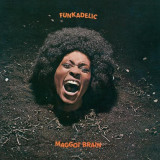
- A1: Maggot Brain
- A2: Can You Get To That
- A3: Hit It & Quit It
- A4: You & Your Folks, Me & My Folks
- B1: Super Stupid
- B2: Back In Our Minds
- B3: Wars Of Armageddon
- C1: Maggot Brain Live 1971
- D1: Maggot Brain Bmg Dub
Deluxe edition[39,71 €]
1971 and Black America was luxuriating in the soft soul
of the O’Jays, the Temptations had just left behind their
flirtation with psychedelia, James Brown was
explaining Soul Power, Sly & the Family Stone were
having a Family Affair, and Marvin Gaye was asking
‘What’s Going On’.
• In their own inimitable way, Funkadelic were laying
down their own statement about the ecology of the
planet in the opening of lead and title track ‘Maggot
Brain’, turning it into an elegy for the Earth in the
ensuing heart-wrenching extended Eddie Hazel guitar
solo – one of the most radical records of the period.
• The album also spawned two Top 50 singles with the
usual Funkadelic wry observational humour of ‘You
And Your Folks, Me And My Folks’ and ‘Can You Get To
That’. And just in case you think things have
normalised, the set closes with nine minutes of the
chaotic sound collage ‘Wars Of Armageddon’.
• This 50th anniversary edition includes a second 12”
with two versions of the title track. Side A features the
live version from Meadowbrook from the same year that
the studio album came out. Jump forward 46 years to
the “Reworked by Detroiters” release and side B has
the BMG Dub, showing the enduring quality of one of
the great guitar records of all time.
• This issue is mastered from fresh transfers of the tape.
• Facsimile gatefold sleeve.
• 180gram black vinyl
In November 2022, GOLD PANDA released his long-awaited album "The Work". It includes the two singles "I've Felt Better (Than I Do Now)" & "Plastic Future". These were remixed by Gold Panda's friend and companion Daniel Avery and the one and only Skee Mask respectively.
On Side A, British techno producer Daniel Avery turned "I've Felt Better" on its head. With a perfect balance of light and shadow, it now races at top speed like a techno bullet train through a blizzard and a multitude of barren landscapes, while the listener sits in an empty wagon, safe from the threat of nature just inches away. On Side B, Skee Mask, the enigmatic versatile electronic producer gives 'Plastic Future' a totally new identity. Known for his rolling rhythms combined with electronic soundscapes, Skee Mask slams the breaks on this remix in a big way. It's a magic combination that begs the question how did it take these 2 producers so long to collaborate like this? A match made in heaven!
Aretha Franklin’s twelfth studio album, released in early 1968. It was her third R&B chart-topper and reached number two on the Billboard 200, tying with I Never Loved a Man the Way I Love You for her highest-charting album on the pop chart. The album also included some of her biggest hit singles: "Chain of Fools", and "(You Make Me Feel Like) A Natural Woman".
The next EP on Blank Mind comes from DJ ojo. His first fully- fledged EP is the result of a mission to find balance between warmth and weirdness, structure and disorder; resulting in dripping, humid tracks with presence and a subtlety that holds sway well beyond the edge of the dancefloor.
From the crisp percussion, and elastikated synths that form ‘Coiled up’ to the furtive corridors of dubby drums and space of ‘Precise device’, there’s a staggering level of detail at work in ojo’s microcosms. Funkiness abounds in the accents on the grooves and the garnishes which quiver in and out, and quite
often you’ll hear motifs which call to mind something classic, but rendered wholly new. Take the steppas impressions drizzled into dislocated soundsystem flambé ‘Skip top’ on the B2 - a prime example of how to trigger a dopamine response without repeating someone else’s trick.
Recorded at the height of the global pandemic, and at a time when remote communication was becoming increasingly prevalent, "Choreological Exchanges" is part of Hastings Of Malawi's continuing investigations into the medium of communication itself. Prior to telephony becoming digital, all phone calls were routed through mechanical telephone exchanges, and the majority of the sounds on side one are the sounds of these exchanges and some of the voices of the engineers who worked with them.
Hastings Of Malawi make strange records and this one is no exception although it has a more linear narrative structure in opposition to what critics have described as their Dadaist approach. Their records certainly resist genre classification and do not really fall into the category of music. Hastings Of Malawi have themselves described previous records as films without light, radio plays and as poems. This one is a dance - a dance that takes place within the chain, or pipe, that is brain - mouth - telephone - telephone exchange - telephone - ear - brain.
"It is a dance record but not in the way that these are usually understood. An invitation to dance appears twelve minutes in on the first side. It is a dance within the wires, movement around noise used as a sculptural material rather than unwanted signals and a joyful exploration of sonic materiality. The second side begins with the voice of a telephone engineer, who states that in the top floor switch room of the exchange is the only vestige of human control. Is this top floor switch room the human brain? The sounds on this side, float between the mechanical telephone exchange and the body where the messages are created and interpreted - it is an exploration of the relationship between thought and the material devices in which telephone sound is propagated and transformed. Side two ends with a long list of randomly generated words created by digital voice synthesis." - HOM
Lawrence Hayward knew that he wanted to be a pop star as a teen, and he devised a plan to release ten albums and ten singles over ten years to make that dream come true. A particular and determined individual, he would only be known as Lawrence from that day forward. His hopes for stardom would be pinned on his newly formed band, the succinctly named Felt. Soon signed to Cherry Red Records, Lawrence’s achingly cool vocals and the group’s way with walking melodies were evident on their debut for the label, “Something Sends Me To Sleep.” This compilation collects material from Felt’s Cherry Red period of 1981 to 1985, kicking off with that confident start, assembling numerous high points, and closing with their biggest hit, “Primitive Painters.”
This phase of the band is defined by the songwriting partnership and unique interplay of Lawrence and guitarist Maurice Deebank, with Deebank’s stylish and confident playing the envy of many of their counterparts. He delivers a constant string of shimmering hooks that wrap themselves around and over top of Lawrence’s more traditional beat combo song structures, as if trying to fit four songs worth of ideas into a pre-set radio friendly cutoff time. It works wonderfully as Lawrence always counters with a solid bedrock.
In one of many brushes with the brass ring, in 1984 Felt recorded versions of “Dismantled King Is Off The Throne” and “Sunlight Bathed The Golden Glow,” for the newly formed and Warners-backed label Blanco y Negro, in hopes that the band would follow their A+R man Mike Alway to the executive suite. Despite putting forward two of their finest songs, it was not to be. While major label dreams had to remain on the shelf, fans were delighted to be able to hear these beautifully stripped down and more direct versions when this compilation was released a few years later.
By 1985 the Felt roller coaster was something Maurice Deebank was constantly getting on and off of. As Gary Ainge always kept the beat, and Lawrence never lost focus, they were joined by local teen prodigy Martin Duffy on keyboards, filling out the arrangements, and following Deebank’s racing six-string cascades in “The Day The Rain Came Down” you can even hear a tiny hint of the next phase of the band in Duffy’s organ before Maurice swoops to the finish. The newly expanded Felt would then put everything they had into making one of the defining releases of the 80s: “Primitive Painters.”