Search:the village choir

Styles
All
  • 1
The Village Choir - Along The Beach PT1 / Sweet Hot Lips

Holy Grail alert! Two stunning sweet soul cuts from New York based quintet, The Village Choir. Blending latin, soul & jazz, two dancefloor swayers of serious class. This super soulful 70’s 7 inch has regularly been changing hands for over £500 on the second hand market & for the first time ever, it has been officially licenced and lovingly reissued on heavyweight 7 inch vinyl for this RSD exclusive release. For the dancers and the romancers!

out of Stock

Order now and we will order the item for you at our supplier.

13,87

Last In: 13 months ago
THE VILLAGE CHOIR Feat. LEE McDONALD - ALL PURPOSE LOVE / SWEET HOT LIPS
 
2
also available

Black vinyl[14,16 €]


Cleveland Parker, his birth-name, later changed to Lee McDonald was a phenomenal soul singer who sadly passed away in February 2018. His manager, producer, writer and friend, Ron Foster has been on a mission to gain wider recognition of his exceptional talent through various independent record label releases; this included one on IZIPHO - the gospel rouser 'How Long'. Lee McDonald was the lead singer of The Village Choir and we are thrilled to feature on a 7' single two much admired songs - 'All Purpose Love' and 'Sweet Hot Lips' (the 12" version). Please note all reasonable efforts to contact the copyright holder have been made and IZIPHO SOUL will not take any profit from this record; Lee's widow will financially benefit from this project.

pre-order now26.11.2021

expected to be published on 26.11.2021

14,16
THE VILLAGE CHOIR Feat. LEE McDONALD - ALL PURPOSE LOVE / SWEET HOT LIPS
 
2
also available

Red vinyl[14,16 €]


Cleveland Parker, his birth-name, later changed to Lee McDonald was a phenomenal soul singer who sadly passed away in February 2018. His manager, producer, writer and friend, Ron Foster has been on a mission to gain wider recognition of his exceptional talent through various independent record label releases; this included one on IZIPHO - the gospel rouser 'How Long'. Lee McDonald was the lead singer of The Village Choir and we are thrilled to feature on a 7' single two much admired songs - 'All Purpose Love' and 'Sweet Hot Lips' (the 12" version). Please note all reasonable efforts to contact the copyright holder have been made and IZIPHO SOUL will not take any profit from this record; Lee's widow will financially benefit from this project.

pre-order now26.11.2021

expected to be published on 26.11.2021

14,16
MADALA KUNENE & SIBUSILE XABA - KWANTU

Bringing together the elder statesman of the Zulu guitar Madala Kunene and internationally acclaimed Sibusile Xaba, kwaNTU pulls two generations of South African guitar mastery into a single point of focus. Under-represented on recordings outside of South Africa, Madala Kunene (b. 1951), the ‘King of the Zulu Guitar’, is revered as the greatest living master of the Zulu guitar tradition. Sibusile Xaba, whose collaboration with Mushroom Hour Half Hour reaches back to his first recording in 2017 (Open Letter To Adoniah/Unlearning), has garnered international acclaim for his unique voice and virtuoso guitar stylings, which bring together multiple South African guitar lineages in an original, spiritualised fusion. Collaborating with Mushroom Hour and New Soil for kwaNTU, the two players come together to weave a filigree sonic fabric which reaches down to the heartwood of Zulu guitar music but moves resolutely outward, building on the past to create a deeply rooted statement about present conditions and future travels. kwaNTU – which can be roughly translated ‘the place of the life-spirit’ – is also conclave of teacher and student, as Xaba has been taught by Kunene for the last decade. Meditative, rich and sonically sui generis, kwaNTU finds these two musicians linking up within the inimitable space of sound and spirit that they share through Kunene’s teaching.

The great masters of South African music have not all had equal exposure. For many years the generation of musicians who were exiled during apartheid took centre stage, as the regime made it very difficult for those at home to be heard. More recently, a new cohort of important voices, especially in jazz, has broken through to international consciousness. But for the generation of musicians in between – those who shone like beacons in the most difficult final years of apartheid and immediately afterward – international recognition has been slow in coming.

Madala Kunene, ‘the King of the Zulu Guitar’, is among this number. A revered figure for current generations of South African musicians, Kunene began his recording career in 1990, at the bitter end of apartheid, with a now classic self-titled LP for David Marks’ storied Third Ear imprint. Born in 1951 in Cato Manor, near Durban, he had determined to be a musician from early childhood, and by the time he first entered a recording studio he had already had a long career as a popular performer. His virtuoso absorption and transformation of the venerable Zulu maskanda guitar tradition and his richly spiritualised approach to music immediately marked him out as someone special, and in the years that followed, Kunene cemented his position as one of South Africa’s musical elders. He is without doubt the grand master of the Zulu guitar tradition, but his sound and sensibility ranges far beyond it into varied sonic terrain, and he has collaborated with a wide range of musicians both at home and abroad. Now in his mid-seventies, he remains a shining light for those that are making music in contemporary South Africa.

‘He is really an amazing person,’ says the guitarist Sibusile Xaba, who has been mentored by Kunene for over a decade, and now invites a collaboration with him on kwaNTU. ‘As a mentor, he's really powerful in showing us the way. For us to have this opportunity to make music together and have a project together is really a blessing to me.’

Xaba himself grew up in Newcastle, KwaZulu-Natal, where his mother had been in a band and his father sang in a church choir, and from early childhood Xaba played homemade tin guitars. He only later realised that music was his calling. ‘I just loved music. I was fortunate. My parents loved music. And when it was time for me to leave home and go to study outside Newcastle, I knew that music was what I wanted to do. There was no second option. It was just music.’ Moving to Pretoria to study music formally, Xaba committed himself to his craft, developing a unique style that draws on both US jazz masters such as Wes Montgomery and Jim Hall, and the rich and varied heritage of the South African guitar, from inspirational jazz players such as Allen Kwela and Enoch Mthalane, to the music of the Malombo groups and Dr. Philip Tabane (Xaba has previously collaborated with Dr. Tabane’s late son, Thabang), and the Zulu guitar tradition embodied by Kunene.

‘I was really in love with the jazz guitar, I really admired it, and I was digging a lot in that direction,’ says Xaba, recalling his first encounter with Kunene’s music, over a decade ago. ‘And then one day on my timeline, Kunene popped up, and I was like – “What's this sound?” I was so connected to it. It really touched me deep. I started checking out his records, and then I found out he's from the same region as I am, which is Zululand.’ After Kunene played a show at the Afrikan Freedom Station in Johannesburg, Xaba make contact with him, and visited him at home in Durban. They struck up a friendship, and Xaba became the elder’s student, as Kunene began to pass on his knowledge and his inimitable way of playing.

kwaNTU is a tribute to this relationship and the deep learning that has defined it. The album was recorded in Zululand in the town of Utrecht, at a cultural centre called Kwantu Village, which gives its name to the album. ‘It's such a broad word,’ Xaba says, ‘but the elders teach us that Ntu is basically an energy, almost chi, an energy, a force that all living beings have within them. It's a living energy, so kwaNTU is like, almost the place of this energy.’ The two men sequestered themselves for five days of jamming, improvising and planning, and then the session was recorded in one take over a single night, with Gontse Makhene joining on percussion and backing vocals and Fakazile on vocals. Other voices and overdubs were later added in the studio in Johannesburg.

The result is a rich and meditative recording that finds two generations in a deeply engaged dialogue. Teaching and passing on his knowledge, the elder Kunene has brought Xaba into a space of sound and knowledge that they now share; Xaba’s own practice of deep communion with nature and his dedication to his musical craft make him the perfect interlocutor for Kunene. The result is an album that foregrounds the two musicians engaged at the highest levels of responsive listening, sympathetic unity, and collaborative concentration. Bringing an elder statesman of South African music to an international listening audience for the first time in decades by pairing him with one of South Africa’s most important new voices, kwaNTU is a meeting of generations and a powerful demonstration of musical lineage and continuity.

‘Before music, there is sound,’ Xaba observes, speaking of Kunene’s unique approach to music. ‘And sound is like a common compartment…it's not restricted to particular people or particular geographic places, you know what I mean? It's sound. Everybody can hear it. So when he constructs that sound into music, I think everybody resonates with the energy behind his construction of sound into song. Here at home, we really love him for preserving our history through the guitar, through his stories as well the music, the songs that he writes. We really, really admire him.’

In Stock

On Stock and ready to ship

23,95
Bobby Gillespie - 5 Hectares LP

"In the summer of 2021 I was introduced to the French filmaker Émilie Deleuze in Paris. She asked me if I would create a soundtrack for a film she intended to make titled Cinq Hectares. When I asked Emilie what the story of the film was about she replied "It's a comedy and road movie , about a guy driving a tractor across France". I love road movies and I had never composed a movie soundtrack before so I immediately said "yes". I recorded the soundtrack in the summer of 2022 in east London with the help of producers James Rand & Thomas Gorton of @godcolony and a bunch of great young musicians they introduced me to, one of which @alwhite who now plays saxophone with Primal Scream. Émilie's film is an absolute cracker and I'm very proud of the soundtrack. Hope you enjoy listening to it as much as we did making it”

Bobby Gillespie, June 2024

pre-order now16.08.2024

expected to be published on 16.08.2024

28,99
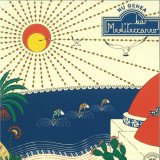
Nu Genea - Bar Mediterraneo LP

repress !

Four years after Nuova Napoli, Nu Genea are back with Bar Mediterraneo, a new album and journey, which projects the sounds of the Neapolitan duo formed by Massimo Di Lena and Lucio Aquilina even further.

Nu Genea's Bar Mediterraneo is an idea of a shared place where people meet and fuse together; a space that leaves its doors open to travellers and their lives, always exposed to the whims of fate. Some of this can be experienced through the multitude of sounds that come together in the tracks, layers of different acoustic instruments, voices and synthesizers merging in a unique musical blend.

Opening up to the voices of many different people, separated by languages but united by the sea and the music, Nu Genea's hometown, Napoli, becomes a true place of encounter.

You can hear this all along. In "Gelbi", a gorgeously deep and propulsive Ney flute plunges into murky waters of the melancholic Tunisian dialect sung by Marzouk Mejri. In "Marechia'", unbridled happiness and sun ooze from the delicate vocals of Célia Kameni and create an acrobatic bridge between French and Neapolitan language. In "Straniero", your soul is arrested from the moment the slow spell-binding mandolin ignites the hypnotic patterns recorded by the legendary Afrobeat drummer Tony Allen. In "Bar Mediterraneo", the title track, bittersweet guitar’s riffs, analog waves and choirs are overwhelming the song giving you what you would like to hear on a boat trip along the Amalfi Coast.

Nu Genea couldn't afford to overlook their firmly anchored roots into the Neapolitan culture and its dialect with "Tienaté", where the power of neapolitan language (interpreted by Fabiana Martone) supports those quarter-tone strings and the uncessant folk-disco groove that spreads to the entire song. In "Praja Magia", repetitive mandolin riffs lead the song, giving space to a choral yet tight vocal line that speaks of Varcaturo, a village close to Napoli. In "Rire", a volley of poetic, deceptively laidback, lyrical fury interpreted by Sicilian Marco Castello intimately combines with a highly musical, multi-textured instrumental backbone and the swoon of a chanson in its heart. In "La Crisi'', the lyrics of a Raffaele Viviani’s poem from 1930 have been adapted to a laidback jazz-funk groove in full NG style. In "Vesuvio", revaluing the evocative verses and powerful mantra of Vesuvio, Nu Genea re-adapted to the dancefloor a folk song by the working-class band E’ Zezi from Pomigliano D'Arco, combining the voices of a school choir with Jupiter-6 arpeggios and bold percussions.

Bar Mediterraneo is the place where people constantly return to transform curiosity into participation, tradition into sharing, unfamiliar into familiar. When travellers come through its “doors”, carrying their treasures of words and emotions, they aren’t strangers any more. They take part in a shared experience, enriching themselves and others by leading to unexpected musical journeys.

out of Stock

Order now and we will order the item for you at our supplier.

20,97

Last In: 48 days ago
VARIOUS - KIOSQUE D'ORPHEE - UNE EPOPEE DE L'AUTOPRODUCTION EN FRANCE - 1973/1991 LP 3x12"

"For a long time, I'd come across these discs without really understanding what connected them, apart from a button and that famous logo designed by René Dessirier. Then, with a little more digging, I discovered the "self-production" link. For choirs, schools, folk singers, young pop groups, popular homes and even great composers who engraved unique copies of certain recording sessions...

The French equivalent of the English "Derby Service", the Kiosque d'Orphée, formerly at 7 Rue Grégoire de Tours in the 6th arrondissement, was taken over by Georges Batard in 1967 and moved to 20 Rue des Tournelles in the 4th arrondissement of Paris. The adventure lasted until 1991. Georges Batard was a sound engineer who used a Neumann tube engraver to engrave acetates from the tapes he received, before printing the precious vinyls in the press factories of the day, where he was able to produce very small runs of between 50 and 500 copies.

Of course, there were other structures for releasing his records, such as Voxigrave or, later, FLVM, but none of them had so many records in their catalog. Le Kiosque d'Orphée was neither a label nor a publisher, but a structure that allowed you to press your own vinyl, at a time when it was quite an adventure to get your first 45 rpm or 33 rpm album released!

Georges Batard was described as passionate and conscientious. His son, bassist Didier Batard, wrote of him:
"Georges was passionate about recording and reproducing the stereo sound of his great passion, music. He paid close attention to distortion rates, signal-to-noise ratios, response curves, rise times and other damping factors in audio equipment. He was looking for the exact reproduction of concert hall sound in his living room (with the same sound level, if possible...). In the late '50s/early '60s, he found other sound enthusiasts in AFDERS (Association Française pour le Développement de l'Enregistrement et de la Reproduction Sonores). He became its honorary president. Every Saturday afternoon, its members met to test au- dio equipment. Their opinions were published in the monthly Revue du Son.

All you had to do was send in your tapes and choose the number of record copies you'd like to take home with you, so you could finally share your creations and, in a way, exist. You could opt for a generic sleeve, available in several colors, directly customizable with your name and credits, or you could design your dream sleeve yourself in your living room or at a printer's.

This "Do It Yourself" temple gave birth to some superb pouches. Stencilled, hand-written, illustrated with paintings, drawings, illustrations by friends or girlfriends of the time, photo prints hastily stuck in the middle of a blank, white sleeve, on which the traces of time would leave their imprints, so that collectors and the curious would come and buy them decades later, with the promise of a musical discovery, unfortunately not always fulfilled...

What most of these records have in common is the youth of their songwriters, whether or not they've had a career. Stories of buddies, of getting by and dreams of glory made up this catalog. Most of them were amateur productions, both in terms of the level of the musicians and the quality of the recordings, made on a two-track or, the ultimate luxury, a 4-track in a teenager's bedroom or parents' living room.

It was the beginning of the home studio, thanks to the advent of the Revox portable tape recorder. A bit of a shaky DIY system, but, in return, the luxury of setting no limits: one-sided tracks, no outside censorship, no artistic director, no manager, no Barclay or EMI/Pathé Marconi logos...

When you finally had your own record, you could give it away or sell it to friends, family or after concerts. You could also drop it off at the nearest record shop, with undisguised pride.

It was also a calling card that could be sent to radio stations or music labels, in the hope of launching a career...

Many of the protagonists in this story tried to sign with labels, but in those days, bridges were not so easy to build between one's hometown, or even one's village, and the major or more specialized label that might have released these records. At the time, the advertisements published in the press by the Kiosque d'Orphée opened up the field of possibilities for provincial composers. It was now possible to make their own record, without having to go through the process of signing with a label.

Some of the composers who have gone on to make a career have used this channel to release their first record or parallel projects (Claude Engel, Dominique A, Andy Emler, Michel Deneuve, Claude Mairet, Mick Piellard, Tristan Mu- rail...) and sometimes even single or very limited pressings of work or promotional copies (Bernard Parmegiani, Jef Gilson...).

This album is the conclusion of a long investigation, begun six years ago. It took a long time to find the records, scattered all over the place, in the homes of collectors and sometimes the musicians themselves, and then to listen to them, sometimes painstakingly, to unearth these moments of grace.

From this work, 23 tracks remain, but there are dozens of others that could have been included, so we had to choose, and the choice had to be as universal as possible. This selection is obviously not objective, but I hope you'll like it.

Today's music is raw, touching and powerful. "

Jean-Baptiste Guillot - Born Bad Records

pre-order now15.03.2024

expected to be published on 15.03.2024

35,50
ORBITING HUMAN CIRCUS - QUARTET PLUS TWO LP

Orbiting Human Circus' new album is called Quartet Plus Two. What is Orbiting Human Circus? It is the continuing evolution of Julian Koster (Neutral Milk Hotel, The Music Tapes), whose music and storytelling under this moniker have encompassed immersive theater and a Night Vale Presents podcast, as well as more traditional albums. Central to the album are the "two" referenced in the title: North and Romika, the singing saws, whom Koster doesn't "play" so much as encourage. "I think saws sing like angels," says Koster. "I always have. Since I was a little boy. When you encourage them to sing, they do so earnestly and beautifully. It's an honest and real sound." The origins of Quartet Plus Two are as magical and seemingly unlikely as everything else in Koster's career. While walking through New York's Central Park, he stumbled upon Gauvain Gamon and Kolja Gjoni_a standup bass player and drummer, respectively_playing Gershwin and Mingus, and a musical partnership was born. Pianist Benji Miller rounds out the titular quartet, with Koster's longtime collaborators Robbie Cucchiaro (horns) and Thomas Hughes (orchestral arranging and chimes) of The Music Tapes also contributing to the record. The music they make together is at once familiar and unrecognizable, as Koster and Orbiting Human Circus interpret jazz compositions by Irving Berlin, Duke Jordan, George and Ira Gershwin, and others, alongside Koster's three originals. The use of the term "composition" is intentional and speaks to Koster's relationship with the music of Quartet Plus Two in far more evocative terms than "cover" or "standard." "To me it was always magical that there were these people called `composers' who created symphonies and popular songs for other people to breathe into life and existence all over the world and throughout time," he explains. "They traveled into our homes as sheet music, endless recorded interpretations, or were passed from hand to hand, village to village, like folk tales, changed by every hand that touched them. That music was something that came to life in our own living rooms and lives, songs that our grandmothers might have sung in a choir that we might sing just as earnestly. I just think it's nice, and I would love to share that feeling in any way we can."

pre-order now17.11.2023

expected to be published on 17.11.2023

23,49
ORBITING HUMAN CIRCUS - QUARTET PLUS TWO LP

Orbiting Human Circus' new album is called Quartet Plus Two. What is Orbiting Human Circus? It is the continuing evolution of Julian Koster (Neutral Milk Hotel, The Music Tapes), whose music and storytelling under this moniker have encompassed immersive theater and a Night Vale Presents podcast, as well as more traditional albums. Central to the album are the "two" referenced in the title: North and Romika, the singing saws, whom Koster doesn't "play" so much as encourage. "I think saws sing like angels," says Koster. "I always have. Since I was a little boy. When you encourage them to sing, they do so earnestly and beautifully. It's an honest and real sound." The origins of Quartet Plus Two are as magical and seemingly unlikely as everything else in Koster's career. While walking through New York's Central Park, he stumbled upon Gauvain Gamon and Kolja Gjoni_a standup bass player and drummer, respectively_playing Gershwin and Mingus, and a musical partnership was born. Pianist Benji Miller rounds out the titular quartet, with Koster's longtime collaborators Robbie Cucchiaro (horns) and Thomas Hughes (orchestral arranging and chimes) of The Music Tapes also contributing to the record. The music they make together is at once familiar and unrecognizable, as Koster and Orbiting Human Circus interpret jazz compositions by Irving Berlin, Duke Jordan, George and Ira Gershwin, and others, alongside Koster's three originals. The use of the term "composition" is intentional and speaks to Koster's relationship with the music of Quartet Plus Two in far more evocative terms than "cover" or "standard." "To me it was always magical that there were these people called `composers' who created symphonies and popular songs for other people to breathe into life and existence all over the world and throughout time," he explains. "They traveled into our homes as sheet music, endless recorded interpretations, or were passed from hand to hand, village to village, like folk tales, changed by every hand that touched them. That music was something that came to life in our own living rooms and lives, songs that our grandmothers might have sung in a choir that we might sing just as earnestly. I just think it's nice, and I would love to share that feeling in any way we can."

pre-order now17.11.2023

expected to be published on 17.11.2023

24,79
Alogte Oho & His Sounds of Joy - Mam Yinne Wa LP

Born to a Frafra father and an Akim mother, he grew up in the rainforest of southern Ghana before moving up to the land of the Frafra in the savannah of northern Ghana as a young boy. Growing up in Namoo, his father's village of origin, he was deeply impressed by the glorious moments he experienced during the services at the village's church. All that singing and drumming ensured he was thefirst at church every Sunday, long before the service even started.

His only wish at the time was to be old enough to join the church choir. When he turned thirteen his wish came true and he instantly had hisfirst studio experience, as the choir recorded a series of cassettes on which he performed.

After he hadfinished school he focused on his own career as a Frafra-Gospel artist. In 2007 he released hisfirst album, but it took anotherfive years for him to have his break through as a leading singer. Since the release of his third album in 2012, which contained the original version of "Mam Yinne Wa", he was booked for almost all of the festivals and celebrations in the region and was also invited to almost all of the countless Frafra communities which exist all over Ghana.

In 2013 Max Weissenfeldt visited Bolgatanga, the capital of the Frafra for thefirst time. When he stepped out of the bus at the main market a song by Alogte was playing loudly through some big speakers. He was immediately captured by the music and arranged to meet with Alogte. After a short introduction they both agreed to do some recordings.

Weissenfeldt had some instrumentals with him, so he charged his laptop well, packed his microphone and Alogte drove with him through the savannah into the backcountry of the Frafra land. When they had arrived in Namoo, Max set up his studio and Alogte assembled the Sounds of Joy. The result was "Zota Yinne", which became Oho'sfirst single released on Philophon in 2014. For some reason the song became a hit in Reggae sound system circles and is already a very sought after collectors item.

The same year Weissenfeldt returned to Ghana from Germany with some fellow musicians to play an extended tour through Ghana alongside Alogte Oho & His Sounds of Joy and Kologo master Guy One (Guy One - #1, released on Philophon in 2018). During that tour he learned a dozen songs by Alogte. Following this, 2016 saw the release of the follow up single "Mam Yinne Wa". In the same way as the locally released version pushed Alogte to the top of Frafra- Gospel singers, this newly produced version made him a global player.

Mam Yinne Wa - God, You Love Me So. It looks like that somebody has heard him!

out of Stock

Order now and we will order the item for you at our supplier.

19,29

Last In: 3 years ago
DjeuhDjoah & Lieutenant Nicholson - 2+ LP 2x12"

2+ is the 3rd album of DjeuhDjoah & Lieutenant Nicholson. A new sound stopover in their funky trip since their beginning with T’es qui ? album in 2015. This new building stone prolongs their critically acclaimed album Aimez ces airs released in 2019.

What’s new? 15 tracks , eclectic, soft, deep, and funky, where electro, soul even afro beat touches , or bossa nova live together harmoniously. DjeuhDjoah & Lieutenant Nicholson make praise of slowness (« Pas si vite »), address environmental issues (« Coeur béton »), social statements on (« Police », « Raie publiques », « clic »), childhood on (« Bola Mba ») , the post colonial relation between Africa and the other continents. Love is also really well presented ( « Thé à la menthe «, « Ping Pong ») and why not sailing to Essaouira in Morocco ?

During the summer of 2020 , when the french national radio asked them to perform a live cover , our french funky duo chose the famous « Né quelque part » by Maxime Leforestier released in 1987. Their Suave interpretation, haunting beat and spatial & languid atmosphere give a fantastic tribute to this beautiful melody and strong lyrics. They found a very intimate link with chorus in Zulu, harking back to the strong connection they made with South Africa during their last tour.
It became clear that they needed to put this track on their new album , as their now club remix classic « Bwe Dlo « performed with their friend David Walters.

After their tour in South Africa, they met « Cool Affair », the musician and electro house producer in Johannesburg who made a beautiful remix of « Aimé Césaire » which close perfectly this new opus. Recorded at « Le triangle des Bermudes » the home studio of Lieutenant Nicholson, produced and mixed by him with a electro analog sound dear to them. Horns, live drums, percussions and vocal choir were recorded at Bastille village at the label basement , even during the pandemic… On 2+, we can also hear the swirls of Antoine Berjeaut at the trumpet and bugle, magic keys from Florian Pellissier , two new flagships of the French jazz scene.

Once again, DjeuhDjoah & Lieutenant Nicholson push the boundaries of the traditional « French song « to make the world dance. They want to keep their international audience , from Australia, Japan, Usa, South Africa to name a few the dance floors of the world will ignite with this new album . The French touch will still shine !

out of Stock

Order now and we will order the item for you at our supplier.

25,50

Last In: 3 years ago
DJEUHDJOAH & LIEUTENANT NICHOLSON - PAS SI VITE 7"

The funky French duo is back with a new 7 inch!
Once again, DjeuhDjoah & Lieutenant Nicholson push the boundaries of the traditional "French song" to make the world dance. Two funky electronic flow, ready to electrify clubs worldwide. Our two
"chansonniers" are the leaders of "Afropeanité" and the Creolity.
The song "Pas si vite" champions deceleration and positivity during our complex period.
"Caipirinha" is a soft tribute to Bossa Nova, the dream of hot and sweet destination in a cold winter.
Recorded at « Le Triangle des Bermudes » the home studio of Lieutenant Nicholson, produced and mixed by him with a electro analog sound dear to them. Horns, live drums, percussions and vocal choir were recorded at Bastille village at the label basement, even during the pandemic…

out of Stock

Order now and we will order the item for you at our supplier.

11,72

Last In: 15 months ago
Moontype - Bodies of Water

The three players in Chicago’s Moontype orbited each other for years before they came in phase. Bodies of Water, their debut album for local label Born Yesterday, documents travel, insecurity, friendship, and the titular element—all of which are representative of the band members’ strong connection to place and to one another. “Being rooted in the landscape became important to me while studying geology, which completely changed how I think about the world,” offers songwriter, vocalist and bassist Margaret McCarthy of the album’s central themes. The arrangements themselves feel like open-hearted negotiations; sparse fingerpicking gives way to saturated tube-screaming as naturally as the changing of tides. Over twelve tracks, Moontype revels in the woozy concoction of its many influences, but always lands on punchy hooks, shifting between arrangements both spacious and mystifying without abandoning their conversational warmth.

Conservatory students at Oberlin College’s prestigious music program, each member focused on exploring different sounds. Guitarist Ben Cruz, who came up on classic rock shredding and migrated into jazz performance, admired the indie pop of Fountains of Wayne, the groundbreaking composition work of pianist Vijay Iyer, and the genre-morphing folk of heavy hitters like Neil Young and Joni Mitchell. He played in several projects alongside Emerson Hunton, who’d drummed from age six and entrenched himself in the Twin Cities improvised music scene before even heading to college. Margaret—who grew up outside of Boston playing piano, singing in choirs and writing on guitar—spent her time creating knotty, riot grrrl-and-hyperpop inspired songs for bass and voice, as well as noise soundtracks for art installations. Inspired by artists like Adrianne Lenker and Gillian Welch, she recorded the EP bass tunes at home in an apartment over the town’s optician, releasing it upon graduation. A week later she migrated even farther west to Chicago, where Ben and Emerson had already enmeshed themselves in several projects, from avant garde ensembles to a country group.

Ben was instantly impressed by Margaret’s songs, at once “challenging and unlike anything I had played before.” The duo decided to try performing together, but knew this special music would be even better fortified with drums. Emerson was the obvious choice—as Ben puts it, “He’s our great friend and also the best drummer we know. Who else do you call?” Moontype-as-trio gigged around town, eventually embarking on a first fall tour in Emerson’s Prius. On that trip, they felt the music morph into something living, and the care and trust between them intensified. They decided to put together songs for a record, recorded at the end of 2019 with Jamdek Recording Studio’s Doug Malone, a dependable collaborator whose patient process perfectly captured the magic of their newfound familiarity. While Margaret’s skeletal demos still informed the bulk of Moontype’s full-band debut (some of which are re-recordings of bass tunes cuts), the resulting arrangements are songs reborn and strengthened by the three musicians’ absorption of one another’s ideas.

On Bodies of Water, Margaret’s soothing, unadorned alto is often peppered by the gliding, eerie harmonies of her bandmates. “We love the act of singing together,” explains Ben, who describes it as “connecting and grounding and wholesome.” The push-pull search for common ground characterizes the instrumentals as well. Round basslines occupy higher octaves, trading space with guitars chugging in lower registers, and all the while drums break apart and glue back together in idiosyncratic grooves that never lose the pocket. Of the complicated rhythms that sometimes result: “Any mathy moments are based on how the lyrics fall naturally, which feels like it frees us up from having to stay in one time signature,” says Emerson. “Rhythmic elements never feel like they’re being added in, more like they’re already there and we just float on through.”

Touring’s restlessness informed these songs, but so did the DIY scene that welcomed Moontype to Chicago—including, according to Margaret, the “wild harmonies” of Ohmme, the “deadpan explanatory rock” of Ratboys, and the “luxe math rock pattern music” of The Knees. Working at beloved venue Sleeping Village inspired Margaret’s observational vignettes; “We are sitting at the desk and you are mixing all the bands,” she reports in the middle of the dextrous folk hammer-ons of “3 Weeks,” gently admitting, “I am trying to have fun and I am trying to get paid” in a world of bikes, trucks, and velvet. “About You,” a robust power-popper written about a post-gig romp around Richmond with artist Bebé Machete, opens with a Phair-ian quip: “Looking at you with my fuck me eyes / Do you wanna get inside of mine?” Meanwhile, the spectre of lost camaraderie looms over “Ferry,” an atmospheric and anthemic standout that questions, “If I’m not your best friend / then who am I to anyone?” Alongside water, this preoccupation with friendship is a focal concern lyrically, but the palpable love between Moontype’s players is essential in communicating that desire for connection, and all three members are dedicated to exploring sound and meaning organically and together. Care and generosity are at the core of Moontype, and Bodies of Water is a clever album full of insightful music, as cosily enveloping as it is incisively honest.

pre-order now02.04.2021

expected to be published on 02.04.2021

21,81
Sary Moussa - Imbalance

Sary Moussa

Imbalance

12inchOP052
OTHER PEOPLE
09.03.2020

Sary Moussa is an electronic musician who has been active in the Beirut underground scene since 2008. He released his first full-length album Issrar in October of 2014 under the moniker radiokvm. His latest record Imbalance, finds Moussa revisiting the soundscapes of his childhood; from the echoes of political unrest, to Greek-Catholic chants, and the quiet nights of a secluded Southern village. The album combines sound design with intricate melodic arrangements to create a choir of synthesizers and noise singing in and out of sync.
In addition to his solo work, Moussa has also composed music for theatre and dance performances, short films, and museum installations.

out of Stock

Order now and we will order the item for you at our supplier.

18,45

Last In: 5 years ago
Kaidi Tatham presents 12 Senses - Movement EP

'A love project' from the heart and mind of UK broken beat stalwart and iconic keyboard maestro Kaidi Tatham, alongside an outstanding group of Danish musicians led by percussionist Peter Stenbæk.

12 Senses debuts with the Movement EP, a record drawing on jazz-funk, broken beat and disco, laced with the distinctive melodic progressions and boogie touches Kaidi Tatham is known for. Recorded over an intensely productive three-day session, which produced 20 plus songs, this EP is a first taste of what's to come from this creative gathering.

With recent records on First Word, Sound Signature and 2000Black, plus a brand new solo album 'It's A World Before You' it appears there is no letup in Kaidi Tatham's prolific output spanning a 2 decade long career, that has seen him work with artists such as Bugz In The Attic, 4Hero, Slum Village, Jazzy Jeff & Will Smith, Amy Winehouse, Leroy Burgess, Moonchild, Soull II Soul, Amp Fiddler, Mr Scruff and Dego, to name but a few.
Touch starts with the heavily syncopated rhythms of drummer Anders Meinhardt, accompanied by a bed of airy Rhodes, synths and guitar on top of a ruthless, disco-tinged bassline. Life evolves on a spiritual and hypnotic tip with a driving lick that just keeps on building, sprinkled with beautiful intertwining organ, piano and synth solos by Kaidi and pianist Poul Reimann. Movement slows the mood to a soul-tinged stepper with soothing choir and deft touches from the trumpet of Rasmus Juel. Kaidi changes up the pace on his remix with a smooth boom bap vibe before hitting the halfway point and switching up to his signature, breakneck latin bruk funk.12 Senses evolved from yearly marathon concerts at the Copenhagen Jazz Festival, arranged by percussionist Peter Stenbæk, who simply e-met Kaidi Tatham and insisted on him coming to Denmark to share the festival stage. Over the course of five years the friendship and musicianship between the two has gone from strength to strength, reinforced by the skilled musicians around them; drummer Anders Meinhardt, guitarist David Rosenkilde, bassist Andreas Hatholt, trumpeter Rasmus Juel and pianist Poul Reimann. The record was brought to life by Morten Trust (aka. Soulmagic), who kindly contributed his heart, studio and mixing skills to Movement.

out of Stock

Order now and we will order the item for you at our supplier.

10,04

Last In: 7 years ago
Various - Technicolour Paradise: Rhum Rhapsodies & Others Exotic Delights
 
47

It Was A Musical Cocktail Born In A Marketing Meeting: Two Parts Easy Listening, One Part Jazz, A Healthy Dollop Of Conga Drums, A Sprinkling Of Bird Calls, And A Pinch Of Textless Choir. Serve Garnished With An Alluring Female On The Album Jacket For Best Results. Exotica! The Soundtrack For A Mythical Air Conditioned Eden, Packaged For Mid-century, Tiki Torch-wielding Armchair Safariers. Be It Mosquito-bitten Torch Singers, Landlocked Surf Quartets, Fad-chasing Jazz Combos, Mad Genius Band Leaders, D-list Actors, Or A Middle Aged Loner Programming Bird Calls Into A Hammond, Exotica Was Always More Concerned With What Geography Might Sound Like Over Who Was Conducting. Captured Across Three Albums Are 48 (54 On The Cd) Curious Examples Of The Short-lived Genre's Reach, Each Summoning Their Own Sonic Visions Of Shangri La, Bringing Their Versions Of The Pacific, Africa, And The Orient To The Hinterlands Of America. Technicolor Paradise Is Where One Makes It, After All.

Various Artists - Technicolour Paradise: Rhum Rhapsodies & Others Exotic Delights

out of Stock

Order now and we will order the item for you at our supplier.

51,22

Last In: 7 years ago
Guy One - #1

Guy One

#1

12inchPH33002
Philophon
29.01.2018
 
5

Releasing an album into the world is a special moment for any artist but when you're an artist who grew up in remote northern Ghana with no schooling, spending a life herding cows and goats, building your own instruments and teaching yourself to sing, then there's a particular sense of occasion and celebration in finding recognition and an audience for that music.

This is the case for Guy One, an utterly unique artist who is writing and performing Frafra music, a style that originates from a small area in the north of Ghana. Whilst Guy One is already loved and adored locally by now - building up a fervent following in local villages in which no funeral or wedding would take place without his soaring voice and deeply rhythmic playing, before then transforming into an award-winning, TV appearing artist in Ghana - his music is now to find a much wider audience through Max Weissenfeldt's Philophon label (Jimi Tenor, Hailu Mergia, Alemayehu Eshete) on this Berlin meets Bolgatanga release.

Guy One's international debut #1 is an album rooted in tradition as much as it is the contemporary ("Frafra music Made in Germany" says drummer producer Max Weissenfeldt if he's forced to put a label on it) but given the fact that the traditionalism of Frafra music itself is a largely unknown force, the results are more even more potent and stirring in their creations. Choirs, trumpet, organ, bass, drums, synthesiser, vibraphone, saxophone and piano, the album is as bursting with instrumentation as it is ideas and innovation.

The album's perfect positioning between the old and the new and in taking that middle ground and launching it into completely new territory is enough to completely unglue the definitions of what music can be.

out of Stock

Order now and we will order the item for you at our supplier.

17,44

Last In: 8 years ago
  • 1
Items per Page:
N/ABPM
Vinyl