Lucy Duncombe and Feronia Wennborg compose a modern symphony for virtual choir on 'Joy, Oh I Missed You', muddling sound poetry with Nuno Canavarro and ‘Systemische'-style machine-damaged surrealism. Like a mashup of Lee Gamble's 'Models', Akira Rabelais' 'Spellewauerynsherde' and Robert Ashley's timeless 'Automatic Writing’ screwed to perfection.
Duncombe and Wennborg have been chewing over ‘Joy, Oh I Missed You’ for four long years, working their process until they were "queasily intimate" with their arsenal of artificial voice tools. Tracing the history of the technology, from voice synthesisers and chatbots to AI voice analysis tools, the duo experiment relentlessly to develop a digital-age response to IRL extended vocal technique - think François Dufrêne, Yoko Ono or Phew. Less interested in replicating human sounds exactly, they instead test how various tools might cough up their own idiosyncratic tics as they stretch and stutter through attempts to mimic their "fleshware" counterparts.
Duncombe's got prior form here, most recently re-synthesising her voice on the brilliantly oily 'Sunset, She Exclaims' 45 for Modern Love, following a stunner for 12th Isle in 2021. Wennborg brings along experience from her tenure as one half of microsound duo soft tissue, whose 2022 LP 'hi leaves' (Students of Decay) was a haptic treasure. These approaches mesh remarkably well on their first collaborative full-length, with Duncombe's eerie bio-electronic incantations providing the ideal foil for Wennborg's carbonated hardware processes. It's not completely clear where the human voice ends and the zeroes and ones begin on 'Your Lips, Covering Your Teeth', as rolling cyborg syllables tumble over OS-startup womps and surprisingly svelte outcroppings of glassy, synthetic glitches. The music is surprisingly mannered, a sonic reflection of the cover, where a mouth is pixellated until only colour swatches remain. Duncombe and Wennborg trace the gradual erosion of their voices, leaning into the chaos as their various tools veer off into unique patterns of failure.
What sounds like a far-off, ghosted folk rendition (we're reminded of the Icelandic laments that Rabelais chewed up on 'Spellewauerynsherde') is offset by gnarled, bitcrushed machine faults and pneumatic lip smacks on the brilliant 'Residue', and on 'Brushed My Hair', the duo massage the voice until it sounds like a flute. Assembling stutters and barks and sighs into a celestial chorus alongside time-stretched moans, they create a levitational atmosphere on 'Smell It', freezing the energy from bizarre pitch steps to configure a zonked vocal ensemble.
'Joy, Oh I Missed You’ is an album that, like its source material, constantly morphs, testing the boundaries of its concept repeatedly without bubbling over into conceptual goo. In fact, it's remarkably euphonious, even at its most theoretically abrasive; Duncombe and Wennborg wring out uniquely angelic formations through a process of trial and error that packs a surprising, hefty emotional punch.
Cerca:the voices
- 01: Leela Chitnis, Ashok Kumar & Chorus - Chal Chal Re Naujawan
- 02: Zohra Ambala - Ankhiyan Milake
- 03: Shamshad Begum - Ek Kali Nazon Ki Pali
- 04: Ashok Kumar & Sitara - Jalja Jalja Patange
- 05: Noor Jehan - Badnam Mohabbat Kaun Kare
- 06: Noor Jehan, Kalyani, Sohrabai &Amp; Chorus - Aahen Na Bharin Shikve Na Kiye
- 07: Suman Kalyanpur & Shamshad Begum - Dil Gaya To Gaya
- 08: Roshanara Begum - Desh Ki Pur Kaif
- 09: Ameerbai - Ghar Ghar Mein Diwali Hai
- 10: Raj Kumari - Pardesi Ghar Aaja
- 11: Noor Jehan & Surendra - Aawaz De Kahan Hai
- 12: H Khan Mastana - Panghat Pe Ek Chhabili
- 13: K L. Saigal - Hat Gai Lo Kaali Ghata
- 14: Suraiya - Chale Dil Ki Duniya
- 15: Parul Ghosh & Suresh - Tum Ko Mubarak Ho
Death Is Not The End release a second part collecting pre-partition film music, compiled by Gary Sullivan of Bodega Pop.
As the 1940s began, South Asian cinema entered a transformative phase. Playback singing, still a new idea in the previous decade, quickly became standard practice. Actors no longer had to sing, and singers no longer had to act, opening the door to a wave of dedicated vocal talent that redefined the sound of the industry.
Voices like Noor Jehan, Shamshad Begum, and Suraiya rose to prominence, becoming household names across the subcontinent. Behind them, composers like Naushad, Anil Biswas, and Ghulam Haider were expanding the sonic palette of film music, blending ragas with Western orchestration, folk tunes with jazz-era instrumentation. Harmoniums, sarangis, violins, accordions, and clarinets filled out increasingly complex arrangements, while ghazals and qawwalis continued to influence mood and structure.
Although the post-Partition years are often considered to be Bollywood's "Golden Age," thanks to filmmakers like Raj Kapoor, Bimal Roy, and Guru Dutt, the music started its peak just before the divide. By 1947, Naushad and others were producing some of the most emotionally rich and musically intricate work in the industry's history, compositions that would prove challenging to surpass in the decades that followed.
Yet this high point came during a time of immense upheaval. The Second World War, the Bengal famine, and the crumbling of colonial rule all loomed large. Film songs often reflected the uncertainty, sometimes mournful, sometimes romantic, sometimes defiant. And when the Partition finally came, it fractured the world that had created this music. Artists became refugees, studios were split, and careers were thrown into flux. Noor Jehan, who would go on to become Pakistan's most iconic singer, recorded many of her most beloved songs in Bombay. Khursheed, another major star, faded from public life after migrating. K.L. Saigal, a towering figure of the 1930s and '40s, died in Lahore just months before the split.
This collection spans those final years before Partition, a time of creative flowering and looming catastrophe. Like Part 1, these songs were sourced from immigrant-run music shops in New York and New Jersey. They are fragments of a vanishing world, each one a snapshot of the art, longing, and resilience that defined this extraordinary era.
The 10th release on Frenzy marks a milestone, and we're celebrating it with a true legend at the helm.
We're thrilled to welcome Marco Bailey to the label, a name deeply woven into the fabric of techno for decades. His latest work, the "Hollow Cry EP," is a six-track statement reflecting both his legacy and continued evolution as an artist.
Across four original tracks, Marco channels the tension, urgency, and emotional gravity that have defined his sound over the years. From gritty low-end power to cinematic builds and hypnotic repetition, these tracks are built with intent - to move bodies, challenge minds, and hold the floor in their grip.
The journey doesn't end there. We've brought in two key remixers to reinterpret Bailey's vision through their own lenses: The Advent, an undisputed cornerstone of the genre, delivers a groove-laced rework that's equal parts punch and finesse - a masterclass from a true pioneer; and Kaiser, one of the most distinctive voices in today's generation of techno artists, strips things down and dials up the pressure with a deep, percussive take that hits with precision.
We're proud to host Marco Bailey for this special chapter in the Frenzy story, and we invite you to dive deep into this powerful body of work.
"Hollow Cry EP" is built for the late nights, the flashing strobes, for those who know.
- A1: Cluster & Eno - Ho Renomo
- A2: Roedelius - Veilchenwurzeln
- A3: Der Plan - Die Wüste
- A4: Rolf Trostel - Hope Is The Answer
- A5: Vono - Hitze
- B1: You - E-Night (Bureau B Edit)
- B2: Serge Blenner - Phrase Iv
- B3: Moebius - Falsche Ruhe
- B4: Harald Grosskopf - Oceanheart
- B5: Lapre - Tedan (Bureau B Edit)
- C1: Riechmann - Abendlicht
- C2: Adelbert Von Deyen - Per Aspera Ad Astra - Mental Voyag
- C3: Faust - Lampe An, Tür Zu, Leute Rein! (Bureau B Edit)
- C4: Conrad Schnitzler - Electric Garden (Bureau B Edit)
- C5: Moebius & Plank - Nordöstliches Gefühl (Bureau B Edit)
- D1: Deutsche Wertarbeit - Unter Tage (Bureau B Edit)
- D2: Asmus Tietchens - Räuschlinge
- D3: Pyrolator - Minimal Tape 1/8
- D4: Rüdiger Lorenz - Southland (Bureau B Edit)
- D5: Thomas Dinger - Alleewalzer
On their last trip to Silberland, Bureau B hurtled along the chrome highways and glass skyways of the kosmische landscape, powered ever onwards in perpetual motorik motion. This time, however, the Hamburg imprint opt for an unhurried itinerary, coasting far beyond the familiar rhythmic terrain to explore crystal caverns and emerald pastures, immersing listeners in the ambient side of this alternative Allemagne. Building on the tape loops, tone poems, and minimalist compositions of the 60"s avant-garde, these musicians utilised the sweeping scope of the synthesiser to create expansive meditations on outer-planetary escapism, human connection, and the natural world. This compilation offers a survey of this singular era, blending pioneering voices with lesser-known artists for an immersive sonic experience.
Seoul-based producer and DJ Yetsuby conjures immersive, layered soundscapes that glide between breakbeat, jungle, and leftfield bass. As one half of the duo Salamanda and co-founder of Computer Music Club, she has released music on labels like Wisdom Teeth, all my thoughts, Human Pitch, and Métron. And her boundary pushing sets on Seoul Community Radio, Boiler Room, and NTS Radio have brought her experimental Seoul roots to a global audience.
Her new album, 4EVA, invites listeners to wander through strange musical landscapes. Blending digital, analog, and acoustic sounds, Yetsuby explores the magnetic pull between people and music—an experience that feels both cosmic and deeply personal. Effortlessly weaving through genres such as bass, breakbeat, ambient, footwork, contemporary club, and IDM, she creates maximalist compositions that remain cohesive and refined.
The inspiration behind 4EVA is equally surreal. A childhood doodle from her sister, calling her a “brain-ful human,” sparked reflections on loneliness, togetherness, and the joy of navigating both. The album channels these themes of connection, introspection, and the transformative power of music, delivering catchy melodies and restless harmonies that invite listeners to lose themselves in its nuanced rhythms.
Out on Pink Oyster Records in LP and digital formats, 4EVA marks a bold new chapter for Yetsuby. With this release, she emerges as one of electronic music’s most original and exciting voices, defining the sound of Seoul’s underground—and beyond.
Pink Oyster is a new label from Jess Goodchild and Jack Hardwicke (Métron Records)
- A1: Cloud Nine
- A2: I Heard It Through The Grapevine
- B1: Run Away Child, Running Wild
- C1: Love Is A Hurtin’ Thing
- C2: Hey Girl
- C3: Why Did She Have To Leave Me (Why Did She Have To Go)
- C4: I Need Your Lovin’
- D1: Don’t Let Him Take Your Love From Me
- D2: I Gotta Find A Way (To Get You Back)
- D3: Gonna Keep On Tryin’ Till I Win Your Love
The Temptations Get High on Psychedelic Soul: Cloud Nine Soars with Ambitious Arrangements and Production, Features Standout Vocal Performances and Instrumentation by the Funk Brothers
The Temptations’ Cloud Nine announced that Motown — and “The Sound of Young America” — would never be the same. Influenced by the emergence of cutting-edge rock and pop currents, as well as increasing sociopolitical turmoil, the album broke down barriers between rock, psychedelia, and soul while heralding the arrival of visionary arrangements and production techniques. Bookended by traditional R&B numbers, the 1969 record sent the Temptations in bold new directions and signaled the advent of psychedelic soul.
Sourced from the original master tapes, strictly limited to 3,000 numbered copies, pressed at Fidelity Record Pressing, and housed in a Stoughton gatefold jacket, Mobile Fidelity’s 180g 45PM 2LP set presents Cloud Nine in audiophile sound for the first time on a domestic pressing. This collectible reissue bestows Norman Whitfield’s extraordinary production with the grand-scale dynamics, natural tonality, expansive openness, and low-end weight it deserves. The timbre of each of the five members’ voices is readily identifiable — even within the group harmonies — bestowing a realism never experienced outside the recording studio.
Making its debut on 45RPM, the album further benefits from the wide groove space by playing with greater separation and more realistic presence than prior editions. Everything from the brassiness of the horns to the dry snap of the snare comes across with reference-grade clarity and positioning. And since Motown’s renowned Funk Brothers backing band plays on many of the cuts, you’ll want to savor every note. The imaging, soundstaging, and organic bloom-and-decay of the notes make that possible.
Amid Cloud Nine, the instrumentation and architecture stand out as much as any element. Never before had a Motown album contained such ambitious patterns and complex passages. Seemingly conscientious of the departure from their past methods, the Temptations and Whitfield bunched together the tracks that mark a deep dive into psychedelic territory and counterbalance them with seven sterling soul cuts that dovetail with Motown tradition drenched with heartfelt vocals, swelling strings, and finger-snapping beats.
On the original 33RPM release, traditional Motown soul — laden with heartfelt vocals, swelling strings, and finger-snapping beats — occupies Side Two. These songs reveal an ensemble still very much on top of delivering pristine pop-soul material graced with romantic sweetness, persuasive insistent, and soaring highs. Re-energized after the departure of lead singer David Ruffin, who was fired for a variety of reasons in June 1968, the Temptations seamlessly meld with his replacement, Dennis Edwards, on one melodic gem after another.
The collective tackles five songs co-written by the legendary Motown team of Barrett Strong and Whitfield. Not the least of which are the smooth, shuffling “Why Did She Have to Leave Me (Why Did She Have to Go)” and deceptively simple, horn-spiked “Gonna Keep on Tryin’ till I Win Your Love.” On these tracks, as well as on a lush rendition of the ballad “Love Is a Hurtin’ Thing” and pleading, tender send-up of the Gerry Goffin-Carole King classic “Hey Girl,” Edwards and Paul Williams take turns on the lead with the estimable Eddie Kendricks, Melvin Franklin, and Otis Williams providing backing support.
All five vocalists trade-off leads on the simmering title track, a groundbreaking composition shot through with wah-wah-pedal effects, liquid funk, deep bass lines, Cuban percussion, saturated reverb, and gang choruses. Whitfield mines each member’s natural vocal range with spectacular results, keeps time with cymbals, and channels both the heated temperatures and escapist desires of a society embroiled in war, conflict, and experimental drugs.
Amazingly, the Temptations top themselves on the similarly revealing “Run Away Child, Running Wild.” Nearly 10 minutes in length, the song explodes R&B parameters and harbors a cinematic scope. Urgent pianos, distorted guitars, stripped-down percussion, steamy Hammond organs, minimal bass motifs, five distinct voices narrating the tale of a boy who fled home and now finds himself amid the scary, unforgiving external world: They combine to give the urgent tune a walls-closing-in atmosphere where fear and desperation reign. Bolstered by an extended instrumental section that precedes a climactic return of the singers’ voices, “Run Away Child, Running Wild” equaled the success of the record’s title track, with both reaching No. 6 on the pop charts.
The experiment aboard orbital station Sequoia-4 began as a routine test of the acoustic array. The team attempted to synchronize an analogue resonator with a quantum audio synthesizer. The two incompatible frequencies were expected to cancel each other out. Instead, the instruments registered a stable wave. It didn’t fade, on the contrary, it did respond to every sound, every movement around it.
At first, they assumed a coding error, but the wave began adapting to the researchers’ voices, shifting its amplitude and rhythm. Within hours, its spectrum started to resemble a heartbeat. The recording was forwarded to the Analysis Division, where it was named Hybrid Dub — a hybrid resonance formed between the machine and the human senses. The phenomenon proved unpredictable: each listener described different effects, from gentle euphoria to vivid recollections of memories that had never occurred.
Even after the system was powered down, a faint signal persisted in the ether — as if the mechanism had learned to breathe on its own. Some claimed that, when replayed, traces of the ocean, rustling leaves, and distant voices could be heard — as though the signal had passed through layers of living matter and remembered them.
The project was shut down, and the archive sealed. Only one line remained in the final report: “The signal wasn’t created — it discovered us.”
"After being praised as one of the best releases of 2025 by multiple platforms, the highly praised debut album from Obeka lands on vinyl via YUKU.
The rhythmic dynamics and emotive attitudes of A World No More captures the density of soundsystem culture in Obeka's ancestral roots. YUKU presents the Bermudians debut album capturing a Neo-Colonial dystopia, protest and Afro-Futurism hyperextended through decaying sonic structures of a dark past and its grievances which very much exist today.
Growing into adulthood within the walls of British and European Colonial systems meant the disconnection and lostness in a new country hid me from the world at a young age. Unlike London's vast and culturally engaging migrant communities, the industrial milling town of Stockport introduced a coldness towards people from other countries I experienced in my first year after relocating from Bermuda. I couldn't understand why. Whether cold words thrown towards me or actions upon other people who look like me, it has shown to be a dooming societal virus with no cure. The most comfort was found through what was familiar - drums and rhythmic spirituality of my homeland. It was a safe-haven, a place to empty the anger and confusion. It's been 15 years since relocating and as my sound evolved, it seems classism, racism, oppression and civil control of ethnic peoples has become worse - even now more legalised and normalised. Ogun (a powerful Yoruba deity associated with anger, justice and war) acts as the opening sequence of the record and its symbolism. Using distorted bass frequencies and dissected Regga-Dub immersed in live-sampled ghostly voices of the lost ones. This sonic exercising is also applied in Drillaman - a stampede of industrial framework and metallic instruments wielded over moody Dancehall MC'ing, magnifying two parallel worlds in cocooned evolution. The resurrection of Transatlantic African cultures and identity have never been silenced, rather carried elsewhere through trade routes of enslavement, which was pivotal when composing and completing the album upon returning home to the Caribbean for the first time ever. After reconnecting with my heritage my blurred vision of what's wrong in the world became so clear. Guidance in empty plains seek truth throughout the pain - A statement of finding oneself expressed on the poetic closing track A World No More.
On Fawohodie (A West African Adinkra symbol that represents independence, freedom, and emancipation stamped on the album cover) the motive and atmosphere begins to change. Afro-Caribbean idealism which refers to the philosophical concept that emphasizes the interconnectedness of individuals and the importance of community, often contrasting with Western individualism, begins to take shape in a new universe. We can co-exist. The track framework uses machine-led software forming frequencies we have no control over, then manipulated through decomposing soundscapes, scattered hand-drums and human-made weapons of control - exposing the hidden disparity that's been carried over generations whilst balancing hopeful and musical foundations towards equality and peace. On Pressure and Kuduro! the writing direction attempts to wake people up. Not settling for a composed approach like in past projects, quite the opposite. A call for native sonic awareness, dismantled vocals of protests, eroded percussion using chains, gears and motorised harmonies sculpted in challenging abstract behaviors far outside my comfort zone. A direct abrasiveness and weight I want people to feel, whilst finding hope and solace through enchanting choirs and hypnotic basslines in complete synchrony.
"Purity in sound manifests when you least expect it. The smallest memory or feeling grows from a seed into a sonic language that you, and only you can interpret and release back into the world." "
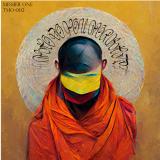
The Messier Objects returns with the second release on their label containing ten new tracks from the new TMO alter ego ‘Messier One.’ The work combines nostalgic IDM, eerie ambient and dreamy dub techno into one mini-album, inspired by the brute forces of nature and the power of healing and regeneration.
Expect to feel the force of nature on the A-side, where tracks such as ‘Earth’s Signal 04’ and ‘The Greatest Ebb Current’ contain distorted and fuzzy pads, eerie and vague echoing vocals, and whitenoise patterns that somehow feel strangely calming. Together with the broken drum patterns on tracks such as ‘Who Do You Worship?’, and the distorted kicks on ‘Kaalo Asmi Loka Kshaya Kritpraviddho’, the A-side manages to create crude IDM and ambient patterns – resembling historic natural events as if you were there yourself.
On the B-side. the noisy and broken patterns from the previous six tracks are replaced with warm and meditative sounds. ‘Two Tides’ is filled with soothing arpeggiated soundscapes and echoing voices, and the organic jungle chants and mythical vocals in ‘Rebuilding Temples’ further continue the process of regeneration. The B-side is accompanied with two remixes from Messier808 (known from the first release), who brings his typical meditative 4x4 patterns to the table, accompanied by dreamy textures, cyclical melodies and illusive effects from a now ‘healed’ society.
This thoughtful release brings a complete story told in only ten chapters. As always, their releases are backed by breathtaking artworks using vibrant and organic colours, completing an intriguing mini-album.
After a six-year hiatus, Efdemin returns with POLY — his fifth studio album, released on the recently revived Berghain-affiliated label, Ostgut Ton.
As the title suggests, POLY explores multiplicity: of rhythm, texture, style, and emotion. Across eleven meticulously sculpted textures, the album weaves a multidimensional web of sonic references, nodding to the origins of techno while pushing resolutely into uncharted terrain. POLY feels like an afterglow—of decades on the dancefloor, of restless sonic exploration, and of a profound connection to the spaces and communities that have shaped Efdemin’s sound.
Over the course of 60 minutes we are taken through different territories and landscapes of sound. Mysterious and swirling, abstract and droning textures over at times fast and stoic rhythmic concepts. Sometimes the sunlight breaks into the opaque and mysterious soundscapes before the pulse is taken over and sucks us back straight into the club.
The overall tone of POLY is mild and playful, introvert and at times dreamy. The music is rich in sonic expression and breathes the spirit of musical concepts that have been refined over the course of decades. What Sollmann has condensed here feels like a culmination of his multilayered and polyphonic personality situated between Club, Museum, Studio and Academy.
The album cover features a striking photograph of a human ear by renowned German artist Isa Genzken. Known for her radical visual language, Genzken’s work here functions as a metaphor for deep listening. The ear symbolises the layered complexity and immersive quality of the music on POLY — an invitation to perceive sound in all its depth, fragility, and force and unlock it’s potential to unite different voices in a distorted reality.
Nach einer sechsjährigen Pause kehrt Efdemin mit POLY zurück – seinem fünften Studioalbum, das auf dem kürzlich wiederbelebten Label Ostgut Ton, dem in-house Label des Berghain erscheint.
Wie der Titel vermuten lässt, beschäftigt sich POLY mit Vielfältigkeit: von Rhythmus,Textur, Style und Emotionen. In elf Stücken webt das Album ein multidimensionales Netz aus klanglichen Referenzen, das auf zurückliegende Ansätze der Klubmusik verweist und gleichzeitig entschlossen in neues Terrain vordringt.
POLY wirkt wie ein Nachglühen – von Jahrzehnten auf der Tanzfläche, von unermüdlicher klanglicher Erkundung und von einer tiefen Verbindung zu den Räumen und Communities, die Efdemins Sound geprägt haben. Im Laufe von 60 Minuten werden die Hörer*innen durch verschiedene Territorien und Klanglandschaften geführt. Mysteriöse und wirbelnde, abstrakte und dröhnende Texturen über teilweise schnellen und stoischen rhythmischen Konzepten. Manchmal bricht das Sonnenlicht in die undurchsichtigen und geheimnisvollen Klanglandschaften ein, bevor der Puls wieder die Oberhand gewinnt und uns direkt zurück in den Klub saugt.
Der Gesamteindruck von POLY ist mild und verspielt, introvertiert und manchmal verträumt. Die Musik ist reich an klanglichem Ausdruck und atmet den Geist musikalischer Konzepte, die im Laufe von Jahrzehnten verfeinert wurden. Was Sollmann hier verdichtet hat, fühlt sich wie eine Kulmination seiner vielschichtigen und polyphonen Identität an, die sich zwischen Klub, Museum, Studio und Akademie bewegt.
Das Albumcover ziert die Nahaufnahme eines menschlichen Ohrs der renommierten deutschen Künstlerin Isa Genzken. Genzken´s Arbeit wirkt hier als Metapher für deep listening. Das Ohr symbolisiert die vielschichtige Komplexität und immersive Qualität der Musik auf POLY – eine Einladung, Klang in seiner ganzen Tiefe, Zerbrechlichkeit und Kraft wahrzunehmen und sein Potenzial zu erschließen, widerstreitende Stimmen in einer verzerrten Realität zu vereinen.
2026 Repress
ANNE and Sera J close their Symbiosis series on Mutual Rytm with third and most refined EP yet.
This final chapter reflects everything the collaboration has stood for across a trio of inventive techno releases on SHDW's imprint. Creative and life partners ANNE and Sera J have been two voices growing in parallel, evolving separately but moving with the same pulse. ANNE is well established thanks to standout EPs on the likes of Soma and Hardgroove, while Sera J has released on the likes of Life in Patterns and Renegade Methodz, and both have featured on Mutual Rytm's 'Federation Of Rytm' series before now. 'Symbiosis III' is the moment where everything comes full circle: the culmination of a journey built on respect, creativity, and the freedom to explore their own paths while lifting each other forward.
Sera J kicks off with 'Ransomware', a commanding and driving techno cut lit up with flashy synths but always moving with urgency. 'Phosphate' keeps the energy levels high with stripped-back drums and bass designed to perfection, while 'Anthrax' has an anxious edge. The synths are wispy but evocative as bass kills and swiping filters bring the drama.
ANNE then ups the ante with the acid-tinged 'Dementia', which is loopy and unrelenting before 'A Taste of a Real Woman' gets more seductive with a sultry spoken word and sustained chords that bring the paranoia. 'Heart Rate' is propulsive with Detroit-style synth soul and an aching vocal, before Sera J returns with 'On the Run' - a percussive, trippy and eerie roller. His final Cut 'Similar Minds' has a searching synth surveying a desolate landscape, before ANNE then closes the EP with the punchy drum patterns and icy hi hats of 'Primal Howl Of Ego' and a blend of deep drums and evocative synth work on the 'Analog Heartbeat' - which proves potent techno can be beautiful.
Designed for her 5 Hour extended sets and refined on dancefloors worldwide, "Can't Stop Loving You" - out today on slash - captures KI/KI's signature nostalgia-meets-future sound. Self-written and produced, it's an emotive trance burner built for peak time joy, unity and release, a sound that has defined her rise across global rave culture.
"Can't Stop Loving You" has become the closing moment in KI/KI's 2025 sets. From her Radio One Essential Mix, her two 5 Hours at the Woolstore, Melbourne - the only artist to ever do two back-to-back - to her AMF headline set to 40,000 fans at the Johan Cruijff ArenA! "Can't Stop Loving You" has been the emotional closer all year long.
On the track KI/KI says:
I wrote this track during the biggest heartbreak of my life. Back then I was working on music for my liveshow, and needed a track to close the show with. Can't stop loving you was the result.
Every note, every sound, every vocal helped me through how I was feeling and listening back now reminds me that eventually things will be okay again. The song evolves from an emotional track to an optimistic 172bpm banger and this perfectly describes my process - and maybe the story of almost every heartbreak?
This record is living proof to me that music can be healing. I hope it does the same for you
In just a few years, KI/KI has become one of the most exciting and influential voices in electronic music. She's sold out 20,000-capacity shows and graced the cover of DJ Mag. In 2026, she'll headline London, Dublin, Belfast, Paris, LA and NYC - all selling out in minutes.
With new music coming and her fanbase surging, "Can't Stop Loving You" now closes both her sets and her year - the emotional full stop on 2025 before an even bigger 2026.
PLNK007 sees Planka Records return with another Various Artists release, bringing together a selection of producers connected by a shared approach to the underground sound. Tracks shaped by long nights, from intimate rooms and raves to early morning afters.
Across the EP, rolling grooves and subtle tension take the lead. Each cut keeps its own identity, yet a shared feeling runs throughout the record.
This new chapter in the Planka series follows the label’s ongoing interest in collaboration and community, where different voices meet naturally on the floor, aiming to preserve that distinctive sound within the scene.
Back in 1999, nestled in a cramped box room in his parents’ house in Cambridge, George Aretakis, one half of the newly-formed “I Like It” label (ili records) was on a sonic mission. Fresh from releasing their debut 12" All Alone by Hal, he dove headfirst into the world of self-engineering — no acoustic treatment, a sketchy Yamaha sound card, and a PC with a mind of its own.
What came out of that chaos is a collection of raw, imaginative tracks that blend hardware glitches with human quirks. Computer Rage was born from a technical meltdown — literal computer voices, warped vocals, coughing, and all. Its sibling, the Silicon Circus Mix, takes that same glitchy DNA and pushes it even further into bizarro territory.
Then there's Space You Know — a groovy slow-burner driven by a sticky bassline and the haunting vocal of Katie Jeans (courtesy of friends at Tummy Touch), chopped and recontextualized into something beautifully strange.
Rounding it out is Environ Mental, a moment of playful spontaneity made in a single night. Early morning birdsong, passing cars, and absurd vocalizations collide in a whimsical microcosm of lo-fi joy.
This release is a love letter to the unfiltered creativity of early bedroom production — messy, noisy, and bursting with heart. A must-have artifact for fans of DIY electronica and late '90s experimental house.
The duo Spill Gold blends drums, synths and vocals into a sonic journey that invites listeners to explore realms of energy exchange. Nina de Jong on drums and Rosa Ronsdorf on vocals and synths joined forces in a collaboration that transcends genres. The music of Spill Gold serves as a woven tapestry of (unheard) voices, inviting you to lean in. The result is a fusion of psychedelic echoes, danceable rhythms, and intricate percussive layers. Their newest album is a result of a need for hope that longs for an anti-anthropocentric and non-patriarchal world. The duo's compositions navigate through cyclical patterns, echoing snakes biting their own skin, volcano's starting to errupt, witches fingers that crumble towers and birds of steel and feather. They invite you into a world where the concept of 'the first' or 'the best' fades away and to join them on their musical journey with no clear beginning or end.
- A1: So Many Questions
- A2: Throughout The Years
- B1: Falling From The Sky
- B2: I Share My Secrets With You
- C1: Snow In Summer
- C2: Nothing To Lose
- D1: If Only For A Minute
- D2: Washed Away Over Time
- E1: Are We On The Same Wavelength?
- E2: Vanishing Point
- E3: Shoals
- F1: The Derelict Outpost
- F2: Prayers For Abandoned Cosmonauts
- G1: Voices From Distant Stars
- G2: The Infinity Pool
- G3: Array
- H1: Full Circle
- H2: Satellite's Final Voyage
Following standout releases on acclaimed underground imprints like Klasse Wrecks, Planet Trip, Superior Elevation, and more, Brooklyn-based producer GEE DEE steps into a new chapter with the launch of his very own label, FREE UNIVERSE. The debut release, IT’S A FEELING, is a vibrant four-tracker that showcases his deep-rooted love for hypnotic grooves, playful textures, and dance floor-ready energy.
The title track, “IT’S A FEELING, ” leads the charge — a punchy, genre-blurring cut that captures the essence of GEE DEE’s sound: raw, emotive, and rhythmic. “ENERGY LOOP” follows with a bright, bouncing bassline and cheeky percussion, keeping spirits high and bodies moving.
On the B-side, the legendary KIM ANN FOXMAN delivers a sped-up, psychedelic reimagining of “IT’S A FEELING. ” The remix brings a darker, tunneling energy to the original, twisting it into a late-night trip that’s equal parts hypnotic and propulsive. Closing things out is “TWO VOICES” — a heady,
'90s-inspired roller drenched in spaced-out textures and woozy synths. A bold first statement from FREE UNIVERSE, this release marks a fresh new chapter for GEE DEE — producer, DJ, and now label head — continuing his journey of pushing boundaries across the spectrum of underground dance music.
Facta returns to Wisdom Teeth with ‘GULP’: a zippy, hi-def mini-album full of scrambled vocals, blown-out basslines, dripping synths and spring-loaded grooves that together map out his playfully psychedelic corner of contemporary club music. Written in a quick creative burst in late 2024, the record brings together a range of the producer’s distinct creative strands into a sharp, cohesive whole. Sitting snugly within the stylistic niche carved out by his A&Ring and DJ sets (alongside label co-founder K-LONE), we hear the influence of 00’s minimal, tech house, UK soundsystem music, ambient electronica, dub and more rubbing shoulders in a way that feels effortless and personal. Many of the tracks began life as sketches penned on the road - dotting between festivals, European club shows, and on tour in Japan - and so the record carries with it a sense of movement and forward momentum, and feels populated by voices, memories, people and places.
The Londoner’s characteristic approach to sound design and genre interplay are on full display here. Generative vocal hooks melt and warp into strange fluid forms, while synths stretch, detune, bend and dissolve into space before snapping back into shape again. Keyboards mirror human vocal formants, forming melodies that feel at once organic and alien. Basslines warp and distort, as if being re-moulded out of different synthetic properties.
Across the record there’s a commitment to expressing simple or familiar ideas in new and unexpected ways, whilst experimentations and innovations are presented clearly and intuitively. Cherished genre references are lovingly deployed as personal touchstones across the record - bleeping minimal- and tech-house; breakbeat dubstep and funky; Chicago house; dub techno - yet sounds and influences are combined and meshed in unexpected ways. Each track is tightly engineered and reduced down to its key elements, which are then manipulated, flipped, warped and pushed to breaking point. As is typical of Facta’s music, uncanny contrasts are worked throughout the music in unexpected ways. Warm, balmy moods come laced with seams of tension or uncertainty, whilst the record’s darker moments are handled with a light, playful touch.
With 15 years experience writing, DJing and A&Ring under his belt, ‘GULP’ is testament to Facta’s love of creation and curation - of seeking out, absorbing, experimenting, and channeling new sounds to create your own sonic world. A record borne of playful experimentation and happy accidents, ‘GULP’ shines bright with a simple, pure energy - a testament to writing quickly and intuitively and, above all else, enjoying the process.
The album’s artwork features photography by award-winning Boston-based photographer, Pelle Cass, whose complex time-lapse composites present hyperreal yet impossible tableaus of seemingly simple everyday scenes - an approach that parallels the record’s blurring of the familiar and the unfamiliar. Cass’s work has been widely exhibited, collected, and published, including solo shows at Gallery Kayafas, Boston, the Photographic Resource Center, Boston, and the Houston Center for Photography, and in collections such as the Fogg Art Museum, the Peabody Essex Museum, and the Museum of Fine Arts, Houston. He was twice a Critical Mass Top 50 photographer and has received two fellowships from Yaddo and one from the Berkshire Taconic Foundation.
We are very pleased to present you the new cmdrpx project.
CMDRPX INDUSTRY 001 Gianluca Pellerano owner and founder of the label presents his EP.
Rapax Planet EP fully reflects the techno/electro style with dark sounds.
All the tracks were recorded live with MPC One and Alesis SR 18, with the addition of spacey voices.
In the track B3 in collaboration with Equinox with the addition of vocal and dark synth.
Yecad welcomes BRYZ onto its roster with his ‘Arcane’ EP, comprised of three originals from the Romanian artist.
Over the past decade the Bucharest, Romania based producer and DJ, Bryz, has been etching his mark on the underground scene through releases on the likes of Tzinah Records, Storytellers Records, Nazca, Esente Records and many more, as well as being a prominent DJ on his home turf in Romania and bringing his sound further afield throughout Europe.
Here we see BRYZ deliver his latest collection of works via Yecad, home to music from the likes of Barac, Dana Ruh, Constratti, Sepp and more.
Opening the release is the title-track ‘Arcane’, a hypnotic excursion through ethereal voices, spiralling delays, immersive atmospheric textures and a crisp, shuffled rhythm section.
‘Calida’ follows next to open the B-side, laying down raw drums, intricate, wandering resonant synth licks, weighty sub bass swells and plucked guitar licks throughout before ‘Iridian’ concludes the release, employing plucked bass notes and sweeping pad lines alongside bubbling arpeggios, oscillating synth flutters and shuffling, reduced percussion.