The new record follows Priddy"s sophomore LP "The Pendulum Swing" which firmly established her as one of the most exciting artists on the contemporary British music scene. Produced by Rob Ellis (PJ Harvey, Anna Calvi, Bat for Lashes), "These Frightening Machines" was written over the course of a year as Priddy made the transition from her 20s to her 30s. The most sonically varied of her career, the songs span a full spectrum of emotions from anger and despair to hope, longing and lust, from reclaiming the voices of women silenced by history, to expressing solidarity and love, to confronting illness, disconnection, the vulnerability and importance of relationships, and the general ache of growing older and not always wiser. They explore what it means to keep going when things fall apart, to hold onto connections in a world that sometimes divides, and to figure out where we fit into the machines and systems we find ourselves a part of.
Buscar:the voices
Tulipa Ruiz is a Latin Grammy Award-winning singer, songwriter, and illustrator from Sao Paulo. Born in a family of musicians (her father, Luiz Chagas, played with Itamar Assumpçao, and her brother, Gustavo Ruiz, is her longtime producer), she followsthe footsteps of the Vanguarda Paulista and offersa bold, genre-bending sound. Fusing MPB, soul, pop, and rock, her music is joyful, rich, and one of a kind. Since her debut album, Efêmera (2010), Tulipa has become one of Brazil"s most distinctive voices, with five critically acclaimed albums, collaborations with Elza Soares and Milton Nascimento, and performances at international festivalssuch as the Montreux Jazz Festival and Lollapalooza. From the hypnotic "Samaúma" to the infectious "Estardalhaço," Habilidades Extraordinarias seamlessly blends improvisation and groove. The duet "Disco Voador" with Joao Donato, one of her last recordings, bridges generations, combining bossa-jazz swing and the warmth of Donato"s Fender Rhodes with Tulipa"s luminous vocals. "Pluma Black" (feat. Negro Leo) explores pre-jazz abstraction, while "Novelos" and the album"s title track evoke the soul-jazz of the Hermeto Pascoal and Stevie Wonder era. Acclaimed throughout Brazil, Habilidades Extraordinarias established Tulipa Ruiz as a leading figure in modern MPB, combining melodic sophistication, humour, and emotional depth. Ten years after her spectacular climb to success and her Latin Grammy Award victory, she continues to enrich the Brazilian pop and jazz scene.
- A1: Brut Thoughts Theme
- A2: Swordfight In A Chicken Shop
- A3: Putting On A Party
- A4: Rna
- A5: Generation Left On Read (Feat. Konopinksy)
- A6: Friends And Family (Interlude)
- A7: Brut Pop (Feat. Meme Gold)
- B1: Running Outta Road (Feat. Trainee)
- B2: Mortgage Guy (Interlude)
- B3: One 4 Me & U
- B4: Money Isn't Real (Feat. Kiddus)
- B5: Brut Thoughts Reprise
- B6: How To Subtly Disappear (Feat. Lauren Auder)
One of the UK’s most singular voices, Murkage Dave has spent the last decade crafting a body of work that refuses to fit neatly into any genre box. His music, loosely pop but informed by indie, outsider art, and an instinct for storytelling, is built on honesty, empathy, and fearless social commentary. Across his career, he has earned a cult following and praise from Pharrel Williams, Iggy Pop, BBC Radio 6 Music, The Guardian, Rolling Stone, Pitchfork, Clash, Complex, Highsnobiety, and Vogue. His debut album Murkage Dave Changed My Life (2018) amassed over 12 million Spotify streams, while follow-up The City Needs A Hero (2022) reached #10 on the UK iTunes Chart and #15 on the UK Independent Chart.
Becoming Forest is the fifth full-length record by Amuleto. It comes from an encounter between the group’s core duo, Francesco Dillon and Riccardo Wanke, and multi-instrumentalist performer and composer Stefano Pilia (Mike Watt, Rokia Traoré, 3/4HadBeenElminated, Massimo Volume, Afterhours, Zaire).
This meeting — developed from long-term parallel collaborations and converging musical paths — produced a set of tracks that combine acoustic and traditional instruments (cello, guitar, harmonium, voice) with electronics, natural sounds and unconventional sound manipulations.
Drawing on literature, travels, drawings, poetry and little-known traditions from around the world, the tracks of Becoming Forest sit in a subtle equilibrium between contemporary composition, folk themes and electronic music.
This is a journey through memories of the past and echoes of the future — intimate and aggressive; music that combines minimal textures with distorted progressions, with delicate vocal lines inhabiting post-digital, noisy environments — a reminder that individual voices form part of a larger, living forest.
- A1: The Mountain (Feat. Dennis Hopper, Ajay Prasanna, Anoushka Shankar, Amaan & Ayaan Ali Bangash)
- A2: The Moon Cave (Feat. Asha Puthli, Bobby Womack, Dave Jolicoeur, Jalen Ngonda And Black Thought)
- A3: The Happy Dictator (Feat. Sparks)
- B1: The Hardest Thing (Feat. Tony Allen)
- B2: Orange County (Feat. Bizarrap, Kara Jackson And Anoushka Shankar)
- B3: The God Of Lying (Feat. Idles)
- B4: The Empty Dream Machine (Feat. Black Thought, Johnny Marr And Anoushka Shankar)
- C1: The Manifesto (Feat. Trueno And Proof)
- C2: The Plastic Guru (Feat. Johnny Marr And Anoushka Shankar)
- C3: Delirium (Feat. Mark E. Smith)
- C4: Damascus (Feat. Omar Souleyman And Yasiin Bey)
- D1: The Shadowy Light (Feat. Asha Bhosle, Gruff Rhys, Ajay Prasanna, Amaan & Ayaan Ali Bangash)
- D2: Casablanca (Feat. Paul Simonon And Johnny Marr)
- D3: The Sweet Prince (Feat. Ajay Prasanna, Johnny Marr And Anoushka Shankar)
- D4: The Sad God (Feat. Black Thought, Ajay Prasanna And Anoushka Shankar)
Yellow Bio Vinyl[31,89 €]
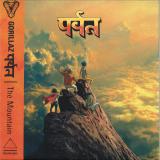
The Mountain is Gorillaz’ ninth studio album, a collection of 15 new tracks featuring a stellar list of artists and collaborators. Jamie Hewlett’s album artwork captures the four much-loved animated band members - Murdoc, Noodle, Russel and 2D – in a series of beautifully intricate, hand-drawn illustrations.
The Mountain is Gorillaz 9th studio album. The album is a collection of 15 new tracks featuring artists and collaborators including: Ajay Prasanna, Anoushka Shankar, Asha Bhosle, Asha Puthli, Bizarrap, Black Thought, Gruff Rhys, Idles, Jalen Ngonda, Johnny Marr, Kara Jackson, Omar Souleyman, Paul Simonon, Sparks, Trueno and Yasiin Bey; as well as the voices of Bobby Womack, Dave Jolicoeur, Dennis Hopper, Mark E. Smith, Proof and Tony Allen. Produced by Gorillaz, James Ford, Samuel Egglenton, Remi Kabaka Jr. and Bizarrap (Orange County), The Mountain was recorded in London, Devon, Miami, Jaipur, Mumbai, New Delhi and Rishikesh; and features artists performing in five languages: Arabic, English, Hindi, Spanish and Yoruba. The artwork for The Mountain sees Jamie Hewlett’s distinct, yet ever-evolving, style illustrate the world of Gorillaz with an ever more detailed and beautiful intricacy across a series of hand-drawn illustrations. Circumstances find Murdoc Niccals, Russel Hobbs, 2D and Noodle in India, where our heroes are immersed in the rhythms of mystical music-making as they navigate the mountainous terrain of this thing called life.
- Side A: “Deadbird”, “Robought”
- Side B: “Grant Urismo”, “5Yago”
Straight from Honolulu, Bombye is a newly found Hawaiian soul trio led by Nick Kurosawa, one of Hawaii’s most captivating voices. Known for his rich,
velvet tone and vintage-inspired phrasing, Nick and his band channel the essence of 1970s soul, funk, and R&B into a deeply organic soundscape that feels both nostalgic and new.
The EP features four tracks that showcase the band’s musicianship and emotional depth.
Mixing by Andrew Garma and mastering by Wax Alchemy deliver exceptional clarity and analog warmth, while Shiro Ishihara (SNEA) provides the minimalist yet evocative artwork
that perfectly complements the record’s soulful aesthetics. This limited-edition vinyl includes a bonus “Bombye” sticker exclusive to CONNECT RECORDS. Each copy is pressed with
care for collectors, DJs, and analog enthusiasts seeking authentic, heartfelt soul music with timeless groove and depth.
Jorge Ben is someone who needs no introduction. Since his first hits in the early 60s, this the greatest icons of the greatest icons of Brazilian pop music. His anthems 'Mais Que Nada' or 'Pais Tropical' are among two of the most ever listened Brazilian songs of all time. Ben's self-titled 1969 album is a true samba-soul masterpiece from one of Brazil's most creative voices. This isn't your typical late-'60s LP: Jorge Ben blends the hypnotic swing of samba with funk, psychedelia, and sun-soaked soul in a way that feels both classic and ahead of its time. Released in November 1969, this was Jorge Ben's sixth studio record, and his first back with the Philips label after a creative hiatus. He recorded it with the tight-knit, percussive groove of Trio Mocoto -- whose rhythms lock in beautifully with Ben's laid-back guitar and vocals. On top of that, the album features lush orchestral arrangements from Jose Briamonte and Rogerio Duprat, adding a soaring, psychedelic dimension to Ben's sound. Standout tracks? You've got the joyous anthem 'Pais Tropical', a perfect celebration of Brazilian life.
Then there's 'Take It Easy My Brother Charles', a socially conscious number that tells the story of a rebellious sailor -- Ben weaves in themes of race, identity, and resilience. And songs like 'Que Pena' bring in that sweet, soulful melancholy, while breezy cuts like 'Criola', 'Domingas', and 'Barbarella' highlight his playful, poetic side. This record is a rare blend of genres -- samba, soul, funk, psychedelia -- and it's got a timeless energy. Whether you're already into Brazilian music or just looking for something fresh and soulful, Jorge Ben's 1969 album is a joyous entry point. Reissue on 180g vinyl.
There’s an alternate reality where everyone makes a living wage and the cleanest buses you’ve ever seen arrive every other minute. Where the most intense songs are about confessing your love to a crush at the apple orchard, and where gentle feelings and chaotic energy are inseparable best friends. This is the timeline where Cootie Catcher is right at home. This Toronto based four-piece exudes both vulnerability and unbridled excitement, creating a sound that hypercharges the open-hearted tenderness of twee pop with spiraling synths and giddy electronics. New album Something We All Got is the clearest and most vibrant reading of Cootie Catcher’s vision yet, with songs of sweetness, nervousness, and expectancy that beam out unguarded.
After releasing music made primarily in basement recording environments, Something We All Got is the band’s first flirtation with studio recording. The edges are still sharp, however, with some parts assembled from time-honored lo-fi methods and fun, personally-sourced samples seeping into the production. The sound is explosive and upbeat, with euphoric guitars, bubbly synth lines, speedy drums both played and programmed, and all other manner of sound constantly colliding. Cootie Catcher has three songwriters, Sophia Chavez, Anita Fowl, and Nolan Jakupovski, all of whom have distinctive voices but still manage to overlap in their writing on shared concerns like navigating the lines of romantic and platonic relationships, their city’s social scenes, and struggles in both the microcosmic experience of playing in a band and the zoomed-out challenges of living through late-stage capitalism.
Joy still touches every surface of Something We All Got. “Quarter Note Rock” bounces around the room in a fit of jangling guitar chords, scratched samples, and interplay between breakbeat loops and somersaulting live drums. It’s a blast of positivity even with lyrics about how disappointing it can be to meet your heroes. A smiling electro pop instrumental supports lyrics about having to step painfully away from an almost realized love on “Gingham Dress,” a song that subverts themes of domesticity as a backdrop for the dashed wilt of hopeless devotion.
Cootie Catcher rolls down hills and jumps through flaming hoops throughout Something We All Got without ever dumbing down the visceral emotions that drive these songs. There’s a palpable tension between the band’s exhilarating sonics and the raw, often uneasy sentiments expressed, but it’s an integral part of what makes them unique. Rather than hide behind the kind of calculated vagueness that plagues so much of the indie rock landscape in the time of cursed algorithms, Cootie Catcher runs full-speed toward every confusion and excitement, fearlessly direct and embracing the reality they’re in.
"And what about you? What are you looking for?" - René Daumal
This musical journey pays tribute to René Daumal and his enchanting world of mysteries and magic. The album shares its title with Daumal's novel, Mount Analogue: A Novel of Symbolically Authentic Non-Euclidean Adventures in Mountain Climbing, published posthumously in 1952, eight years after the author's untimely death.
Mount Analogue is a classic allegorical adventure novel. The novel describes an expedition undertaken by a group of mountaineers to travel to and climb the titular Mount Analogue an enormous mountain on a surreal continent, that is invisible and inaccessible to the outside world and can be perceived only by the application of obscure knowledge. The central theme of mountaineering is extensively explored through literary and philosophical lenses. Daumal died before the novel was completed, providing an uncanny one-way quality to the story, which ends abruptly in the middle of a sentence.
The first disc features a fifty-minute composition divided into six chapters: Introduction, Meeting, Supposition, Crossing, Arrival, and Conclusion. This album weavestogether a rich tapestry of diverse instruments, sounds, and voices that collectively tell the story of this conceptual work, loaded with a synesthetic multitude of colors, aromas, meanings, textures, and moods.
Contributors to this musical poem include Bill Laswell (bass), Henry Kaiser (guitar), Anna Clementi (vocals), Percy Howard (voice), Hideo Yamaki (percussion), Graham Haynes (cornet), Dorian Cheah (violin), Nils Petter Molvaer (trumpet), Peter Apfelbaum (keyboard), and P.ST (concept, electronics), who all lend their talents to a series of excerpts from Daumal's text.
A truly global project, the recordings took place across various locations in Europe, North America, and South America, culminating at Orange Music Studio in New York, thanks to the collaborative efforts of Bill Laswell, James Dellatacoma, and Michael Fossenkemper.
The second disc presents five improvisations for solo electric guitar by Henry Kaiser. The first solo, Jodorowsky's Peradam, draws its inspiration from Alejandro Jodorowsky's 1973 film The Holy Mountain, which was inspired by the Daumal novel. Kaiser's initial forty-eight-minute guitar solo serves as a foundational guide for his four subsequent, Rashomon-esque, solo musical interpretations of Mount Analogue, as seen through the psychedelic labyrinth of Jorodrowsky's cinematic masterpiece.
"And what about you? What are you looking for?" - René Daumal
This musical journey pays tribute to René Daumal and his enchanting world of mysteries and magic. The album shares its title with Daumal's novel, Mount Analogue: A Novel of Symbolically Authentic Non-Euclidean Adventures in Mountain Climbing, published posthumously in 1952, eight years after the author's untimely death.
Mount Analogue is a classic allegorical adventure novel. The novel describes an expedition undertaken by a group of mountaineers to travel to and climb the titular Mount Analogue an enormous mountain on a surreal continent, that is invisible and inaccessible to the outside world and can be perceived only by the application of obscure knowledge. The central theme of mountaineering is extensively explored through literary and philosophical lenses. Daumal died before the novel was completed, providing an uncanny one-way quality to the story, which ends abruptly in the middle of a sentence.
The first disc features a fifty-minute composition divided into six chapters: Introduction, Meeting, Supposition, Crossing, Arrival, and Conclusion. This album weavestogether a rich tapestry of diverse instruments, sounds, and voices that collectively tell the story of this conceptual work, loaded with a synesthetic multitude of colors, aromas, meanings, textures, and moods.
Contributors to this musical poem include Bill Laswell (bass), Henry Kaiser (guitar), Anna Clementi (vocals), Percy Howard (voice), Hideo Yamaki (percussion), Graham Haynes (cornet), Dorian Cheah (violin), Nils Petter Molvaer (trumpet), Peter Apfelbaum (keyboard), and P.ST (concept, electronics), who all lend their talents to a series of excerpts from Daumal's text.
A truly global project, the recordings took place across various locations in Europe, North America, and South America, culminating at Orange Music Studio in New York, thanks to the collaborative efforts of Bill Laswell, James Dellatacoma, and Michael Fossenkemper.
The second disc presents five improvisations for solo electric guitar by Henry Kaiser. The first solo, Jodorowsky's Peradam, draws its inspiration from Alejandro Jodorowsky's 1973 film The Holy Mountain, which was inspired by the Daumal novel. Kaiser's initial forty-eight-minute guitar solo serves as a foundational guide for his four subsequent, Rashomon-esque, solo musical interpretations of Mount Analogue, as seen through the psychedelic labyrinth of Jorodrowsky's cinematic masterpiece.

- A1: The Mountain (Feat. Dennis Hopper, Ajay Prasanna, Anoushka Shankar, Amaan & Ayaan Ali Bangash)
- A2: The Moon Cave (Feat. Asha Puthli, Bobby Womack, Dave Jolicoeur, Jalen Ngonda And Black Thought)
- A3: The Happy Dictator (Feat. Sparks)
- B1: The Hardest Thing (Feat. Tony Allen)
- B2: Orange County (Feat. Bizarrap, Kara Jackson And Anoushka Shankar)
- B3: The God Of Lying (Feat. Idles)
- B4: The Empty Dream Machine (Feat. Black Thought, Johnny Marr And Anoushka Shankar)
- C1: The Manifesto (Feat. Trueno And Proof)
- C2: The Plastic Guru (Feat. Johnny Marr And Anoushka Shankar)
- C3: Delirium (Feat. Mark E. Smith)
- C4: Damascus (Feat. Omar Souleyman And Yasiin Bey)
- D1: The Shadowy Light (Feat. Asha Bhosle, Gruff Rhys, Ajay Prasanna, Amaan & Ayaan Ali Bangash)
- D2: Casablanca (Feat. Paul Simonon And Johnny Marr)
- D3: The Sweet Prince (Feat. Ajay Prasanna, Johnny Marr And Anoushka Shankar)
- D4: The Sad God (Feat. Black Thought, Ajay Prasanna And Anoushka Shankar)
Black Vinyl[27,52 €]
The Mountain is Gorillaz’ ninth studio album, a collection of 15 new tracks featuring a stellar list of artists and collaborators. Jamie Hewlett’s album artwork captures the four much-loved animated band members - Murdoc, Noodle, Russel and 2D – in a series of beautifully intricate, hand-drawn illustrations.
The Mountain is Gorillaz 9th studio album. The album is a collection of 15 new tracks featuring artists and collaborators including: Ajay Prasanna, Anoushka Shankar, Asha Bhosle, Asha Puthli, Bizarrap, Black Thought, Gruff Rhys, Idles, Jalen Ngonda, Johnny Marr, Kara Jackson, Omar Souleyman, Paul Simonon, Sparks, Trueno and Yasiin Bey; as well as the voices of Bobby Womack, Dave Jolicoeur, Dennis Hopper, Mark E. Smith, Proof and Tony Allen. Produced by Gorillaz, James Ford, Samuel Egglenton, Remi Kabaka Jr. and Bizarrap (Orange County), The Mountain was recorded in London, Devon, Miami, Jaipur, Mumbai, New Delhi and Rishikesh; and features artists performing in five languages: Arabic, English, Hindi, Spanish and Yoruba. The artwork for The Mountain sees Jamie Hewlett’s distinct, yet ever-evolving, style illustrate the world of Gorillaz with an ever more detailed and beautiful intricacy across a series of hand-drawn illustrations. Circumstances find Murdoc Niccals, Russel Hobbs, 2D and Noodle in India, where our heroes are immersed in the rhythms of mystical music-making as they navigate the mountainous terrain of this thing called life.
Heavenly return! As fiercely independent as any punk band, but as sweetly melodic as any chart-topping act, Heavenly combine sharp-edged lyrics with shamelessly joyful pop music. The band comprises original members Amelia Fletcher, Peter Momtchiloff, Cathy Rogers and Rob Pursey, who are now joined on drums by Ian Button. An important element of the Heavenly story was the loss of Mathew Fletcher, who took his own life just before the fourth album was released. It took Amelia, Peter, Cathy and Rob a long time to get over the loss; maybe it took even longer to find a drummer as good as Ian. 'Highway To Heavenly' shares its musical recipe with the band's first four albums, all of which were released in the 1990s at a time when sensitive indie types in the UK were sheltering from the prevailing macho-rock storm under the Sarah Records umbrella, and when women in the US were starting to find their Riot Grrrl voices in the small town of Olympia, where labels like K and Kill Rock Stars were designing a new creative space. The new songs are full of anger, of grief, of empathy, of love, and set themselves in opposition to the resurgence of the cold 'masculine energy' that is making the world a miserable, aggressive place today. It's all pop here, but Highway To Heavenly has a huge range of tones and moods. Heavenly have recently enjoyed a huge resurgence of interest from a younger generation of fans, who have cottoned on to Heavenly's music, but also embraced the band's inclusive version of feminism. The new Heavenly have played a number of sell-out shows in the past couple of years, where older fans have mingled with new devotees. Still our love is Heavenly!
Impatience is thrilled to present Leaving Memory, the latest album-length work by Piper Spray and Lena Tsibizova. Leaving Memory is a searing distillation of the duo’s ouevre - it’s eleven prismatic electronic seances combining for a mind warping wormhole with it’s own internal (il)llogic, where pop, ambient, and industrial music convene beneath a rugged HD of digital processing and brain fog. Equally rosy with nostalgia as it is ominously forward looking, Leaving Memory defies easy categorization and makes for an astounding, confounding listen.
By turns violently abrasive and disarmingly touching, Piper and Lena deploy sounds that fracture and disintegrate, burn up and explode, synthetic supernovas that give the record an unmistakable, inimitable texture. Song structures often abide by their own blueprint - heading in one direction before making an abrupt dive elsewhere. Bursts of vibrant colour lurk below layers of grayscale noise. Unidentifiable voices deliver secret messages from the murk. When rhythm’s emerge they ground the tracks to some unknown terrain and invigorate.
Lame Line veers towards the sweeter end of their spectrum, a hazy plaintive repetition increasingly lashed with friction, before Exit erupts with clanging rhythm and shards of distortion. Diagnosis is an almost sweet alt-pop song, Lena’s vocals yearning beneath a dubby shuffle, while Keeper Of The Void’s possessed incantations open up to a ripping, fried climax. Beryl Grey releases the pressure gauge, a gently lilting drift arpeggiating as the sun sets, and Lost Cars sweats through claustrophobic drones and bird song before the clouds part on a serene scene. Leaving Memory closes with Shin, offering a genuinely sweet resolution and a gentle landing back down to earth of either footsteps or fireworks, swelling synthesized horns and woodwinds, a kiss on the cheek for making it out the other side.
On Leaving Memory, Piper Spray & Lena Tsibizova share their uniquely discordant take on freaky music for unsettled minds, an intensely energized set that offers a deeply evocative, unimaginable otherworld for adventurous ears.
Piper Spray and Lena Tsibizova have been producing music together since 2020. Leaving Memory is the first to be presented in the LP format. Piper has previously released music via Orange Milk, Hausu Mountain and Gost Zvuk, as well as his own Singapore Sling Tapes label. Lena works predominantly as a photographer, and together Piper and Lena have released music via radio.syg.ma and Kartaskvazhin. Both make music as part of Air Krew, who have released music on the Echotourist and Motion Ward labels. They’re both currently based nowhere.
Leaving Memory was written, produced and mixed by Piper Spray and Lena Tsibizova, and mastered by Sergey Podluzhniy. Cover photo by Lena Tsibizova, design and layout by Justin Sloane.
From out of nowhere comes a unique collaborative album from Edvard Graham Lewis (WIRE) & Mark Spybey (ZOVIET FRANCE). Mixing lush electronic rhythms, sonic collage, ambient soundscapes and manipulated field recordings, these six compositions form an album with a strong identity. That this is such a vital and fertile partnership should come as no surprise. After all, both men have made careers out of creating confidently questing musics. Lewis with Wire, He Said, Hox, Dome etc. and Spybey with Dead Voices on Air, Beehatch, Altered Statesmen, Zoviet France and so on. This new album however, is something different again: experimental, yet tightly focused, and not averse to the groove or the sly hook. The pair met via an appearance on a podcast in November 2022, hosted by cEvin Key of Skinny Puppy. They hit it off immediately. “We did a live chat with Graham - which I think, went on for about three days” jokes Spybey. It was Spybey who first broached the idea of collaboration. “It was a bit like shy bairns get nowt: I just said ‘maybe we should make something together.’” And so, with no plan other than to see what might develop, the duo began to assemble the compositions at long distance. Indeed, Lewis and Spybey only met in the real world after the album had been completed. “Mark sent half a dozen tracks in a stereo mix,” says Lewis. “And I looked at the ’topography’, to see where the spaces might be. So then I’d add to those areas. But then, when do you take it away? Sometimes you let it drop off a cliff, land in the shingle, and it gets washed out to sea again.” The process moved at a pace. “Almost everything each of us brought, ending up being incorporated in some way.” Says Spybey. “We didn’t really go down any cul-de-sacs.” As Lewis observes “We have such a sympathetic tone.” Full of inventive sonics that draw on both men’s previous work, ‘Lewis/Spybey’ offers up a richly detailed soundworld
Bettye Swann possessed one of the most emotive voices in soul music’s cannon but her recording career was that of a shooting-star; it blazed at the start, then illumined brightly before abruptly dissipating, all in just eleven years. In 1975 she ceased recording, moved to Las Vegas and retired her Bettye Swann persona.
The Louisianan Betty Jean Champion had relocated to Los Angeles as a young woman where in around 1964 she was introduced to Al Scott, owner of Money Records. It was her fourth Money 45 “Make Me Yours” that propelled Swann into the stratosphere. One of the defining songs of the era, it was her pathway to Capitol Records with whom she signed in 1968.
By 1972 Bettye was at Atlantic Records. The initial Atlantic 45 “Victim Of A Foolish Heart” b/w “Cold Day In Hell” recorded at Fame with Mickey Buckins and Rick Hall, made for a promising debut reaching #16 on the Billboard chart. It was followed by Bettye’s version of Merle Haggard’s “Today I Started Loving You Again” and “Til I Get It Right”, a gentle country-soul labour. “I’m Not That Easy To Lose” also dates from those sessions.
In an attempt to broaden her appeal Atlantic sent Swann to Sigma Sound in Philadelphia where she cut Phil Hurtt’s’ and Tony Bell’s “Kiss My Love Goodbye”, “Time To Say Goodbye” and “When The Game is Played On You”. Her fortunes continued to wane so Swann was next placed with Nashville producer Brad Shapiro. The results were artistically stellar and included three unissued gemstones in The Isley’s “This Old Heart of Mine”, a definitive version of Maxine Weldon’s “I Want Sunday Back Again”, and “Either You Love Me Or Leave Me”.
- 1: Fanjiry
- 2: Alohotsy
- 3: Sikilony
- 4: Kalavabitiky
- 5: Zongoya
- 6: Zipo Tralala
- 7: Tsapatsapao
- 8: Roro Soa
- 9: Alakarabo
After decades spent shaping the sound of southern Madagascar and becoming one of the defining voices of tsapiky, Damily returns with Fanjiry, his most intimate and focused record to date. Known for electrifying village ceremonies and carrying the fever of Toliara across continents, he takes a sharp turn — not away from trance, but deeper into its core.
Recorded in just three days at Studio Black Box with analog wizard Peter Deimel, Fanjiry strips the tsapiky band down to a single guitar and a single heartbeat. Damily plays alone, yet fills the space completely — bass, rhythm, melody, pulse, and breath merging into a dense and vibrating sound. Every riff is architecture, every harmonic a door opening onto memory, childhood landscapes, and nights where music heals, binds, and exhausts the dark.
There is no nostalgia here, no museum of tradition. Fanjiry is a new frontier for tsapiky: raw, precise, suspended between earth and sky, born from craft and necessity. The title — the last star before dawn — captures its essence: a quiet moment before the world awakens, where a single guitar can hold an entire history and still point forward.
- Fanjiry
- Alohotsy
- Sikilony
- Kalavabitiky
- Zongoya
- Zipo Tralala
- Tsapatsapao
- Roro Soa
- Alakarabo
After decades spent shaping the sound of southern Madagascar and becoming one of the defining voices of tsapiky, Damily returns with Fanjiry, his most intimate and focused record to date. Known for electrifying village ceremonies and carrying the fever of Toliara across continents, he takes a sharp turn - not away from trance, but deeper into its core. Recorded in just three days at Studio Black Box with analog wizard Peter Deimel, Fanjiry strips the tsapiky band down to a single guitar and a single heartbeat. Damily plays alone, yet fills the space completely - bass, rhythm, melody, pulse, and breath merging into a dense and vibrating sound. Every riff is architecture, every harmonic a door opening onto memory, childhood landscapes, and nights where music heals, binds, and exhausts the dark. There is no nostalgia here, no museum of tradition. Fanjiry is a new frontier for tsapiky: raw, precise, suspended between earth and sky, born from craft and necessity. The title - the last star before dawn - captures its essence: a quiet moment before the world awakens, where a single guitar can hold an entire history and still point forward.
- 1: Wildwoods
- 2: Latest News
- 3: Senses
- 4: Follow
- 5: What Are We Doing
- 6: Out Of Order
- 7: Goddess
- 8: Edith
- 9: Passchendaele
- 10: About The Picture
- 11: Ghost Sky
- 12: Johnny's Place
- 13: Voices
With their two previous albums, Hoarse (2019) and New World Blues (2022), the band delivered uncompromising rock rooted in an international guitar-rock tradition (think The Rolling Stones, The Replacements, The Saints, and Flamin’ Groovies), while a few sleek mid-tempo ballads added dynamics and variety. The new 1st Impression #2 completes the trilogy and is also the band’s first release on Beluga Records.
- A1: The Candle
- A2: The Jonah
- A3: The Portrait
- A4: Dressed In White
- B1: Charon
- B2: Lurking In The Dark
- B3: Halloween
- B4: Voices From The Past
- B5: Haunted