Club music culture necessarily shifted gears in many ways during and after the course of the pandemic. Older participants found their way into other interests and younger participants took new reigns to orient spaces they felt good inside of. The agenda for the music, and the cultural industry surrounding it at large, took a more frivolous and “fun” turn. Clubs needed to recoup lost money, people needed more refreshing catharsis for their nightlife escape, and in some pockets scattered around the globe a newer and younger cadre of producers/promoters/DJ’s pulled optical cues from a scattering of “darker” influences to give an alternate aesthetic to the aforementioned “vibes” culture. In the midst of this, a large polarization of conceptual energy shifted within the compositional and utilitarian machinations of the club music culture leaving behind the brooding and cerebral placeholders for different kind of enjoyable hedonism. Terrestrial Paradise’ “Artificial Hell” harkens to another prescient time before that shift occurred. “Artificial Hell’ might just be an illustration of what all of this fun escapism encapsulates.
Terrestrial Paradise is the latest moniker from Montreal come Los Angeles based producer Jaclyn Kendal. Having developed and cemented her sonic positionality with releases on North American labels like Ascetic House and Summer isle over the years, as well as a series of monolithic live sets, Bank is pleased to announce Kendal’s Terrestrial Paradise first full length album “Artificial Hell”. Over the course of nine recordings, “Artificial Hell” gives a master class in pressurized industrial techno of the slower variety. Fitting with the legacy of Bank’s output since it’s inception, Terrestrial Paradise’s aesthetic sensibilities sit within the canon of a certain tinge of club music imbued with a sense of natural grit, sans pretense.
“Artificial Hell” nods to artists like Scorn, Regis, and 400 PPM while maintaining it’s own territory in the landscape of cerebral and brooding rhythmic techno. Ominous, mechanistic drones sit above succinctly exacted percussion composition and sound design. Throughout “Artificial Hell”, Kendal shows her proficiency with the push and pull of building and releasing tension. On tracks like “Salvation” and “Relativity” she melds her synth wash wallscapes with driving percussion, serving as both a hint and counterpoint to the the entirety of the latter part of the album taking on spartan ambient compositions as a way to keep the listener in a subdued stasis. This album is a statement piece from a long time participant in the North American underground music sectors. It reminds the listener through perilous, considered rhythms and darker drone impositions to cement themselves back into a place where not
everything is always a good time.
Поиск:the young p
Все
Mesh-Key reissue of a true desert island disc, criminally out of print for nearly 40 years. They've spared no expense bringing this classic back to life in a format befitting its brilliance, carefully orchestrating transfers of the original analog reel-to-reel tapes for remastering, and packaging each record in a heavy tip-on jacket with film lamination, and a double-sided, printed inner sleeve.
This seminal, eponymous post-punk album by Japanese group Aunt Sally, fronted by experimental singer Phew, was first released by the iconic Vanity Records label in 1979. Over the past forty-plus years, Phew has forged a singular path through a wide range of styles - from free improvisation to pop - and has collaborated with the likes of Ryuichi Sakamoto, members of Can, DAF, Einstürzende Neubauten, The Raincoats and more. But Aunt Sally is where she got her start and, despite the members’ young ages (still in college at the time), Phew and the band delivered a mature, timeless take on minimalistic punk. Remastered from the original analog tapes, this fully authorized reissue is packaged in a heavy, tip-on jacket from Stoughton, and is housed in a double-sided, printed inner sleeve.
"Never sacrifice the art for anything and never leave home without your respect. Southwest representer Cash Lansky hails from the deserts of Tucson, Arizona about 45 minutes from the Southern border. His story is one of family, trials, growth, and being forced into a role all too many young boys face - being the Man of the House at a young age. Wise beyond his years, Cash grew up quick. This record is the heartfelt result of being able to reflect on that life and bring forth the lessons and stories that make great art.
A seasoned performer and respected member of the Arizona Hiphop scene and Southwest culture, Cash Lansky makes his indie label debut with Mello Music Group on this T-Wade and Mario Luciano produced album (Mario's credits include notable releases like Drake’s “8am in Charlotte”, Kendrick Lamar & Baby Keem’s “Savior” , J. Cole’s “Punchin’.the.clock”, Jack Harlow’s “Is That Ight?”, and H.E.R. & YG’s “Slide”). The new record is mixed by the legendary Willie Green. This is Rec-Center Rap straight from the heart of one the West's best."
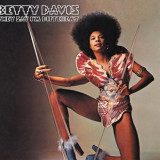
One can hardly imagine the genre-busting, culture-crossing musical magic of Outkast, Prince, Erykah Badu, Rick James, The Roots, or even the early Red Hot Chili Peppers without the influence of R&B pioneer Betty Davis. Her style of raw and revelatory punk-funk defies any notions that women can’t be visionaries in the worlds of rock and pop. In recent years, rappers from Ice Cube to Talib Kweli to Ludacris have rhymed over her intensely strong but sensual music.
There is one testimonial about Betty Davis that is universal: she was a woman ahead of her time. In our contemporary moment, this may not be as self-evident as it was thirty years ago – we live in an age that’s been profoundly changed by flamboyant flaunting of female sexuality: from Parlet to Madonna, Lil Kim to Kelis. Yet, back in 1973 when Betty Davis first showed up in her silver go-go boots, dazzling smile and towering Afro, who could you possibly have compared her to? Marva Whitney had the voice but not the independence. Labelle wouldn’t get sexy with their “Lady Marmalade” for another year while Millie Jackson wasn’t Feelin’ Bitchy until 1977. Even Tina Turner, the most obvious predecessor to Betty’s fierce style wasn’t completely out of Ike’s shadow until later in the decade.
Ms. Davis’s unique story, still sadly mostly unknown, is unlike any other in popular music. Betty wrote the song “Uptown” for the Chambers Brothers before marrying Miles Davis in the late ’60s, influencing him with psychedelic rock, and introducing him to Jimi Hendrix — personally inspiring the classic album Bitches Brew.
But her songwriting ability was way ahead of its time as well. Betty not only wrote every song she ever recorded and produced every album after her first, but the young woman penned the tunes that got The Commodores signed to Motown. The Detroit label soon came calling, pitching a Motown songwriting deal, which Betty turned down. Motown wanted to own everything. Heading to the UK, Marc Bolan of T. Rex urged the creative dynamo to start writing for herself. A common thread throughout Betty’s career would be her unbending Do-It-Yourself ethic, which made her quickly turn down anyone who didn’t fit with the vision. She would eventually say no to Eric Clapton as her album producer, seeing him as too banal.
Her 1974 sophomore album They Say I’m Different features a worthy-of-framing futuristic cover challenging David Bowie’s science fiction funk with real rocking soul-fire, kicked off with the savagely sexual “Shoo-B-Doop and Cop Him” (later sampled by Ice Cube). Her follow up is full of classic cuts like “Don’t Call Her No Tramp” and the hilarious, hard, deep funk of “He Was A Big Freak.”
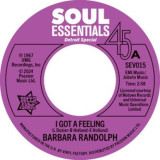
“I GOT A FEELING” was penned by Holland/Dozier/Holland for the Four Tops and first appeared on their 1966 album On Top. Great as that is – what’s not to like about the Four Tops – it is Ms. Randolph’s 1967 cover, and debut Motown recording, that stole the hearts of the emerging Northern Soul scene at the turn of the Seventies. A non-hit at the time, it has come to represent the sound that underpins and defines a Northern Soul dance record. Almost sixty years on it still fills the floor, compelling young and old to spin, stomp or shuffle to its joyous beat.
Our flip-side – “My Love Is Your Love (Forever)” – is best known by the Isley Brothers and is perhaps the most treasured of their rare soul recordings (also available from Outta Sight, SEV014). Barbara’s unreleased take was completely unknown to the scene until Universal America unleashed it as a digital download in 2015.
Barbara Randolph only released two singles for Motown on their Soul imprint. Perhaps Berry Gordy couldn’t see past her acting career? Whatever the reasoning at the time, a further 15+ songs were recorded and sadly remained in the vault until after Barbara’s passing in 2002.
Yunchan Lim is the one of the most talked-about classical artists on the planet. In 2024 he presents his debut studio album on Decca Classics – the Chopin Études, Op.10 and Op.25. Yunchan Lim became the youngest ever winner of the Van Cliburn International Piano Competition in 2022, aged only 18; his performance of Rachmaninov’s Piano Concerto No. 3 moved his conductor to tears and gathered unprecedented millions of online viewers. In the months following, his rise to stardom has been meteoric, with invitations from the most prestigious concert halls and orchestras. Now, setting down the Op. 10 and Op. 25 Etudes, Lim is putting himself in a direct line with some of the greatest pianists of the past. Lim says “a huge universe of pianists played this repertoire, and I have always wanted to become a fundamental musician like them, so I decided to follow their route.” He has grown up listening to great pianists recording this music, including some of his favourites - Alfred Cortot, Ignaz Friedman, Joseph Lhevinne, Mark Hambourg and Sergio Fiorentino, among others.
Since roaring onto the scene, the band has cemented themselves as one of British indie's most consistent and successful groups.
The immediacy and carefree attitude are the driving motivations of this superb new release via the band's own independent label, Alt. Records. With creative collaborations including Matt Schwartz (YungBlud), Benjy Gibson (Fred Again), Kid Harpoon (Harry Styles) and The Nocturns (Mimi Webb), this record is for fans of guitar music who are not afraid of big hooks and massive choruses. The result
is their first album without compromise, reflecting the joy and energy they brought to the scene with their debut 'Open Up Your Head' and hit songs like 'Call Me Out' and 'All I Want To Hear You Say'.
Since roaring onto the scene, the band has cemented themselves as one of British indie's most consistent and successful groups.
The immediacy and carefree attitude are the driving motivations of this superb new release via the band's own independent label, Alt. Records. With creative collaborations including Matt Schwartz (YungBlud), Benjy Gibson (Fred Again), Kid Harpoon (Harry Styles) and The Nocturns (Mimi Webb), this record is for fans of guitar music who are not afraid of big hooks and massive choruses. The result
is their first album without compromise, reflecting the joy and energy they brought to the scene with their debut 'Open Up Your Head' and hit songs like 'Call Me Out' and 'All I Want To Hear You Say'.
DJ Cat comes through on Scruniversal here as the young label continues to go from strength to strength early in its existence. This time he serves up some re-edits and reworks of old and rare records from Scru's friends' collections. Up first is 'Roots & Culture' which is a languid funk workout with Prince style vocals bring some libidinous vibes up top while sci-fi synths and raw claps and perc all flesh out the groove. 'Possibelle' then cuts loose on a much more laid back and steamy summer vibe with the sort of chords that have you laying back in the park and staring up at a cloudless sky.
- A1: Old Devil Moon
- A2: What Are You Doing The Rest Of Life?
- A3: Speak Low
- A4: It Might As Well Be Spring
- B1: Autumn In New York
- B2: There Is No Greater Love
- B3: Don't Explain
- B4: I Only Have Eyes For You
Anne Young sings emotionally and lively. The Yuji Ohno Trio that draws out and enhances its charm to the fullest. I am fascinated by the absolute masterpiece “Speak Low”
American club singer Anne Young’s first album recorded when she came to Japan in 1975. Backed by a trio of Yuji Ohno, Yoshio Ikeda and Yasuyoshi Okayama. It is a masterpiece that has been sought after for a long time both in Japan and overseas, with the recording of the absolute masterpiece “Speak Low”, which is glossy and full of dynamism. Eyes and eyes tend to be attracted to the same song, but this work has an emotional singing such as the light and neat “Old Devil Moon”, the graceful and beautiful “Autumn In New York”, and the earnest appeal “Don’t Explain”. The charm of young people is packed. And the arrangement and performance that draws out and enhances its charm to the fullest is also excellent. This work is also attracting attention as one of Yuji Ohno’s valuable piano trio works.
- A1: Dr Phil Omanski With Dj Weirdo - Young Birds (Original Mix)
- A2: Dj Sim - Simbiosis (Original Mix)
- A3: Dr Phil Omanski - Bzrk Feelings (Toni Salmonelli Mix)
- A4: Dj Sim With Dj Weirdo - Go Get Busy (Hardcore Edit)
- B1: Dr Phil Omanski With Dj Weirdo - One Tribes Jam (Org. Ragga Edit)
- B2: Dj Sim - Cartoons In Progress (Original Mix)
- B3: Dj Sim With Dj Weirdo - Pump That Stupid Bass (Hardcore Mix)
- B4: Dr Phil Omanski & Dj Weirdo - Young Birds (3 Steps Ahead Remix)
2024 Repress
"DJ Sim and Dr. Phil Omanski are the focal point in the fourth part of the extremely successful series; Hardcore Legends. DJ Sim is, without a doubt, a Hardcore Legend. Tracks like “Go Get Busy”, “Cartoons in Progress”, “Simbiosis” and “Pump That Stupid Bass” have made many hardcore hearts beat faster. These tracks inspired many hardcore artists. Dr. Phil Omanski aka Jorn Hanneman is essential in this series. Everyone remembers the hit “Young Birds” with the mega catchy synth stab and Celtic vocals, but also gems such as “BZRK Feelings (Toni Salmonelli Mix)” and “One Tribes Jam” are featured. Hardcore Legends by DJ SIM x Dr. Phil Omanski is available as a limited edition of 1000 individually numbered copies on translucent red coloured vinyl. "
Hardcore Legends by DJ SIM x Dr. Phil Omanski, released 4 April 2024, includes the following tracks: "BZRK Feelings (Toni Salmonelli Mix)", "One Tribes Jam (Org. Ragga Edit)", "Pump That Stupid Bass (Hardcore Mix)" and more.
This version of Hardcore Legends comes as a 1xLP.
"Remembering is not the opposite of forgetting," Casey MQ sings at the start of Later that day, the day before, or the day before that, his new LP and Ghostly International debut. It's a phrase fittingly misremembered from something the LA-based, Canadian-born composer came upon as he spiraled into unconscious and subconscious-led writing sessions at the piano. Casey's known for his 2020 breakthrough release babycasey, which gave voice to songs seen through the lens of childhood, various film score work and collaborations with artists such as Oklou (who returns here), Eartheater, and Vagabon. His gifts as a producer and songwriter are rooted in textural world-building and the excavation of personal truth. With Later that day... he questions what is true entirely, understanding our mind's tendency to bend and project onto pictures of the past. Across vivid, baroque pop balladry, Casey MQ reorients his recording project and point of view under the notion that memories are malleable. All the joy, pain, love, and loss housed within remembrance is open to interpretation and deconstruction, which he does deftly, with curiosity and complete artistic freedom. "It's a memory album," Casey puts it simply, winding up for the deeper unpacking, "and it might be a breakup album, too_there are more questions than answers." Engaging his dreams and sitting with sheet music at his newly acquired piano, he looked to new and old inspirations including the works of Claude Debussy, Joni Mitchell, and Joe Hisaishi's beloved Studio Ghibli film scores. "Since I was young, I always wanted to write a piano album." babycasey's studied electronic sound isn't wholly abandoned on Later that day... instead, it comes through like an atmosphere, giving Casey's more spacious, minimal arrangements a distinct luster and sheen. The textures and tones shift from song to song as if mirroring the way our minds constantly recontextualize, remember, and forget. Cathartic opener "Grey Gardens" _ its title derived from a dream abstractly related to the Toronto restaurant, but not the 1975 film, which he cites as another coincidental false memory _ presents the record's plaintive, haunted feeling. "Even if not reading into lyrics, sonically I wanted it to feel like you're being pulled into a universe. Not fantasy or otherworldly per se, something more tangible, of the body and mind," Casey says. "Hearing it back, I realized this track was the key to unlocking it." His tender falsetto hovers above ambient washes and echoed keys, each word falling carefully in the crevices. "Asleep At The Wheel" unfolds on arpeggiated synth before a burst of symphonic color; the synth returns inverted to harmonize with the outro, "I love a car crash, I love a story, I love a memory, I swear it's real..." Casey leans into digital imagination on the warm, introspective "Me I Think I Found It." Subdued, stuttered percussion underscores the singer as he cycles through pixelated imagery _ screenshots, smiles, streetlights _ searching for higher meaning through love. Built on ascendent chord distortions, "Dying Til I'm Born" gives the record one of its boldest pulses of emotion. The back half stretches out; "Is This Only Water" is sparse and foggy, "Baby Voice" is intimate and desperate for something to remain. "Words For Love" grooves on guitar, and "Tennisman9" aches in heartbreak. French musician Marylou Mayniel, aka Oklou, appears as the collection's only guest for the closing duet, "The Make Believe," a bright and buoyant send-off that gives Later that day... both a sense of resolve and cyclical-motion. "We are young, under the sun," they sing together, a parting image brimming with lightness.
Are you ready to hear the best live band of the early ‘70s? We at Real Gone Music have been privileged and proud to release Fanny’s four classic Reprise albums, each a tuneful testament as to why they were the first all- female band signed to a major label. But there has always been a piece missing from the Fanny fable; for while the band hooked up with big-time producers and engineers like Richard Perry, Todd Rundgren, and Geoff Emerick, their studio albums never really were able to capture the sheer excitement they could generate in concert. However, buried away in a vault thousands of miles away from their Los Angeles base there long lay a recording that could make the Fanny myth a reality, one that could provide the emphatic answer as to why these four ladies were the hottest ticket on the Sunset Strip during the early ‘70s. Now, over 50 years later, its time—and their time—has come. Live on Beat-Club ’71-’72 presents the two sets Fanny recorded for the German TV show, mastered by Mike Milchner of Sonic Vision from hi-res mono files taken from the original videotape. Aside from the incendiary and incredibly tight performances, what immediately becomes apparent is that all four of these women were powerhouses in her own right. June Millington’s stringbending Les Paul wizardry, her sister Jean’s driving, melodic bass lines and Janis Joplin-esque vocals, Nickey Barclay’s intricate yet somehow rocking keyboard work, and Alice de Buhr’s precise, piston-like drumming punctuated by ferocious fills—put together Fanny was an overwhelming display of talent, Yet somehow, as these shows reveal, live they were greater than the sum of their parts. That’s why getting these recordings released has long been a crusade for Alice, and why June tells the story in the accompanying liner notes (which feature contributions from June, Jean, and Alice) that the engineer who was assigned to do the transfers of all the Beat-Club material told her that their material was the best in the vault, better even than Hendrix. We are releasing this invaluable archival recording on juicy peach vinyl and on CD with a bonus track of the soundcheck to boot. Essential for a full understanding of ‘70s rock!
Black Truffle is pleased to announce Resonant Trees, the first vinyl release from French composer-performer Léo Dupleix. An active member of the international community of younger musicians working with just intonation, Dupleix has composed works for solo instrumentalists and ensembles in Europe and Japan, as well as performing extensively on harpsichord, piano and electronics. His music is distinguished by a formal clarity and elegance of surface, gently shaping pure intervals into delicate melodic patterns and shimmering harmonic planes.
Resonant Trees presents two side-long pieces for harpsichord and ensemble, both setting slowly repeating patterns played on harpsichord and guitar within an environment of sustained tones. Dupleix performs on a French double manual harpsichord (tuned to a just intonation scheme of his own devising) and Prophet synthesizer, joined by Juliette Adam (bass clarinet), Johanna Bartz (traverso flute), Cyprien Busolini (viola), Fredrik Rasten (6- and 12-string guitars), and Mara Winter (traverso flute). The harpsichord begins Resonant Tree I alone, slowly sounding out a series of arpeggiated chords that emphasise the unique (and for unaccustomed listeners, sometimes unsettling) harmonic and timbral qualities of justly tuned intervals. Long tones from synthesiser, bass clarinet, viola and Baroque traverso flutes slowly creep into the spaces between the arpeggiated chords, joined after several minutes by delicate patterns of harmonics played by Rasten on acoustic guitars.
On Resonant Tree II, a similar structure and ensemble (without the flutes) are used with quite different results. We again hear only the harpsichord at first, but this time playing a series of flowing melodic lines, each of which is repeated several times. Joined again by long tones from the ensemble, here the viola is particularly prominent and its interplay with the harpsichord creates fascinating acoustic effects. In both pieces, repetition gives the music a static, stable quality while, at the same time, the exact shape of the repeating patterns remains difficult to grasp. As Dupleix writes, these pieces dream of music as ‘space and a sound that one could grasp in one’s hand.’ As the near-static quality of the repetitions and long tones with little incident make these two stretches of musical time feel like spaces for the listener to inhabit, the small variations on a narrow range of related material act like a three-dimensional object whose each facet is examined in turn. At once austere and seductive, Resonant Trees takes its place beside the work of contemporaries like Catherine Lamb, while also calling up the languorous melodic world of Mamoru Fujieda, the dignified melancholy of Satoshi Ashikawa’s classic Still Way and the espaliered chamber atmospherics of the Obscure catalogue.
When Man Man released its last album, "Dream Hunting in the Valley of the In Between," frontman Honus Honus (née Ryan Kattner) was in a state of unrest, oscillating between hope and cynicism. Perhaps fittingly, the album dropped during the pandemic, a time at which we could all relate. But, much like that bizarre turn of events, the ennui now seems so distant to Man Man. A revived sense of purpose washes through Man Man's new album, Carrot on Strings, radiating a mix of calm and confidence. Kattner always embodied a wild-man pied-piper vibe: his melodic, unhinged art-rock was at once intriguing and angsty. He was so alluringly creative that you went along with it, even if you were never sure where Man Man would take you. Carrot on Strings is no less inventive, but its ethos is radical in context of the band's two-decade career. "When I was younger, I would feed off of chaos. I would, you know, be upset and get drunk and smash chairs," Kattner explains. "Now those chairs are in my head: It's less of an outward projection, more of an interior monologue." The name "Carrot on Strings" came to Kattner while experimenting with the sound of someone munching on the vegetable, which you can hear in the cacophonous, similarly named song. It alludes to how success always seemed to dangle uncertainly before him, often just out of reach. But listen intently and you'll hear a more content Kattner finding an uneasy peace: "Life, as far as I've known it, has always been side hustles. Would it be great if I could go into a studio and record for a year without figuring out how to finance it? Yeah, it would be," he says. "But ultimately, I need to keep making music because art is an extension of my psyche. It's how I have learned to translate the palpitations of my heart. Simply put, I'd go insane without it." Growing up as a multiracial Hapa kid (half Filipino, half white) with a father in the U.S. Air Force, Kattner lived an itinerant childhood that included a few pivotal years in Germany, where he honed in on an appreciation for out there German cinema and art. His film obsessions and screenwriting background were crucial to Carrot on Strings. The album nods to the films of Werner Herzog and Rainer Werner Fassbinder as much as Italo-disco, Randy Newman, goth rock, and avant pop. (Kattner continues to work in the film industry with an acting role in the upcoming horror-comedy movie Destroy All Neighbors, for which he also served as composer; music supervising season 1 & 2 of the Interview With The Vampire AMC TV series; and shopping around, with director Matthew Goodhue, a script he wrote that he describes as a Wim Wenders road movie on acid.) In a bid to not overthink anything - his last album took seven years to make - he recorded the bulk of Carrot On Strings in five days in Mant Sounds studio in Glassell Park, Los Angeles with "very chill" producer Matt Schuessler, who had worked on Man Man's cover of Neu!'s "Super" for the seminal Krautrock band's box set. The resulting album represents a newfound sense of self for Kattner, who finds himself inspired and at peace both personally and artistically in ways that eluded him for most of his first 15 years playing music. When, on Carrot On Strings, you hear Kattner croon humbly, or sing of the tension between his outsize stage persona and the thoughtful, soulful guy he actually is, you're hearing Kattner liberate himself. "I first got into music to escape from myself," he says. "And now, it sounds so corny, but I have zero doubt that music ended up saving my life."
Multi-talented US punk, Jeff Rosenstock releases fourth album on Specialist Subject Records (UK /EU) & Polyvinyl (Worldwide)! NO DREAM comes at a time of unparalleled chaos and confusion, division and despair, the depths of which would have been impossible to predict when much of it was being written over the course of the last few years. And yet the record feels prescient, unexpectedly and uniquely suited for this moment. Newly settled in Los Angeles after a lifetime on the East Coast (namely Brooklyn by way of Long Island), Rosenstock recorded NO DREAM with Jack Shirley (Deafheaven, Hard Girls, Joyce Manor) at Oakland's Atomic Garden, and even took on mixing duties alongside Shirley for the first time. Opting to stay off the computer "even more than usual" and record to tape with outboard gear, the result is a lived-in sound that gives each song its own individual voice and organic energy. After building a cult following with the acerbic ska-punk of the Arrogant Sons of Bitches and DIY heroics of Bomb the Music Industry!, Rosenstock's first proper solo record, 2015's We Cool?, was a step into uncharted territory, fully untethered from genre and expectation. Followed by 2016's WORRY. and the surprise New Year's Day launch of POST- in the early hours of 2018, Rosenstock was facing down that least punk of opportunities: a career playing music. Having taken some time away from his work as a solo artist to recalibrate and reset over the last year, Rosenstock stayed busy playing alongside Mikey Erg, recording and touring with the Bruce Lee Band, releasing a Neil Young covers record with frequent collaborator Laura Stevenson, reissuing two of his own out-of-print early albums, compiling a live album which was recorded during a run of four sold-out shows at Bowery Ballroom, making a 76 page photo book, and scoring over 80 episodes of the Cartoon Network series Craig of the Creek. In fully returning to his own voice, it's no surprise that Rosenstock's output has never been more eclectic, reflected across NO DREAM's 13 songs.
San Francisco psych-pop legend announces new album, “La Fleur” out June 7th, 2024. Between outside musical projects, pushing past 50 years old and becoming a father for the first time, San Francisco psych-pop legend Kelley Stoltz has spent the past two years steadily writing and recording his 18th album, “La Fleur”. The dazzling 12 song collection will be released in June by Agitated in Europe/UK and Dandy Boy Records in the USA. “La Fleur'' finds Stoltz once again playing nearly all of the instruments on the album- though a new friendship with pop guru Jason Falkner has led to Falkner appearing on two songs, “Hide In A Song” and “Make Believer” respectively. There’s the requisite 60’s meets 80’s pop rock confections that Stoltz favors with a new focus on out front vocals and perhaps a bit shinier production. Pandemic era blues, politics and fatherhood are lyrical touchstones throughout. The album’s first single “Reni’s Car” is the jangle rock lead single based on an actual event of Kelley riding around Manchester in the Stone Roses drummer's car. The accompanying music video was shot (partially) on location. “About Time” marries Twin Peaks synths to Fleetwood Mac and Avalon era Roxy Music in a cautionary tale to Stoltz's young daughter. “Human Events” puts revolutionary prose to a Moody Blues strum that floats off into Osees territory …and do I hear a nod to Gershwin in there? During the 2010’s Kelley played live as a sideman with Rodriguez and Echo & the Bunnymen, as the 2020’s dawned he was invited to support Pavement on their big reunion tour. He’s also been heard playing drums live with Robyn Hitchcock as well as adding sitar to Hitchcock's last two albums. In 2022, Stoltz was championed with a live appearance on Marc Riley’s BBC6 show. As producer, he has recorded the new album by Brigid Dawson formerly of the Ohsees. In my ears, Stoltz rarely does any wrong, and these comparisons are only just that little fruit to get you curious- he is still one of a kind. An under the radar hero to a few, and still after all these great songs, deserving of more. Climb on the bandwagon - as ever it’s quite pleasing here. - GEORGE CLOUD San Francisco, CA 2024