Born in Antwerp in 1939, Ferre became a true icon in the sixties, adored by youngsters and hippies and hated by the establishment. His successful debut album in 1966, which featured the hits “Ring Ring, I’ve Got to Sing,” “Crucified Jesus,” and “Drunken Sailor,” brought him an international breakthrough with concerts in Paris, London, and Hamburg, leading to a contract with the famous French Barclay label. The next three albums did not equal the initial commercial success — a pressure the music business was happy to put on his shoulders. Still, these three albums, reissued in their original packaging and artwork on vinyl for the very first time, are loaded with hidden gems, combining folk, blues, and psychedelics in Ferre’s original songs.
Grignard sadly succumbed to throat cancer in 1982 at the early age of 43.
Search:the young p
- Roadwork Rappin' - Main
- Roadwork Rappin' - Instrumental
After delighting fans of all ages with the surprise children's hit "Long Legged Larry," underground hip-hop icon Aesop Rock returns with "Roadwork Rappin'," a joyful ode to construction vehicles and the kids who love them. Inspired by the fascination many children have with bulldozers, front loaders, and cranes, the track delivers clever rhymes and vivid descriptions in classic Aesop fashion_this time with a whimsical twist. Over a minimal beat with a bouncing bass line that evokes the lumbering roll of oversized construction tires, Aesop celebrates the sights and sounds of work zones, bringing dump trucks and backhoes to life with vivid wordplay. The song is part educational, part imaginative world-building, capturing the wonder of watching giant machines reshape our surroundings. What makes it shine is Aesop's funny and wildly specific wit, packaged in a format that's approachable for younger listeners but still rewarding for longtime fans. With "Roadwork Rappin'," Aesop continues to expand his creative universe in unexpected ways, proving once again that his pen knows no bounds. Whether it's blaring from a car seat playlist or sparking nostalgia in adults who once chased garbage trucks down the block, this track is a joyful celebration of curiosity, machinery, and the poetry hiding in plain sight.
- A1: I Warned You
- A2: The New Sheriff
- A3: All Right
- A4: Orphan Blues
- A5: Irene Goodnight
- B1: I’m Alabama Bound
- B2: Have A Whiff On Me
- B3: On My Dying Bed
- B4: Midnight Special
- B5: Smoozy Punky Baby
Born in Antwerp in 1939, Ferre became a true icon in the sixties, adored by youngsters and hippies and hated by the establishment. His successful debut album in 1966, which featured the hits “Ring Ring, I’ve Got to Sing,” “Crucified Jesus,” and “Drunken Sailor,” brought him an international breakthrough with concerts in Paris, London, and Hamburg, and led to a contract with the famous French Barclay label. The next three albums did not equal the initial commercial success — a pressure the music business was happy to put on his shoulders. Still, these three albums, reissued in their original packaging and artwork on vinyl for the very first time, are loaded with hidden gems, combining folk, blues, and psychedelics in Ferre’s original songs.
Grignard sadly succumbed to throat cancer in 1982 at the early age of 43.
- A1: De Vrouwen Die Ik Nooit Heb Gekend
- A2: Broekjes Aan De Lijn
- A3: Alzheimer Blues
- A4: Mooi Zoals Je Bent
- A5: Ijsje Met Chocola
- A6: Sex Op Vreemde Plaatsen
- B1: Jessica
- B2: Vaginale Vakantie
- B3: Meneer De Generaal
- B4: De Zuchter
- B5: De Blik Die Je Die Gast Geeft
- B6: Ik Wil Mezelf Bedanken
‘Tedere Baldadigheden’, Guido Belcanto's new, long-awaited album in a production by Firmin Michiels and Guido Op De Beeck, was released on 4 October, 2024 at the beginning of a very extensive, sold out tour. It is a special retrospective from an award-winning singer who looks back with melancholy and humour on the many mischievous adventures that marked his life. Love prevails, but tragedy and tristesse also leave their mark on Belcanto himself and the scarred souls of the many colourful characters who come to life in his songs.
This 15th studio album undoubtedly represents a new high point in Belcanto's oeuvre, which now numbers over 300 songs, with 11 of his own songs and 2 surprising adaptations of songs by Eels and Guido's idol Renaud. Besides members of his loyal backing band Het Broederschap, guest musicians such as Stoy Stoffelen, David Poltrock, Evert Verhees, Jan De Smet, Alban Sarens, Adriano Cominotto and Chris Peeters also play along. Also notable are certainly the passages of Lara Chedraoui (Intergalactic Lovers) and The Bonnie Blues.
For more than 40 years, Guido Belcanto has been creating a universe all his own with his songs. A warm, recognisable home for everyone, young or old, rich or poor, winner or loser. A home too, masterfully brought to a stage where the audience is allowed to be themselves without embarrassment, praising happiness, measuring the damage suffered, letting the tears flow and the laughs ring out.
- A1: Shoot Me Baby!
- A2: You’ve Got To Hide Your Love Away
- A3: The Mother Road (Live)
- A4: Dust My Blues
- A5: Come On A My House
- A6: On The Wayside (Live)
- A7: Driftin’ And Driftin’ (Live)
- B1: Seasons Of The Witch (Live)
- B2: Ayahuasca
The Shakes was a legendary Belgian psychedelic blues rock band founded by multi-instrumentalist Alain Verdier and active between 1967 and 1969. They played approximately 100 gigs in Belgium, Holland, France, and Germany, and once supported The Who. The young virtuoso guitarist in the group was none other than the late Dany Lademacher, who later gained fame as a sideman for Herman Brood and co-author of some of his biggest hits. Lademacher, also known for his own band Innersleeve and his work with Kleptomania, Vitesse, and The Radio’s, contributed to Shoot Me Baby with a wealth of previously unreleased material from personal archives.
Born in Antwerp in 1939, Ferre became a true icon in the sixties, adored by youngsters and hippies and hated by the establishment. His successful debut album in 1966, which featured the hits “Ring Ring, I’ve Got to Sing,” “Crucified Jesus,” and “Drunken Sailor,” brought him an international breakthrough with concerts in Paris, London, and Hamburg, and led to a contract with the famous French Barclay label. The next three albums did not match the initial commercial success — a pressure the music business was happy to put on his shoulders. Still, these three albums, reissued in their original packaging and artwork on vinyl for the very first time, are loaded with hidden gems, combining folk, blues, and psychedelics in Ferre’s original songs.
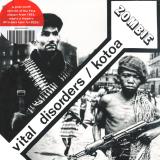
- A1: Vital Disorders - Zombie
- B1: Kotoa - Zombie
Wah Wah 45s present a unique moment from 1982 where New Wave and Post Punk collided with Afrobeat in the shape of Norwich DIY outfit Vital Disorders and their subversive yet instantly memorable version of the Fela Kuti classic, Zombie.
Band member Suzy Cox explains more:
"The song came to the band through our vocalist Lenneka Van Gilst who was in the group between January 1980 and December 1981. Lenneka grew up in Nigeria and had the original track on vinyl. When she moved to Trowse House, Norwich, the flat under Chris, the VD's bass player, he heard the vibes floating through the floorboards. One thing led to another and it was in our set for ages. Lenneka had left the band to travel to Mexico by the time we recorded the track. We did well to choose it as the song has really stood the test of time. Lenneka had a lot of African Beat which was a big influence on us."
The track came to label boss Dom Servini's attention having been unearthed by BBC 6 Music DJ Gilles Peterson in late 2024, and a vinyl reissue of this rare and one-off gem was the obvious choice. Rather than pairing it with its original punky B-side though, Dom enlisted new signings to the label - young Afro-dub outfit Kotoa - to record their take on the Kuti classic. The quintet delivered what is a three minute, intense take on the Afrobeat genre, complete with youthful voices of protest echoing those of over 30 years ago.
The 7-inch vinyl only release of Zombie comes with re-worked art courtesy of our award winning designer Animisiewasz, taking the home-made look of the original cover and updating it respectfully for 2025.
- 1: Teach Your Children (With Crosby, Stills And Nash)
- 2: Rock Me On The Water
- 3: Forever Young
- 4: The T.b. Is Whipping Me (With Syd Straw)
- 5: Crazy
- 6: Matchbox
- 7: Folsom Prison Blues
- 8: You Gotta Be My Baby
- 1: Up Above My Head/Blind Bartimus (With Jerry Sullivan And Tammy Sullivan)
- 2: Willie Short
- 3: Fire And Rain
- 4: If These Old Walls Could Speak
- 5: When I Reach The Place I'm Going
- 6: Keep On The Sunny Side (With Earl Scruggs And Doc Watson)
- 7: Close Up The Honky Tonks
- 8: Pictures Don't Like
- 9: Goodbye Comes Hard For Me
- 1: What Does It Take
- 2: Lover Come Back
- 3: Someday We'll Be Together
- 4: Sad Memories
- 5: I Never Found A Girl (To Love Me Like You Do)
- 6: Where Did I Go Wrong
- 7: Place In The Sun
- 8: Ooh, I Love You
- 9: Bring Me All Your Heartaches
- 10: Don't Wanna Lose You
- 11: Hold On
- 12: Gee Baby You're A Pretty Thing
- 13: Not Too Young
- 14: There's A Heartbreak Somewhere
- 15: Hey Girl (I Can't Stand To See You Go) (Jaber Version)
- 16: Someone (Bigger Than You And Me)
The Collective Move
Land of the Sun, the Moon and Cosmic Melodies LP 2x12"
- 1: Chaos:cosmos (0:25)
- 2: Land Of The Sun (03:56)
- 3: Evolution (02:18)
- 4: Il Canto Della Luce (0:31)
- 5: Chandranandan (10:22)
- 6: Luna Mia Domina (02:48)
- 7: Pizzica Lunatica/Votata Cosmica (04:56)
- 8: The Prophecy (02:52)
- 9: Cosmic Melodies (07:32)
- 10: Cosa Dicono Gli Uccelli? Parte I (:58)
- 11: Cosa Dicono Gli Uccelli? Parte Ii (12:28)
- 12: Epilogue (03:00)
Black Vinyl[28,53 €]
"The Land of the Sun, the Moon and Cosmic Melodies" is a conceptual Opera of III movements, inspired by a cosmogony that features the planets of the sun and the moon. These two characters guides us on a journey of light and shadow, rising and setting in a cycle of unexplored musical territories.
The Collective Move presents its debut album with a broad palette of sounds, ranging from jazz to opera, from southern Italian folk music to northern Indian classical music, orchestrating a 60-minute "sonic narration" that ends with the fable "What do the birds tell?".
The Collective Move is an international group of young musicians formed in the Amsterdam Conservatory in 2022. The Collective's vision is to unite diverse artistic expressions and musical genres, inviting diverse artists and musicians from diverse cultures and countries to collaborate in flexible and interdisciplinary formations.
Within the nine carefully composed tracks of Young Bones, Mel D’s characteristic voice stands out in all its facets, varying from fragile to powerful, haunting to playful, but most of all soulful. With a voice that’s both extraordinarily clear and melancholic, Mel D is something surprisingly rare: a singer whose artistic expression goes beyond the mere use of her voice. On Young Bones, Mel D uses contemporary figures, rephrasing them into timeless formulas. Her unique musical language embodies references to genres like Indie or Alternative. In other moments, her sound leans baroque, then jazzy, soulful, and contemplative. Each song represents an ode to being connected: to the world, other people, and most of all to the beauty of music. Mel D draws her inspiration from struggles felt in the current world climate: “I have felt overwhelmed by the world we live in and its countless challenges,” said Mel D. “As if we’re all a bit directionless in our own lives.” Nevertheless, Mel D uses her musicality as a tool for resistance - using it to transform sadness and anger into creativity, and to give world-weariness a voice that seduces, comforts, and inspires. On Young Bones, Mel D sings us to a place where we might find hope - with songs rooted in concern, solidarity, humanness, and empowerment, inviting the listener to lean into those feelings. Bring the Witches Back, a hymn to witchcraft, is a quiet song that summons the return of witches with feminist urgency, for more love and magic to open ourselves towards each other and the world. Soft, a soulful song with a tender melody, gently lulls the listener into an in-between dimension, full of opportunities. Meanwhile, in the coming-of-age ballad, Slowly Growing, she raises questions about belonging and identity, pointing directly at our emotional core. Where Do You Look When It Hurts? speaks to the sensation of exhaustion and emptiness, offering musical warmth and a sense of community in moments of lethargy. Finally, listening to the album, one always feels in good company. Playfully working in folk and electro-pop elements, Mel D takes us on a ride toward love and a sense of belonging, particularly on the track We win. Young Bones was recorded in Zurich and Paris with two outstanding producers of our times: Renaud Letang, who has previously collaborated with Feist, Chilly Gonzales or Lianne La Havas, and Dino Brandão. The latter recognized Mel D’s artistic uniqueness during their first meeting, inviting her to a recording session in his studio and bringing her into the band of Swiss superstar, Faber. Mel D’s solo project was more a product of coincidence than planning, as she says, even though an undisputed talent and passion for music had always been apparent throughout her youth. During her studies in fine arts in Zurich, she founded the electronica-duo mischgewebe, and composed soundtracks for theater and movie productions, as well as for exhibitions. Long before forming her current artistic identity, she went by the nickname Mel D, in a humorous reference to the Spice Girls. Although her personality and musical language suggest thoughtfulness and a melancholy touch, Mel D acknowledges that an honest laugh is never out of place, making her sympathetic and approachable.
- Couldn't Leave U If I Tried
- It's Only Dancin
- Lo Lo Lonely
- Only Wanna See U Tonight
- Good Time
- Take Up All My Time
- But I Ain't Got U
- Same Old Fool
- She Don't Cry For Anyone
- Scam Likely
- April Of My Life
- Too Far Gone
- Change Your Mind
- Sign From God
- Overcome
- Love Me Don't Leave Me
- Cry 2 Sleep
- Cold In The Summer
- Maybe I Should Luv Somebody Else
- Helium
- Nervous Around U
- Nowhere At All
- Wind In My Blood
In the spring of 2020, Ben Cook _ a.k.a. Young Governor, Young Guv, or just Guv _ was holed up in the New Mexico high desert, his U.S. tour having been abruptly covid-cancelled during a southwest swing. He and his bandmates were living moment to moment in something called an Earthship, a solar-rigged adobe structure sustainably constructed with, among other things, recycled bottles and tires. And out there in the serene vastness, as a short ride-it-out stint turned into a nine-month sojourn, Ben was writing music, slowly, little by little, mostly at night while the others slept. By the New Year, almost in spite of himself, he had created a new album, two new albums actually, and through the ordeal he was forever changed. In a place he never expected to be, under circumstances no one could have predicted, and in the face of physical isolation, emotional desolation, and existential dread, Ben created GUV III & IV, a collection of songs dedicated and testifying to the eternal healing power of love _ how to find it in the world, in others, and most importantly, in himself.
- Anchorage
- Into The Night
- Eleanor, You
- Waiting
- Anchorage (Danny Blackburn/Adultdvd Remix)
Die Gang aus Stockton-on-Tees ist zurück, denn es gibt noch so viel zu erledigen. Mit "Anchorage" veröffentlichen YOUNG REBEL SET ihren ersten neuen Song seit 2013, und veröffentlichen im September 2025 die "Sun" EP an - die erste Veröffentlichung der britischen Indie-Pub-Rocker seit dem Tod ihres Sänger Matty Chipchase im Dezember 2019. Doch "Anchorage" ist mehr als nur ein Comeback-Song, er ist ein Stück Geschichte. Geschrieben wurde der Song bereits 2012, während der Arbeiten am zweiten Album "Crocodile". Live gespielt wurde er damals in Originalbesetzung bereits, doch nun, über zehn Jahre später, wurde er auch aufgenommen. Und zwar in den legendären Abbey Road Studios in London - erstmals steht Sänger Tom Blackwell am Mikrofon. Seine Stimme bringt eine raue Wärme in den Sound der Band, der Matty Chipchase Respekt entgegnet, ohne zu versuchen, ihn zu imitieren.
In the smoggy orange light of a new millennium, the young Deb Demure would take the bus, once a week, from his home in crumbling Hollywood to his grandmother's apartment, nestled in the pastel pristineness of Beverly Hills. During these visits, Deb couldn't help but notice the disconnect between the glow of his grandmother's temple, and the downtrodden, alienated figures that populated the seats of the mass transit that took him there. Week after week, he would observe these characters: fading B-movie starlets, leisure-suited alcoholics and forgotten civil servants. But one fateful commute home, as the twilight waned to the purple Los Angeles night, he realized these figures were not as lost as they appeared - there was a nobility in their failure, reflective of the dignity of the city's vanishing golden era. They were survivors, in need of a voice: a spokesperson for every color of hope and hopelessness, transcendent of gender and time; Drab Majesty became Deb's musical podium for this undertaking. Raised in a music-centric household, Deb would find the time to teach himself to play his father's right-handed guitar upside down and left-handed; an unorthodox fashion from where his earliest understanding of chords and harmony were conceived. Exploring the bins of discarded vinyl in his neighborhood thrift stores, his toolkit expanded with the subterranean sonic gems of the recent past. Influences range from the virtuosic arpeggiated guitar work of Felt's Maurice Deebank and the grittier pop progressions of Red Lorry Yellow Lorry's Chris Reed as well as Steve Severin from Siouxsie and The Banshees. He also studied the harmonic oscillations and utilization of the occult power of vibratory frequency present in New Age sounds of Greek artist, IASOS. In terms of orchestration, he consciously culls from the seaside maximalism of Martin Dupont and mechanized grooves of early Depeche Mode. Like a dualistic pendulum, his vocals swing from a preistly baritone to a choir boy's falsetto reflecting the sepulchral ambiance of church visits with his grandmother. Currently the drummer for Los Angeles lo-fi rock ensemble Marriages and having honed an unorthodox home recording style, Deb sources his sounds from a repository of "mid-fi" synthesizers and other lesser-quality instruments. Following the release of his debut cassette EP, "Unarian Dances", he also shared a split 12" with synth pop forefathers, Eleven Pond. During the Spring of 2015, Drab Majesty signed with Dais Records and released his first single, Unknown to the I, as a introduction for his first initial foray into the album format, romantically titled Careless. Written over the course of 2 years, "Careless" is a compendium of songs that have outlasted a malicious burglary of his studio, his struggles with substance addiction, and most recently, the death of his beloved grandmother.
World Of Echo announces the reissue of two remastered albums by Japanese guitarist and songwriter Naoki Zushi, 1988’s Paradise, and 2005’s III. Two classics of Japanese psychedelia, both Paradise and III were originally released on Org Records, the imprint of Shinji Shibayama of acid-folk group Nagisa Ni Te, with whom Zushi has guested on second guitar for decades. Both intimate and expansive, rich with revelatory songwriting and blasted, sky-scouring guitar, these reissues return these albums to print for the first time since the 2000s. It’s the first time III has been officially released on vinyl, with an extra, previously unreleased track, “Under The June Moonlight.”
Recorded in Kyoto’s Townhouse Studios in mid 1987 and released in limited-to-500 vinyl pressing in 1988, Paradise emerged from a scene in Kansai, Japan that was embracing the idiosyncracies of 1970s singer-songwriters, the soaring solos of early seventies psychedelia, and the DIY impulse of 1980s post-punk. While Zushi’s musical history stretched back to the early eighties – he was a founding member of Jojo Hiroshige’s noise outfit Hijokaidan – he found his feet with groups like Hallelujahs, whose dream-pop collection Niku O Kuraite Chikai Wo Tateyo was recently reissued by Black Editions, and Idiot O’Clock.
Paradise appeared two years after that Hallelujahs album and share much the same membership – Zushi’s backing band on several of the songs includes Shibayama on drums and Ken-Ichi Takayama (aka Idiot) on electric guitar, though just as often, Zushi plays all the instruments himself. The coordinates here are wide-reaching – you can hear the volume and intensity of Neil Young & Crazy Horse (on “Hallelujah: Left Side” and “Paradise: Midday”), the slow-motion magic of Galaxie 500, the idiosyncratic spirit of The Only Ones, all mixed up with tender guitar miniatures and stumbling garage-psych-pop moves.
Seven years later, after the transitional album Phenomenal Luciferin, Zushi released III. Perhaps his masterpiece, it’s already been bootlegged on vinyl, but this reissue is the real deal. The album was recorded at Studio Nemu over seven years, and sees Zushi backed by Shibayama (bass) and Masako Takeda (drums), his erstwhile bandmates in Nagisa Ni Te. By this stage, Zushi had started to really stretch out, and many of the songs on III swoon languorously, taking their sweet time to say what they need to say. It’s rich with lovely, melancholy songs, in a similar realm to bandmates Nagisa Ni Te, of course, but you can also hear traces of everything from Syd Barrett’s The Madcap Laughs, through seventies private press loner folk, to the slow-burn meanderings of the likes of early Low or Damon & Naomi.
When interviewed by Shibayama in the mid-nineties, Zushi said of Paradise, “it was a sort of collection of songs that had meant something to me up to that point… it was my paradise. I wanted to create paradise.” That’s something Zushi achieves on both of these albums – visionary Japanese psychedelia, en route to paradise. - Jon Dale
g Under The June Moonlight vinyl only bonus track
Teppana Jänis was born in the village of Uuksujärvi in Suistamo on 21 June 1850. After becoming blind in the late 19th century, he went house to house, supporting himself by playing the kantele, a traditional Finnish and Karelian plucked string instrument belonging to the southeast Baltic box zither family. He performed at dances and in schools, and also participated in the Suistamo kantele and runosong competitions in 1911.
In the summers of 1916 and 1917, the young folk music researcher Armas Otto Väisänen (1890-1969) made collecting trips to Border Karelia. His aim was to collect kantele tunes, laments and shepherd melodies, which were confusingly few in the archives. The 1916 trip was financed by the Finnish Literature Society, who provided a phonograph for recording purposes. In 1917, the trip was financed by the Kalevala Society and the recording was carried out using a parlograph. During these two summers, Väisänen recorded kantele players in the parishes of Suojärvi, Korpiselkä, Suistamo, Tuupovaara, Kitee and Impilahti. Väisänen met Teppana Jänis in both summers and transcribed 22 kantele melodies from him. He recorded 14 of these on wax cylinders.
This LP, titled simply 'Teppana Jänis' fuses and intertwines the original raw cylinder recordings with replayed pieces by Kantele player and researcher Arja Kastinen together with the now late Finnish folk musician Taito Hoffrén, taking into account the additional information and notes found in Väisänen's sheet music manuscripts. Warm thanks to the Finnish Literature Society for permission to use the archive recordings, to Risto Blomster for his invaluable assistance, and to the Karelian Cultural Foundation.
- Buenos Das Juventud El Zigui Y Una Luz
- Dama Gentil Grupo Espiga
- Viendo La Lluvia Grupo Syma
- Lgrimas En Tus Ojos La Fe Perdida
- People Ladies W.c
- Quiero Claridad Los Fabricantes De Muñecas
- El Cielo Est En Tu Mente Los Memphis
- Sed De Amor La Cuarta Calle
- Joropo Nº 2 Grupo C.i.m
- Amor Y Felicidad Grupo Pan
- Stormy Los Rangers
- Regresa Junto A Mi Los Chicos Malos
- Siembra Tus Sueños Ciruela
- Conoce El Amor The Four Blues
- Di Quién Es Feliz La Cuarta Calle
Welcome to a kaleidoscopic picnic where you can feast on a music scene that was rich, sparkling, multi-colored, ground-breaking and it'll blow your mind. A prodigious soundscape that blends the Caribbean and the Amazon sophistication and flavors; raw yet delicate textures. "Joropop. Psych Pop & Folk in Venezuela, 1968-1976" features infectious Latin rock rhythms and timeless folk melodies across 15 ultra-rare tracks-most of which have never been reissued until now. Let's set off together to discover the magic of Caracas in the late '60s! DESCRIPTION Welcome to a kaleidoscopic picnic where you can feast on a music scene that was rich, sparkling, multi-colored, ground-breaking and it'll blow your mind. A prodigious soundscape that blends the Caribbean and the Amazon sophistication and flavors; raw yet delicate textures. "Joropop. Psych Pop & Folk in Venezuela, 1968-1976" features infectious Latin rock rhythms and timeless folk melodies across 15 ultra-rare tracks-most of which have never been reissued until now. The golden age of Caracas pop started in 1965. It replaced the wave of cloyingly romantic song writing as fresh talents leant into richer and more complex styles: folk-rock, psychedelia, soul, hard blues, symphonic pop, Latin rock etc. Singer-songwriters, experimental electric guitars and jam sessions all appeared on the scene, creating music that became increasingly refined and free. The industry took a while to catch on to this new trend and leave behind the teen idols and dream lifestyles. By the late 60s, there was a long list of new bands in the capital city. Young people finally found their voice. Let's set off together to discover the magic of Caracas in the late '60s!
Two years after Jazz N Palms served up his sumptuous Ses Rodes album, the Ibiza-based Italian is back with a series of 'Revisades', which means reviews in local language. Each track on this double 12" takes the original instrumentals into fresh realms with new mixes, new drum arrangements and the recovery of old takes not used on the original album.
The Jazz N Palms label and producer is Riccio, an artist who makes lush jazz-fusion, jazz dance, Balearic and downtempo instrumental music. Ses Rodes was inspired by the quiet, organic, slower side of Ibiza. It was written with young, talented local musicians, Riccio met at a jazz night at the famous Pikes hotel, and the record harks back to the island's beautiful natural charms that have been captivating visitors for hundreds of years. ‘They didn't ask me, but I did it anyway,’ he says of these magical new Revisades.
The reworks kick off with a smooth but busy broken beat rework of 'Manana', which is doused in romantic chords. 'Mediodia' becomes a jazz-funk gem, 'Tarde' picks up the pace with silky disco licks and 'Noche' glows warm with dreamy pads and soft focus vibraphone. The gentle grooves of 'Mar' are led by a sexy sax line and intimate interplay between funky bass and jazzy keys, 'Playa' is loved-up, sun-down bliss, 'Bosque' is an irresistible invitation to dance and 'Cielo' is a rich tapestry of horns, keys and percussive patter to soothe the soul.
With its deeper textures and looser grooves, Ses Rodes (Revisades) is a love letter to Ibiza’s slower side and healing spirits.