Banshee is the new record label from internationally renowned DJ/producer Brianna Price (B.Traits/Baby T). Drawing “esoteric aggressive feminine energy” from the folkloric figure that gives Banshee its name, the imprint will focus on the output of Price’s Baby T alias.
Brianna knows her way around a dance. Years spent producing, DJing, and touring under the B.Traits alias have given Price a vast knowledge of rave culture. Now, all of that experience has been put to good use as part of Baby T’s “hardcore junglist shit only” approach. Anyone who has encountered a Baby T tune in a dark basement over the years should know that there will be no messing around with Banshee’s output. Baby T specialises in hardcore rave tackle schooled by junglism, electro and darkside techno, the project’s sound was honed via releases on labels like Samurai Music and Central Processing Unit. It’s a style at once wild yet focused, untamed yet laser-precise - This is music that will make the hairs on the back of your neck stand up – not unlike a banshee’s shriek, in fact…
The first Banshee release is not a collection for the faint of heart. Each of these four cuts is primed for deployment at the point of the party when things really kick into overdrive. Fiercely danceable, and unapologetically abrasive, Baby T’s productions here can school any challenger in the electro, techno, and jungle fields yet also carry themselves with a punkish spirit that sets them apart from the pack.
Search:themselves
Indies Only LP is opaque green vinyl. Both LPs come with a download. The moment the needle drops on Bite, the new A Giant Dog record, one’s conception of what an A Giant Dog record sounds like bends like space and time around a starship running at lightspeed. The biggest point of departure is that Bite is a concept album, concerning characters who find themselves moving in and out of a virtual reality called Avalonia. A Giant Dog’s first album of original songs since 2017’s Toy, Bite finds the band Sabrina Ellis, Andrew Cashen, Danny Blanchard, Graham Low, and Andy Bauer at their peak as musicians, challenging themselves with more complex arrangements and subject matter that forced them out of their heads and into those of the characters who occupy this supposed paradise. “We had to find ourselves within, or project ourselves into, the principal characters. We developed them, got to know their minds, emotions, and motivations, and then expressed those in nine songs,” Ellis explains. Themes of addiction, gender fluidity, living ethically in a capitalist society, physical autonomy, avarice, grief, and consent bubble beneath the promised happiness of Avalonia. This is evident in songs like “Different Than,” where Ellis sings, “My body can’t explain the things my mind don’t comprehend” as if societal gender pressure is squeezing its protagonist out of their skin. The songs on Bite are full of bombast, at turns calling to mind the spacefaring operatic rock of Electric Light Orchestra and the high drama of an Ennio Morricone film score. The album’s narrative sweep is epic in scope, its characters facing impossible odds and certain doom, existing as comfortably with the sci-fi grandiosity of Thin Lizzy’s Jailbreak as it does with the high fantasy of Dio and Iron Maiden. Appropriately, A Giant Dog came to this narrative armed to the teeth with new ideas, unleashing synthesizers and string sections to create what Ellis describes as orchestral, symphonic, futuristic punk. To achieve this, they left their home turf of Austin, Texas, for La Cuve Studio, just outside of Angers, France. Living in the French countryside, A Giant Dog laid down their vision of the future against a decidedly pastoral backdrop. On walks from Angers to La Cuve, Ellis says that they “would see many things, and also nothing at all. Swans on the river. Romani people living in little trailers, with a side hut built for their dog. A juggler on a unicycle—not fucking with you.” “We thought we wouldn’t be allowed back in France after this trip, to be honest,” they continued. “Five loud, stomping, clapping, rowdy Americans who ran through the streets of Angers for three weeks in November 2022.” The experience capped two years of planning and writing, fleshing out the universe of Avalonia beyond the bounds of most concept albums. The resulting nine songs do not merely occupy this space: They’ve lived in it, and they want out.
In Rumi's poem A Great Wagon he writes of a place of total acceptance. "Out beyond ideas of wrongdoing and rightdoing, there is a field. I'll meet you there," It is a boundless, liminal space where we can release the judgments we make and carry of ourselves, and the comparisons to others. When we think of this field, there is a sense of tranquility that only comes when we are undisturbed by the shadow self and see existence as neither bright nor dim, white nor black. But as lead singer Greg Bertens explains, arriving there is a whole different story. "This is a poem I've returned to over the years, and I love the idea of this place, but getting there is life's journey." Bertens adds "I think the longing for and elusiveness of this field is a recurring theme in our music." Field is enveloped by themes of regret, disconnection and frustration but with the space to understand that these feelings are a natural part of the struggle between reconciling the inner and outer self. The Los Angeles/San Francisco-based group have been indie shoegaze stalwarts since their formation in 2001. After two decades and a handful of line-up changes, their extensive discography presents a dynamically textural, lush psychedelic rock that has featured guest appearances by members of Pavement, My Bloody Valentine, and Snow Patrol, among others. 2021's LP We Weren't Here was hailed for its dense instrumental blanket, where unrelenting hi-hats and heavy kicks exist alongside dreamy drone guitar. This propulsive nature permeates Field, as members Bertens, Noël Brydebell (vocals), Nyles Lannon (guitar), Jason Ruck (synths), Justin LaBo (bass), and Adam Wade (drums) produce a kaleidoscopic sonic landscape. Patient, sprawling instrumentation builds a foundation in which Bertens' themes of endurance, perseverance and clarity can bloom with a considered poise. As a lyricist who writes in response to the instrumental arrangements, rather than a focus on a specific theme or person, Field is a testament to Film School's ability to create in the moment, and to showcase the magic that stems from when we are truly present. Album opener "Tape Rewind" is a swirling rush of color, as sustained guitars, darkened bass lines and urgent, percussive swells dance alongside each other. "This is the newest of all the songs on the record and feels like a new level of heaviness for the band," Bertens explains, noting that its lyrical context of struggling to move past trauma adds to its cathartic essence. Field is bookended by heavier themes, with closer "All I'll Ever Be" taking on the perspective of those we hurt when we embrace our own toxic behaviors. Originally written to be a simple acoustic guitar and vocals song soon turned into an ethereal, effects-laden composition, with Noël's hazy lead vocals ushering in a new-found acceptance. "It's all I want / To be released / And all I can be," she laments, cementing Field's message of accepting ourselves in whatever form we find ourselves in. "Defending Ruins" is a murky relentless underworld, inspired by the freewheeling tones of Texas-based band Holy Wave. "Defending the ruins, defending remains," Bertens spits, among a richly-layered outro. "Don't You Ever" confirms Film School's ability to merge both delicate and growling instrumentation throughout the album, with the song's softly spoken section hovering above sparkling guitar. "Is This A Hotel" bends towards the electronic aspects of the band, with wailing synths accompanying a story of bitter desire. With over two decades in the industry, Field cements Film School as a distinct, dominant force in the shoegaze scene. Soaked in an emotionally open, imaginative atmosphere, the album is both singular and expansive, and leaves the door open for a constantly evolving interpretation. Film School have never confined themselves to the rigidity of specifics, and it's on Field that they urge us to look beyond the binary of certainty, and to take a second look
- The Scum Always Rises To The Top
- Morbid Bails
- Les Mufflers Du Mal
- Ride Into The Rot (Everything Lewder Than Everything Else)
- Triple D (Dead, Drunk, Depraved)
- Lucifer?S Bend
- Brain Bucket
- Open Road X Open Casket
- Motortician
- Interquaalude
- Sissy Bar Strut (Nymphony 69)
- Cycling For Satan Part Ii
Cursed to ride forever on this mortal plane after partaking in a satanic drug ritual, the Death Wheelers pledge allegiance to the god of hell and fire. However, in order to prove themselves to their newly anointed leader and for the spell to take effect, the club Will need to engage in a series of lewd acts of sex and violence across the country.Immortality comes at a price and you’re about to pay for it… The beating heart of The Death Wheelers is a rumbling engine. Since their self-titled debut in 2015 and in 2020’s cinematic-storytelling breakout, Divine Filth, the Canadian outfit have tapped into wind-through-hair freedom and careened down open roads of groove, not a cop in sight. Their third record, Chaos and the Art of Motorcycle Madness, more than lives up to its name on all fronts. With songs like “Morbid Bails” and “Lucifer’s Bend,” the in-the-know references abound, and The Death Wheelers draw from classic underground metal, scummer heavy rock and cast themselves into a cauldron of cultish biker devil worship, reveling in any and all post-apocalyptic dystopias with genuine glee at having just seen the world eat itself. You might hear some surf guitar. Crazy things can happen. A sample in “Triple D (Dead, Drunk and Depraved)” underscores the message: “We want to be free to ride our machines without being hassled by the man. And we want to get loaded.” That line, from Roger Corman’s 1966 film The Wild Angels, serves as a mission statement, and as “Lucifer’s Bend” starts by laughing about how you can’t get away from Satan, they might as well carve it into their forearms to be ready when the blast of distortion hits, as much Entombed as Motörhead, galloping and sinister, coated in road dust and blood. The band tells the story like this: “Cursed to ride forever on this mortal plane after partaking in a satanic drug ritual, the Death Wheelers pledge allegiance to the god of hell and fire. However, in order to prove themselves to their newly anointed leader and for the spell to take effect, the club will need to engage in a series of lewd acts of sex and violence across the country. Immortality comes at a price and you’re about to pay for it…” While forging songs adherent more to ideology than style, The Death Wheelers cast their biker cult in their own image, and on Chaos and the Art of Motorcycle Madness, they challenge death head-on as only those with no fear of it could hope to do.
- A1: Intro
- A2: Conant Garden
- A3: I Don't Know Feat Jazzy Jeff
- A4: Jealousy
- A5: Climax (Girl Shit)
- A6: Hold Tight Feat Q-Tip
- B1: Tell Me Feat D'angelo
- B2: What's All About Feat Busta Rhymes
- B3: Fourth And Back Feat Kurupt
- B4: Untitled (Fantastic)
- B5: Fall In Love
- C1: Get Dis Money
- C2: Raise It Up
- C3: Once Upon A Time Feat Pete Rock
- C4: Players
- C5: Eyes Up
- D1: 2U 4U
- D2: Cb4
- D3: Go Ladies
- D4: Thelonious (Bonus Cut)
- D5: Fall In Love (Remix-Bonus Cut)
The contributions of the late Detroit producer James DeWitt Yancey -better known to the world as J Dilla- to the world of hip-hop can't be overstated, and nowhere is his legacy more apparent than his work as a member of Slum Village. A founding member of the trio, (Alongside rappers T3 and Baatin) Dilla provided the group's distinctly esoteric, free-wheeling sound, built around winding basslines, quirky drumbeats, subtle low-end frequencies, and classic jazz & soul samples. Against the backdrop of Dilla's rich production, T3 and Baatin's free-flowing style of rhyming would also earn wide critical praise, leading to comparisons as the successors to A Tribe Called Quest. (A label they themselves have rejected.) After the success of Slum's 1997 studio debut, Fan-Tas-Tic Vol. 1, the group went to work on their follow up. Though the project was completed in '98, label turmoil kept the project on ice until 2000. By the time Fantastic Volume II hit Dilla was well on his way to his status as a hip hop legend having produced cuts for Common, Busta Rhymes, Erykah Badu, A Tribe Called Quest and many more. Later works from Slum Village may have had more of an impact sales-wise (in the immediate) but Fantastic Vol. 2 had fans and many critics saying that Slum Village, and Dilla in particular, may single-handedly save rap music.' Perhaps that statement is hyperbole but many consider Fantastic Volume II to be Slum Village's finest work ever to this day. Ne'Astra Media Group now presents the album reissued on vinyl, for the first time in several years. Every wobbling bass note of J Dilla's production has been preserved to maintain the legacy of this hip hop rap classic and maintain the legend of one of hip-hop's greatest beatsmiths.
Whispers is the first proper P.G. Six album since 2011"s Starry Mind. Time passes slowly, as they"ve been known to say out in the country, and before you know it, there"s a bunch of it behind you. After five releases in the first decade of P.G. Six, it may seem a bit of a surprise to have not heard something new in the past twelve years - but a cursory listen to Murmurs & Whispers will answer why, as the deep acoustic focus of the tracks imply an investment of the type of compassion and understanding that takes time and concentrated effort to conjure. Additionally, Pat Gubler"s always got a few pots going at once in his ever-expanding musical universe. He"s been active since the mid-90s, first with Memphis Luxure and Tower Recordings, then as P.G. Six, and as a member of Metal Mountains, Wet Tuna, Garcia Peoples and Weeping Bong Band. Additionally, some time was spent making collaborative records with Dan Melchior (in 2019) and Louise Bock (in 2021). Pat"s been playing the harp for more years than he"s been in bands, but when he realized that he was writing a set of songs centered around harp compositions, he spent some time in the woodshed with his instrument, a late 80s model Triplett Celtic 34 String Harp (which replaced a lovely Paraguayan harp he"d played for years previously). After the previous P.G. albums of electric band arrangements, he was in a place of writing songs with more silence in them. He ended up playing a lot of the parts himself on Murmurs & Whispers, adding guitar, bass, keyboards, recorder and hurdy gurdy, in addition to his harp and vocals. Clark Griffin and Wednesday Knudson, who Pat plays with in Weeping Bong Band, played and sang a bit themselves, and the record was recorded piece by piece in houses around upstate New York by Mike Fellows. Returning to the quiet acoustic sound of the first couple of P.G. Six albums, Parlor Tricks and Porch Favorites (which has seen a much-needed reissue in the past year after too many years OOP) and The Well of Memory, Murmurs & Whispers is more straightforward in expressing its vision of rural celestial wonder. Bucolic and comfortably lived in, Murmurs & Whispers nonetheless projects the transcendent heart of P.G. Six once again, and as ever, it is magnificent to hear it passing through us.
FNUSSJEN is the brainchild of drummer / percussionist Nicolas Chkifi. In this band he brought together some extraordinary musicians in an unusual lineup: harpist Ann Eysermans, violinist Ananta Roosens, pianist Christian Mendoza and himself on drums. In their music, they drop the tempo, forcing the listener to immerse themselves completely in their delicate blend of contemporary classical, chamber music and jazz.
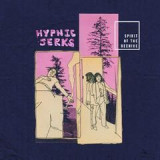
Unlike the spiraling momentum of the band's sophomore LP, pleasure suck, the spirit of the beehive takes a more grounded approach here, though the ground it's standing on is equally otherworldly. Dreamy is a fitting adjective, but the ten tracks on Hypnic Jerks never fully slip into the peaceful character of dream-pop. Hypnic Jerks has the quality of an indescribable dream fading from memory as you slowly begin to regain consciousness. Its warped guitar tones, transcendental synths and smattering of eerie audio samples conjure this purgatorial space between reverie and reality. It's an arena where the songs unexpectedly contort themselves and take on different textures, morphing in and out of one another. Once the celestial harmonies, balmy keys and creeping false climax of album closer it's gonna find you roll past, it's clear that the spirit of the beehive has secured a seat at this decade's table of musical visionaries.
- Rainy Day Women #12 & 35
- Pledging My Time
- Visions Of Johanna
- One Of Must Know (Sooner Or Later)
- I Want You
- Stuck Inside Of Mobile With The Memphis Blues Again
- Leopard-Skin Pill-Box Hat
- Just Like A Woman
- Most Likely You Go Your Way (And I'll Go Mine)
- Temporary Like Achilles
- Absolutely Sweet Marie
- 4: Th Time Around
- Obviously 5 Believers
- Sad Eyed Lady Of The Lowlands
Blonde on Blonde: A double album that transcends time, defies space, suspends reality, and looks through the human soul and tells the listener characteristics about themselves they didn't know. Professor Sean Wilentz, historian-in-residence for Bob Dylan's Web site, comes as close to summing up its brilliance in his superb Bob Dylan In America as any who've tried: "The songs are rich meditations on desire, frailty, promises, boredom, hurt, envy, connections, missed connections, paranoia, and transcendent beauty – in short, the lures and snare of love, stock themes of rock and pop music, but written with a powerful literary imagination and played out in a pop netherworld." No lie.
As part of its Bob Dylan catalogue restoration series, we are thoroughly humbled to have the privilege of mastering the iconic LP from the master tapes and pressing it on 45RPM LPs at RTI. We feel that the end result is the very finest, most transparent edition of Blonde on Blonde ever produced. Forever renowned for what the Bard deemed "that thin, that wild mercury sound," the album's famed aural character lives and breathes on this superb version, with wider and deeper grooves affording playback of previously buried information and lifelike presentation of the studio sessions.
Prized for a unique sound that cultural critic Greil Marcus tagged "the most glamorous record imaginable; listening you can see the chequered jester's suit Dylan had worn on stage for the nine previous, furious months," Blonde on Blonde is to music, production, prose, and performance as what hydrogen is to water. The secret to its inimitable aural character partially stems from Dylan's request in Nashville to producer Bob Johnston to remove the baffles from the studio room, allowing the musicians to interact as well as the music to assume a more organic quality that drifts from one microphone to another.
The story of Blonde on Blonde is almost as compelling as the music within. Dylan, frustrated with how initial attempts fared in New York, relocating to Tennessee and pairing with Nashville's top session players as well as members of what would become the Band, feverishly chasing perfectionism while also arriving at an on-the-fly feel that remains a reference point for recorded music. The Bard sweated over lyrics, demanded his band get the exact sounds he heard in his head, and limited most takes to a handful at most. A majority of songs were recorded long after midnight, the post-A.M. vibe reflected in the nocturnal aura, woozy optimism, inversion of intervals, and spiritual soulfulness of the playing.
Coke Bottle Clear Vinyl. High Vis were formed in 2016 from the ashes of some of the UK's best hardcore bands. Gild-toothed frontman Graham Sayle's anguished lyrics about life in working class Britain were familiar to fans of Tremors' full-throttle thrash, but alongside his former bandmate Edward `Ski' Harper and veterans of Dirty Money, DiE and The Smear, High Vis sought to transform that energy and intensity into something entirely new.Like scene-mates Chubby and the Gang did by pulling in unlikely source material from classic doo-wop or Micromoon have by combining everything from psychedelia and metal into their high potency mix, High Vis' 2019 debut album, No Sense No Feeling showed the band were never going to be constrained by any sense of genre rules or regulations. Its claustrophobic rattle bore traces of Joy Division, Bauhaus, Crisis, The Cure and Gang Of Four lurking in the shadows. 2020's synth-driven EP, Society Exists, was further evidence of the band's restless creative MO.High Vis' second album Blending sees them open their viewfinder wider than ever before. Alongside longstanding favourites such as Fugazi and Echo and The Bunnymen; Ride and even Flock Of Seagulls were shared reference points as the band worked on the album together.From the anthemic sweep of opener "Talk For Hours", through the title track's psychedelic swirl and "Fever Dream"'s baggy groove, it sees High Vis' sound blossoming into something with an unlimited richness. The hazy drift of "Shame" or the melodic jangle of "Trauma Bonds" may take them until uncharted waters, but they still have all the power and bite that made No Sense No Feeling so remarkable.Lyrically, the album represents another leap forward too. Talking frankly about poverty, class politics, and the challenges of everyday life, Sayle's lyrics have always addressed the downtrodden and discarded communities across Britain slipping below the waterline. This time around, Sayle's lost not of that social consciousness, but he's looked at himself and his own emotional landscape, and in the process created something that feels more universal, that reaches a hand-out to people and ultimately gives a message of hope."To me, the lyrics are less selfish," reflects Sayle. "In the past, I couldn't see past whatever was going on with me. It's about accepting things and being open to conversations and learning to talk to people rather than just thinking that we're all doomed."The song "Talk for Hours" is a prime example of that. Born out of an afternoon meeting up with an old group of mates "repeating the same thing and not actually learning anything about each other" it offers to actually break the cycle and to listen and speak frankly about shared feelings and experiences. "Trauma Bonds", meanwhile, traces the broken lines of those living in lost communities, but ultimately realises that despite our shared scars, there's still hope to move on to a better future."The message of the album is you're not who you're told you are," Sayle summarises. "You're not your class background. Whatever it is, you're not that. Don't resign yourself to thinking you can't be this and you can't be that."It's a vitally important message right now, and one that could be the motto for not only Blending, but for High Vis themselves.
Unhuman & Petra Flurr is the collaborative synthpunk-technoid project of BITE label stalwart, Berlin-based Greek artist Unhuman and legendary queer wave figure Petra Flurr. 'Mala Vida' is their debut album on BITE that further evolves their sound beyond genre borders. The duo deliver an 8-track LP consisting of punk body music exhibiting the team's mastery on production, their androgynous vision and diverse influences. Petra Flurr's staggered, often effected, vocals cruise over pounding beats, bold iconic hooks and psychedelic atmospheres. His lyrics reference the seedy underbelly of Berlin's sex underground. Meanwhile, Unhuman's productions broadly range from the post-punk references of 'Labyrinth' to the new beat grooves of 'Short Life' featuring Ukrainian duo Garden Krist to the melodic orchestrations of 'Rush'. All this is reinterpreted by techno duo New Frames on a digital remix of 'Unzivilisiert'. 'Mala Vida' is a direct inspiration from their debut performance at Berghain for last year's BITE label night. After which, they swiftly retreated to the studio to compose, still in their platform heels. The two paint a coat of neon red over their preexisting batcave of sound. While the artwork by Liam Noonan compliments the gender fluidness of the album, distorting and digitally manipulating images of the creators themselves. Using heavy rhythmics, wavy mandates, an androgynous stare and unavoidable sexuality, Unhuman & Petra Flurr introduce us to their culled brand of queer death techno. Always with a wink.
The 12th instalments on the label is signed by NeuGrau a brand new project from Ingmar Pauli and Saša Rajković. Their sound brings to mind rough 80s/90s dark wave with a punk/rock tinge and bass guitar as the lead instrument.
The duo is hard to pin down: synth mixture, prominent bass guitar, solid basslines and drums in tight lockstep, all with Saša Rajković’s fascinating vocal signature alongside.
Beneath The Skin flexes the songwriting muscle and spirit of the duo’s aesthetic, inspired by an entirely set of circumstance and vocabulary. No matter what situation the duo finds themselves in, every song gets an individualized treatment while building a larger story. NeuGrau’s feel is a musical manifesto of the current society disease and socially regressive technology.
Katie Munshaw really needed to finish the fucking quilt, and find a way to
sew herself into it
The lead singer of Ontario four-piece Dizzy has been thinking a lot about the way
things look and the way you can find comfort in disappearing into it all. She
describes the album, a bright indie-pop beast continuing the legacy built from two
previous shimmering records, as a "patchwork quilt" with each song a square, or a
sliver, of her life. "None of them have all that much to do with each other and yet
they wouldn't exist without one another," she says.
It makes for a colourful record that's intrinsically Dizzy - one that swerves
comparison, instead reflecting the shapeshifting and imperfect nature of its
musicians. Avoiding the spotlight yet more confidently themselves than ever.
Munshaw is satisfied with where this record finds Dizzy. The band's first record,
she says, was "formative" to what kind of musician she became, even though "I
was young and had no business making a record. The Sun and Her Scorch was
our rebellious teenage phase where we thought we could do it all ourselves, this
new chapter is about throwing our hands up saying 'we don't have all the
answers. I'm open to having somebody help me. Help us.'"
Listeners will find that Dizzy have made what sounds like their most confident
work to date; embracing the best parts of what has made fans fall in love with
them in the past while confidently stepping into the future and trying new things;
ready to show the world exactly who they are as artists - mask or no mask.
Heavily supported across DSPs, with prime playlist placements across Spotify,
Apple Music, Amazon, YouTube, Deezer and Tidal.
Plays on BBC Radio 1, Radio 2, Radio X.
Coverage on The Independent, Clash, Line of Best Fit, DIY, Dork, Brooklyn Vegan,
Gigwise, She Makes Music, Scientists of Sound, Cool Music & Things, Mystic
Sons and many more.
Deluxe Version[35,25 €]
It was during lockdown that TRIBES realised they didn't just want to look
back, that there could be a future in this as well as a celebration of the
past
Dan White relocated from London to a cottage round the corner from Lloyd in
Dorset and the two got to work on what would become TRIBES' third album,
Rabbit Head. On Rabbit Head TRIBES sound more assured than they ever have, a
band totally in tune with themselves.It opens with the crunching rocker Hard Pill,
placed up top because it was the song that kickstarted everything. "It was the
first song I'd written since the band split up," recounts White. "It feels like the end
and the start of the band at the same time," says Lloyd. "It's about the rebuilding
of relationships." It's a record that captures both how TRIBES got here and where
they're heading next.
They might have taken the long way round but Rabbit Head feels like the album
TRIBES were always destined to make. They are a band revitalised. Johnny Lloyd,
Dan White, Jim Cratchley and Miguel Demelo have learned that you can give
yourself a second chance. TRIBES are back in business.
LP Version[26,68 €]
It was during lockdown that TRIBES realised they didn't just want to look
back, that there could be a future in this as well as a celebration of the
past
Dan White relocated from London to a cottage round the corner from Lloyd in
Dorset and the two got to work on what would become TRIBES' third album,
Rabbit Head. On Rabbit Head TRIBES sound more assured than they ever have, a
band totally in tune with themselves.It opens with the crunching rocker Hard Pill,
placed up top because it was the song that kickstarted everything. "It was the
first song I'd written since the band split up," recounts White. "It feels like the end
and the start of the band at the same time," says Lloyd. "It's about the rebuilding
of relationships." It's a record that captures both how TRIBES got here and where
they're heading next.
They might have taken the long way round but Rabbit Head feels like the album
TRIBES were always destined to make. They are a band revitalised. Johnny Lloyd,
Dan White, Jim Cratchley and Miguel Demelo have learned that you can give
yourself a second chance. TRIBES are back in business.
Limited to 300 copies. The Groove Connection formed in Medway, Kent during the early '90's, amongst the Acid Jazz heyday, playing clubs, pubs and festivals up and down the land with their urban jazz-funk grooves. The band comprised of usually six to eight members over the years, including Mark 'Bertie' Gilbert, the former (initial) bass player from The Milkshakes, and was originally an instrumental project, with vocals added later giving the band further appeal. Recording/releasing their first CD EP in 1996 (In Full Pursuit), described by Blues & Soul as 'an impressive debut set', The Groove Connection also released a 7" vinyl single in 1998 (What It Is), which was produced by respected DJ and percussionist Snowboy. A year later, their first album 'Infiltration' was released. All releases were via their own NeuJaz label. As well as working with Snowboy, the band also supported Jamiroquai twice in 1997 (at Finsbury's Jam in the Park and the Phoenix Festival), as well as playing to a full house at the Jazz Cafe, Camden on many occasions, and the band toured the UK as part of the Messin' Around Jazz Cotech collaboration. In 1999, the band found themselves on the Verve Records' released compilation 'Messin' Around Presents Root Down', alongside Lalo Schifrin, Jimmy Smith, The JBs, and Roy Ayers to name just a few. In 2001 the band recorded, and released their second album 'Back To Brooklyn', introducing vocalist Laura Knight and guest hammond virtuoso Gary Baldwin, a ten-track full-length, CD-only release. Other tracks were recorded in the same session… Two tracks that didn't make the last album were 'Can You Hear Me' and 'When I'm With You', both vocal filled, and we've decided to capture them onto two continuous 'grooves'.
Attarazat Addahabia & Faradjallah's album came to us as quite a mystery. Our friends from Radio Martiko got access to the studio archive of the Boussiphone label and a reel labeled “Faradjallah” was among the items they had found there. After listening to the selection of reels they borrowed, Radio Martiko felt it was not a fit for their label and helped us licensing it from Mr. Boussiphone instead. We knew nothing about the band. We just had the reel with the music but very little information. What we knew was that the music was incredible and very unique. Gnawa sounds were combined with funky electronic guitars, very dense layers of percussions and female backing vocals more reminiscent of musical styles further south than Morocco. We started asking around whether anyone knew the band with no immediate success until we asked Tony Day, a musician from Morocco who helped us during our search for Fadoul’s family. His sharp memory came through once again, remembering all the names of the Attarazat Addahabia band members and even how to contact the bands singer and leader Abdelakabir Faradjallah. After visiting him at his home in Casablanca with our Moroccan colleague Sabrina multiple times, he shared his personal story. His father arrived in Casablanca from Aqqa at the age of six and his mother came from Essaouira. Abdelakabir was born in the neighbourhood of Benjdia in 1942. Abdelakabir Faradjallah studied fine arts in Casablanca, graduating in 1962. He also played soccer in the second team of "Jeunesse Societe One". His brother-in-law Ibrahim Sadr worked for one of the biggest football teams of the time in Morocco called "Moroco Sportive Union", which allowed him to travel to France occasionally. While Ibrahim was never part of the band he brought along a few instruments from trips.
Yet the majority of the instruments they could not afford to buy were build by Faradjallah and Abderrazak, Faradjallah's brother who passed away early. For instance they had built a Spanish guitar and a drum made of wood barrel and sheepskin by themselves.During the 1950s Faradjallah was booked as a singer for surprise parties with friends. He started to write his first songs including "L’gnawi" in 1967 and wanted to make people discover Gnawa culture, or maybe rather his take on the culture to be more exact. Faradjallah recalls his first interaction with the genre in the streets of the Dern neighbourhood, where he used to go to elementary school. Gnawa is one of the essential musical genres of Morocco. It combines ritual poetry with traditional dances and music linked with a spiritual foundation. Musically a lot of influences originated from West Africa as well as Sudan. Gnawa is usually played by a selection of specific instruments such as the qaraqab (large iron castanets centrally associated with the music), the hajhouj (a three string lute), guembri loudaâ (a three stringed bass instrument) and the tbel (large drums). People would put shells on their clothes and instruments and use incense at their parties. "Sidi darbo lalla - lala derbo khadem..." came from Gnawa verses Faradjallah used to sing when he was 14. The lyrics tackle a global (im)balance of power and the question of social status in this course. The band Attarazat Addahabia was formed in 1968. The original line-up included 14 members, all from the same family. They played their first small concerts here and there starting in 1969. Later in 1973 they performed bigger shows for instance at the Municipal Theatre followed by the "Al Massira Show" at Velodrome Stadium in downtown Casablanca. Their first album "Al Hadaoui" (the one you are listening to) was recorded at Boussiphone studios in 1972 and was never released before. Nobody seems to remember the exact reason why Boussiphone ended up deciding not to put the album out. The album's title track also served as the basis for Fadoul's "Maktoub Lah", who frequented the same circles as the band for some time.
Their shows sometimes could go as long as 12 hours, starting at 5pm in the afternoon, with an occasional break here and there. In the 1980s the band took a brief break. Faradjallah recalled the reason for that break like this: "Zaki, the bands drummer, had fallen in love with a young girl from Mohammedia. Soon after, he fell very ill. The group members were convinced that the girl had given him ‘s'hor’ (a kind of local Moroccan version of "black magic"). For four years, the whole group stopped playing. It was unthinkable to find another drummer to replace Zaki, even temporarily." So they waited four years for Zaki to "get back on his feet" before going back on stage. Apart from very few gigs here and there Faradjallah stopped playing music in the mid 1990s. Some members from the younger generations formed a new band and still play frequently to this day. Faradjallah runs a television repair shop coupled offerings beverages and snacks in the Belevedere /Ains Sbaa district of Casablanca. While Faradjallah was primarily a musician, he would work for the local cinema and paint their posters for new movies by hand and he designed all artworks and cover posters of the band.
And this eventually led to him participating actively in our first exhibition dealing with Habibi Funk’s work in Dubai 2018. He helped us by creating calligraphic complementations on large photo prints for that show.
'We're All Improvisers Now' is the debut solo album by New York/
Montreal-based performer Tommy Crane, a tranquil, introspective journey through boundary-traversing ambient jazz, buoyed by the creative elan of an artist in full experimentation mode.
Using sensory percussion and a battery of synthesisers, Crane creates a sequence of lucid sonic environments, where the real and synthetic meet, overlap and reappear disguised and opaque.The title's double meaning is immediately apparent; the album is an uncommon take on improvising from a performer incorporating ambient sensibilities and the title also accurately describes the situation many artists found themselves in amidst the pandemic. For Crane, the
pandemic provided a rare gift of time that allowed him to explore his love for electronic and analogue production.
"I don't think I will ever make a record like this again - this was one big
experiment," he says of a project with DIY trappings. After eventually returning from Italy where he was teaching drums and improv classes as Siena Jazz Institute, Crane settled in Montreal with his Canadian partner. At the beginning of the lockdown, he created a spaceship- like rig in his spare room comprised of assorted synths and 'sensory' percussion (which assigns new sounds to drums).
The album features welcome contributions from colleagues phoned in from afar, including saxophonists Logan Richardson and Charlotte Greve, guitarist Simon Angell and bassist Jordan Brooks.
- 1: History (Extended Version) 03:37
- 2: Then You Run 01:7
- 3: The Pool 01:0
- 4: Daydream 01:56
- 5: Stink's Dream 01:41
- 6: Uncle Reagan 01:17
- 7: Teamwork 01:45
- 8: Stand Off 01:31
- 9: A Great Artist Knows When To Stop 02:01
- 10: For Mirko 01:25
- 11: Herd 02:57
- 12: Two Minds 04:09
- 13: Closer 02:15
- 14: Fingertip 01:25
- 15: The Hotel 03:55
- 16: I Know Him 01:51
- 17: Death Drive 02:12
- 18: In The Blood 02:02
- 19: Summer's Not Over 03:31
GAZELLE TWIN - aka composer, producer, singer, and visual artist Elizabeth Bernholz - has scored Sky's brand new TV series "Then You Run".
Created for television by Ben Chanan (The Capture), based on the novel YOU by Zoran Drvenkar, Then You Run follows four rebellious London teenagers on a city getaway to Rotterdam. This contemporary eight-part series boasts an incredible cast of rising stars; Leah McNamara (Normal People) as Tara, Vivian Oparah (Rye Lane) as Stink, Yasmin Monet Prince (Hanna) as Ruth and newcomer Isidora Fairhurst as Nessi.
The four friends embark on what should have been the perfect summer break which soon spirals into a dark and perilous adventure. When their attempt to take on some of the most dangerous people in Europe doesn’t quite go to plan, they find themselves on the run with three kilos of heroin, more questions than answers about Tara’s family, and a gang of deadly criminals tracking their every move.
Invada Records have previously released two recent Gazelle Twin scores (2020’s Nocturne and 2021’s The Power).
Her 2018 acclaimed album Pastoral was described by Pitchfork as “...belonging to a proud tradition of English satire, plumbing the depths of the nation’s psyche and twisting it to wryly discomforting ends”.