quête:thin men

Genres
Tout
Original Soundtrack - Something Very Bad Is Going To Happen LP
  • A1: Are You Sure?
  • A2: Bloodlines
  • A3: How We Met
  • A4: Something Red
  • A5: Portraits
  • A6: The Toast
  • A7: Death And The Cold Cold Ground
  • A8: The Bride
  • B1: Something Very Bad Is Going To Happen
  • B2: The Archives
  • B3: The Witness
  • B4: Secrets
  • B5: Welcome To The Family
  • B6: Something Dead
  • B7: Mother
  • B8: Just Married

Something Very Bad is Going to Happen is a brand new 2026 Netflix horror series produced by the Duffer Brothers, the creative minds behind the global hit Stranger Things. From the Executive Producers of Stranger Things, and the Director of Baby Reindeer, Something Very Bad is Going to Happen is on Netflix from March 26th. Created by Haley Z. Boston.

The music for the series is composed by Grammy Award-winning musician and composer Colin Stetson, renowned for his idiosyncratic use of saxophone in his projects. He has collaborated with acclaimed artists such as Bon Iver, Arcade Fire and The National, amongst others. Scoring Something Very Bad is Going to Happen builds on Stetson's extensive experience in film and game music. He has composed soundtracks for films like the psychological horror Hereditary (2018) and the dark thriller The Menu (2022), as well as the epic Rockstar game Red Dead Redemption 2 (2018). For this series, Stetson delivers a suspenseful soundtrack, perfectly complementing the Duffer Brothers' signature storytelling. A must-have release for fans!

The soundtrack of Something Very Bad is Going to Happen is available as a limited edition on red vinyl and includes an insert.

pré-commande10.07.2026

il devrait être publié sur 10.07.2026

31,51
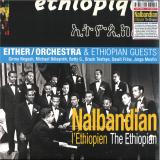
NALBANDIAN THE ETHIOPIAN & EITHER/ORCHESTRA - NALBANDIAN THE ETHIOPIAN (ETHIOPIQUES)

The Éthiopiques series returns! Essential archive recordings from an extremely fruitful period in Ethiopian music.

Before “Swinging Addis” took over the world, there was Moussié Nerses Nalbandian — the Armenian-born composer who shaped modern Ethiopian music. Mentor, arranger, and pioneer, he laid the foundations of Ethio-jazz.

This Éthiopiques volume revives his forgotten legacy, recorded live by Either/ Orchestra First issue ever with new exclusive photos and in depth liner 8-page insert.

“Ethiopian jazzmen are the best musicians that we have seen so far in Africa.
They really are promising handlers of jazz instruments.”

Wilbur De Paris
(1959, after a concert in Addis Ababa)

አዲስ፡ዘመን። *Addis zèmèn* **A new era.**
The time is the mid-1950s and early 1960s, just before "Swinging Addis" bloomed – or rather boomed – onto the scene. Brass instruments are still dominant, but the advent of the electric guitar, and the very first electronic organs, are just around the corner. Rock’n'Roll, R’n’B, Soul and the Twist have not yet barged their way in. Addis Ababa is steeped in the big band atmosphere of the post-war era, with Glenn Miller's *In the* *Mood* as its world-wide theme song, neck and neck with the Latin craze that was in vogue at the same period. Life has become enjoyable once again, with the return of peace after the terrible Italian Fascist invasion of Ethiopia (1935-1941). The redeployment of modern music is part and parcel of the postwar reconstruction. *Addis zèmèn* – a new era – is the watchword of the postwar period, just as it was all across war-torn Europe.
The generation who were the young parents of baby boomers** were the first to enjoy this musical renaissance, before the baby boomers themselves took over and forever super-charged the soundtrack of the final days of imperial reign. Music is Ethiopia's most popular art form, and very often serves as the best barometer for the upsurge of energy that is critical for reconstruction. Whether it be jazz in Saint-Germain-des-Prés or the *zazous* who revolutionised both jazz and French *chanson* after the *Libération*, be it Madrid's post-Franco Movida, or Dada, the Surrealists and *les années folles* that followed World War I, the periods just after mourning and hardship always give rise to brighter and more tuneful tomorrows. Addis Ababa, as the country's capital, and the epicentre of change, was no exception to this vital rule.

**Two generations of Nalbandian musicians**
Nersès Nalbandian belonged to a family of Armenian exiles, who had moved to Ethiopia in the mid-1920s. The uncle Kevork arrived along with the fabled "*Arba Lidjotch*", the** "*40 Kids*", young Armenian orphans and musicians that the Ras Tafari had recruited when he visited Jerusalem in 1924, intending to turn their brass band into the official imperial band. If Kevork Nalbandian was the one who first opened the way of modernism, pushing innovation so far as to invent musical theatre, it was his nephew Nersès who would go on to become, from the 1940s and until his death in 1977, a pivotal figure of modern Ethiopian music and of the heights it. Going all the way back to the 1950s. Nothing less. And it is Nersès who is largely to thank for the brassy colours that so greatly contributed to the international renown of Ethiopian groove. While the younger generations today venture timidly into the genealogy of their country's modern music, often losing their way amidst a distinctly xenophobic historiographical complacency, many survivors of the imperial period are still around to bear witness and pay tribute to the essential role that "Moussié Nersès" played in the rise of Abyssinia's musical modernity.
Given the year of his birth (15 March 1915), no one knows for sure if Nersès Nalbandian was born in Aintab, today Gaziantep (Turkiye/former Ottoman Empire) or on the other side of the border in Alep, Syria... What is certain is that his family, like the entire Armenian community, was amongst the victims of the genocide perpetrated by the Turks. Alep, the place of safety – today in ruins.
Before Nersès then, there was uncle Kevork (1887-1963). For a quarter of a century, he was a whirlwind of activity in music teaching and theatrical innovation. *Guèbrè Mariam le Gondaré* (የጎንደሬ ገብረ ማርያም አጥቶ ማግኘት, 1926 EC=1934) is his most famous creation. This play included "ten Ethiopian songs" — a totally innovative approach. According to his autobiographical notes, preserved by the Nalbandian family, Kevork indicates that he composed some 50 such pieces over the course of his career. This shows just how much he understood, very early on, the critical importance of song as Ethiopia's crowning artistic form. Indeed, for Ethiopian listeners, the most important thing is the lyrics, with all their multifarious mischief, far more than a strong melody, sophisticated arrangements or even an exceptional voice. (This is also why Ethiopians by and large, and beginning with the artists and producers themselves, believed for a long time — and wrongly — that their music could not possibly be exported, and could never win over audiences abroad, who did not speak the country's languages).

Last but not least, one of Kevork's major contributions remains composing Ethiopia's first national anthem – with lyrics by Yoftahé Negussié.
Nersès Nalbandian moved to Ethiopia at the end of the 1930s, at the behest of his ground-breaking uncle. Proficient in many instruments (pretty much everything but the drums), conductor, choir director, composer, arranger, adapter, creator, piano tuner, purveyor of rented pianos,... he was above all an energetic and influential teacher. From 1946 onwards, thanks to Kevork's connexion, Nersès was appointed musical director of the Addis Ababa Municipality Band. In just a few years, Nersès transformed it into the first truly modern ensemble, thanks to the quality of his teaching, his choice of repertoire, and the sophistication of his arrangements. It was this group that would go on to become the orchestra of the Haile Selassie Theatre shortly after its inauguration in 1955, which was a major celebration of the Emperor's jubilee, marking the 25th anniversary of his on-again-off-again reign.

At some point or other in his long career, Nersès Nalbandian had a hand in the creation of just about every institutional band (Municipality Band, Police Orchestra, Imperial Bodyguard Band, Army Band, Yared Music School…), but it was with the Haile Selassie Theatre – today the National Theatre – that his abilities were most on display, up until his death in 1977. To this must be added the development of choral singing in Ethiopia, hitherto unknown, and a sort of secret garden dedicated to the memory of Armenian sacred music, and brought together in two thick, unpublished volumes. Shortly before his death (November 13, 1977), he was appointed to lead the impressive Ethiopian delegation at Festac in Lagos, Nigeria (January-February 1977).

His status as a stateless foreigner regularly excluded him from the most senior positions, in spite of the respect he commanded (and commands to this day) from the musicians of his era. Naturally gifted and largely self-taught, Nerses was tirelessly curious about new musical developments, drawing inspiration from the very first imported records, and especially from listening intensely to the musical programmes broadcast over short-wave radio – BBC *First*. A prolific composer and arranger, he was constantly mindful of formalising and integrating Ethiopian parameters (specific “musical modes”, pentatonic scale, and the dominance of ternary rhythms) into his “modernisation” of the musical culture, rather than trying to over-westernise it. It even seems very probable that *Moussié* Nerses made a decisive contribution to the development of tighter music-teaching methods, in order to revitalise musical education during this period of prodigious cultural ferment. Flying in the face of all the historiographical and musicological evidence, it is taken as sacrosanct dogma that the four musical modes or chords officially recognised today, the *qǝñǝt* or *qiñit* (ቅኝት), are every bit as millennial as Ethiopia itself. It would appear however that some streamlining of these chords actually took place in around 1960. It was only from this time onward that music teaching was structured around these four fundamental musical modes and chords: *Ambassel*, *Bati*, *Tezeta* and *Antchi Hoyé*. A historical and musical “details” that is, apparently, difficult to swallow, especially if that should honour a *foreigner*. Modern Ethiopian music has Nersès to thank for many of its standards and, to this day, it is not unusual for the National Radio to broadcast thunderous oldies that bear unmistakable traces of his outrageously groovy touch.

En stock

Disponible en stock et prêt pour l'expédition

22,06
Candi Staton - Back To My Roots (LP + 7")

Soul Music legend Candi Staton returns to her down-home Alabama roots on her 32nd album, Back to My Roots. The twelve-track Americana set features an array of Staton-penned originals and some well-chosen covers.

"These songs represent my roots," Staton adds as she reflects on her many trials and triumphs. "Even the new songs on some level represent something I've experienced and that's what real soul music is about." Back to My Roots was produced by Staton with her second eldest son, Marcus Williams, a professional drummer who has toured with the likes of Peabo Bryson, Isaac Hayes, and Tyler Perry. They brought in Mark Nevers of Lambchop fame, who produced three of Staton’s prior Americana albums for Honest Jon’s and Thirty Tigers, to sweeten certain tracks. “Some of the first songs I ever heard were songs like `Peace in the Valley’ and `It’s Gonna Rain,’” says Staton. “The new songs or cover songs are tracks that remind me of that era when I was growing up as a child and evolving as a young woman. That’s why I named the album Back to My Roots because I’m going back to the roots that made me who I am.”

Staton received the Americana Music Association UK’s highest honour, the International Lifetime Achievement Award, at the UK Americana Music Awards ceremony at Hackney Church in London last year for her southern soul work that stretches from her 1969 Muscle Shoals hits to her more recent collaborations with the likes of Americana kings Jason Isbell and John Paul White.
The album opens with a mid-tempo Bonnie Raitt-styled contemporary blues “I Missed the Target Again” that finds Harry Connick Jr.’s longtime guitarist Jonathan DuBose Jr. (aka the Prophesying Guitarist) showing off his skills that set the tone for the song and the album.

Staton’s older sister, Maggie Staton Peebles (who alongside Staton was a member of the Jewel Gospel Trio in the 1950s), joins her for two duets. The first, “It’s Gonna Rain,” features just a drum, steel guitar and vocals. “My mother used to sing that song to us all the time when I was a child,” Staton recalls. “It’s a really soulful kind of song I wanted to revisit.” They then take turns leading Thomas Dorsey 1939 gem “There Will Be Peace in the Valley” that Elvis Presley popularized in the 1950s.

“Hang on in There” is a new, mid-tempo song that has an old school gospel flavour and features vocals from veteran bluesman, Larry McCray.
While in Europe in 2023 for her farewell concert tour that took her to the Glastonbury Festival and Love Supreme, Staton and her British band, PUSH, went into a London studio to record a new version of The Rolling Stones’ 1972 gem, “Shine A Light.” “I love the way that came out,” Staton says. “We put a big choir on it and put our own twist on it.”
From there, Staton revives another Thomas Dorsey classic, “The Lord Will Make a Way Somehow,” with a bluesy vibe. When Al Green started recording gospel in the early 1980s, he re-introduced this song into the culture.

“God’s Gonna Use Me Anyway” is a new mid-tempo blues with subtle Caribbean influences.

The mood takes a turn on “1963.” It’s a poignant, spoken-word reflection on September 15, 1963, when four black girls were killed in the Birmingham Church bombing. “I was in the city that day and I remember the chaos and horror after the bombing,” Staton recalls. “Just thinking of how racism and hatred caused those men to kill those girls was so emotional for me that I could only do it in one take.”

It's a perfect segue into "Reach Down and Touch Heaven," a haunting, plea for divine intervention into the affairs of mankind. "That's straight Baptist," she says. "I used to be a church pianist back in the 1960s. I've never played piano on one of my records before so that's a unique song for me because I’m finally playing on one of my records. The message of that song is about the homeless. It came to me when a homeless person on the street asked me for $5. When God touches your heart to help somebody else that’s heaven to God’s hears. So, when we reach into our purse or wallet to help someone, we’re touching heaven."

Staton offers love as an antidote to hate on the bouncy, Motown-styled, “Love Breakthrough.”

Her publicist brought Aaron Frazer & the Flying Stars of Brooklyn NY’s 2017 cut “My God Has a Telephone” to Staton’s attention. She shifts the track from a retro 1960s groove to more of a 1980s Malaco Records arrangement, a subtle but distinct variation. Staton brought in her longtime friend and STAX Records legend, William Bell (“I Forgot to Be Your Lover” and “Trying to Love Two”), to add raspy seasoning to the track.

The album closes with the wistful, “In God’s Hands We Rest Untroubled,” that was originally written and recorded by the late country star, Lari White, who died in 2017 at the age of 52. “Lari sent me that song to consider at least ten years ago and I always loved it,” Staton says. “The record label didn’t want it on the album or something, so I just held it.”
Staton says, “I grew up hearing a lot of these old songs when they were new songs. I toured with the Jewel Gospel Trio in the 1950s and we got to know people like Mahalia Jackson, Sam Cooke and others who sang these types of songs. So, I’m sort of paying tribute to them and the influence they had on me by refreshing these songs and making new songs in the old style.”’

pré-commande31.07.2026

il devrait être publié sur 31.07.2026

29,20
pdqb - Maximalism

pdqb

Maximalism

12inchSC017
Synaptic Cliffs
12.12.2025

Synaptic Cliffs is barely able to contain the excitement for the release of the 4-track EP "Maximalism" where pdqb collaborates with DJ Sotofett in the most effective way. pdqb's sleek and melancholic electro originals carry a sexy 1980s reminiscing vibe, not too unknown from classic US electro disco-styled pop music. They meet warehouse remixes from DJ Sotofett, known for his top-notch electro productions on Clone and Tresor, as well as funky breakbeat, afro-dub and all-things-house on his own labels Wania and Sex Tags Mania. The remix of pdqb's electrocognition-beauty 'Giallactrus' has heavier, almost p-funk styled electro beats, live scratching complementing the block party approach while retaining the vibe of the original. Elysiaamore, pdqb's sonic love letter to Tangerine Dream, gets a bit of melodic menace treatment by DJ Sotofett, turning it into an intensified breakbeat juxtaposition with Junglized B-Boy elements... again without taking away the energy from the original. The vinyl version was cut by DJ Sotofett with optimal club sonics at Manmade Mastering, Berlin.

En stock

Disponible en stock et prêt pour l'expédition

8,82
Various - VEIL OF ECHOES II (2x12")

Sciahri and his label Sublunar are proud to present the second chapter of the "Veil of Echoes" project, a continuation of a journey that connects emerging and established artists from the label.
Following the vision introduced in the first volume, this release unveils a new dimension of techno and electronic music, merging timeless roots with forward-thinking sound design.

The trip begins with "Voltages" by Cirkle, a sharp and direct cut built for the floor, followed by "Tides" by Red Rooms, an hypnotic journey driven by an entrancing vocal hook.
"Phonolith" by Border One brings a mental and groovy touch, while "Basic Instinct" by Hemka stands out for its captivating arrangement and refined sound design.
The first record closes with "Your Hands Forget Their Shapes" by Hadone, a truly memorable track destined to stand the test of time.

The second record opens with "The Radius" by Temudo, one of his most acclaimed digital tracks now available for the first time on vinyl, followed by "Etched" by Hurdslenk, a powerful and driving piece of precision techno.
Next comes "Nardo" by Pierre, a modern, groove-heavy weapon with a distinctive sound identity, and "Serpents" by Ketch & Alessio Landini, a hypnotic and tribal tool for any moment of the set.
Closing the journey, "Zone 0" by Danya delivers a mystical and immersive ending that transports the listener into another dimension.

With "Veil of Echoes II," Sublunar presents a visionary collection that captures the essence of techno and electronic music, bridging its past influences with the sound of the future.

En stock

Disponible en stock et prêt pour l'expédition

23,49
Anders Ilar & John H - Coming For Your Tongue EP

Welcome to the first release on Acid Lamour
A sub label for Lamour Records started in 2018 with a focus on techno and acid dedicated DJs. Releases are limited to 303 vinyls, no re-press.
Anders Ilar and John H are no newcomers to the electronic music scene.
Born in 1973, Anders Ilar began his explorations of electronic music in the mid 80s. Growing up in the small town of Ludvika in Sweden, Ilar spent all of his spare time playing with synthesizers, drum machines, keyboards and sequencers, learning the ins and outs of analogue and digital sound and music creation. Inspired by the early industrial and EBM wave he formed several bands with friends, started playing live shows
at smaller local parties, and released several demo tapes in very limited quantities. In the 90's he gradually shifted his creative influences towards ambient techno and acid and also started to DJ. He started using computer software to produce his music around 1999 and his first vinyl EP was released in 2001 on the german label Plong!, soon to be followed by
many more releases on labels such as Shitkatapult, Audio.nl and Echocord.
Developing his own flavor of deep minimal dub techno and ambient he gained critical acclaim with his album Nightwidth (2006) for Narita Records in the USA. Followed by highly appraised album Sworn on the german label Level Records in 2008. Ilar has also made remixes for celebrated artists such as Apparat, Mikkel Metal and Ripperton and has
appeared on numerous compilations and DJ-mixes. He's performed live on stage through-out most European countries and Japan, as well as doing a small tour with Notch Festival in China in 2008.
Up to 2018 Anders Ilar has produced 13 albums and 25 vinyl EP's and performed in over 15 countries.
Born in 1984 and based in Gothenburg. John H has been DJing, as well as producing tracks, since the late 90s, with Anders as his mentor and teacher, giving John early musical influences spanning across a wide range of genres, from Swedish techno to IDM, Cologne acid craziness and
the sound of Chicago house tracks. The musical output of his DJ-sets usually varies between techno, house, acid, electro and everything in between, depending on the time and location. John has performed on several locations all around Sweden, but also done appreciated gigs in other European countries at clubs like Tresor and Culture Box, and his music has been featured in sets by DJs such as Sven Väth, Adam Beyer,
Joris Voorn, Dense & Pika, Cari Lekebusch, Alan Fitzpatrick, Karotte,
Gregor Tresher, The Hacker and many more.
Coming For Your Tongue EP is Anders and John's 4th collab release, after
acclaimed releases on Flight Recorder and New York Haunted, recorded
during a jam session at John's studio in Bergsjön outside of Gothenburg,
Sweden, using a small setup of analogue synths and drum machines such as
the Roland TR-606, TR-808, a Devil Fish modified TB-303, Minimoog Voyager
and the Arturia Microbrute. After recording Anders spiced things up by
cutting and puzzling loops as well as adding extra effects and drums.

Limited edition of 303, no repress. Vinyl exklusive for 3 months

En stock

Disponible en stock et prêt pour l'expédition

12,56
SIMPLY RED - RECOLLECTIONS LP 4x12"
 
20
également disponible

Crystal Clear & Black Marbled Vinyl LP 2x12"[44,33 €]

black vinyl[84,66 €]


DELUXE 4LP-SET IN SLIPCASE WITH GLOSS FINISH/4 PRINTED INNERSLEEVES/12 PAGE BOOKLET/40 TRACKS/COLOURED VINYL

En stock

Disponible en stock et prêt pour l'expédition

84,66
Material Things / Pike - Rain & Cymbals

Material Things / Pike

Rain & Cymbals

12inchISLE-020
12th Isle
03.12.2025

12th Isle founding member Stewart Brown and London-based percussionist Pike present six tracks born out of preparations for live shows at Cafe Oto and The Three Wheel Drive festival, the culmination of collaborating on ‘No Direction’ from the first Material Things album (with DJ support from Donato Dozzy, Orpheu The Wizard, Not Waving, I-Sha, Donna Leake, Optimo and Huntley & Palmers).

Inspired by various traditions of experimentalism, the pair touch upon reference points such as Eliane Radigue and Nurse With Wound’s “Soliloquy for Lilith” (on “Coastal Town”), as well as the wider canon of motorik, dub and drone practitioners over the past 60 years. Concerned with the interplay between early exports of free jazz and more modern electronics, Rain & Cymbals builds on the project's first outing with a more refined approach to production and a clearer modus operandi, combining ambient pads with additional synth work by Dan Macintyre, multifaceted percussion work and heads-down, emotive minimalism.

En stock

Disponible en stock et prêt pour l'expédition

21,43
Stiletti-Ana - Stiletti City Tape Archives (LP)

Stiletti City Tape Archives is the fourth Stiletti-Ana album, showing off the Finnish mastermind’s talent for making electronic music that’s immediately inviting while generously rewarding the focused listener.
Following on stand-out work for labels like Public Posession and Höga Nord – not to mention all sorts of odd jobs within the Sex Tags multiverse – Stiletti-Ana presents his latest offering: eight irresistible jams cooked up in the hallowed halls of Helsinki’s Haista II studio.
Here, vintage and modern synths joined forces with live drums and the occasional robot-voiced interjection, resulting in a body of work that’s dazzlingly off-kilter, rich in detail and instantly addictive. The artist himself states: “I think the music has a sense of urgency which relates to city life. Still,
Stiletti City is a small and cozy place, a bit freaky and not gentrified.” Stockholm label Studio Barnhus is delighted to invite fellow travellers into this secret town – welcoming and full of surprises.

En stock

Disponible en stock et prêt pour l'expédition

20,97
SLV - Fleeting Dreams

SLV

Fleeting Dreams

12inchMR-040
Mutual Rytm
21.11.2025

Sicily's SLV is able to merge technical mastery with emotional resonance. His potent techno sounds have come via the likes of SHWD's Mutual Rytm and Slam's Soma, and unite timeless yet forward-thinking sonics.
On 'Fleeting Dreams', he continues to refine his signature sound while channelling introspection and intensity into a collection of meticulously crafted cuts that balance precision and feeling, energy and space. Each track reveals a different side of his sonic identity: hypnotic rhythms intertwine with evolving soundscapes, while layers of distortion and melody merge into a dreamlike tension between the mechanical and the organic.

'Fading Moments' kicks off with a sleek blend of driving, supple kicks and warm synth ripples, while a euphoric vocal cry is buried deep to amp up the emotion. 'Scenario' then brings icy hi-hats and sinewy synths bring a futuristic feel to the unrelenting, high-pressure drums down low. 'Daruma' has a darker energy with menacing textures and paranoid FX bringing the rolling drums to life, while 'Bass Grit' has a hunched up rhythm, with groaning pads and fizzing static electricity that charge up the party. To close, 'Shimmer' sinks down into a muscular and deep rhythm that's marbled with restless synths and ever-rising tension.

In addition, digital bonus cuts 'Trust' and '1990' offer different perspectives with slamming drums, seductive vocals and feisty synth loops making for two more bold, immersive techno weapons.

En stock

Disponible en stock et prêt pour l'expédition

14,92
Lance Ferguson - Rare Groove Spectrum, Vol. 3

The third installment in Lance Ferguson's acclaimed Rare Groove Spectrum series builds on the success of Vol. 1 & 2, offering a fresh set of reimagined classics. From '70s Australian jazz-funk and Latin-fusion to big band soul and golden-era funk, Ferguson blends crate-digger sensibilities with modern studio craft.

Standout cuts include bold reworks of Idris Muhammad, Billie Eilish, Jungle, Billy Brooks and more, with the focus track "Losalamitoslatinfunklovesong" delivering a Gene Harris reinterpretation infused with Bossa Nova and Brasil '66 flair. Showcasing Ferguson's mastery as a multi-instrumentalist and arranger, the album brims with rich, cinematic productions throughout.

Selling Points

Known for projects The Bamboos, Menagerie, Lanu — widely regarded as one of Australia's most versatile producers.
Previously released 45 full-length albums and 100+ singles/remixes across labels including Atlantic, Universal, Sony, BMG, Tru Thoughts, and Ubiquity.
7× ARIA Award & 5× APRA Music Award nominations.
Co-writer/producer of the global hit "This Girl" by Kungs vs Cookin' On 3 Burners
#1 in 10+ countries
1.27 billion Spotify streams & 545M YouTube views
Multi-Platinum & Diamond certifications worldwide.
Collaborations with Aloe Blacc, Roy Ayers, Alice Russell, Durand Jones, Quantic, Joey Dosik and more.
Music featured in 200+ compilations and major syncs, including CSI NYC, Grey's Anatomy, Homeland, Suits, and House of Cards.

En stock

Disponible en stock et prêt pour l'expédition

21,43
DJ Botermelk - Rubber Glover EP

DJ Botermelk

Rubber Glover EP

12inchVENN001
Venn
06.11.2025

Seoul-based DJ and producer DJ Botermelk launches his new vinyl label Venn with a solid four-tracker of club-ready tools.

Kicking off the EP, ‘Rubber Glover’ is a wonky stomper layered with hypnotic vocals and percolating FX.

A2 settles into a deeper, minimal groove with dubbed out synths perfect for a cheeky jaunt down the streets of ‘Milwaukee’.

On the flip, ‘Rearview’ takes on a more sinister tilt, with a rumbling bass line, menacing vocals, and a punchy drum workout to keep things driving forward.

Fresh off a run of standout releases on Mindhelmet, Limousine Dream and Sex Tapes From Mars, Bristol-based producer Boulderhead closes out the EP on a more optimistic note with his bouncy remix of ‘Rubber Glover’, driven by razor-sharp drum programming and pulsing drones.

En stock

Disponible en stock et prêt pour l'expédition

13,03
MADALA KUNENE & SIBUSILE XABA - KWANTU

Bringing together the elder statesman of the Zulu guitar Madala Kunene and internationally acclaimed Sibusile Xaba, kwaNTU pulls two generations of South African guitar mastery into a single point of focus. Under-represented on recordings outside of South Africa, Madala Kunene (b. 1951), the ‘King of the Zulu Guitar’, is revered as the greatest living master of the Zulu guitar tradition. Sibusile Xaba, whose collaboration with Mushroom Hour Half Hour reaches back to his first recording in 2017 (Open Letter To Adoniah/Unlearning), has garnered international acclaim for his unique voice and virtuoso guitar stylings, which bring together multiple South African guitar lineages in an original, spiritualised fusion. Collaborating with Mushroom Hour and New Soil for kwaNTU, the two players come together to weave a filigree sonic fabric which reaches down to the heartwood of Zulu guitar music but moves resolutely outward, building on the past to create a deeply rooted statement about present conditions and future travels. kwaNTU – which can be roughly translated ‘the place of the life-spirit’ – is also conclave of teacher and student, as Xaba has been taught by Kunene for the last decade. Meditative, rich and sonically sui generis, kwaNTU finds these two musicians linking up within the inimitable space of sound and spirit that they share through Kunene’s teaching.

The great masters of South African music have not all had equal exposure. For many years the generation of musicians who were exiled during apartheid took centre stage, as the regime made it very difficult for those at home to be heard. More recently, a new cohort of important voices, especially in jazz, has broken through to international consciousness. But for the generation of musicians in between – those who shone like beacons in the most difficult final years of apartheid and immediately afterward – international recognition has been slow in coming.

Madala Kunene, ‘the King of the Zulu Guitar’, is among this number. A revered figure for current generations of South African musicians, Kunene began his recording career in 1990, at the bitter end of apartheid, with a now classic self-titled LP for David Marks’ storied Third Ear imprint. Born in 1951 in Cato Manor, near Durban, he had determined to be a musician from early childhood, and by the time he first entered a recording studio he had already had a long career as a popular performer. His virtuoso absorption and transformation of the venerable Zulu maskanda guitar tradition and his richly spiritualised approach to music immediately marked him out as someone special, and in the years that followed, Kunene cemented his position as one of South Africa’s musical elders. He is without doubt the grand master of the Zulu guitar tradition, but his sound and sensibility ranges far beyond it into varied sonic terrain, and he has collaborated with a wide range of musicians both at home and abroad. Now in his mid-seventies, he remains a shining light for those that are making music in contemporary South Africa.

‘He is really an amazing person,’ says the guitarist Sibusile Xaba, who has been mentored by Kunene for over a decade, and now invites a collaboration with him on kwaNTU. ‘As a mentor, he's really powerful in showing us the way. For us to have this opportunity to make music together and have a project together is really a blessing to me.’

Xaba himself grew up in Newcastle, KwaZulu-Natal, where his mother had been in a band and his father sang in a church choir, and from early childhood Xaba played homemade tin guitars. He only later realised that music was his calling. ‘I just loved music. I was fortunate. My parents loved music. And when it was time for me to leave home and go to study outside Newcastle, I knew that music was what I wanted to do. There was no second option. It was just music.’ Moving to Pretoria to study music formally, Xaba committed himself to his craft, developing a unique style that draws on both US jazz masters such as Wes Montgomery and Jim Hall, and the rich and varied heritage of the South African guitar, from inspirational jazz players such as Allen Kwela and Enoch Mthalane, to the music of the Malombo groups and Dr. Philip Tabane (Xaba has previously collaborated with Dr. Tabane’s late son, Thabang), and the Zulu guitar tradition embodied by Kunene.

‘I was really in love with the jazz guitar, I really admired it, and I was digging a lot in that direction,’ says Xaba, recalling his first encounter with Kunene’s music, over a decade ago. ‘And then one day on my timeline, Kunene popped up, and I was like – “What's this sound?” I was so connected to it. It really touched me deep. I started checking out his records, and then I found out he's from the same region as I am, which is Zululand.’ After Kunene played a show at the Afrikan Freedom Station in Johannesburg, Xaba make contact with him, and visited him at home in Durban. They struck up a friendship, and Xaba became the elder’s student, as Kunene began to pass on his knowledge and his inimitable way of playing.

kwaNTU is a tribute to this relationship and the deep learning that has defined it. The album was recorded in Zululand in the town of Utrecht, at a cultural centre called Kwantu Village, which gives its name to the album. ‘It's such a broad word,’ Xaba says, ‘but the elders teach us that Ntu is basically an energy, almost chi, an energy, a force that all living beings have within them. It's a living energy, so kwaNTU is like, almost the place of this energy.’ The two men sequestered themselves for five days of jamming, improvising and planning, and then the session was recorded in one take over a single night, with Gontse Makhene joining on percussion and backing vocals and Fakazile on vocals. Other voices and overdubs were later added in the studio in Johannesburg.

The result is a rich and meditative recording that finds two generations in a deeply engaged dialogue. Teaching and passing on his knowledge, the elder Kunene has brought Xaba into a space of sound and knowledge that they now share; Xaba’s own practice of deep communion with nature and his dedication to his musical craft make him the perfect interlocutor for Kunene. The result is an album that foregrounds the two musicians engaged at the highest levels of responsive listening, sympathetic unity, and collaborative concentration. Bringing an elder statesman of South African music to an international listening audience for the first time in decades by pairing him with one of South Africa’s most important new voices, kwaNTU is a meeting of generations and a powerful demonstration of musical lineage and continuity.

‘Before music, there is sound,’ Xaba observes, speaking of Kunene’s unique approach to music. ‘And sound is like a common compartment…it's not restricted to particular people or particular geographic places, you know what I mean? It's sound. Everybody can hear it. So when he constructs that sound into music, I think everybody resonates with the energy behind his construction of sound into song. Here at home, we really love him for preserving our history through the guitar, through his stories as well the music, the songs that he writes. We really, really admire him.’

En stock

Disponible en stock et prêt pour l'expédition

23,95
Wally Badarou - Simple Things (LP)

Wally Badarou is a synth pioneer and musical polymath. But rarely does he sing over his sumptuous tracks. The 6 songs that comprise new record Simple Things finally realise Wally's vision for select backing tracks from his beloved Colors Of Silence.

The tracks were originally developed back in 2001 for the release of the original CD; here, Wally has “simply" added overdubs and vocals to their mastered mixes with some discerning edits. Simply put, Simple Things is another slice of simply stunning Wally Badarou genius.

Simple Things has been decades in the making. Indeed, Wally struggled not only with the idea of singing these wonderful songs himself but singing them in English and writing his own lyrics, while wrestling with the sensational backing tracks, which themselves seemed to have taken on a life of their own.

As Wally explained to us: "In addition to the instrumental artist I have been known as, so far, there has always been a singer who simply was not sure he was, up until now. Even though “Back To Scales Tonight”, my very first album, was, indeed, a song album."

Opener "It Couldn't Be You" embellishes the uptempo groove of soca-funk gem "The Lights Of Kinshasa". As Wally explained to us, it's about “a simple love story somewhere, one rainy night, under the lights of Kinshasa. A woman, a man, online dating, quite usual in our times. Then they meet, almost missing each other." The guide vocal Wally had laid for Colors Of Silence - with an organ sound - seemed striving for words in Linguala, a Congolese language he could not speak. Therefore the decision to do it himself was not an easy one, for it had to be in English to fit his singing. We think it turned out pretty good!

"You Can't Hide Always" vocalises Wally's deep concerns set to the propulsive "Smiles By The Millions": "Populism, ostracism, radicalism, ethics and values all turned upside down worldwide, are they all inevitably exacerbated by our social networks? It could all melt down one day, like a house of cards in the ocean of fake news and false prophecies”. Wally wanted to keep the track as bare as possible but, inevitably, the backing vocals and the synth-brass arrive ultimately to present a welcome 70s flavour, with no snare-drum added.

The bright and breezy "We'll Make It Again" adds vocals to "Where Were We", a tropical, reggae-tinged bounce through the islands. Here's Waly: "Where were we when we last said: "I love you"? Simple words to express something quite common, but never quite simple to deal with. A simple song about the resilience of the broken hearts.” The reggae came from it being conceived when Wally was scoring for “Third World Cop”, a 1999 Jamaican action movie.

"Walk Straight Ahead" provides Wally's gorgeous, contemplative and idiosyncratic vocals to the deep serenity of Colors Of Silence highlight, "Amber Whispers". It's a gliding, divine, mini melodic masterpiece. It'll make you swoon in its extreme beauty. As Wally describes, "it started as just whispers, sweet amber whispers. Then the colour turned darker, as darker skies seemed to fall upon us while the whole world keeps on walking ahead, straight ahead, regardless of the blatant warnings, feeling much too comfortable in conformity. Initially, the verses were to be spoken only. I realised they could be sung all the while, without overshadowing the ethereal atmosphere." Amen.

The serene, celestial "Painting My Life Blue" presents the vocal version of "Days To Wonder". Says Wally, "how does it feel when your second half is gone after decades of riding life together? Past the temporary loss of your bearings, you come to realise you've been blind to the essential, and suddenly you can see...For this most intimate song of mine, I had tried to come up with a melody on top of the existing backing track, long before realising the melody was in the keyboard part already. It just needed to be properly mixed with it."

The profoundly emotional "Just Two Lovers" works up the formerly-too-brief and glorious "Crystal Falls" into a much fuller masterpiece and features acoustic guitar sparkle before fully glistening with some gentle head-nod percussion. Waly explains further: "Dear little green men, please tell me, what is it about us that makes you want to come and visit us so often (contrary to Fermi's assertion)? And here is the reply I believe I heard them sing: "You've got the key you've been searching for: Love”. I reverted to the initial backing track I had made around 1985, which already bore the melody, and which I added acoustic guitars to, before singing it." An astounding closer.

A synth specialist, there can be few artists more under-appreciated given their vast influence than Wally Badarou. His solo work practically defined the sound of the Balearic DJs of the 1980s, and thus the more sophisticated sound of dance culture thereafter. He was one of the Compass Point All Stars (with Sly and Robbie, Barry Reynolds, Mikey Chung and Uziah "Sticky" Thompson), the in-house recording team of Compass Point Studios responsible for a series of albums in the 1980s recorded by Grace Jones, Tom Tom Club, Mick Jagger, Black Uhuru, Gwen Guthrie, Jimmy Cliff and Gregory Isaacs. Badarou's keyboard playing could also be heard on albums by Robert Palmer, Marianne Faithfull, Herbie Hancock, M (Pop Muzik), Talking Heads, Manu Dibango and Miriam Makeba. He also produced Fela Kuti. Phew!

When we asked Wally about the significance of this collection's title, he explained: "These are "Simple things” that everyday’s life seems to build upon. The simplest are the harder to describe, but when satisfactorily described i.e. with simple words, they are the more genuine and authentic to express and share. I’ve immersed myself in other classic song lyrics, something I hardly did before, just to appreciate the genius behind the simple words they were made of, and had a great time studying how powerful they were in expressing complex ideas such as love."

Recording was twofold: first, most of the backing tracks were recorded in 2001, in Wally's studio in Normandy, mostly using hardware synths and Yamaha digital consoles. Then, he fine-tuned the melodies and wrote the lyrics in late 2023, then added some overdubs and sang them all during summer 2024. States Wally, "Digital Performer was and remains the DAW I’ve been using throughout, ever since the 80s."

Wally's sophisticated synth textures and expressive keyboard runs are so full of character, so full of life, that this work of art transcends any easy genre categorisation. Meticulously remastered and cut by both Simon Francis and Cicely Balston respectively, it has been pressed to the highest possibly quality at Record Industry in Holland. Sometimes, the simple things are the most extraordinary.

En stock

Disponible en stock et prêt pour l'expédition

26,68
PSYCHONAUT - WORLD MAKER LP 2x12"

A record born of insurmountable joy and simultaneous profound loss; World Maker marks a time of great change for Psychonaut, both personally and musically, as the band burn away the philosophical narrative complexities of previous offerings with a searing, panoramic clarity that implores us to savour the beauty of the now as a means of leaving a legacy for the future. The traditional, three-piece line up of Belgian, psychedelic post-metal collective Psychonaut has long belied the compositional prowess, captivating narrative depth and crushing live presence of a band now operating at the forefront of forward-thinking, contemporary heavy music. Having sent a shockwave through the post-metal and prog scenes with their three times repressed Pelagic Records debut Unfold The God Man in 2020 before following it up with the transformative metaphysical complexities of 2022's Violate Consensus Reality, Psychonaut have played prestigious Belgian open-air festivals like Alcatraz, Rock Herk and Boomtown Festival as well as boutique events such as Soulcrusher, Roadburn Redux and A Colossal Weekend whilst sharing stages across Europe with the likes of Amenra, Brutus and Pelagic labelmates The Ocean and PG.Lost. The seed of World Maker took shape just as the campaign for Violate Consensus Reality came to a close, with the news that guitarist/vocalist Stefan De Graef was to become a father. This tilting of life's axis led De Graef, like most fathers-to-be, to re-assess what was really important. As such, the music he was inspired to write felt free of the band's previous philosophical and spiritual foundations and instead took the form of life lessons for his unborn son, a legacy of love in case something were ever to happen. This hopeful euphoria shines keenly throughout World Maker as an uncharacteristically optimistic warmth; from the reverberating Rhodes organ on the titular opening track and the meandering, free-jazz inspired guitar solo that introduces `Everything Else is Just The Weather' to elements of world music, electronica and the otherworldly voice of Dutch multi-instrumentalist and old friend Anthe Huybrechts (Anthe/Helion Creek) most notably on tracks like `Origins' which also features tabla, a pair of indian hand drums, as its propulsive heartbeat. Whilst Psychonaut's giant riffs, punishing polyrhythms and guttural vocal rage are more resplendent than ever, there is a wider dynamic spectrum to World Maker that sees the band proudly exploring their more delicate, intimate extremes as well as their most aggressive and abrasive. Not long after the birth of De Graef's son came the devastating news that both his own father and Psychonaut bassist/vocalist Thomas Michiels' father had been diagnosed with advanced cancers. Living day-to-day and torn between joy and grief, the band found themselves shedding the grand scope and world-shattering agenda of Violate Consensus Reality to focus on the here and now. Lead single `Endless Currents', the first full track on the album, explodes in a barrage of staccato guitar tapping but mellows to let the powerful, newly pared back lyrics ring out as a call to embrace the flow and follow joy. The song's final few words `Lead the way. / Soar. / Everlong.' double as both a greeting and a goodbye as the trio build their formidable post-metal might to a thunderous breaking point. Similarly, the pulsing, propellant `Stargazer', named so for De Graef's son being born in stargazer position, pairs delicate guitar motifs and folk-inflected optimism with huge and sprawling breakdowns as some of the band's most genre-pushing work to date; asking difficult but important questions of what happens next. It is `And You Came With Searing Light' though that most immediately exemplifies Psychonaut's redirected ambition on World Maker, as euphoria collides with blinding fury. The first track written for the album, `_Searing Light' is easily the most complex and initially wouldn't sound out of place on Violate Consensus Reality. Originally meant to be the new album's opening track; the decision to defer its impact, not to mention its compositional and dynamic gravity, speaks of a fundamental change to the band's very core. The words "Discover the world with wide eyes" recurring throughout speak as much to those having lost a part of their world as they do to those seeing it for the first time. Amidst such turbulent times, the band found strength and support within their Post-Metal community. The album was recorded and produced by the band alongside their longtime collaborator and close friend Chiaran Verheyden (Hippotraktor) with help and advice from Psychonaut's live engineer Victor, who will no doubt make this album sound just as awesome on stage. Even the artwork for World Maker was a family affair, being designed by close friend Sam Coussens of Belgian cosmic sludge metallers Pothamus. In the face of life's soaring highs and desolate lows, World Maker is direct and brave without sacrificing any of Psychonaut's raw power, creative innovation or inimitable musical depth. Where their previous full-length offerings have charted grand introspective courses through time and space, World Maker is breathtaking in its uncompromising clarity: a father singing to his newborn son as a son bids his own father farewell. FOR FANS OF Mastodon, Russian Circles, Tool, Gojira, The Ocean, Pelican, Hypno5e, Cult Of Luna, Amenra

En stock

Disponible en stock et prêt pour l'expédition

29,83
Various - The World Is But a Place of Survival: Ethiopian Begena Songs (TAPE)

The begena is a large ten-stringed lyre which is part of the traditional Amharic heritage of Ethiopia. The Amharas, who have long formed the politically and culturally dominant people of Ethiopia, mainly inhabit the central and northern part of the country. In the majority, they follow the monophysite Orthodox Tewahido Church established in the early fourth century AD.

Music plays a very important part in the life of the church. Most of the liturgy is sung and, contrary to secular music, it is accompanied by percussion instruments only. The begena occupies a special place because it is the one melodic instrument exclusively dedicated to the spiritual repertory. Because of its mythical origin, it is highly respected. Tradition holds that the begena was given to king David by God, and brought to Ethiopia by Menelik I, together with the Ark of the Covenant. It has always been the instrument of kings and nobles. Played by pious men and women of letters, it never became widespread. But it never disappeared either, not even under the Derg regime (1974-1991) which had banned the instrument.

Among Amhara string instruments, the begena is the most carefully crafted, especially with regard to the ornately sculpted crossbar. Its ten gut strings are cleaned and twisted several times. The characteristic buzzing timbre equalled by no other Amhara instrument is due to the enzirotch, that is, small bits of leather placed between each string and the bridge. This plays an important part in the sound production by creating a brief contact between the string and the upper rim of the bridge, thus modifying the vibrating properties of the string. In this manner, the spectrum of the sound is considerably enhanced (up to over 10 kHz).

The begena is a very powerful instrument, it keeps the devil thirty steps away, and its presence in the home wards off malicious spirits. Priests and preachers recommend its presence, especially during Lent (Fassika Tsom) when the Orthodox Amharas ponder their sins and repent. Because of its spiritual import, the begena generates intense emotion. According to some musicians, playing the begena brings them into direct contact with God or the Virgin Mary. The religious role of the begena is underscored by the shape of the instrument, each part symbolises an important element of the faith. The crossbar for instance, which reaches across the entire width of the instrument, represents God who is above all things. The belly which "gives birth" to the sound represents the Virgin Mary, and the ten strings recall the Ten Commandments.

Recorded by Stéphanie Weisser in Addis Ababa, Ethiopia, March 2002-December 2005.

Mastered by Renaud Millet-Lacombe.

Issued under license from VDE-Gallo, Switzerland.

En stock

Disponible en stock et prêt pour l'expédition

16,18
FETTER - BODY OF NOISE

Fetter’s Body of Noise erupts at the threshold between ravey hypnosis and avant-pop experiment, slithering through the hinterlands of unconscious desire. Nine shape-shifting tracks conjure haunted landscapes where beauty refuses clarity and dancefloor logic warps underfoot. Vocals swoon, drift, and demand—stacking into fragments that multiply and weave through saturated pulses and shimmering, snarling synths.

Opening track "Like a Rose" traces a dreamer’s transition into the unstable physics of a perplexing but familiar dream world, where they gradually become lucid. “Beast” follows up humming with shadowed urgency, threading a path through self-sabotage and metamorphosis. “Spathiphyllums” drifts a while in a lush lostness, aching for something new before fracturing into wild, cathartic collapse. Side B’s “Do I Exist? (D.I.E)” and “The Longing” spiral into existential wonder, searching for a human origin story—both personal and collective—against a backdrop of uncertainty, while “Headache” thrusts forward as an absurd and insistent manifesto to stay the course and harness one’s own power within the madness.

Body of Noise is crafted not only for sweating bodies in motion, but for distorting time and opening psychic portals, where surrender becomes strategy and uncertainty transforms into ecstatic navigation. Rooted in all-hardware improvised production and shaped by Fetter’s years of boundary-blurring visual and performance art, their debut LP feels alive and in flux. Reminiscent of a spectral pop chorus trapped in a loop of broken machinery, or a lost broadcast from a dancefloor in a parallel realm, Body of Noise is a journey into chaos, transformation, and a bold refusal to be contained.

About Fetter:
Fetter makes clubby self-destructing noise pop to dance and weep to. Oscillating between ethereal and pounding, their all-hardware, largely improvised live sets take listeners through a foggy wilderness of saturated rhythms and menacing synth lines, a golden voice guiding the way through. Fetter is the stage moniker of multimedia artist Jess Tucker. Their performances take place in clubs as well as galleries, often incorporating video, installation, and interactive performance art elements to create other-worldly surrounds of mesmerizingly unhinged bodies and faces.

En stock

Disponible en stock et prêt pour l'expédition

19,75
aylu - Fobia (LP)

aylu

Fobia (LP)

12inchOP090
OTHER PEOPLE
17.10.2025

Following up a string of releases on labels such as Mana, Sun Ark, Orange Milk Records and Abyss, Other People are honoured to present the new album Fobia by Argentinian musician and sound artist aylu, real name Ailin Grad. Inspired in part of Grad's many collaborative projects over the last few years, Fobia sees her collecting and rearranging the music and sounds fostered within these to create an intimate, spiritually charged album that turns personal struggle into collective resistance and resilience. What initially started as a way for Grad to process her own experiences with agora- and claustrophobia, and an attempt to navigate feelings of shame and a perceived demand to keep these feelings bottled up and hidden from the world, she began to realise how mental health struggles are not isolated incidents but part of broader systems of collective suffering and injustice. “It took a long time for me to discover that my issues were part of a system that produces these kinds of symptoms and that it takes a lot of courage to find a way around them. I have the feeling that more and more people suffer from these kind of things in some way or another, and what was at first taught as something you should be silent about and keep private, I discovered that the more you talk about it and share it with people you trust, the more you realise that it’s part of something much bigger.” This tension and constant pull between fear and joy, light and dark, is present throughout the album. From the strained breathing featured in opening track Yodo echoing the suffocating feeling from claustrophobia interspersed with the lighter textures of Obelisco Elysium and Prospero offering up a sense of relief, to the almost cacophonous, immersive soundscapes of El Sol Mal, mirroring the complex, often contradictory emotions when navigating mental health challenges. Fobia invites listeners to move through pain with honesty, finding strength in shared experiences.

En stock

Disponible en stock et prêt pour l'expédition

23,32
Various - The World Is But a Place of Survival: Ethiopian Begena Songs LP 2x12"

The begena is a large ten-stringed lyre which is part of the traditional Amharic heritage of Ethiopia. The Amharas, who have long formed the politically and culturally dominant people of Ethiopia, mainly inhabit the central and northern part of the country. In the majority, they follow the monophysite Orthodox Tewahido Church established in the early fourth century AD.

Music plays a very important part in the life of the church. Most of the liturgy is sung and, contrary to secular music, it is accompanied by percussion instruments only. The begena occupies a special place because it is the one melodic instrument exclusively dedicated to the spiritual repertory. Because of its mythical origin, it is highly respected. Tradition holds that the begena was given to king David by God, and brought to Ethiopia by Menelik I, together with the Ark of the Covenant. It has always been the instrument of kings and nobles. Played by pious men and women of letters, it never became widespread. But it never disappeared either, not even under the Derg regime (1974-1991) which had banned the instrument.

Among Amhara string instruments, the begena is the most carefully crafted, especially with regard to the ornately sculpted crossbar. Its ten gut strings are cleaned and twisted several times. The characteristic buzzing timbre equalled by no other Amhara instrument is due to the enzirotch, that is, small bits of leather placed between each string and the bridge. This plays an important part in the sound production by creating a brief contact between the string and the upper rim of the bridge, thus modifying the vibrating properties of the string. In this manner, the spectrum of the sound is considerably enhanced (up to over 10 kHz).

The begena is a very powerful instrument, it keeps the devil thirty steps away, and its presence in the home wards off malicious spirits. Priests and preachers recommend its presence, especially during Lent (Fassika Tsom) when the Orthodox Amharas ponder their sins and repent. Because of its spiritual import, the begena generates intense emotion. According to some musicians, playing the begena brings them into direct contact with God or the Virgin Mary. The religious role of the begena is underscored by the shape of the instrument, each part symbolises an important element of the faith. The crossbar for instance, which reaches across the entire width of the instrument, represents God who is above all things. The belly which "gives birth" to the sound represents the Virgin Mary, and the ten strings recall the Ten Commandments.

Recorded by Stéphanie Weisser in Addis Ababa, Ethiopia, March 2002-December 2005.

Mastered by Renaud Millet-Lacombe.

Issued under license from VDE-Gallo, Switzerland.

En stock

Disponible en stock et prêt pour l'expédition

28,36
Ida Urd & Ingri Høyland - Duvet LP

Ida Urd & Ingri Høyland

Duvet LP

12inchBALMAT18
Balmat
13.10.2025

The Danish/Norwegian duo of Ida Urd and Ingri Høyland believe that music is an extension of one’s immediate sensory environment. Duvet, their collaborative full-length debut, explores the way that creating sounds together is intertwined with various quotidian actions: establishing surroundings, rearranging furniture, moving towards the light, collecting flowers or other objects for aesthetic and sensuous impulses. Through a quiet and attentive process, music becomes a way of nurturing space: a soft architecture for play, writing, care, or simply rest.

Sonically, Duvet feels like an extension of Høyland’s last album, 2023’s Ode to Stone, which also featured Urd along with ambient musician Sofie Birch and visual artist Lea Guldditte Hestelund. But where that album, created in response to an open call for work themed around Denmark’s national parks, suggested rolling landscapes and endless horizons, Duvet turns inward, countering chill winds with glowing warmth. Its eight tracks seek a balance between abstraction and melody, intention and happenstance.

“We had a truly inspiring and rewarding process working with Birk Gjerlufsen Nielsen from Vanessa Amara, who co-produced and mixed the album with us,” Ingri adds. “He approached the material with great care and sensitivity, while also bringing his own distinct presence and creativity into the sound.”

Høyland and Urd both studied at the Rhythmic Music Conservatory in Copenhagen, which has turned out many acclaimed artists over the past few years, including Erica de Casier, Astrid Sonne, and Smerz. Over many years, the two composers have developed a collaborative method based on connection and trust. A practice, they write, “where composing, or rather suggesting, sounds and melodies for one another is a way of carefully talking, mending emotions and obstacles. Saying yes to one another. The compositional space becomes a nest for entangling whatever emotions, thoughts, or barriers one of the composers brings to the given day or moment.”

Quiet and contemplative, Duvet is simple on the surface but rich in timbral, textural, and emotional complexity. Høyland and Urd sourced their sounds from an array of instruments and techniques—electronic devices, modules, pedals, and also electroacoustic treatments of various wind instruments.

Mixing primarily through analog tape units added further mystery and depth, weaving together wordless voices and unknown sounds—breathing, rustling, perhaps the coppery gleam of Urd’s electric bass—into a dynamic matrix. Like a nest, pull one twig and the whole thing unravels.

In the winter of 2023, Ingri Høyland and Ida Urd retreated to a summer house along the coast to create the album. Picture the scene: an abiding quiet all around. Gardens carpeted by snow; beach grass silvery against the silvery sky; a tendril of smoke rising from the chimney. Not another soul in earshot. This sanctuary was the perfect setting to yield this meditation on shelter, trust, and communication. The two composers hope the album can be a similar space for others—a temporary space of residence, it can represent a summerhouse, a cabin in the woods, your favorite bench or wherever you need to go. “The album also works really well when picking out apples in the supermarket” Urd laughs.

En stock

Disponible en stock et prêt pour l'expédition

25,17
Articles par page:
N/ABPM
Vinyl