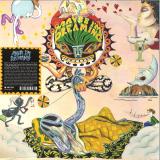
The Australian master of the dark synth arts is back and – boy – he is out for blood.
We’ve been missing Marc Dwyer solo project Buzz Kull since his latest single Last In The Club from late 2019 and since back then we knew he was up to something. At first glimpse, the minimal wave days of We Were Lovers seem far away now that Marc has gone full Club Body Music with his upcoming new album, but there is a thread that binds Buzz Kull hits from the past such as Into The Void, Avoiding The Light and New Kind Of Cross with these ten new cuts: a thread of darkness proper to the most handsome man in the game and that’s here to stay.
Echoes of 90’s era Front 242 and Front Line Assembly will resonate from tracks like Fascination and Dead Inside; elements of early body music flirting with the dark side of British synthpop will rave from the grooves of Dancing with Machines and Man on the Beat, while late 80’s Belgian new beat cellar-like vibes rise from Do You See and Burn it to the Ground.
But Buzz Kull’s third full-length is not just about music subgenres we all know and love, it’s about a feeling that comes alive only with the dark and drives you through the small hours just to leave you drained and filled at once. The creature of the night is on the loose, the sticky dancefloor its natural habitat, its lust for the upside-down world of the club can’t be cured.
Search:third ear
Launched in London in December 1976, punk stalwarts 999 are one of the most successful and long-lasting acts of the upstart movement. Third studio album The Biggest Prize In Sport was their first for Polydor, the band's competency at a peak, despite the temporary appearance of fanboy drummer Ed Case, drafted in from the Southall Crew supporters when Pablo LaBrittain broke his arm. Often ranked as the greatest album of their entire career, The Biggest Prize In Sport had noticeably smoother edges than their earlier work, yet still holding plenty of bite, the combination pushing it into the Billboard top 200 in the USA. Unmissable!
2023 Repress
It's the quiet ones we should watch, they always say. Which is particularly astute advice right now, when loud, constant self-declaration and saturated 'brand' visibility have become the norm. But above the babble and brightness, some voices will always speak quiet volumes - with calm eloquence and the kind of certitude that comes from valuing the playing out, not just the prize.
Sweden's José González is just such a voice. He first charmed his way into the UK's earshot via the murmurous and elegant, classically finger-picked folk pop of his 2005 album, Veneer, which has since sold over a staggering 430, 000 copies in UK alone. Two years later came In Our Nature, a further exploration of José's influences (Argentinian Folklore, the '60s US folk tradition and the British pastoral folk-pop style of the same era), on which he resisted the temptation to beef up his alluringly introvert aesthetic. The albums made the UK Top 10 and Top 20 respectively.
Conceived as the natural third part in an acoustic trilogy, Vestiges & Claws is a(nother) hushed and delicate solo set that forefronts the artist and guitarist's compellingly intimate vocal style and intricate playing technique, but it's often strikingly rhythmic in nature and cohere's perfectly, with hand claps and taps on the body of his instrument underlining the songs' mantric rise-and-fall pattern, while elsewhere, over-dubbed guitar parts and multi-tracked vocal harmonies entwine to sweetly immersive effect.
The title refers to both cultural practices and biological features that survive despite having lost their original function, and to currently useful tools, ie the 'claws' of modern life.
Vestiges & Claws was recorded almost entirely by José and self-produced, mostly in his Gothenburg home, using computer plug-ins to achieve a warm, analogue sound. He prefers working alone, mainly for artistic reasons. 'There were a couple of things that enabled me to complete this record: one was curiosity, to be able to play percussion and do a lot of harmonies and also to produce and mix the album; the other was aesthetics. I love to listen to Arthur Russell and Shuggie Otis, to music that has been done mostly by one person in their solitary state.'
As José sees it, the record is his personal, 'zoomed-out eye on humanity on a small, pale blue dot in a cold, sparse and unfriendly space. The amazing fact that we are all here, an attempt at encouraging us to understand ourselves and to make the best of the one life we know we have - after birth and before death.
- Sociavoidance
- Avoid!
- Expired!
- Karoshi!
- Incognito!
- Moon!
Over the last four years, the German-born and South Korea-based artist Sion has been steadily making a name for himself in the music industry. The Voice Germany Season 10 semifinalist is a self-taught singer, songwriter and producer who can do it all.
Sion can play guitar, piano, synthesiser, DJ and much more, just name it.
Early inspirations for Sion include Frank Ocean and Porter Robinson, and his music so far has been a wonderful mix of eclectic soundscapes.
Now, Sion is back with his best project yet, his third EP ‘Sociavoidance’. The five-track extended play is full of lush vocals, vibrant production, a multitude of different layered textures.
The genre-defying artist blends elements of indie electronica, hip-hop, alt R&B, glitch pop and more. Thematically, the body of work explores disassociation in the age of the internet, vulnerabilities, social interaction, self-reflection and relationships.
It’s a heartfelt, genuinely beautiful, experience. Sion is inviting the listener into his colourful, exciting and often unpredictable world on ‘Sociavoidance’.
Over the past near-decade, Lancashire's medieval metal phenomenon WYTCH HAZEL have been honing an uncommonly wholesome, rustic and devotional brand of timewarped hard rock that's all their own, with 2016's Prelude and 2018's II: Sojourn summoning to mind fevered images of Robin Hood and his Merry Men grooving to Jethro Tull and Thin Lizzy. Yet within moments of pressing play on their third LP, III: Pentecost, the musty mystical minstrelsy takes a back seat in favour of a rich, sumptuous, anthemic late-night drivetime vibe, passionately embracing the most high-end smash-hit classic rock and metal circa its late 1970s heyday. "I thought I put a lot into the second album, but this album has been an absolute obsession," stresses the band leader, Colin Hendra. "Every aspect had to be as good as possible. We've gone back and forth, Ed was tinkering with it for months on end. There's quadruple tracking going on with the rhythm parts, then we've doubled, tripled and quadrupled all our lead parts to get that richness and fullness of sound, all meticulously planned with pages and pages of organisational notes. It wasn't just `get in the studio and see how it goes!'" he laughs. "One day I did 14 hours of vocal recording. All vocals are double-tracked, I can't express how much hard work that is. The last album feels like a breeze compared to what we've done with this - and I don't plan on ramping it down!" Musically there are gorgeous self-professed touches of Black Sabbath, Blue Öyster Cult, AC/DC and early Scorpions_"With the soloing I was trying to go for Michael Schenker" beams Colin_while the scampering headbanger I Will Not initially took a nod from Angel Witch, who Hendra was helping out on second guitar back in 2015 when the track was composed, before studio treatment made it sound "a lot more Wytch Hazelly". But perhaps the most lateral comparison is to a band from the opposite spiritual realm, with Archangel an explicit homage to Swedish faux-Satanic devil cult Ghost. "I find them fascinating, Ghost; musically great, the songwriting is spot-on," enthuses the frontman. "We share an intrinsic connection, with Bad Omen honcho Will Palmer being the person who discovered us both. "Music is created for all, it's a common grace for everyone," he affirms, "which is why the music that shows the glory of God the most, in my opinion, is not music created by Christians. It's Black Sabbath!"
Michi Sarmiento takes center stage on this explosive double-sider from PANORAMA Records, the third release in their 'DISCOS PANORAMA' series, created in collaboration with the legendary Discos Fuentes from Colombia. On the A side, 'Mirame San Miguel' by Michi Sarmiento Y Sus Bravos (1972) brings that irresistible Colombian groove, full of energy and horn-driven soul. Flip it over for 'Cumbia Raja' by Michi Sarmiento Y Su Combo Bravo (1970), a classic cumbia weapon that’s been igniting dancefloors for decades. The Combo Bravo, led by Blas 'Michi' Sarmiento, was a pioneering force in the rise of salsa and tropical sounds in Colombia during the late '60s and early '70s. This reissue delivers absolute Colombian dancefloor HEAT—killer Latin music, built for DJs, collectors, and anyone who loves it loud.
No Drama, the label helmed by Roy Rosenfeld, reflects his musical vision and personal philosophy, showcasing artists whom Roy respects not only as innovators of new sonic landscapes but also as individuals of character. The imprint proudly introduces its third release: a two-track offering by Khen.
Known for his groovy and melodic house sound, Khen has earned international recognition for his unique style.
The opening track, Back in the Days, introduces modulated deep vocals that stamp the composition with a signature sound. Intelligent, percussive, and hypnotically repetitive, the piece maintains a poised charm, deliberately breaking rhythmic expectations through carefully crafted and precisely timed shifts.
The second track, Usual Madness, stretches the emotional range, layering buoyant basslines with arpeggiated melodies and textured and evocative background elements that enrich the arrangement with thoughtful sonic choices. As the piece unfolds, sound effects and an evolving sense of joy coalesce into a meditative structure that seamlessly weaves musical elements with emotional nuance. After a brief moment of calm, the track builds into a commanding crescendo, delivering a final, cathartic release.
Together, these two works represent an essential addition to any discerning playlist.
"Cuban Soul-18 Kilates" is Cassiano's third studio album, released in 1976, and stands as a milestone in Brazilian soul music. It combines Brazilian rhythms with classic American soul elements, creating a unique fusion. Cassiano's smooth, soulful vocal style and the album’s larger-than-life arrangements, reminiscent of Tim Maia's sound, give it a rich, deep feel.
The standout track, ‘Onda,’ is a relaxing anthem evoking beach vibes that has become a DJ’s favorite in recent years and also made it into several compilations. "Cuban Soul-18 Kilates" has earned cult status over the years, securing its place as one of the most coveted Brazilian records of all time. Remastered from the original tapes and pressed on 180g vinyl. This release is part of a new reissue series that will include many other outstanding Brazilian classics like Evinha “Cartão Postal” or Gerson King Combo.
"Cuban Soul-18 Kilates" is Cassiano's third studio album, released in 1976, and stands as a milestone in Brazilian soul music. Influenced by artists like Otis Redding, Eddie Kendricks, Stevie Wonder, and others, it combines Brazilian rhythms with classic American soul elements, creating a unique fusion. The album features 9 tracks, with ‘A Lua e Eu’ becoming a major commercial hit and the theme song for the soap opera “O Grito”. Cassiano's smooth, soulful vocal style and the album’s larger-than-life arrangements, reminiscent of Tim Maia's sound, give it a rich, deep feel. The standout track, ‘Onda,’ is a relaxing anthem evoking beach vibes, with its captivating bassline, subtle percussion, and natural sounds of the sea, making it perfect for moments of relaxation. This song, along with the album’s other tracks, showcases Cassiano's mastery of Brazilian soul, making “Cuban Soul-18 Kilates” a definitive and cherished record in the genre. This album has earned cult status over the years, securing its place as one of the most coveted Brazilian records of all time. Once incredibly rare and expensive, it's now at the top of every serious collector's wishlist. After not being available outside of Brazil for years, it’s finally been reissued – don’t miss your chance to own this legendary piece of music history.
Swingrowers are known for their mixture of JAZZ, SWING, POP and ELECTRO, they have extensively toured Europe and North America, opening sell-out shows for Parov Stelar, Chinese Man & Caravan Palace. On top of delivering official remixes for Caro Emerald and Swing Republic, Swingrowers also boast musical collaborations with The Lost Fingers, Gypsy Hill, DJ Pony Montana and have had their own songs remixed by Bart&Baker and Jamie Berry.
Following on from their debut album 'Pronounced Swing Grow'ers' in 2012, Swingrowers have released their second album 'REMOTE' in early 2015, followed now by 'OUTSIDEIN', the band's third full-length studio album. This new release shows their expert musicianship and most meticulous production to date, mixing genres from jazz to electronica, from gypsy-swing to full-on rock'n'roll with a melodic pop sensibility.
- 1: Brace For Impact
- 2: Swerve
- 3: Á Bruit Secret
- 4: Afk
- 5: Piping
Hampus Lindwall’s Brace for Impact might just be the first album of post-internet pipe organ music. It’s an album of five new contemporary classical compositions, all performed by the composer himself on the 78-stop grand organ at St. Antonius church in Düsseldorf, Germany. Featuring the electric guitar of SUNN O)’s Stephen O’Malley on the title track. A highly visceral forty-five minutes of music with undeniable elemental power.
As 2024 came to a close, in New York and Paris chords rang out from thirty-two-foot pipes for the first time in half a decade. Following twin fires in 2019, the grand organs at the cathedrals of St John the Divine and Notre-Dame, amongst the largest instruments in their respective countries, had finally been restored. The news was justly celebrated in the international press, but the incidents were far from isolated. In England, the city of Norwich hailed the return of its cathedral’s five manual organ in 2023 and just two years earlier York Minster heralded a “once-in-a-century” refurbishment of its own 5,000-plus pipe instrument. Meanwhile, further organ restoration projects are ongoing at churches in Liverpool, Bradford, Bristol, Winchester, and Washington DC. Significant as they are to their respective communities, they’re also emblematic of a wider rebirth for one of humanity’s oldest musical instruments.
The organ is having a moment. Over the last few years, albums by the likes of Kali Malone, Ellen Arkbro, Anna von Hausswolff, FUJI|||||||||||TA, and Áine O’Dwyer, as well as projects in the visual arts by Sollmann Sprenger, Cory Arcangel, Massimo Bartolini and many other talented artists, have given a new prominence to the old ecclesiastical stalwart. The pipe organ bears historical traces which stretch back to the third century BC. But that doesn’t mean it can’t speak to a contemporary moment haunted by algorithms and networked culture. Hampus Lindwall’s Brace for Impact is an album of organ music for today.
- Shiva Interfere (9:10)
- Ion Storm (4:20)
- Magic (1:35)
- Regno Potiri (10:20)
- Carpet Bombing (2:25)
- Final Conquest (5:59)
- Logic (1:01)
- Sonar Bliss (7:39)
- Completion (6:32)
- Outro (1:30)
To fans of black metal, Dødheimsgard need no introduction, being one of the great purveyors of the Norwegian Black Metal creative evolution.
The band was formed in 1994 by Aldrahn (Thorns) and Vicotnik (Ved Buens Ende). The early incarnation was that of a raw and at often melodic black metal band, with their debut album also featuring Fenriz of Darkthrone on bass. In recent years, Dodheimsgard has become known for its eclectic musical ventures and poignant mood shifts, with a less chaotic, more considered approach compared to their earliest works. Following the 'Kronet til Konge' and 'Monumental Possession' opuses, there was a shift in direction as demonstrated on 1998's 'Satanic Art' EP and by Dødheimsgard's third album, 666 International, Vicotnik had taken over a lot of the writing duties, with DHG's style becoming more technical yet ferocious black metal, with strong experimental ideas and industrial elements.
Vicotnik's riffs were inspired by cult bands such as Thorns and perfectly entwined with Aldrahn's delightfully twisted lyrics and immense vocals to create something truly unique. In its 666 International incarnation, DHG (as they were later to be known) featured a line- up of well- respected Norwegian musicians including Czral (Aura Noir, Ved Buens Ends, Virus), Apollyon (Aura Noir, Immortal), plus Mr Magic Logic (Fleurety) on keyboards, as the album was constructed over a period of time. All in all, 666 International is rightly regarded as a highly influential masterpiece of avant-garde metal by many since its release in 1999.
Repress of 2018’s classic compilation from Brownswood.
A primer on London’s bright-burning young jazz scene, this new compilation brings together a collection of some of its sharpest talents. A set of nine newly-recorded tracks, We Out Here captures a moment where genre markers matter less than raw, focused energy. Looking at the album’s running order, it could easily serve as a name-checking exercise for some of London’s most-tipped and hardworking bands of the past couple of years. Recorded across three long, fruitful days in a North West London studio, the crossover between each of the groups speaks to the close-knit circles which make up the scene.
Surveying the way that London’s jazz-influenced music had spread outside of its usual spaces in recent years, this album bottles up some of the vital ideas emanating from that burgeoning movement. Giving a platform to a scene where mutual cooperation and a DIY spirit are second-nature, it’s a window into the wide-eyed future of London’s musical underground.
Ubiquitous, much-lauded saxophonist Shabaka Hutchings is the project’s musical director. His own recent projects span from South Africa-connected, spiritually-minded jazz players Shabaka and the Ancestors to Sons of Kemet, who match diasporically-connected compositions with viscerally-direct live shows. His entry on the album, ‘Black Skin, Black Masks’, is typically difficult-to-define: with an off-kilter, shifting rhythmic backbone, repeated phrases – mirrored between clarinet and bass clarinet – shape the track with an alluring hue. His input ties together a deft, genre-agnostic sensibility that’s shared through all the players on the record.
Theon Cross – who’s also part of Sons of Kemet with Hutchings – starts his track, ‘Brockley’, with the solo, distinctive low rumble of his tuba. Winding and mesmeric, it sees tuba and sax lines winding together in rhythmic and melodic parallels. Ezra Collective – whose drummer and bandleader Femi Koleoso has toured with Pharaohe Monch – run a tight, Afrobeat-tipped rhythm on ‘Pure Shade’, with the final third changing gear into a melodic, momentous closing stretch.
Joe Armon-Jones, whose ludicrous chops on the piano have seen him touring with the likes of Ata Kak, showcases earworm-like, insistent motifs on ‘Go See’, balanced with a playful, improvisatory approach with room for ad-libbing and solos a-plenty. Taking a softer tact than many of the other entries, Kokoroko – whose guitarist Oscar Jerome has been making waves with his solo material – spin a lyrical, steady-paced meditation on ‘Abusey Junction’, matching chanted vocals with gently-played guitar.
Nodding to spiritual jazz influences, Maisha’s ‘Inside The Acorn’ is a wandering, explorative rumination, balancing delicate washes of piano and percussion with sharp interplay between flute and bass clarinet. In contrast, Nubya Garcia’s ‘Once’ is taut and carefully-poised, her tenor sax guiding a carefully-built energy to an explosive conclusion. And finally, Triforce’s ‘Walls’ is a performance in two parts: starting with Mansur Brown’s languorous, lyrical guitar, the second half switches up to a low-slung, g-funk-tipped groove.
- Super Natural
- Sunshine Type
- What Got In The Way
- Butterfly Dream
- Curiosity
- Pure Devotion
- Nightlight Girl
- Breeze
- All That It Ever Was
- Living Small
- Bonnie (Rhythm & Melody)
Front man Austin Getz doesn't blink when asked to sum up Turnover's third full-length, Good Nature. "Learning," he replies. "This whole record is about learning. Opening your eyes to new things, going outside of your comfort zone, and learning to grow into something new."The album's unique blend of musical and spiritual growth is immediately audible on the opening track, "Super Natural," a late-summer idyll of intertwined guitar parts and laidback vocals. Listening to how the leisurely "Nightlight Girl" melts into a more propulsive selection like "Breeze," and the way Good Nature flows together as a seamless whole, it's also evident that the foursome has been paying closer attention to how artists from earlier eras made full-length albums: the range of textures, tempos, and dynamics on Good Nature are infuenced in part by bossa nova, cool jazz, electronic music, and psychedelic grooves. This infux of new infuences and inspiration, navigated by Peripheral Vision producer Will Yip, results in the band's best album to date. Good Nature comes from a place of calm and contentment, nurtured by looking inward.
- 1: Overture
- 2: Illusions Of Polyphony
- 3: Echos Et Fantasies
- 4: In Simplicity We Trust
- 5: Octus
- 6: Volatiles
- 7: Resonances
- 8: 224 Steps
- 9: Subtracting The Superflous
Crafted entirely on an analog monophonic synthesizer with no overdubs, Pièces Monophoniques is a tribute to simplicity in an era of limitless digital possibilities. Since his debut album, Music For Prophet (Les Disques du Festival Permanent, 2017), Majorca-born composer Marc Melià, now a long-time resident of Brussels, has been redefining the contours of electronic music through a minimalist, reductionist approach. Much like a solitary hike through the vastness of mountains, where one carries only the essentials, Melià’s work invites listeners on a journey stripped of excess, focusing instead on the purity of sound and intention.
While some have dismissed monophonic music as overly simplistic, others have embraced its distinct charm. Historical records, such as those by Johannes Quasten, reveal that early Church leaders were drawn to monophonic music because it resonated with the era's cosmological beliefs, highlighting the harmony and unity of all creation. In an age of digital abundance, Marc Melià deliberately embraces constraint, crafting an album that thrives within a limited palette of choices. Yet, from these self-imposed boundaries emerges a stunning universe, brimming with rich textures and elegant harmonies. For his debut album, Melià worked exclusively with a Sequential Prophet. With Pièces Monophoniques, his third LP, he returns armed solely with an analog monophonic synthesizer and handcrafted MIDI sequences etched directly onto a single stereo track. These recordings seek to uncover beauty within the boundaries of limitations and simplicity, rejecting any embellishments that are not essential. Melià presents the bare skeleton of music, highlighting the power of absence and silence as creative forces. Like the hidden mass of an iceberg, what is not heard becomes as significant as what is heard.
The album navigates the boundary where the quest for an uninhibited emotional response intersects with the mechanical sounds generated by synthesizer circuitry. Despite being a collection of beatless tracks, a pulse occasionally surfaces, like in the closing piece, "224 Steps. A sharp sequence blended with multiple delays and reverbs creates the vaporous celestial specter of multiple voices in "Illusions of Polyphony", while "Échoes et Fantasies" conjures the illusion of dual harmony. The expansive reverbs and silences between the euphoric synth phrases in "Overture" transport us to an imaginary magestic landscape shaped out of an electric field. "Resonances," a one-note drone-like sequence, embodies the album's aims as a series of resonances created with the synth filter emerge from the fundamental note.
"Pièces Monophoniques," aims to contribute to a tradition that dates back to the dawn of humanity. After all, there is no denying that the earliest music crafted by humanity was monophonic, from the soothing lullabies sung to newborns to Gregorian chants, traditional labor songs, and the repertoire of solo compositions by countless composers.
- Bitter Remembrance
- Justify
- Second Thought
- Crawl Inside
- For All Eternity
- Tears Of A Fallen Race
- The Bleeding Heart
- Burning Daylight
- The Vicious Circle
Morta Skuld formed in Milwaukee in 1990, going on to release three albums on Peaceville Records (initially via legendary sub-label Deaf Records) in the early-mid 1990's
The band's debut, 'Dying Remains' was released in 1993. In 2017 the band, led by founder David Gregor returned to Peaceville with their first studio album in 20 years, the brutal opus 'Wounds Deeper Than Time', followed by 'Suffer For Nothing' & 2024's critically hailed 'Creation Undone' album.
'For All Eternity' was the band's third studio album, originally released in 1995. Morta Skuld brought a refreshing blend of heavy & brutal Death & Doom along with more atmospheric & at times melodic elements. Forging a different path to the straight forward high-octane Death Metal releases prevalent in the US scene at the time, this was an element which helped to distinguish Morta Skuld from many of its peers. The album notably features a cover of the song 'Germ Farm', originally by cult death metal act, Dr, Shrinker.
- A1: Pluto
- A2: Lucky
- A3: Rise
- A4: Every Color
- B1: Baby Mama
- B2: Junebug (Feat. Jpegmafia)
- B3: Lose My Focus
- B4: We Should Move Somewhere Beautiful (Feat. Arima Ederra)
- B5: Kid
- C1: 16 Candles (Feat. Ganavya)
- C2: Smile For Me
- C3: Afternoon Tea With The Auroras (Interlude)
- C4: Little Bird
- C5: Water
- D1: Sun Don't Leave Me
- D2: Lose My Focus (Feat. Umi)
- D3: You're So Good To Me
Where the Butterflies Go in the Rain is the third studio album from the enchanting songstress, Raveena. Blending powerful storytelling with early 2000s pop, Where the Butterflies Go in the Rain sees music continuing to play the central role as both a catalyst and medium in her personal and creative growth. With newfound clarity, Raveena delves into themes of new love, maturity, comfort, and domesticity that reflect the peace of mind she currently inhabits. Speaking on this evolution and how it informed the album’s creative, she shares, “Butterflies are so delicate that they have to hide in leaves and flowers until the rain passes so that their wings don’t get crushed in the rain. I felt like that was kind of a metaphor for where I was in my life. I needed to go back to comfort—to deep rest—and stop weathering storms.” On the most instinctual level it’s an album that should conjure simple pleasures like the joy of a summer road trip with loved ones.
Embracing the sounds of classic artists like Fleetwood Mac, Brandy, Bob Marley, Joni Mitchell, and Marvin Gaye, to name a few, Where the Butterflies Go in the Rain draws inspiration from people who, “are really good at capturing the beauty and loss of life in the same breath,” she describes. In her signature style, Raveena seamlessly unites that expansive songwriting with traditional Indian instruments and feel-good early 2000s pop hits —putting forth a work that’s more unabashedly herself than any that’s come before.
Raveena reflects on her forthcoming album, “I don't think I've ever understood a record so well before—It wasn’t like the process I used to have with past albums where I was more anxious about being at my best. This time, it was all intuition, and I knew the album was right when I finally had the feeling of rest.”
The deluxe release sees the addition of 3 tracks. Sun Don't Leave Me - contemplating the feeling of wanting to hold onto one more beautiful sunset, one more passionate embrace, before things change again and hard times strike again - and a reimagined version of Lose My Focus with UMI, bringing fresh energy to an album that’s more unapologetically Raveena than ever.
Repress of 2018’s classic compilation from Brownswood.
A primer on London’s bright-burning young jazz scene, this new compilation brings together a collection of some of its sharpest talents. A set of nine newly-recorded tracks, We Out Here captures a moment where genre markers matter less than raw, focused energy. Looking at the album’s running order, it could easily serve as a name-checking exercise for some of London’s most-tipped and hardworking bands of the past couple of years. Recorded across three long, fruitful days in a North West London studio, the crossover between each of the groups speaks to the close-knit circles which make up the scene.
Surveying the way that London’s jazz-influenced music had spread outside of its usual spaces in recent years, this album bottles up some of the vital ideas emanating from that burgeoning movement. Giving a platform to a scene where mutual cooperation and a DIY spirit are second-nature, it’s a window into the wide-eyed future of London’s musical underground.
Ubiquitous, much-lauded saxophonist Shabaka Hutchings is the project’s musical director. His own recent projects span from South Africa-connected, spiritually-minded jazz players Shabaka and the Ancestors to Sons of Kemet, who match diasporically-connected compositions with viscerally-direct live shows. His entry on the album, ‘Black Skin, Black Masks’, is typically difficult-to-define: with an off-kilter, shifting rhythmic backbone, repeated phrases – mirrored between clarinet and bass clarinet – shape the track with an alluring hue. His input ties together a deft, genre-agnostic sensibility that’s shared through all the players on the record.
Theon Cross – who’s also part of Sons of Kemet with Hutchings – starts his track, ‘Brockley’, with the solo, distinctive low rumble of his tuba. Winding and mesmeric, it sees tuba and sax lines winding together in rhythmic and melodic parallels. Ezra Collective – whose drummer and bandleader Femi Koleoso has toured with Pharaohe Monch – run a tight, Afrobeat-tipped rhythm on ‘Pure Shade’, with the final third changing gear into a melodic, momentous closing stretch.
Joe Armon-Jones, whose ludicrous chops on the piano have seen him touring with the likes of Ata Kak, showcases earworm-like, insistent motifs on ‘Go See’, balanced with a playful, improvisatory approach with room for ad-libbing and solos a-plenty. Taking a softer tact than many of the other entries, Kokoroko – whose guitarist Oscar Jerome has been making waves with his solo material – spin a lyrical, steady-paced meditation on ‘Abusey Junction’, matching chanted vocals with gently-played guitar.
Nodding to spiritual jazz influences, Maisha’s ‘Inside The Acorn’ is a wandering, explorative rumination, balancing delicate washes of piano and percussion with sharp interplay between flute and bass clarinet. In contrast, Nubya Garcia’s ‘Once’ is taut and carefully-poised, her tenor sax guiding a carefully-built energy to an explosive conclusion. And finally, Triforce’s ‘Walls’ is a performance in two parts: starting with Mansur Brown’s languorous, lyrical guitar, the second half switches up to a low-slung, g-funk-tipped groove.
- Like Clay
- Night Window (Part One)
- Night Window (Part Two)
- Keep Pulling Me In
- Jack Hare
- Clouds
- Our Relativity
- Desert Window
WHITE VINYL[26,68 €]
On her debut album, Lucy Gooch stays true to her electronic foundations, while incorporating more acoustic instrumentation and digging deeper into her folk roots through songwriting. But at the heart of Lucy's music is her rapturous vocal, with which she has experimented more than ever over the course of her first full-length. Many of the pieces on 'Desert Window' started out as vocal improvisations from which she pulled a narrative. Taking cues from the incantatory chanting found in middle English poetry such as 'The Names of the Hare', as well as the prescient imagery in contemporary works like 'The Hearing Trumpet' by Leonora Carrington (1974). "To a larger extent, this became an experiment in placing my voice in a more narrative way, while remaining oblique," Gooch explains. While her previous work could be compared to drawn-out landscapes punctuated with moments of romance and radiance, this album feels grounded in materiality and the everyday. Gooch's voice is at times strident, while elsewhere restrained and broken. "I lost connection to my voice and then had to rediscover it, which was exhilarating. There were these bursts of energy where I'd be messing around and occasionally stumble upon something". There are hushed melodies and exhausted squalls, creating dissonance and space. The result is an atmospheric balance between Kate Bush and Cocteau Twins harmonies, Vangelis major chords, and a juxtaposition of folk ambience reminiscent of the offset madrigals of The Third Ear Band and Italian cult film composers Goblin. It is a complex and elegant album, an all-consuming series of songs that reach into jazz, electronica and classical song construction.
The Ottawa composer/performer and head of Black Bough Records plays every instrument on his CST debut: an accessibly avant-garde work of dark/ambient modern chamber music. Mark Molnar has been a linchpin of the Ottawa experimental music scene for over two decades, spanning contemporary classical, electroacoustic, industrial/noise, and improv. As a string player in a wide range of projects, an organizer and curator of innumerable shows, and via his own avantgarde label Black Bough Records, Molnar's unflagging contributions to independent music culture in Canada's capital city have been significant. EXO is his Constellation debut: a remarkable and bracing suite of post-classical composition on which Molnar plays every instrument. Meticulously self-recorded, primarily with strings, harp, and piano, EXO balances thematic melodicism, polytonality, and dissonance across three elegiac pieces of exquisitely expressive dynamism. This is exacting modern chamber music that blends formal and harmonic complexity with a solemn emotive sensibility accessible to a broad audience. Listeners that yearn for some edge and disquietude in a landscape of often all-too-approachable post-classical music should find EXO eminently worth their time and attention. While Molnar is a highly trained string player, and studied music under Aubrey Wolfe, microtonality with James Tenney, and composition with R. Murray Schafer, his trajectory has been entirely and intentionally outside the academy, signalling a socio-artistic commitment to DIY culture, forged from an early passion for the sonic worlds of post-hardcore, post-punk, no-wave, free improv, power electronics, and other independent/underground musics. His classically-informed works have been described as "tense currents of musical modernism invigorated with punk's raw vitality." EXO carries an undercurrent influenced by dark industrial and ambient metal in particular, with microphones purposely placed to pick up the low-end frequencies of the piano body, and of a bass drum positioned as a resonant skin in the acoustic space; an electroacoustic strategy organically meshed to the crisply defined and pristinely recorded pointillisms and polychords of strings, harp, and piano, which feed into this noisefloor of crepuscular sub-bass disquietude and decay. It's a production aesthetic that lends EXO a distinct undertow of tension and feeling, a sort of roiling maximalism where the chamber instrumentation traces arcs and waves of form and flow as if drawn from a dark, impervious ocean below. It also reinforces the profound hermeticism of Molnar's process, as a forbiddingly solitary creative act of immersion and navigation. The album artwork, featuring semiabstract stills of the sea by British photographer Ed Allen, further reifies this metaphor. The album's opening piece 'Sub Luna' (and its shortest at 8 minutes) showcases Molnar's adeptness at naturalistic and flowing complexity: tight cascades of climbing and descending chordal clusters hold their polytonal densities for various durations, yielding to more clarified harmonic suspensions and motifs, as melodic themes led primarily by violins in the higher registers provide a fractured lyricism. Molnar says: "the opening and closing figures of this piece act as opposing shorelines; the shorelines provide a reliable expression of range and key signature, and the tides come in and swallow them up, the motion of a body that addresses the relationship between states of lucidity and melodic figures." On 'Terre Sacer' everything happens in soupier waters, as a slow and doleful theme, anchored by grinding bass notes, circles in a gyre of dark resonances, until glistening strings gradually ascend to enrobe a plaintive and gently harrowing single-voiced ostinato over the composition's final third. Molnar's drone, ambient, minimalist, and goth-industrial influences are on display here. Side Two of EXO features the 18-minute multi-movement 'pallida Mors' (pale death): a waterfall of heterophony introduces dense chordal movements where strings are recorded and mixed to evoke pipe organ, in the album's most overtly dissonant and (anti)liturgical sequence. This gives way to ever more open and fragile spaces, before a resurgence of dark clusters and noise treatments introduces a final repeating piano coda, shrouded in devastated bass resonance, settling into what Molnar calls "a meditative hollow." Constellation is honoured to release this work by Mark Molnar, a longtime fellow-traveler whose selfless and boundlessly generous activities as an independent arts enabler sometimes obscure his own accomplished and uncompromising artistry. We trust EXO can help shed some much deserved light on this fine composer. Thanks for listening.