With his debut release for Peckham club and label institution Rhythm Section International, Hackney-raised Jerome Thomas is declaring the dawning of a new age for British soul music.
Jerome’s school was a home filled with non-stop music; whether that was bootleg CDs of Rare Groove from East London’s Sunday markets to late 90s R&B on The Box or family favourites; Marvin Gaye, Curtis Mayfield, Al Green, Chico DeBarge, Jill Scott. He learnt his prodigious vocal craft of ad-libs and harmonies by listening to Brandy’s ‘98 LP ‘Never Say Never’ on repeat.
Working with a live 6 piece band of assorted ages and musical backgrounds from rock to classical jazz, Jerome’s sound is a 180 degree turn from the direction of travel of UK R&B which has trended towards producers tracks made inside the computer. Jerome composes the pieces, then allows space for interaction with his long term musical collaborators. The ‘organic decisions’ open up the scope of his music as they jam and record. The result is a sound that could been made in the 70s, the 90s or the 00s. He’s the new blood of the sophisticated British sound that traces back to artists like Mica Paris, Soul II Soul and Omar.
For Jerome, music has literally been a life saving vessel for self expression. Like 1% of the population, he has a stutter, which disrupts the fluent flow of his speech. The stutter disappears when he sings, freeing his voice as it’s transformed into an instrument. As an introverted, intuitive Pisces, the songwriting process lets him explore and express his internal cosmos; “a lot of my songs are like diary entries addressed to people I haven’t been able to talk to or speaking about desires I am too embarrassed to talk about”. Jerome describes his sound using the acronym FOE, standing for “Freedom of Expression” and “Fusion Of Everything”. His music is a space for him to dissolve boundaries and binaries.
“As soul beings we are all a mixture of masculine and feminine; a mixture of our Mum and our Dad”. His fine falsetto explores a register that can read as masculine or feminine. The romantic story that runs across the two vinyl sides of “That Secret Sauce” is told without specifying a gender point of view. As Jerome says “we all experience the same thing with romantic situations, so I didn’t want to pin it to one side”. Like many of the great soul records, a close listen to “That Secret Sauce” reveals its romantic narrative; from first meeting to sexual infatuation to the dissolution of the affair, the breaking up and the moving forward - keeping your energy clear. It’s a tale as old as time, retold.
Поиск:thom
Все
Before there was Rimarimba, Suffolk-born, Felixstowe-based musician and home recording enthusiast Robert Cox assembled a cast of friends, some musicians and some not so much, for an experiment in group exploration and ecstatic expression under the name The Same. Sonically and gravitationally defined by Cox's collaboration with guitarist Andy Thomas (a partnership which formed in 1976 to record as General Motors), Sync or Swim, The Same's one and only album, also featured keyboards by Florence Atkinson and Paul Ridout, and vocals by Robert's sister Rebecca. Originally released in small cassette and vinyl quantities on Unlikely Records, Cox's imprint and a meeting point for many other musicians found at the fringe, the back cover of the original album jacket is as much a map of the personnel, place, and process fundamental to Sync or Swim as it is a table of contents for DIY music-making at the beginning of the 80s: "Recorded in peaceful Wiltshire between September 18th and October 6th 1981 (using a miscellany of home made devices) onto a Teac A-3300SX via a Teac A-3440. No noise reduction systems were used." Cox's own definition of British psychedelia is "folk music meeting technology and going bonkers." It's by this definition that Sync or Swim takes unexpected forms, from tape-speed tomfoolery, concrète sound collage and analog delayed marimbas, to the colorful spectrum of interwoven guitar play between Cox and Thomas reminiscent of Ghanaian Highlife but more accurately indebted to Jerry Garcia. On the album's culminating final track, "E Scapes," all of these elements are brought together in twenty-minute journey through layers of chiming guitar loops and spritely solos, keyed percussion, and tape experiments, all played as though the sun were rising over the standing stones of Salisbury Plain. Cox would later go to similarly greath lengths with certain solo sound endeavors, but the confluence of musicians on "E Scapes" pushes the piece to exceptional, unforgettable heights. Transferred and remastered from the original tapes, The Same's Sync or Swim arrives on LP July 16th, 2021 on Freedom To Spend, just in time for the album's 40th anniversary.
This is a pure labour of love, not only is Daniel Vangarde a musical legend, he created, produced and wrote, (together with his musical partner Jean Kluger) acts like Gibson Brothers, Ottawan and La Compagnie Creole, he’s also the father of Thomas “Daft Punk” Bangalter, one of Mighty Mouse’s musical heroes.
Mighty Mouse reveals: I loved the original, and wanted to keep the energy of it in my remix. I kept a lot of the music parts and added a few synth elements and re did the drums to support what was already there. It was much fun, and a little nerve racking. When I got the stems it was like a history lesson and I could hear where Daft Punk must have got some of their influence from, just listen to those vocoders!
I got the seal of approval from Daniel too, as he said…“It did put a great smile on my face too! congratulations, the remix is really good.
The remixer understood the spirit and energy of the music, this is rare.” Now, talking about a compliment!
Mighty Mouse’s mind was blown at this point, so we are excited to bring you this masterpiece in 12” format!
Thirty years after his disappearance, Miles Davis, both the man and his character, is still a subject for debate and controversy. And haven’t we heard that before with all artists? But when it comes to the importance of his contribution to music in the 20th century there is only unanimity.
Everyone says, sure, he was the greatest trumpeter. Other opinions are that he left the world of jazz behind him in 1965. It’s also said he was the catalyst of every decade from 1949 to 1989; that he revolutionised jazz, and brought it out of the ghetto; that he buried jazz; that he was the most important musician of his century... Each of those statements has its share of truth. Whichever way
you look at him, he remains a major figure in jazz and in 20th century music overall. Miles surpassed (or at least equalled) the importance of both Louis Armstrong and Duke Ellington for the simple reason that he addressed not only the jazz world but all worlds of music, and that he created (among other things) a fusion of the spheres people knew as jazz, blues, rock and pop, and spoke to every audience, either in turn or collectively.
There was a dinner at the White House during which a perfectly respectable lady, married to a politician no doubt, asked Miles what he did for a living. With some annoyance Miles replied, “Well I’ve changed music five or six times, so I guess that’s what I’ve done ... now tell me what have you done of any importance, other than be white? [...] You tell me what your claim to fame is.” The provocative tone in Miles’ words lifted the veil over his refusal to be hassled, his revulsion against America’s treatment of Black people, and Miles’ awareness of his own importance in the world of music. Even when speaking, Miles maintained the art of synthesis.
In the beginning – this was 1944 – there was a concert in St Louis, Missouri where Miles heard Charlie Parker and Dizzy Gillespie for the first time. “Man, that shit was terrible, I mean Dizzy Gillespie, Charlie ‘Yardbird' Parker, Buddy Anderson, Gene Ammons, Lucky Thompson and Art Blakey, all together in one band [...] that shit was all up in my body and that’s what I wanted to hear [...] and me up there playing with them.1” Miles was 18, he’d been playing trumpet for years and now he knew that this was what he wanted to play, and nothing else: to play with Bird! A year later he’d turned 19 and he was in New York, where he learned it all, up there alongside Bird and Dizzy.
Greetings to the new generation of ‘Hip-Hop’ and ‘Shake Your Butt’ music. The man behind ‘Timeless Funk’ ain’t exactly no ‘Spring Funky Chicken’, yet he is still the ‘Funkiest Soul’ to rock this here nation.
Rufus Thomas is the Soul King and Grand Daddy of Funk; as his generation knew him then, as we know him today.
In the beginning, the ‘Power of the Most High’ said: ‘Let it be funky’. Then there was Rufus.
Rufus Thomas was born in 1917 in a small town outside of Memphis, Tennessee. At the age of ten he became a tap dancer. In the 1930s, Rufus worked professionally at the infamous Palace Theatre, Memphis, TN, as M.C., performing comedy and dance routines.
During the early 1940s, Rufus began his singing career. He also continued his M.C. acts at various notable nightclubs and theatres, for amateur nights. He was then considered to be a triple threat: dancer, comedian and singer! The notables he crossed hands with in those days were B.B. King, Bobby Bland and Johnny Ace. In the 1950s Rufus became one of the ‘Hip-pest’ DJs in Memphis TN W.I.D.A. radio station and is affiliated with the company to this day. He was quoted as saying ‘I’m young and loose and full of juice’. At those times he recorded ‘Bear-Cat’ for Sun Records, their first R&B hit for the label.
All-right ‘Kiddies,’ now I take you into the light of Rufus in the 1960s. When most of us were on our way to our happy existence, Rufus was already 30 years in the entertainment circuit. He was affiliated with STAX Records. With daughter Carla Thomas, he gave STAX their first hit, the duet, ‘Cause I Love You.’ Rufus’ world famous hits continued under this label, pouring songs out such as ‘Memphis Train,’ ‘Can Your Monkey Do The Dog,’…
The foregoing is merely a scratch on the surface of a remarkable man, who has dedicated most of his life to the entertainment business. It’s kept short and sweet so you know what you are dealing with.
Rufus was quoted as saying, ‘I ain’t a star, I don’t want to be a star. Stars have a habit of falling. I’m like the moon. Clouds may come and cover it occasionally, but it’s always there, and always shining. It’s just sometimes you don’t see it for a while but it’ll be back.’
If it wasn’t for Rufus, Soul Music would be missing one of its loudest sons. If he didn’t exist, somebody
Continued over…
would have to get up and invent him. And Funk? The man practically invented the stuff with James Brown.
Now at the age of 75 ‘The Oldest Teenager Alive’ check him out on this recording of ‘Timeless Funk’. We’ll agree and leave you with this note: Rufus is the ‘Moon’ that brought us what was ‘Funky’ then to what is ‘Funky’ now. So let us get ‘Buck Wild’ on the Funky side of things
Before their debut album "Stürmer", originally out in 1982 and reissued by a-Musik, there were two 7" by Freiwillige Selbstkontrolle. Both the eponymous 4-track EP (1980) by Justin Hoffmann, Thomas Meinecke, Michaela Melián and Thomas Meinecke and the 7-track EP "Teilnehmende Beobachtung" from 1981 were released on Alfred Hilsberg's legendary Zickzack Platten.
With "Moderne Welt" and the literally endless "Deutschland, Deutschland", the rare "Freiwillige Selbstkontrolle" single contains two of the most brilliant tracks ever recorded in the Federal Republic of Germany. "Teilnehmende Beobachtung" was produced by Wirtschaftswunder's Tom Dokoupil and established F.S.K.'s status as one of the most singular (and back in those days controversial) phenomena in the history of (west-)german postpunk/pop/underground history.
The LP reissue of these two 7"s comes with printed innversleeve and a 8 pp. booklet with extensive linernotes (in german) by Tim Klütz.
- A1: Funkadelic - Can You Get To That
- A2: Ohio Players - Funky Worm
- A3: Lafayette Afro Rock Band - Darkest Light
- A4: Lonnie Liston Smith & The Cosmic Echoes - A Chance For
- A5: All The People Feat Robert Moore - Cramp Your Style
- A6: Taana Gardner - Work That Body
- A7: Bobby Byrd - Back From The Dead
- A8: Betty Wright - Clean Up Woman
- A9: Little Beaver - Funkadelic Sound
- A10: Timmy Thomas - Are You Crazy???
- A11: Black Ivory - I Keep Asking You Questions
- B1: T-Connection - Do What You Wanna Do
- B2: Ike Turner & The Kings Of Rhythm - Funky Mule
- B3: The Fatback Band - Yum, Yum (Gimme Some)
- B4: The Blowflys - Funky In The Hole
- B5: Uncle Louie Feat Walter Murphy - I Like Funky Music
- B6: Blowfly - Nobody's Butt But Yours, Babe
- B7: Margie Lomax - God's Greatest Gift To Man Is A Woman
- B8: Queen Yahna - Ain't It Time
- B9: Marva Whitney With Osaka Monaurail - I Am What I Am (Pa
- B10: Joy Fleming - Fieber (Fever)
Classic Tubby Hayes Sextet LP ‘Tubby The Tenor’ pressed on limited edition
180g audiophile vinyl, with 2 bonus tracks.
One of the best-known of all British saxophonists, Tubby Hayes was invited in
1961 to play at the Half Note Club in New York. While in America, he recorded
this brilliant LP with Clark Terry, Eddie Costa, and Horace Parlan. This album
is released with the added bonus of two tracks from the same session not included on the original LP.
“Top English saxophonist and an excellent hard bop stylist, Hayes’ solos were
dynamic, expertly articulated, and imaginative.” ***** Thom Jurek, AllMusic
To celebrate 20 years of the record label Jamaican Recordings,Jah Floyd has cut a track telling the story of its beginnings and the people involved. The initial meeting of legendary Reggae producer Bunny `Striker’ Lee in Jamaica and the various artists that became part of the labels catalogue. Such greats as Tapper Zukie, Niney The Obsever, Black Solidarity producer Ossie Thomas. Artists and Producers who music helped define the labels sound. A great collection of releases for all involved alongside its other label Kingston Sounds.
What would have been the labels 20th year and Bunny Lee’s 80th birthday celebrations have sadly been curtailed by the sad passing of Mr Lee in late 2020.
But makes this 500 only 7’’ all the more poignant and comes with a dub version as its B-Side,which for the Reggae label Jamaican Recordings the dub versions was its driving force.
As the track says in its lyrics… `Hope you enjoy the ride respect… Jah Floyd’.
Born in rural Mississippi and associated with Memphis, versatile entertainer Rufus Thomas is a legendary figure, having been a tap-dancer, comedian, and DJ before recording for Satellite in 1961—the label that soon became Stax. Thomas’ improvised hit, ‘The Dog,’ led to immortal follow-up, ‘Walking The Dog,’ so massively popular that it became the centrepiece of his debut LP, an irresistible blend of funk and soul with lashings of Thomas’ trademark humour. Whether with originals or standards like ‘Ya Ya’ and ‘Land Of 1,000 Dances,’ Thomas keeps the action tight and in addition to both ‘Dog’ hits, there is further instalment, ‘Can Your Monkey Do The Dog,’ co-penned with Stax’s Steve Cropper. A killer set!
LTD Ocean Blue[17,19 €]
Die Veröffentlichung ist als Schwesterstück zu der EP-Veröffentlichung "Asleep Versions"konzipiert, die 2014 veröffentlicht wurde und sie besteht aus Jon Hopkins Interpretationen von Thom Yorkes "Dawn Chorus", James Yorkstons "Heron", Roger Eno and Brian Enos "Wintergreen" und Luke Abbots "Modern Driveway“ die er am Klavier begleitet.
12inch[17,19 €]
LTD Ocean Blue 12inch+MP3 EP
Die Veröffentlichung ist als Schwesterstück zu der EP-Veröffentlichung "Asleep Versions"konzipiert, die 2014 veröffentlicht wurde und sie besteht aus Jon Hopkins Interpretationen von Thom Yorkes "Dawn Chorus", James Yorkstons "Heron", Roger Eno and Brian Enos "Wintergreen" und Luke Abbots "Modern Driveway“ die er am Klavier begleitet.
- A1: Preaching To The Choir
- A2: Stronger (Feat Jswiss)
- A3: Superstrada
- A4: Concrete Stardust
- A5: Where Do We Go From Here (Feat Lee Fields)
- A6: Macumba
- B1: Take On The World (Feat Gizelle Smith)
- B2: Return To Space (Feat Peter Thomas)
- B3: Golden Shadow
- B4: Today
- B5: Here We Go (Feat Mocambo Kidz)
- B6: Bounce That Ass (Feat Ice-T &Amp; Charlie Funk)
Limited edition gold vinyl edition.
Hamburg's funk adventurers at the top of their game with special guests Ice-T, Charlie Funk, Peter Thomas, Gizelle Smith, Lee Fields, JSwiss & the Mocambo Kidz.
Original press release note (2019):
Carrying blistering funk lines in their fingers and worldly influences in their hearts, the unique and distinctive Mocambo sound is not one to be confused with retro bands trying to recapture an era. Eschewing traditional recording methods, this DIY crew are committed to driving forwards, and 2066 sees them at the height of their powers, broadcasting a call for unity.
After reaching new audiences worldwide and earning critical praise for their two long players on Brooklyn's Big Crown Records in their tropical guise as Bacao Rhythm & Steel Band, the band have reassembled and refocused in their original form, the workhorses behind dozens of 45s on the Mocambo label and beyond. Crossing generations, this album introduces some of the world's youngest funk talent to step up and rub shoulders with soul and rap legends, soul sisters, an elder statesman composer/arranger and a brand new emerging artist out of New York.
As with all Mocambo releases, the two sides of the record have been meticulously sequenced by the
band. Side A welcomes us aboard with joyous instrumental stomper Preaching To The Choir, and a call to build bridges from Mocambo chanteuse and percussionist Nichola Richards, duetting with emerging rap talent, New York MC JSwiss. B-girls and b-boys are called to the dancefloor as Superstrada and Concrete Stardust commence, all buzzing synth lines and relentless drums. New Jersey legend and Big Crown associate Mr Lee Fields is guest of honour for Where Do We Go From Here before a horn workout brings us to a close with Macumba. It's time for a breather.
The B side kicks off with the grand return of the Golden Girl of Funk, Gizelle Smith, a sister who's been busy taking on the world. Composer and presenter Peter Thomas narrates a Return To Space to mark the centenary of the debut of his score to sci-fi show Space Patrol, which first broadcast in 1966. We're back down to Earth and the mean streets for the furious drums and car chase workout of Golden Shadow. Today slows down the pace for a reflective ballad with Nichola front and centre - and here's the next generation: the Mocambo Kidz sing along to their parents' instrumentation for Here We Go, a new kids' block party anthem... with no sleep 'til bedtime. The album closer makes it clear that the Mocambos are nowhere near powering down as Ice T and Charlie F unk bring their A-game for an old school attack which, since you're up bouncing anyway, gives you no excuse not to flip the LP and drop the needle right back on to Side A. Onwards!
A summation of their journey so far and a celebration in anticipation of what's to come, the album is set
to take its place in a legacy of open minded, organically recorded music, showering listeners with the crew's maze of tantalising sounds pulled from funk, afro, hip hop with cinematic composition and storytelling.
Another top notch Funky Spiritual Jazz release from Paul Murphy's Jazz Room Records. Featuring Strata-East stalwart Shamek Farrah on Saxes and an all star cast including Trumpet Legend Malachi Thompson.
The music is a Funky Spiritual Afro-Latin Soul mix with the Miriam Makeba influenced Cape Township Party title track and the Jazz Soul grooves of "Waiting For Marvin" both highlights..
Get down to the Worldwide Sound with the Latin Jazz grooves of "The White Lady" featuring Sonelius Smith on Piano and "Along Came Ron Rahsaan" with Vivian Chandler singing a wordless Spiritual Jazz Headspace Lullaby.
Totally obscure and his recordings fetching exhorbitant prices (a re-issue Japanese CD is 3 figures) Shamek Farrah ranks with the great unrecorded. Two releases on Strata East in the '70s, a couple for RA, a release in '95. The reissue of this 1978 recording for RA by Jazz Room Records reintroduces a roomful of rarely heard musicians, along with a young Malachi Thompson soon to become an Internationally renowned Jazz Heavyweight.
- A1: Marumo - Khomo Tsaka Deile Kae?
- A2: Dele Sosimi - E Go Betta
- A3: Zimba - Baleka
- A4: Manu Dibango - Motapo
- A5: Afriquoi - Kudaushe (Feat Kudaushe Matimba)
- B1: Joni Haastrup - Wake Up Your Mind
- B2: Pat Thomas & Kwashibu Area Band - Gyae Su
- B3: Gyedu-Blay Ambolley - Simigwa-Do
- B4: Penny Penny - Shaka Bundu
- B5: Om' Alec Khaoli & Umoja - Take Me Higher
Wagram turn their attention to the hip-swivelling world of Afro-disco and Afro-Funk, putting together a sizzling set of pan African sounds covering a whole host of dance styles from all over the continent. Deeper diggers may recognise some of these gems from individual reissues over the last few years, but this is the only time you'll find them all in one place.
Stix Records, a sub-label of Favorite Recordings, is back with some heavy dub cuts from label regular Mato with its usual special skills as a tailor of reggae music.
On Side A, Mato focuses on the infamous "Summer Madness", originally composed by Kool & The Gang. Providing a fresh dub rework, the song will make you dream of hot wet summer nights, gently rocked by beautiful guitar melodies and sweet Fender Rhodes chords. Just a perfect match for all forthcoming summers of love!
On Side B, Mato takes care of "Use Me", originally composed by Bill Withers on his Still Bill album. Expect funky and bouncy clavinets and a nice melodica line for this rework of a timeless classic. As Mato once said, "Play it loud and burn a chalice!"
Starting his reggae production career in 2006, Thomas Blanchot (aka Mato) has released music through various projects on EDR Records, Big Singles or Makasound ... In the meantime he developed a real trademark, taking over classics French, Hip-Hop, or Pop song, into roots reggae-dub new versions. Besides, since 2010, Mato has built a solid reputation thanks to his hot remixes of Hip-Hop classics on Stix Records.
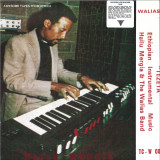
From their genesis as members of the Venus club in-house band in the early 70s, Hailu Mergia and the Walias Band were at the forefront of the musical revolution during an era where modern instruments and foreign styles superseded the traditional fare to become the staple sound of Ethiopia. No one would argue that the Walias were the trailblazing powerhouse of modern Ethiopian music. They were the first band to form independently without affiliation to a theatre house, a club or a hotel; unprecedented and risky as they had to raise all funding for expenses by themselves including buying equipment. They were the first to release full instrumental albums, considered to be commercially unviable at the time. They opened their own recording studio, with band members Melake Gebre and Mahmoud Aman doubling as technical buffs during sessions. They were also the first independent band to tour abroad. In short, they were the pioneers every band tried to emulate; some more successfully than others.
Odds are, any Ethiopian over the age of 35 who had access to TV or radio by the early 90s, will instantly recognize the sound of Walias. What is not a given is, how many would actually identify the band itself. Barely a day went by without hearing the Walias either in the background on radio or as an accompaniment to various programs on TV.
This Tezeta album, the band’s second recording, released in 1975, is one of those that have been impossible to find for nearly three decades. Sourced by Awesome Tapes From Africa and expertly remastered by Jessica Thompson, its unique and funky renditions of standards and popular songs of the day are so quintessentially Walias, flavorful and evocative. Hailu's melodic organ, unashamedly front and center in every track, makes even the complex pieces accessible.
Profoundly engaging; it's an immersive trip down memory lane for those of us getting reacquainted with it, while also an enthralling and gratifying experience for fresh ears.
Virtually unknown recording outside Ethiopia.
Documents Mergia & Walias legendary early period.
Follow-up to reissue of hugely popular seminal Ethiopian instrumentals LP Tche Belew (ATFA012)
Cassette-only, released in 1975 on the band’s in-house label to fund their record store.
Beautifully-rendered instrumentals of classic Ethiopian standards.
• The tracks from the group’s two 1984 EPs together on a swanky 10-inch vinyl LP. Inner bag features liner notes by Kris Needs incorporating new interviews with all three Delmonas and a series of great photos by Eugene Doyen.
• Sarah Crouch, Hilary Wilkins and Louise Baker started singing together as a unique spark of spontaneous magic inextricably linked to their boyfriends in the Milkshakes, then rocking a garage-punk antidote to shiny synth-pop and brash chart stars with a direct lifeline back to rock’n’roll’s original simplicity and wildness. After Billy Childish and Bruce Brand formed the Pop Rivets in 1978, the guys hooked up with Micky Hampshire and Russell Wilkins to found the Milkshakes. Sarah shared a student house with boyfriend Micky plus Billy. After she and Hilary, then dating Russell, sang backing vocals on the Milkshakes’ rollicking Beatles-translated take on the Shirelles’ ‘Boys’, Louise’s arrival turned them into a girl group pretty much by accident.
• “I loved the music the Milkshakes were playing,” Louise recalls. “Loved the small, intimate venues and most of the bands that played with them, especially the Prisoners. I’d gone with the Milkshakes to Belgium and was somehow persuaded to get up on stage and sing something. Next thing I knew, there was some kind of plan to get the three of us in the studio.” At first the three girls were called the Milk-boilers, renaming themselves the Delmonas by the time Ace Records’ Roger Armstrong and Ted Carroll suggested recording the EPs that furnish this collection. “I think we were asked to each think of three songs and turn up,” says Louise. “I mostly listened to music from the 60s: lots of girl groups, Irma Thomas, Dusty Springfield, Bo Diddley, Velvet Underground, Kinks. Bruce had the best record collection; Mel Tormé was in there somewhere and one of my faves. Sarah came up with doing the Doors cover.”
• ‘Comin’ Home Baby’ was written as an instrumental before Bob Dorough added lyrics and Mel Tormé recorded it in 1962. The Delmonas’ finger-clicking, noir-dynamic version kicked off their first EP with authentic-sounding 60s production resonance, iced with mysterioso organ. The Cookies scored a hit with Goffin & King’s ‘Chains’ in 1962, the Beatles’ version providing the Hamburg Star-Club template for the Delmonas’ energised rendition. The first EP, “The Delmonas Volume 1”, rounded off with two songs from the Childish-Hampshire songwriting partnership: ‘Woa’ Now’ and ‘He Tells Me He Loves Me’, the latter recalling the New York Dolls covering the Shangri-Las’ ‘Give Him A Great Big Kiss’, mainly because it has similar chords.
• “The Delmonas Volume 2” opened with Sarah’s idea of covering the Doors’ hit. “We thought, ‘How would the Kinks have played it?’” she affirms. ‘Hello, I Love You’ had got the Doors into hot water with the Kinks’ publishers for its resemblance to ‘All Day And All Of The Night’. The Delmonas home in and highlight that similarity, adding bonkers psychedelic drop and evocative new coda. Their surf-tinged version of the Milkshakes’ ‘I’m The One For You’ is followed by the swampy screaming of ‘Peter Gunn Locomotion’, a cover of a 1963 single by Freddie Starr in his pre-stand-up comedian days as singer with the Midnighters. The set closed with the sultry organ-led vamp of the Milkshakes’ ‘I Want You’, the nearest the Delmonas get to the slowies Sarah helpfully points out they referred to as “shag songs”.
• All these tracks would re-appear on their “Dangerous Charms” album, along with out-takes and recordings from a BBC session, before the original trio splintered, leaving Sarah and Hilary to return for further adventures as Ludella Black and Ida Red. The eight tracks here capture a moment when three fun-loving friends got to live out some musical fantasies and had a blast doing it. 37 years later, it sounds just as contagious.
- A1: Rise And Fall (2009 – Remaster)
- A2: Tomorrow’s (Just Another Day) (2009 – Remaster)
- A3: Blue Skinned Beast (2009 – Remaster)
- A4: Primrose Hill (2009 – Remaster)
- A5: Mr. Speaker (Gets The Word) (2009 – Remaster)
- A6: Sunday Morning (2009 – Remaster)
- B1: Our House (2009 – Remaster)
- B2: Tiptoes (2009 – Remaster)
- B3: New Delhi (2009 – Remaster)
- B4: That Face (2009 – Remaster)
- B5: Calling Cards (2009 – Remaster)
- B6: Are You Coming (With Me) (2009 – Remaster)
- B7: Madness (Is All In The Mind) (2009 – Remaster)
Madness’ fourth studio record “The Rise & Fall” has often been cited as the band’s best record and is home to one of their biggest tracks in “Our House” UK #5. Originally released in 1982 and reaching #10 in the UK album charts, it is now subject to a brand new re-release on 180g black vinyl in a gatefold sleeve as part of an ongoing reissue campaign.
Featuring exclusive liner notes by journalist Stevie Chick (MOJO, The Guardian & NME) and interviews with band members Lee ‘Kix’ Thompson, Mike Barson, Suggs McPherson, Woody Woodgate and Chrissyboy Foreman. Also featuring the hit single “Tomorrow’s (Just Another Day)” [UK #8].