Houston’s reputation for developing first-class jazz acts is well-established, as a stream of young players have been distinguishing themselves for decades…among those musicians and mentors who stood tallest, Bubbha Thomas was no exception (and a major key-player) in this long tradition of talent.
Before becoming an artist and educator, Bubbha Thomas (born 1937) was a Fourth Ward kid who grew up in a music-filled household. In High School he divided his time between music & basketball (he excelled at both) and studied with jazz legend Conrad “Prof” Johnson. “Prof” would later bring jazz glory to Texas with the Kashmere Stage Band, the group of teenagers who would win the “Best High School Stage Band In The Nation” prize in Mobile, Alabama in 1972 and who were anthologized in 2006 on Now-Again’s ‘Thunder Soul’ (which led to the 2010 Jamie Foxx documentary of the same name).
After finishing college, Bubbha got drafted in the service (he was a Korean War veteran) and would return to Houston in the early 1960s where he found work as a session drummer for the Duke and Peacock labels. Thomas drummed on recordings by O.V. Wright, Buddy Ace and the Mighty Clouds of Joy. He was playing his own stuff and backing luminaries such as R&B singer Chuck Jackson and homegrown legends like Lightnin’ Hopkins. Bubbha Thomas also teamed up with some of his equally legendary peers (like guitarist Melvin Sparks & organist Leon Spencer) and eventually established his own group, the Jazz Merchants.
Bubbha learned every style that was thrown at him and he played straight-ahead jazz with renowned artists before the political and social upheaval of the late 1960s led him to a path first charted by Coltrane and Sun Ra…the result of these new found influences was the incredible spiritual jazz ensemble ‘The Lightmen’, who released four incredible recordings in the 1970s. Their first album ‘Free As You wanna be’ predates the deep-set, maverick jazz issued by the likes of Tribe and Strata East and is a harbinger of some of the best in the 1970s jazz underground. The Lightmen albums eventually fell out of print until 2017 when the Now-Again record label brought them back into circulation and generated new interest in Bubbha Thomas’ work.
Thomas had a storied career as a drummer and bandleader, but perhaps his most enduring work is that as founder of Houston’s Summer Jazz Workshop, a remarkable program that nurtured upcoming talent for generations...we can’t begin to count the number of young people who benefitted from the exposure to music-arts because of Bubbha Thomas and what he meant to the Houston music community. In his career he earned five Grammy nominations and authored a pair of books. Next to this he was also a writer/editor for several local newspapers, ran one of the first Houston African American Television shows and he hosted a radio program on KYOK. Impressive to say the least!
Bubbha Thomas passed away in March 2020 at the age of 82. It was obvious he was a principled, fiery & wise person…and any anger he felt at America’s (and the world’s) injustices he met with music, intellect, activism and unity!
Next to his work with ‘’The Lightmen’’, Bubbha also released the fantastic (solo) album ‘Life & Times’ in 1985. ‘Life & Times’ (which we are proudly presenting you today) is particularly interesting to boogie-enthusiasts because of its high doses of funky twerks, solid grooves, crazy synth work, soulful vocals and excellent drum-beats courtesy of Mr. Thomas himself. You’ll quickly find yourself shaking hips the moment the needle hits the first track! The whole album is backed by a fantastic cast of all-star players and includes Howard Harris (Ruth Copeland), Dwight Sills (Bobby Lyle - TLC), Jerry McPherson (Donna Summer), Leo Polk (Kashmere Stage Band), John Gordon (Strata East) and Jackie Simley (Queen Latifah - Lionel Richie). All of the above makes this LP an essential purchase for any self-respecting fan and collector.
Tidal Waves Music now proudly presents the FIRST ever vinyl reissue of this fantastic album (originally released in 1985 on Lightin’ Records). This rare record (original copies tend to go for large amounts on the secondary market) is now finally back available as a limited 180g vinyl edition (500 copies) complete with the original artwork.
Поиск:thomas poli
Все
The band that modernised Zimbabwean music, and by doing so revolutionised the music industry in their country. Available for the first time on vinyl (180 gramms) with gatefold cover, and now all tracks fully remastered !
In 1972, the country of Rhodesia – as Zimbabwe was then known – was in the middle of a long-simmering struggle for independence from British colonial rule.
In the hotels and nightclubs of the capital, bands could make a living playing a mix of Afro-Rock, Cha-Cha-Cha and Congolese Rumba. But as the desire for independence grew stronger, a number of Zimbabwean musicians began to look to their own culture for inspiration. They began to emulate the staccato sound and looping melodies of the mbira (thumb piano) on their electric guitars, and to replicate the insistent shaker rhythms on the hi-hat; they also started to sing in the Shona language and to add overtly political messages to their lyrics (safe in the knowledge that the predominantly white minority government wouldn’t understand them).
From this collision of electric instruments and indigenous traditions, a new style of Zimbabwean popular music – later known as Chimurenga, from the Shona word for ‘struggle’ – was born.
And there were few bands more essential to the development of this music than the Hallelujah Chicken Run Band. The band came into being when a young trumpet player named Daram Karanga offered to assemble a group to entertain the workers at a copper mine in the town of Mhangura.
The original line-up – which included legendary singer Thomas Mapfumo, who would bring the sounds of Chimurenga to the world in the early 1980s with his band the Blacks Unlimited, and Joshua Hlomayi, one of the pioneers of mbira- style guitar – started out playing the Rumba and Afro-Rock styles popular in the capital. Although this was a hit with the white owners of the mine, the workers greeted it with indifference. But when they started adding electric arrangements of traditional Shona music to their repertoire, the audience went wild.
With the addition of “Zim” sounds to their arsenal, the HCR Band became unstoppable. Their reputation spread quickly and, in 1974, they were invited to the capital to compete in a national music contest organised by the South-African Teal label. Not only did they win the competition, but they also attracted the attention of famed producer Crispen Matema, who quickly organised their first recording sessions.
On their first day at Jameson House studios, they recorded half a dozen songs, including “Ngoma Yarira” and “Murembo”, two singles that would alter the course of Zimbabwean popular music.
During the next five years, the band would relocate from their small mining town to the capital city, go through numerous line-up changes and pay a few more visits to the recording studio, without ever losing the raucous urgency that had transformed them from popular entertainers into titans of Zimbabwean culture.
- A1: Road To Earth (With Peter Thomas)
- A2: It's The Music (With Afrika Bambaataa, Charlie Funk, Hektek & Deejay Snoop)
- A3: In The Dark (With Nichola Richards)
- A4: The Spell Of Ra-Orkon
- A5: Political Power (With Afrika Bambaataa, Charlie Funk & Donald D)
- A6: Drifting Stars
- B1: Not Get Caught (With Derobert)
- B2: Locked & Loaded
- B3: Catfight
- B4: Hot Stuff (With Afrika Bambaataa, Charlie Funk & Deejay Snoop)
- B5: The Showdown
COLOUR VINYL[16,77 €]
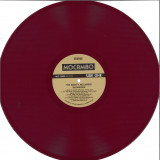
The Mighty Mocambos' new album "Showdown" sets another cornerstone in their prolific career as a globally active instrumental funk outfit. While maintaining their organic approach of recording real musicians live on tape, the group has refined their trademark sound with a dramatic edge, a hard hitting production and ventures into less obvious musical territories. While highly enjoying themselves as the tight unit they are, The Mighty Mocambos invited an exciting list of guests to contribute to their musical "Showdown": German film composer icon Peter Thomas, hiphop godfather Afrika Bambaataa, rap legends Charlie Funk aka Afrika Islan (member of the original Rocksteady Crew) and Donald D (of Ice-T's Rhyme Syndicate), plus Nichola Richards, Shawn Lee, DeRobert from peer label GED Soul in Nashville, Zulu Nation MCs Deejay Snoop & DJ Hektek and organ genius Guillaume Metenier all joined the group for their new musical adventure. "Showdown" is released on vinyl LP by Mocambo Records and on CD and digital incarnations by Légère Recordings.
About the Mighty Mocambos:
The Mighty Mocambos and their many incarnations have released dozens of 45s and several albums on their own imprint Mocambo Records and other labels such as Kay Dee, Truth & Soul, Tramp, Légère and Favorite Recordings, to name a few. They have collaborated with musical legends such as Afrika Bambaataa, Lee Fields or Kenny Dope, put new talent like Gizelle Smith and Caroline Lacaze on the map, brought Caribbean steel drums to funk clubs with their alter ego Bacao Rhythm & Steel Band, and have toured through all civilized parts of the continent and beyond for the better part of the last years. Their unique style and trademark sound are loved by peers, fans and critics alike and distinguishes them from mere retro-copycat-acts as well as overproduced plastic soul. The Mighty Mocambos continue to deliver their brand of funk with blazing horns, soulful guitars, driving drums and basslines combined with an extra bit of quirkiness. When not producing records for one of their many incarnations and collaborations, the band is touring steadily. Whoever witnessed a concert will tell you about the musicality, passion, energy, humour and joy that the band loves to bring to the people. Background What started out years ago as a take on "deep funk" and its associated vinyl culture has completely grown into its own oeuvre d'art. With the launch of their production studio and record label in 2006, things started to gain momentum. Apart from self-releasing the group's own recordings, Mocambo Records became a household name by putting out highly collectable vinyl 45s by today's best funk outfits as well as unearthing lost library funk treasures. The Mighty Mocambos however did not restrict themselves solely to their own label. Their interpretation of the Furious Five classic "The Message", released under a pseudonym on an obscure phantasy label without proper distribution, got picked up and remixed by Grammy- nominated producer legend Kenny Dope (Masters at Work, Bucketheads). Their first single with UK funk singer Gizelle Smith, "Working Woman", became an overnight smash and a prime-time club favourite of funk & soul DJs worldwide. Initially released on the Finnish private press imprint Old Capital, it got the remix treatment by Kenny Dope and a re-release on Kay Dee Records as well. After earning their credits through vinyl 45s, the band stepped up their game with the full- length "This Is Gizelle Smith & the Mighty Mocambos" in 2009. The album received rave reviews, got lots of airplay - and sold a bunch of physical copies too. Its success led to an extensive tour throughout Europe with club dates from Marseille to Oslo, performances at massive festivals such as the Printemps de Bourges in France and live radio appearances at respected FMs such as the BBC and Radio Nova. With the following album "The Future Is Here" (2011), the band stepped further into the spotlight and explored new sounds with features by hiphop legends Afrika Bambaataa and Charlie Funk, French singer Caroline Lacaze and German rare groove queen Su Kramer, while manifesting their unique raw funk sound and refining their unmistakable instrumental style that had long gained international reputation. The album was toured extensively, including a legendary performance with Afrika Bambaataa at Hamburg's Reeperbahn Festival (covered by ARTE TV), support gigs for Lee Fields and headline shows at renowned venues such as Amsterdam's Paradiso, Islington Assembly Hall in London, Paris' Bellevilloise, Tempo Club in Madrid, or at home at Hamburg's Mojo Club. After producing the critically acclaimed debut album "En Route" (2013) of French soul singer Caroline Lacaze, where their adapted their sound to deliver a stunning mix of French Beat, Soul & Psychedelic Rock, the band went on to record a full length under their moniker Bacao Rhythm & Steel Band. Their interpretation of 50 Cent's P.IM.P. had long become a cult classic and was often mistaken for the original sample. The group's approach in stretching the boundaries of funk by adding Caribbean steel pans caught the interest of Brooklyn's finest label Truth & Soul who signed the band for the album "55", an explosive mix of funk and hip hop cover versions as well as original compositions that showcase the band's singularity in today's funk circuit. The Mighty Mocambos' recent album "Showdown" (2015) sets yet another cornerstone in their prolific career as a globally active instrumental funk outfit. While maintaining their organic approach of recording real musicians live on tape, the group has refined their trademark sound with a dramatic edge, a hard hitting production and ventures into less obvious musical territories, with a diverse list of special guests ranging from German film composer icon Peter Thomas to hiphop pioneer Afrika Bambaataa.
- A1: Road To Earth (Feat Peter Thomas)
- A2: It's The Music (Feat Afrika Bambaataa, Charlie Funk, Hektek & Deejay Snoop)
- A3: In The Dark (Feat Nichola Richards)
- A4: The Spell Of Ra-Orkon
- A5: Political Power (Feat Afrika Bambaataa, Charlie Funk & Donald D)
- A6: Drifting Stars
- B1: Not Get Caught (Feat Derobert)
- B2: Locked And Loaded
- B3: Catfight
- B4: Hot Stuff (Feat Afrika Bambaataa, Charlie Funk & Deejay Snoop)
- B5: The Showdown
BLACK VINYL[14,66 €]
Limited edition ruby red colour vinyl reissue of the smashing album from Germany's finest funk ensemble to celebrate its 5th anniversary. 11 cinematic deep funk instrumentals, celebrated b-boy breaks and vocal dancefloor killers with special guests Afrika Bambaataa, Charlie Funk, Deejay Snoop, DJ Hektek, Donald D., DeRobert, Nichola Richards, Peter Thomas, Guillaume Metenier & Shawn Lee.
Original note from 2015 release:
"The Mighty Mocambos' new album "Showdown" sets another cornerstone in their prolific career as a globally active instrumental funk outfit. While maintaining their organic approach of recording real musicians live on tape, the group has refined their trademark sound with a dramatic edge, a hard hitting production and ventures into less obvious musical territories. While highly enjoying themselves as the tight unit they are, The Mighty Mocambos invited an exciting list of guests to contribute to their musical "Showdown": German film composer icon Peter Thomas, hiphop godfather Afrika Bambaataa, rap legends Charlie Funk aka Afrika Islam (member of the original Rocksteady Crew) and Donald D (of Ice-T's Rhyme Syndicate), plus Nichola Richards, Shawn Lee, DeRobert from peer label GED Soul in Nashville, Zulu Nation MCs Deejay Snoop & DJ Hektek and organ genius Guillaume Metenier all joined the group for their new musical adventure."
- A1: Marc Melià – Permanent Waves (04 26)
- A2: Pletnev – Marc O’polo (06 31)
- A3: Douglas Greed – Vancouver (04 11)
- A4: Middle Sky Boom – Missing Drive (05 13)
- B1: Thomass Jackson – Mithra (07 07)
- B2: Goldmoon - Bells (04 08)
- B3: Krikor – Sally Hardesty (05 34)
- C1: Morgan Blanc – Werde Der Du Bist (04 52)
- C2: Cora Novoa – Virtual Aesthetics (04 35)
- C3: Nsdos – Al-G (05 43)
- C4: Rebeka Warrior – Ich Komme Zurück (04 49)
- D1: Theus Mago – Idealistic Stone (07 33)
- D2: The Populists – Prehistoric Lemurs (05 19)
- D3: Acid Love Triangle – Instant Track (06 42)
Back in 2018, Lumière Noire celebrated its first anniversary with a compilation featuring thirteen exclusive tracks by an eclectic group of electronic musicians – a family portrait of sorts. A few months later, a second volume of From Above, compiled by the label's artistic director (and DJ) Chloé, once more brings thirteen established acts together with promising upstarts. The first compilation was the embodiment of the label policy advocating for both artistic excellence and a widening of electronic aesthetics – bopping from deviant house music to adventurous IDM and to the rigor of dancefloor techno, among other electronic explorations. Some of the artists featured are now closely associated with Lumière Noire, while others were more established performers such as Benedikt Frey, Lauer, Jonathan Fitoussi, Il Est Vilaine, Dave e Brun (half of Swayzak) and Frank Agrario, as well as upcoming artists such as C O N T R A (a side project by none other than Iñigo Vontier), Sutja Gutierrez, Théo Muller, Markus Gibb, Bajram Bili, and a sprinkling of UFOs circling the genre (Suuns' Ben Shemie, Drvg Cvltvre, and electro-acoustic combo Lumi). This group photo laid down a number of paths for a label in perpetual evolution.
Since then, the Parisian entity has continued to grow within the international electronic scene, releasing Local Suicide's Leopard Gum EP, Iñigo Vontier's first LP, and planning another slew of releases for 2020. The lineup for this second volume of From Above is once again equally intriguing, offering a crescendo-like track listing over a double LP format, which is a feat of sorts for a "Various Artists" compilation.
Marc Mélias' fascinating, unsettling Permanent Waves gets the proceedings going with a contemplative track that provides a serene opening to the odyssey on which From Above will be taking the listener. Pletnev continues on with the playful, hooky Marco O’Polo, a fundamentally techno track built over a seductive 90s-inspired breakbeat. Douglas Greed (whom Chloé remixed on BPitch a few years back, and had himself remixed track from her album Endless Revisions featuring Ben Shemie’s vocals), supplies Vancouver, a slice of ambiance à la Boards of Canada, supported by a gripping breakbeat. The rhythmic arpeggio of Israeli producer's Middle Sky Bloom makes his contribution a hypnotic, disconcerting slice of dark disco. Thomass Jackson, a safe bet in the new wave of the Latin-American electronic music blowing its sometimes hot, sometimes cold wind, proposes Mithra, a dancefloor incantation to the Antiquity's bull god. With Bells, Goldmoon delivers a track that is both melodic and nostalgic, tinged with rhythmic samples, Moog basses and solar backgrounds. Longtime friend of Chloé, Krikor, who has released two albums on L.I.E.S. Records (Pacific Alley and Saudi), offers a moment of respite with Sally Hardesty (a nod to fans of horror movies), a heavenly and bewitching track that, paradoxically, hints at the highly energetic second half of the compilation. Discovered with Confidences EP released on Lumière Noire, the young French producer Morgan Blanc asserts himself here with Werde Der Du Bist ("Become who you are"), a song with luminous chords and midtempo rhythms to start the second half of the compilation by raising the tension. Galician producer, DJ and designer Cora Novoa continues the rollercoaster's ascent with her Virtual Aesthetics, which once again brings those acid tones – this time without the vertigo. Equally corrosive, but tenser and more percussive, the uncategorizable NSDOS' AL-G attempts to give order to a chaotic electronic world full of violence and danger. Rebeka Warrior (half of the duo Kompromat alongside compatriot Vitalic), takes on a more nostalgic vibe with Ich Komme Zurück, a French/German techno chant evoking a secret dream of a track from a bygone era. Three years after the release by Lumière Noire of Moderna and Theus Mago's stroboscopic Dog Is Calling You, Theus Mago makes a solo comeback with Idealistic Stone, a most acid of club tracks, rattled by the modulations of the inevitable TB 303. French electro-rock saltwarth Yan Wagner's dancefloor alter ego The Populists' Prehistoric Lemurs gives an almost Orientalizing twist to Kraftwerk's techno-pop. To close things off, the collection's last track, the appropriately-named Instant Track by impromptu encounter between Hervé Carvalho (Acid Arab), Jacques Bon (Smallville) and Demian (Kompakt) Acid Love Triangle, releases the pressure with a long, bittersweet reverie that leaves the listener, at the end of these thirteen musical adventures, to rest languorously on an artificial and welcoming shore.
Hot off the heels of Aluxes, his 2018 Lumière Noire debut EP, young Mexican DJ/producer Iñigo
Vontier is inviting Chloé's label on a trip to the far corners of the body & mind with an album of
demented grooves, psychedelic take-offs and imaginary comic strips of mystical rituals. A
bewitching debut full-length. Mexicans may never possess the sonic science of the Germans,
the hedonistic madness of the English or the gift for synthesis of the French, but, as proven by
Iñigo Vontier's first full-length for Lumière Noire, their universe is much more exciting than
anyone would have ever thought.
The DJ/producer fully asserts his origins by brandishing the album’s title "El Hijo del Maiz" ("the
son of the corn") almost as an emblem: "in Mexico, corn is eaten daily. It has long been defined
as 'the gold of America', and I consider all Mexicans as children of corn". A spiritual and
embodied vision Iñigo's first Lumière Noire release, the four-track Aluxes, set the tone of the
young talent's distinctive interpretation of dark disco, which creeps up on the dancefloor from its
iconoclastic side. The two tracks and two remixes (one by Flügel, the other by Inigo himself)
featured on the 12" for lead single "Xu Xu" (featuring Red Axes-affiliate Xen's irrelevant vocals)
was a full-bodied confirmation that Vontier sees the dancefloor as an arena for the occult –
whether from the peoples of the equatorial jungle, the Middle East or, even from indocile
machines. But, while the spiritual element seems part and parcel of the Jalisco native’s output, it
is in no way the only ingredient of this first long-player: "this album best reflects my own vision
and spirituality, and the way I feel it" he says.
Whether contemplative or frenetic, the collection of tracks that make up “El Hijo Del Maiz” takes
the kitchen sink and throws it out the window: languid rhythms, haunted vocals, and mysterious
percussion fuel a discombobulated house set that scrambles the listener's five senses, leaving
one disoriented and exposed to the vagaries of vertigo. Following the demented, dystopian “Xu
Xu” EP, which explored an imaginary jungle that harbored Mayan and Egyptian pyramids,
Middle Eastern accents are once more present in the off-kilter “Bo Ni Ke” and its Japaneseinfluenced vocal trickery, which Moroccan flutes à la Jajouka transform into a feverish trance.
With the following three tracks, Iñigo Vontier raises himself to the same level of excellence as
the Pachanga duo (of which pride of the Mexican scene Rebolledo, is also known as a prolific
artisan of deconstruction): “Awaken”'s slumbering voice, heard as through the veil of hypnosis,
slowly introduces a techno beat which, as in follow-up “Time”, literally brings the listener to a
levitative state. In a housier vein, yet continuing in the same psychedelic, 90s-infused spirit,
“Don’t Go Back” disrupts the genre’s usual signatures with an out-of-tune keyboard that is
becoming the artist's trademark, destabilizing the listener into a drunken vertigo, with a good
helping of sexiness: "I think the sexy dimension definitely brings a kind of magic to music," says
Vontier. “I'm sure I felt this magic during my DJ sets, and I like to think that sorcerers use this
element in their practices. I might consider myself a bit of a sorcerer when I take over the DJ
booth, by the way." A mood and sound that can once again be found – in a quieter, more
bucolic version – on “Chiquitita” (feat. the flute stylings of pioneer DJ Rocca, now a partner of
cosmic disco legend Daniele Baldelli). The more cinematic, fast-paced and dreamy beat of the
no less captivating “Little Monster” might evoke the mischievous spirit of the Mayas' minor
mythological creatures, while ode to the magical herb Marijuana (feat Thomass Jackson)
proudly tramples into the debate that such a provocative title inevitably provokes: "psychedelic
drugs are powerful tools to reach a higher level of consciousness about what surrounds us, but
we must learn how to complete this psychic journey by ourselves, notably through meditation
and love.
In the end, El Hijo del Maiz is an album-length confirmation of Iñigo Vontier's uniqueness, and
his adherence to Lumière Noire's policy of letting artists fully express their vision – while letting
their passions guide their idiosyncrasies and explorations of innovative electronic signatures
On His Second Full-length 'degenerate', Turkish Producer, Artist And Designer Berk Çakmakçi Uses A Plethora Of Found And Recorded Sound To Create Shape-shifting Compositions Where Noise, Drone And Post-club Sounds Are Filtered Through Industrial Textures. 'degenerate's Brooding Sound Design And Disregard For Textural Uniformity —lo-fi Soundbites From Youtube Vids Merge With Sharp Blasts Of Digital Noise On Short But Intense 'spit'— Is Informed By The Trans-international Chaos Of The Political Zeitgeist. The Closer 'nothing To Break' Searches For A Throughline In The Current Wave Of Destruction And Death, And Plays Out Like Several Movie Trailers Going Simultaneously. Often Making Sharp Turns Within A Single Song, 'degenerate' Is Ostensibly Aggressive And Fragmented. At The Same Time, It Reconfigures The Residue Left By Contemporary Paranoias And Obsessions.
The Album Is Mixed By Ahmet Türk And Berk Çakmakçi, Mastered By Beau Thomas And Features Art By Bora Akincitürk And Type Design By Amir Jamshidi.
- A1: Birth Of The Sparkchild (Ft. O. Watson & S. Novsky)
- A2: Schizophrenia (Ft. H. Feraud & J. Jt Thomas
- A3: We Play What We Want (Ft. The Insane Vocal Society, No Dfinition+Brother P.)
- A4: Bobby Sparks Sr.s Famous Chili (Ft. M. Miller, K. Anderson & M. Letteri)
- A5: The Comanche Are Coming (Ft. R. Sput Searight & Mononeon)
- B1: Girls From Tahiti (Interlude)
- B2: So Fine (Ft. J. Rob, I. Sharkey & E. Gales)
- B3: I Miss U (Ft. F. Mccomb)
- B4: Black Man Running From The Police (Ft. S. Novsky, M. Mitchell & T. Parsnow)
- B5: Stono River (Ft. L. Peterson & M. Simmons)
- C1: Lio Is Weird As Hell (Ft. M. Letteri & Mononeon)
- C2: All Mine (Ft. Mental Chaos & Damascus)
- C3: Lets Take A Journey (Ft. S. Novsky & G. Maret)
- C4: Too Late Now, Boss Man!(Interlude)(Ft. C.sweet Thang Sparks & B.r. Sparks S
- C5: Islam (Hadjdj From India) (Ft. S. Novsky & Dj Ernie G.)
- D1: Take It! (Ft. R. Hargrove & Rev. H.l. Stegar)
- D2: Zelin (Ft. D.g. Bonaventure & Y. Edorh)
- D3: Black Change (Ft. J. Rob, Verb & S. Carrol)
Bobby Sparks II ist vielen ein Begriff. Sei es als Keyboarder bei Snarky Puppy, Marcus Miller, Prince oder Liz Wright, Bobby hat überall markante musikalische Spuren hinterlassen. Und nun ist es endlich soweit: Mit "Schizophrenia - The Yang Project" steht Bobby Sparks Debutalbum (2CD Set) zur Veröffentlichung bei LEOPARD an. Es hat gedauert, um diese außergewöhnliche Sammlung unterschiedlichster Songs zu produziern. Aber es hat sich mehr als gelohnt: zeigt sich darin doch das breite musikalische Vokabular und der schier unerschöpfliche Schaffensdrang des Keyboarders. Vom slammenden Funk bis zu langsamen, groovigen Soul-Balladen und Streifzügen in die Genres Straight-ahead-Jazz, Fusion, Orchester- und Weltmusik: das sehr passend betitelte Album "Schizophrenia - The Yang Project" vereinigt eine Vielzahl verschiedener Musikstile in sich, ohne dabei das Gesamtbild aus den Augen zu lassen. Mit an Bord auf dieser außergewöhnlichen musikalischen Reise sind eine Reihe seiner alten Freunde aus Dallas, sowie viele Stars des Genres - etwa die Bassisten Marcus Miller, Pino Palladino, MonoNeon und Hadrien Feraud, der Trompeter Roy Hargrove, die Sänger Frank McComb und James - J. Rob' Robinson, Snarky Puppys Michael League und Jason - JT' Thomas, die Gitarristen Lucky Peterson und Eric Gales sowie die Drummer Mark Simmons, Brannen Temple und John - Li'l John' Roberts.
- A1: Chapter D (Dark Main)
- A2: Chapter M (Driving)
- A3: Chapter M (Karenina)
- A4: Chapter D (Swing)
- A5: Chapter M (Light)
- A6: Chapter M (Mellow)
- A7: Chapter D (Sparkling)
- A8: Chapter M (Charming)
- B1: Chapter M (Karenina 2)
- B2: Chapter D (Main)
- B3: Chapter M (Cosmic)
- B4: Chapter D (Strumm)
- B5: Chapter M (Reduction)
- B6: Chapter D (Dark)
- B7: Chapter M (Cosmic 2)
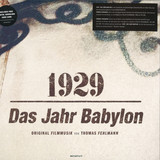
'1929 - Das Jahr Babylon" marks Thomas Fehlmann's third full length release of 2018 and presents what appears to be a creative peak in his career that spans beyond his solo career to his early days in Palais Schaumburg, collaborating with Moritz von Oswald as 3MB to his long time work with The Orb. Having left The Orb in late 2017 has set free unforeseen energies in Fehlmann's studio.
A departure from his recent dance floor-friendly album "Los Lagos" (KOM388, KOMCD148) released in September on Kompakt, Thomas Fehlmann's '1929 - Das Jahr Babylon" is a film soundtrack from the documentary that aired on ARD network on September 30, 2018 and is now available as a podcast series.
To compliment the internationally lauded TV series "Berlin Babylon", German director Volker Heise has created a documentary about 1929, the fateful year during Germany's "Weimarer Republik" in which "Berlin Babylon" is settled. Heise's stirring documentary portrays Germany's sizzling capital that is faced with radical changes by the dark forces whom are about to toss the world into the abyss we know as World War II.
This marks the second time that Fehlmann is partnering up with Volker Heise after 2010's marathon documentary "24 Stunden Berlin" which was released as "Gute Luft" (KOM211, KOMCD81) in the same year. Fehlmann's composition for "1929" consists of sample material taken from the era and thwarts the exaggerated lust for life with threatening undertones that anticipate the dawn of mankind's darkest chapter so far. Although all the sounds breathe yesterday's atmosphere this soundtrack bursts with modernity. Fehlmann accomplished the daring feat to musically render the unsettling resemblance between the political situation 90 years ago and our current time.
We at KOMPAKT feel that Fehlmann's score has turned out spectacular enough to give it proper release on limited vinyl and CD as well as on all digital platforms.
Mit '1929 - Das Jahr Babylon" legt Thomas Fehlmann schon seinen zweiter Longplayer innerhalb eines halben Jahres vor und dokumentiert damit eine kreative Hochphase seiner überaus stattlichen Musikerkarriere. Die Trennung von The Orb scheint bei ihm ungeahnte Energien freizusetzen.
Anders als auf dem cluborientierten "Los Lagos" tritt Thomas Fehlmann auf "1929" musikalisch einen Schritt zur Seite. Und das aus gutem Grund: Analog zur international gefeierten Fernsehserie "Babylon Berlin" entstand unter der Regie von Volker Heise der Dokumentarfilm "1929 - Das Jahr Babylon" - ein ergreifendes Sittengemäde Berlins während des Schicksalsjahrs der Weimarer Republik. Wie schon zu Volker Heises vorangegangener Berlin-Doku "24 Stunden Berlin" (2010 erschienen als das Album "Gute Luft" auf KOMPAKT) hat Thomas Fehlmann auch diesmal den kongenialen Soundtrack beigesteuert. Basierend auf Klangmaterial des Jahres 1929 hat Fehlmann eine beeindruckende Musik geschaffen, in der manchmal die übertriebene Lebensfreude und Dekandenz jener Zeit aufflackert. Eine Musik, deren Stimmung jedoch unterwandert ist von den bedrohlichen Strömungen, die Deutschland kurz darauf in seine dunkelste Epoche stossen werden.
Thomas Fehlmann ist damit ein wahres Kunststück gelungen. So sehr die Produktion den Geist einer vergangenen Zeit atmet, so modern mutet sie an. "1929 - Original Filmmusik" klingt somit wie die zu Musik geronnene Erkenntnis, dass sich Gestern und Heute auf erschreckende Weise ähneln.
Wir bei Kompakt sind der Ansicht, dass Thomas Fehlmanns Filmmusik zu "1929 - Das Jahr Babylon' so spektakulär geraten ist, dass wir sie nun als limitierte CD und Vinyl-Auflage, sowie auf allen digitalen Plattformen verfügbar machen.
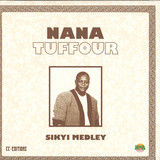
Kalita Records and CC:EDITIONS (a new venture by
Australia's CC:DISCO) jointly announce a 12' EP
comprised of four of Nana Tuffour's greatest electronic
burger highlife tracks, accompanied by interview-based liner
notes. Here, in partnership with Nana, we select two highly
sought-after songs from his 1993 release 'Genesis', namely
'Sikyi Medley' and 'M'Anu Me Ho', and pair them his with two
lesser known yet equally deserving tracks 'Asamando' and
'Jesus' from his 1997 CD-only release 'Highlife Tropicana'.
Hailing from Kumasi, the capital of the Ashanti region in Ghana,
Nana Tuffour is by far one of the most important exponents of
modern highlife music. He studied piano at college and cut his
teeth in the '70s as an organist and vocalist for the incomparable
Kyeremanteng Atwede and Dr. K Gyasi's Noble Kings Band.
Fast forward to 1981 and Ghana was at the apex of its golden age
of music. This era was brought to an abrupt end by political
upheaval when the military took over the government and as a
result a restrictive dusk to dawn curfew was imposed between
1982 and 1984. This resulted in a total obliteration of the country's
night life, and Nana just like many other prominent musicians
including Pat Thomas and George Darko left Ghana for greener
pastures, the most popular destinations being Nigeria and
Germany. The Rheinklang Studio in Düsseldorf run by a young
inimitable German sound engineer Bodo Staiger and another
'exiled' Ghanaian musician Charles Amoah played a crucial role
for those musicians who had chosen Germany. This studio
became the focal point for Ghanaian musicians and the birthplace
of a new sound, now known as 'Burger highlife' - traditional
Ghanaian highlife infused with the more up to date electronic and
disco sounds of the West. It is arguable that Nana has played a
crucial role in Burger highlife and developing the sound of
traditional Ghanaian highlife more widely to what it is today, with
his innovative use of electronic accompaniment pushing its
boundaries to its creative extremes.
It is Burger highlife's transcendence of traditional musical
boundaries that helps make it so accessible to listeners,
appealing not only to Ghanaians back home but now highly
regarded and sought-after by those in the West interested in
more occidental disco and electronic sounds. We hope that you
enjoy the four songs offered here, each chosen to demonstrate
Nana's singular influence on the development of Burger highlife.
- A1: Bad Boy-Triston Palma
- A2: Never Trouble Trouble-Tony Tuff
- A3: Single Life-Robert Ffrench
- A4: String Up The Sound System-Michael Palmer
- A5: Champion Bubbler-Puddy Roots
- A6: Police Police-Ashanti Waugh
- A7: Fancyness-Triston Palma
- B1: A Little Bit Of Love-Phillip Frazer
- B2: Barrel Mentality-Bill Blast
- B3: Inner City Blues-Cutty Ranks
- B4: Reggae Fever-Michael Forbes
- B5: Ethiopia-Tony Carver
- B6: Strawberry-Eddie Constantine
- B7: The Lord Is My Light-Rod Taylor
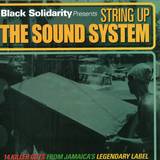
In the beginning of the 80's reggae music became increasingly in tune with what was happening in Kingston's dancehalls....probably more so than at any time since the sound system operators had started to make their own shuffle and boogie in the late 50's..
The international audience and the critics were too busy looking for a new Bob Marley to appreciate what was happening downtown and failed to acknowledge that this was a return to the real,raw roots of the music...brash,confidient,young record producers who were totally in tune with the youth audience stepped forward and seized the moment...
Oswald'Ossie'Thomas began his apprenticeship in the music business at the age of fourteen and served his time as a record salesman for Bunny 'Striker 'Lee and Winston 'Niney the Observer' Holness before moving on to Miss Sonia Pottingers Tip Top Records...
'I ended up working in three record stores on Orange Street from 1976 to 1981...Yeah man,Me deh 'pon me bicycle till I buy my motorcycle..Them days records were coming out left right and centre..everyday'
Ossie Thomas...
It was during his time with Miss Pottinger that Ossie began to produce records for himself and in 1979 Ossie and Phillip Morgan began The Black Solidarity label based deep in the Kingston ghetto on Delamere Avenue.
And the man who had made his name in the business selling other people's records now became one of the most important and influential record producers of the era..
In the 1970s the American composer Henry Flynt started a series of pieces under the title - New American Ethnic Music'. In so doing he worked together native styles of music such as blues, Country or Hillbilly with electronic production methods to make something altogether new. So far in Germany it has never been attempted to rework folklore electronically for a compilation. However, this picture changes if one redefines the idea of who the population is. Incomers have brought new - national anthems' to Germany, which means: even the Portuguese Fado, the African Gnawa, the Croatian Klapa or the Vietnamese Quan ho are these days at home in Germany.
With the cultural project - Heimatlieder aus Deutschland' ('Native songs from Germany') founded by former Spex editor Mark Terkessidis and label manager Jochen Kühling all the various styles of traditional folk music now found in Germany has been collected. Thirteen of the songs recorded for the project have now been transformed by contemporary electronic producers to present a - New German Ethnic Music'. But why remixes For one thing electronic music has recently focused a lot on the past (Ghost Music, Hypnagogic Pop etc.) - electronic editing is well suited to follow the effects of the immigrant music which the - imaginary national anthems' has created. Furthermore the project's instigators were curious how - electronic musicians' would handle folk music and folk songs which is a hugely difficult task. To this end artists were sought out who could get along with the idea of each music style and who are known to already have experimented with the human voice. The results are as varied as the music styles and Djs involved. Some melodies remain completely intact while others are abstracted beyond recognition.
Margaret Dygas' associative approach ensured that she presents a polish song about a girls arranged marriage with a claustrophobic feeling. With his remix of the Marrabenta of Mozambique Mark Ernestus has continued the rhythmic experiments he is known for with Jeri Jeri. Thomas Mahmoud translated Gnawa into dub and finally Ulrich Schnauss turned the song of the Italian Chorus of - Donni So' into a hymn for the horizon-expanding power of migration.
Hopefully this compilation will also expand some horizons.
Margaret Dygas - Impulse Remix
Thomas Mahmoud - Arab Disco Dub Remix