A1 - Theia
Opening his Spatial account in an historic release for the label and a moniker dormant for over 25 years, JLM Productions opens the EP with Theia - a track which will take you right back to early Progression Sessions days - delicately introduced with blippy effects and hi hats, ushering in crisp metallic beats and relaxing padwork. The track develops continually with soothing melodies and amens added into the mix, resulting in a stunning and varied collage of finely tuned elements that never sound too busy to the ear - JLM Productions, welcome back!
A2 - Derealization
Changing things up while still showcasing the ability to combine a crazy level of detail into a cohesive mix, Derealization is a suspenseful, slightly moody track with JLM Productions laying down distinctive snappy breakbeats and sudden, fierce bassy hits, with tension rising from the eerie synthwork to envelop the listener throughout a track which demands repeated listens and will surely do damage on the discerning dancefloor.
AA1 - Quadrature
With a vibe reminiscent of his output in the mid-90's Reinforced era, JLM Productions drops Quadrature which takes that inspiration and brings it right up to date for Spatial in 2023, effortlessly combining synthetic breaks with understated echoing bongos, restless wavy notes and old school melodies punctuating the immersive atmosphere of the piece. This one thoroughly deserves pride of place in the "old school brand new" club.
AA2 - Translight Velocity
Continuing the old school theme, Translight Velocity quickly shows it's intent with inspired off-key notes before a lesson in joyous 90's style breakbeats leaps out of the speakers - not a single head in the room will be still with this on deck! Bouncy basslines and finely crafted drums from a variety of break samples jump around chaotically, sending your mind to the dancefloors of old in a way that feels incredibly fresh today
Words by Chris Hayes
Buscar:thorough
Fresh from starring as the town drunk, no typecasting here!, in Rio Bravo’ (the movie) Dean was at the height of his popularity when he entered the Capitol studios in the summer of 1959 to record his first
Christmas-themed songs accompanied by an orchestra arranged and conducted by Gus Levene. The results of the recordings were a charming, thoroughly entertaining Christmas record, highlighted by
fine versions of “White Christmas”, “Let It Snow! Let it Snow! Let It Snow!”, “Winter Wonderland”, “Baby, It’s Cold Outside”, “The Christmas Blues”, “Rudolph, The Red- Nosed Reindeer” and bonus
broadcast recordings of “Silent Night”, “Silver Bells” and “It’s Beginning To Look Like Christmas.
Limited coloured Crystal Clear vinyl.
Cybotron has re-emerged in our contemporary cybercultural age when artifactual futures begin a transition into a new era of "Meta".
By combining their knowledge of philosophy, science fiction, and mechanical engineering, at a time when electronic instrument companies were only just beginning to distribute their products to the masses, two prosumer audio technicians named Juan Atkins and Rik Davis were able to re-engineer Cybotron – a combination of the words “Cyborg” and “Cyclotron” (an atomic particle accelerator) – to be used as a home studio performance music that would change the course of independently produced and distributed electronic music.
Dissolving the boundary between singer, songwriter, and producer, Juan Atkins named Cybotron’s future forward funkadelic sound “techno” in reference to Alvin Toffler’s concept of unlikely “techno rebels” against technocracy. Techno is music that sounds like technology, and its purpose was to help society survive our collision with a universally felt “future shock” by inserting an audio virus into the cultural matrix.
Techno’s blueprint spread across the Detroit-Berlin Axis between Metroplex and Tresor. As human society began its transition from a post-industrial to an information-based market economy, Cybotron enabled a thorough system override of the human senses towards a tangible man-machine hybridity and showed the world how to channel their emotions and imaginations into new sound technologies and create new ‘sonic’ spatialities where listeners can transport themselves out of the physical world into the future. The cover of their debut album Enter (1983) transmitted a fragmented view of a body in motion being digitized mid-stride, dissolving physical and virtual reality into sonic fiction.
Today, the man-machine hybridity of Cybotron is still the truest form of techno, coevolving in conversation with the technological music they created and inspired. The latest data disk marks a new chapter that reflects a techgnostic musical expression of the knowledge acquired during their decades-long hiatus. Unlike the dance music industrial replications of the Model 500 formula, acknowledging the content marketing expectations that segments music into specific, sellable genres, this techno music is self-aware. Cybotron processes dance music tropes spawned from its very own blueprint with a meta-tactical precision out of sync with our current rave new world.
Cybotron’s return demonstrates a studied engagement with what techno was and should be with a peerless update of Juan Atkins’ initial inventive idea of do-it-yourself electrically reengineered music xeroxed onto both sides of the 12” – uploaded directly into the alleys of your mind.
- The Rhythmanalyst
Miss Tiny is a brand-new musical project featuring acclaimed record producer and Speedy Wunderground label founder Dan Carey (Wet Leg, Slowthai, Fontaines D.C.) alongside Ben Romans-Hopcraft of Warmduscher / Insecure Men / Childhood fame.
A spiritually, and methodically united front, Miss Tiny’s universe is a thoroughly explored romance between heritage, rebellion, and years old friendship; a triptych of variables all gravitating towards one signalled output, with no real sense of time, or external pressures. Having spent the best part of a decade orchestrating haphazard jam-sessions, Carey and Romans-Hopcraft would eventually go on to discover a fundamental principle of their own. One which would come to define Miss Tiny, throughout her various forms and guises.
“We called it anti-recording,” continues Carey. “Only doing it for the pleasure of doing it”. When fully committing to this practice, the music meticulously follows two courses; refine, or degrade. Perfect the moment, or let it go; never to be heard, or re-lived ever again for fear that the action of pressing record, would inevitably take ownership of the occasion and lead the experimentation into a downward spiral towards something all-together tangible.
The irony of a seminal producer and critically revered musician banding together out of mutual distaste for recording, is not one that’s gone amiss. In fact, they’ll be the first to proudly call it into question- and yet still, Miss Tiny holds her own despite all peripheral associations, and would eventually go on to be documented. These aren’t ‘sit-down-and-write-a-song’ kinda songs. These spurts of spontaneity which would, in time, ultimately form the duo's debut EP ‘DEN7’, are years’ worth of trial and error. Trial and elation. A process in which strong technique and melodic-manipulation are the sole foundations required to reinvent the meaning of memory; be it guitar and drums, or flesh and blood.
Produced and recorded at Carey’s ‘Speedy Wunderground’ studio in Streatham, ‘DEN7’ is a masterful introduction to a group whose members need none. Through chopping, editing, and re-defining their improvised segments into songs which they could eventually go on to learn, Carey and Romans-Hopcraft by chance, stumbled upon gold-dust. Like Alice and her looking glass, our two protagonists effortlessly pass through all notions of engineered logic in order to see beyond the expected. The bigger picture perhaps. Or the magic in the small things that matter most.
Departing from the Steve Miller Band after a two-album stint, Boz Scaggs set up shop in Muscle Shoals, recording his debut album with that legendary set of studio musicians known for their down-and-dirty backing work for Aretha Franklin and Wilson Pickett, among many other Southern soul legends. The Muscle Shoals rhythm section and guitarist Duane Allman give this music genuine grit. From the Jimmie Rodgers cover "Waiting for a Train" and the folky "Look What I Got!", to the extended 11-minute blues workout "Loan Me A Dime", this album is a thoroughly showcase for Boz Scaggs' musical vision and an enduring blue-eyed soul masterpiece.
- Mission Statement
- First Strike
- Guillotine Dreams
- Grey's Lament (Grandmotherland)
- New Sight
- Quiet Strength
- Molotov Cocktails At Brunch (A Love Song)
- Dirty Hands
- Mood Swings
- Far Away (Champagne Steam Rooms)
Committed to tradition, yet set on innovation, Super Duty Tough Work is a constantly evolving, art-rap ensemble with their intentions set on shaking up the industry and providing offerings that elevate joy, while standing in opposition to the homicidal capitalist ideals of the ruling class and their aspiring accomplices.
Rooted in the tradition of Black American resistance arts, Super Duty Tough Work is known for their scathing wit and thorough analysis, pushing their radical politic of revolution, party, and bullshit - both on record and on stage.
Inspired by the dirty jazz sample sound of 90s east coast hip hop, Super Duty Tough Work are the live incarnation of hip hop culture's quintessential era, appearing as a band but manifesting a sound that's more akin to something straight out of an MPC or SP-404 sampler.
Revered for their methodically curated sets, Super Duty Tough Work mixes laidback rap action and razor- sharp delivery with hypnotic loops and effortless transitions, keeping audiences on their feet and transfixed in anticipation for what's coming next.
Simply put: internationalism is the theme, liberation through hedonism is the dream, and satisfaction is guaranteed from the team whose specialty is taking audiences on a journey through a culture where loops are slayed and jewels are the tools of the trade.
Super Duty Tough Work. Paradigm Shift. Worldwide 9/8 via Next Door Records.
- A1: End Transmission (Album Version)
- A2: Too Little Too Late
- A3: Ashes
- A4: Mother
- A5: White Cells
- A6: Avissos
- A7: Womb
- B1: Neon Dream
- B2: All Else Fails
- B3: Time To Die
- B4: End Transmission (John Beltran's Sweet Sunny Mix)
- B5: White Cells (Yui Onodera Remix)
- B6: Neon Dream (Elwd Vinyl Edit)
- B7: Time To Die (Heathered Pearls Remix)
Stelios Vassiloudis enters an inspiring new phase as he unveils his sophomore LP All Else Fails available March 25th via Balance Music.
Hailing from Athens, Greece, Stelios Vassiloudis poses a triple threat as a composer, producer and DJ. Having been active in the electronic music scene since the early 2000s he has cultivated his own brand of distinctive ambience reflective of his rich and diverse musical background; transcending the dance floor via an emotional narrative of complex soundscapes, intricate harmonies and hypnotic rhythms. Over the past decade Stelios has released music under various other monikers, yet this new endeavour is his most diligent to date - allowing him to rediscover his love for making music during the process, "I'm more hopeful, inspired and determined than ever before."
Ten years on from the release of his debut LP, Stelios' detail-oriented offerings remain incomprehensibly thought-provoking and thorough with this new album. Noticeably dissimilar to any previous efforts, Stelios consciously took a step back from the pressure of maintaining a steadily flowing supply of functional, club-oriented music and as the world stood still amidst the pandemic, he embraced the opportunity to reconnect and express himself with a broader musical vocabulary. He admits that: "with the world around us seemingly on the fast track to Armageddon, the music ended up being very much reflective of the sadness and helplessness I felt."
All Else Fails is a stimulating odyssey to anyone listening. Harmonically dense, arcadian glistens seep throughout the ten tracks, each complementary to the next. Bask in the wistful iridescence and you won't be disappointed.
Stelios carved his way into electronic music by traversing around the globe as a DJ and performer - performing at intimate underground bars in Beirut, festivals in Miami, after-hours in Tokyo, beaches in Goa and mega clubs in Argentina. Having developed a formidable discography on esteemed labels such as Bedrock, Poker Flat, Ovum, Constant Sound and Darkroom Dubs, among others, Stelios' studio prowess and coveted productions cemented his reputation as a versatile and acclaimed artist. His intense passion and drive for innovation in music serves as the fuel to keep him inspired and relevant, qualities that no doubt ensure his reputation as an artist of the highest calibre, will endure.
- 1: Hello
- 2: A Love From Outer Space
- 3: Crack Up
- 4: Timewind
- 5: What's All This Then?
- 6: Snow Joke
- 7: Off Into Space
- 8: And I Say
- 9: Yeti
- 10: Conundrum
- 11: Honeysuckleswallow
- 12: Long Body
- 13: In A Circle
- 14: Fast Ka
- 15: Miles Apart
- 16: Pop
- 17: Mars
- 18: Spook
- 19: Sugarwings
- 20: Back Home
- 21: Down
- 22: Supervixens
- 23: Insect Love
- 24: Sorry
- 25: Catch My Drift
- 26: Challenge
A.R. Kive collates the three most astonishing works from that most miraculous of duos - A.R. Kane - comprising the ‘Up Home’ EP from 1988 that signified the band’s dawning realisation of their own powers and possibilities, their legendary debut LP ‘sixty nine’ (1988) and its kaleidoscopic, prophetic double-LP follow up ‘i’ (1989).
In founder-member Rudy Tambala’s new remastering, the music on these pivotal transmissions from the birth of dream pop, have been reinvigorated and re-infused with a new power, a new depth and intimacy, a new height and immensity. Vivid, timeless and yet always timely whenever they’re recalled, these records still force any listener to realise that despite the habits of retrospective myth-making and the
safe neutering effects of ‘genre’, thirty years have in no way dimmed how resistant and dissident to critical habits of categorisation A.R. Kane always were. Never quite ‘avant-pop’ or ‘shoegaze’ or ‘post-rock’ or any of those sobriquets designed to file and categorise, A.R. Kive is a reminder that those genres had to be coined, had to be invented precisely to contain the astonishing sound of A.R. Kane, because
previous formulations couldn’t come close to their sui generis sound and suggestiveness. This is music that pointed towards futures which a whole generation of artists and sonic explorers would map out. Now beautifully repackaged, remastered and fleshed out with extensive sleeve notes and accompanying materials, ‘A.R. Kive’ reveals that 35 years on it’s still a struggle to defuse the revolutionary and inspirational possibility of A.R. Kane’s music.
A.R. Kane were formed in 1986 by Rudy Tambala and Alex Ayuli, two second-generation immigrants who grew up together in Stratford, East London. From the off the pair were outsiders in the culturally mixed (cockney/Irish/West Indian/Asian) milieu of the East End, with Alex and Rudy’s folks first generation immigrants from Nigeria and Malawi, respectively. The two of them quickly developed and fostered an innate and near-telepathic mutual understanding forged in musical, literary and artistic exploration. Like a lot of second-generation immigrants, they were ferocious autodidacts in all kinds of areas, especially around music and literature. Diving deep into the music of afro-futurist luminaries such as Sun Ra, Miles Davis, Lee Perry and
Hendrix, as well as devouring the explorations of lysergic noise and feedback from contemporaries like Sonic Youth and Butthole Surfers, they also thoroughly immersed themselves in the alternate literary realities of sci-fi and ancient history (the fascination with the arcane that gave the band their name), all to feed their voracious cultural thirsts and intellectual curiosity.
It was seeing the Cocteau Twins performing on Channel 4 show the Tube that spurred A.R. Kane into being - “They had no drummer. They used tapes and technology and Liz Fraser looked completely otherworldly with those big eyes. And the noise coming out of Robin’s guitar! That was the ‘Fuck! We could do that! We could express ourselves like that!’ moment”, recalls Tambala - and through a mix of
confidence, chutzpah, ad hoc almost-mythical live shows and sheer innocent will the duo debuted with the astonishing ‘When You’re Sad’ single for One Little Indian in 1986. Immediately dubbed a ‘black Jesus & Mary Chain’ by a press unsure of WHERE to put a black band clearly immersed in feedback and noise, what was immediately apparent for listeners was just how much more was going on here - a
tapping of dub’s stealth and guile, a resonant umbilicus back to fusion and jazz, the music less a conjuration of past highs than a re-summoning of lost spirits.
The run of singles and EPs that followed picked up increasingly rapt reviews in the press, but it was the ‘Up Home EP’ released in 1988 on their new home, Rough Trade that really suggested something immense was about to break. Simon Reynolds noted the EP was: Their most concentrated slab of iridescent awesomeness and a true pinnacle of an era that abounded with astounding landmarks of guitar-reinvention, A.R. Kane at their most elixir-like.
If anything, the remastered ‘Up Home’ that forms the first part of ‘A.R. Kive’ is even more dazzling, even more startling than it was when it first emerged, and listening now you again wonder not just about how many bands christened ‘shoegaze’ tried to emulate it, but how all of them fell so far short of its lambent, pellucid wonder. This remains intrinsically experimental music but with none of the frowning orthodoxy those words imply. A.R. Kane, thanks to that second generation auto-didacticism were always supremely aware about the interstices of music and magic, but at the same time gloriously free in the way they explored that connection within their own sound, fascinated always with the creation of ‘perfect mistakes’ and the possibilities inherent in informed play.
‘sixty nine’ the group’s debut LP that emerged in 1988 had
critics and listeners struggling to fit language around A.R. Kane’s sound. As a title it was telling - the year of ‘Bitches Brew’, the year of ‘In A Silent Way’, the erotic möbius between two lovers - and as originally coined by the band themselves, ‘dream pop’ (before it became a free-floating signifier of vague import) was entirely apposite for the music A.R. Kane were making. Crafted in a dark small basement studio in which Tambala recalls the duo had “complete freedom - We wanted to go as far out as we could, and in doing so we discovered the point where it stops being music”. There was an irresistibly dreamy, somnambulant, sensual and almost surreal flow to ‘sixty nine’s sound, but also real darkness/dankness, the ruptures of the primordial and the reverberations of the subconscious, within the grooves of remarkable songs like ‘Dizzy’ and ‘Crazy Blue’. Alex’s plangent vocals floated and surged amidst exquisite peals of refracted feedback but crucially there was BASS here, lugubrious and funky and full of dread, sonic pleasure and sonic disturbance crushed together to make music with a center so deep it felt subcutaneous, music constructed from both the accidental and the deliberate, generous enough to dance with both serendipity and chaos. ‘sixty nine’ remains - especially in this remastered iteration - ravishing, revolutionary.
The final part of this ‘A.R. Kive’ contains 1989’s astonishing double-LP ‘i’ which followed up on ‘sixty nine’s promise and saw the duo fully unleash their experimental pop sensibilities over 26 tracks, plunging the A.R. Kane sound into a dazzlingly kaleidoscopic vision of pop experiment and play. Suffused with new digital technologies and combining searingly sweet and danceable pop with perhaps the duo’s strangest and boundary-pushing compositions, the album did exactly what a great double-set should do - indulge the artists sprawling pursuit of their own imaginations but always with a concision and an ear for those moments where pop both transcends and toys with the listeners expectations. Jason Ankeny has noted that “In retrospect, ‘i’ now seems like a crystal ball prophesying virtually every major musical development of the 1990s; from the shimmering techno of ‘A Love from Outer Space’ to the liquid dub of ‘What’s All This Then?’, from the alien drone-pop of ‘Conundrum’ to the sinister shoegazer miasma of ‘Supervixens’ — it’s all here, an underground road map for countless bands to follow.” Perhaps the most overwhelmingly all-encompassing transmission from A.R. Kane, ‘i’ bookended a three year period in which the duo had made some of the most prophetic and revelatory music of the entire decade.
After ‘i’ the duo’s output became more sporadic with Tambala and Ayuli moving in different directions both geographically and musically, with only 1994’s ‘New Clear Child’ a crystalline re-fraction of future and past echoes of jazz, folk and soul, before the duo went their separate ways. Since then, A.R. Kane’s music has endured, not thanks to the usual sepia’d false memories that seem to maintain interest in so much of the musical past, but because those who hear A.R. Kane music and are changed irrevocably, have to share that universe which A.R. Kane opened up, with anyone else who will listen. Far more than other lauded documents of the late 80s it still sounds astonishingly fresh, astonishingly livid and vivid and necessary and NOW.
It contains the product of two different sessions. The first date, which is actually the second chronologically, yielded just two tracks. Although, something new for the time, they were long enough to fill up one side of an LP. 5 Stars AllMusic: "The undeniable strength and conviction present in Miles Davis' performance on Walkin', underscores the urgency and passion with which he would rightfully reclaim his status as a primary architect of bop. Davis is supported by his all-stars, consisting of his primary rhythm section: Horace Silver
(piano), Percy Heath (bass), and Kenny Clarke (drums). Walkin! is a thoroughly solid effort." 'I'll Remember April' from the same session, but not included on the original LP, has been added as a bonus.
- Rainy Day Women #12 & 35
- Pledging My Time
- Visions Of Johanna
- One Of Must Know (Sooner Or Later)
- I Want You
- Stuck Inside Of Mobile With The Memphis Blues Again
- Leopard-Skin Pill-Box Hat
- Just Like A Woman
- Most Likely You Go Your Way (And I'll Go Mine)
- Temporary Like Achilles
- Absolutely Sweet Marie
- 4: Th Time Around
- Obviously 5 Believers
- Sad Eyed Lady Of The Lowlands
Blonde on Blonde: A double album that transcends time, defies space, suspends reality, and looks through the human soul and tells the listener characteristics about themselves they didn't know. Professor Sean Wilentz, historian-in-residence for Bob Dylan's Web site, comes as close to summing up its brilliance in his superb Bob Dylan In America as any who've tried: "The songs are rich meditations on desire, frailty, promises, boredom, hurt, envy, connections, missed connections, paranoia, and transcendent beauty – in short, the lures and snare of love, stock themes of rock and pop music, but written with a powerful literary imagination and played out in a pop netherworld." No lie.
As part of its Bob Dylan catalogue restoration series, we are thoroughly humbled to have the privilege of mastering the iconic LP from the master tapes and pressing it on 45RPM LPs at RTI. We feel that the end result is the very finest, most transparent edition of Blonde on Blonde ever produced. Forever renowned for what the Bard deemed "that thin, that wild mercury sound," the album's famed aural character lives and breathes on this superb version, with wider and deeper grooves affording playback of previously buried information and lifelike presentation of the studio sessions.
Prized for a unique sound that cultural critic Greil Marcus tagged "the most glamorous record imaginable; listening you can see the chequered jester's suit Dylan had worn on stage for the nine previous, furious months," Blonde on Blonde is to music, production, prose, and performance as what hydrogen is to water. The secret to its inimitable aural character partially stems from Dylan's request in Nashville to producer Bob Johnston to remove the baffles from the studio room, allowing the musicians to interact as well as the music to assume a more organic quality that drifts from one microphone to another.
The story of Blonde on Blonde is almost as compelling as the music within. Dylan, frustrated with how initial attempts fared in New York, relocating to Tennessee and pairing with Nashville's top session players as well as members of what would become the Band, feverishly chasing perfectionism while also arriving at an on-the-fly feel that remains a reference point for recorded music. The Bard sweated over lyrics, demanded his band get the exact sounds he heard in his head, and limited most takes to a handful at most. A majority of songs were recorded long after midnight, the post-A.M. vibe reflected in the nocturnal aura, woozy optimism, inversion of intervals, and spiritual soulfulness of the playing.
- An Anxious Host Is Described
- A Grift Is Detailed
- One Man's Trash Is Another Man's Garbage
- Skull Of Cortázar
- The Aftermath Of Post Office Arson Is Described
- The Sunken Cost Is Detailed
- Goes Reptile
- The Other Side Of The Coin Of The Confession Of The Medievalist
- Cart Dog
- Tired To The Bone
- Spanish House Is Described
Since the early 2010s, Josh Mason has slowly amassed an enchanting discography, publishing recordings on labels such as Florabelle, Dauw, Longform Editions, and his retired Sunshine Ltd. imprint. Whether focusing on electric guitar or modular synthesizer, Mason approaches his music with intentionality, tenderness, and a keen ear for detail, resulting in an exceptional and enduring oeuvre.
His workmanlike approach to craft and monomaniacal interest in circuit design culminated in 2021’s “Utility Music,” a daunting book/CD project that documents and unpacks a yearlong exploration of a Doepfer A-100 Eurorack system. The irony of such a project is that it might lead listeners to believe that academic technique and synthesis technology are the animating principles of his practice, but the reality is that this is only part of the story. Listening to Mason’s music one gets the sense that, like a good novelist, he truly cares about his characters, which take the forms of the textures and timbres of archaic wavetable oscillators, idiosyncratic filters, pulverized samples, and exotic noise sources.
“An Anxious Host” feels like a pivotal release in Mason’s catalog. It’s his first vinyl outing since 2019’s astounding “Coquina Dose,” and it may be the most succinct and potent album he’s made. The track titles function like stage directions in a play, intimating a hazy, filmic narrative populated by schemers, dreamers, and lost souls. As ever with Mason’s work, place is paramount, and this record is thoroughly shot through with the humidity, warmth, and “end of the line”-ness of the state of Florida. Seasick swells and sunken melodies; swampy, sputtering loops; sonic flotsam pooling together and flowing out, beckoning the listener to come have a soak.
Bob Dylan was at several crossroads in the mid-1970s. Artistically, he was largely written off as being past his prime. Emotionally, he was suffering through a painful divorce from his then-wife Sara Lowndes. Creatively, he appeared at a stalemate, his previous decade's unprecedented run of transformational brilliance finished. Then came Blood on the Tracks.
A start-to-finish cycle that documents a lover's pursuit of, entanglement with, and loss of a woman, the bracingly intimate 1975 effort remains one of the most encompassing break-up albums ever made and ranks as the most personal statement of the Bard's career. To hear it is to experience the agony, frustration, trauma, highs, lows, confusion, sadness, and, ultimately, requisite redemption associated with intimate relationships gone astray. Dylan maintains it's a work of fiction, but it's evident close-vested autobiographical premise is what helps make it universal: It's the icon singing through tears, going out of his mind, battling hallowing emptiness, firing shots across the bow, and accepting culpability. It is, in short, a consummate expression of love's darker sides and the consequences of what happens when dreams unravel.
As part of its Bob Dylan catalogue restoration series, Mobile Fidelity is thoroughly humbled to have the privilege of mastering the iconic LP from the original master tapes and pressing it on dead-quiet LP at RTI. The end result is the very finest, most transparent analogue edition of Blood on the Tracks ever produced – and the first-ever proper analog reissue. Fantastically presenting both the solo acoustic and band-supported songs with the utmost clarity, dynamics, presence, immediacy, spaciousness, imaging, and balance, this version shines a high-powered light on the fluid vocal phrasing, timbral shifts, functional rhythms, and inward-looking strumming that contribute to every song here serving as a wound-exposing confessional.
For all the melancholic pain, unresolved questions, shattered memories, wasted times, unrequited dialogues, and weary regret within, Blood on the Tracks remains as daring as it is reflective. Rather than follow for a monotone caustic vibe, Dylan's songs burrow into the subconscious for the manners in which they are even-keeled, mellow, and occasionally, even peaceful. Dignity, honour, poignancy, and fairness – all traits uncommon in any situation in which partners dissolve histories, change hearts, and attribute blame – instil the record with equilibrium on par with the consistency of the flowing melodies.
Throughout, tunes come on and proceed as if they could continue forever, Dylan spinning poetic verses and conversations amidst finely tied knots of acoustic notes, chords, and fills, the deceivingly simple architecture conjuring the intertwined refractions of a bezeled jewel, various angles, colours, and textures conjoining into a gorgeously inseparable whole. Backed by Tony Brown's flexible albeit subtle bass, Buddy Cage's country-streaked pedal-steel guitar, and Paul Griffin's soul-baring organ – an instrument used to shadow, tuck-point, and illuminate here as effectively as any time in rock history – Dylan pours soulful emotion, open his veins, and bleeds.
Ranked 16 on Rolling Stone's list of the 500 Greatest Albums of All Time, and replete with existential thought, piercing directness, raw singing, and majestic arrangements,
Given the sonic and artistic merit of this album, we anticipate huge demand.
- A1: Let 'Em Know (Produced By Domino)
- A2: Live And Let Live (Produced By Domino)
- A3: That's When Ya Lost (Produced By Del Tha Funkee Homosapien)
- B1: A Name I Call Myself (Produced By Del Tha Funkee Homosapien)
- B2: Disseshowedo (Produced By Domino And Jay Biz)
- B3: What A Way To Go Out (Produced By Domino)
- B4: Never No More (Produced By A-Plus)
- C1: 93 'Til Infinity (Produced By A-Plus)
- C2: Limitations Feat. Casual (Produced By Jay Biz)
- C3: Anything Can Happen (Produced By A-Plus)
- D1: Make Your Mind Up (Produced By Del Tha Funkee Homosapien)
- D2: Batting Practice (Produced By Casual)
- D3: Tell Me Who Profits (Produced By Domino)
- D4: Outro (Produced By Domino)
Repress!
Repressed, note price increase. Remastered from the original masters and pressed extra loud for DJs. There are very few albums across any genre that stand the test of time better than 93 ‘Til Infinity, the classic debut record from the Hieroglyphics crew’s very own Souls of Mischief. In an era where Gangsta Rap and G-Funk dominated the West Coast Rap scene, Souls broke ground on a completely unique and thoroughly west coast sound. While the Dr. Dre’s and the Snoop Doggs were garnering much of the mainstream attention, Souls were quietly forging a charismatic, critically acclaimed, and cohesively shaped record that when categorized, sounded much closer to A Tribe Called Quest than N.W.A. The sound of their debut is characteristic of the distinct style explored by the collective, including a rhyme scheme based on internal rhyme and beats centered around a live bass and obscure jazz and funk samples. 93 ‘Til Infinity was propelled into success by its title track and lead single, which reached #32 on the Billboard Hot 100. It also featured singles “That’s When Ya Lost” and “Never No More” which also reached the Hot Rap Singles. In 1998, the album was selected as one of The Source’s 100 Best Rap Albums of All Time. Considered by many to be a textbook “slept-on” classic Rap record, 93 ‘Til Infinity has only grown better with age. The album simply defines the Hiero golden age with a sound that would later be fine tuned with strong releases from MCs Del The Funkee Homosapien, Casual and Pep Love. It takes some serious bravado to name your album 93 ‘Til Infinity, but certainly the goal of creating a Hip Hop “classic” must have been on the collective minds of group members A-Plus, Tajai, Opio, and Phesto when recording this landmark moment in Hip Hop history. It’s true, even seventeen years after the album’s initial release many people are still discovering it, and with this re-mastered reissue on double vinyl, fans all over the world will once again discover the brilliance that 93 ‘Til Infinity delivers and will continue to deliver beyond infinity. A1. Let ‘Em Know (Produced by Domino) A2. Live and Let Live (Produced by Domino) A3. That’s When Ya Lost (Produced by Del tha Funkee Homosapien) B1. A Name I Call Myself (Produced by Del tha Funkee Homosapien) B2. Disseshowedo (Produced by Domino and Jay Biz) B3. What a Way to Go Out (Produced by Domino) B4. Never No More (Produced by A-Plus) C1. 93 ‘til Infinity (Produced by A-Plus) C2. Limitations feat. Casual (Produced by Jay Biz) C3. Anything Can Happen (Produced by A-Plus) D1. Make Your Mind Up (Produced by Del tha Funkee Homosapien) D2. Batting Practice (Produced by Casual) D3. Tell Me Who Profits (Produced by Domino) D4. Outro (Produced by Domino)
West Seattle Soul is an oozing collaboration of 13-15 Seattle hot shots crammed into a raw, close quarters performance that is blatant and obscure. It's an accidentally defying, thoroughly enjoyable, relapse of Seattle funk. The group has spent the last two years honing their chops at a residency at West Seattle’s Parliament Tavern.
When writing original music, this outfit goes by the name "The Pulsations" as presented on the B-Side of this Juicy slice of Seattle Side A: "Soul Makossa" West Seattle Soul put an afro-soul twist on Manu Dibango’s pioneering afro-disco hit “Soul Makossa.”
Their arrangement boasts bubbling clavinet, a tenacious horn section, and energetic vocal chants reminiscent of the original with a modern, underground dance music twist.
Side B: "Black River Crisis" Forming an Artist for all original music The Pulsations summon the deep pocket in “Black River Crisis.” Spurred from a group writing session, the drum and bass groove pave the way for interlocking guitar parts and a topsy-turvy horn line. The group found inspiration in the cataclysmic nature of the Black River that fed Lake Washington in the Seattle area.
The river was inadvertently drained when a canal was constructed from the Puget Sound to Lake Washington. The dried-up river caused a catastrophic loss of a resource that affected local farmers, the salmon population, and Native tribes who still lived alongside the river. It beckons the reality of the inevitable briefness in all facets of life and thusly, “you gotta dig it while it’s happening.”
Routes is the result of their musical camaraderie, anchored in the musical tradition of the island and firmly rooted in jazz.With his brand new group consisting of Alex Wilson on keys, Hammond and melodica, Ira Coleman on bass, Dion Parson on drums, Michael Blake on tenor sax and Soweto Kinch on alto and vocals, one could argue that Blaser has successfully rounded up the ultimate lineup to present Jamaican jazz to a larger audience.
Angel Deradoorian and Kate NV are Decisive Pink - Ticket To Fame is their highly anticipated debut. After teasing the single 'Haffmilch Holiday' the duo amassed a rapturous response, with The Guardian calling it "a space-age-dancefloor swoon that brings to mind Kate Bush's Waking the Witch" and the New York Times highlighting the single as "substantive and thoroughly hypnotic". On their first LP they do not disappoint, calling on Kate NV's experimental pop leanings and Angel Deradoorian's taste for atmosphere and otherworldliness, Decisive Pink have created a playful and abstract album designed for escape and enchantment. Electronic pop at it's finest, the debut points to the fact that life is a puzzle, but you can still get a lot from living it. 'Destiny' is a smart take on the nature of belief, built on a question-and-answer format, where Angel plays a role as the seer, and Kate the enquirer. The poppy beat is reminiscent of Talking Heads' 'The Great Curve', from Remain in Light. There again, it could be a sinister take on Will Powers' 'Kissing with Confidence'. The synth squeaks, squelches and toots sound like the timid affirmation of the initiate. Ticket to Fame is also unashamedly romantic in atmosphere and tone. Romance is to be found in the simple pleasures, such as listening to a blackbird on the instrumental 'Rodeo', where warm synths, a melancholic guitar pattern and hissing rhythm combine with some vocal snippets to form a soothing contemplation. Then there is 'Ode to Boy'; a perfect pop track. The walking into the room of "more than just an ordinary boy" (doubtless "drunk with fire") allows a set of initially different, and shortened synth patterns to build to a glorious affirmation of the power of love. "Perfect pop music" Marc Riley, BBC6 Music And guess what? The vinyl comes in pink!
- 1: Velvet Touch
- 2: Framed In Blood
- 3: Sleeping With Lions
- 4: Gothic Girl
- 5: The Chair
- 6: Angel On My Shoulder
- 7: Stolen Season
- 8: Brandon Lee
- 1: Wages Of Sin
- 2: Sleeping With Lions (Demo)
- 3: Wages Of Sin (Demo)
- 4: Graveland
- 5: Shoot You Down (Demo)
- 6: 30
- 7: Riders On The Storm (Radio Live)
- 8: Heaven/Hell
- 9: Stolen Season (Radio Live)
Purple Vinyl[27,31 €]
The 69 Eyes kickstarted the new millennium with this era-defining gothic rock statement of an album. With the band's blessings, Svart Records present an extended edition of the classic. Originally released in 2000 on Gaga Goodies, Blessed Be is a cornerstone of The 69 Eyes' career and contains songs like Gothic Girl and Brandon Lee. This expanded and thoroughly remastered 23rd Anniversary Edition features a bonus disc with three demo versions and two radio live tracks.
- 1: Velvet Touch
- 2: Framed In Blood
- 3: Sleeping With Lions
- 4: Gothic Girl
- 5: The Chair
- 6: Angel On My Shoulder
- 7: Stolen Season
- 8: Brandon Lee
- 1: Wages Of Sin
- 2: Sleeping With Lions (Demo)
- 3: Wages Of Sin (Demo)
- 4: Graveland
- 5: Shoot You Down (Demo)
- 6: 30
- 7: Riders On The Storm (Radio Live)
- 8: Heaven/Hell
- 9: Stolen Season (Radio Live)
Black Vinyl[26,47 €]
The 69 Eyes kickstarted the new millennium with this era-defining gothic rock statement of an album. With the band's blessings, Svart Records present an extended edition of the classic. Originally released in 2000 on Gaga Goodies, Blessed Be is a cornerstone of The 69 Eyes' career and contains songs like Gothic Girl and Brandon Lee. This expanded and thoroughly remastered 23rd Anniversary Edition features a bonus disc with three demo versions and two radio live tracks.
- 01: Teo Olter - How Am I Doing? Where Am I Going?
- 02: Wiktoria Jakubowska - Sold
- 03: Miłosz Pękala - Game #3
- 04: Wojtek Warmijak - Realness
- 05: Macio Moretti - I Run On Sugar And Internet
- 06: Tymoteusz Papior - Truffles Attack
- 07: Wojtek Sobura - Fudge
- 08: Zbigniew Robert &Quot;Inferno&Quot; Promiński - Opus I
Coloured Vinyl Vinyl[34,87 €]
Vinyl is available in two versions - classic black or various color limited "Indie Shop Edition".
Both versions have 180g record and printed inner sleeve.
The idea for "PORTRETY" was simple - to invite esteemed drummers to record a song that will be signed with their name. There was no musical framework - they could invite guests or record everything themselves - no need to necessarily use drums. This is how the first PORTRAITS in 2019 were created, and now we present their next installment.
" 'Part two' seems to suggest a series, so just as with the bad joke from four years ago, I'll lead with the short, age old adage: "10 musicians and a drummer". Admittedly, it is rudimentary and unfunny, however, it is significant: It's easy to forget an instrumentalist's other specialities, but here, the drummers don't let themselves to be forgotten.
This series - the brainchild of Marcin "Groh" Grośkiewicz - is composed of up-close portraits. A task which not only shifts accents, but also changes the lives of those normally considered the unsung heroes of the background. One of the tracks from "Portraits" was picked for an advertising campaign for a well known smartphone producer, others topped industry charts and inspired new bands where drums were in the spotlight.
Part two brings us eight drummers who are among the most multifaceted musicians on the Polish music scene. What are they doing here? Teo Olter tells a complex story, asking in the very title, where he is going? Wiktoria Jakubowska, known for backing big stars, shines through with her own composition. Miłosz Pękala - an interpreter of avant-garde composers and an academic lecturer - thoroughly entertains. Famous from Immortal Onion, Wojtek Warmijak energetically explores high tempos, while Wojtek Sobura - those slower, patiently sculpting a club beat with sonoristic* abstraction. Macio Moretti surprises, as expected, stylistically moving towards his hero: Zappa. Tymoteusz Papior impresses, effortlessly juggling accents and chopping time signatures. And Inferno, despite being associated with the group Behemoth, shows he can do it… drum-less. Some invite other musicians, but they always remain - as their studies or professional experience taught them to be - the musician with the widest set (be it drums or skills) on the team.
So, how does the second part of the series compliment the first? It further completes the gallery of collector's cards with Polish Percussion's superheroes and heroines. Each a different personality and an individual set of features. But does it satisfy? Strikingly.
Enough, I won't drum it into you."
Vinyl is available in two versions - classic black or various color limited "Indie Shop Edition".
Both versions have 180g record and printed inner sleeve.
The idea for "PORTRETY" was simple - to invite esteemed drummers to record a song that will be signed with their name. There was no musical framework - they could invite guests or record everything themselves - no need to necessarily use drums. This is how the first PORTRAITS in 2019 were created, and now we present their next installment.
" 'Part two' seems to suggest a series, so just as with the bad joke from four years ago, I'll lead with the short, age old adage: "10 musicians and a drummer". Admittedly, it is rudimentary and unfunny, however, it is significant: It's easy to forget an instrumentalist's other specialities, but here, the drummers don't let themselves to be forgotten.
This series - the brainchild of Marcin "Groh" Grośkiewicz - is composed of up-close portraits. A task which not only shifts accents, but also changes the lives of those normally considered the unsung heroes of the background. One of the tracks from "Portraits" was picked for an advertising campaign for a well known smartphone producer, others topped industry charts and inspired new bands where drums were in the spotlight.
Part two brings us eight drummers who are among the most multifaceted musicians on the Polish music scene. What are they doing here? Teo Olter tells a complex story, asking in the very title, where he is going? Wiktoria Jakubowska, known for backing big stars, shines through with her own composition. Miłosz Pękala - an interpreter of avant-garde composers and an academic lecturer - thoroughly entertains. Famous from Immortal Onion, Wojtek Warmijak energetically explores high tempos, while Wojtek Sobura - those slower, patiently sculpting a club beat with sonoristic* abstraction. Macio Moretti surprises, as expected, stylistically moving towards his hero: Zappa. Tymoteusz Papior impresses, effortlessly juggling accents and chopping time signatures. And Inferno, despite being associated with the group Behemoth, shows he can do it… drum-less. Some invite other musicians, but they always remain - as their studies or professional experience taught them to be - the musician with the widest set (be it drums or skills) on the team.
So, how does the second part of the series compliment the first? It further completes the gallery of collector's cards with Polish Percussion's superheroes and heroines. Each a different personality and an individual set of features. But does it satisfy? Strikingly.
Enough, I won't drum it into you."
‘Where is Agartha? What is the specific region in which it lies? Along what road, through what civilizations, must one walk in order to reach it?.’ Saint-Yves d’Alveydre in 1886
Agartha, the debut full-length album by Japanese producer Wata Igarashi, is a mysterious, divine thing. Named for the mythical secret kingdom, understood as a complex maze of underground tunnels, perhaps designed by Martians who colonised the Earth tens of thousands of years ago, it’s a similarly mystical, perhaps even cosmic trip – but this time, exploring an inner, deeply personal cosmos. Beautifully detailed and bustling with rich incident, it takes Igarashi’s music to new places, which still retaining his unique sonic imprimatur; in this respect, it’s perfectly at home with Kompakt, a label that’s always encouraged artists to make the visionary music they need to create, to take risks and make sideways steps into uncharted territory.
An eloquent producer and DJ, Igarashi has been releasing techno for eleven years now, appearing on such imprints as The Bunker NY, Delsin, Midgar, and Time To Express; he has also self-released his productions via his WIP net label. Throughout, Igarashi has consistently explored his unique approach to techno and electronic music, one that’s eloquent and poised, even when it shifts into more psychedelic terrain; he’s a master at balancing the sensual and the functional, and he has an unerring ear for the right texture, the right tone, at the right time. He brings all of this into Agartha, his most thorough-going expression of self to date.
For Agartha, Igarashi had a strong concept he wanted to explore. Visualising specific scenes from an imaginary film based on the titular secret kingdom, he created soundtracks for those scenes, spending time during the pandemic in his studio, working away carefully at the ten tracks here. Given his background in creating music for television and advertisements, Igarashi is well-placed to explore the marriage of the sonic and the visual in such intimate ways, but freed from commercial concerns, he let his imagination run riot. He also drew on a rich palette of musical influences – techno is in there, of course, but you can also hear the smoky, improvised jazz of the likes of Miles Davis (to whom the album’s title is an indirect nod), and the minimalism and systems music of Steve Reich.
The latter is particularly pronounced on the gorgeous, beatless drift of “Floating Against Time”, where an arpeggiated sequence lingers, lovingly, around your ears for nine blissful minutes, coasting across swooning drones and waves of ambient noise. “Ceremony Of The Dead”, originally composed as part of a Sony 360 Reality Audio spatial sound concert, is a deep pass into systems composition, with various patterns overlaid and interlocking, before a wordless vocal rises from the depths, a gorgeous counterpoint to the swarming textures that gather across the track. On the other hand, tracks like “Burning” and “Subterranean Life” nudge toward Fourth World territory, painting deluxe dreamscapes of uncertain provenance; the title cut is an abstract drift-world, Igarashi painting an alien tableau dotted by shape-shifting creatures.
Agartha’s conceptual framework means that everything on the album sits perfectly together; listening to it in one sitting is a dizzying, lush experience. Its imaginings of inner landscapes recall, in some respects, the nautical, aqueous mythologies of the Drexciyan universe, though from different perspectives. But the result is Igarashi’s own creation, a deluxe, enchanting trip through the visionary Agartha of this unique producer’s cinematic mind’s-eye.
Wo liegt Agartha? In welcher spezifischen Region liegt es? Auf welchem Weg, durch welche Zivilisationen muss man gehen, um dorthin zu gelangen?'
Saint-Yves d'Alveydre im Jahr 1886
Agartha, das Debütalbum des japanischen Produzenten Wata Igarashi, ist ein geheimnisvolles, göttliches Ding. Benannt nach dem mythischen, geheimen Königreich, das als ein komplexes Labyrinth unterirdischer Tunnel verstanden wird, die vielleicht von Marsmenschen angelegt wurden, die vor Zehntausenden von Jahren die Erde kolonisierten, ist es eine ähnlich mystische, vielleicht sogar kosmische Reise - aber dieses Mal erforscht es einen inneren, zutiefst persönlichen Kosmos. Wunderschön detailliert und voller reichhaltiger Begebenheiten, führt es Igarashis Musik an neue Orte, die dennoch seine einzigartige klangliche Handschrift bewahren. In dieser Hinsicht hat es bei Kompakt ein perfektes Zuhause gefunden - einem Label, das Künstler immer ermutigt hat, jene visionäre Musik zu machen, Risiken einzugehen und seitwärts Schritte in unbekanntes Terrain zu tun.
Der eloquente Produzent und DJ Igarashi veröffentlicht seit elf Jahren Techno auf Labels wie The Bunker NY, Delsin, Figure und Time To Express; außerdem hat er einige Produktionen über sein Label WIP net selbst veröffentlicht. Dabei hat Igarashi stets seinen einzigartigen Ansatz für Techno und elektronische Musik verfolgt, der kontrolliert und ausgeglichen ist, selbst wenn er sich in psychedelisches Terrain begibt; er ist ein Meister der Balance zwischen dem Sinnlichen und dem Funktionalen und hat ein untrügliches Gespür für die richtige Textur, den richtigen Ton zur richtigen Zeit. All das bringt er in Agartha ein, dem bisher umfangreichsten Ausdruck seiner selbst.
Für Agartha hatte Igarashi ein starkes Konzept, das er erforschen wollte. Er stellte sich bestimmte Szenen eines imaginären Films vor, der auf dem titelgebenden geheimen Königreich basiert, und schuf Soundtracks für diese Szenen. Während der Pandemie verbrachte er Zeit in seinem Studio und arbeitete sorgfältig an den zehn Tracks. Mit seinem Hintergrund als Komponist von Fernseh- und Werbemusik ist Igarashi prädestiniert dafür, die Verbindung von Klang und Bild auf solch intime Weise zu erforschen, aber frei von kommerziellem Dünkel ließ er seiner Fantasie freien Lauf. Er schöpfte auch aus einer reichen Palette musikalischer Einflüsse - Techno ist natürlich dabei, aber man hört auch den rauchigen, improvisierten Jazz von Miles Davis (an den der Titel des Albums eine indirekte Anspielung ist) und den Minimalismus und die Systemmusik von Steve Reich.
Letzteres ist besonders ausgeprägt in dem wunderschönen, beatlosen "Floating Against Time", wo eine arpeggierte Sequenz neun Minuten lang liebevoll um die Ohren fliegt und über schwelende Drones und Wellen von Umgebungsgeräuschen gleitet. "Ceremony Of The Dead", ursprünglich als Teil eines Sony 360 Reality Audio-Raumklangkonzerts komponiert, ist ein tiefes Eintauchen in eine Systemkomposition, bei der sich verschiedene Muster überlagern und ineinander greifen, bevor sich ein wortloser Gesang aus der Tiefe erhebt, ein wunderschöner Kontrapunkt zu den wimmelnden Texturen, die sich über den Track legen. Andererseits bewegen sich Tracks wie "Burning" und "Subterranean Life" in Richtung der Vierten Welt und malen luxuriöse Traumlandschaften ungewisser Herkunft; der Titeltrack ist eine abstrakte Scheinwelt, in der Igarashi ein außerirdisches Tableau malt, das von formwandelnden Kreaturen übersät ist.
Der konzeptionelle Rahmen von Agartha ermöglicht, dass alles auf dem Album perfekt zusammenpasst; es in einem Zug durchzuhören ist eine schwindelerregende, opulente Erfahrung. Wata's Vorstellungen von inneren Landschaften erinnern in gewisser Hinsicht an die nautischen, wässrigen Mythologien des drexciyanischen Universums, wenn auch aus einer anderen Perspektiven betrachtet. Aber das Ergebnis ist Igarashis ureigene Schöpfung, ein luxuriöser, bezaubernder Trip durch das visionäre Agartha dieses einzigartigen Produzenten mit seinem cineastischen Blick.
Guy J is one of the leading artists in the world of underground dance music. However, his artistic appetites are far more diverse. His Malta-based label is a platform for cutting-edge producers, but Guy J rarely releases his production on the label. He has released only one of his musical pieces on Armadillo, an opening track (Aurora AM Mix) on a V.A. Fields Vol.2, until now.
94 Blossom is his twelve-minute showpiece, revealing his skill in the context of the finest electronica. The material is a sonic expedition based on contrasts of a hypnotic arrangement taking a conceptual journey from darkness to light. Guy J fuses arpeggio soundscapes and electronic percussions with improvised elements enabling the balance of mathematical structure and freestyle. The most memorable part of the journey is the Balearic-influenced end theme, thoroughly sticking the landing. Will electronic music be the classical music of the future? J is one of the artists who could make that possibility come true.
40th Anniversary Edition - newly remastered from the master tapes, with an additional bonus LP of instrumentals and the previously unreleased "Narration Theme."
Daytime Viewing (1979-80) is an extended narrative song, based on a casual analysis of daytime television drama and the audience phenomena such programming addresses. The piece explores the use of fantasy as a survival mechanism against loneliness, illustrating the human compulsion to inflate the mundane to mythological proportions. A central female character weaves tales, using threads of personal experience and the idea of TV as friend, as mantra, and as transformational window between imagined spectacle and the pedestrian plane.
Originally released as a private cassette edition recorded, 1982; Chez Hum-Boom release, 1983 documenting the collaborative performance piece of the same name by Jacqueline Humbert g David Rosenboom. This heady, thoroughly enjoyable work was first made available on CD and LP in 2013 by Unseen Worlds. Jacqueline Humbert (aka J. Jasmine) is a songwriter of brains and wit on
par with Robert Ashley, with whom she's worked extensively. David Rosenboom's complex, harmonic electronic arrangements are accentuated brilliantly by percussion from William Winant. Daytime Viewing can happily be added.
Orange Vinyl
Kero & Steph’s landmark collaboration Syndrome now sees a sumptuous release on vinyl and evocative music video, spinning data into densely layered visual treats.
Steph’s coolly ethereal voice and poignant writing drift in harmonies atop the sliced-up, glitched, hard-hitting precision of Kero’s productions. The unforgettable directness of her compositional sense is here, as her long resume of scores and placements would suggest. It finds an urban-technological counterpart in Kero’s frenetic sounds. The DU label boss is in full force straight from the chilling post-pop of the opening titular cut. “Walk in the park” is a production masterwork, punchy organic percussion against grinding bass. “Who am I to complain” is at once arresting and vulnerable with vocals, but still packs an emotional gut-punch in the accompanying instrumental. “Count down from 7” is more stripped down and urgent, melodic hooks propelled by lo-fi rhythmic mechanism’s menace.
For the remixes, Oberman Knocks unleashes utter digital destruction - computer memory banks dropped through a wormhole. That thoroughly deconstructs Mtch into composite textures -- and opens “Walk in the Park” to near-unrecognizable, yet somehow danceable mayhem.
The new physical and motion elements find a visual language for these sonic strata of imagination and digital construction. From designer Christoph Grünberger, known for his tome The Age of Data: Embracing Algorithms in Art & Design, we get the packed outer sleeve and 2D design. These enshroud a calm-looking Steph in a Shibuya Crossing-style trip inside Defasten’s geometries, opposite a catalog of branching visualizations and glyphs.
Defasten, known for his live AV work fusing virtual reality and performance, here explodes faceted 3D cubes, in the cover and further in the music video. These pulsing crystalline hyper-geometries delve into data as expressive medium, shifting and vibrating with the glowing tones and crisp percussive hits of Kero and Steph’s composition. It’s a rare music video that matches the music in intricacy and form - a world that can only exist in virtual space, but that feels as immersively dreamy as the sound score.
“Sugar coated fabric … in braided covers” and “silver linings” were never so tempting.
Crackled radio-like transmissions from Norway's rural hinterland. Juni Habel's fragile finger-picked lullabies warm themselves by the open fire with her rich intimate voice atop twinkling arrangements and strange percussive instrumentation. Like glowing embers in the dark, these songs are odes to life and death, the beauty of belonging and human kinship with nature.
Push open the door of the old school house in the remote flatlands of Southern Norway that Juni Habel shares with her close-knit family and climb the stairs; you’ll find yourself in a former classroom – the home of her new album Carvings. A songbook of life’s lessons offering an expansive perspective as it navigates personal shadows between darkness and light.
“I knew I wanted to write from a larger perspective. I wanted to write about the course of nature, and the people in it - life and death, beauty and tragedy.” Juni says, “loss - the search for the dead - grasping to find the words, and liberation of giving that up. I also wanted to explore my own kinship with nature - a sense of belonging, and notice what is around with gratitude and zest for life.”
This unyielding spirit of family and nature is etched into Carvings’ unschooled approach. With beauty in mock-simplicity and radiating humanity like the music of Tia Blake, Julie Byrne or Myriam Gendron, Juni’s songwriting unfolds on her own terms, and is the sound of facing whatever mother nature decides will find its way to the top of the list.
Recorded between the classroom (‘big hall’), the hallway on the 2nd floor, and her bedroom with simple gear and vocals laid down in a single take. Co-producer, musician and singer Stian Skaaden, became her melodic confidant and experimental co-conspirator halving the burden by building the album’s layers through blowing a pipe, playing bow on the banjo, bottles or glockenspiel. “With this album I wanted to lean deeper into the process. The title Carvings illustrates thoroughness. It was a vulnerable project, to strive for creating something truly beautiful, to pour my soul into it,” she says.
Uninhibited by the possibility of ‘mistakes’ and jamming until she struck gold, Juni confidently discovered the truest expression of herself. “It takes courage to do things ‘wrong’ with uncertainty, record lyrics which are strange but feel right, on crappy mics, it can be good to fumble a bit,” Juni says before tellingly, “the joy of playing is quite fragile. I have to protect it. You can't use your head, you have to be inside the song.”
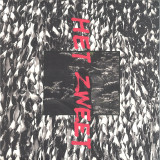
Modal Analysis proudly presents Het Zweet - Archives Volume 1: 1982-1988, a compilation of the Dutch outsider legend painstakingly picked from over 100 hours of unheard tape. An early electronic pioneer who deployed an array of homemade instruments alongside synths and a tape recorder to craft his searching sound, Marien Van Oers occupies a lonely branch on the tree of this music's early efforts, sliding between pounding industrial grooves, ambient fragments, and extended, entrancing compositions bridging this divide. Most closely akin to Muslimgauze, Test Dept. or Fad Gadget, who shared his outsider practice while remaining thoroughly entrenched in contemporary sounds, Het Zweet is striking for his diversity and for its meticulous composition, formed of carefully arranged layers of sonic detritus culled from his collection of homemade devices and electronic distortions. Finally rising to greater exposure since his death in 2013, Modal Analysis passionately continues this mission with our first volume of archives dedicated to the memory of this bold innovator gone before his time.
Following up on reissues of the 2000 compilation »Multila« and 2001’s »Anima,« Sasu Ripatti has thoroughly revisited the classic »Whistleblower« for its first ever vinyl issue on the German Keplar label. Ripatti created entirely new mixes of previously unheard-of alternative versions of the tracks that first appeared on CD through his own Huume imprint in early 2007. He thus shines a new, different light on a record that was as much an expression of reaching a turning point in his life as it also showcased a new, more direct and perhaps more abrasive side of his Vladislav Delay project. »Whistleblower« was marked by the insertion of more noise and disruptive elements into Ripatti’s slowly moving take on intricate electronic music that heavily leaned on dub techniques. Fittingly for an album written at the threshold between one life and the other, »Whisteblower« seems at once melancholic and forward-looking in both tone and style.
»Whisteblower« was the follow-up record to 2005’s »The Four Quarters« and produced in the German capital. »I had quite a hard time in Berlin towards the end and I'm sure the track titles and the music reflect some of that uneasiness,« Ripatti says 15 years later. Changes in his personal life had a profound impact on him when making the record. The fifth track, »Lumi,« was dedicated to his daughter who was born shortly after the album was finished. »I had to reconsider what my life had been,« he recalls this watershed moment in his biography. Having already previously embraced a sober lifestyle—hinted at with the last piece’s title, »Recovery IDea«—Ripatti started questioning his life choices more thoroughly. This is also expressed in »He Lived Deeply,« a track inspired by Miles Davis’s love for Duke Ellington whose title can be read as an implicit question that Ripatti nowadays paraphrases thusly: »Had I been living fully, or fully not living?«
The seven tracks also marked a musical turning point in Ripatti’s work as a producer, not only because it was the last one for which he primarily used analogue and vintage equipment. They are also more straightforward on a music level, more demanding and at times more concerned with subtle rhythms than with the thick textures that were so integral to his earlier work. »Whisteblower« represented the first step in a process of focusing less on sonic abstraction and more on direct (self-)expression. While Ripatti admits that he found working on the album difficult back then, he also points out that he was surprised to hear how »gentle and peaceful« it sounded when he started revisiting the original files he used as a basis for these newly mixed versions. »It probably proves how much more comfortable I had become with sound.«
Eva Louise Goodman’s Nighttime project locates itself on a musical tree planted on the British Isles, perched atop the branch of folk leaning into sixties rock. Her upstate New York environs don’t stray far from that image. With tempered percussion, floating mellotron, and singing that evokes Bleecker & MacDougal on a fervent Saturday afternoon, her new album Keeper Is The Heart reaches deep into the essence of musicians such as Vashti Bunyan, Sibylle Baier and Pentangle, breaking down the decades into a sound thoroughly and bizarrely modern.
Through her years performing with Mutual Benefit, Goodman fell in love with life on the road and the collaborative energy of a band. In this third Nighttime album, she channels these experiences into her own music. The creative journey from writing to recording to mixing drove her deeper into a sense of self while expanding her sound. In the process, she put aside lo-fi origins and challenged herself to achieve the same intimacy with a bigger production.
Like most paths of self-discovery, the journey started with displacement. In October 2019, Goodman set out to record the album on her own, while cat-sitting at a friend’s empty Brooklyn apartment. Rather than recording, she was drawn to the overgrown garden, where she spent her days listening to music and reading old journals. Charlie Megira, The Incredible String Band and Roy Montgomery invoked the spirit of the album, as she realized that a new, more collaborative approach would be necessary to bring the songs to life.
In March 2021, after a pandemic year immersed in sound experimentation and writing, she entered the upstate New York studio of recording engineer Rick Spataro (Florist). Together, Spataro and Goodman dove into creating the album, recording one song a day, letting the spark and excitement of spontaneity be their guide. “I've always been fascinated with ‘automatic’ arts,” Goodman says, “where things are created intuitively and without premeditation, from the subconscious.” In this light, they worked with abandon–pushing through the heaviness of songs written years earlier with the same energy as songs which were not yet fully developed. Taking chances, improvising, they sought to strip away pretense, and elude perfectionism at all cost.
Among their experiments, the duo manipulated tape speeds–slowing or speeding up different instrument tracks, imbuing passages with altered perspectives. Improvisation was the key in track five, ‘The Way,’ a song about “the magical act of carving out a path through life, amidst all possibility.” After a long day of recording, the song was feeling heavy and uninspired. As night fell, Spataro picked up the Stratocaster and, in one take, laid down a rolling, roiling guitar line that defined the track.
This spirit of surrender weaves through the album. “Break free from time, and sink in the pool of the mind,” begins ‘Garden of Delight’, an energetic highlight, propelled by 60’s-era organ and Jefferson Airplane-esque vocals. The song was accidentally deleted after the first day of recording. By luck or fate, the one surviving file captured the song’s loose and free-wheeling essence. Inspired, Goodman encouraged her circle of collaborators to work similarly: “I gave everyone trust and total freedom to contribute as they felt called to, encouraging an intuitive approach of simply improvising, playing through the song a few times and then sending over the results.” Synth, cello, violin, saxophone and flute all appear, but often in unconventional ways.
Keeper Is the Heart reflects Goodman’s process towards greater creative freedom. The first words she sings: “Lift the veil of all of this hate/To see the fear at its base.” Her last lines: “We’ll follow the fates across the great expanse of time/To the source of the light within our mind.” In between is a work of art awash in personal awakenings that revel in the freedom of intuition, the lifting of veils, and the beauty of transformation. As Goodman states, “What is it you find when you look inward to see beyond, past your fears, to your heart's true desires?”
‘Silent World’ is perhaps the most personal album
of drummer, composer and bandleader Wolfgang
Haffner yet.
A master of clarity, focus, and reduction,
accompanied by Dominic Miller, Nils Landgren, Till
Brönner, Bill Evans, Rhani Krija, and many more.
‘Silent World’ is about the essentials of being
human, a message which Haffner signals clearly
with concise track titles such as ‘The Peace
Inside’, ‘Hope’ or ‘Belief’. Sometimes we’re in the
world of hymns, sometimes of dreams, but there is
always a melody to be grasped and a pulse to be
felt, and those points of reference give a basis for
the listener to focus and to enjoy the music
thoroughly.
- A1: Don Drummond, Tommy Mccook & The Skatalites - (Music Is) My Occupation (Ring Of Fire) (Music Is)
- A2: Tommy Mccook & The Baba Brooks Band - Alley Cat Ska
- A3: Don Drummond & The Skatalites - Cool Smoke
- A4: Don Drummond & The Skatalites - Garden Of Love
- A5: Tommy Mccook - Twelve Minutes To Go
- A6: The Baba Brooks Band - Girls Town Ska
- A7: The Baba Brooks Band - Vitamin A
- B1: Lester Sterling & The Skatalites - Latin Goes Ska
- B2: Roland Alphonso, Don Drummond & The Skatalites - Alipang
- B3: Don Drummond & The Tommy Mccook Band - Lucky Seven
- B4: Frank Anderson & Roland Alphonso - Musical Store Room
- B5: The Baba Brooks Orchestra - Musical Communion
- B6: Roland Alphonso & The Skatalites - Sandy Gully
- B7: Don Drummond & The Baba Brooks Band - Doctor Dekker
- C1: Roland Alphonso & The Baba Brooks Band - Nuclear Weapon
- C2: Roland Alphonso & The Skatalites - Corner Stone
- C3: Baba Brooks & Don Drummond - Knockout Punch (Aka Cotton Tree) (Aka Cotton Tree)
- C4: Don Drummond & The Skatalites - Don De Lion
- C5: Tommy Mccook & The Skatalites - Rocket Ship
- C6: Roland Alphonso & The Skatalites - Feeling Fine
- C7: Don Drummond & The Skatalites - Mesopotamia
- D1: Don Drummond & The Skatalites - Eastern Standard Time
- D2: Don Drummond & The Skatalites - Thoroughfare (Treasure Isle) (Treasure Isle)
- D3: Don Drummond & Roland Alphonso & The Skatalites - Silver Dollar
- D4: The Skatalites - Street Corner
- D5: Don Drummond - University Goes Ska
- D6: The Skatalites - Good News
- D7: Don Drummond & Tommy Mccook - Jfk's Memory
Limited edition 180g audiophile vinyl pressing
The album presented here, originally issued as Walkin' (Prestige PRLP-7076), is a
key work in Miles Davis' discography. It contains the product of two rather
different sessions. The first date yielded just two tracks, although they were long
enough to fill up one side of an LP. The other session included Miles' classic
composition "Solar". Curiously, although it would become a jazz standard, Miles
never recorded it again.
"The undeniable strength and conviction present in Miles Davis' performances on
Walkin', underscore the urgency and passion with which he would rightfully
reclaim his status as a primary architect of bop. Walkin' is a thoroughly solid
effort." - ****1/2 Lindsay Planer, AllMusic
Re-mastered from the original master tapes.
180 gr vinyl pressed by Optimal in Germany using the Metal Mothers from Pallas.
Facsimile reissue using the original photo by Jean-Pierre Leloir.
Double insert using an original color photo by JP Leloir.
Each record has been visually checked to prevent defects.
In its October ‘58 issue, the title carried by Jazz Hot magazine was: »Revelation at the Chat Qui Pêche. The spirit of jazz (which some thought was dying) is sparkling with life in the Donald Byrd Quintet.« And indeed, on its first appearance at the Cannes Festival in July (the Jazz Festival, not the other one), the Donald Byrd Quintet brought the house down. Its members were hardly the Who’s Who of jazz, however. People vaguely knew that the leader had replaced Kenny Dorham in the Jazz Messengers, that Doug Watkins had played bass with them, and that pianist Walter Davis Jr. had been with Charlie Parker before he was 19. As for Art Taylor, if he’d already enjoyed a career longer than that of his colleagues, it hadn’t yet brought him recognition beyond a small circle of cognoscenti. Only Bobby Jaspar – who’d shone at the Club St. Germain – was famous with the Parisian audience. At the beginning of 1956, he’d decided to try his luck in the United States; J.J. Johnson had hired him, and then Miles Davis (for a brief spell) before Donald Byrd brought him into his own group. After appearing in Cannes (in the sun) and Knokke-le-Zoute (a much smaller audience) for almost three months, the Donald Byrd Quintet settled down for the autumn in one of the capital’s top jazz spots, the Chat Qui Pêche on the Rue de la Huchette. »In that tiny room,« wrote Frank Ténot, »where the owner used to bump into the soloists by accident when she was serving her customers, the music they played was hot, and always surprising.« To crown a tour that had been extremely satisfying for everyone, a concert at the Olympia theatre was organised (there were gigs there called “Jazz Wednesdays”). Byrd and Co. took things very seriously, even though they preserved the relaxed approach that their (relatively) long association now permitted: "La Marseillaise", and "And The Angels Sing" are both present in the introduction to Parisian Thoroughfare played by the two horns. The latter then went on to imitate other horns, those of the cars on 52nd Street ... However, when it came to "Stardust", it was with all the seriousness in the world, almost in meditation in fact, that Donald Byrd improvised over the backing provided by just Walter Davis Jr. and Doug Watkins. Bobby Jaspar, of course, was marvellous. If he showed a marked obedience to Sonny Rollins, he still preserved, intact, the virtues of sobriety that prevented him falling into the trap of serving up torrents of notes in pieces taken at a rapid tempo ("At This Time", for example). During the exchanges on "Formidable", you’d be forgiven for saying that he gets the better of Donald Byrd. As for the complicity that reigned between the members of the rhythm section, it gave the formation a homogenous character that was very rare in a quintet. One can’t thank François Postif enough for taking the risk to release this concert at the time. Now, almost half a century later, one
Bill Nace"s Through a Room represents a seismic progression from Both, his startling 2020 debut solo LP for Drag City. Nace"s career has been defined by a relentless probing of ways to frame the complex menu of human emotions, and that the guitar has been his primary tool for exploring this terrain is of little consequence. On this new release, he also employs tapes, hurdy gurdy, doughnut pipe, quelle est belle, as well as his latest instrument of choice, taishogoto. This is also, ultimately, insignificant. What matters is the discerning spirit which animates his work. The tracks are carefully built from loops and phrases that talk to each other, subsume one another, overlapping and crashing and diving and expanding and emerging into unimagined vistas. On the whole, the record offers a fascinating and engrossing chronicle - a sequence of interrelated stories told by a temporally dislodged narrator. You think you"re here, then you"re there, and then you go through trapdoors and along tunnels, into cellars and secret rooms, and you find that actually you"re back where you started. But it"s not hard to follow. Trust me. Nothing this enticing can be hard to follow. The record was recorded and edited in Philadelphia during the uncertain summer of 2021 with engineer and co-producer Cooper Crain. Where Both was a chiseling down of spontaneous live performance, Through a Room, while obviously the work of the same artist, treats its sounds as building blocks, combining them to mesmerizing effect. What"s striking is the poise, the degree of authorial intensity. The false dichotomy of composition and improvisation is thoroughly and rightfully abolished. Bill"s interests range from post-punk to post-industrial to hip-hop to free jazz to avant-garde composition, and every area between such unhelpful labels. From the inscrutable, evocative track titles to the enticingly baffling cover art by his longtime compatriot Daniel Higgs, Nace is guided by an ineffable, internal muse, a persistently personal stormcloud of ideas that, ultimately, comprise that thing we call art. Here"s the real deal. - Matt Krefting, Holyoke, 2022
We're happy to report that the music on the 'Son of a Biscuit' EP from Kuwahara aka Mick Wilson and Scott Gray is every bit as colourfully eccentric as the title it bears. 'Ginger Cut' is dubbed up cloud of sound billowing over choppy hip-hop breaks, with an old skool female MC poking her head out of it to have her say every now and again. Rich Tea's edit of the track takes it into housier territory but, like one of those old Orb ambient singles singles on Wau Mr Modo, still gives plenty of work to the studio's echo chambers. 'Jaffa Quake' goes for snazzy, jazzy overtones and off kilter breaks, 'Kustard Cream' offers up reggae skank, again served up with plenty of sonic exotica, and there's even a more relaxed, Balearic bonus mix of 'Ginger Cut'. A thoroughly nutty record, but a genius one at the same time.
- A1: Strawberry Wine 6 25
- A2: Good Advice 3 09
- A3: California 5 48
- B1: Mornin' Lights 5 10
- B2: Can't Stand Without You 9 59
- C1: Waitin' For Your Call 2 19
- C2: Clouds Flee Before The Wind 4 12
- C3: On The Way Out 4 46
- D1: Can't Stand Without You (Demo Version) 6 33
- D2: Clouds Flee Before The Wind (Demo Version) 4 53
- D3: I Want You To Stay (Demo Version) 7 12
We are proud to present the official 40-year anniversary issue of Imagination's debut album Shake It. Remastered from original tapes, this deluxe edition is a double vinyl LP with gatefold sleeve, featuring a newly available lyric insert.
Shake It covers a diverse spectrum of styles and sounds, all combining to a unique soulful amalgam that ranges from sunshine AOR funk ("Mornin' Lights") and leftfield disco ("Strawberry Wine") to psychy, epic, downtempo, vocoder grooves ("Can't Stand Without You") and more. Originally released in 1980, it fast became one of Germany's most collectible privately-pressed LPs.
Shake It was the creation of young thoroughbreds working hard on becoming professional musicians, trying to take their next big step in the music business. Starting out as a pure jazz-rock combo in the mid '70s (as we hear on the recently released lost studio tapes, I'm Always Right (The WDR Tapes 1977)) Imagination left behind their instrumental roots, incorporating new musical trends and styles.
Uwe Ziss, their saxophonist and flutist, became one of two lead singers in Imagination. He would be joined by the younger Roger Mork, a student of original guitarist Willi Hövelmann, around 1979. Roger's voice would best be heard on the aforementioned "Mornin' Lights", one of the various standout tracks on Shake It. However, there is much more that this album offers.
There are brilliant soulful soft rock ballads like "Clouds Flee Before The Wind" and "Waitin for your Call" or the catchy "California" song that switches from a dreamy Westcoast sound (as the title implies) to danceable rhythm & blues with equal ease. Last but not least, we have unearthed three unissued bonus cuts. On one, the demo take of "Clouds Flee Before The Wind", we hear, for the first time ever, the original refrain of this song, which, for some strange reason, was taken out from the final mix on Shake It.
When all eight original songs were recorded and mastered in June, at the well-equipped West Aix-La-Chapelle studio, the stage was set for Imagination's long-desired career push. They'd initially press about 2500 copies of Shake It selling it mainly, locally, directly to their hometown fanbase in Düsseldorf. Meanwhile, their manager would attempt to arrange a record deal with a music label. Unfortunately, this became more difficult than expected. Negotiations with a smaller publishing company were made by Imagination, and Shake It was repressed on Nash Records in 1981 without their consent, under the false promises of a nationwide promotional tour which would never come to fruition. At the same time, the group would face a UK band under the same name achieving mainstream success, making it difficult (not to say entirely impossible) to perform as "Imagination". Though the band would remain active after Shake It, they'd split shortly after Nash's duplicitous reissue hit store shelves.
Luckily, through time, Shake It itself has remained worthwhile, creatively, for those who stumbled upon it and financially, too, becoming quite the sought after gem in record collecting circles. This deluxe anniversary double vinyl issue makes the LP available once again at a far more reasonable price, featuring the original, illustrious, eye-catching, Roy Lichtenstein-influenced banana art, as well as previously unavailable press pictures and more.
Limited deluxe edition of 999 copies - 2xLP comes with a gatefold sleeve
and a massive 20-page booklet cram packed with photos, memorabilia,
and in-depth liner-notes of the wild tales from back in the day
Subliminal Sounds proudly presents ALEXANDER LUCAS! The long- lost music
and history of the groundbreaking and legendary Swedish hard rock/proto-metal
band active between 1969 and 1976. This mind-blowing 2 LP set contains their
extraordinarily rare self- financed 1973 single Speed/ Svarta Skogen (The Black
Forest) that was issued on the custom record label Efel, plus tons of killer
previously unreleased recordings. A dream come true! The thoroughly researched
booklet documents the band's long history, including their early incarnations and
different line-ups. The pioneering young group performed an extreme number of
gigs with their amps cranked up to the max at youth halls all over the country, and
it was through performing their skilled, innovative, raw hard rock that ALEXANDER
LUCAS became very popular and influential among the long-haired stoner teens,
eventually graduating to bigger venues. ALEXANDER LUCAS is the latest sizzling
heavy meatball in our tasty series "The Swedish Hard Rock Underground: A
Smorgasbord of Heavy Sounds!"
'Back In Business Again', the long-anticipated new record from blues-rock
eccentrics The Hooten Hallers, is a fever-dream of thoroughly American
rock and roll from the fertile musical heartland of Missouri, USA
On this ten track thrill-ride, The Hooten Hallers inhale a wealth of roots and rock
influences — blues, soul, punk, even New Orleans jazz — and spit forth a highvoltage, swinging rumpus that defies what you thought you knew about rock and
roll. Bubbling beneath the rip- roaring surface are all- original songs of outsider
Americana delight, from tall tales about near-mythological characters to a eulogy
commemorating the demise of 15 years worth of tour vans to heartfelt blues and
well beyond. John Randall's infernal howl and frenzied guitar swirls into a
demon's brew with Andy Rehm's otherworldly falsetto screams and unbridled
drumming. Kellie Everett drives the unorthodox low end with the rich tones of her
rumbling baritone and bass saxophones, rounding out the band's sound and
placing it firmly in a class of its own.
Produced by Dominic Davis (Jack White, Greensky Bluegrass), 'Back In Business
Again' takes a match to The Hooten Hallers' fuse and explodes the renegade
power trio to the edge of madness and back again, one vigorous, swinging,
perfectly peculiar song at a time.
For the next instalment in our split series, we handed the reins over to two producers whose work has kept us continually inspired over the last few years. At the helm of the A-side, Berlin big-room havoc-wreaker AMOTIK puts on the burners right away with two riotous jams that scream nothing but sonic aggression. On the flip, the mysterious, genre-unbound Janice sweeps us into his psychedelic, non-formulaic techno mindset. True to AMOTIK's minutely balanced, well-integrated blends of punishing kick drums and sunken harmonics, metronomic destroyer "Narangi" swings the pendulum sharp and clean, from deep down a thick sludge of reverb-soaked, FX-topped percussive armada to bleeps n' bloops barrage fire, whereas quake-inducing tides of 909 thunder hail down upon the dance floor with unrelenting frenzy. The dusty bone-bruiser "Hara" picks up the torch and it's in no calmer mood. A slowed-down, breaks-loaded churner, this one relies on a fine engineering of lo-freq moves and pure hardware-processed filth to establish a murky motel, cinematic narrative of sorts. Up with the fracturing wares, here's Janice rocking the flip upside down with the aptly-titled "Mass Formation Hypnosis". Doing what's written on the tin, the faceless producer rushes us headfirst into the boiler for a thorough, unfaltering brainwash. Smelling of leather, grease and coal, this one's bristling with a delectably rugged palette of unambiguous electronics: an ultimate shelling of chest-rattling drum work, in-your-face bass uppercuts, trumpeting stabs and menacingly altered vox. The final salvo, "Names and Excuses", tops it all off on an ominously droney tip, flinging us right away into the frothing mouth of a deadly machine giant, hurtling and tumbling down mazy bowels of washed-out ambient techno via rhyzomatic gutters of brooding abstract motifs and no-frills heavyweight pound. Hectic. ''XVII'' comes adorned with a duly outstanding frame to shine, and will be pressed on 180g audiophile quality vinyl. Once again a way for RYC to openly declare its aspirations and goals, in letting people know that quality, passion and love for the music is all that matters.
After this pair of Leeds residents made waves last November with their first EP for Pilot, Bobby O'Donnell and Reeshy return to lay down four new tracks that definitely stray towards the electro end of the breaks/electro spectrum. There's a sense of continuity, as the first EP's tracks - labelled 1-4, are followed by tracks 5-8, as well as being executed with a proper human touch that not all such machinefunk can boast. '6' is full of spiralling Drexciyan mystery, before being pared down to an LFO-style bass prod. '8' also echoes the former legends of Leeds with its dreamy pads and acid backdrop - something in the local water supply. Definitely funky enough to keep the breaks DJs onside, but with a thorough knowledge of love of 40 years of electronic music heritage at its disposal too, this is one release you should make sure you not miss.