Over the last 3 years, original 90’s D&B imprint Odysee has been steadily building its profile, both through its ‘Remix/Remaster’ series as well as a growing number of new releases. Label Partner Andy Odysee continues to develop his own unique sound with this third solo E.P. All three tracks work together as a triptych, whilst simultaneously maintaining their own unique identity.
Ruthless (In Purpose): Insidious (In Design) immediately establishes an ominous mood of brooding menace with its creeping bass stabs. As the drums enter, the track builds towards a drop of deep subs and driving breakbeat fury, punctuated by the ripped synth basses and curling drum edits that are fast becoming characteristic of Andy’s productions. There are subtle nods to the later Hokusai releases such as Sculptures Hide and even Black Domina; with eerie chiff-flute phrases, and those signature Mirage-style film-noire and dark avant-garde Jazz sounds nestling amongst the tapestry of beats and basslines.
As a contrast, Provocateur has a sweeter, almost sexier feel. A dreamy oscillating pad soon gives way to razor-sharp curling Jazz breaks and deep subs. The vocals border on the ‘saucy’ with their tantalising suggestions of ‘who thinks the technique is to make love to me’ and ‘the sexiest thing about me is my a**!’ There is a subtle darkness nonetheless to this track, with its plethora of dark film-noire samples. Although the framework of breaks & bass is strident enough for the dance floor, it is also the kind of track that is loaded with all those little production details that will reveal something fresh with each hearing.
The third track Status Anxiety is a frenetic, tense piece of music. Underpinned by a relentless bass synth stab that slips and slides throughout the track, the drum patterns are more elaborate, cutting between several different breaks, with abrupt stops to expose dark string sweeps, hammered Rhodes strikes and shimmering china cymbals. Again there is a subtle reference to the Hokusai releases, but with a fresh twist on that darker Jazz-infused style of Breakbeat D&B.
DJ Support
Source Direct, Law & Ben Repertoire, Mister Shifter, Basic Rhythm, Voodoo & Sensenet
Search:those three
In James McMurtry’s new effort, ‘The Horses and
the Hounds’, the acclaimed songwriter backs
personal narratives with effortless elegance
(‘Canola Fields’) and endless energy (‘If It Don’t
Bleed’).
This first collection in seven years spotlights a
seasoned tunesmith in peak form as he turns
toward reflection (‘Vaquero’) and revelation (closer
‘Blackberry Winter’). Familiar foundations guide
the journey. “There’s a definite Los Angeles vibe to
this record,” McMurtry says. “The ghost of Warren
Zevon seems to be stomping around among the
guitar tracks. Don’t know how he got in there. He
never signed on for work for hire.”
‘The Horses and the Hounds’ is a reunion of sorts.
McMurtry recorded the new album with legendary
producer Ross Hogarth (Ozzy Osbourne, John
Fogerty, Van Halen, Keb’ Mo’) at Jackson
Browne’s Groovemaster’s in Santa Monica,
California. Hogarth recorded McMurtry’s first two
albums - ‘Too Long in the Wasteland’ and
‘Candyland’ - and later mixed McMurtry’s first selfproduced album, ‘Saint Mary of the Woods’.
Another veteran of those three releases, guitarist
David Grissom (Joe Ely, John Mellencamp, Dixie
Chicks), returns with some of his finest work.
Limited Coke Bottle Green vinyl, 250 copies only for the UK. Any future pressing will be on black vinyl. Massage feature Alex Naidus from Pains At Being Pure At Heart. Recorded by Lewis Pesacov (Fool’s Gold, Foreign Born, Peel’d). Massage was supposed to be low-stakes, no big deal "anti-ambition," as Andrew Romano, guitarist and vocalist, put it. The L.A.based jangle-pop group's first album, 2018's Oh Boy, was a sweet and simple weekend warrior's affair, or more specifically, an every-other-Monday one, as the band members gathered to bash out songs that offered messy but heartfelt tribute to their chosen heroes: The Feelies, the Go-Betweens, Twerps, Flying Nun. For Romano, not taking things too seriously is a dead-serious affair: “Nothing kills the kind of music we want to make faster than the sense that a band is trying too hard,” he says. The kind of music Massage makes sunny, bittersweet, tender is less a proper genre than a minor zip code nested within guitar pop. Take a little "There She Goes" by the La's, some "If You Need Someone" by the Field Mice; the honey-drizzled guitars from The Cure's "Friday I'm In Love," a Jesus & Mary Chain backbeat, and you're almost all the way there. Indie pop, jangle pop, power pop whatever you call it, pushing too hard scares the spirit right out of this sweet, diffident music, and Massage have a touch so light the songs seem to form spontaneously, like wry smiles. Still, on their sophomore effort, Still Life, they manage to take a quantum leap forward in songwriting, production, and depth, all somehow without seeming to try. These 12 deft songs are full of late-summer sunlight and deep shadows, pained grins and shared jokes, shy declarations of love and quietly nursed heartbreak. Still Life resurrects a brief, romantic moment in the late-'80s, right after post-punk and immediately before alt-rock, when it seemed like any scrappy indie band might stumble across a hit. When Andrew Romano and Alex Naidus first met in 2007, Naidus had just joined a band with his friends Kip Berman and Peggy Wang that was about to stumble into many of them. When Naidus finally left Pains for L.A. in 2013, two hit albums and a few world tours later, he started playing with Romano to recapture the no-stakes, suburban-garage joy of making music for its own sake. It was "friendship incarnate," Naidus remembers. The other members came from within the friend circle Gabrielle Ferrer (keyboard/vocals) is Romano's sister-in-law, Michael Felix (drums) is one of Naidus’ best friends, and David Rager (bass) is a childhood friend of Felix’s. When Felix moved to Mexico City in early 2020, Naidus’ wife, Natalie de Almeida, stepped in. The result is the finest batch of songs they've ever produced. From Naidus' velvet-lined JAMC tribute "Half A Feeling" to Ferrer's Let It Be-era Replacements-tinged lament "The Double" to Romano's "In Gray & Blue," these are gold-standard indie-pop gems from emerging masters of the form. Still Life glows with the sincerity and unfakeable warmth of the era they so lovingly channel. Like the best Gin Blossoms chorus you still remember, the songs on Still Life stir big, pure emotions, but beneath them, uneasy truths about adulthood linger, just below the surface. Maybe the exact mix of ringing guitars and two-part harmonies can chase those feelings away, or redeem them, for at least a minute or three. Massage won't stop trying.
Release Me 2 is a new collection of ten previously unreleased studio performances from the legendary Barbra Streisand, spanning 1962 to 2014. The album showcases exquisite songs and sublime studio performances recorded over the course of Barbra's astounding career, but shelved for various reasons. In her notes for the album, Barbra says, "For me, the studio is a combination musical playground and laboratory…a private sanctuary, where the possibility of catching lightning in a bottle always exists. Whenever that kind of magic happens, it's extremely satisfying. Sometimes though, when the arrangement doesn't quite gel or the song no longer fits the tone of the album it was meant for, the tapes go into the vault for safekeeping. Working on this 2nd volume of Release Me has been a lovely walk down memory lane…a chance to revisit, and in some cases, add a finishing instrumental touch to songs that still resonate for me in meaningful ways.
Release Me 2 features songs penned by celebrated writers and tunesmiths including Burt Bacharach and Hal David, Barry Gibb, Randy Newman, Michel Legrand/Alan Bergman/Marilyn Bergman, Harold Arlen and "Yip" Harburg, Carole King, Steve Dorff, Paul Williams/Kenny Ascher, and Walter Afanasieff/John Bettis.
Widely recognized as an icon in multiple entertainment fields, Barbra Streisand has attained unprecedented achievements as a recording artist, actor, director, producer, screenwriter, author, songwriter and concert performer. Streisand has been awarded two Oscars, five Emmys, ten Grammys including the Legend Award and the Lifetime Achievement Award, a Tony Award, eleven Golden Globes including the Cecil B. DeMille Award, three Peabodys, and the Director's Guild Award for her concert special -- the only artist to receive honours in all of those areas.
Joshua is the follow-up album to Olympic. While the second album, typically, often shows what critics call “maturity”, here Simon has released instead an album of adolescence. The musician opened up his own memory box to contemplate his childhood souvenirs, and dust them off of all nostalgia. At that time, he would VHS-record movies from TV and tape record soundtracks directly from the TV speaker, so he could listen to them in his bedroom. This is when he “discovered the power of music, the way it makes you enter another world, far from reality. I wanted to pay tribute to the era I shaped myself in – the ’80s and ’90s”. Tangerine Dream, Kraftwerk and Soft Machine. Logically, these are the sonic signatures that seem to haunt the album. The timeless pioneers of synthetic music constitute the sound references, without any established chronological timeline, that blend with the atmosphere of typically “French Touch” movie soundtracks – long before the term was even coined. “I use a musical palette that acts as a flashback to my favourite teenage movies: the synth sounds of Close Encounters of the Third Kind; the synth pads in Jean-Jacques Cousteau’s fascinating documentaries about the sea world; the melodies in the manner of François De Roubaix; the themes that evoke the soundtracks of late-night TV sessions (those by Verneuil, those with Belmondo, Depardieu, etc.); and the sci-fi ambiences like in Blade Runner.” In short, an aesthetic was decided on by Simon very early on: French analog synths instead of North American symphonic orchestras.
The name Joshua has two meanings for French 79: one is linked to the idea of nostalgia, the other to adventure. On the one hand, the computer in the 1983 movie Wargames, and on the other, the boat of French sailor Bernard Moitessier.
The track titled Joshua synthesizes the spirit of the album – an odyssey, a neverending crossing of the world in search of oneself, a spontaneous escape into the future, under the benevolent eye of the past. This epic invites everyone of us to a specific place in our imagination, which is also the source of an indescribable pleasure for French 79: a gust of wind, a sailboat ride, a skateboarding trick, the smell of freshly fallen snow, or the dull roar of an impatient audience.
The same aesthetic preferences are found in the videos that illustrate Joshua’s first tracks: for Hold On, the skateboarder chose to recall the cult ’90s skate videos that he would watch on repeat as a teenager, while Hometown hints at Close Encounters of the Third Kind. Although he now calls Marseille home, Simon continuously draws with passion from the anachronic contemporaneity of his childhood in the Eastern French region.
“I need escape to be able to create. A two or three-day sailing trip gives me enough inspiration to lock myself in the studio for a week when I’m back on dry land.” His boat takes him far away from everything, far from the Old Port where she moors, the rest of the time Simon would escape by walking the streets of his city or climbing the Alpine mountains.
Not only does the new version French 79 reveal a few biographical pieces of Simon henner's history, but it also inaugurates the first vocal track for the musician. One feels a guilty pleasure when hearing him take the lead on the first track, The Remedy. The electronic fugue that opens the album sets the tone: Simon has found the cure for his inner turmoil and wants us to discover our own treatment too. Hold On is a sonic explosion that celebrates the feeling of freedom - what's more of a teenage dream than this feeling - and it eventually command one to feel the same way too. Echoing Olympic, the electronic argonaut invites his muse again, singer Sarah Rebecca. On By Your Side and Touch The Stars, the native of Ocean Springs, Mississippi, now based in Paris, hoisted the mainsail of dream pop. First, though a dialogue that surfaced their unfailing attachment to the bonds of friendship, then through the light hearted atmosphere that leaves us with no choice but to believe in our own dreams and do anything possible to fulfill them. The quest for peace in the midst of the daily din is heard in both Code Zero and the title track Joshua, two majestic journeys in search of hedonism, combined with introspection.
- A1: Billy F Gibbons -- (I've Got) Levitation
- A2: Mosshart Sexton -- Starry Eyes
- A3: Jeff Tweedy -- For You (I'd Do Anything)
- A4: Lynn Castle & Mark Lanegan -- Clear Night For Love
- A5: The Black Angels -- Don't Fall Down
- A6: Neko Case -- Be And Bring Me Home
- B1: Margo Price -- Red Temple Prayer (Two-Headed Dog)
- B2: Gary Clark, Jr. & Eve Monsees -- Roller Coaster
- B3: Ty Segall -- Night Of The Vampire
- B4: Lucinda Williams -- You're Gonna Miss Me
- B5: Chelsea Wolfe -- If You Have Ghosts
- B6: Brogan Bentley -- May The Circle Remain Unbroken
* Pressed on special RSD color wax.
* Includes bonus limited edition flexi of an ultra rare recording performed by Roky Erickson.
* Pressed at RTI.
Texan Roky Erickson was one of the true mind-blowing pioneers of psychedelic music. The original leader of the Austin-based 13th Floor Elevators formed in 1965, Erickson and band invented a brand new style or rock & roll, one that was slightly unhinged while it explored the consciousness-expanding influence of LSD on music. After three years, the group imploded with mental issues and legal challenges, ending with Erickson being incarcerated for several years in the Hospital for the Criminally Insane in Rusk, Texas. When he was released in the early '70s the musician continued on his own trail, recording songs that had come to him in his far-flung cerebral wanderings. Erickson, who passed away May 31, 2019, is now celebrated on this 12-track tribute to one of the most original rockers ever.
The participants range the whole world of modern music, and each chose one of Erickson's originals to stamp their own imprint on. They include Billy F Gibbons, Lucinda Williams, Mosshart Sexton (a/k/a Alison Mosshart & Charlie Sexton), Neko Case, Mark Lanegan & Lynn Castle, Jeff Tweedy, Margo Price, Gary Clark Jr & Eve Monsees, Ty Segal, Chelsea Wolfe, The Black Angels and Brogan Bentley. The album is co-produced for release by Bill Bentley, executive producer of the 1990 Roky Erickson tribute album Where The Pyramid Meets The Eye on Sire Records, and Matt Sullivan, co-founder/owner of Light in the Attic Records.
The songs range from Erickson's debut iconic original, "You're Gonna Miss Me," recorded when he was a member first in The Spades and then the 13th Floor Elevators during the early '60s in Austin, to some of Erickson's later songs, like "If You Have Ghosts," which heard him exploring some of the outer limits of the human psyche. Each new recording is a stunning modern take on the sound that Roky Erickson gave the world over a half-century of writing, recording and touring. No one has ever equaled those explorations.
This truly is the music of the spheres, as Erickson once sang about his sound, as seen through the eyes and ears of those who are united in their love and respect for a person who dedicated his life to rock & roll. Roky Erickson, through the trials and tribulations of a man both imbued with greatness and haunted by darkness, never quit in his quest to share with others what he heard and saw. As he sang on the 13th Floor Elevators last recording, "May the circle remain unbroken."
"The definition of a hidden gem" - John Peel / "The world seems finally to be catching up to Leslie Winer, whose startling intelligence and singular vision shine through her copious recording life." - Max Richter / "She might just be the coolest woman on the planet!" - Boy George "When I Hit You - You'll Feel It" is a 16-track anthology that celebrates the extraordinary work of musician, poet, and author, Leslie Winer. The collection spans Winer's three-decade-long musical career: from her groundbreaking solo work in the early '90s to her latest inspired projects. Featuring musical contributions from Jon Hassell, Helen Terry, Jah Wobble, Renegade Soundwave's Karl Bonnie, and others, the collection also spotlights Winer's diverse collaborations, unearths previously-unreleased recordings and was newly remastered by the GRAMMYr-nominated engineer John Baldwin. The album includes a new interview with Winer, captured by the compilation's co-producer, acclaimed author and critic Wyndham Wallace. Rounding out the package is an insightful essay by the award-winning writer and scholar Louis Chude-Sokei and an original cover collage by the renowned British photographer and artist, Linder, featuring photography by Mondino, and design by designer Christopher Shannon. Musician, poet, iconoclast, model, artist, enigma. Leslie Winer is many things. She grew up in Boston with a voracious appetite for music and the written word and embraced the city's lively jazz and folk scene in the '70s. Moving to New York for art school, she formed an unlikely friendship with writer and artist William S. Burroughs and lived on-and-off with Jean-Michel Basquiat. In London, where Winer began her musical ventures in earnest, she was a regular at Leigh Bowery's underground club Taboo, where she met many of her collaborators, including filmmaker John Maybury, Kevin Mooney (of Adam and the Ants), and Boy George. Winer's striking looks also attracted fashion designers and photographers. Throughout the early '80s, she was an in-demand model-appearing in campaigns for Valentino, Christian Dior, and Yohji Yamamoto, and serving as a muse for a young Jean-Paul Gaultier, who later dubbed Winer "the first androgynous model." She posed for Helmut Newton, Irving Penn, and Pierre et Gilles, and graced the covers of The Face, French and Italian editions of Vogue, and Mademoiselle. But music was Winer's true passion and, at the turn of the '90s, she would unknowingly help invent the massively popular genre known today as trip-hop. On her debut, Witch, Winer masterfully blended the uninhibited sampling of early hip-hop with dancehall basslines and programmed beats, while weaving mesmerizing - and coolly-detached - spoken-word vocals into her ambient tracks. It was unorthodox in the most delicious ways. While Witch was finished in 1990, it wouldn't be released for three years, due to the whims of Winer's label. By the time the album saw the light of day (released under the pseudonym "c"), trip-hop was gaining mainstream traction via acts like Portishead, Massive Attack, and Madonna. Although Winer eventually gained wider acknowledgment (prompting the NME to give her the dubious distinction of "The Grandmother of Trip-Hop"), Witch initially went sorely unnoticed. Winer continued to record, undeterred by the elusive nature of mainstream success in the modern music business. Her network of inspired collaborators continued to grow and expand, yet her influence remained largely a secret except to those in the know, such as Grace Jones and Sinead O'Connor, who would cover her songs. In the modern era, one is hard-pressed to find an artist who continues to push the creative envelope as much as Winer does. And yet, three decades after her revolutionary debut, her work remains just as startling and fresh.
- A1: A Planet
- A2: Going In
- A3: Engineers
- A4: Life
- A5: Weyland
- A6: Discovery
- B1: Not Human
- B2: Too Close
- B3: Try Harder
- B4: David
- B5: Hammerpede
- B6: We Were Right
- C1: Earth
- C2: Infected
- C3: Hyper Sleep
- C4: Small Beginnings
- C5: Hello Mommy
- C6: Friend From The Past (Contains “Theme From Alien”)
- C7: Dazed
- D1: Space Jockey
- D2: Collision 3
- D3: Debris
- D4: Planting The Seed
- D5: Invitation
- D6: Birth
Café Society opened the 69th annual Cannes Film Festival to rave reviews. Woody Allen became the first and only director to have three opening night films selected for the Cannes Film Festival.
It’s New York in the 1930s. As he has more and more trouble putting up with his bickering parents, his gangster brother and the family jewelry store, Bobby Dorfman feels like he needs a change of scenery. He decides to go and try his luck in Hollywood where his high-powered agent uncle Phil hires him as an errand boy.
In Hollywood he soon falls in love, but unfortunately the girl has a boyfriend. Bobby settles for friendship - up until the day the girl knocks at his door, telling him her boyfriend just broke up with her. All of a sudden Bobby’s life takes a new turn, and a very romantic one at that. The soundtrack features a great collection of the music from the 1930’s. The music is featured prominently in the movie and has been chosen by Woody Allen himself and features newly recorded jazz standards by Grammy Award winners Vince Giordano & The Nighthawks and classic recordings from Ben Selvin, Benny Goodman and Count Basie.
Woody Allen says about the soundtrack: “The soundtrack consists of music from the 1930s since that’s when the picture takes place. Most of the material is Rodgers and Hart who is very dominant in those year and Lorenz Heart have that bitter sweet romantic quality that defines the spirit of the movie itself.”
This is a limited edition of 500 individually numbered copies on blue coloured vinyl. A 4-page booklet with pictures from the film and credits is included.
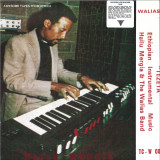
From their genesis as members of the Venus club in-house band in the early 70s, Hailu Mergia and the Walias Band were at the forefront of the musical revolution during an era where modern instruments and foreign styles superseded the traditional fare to become the staple sound of Ethiopia. No one would argue that the Walias were the trailblazing powerhouse of modern Ethiopian music. They were the first band to form independently without affiliation to a theatre house, a club or a hotel; unprecedented and risky as they had to raise all funding for expenses by themselves including buying equipment. They were the first to release full instrumental albums, considered to be commercially unviable at the time. They opened their own recording studio, with band members Melake Gebre and Mahmoud Aman doubling as technical buffs during sessions. They were also the first independent band to tour abroad. In short, they were the pioneers every band tried to emulate; some more successfully than others.
Odds are, any Ethiopian over the age of 35 who had access to TV or radio by the early 90s, will instantly recognize the sound of Walias. What is not a given is, how many would actually identify the band itself. Barely a day went by without hearing the Walias either in the background on radio or as an accompaniment to various programs on TV.
This Tezeta album, the band’s second recording, released in 1975, is one of those that have been impossible to find for nearly three decades. Sourced by Awesome Tapes From Africa and expertly remastered by Jessica Thompson, its unique and funky renditions of standards and popular songs of the day are so quintessentially Walias, flavorful and evocative. Hailu's melodic organ, unashamedly front and center in every track, makes even the complex pieces accessible.
Profoundly engaging; it's an immersive trip down memory lane for those of us getting reacquainted with it, while also an enthralling and gratifying experience for fresh ears.
Virtually unknown recording outside Ethiopia.
Documents Mergia & Walias legendary early period.
Follow-up to reissue of hugely popular seminal Ethiopian instrumentals LP Tche Belew (ATFA012)
Cassette-only, released in 1975 on the band’s in-house label to fund their record store.
Beautifully-rendered instrumentals of classic Ethiopian standards.
Café Society opened the 69th annual Cannes Film Festival to rave reviews. Woody Allen became the first and only director to have three opening night films selected for the Cannes Film Festival.
It’s New York in the 1930s. As he has more and more trouble putting up with his bickering parents, his gangster brother and the family jewelry store, Bobby Dorfman feels like he needs a change of scenery. He decides to go and try his luck in Hollywood where his high-powered agent uncle Phil hires him as an errand boy.
In Hollywood he soon falls in love, but unfortunately the girl has a boyfriend. Bobby settles for friendship - up until the day the girl knocks at his door, telling him her boyfriend just broke up with her. All of a sudden Bobby’s life takes a new turn, and a very romantic one at that. The soundtrack features a great collection of the music from the 1930’s. The music is featured prominently in the movie and has been chosen by Woody Allen himself and features newly recorded jazz standards by Grammy Award winners Vince Giordano & The Nighthawks and classic recordings from Ben Selvin, Benny Goodman and Count Basie.
Woody Allen says about the soundtrack: “The soundtrack consists of music from the 1930s since that’s when the picture takes place. Most of the material is Rodgers and Hart who is very dominant in those year and Lorenz Heart have that bitter sweet romantic quality that defines the spirit of the movie itself.”
This is a limited edition of 500 individually numbered copies on blue coloured vinyl. A 4-page booklet with pictures from the film and credits is included.
Soul Jazz Records’ CD / LP (plus digital download code)
reissue of this very rare album, first released as a private-press
LP in 1978 on flautist Lloyd McNeill’s own Baobab Record label
in Washington, DC. The album has been out-of-print for 43
years and is lovingly remastered by Soul Jazz Records.
‘Tori’ is a stunning album that blends Brazilian and Latin flavours
with deep Spiritual Jazz. The album features a strong line up
which includes legendary Brazilian figures like Dom Um Romao,
Nana Vasconcelos and Dom Salvador alongside jazz
heavyweights such as Buster Williams, Howard Johnson, John
La Barbera and more. These A-team musicians were all
regulars in McNeill’s long-running and highly successful resident
live group in New York, all set up to blend deep jazz, Brazilian
and Latin music together.
Lloyd McNeill is an African-American flautist, painter, poet, and
photographer born in Washington, D.C. in 1935. His multidisciplinary creative life led to encounters and friendships with
Nina Simone, Picasso, Eric Dolphy, Nana Vasconceles and
other legendary cultural figures.
Lloyd McNeill’s hypnotic ‘Washington Suite’ was originally
commissioned as a piece of music for the Capital Ballet
Company, in Washington DC.
McNeill grew up through the era of the Civil Rights Movement in
the 1960s and his life and work is a reflection of those ideals. In
the mid-1960s he moved to France where he became friends
with Picasso, working with a number of émigré-jazz musicians
whilst living in Paris. In the late 1960s he taught jazz and
painting workshops at the New Thing Art and Architecture
Center in Washington. In the 1970s he travelled throughout
Brazil and West Africa studying music and taught music
anthropology in the US.
Reissue for John Joseph’s own all-star group 2017 debut album
At its purest, there is little that can match the visceral thrill and empowering spirit of hardcore. As front-man of New York City hardcore kings Cro-Mags, this is something John Joseph knows very well, and with Up In Arms, he and his Bloodclot compatriots deliver a furious collection that hits hard on every level. "In this band we're doing what each of us have always done: give it our all," he states plainly. "We work hard, and we have a lot to say. Look around the planet - people are fed up with the corrupt ruling class. They destroy the planet and kill millions for profit, and the formula for our response is simple: Anger + applied knowledge = results. Don't just bitch. Change it."
The results reflect the roots and passions of the individual members. Danzig/Murphy's Law guitarist Todd Youth was the first piece of the puzzle. "We've always talked about doing this record together, Todd had songs written and I had notebooks full of lyrics. In late September 2015, I went out to LA to do a triathlon and injured my calf muscle, so I couldn't race, and Todd said he could get some studio time. So, we went in and cut the demo. While there are things we may perceive as a negative in our lives, in fact the universe has a bigger plan, and that experience ultimately resulted in the record." Having been friends with Queens Of The Stone Age and Danzig powerhouse drummer Joey Castillo for three decades, the two musicians had long admired each other's work, and their collaboration has been a long time coming. Following Castillo's suggestion of bringing in Nick Oliveri (Queens Of The Stone Age/The Dwarves) to handle bass duties, the lineup was complete. The songs that comprise Up In Arms manifested after the quartet plugged in and let the music speak for them. "We didn't decide to try to play anything, these are the songs that happened when we started jamming, and I love this band because there are no egos involved. Our goal is to make the best music possible, period. I love it when those guys contribute with melodies, etc., and I've even helped with some of the arrangements. Because we all think alike, our lyrics deal with the issues of the day, and that makes for better songs."
Every track on Up In Arms lives up to the rallying cry of the album's title - the bursts of high energy hardcore act as the perfect accompaniment to Joseph setting his sights on injustice and the seemingly endless flaws of the contemporary world. The breakneck thrashing of "Slow Kill Genocide" is an anthem for everyone sickened by those responsible for "killing the planet and all its inhabitants through industry and war. They're fucking maniacs and must be stopped." The suitably titled "Manic" attacks with bared fangs, Joseph making it clear that you can only push someone so far before they will react with violence - a call to arms for the disenfranchised who want tomorrow's world to be better than today's. Tracked at NRG in Los Angeles, the raw, old-school production that leaps out from the speaker comes courtesy of producer Zeuss (Hatebreed, Revocation), and the record was mixed by Kyle McAulay at NRG. From the moment the opening title track explodes to life, it's clear that everyone involved is having a blast and playing from the heart, and that this is no frills / no bullshit music at its most passionate - every song evoking mental images of utter chaos in a heaving mosh pit.
For anyone approaching the album for the first time, Joseph has only this to say: "Turn the volume way the fuck up!" And with plans to tour everywhere, Bloodclot will be getting in a lot of faces in 2017 and beyond. "We are already writing material and the next album is in the works. But, for now, all we want is to hit the stage to support 'Up in Arms', and every single night leave every ounce of ourselves up there."
Riding the razor’s edge between rigorous experimentation, innovation, and tradition, London based, Italian composer, cellist, and electronic performer, Sandro Mussida, joins the Die Schachtel family with Rueben, his 3rd solo LP.
Active since the early 2000s, Sandro Mussida worked extensively with Mark Fell, Curl Collective, Lorenzo Senni, Oren Ambarchi, and Alessandra Novaga, among others, as well as a founding member of the interdisciplinary artists' group TQS Collective, before releasing his solo debut, Ventuno Costellazioni Invisibili, on Metrica in 2017, followed by Eeeooosss, released by Soave in 2019. Rueben, like its predecessor, deploys a microtonal vocabulary within a three-instrument sound palette and builds upon Mussida’s long-standing investigations of active listening, augmented by a developing practice that challenges aural perceptions of historical, non-equal-tempered tuning systems.
The 3rd instalment of Die Schachtel’s Decay Music series - launched to highlight inspired contemporary experimental efforts in the ambient, ethereal, and emotively abstract music - Rueben was recorded during 2018 in the church of St.Giusto in Volterra, Italy. Deeply inspired by Italian Renaissance paintings encountered by Mussida during the work’s composition, and conceived at the intersection of acoustic and electronic aural fields, in careful response to the space itself, the sounds of electric guitar, bass clarinet and cello - treated as minuscule sound atoms, rapidly projected to form structures of evolving densities - harmoniously enter into dialogue, forming a multi-layered, contemplative sonic landscape, within the interwoven complexity of their own reflections.
Central to Mussida’s work is the role of the performer, the experience of sound in a given space, and the relation of those sounds to memory and observation. Across the length of Rueben, bound to the work’s inspiration in the visual realm, the interplay between the senses blurs, presenting the act of listening as a mirror for the experience and legacies of seeing. In Mussida’s hands, sound emerges as a trace or memory suspended in a non-linear conception of time, where imprint, movement, and event, as they relate to place and happening, are perceived by the ear, recalling the Russian theologian Pavel Florenskij’s idea of ‘reverse time’, that likens temporal condition activated by experiences with art as similar to that of dreams.
Vast in scope and intricate detail, the 9 discrete compositions that form Rueben unfold in a series of interconnected, shimmering landscapes of tone and texture, each, through the interplay of their elements, configuring a radically dense rendering of minimalist, ambient music that challenge the perceived boundaries of those historical definitions. The identity of individual sound sources fades against their collective whole, sculpting an inward-looking aural image of the church of St.Giusto, that echoes the radiance of the paintings that lay at the heart of the album’s inspiration.
An inspired and radically forward-thinking realization of electro-acoustic music, Mussida pushes toward innumerable possible futures of experimental practice, imbued with ghosts and histories of the past. Rueben is issued Die Schachtel on vinyl in a one-time edition of 250 copies, pressed to 180g marble vinyl and housed in a pro-printed inner sleeve and jacket, featuring an original Sumi-e painting by Japanese artist and avant rock drummer Akihide Monna (Bo Ningen), contained in a silk-screen PVC sleeve.
From their genesis as members of the Venus club in-house band in the early 70s, Hailu Mergia and the Walias Band were at the forefront of the musical revolution during an era where modern instruments and foreign styles superseded the traditional fare to become the staple sound of Ethiopia. No one would argue that the Walias were the trailblazing powerhouse of modern Ethiopian music. They were the first band to form independently without affiliation to a theatre house, a club or a hotel; unprecedented and risky as they had to raise all funding for expenses by themselves including buying equipment. They were the first to release full instrumental albums, considered to be commercially unviable at the time. They opened their own recording studio, with band members Melake Gebre and Mahmoud Aman doubling as technical buffs during sessions. They were also the first independent band to tour abroad. In short, they were the pioneers every band tried to emulate; some more successfully than others.
Odds are, any Ethiopian over the age of 35 who had access to TV or radio by the early 90s, will instantly recognize the sound of Walias. What is not a given is, how many would actually identify the band itself. Barely a day went by without hearing the Walias either in the background on radio or as an accompaniment to various programs on TV.
This Tezeta album, the band’s second recording, released in 1975, is one of those that have been impossible to find for nearly three decades. Sourced by Awesome Tapes From Africa and expertly remastered by Jessica Thompson, its unique and funky renditions of standards and popular songs of the day are so quintessentially Walias, flavorful and evocative. Hailu's melodic organ, unashamedly front and center in every track, makes even the complex pieces accessible.
Profoundly engaging; it's an immersive trip down memory lane for those of us getting reacquainted with it, while also an enthralling and gratifying experience for fresh ears.
Virtually unknown recording outside Ethiopia.
Documents Mergia & Walias legendary early period.
Follow-up to reissue of hugely popular seminal Ethiopian instrumentals LP Tche Belew (ATFA012)
Cassette-only, released in 1975 on the band’s in-house label to fund their record store.
Beautifully-rendered instrumentals of classic Ethiopian standards.
Nonesuch Records releases an album of songs written and performed by Caroline Shaw and Sō Percussion, Let the Soil Play Its Simple Part. The musicians, who have known each other since their student days, were presented with three days of gratis studio time and decided to experiment with ideas they had begun putting to tape during the sessions for their January 2021 Nonesuch release Narrow Sea. With Shaw on vocals and Sō – Eric Cha-Beach, Josh Quillen, Adam Sliwinski, and Jason Treuting – filling out this new band, they developed songs in the studio, with lyrics inspired by their own wide-ranging interests: James Joyce, the Sacred Harp hymn book, a poem by Anne Carson, the Bible’s Book of Ruth, the American roots tune ‘I’ll Fly Away’, and the pop perfection of ABBA, among others. The album is co-produced by Shaw, Sō Percussion, and the Grammy Award–winning engineer Jonathan Low (The National, Taylor Swift).
Shaw, who won a Pulitzer Prize for her vocal composition Partita for 8 Voices, written for and performed with Roomful of Teeth, makes her solo vocal debut with Let the Soil Play Its Simple Part. The album’s first track, ‘To the Sky’, from the Sacred Harp, takes its lyrics from Anne Steele. “I love the songs about death, and going home, and looking toward a time that is better or brighter, which, if there’s one thing to think about in the world, maybe that’s the thing,” Shaw says. “This one I love in particular. There’s a line, ‘Frail solace of an hour / So soon our transient comforts fly / And pleasure blooms to die.’ It’s meditation on the ephemeral, and I love it.”
“I hadn’t written very many songs, but I have certainly loved many in my life. I’ve been thinking of making a solo album for seven or eight years, but it takes having the right friends and community in the room,” Shaw says. “The prompt for all of us was: What would we make in the room together with no one person in charge, like a band writes in the studio?”
Cha-Beach recalls of the early test run during the Narrow Sea session: “It had that capturing-lightning-in-a bottle feeling.” When the opportunity to have three days in their friends’ studio, Guilford Sound, came up, the five musicians decamped for Vermont with engineer/co-producer Jonathan Low. “Jon is an amazing editor,” Cha-Beach says. “He is so helpful in thinking about: ‘We have these ideas: how do we shrink those and make them come across on an album?’”
One such idea was for Shaw to do a duet with each member of Sō. She sings with Josh Quillen on steel drums on the title track, which she wrote in under an hour in a “free-writing zone, very inspired by James Joyce, taking on that brain space,” she says. Lyrically, the song is “related to some math bits that I love, but also memory, and love songs of somebody who’s gone or passed away, or that you’re no longer with: what is the sound of that kind of devastation or confusion or love?” They recorded the song only twice, and the first take is on the album. “It’s very spare. The playing is very Josh; it’s so sensitive,” Shaw says.
Adam Sliwinski’s marimba duet with Shaw is an interpretation of the ABBA song ‘Lay All Your Love On Me’. She explains, “It’s really a Bach chorale. Also, the idea of someone singing ‘Don’t go wasting your emotion / Lay all your love on me / Don’t go sharing your devotion / Lay all your love on me,’ over and over again very slowly, there’s a certain tragedy in it. And then Adam did some absolutely exquisite layering that built this stunning world from the marimba.”
Jason Treuting on the drum kit joined Shaw for ‘Long Ago We Counted’. She suggested, “Why don’t we start with the voice and the kit having a weird conversation, sort of like two babies talking to each other? And then we built this loop, and we go from this place that’s totally uncomfortable and nonsensical to something that’s rich and rolling and satisfying.” For ‘Some Bright Morning’, the duet with Cha-Beach – who here plays electronics, piano, and Hammond organ – Shaw drew upon a twelfth century liturgical hymn she had sung regularly in church during her college years: ‘Salve Regina’.
“Some songs on Let the Soil… were very specifically composed by Caroline,” Cha-Beach says. “But others were this assemblage of ideas: finding words, an idea for how a melody could work, a harmony, and then tossing it in a blender and trusting each other.” Shaw adds, “What I love about Sō is the curiosity about how objects make sounds and how they speak to each other. There was an underlying thread of thinking about what goes into soil, how we take care of it, how we allow it to be itself, how we contain it, and what can come out of it if you cultivate the right environment, which for me is always this wonderful metaphor for creativity and collaboration: let people be themselves and see what happens,” she concludes.
Caroline Shaw is a New York–based musician – vocalist, violinist, composer, and producer – who performs in solo and collaborative projects. She was the youngest recipient of the Pulitzer Prize for Music in 2013 for Partita for 8 Voices, written for the Grammy–winning Roomful of Teeth, of which she is a member. Shaw’s film scores include Erica Fae’s To Keep the Light and Josephine Decker’s Madeline’s Madeline as well as the upcoming short 8th Year of the Emergency by Maureen Towey. Hailed for ‘astonishing both the pop and classical music worlds’ (Guardian), she has produced for Kanye West (The Life of Pablo; Ye) and Nas (NASIR), and has contributed to records by The National and by Arcade Fire’s Richard Reed Parry. Shaw currently teaches at NYU and is a Creative Associate at The Juilliard School. Her 2019 Nonesuch/New Amsterdam album Orange won a Grammy Award.
Through its interpretations of modern classics, innovative multi-genre original productions, and ‘exhilarating blend of precision and anarchy, rigor and bedlam’ (New Yorker), Sō Percussion has redefined the scope and role of the modern percussion ensemble. Sō’s repertoire ranges from twentieth century works by John Cage, Steve Reich, and Iannis Xenakis, to commissioning and advocating works by contemporary composers such as David Lang, Julia Wolfe, and Steven Mackey, to collaborations with artists who work outside the classical concert hall, including Shara Nova, choreographer Susan Marshall, The National, Bryce Dessner, and many others. Sō has recorded more than twenty albums, including a performance of Reich’s Mallet Quartet on the Nonesuch record WTC 9/11; appeared at Carnegie Hall, Lincoln Center, Walt Disney Hall, the Barbican, the Eaux Claires Festival, MassMoCA, and TED 2016; and performed with Jad Abumrad, JACK Quartet, the Mostly Mozart Festival Orchestra, and the LA Phil and Gustavo Dudamel, among others.
Good things come to those who wait! A commonplace that is also true in the case of Perel’s Running Back debut. Ever since „Die Dimension“ appeared on DFA, our own CEO couldn’t wait for a call from the lady herself. Star is the consequence of said call and not only that.
Picturing Perel’s development as a recording artist on the one hand and the hardships everyone had to experience since the world has been changed by a pandemic on the other, making it - in her word words - „an EP about crossing the „physical distance between the people I miss and love“. Opening with the riveting vocals of Star („This song is literally a love song for my people“), the three pieces also show Perel's growing versatility as a producer. The tried and tested neon disco lights interchange with darker tones, uplifting and affirmative moments (Tour De Perel) rotate with contemplative and pondering intervals (Internal Monologue). Yet, by no means Perel is whistling a sad tune. Her melodies are as always deep, distinguishable and delightful to dance to. Wherever that may be.
The Scientists’ powerful brand of deranged swamp-rock returns with
a vengeance as In the Red Records unleashes Negativity, an allnew
magnum opus featuring the first new full length album by the
Australian band’s penultimate line-up in thirty-five years.
The bruising eleven-track collection features a Scientists
configuration much beloved by connoisseurs of the band’s work:
singer-guitarist Kim Salmon, lead guitarist Tony Thewlis, and bassist
Boris Sujdovic, all veterans of the group’s defining 1981-85 outfit,
and drummer Leanne Cowie, who replaced drummer Brett Rixon on
the storming 1986 release Weird Love.
A solid crop of fresh originals is highlighted by the opening
statement of purpose “Outside”; the offbeat, yowling waltz “Naysayer”;
the hilarious, self-mocking “Suave,” which Salmon says was inspired
by the work of his countrymen the Moodists; and the utterly surprising
“Moth-Eaten Velvet,” a Velvet Underground homage in ballad form
that features a three-piece string section. Instrumental guests on the
album include producer Mumford, who contributes trombone on
“Make It Go Away,” and Salmon’s daughter Emma, who essays piano
and background vocals.
Negativity is the third Scientists release and the first fulllength
album for In the Red. The current quartet cut the single
“Braindead”/“SurvivalsKills” in 2018 and the five-song 2019 EP
9H2O SiO2, the title of which translates (in a hat tip to the lyrics of
the group’s classic “Swampland”) as Nine Parts Water, One Part Sand.
Those recordings were issued in conjunction with the group’s first two
U.S. tours during that period.
Raw, freewheeling, and spattered with the high-voltage sound, the
Scientists have drawn from such influences as the Stooges, Suicide,
the Gun Club, and the Cramps, Negativity is jubilant, unpredictable
listening.
“The term ‘Front Porch Singin’’ may actually be a metaphor for
many creative and conceptual musical ideas. But, for us, this title
has become more of an attitude than anything else. What if the
four of us were sitting on a porch together and someone begins to
sing a favorite old Gospel song, like ‘Swing Down Chariot’, or a
country and Western standard like ‘Red River Valley’, and
everyone else just joined in?
“That is what happened at RCA Studio A. But, as usual under
producer Dave Cobb’s leadership, this album turned into so much
more. The Front Porch Singin’ attitude remained prevalent
throughout, as songwriters, musicians, Dave and all four of us
kept coming to the table with terrific creative ideas to enhance our
Front Porch experience.
“This project is quite honestly one of the most heartfelt albums we
have ever recorded. Perhaps it is because we recorded these
songs in the middle of a raging pandemic that changed the face of
America and obviously took a huge toll on those of us in the music
business. It was a bit strange to social-distance from each other in
the studio, but we believe it drew us all closer and, in doing so, we
may have inadvertently recorded the perfect project for this time
period. These songs, whether new or old, reflect a certain
optimism and a deep-seated faith that God will work all of this out
as we move forward. ‘Life is beautiful’, as one song says. We must
embrace it and celebrate it with all of our being.
“Join us on The Front Porch and, if it is God’s will… Let’s keep on
SINGIN’.” - The Oak Ridge Boys
Produced by six-time Grammy award-winning producer Dave
Cobb (John Prine, Brandi Carlile, Chris Stapleton, Sturgill
Simpson, Jason Isbell & the 400 Unit), who also co-wrote several
of the songs on the album.
The Oak Ridge Boys are members of the Country Music Hall of
Fame and The Grand Ole Opry. They are Grammy, ACM, CMA
and Billboard Award winners. They have had 12 gold, three
platinum and one double platinum album, more than a dozen
national Number One singles and over 30 Top Ten hits.
Coinciding with the release of the Curtis Vodka EP on Mutual Intentions, Kurtiss moves from the fringes of the dance floor to the centre of the DJ booth with this lively three-track tool for the same label. The mysterious artist pays tribute to House music's origins as he takes his style of Hi-Def House music into peak time.
Shimmering hi-hats, deep basslines and staccato keys explode on "Every Woman loves Acid" where a disembodied vocal and squelching 303 go line for line in a psychedelic call and response. The obvious Larry Heard tribute, hastens the step of the Chicago classic "Can You Feel It" to accommodate an impatient dance floor, while Sadé croons over a skipping bass line for a live remix of "Never Thought."
Kurtiss homes his efforts in on the groove for this outing in a fitting selection for the whitelabel format. Alongside the official EP, this ushers in a new era for Kurtiss' music, sealing his future in wax, and bringing his music to a bigger audience through the Mutual Intentions franchise.
Kurtiss is a sporadic figure on the House music scene with eccentric habits, whose music is a rarified sonic experience for those who seek it out. Finally, this package re-constitutes the artist's presence in a physical format that will indefinitely become a future apogee on his and the label's discography.
2021 marks 25 years since Baddiel, Skinner, and Lightning Seeds brought the iconic footballing
anthem ‘Three Lions’ into the world. To celebrate the anniversary, Sony Music will be releasing a
one-off limited edition 7” solid red vinyl with numbered sleeves on Friday 4th June, which will
feature two versions of the anthem: ‘Three Lions’ and ‘Three Lions ‘98’ .
An earworm of a track written by Ian Broudie, David Baddiel and Frank Skinner which sums up
the heartache and hope of being an England fan, became an instant number one in ‘96, with
England fans up and down the country singing it before, during, and after games.
In the years since its debut, the track has seen multiple releases and is the only song in existence
to have become the UK number one four separate times with the same artists: two one-week
stints in 1996, three straight weeks in 1998 for the remake, and again in 2018 during the World
Cup held in Russia, where it made history in vaulting to number one from 24 in one week. Not
just adored by England fans, ‘Three Lions’ has become a global footballing hit, topping Germany’s
charts and is still frequently heard on German radio stations around the tournaments.
The anniversary campaign will focus on raising the profile of the iconic song and celebrating its
legacy through media and socials.
Those familiar words “It’s coming home” will soon be on everyone's lips, with England opening
up its Euro 2020 campaign against Croatia on 13 June. On this momentous anniversary, could it
finally be coming home?