Limited edition of 7500 picture disc copies. Spirituals is Santigold's first full-length album since 2016's 99¢, and was mostly recorded during the 2020 lockdown. "All of a sudden there I was with three small children out of school_just-turned-two-year-old twins and a six-year-old_I was cooking, cleaning, doing laundry and changing diapers from morning to night, with three little kids coming in and out of my bed throughout each night like musical chairs. I was losing touch with the artist me, stuck in a part of myself that was too small. I felt the other parts of me were shrinking, disappearing." Santigold struggled but succeeded in defining a space in which she could center herself and collaborate virtually with producers and contributors: Rostam, Boys Noize, Dre Skull, P2J, Nick Zinner, SBTRKT, JakeOne, Illangelo, Doc McKinney, Psymun, Ricky Blaze, Lido, Ray Brady, and Ryan Olson. "Recording this album was a way back to myself after being stuck in survival mode. It wasn't until I made the space to create that I realized I wasn't only creating music but a lifeline," she says. California was on fire, we were hiding from a plague, the social justice protests were unfolding. "I'd never written lyrics faster in my life. After having total writer's block, they started pouring out. I decided to create the future, to look towards where we are going, to create beauty and pull towards that beauty. I need that for myself, but it's also there for whoever else needs it."
Поиск:three in a bed
Все
MARIUSZ DUDA (RIVERSIDE / LUNATIC SOUL) - INTERIOR DRAWINGS
PRESENTED FOR THE FIRST TIME ON VINYL.In 2020, Polish multiinstrumentalist Mariusz Duda (Riverside, Lunatic Soul) decided to
conduct an experiment
He set out to create a third music world, independent of his band 'Riverside' &
project Lunatic Soul. A world which would differ stylistically from the previous
two & underline his first steps in music. 30 years ago, a certain shy boy
fascinated by the works of Jean Michel Jarre, Vangelis, or Tangerine Dream,
locked himself up in his room & started to think up his original music stories. He
recorded them on cassette tapes, created covers for them & arranged them on
the shelf next to those of his masters. 30 years later, when the world was taken
over by a pandemic & an international lockdown, Mariusz was beamed back to
his childhood bedroom, reading & drawing comic books, playing games, listening
to lots of music from cassette tapes... & recording his own electronic sounds.
"Why not do it again?" He thought to himself, feeling inspired. "Why not create a
new project where I will play only the keyboards? And why not sing it just like I
used to when I was a kid ? Simply 'Mariusz Duda'". And that's exactly what he did.
Between 2020 & 2021, he recorded & released online three electronic albums that
make up the so called "Lockdown Trilogy".
The final of the three albums, 'Interior Drawings', is the first to get the vinyl
treatment. The album comes packaged in a gatefold sleeve & pressed on 140g
black vinyl.
Imperfect Stranger is the pseudonym of Glasgow based soundtrack composer and producer Kenny Inglis. “Everything Wrong is Right” is his debut solo album for Castles in Space.
Born in 1975, Kenny didn't listen to much music, unless it was the opening credits to a TV show or a film score that had caught his ear. "I loved the pre-title music on a lot of those 80's U.S. TV shows. From the family orientated stuff like The A-Team, to darker dramas such as The Equalizer. My mother would let me stay up to watch the opening sequence of the latter then send me to bed because the story would be too heavy for a kid. That left me with this hanging sense of ambiguity as to what would happen in that hour after the titles came up.”
Exposure to a work colleague’s tiny project studio in a kitchen cupboard was a lightbulb moment for him and the experience of utilising music technology as a way of writing and producing entire tracks stirred a wave of determination to chase a career in music using the opportunities that technology could offer. Kenny figured the best way to move forward was to start a small project studio and learn his craft as a recording engineer. "It was a bit of a shock to the system. I literally had no idea how to work any of the equipment. Kenny focused on learning as much about the craft as he could whilst winging his way through recording and mixing everyone from the likes of singer/songwriters to bands, to voiceovers artists and anything in between. "Eventually, I stopped writing the music I thought people would want to hear, and started writing the music I wanted to make. I didn't come from a music loving background, but I was always obsessed by the way music and film would interact - how music brings this atmosphere and tone to even the most mundane visual stuff. I wanted to capture that. I wanted to grab some of that ambiguity I felt from the TV shows of my childhood and make it into a project of some sort". That project was Spylab. A dark, downtempo project with a cinematic edge. The initial demo consisted of three tracks, with the melancholic 'This Utopia' leading the playlist.
"At the time you did demos on normal cassette tapes. I remember having this endless battle with the bias control to try and get the best sound I could on these little tapes. Ten went in the post one Monday morning, and the following Monday there were three offers from three different labels. Studio K7 were interested in a singles deal, as was Flying Rhino in London. But then there was an offer from a Chicago based label by the name of Guidance Recordings. They wanted an album, and were offering a $15,000 advance. It wasn't a difficult decision to make"
Writing and recording Spylab 'This Utopia' began in 1999. The album took a whole year to produce. The album was to catch the attention of Mary Anne Hobbs at Radio One. At the time Mary Anne was presenting The Breezeblock - a late Sunday night show with an eclectic playlist of alternative electronic music. Picking out the album's title track 'This Utopia', Mary Anne would go on to play it no less than 8 weeks in a row. A request for Spylab to DJ on the show was to follow. "I had never DJ'd before. I think I had a week to figure out how to do that and put a playlist together. I'm not entirely sure how I pulled that off.” In March 2001 the Spylab album was finally released to a hoard of excellent reviews. A North American live tour would follow. From the launch party in Los Angeles, to a sell out show at SXSW in Austin. "I then started a new project under the name Cinephile. It had some of the core elements of the Spylab sound but it was deeper, more cinematic.” Kenny received news that a track from the previous project Spylab had been requested by HBO for the first episode of a new TV drama called Six Feet Under. This was to become a major turning point in Kenny's career. The Spylab track 'Celluloid Hypnotic' dropped during a poignant party scene of the first Six Feet Under episode. Within a couple of days Kenny was getting requests for music from other music supervisors. "It was a chain reaction. The Six Feet Under sync was like the tip of an iceberg. One day I called CBS in America and they put me on to the CSI music supervisor and I managed to get on a call with him. I sent the Cinephile stuff out and within a few months I got this fax through from CBS - a quote request for one of the tracks for a potential use on CSI. It changed my life."
The tone and style of Kenny's music sat perfectly with the CSI score requirements. So much so he found himself part of a pool of incidental writers who worked on all three aspects of the franchise - CSI, CSI: NY, and CSI: Miami. This would continue until 2013, when the last of the series would come to an end.
"I was juggling a bunch of stuff for those ten years. Writing material for CSI, whilst releasing new Cinephile stuff and playing live. As Cinephile continued to gather pace, one of the tracks from Kenny's efforts on CSI was chosen for the Hollywood trailer for the Samuel L. Jackson film 'Lakeview Terrace'. Further trailers would follow, from Gangster Squad to Dead Man Down, Spike Lee's Undisputed Truth, to Fifty Shades Freed.
At the same time, Kenny picked up his first factual commissions in the UK, and this too would be the beginning of a regular run of fully scoring factuals and documentaries. By 2021, six of these had won BAFTAs. He also would find himself soundtracking adverts for the likes of Nike, Audi, and American AirlinesIn early 2020, Kenny made a return to focusing on his own music under the pseudonym Imperfect Stranger. A tweet from Colin Morrison from Castles In Space regarding a charity compilation album 'The Isolation Tapes' caught his eye. Kenny had made a start on his debut album as Imperfect Stranger and submitted the track 'Hymn To The Sun' (which would become the lead track on the album). Further discussions ensued, and the album found a home on CiS. "I had been doing TV and film stuff for almost ten years. It paid the bills and was as close to a 'real job' as I'd had, but I yearned to get back to writing for myself, so doing an album for Castles in Space was a joy.
“The music I write is like a diary. There's an authentic narrative to everything i do. I don't write tracks for the sake of writing. I write tracks to diarise and process the stuff that I've lived through, and the experiences that have come along with the passing years. That's what makes me tick. It's a very public and vulnerable way of expressing myself. If people want to know the real me, all they have to do is listen."
Air, Nico, St Etienne, Kid Loco, Young Marble Giants, Sandy Denny, Vashti Bunyan, Andrew Weatherall, Robert Wyatt and Serge Gainsbourg. Limited edition first pressing of 500 copies on "Mock Turtle" Blue. International collaboration between artists in Glasgow, London, Paris & New York. Mastered by Shimmy-Disc founder Kramer. Accompanying visual art work by Film and art director Tim Saccenti. Inspired by the intensity of lockdown, the self-titled debut album by electro-pop project Gates of Light, is the result of a collaboration between five artists across four cities, three time zones and two continents. Hailing from Glasgow, singer-songwriter Louise Quinn and producer Bal Cooke teamed up with London-based DJ and producer Scott Fraser; Parisian musician, DJ and producer Kid Loco; and film director and photographer, New York’s Tim Saccenti - who has previously worked with Run The Jewels and Pharell- to create a sublime, electro-pop reflection on the grief, insularity and peculiar highs of lockdown. Immediately after hearing the album, revered post-punk musician and producer Kramer offered to release the vinyl edition on his iconic cult label Shimmy-Disc, which boasts an impressive back catalogue of artists including Daniel Johnson, Low and Galaxie 500. A project grounded on collaboration - born from a period of disconnect - Gates Of Light perfectly amplifies the longing, confusion, lucid dreams and appreciation of the outdoors that the pandemic ignited in so many over the last couple of years. Originally written and recorded by Louise and Bal from their bedroom studio in Glasgow whilst their one-year-old twins slept, the tracks were then sent to Scott and Kid Loco who remixed the tracks from home studios in London and Paris before Tim created the artwork and a video for the track ‘When The Leaf Falls’. Gates Of Light is the latest project from Louise and Bal who have released music in the past as A Band Called Quinn and DAWNINGS. Louise and Scott Fraser have also previously collaborated following a chance encounter at a nightclub in Glasgow. Their single ‘Together More’ was released on Andrew Weatherall’s renowned Birdscarer vinyl imprint in 2019 and featured a remix by the Guv’nor himself who described the track as “sublime magik”.
Wie bringt man eines der populärsten Reggae Alben in ein bayerisches Wirtshaus? Wie klingt eigentlich die perfekte Symbiose von Hopfen und Hanf? Eine Antwort bieten "Kapelle So&So" und "Captain Yossarian" auf ihrem Album "BOB". Sie haben sich der klassischen Bob Marley Hit Sammlung "Legend" verschrieben und huldigen dem wohl populärsten Reggae Album aller Zeiten in einer für jamaikanische Verhältnisse eher ungewöhnlichen Besetzung: Den Bass übernimmt die Tuba, anstatt von E-Gitarre, Orgel und Clavinet erklingen Schrammel Gitarre, Ziach (diatonische Harmonika) und Tenorhorn. Den klassischen dreistimmigen Chor der "I-Threes" bedienen Basstrompete, Flügelhorn und Trompete und Manuel da Coll alias Captain Yossarian sitzt am Schlagzeug (bestehend aus einem alten Lederkoffer). Die Stimme Bob Marley ¦üs übernimmt dabei Song für Song ein anderer illustrer Solist. Zu hören sind u.v.a. Stofferl Well (ex Biermösl Blosn), Thomas Gansch (Mnozil Brass), Stefan Dettl (LaBrassBanda) und Florian Ritt (Folkshilfe).
‘Bye Bye’ is a three-track offering from Philadelphia-based
sextet Blood, that rarely stays put in one style for long.
All three songs were recorded by the band throughout the
pandemic, providing a uniting force whilst touring remained
impossible.
The tracks are a testament to the unforgiving and rewarding
process of self-recording. The band found great relief in
finally having the time to flesh out an experimental
atmosphere without the constraint of paid studio time.
Blood are proud of the work they’ve made, but it is
imperative to mention that all three tracks were brought to life
in a way not formerly thought possible, by the mixing
brilliance of Nancy Conforti.
‘Money Worries’ finds Blood slingshotted over an open letter
to their landlord. What starts as a clear threat to an obvious
albeit deserving villain, soon caves into an acoustic respite,
in which the nightmare of financial ruin becomes lullaby.
Blood began as a solo project of current lead singer Tim
O’Brien in the winter of 2017. After going through several
line-up changes throughout 2018, the current iteration began
making waves in the bijou punk scene of Austin. They were
considered “a live staple in their own prospective scene” and
“one of Austin’s buzziest new acts” by press nationally and
locally.
After twice touring the US, Blood were poised for a big 2020
when plans were altered drastically by the pandemic. They
then self-released their debut EP, ‘Why Wait Til’ 55, We Might
Not Even Be Alive’, in April of that year.
In 2021, the sextet made a move to West Philadelphia and
began recording their upcoming release, ‘Bye Bye’, while
also playing shows throughout the North Eastern United
States. At this time, the group live in a seven-bedroom house
with a converted basement for recording and rehearsing.
Black vinyl[22,65 €]
2LP[36,56 €]
Turquoise and Black splatter vinyl[27,69 €]
Gold LP[25,63 €]
Forest Green Vinyl[39,08 €]
Red / Blue Splatter Vinyl[29,37 €]
Black Vinyl[29,37 €]
Vinyl[35,92 €]
Clear Vinyl[28,53 €]
Clear Vinyl[30,21 €]
LP[30,21 €]
LP2[38,87 €]
Black Vinyl[29,37 €]
Creme White Vinyl[31,89 €]
Clear Green Vinyl[31,89 €]
Lavender Marble[30,63 €]
Yellow w/ red & black splatter[30,63 €]
Black VInyl[30,21 €]
Cassette[15,08 €]
Black Vinyl[33,19 €]
Tidewater Tri Color Vinyl[34,87 €]
Available on vinyl for the first time since it's original CD-only release in 2007. Tenor saxophonist Fred Anderson and drummer Hamid Drake had the closest of relationships, as close as a father and son might have. Their communication was at a higher level musically and emotionally. The music on this album reflects not only their masterful musical skills, but a conversation in music that is exceptionally powerful and unique. For From the River to the Ocean, they assembled a band consisting of fellow Chicagoans to record the most relaxed, perfectly balanced album they made together. It may seem hyperbolic to call From the River to the Ocean Fred Anderson's greatest album, but the empathy and cohesiveness of the ensemble, coupled with the saxophonist's brilliant, searching improvisations, makes it a powerful contender. From the River to the Ocean is an especially varied outing, ranging from Anderson's classic set-closing blues "Strut Time" to the meditative, spiritual, modal track "For Brother Thompson," dedicated to the late trumpeter Malachi Thompson and featuring bassist Harrison Bankhead on brooding piano and Drake chanting in Arabic. The record's title track and the closer, "Sakti/Shiva," find bassist Josh Abrams laying down an astounding bed on guimbri, the threestringed Moroccan acoustic bass familiar to fans of Gnawa music. Another of the album's delights is guitarist Jeff Parker, well known Jazz guitarist as well as member of Tortoise. Here, Parker displays an immense sensitivity and melodic genius, sharing solo spotlight with Bankhead's cello on "From the River to the Ocean" and sculpting a stunning array of shapes on the group's swinging take on Anderson's "Planet E." Underneath it all is Hamid Drake, an intensely creative soul continuing to challenge himself. Drake's growth is not measured in how many different instruments he plays - indeed, he's scaled back his arsenal over the years - but in the depth and musicality of his feeling. On this record he is remarkably light and airy, playing with tremendous delicacy and clarity. Propulsion can be introduced without a pneumatic drill, and Drake instigates an avalanche of rolling forward momentum on the opening moments, inspiring the two basses and guitarist to move, to make something moving, and in turn to further inspire Fred Anderson to some of his most forceful and imaginative playing ever documented. If the individual is a small receptacle of expressivity, a mountain spring if you will, then it is in ideal settings like this one that the springs join forces, turning into streams, then bigger and bigger tributaries, finally swelling into rivers that open into the oceanic creative waterways. Thank goodness Anderson and Drake tapped into that wellspring, drawing directly from the source
Black vinyl[22,65 €]
2LP[36,56 €]
Turquoise and Black splatter vinyl[27,69 €]
Gold LP[25,63 €]
Black Vinyl[26,85 €]
Red / Blue Splatter Vinyl[29,37 €]
Black Vinyl[29,37 €]
Vinyl[35,92 €]
Clear Vinyl[28,53 €]
Clear Vinyl[30,21 €]
LP[30,21 €]
LP2[38,87 €]
Black Vinyl[29,37 €]
Creme White Vinyl[31,89 €]
Clear Green Vinyl[31,89 €]
Lavender Marble[30,63 €]
Yellow w/ red & black splatter[30,63 €]
Black VInyl[30,21 €]
Cassette[15,08 €]
Black Vinyl[33,19 €]
Tidewater Tri Color Vinyl[34,87 €]
Available on vinyl for the first time since it's original CD-only release in 2007. Tenor saxophonist Fred Anderson and drummer Hamid Drake had the closest of relationships, as close as a father and son might have. Their communication was at a higher level musically and emotionally. The music on this album reflects not only their masterful musical skills, but a conversation in music that is exceptionally powerful and unique. For From the River to the Ocean, they assembled a band consisting of fellow Chicagoans to record the most relaxed, perfectly balanced album they made together. It may seem hyperbolic to call From the River to the Ocean Fred Anderson's greatest album, but the empathy and cohesiveness of the ensemble, coupled with the saxophonist's brilliant, searching improvisations, makes it a powerful contender. From the River to the Ocean is an especially varied outing, ranging from Anderson's classic set-closing blues "Strut Time" to the meditative, spiritual, modal track "For Brother Thompson," dedicated to the late trumpeter Malachi Thompson and featuring bassist Harrison Bankhead on brooding piano and Drake chanting in Arabic. The record's title track and the closer, "Sakti/Shiva," find bassist Josh Abrams laying down an astounding bed on guimbri, the threestringed Moroccan acoustic bass familiar to fans of Gnawa music. Another of the album's delights is guitarist Jeff Parker, well known Jazz guitarist as well as member of Tortoise. Here, Parker displays an immense sensitivity and melodic genius, sharing solo spotlight with Bankhead's cello on "From the River to the Ocean" and sculpting a stunning array of shapes on the group's swinging take on Anderson's "Planet E." Underneath it all is Hamid Drake, an intensely creative soul continuing to challenge himself. Drake's growth is not measured in how many different instruments he plays - indeed, he's scaled back his arsenal over the years - but in the depth and musicality of his feeling. On this record he is remarkably light and airy, playing with tremendous delicacy and clarity. Propulsion can be introduced without a pneumatic drill, and Drake instigates an avalanche of rolling forward momentum on the opening moments, inspiring the two basses and guitarist to move, to make something moving, and in turn to further inspire Fred Anderson to some of his most forceful and imaginative playing ever documented. If the individual is a small receptacle of expressivity, a mountain spring if you will, then it is in ideal settings like this one that the springs join forces, turning into streams, then bigger and bigger tributaries, finally swelling into rivers that open into the oceanic creative waterways. Thank goodness Anderson and Drake tapped into that wellspring, drawing directly from the source
If you check the credits of The Rolling Stones' Goats Head Soup LP from 1973 you'll find a certain "Pascal" listed on the percussion section. That is none other than Los Angeles based artist Nicolas Pascal Raicevik (1933-1994), aka 107-34-8933, aka Head, aka Nik Pascal, aka Nik Raicevic. Besides his hitting the bongoes on the Stones album, Nik was a great artist on his own, both as a painter and as a musician. As a musician, he was a pioneer in the use of synthesizers, preceeding the Berlin school by some years when his Head LP was released on on Buddah in 1970. Buddah probably saw in Head the opportunity to cash in some money from the remains of the psychedelic scene - the three tracks on the LP are named after drugs used in the late sixties. The sounds, however, are accomplished works that show Raicevic as one of the most interesting pioneers in the use of synths. The album probably didn't do too well, since Buddah didn't renew the contract with Raicevic, who instead took his own way releasing his works on his very own Narco Records and Tapes label. Between 1968 and 1975 Narco would issue 4 LPs credited either to Nik Raicevic (Beyond The End... Eternity) or Nik Pascal (The Sixth Ear, Magnetic Web and Zero Gravity) plus one credited to 107-34-8933 (Numbers, which is in fact the same LP as Buddah's Head, albeit with different cover art). Copies of these LPs came with an ironic sticker over the shrinkwrap that read "Do not listen to this LP if you are stoned".
Numbers was the first reference in the Narco catalogue (NR101), each of the three tracks it contains is named after a drug: Cannabis Sativa, Methedrine and Lysergic Acid Diethylamide. The album was credited to 107-34-8933, there is no date of release on the disc, some sources take it as back as 1968 - in any case, this is the same record that was issued on Buddah in 1970 credited to Head and eponymously-titled. The Wah Wah reissue features the original cover artwork from the Narco edition.
Besides his musical explorations, Nik was also an interesting painter. His paintings are auctioned from time to time, and are consciousness expanding works influenced by abstract cubism and surrealism, some kind of Salvador Dalí on drugs exploring the outter and inner space. All the artwork on the sleeves of his LPs is done by himself. Spacey landscapes and psychedelic colours that fit perfectly to the music they contain.
"Nik Raicevic's music is at the intersection of radical psycho-electronic weirdness and kraut kosmische music (in particular the scifi-hypno-minimal modules of Conrad Schnitzler in Grun, Rot and Blau). It presents mega epic & tripped out electronic improvisations.
"This is an absolute must for collectors and fans of visceral, neurotic soundscapes."
"As far as late-60s / early-70s American Bedroom' Electronic Music goes, these LPS have to be among the first transmissions from this sector, made all the more attractive when coupled with Raicevic's alien topographIes - the covers are high-color portrayals of Venusian lanes, knotted growths, & future-past architecture in a style you might equate with Vintage' sci-fi pulp-novel covers - & copious Downer' sentiment. This music is imbued with a sort of lonely, anti-social sensibility that's about as far as you can get from the Academic' Early Electronic vector. I will say that if the Steve Birchall, Cellutron & the Invisible, and/or Pythagoron™ seed your garden, this will likely do the same."
Never reissued before on vinyl format, the Wah Wah reissue features original sleeve artwork made of paintings and drawings by Nik himself and reproduction of the famous ironic "Do not listen if you are stoned".
Limited edition, 500 copies only.
If you check the credits of The Rolling Stones' Goats Head Soup LP from 1973 you'll find a certain "Pascal" listed on the percussion section. That is none other than Los Angeles based artist Nicolas Pascal Raicevik (1933-1994), aka 107-34-8933, aka Head, aka Nik Pascal, aka Nik Raicevic. Besides his hitting the bongoes on the Stones album, Nik was a great artist on his own, both as a painter and as a musician. As a musician, he was a pioneer in the use of synthesizers, preceeding the Berlin school by some years when his Head LP was released on on Buddah in 1970. Buddah probably saw in Head the opportunity to cash in some money from the remains of the psychedelic scene - the three tracks on the LP are named after drugs used in the late sixties. The sounds, however, are accomplished works that show Raicevic as one of the most interesting pioneers in the use of synths. The album probably didn't do too well, since Buddah didn't renew the contract with Raicevic, who instead took his own way releasing his works on his very own Narco Records and Tapes label. Between 1968 and 1975 Narco would issue 4 LPs credited either to Nik Raicevic (Beyond The End... Eternity) or Nik Pascal (The Sixth Ear, Magnetic Web and Zero Gravity) plus one credited to 107-34-8933 (Numbers, which is in fact the same LP as Buddah's Head, albeit with different cover art). Copies of these LPs came with an ironic sticker over the shrinkwrap that read "Do not listen to this LP if you are stoned".
"Raicevic is clearly still in the early learning-curve stages," which it a key LP to understand Nik's evolution and setting the path for more evolved works to follow.
Besides his musical explorations, Nik was also an interesting painter. His paintings are auctioned from time to time, and are consciousness expanding works influenced by abstract cubism and surrealism, some kind of Salvador Dalí on drugs exploring the outter and inner space. All the artwork on the sleeves of his LPs is done by himself. Spacey landscapes and psychedelic colours that fit perfectly to the music they contain.
"Nik Raicevic's music is at the intersection of radical psycho-electronic weirdness and kraut kosmische music (in particular the scifi-hypno-minimal modules of Conrad Schnitzler in Grun, Rot and Blau). It presents mega epic & tripped out electronic improvisations.
"This is an absolute must for collectors and fans of visceral, neurotic soundscapes."
"As far as late-60s / early-70s American Bedroom' Electronic Music goes, these LPS have to be among the first transmissions from this sector, made all the more attractive when coupled with Raicevic's alien topographIes - the covers are high-color portrayals of Venusian lanes, knotted growths, & future-past architecture in a style you might equate with Vintage' sci-fi pulp-novel covers - & copious Downer' sentiment. This music is imbued with a sort of lonely, anti-social sensibility that's about as far as you can get from the Academic' Early Electronic vector. I will say that if the Steve Birchall, Cellutron & the Invisible, and/or Pythagoron™ seed your garden, this will likely do the same."
Never reissued before on vinyl format, the Wah Wah reissue features original sleeve artwork made of paintings and drawings by Nik himself and reproduction of the famous ironic "Do not listen if you are stoned" sticker. Limited edition, 500 copies only.
- A1: Sleepwalkers
- A2: Money For All
- A3: Do You Know Me Now?
- A4: Angels
- B1: World Citizen - I Won't Be Disappointed
- B2: Five Lines
- B3: The Day The Earth Stole Heaven
- B4: Modern Interiors
- C1: Exit - Delete
- C2: Pure Genius
- C3: Wonderful World
- C4: Transit
- D1: World Citizen
- D2: The World Is Everything
- D3: Thermal
- D4: Sugarfuel
- D5: Trauma
REMASTERED
Grönland Records announce a revised, remastered reissue of “Sleepwalkers” by DAVID SYLVIAN. Available as a gatefold 2LP with exclusive art print and as a gatefold digipack CD, this new edition also features the previously unreleased track “Modern Interiors”.
in the 00s, DAVID SYLVIAN produced two of his strongest and most solitary statements, BLEMISH and MANAFON. but those records don’t tell the whole story. during that the same period, SYLVIAN created an alternate body of work: a series of collaborations and side projects with leading talents of pop and improv, electronic and contemporary classical music. the best of these recordings are gathered here on SLEEPWALKERS, meticulously sequenced and remixed: the fruits of one-off meetings and lifelong partnerships, they jump from bliss to intrigue, romance to sensuality, as arch experiments lead into the lushest pop.
the single ‘world citizen – i won’t be disappointed,’ written with RYUICHI SAKAMOTO, is a sublime example, with an impeccable melody and lyric warmed by SYLVIAN’S gorgeous tenor. SYLVIAN has worked with SAKAMOTO for close to three decades. by contrast, on ‘pure genius,’ a collaboration with CHRIS VRENNA aka tweaker, he sounds like he’s walked into a heist flick, singing the part of a delusional, dangerous bedroom genius. as sylvian explains, tracks like this ‘give me a chance to write in a way that’s completely non-personal, playful. it’s an exercise of some kind, working within the parameters of a given assignment.’
intrigue of a different kind drives ‘sugarfuel,’ with music by JEAN-PHILIPPE VERDIN, aka READYMADE FC. the lyrics offered ‘an opportunity to grapple with a more overt sexual theme than anything i’d previously attempted, as suggested by a vocal sample in the original track provided, a threateningly insistent ‘i’m on your side.’ so i took that as my point of entry and ran with it. i would love to write more on this subject should i find the right context. you’re always aware of walking a thin line exploring sexuality with language alone. the failings of the great and the good are strewn all around.’
NINE HORSES’ ‘wonderful world’ strolls in on a black tie bassline and the echoing coos of swedish chanteuse STINA NORDENSTAM, whose high chirps brush hands with SYLVIAN’S lead; there’s the blistering ‘money for all’ by FRIEDMAN and SYLVIAN, an oblique response to the fallout of 9/11 and the war on iraq. this is followed by the last known recording of SYLVIAN’S singing voice in over a decade, ‘do you know me now?’, a live studio recording later augmented by JAN BANG, EIVIND AARSET and ERIK HONORÉ. it’s certainly a title that’s become more relevant over time as SYLVIAN, in the latter stages of his career, repeatedly comes face to face with a new generation of admirers fixated on the life and times of the band formed by his younger self. SYLVIAN is one of only a handful of musicians to have successfully moved on from overt pop beginnings into a domain all his own but is consistently plagued by the misguided desires or expectations of some unfamiliar with his evolution to do a u-turn, pick up where he left off in the late 90s. although this compilation, as well as his writing for NINE HORSES, adequately shows SYLVIAN’S traditional love of melody is
intact, that it’s consistently remained part of his output, there’s no denying his focus has shifted, evolved.
the refusal to embrace complacency, the need to cover new ground ‘as older generations of popular musicians have a moral duty to explore despite, or because of, the greater possibility of failure’ will, i believe, lead to a reassessment of his later work that embraces a sightly more complex relationship with what we’re referring to as ‘melodic’, accompanied by an exploration of improvisation without dogma or beholden to any ‘givens’ for which he’s not infrequently been castigated. for SYLVIAN, there are no such boundaries. it’s obvious that different facets of his work co-exist without conflict but not necessarily for the majority of his audience. again, this places SYLVIAN in the odd, rare, unenviable(?) position of moving forwards leaving many in his devoted audience behind as, should he decide to return to music, it’s unlikely he’ll be aiming to placate an audience in love with work that preceded the 00s. in fact we’ve no idea where new work, should it surface, may lead.
SLEEPWALKERS also spotlights the innovators who contributed to MANAFON and BLEMISH. CHRISTIAN FENNESZ hangs a crackling, shimmering curtain behind the vocal on ‘transit,’ matching his signature mass of sui generis sounds to sylvian’s stately performance. and the title track began with an instrumental handed to SYLVIAN by MARTIN BRANDLMAYR of POLWECHSEL, soon after the first recording session for MANAFON. spite crackles in the gaps between the percussion, and onkyo artists TOSHIMARU NAKAMURA and SACHIKO M set the stage for the scathing lyrics in the chorus.
it cuts close to the bone and so do the two spoken word cuts, ‘angel’ and ‘thermal,’ produced by SAMADHISOUND recording artists JAN BANG and ERIK HONORÉ (and featuring ARVE HENRIKSEN on trumpet). SYLVIAN describes the latter work as a ‘love poem’ to his daughter. ‘‘thermal’ reflects on a period when our time in sonoma, ca was coming to an end. we’d stayed in temporary accommodation which had lulled us into a false sense of security. we had pear, apple, lemon, and figs trees growing in the yard. a small but exotic paradise. a cocoon. but the cracks were beginning to show in the relationship between ex-wife INGRID CHAVEZ and i which is where i think this underlying sense of anxiety, which runs throughout the poem, is derived from, coupled with the need to provide physical and spiritual stability to the children, the youngest of whom was just under two at the time. the poem is addressed to her. our world was dissipating, coming apart at the seams, but we were an island unto ourselves.’
‘five lines’ marked the start of a new partnership with acclaimed young composer DAI FUJIKURA, who at the time of recording was also working on remixes of MANAFON for what became DIED IN THE WOOL. the string quartet was performed by the celebrated ICE ENSEMBLE and written for SYLVIAN, who FUJIKURA cites as an early influence. says SYLVIAN, ‘the composition moves through numerous changes in time signature but as i had no knowledge of what these were i just relied on my gut instinct, and responded, as i always do, with what felt right to me, composing an entirely new melody in the process. some months later i was working in a studio in london and dai dropped by. i rather tentatively asked if he’d like to hear a rough mix of the song as it stood, painfully aware that my contribution might make no sense to him at all but, to my relief he loved the result.’
there’s one further new addition to this collection, the first official release of a track composed in response to the tsunami in fukushma, ‘modern interiors’, featuring SYLVIAN once again in collaboration with BANG and AARSET.
like 2000s EVERYTHING AND NOTHING, SLEEPWALKERS is a retrospective of a particular decade when SYLVIAN was free of major label interference and could follow his own instincts without having to explaining himself – but it’s also an eye-opening complement to his solo releases. as SYLVIAN explains, ‘some collaborations seem to be a one-off exchange but you can never be too certain of that fact. others have been long term. in this respect, RYUICHI comes to mind. there’s others with whom you hope to continue working as you feel you’ve barely scratched the surface. other times offers come out of the blue, welcome, inspired. regardless, it’s wonderfully explorative to have so many possibilities to juggle with. each collaboration seems timely. it’s as if there’s a rightness to the exchange at a given moment in time.’
in the meantime, we hope you enjoy the work presented here, personally selected, remixed and sequenced and entirely remastered. these are the orphans, abused, estranged, exotic, migrating from diverse corners of the globe, brought together under one roof which they're learning to share despite their differences.
‘as many of you will already be aware, despite relatively continuous work on solo albums, i’ve maintained strong ties with a number of musicians throughout my life in one context or another. on this new collection, let’s call it SLEEPWALKERS 2.0, a selection of collaborative work produced over the period encompassing blemish through to manafon, i’ve included compositions by nine horses as well as more fleeting flirtations and one-offs. neglected offspring. represented also is long term friend and writing partner, RYUICHI SAKAMOTO, as well as more recent but potentially equally productive partnerships such as CHRISTIAN FENNESZ, ARVE HENRIKSEN and contemporary classical composer DAI FUJIKURA.
i hope you enjoy the work presented here, personally selected, remixed and sequenced and entirely remastered. these are the orphans, abused, estranged, exotic, migrating from diverse corners of the globe, brought together under one roof which they're learning to share despite their differences.
we contain multitudes. we’re nothing if not contradictory.’
DAVID SYLVIAN, 2010
(consistency is contrary to nature, contrary to life: aldous huxley)
- 1: The Rain Drops
- 2: Another Time
- 3: Melted Car (Feat. Karina Gill)
- 4: Deep In Squalor (Feat. Griffin Jones)
- 5: Hey There Flower
- 6: Cliché (Feat. Kati Mashikian)
- 7: Say It Now (By Françoise Hardy)
- 8: Uneasy
- 9: Ode To Little Bird (Feat. Alexis Harper)
- 10: September Skies (Feat. Karina Gill)
- 11: The Portal
- 12: The Word
- 13: Unled Lives (Feat. Hannah Lew)
- 14: Saint Matthew
Solo bedroom-pop project of Michael Ramos (Flowertown, April Magazine, Hectorine). Mostly recorded between last Christmas and New Year's during a window of isolation at home, “Hey There Flower” preserves Tony Jay’s prowess at making beautifully eerie lo-fi pop; like a hazy memory where your favorite Sixties girl-group melody is perpetually slowed down. Without a band to practice with, Tony Jay recorded the music alone, but recruited a slew of friends to remotely record backing vocals: Karina Gill (Cindy), Griffin Jones (Galore), Kati Mashikian (Mister Baby), Alexis Harper (Al Harper), & Hannah Lew (Cold Beat). "Hey There Flower", the most recent release from the prolific and mysterious Tony Jay delivers real melodies -- both lacey with vocal harmonies and dusty with layered guitars -- as fans have come to expect. This release also carries forward and elaborates on Tony Jay's tradition of songs that express a kind of naked honesty about things we all know -- love and loneliness and all that -- while communicating at the same time a wry edge of skepticism, so that the songs are like coins spinning on edge before landing heads, tails, or lost under the couch. Tony Jay brings us into a nostalgia where we recognize moods from music of the past -- Marc Boland definitely comes to mind, as well as Velvet Underground of the Nico era, and Tony Jay even covers Francoise Hardy on this collection -- but the songs create a three dimensional space with what feels like a thousand layers so that instead of being thrown back in time, it's like stepping into a little world with its own laws of nature, of which the listener gets just a few hints. - Karina Gill, Cindy/Flowertown. “Hey There Flower” is introduced by thudding snare beats eliciting reverb-stained tattered noisy guitar scrapes, to weave abrasive shimmery emotive vibrations, imbued with shattered nostalgic dreams, lit by brittle yet dazzling forsaken keyboard flows, over submerged and distorted male vocal’s whispery deluge of obsessive longing, lonely melancholy, and dark desire to exude a hazy gritty concoction of awkward sadness and brooding unrest.” White Light // White Heat // “What Tony sketches are concise commentaries on love, loneliness and a few things in between. His mode of expression is sparse, intense, and captivating. The arrangements are invariably lo-fi and slow tempo, blanketed with a fuzzy hiss. And it only took one listen to decide that it is a very special album. It has a '60s feel, albeit washed in an eerie slowcore machine. An ace example is "September Skies", which could be the 1965 'last dance' at the prom for the introverted students.” - When You Motor Away
Honeyglaze are the South London-based, Haiku-loving trio comprised of vocalist and guitarist Anouska Sokolow, bassist Tim Curtis and Yuri Shibuichi on drums.
Born out of lead songwriter Sokolow’s un-desire to be a solo act, the group met officially at their first ever rehearsal - just three days ahead of what was to become a near-residency, at their favoured Windmill in Brixton. Forming a mere eighteen-months ahead of a subsequent eighteen-months of mandatory solitude, a parallel that’s both aligned and universally un-timely, Honeyglaze, at first appearance, are a group who play with chance, time, and synergetic fate, in mannerisms few others are able to do.
Pricking the ears of seminal producer Dan Carey and his team of merry tastemakers, the Speedy Wunderground / Honeyglaze partnership would manifest into a dynamic that, despite not having met prior, quite simply just worked.
Much like the eponymously debuted statements of contemporary folk-singer Bedouine’s ‘Bedouine’, ‘Crosby, Stills and Nash’, or, dare we suggest Madonna’s ‘Madonna’, ‘Honeyglaze’ the album presents to the world an audibly picturesque documentation of soul-searching, in all its figment’s of reality; a proclamation of cultivated intent which in turn creates a subliminal safe-space between relatability and self-projection, and creative-comradery paired with introspective artistry.
A self-described “opposite to a concept album” that sonically encapsulates the who, what, where and how of their individual circumstances coming together as one, Honeyglaze is a meticulously transformative feat of which, in their own eyes, is a “quite accurate” sonic encapsulation of who the trio believe to be.
This is storytelling at its most soulful, and ‘Honeyglaze’ presents human instinct in a manner that accepts all of the insecurities that come from their present adolescence, whilst acknowledging the formative maturity that’s earned when we allow ourselves to embrace the unknown, of our futures ahead.
“If someone is going to find you special - then you want to show what’s most special about yourself,” notes Curtis. “Then you can do what you want from there.”
Mixing the personal with romanticised ideals in ways that are simultaneously heart-wrenching, and humorous to a dead pan effect, there is no one trajectory for Honeyglaze, whose greatest ability is finding ways to present what’s written in-between the lines, in moments of beautifully well-versed clarity.
In their own words: “Hi we are Honeyglaze, and there’s no time to explain.”
Belgian techno don Marco Bailey lands on Watergate with a debut that’s guaranteed to intrigue as he leans into electro territory, grabbing rerubs from Extrawelt & Biesmans while he’s at it. DJ, producer and label chief, his is a storied career that spans three decades, and it’s long been evident that Marco’s enthusiasm and passion remains resolute. He closed 2021 with the release of his sixth studio album Surreal Stage, an ambitious, introspective body of work that dropped via his booming imprint Materia. His own label aside, his discography is stacked with cuts across eminent labels Second State,
ARTS, Bedrock Records, as well as being one of the first artists to debut on Carl Cox’s seminal INTEC.
While it’s techno that he’s become firmly associated with, his adeptness in the studio isn’t limited to the nuances of one genre and this is a rare opportunity to showcase a different side to his musicality.
‘The Spirit’ floods in first, almost immediately engaging listeners as it ebbs and flows with complete abandon. If the promise of electro grabbed your attention, it’s ‘From My Mind’ that delivers and sticks in your mind - from the heavy synth bassline to the soaring ascendant melody, and distorted, robotic vocals.
‘Pulse’ slaps and packs plenty of punch power as it snakes its way through with dominating, ascendant chords.
German duo Extrawelt and Belgian export Biesmans step in with rerubs of ‘From My Mind’, and firmly grip some of the elements which make this electro excursion so memorable.
This album doesn't blurt it out: There is no loud "Ta-Dah!", no exclamation mark. "The ghost that carried us away" flatters in a rather unobtrusive way. However, it has encircled you after the third song at the latest. Fragile hymns of nonchalant casualness, created by the 24-year-old Sindri Már Sigfússon. Guitars, piano, his almost bashful and yet so present voice. "Nature, mortality, love", these are the topics of his debut album. Even the one who listens only briefly, is able to make them out within the sounds. "Do you remember how the things look when you were young."
Reykjavik again. Iceland, the musical heartland. On top of that, there is a violinist with her voice in the clouds: Gudbjörg Hlin Gudmundsdóttir (violine, vocals, harmonica). There further are musicians Sindri shared his hometown and his passion: Orn (guitar, lapsteel) who forms together with Sindri and Gudbjörg the inner triangle of Seabear. Or Eiki, Orvar, Gudni and Dóri. One plays the flugelhorn, the slide-guitar or upright-bass. One belong to the live line-up of Sigur Rós (Eiki). Another is part of the sensational múm (Orvar). Some are stage members of Benni Hemm Hemm's Band - the other Icelandic artist on morr music. Sindri Már Sigfusson has invited them into his small studio, placed them in front of the only microphone, let them think about his musical thoughts. He likes the notion and the feeling of LoFi, Sindri says. Only for the recording of the drums three microphones were used. The result is reminiscent of the reduced stereo recordings of the 1960ies.
Libraries is the most direct promise that pop music is able to make. Tiny and gigantic, unobtrusive and exciting at the same time. A song like a blink into the most beautiful sunrise. A tumbling piano, swinging drums. Melodies, melancholy: "My little bird flew away from me". Or "hands remember", the singing being close to one's ear. "The voice of an old friend", a murmur, two violins. There is later "summer bird diamond", birds twitter to the accords of an old banjo, a glockenspiel. It is almost a radio play, chamber folk. And "seashell" at last, a pocket symphony, arranged around jumping drums. Sufjan Stevens would have done it in a very similar way.
Munich’s most flexible shapeshifter comes equipped with three new weapons. Needless to mention he’s got full support of the RFR squad for his subversive revolutionary plans.
„Don’t try this at home“- a warning that has always been more of an encouragement to do forbidden things than inspire cautiousness. But basically correct, and for want of a booming club life, you better enjoy this Detroit burner with a proper car system or in an abandoned warehouse that is gettin cut into pieces by stroboscope lightning. Of course, under the correct appliance of all hygiene measures.
No, this ain’t a Trumpesque call to arms in order to charge for the Reichstag. On the contrary, it shows how any stable foundation can be undermined with a healthy dose of 90s acid. If you don’t believe it, just listen to Rakim’s „Stay in bed remix“ of „How to bring down your government“.
For the end of our adventure we are given a nice „Sidequest“. As for the reward, there’s a shiny loot box with legendary items, beautifully wrapped in trancey techno. Lovers of Aril Brikha might find some valuable treasure here.
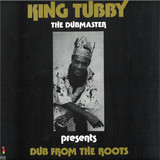
Tubby did three original dub albums, “Dub From The Roots, “The Roots Of Dub” and the third is “Brass Rockers” with Tommy McCook ’pon the flying cymbals. Where he mixed it with the horn going in and out in a dub way and one named “Shalom Dub” you can call Tubby’s too because he mixed the versions as they were off the forty fives.
King Tubby and Producer Bunny “Striker” Lee are intertwined in the birth of Dub Music. After discovering a mistake that made a “serious joke” (more of which later…) they went on to release the first pressings of this new musical genre namely “Dub Music”. Tubby’s vast knowledge of electronics and Bunny’s vast catalogue of rhythms would lay the foundations of what today is taken as a standard…. The Remix / Version cuts to an existing vocal tune.
Osborne “King Tubby” Ruddock was born in Kingston, Jamaican the 28th January 1941 and grew up in the High Holborn Street area of downtown Kingston. He studied electronics at Kingston’s National Technical College and also on two correspondence courses from the USA. When he had qualified, Tubby began repairing radios and other electrical appliances in a shack in the back yard of his mother’s home. His work in the early days included winding transformers and building amplifiers for Kingston’s Sound Systems. Tubby built his first Sound System in 1957 playing jazz and Rhythm and Blues at local weddings and birthday parties His reputation as a man who knew and understood both electronics and music grew steadily and as the sixties drew to a close. Tubby purchased his own basic two track equipment. He installed this alongside his dub cutting machine, a homemade mixing console and his impressive collection of Jazz albums in the back bedroom of his home at 18 Dromilly Avenue which he christened his music room.
Dynamic Sounds upgraded to sixteen track recording in 1972 and Tubby purchased, again with the help of a deal brokered by Bunny Lee. The old four track equipment and the MCI console from their Studio B. The four tracks now gave him far wider scope to work with and he began to create a new musical form where the bass and drum parts were brought up while the faders allowed Tubby to ease the vocal and rhythm in and out of the mix. It was only a matter of time before Tubby’s dub plate experiments began to make it on to vinyl and the first ever long playing King Tubby releases would feature a collection of his mixes to a selection of Striker’s rhythms. So please sit back and enjoy this historic set of sounds. Lovingly restored and with a few extra gems added to the CD editions. These releases were the first to carry the name of King Tubby and the first to credit the great musicians that contributed so much to the rhythms that made these albums possible.
Hope you enjoy the set……
"We’ve reached book IV in Rupert Clervaux’s series of “Zibaldone” audio diaries, at which point we find him telling a different kind of story.
“The first three all had very specific themes, while this one feels a little bit looser and doesn’t have just one thematic thrust,” he tells me, which maybe explains why listening feels a bit like annotating. I’m underlining, emphasizing, drawing arrows from here to there, highlighting symbols and noting motifs, realising, questioning, eureka-ing. An impressionistic meaning’s been encoded in and we’re lucky to be given the space to play that most poetic and boundless of all mental games: narrativization.
There are no wrong answers, but Rupert offers some clues either way. If there’s any cipher here it’s “something like a meditation on the concept of ‘depth’––in all its connotative forms.” Think below the surface, (the) underground, yawning oceans, being ‘down in the dirt’, soil, roots, rootlessness, pulling at the dregs, collapse, profundity, stable and unstable horizons, distance, perspective, intuition, not to mention relative opposites: to be shallow, to be above, to be beyond.
It’s got me thinking of Bresson’s “Bring things together that have as yet never been brought together and did not seem predisposed to be so.” His: “Dig deep where you are. Don't slip off elsewhere.” Rupert has realized these—two favourite goals of mine!—here.
This is music that catches you at your own periphery, gives pause, has you offering a little “huh” to, asking “I wonder why” to. Again, it’s got me musing on another mindworm, this time from New York publisher and multi-sensory reading room Dispersed Holdings: “Feeling-making-knowing feedback loop; cartography of feeling; water as text, read to know the land beneath and around it, and body as reader.”
Is it ok to offer up these other contexts out of context? I think so, because Zibaldone IV articulates a similarly swirly tone. Like, we’ve got Rebecca Solnit talking through Kropotkin’s “Mutual Aid” and later calling out to Michael Ruppert a ways away, and “Easy Rider” is playing in the wings. We’ve got Susan Sontag magically contextualizing Mariah Carey with poet Thylias Moss triangulating in order to sketch out (Rupert again) “something a little more interesting than wilful eclecticism or that laboured and patronising kind of pop-savvy.”
Are we following? Whether yes or no Vanessa Bedoret follows on with a performance of a performance of Moss’s 'Water Road’: to be once or twice removed, via strange transitions, purposeful confusions, and, suddenly, seagulls. We’re on a boat with Ingeborg Bachmann—and how I wish I could actually be! But maybe thanks to this music I can as literature, films, friends, lethargy, coincidences, little mental links, eternal wormholes, lingering notions come together to imagine something better."
Text by Natalia Panzer
- A1: She Loves The Way They Love Her
- A2: Misty Roses
- A3: Smokey Day
- A4: Caroline Goodbye
- A5: Though You Are Far Away
- A6: Mary Won't You Warm My Bed
- B1: Her Song
- B2: I Can't Live Without You
- B3: Let Me Come Closer To You
- B4: Say You Don't Mind
- B5: Are You Ready
- B6: I've Always Had You
- C1: Sing Your Own Song
- C2: Caroline Goodbye
- C3: I'd Like To Get To Know You Better
- C4: Though You Are Far Away
- C5: Too Much Too Soon Last Night
- C6: I Wonder If You Know What You've Begun
- D1: I Won't Let You Down
- D2: You Gave Me A Reason
- D3: I'm Coming Home
- D4: I Really Do Love You
- D5: Let Me Come Closer To You
- D6: You Really Were A Surprise
Colin Blunstone and Sundazed Music celebrate the 50th anniversary of
Colin's post Oracle opus One Year with an expanded edition! The half,
itself titled, That Same Year, gives you a deeper introspective look into
that time in his life
The album largely features Colin singing accompanied solely by his acoustic
guitar.That Same Year includes beautifully sparse demo versions of three songs
from One Year including 'Caroline Goodbye' and 'Let Me Come Closer To You'
where Colin is joined by fellow Zombie Rod Agent on piano. Three songs have
Colin joined by Zombie bassist Chris White on classical guitar. Beyond the three
familiar songs you will find Colin's familiar voice and wit come through on eleven
completely unheard compositions all penned for the One Year album; including
'Sing Your Own Song' where sings of reading about his own death in Rolling
Stone.One Year is an album that somehow manages to be both lush and sparse
at the same time and always deeply intimate. That Same Year finds a way to
bring your listening experience to a deeper level of intimacy.In addition to penning
most of the album, Colin also penned the liner notes that fill the gatefold jacket
along with unseen photos from that year. The notes go track by track through One
Year along with some background on That Same Year.
- A1: The Sound Of Music
- A2: Let Me Be The One
- A3: Love Me Like You Mean It
- A4: One Night At A Time
- B1: I'm In Love
- B2: Feelings Inside
- B3: King Size Bed
- B4: We Belong Together
• Best known for their self-penned 1982 recording ‘Moneys Too Tight To Mention’, which was ranked at No. 6
among in the Top Ten "Tracks of the Year" by NME and which was later famously covered by Simply Red,
• “The Valentine Brothers” eponymous debut album was recorded for US label Source Records, owned and run by
Logan H. Westbrooks and includes the two singles ‘The Sound Of Music’ and ‘We Belong Together’.
• Billy Valentine performed as a singer with Young-Holt Unlimited in the mid-1970s, whilst both brothers
performed a three-year stint as part of the touring company of The Wiz musical.
• Another one of those hidden Soul gems, Demon Records is proud to announce this first reissue of “The
Valentine Brothers”, since the album’s original 1979 release.