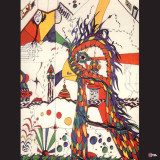
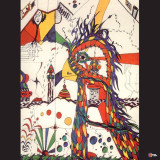
“Do you still believe it?” John Ross asks that question after journeying through the wreckage. The genesis of Dulling The Horns goes back to late 2022, when Ross began workshopping new material during soundcheck on the ILYSM tour. Last summer, Wild Pink decamped to western Massachusetts to reunite with engineer Justin Pizzoferrato. Ross decided to record Dulling The Horns live in the room, in an effort to capture Wild Pink’s onstage style — rawer, grainier. Gone are the glimmering atmospherics and studio affectations of recent Wild Pink outings. Instead, Ross’ voice is haggard against the humid distortion coating every song. “I wanted to make economical songs,” Ross explains. “Music that is very much at its core three or four people rocking.” If before, Wild Pink took notes from Springsteen and Petty, they’ve now entered their Crazy Horse era. On Dulling The Horns, you can hear him rediscovering the fire in real time. Tropes discarded along the roadside, songs pulled from the formative DNA of rock music, all filtered through years of messy fog. “There is no answer to these problems,” Ross says, having eventually yielded. But as far Dulling The Horns is concerned, there’s at least one path forward: Burn it all away, and keep moving. The album was mixed by Alex Farrar in Asheville NC, mastered by Greg Obis in Chicago, IL and is out in October on Fire Talk.
Search:three n one
As one of the brightest and most prolific new songwriters to emerge from the Birmingham music scene over the past few years, Will Stewart has made a name for himself as both an imaginative storyteller and six string gunslinger whose detailed accounts of life around the Deep South seem to capture the essence of not just the humid, kudzu-covered environs they come out of, but also the creative cultural milieu that makes such narratives possible in the first place. Taking cues from everyone from Big Star and R.E.M., to Phosphorescent and the Drive-By Truckers, and even classic Southern literary figures like Eudora Welty and Barry Hannah, Stewart has managed to carve out a place for himself as a conjurer of time, place and characters— and the stories that swirl around them— in a way that’s simultaneously reflective, empathetic and unapologetic in their presentation.
Now on his fourth solo LP, over his past three studio efforts Stewart has shown a deft touch for not just engaging character arcs and succinct studies in the human condition, but also a range of musical modes that span everything from quiet dissertations on love and loss, to brash rockers and moody explorations of the complicated nature of modern Southern living. As someone who also wears the hat of a highly sought after sideman who lends his talents to friends and fellow travelers like Birmingham locals The Blips, Terry Ohms and Sarah Lee Langford, there are few sonic spaces that Stewart’s hands haven’t touched in some way.
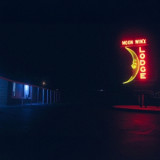
Stewart’s newest offering sees him poised to deliver his most ambitious project yet, with a 10-track song cycle centered around the iconic, and now defunct, Moon Winx Lodge in Tuscaloosa, AL, and some of the characters and scenarios that have played themselves out there over the years.
- A1: George Michael - Outside
- A2: Run Dmc Vs Jason Nevins - It's Like That
- A3: All Saints - Never Ever
- A4: Brandy & Monica - The Boy Is Mine (Radio Edit)
- A5: Usher - You Make Me Wanna
- A6: Robbie Williams - Millenium
- A7: The Corrs - Dreams (Tee Radio Mix)
- B1: Cher - Believe
- B2: Steps - One For Sorrow
- B3: Aqua - Doctor Jones
- B4: Dana International - Diva
- B5: Ace Of Base - Life Is A Flower
- B6: Robyn - Show Me Love (Radio Version)
- B7: Five - Got The Feelin' (Radio Edit)
- B8: Culture Cub - I Just Wanna Be Loved
- C1: Radiohead - No Surprises
- C2: Rem - Day Sleeper
- C3: Oasis - All Around The World
- C4: Stereophonics - The Bartender & The Thief
- C5: Embrace - Come Back To What You Know
- C6: Bernard Butler - Stay
- D1: Manic Street Preachers - If You Tolerate This Your Children Will Be Next
- D2: Tori Amos - Spark
- D3: Sheryl Crow - My Favourite Mistake
- D6: Simply Red - The Air That I Breathe
- D7: Shania Twan - You're Still The One (Radio Edit Without Intro)
- E1: Air - Sexy Boy (Radio Edit)
- E2: The Cardigans - My Favourite Game
- E3: Cornershop - Brimful Of Asha (Norman Cook Remix Single Version)
- E4: Fatboy Slim - The Rockafeller Skank (Short Edit)
- E5: Wildchild - Renegade Master (Fatboy Slim Old Skool Edit)
- E6: Faithless - God Is A Dj (Radio Mix)
- E7: Ultra Nate - Found A Cure (Full Intention Radio Edit)
- E8: Jamiroquai - Deeper Underground
- F1: Celine Dion - My Heart Will Go On
- F2: Boyzone - No Matter What
- F3: B Witched - C'est La Vie
- F4: Ricky Martin - The Cup Of Life (Remix English Radio Edit)
- F5: Gloria Estefan - Heaven's What I Feel (Radio Edit)
- F6: Spice Girls - Viva Forever (Radio Edit)
- F7: Robbie Williams - Angels
- D4: Eagle-Eye Cherry - "Save Tonight
- D5: Texas - Say What You Want (All Day Every Day) (Feat Wu-Tang Clan & Robert F Diggs)
The NOW Yearbook series continues with the ultimate soundtrack to one of pop’s most dynamic years: 1998 - out February 14th! This collection brings together the biggest and most iconic tracks from the year, presented across three stunning coloured vinyl discs, pressed in neon violet with 43 tracks from the era and two CD editions available as a standard 4-CD set, and as a special edition 4-CD set in ‘hardback book’ packaging, which includes a 28-page booklet packed with notes about all of the 80 featured tracks that capture the unforgettable sounds from the year. Whether you’re reliving the hits or discovering them for the first time, this collection brings you the best from the singles charts of 1998.. Whether you're revisiting these unforgettable hits or discovering them anew, NOW - Yearbook 1998 brings you the best from the singles charts of 1998!
A lost paradise, a lost innocence, and a lost culture; these are the dominant themes presented in Nicolas Roeg's 1971 masterpiece Walkabout, a survival story of two children lost in the scorched Australian wilderness. Together with other seminal Australian surrealistic outback films, (e.g. Wake In Fright) Walkabout was a film that reshaped the Australian film industry and defined the country's New Wave. On the cusp of the film's 45t h anniversary it is pertinent to observe that for decades the film's original soundtrack has also been considered lost. Composed and conducted by the acclaimed British film composer John Barry, the score is a hallucinogenic mix of exotic romanticism, children's nursery rhyme and potent psychedelic experimentation. For decades, the consensus among soundtrack circles was that the master tapes were officially missing with little chance that the music would ever see a legitimate release, but The Roundtable is pleased to announce that this is no longer the case. The complete soundtrack to one of cinema history's most visually spellbinding films has now finally been re-discovered, sourced from the original stereo master tapes and prepared to the guidelines of the original ill-fated 1970s LP release.
The premiere soundtrack release to Nicolas Roeg's 1971 New Wave Masterpiece.
Lost hallucinogenic orchestral score from acclaimed film composer John Barry.
12-track LP re-mastered from the original stereo master tapes.
180g vinyl and deluxe packaging including archival film stills and original press material.
6 Panel digipack CD.
The Seeds of love is the third studio album by Tears for Fears.The album was released in September 1989, entering the UK Album Chart at No.1 and would be certified Platinum by the BPI within three weeks. In the US, the album peaked at no.8, and was also certified Platinum. The album also reached the top ten in various other countries around the world.
The album contained the Singles: Sowing the Seeds, Woman in Chains, Advice for the Young at Heart and Badman’s song, upon release it was seen (and still is) as one of the greatest albums of the 80’s
First released over 30 years ago, this EP, as with Volumes 1,2 & 3, is where The Future Sound Of London started in 1991, these tracks under their pseudonyms. All four tracks were instrumental in establishing a new genre of electronica within dance music. They were ahead of their time and extremely progressive, and here three decades later they are making an impression. All four tracks are iconic, and big influences to the hardcore scene that followed. This edition of The Pulse EP is the first reissue in this original vinyl form since 1992, those initial pressings now expensive on Discogs. Genuine underground hardcore/rave history on vinyl to obtain one more time, all sounding as fresh today as it did back in the early 90s.
- A1: I Cried Like A Child Of Three / Tôi Đã Khóc Như Một Đứa Trẻ Lên Ba
- A2: Xăm Hường
- A3: Early Night With Fa And The Dang Brothers / Đầu Hôm Với Fa Và Anh Em Nhà Họ Đặng
- A4: La Palanche / Đòn Gánh
- A5: The Universe Is A Rabid Creature / Vũ Trụ Là Con Thú Điên
- A6: Hanoi - The Motorcycle Empire / Hà Nội - Đế Chế Xe Ôm
- A7: A Conversation Under The Night Sky / Cuộc Chuyện Dưới Trời Đêm
- B1: Altar / Bàn Thờ
- B2: Roóng Poọc
- B3: Chàm Islands
- B4: Lục Bát
- B5: The Perfume River / Sông Hương
- B6: Tuj Lub
- B7: Đông Ba Market
- B8: Home Is A Fire / Nhà Là Một Ngọn Lửa
It took a village to create Le Motel’s Odd Numbers / Số Lẻ. Beneath its pulsing, shimmering tones, the record is alive with the sounds of everyday life—purring mopeds, idle whistling, the din of kitchens and whisper of rain, voices joyful and contemplative, scenes of bustling cities and domestic intimacy.
Le Motel—who runs the Brussels-based record label Maloca—gathered sounds, photographs, and videos while traveling in Vietnam in 2023. From Hanoi he ventured to Hmong communities in the mountains near the border with China, building out a network of contacts gathered from friends and friends of friends. But Odd Numbers / Số
Lẻ—which takes its title from traditional Vietnamese numerological beliefs and customs—is wholly unlike the extractive product typical of exploitative modes of Western tourism; the album’s final shape was deeply dependent upon the participation of the people the artist met in Vietnam.
Back in Brussels after his travels, as Le Motel began working with his materials, he sent early drafts to his contacts, inviting their input. This back-and-forth eventually yielded a dynamic collective effort in which nine of the album’s 15 tracks feature multiple composer credits. Among the album’s diverse collaborators are Yvonne Quỳnh-Lan Dươn, an educator and ethnomusicologist; Chi Chi, the daughter of a Hmong shaman; and Phapxa Chan, who contributes three poems inspired by landscape and Le Motel’s own music (and, in one case, psychedelics).
The result is an album that is not about making sound, broadcasting it as a one-way communication, but instead about the empathic practice of listening—about listening as an integral and even ethical part of musical creation, even (especially!) when that music is created on a computer, rather than conjured by a group of players sharing space in real time. It’s an album that adopts many of the traditional trappings of ambient music while reminding us of the importance of intentional modes of creation. Brian Eno famously said that ambient music must be as ignorable as it is interesting, but Le Motel’s Odd Numbers / Số Lẻ suggests, to the contrary, the richness of experience available to us should we make the effort to open our ears.
Complementing the album, Le Motel’s Odd Numbers / Số Lẻ also takes the form of a multimedia exhibition including photographs, video, and text-based works created in collaboration with Belgian designer and programmer Antoine Jaunard and Vietnamese poet Phapxa Chan. The exhibition is on view from January 23 until March 2, at Brussels’ 254Forest gallery, as part of Photo Brussels Festival 2025.
There are records that come from the soul. No matter how primitive may be the recording techniques the musician has access to, the soul gets its way to the heart and mind of the listener. Samtvogel' is one of those records. Günter Schickert recorded that amazing piece of human greatness in 1974, using the media he had at the time, putting his brain at work to find the best way of taping everything he had to say. When I was recording Samtvogel' in 1974 I had only 2 Taperecorders. I played one track and while listening I added the second one. And so on. Four times. When I mixed all together I borrowed a 3rd taperecorder. And still added the last track to the master. I had a small mixer with 2 stereo and 1 mono but it was possible to pan tracks. No equalization. It all came out of my still living G2000 Dynacord guitar amplifier, of course valve, with no master, even the voice recorded through it. If I made a mistake in 1 track I had to repeat it from the beginning. And if while mixing I was not fast enough in changing the tape I had to start again. So it took me more than 3 months to get ready.'
Thanks to these three months of work, between June and September of 1974, 'Samtvogel' was privately issued that same year. It would later be issued on the Brain label, with a small change in the artwork -titles added to the front cover, which weren't on the original private pressing. Brain also reissued it on the label's Rock On Brain' LP series, this time with a completely different sleeve. The album contained two tracks on side one and just one on side two, and its sound has often been compared to the most explorative works of Syd Barret - however it must be pointed that Schickert did not need any mind spreading substances to allow his sounds float out of his mind & soul, they just came out in the most natural way. It will also appeal to fans of the echoed athmosferic guitar work of other kraut innovators such as Ash Ra Tempel, Manuel Götsching or A.R. & The Machines, and some may find on the vocal passages certain resemblances to Damo Suzuki on Can's 'Tago-Mago' era.
The Wah Wah reissue is housed in a quality sleeve that reproduces that of the original 1974 private pressing and features a 4 page insert with liners and photos - sound remastered at Eastside mastering Berlin. Get this bird now, before it flies away again!
There are records that come from the soul. No matter how primitive may be the recording techniques the musician has access to, the soul gets its way to the heart and mind of the listener. Samtvogel' is one of those records. Günter Schickert recorded that amazing piece of human greatness in 1974, using the media he had at the time, putting his brain at work to find the best way of taping everything he had to say. When I was recording Samtvogel' in 1974 I had only 2 Taperecorders. I played one track and while listening I added the second one. And so on. Four times. When I mixed all together I borrowed a 3rd taperecorder. And still added the last track to the master. I had a small mixer with 2 stereo and 1 mono but it was possible to pan tracks. No equalization. It all came out of my still living G2000 Dynacord guitar amplifier, of course valve, with no master, even the voice recorded through it. If I made a mistake in 1 track I had to repeat it from the beginning. And if while mixing I was not fast enough in changing the tape I had to start again. So it took me more than 3 months to get ready.'
Thanks to these three months of work, between June and September of 1974, 'Samtvogel' was privately issued that same year. It would later be issued on the Brain label, with a small change in the artwork -titles added to the front cover, which weren't on the original private pressing. Brain also reissued it on the label's Rock On Brain' LP series, this time with a completely different sleeve. The album contained two tracks on side one and just one on side two, and its sound has often been compared to the most explorative works of Syd Barret - however it must be pointed that Schickert did not need any mind spreading substances to allow his sounds float out of his mind & soul, they just came out in the most natural way. It will also appeal to fans of the echoed athmosferic guitar work of other kraut innovators such as Ash Ra Tempel, Manuel Götsching or A.R. & The Machines, and some may find on the vocal passages certain resemblances to Damo Suzuki on Can's 'Tago-Mago' era.
The Wah Wah reissue is housed in a quality sleeve that reproduces that of the original 1974 private pressing and features a 4 page insert with liners and photos - sound remastered at Eastside mastering Berlin. Get this bird now, before it flies away again!
There are records that come from the soul. No matter how primitive may be the recording techniques the musician has access to, the soul gets its way to the heart and mind of the listener. Samtvogel' is one of those records. Günter Schickert recorded that amazing piece of human greatness in 1974, using the media he had at the time, putting his brain at work to find the best way of taping everything he had to say. When I was recording Samtvogel' in 1974 I had only 2 Taperecorders. I played one track and while listening I added the second one. And so on. Four times. When I mixed all together I borrowed a 3rd taperecorder. And still added the last track to the master. I had a small mixer with 2 stereo and 1 mono but it was possible to pan tracks. No equalization. It all came out of my still living G2000 Dynacord guitar amplifier, of course valve, with no master, even the voice recorded through it. If I made a mistake in 1 track I had to repeat it from the beginning. And if while mixing I was not fast enough in changing the tape I had to start again. So it took me more than 3 months to get ready.'
Thanks to these three months of work, between June and September of 1974, 'Samtvogel' was privately issued that same year. It would later be issued on the Brain label, with a small change in the artwork -titles added to the front cover, which weren't on the original private pressing. Brain also reissued it on the label's Rock On Brain' LP series, this time with a completely different sleeve. The album contained two tracks on side one and just one on side two, and its sound has often been compared to the most explorative works of Syd Barret - however it must be pointed that Schickert did not need any mind spreading substances to allow his sounds float out of his mind & soul, they just came out in the most natural way. It will also appeal to fans of the echoed athmosferic guitar work of other kraut innovators such as Ash Ra Tempel, Manuel Götsching or A.R. & The Machines, and some may find on the vocal passages certain resemblances to Damo Suzuki on Can's 'Tago-Mago' era.
The Wah Wah reissue is housed in a quality sleeve that reproduces that of the original 1974 private pressing and features a 4 page insert with liners and photos - sound remastered at Eastside mastering Berlin. Get this bird now, before it flies away again!
- Me And My Shadow
- Gotta Be This Or That
- How Are Ya Fixed For Love
- Lonesome Man Blues
- Moonlight In Vermont: I May Be Wrong
- Nice Work If You Can Get It
- Exactly Like You
- Cherry Pies Ought To Be You
- A Little Learnin Is A Dangerous Thing 1 & 2
- Can T We Be Friends?
- The One I Love Belong To Someone Else
- Peachtree Street
- You, My Love
- The Birth Of The Blues
- You Brought A New Kind Of Love To Me
- Well Did You Evah?
- Witchcraft; Love Me Tender
- Nothing In Common
- Together
"This album is a superb collection of Frank and friends from a part of Frank’s career that’s long been underrated. Here, Sinatra scales the jazz summit with Louis Armstrong on “Birth Of The Blues” and does three electrifying collaborations with one of his favorites, Ella Fitzgerald. Ella’s voice is at her best in each. Rival Elvis Presley gets the Chairman’s respect on a wonderfully playful meeting-of-the-icons medley of “Witchcraft”/”Love Me Tender.” The tunes are bright and lively and many benefit from Nelson Riddle’s arranging genius. Frank and Dean are great, improvising and playing off one another as always. But wait until you hear “Together” in which Bing joins Dino and Frank for a happy, hilarious threesome.
- A1: The Book Of Sounds - Part 1 07 34 Min
- A2: The Book Of Sounds - Part 2 08 32 Min
- B1: The Book Of Sounds - Part 3 05 05 Min
- B2: The Book Of Sounds - Part 4 05 05Min
- B3: The Book Of Sounds - Part 5 05 52 Min
- B4: The Book Of Sounds - Part 6 03 26 Min
- C1: The Book Of Sounds - Part 7 08 01 Min
- C2: The Book Of Sounds - Part 8 05 09 Min
- C3: The Book Of Sounds - Part 9 02 46 Min
- D1: The Book Of Sounds - Part 10 11 49 Min
- D2: The Book Of Sounds - Part 11 03 30 Min
- D3: The Book Of Sounds - Part 12 04 33 Min
The new recording of The Book of Sounds is an intimate exploration of the piano by pianist Carlos Cipa - a way of looking into the sound, of listening into the moment when Cipa's fingers press down on the piano keys. The Book of Sounds, composed between 1979 and 1982 by composer and pianist Hans Otte, is a musical pendulum movement of one hour in twelve 'pieces', as the composer himself describes them. Chords and melodies repeat themselves, sometimes quickly, sometimes slowly; they follow each other in harmonic cadences and yet never dissolve - a timeless back and forth.
The Book of Sounds is the European-German answer to the concert music of American minimalism. But it is also the essence of many questions about society and the human condition at that time. Inspired by Zen Buddhism, Otte was convinced that a return to simplicity, to the unagitated - a piano, harmonic cadences, a middle register - frees the listener to focus on what is really important in art: the human being. Introspection begins with listening. Seldom have simple chords and melodies been so selectively staged. It is a process of endless reduction - no wild sound dramaturgies, no climaxes, hardly any beginning or end. The interpreting pianist simply prepares a tableaux of perception for the listener. Cipa naturally sets accents; he recorded the 12 pieces on three different pianos - a Steinway grand piano, a Yamaha piano, and a Yamaha CP-70, an early electric piano - to help shape the tonal characteristics.
Carlos Cipa hits the nerve of the times with this new recording. What music can be as art is still up for debate today. The Book of Sounds is not 'art-proof' and in this it is still a provocation today; absolutely unspectacular and practising relaxation. It is a wonderful invitation to feel, experience, and perhaps even find oneself in the confrontation with the work - and for a moment not to fuel the discourse. Cipa, who otherwise appears as a composer himself, here carries out Otte's intended gesture of withdrawal in a double sense and steps into the background as creator but also interpreter, in order to bequeath The Book of Sounds to the loudspeakers and headphones at home in one step forward.
- 1: Lucifer, Bringer Of Light
- 2: Laird Of Heimly
- 3: Stanley (Tonight's The Night)
- 4: The Comeback
- 5: Kip Satie
- 6: Balthazaar
- 7: Bed Of Roses
- 8: Neotzar (The Second Coming)
- 9: Core Memory Corrupt
- 10: Three Frightened Monkeys
- 11: Dead Of Winter
After two pandemically conditioned ‘reaction’ albums - Yay! (2023) and Neigh!! (2024) - a few non-album singles and a compilation album, a downsized and sleek Motorpsycho is back where we all know and love them, with an epic, sprawling double album, filled to the brim with inventive, organic and ecstatic rock-based music. Rejoyce Psychonaut! This eponymously titled, 11 song work, has exactly as much variety & diversity, accord and discord, as one expects from a band that has released a few albums before, and that these days must be regarded as an institution in European rock. From concise 3min-something pop-rockers, to 20mins plus progressive epics, via acoustic intimacies and psychedelic wig-outs, this is concentrated Motorpsychosis: commenced Rebis, countdown initiated. Ever closer. Ever sharper... Since the traditional 3 or 4 piece rock band seems to be a dying breed these days, and MP always was a band in flux anyway, a new pragmatic era has begun in the Psychoverse. The band has, in what one might call alchemical terms, been ‘dissolved and purified’, and is by now again reduced to the core two founding members HMR & BS. This is nothing new, it has happened a few times before, but these days they are also the owners and creators of the record company NFGS, which is now the hub of all recorded band activity, and Motorpsycho marks the final severance of existing ties to other labels for the first time in 35 years. If ‘freedom is free of the need to be free’, this is it. Yikes! The minimalist title of the album is then not just easy to remember, it’s also a statement: a new era has begun in the Psychoverse, a state of affairs reflected in execution and details as well as title, if not perhaps, in ambition or size: “Senex psittacus negligit ferulam” *. This is a time of new beginnings for a band that has spent two years consolidating and reseting before charging ahead anew on a new path, trumpets blaring (...and trumpets don’t come much more blaring in the Psychoverse than with this grandiloquent hyperbole. Good fun! ). New day rising indeed. The core band was adroitly helped by a gaggle of greats from all over the Scandinavian musical landscape on these recordings: drummers Ingvald Vassbø and Olaf Olsen, string arranger/violinist Mari Persen, vocalist Thea Grant, and - as usual - honorary psycho, brother Reine Fiske, were all fellow travellers on this musical journey. Motorpsycho was co-produced by the band and Deathprod, and mixed by Andrew Scheps. Motorpsycho are not the best at what they do, they’re the only ones that do what they do. NFGS2025 *: “Senex psittacus negligit ferulam,” or “An old parrot doesn’t mind the stick.”
- A1: Crystal Ann
- A2: Alison Hell
- A3: W.t.y.d
- A4: Wicked Mystic
- A5: Word Salad
- B1: Phantasmagoria ‘86
- B2: Human Insecticide (Live)
- B3: The Fun Palace
- B4: Road To Ruin
- C1: Stonewall
- C2: Never, Neverland
- C3: Imperiled Eyes
- C4: I Am In Command (Live)
- D1: Set The World On Fire
- D2: No Zone
- D3: Phoenix Rising
- D4: Brain Dance
Canada’s answer to Metallica? The Eddie Van Halen of thrash metal? Both these terms could have easily applied to Annihilator and its mastermind, lead guitarist and songwriter Jeff Waters. A fan of both speed metal and classic rock, the Canadian emphasized a flair for both. The fresh invention of Waters’ guitar work was a major reason why Annihilator got off to a promising start and have survived to the present, with a dozen or more albums under their belts.
THE BEST OF ANNIHILATOR compiles cuts from the band’s first three studio albums, a rarities collection, and a live disc, all of which emerged on Roadrunner between 1989 and 1996.
There have been many records in the years since, as Annihilator has continued to be one of the few bands to fly the flag for the classic thrash metal sound, earning themselves a devoted following and a regular spot on the European concert and festival circuit. THE BEST OF ANNIHILATOR takes the listener back to the early days of that sound, which stands up to anything else of it’s time - and even most metal today.
Two albums filled with the best that this band has to offer and for the first time available on vinyl.
Best Of Annihilator is available as limited numbered edition of 1500 copies on silver coloured vinyl
- A1: Pride
- A2: Bloom
- A3: My Love
- A4: Nearness Of You
- A5: Upstate
- B1: Wither
- B2: Passerby
- B3: Exit Wounds
- B4: It Could Be Simple
Rising indie soul artist Sevens announces the release of his highly anticipated debut album, Sincerely, Sevens, on February 21, 2025. At just 24 years old, Sevens emerges as a compelling voice in the contemporary soul scene, blending indie soul, neo-soul, and jazz into a collection of sincere, heartfelt songs.
With a distinct baritone voice and a gift for storytelling, Sevens explores themes of love, growth, and introspection throughout the 9-track record. His philosophy is simple: less is more. Crafted over a span of three years, much of the album was created in Sevens' bedroom, showcasing his skills not only as a songwriter and vocalist but also as a multi-instrumentalist and producer.
Sincerely, Sevens captures the artist in his purest form—a deeply personal work that touches the soul. From sparse, intimate arrangements to warm, groove-infused instrumentation, the record embraces vulnerability while exuding timeless charm.
The album features contributions from trusted collaborators: Boris Van Overschee (co-producer / Delv!s, Portland) Willem Ardui (additional production / Blackwave.) and David Poltrock (additional keys)
Tobie Speleman expertly handled the final mix, ensuring every note resonated with clarity and purpose.
Reflecting on the album, Sevens shares: “I wanted to feel more with less. I wanted to evoke, I wanted to touch. Parts of me I’ve never gone. It is honest, it is true. It is me.”
With Sincerely, Sevens, the young artist solidifies his position as one to watch—an emerging voice with both depth and authenticity.
Bob Balch here. When Gary Arce mentioned that Yawning Man was gonna record and we should do another round of Yawning Balch jams I was super stoked. I'll always jam with those guys. Once the invite was extended I knew I had to drop some money on new pedals. Haha. Not that I don't have enough already but jamming with Yawning Man means you have to build a massive pedal board and try to get the most "out there" sounds you can. At least that's what it means to me. Another aspect is once we start jamming I like to improvise riffs but keep them in mind so I can return to them throughout the jam. It was an honor to share a few hours playing with those dudes and I'm always surprised how much material we get out of it. Volumes 3 and 4 were recorded in one five hour session April 20th, 2024 in Joshua Tree, CA.
Transparent Blue Vinyl.Limited to 300 copies. Bob Balch here. When Gary Arce mentioned that Yawning Man was gonna record and we should do another round of Yawning Balch jams I was super stoked. I'll always jam with those guys. Once the invite was extended I knew I had to drop some money on new pedals. Haha. Not that I don't have enough already but jamming with Yawning Man means you have to build a massive pedal board and try to get the most "out there" sounds you can. At least that's what it means to me. Another aspect is once we start jamming I like to improvise riffs but keep them in mind so I can return to them throughout the jam. It was an honor to share a few hours playing with those dudes and I'm always surprised how much material we get out of it. Volumes 3 and 4 were recorded in one five hour session April 20th, 2024 in Joshua Tree, CA.
- Hello !
- Back 2 Ya
- This Is Me Now
- Care
- Animal
- Chew U Up
- Say Less !
- Losing Me
- This Love S Gonna Go Nowhere
- To Be A Man
- Good God You Ve Gotta Try !
"‘man oh man !’ is the sophomore 11 track album from indie singer-songwriter Martin Luke Brown.
Marking a significant new era in both his personal and musical life, Martin tackles a myriad of themes; self-awareness and personal growth, treasured friendships, swept-off-your-feet romance and gut wrenching heartbreak - all with a laidback, indie singer-songwriter sound that naturally shapes the album into three linear phases: the end of a relationship, new beginnings and the consequential feeling of accepting change.
Described by Martin as a ‘time capsule’, each track on the album was written and recorded in one day, making for a raw and honest snapshot of Martin’s life experiences at the time. Instrumentation is simple and recorded with producer and friend Matt Zara using almost exclusively analog technology – tape machines and vintage mics, a messiness that the duo embraced from the get go.
Martin has released over 100 songs as either a co-writer or a producer, with BTS, Dylan, Jacob Banks, Gavin James, Sam Tompkins,James Smith, Sody andJack Kane. He has also seen a wealth of success as part of pop supergroup FIZZ alongside Orla Gartland, dodie, and Greta Isaac, earning widespread praise from the likes of Rolling Stone UK, Dork, DIY, Clash & more."
Italian composer and saxophonist Laura Agnusdei returns with “Flowers Are Blooming In Antarctica” a career defining record that sees the artist diving into uncharted waters, a profound timeless meditation on our relationship with planet Earth, the eco-conflicts arising and the fascination with non human forms of life, backdropped to a vivid soundtrack of coral exotica, spiritual Jazz, fourth-world minimalism, tropical electronics, tribal futurism and contemporary elegance.
Every step of Laura Agnusdei’s path, from electroacoustic experimentation to her constant research based upon the acoustic dimension of wind instruments and their interaction with polymorphic electronic sounds, seems to have pivoted into a new sense of awareness, as if the mind and intellectual practice has finally caught up with the body, the heart and the soul, resulting in her most organic and transcendent work yet. “Flowers Are Blooming In Antarctica” is loosely inspired around a trifecta of pioneering ideas that explore unconventional reality: James Bridle’s ‘Ways Of Being’ with his radical story that mixes ecology, tech and intelligence; Luigi Serafini’s late-70s fantastical ‘Codex Seraphinianus’, an unparalleled collection of flora, fauna, anatomies metamorphosed into new fragile beings; J.G. Ballard’s climate-fiction foreshadowing sci-fi ruminations. These influences shift Agnusdei’s musical trajectory injecting doses of terrestrial malaise, the earthy sub-saharan ‘Ittiolalia’ with its wah-wah filtered sax and trance inducing groove; the rubbery playfulness of ‘Oasi Bar’; the gentle eco-system of ‘P.P.R.N’ reminiscent of Herbie Hancock’s innovative synthesis of funk, space and synthesizers; the kaleidoscopic northern lights of ‘Emperor Penguin Lullaby’, where south-east Asian echoes reach icy shores; the Jon Hassell hyper-ambience of ‘Cuttlefish REM Phase’; the post-apocalyptic march of ‘The Drowned World, a jazz standard for an artificial civilization on the brink of self-destruction. Nothing feels out of place and it’s no coincidence that one of the most powerful messages on the record is delivered on centerpiece ‘Are We Dinos?’ via an interview conducted with two preschoolers. Radical optimism or sonic liberation?
Laura Agnusdei’s tenor sax cuts deep all across “Flowers Are Blooming In Antarctica”, a laser baton raised up to the clouds, a conductor orchestrating devotional soundscapes for a three-eyed dolphin, guiding us through prismatic pastures and acidic oceans. Her tropicalized realm is pin-pointed with Miles-like sheer clarity, a bristling nakedness on the verge of exploding at any time, creating an album where ascension becomes the unifying code.
parabrutality was composed over the course of three days, featuring vocals from Æthereal Arthropod and production from bod 包家巷.
parabrutality is defined exactly as the word's construction delineates.
the work should be considered a mantic instrument for knowledgeable and careful usage.
the artwork is derived from a photo of a tattoo given by Æthereal Arthropod to bod [包家巷] and a stone carving made in prehistory.
all track titles are encoded to a key that will only be disclosed (in addition to the source of the stone carving) in exchange for a private transfer of one thousand euros or more to paypal.me/baojiaxiang


![bod [包家巷] & Æthereal Arthropod - parabrutality](https://www.deejay.de/images/l/4/7/1129647.jpg)