The Equatoguinean Norberto de Nöah established in Madrid in the early 80s, where he became a firebrand of African culture in the vibrant Movida. In 1988 he self-released his first solo album, a blend of homeland sounds —modern and traditional— with new synth and drum machine touches. The vanished album finally gets its well-deserved reissue.
Edition of 500 albums on vinyl (Bandcamp download code included) - Original artwork with new 14 pages insert and poster
In the mid-1980s, the European media, music industry and public became increasingly interested in African music. This was a period of international success for King Sunny Adé, Salif Keita, Youssou N’Dour, Ray Lema, Touré Kunda, etc. Spain, with its own particular conditions, wasn’t oblivious to the phenomenon and the Equatoguinean Norberto de Nöah may be its best exponent.
Norberto moved in the early eighties from his hometown in the island Fernando Po (now known as Bioko) to its former colonial capital, Madrid. While studying dramatic arts, he created and led the band Nohkis, made up of African and Spanish musicians. In 1985 they released the maxi-single “Mujer española” / “África, ¿dónde está tu gloria?”, and the song “El loco”, was released on a compilation LP called Esto es increíble, both on the label Lollipop. According to the journalist Patricia Godes, they were first artists to record an African music record in Spain. It received positive reviews and a great impact on the most independent side of Madrid’s La Movida movement. Very soon afterwards, Nohkis’ band split up.
Afterwards, Norberto would concentrate on his solo career, and Norberto de Nöah and The Böhöbé Spirits Müsic was released in 1988, definitely a solo album. Norberto created his own label, Kilimandjaro Productions, and composed, arranged and produced all the songs of the LP. Moreover, he sang and played all the instruments: a vast selection of organic instruments, a Yamaha RX-5 drum machine and a Roland D-50 synthesizer.
In the album he exposed his deepest roots, updating the lexicon of traditional Bubi music, the musician’s ethnic group, a compendium of ceremonial melodies that ancient troubadours composed for the court. Doing so he showed new possibilities to one of the oldest ethnic groups in the world. Besides all this, he was also inspired by American music such as funk, R&B, Latin American music and also by a wide range of African and Caribbean rhythms.
Mixing the traditional and the avant-garde in a spontaneous and natural way, the music contained in the record’s grooves flows freely and takes you to places full of magic and mystery, while still transmitting new and exciting sensations. Even more, according to the Equatoguinean musician and writer Baron Ya Búk-Lu based in Madrid, the album’s sound was “the perfect combination of all characteristics that defined the Equatoguinean Afropop music made in Madrid during the 1980s”, a story that still needs to be told in all its depth and intensity!
Following the release of two LPs and several singles, the activity of Norberto de Nöah and Kilimandjaro Productions (and the subsequent Bananas Podridas) ceased. Nevertheless, Norberto’s links to music continued, as a promoter and DJ in Madrid’s nightlife.
Norberto de Nöah contributed greatly to changing Spain’s musical landscape, breaking barriers and mental frameworks. He was the first to make contemporary and popular Guinean music known to the Spanish public.
The repercussions in the African market of a Spanish (and Bube) speaking African musical project, where English and French dominate, was very difficult. In addition, the passage of time and changes in phonographic formats have diluted the memory of Norberto's legacy. Now it’s time to reverse the situation and break all the outdated frontiers!
Norberto de Nöah and The Böhöbé Spirits Müsic, as every important music piece, was at the same time part of a universal phenomenon of recognition of African music and a very personal project, based on the artist’s nostalgic and heartfelt need to show and homage his ethnic group, the Bubis. In this process he also refreshed his hometown music legacy, giving it a new air and opening the door to lots of other great Equatoguinean artists coming afterwards, as well as being an inspiration for many musicians in Spain.
quête:ti pi cal
- Dreams Of Dreams
- Careful Crossers
- Daisy
- Life Coach
- Sideswiper
- The Illinois
- Treeton
- Davy Crockett
- Welcome Wagon
- Dorian
Fang Island's debut record, long out of print and back in stock as daisy pink splatter coloured vinyl in gatefold jacket LP via Joyful Noise, defined the sound of danc-y/math-y indie rock of the early 2010s alongside contemporaries Lightning Bolt, Titus Andronicus, and Japandroids. Fang Island described their music as the sound of "everyone high fiving everyone." No matter where they went, Fang Island's up-with-people approach made them a subversive art project by default. At a time when the belligerent noise-rock of Lightning Bolt and The Body defined Providence, Fang Island played major-key guitar harmonies and flashy tapping riffs. When people tried to call them "math-rock," they thought of themselves as "recess rock." Fang Island shared bills with uber-buzzy bands like Yeasayer and Chairlift at Cake Shop and Santos Party House, crucibles for Brooklyn hype at the turn of the aughts; but their most impactful co-sign came from Andrew WK. At least until Fang Island earned an unexpected Best New Music review at Pitchfork; in the style of the time, the group - now including drummer Marc St. Sauver and guitarist Nick Sadler - were thrust from playing "literally empty shows" at hot dog stands in Ohio to becoming the toast of SXSW and starting their North American tour with psych-rock idols the Flaming Lips in an Atlantic City casino. They would later play sprawling amphitheaters with Stone Temple Pilots, and in perhaps the best demonstration of their ability to wield pop smarts to guitar pyrotechnics, both Matt & Kim and Coheed & Cambria.
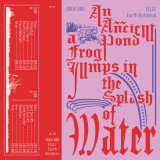
BRUK welcomes the daring shapes and inquisitive textures of ELLLL for her debut album, Earth Rotation. Across 13 scuffed cuts and grubby miniatures the Irish producer shapes out a distinctive sound world, steeped in sample science and powered by low-slung grooves. There's no direct message permeating Earth Rotation, but burning issues around embattled ecosystems hang in the air as ELLLL pushes her sound palette until it bites. Extended instrumental techniques lend the album an in-the-room tangibility, while dislocated micro-loops speak to less grounded atmospheres. Starting from densely packed collages and diligently chipping away until spacious, head-knocking arrangements remain, the end results of ELLLL's process call to mind the wayward sample acrobatics that made trip-hop and jungle so emotionally resonant and eerily alien in the same beat. There's rarely anything like conventional boom-bap or a cosily familiar break, but ELLLL finds compelling rhythms in unlikely sources of funk, whether plucked, bowed, sequenced or sculpted. Even when teetering towards techno on 'Titan', her particular approach is gloriously skewed and, by extension, innovative. No matter how serious the techniques involved, Earth Rotation is a celebration of the magic that happens when sound gets mistreated. If there are foreboding ideas lingering in the album's tendency towards dissonance, ELLLL also knows how to inject her work with a necessary mischief, making her a perfect fit amongst the maverick BRUK alumni.
Will probably ship earlier than the 14th. Up until Raising Hell, the rap juggernaut we know as Run-DMC was still in its building and breaking-down- doors phase. In 1986 that changed, and in a dramatic way. With their third long-player, the group had reached the mountaintop. It was THE record that proved hip-hop wasn't a fad. Raising Hell marked an important and significant new era for the group. Leaving producer Larry Smith for up-and- coming sonic innovator Rick Rubin (still co-produced by Run's brother Russell Simmons), they began to fully transition not only their own sound, but the sound of the entire genre. Less live playing - with some exceptions - and a slicker, tighter sonic attack. Musical aesthetics aside, though, at their core they stayed true to the essence of hip-hop: two turntables and a microphone, or two. It's impossible to talk about the album without its worldwide smash, 'Walk This Way,' which hit #4 on the Billboard pop charts and saw the group digging in the rock crates to summon Aerosmith in the flesh, combining Steven Tyler's and Joe Perry's musicianship with the group's own take on the '70s classic. The song's video cemented Run-DMC as legit MTV idols, and both groups rode its wave to new heights. Beyond 'Walk This Way,' the platter is full to the hilt with undeniable classic singles: 'You Be Illin''; 'It's Tricky'; 'Peter Piper' and the fashion-world shifting 'My Adidas.' Each song was new proof that Run-DMC's sound was indeed new, but still familiar, and full of the energy, charisma and innovation that drew fans to their first two LPs. Aside from the singles, the reason the album stands up so well is the fact that there is virtually no filler. 'Proud To Be Black' remains a pioneering and underrated cut when people talk about 'conscious' hip-hop. And to make sure they never lost the streets that gave them their start, 'Hit It Run,' 'Son Of Byford,' 'Is It Live' and 'Perfection' all bring it back to the group's early days in the park. Besides the triple platinum status the album achieved, it was more than just a pop smash. It signaled a new era for rap music, and it was
the no-turning- back point for the entire genre. This was the beginning of what we now call the Golden Era, and it still sounds as fresh today as it did three decades ago.
Comprising someof Denmark"s most prominent young musicians, Copenhagen"s trailblazing neo-jazz quintet OTOOTO refer to their innovative blend of jazz tradition and modern indie-pop as "homeshake meets the jazz messengers". Their third studio album"2nd Quake" is set to release on November 8th on April Records. OTOOTO, consisting of Jonas Due (trumpet and flugelhorn), Oilly Wallace (alto sax and flute), Calle Brickman (keys), Andreas Svendsen (drums and percussion), and Matthias Petri (bass), has been a fixture on both the Danish and international jazz scenes since their 2021 debut "This Love Is For You". Their new release marks a new chapter in their journey, reflecting a bold, mature artistic vision that promises to cement their place as leaders in Scandinavian contemporary jazz. "Our mission is to reflect the modern society and put a sound to its vibrations. And through this sound we seek to transmit purity, love, and joy." Navigating through a wide array of inspirations from 70"s rock and European church music, to the pioneering sounds of Jean-Michel Jarre and Vangelis, the five piece - led by trumpeter Jonas Due and saxophonist Oilly Wallace - self describe their sound as"a roaring sea of analogue synths and velvety horns". Featuring eight meticulously composed original pieces, 2nd Quakebalances strong memorable melodies with intricate orchestration, a continuous sense of groove, thick layers of texture and fearless, lyrical improvisations. A collaboration with electronic producer Sofie Birch, the record is an electro-organic sonic exploration of the union between acoustic instrumental timbres and electronic manipulation, spearheaded by the sound of the legendary Juno 106 synth alongside stellar jazz-informed musician-ship.
- How Maps Work
- Second Piano
- Perpetual Underground
- Hook & Sinker
- Wrong Pocket
- Odd Numbers
- Short Circuits
"It's a game of hopscotch while drunk on sleep deprivation. It's a dance based on inaudible, but irrepressible rhythms. It's interaction dressed up like a call & response game wrapped up in a sparring match full of agitation and confusion. It's a manic pursuit over wobbly scaffolding, broken roof tiles or a creaking suspension bridge. It's an irregular movement that snaps, roars, drips, defies, tumbles, slithers, cajoles, interrupts, sizzles, triples, dodges, throws curveballs, causes panic, restores order, well kinda, and stutters and mutters. It's like Jaap Blonk's invented Onderlands: a language that sounds familiar, but that ultimately defies comprehension. It's part application and part imagination, it's a mystery and a trap. It's a system, perhaps, and an attempt at something, probably, but it's not, definitely not, a holiday. The idea!" - Guy Peters Ken Vandermark (US) and Terrie `Ex' Hessels (NL) have been playing together for years. For example, the Chicago reed player has been a guest with The Ex almost 100 times and the two are also part of Lean Left, an explosive improvising quartet with Andy Moor and Paal Nilssen-Love. It took them until 2014 before they went on stage for the first time as a duo. A dozen concerts followed on various international stages and resulted in their first LP `Scaffolding' recorded upstairs in the Witte Villa, Wormer. Released in 2019. This new release is the result of an blasting tour in Poland, 2021. Recorded live in the SARP Social Club in Poznan. `This is not a holiday!' Eight improvisations; eight musical adventures!
In addition to the unique musical proposals and the large body of work that they have developed separately, Amelia Cuni and Werner Durand have been performing together as a duo as well as in collaborations (Tonaliens, Born of Six) for more than 20 years. Fusing her Indian Raga singing in the Dhrupad style with his minimalist and experimental approach, they have expanded the reach of their soundworlds as well as proposed new paths for contemporary music.In this occasion, Uli Hohmann joins them in a range of hand drums from the Middle East and North Africa, plus a dulcimer-sounding hammered guitar. Durand's various self-made wind instruments, soprano sax, and blown kalimba shine along with Cuni's astounding vocals, which are sometimes sung through a mirliton (a medieval type of kazoo). Clearing is the trio's first published recording.
Seconds of Thirst, recorded in one session at Uli´s studio in Bavaria in early 2014, is truly a conjuring where distinctive balances come to gather. A deep drone unfolds patiently in a hypnotic manner, comprised by Werner's characteristic PVC clarinets, a hammered guitar played by Hohmann, and subtle electronic tones. Above all, Amelia's singing voice, filtered through the mirliton, drifts buzzing along the gradually shifting harmonic waves, meandering through serpentine melodic lines and microtonality.
In the middle pieces, vocals turn into an ethereal multi-layered chorus, an exotic and astonishing instrument pulsing delicate and vaporously, like a gliding silk sail without a mast to bind it. Misty ambiances linger on as the soft atmosphere disperses the weight of undelivered syllables. Just intonation aligns the pan-ney's winds with vocal navigation. Foe to scattering, hurry, and affectation, Clearing's pace has lifted a fog translucent enough to reveal treetops calmly appearing, efficiently condensing damp into definite drops that fall drumming, forecasting what's yonder.
With a condensing sound going from Buddhist morning chants down to Indian festive traditional music, the title track, which closes the album, is the most vibrant of all, permeating a bit of commotion through buzzing drones and galloping percussion. Without disorder, yet without measure. Clearing is therefore this shuttle into the distance, this space that weaves, unites, and tenses the different cords that we are made up of.
When the clouds advance silently, gray, until they become dark in a few minutes, it means that the monsoon is coming. It reaches us without apparent noise, but then resounds in its images, leaving behind lightness, freshness, clarity, and a tremendous luminosity that comes from so far away: from the Himalayas, from so ancient, from Sanskrit, from a sound where the darkness and the divine, where the concrete and the landscape, where the rock and the humidity leave a mark that brings together and ties a sky loaded with new clouds.
The Heliocentrics are a group for which genres are meaningless and boundaries invisible. Since first appearing on DJ Shadow's 2006 album The Outsider the group have gone on to release a string of records that float through jazz, hip-hop, psych, krautrock, and musique concrete whilst collaborating with numerous genre heavyweights from Mulatu Astake to Gaslamp Killer and picking up prestigious fans along the way, such as Madlib and the recently departed David Axelrod.
The primarily instrumental group, who operate out of their vintage analogue studio in East London called the Quatermass Sound Lab, bring in a new singer on album number four - a young Slovakian singer called Barbora Patkova. The result is an album that takes the band, already solidified in ever-expanding grooves and rhythms into new previously unexplored dimensions.The group's deep-set ability to craft music intuitively and impulsively stems from a desire to avoid typical processes or generic structures. Since its conception, the band's music has mainly been created from live improvisation. This musical approach gives the band its own sound and identity -'for anything to happen it must be at that time from the people in the room, and on the spot'. A decade of such sonic adventures has resulted in a tightly knit bond that the group refer to as almost a form of telepathy' with musical changes that otherwise would be near impossible to write.
- A1: Music Not Numbers (Feat London Contemporary Orchestra & Chris Maddock)
- A2: Balance (Feat London Contemporary Orchestra & James Beckwith)
- A3: I`ll Take My Chances (Feat London Contemporary Orchestra, Ria Moran & Binker Golding)
- A4: Believe (Feat London Contemporary Orchestra)
- B1: Just A Little Bit (Feat London Contemporary Orchestra)
- B2: In Search For Goldilocks (Feat London Contemporary Orchestra & James Beckwith)
- B3: You Know (Feat London Contemporary Orchestra, Zola Marcelle & Nubya Garcia)
Jazz re:freshed are proud to present the third studio album by bassist and composer Daniel Casimir.'Balance'encapsulates 'Big Band Energy', with his signature combination of Classical, Jazz and cinematic sounds.
The albumpays homage to the traditions of big band composition and historical significance whilst illustrating contemporary sensibilities.
This ambitious project explores the balance between two large and full sounds of a big band and a string section and is inspired by icon Wayne Shorter's album'Emanon'which made a deep impression on Casimir during the process of creating the album.
An organic development of Casimir's last critically acclaimed album'Boxed In'which featured a jazz quintet alongside a mini chamber Orchestra and was comprised of a woodwind, brass, with a string quartet,'Balance'is a self produced album that takes his musical vision to the next level in his most ambitious body of work to date, leading 26 musicians.
Recorded in November 2022 at Livingston Studios, in a very conscientious recording process which saw piano, bass, and drums recorded together first, followed by trumpet, trombone, saxophone, and the string section and an all star band that consists of figures from the UK Jazz scene, Cassie Kinoshi, Binker, Nubya Garcia, Rosie Turton, Sheila Maurice-Grey and Jay Phelps to name a few alongside a stunning string section performed by the London Contemporary Orchestra.
The final day of recording enlisted the powerful vocal prowess' of Zola Marcelle and Ria Moran to finesse the masterpiece. The track'Music Not Numbers'is an encouraging call to all musicians to not allow streaming culture to affect their creative process and to continue expanding the intrinsic nature of music. Whereas track,'Search for Goldilocks'explores the second meaning behind the album title 'Balance', which is to seek balance within and discover the qualities in life that are "just right".
Indian born, UK artist Michael Diamond, co-founder of Vasuki Sound label and club night, announces new EP Placid Wakefulness, featuring single ‘Reverse Entropy’. available on all platforms 5th December via Vasuki Sound.
A uniquely multifaceted talent, Michael Diamond’s unforgettable ‘jazzed electronic’ sound is informed by a spectrum of influences, not least by intersection of the scientific and practical worlds of electronic music. From the music scholarship he won to read Medicine at Oxford where he quickly discovered new ways in which the two worlds can co-exist, his days were spent immersed in academic studies of music perception and cognition, while his nights were spent alongside the likes of Ben UFO, Batu & Ross From Friends, playing at one of UK’s most long-established nights ‘Simple’. A chance encounter there also led him to connect with musical collaborator Alex Wilson – the BBC Young Jazz Musician of the Year semi-finalist and then musical director of Oxford’s Jazz Orchestra – who appears frequently across Diamond’s compositions and on Placid Wakefulness.
No stranger to a concept piece, Diamond’s previous project, the highly personal and critically acclaimed exploration of culture and identity, Third Culture (album of the month/year acknowledgments from Stamp The Wax, Juno and Phonica Records, also earning him a DJ Mag ‘One To Watch’, a Youth Music Awards ‘Rising Star’ nomination and a Gilles Peterson’s ‘Future Bubbler’ accolade) explored the experience of being a ‘third culture kid’ born in Kerala, India and growing up in the UK with a sense of fractured identity.
On Placid Wakefulness, Diamond honours his academic research working alongside world-renowned musicologist Professor Eric Clarke. Specifically how music may affect our sleepfulness and wakefulness, how instinctively we are soothed by some sounds and energised by others - ‘what it is about dance music that makes people go hard all night long?’ and ‘what is it about ambient music that makes people feel the opposite way - to lull them into this sense of calmness or rest?’, mindful of the unconscious ways his findings were already manifesting in his work as an artist. And while his research provides a framework for some of the ideas within the piece, Placid Wakefulness can be viewed as more of an unintentional byproduct, or case-in-point of his findings, rather than a piece consciously constructed in their image.
Across Placid Wakefulness’s four tracks we find the artist unpacking a range of sonic ideas on this theme, from ambient calm to club-adjacent rhythms. The EP opens with hypnotic lullaby of ‘A Way of Listening’ complete with transcendent flutes provided by Alex Wilson, cello by George Lloyd-Own and a mellow groove. On the more energised ‘Reverse Entropy’, rhythmic ambiguity moves to rhythmic disambiguation with a four-to-the-floor beat as the track progresses, releasing tension and inviting an urge to dance as a jazz sax moment transmutes into glorious techno percussiveness.
On ‘Turning and Turning’ the bpm shifts down a gear, a sonic dreamstate where tough textural rhythms create a kind of liminal state tension. Closing out the EP we return to a sense of restfulness with the EP’s title track, where a gorgeous picked guitar loop interplays with vibrating ambient pads and a slow and steady beat. The Placid Wakefulness EP is a captivating testament to Diamond’s singular artistic talent and the fascinating interplay of neuroscience and how we experience and enjoy music.
It’s abundantly clear from the first bars of their 5th studio album Through Other Reflection, that this is, and could only ever be, The Soundcarriers. From the enchanting vocal duets of folk-bidden Chanteuses Leonore Wheatley and Dorian Conway; to the precise bass lines of Paul Isherwood and the limber, jazz-cool, Hal Blaine-esque drums of his his co-songwriter Adam Cann; from the fairy-like flutes, 60s-garage guitars and organ sounds pilfered from the archives of exotica - listening to the Soundcarriers resembles a rediscovery of all the most prized, esoteric corners of the 1960s, all bundled up, warped and refracted through the quartet’s astutely modern cultural lens. Channelling Tropicalia, Middle Eastern psychedelic Jazz/Funk, The French Library sounds of Nino Nardini, and a whole host of lavish obscurites beside, Through Other Reflection delivers another sonic adventure from one of the most unique and distinctive voices of British Psychedelia. After an 8 year wait for their album 4 - 2022’s Wilds - it thankfully didn’t take so long for the follow-up this time round. In many ways, this feels like a companion to Wilds; recording again at their Nottingham warehouse studio, Through Other Reflection retains that same organic glow, all the passions and imperfections of a tightly clipped unit jamming out these living, breathing pop-art nuggets as if straight onto the acetate.”We wanted to keep an air of spontaneity with this album and not get too bogged with the recording process”, explains Cann, “It was more a case of getting the songs as tightly written and arranged as possible first so we could get them down quickly in the studio. It always takes longer than you think” Less packed with strident pop hooks as its predecessor however, the music of Through… has been given extra licence to breathe, stretch out, and wander more uncharted terrains. While gleaming psych-pop of tracks like ‘The City Was’, or ‘Already Over’ confidently carry on from where they left off, from the album’s 2nd track ‘Always’, the trip becomes a little less predictable. Starting out as a smoky Procol Harum-meets-French-Psych organ ballad, the music drifts, as if of its own accord into an eerie, garage trance that lingers, cycles, and hypnotises, growing ever stranger, reaching ever-further away from its point of conception. And almost every track on Through Other Reflections holds that outer-body moment, where the band fix themselves on a limber, lysergic groove, lose all grip on time and reality, and melt themselves away into a liquid state of blind euphoria. There are sequences on this record that feel more like rituals than songs, built upon a single hypnotic rhythm which, like the centre of a vortex, pulling everything under its beatific command. Take the finale to ‘What We Found’ for instance, sounding like a ghostly march across the psychedelic moors, or ‘Feel The Way’, where a single athletic drum-loop rises and rises, growing ever more urgent and suspenseful underneath its frantic harpsichords and rasping flutes. Full of such rich stylisms as these, The Soundcarriers showcase themselves as abstract storytellers par excellence by virtue of their textures and arrangements alone. Resembling Romantic composer Maurice Ravel, but if he had just a four-piece rock band at his disposal, Through Other Reflects is rich with detail; there’s shakers, rattles, clarinets, booming drums; there’s synthesiser swarms, chiming xylophones, vintage organs and experimental Cluster & Eno-esque ambiences. Within all this nuance the music flows like some undisclosed narrative swathed in a magnetic secrecy. “It almost comes across like a story in some ways”, says Cann of the album, “the music is quite sectional with elements of exotica and cinematic type layers, it's a good balance of grooves, tunes and weirdness”. No more is this “epic cinematic feel” heard more proudly than on short instrumental ‘Sonya’s Lament” - its innate, hauntological atmospheres befitting a Peter Strickland soundtrack, or the classics of Lex Baxter, the so-called ‘Founder of Exotica’ himself. On the other hand, providing a greasier undercurrent to all these bucolic sounds is a leaning towards a more “direct” lyricism referencing more “external concerns. Laying down the first tracks for the album in the wintry gloom of pre-lockdown 2020, and drawing inspiration from time spent in Berlin, Through Other Reflections returns to some of the post-apocalyptic futurism explored in 2014’s Entropicalia - a loose concept album inspired by J.G Ballard’s The Drowned World. “The songs explore a disillusionment with the way things are going particularly after 40 years of neoliberalism”, says Cann, “They follow that folk-song tradition of wanting to escape to an imagined time, but here it’s more urban than pastoral. The first couple of ideas I came up with when doing some music in Berlin and had some time to wander aimlessly. And think the atmosphere seeped in, particularly on The City Was and Already Over. He continues, “One aspect of the title, ‘Through Other Reflections’ is about synthesis and layers of influence. How things can be filtered through other things and change the perspective. This is something you get in cities as well.” Though, as with everything The Soundcarriers make, “It can mean anything. It also just sounds kind of cool.”
Recorded quickly between John Cale producing Patti Smith's Horses and his going out on an Italian tour, Helen of Troy became Cale's third and final studio album for Island Records - This re-issue faithfully replicates the original 1975 Island Records UK release and is pressed onto high quality 180g vinyl. Helen Of Troy is a raw, fascinating listen. The title track with its horns and spoken word is one of Cale's best: after the sweet bubblegum of "China Sea", the album gets increasingly stripped down the acoustic guitar and piano of "Cable Hogue" and the punkish cover of The Modern Lovers' "Pablo Picasso" have long been favourites on the album. "Leaving It All Up To You" in which Cale becomes increasingly disturbed garnered controversy at the time and was actually removed from later pressings of the album because of its references to the Manson murders. Cale never lost his ability to shock. Taking its title from the opening line of Johnny Cash's "I Walk The Line", "I Keep A Close Watch", a track Cale would record again several years later, with its Robert Kirby-arranged strings and horns, is the closest Cale has veered toward a power ballad. It is a work of great beauty among all the jagged edges of Helen Of Troy.
As Odysee celebrates its 30th anniversary, the label’s original founder Atila Kemal (T-Mirage) steps up to deliver this jaw-dropping E.P.
In 1994, Tilla was just 17 years old, and an integral part of the original St Albans collective that comprised Jim Baker & Phil Aslett (Source Direct) and Rupert Parkes (Photek), when he set up the Odysee imprint and released the first Source Direct record (Future London/Shimmer). With a follow-up release from Photek (Phaze 1/Try A Style) and a second from Source Direct, the profile of the label began to grow exponentially.
It was the 3 Mirage releases however that really put the label on the map. These tracks were engineered by Jim Baker but heavily co-produced by Tilla himself with a major focus on his keen ear for dark 70’s Noire samples and eerie abstract electronica pitted against soulful R&B vocals. In hindsight, the impact of this rather different soundscape on the Source Direct material that followed is unmistakable.
The A side track Dark Rhodes is a showcase of T-Mirage’s production skillsets. From the opening atmosphere of utter menace and spacious percussion, to the trademark call and response between the different breaks and speaker shaking subs; this track will take the listener straight back to that infamous dark 1995/6 sound that emerged from both the Odysee & Source Direct studios. What is particularly noticeable is the distinctive pairing of sets of samples to form unique sections within the piece, whilst maintaining the consistent rolling energy of the drums & bass. This was a clear stylistic trait the earlier tracks like Feel My Dreams, and is very much on display in Dark Rhodes; leaving us in no doubt that we are listening to the work of one of the OG St Albans Jungle masters!
One of the most important aspects of each Odysee release was to demonstrate versatility on the B side tunes. As a label that was an important part of the mid 90’s Atmospheric scene, it would be remiss not to revisit that style on this seminal E.P. The first of the two B-side tracks is the incredible Existence.
Everything about this piece is a pure distillation of Tilla’s musical style; from the intricacy of the break work and the depth of the subs, to the masterful dovetailing of the 70’s Noire and Jazz samples that build a cohesive arrangement drawing the listener deeper into the tune’s narrative- “A piece of music that’s just a pure expression.... A celebration of existence!” There is no need to re-invent the wheel, or to force groundbreaking new tricks when the strength of this classic sound is so overwhelmingly persuasive!
With the final track Flawless, Tilla delivers an absolute heart-breaker of a tune that rivals the very best of the original Odysee & SD B-sides. Misty-eyed pads and Jazzy rides launch the crisp rolling Think breaks. The deep melodic sub line and haunting guitar riffs draw the listener in, then hold the listener in suspense for a moment before dropping down in the body of the track. The gorgeous guitar motifs are paired with achingly gorgeous vocal ad-libs and avant-garde electronica, emerging orchestral flutters with that unmistakable 70’s Noire flavour. Once again it is
Tilla’s ear for those ‘special sounds’ that really sets this track apart, and as if that wasn’t enough, some 4 minutes down the track Flawless nonchalantly unveils another primary motif; well worthy in of itself of being the tracks centrepiece!
Absolutely stunning heritage-style Atmospheric Jungle at its finest!
Meltface returns in “Melt In Unison,” another high-octane action comedy erotic thriller with four jaw-dropping scenes soundtracked by Rhyw. “Drool” is an underwater mutant-octopus romance that will change how you feel about tentacles forever. "Calippo" is a jungle romp that's part Apocalypse Now!, part Tropic Thunder, part Lethal Weapon 4, all white-knuckle intensity. “Greetings” is actually the intro but, for some reason appears as the third track.... don't worry about that. Main thing is it will rewire your DNA and change every fibre of your being in such a way that you'll actually pity the person you were in all the years you lived before you heard this track. This rollercoaster ride of thrills and chills ends with a bang: a face-off against the final boss, he whose name is said only in terrified whispers when it is said at all, the horrifying, twisted, slime/goo-coated final boss... “Lavalantula."
Some other stuff you should know about this record: this is the first time our guy Rhyw sang on his own music (initially), but then chopped up and pitched syllables from acapellas to match the recordings instead, if that makes sense. His actual voice features on the other three. Also two of the tracks came from his live set in case you care about that.
"This is the time that we, who have benefitted from the Last Poets shouldbe able to say, 'it's the Last Poets. It's them we should be honouring, because we did not honour them for so many years_"
KRS One wasn't just addressing the hip hop fraternity when he uttered
those words by way of introducing the video for Invocation - a poem
written thirty years ago, around the time of the Last Poets' last significant comeback. He was speaking to everyone who's been affected by the word, sound and power issuing from the most revolutionary poetry ever witnessed, and that the Last Poets had introduced to the world outside of Harlem at the dawn of the seventies.
In 2018 the two remaining Last Poets, Abiodun Oyewole and Umar Bin
Hassan, embarked on another memorable return with an album -
Understand What Black Is - that earned favourable comparison with theirseminal works of the past, whilst showcasing their undimmed passion andlyrical brilliance in an entirely new setting - that of reggae music. Trackslike Rain Of Terror ("America is a terrorist") and How Many Bullets demonstrated that they'd lost none of their fire or anger, and their essential raison d'etre remained the same.
"The Last Poets' mission was to pull the people out of the rubble o f their lives," wrote their biographer Kim Green. "They knew, deep down that poetry could save the people - that if black people could see and hear themselves and their struggles through the spoken word, they would be moved to change."
Several years later and the follow-up is now with us. The project started when Tony Allen, the Nigerian master drummer whose unique polyrhythms had driven much of Fela Kuti's best work, dropped by Prince Fatty's Brighton studio and laid down a selection of drum patterns to die for. That was back in 2019, but then the pandemic struck. Once it had passed, the label booked a studio in Brooklyn, where the two Poets voiced four tracks apiece and breathed fresh energy, fire and outrage into some of the most enduring landmarks of their career. Abiodun, who was one of the original Last Poets who'd gathered in East Harlem's Mount Morris Park to celebrate Malcolm X's birthday in May 1968, chose four poems that first appeared on the group's 1970 debut album, called simply The Last Poets. He'd written When The Revolution Comes aged twenty, whilst living in Jamaica, Queens. "We were getting ready for a revolution," he told Green. "There wasn't any question about whether there was going to be one or not. The truth was many of us still saw ourselves as "niggers" and slaves. This was a mindset that had to change if there was ever to be Black Power." He and writer Amiri Baraka were deep in conversation one day when Baraka became distracted by a pretty girl walking by. "You're a gash man," Abiodun told him. The poem inspired by that incident, Gash Man, is revisited on the new album, and exposes the heartless nature of sexual acts shorn of intimacy or affection. "Instead of the vagina being the entrance to heaven," he says, "it too often becomes a gash, an injury, a wound_" Two Little Boys meanwhile, was inspired after seeing two young boys aged around 11 or 12 "stuffing chicken and cornbread down their tasteless mouths, trying to revive shrinking lungs and a wasted mind." They'd walked into Sylvia's soul food restaurant in Harlem, ordered big meals, then bolted them down and run out the door. No one chased after them, knowing that they probably hadn't eaten in days. Fifty years later and children are still going hungry in major cities across America and elsewhere. Abiodun's poem hasn't lost any relevance at all, and neither has New York, New York, The Big Apple. "Although this was written in 1968, New York hasn't changed a bit," he admits, except "today, people just mistake her sickness for fashion." Umar is originally from Akron, Ohio, but had arrived in Harlem in early 1969 after seeing Abiodun and the other Last Poets at a Black Arts Festival in Cleveland. That's where he first witnessed what Amiri Baraka once called "the rhythmic animation of word, poem, image as word- music" - a creative force that redefined the concept of performance poetry and stripped it bare until it became a howl of rage, hurt and anger, saved from destruction by mockery and love for humanity. When Umar's father, who was a musician, was jailed for armed robbery he took to the streets from an early age where he shined shoes and raised whatever money he could to help feed his eight brothers and sisters. By the time he saw the Last Poets he'd joined the Black United Front and was ready to join the struggle. Once in Harlem, Abiodun asked him what he'd learnt in the few weeks since he'd got there. "Niggers are scared of revolution," Umar replied. "Write it down" urged Abiodun. That poem still gives off searing heat more than fifty years later. In Umar's own words, "it became a prayer, a call to arms, a spiritual pond to bathe and cleanse in because niggers are not just vile and disgusting and shiftless. Niggers are human beings lost in someone else's system of values and morals." And there you have it. It's not just race or religion that hold us back, but an economic system that keeps millions in poverty and living in fear - a system born from political choice and that's now become so entrenched, so bloated on its own success that it's put mankind in mortal danger. It was many black people's acceptance of the status quo that inspired Just Because, which like Niggers Are Scared Of Revolution, was included on that seminal first album. Along with their revolutionary rhetoric, it was the Last Poets' use of the "n word" that proved so shocking, but it would be wrong to suggest that they reclaimed it, since it never belonged to black people in the first place. There's never any hiding place when it comes to the Last Poets. They use words like weapons, and that force all who listen to decide who they are and where they stand. Umar's two remaining tracks find him revisiting poems first unleashed on the Poets' second album This Is Madness! Abiodun had left for North Carolina by then where he became more deeply enmeshed in revolutionary activities and spent almost four years in jail for armed robbery after attempting to seize funds related to the Klu Klux Klan. Meanwhile, the 21 year old Umar was squatting in Brooklyn and had developed close ties with the Dar-ul Islam Movement. A longing for purity and time-honoured spiritual values underpins Related to What, whilst This Is Madness is a call for freedom "by any means necessary," and that paints a feverish landscape peopled by prominent black leaders but that quickly descends into chaos. "All my dreams have been turned into psychedelic nightmares," he wails, over a groove now powered by Tony Allen's ferocious drumming. Those sessions lasted just two days, and we can only imagine the atmosphere in that room as the hip hop godfathers exchanged the conga drums of Harlem for the explosive sounds of authentic Afrobeat. Once they'd finished, the recordings and momentum returned to Prince Fatty's studio, since relocated from Brighton to SE London. This was stage three of the project, and who better to fill out the rhythm tracks than two key musicians from Seun Anikulapo Kuti's band Egypt 80? Enter guitarist Akinola Adio Oyebola and bassist Kunle Justice, who upon hearing Allen's trademark grooves exclaimed, "oh, the Father_ we are home!" Such joy and enthusiasm resulted in the perfect fusion of Nigerian Afrobeat and revolutionary poetry, but the vision for the album wasn't yet complete. He wanted to create a new kind of soundscape - one that reunited the Poets with the progressive jazz movement they'd once shared with musicians like Sun Ra and Pharoah Sanders. It was at that point they recruited exciting jazz talents based in the UK like Joe Armon Jones from Mercury Prize winners Ezra Collective, also widely acclaimed producer/remixer and keyboard player Kaidi Tatham, who's been likened to Herbie Hancock, and British jazz legend Courtney Pine, whose genius on the saxophone and influence on the UK's now vibrant jazz scene is beyond question. The instrumental tracks on Africanism are in many ways as revelatory and exciting as the Last Poets' own. It's important to remember that the kaleidoscope of styles and influences we're presented with here aren't the result of sampling but were played "live" by musicians responding to sounds made by other musicians. That's where the magic comes from, aided by Prince Fatty's peerless mixing which allows us to hear everything with such clarity. Music fans today have grown accustomed to listening to all kinds of different genres. Their tastes have never been so broad or all- encompassing, and so the music on this new Last Poets' album is as groundbreaking as their lyrics, and perfectly suited to the era that we're now living in. John Masouri
- 1: Peach Blossom Paradise
- 2: Demon Cicadas In The Night
- 3: The Cold Curve
- 4: Saying Yes To Everything
- 5: Lighthouse
- 6: Revisionist Mystery
- 7: The Meander
- 8: The Wheel Of Persuasion
- 9: Another Tomorrow
- 10: Common Exotic
Prairiewolf make easy listening music for an age of fracture. They almost do it in spite of themselves. No one can seriously question the head music bona fides of the members of this Colorado-based trio.
Guitarist Stefan Beck has already assembled a formidable discography of jewel-toned guitar zone-outs under his Golden Brown moniker. And keyboardist and guitarist Jeremy Erwin and bassist Tyler Wilcox have both made their reputations as chroniclers of the vast world of out-music. Erwin helms the indispensable Heat Warps blog, a performance-by-performance archive of Miles Davis’s labyrinthine electric period. And Wilcox has been covering the ragged edges of psychedelia and experimental rock at Aquarium Drunkard and other publications, not to mention his own virtual basement for heads, the great bootleg blog Doom and Gloom from the Tomb.
These guys come by it honestly. And yet, given their backgrounds, Prairiewolf’s self-titled debut last spring was remarkably free of face-melters, brown acid blowouts, and ascendant spiritual jazz odysseys. Instead, they dropped a record of beautiful, elegant, low-key cosmic groovers that sounded like the piped-in background music to a resort hotel on Jupiter. It was an unlikely psychedelia, brocaded with mid-twentieth century sonic threading from the hi-fi era: vintage synthesizers, smears of spaghetti western, luxe tropical details, the faint schmaltz of space age pop. Imagine something like a Harmonia residency in the airport lounge. And yet somehow it all worked brilliantly. Prairiewolf became last summer’s cool-down standard. After a year woodshedding around Colorado’s Front Range region, the Prairiewolf boys have fired up their trusty Korg SR-120 drum machine for another outstanding collection of suborbital exotica. The appropriately titled Deep Time operates in its own chronology, unspooling at its unhurried pace. All its incongruous period and stylistic references—the new age pulses, Hawaiian steel, shaggy hippie rambles, lysergic guitar spirals, and orchestral synthesizer flourishes—float atop the album’s own singular temporality. Deep Time makes its own time.
From the moment Beck folds his slide guitar, origami-like, into a sound resembling the call of gulls on the tranquil album opener, “Peach Blossom Paradise,” there is a sense of departure from everyday life. The shimmering “Lighthouse” has a similar sunbaked nonchalance, like an afternoon passed day-drinking in a seaside bar. That they named their lush, kaleidoscopic downtempo track “The Meander” pretty much says it all. The ranging, propulsive “Saying Yes to Everything” seems like a nod in the direction of Rose City Band’s brand of wookie krautrock. And the motorik noir of “Demon Cicadas in the Night” also goes hard. Beck and Erwin’s intertwined guitar jam on the eerie album standout “The Cold Curve” evolves into something that sounds like primitive computer music. A genteel bassline from Wilcox on another album highlight, “Revisionist Mystery,” sets the stage for a loopy space jazz turn from guest clarinettist Matt Loewen of Rayonism. The title of post-rock cowboy tune “Another Tomorrow” might refer to the alternative future that so many critics heard in the music of Prairiewolf’s first album. Or it might simply refer to the persistence of time, however deep. Either way,
I’m thankful for the way Prairiewolf make each of their tunes a little oasis or sanctuary, each subsisting according to its own crystalline little logic for a few minutes. It is no simple task to filter out the omnipresent anger and anxiety of everyday life these days. But Prairiewolf are out here making it seem easy.
Brent S. Sirota
- 1: New Snow
- 2: Crash Course Christmas
- 3: Magnetic Field
- 4: I Do
- 5: First Winter
- 6: Back In Town
- 7: Turtle Neck
- 8: Colibri Heart
- 9: The Day Before The Day
- 10: This Christmas / Next Christmas
The Norwegian indie-pop super-group with members from Making Marks, The Little Hands of Asphalt, Mildfire, Flight Mode and Elva return with a third album of original Christmas songs.
Get into that alternative, Nordic Christmas spirit! Christmas III at its heart is an alt-Christmas album: the songs are firmly rooted in December’s festivities, albeit not usually relying on the season’s traditional reference points. The songs hone in on the more ambivalent sides of Christmas - family, customs and the passing of time - with a keen eye towards the holidays’ most obvious function in countries close to the Artic circle: getting through the cold and dark times to celebrate the winter solstice and the turning of the sun. Drawing from Sufjan Stevens’ epic indie Christmas compendium and Phil Spector’s wall of sound classic A Christmas Gift From You, Christmas III is built on shimmering guitars, snow filled piano lines, gentle strings, springy vocals and dynamic drums - all steadily conducted by Sunturns’ own Sjur Lyseid (Flight Mode, The Little Hands of Asphalt) in the producer’s seat at his Globus studio in Oslo. With 3 songwriters (Ola Innset, Einar Stray & Sjur Lyseid) contributing to Christmas III, there’s an ever shifting sense of reflections. Parenthood and the struggles of the dark Norwegian winter is behind Ola’s track First Winter. “Sometimes I feel bad about bringing children into such a difficult world. Not so much with respect to daylight and the seasons, they’re just going to have to learn how to live with it, but with many other things – like war, poverty, climate change and even just death.” Back In Town might have been inspired by a discussion over whether Thin Lizzy’s “The Boys Are Back In Town” is a Christmas song or not, but it’s written about his youngest daughter Klara, to his elder daughter, about taking holidays with your family in a town you once lived. Einar pulls in Phoenix and Mew by the way of Jesus and Mary Chain on Crash Course Christmas, resulting in a seasick wave of a pop tune. “It’s a song about the guilt of not prioritizing your relationships. It’s been year of rainchecks and Christmas finally gives you some time to reflect. You’ve experienced so much and changed so much as a person that you almost forget your origins. Coming home for Christmas can then be a ritual of finding your way back to what you left behind." Drawing on the knitwear from the film Love, Actually, Turtle Neck, taps into the Backstreet Boys by way of Mac Demarco, with a sneaky reference to the legendary Norwegian Christmas hit En Stjerne Skinner I Natt. Album closer This Christmas / Next Christmas leans in on the hook for the Norwegian Christmas TV show Jul i Blåfjell, a multi-generational seasonal staple (essentially a daily children’s advent calendar kids show). “The song is about your parents ageing and needing your help – possibly really far away - while at the same time having your own children to take care of”. The cover artwork is a homage to Christmas dress codes for Norwegian men. Suits and shirts are a rarity in day to day life, but there are a handful of occasions that require some form of formal attempt at a suit: New Year’s Eve, National Day, weddings & funerals, and Christmas Eve: resulting in various degrees of sartorial elegance on the day (and on this instance, a hot summer’s day stifling the Christmas vibes, with ambiguous apparel instructions ahead of the photoshoot!).
Merry Christmas! Sunturns are Ola Innset – vocals, guitars, banjo. Sjur Lyseid – vocals, guitars. Einar Stray – vocals, keyboards, guitars. Eivind Almhjell – guitars, bass. Simen Herning – guitar. Jørgen Nordby – drums.
For Greg Mendez, reflection doesnüft mean a static image in a mirror, or even a face he recognizes. Itüfs more a kaleidoscopic mirage, where paths taken shapeshift with the prospect of paths untread, and the subconscious merges with the intentional. On his self-titled new album, the Philadelphia-based songwriter and multi-instrumentalist investigates the shaky camera of memory, striving to carve out a collage that points to a truth. But there isnüft a regimented actuality here; instead, Mendez highlights the merit in many truths, and many lives, and how even the hardest truths can still contain some humor. While this is technically Mendezüfs third full-length album, his back catalog boasts an extensive range of EPs and live recordings. Heüfs a prolific and thoughtful songwriter, understanding the joy in impulse, and shying away from the clinical sheen of overproduction. 2017üfs ügüP/ _(c)_ /üPüh and 2020üfs Cherry Hell garnered acclaim for their quiet, lo-fi urgency, exploring themes of addiction and heartbreak with an intentional, authentic haze, and itüfs this approach that has solidified Mendez as a staple in the DIY community for years. Greg Mendez was written in fragments, some stretching across more than a decade, with Mendez reworking old ideas and arrangements, and others blossoming much more recently. The weight of time..and perhaps the anxiety in running out of it..clouds the album, as Mendez prods at some painful experiences from his childhood and early adulthood. The common thread connecting the characters is their evident imperfections, and the various degrees of damage they cause, both knowingly and unknowingly. But where do we draw the line between a good person and a bad person? For Mendez, itüfs never been that easy. Greg Mendez is an intimate dialogue between the chapters weüfve experienced, and how they can inform the reality we perceive. Itüfs a reminder that we are constantly shifting, ever-changing selves and that if we ruminate too long, we may find ourselves stuck in the seriousness of it all. Here, Mendez allows us to take the time to notice what happens outside of the framework we may have built for ourselves, and the beauty that can occur when we finally do.
- The Year I Lived In Richmond
- The Tooth Fairy
- Big Chris Electric
- How You Got Your Picture On The Wall
- Rene Goodnight
- The One About The Rabbit In The Snow
- Brian's Golden Hour
- Little Sable Point Lighthouse
- Andrew & Meagan
- Premonition
- Richmond
Horrible Occurrences is the title of the new Advance Base album, and there is truth in advertising. In these songs_all centered around a fictional town called Richmond and featuring an interlinked cast of characters_you will hear stories of death and disappearance, climactic confrontations and unsolved mysteries. "Richmond is just this place where all the bad memories live," Owen Ashworth explains, and nearly 30 years into his songwriting career, none of his records have packed quite the emotional intensity of this one. And yet something alchemical happens in the telling of these tales. Like a masterful short story collection, Horrible Occurrences is inspiring and alive, idiosyncratic and electric, pulling you closer with each word. In the six years since his last full-length collection of originals, 2018's Animal Companionship, Ashworth gathered ideas from performing live and traveling around the country, returning to cities that he once called home and revisiting old ghosts, memories, and fragments of unfinished ideas. Blending truth and fiction into a dreamlike composite, the songs convey the winding path our memory takes as the years go by, giving voice to a subconscious that is still unpacking old memories for new wisdom. Drawing inspiration from the otherworldly loneliness depicted on '80s masterpieces like Arthur Russell's World of Echo and Bruce Springsteen's Nebraska, the music never crowds Ashworth's detailed storytelling but it also never feels auxiliary. These are beautiful songs, but they stick with you for their ability to strike dissonant, unforgettable emotional chords. It is this pervasive empathy in Ashworth's songwriting_along with his writerly gift for clear settings and complex characters_that has made him a guiding light for so many independent artists. The things that happen throughout Horrible Occurrences are what we tend to call "unspeakable"_events that draw gut-level responses just from acknowledging that they could happen. But part of the triumph of the record is how simply and generously Ashworth finds the language to share them. For the characters in these songs who make it out okay, these are the types of memories they will be tossing and turning their whole lives, waiting for quiet moments to confide them among the people they trust. For the rest of us, they are signs of life along the highway on a dark, snowy night: reminders that, as isolated as we may feel, we are not alone on the road.
Expanding beyond the Folk and Pop stylings of his fi rst album, Waits" second studio release The Heart of Saturday Night established his reputation as a versatile and distinctly American songwriter. It"s bluesy jazz arrangements featured bass, drums, sax and Waits on piano. The title track, a melancholy ode to Saturday night rituals, and the tenderly romantic hymn-like "San Diego Serenade" are enduring classics covered by an array of artists from Diana Krall and Nancy Griffi th to folk hero Eric Anderson. The album also features "Diamonds On My Windshield", the fi rst of what would become a signature for Waits", the spoken word-poetry song. Waits" delivers these lyrics as pure beat jazz in the stylings of Kerouac, Langston Hughes and Bob Kaufman.