Introducing ‘Total Blue’, the Los Angeles-based trio of Nicky Benedek, Alex Talan, and Anthony Calonico. Despite collaborating for over a decade, ‘Total Blue’ represents a new chapter in their artistic journey together as a trio.
Embracing chance, inviting the unknown, and guided by a spirit of sheer play and exploration, ‘Total Blue’ was driven by a desire to ‘touch the beyond’ in pursuit of an elusive vibe the three had been chasing for years.
Alex, Nick, and Anthony envision ‘Total Blue’ as the all-encompassing full picture, a place where the real and the imaginary begin to blur; a destination reached not through escapism but by expanding one's perspective; a widened scope of vision where personality both shines and disintegrates.
Across the album, their mission statement is expertly achieved with subtlety and delicate human touch; painting with a lush palette of digital synths, Akai EVI wind synthesizer, fretless bass, and guitar, the trio masterfully balance texture and color, evoking wide expansive vistas that stretch from Los Angeles right out to the furthest reaches of sky and sea. This is ‘Total Blue’ - a place of time and timelessness where echoes of history and tradition merge with rootless inhuman sonics.
Art and design by Michael Willis.
Cerca:ti pi cal
- A1: To Circle The World
- A2: I See Something Shining
- A3: Takeoff
- A4: Aloft
- A5: San Juan
- A6: Brazil
- A7: Crossing The Equator
- A8: The Badlands
- A9: Waves Of Sand
- A10: The Letter
- A11: India And On Down To Australia
- B1: This Modern World
- B2: Flying At Night
- B3: The Word For Woman
- B4: Road To Mandalay
- B5: Broken Chronometers
- B6: Nothing But Silt
- B7: The Wrong Way
- B8: Fly Into The Sun
- B9: Howland Island
- B10: Radio
- B11: Lucky Dime
Nonesuch Records releases Laurie Anderson’s Amelia, the 2024 Grammy Lifetime Achievement Award recipient's first new album since 2018’s Grammy-winning Landfall. The record comprises 22 tracks about renowned female aviator Amelia Earhart’s tragic last flight. Anderson, who Pitchfork says, ‘sees the future, but she starts by paying attention’, wrote the music and lyrics for this subjective narrative piece. On the album, she is joined by the Czech orchestra Filharmonie Brno, conducted by Dennis Russell Davies, and Anohni, Gabriel Cabezas, Rob Moose, Ryan Kelly, Martha Mooke, Marc Ribot, Tony Scherr, Nadia Sirota, and Kenny Wolleson.
Earhart was a passionate pioneer of early aviation, achieving fame as the first woman to cross the Atlantic, in 1932. Five years later, she embarked on a flight around the world. Before she could complete the voyage, her plane disappeared without a trace; it has never been found. “The words used in Amelia are inspired by her pilot diaries, the telegrams she wrote to her husband, and my idea of what a woman flying around the world might think about,” Anderson says. First premiered at Carnegie Hall in 2000, the updated piece was recently performed across Europe.
Laurie Anderson is one of America’s most renowned – and daring – creative pioneers. Her work, which encompasses music, visual art, poetry, film, and photography, has challenged and delighted audiences around the world for more than 40 years. In a recent 60 Minutes profile, Anderson Cooper said she ‘is a pioneer of the avant-garde, but ... that doesn’t begin to describe what she creates. Her work isn’t sold in galleries. It’s experienced by audiences who come to see her perform: singing, telling stories, and playing strange violins of her own invention... she blends the beautiful and the bizarre, challenging audiences with homilies and humor. She blurs boundaries across music, theater, dance, and film.’ The Washington Post has said she ‘doesn’t just tell stories; she draws out every word with a kind of physical pleasure, tasting its flavor as she probes the everyday mysteries of life,’ and the Guardian has called Anderson ‘one of the great popular artists and storytellers of our time.’
Anderson released her first album with Nonesuch Records in 2001, the critically lauded Life on a String. Her subsequent releases on the label include Live in New York (2002), Homeland (2010), the soundtrack to Anderson’s acclaimed film Heart of a Dog (2015), and her Grammy-winning collaboration with Kronos Quartet, Landfall (2018). Additionally, Anderson’s virtual-reality film La Camera Insabbiata, with Hsin-Chien Huang, won the 2017 Venice Film Festival Award for Best VR Experience, and, in 2018, Skira Rizzoli published her book All the Things I Lost in the Flood: Essays on Pictures, Language and Code, the most comprehensive collection of her artwork to date.
Recent exhibitions and installations of Anderson’s work include Habeas Corpus at New York’s Park Avenue Armory; her largest exhibition to date, The Weather, at Washington, DC’s Smithsonian’s Hirshhorn Museum of Modern Art; and Looking into a Mirror Sideways at Stockholm’s Moderna Museet, which was her largest European exhibition to date. Anderson recently toured with Sex Mob, performing her piece Let X=X. Earlier this year, she was awarded the 2024 Stephen Hawking Medal for Science Communication, along with Christopher Nolan and David Attenborough, and the International Astronomical Union named a minor planet in her honour: Asteroid 270588, Laurieanderson.
Nonesuch released a re-mastered edition of Anderson’s landmark 1982 album Big Science in 2007 for its 25th anniversary, followed by a vinyl LP re-issue in 2021; its beloved single, ‘O Superman’, became a surprise viral hit on TikTok earlier this year.
- A1: Thats How It All Is (Feat Kevin Mark Trail)
- A2: Dumplings For Dinner (Feat Omar)
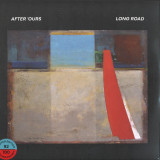
- A3: Long Road
- B1: No Crime To Try
- B2: Work It Out (Feat Ange Williams)
- C1: Clearer Skies (Feat Kevin Mark Trail)
- C2: Sherwood Ave (Kitchen Party)
- C3: Everything I Have To Give
- D1: That Love (Feat Louis Baker)
- D2: Some Kind Of Blockage
Color Vinyl[35,71 €]
The records is released in two options. Both hvae 180g vinyl records. The first version has two black vinyls and the second limited edition (numbered 100 pieces) has one turquoise vinyl and the other red.
Over the last three decades, Auckland, New Zealand, has given birth to several generations of musicians, DJs, and producers who operated within the interzone between jazz, blues, soul, funk, Latin music, hip-hop, house, boogie, and broken beat. Across two slow-cooked albums that sit at the intersection of machine funk and vivid live instrumentation, Odyssey (2016) and their forthcoming sophomore release Long Road (2024), After 'Ours - the group project of pianist and composer Michal Martyniuk and drummer, guitarist and producer Nick Williams - have comfortably located themselves within this antipodean tradition.
Born and raised in Auckland, Nick Williams grew up surrounded by music from a young age. At home, his mother, Mary Anne, a record collector and DJ with deep, diverse vinyl crates, kept his ear sharp. By the time he was eight years old, he was regularly joining his musician father on stages across Australia in his blues rock band Slippery Sam. In his early twenties, Nick began leading the eleven-piece Auckland Latin-dub-funk fusion big band Tangent, who performed regularly until the late 2000s.
Michal Martyniuk, on the other hand, grew up on the opposite side of the world in Szczecin, Poland. After playing classical music for twelve years and attending jazz school, he relocated to New Zealand with his family in his teens. While studying at Auckland University Jazz school, Michal came into the orbit of the legendary New Zealand saxophonist, composer, producer, and band leader Nathan Haines, who brought him into the same world as future collaborators like Tama Waipara, Batacada Sound Machine, Sola Rosa and Nick.
Inspired by the rich stories of jazz, neo-soul, electronica, and dance music from both sides of the Atlantic Ocean and the open-eared Auckland scene they emerged from, After 'Ours formed in 2011. Born out of a friendship cultivated through playing together at bars and nightclubs around town and home studio sessions. "Nick had family and work, so I had to wait all day," Michal says. "We'd come to the studio at 10 PM and go till 3 AM. That's how we came up with the name.
Session by session, After 'Ours revealed itself to be a creatively fertile meeting of minds. "We both have our angles, but it works well in the end," Nick reflects. "It takes the music to a place we can't get to by ourselves."
Between 2011 and 2016, they wrote and recorded Odyssey with a cast of musical collaborators that included KP, Sharlene Hector & Kevin Mark Trail (UK), Matt Nanai, Nathan Haines, Jakub Skowronski, Nick's partner Ange Williams (nee Saunders) and British producer Mike Patto from the lauded UK future jazz group Reel People. Influenced by the smooth yacht rock of Steely Dan and Donald Fagan, the warm midtempo bounce of A Tribe Called Quest and J Dilla, and the complex jazz/RnB bop of Robert Glasper, Odyssey was a labour of love that emphasised community, warm-hearted hospitality, and care.
Seven years on, they're finally ready to return with Long Road, an album that contains some of their best work yet. As well as reconnecting with past collaborators Kevin Mark Trail and Ange Williams, Long Road sees After 'Ours calling on assistance from Louis Baker, Jakarta-based saxophone player Kuba Skowroński, bassist Dan Antunovich, Los Angeles-based drummer Chris Bailey and the journeyman British soul artist Omar Lyefook.
Across ten songs that plot a stargazed course through their antipodean spin on UK broken beat, jazz, modern soul, and blues rock, Nick and Michal build on everything they learned while writing and recording Odyssey. In the process, they take their joyful musical visions to sublime new heights.
Pink Rhythm was one of John Rocca"s mid-80"s solo side projects and a somewhat evolution of his pioneering early-80s band, Freeez. After Freeez ended, John still had some ideas left over which he explored with Andy Stennett of Freeez. John also re-worked one of the final jazz funk songs written (but unused) by Freeez called "India". He named the project Pink Rhythm after his self-funded, entrepreneurial record label that he used to launch Freeez. Pink Rhythm lasted a brief year or two, between 1984 and 1985. In 1985, three singles were released, including "Melodies Of Love, which has become a cult favorite. It has been described as "timeless drum-machine soul music" and a "cult funk slow jam". Over the years, John Rocca"s music has been sampled by many, including Jamie xx, Empress Of, Brandy, Burial, Todd Terry, Coolio, Cut Chemist and more. Often credited as one of the pioneers of brit-funk, John"s music is iconic and has been used in TV/Movies like; Better Call Saul, Midsommar, Irma Vep plus the fashion world for brands including Calvin Klein, Louis Vuitton and more. "Melodies of Love" - though never a pop hit - was recently been used the Joaquin Phoenix film Beau is Afraid as well as in the acclaimed British Film Blue Jean. It was also recently featured in a high-end ad campaign for Piaget. It is pure, smooth 80s drum machines, it is synth sounds, saxophones and keyboards.... it"s retro, but it could also be current. Either way, it"s as refreshing now as it was then.
Gregory T.S. Walker’s Minstrels & Minimoogs was self-published by a young, nomadic composer and virtuoso in 1988 to accompany an immersive multimedia performance at the University of Colorado Boulder’s Fiske Planetarium. Created with this outer, and other, world setting in mind, the four tracks find Walker stretching toward an ancient-to-future vision where Egyptian myths and Hieronymus Bosch-ian tableaus are rendered in a screaming three dimensional circuitry of electronic drums, synth guitars, and, of course, Minimoog. Given the musical terrains and outmoded topics traversed, and that this entirely DIY effort was originally released as a micro one-sided 12” edition, Minstrels & Minimoogs is as perplexing and euphoric a document lost-to-time as it is now found.
Born in 1961 into an intensely musical family spanning four generations, Gregory’s mother Helen Walker-Hill was a noted musicologist specializing in the rediscovery and work of historical Black female composers, while his father, George Walker, was the first African American composer to win the Pulitzer Prize for music. Both parents studied with the famed (and famously strict) Nadia Boulanger in Paris in the 1950s, and held to lofty aesthetic standards in their home life. Walker began studying the violin as a child, but when a burgeoning interest in the electric guitar and rock music as a teen manifested, it was largely verboten in the household. The rule was that the music played in the home was to be acoustic and classical. Although the elder Walkers eventually relented and allowed Gregory’s guitar to be plugged in for a brief interval on the weekends, the remaining days he settled for strumming it sans amplification.
Gregory, conditioned and eager for a life in music but looking to get out from under the influence and yoke of his famous composer father, ultimately chose to study computer music at the University of California at San Diego, where he earned a Master of Arts. This was followed by another MA in electronic music composition at that hotbed of West Coast experimental music, Mills College. Intermedia and multimedia in the arts was the rage in the 1980s, and Mills was one of the centers for it; audacious spectacle meeting visionary performance, such as one of the realizations for Anthony Braxton’s music for multiple orchestras a young Gregory performed in with his violin.
After a series of solo synthesizer concerts around California, Gregory followed a girlfriend on a mid-country move to Boulder, Colorado. After picking up yet another composition degree at University of Colorado Boulder, his life as a composer really started, writing a piece for extended technique for guitar, a passacaglia for vocoder and orchestra, as well as Minstrels & Minimoogs.
Envisioned as a multimedia performance such as the kind he’d experienced at Mills (which was all but unknown in Boulder at the time), Gregory roped in a number of college going or aged friends of varying skill levels and musical sympathies to accompany him with distorted sax or oblique spoken interludes. Confronted with a lack of finances, but driven to get his ideas captured in a complete musical package, the album was recorded in his brother’s apartment. If not every player assembled was on Gregory’s virtuosic level, so be it; it was more about capturing the spirit of his intentions and embracing the serendipity of mistakes.
An inspired attempt at world building, Minstrels & Minimoogs draws on the deep well of musical knowledge Gregory gathered from his parents and teachers, but all the while subverting that historical basis by incorporating mutant strains of prog and pop music. The work accumulated is not unlike the playful 1980s work of Gregorio Paniagua, where medieval estampies and rondeaus are wrenched into an anachronistic present where Hildegard Von Bingen and Kate Bush are contemporaries. Ars nova, new art, a 20th century minimalist jester and troubadour.
A one sided LP was the cheapest option Gregory found to have Minstrels & Minimoogs memorialized on vinyl, so somewhere between 50 to 100 copies were pressed. There was no distribution, outside of copies that were handed out to friends or sold at the performances at the planetarium. Gregory T.S. Walker’s cosmic-futuristic forays into oblique pop and baroque subversion could forever reside perfectly in both the domed simulacrum of our universe for which it was composed, in the formats it is being reintoduced now, and our own biblical firmament. For in the words of Gregory, straight from the original liner notes: “God Is A Minimoog”
Gregory T.S. Walker’s Minstrels & Minimoogs arrives again August 23, 2024 on vinyl and digitally as part of uncommon¢ (“uncommon sense”), an open-ended, serialized endeavor from Freedom to Spend that provides new meaning for rarefied recordings from music's outermost fringe.
Abstrack Records is back with a new EP, putting the emphasis on instrumental music. Angers based band Auroboros, whose paths crossed on numerous time with Abstracks, largely on the occasion of infamous Freaks Pop festival, delivers twenty minutes of a progressive and cosmic, rocky jam.
«Camel» feels like a pursuit, a chase after an uncatchable vanishing point. The relentless acceleration of the tempo and the increasing power of the instruments feel like they’re leading us to an inconcei- vable paroxysm.
During the breakdown, everything strangely feels faster and calmer at the same time, we think we’re catching a glance at this horizon, even believing we’re reaching it as drums are fading away. But the ascent starts again and the trance is non negotiable. The power stream of the instrumental energies washes over the immobiles and the sceptics.
On the B side, two very different reworks complete the picture. Romain FX distills the dancefloor essence of «Camel». With a cosmic, almost oriental approach. The original piece gives birth to a proper peak-time banger, pure leg shaking material.
Mytron gives us a more playful and trippy remix. Seven minutes of a vibe that seems to be spinning and drifting, without ever breaking the patiently settled groove, filled with tribal spirit and sometimes even humour.
- Satellite
- Dayton, Ohio-19 Something And 5
- Is She Ever?
- My Thoughts Are A Gas (Fucked Up Version)
- Knock ?Em Flyin?
- The Top Chick?S Silver Chord
- Key Losers
- Ha Ha Man
- Wingtip Repair
- At The Farms
- Unbaited Vicar Of Scorched Earth
- Optional Bases Opposed
- Look, It?S Baseball!
- Maxwell Jump
- The Stir-Crazy Pornographer
- 158: Years Of Beautiful Sex
- Universal Nurse Finger
- Sadness Is To End
- Reptilian Beauty Secrets
Color Vinyl[27,52 €]
Originally released in 1996 as a limited fan-club pressing for Rockathon, Guided By Voices’ Tonics And Twisted Chasers has always existed as an anomaly in Robert Pollard’s vast discography. In many ways, the album serves as the tail of a creative comet that in just two years included the “classic line-up” trilogy of Bee Thousand, Alien Lanes, Under the Bushes, Under the Stars and countless singles that crammed endless hooks in their grooves. In the intervening space, Tonics And Twisted Chasers has taken on a mythic status. It’s arguably Pollard’s strangest, gnarliest, most enlightened record and also the fans first chance to see the stitches that bind his galaxy of songs. It’s like peering at the caliber inside a watch, responsible for making the whole enterprise tick. This nineteen-song collaboration with guitarist Tobin Sprout could be interpreted as spontaneous sketches, late-night improvisations, ideas that blossomed later in the timeline (“Knock ’Em Flyin’” and “Key Losers”), but as with anything in Pollard’s orbit, its intention is clear when heard as a cohesive whole. The Pollard tenet that “less is more” is on full display here. The songs rarely creep past ninety seconds and coalesce much like Pollard’s collage-styled visual art. Arena anthems in miniature (“158 Years Of Beautiful Sex”) bash up against eerie piano laments (“Universal Nurse Finger”) without any time to breathe, acoustic lullabies that sound like a Midwestern summer’s twilight (“Look It’s Baseball”) segue into monochromatic post-rock (“Maxwell Jump”). The euphoric joy and obtuse melancholy in Pollard’s voice is so palpable on the album’s standout, “Dayton, Ohio 19 Something & 5” (which has since become a live staple), that it’s impossible to find a more autobiographical yarn in his catalog. The album’s closest analog is 1993’s Vampire On Titus, as it contains that album’s prickly, dark and shimmering obfuscation that only reveals its beauty after repeated listens. Tonics And Twisted Chasers maintains the lore because the melodies are so strong. Using a primitive drum machine, Radio Shack effects, minimal instrumentation and the DIY spirit that guided them in the first place, Pollard and Sprout constructed a masterpiece of pop that could only come from a basement in north Dayton, Ohio. Anyone in that hallowed era who happened upon it, kept it as a secret.
- Satellite
- Dayton, Ohio-19 Something And 5
- Is She Ever?
- My Thoughts Are A Gas (Fucked Up Version)
- Knock ?Em Flyin?
- The Top Chick?S Silver Chord
- Key Losers
- Ha Ha Man
- Wingtip Repair
- At The Farms
- Unbaited Vicar Of Scorched Earth
- Optional Bases Opposed
- Look, It?S Baseball!
- Maxwell Jump
- The Stir-Crazy Pornographer
- 158: Years Of Beautiful Sex
- Universal Nurse Finger
- Sadness Is To End
- Reptilian Beauty Secrets
Black Vinyl[27,69 €]
Originally released in 1996 as a limited fan-club pressing for Rockathon, Guided By Voices’ Tonics And Twisted Chasers has always existed as an anomaly in Robert Pollard’s vast discography. In many ways, the album serves as the tail of a creative comet that in just two years included the “classic line-up” trilogy of Bee Thousand, Alien Lanes, Under the Bushes, Under the Stars and countless singles that crammed endless hooks in their grooves. In the intervening space, Tonics And Twisted Chasers has taken on a mythic status. It’s arguably Pollard’s strangest, gnarliest, most enlightened record and also the fans first chance to see the stitches that bind his galaxy of songs. It’s like peering at the caliber inside a watch, responsible for making the whole enterprise tick. This nineteen-song collaboration with guitarist Tobin Sprout could be interpreted as spontaneous sketches, late-night improvisations, ideas that blossomed later in the timeline (“Knock ’Em Flyin’” and “Key Losers”), but as with anything in Pollard’s orbit, its intention is clear when heard as a cohesive whole. The Pollard tenet that “less is more” is on full display here. The songs rarely creep past ninety seconds and coalesce much like Pollard’s collage-styled visual art. Arena anthems in miniature (“158 Years Of Beautiful Sex”) bash up against eerie piano laments (“Universal Nurse Finger”) without any time to breathe, acoustic lullabies that sound like a Midwestern summer’s twilight (“Look It’s Baseball”) segue into monochromatic post-rock (“Maxwell Jump”). The euphoric joy and obtuse melancholy in Pollard’s voice is so palpable on the album’s standout, “Dayton, Ohio 19 Something & 5” (which has since become a live staple), that it’s impossible to find a more autobiographical yarn in his catalog. The album’s closest analog is 1993’s Vampire On Titus, as it contains that album’s prickly, dark and shimmering obfuscation that only reveals its beauty after repeated listens. Tonics And Twisted Chasers maintains the lore because the melodies are so strong. Using a primitive drum machine, Radio Shack effects, minimal instrumentation and the DIY spirit that guided them in the first place, Pollard and Sprout constructed a masterpiece of pop that could only come from a basement in north Dayton, Ohio. Anyone in that hallowed era who happened upon it, kept it as a secret.
- A1: She Looked Like Me! (3 16)
- A2: Killing Time (3 52)
- A3: True Blue Interlude (1 46)
- A4: Image (3 34)
- B1: Death & Romance (5 19)
- B2: Fear, Sex (2 28)
- B3: Vampire In The Corner (3 21)
- B4: Watching Tv (4 11)
- C1: Tunnel Vision (5 07)
- C2: Love Is Everywhere (3 12)
- C3: Feeling Diskinserted? (0 56)
- C4: That's My Floor (3 31)
- D1: Cry For Me (5 12)
- D2: Angel On A Satellite (4 01)
- D3: The Ballad Of Matt & Mica (4 19)
"Magdalena Bay, the Los Angeles-based duo of Mica Tenenbaum and Matthew Lewin, create magical pop music that floats in the ether of our collective social cosmos. While they call California home, their essence lies in the clouds, emitting unique yet familiar frequencies of synthesized nostalgia, kitschy catchiness, and warped neo-hooks. Suited for the times, Magdalena Bay blends the known and felt with innovative sonic landscapes.
Tenenbaum and Lewin met as teenagers in a Miami high school music program. Tenenbaum, who moved from Buenos Aires to Florida at age one, and Lewin, a guitar shredder influenced by his dad’s prog and concept rock records, quickly recognized their kindred spirits. They formed a prog band called Tabula Rasa and began a romance. Both were skilled musicians; Tenenbaum a pianist and singer, and Lewin self-taught in production and music theory. Despite attending different colleges, they maintained their band, traveling hours to rehearse before realizing two things: their relationship was undeniable, and prog rock wasn’t resonating with young audiences.
Shifting their focus to pop, they explored its craft, leading to the creation of Magdalena Bay. They learned the complexities of pop writing and production, striving to create something interesting within the genre. Describing their music broadly as ""pop,"" they released several EPs and singles before debuting their album, ""Mercurial World,"" in 2021. Praised for its melodic hooks and meticulous production, it was often labeled as ""synth-pop.""
Their success is reflected in streaming numbers, social media followers, and festival appearances. Magdalena Bay's stylized online aesthetic complements their music, creating a cohesive artistic vision. Tenenbaum says, “We love extending the world of our music past sound into videos or graphics.” Lewin adds, “We’re trying to create an atmosphere or an emotional quality with it.” This integrated approach, termed ""world-building,"" is central to their artistry."
Limited pressing of 300 LPs ! 180gm VINYL LPS w/ INSERT & DOWNLOAD FILE UNDER : GARAGE ROCK / PUB ROCK "I wanted to make a very NOW album, our past was fantastic at the time but it was exactly that.the past. We've learned a lot since then and with the combination of influences and personal tastes we've concocted a combination of Raw Power guitar grunt, a touch of The Cars' pop sensibilities and Bad Seeds brood." Dave Butterworth Veteran rockers The Double Agents return with their third album New Motion a powerful new recording evoking directness and immediacy and marking their first release of new material in nearly two decades. The Double Agents' initial incarnation circa 2000 saw the fiercely independent quintet rise from humble stages to becoming one of Melbourne's most revered pub rock bands. They twice toured Europe and eventually shared the stage with iconic luminaries Dead Moon, Mudhoney, The Dirtbombs, Celibate Rifles, The White Stripes and The Black Keys before an amicable hiatus in 2008. New Motion is a modern Australian rock record and marks a departure from their garage rock roots, as best exemplified in their self released 2023 anthology compilation Best Bits. So Far spanning their first three releases. The familiar twin vocals remain, Kim and Dave summoning that deep Dead Moon energy, as does Ryan Tandy's singular lead guitar playing and the rock solid backbeat of Myles Gallagher, but the band's scope seems to have widened on this record, with the inclusion of longtime cohort Mick Stylianou (Saint Jude) adding style and harmonic punch on bass guitar and backing vocals. ..The New Motion sessions were tracked to analog tape by Finn Keane at Head Gap and Julian McKenzie at Newmarket with vocal post production by Dave Larkin (Dallas Crane), mixing by Callum Barter (Courtney Barnett, Kurt Vile), mastering by Mikey Young. Dave Butterworth also produced the album.
Since first splashing on to the Southern California circuit in the mid-aughts, Geneva Jacuzzi (née Garvin) quickly cemented herself as the queen of the Los Angeles underground. Her immersive and unhinged multimedia performances are the stuff of legend, a psychotropic gallery of masks, costumes, confrontation, and massive art installations. Jacuzzi’s recordings are equally revered, catchy hooks and cryptic moods dusted in 4-track grit. The arrival of her third official full-length, and Dais Records debut, is cause for such celebration. Triple Fire vividly expands and crystallizes Jacuzzi’s signature fusion of midnight melody and mutant aerobics across a 12-track hit parade of wildcard synth-pop and sly post-apocalyptic camp. Her enthusiasm for the album is as bold as her body of work: “Halfway through, we started calling this the record of the prophecy, the record that’s going to save mankind.”
Opener “Laps of Luxury” sets the template – a strobe-lit dreamer’s delight of swaggering synth bass, Haçienda drum machinery, and sultry vocal spellcasting (“Tragic mysteries I’ve known for centuries / I burned all memories and turned to fantasy”). The collection burns through shades of sardonic strut (“Art Is Dangerous,” “Nu2U,” “Keep It Secret”), coldwave kiss off (“Speed Of Light,” co-produced by Andrew Clinco of Drab Majesty), retro-futurist body music (“Dry,” “Scene Ballerina,” “Bow Tie Eater”), and cheeky glitterball pop (“Take It Or Leave It,” “Heart Full Of Poison” co-produced by Roderick Edens and Andrew Briggs). She likens the eclectic spectrum of moods to the continuum of human emotions: “Funny, sexy, sad, scary, witty, hopeful, menacing. Eventually it deconstructs, turns into a party, and then ends sweet and soft.”
Taken as a whole, Triple Fire comes as close as any document yet to capturing Jacuzzi’s kaleidoscopic alchemy of pop sugar and chaos energy, flickering between icy and ironic, chic and surreal, hungry and heartsick. Hers is a muse as rare as it is regenerative, forever reborn at the precipice of the next chorus: “Someone said that Alcatraz had fallen into the sea / Almost sounded like an angel calling me in a dream / I felt an electric shock when I picked up the microphone.”
You could call Wishy's story a lucky one. After prior monikers and iterations, Wishy was born as a kaleidoscope of alternative music's semi-recent history, with traces of shoegaze, grunge and power-pop swirling together. On Triple Seven, Indiana songwriters Kevin Krauter and Nina Pitchkites' musical synergy proves itself to be a rare one-the kind that sounds like someone striking gold. Part sly wink and part warm gratitude, it's only fitting their much anticipated full length debut is titled Triple Seven, where Wishy's penchant for indelible hooks is couched equally in pillowy atmospherics and scathing distortion. By day Krauter works as a music teacher, giving drum and guitar lessons to students, while Pitchkites is a seamstress by trade and often makes embroidered merch for the band. Coming up in a scene defined by hardcore and emo, Krauter and Pitchkites instead found themselves writing melodies in their heads while driving to work, pulling music from the air and arriving at a blearier, more ethereal interpretation of Midwest expanse. Initially, their music oscillated between hazy dream-pop and heavier alt-rock. The subject of their songs create a loose web of vignettes and snapshots, capturing Krauter and Pitchkites in a whirlwind couple of years _ exiting the pandemic, embarking on an embryonic project, making sense of their musical pasts while forging a musical future alongside one another, each of them on a journey of self-acceptance and self-understanding. Sometimes gorgeous, sometimes festering, and always cathartic, Triple Seven is a vibrant and exhilarating document of self-discovery with the scope and heft of the bygone big-budget rock albums that inspired it.
Coke Bottle Green vinyl. Who were the first punks? Do The Damned have more of a shout than The Sex Pistols? The Stooges or Ramones? Gregg Deal, the acclaimed visual and performance artist behind his new project Dead Pioneers, is making a claim that Indigenous Americans were the first real punks. Deal suggests that the overarching theme of the album is "an introduction to the band itself". Created with a DIY disposition and the "love of a scene that saves lives", they reel off a roll call of marginalised groups and protected characteristics: "Indigenous rights, Black rights, Brown rights, Asian rights, Gay rights, Trans rights, Workers rights and beyond_". This is central to their identity and focus, saying that "with a North American Indigenous person as the vocalist, being unapologetically upfront on the social, political and cultural side of things doesn't seem necessary, but paramount to the overall tone of the band." This self-titled debut, coming in at a lithe 22 minutes with only one of the twelve tracks exceeding three minutes, is almost over before it begins, but covers a huge amount of ground in that time. Blistering opener 'Tired' sets out their stall; as with the whole album, it is passionate, but never preaching. Capitalised 'Political Music' can be hard to land without coming across as hectoring or earnest, but Deal's literary, humorous lyrics effortlessly cut through complex issues of marginalisation and colonialism.
You could call Wishy's story a lucky one. After prior monikers and iterations, Wishy was born as a kaleidoscope of alternative music's semi-recent history, with traces of shoegaze, grunge and power-pop swirling together. On Triple Seven, Indiana songwriters Kevin Krauter and Nina Pitchkites' musical synergy proves itself to be a rare one-the kind that sounds like someone striking gold. Part sly wink and part warm gratitude, it's only fitting their much anticipated full length debut is titled Triple Seven, where Wishy's penchant for indelible hooks is couched equally in pillowy atmospherics and scathing distortion. By day Krauter works as a music teacher, giving drum and guitar lessons to students, while Pitchkites is a seamstress by trade and often makes embroidered merch for the band. Coming up in a scene defined by hardcore and emo, Krauter and Pitchkites instead found themselves writing melodies in their heads while driving to work, pulling music from the air and arriving at a blearier, more ethereal interpretation of Midwest expanse. Initially, their music oscillated between hazy dream-pop and heavier alt-rock. The subject of their songs create a loose web of vignettes and snapshots, capturing Krauter and Pitchkites in a whirlwind couple of years _ exiting the pandemic, embarking on an embryonic project, making sense of their musical pasts while forging a musical future alongside one another, each of them on a journey of self-acceptance and self-understanding. Sometimes gorgeous, sometimes festering, and always cathartic, Triple Seven is a vibrant and exhilarating document of self-discovery with the scope and heft of the bygone big-budget rock albums that inspired it.
Lavender Eco-Mix Vinyl. It took more than two years for all of the pieces to come together for Remember Sports' third album. In the time that has elapsed, Carmen Perry (vocals, guitar), Jack Washburn (guitar), and Catherine Dwyer (bass) have relocated from the tiny Midwestern college town of Gambier, OH, to Philadelphia, PA, adding new drummer Connor Perry and retiring their original nom de plume, SPORTS, along the way. Slow Buzz centers around a break up and comes at a crossroads for the band. The record is the first official release under Remember Sports, a moniker that functions as both a question and a command, which foreshadows all of the deeply personal emotions Carmen experiences at the painful end of a good relationship. Recorded in Valatie, NY by Evan M. Marré (Russel the Leaf), Slow Buzz focuses intently on all of the nuances of arrangement and production that Remember Sports has fine tuned over five years of playing together and is their most ambitious record to date.
As one of the most enigmatic figures of the 1970's Italian soundtrack and library music network Emma De Angelis and her short recording career provides thirsty fans of speedball psychedelic rock and drum heavy instrumental funk with a tight discography rivalling many of the long-standing bastions of the otherwise male-orientated business. * Strictly limited to 1000 copies.*
.
Born in Rocca di Papa, near Rome, into a flourishing musical environment Emma was the younger sister of future award-winning composers Guido And Maurizio De Angelis, a duo, who under names like Oliver Onions and Dream Bags, would write chart-topping lyrical theme tunes for a wide range of Italian crime, Giallo and Spaghetti Western films featured alongside full scores by Ennio Morricone and the Magnetic System composers (Bixio Frizzi Tempera).
With encouragement from her brothers, Emma, who would also write music under the pseudonym of Juniper, would record a tight clutch of solo-penned material and seldom credited studio contributions to Guido And Maurizio's film commissions, such as the score for Giuliano Carnimeo's Simone e Matteo: Un gioco da ragazzi (aka Convoy Buddies). While simultaneously pursuing a career as an illustrator and set designer the De Angelis family contacts would lead Emma to the offices of Romano Di Bari, whose up-and-coming Flirt label was finding success providing custom built mood music for use in TV and film. Alongside important composers like Alessandro Alessandroni, Gerardo Iacoucci and A. R. Luciani, the young Emma Di Angelis would record a small number of tracks for a compilation called Underground Mood (credited in the small print to E De Angelis - not to be confused with Italian singer Edoardo De Angelis). It is from this rare LP that the record you are now holding is compiled. Within the Flirt family of labels Emma De Angelis would also share schedules with other important female composers such as Daniela Casa and Giulia Kema' De Mutiis - both of whom have appeared on dedicated Finders Keepers releases.
The tracks on this record provide us with a rare glimpse into Emma De Angelis' short musical career before she became a full-time visual artist. With an unknown personnel or studio date it is easy to speculate a potential family jam in Piero Umiliani's Sound Workshop studio in 1972. One only has to take a listen to Guido And Maurizio's instrumental theme Gangster Story from Enzo G. Castellari's 1973 thriller High Crime (which later appeared on Tarantino's Death Proof soundtrack) or the trippy title theme to Paolo Poeti's kinky 1976 drama Inhibition to spot the family resemblance
Black Truffle is thrilled to announce a reissue of Chico Mello and Helinho Brandão’s self-titled release from 1984, the first return to vinyl of this classic of Brazilian experimental music with its original cover art and complete track listing. An under-recognised figure whose work inhabits a singular terrain where radical new music techniques and music theatre meet musica popular brasileira, Mello has lived and worked in Berlin since the late 1980s. A student of Dieter Schnebel, Mello played in the 90s iteration of Arnold Dreyblatt’s Orchestra of Excited Strings alongside compatriot Silvia Ocougne, with whom he produced a radical and hilarious deconstruction of MPB classics on Musica Brasileira De(s)composta (an early and rather atypical release on Edition Wandelweiser).
On this release, his only recording predating his move to Europe, Mello works with the alto saxophonist Helinho Brandão, who appears to be otherwise unknown outside Brazil. The record’s six tracks range from solo saxophone improvisation to densely layered ensemble works bridging minimalism, acoustic sound art and a plaintive melodic sensibility that calls up Edu Lobo or Milton Nascimento. Beginning with a dramatic, dissonant wind and string surge from which emerge ominously pounding piano chords, opener ‘Água’ slowly builds in intensity, a halo of clustered vocal harmonies gradually closing in on Brandão’s squealing sax until the piece opens up to reveal a gorgeous passage of melodic singing. The piano accompaniment reduces to tolling bass notes as the voice begins a repeated incantation, suggesting a ritualistic atmosphere reminiscent of parts of Xenakis’ setting of Oresteia. Dissonant, sawing tremolos on the strings climb to a crescendo before disappearing into the sounds of water being poured and splashed into metal vessels, presented not as a field recording but as a percussive element performed by the ensemble. A child’s voice then appears, singing to piano accompaniment the same melody heard earlier in the piece. After a brief solo alto improvisation from Brandão, working with the guttural pops and fleeting melodic gestures of Braxton or Roscoe Mitchell, the remainder of the first side is dedicated to the leisurely unfolding of ‘Baiando’ over the course of twelve minutes. A trio for Brandão on soprano saxophone, Mello on a very period-appropriate phased nylon string guitar and Edu Dequech on bongos, the performance eases its way hypnotically through subtle variations on a set of rhythmic and melodic patterns, almost derailed at points by Brandão’s wild forays into extended technique but held together by Mello’s droning guitar notes.
The second side opens with another multi-part epic for a larger ensemble, ‘Matraca’, which makes use of strings, electric guitars and a wide range of South American percussion instruments. Rasping violin harmonics hover as drum hits, repeated guitar notes and triangle accompany a slowly descending bass glissando. A sudden change in direction introduces a thrumming, incessantly repeated bowed bass tone, beginning a series of episodes of minimalist phasing and pattern variation, the combinations of electric guitars and orchestral instruments giving the ensemble an ad hoc charm like the early Penguin Café Orchestra but with more percussive drive. Eventually the piece is overrun by a cacophony of the titular matracas (a kind of ratchet/cog rattle). Following a lyrical trio improvisation by Mello, Brandão and Gerson Kornin on bass, the final ‘Danca’ focuses entirely on Mello’s layered acoustic guitars and vocals, using this restricted palette to build up a haunting piece of almost orchestral density, reminiscent of the 70s work of Egberto Gismonti in how it thickens a folkish ambience with harmonic sophistication.
Arriving in a starkly beautiful gatefold sleeve and sounding better than ever in its new remaster, one might call the stunning music contained on Chico Mello/Helinho Brandão ahead of its time. But what (other than some of Mello’s own work) produced in the years since its initial release has really touched the organic fusion of minimalism, free improvisation, radical instrumental technique and popular song achieved here? Forty years after its first release, Chico Mello/Helinho Brandão remains music of the future.
"Waxwork Records, in conjunction with Hollywood Records and Paramount Pictures, is thrilled to present SLEEPY HOLLOW Music From The Motion Picture by Danny Elfman for the very first time on vinyl! SLEEPY HOLLOW is a 1999 gothic supernatural horror film directed by Tim Burton and starring Johnny Depp, Christina Ricci, and Christopher Walken. It is based loosely on Washington Irving’s 1820 short story “The Legend of Sleepy Hollow”. The plot follows police constable Ichabod Crane (Depp) sent from New York City to investigate a series of murders in the village of Sleepy Hollow by a mysterious Headless Horseman.
Danny Elfman is an award winning American film composer, singer, and songwriter. He has garnered international recognition for composing over 100 feature film scores. Elfman is a longtime collaborator of director Tim Burton having scored such films as Beetlejuice, Edward Scissorhands, and The Nightmare Before Christmas.
Sleepy Hollow stands as one of Elfman’s largest orchestral scores and utilizes weighty brass, eerie choral pieces, and unnerving strings. His use of romantic themes cut a calming tone throughout the dark and mysterious gothic-fairy-tale.
Waxwork Records is proud to present the debut vinyl release of SLEEPY HOLLOW Music From The Motion Picture by Danny Elfman as a deluxe double LP album. Album features include 150 gram colored vinyl (Metallic Silver and Blood Red Swirl), new artwork by Steven Reeves, heavyweight gatefold jackets with matte satin coating and spot UV gloss varnish, and a 11”x11” art print."