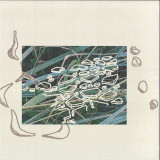
Following two stunning singles, prodigiously talented producer and composer Frederic Robinson is set to drop his debut album,
'Mixed Signals', on Blu Mar Ten Music on 14th October. The album is the culmination of over a year's work and a lifetime of musical
obsession for Robinson, comprising of a series of intricately crafted and delicately emotive tracks exploring a forward-thinking
electronic vision, which he describes as "music for the listener with a broad horizon and a short attention span'.
Over its eleven tracks, 'Mixed Signals' gives Robinson the canvas to showcase the full breadth of his talents like never before.
Amalgamating the many influences that inform his productions, from drum & bass and electronica to contemporary classical
composers, 'Mixed Signals' is a brilliantly crafted and coherent artistic statement that draws upon his talents as a classically trained
multi-instrumentalist as well as an electronic producer. Filled with light and shade, impact and intricacy, 'Mixed Signals' is much more
than a drum & bass record or a collection of club tracks; this is an album in the truest sense of the word.
"So far, this album is my biggest musical project and my greatest achievement. I worked on it for about a year and went through many
different creative phases in that time, all of which are represented somewhere on the LP. It is a summary of my current talents, skills
and interests. It marks the end for some ideas and concepts and the beginning for many others." - Frederic Robinson.
Built from a collage of acoustic and electronic elements, Robinson's music is a dense patchwork of skittering rhythms, found sound
and lush instrumentation, which harnesses a compelling emotional draw as much as it does an undeniable dance floor energy. Both
immediate and nuanced, 'Mixed Signals' is a brilliant balance of contrasts.
The sweeping drama of previous single 'Theme Park' opens the album, remaining as fresh and brilliantly unique as ever, while 'Off
Topic' and 'Bloom' featuring Stray both also provide familiar touchstones, exploring esoteric manifestations of 170 bpm's outer
possibilities. Three vocal tracks are scattered throughout the tracklist, with the soft, otherworldly tones of Melanie Robinson providing
an entry point to Robinson's world of broken percussion and wandering melodies.
Elsewhere, 'Vamp Till Ready' balances rich string orchestration against a wave of skittering percussion and 'Shut' offers an expansive
beauty in its naïve, dreamlike melodies. 'Particles' showcases an innate understanding of drum & bass constructs, warping tight
breaks and deep bass against bold blasts of colour while the eponymous track explores a playfully off-kilter and delicately nuanced
downtempo vision, before the album is played out on wave of hazy melodies and light-footed rhythms with closer 'Static Float'.
'Mixed Signals' provides the broad canvas that Robinson thrives in painting with his sprawling musical influences and complex
arrangements, and the results are phenomenal. The album is a masterpiece in dance floor escapism from a talent whose career is
undoubtedly in the ascendant.
Search:tig ten
Since its inception in 2007, Minimood has continued to explore the deeper, dubbier realms of techno, house and minimal, playing host to the likes of CV313, David Hausdorf, Steve O’Sullivan, Luke Hess, Sascha Dive, Delano Smith and many more. Now, label head Voltmar returns to the subseries Minimood Extra together with his good friend Polish DJ/producer Blazej Malinowski to serve up two individual atmospheric, dub-techno reworks of Russian underground duo Advanced Dreams’ ‘Blurred Trip’ pressed on transparent wax.
Inner Tension chief Blazej Malinowski’s interpretation of the aptly titled ‘Blurred Trip’ creates a complex sonic soundscape as evocative keys, subtle percussion, reverberating basslines and ethereal samples work in harmony. On the flip, Voltmar offers up a chuggy, stripped back reshape as ghostly echoes, tight snares, and a punchy bassline carry this profoundly emotive cut.
- A1: The Sound Of Music
- A2: Let Me Be The One
- A3: Love Me Like You Mean It
- A4: One Night At A Time
- B1: I'm In Love
- B2: Feelings Inside
- B3: King Size Bed
- B4: We Belong Together
• Best known for their self-penned 1982 recording ‘Moneys Too Tight To Mention’, which was ranked at No. 6
among in the Top Ten "Tracks of the Year" by NME and which was later famously covered by Simply Red,
• “The Valentine Brothers” eponymous debut album was recorded for US label Source Records, owned and run by
Logan H. Westbrooks and includes the two singles ‘The Sound Of Music’ and ‘We Belong Together’.
• Billy Valentine performed as a singer with Young-Holt Unlimited in the mid-1970s, whilst both brothers
performed a three-year stint as part of the touring company of The Wiz musical.
• Another one of those hidden Soul gems, Demon Records is proud to announce this first reissue of “The
Valentine Brothers”, since the album’s original 1979 release.
"The core of confusion and upheaval that drove some of the band's most fiery earlier work, however, is replaced by a more stabilized undercurrent, a mentality that's reflected in songs not afraid to try new things and honestly explore uncomfortable feelings. When combined with exciting production and songwriting choices, that mindset helps make Feels So Good // Feels So Bad one of the Shivas' best albums.” - AllMusic "Portland, Oregon-hailing psych-surf band The Shivas accomplish another time-traveling, reverb-ridden sound that refuses to get boring. Jared Molyneux’s guitar work knows when to be bright or bashful at the right times, breaking into guitar solos that possess a late-’60s groove… The Shivas seem to blissfully flourish” - Paste "a consistent treat for the ears” - The Vinyl District "Though the psych-tinged guitar riff that drives 'Feels So Bad' was written while The Shivas were still on the road, its lyrics didn’t fall into place until the band was well into lockdown, unsure of when they’d be able to return to their most imperative true love: Live shows... Accordingly, 'Feels So Bad' permeates with a sense of urgent desperation, building off a chugging prog-rock instrumental.” - Consequence (on “Feels So Bad”) "They hooked the audience with their throwback rock sounds. The guitar strums and rhythmic drum beats were layered atop smooth and hallucinogenic vocals. The eyes can tell the take at times and there was a sparkle there that said that the band members just love doing live performances." - California Rocker "This single layers on the fuzz but keeps it dreamy, with an especially sticky guitar riff sure to lodge itself in your brain with minimal effort." - Portland Monthly (on “If I Could Choose”) “'My Baby Don’t' translates the genuine vibrant joy
of the live experience into the studio, bringing the band’s ‘60s garage rock roots, sharp pop vocal harmonies, and fervent performances along for the ride." - Under The Radar "Perfectly straddling the line between a solid-head bopping track and an introspective deep cut, The Shivas’ 'Undone' is a rock & roll gem. The track sounds straight out of the late 60s and fits seamlessly in the Portland band’s electrifying catalog." - The Luna Collective "The first time I clicked play on this track, I knew it was a yes for me." - Ear To The Ground Music (on “If I Could Choose”) "The harmonies would make the “Happy Together” Turtles blush, but the unsettling guitar doesn’t shy away from the woollier implications of the ’60s." - Willamette Week (on “If I Could Choose”) "'Undone' is just the perfect song for the good days and the bad ones." - GlamGlare "another hit" - Austin Town Hall (on “Undone”) "one of the best forthcoming albums of the year" - Austin Town Hall RADIO: #3 Most Added @ NACC - 50 official adds BIO Every working musician has had their life turned upside down by Covid-19. For The Shivas, who had recently released a new LP and normally keep a rigorous touring schedule, it was a particularly screeching halt. “We were about to go to SXSW, the following weekend was Treefort in Boise, and then we were going to open for our friends’ band on tour in the US before going to Europe,” Jared Molyneux remembers. Then everything just stopped. They were faced with a dilemma. “It forced us to adapt or just quit,” Molyneux says. “The reality is that shows are our job.” In truth, live shows aren’t just The Shivas job: they are the band’s greatest love. Shivas shows are bombastic, explosive and thoroughly communal live rock and roll experiences where barriers between the performers and their audience seem to dissolve into the sweat and sound. The stage—or the basement, or the living room—that’s The Shivas’ true element. It’s their raison d’etre. It’s their religion. The band’s live urgency may have been born in 2006, when the band’s young members—who began booking West Coast tours while still in high school—waited without fanfare on sidewalks or in parking lots, before being rushed onstage for their sets at 21-and-up clubs. Maybe it developed a little later, as The Shivas blasted their way through Portland’s storied and unsanctioned mid-aughts house show scene. Whatever the origin of their famously kinetic live experience, it’s the show that keeps them coming back after over 1,000 performances spread over 25 countries in 15 years. In those 15 years, The Shivas have grown tight-knit as a group. Guitarist/singer Jared Molyneux, bassist Eric Shanafelt and drummer/singer Kristin Leonard have all been with the band since its earliest days; guitarist Jeff City, another high school friend, joined in 2017. Together they’ve learned to thread a seemingly impossible needle: They’ve honed and tightened their performances without sacrificing the element of surprise that makes each show special. And despite touring and recording for most of their lives, they speak about their project with humility, in the DIY vernacular of their Pacific Northwest upbringing. They talk up their own favorite bands, play all-ages shows as much as possible, and bring a sort of blue-collar humanism to the live performances they relish so much. “We just want to make people feel good,” Molyneux says. “We want them to forget they have to work tomorrow.” Kristin Leonard elaborates, “The live show is all about that feeling of catharsis—in ourselves and in everyone who comes out. We’re creating this safe space where we can all let go. Where we can exhale. And it feels really good when we are able to facilitate that.” So when Covid hit, the band knew it was time for transformation. After a settling realization that live music would be grounded for the foreseeable future, The Shivas booked significant studio time with Cameron Spies, who also produced the 2019 Dark Thoughts LP. They also transformed their lives: three of the band’s four members found work with a local nonprofit serving unhoused Portland residents. They became engaged in protests and fundraisers for social justice. They spent a whole summer actually living in Portland, settling into the city they had always called home, but that sometimes felt like a temporary stop between tours. “We got into a more community-minded headspace,” Leonard says. “And that did give us some purpose. It felt cool to see everybody come together to stick up for what they believe in. It feels like an incredibly formative last twelve months.” The album that emerged from this new moment finds The Shivas reborn as a band that seems seasoned and perfectly at home with itself. There is a calm, even a hopefulness, to Feels So Good // Feels So Bad that sounds new. The Shivas didn’t write or record the album with a particular theme in mind, but one seems to have emerged: where Dark Thoughts was about confronting your demons with fearless self-examination, much of Feels So Good // Feels So Bad is about what happens once you find that peace: how being honest with yourself changes your relationships and your priorities. “I do think it’s about acceptance,” Leonard says. “There’s a weird relaxation that comes with being at peace with things you can’t control or have regrets about.” Maybe that’s why the squealing, riff-laden break-up song opener, “Feels So Bad,” is such a shock to the system. But it’s more of an exorcism than a melodrama: more a song about not being able to do the thing you love (in
this case, playing live shows) than splitting with a partner. “It’s like part of you goes to sleep,” Leonard says. As bandmates who are also in a long-term relationship, Molyneux and Leonard know that their songs might be seen as glimpses into their personal lives, but their songwriting is rarely autobiography. Leonard compares their process to something more akin to screenwriting. “There’s bound to be some autobiographical material in there,” she says. “But the common denominator is the exploration of universal feelings: ones that everyone experiences or can relate to.” The goal is to use the music to drill down into something genuine and sincere, beyond genre or stylistic affectation. That’s where The Shivas have arrived. Whatever growth led the band to Feels So Good // Feels So Bad, plenty of their fascinations remain. They’re still turning love songs into psychedelic, transcendent epics. “Tell Me That You Love Me” subverts doo-wop extravagance and dabbles in Flamenco rhythms. “Rock Me Baby” is a bubblegum anthem soaked in so much reverb that we might just be hearing it from the stadium nosebleeds. “Sometimes” is almost impossibly huge, like a witchy outtake from the Brill Building era. Those songs feel like logical expansions from a band that has always excelled at a timeless sort of rock and roll that tinkers with and explodes elements from every era. But on the towering and mournful “You Wanna Be My Man,” a slow-burning six-minute shoegaze prayer for a higher sort of love, there is a level of emotional nuance that feels like something altogether revolutionary. It’s there again in the stripped-down vulnerability of the album-closing elegy “Please Don’t Go.” Yes, Feels So Good // Feels So Bad is an album about acceptance. Sometimes that acceptance feels enlightened and sometimes it feels like the end result of a lot of kicking and screaming. The Shivas have adapted in both of those ways. With new tours scheduled and a new album on the way, they’re still hoping--like all of us--for a new era of vibrant, cathartic live music. The lessons they learned from having their normal upended, though, have only helped them grow
Over the course of the last five years, the Delvon Lamarr Organ Trio have established themselves as the world's premier funky organ trio. The organ trio, along with founder and manager Amy Novo, continues to devise the perfect blend of raw, passionate music and engaging industry practices. Through a firm partnership with label Colemine Records, the trio has garnered Billboard charting albums, sold out shows, tens of thousands of albums sold, and millions of streams. Lofty accomplishments for an instrumental organ trio. Now, with permanent drummer Dan Weiss behind to kit, DLO3 is proud to present Cold As Weiss, their third studio album to date that finds them tighter than ever, and continuing to push funky instrumental music to a new generation of fans. For Fans of New Mastersounds, Soulive, Jimmy Smith, Khruangbin.
For Fans Of: New Mastersounds, Soulive, Jimmy Smith, Khruangbin. Over the course of the last five years, the Delvon Lamarr Organ Trio have established themselves as the world's premier funky organ trio. The organ trio, along with founder and manager Amy Novo, continues to devise the perfect blend of raw, passionate music and engaging industry practices. Through a firm partnership with label Colemine Records, the trio has garnered Billboard charting albums, sold out shows, tens of thousands of albums sold, and millions of streams. Lofty accomplishments for an instrumental organ trio. Now, with permanent drummer Dan Weiss behind to kit, DLO3 is proud to present Cold As Weiss, their third studio album to date that finds them tighter than ever, and continuing to push funky instrumental music to a new generation of fans. Third full-length LP. Their KEXP video has over 8 million views and no other KEXP upload in the last three years has more views 60k followers on Spotify. Previous studio album entered at #1 on Billboard Jazz charts. “An obvious mastery of their craft….” MOJO // “keyboard cool recalling bygone times…” UNCUT // “…purveyors of the snappiest grooves…” SHINDIG
Over the course of the last five years, the Delvon Lamarr Organ Trio have established themselves as the world's premier funky organ trio. The organ trio, along with founder and manager Amy Novo, continues to devise the perfect blend of raw, passionate music and engaging industry practices. Through a firm partnership with label Colemine Records, the trio has garnered Billboard charting albums, sold out shows, tens of thousands of albums sold, and millions of streams. Lofty accomplishments for an instrumental organ trio. Now, with permanent drummer Dan Weiss behind to kit, DLO3 is proud to present Cold As Weiss, their third studio album to date that finds them tighter than ever, and continuing to push funky instrumental music to a new generation of fans. For Fans of New Mastersounds, Soulive, Jimmy Smith, Khruangbin.
10” black vinyl with download code. File under: Indie, UK. It’s been four years since we last heard from Tigercats, with the 2018 album Pig City marking the expansion of their sonic palette from indie-pop and alt-rock, to include highlife, afrobeat, and scuzzy West African psych. The New Works EP is another step into the new for Tigercats, the sound of an increasingly political band, unbound by the records they’ve made previously, and enjoying the freedom of exploring and experimenting for these 5 new tracks. “We’ve been a band over 10 years and it felt like all of our previous recordings have been leading up to this one. After Duncan switched from guitar to kalimba a few years back, and we welcomed a horn section into the line-up, the sound has been getting denser and grittier, particularly live. With this recording we’ve finally managed to capture some of that energy on record.” The opening track New Work, a song about the relentless tyranny of labour in the 21st century, grows from the synth bass riffs and riotous brass lines with production inspired by industrial techno like JK Flesh, to display lyrical ferocity not often heard. The Space came together completely improvised in the studio, and reflects on the fight for space to create art - in a world fighting for your attention 24-7, and the depletion of available arts spaces. The intensity subsides for The Picture, a track whose origins date back to the writing of the band’s second record. More reminiscent of Tigercats’ indie credentials, drawing on the textures of Low or Yo Lo Tengo, it is developed here by a band confidently hitting their stride. New Works was written in 2019 and recorded at Lightship 95 on the Thames, and at Big Jelly in Ramsgate. Originally scheduled for a spring 2020 release, we’re excited to finally bring you these 5 tracks and the promise of a return to blistering live shows from Tigercats. Tigercats are a kalimba-led psychedelic pop band from East London. Having honed his songwriting craft in the short-lived but much much-missed Esiotrot, in 2010, Duncan Barrett went about forming a new band and recruited sibling/long-time producer Giles Barrett (bass), talented songstress Laura Kovic (keys), as well as Paul Rains (guitar, of Allo Darlin’). The band have performed throughout the UK and Europe and have supported The Wave Pictures, Allo Darlin and Darren Hayman among others. They have also performed at the End of the Road and Primavera Festivals and have appeared on Spanish TV (RTVE Radio3) and Indietracks. A tour of the USA and Canada included a headline appearance at NYC Popfest. New Works harks a return to Fika Recordings, having released the debut Tigercats album Isle of Dogs back in 2012, bookending albums with Fortuna Pop! (2014’s Mysteries) and El Segell Del Primavera (2018’s Pig City). Tigercats are: Duncan Barrett - Vocals, Kalimba. Giles Barrett - Bass, Production. Laura Kovic - Keys, Vocals. Paul Rains - Guitar, Vocals. Will Connor - Drums, percussion. Seb Silas - Baritone saxophone. Meridyth Dickson - Alto saxophone. Thom Punton – Trumpet.
Dear listeners, here's the next episode of the Hamburg Spinners story: "Der Magische Kraken" ("The Magic Octopus")
This time Hamburg Spinners left their home port for an underwater expedition to the open ocean diving for unheard tunes, finger snappers and floaters. Always in danger of encountering the Magic Octopus, a voracious entity who feeds on harmonies, rhythms and breaks -in a word the whole arsenal any musician is lost without and damned to drown in a sea of deadly silence and endless darkness... Listen yourself, enter a different world and witness how the Hamburg Spinners are getting carried away and drawn into the depths. A 20.000-mile plunge into the sea. Honestly! Had you ever thought that one can sink this low?
"Der Magische Kraken" is the sophomore album of the Hamburg Spinners, a contemporary soul, mod-jazz and R&B outfit based in Hamburg. Their sound blends floating Hammond organ lines, kinetic, driving grooves, funky breaks, and slicing, economic improvisation. The quartet features Carsten Meyer on Hammond B-3, Dennis Rux on guitar, David Nesselhauf on bass, and Lucas Kochbeck on drums. It was cut live on two weekends in April 2021 in Hamburg's Yeah!-Yeah!-Yeah!-Studios. The chemistry was right and in a truly democratic process ideas were fleshed out, arrangements were done on the spot. A will to collective playing whilst always sticking to the rudimentary basics was in the air. Thus the music could spread out like the arms of an octopus. And though there are limits on the sound of the Hammond organ quartet creativity can burst out & find its way to overcome the limits. Reminiscences of down-to-the-bone songs by Timmy Thomas or Phoenix might come to one's mind when listening to the new Hamburg Spinners album.
Never change a winning team: Meyer's soulful organ sound is buoyed by Rux's warm and gripping guitar sound, Nesselhauf's dynamic bass lines and Kochbeck's tight in-the-pocket drumming.
Triumph breeds confidence, and with confidence comes an expansion of ambition, a focus of ability, an emboldening of audacity. De-Loused In The Comatorium had risked everything Omar and Cedric possessed on the wildest of gambits, the most impossible of dreams: making sense of the riot of influences ricocheting about Omar’s head, and memorialising their departed friend Julio Venegas through Cedric’s magical realist roman-a-clef. It Clouds Hill shouldn’t have worked. But it did, and with that fiendish tightrope act successfully accomplished, the duo stretched the wire even further and higher, over a figurative fiery pit peopled with lions, crocodiles, piranha and other sharp-toothed beasts not yet known to man. Because how do you make great art without taking great risks? Frances The Mute was no De-Loused Part Two. For one thing, the band’s configuration had changed, in the most painful way. Shortly before the release of De- Loused, sound manipulator and founder member Jeremy Michael Ward passed away, a wound Omar says the group never recovered from. But even though his inspired fucking- with-the-sonic-parameters is absent from Frances The Mute, his spirit and influence can still be determined, the album’s concept derived from a diary Ward had encountered in his day-job in repossession. “Jeremy picked up lots of interesting stuff when he was a repo man,” remembers Cedric. “Weird things, including this diary, He let us read it a bunch of times. It was by a guy who’d been adopted and was searching to find his real parents. It was very surreal, it didn’t make much sense – the guy might’ve been schizophrenic – but it was very inspiring. It felt like how certain music helps you escape your boring every-day life. The names and scenes in the diary directly inspired these songs.” Some of the tracks pre-dated De-Loused, having their origins in early demos Omar recorded at the duo’s Long Beach home Anikulapo, songs such as The Widow and Miranda The Ghost Just Isn’t Holy Anymore. Cedric had heard these jams in their embryonic state and began working in his mind on what he could bring to them. “I was attracted to The Widow like you would be to a lover, right?” Cedric remembers. “I sang over it with Omar while we were touring De-Loused in Australia on the Big Day Out, like, ‘Okay, I’ve got something for this.’” A potent ballad, laden with emotional crescendos and evoking the epic drama of Ennio Morricone – an effect aided by an elegiac trumpet part performed by Flea – The Widow would become The Mars Volta’s first song to chart on the Billboard Top 100, capturing the album’s potent sorrow and widescreen sprawl in miniature. Indeed, the lush sound of the album, the depth of detail and breadth of instrumentation, belies its grungy roots. Having tasted the luxury of Rick Rubin’s mansion, Omar veered in the opposite direction when recording Frances, cutting the album in what he describes as “a shithole... Basically a warehouse with one little air conditioner on its last legs, awful wiring and a console you couldn’t rely on. We were there night and day – I would literally lock engineer Jon DeBaun in there. He slept on a mattress in the vocal booth.” A considerably more complex and ambitious album than its predecessor – four of its five tracks lasted over ten minutes in length, with its closing epic Cassandra Gemini spanning over half an hour – Frances The Mute wasn’t recorded “live” by an ensemble, but with the individual musicians coming into the “shithole” and recording the parts Omar had scripted for them separately. “They had to have absolute trust in me,” Omar remembers, “Like actors trust their director.” In addition to the core band – now fleshed out with incoming bassist Juan Alderete, and Omar’s brother Marcel on keyboards and percussion – the album featured guitar solos from John Frusciante, saxophone and flute by future member Adrian Terrazas-Gonzales, a full string section, and piano played by Omar’s hero, salsa legend Larry Harlow. “It was a childhood dream come true,” Omar says. “We recorded with him in my hometown in Puerto Rico, and my father flew in to watch the session. Larry was a perfect gentleman, and a very lively spirit.” The album’s fevered intensity infected even the staid string section, Cedric remembers. “When they performed the part on Cassandra Gemini, ’25 wives in the lake tonight’, one of the guys in the orchestra played so hard he broke his bow, this real old, antique bow. And you could see his ‘classical’ side come out – like, ‘I broke this playing a fuckin’ rock song??’ He was pissed off. But I was like, ‘Fuck yeah, man, that’s on the record! You’ve got to realise things like that are cool.’” The album also features field recordings of “the coqui of Puerto Rico” during the opening minutes of Miranda That Ghost Just Isn’t Holy Anymore. “We took a page out of the Grateful Dead’s book there,” laughs Cedric. “They recorded air. We recorded fuckin’ frogs in Puerto Rico.”
Tenor saxophonist Timo Lassy, one of Finland's leading jazz artists, is back with a new album release "Trio" on We Jazz Records. The album, to be released on 27 August, introduces Lassy's new combo with bassist Ville Herrala and drummer Jaska Lukkarinen – both We Jazz Records roster artists on their own right.
The new Lassy sound is tight, swinging and funky, led by the strong and riff-ready sax of the tenorman. That being said, the album's sound is not limited to that of the swinging trio. Lassy's new vision also brings in some subtle electronics (played by Lassy, Dalindèo frontman Valtteri Laurell Pöyhönen and Ilmiliekki Quartet pianist Tuomo Prättälä) and lush strings performed by Budapest Art Orchestra as arranged by Finnish artist Marzi Nyman. It's a new sound for Lassy, but one which keeps true to his no-nonsense cookin' on the tenor.
This combination proves to be a winning one on the album, ranging from the more solemn moments on tracks such as "Sunday 20" and "Sointu" to the all out groovers like "Pumping C" and "Subtropical". The basic three sylinders of the band tenor sax, bass and drums, are strong throughout and the strings add air beneath the wings to really lift things off. Electronics are used as a tasty condiment, not taking over the main course but adding to it just right.
"We began the process with the bare bones trio but along the way, the sound started evolving into something else" Lassy explains. "That's how I like to work, anyway, while the trio can take this music to great lengths live, on the album I like to paint a fuller, more colourful picture sonically."
Speaking of painting, the sleeve of the album features the original artwork "Subtropic" by Finnish artist Ilari Hautamäki. "Trio" by Timo Lassy will be released by We Jazz Records as blue and black vinyl editions complete with a heavy duty tip-on sleeve, on CD and digitally. The special BUNDLE version includes the LP with a 7" featuring two non-LP tracks, available with blue LP + blue 7" or as black LP + black 7", bound together in a re-sealable "Japanese styled" sleeve, plus a We Jazz sticker.
Tenor saxophonist Timo Lassy, one of Finland's leading jazz artists, is back with a new album release "Trio" on We Jazz Records. The album, to be released on 27 August, introduces Lassy's new combo with bassist Ville Herrala and drummer Jaska Lukkarinen – both We Jazz Records roster artists on their own right.
The new Lassy sound is tight, swinging and funky, led by the strong and riff-ready sax of the tenorman. That being said, the album's sound is not limited to that of the swinging trio. Lassy's new vision also brings in some subtle electronics (played by Lassy, Dalindèo frontman Valtteri Laurell Pöyhönen and Ilmiliekki Quartet pianist Tuomo Prättälä) and lush strings performed by Budapest Art Orchestra as arranged by Finnish artist Marzi Nyman. It's a new sound for Lassy, but one which keeps true to his no-nonsense cookin' on the tenor.
This combination proves to be a winning one on the album, ranging from the more solemn moments on tracks such as "Sunday 20" and "Sointu" to the all out groovers like "Pumping C" and "Subtropical". The basic three sylinders of the band tenor sax, bass and drums, are strong throughout and the strings add air beneath the wings to really lift things off. Electronics are used as a tasty condiment, not taking over the main course but adding to it just right.
"We began the process with the bare bones trio but along the way, the sound started evolving into something else" Lassy explains. "That's how I like to work, anyway, while the trio can take this music to great lengths live, on the album I like to paint a fuller, more colourful picture sonically."
Speaking of painting, the sleeve of the album features the original artwork "Subtropic" by Finnish artist Ilari Hautamäki. "Trio" by Timo Lassy will be released by We Jazz Records as blue and black vinyl editions complete with a heavy duty tip-on sleeve, on CD and digitally. The special BUNDLE version includes the LP with a 7" featuring two non-LP tracks, available with blue LP + blue 7" or as black LP + black 7", bound together in a re-sealable "Japanese styled" sleeve, plus a We Jazz sticker.
Tenor saxophonist Timo Lassy, one of Finland's leading jazz artists, is back with a new album release "Trio" on We Jazz Records. The album, to be released on 27 August, introduces Lassy's new combo with bassist Ville Herrala and drummer Jaska Lukkarinen – both We Jazz Records roster artists on their own right.
The new Lassy sound is tight, swinging and funky, led by the strong and riff-ready sax of the tenorman. That being said, the album's sound is not limited to that of the swinging trio. Lassy's new vision also brings in some subtle electronics (played by Lassy, Dalindèo frontman Valtteri Laurell Pöyhönen and Ilmiliekki Quartet pianist Tuomo Prättälä) and lush strings performed by Budapest Art Orchestra as arranged by Finnish artist Marzi Nyman. It's a new sound for Lassy, but one which keeps true to his no-nonsense cookin' on the tenor.
This combination proves to be a winning one on the album, ranging from the more solemn moments on tracks such as "Sunday 20" and "Sointu" to the all out groovers like "Pumping C" and "Subtropical". The basic three sylinders of the band tenor sax, bass and drums, are strong throughout and the strings add air beneath the wings to really lift things off. Electronics are used as a tasty condiment, not taking over the main course but adding to it just right.
"We began the process with the bare bones trio but along the way, the sound started evolving into something else" Lassy explains. "That's how I like to work, anyway, while the trio can take this music to great lengths live, on the album I like to paint a fuller, more colourful picture sonically."
Speaking of painting, the sleeve of the album features the original artwork "Subtropic" by Finnish artist Ilari Hautamäki. "Trio" by Timo Lassy will be released by We Jazz Records as blue and black vinyl editions complete with a heavy duty tip-on sleeve, on CD and digitally. The special BUNDLE version includes the LP with a 7" featuring two non-LP tracks, available with blue LP + blue 7" or as black LP + black 7", bound together in a re-sealable "Japanese styled" sleeve, plus a We Jazz sticker.
Tenor saxophonist Timo Lassy, one of Finland's leading jazz artists, is back with a new album release "Trio" on We Jazz Records. The album, to be released on 27 August, introduces Lassy's new combo with bassist Ville Herrala and drummer Jaska Lukkarinen – both We Jazz Records roster artists on their own right.
The new Lassy sound is tight, swinging and funky, led by the strong and riff-ready sax of the tenorman. That being said, the album's sound is not limited to that of the swinging trio. Lassy's new vision also brings in some subtle electronics (played by Lassy, Dalindèo frontman Valtteri Laurell Pöyhönen and Ilmiliekki Quartet pianist Tuomo Prättälä) and lush strings performed by Budapest Art Orchestra as arranged by Finnish artist Marzi Nyman. It's a new sound for Lassy, but one which keeps true to his no-nonsense cookin' on the tenor.
This combination proves to be a winning one on the album, ranging from the more solemn moments on tracks such as "Sunday 20" and "Sointu" to the all out groovers like "Pumping C" and "Subtropical". The basic three sylinders of the band tenor sax, bass and drums, are strong throughout and the strings add air beneath the wings to really lift things off. Electronics are used as a tasty condiment, not taking over the main course but adding to it just right.
"We began the process with the bare bones trio but along the way, the sound started evolving into something else" Lassy explains. "That's how I like to work, anyway, while the trio can take this music to great lengths live, on the album I like to paint a fuller, more colourful picture sonically."
Speaking of painting, the sleeve of the album features the original artwork "Subtropic" by Finnish artist Ilari Hautamäki. "Trio" by Timo Lassy will be released by We Jazz Records as blue and black vinyl editions complete with a heavy duty tip-on sleeve, on CD and digitally. The special BUNDLE version includes the LP with a 7" featuring two non-LP tracks, available with blue LP + blue 7" or as black LP + black 7", bound together in a re-sealable "Japanese styled" sleeve, plus a We Jazz sticker.
New solo record from Philip Frobos of Omni (Sub Pop, Trouble in Mind), this record is released in conjunction with a novel by Philip of the same name.
Philip Frobos' ‘Vague Enough to Satisfy’ will be released on 180g black vinyl - Only 500 Pressed Worldwide October 1st 2021. The novel will be published by Hex Enduction Books in Seattle on the same day.
‘Vague Enough to Satisfy’, is Philip Frobos’ debut solo album, it is also the original soundtrack to his debut novel of the same title. This lounge-inspired punk album acts as the musical bedrock for the story of a young man who revels in the day to day details (both romantic and mundane) of his experiences in Leipzig and Atlanta. The tone of the record reflects the tides of the protagonist’s confidence and self-doubt throughout the novel.
‘Vague Enough to Satisfy’ rushes straight to the point with it's bossa nova beat and seductive lo-fi musings. ‘Vague Theme’ opens the album with a groove reminiscent of ‘Whammy’ era B-52s while the vocals tell the story of a young romantic confused of his place within a relationship and the city around him.
‘Vacant Street’ proceeds with a hooky bassline, the revolving, cryptic sort that Frobos is known for as a member of Atlanta post-punks Omni. ‘No Packages Today’ is similarly sprightly and circuitous, sounding like the Au Pairs refining an obsession with Bowie’s ‘Lodger’. “I’m afraid that you need more than I can offer” opines Frobos bedecked by shuffling beats and burgeoning waves of saxophone. ‘Never Noticed’ and ‘Through with Buzz’ introduce notes of tension and intrigue to the frisson of the story, “you’re stuck in the same day” confesses Frobos in the former.
Instrumental tracks help to prolong an uneasy feeling of ambiguity too, with compositions like ‘Pool Disturbance’ and ‘Inflatable Flamingo’ taking their musical cue from Henry Mancini. Curious flourishes, a metronomic headiness and shuddering xylophones bring to life the intensely vivid imagery and cynical humor that suffuse the novel.
‘Pathetic’ collides the casual, magnetism of Serge Gainsbourg with tight Cars-style vocals and choruses. Meanwhile ‘Singer Not The Song’ and ‘Saturn Return’ showcase a more sedate approach, languid and arch. ‘Vague Enough to Satisfy’ is a trip, plunging you into a curious world populated by the unexpected.
UK label Wisdom Teeth returns with its third long-form offering - Sculpturegardening: a new LP by Mexico City-based artist and producer, Tristan Arp. Incorporating elements of ambient, glitch, microhouse and downtempo, it’s an otherworldly record populated by knotty modular textures, blossoming floral melodies, tight pointillist rhythms and glossy acoustic instrumentation. The record was born from a process of “collaborating with machines”: using modular synthesisers to generate probabilistic melodies and rhythms, with the artist taking on the role of sculptor and curator. Throughout, the boundaries between the organic and digital are playfully blurred: we hear synthesisers played by guitars; emotive and distinctly human melodies generated by modular circuits; digital percussion drummed by hand; and live cello processed with a digital finish. The results sometimes recall Roman Flügel at his most colourful, or Benge’s meandering synth workouts, and even at times echo the dubbed-out cello experiments of Arthur Russell.But really sculpturegardening occupies a sonic world of its own, born from a unique web of happy accidents and incidental arrangements. The record’s bright colours and subtle rhythms make it a fitting follow-up to K-LONE’s 2020 LP Cape Cira and Facta’s 2021 LP Blush, and place it neatly alongside the work of label mates Duckett, Benoit B, Steevio and Iglew.
“With sculpturegardening, my concept was to approach music like gardening. I collaborated with machines inspired by the way a gardener collaborates with the earth. A gardener creates the conditions for the plants to come to life and develop on their own. In a similar way, I created a set of conditions and probabilities for the music to make itself. Who is making the music here? “A sculpture garden to me can be a really beautiful environment of balance between randomness and order––between nature and human interaction. Things that are either extremely organized or completely random tend to not resonate with us. On the other hand, something very interesting happens when a balance between the randomness and organization is struck. I invented this verb sculpturegardening to represent creating with the aim of this balance, and the with the aim of building a world in which each piece is a zone, or a sculpture in a garden.” The record will be twinned with a physical iteration - a sound installation at an exhibition curated by Tristan Arp titled Nada Se Pierde; Todo Se Transforma. The show opens on 9th October in Mexico City at Avant.dev. The physical sculpture garden will be a collaboration with Mexican sculptor Pablo Arellano. The sound installation will centre around a 4-channel audio system that gives voice to different sculptures and allows visitors to create a mix of the sounds depending on their position in the garden.
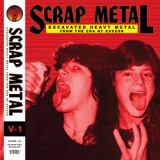
By now you’re probably familiar with our wildly popular Brown Acid series of rare, lost and unreleased proto-metal and stoner rock singles from the 60s-70s. In the endless pursuit of those glorious gems, we often uncover equally brilliant rarities from the late-70s to late-80s Golden Age of Heavy Metal that also just must be heard, but they don’t fit the series’ aesthetic. Scrap Metal, Volume 1 collects some of the greatest unknown and lost Heavy Metal tracks, long buried beneath the avalanche of the era’s classic output.
We all know the old adage that history is told by the winners. But sometimes the losers tell the best stories. And while none of these bands found fame and fortune, this artifact and the volumes to come are testament to the enduring power of heavy music. You can hear the blood, sweat and beers that went into each of these singles. The recordings may be low budget, but the inspiration and talent is immutable. Not only are the amps turned up to 11, the boyish sexual innuendo is cranked to 69. You can hear the convergence of influences — NWOBHM, thrash, glam metal, doom, etc — colliding at once as the era birthed a wellspring of subgenres.
Many of these singles are self-released and were thus limited to a small run of copies. Those that remain are hoarded by collectors and sold for exorbitant amounts. We’ve collected the best of the best for you here. As with Brown Acid, all of these tracks are licensed legitimately and the artists all get paid. Because it’s the right thing to do.
LINER NOTES:
Rapid Tears launch this series with the perfect christening. The Toronto, ON quintet’s 1981 single “Headbang” is such the pinnacle of heavy metal madness that it almost sounds like a spoof. There’s also enough of the rapid-fire sputum that inspired Metallica to bang the head that doesn’t, as such, engage in said practice, to be found on the band’s sole full length Honestly. But “Headbang” is a straightforward glammy anthem for the ages.
Air Raid’s “69 In A 55” may be lyrically so sophomoric that it’s actually pretty clever, but this 1983 Bay Area power metal single is loaded with sleek Judas Priest riffs and interwoven melodies that are downright sublime. The band’s sole release, the 2-song Rock Force 7” features a curious band photo in which 3 band members — dolled up in Crüe makeup and leather — are sexually menacing the lead singer/guitarist tied to a bed. Another low budget highlight is when singer/guitarist Tommy “Thrasher” Merry imitates a delay effect on his vocals as he sings, “tonight!...tonight...night.”
Hades’ “Girls Will Be Girls” has a real demo cassette feel to its vastly uneven mix, but the energy to the performance makes this an undeniable keeper. The long running Paramus, NJ quintet’s 1982 2- song debut 7” titled Deliver Us From Evil features this blistering thrasher dominated by shimmering leads and confident vocals that show why the band went on to near-fame on Metal Blade Records.
Resless don’t need no T to prove that they’ve got “The Power” with this 1984 driving mid-tempo rocker in the vein of Mötley Crüe and Ratt. The River Vale, NJ quartet’s tight crunch wails all over Bon Jovi posers but it’s the band’s unique and subtle deployment of background vocals that gives this rager its staying power.
Pittsburgh, the Steel City, is home to Don Cappa, a band that pays tribute to the burgh, the metal, and the awesomeness of both with “Steel City Metal.” Their lone single, issued in 1987 with only 300 copies released, sounds like the work of some serious steel driving men, with a drummer who might’ve forgotten to wear a hard hat one too many times on the construction site.
The Beast has more of a punk feel to their aggressive “Enemy Ace” track from the 4-song Power Metal EP from 1983 — something like Dr. Know meets D.O.A. But their look, artwork and lyrics all prove that Heavy Metal is where their hearts lie. And this hook filled monster delivers repeated lines like, “I command them all in my lofty realm,” with commendable conviction.
Dead Silence from Denver, Colorado, debuting in 1984 is not to be confused with Dead Silence from Denver, Colorado, who also debuted in 1984. The former a workman’s hard rock bar band, the latter a political peace punk band and neither knowing of the other’s existence throughout their tenure. The pre-internet days were a marvel, indeed.This Dead Silence spits out a slick, Nugent tinged rocker called “Can’t Stop” about life on the road.
The Danger Zone is, by all accounts, not the place to be. And, Hazardous Waste of Boston, MA saw fit to add their two cents on the matter with this 1986 single that combines Van Halen’s flashy musicianship with NWOBHM aggression that sounds so awesome it teeters on itself entering the “Danger Zone.”
Czar’s heavy, doomy “Iron Curtain” single from 1982 hearkens to the sleazy sounds of Saint Vitus and Pentagram with its cranked up DOD Distortion pedal in a Peavey combo amp guitar tone and meaty, barking vocals. The upstate NY quintet only issued this 2-song single, but its driving rhythm, nosedive whammy-bar guitar solos and comparatively mature Cold War subject matter show they had real potential.
Not much is known about Real Steel’s majestic “Viking Queen” from 1987, other than it rocks hard and the 7” 45 sells for upwards of a grand on the collectors market. The Flint, Michigan band recorded at the home studio of local radio personality Bill Lamb, who primarily released Christian Gospel recordings. So, perhaps the band was struck down by a bolt of lightning shortly after this rare single’s release. Whatever the case may be, it’s a must have for fans of classic metal mayhem.
- 01: Kanephoros
- 02: Up Down
- 03: Watch Devil Go
- 04: In Extenso
- 05: Go Mind
- 06: Tryptique Pour La Foire Des Tenebres
- 07: Le Ciel Manque De Genealogie
- 08: Kamikazes Nightmare
- 09: Entre Java Et Tombok
- 10: Eddy G. Always Present
- 11: Before In
- 12: Eleven
- 13: La Dynastie Des Wittelsbach
- 14: 1883-1945, Heavens
- 15: Au Stylo Feutre, Un Paysage
- 16: Canephore
To write these few lines, we spoke to saxophonist François Jeanneau, an old friend of Jacques Thollot who also played on several of his albums, including the “Watch Devil Go” which interests us here. He told us a story which, according to him, sums up the personality of Thollot. A noted studio had reserved three days for a Thollot recording session. The first morning was devoted to sound checks and putting some order in the score sheets which Jacques would hand out in a somewhat anarchic manner. Then everyone went for lunch. When the musicians returned to the studio, Thollot had disappeared. He wasn’t seen again for the three days. When he reappeared, he had already forgotten why he had left, The music of Jacques Thollot is in the image of its’ author: it takes you somewhere, suddenly escapes and disappears, returning in an unexpected place as if nothing had happened.
Four years after a first album on the Futura label in 1971, Jacques Thollot returned, this time on the Palm label of Jef Gilson, still with just as much surrealist poetry in his jazz. In thirty-five minutes and a few seconds, the French composer and drummer, who had been on the scene since he was thirteen, established himself as a link between Arnold Schoenberg and Don Cherry. Resistant to any imposed framework and always excessive, Thollot allows himself to do anything and everything: suspended time of an extraordinary delicacy, a stealthy explosion of the brass section, hallucinatory improvisation of the synthesisers, tight writing, teetering on the classical, and in the middle of all that, a hit; the title-track - that Madlib would one day end up hearing and sampling.
“Watch Devil Go” was in the right place in the Palm catalogue, which welcomed the cream of the French avant-garde in the 70s. But it is also the story of a long friendship between two men. Jacques Thollot and Jef Gilson had known and respected one another for a long time. Though barely sixteen years old, Thollot was already on drums on the first albums by Gilson starting in 1963 and would play in his big band (alongside François Jeanneau once again), ‘Europamerica’, until the end of the 70s.
In a career lasting half a century and centred on freedom Jacques Thollot played with the most important experimental musicians (Don Cherry, Sonny Sharrock, Michel Roques, Barney Wilen, Steve Lacy, François Tusques, Michel Portal, Jac Berrocal, Noël Akchoté...) and they all heard in him a pulsation coming from another world. (Jérôme "Kalcha" Simonneau)
LTD. VINEYARD GRAPE VINYL-
Typically, a band's big indie label debut doesn't come 15 albums into its career, but with Constant Smiles' Paragons, here we are. Primary songwriter and sole "constant" member Ben Jones_who considers Constant Smiles a collective_sees its impressive output as a way to document the group's evolution. Since its live debut as a noise duo on Ben's home of Martha's Vineyard in 2009, Constant Smiles has grown to include contributions from 50 other members, all of whom have personal connections to the group's extended family. And while the collective has indulged an array of musical whims along the way - including Ben's penchant for penning a new set's worth of material for each live performance - Constant Smiles' sound has tightened up considerably over their past couple of albums, in large part as a result of Ben's working relationship with Mike Mackey, who has become his main creative partner. This increased focus manifests on Paragons in the band's most cohesive batch of songs to date, ranging from shimmering psych-pop excursions to bittersweet, piano and string-accented strummers, and an execution that feels like a massive step forward for the band. Through its recent forays into dream pop and shoegaze (Control) and synth-pop (John Waters), Constant Smiles has learned how to incorporate its experimental inclinations more fluidly into the mix. Artists like Yo La Tengo, and the more recent Rat Columns, are good touchstones for Constant Smiles' musical approach - tethering to an indie-pop core while perennially mining genres, always finding new ways to intrigue listeners and pursue a unique vision. Paragons was produced and engineered by Ben Greenberg in the last two weeks of December 2020 at Gary's Electric, with additional recording done by Ben Jones at his home studio, The Void, and his Aunt Leanne's house. The album was mixed at Circular Ruin Studio and mastered by Josh Bonati. The band on Paragons consists of Jai Berger (who performed "Introduction"), Spike Currier (bass and synth), Matthew Addison (drums), Emma Conley (violin), Nicky Wetherell (cello), Adam Lipsky (piano), and Ben Greenberg (guitar and Mellotron).
Distilling order from a crushing whirlwind of chaos has been the stock in trade for Red Kite since the Norwegian jazz-rock supergroup joined forces in 2014. Apophenian Bliss, the much anticipated follow-up to the quartet’s powerhouse 2019 self titled debut references the tendency in the human brain to find patterns and connections even when none actually exist. While it may be a stretch to call Red Kite’s blistering alchemy of surging psychedelia, steamroller rock and fringe-dwelling jazz “benign,” it’s at least a far less harmful application of the term than the conspiracy theories warping minds across the globe.Still, corralling the heady pandemonium of heavy prog, free jazz, combustible fusion and avant-metal into a cohesive sound is one thing; bringing that music to life in the face of the real-world chaos of a global pandemic is something else entirely Musicians : Even Helte Hermansen – Baritone guitar Trond Frønes - Bass Bernt André Moen – Rhodes Torstein Lofthus – Drums and percussion For Fans Of: Mahavishnu Orchestra, Return To Forever