At the muddy miracle that was Woodstock, the most miraculous performance just might have been Jefferson Airplane’s. The band had been one of the first to sign on for the festival, their imprimatur prompting many other acts to hop on board, and their stature had landed them a coveted headlining slot closing Saturday night’s schedule. But, as the torrential downpours and the unexpected crush of half a million people kept on delaying their set, the chances of putting on anything approaching a quality performance seemed to diminish.
According to Paul Kantner, “We were supposed to go on at 10:30 at night and we’d been up and down about four or five times on acid that night, getting ready to go on, and then everything was delayed for whatever reasons. So, we didn’t get on until like 7:00 the next morning and everybody was pretty much burned out.” Kantner’s protestations to the contrary, the Airplane (with guest pianist Nicky Hopkins in tow) played a scorching two-hour set that defied the elements and the circumstances. Grace Slick led the charge as the band plunged into a frenetic version of Fred Neil’s “The Other Side of This Life”: “Alright, friends, you have seen the heavy groups. Now you will see morning maniac music. Believe me, yeah. It’s a new dawn!” What followed was an adventuresome (and surprisingly tight) set that not only featured the band’s big hits like “White Rabbit” and “Somebody to Love” but also premiered songs from the Volunteers album that was still three months away from being released, including a 21-minute version of “Wooden Ships!” Indeed, about the only members of the crew who weren’t up to snuff were the ones filming the concert documentary, which explains why the Airplane is not one of the acts that commonly come to mind when thinking about Woodstock; they didn’t appear in the film due to subpar footage, and only one of their songs (“Volunteers”) was included the chart-topping 3-LP Woodstock release.
Now, Real Gone Music is proud to present Jefferson Airplane’s complete Woodstock performance. The 3-LP set comes inside a gorgeous, double-gatefold jacket sporting photos of the band at Woodstock, most of them taken by the legendary Henry Diltz; liner notes by folk-rock guru Richie Unterberger complete the package. Pressed in iridescent, “clouds breaking” blue for its 55th anniversary, this release makes a convincing claim that Jefferson Airplane’s Woodstock performance ranks right up there with those of Jimi, Sly, and Santana as a festival highlight. Limited to 1000 copies!
Cerca:time 2 back
Step into a world where authenticity meets emotional resonance with Maxo's 2018 album, "Smile," produced by the mastermind Lastnamedavid. This release marks the genesis of a new era, a departure from prevailing trends, and an introduction to the genuine artistry of Maxo.
"Smile" is a testament to Maxo's effortless storytelling and emotional delivery, setting a refreshing tone in the contemporary music landscape. Lastnamedavid's soulful production serves as the perfect backdrop, creating a sound that is as real as the content it supports. The album captures a range of emotions, painting a vivid picture of Maxo's journey through the realms of honesty, youthfulness, troubles, and hope.
From the reflective "Same Hoodie Since ‘05," a sobering exploration of identity and roots, to the anti-romantic ballad "Evelyn," Maxo invites listeners to join him on a personal and introspective journey. "Smile" serves as a reminder, not just to Maxo but to an entire generation, to appreciate every situation, irrespective of the circumstances.
The project features a notable collaboration with Sharp, adding an extra layer of depth to the already rich tapestry of "Smile." As Maxo unfolds his narrative, the synergy between his lyrical prowess and Lastnamedavid's production creates a sound that is not just music but an authentic expression of self.
"Smile" is more than an album; it's a sonic exploration of the human experience, capturing the essence of Maxo's voice and vision. In a world of fleeting trends, Maxo and Lastnamedavid deliver a timeless record that resonates with honesty, making "Smile" a standout release in the musical landscape of 2018.
- A1: The Original Way (Feat. Freddie Foxxx)
- A2: Duck Down
- A3: Drug Dealer • A4. Like A Throttle
- B1: Build And Destroy
- B2: Ruff Ruff (Feat. Freddie Foxxx)
- B3: 13 And Good
- B4: Poisonous Products
- C1: Questions And Answers
- C2: Say Gal
- C3: We In There
- C4: Sex And Violence
- D1: How Not To Get Jerked
- D2: Who Are The Pimps?
- D3: The Real Holy Place
- D4: 13 And Good (Remix)
In the early 1990s gangsta rap was becoming more popular. KRS-One took to the mic and continued to write socially conscious raps resulting in the hard-hitting 1992 album Sex And Violence which would be the fifth and final studio album under the Boogie Down Productions name. Produced by KRS-One, Pal Joey, Kenny Parker, D-Square, and Prince Paul, the album explores the darkest sides of the American urban landscape and psyche, with KRS as narrator, detailing all sides of the matrix. While singles like the alarming drum-driven "Duck Down" and the funky-as-hell "We In There" got most of the attention in ‘92, the deeper sequence reveals plenty of additional gems: the history lesson of the dark and dusty "Drug Dealer"; "Ruff Ruff", with scowling MC favorite Freddie Foxxx (aka Bumpy Knuckles); the grooving "Questions and Answers," and the frantic record industry track "How Not To Get Jerked." The album kicks off with an intro skit featuring KRS-One as a DJ in panic needing vinyl which at the time was a dying format while cassettes and CDs became the dominant format. Thirty-two years later vinyl DJs and Hip-Hop vinyl collectors no longer need to panic. Get On Down in partnership with Sony Music's CERTIFIED is proud to bring back to vinyl this underrated gem in the BDP catalog. Featuring one of the dopest album covers by American artist Robert Williams, Sex and Violence is pressed on colored vinyl and packaged in a gatefold jacket with full lyrics.
80s alt country punk outfit, Lone Justice, with Maria McKee, Ryan Hedgecock, Marvin Etzioni and Don Heffington are in full flight with the release of a brand new 7". Taken from their forthcoming album, Viva Lone Justice, 'Teenage Kicks' is a rambunctious slice of punk angst that sounds like it was recorded in one take. It's a timeless anthem with a joyous riff that explodes into a hail of feedback. A favour returned as Maria McKee, the songwriter of Feargal Sharkey's only solo hit 'A Good Heart', Lone Justice cover The Undertones' Peel-approved favourite with the artwork of the single being a nod to the original. "As much as we loved Merle Haggard, George Jones, and many other authentic hard core Country artists, we were also deeply impacted by Punk; from the Velvet Underground (we were playing "Sweet Jane" live as early as 1983) to the MC5 ("Sister Ann" is on the album "Viva Lone Justice")." Backed with 'Nothing Can Stop My Loving You' that's cut with a wild, squeezebox-powered interpretation of the George Jones and Roger Miller country stomp. "Speaking of George Jones, here's one written by George Jones and Roger Miller. Two of our favorites! We played this song at nearly every show starting in 1983. This ragged and right live recording captures the fire from a sold out show at The Palace in Los Angeles and features Jo-El Sonnier on lead accordion documenting the only time Sonnier played with LJ. "Nothing Can Stop My Loving You" is the only live track on Viva Lone Justice." // "A roots rock band that took Los Angeles by storm in the 80s and developed a smaller but deeply enthusiastic following outside the Golden State
Smooth as a dry martini and equally intoxicating, Chantal Chamberland's "Dripping Indigo" cements her role as one of the best interpreters of classic song book favorites Two factors set Chamberland's music apart from the pack. First, the
arrangements are slow and sexy relying on a small jazz ensemble for backing (piano, sax, bass light rhythm). Secondly is her luscious voice, which caresses the listener with a breathy purr throughout the album. With a repertoire that features "Smoke Gets In Your Eyes", "Bewitched, Bothered & Bewildered" and "How Deep Is Your Love", the album slowly seduces with its corner jazz club ambiance and torch singer grace. This is re-release is a part of the evosound 20th Anniversary special collection. The album will be available on vinyl for the first time, as a 180g double transparent purple LP.
Specially prepared liner notes by renowned music writer Brian Morton.
By 1955, Sinatra's ubiquitous presence as an entertainer had completely abolished all memories of his struggles in the early '50s. He began the year by touring Australia for the first time, and less than a week after returning, he would be back in Capitol's KHJ Studios to begin recording one of his most treasured albums, In the Wee Small Hours , a concept album which would enter the Billboardcharts on May 28, 1955. It would rise to #2 and remain on the chart for a total of 33 weeks and in 1984 it was inducted into the Grammy Hall of Fame.
"One great talent who has had the recognition he deserved is Frank Sinatra. There's nobody in the world like Frank, and I have great admiration for a whole bunch of singers. He was as great when he retired as he was twenty years earlier. When you've got it, you've got it--that's it." - Buddy Rich
When imbued with real emotive powers, they have the capacity to elevate and transport. We become lost in romance or reverie. This second orchestral collaboration between iconic Swiss trumpeter Franco Ambrosetti and two- time, Grammy-winning arranger Alan Broadbent takes us there. The album title is an apt description of Franco's approach to each golden note he plays on flugelhorn. Backed by an all- star group of pianist Broadbent, guitarist
John Scofield, bassist Scott Colley and drummer Peter Erskine, along with a 29- piece orchestra arranged and conducted by Broadbent, Ambrosetti pulls heartstrings on a program of four originals and four well-chosen covers
2024 repress
Isle Of Jura go back to 1976 to resurrect 'Anambra', the jewel in the crown of Dub, Soul & Funk outfit Ozo. 'Anambra' is something of a classic, a unique song that's slow, ritualistic and spiritual, mixing African & Nyabinghi drumming with a Buddhist Sanskrit mantra 'Om Mani Padme Hum'. An alternate version 'Anambra River' appears for the first time on the same 12'.
2024 Repress
Vinyl Only
Originally released on Southampton label Adrenalin Records run by Stu J. Stu J was a big shaker in the south coast rave industry in the early 90’s and played at all the top clubs in the area including Sterns, Kevins House and Madisons. It was Madisons though that he had the biggest impact, leaving a long-lasting legacy to this day. It was at this venue that Stu J caned this 12” which would later become an anthem at raves up and down the country in 1991 and 1992.
KZ1 was from Eastleigh, just outside of Southampton and this was his only release, though he did remix 3rd Rail on Delirious Recordings the following year (repressed in 2019 Vinyl fanatiks – VFS008). At the same time, he was a writer for Blaze, Wax and Hit The Decks magazines as well as a reviewer of rave releases at Mixmag. On top of that, he was Fantazia’s official photographer during this era. But he then disappeared from the industry, leaving this handstamped white label release as his only legacy, until now.
Repressed on 180g heavyweight vinyl. Take a trip back to 1991 and the high energy that was the UK rave scene.
B2 Recordings is back with a second release that is every bit as good as the first. This one comes from Reece Johnson and is a joyous mix of uplifting disco sounds with a timeless edge. 'Comin' In Hot' is a lose-limbed opener with percussive edgy and low-slung drums topped off with dazzling chords. 'Glass Heart' then brings the funk with more expert looseness and this time some hooky and soulful vocals. 'Sup America' keeps the party rolling with instrumental disco brilliance and a Spanish vocal to add real heat while 'Feelin' The Beat' and 'Got To Be Free' close out with higher tempos but no less class.
PRZ comes to Sync 24's Cultivated Electronics with his first double Album ''Lost Art''. In the ever-evolving realm of electronic music, where sonic innovation is the currency, PRZ (Gal Perez) emerges as a luminary, crafting sonic landscapes with a distinct style that blends intricate rhythms, ethereal melodies and pulsating beats. As a producer, DJ and co-founder of the Chateau Royal label and Pluto Junkies member, PRZ has spent the last decade shaping his sound and releasing tracks on some of dance music's most respected labels including Clone West Coast Series and Hilltown Disco. With a boundless imagination and unwavering commitment to sonic exploration, his ''Lost Art'' release is a fully-formed album rather than just a collection of tracks, opening with the atmospheric intro of ''Introvert'', before the playful sonic antics of tracks like ''Lazerton'', ''Lost Art'' and ''Voice Over''. Other tracks bring pure Electro darkness like ''Velocity Shift'' alongside the ElectroTechno of ''Time To Decide'', the EBM-esque ''Azaya'' or the retro funk of ''Back From 89'' - all primed for dance floors, before closing on the melancholy ''Miss You''.
Marking sixty years of Bossa Nova, and twenty years since Marcos Valle’s first release for Far Out Recordings, what better time to bring back this era-defining classic from the Brazilian master composer?
Throughout his astounding six-decade career, infiltrating pop, bossa nova, samba, delicate psychedelia, jazz and funk, Marcos Valle has consistently shown a dogged determination to transcend the traditions and structures of bossa nova, whilst never veering away from the movement’s inherent, fundamental spirit. To some extent, his epithet ‘the original Rio beach boy’ is a handy one: it reflects the origin and character of his often sun-soaked sound, but expounding his importance in the lineage of Brazilian music, he is more discerningly known as ‘the renaissance man of Brazilian pop’. He is indeed one the very greatest and most important composers, arrangers, writers and performers in Brazil.
Up until Nova Bossa Nova, Marcos Valle hadn’t released an album for well over a decade. After 1983, he resented the way the music industry had changed with commercialisation and new demands curtailing his creative freedom. This was until 1994 when Marcos met Far Out boss Joe Davis and they recorded a track for Far Out’s first Friends From Rio album. This new collaborative partnership resulted in a new solo album, which commenced recording in 1996.
Nova Bossa Nova brought Marcos bouncing back into the 90s, slotting nicely in place alongside the acid jazz movement as well as a voracious new demand for Brazilian music on dancefloors from London to Tokyo. It was witnessing the London club scene’s growing appetite for Brazilian music, as well as a lack of new sounds coming out of Brazil at the time, that a young Joe Davis put in a proposal to record a new album with one of his musical idols. Joe wanted to facilitate an album which would combine the latest technologies and production techniques, with live to analogue tape recording: a Marcos Valle album tailor-made for London’s clubs. Always open to modern influences and possibilities, Marcos agreed to the project, and Joe and his production partner Roc Hunter flew to Rio in ‘96. The record wasn’t released until ’98, as the original ½ inch tapes were stolen from Far Out’s London studio, meaning parts of the album had to be re-recorded.
Nova Bossa Nova was unveiled at the peak of the of the Brazilian movement, the record would also prove to be something of a revolution, inspiring a new generation of artists like Bebel Gilberto, Sabrina Malheiros, Da Lata and Bossacucanova, who continued to fuse Brazilian influences with modern electronic sounds.
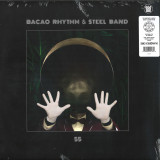
Shrouded in mystery, hailing from Hamburg, Germany, Bacao Rhythm & Steel Band (BRSB) releases their long awaited debut “55” on Brooklyn’s own Big Crown Records. Long time multi-instrumentalist and band leader Bjorn Wagner spent a few months in Trinidad & Tobago where he became fascinated with Steel Drums. His initial intrigue with local steel pan music culture led him to learning the instrument both through help of local players and on his own. After he became proficient on the pans Bjorn had his own instrument built from a used oil barrel by legendary pan man Louis C. Smith. Upon returning home to Germany, Bjorn set out to blend the Tropical Steel into his already sharply honed Funk, Soul, and Hip-Hop sensibilities. The outcome is an updated take on a classic format, a truly unique sound. Their first two recordings were covers of The Meters “Look A-Py-Py” & “Ease Back” which they self-released on a 45. Looking back on these two sides you can tell they were just getting their chops up for what was to come next. This is evidenced by how all hell broke loose when they went on to cover 50 Cent’s hit PIMP taking the DJ and vinyl collecting communities by storm. Many people thought the recording was the original sample and probably still do to this day when it is played. The original Mocambo pressing sold out quickly and is now a collector’s item fetching heavy prices when it changes hands. It was this tune that made the introduction between Bjorn and Danny Akalepse of Big Crown. They immediately hit it off and started making plans to do a full length project with the band. Keeping in the tradition of Steel Drum records, 55 is a journey through re-interpolations and covers with an updated approach, pushing Steel Pan music to uncharted territory. Flawlessly bringing previously untouched genres into the steel pan cannon ranging from Underground Hip Hop tunes to staple Funk tracks and some of all that falls in between. BRSB’s 55 is reinvigorating tunes both well-known and helping to shed some light on tunes still largely undiscovered. However, some of the strongest tunes on the album are original compositions, from spaced out Disco vibes on “Beetham Highway Ride” and “Port Of Spain Hustle” to the ugly face inspiring drums of “Laventille Road March”. Recorded to analog 8 track tape at The Mocambo Studios in Hamburg, 55 is a gritty, punchy journey in sound drawing on music from around the world, using production aesthetics from across both eras and genres, all coming together seamlessly. If the 45s that have already come out on Mocambo, Plane Jane, and Truth & Soul are an indication, this full length is going to be a staple to both casual listeners and Disc Jockeys alik
Yogisoul returns with his first album in 8 years, a timeless throwback offering & an instant classic that will leave you wondering if you somehow missed this record reminiscent of 90’s West Coast Rap. It’s that blunt rolling record, with deep G-Funk grooves, skits, and raps provided by US-based rapper Woof. A record inspired by the albums Yogisoul grew up listening to. A combination of his imagination of the West Coast California landscape portrayed by 90’s records on Death Row Records, and the real-life experiences of California-based rapper, Woof.
The first track they worked on - “94 Heavy - wastes no time setting a vibe and transporting you back to 1994. It’s an undeniable head nodder, with smooth horns & deep synth bass that will leave no question about the record's low-end power, and a dope drum swing.
Other notable tracks on the record are “Comin Thru”, which is a braggadocious, G-Funk, banger! It contains all the ingredients to classic West Coast Rap albums. A smooth beat for Woof to weave in and out of, talkbox, scratches in the hook, and samples of legendary Los Angeles voices. A track that will make you feel like you should have a forty and a doobie nearby.
The title track, “Let the Dopeness Begin”, the self-titled track on the album is an homage to the West Coast Classics radio station on GTA: San Andreas. A cruise with the windows down & a jam that slaps!
Marking its first decade of activity, Blume returns with the first ever vinyl reissue of the seminal “New Music for Electronic and Recorded Media”, from 1977, the third and final instalment in a suite of releases that includes James Tenney’s “Postal Pieces” and Ben Vida’s “Vocal Trio”. Unquestionably among the most important collections of experimental music to emerge during the 20th Century, “New Music for Electronic and Recorded Media” is the original feminist presentation in its context, releasing the work of Johanna M. Beyer, Annea Lockwood, Pauline Oliveros, Laurie Spiegel, Megan Roberts, Ruth Anderson, and Laurie Anderson under its collective banner. Includes newly commissioned liner notes by Jennifer Lucy Allen and Bradford Bailey.
Since its founding back in 2014, Blume has carved a unique place in cultural landscape, issuing free standing works, spanning the historical and contemporary, that represent singular gestures of creativity within the field of experimental sound. Joining their broad efforts in building networks of context and understanding that already includes the efforts of efforts of Werner Durand, Sarah Hennies, Bruce Nauman, John Butcher, Jocy de Oliveira, Mary Jane Leach, Valentina Magaletti, Alvin Curran, Julius Eastman, Alvin Lucier, and others, Blume delivers their third release in their first suite of releases for 2024, the fist ever vinyl reissue of the seminal “New Music for Electronic and Recorded Media” compilation, originally issued by Thomas Buckner's 1750 Arch Records in 1977. Out of print for decades on vinyl and arguably the most important feminist statement in the history of experimental music, illuminating the work of Johanna M. Beyer, Annea Lockwood, Pauline Oliveros, Laurie Spiegel, Megan Robert, Ruth Anderson, and Laurie Anderson - in a number of cases representing their recording debuts - during a crucial moment in the history of experimental music. Blume’s brand new edition - complete with newly commissioned liner notes by Jennifer Lucy Allen and Bradford Bailey, as well as reproducing Charles Amirkhanian’s original accompanying text - radically shifts perceptions of the past and present day with its truly revolutionary sounds.
Issued by Thomas Buckner's 1750 Arch Records in 1977, and out of print nearly the entire time since, “New Music for Electronic and Recorded Media” can be understood within two simple frameworks. On one hand, it is an astounding document of the landscape of experimental music toward the end of the 1970s. On the other, it is a historically significant feminist statement, being the first collection of experimental music entirely dedicated to female composers, a number of whom were grossly under-celebrated at the time, but have since gone on to be regarded as among the most important composers of their generation.
The eight pieces gathered by “New Music for Electronic and Recorded Media” - Johanna M. Beyer’s “Music of the Spheres”, Annea Lockwood’s “World Rhythms”, Pauline Oliveros’ “Bye Bye Butterfly”, Laurie Spiegel’s “Appalachian Grove I”, Megan Roberts’ “I Could Sit Here All Day”, Ruth Anderson’s “Points”, and Laurie Anderson’s “New York Social Life” and “Time To Go (For Diego)” - might be regarded as the first cohesive vision of alternate proximity or expression of experimental music to what has always been a frustratingly male dominated environment, and to the tropes, temperaments, and sensibilities that have been historically perceived to define it. It is an expanded vision of truth. While the presence of feminine sensibilities and temperaments in experimental music, however they may present themselves, were anything but new in 1977, “New Music for Electronic and Recorded Media” was the first opportunity, beyond the temporal limitations of live performance, to view them collectively, rather than as individualised expressions within a larger body of similar gestures (as was the case of Oliveros’ inclusion in Odyssey’s 1967 “New Sounds In Electronic Music” and “Extended Voices” compilations) where they might be confused for something else; to regard and celebrate a radical notion of feminine sonority for its unique characteristics and through its interrelations.
While its historical significance and groundbreaking nature can not be debated in its totality, nearly half a century on “New Music for Electronic and Recorded Media” remains compelling in both its musicality and the palpable sense of its lasting influence. Every composition across the album’s two sides is not only engrossing and deeply compelling - feeling as fresh and relevant as the day it was laid to tape - but clearly tangible in their lasting influence. Viewed in context, the album’s eight works feel like breath of fresh air when compared to much of what came before, and laid the groundwork for much of what was to come, introducing a new, often more holistic temperament and more sensitive and inclusive sensibility into the landscape of experimental music.
Particularly in the case of Annea Lockwood, Pauline Oliveros, Laurie Spiegel, Ruth Anderson, and Laurie Anderson, it's hard to throw ourselves back in time and imagine a moment when these composers rested in a fairly marginalised corner of the creative landscape. Blume’s brand new edition of “New Music for Electronic and Recorded Media” - complete with newly commissioned liner notes by Jennifer Lucy Allen and Bradford Bailey, as well as reproducing Charles Amirkhanian’s original accompanying text - brings us back to this confounding moment and points us toward a crucial moment of change set forth by these incredible composers and their sounds. Absolutely seminal and not to be missed.
Summer and the seventh part of Running Back‘s revered various artist series are here. This time consisting of five tracks across the spectrum of cunning and contemplative dance music. Taking over the a-side duties, Ricardo Baez and Josh Micky demonstrate the uncanny alliance of pianos and Italo bass lines for heavy modern disco hitters: high times, fun stuff. BSS‘ Jannis puts that concept on its head with a different kind of piano track. Hypnotic deep house minus all its cliché-ridden traps. Bryolfur and Running Back mainstay Storken opt for trippy and tricky disco with Twist, while Jonus Eric ticks all the IDM and brain dance boxes with Ribbon.
Easy to swallow and value for money.
Indignation Meeting are punky rail fans from Leeds. 15-year-old Peter is the driver - he's the drummer and lead singer, writes most of the songs, and also plays bass and trumpet on the album. The rest of the crew is his dad Michael on guitar, Hugo on bass, and with Keith, Heather and Sally often along for the ride when they play out. Here at DGHQ we've been listening to their self-released debut album Trouble In The Shed since last year and finally spoke with the band and agreed to release it on vinyl for the first time. It was very good timing as they've just been in the studio to finish recording their second album, so we'll be releasing that later in 2024. Welcome on-board! We caught up with Peter to ask as few questions about the band_ Q: "In a week when the Labour Party promised to return the rail network to public ownership, we ask how did your fascination with trains begin?" A: "Honestly, I don't really know - I've just loved them ever since I can remember. It's not like with some people who had a family connection or watched Thomas the Tank Engine; I've just always loved them. I guess it's just a childhood obsession that never went away!" Q: "'Trouble In The Shed' is quickly becoming a firm office favourite here at DG. There's a touch of punk, indie and new wave about it. What would you say are the key influences that make up your musical DNA?" A: "My main influence when this album was released was Blyth Power. They'd been my favourite band for years when this was recorded, so everything on it was influenced by them in some way. They've had so many different musical styles over the years that they kind of conglomerated into this album, to create yet another eclectic mix of songs. The only real exception to that on this album is Electrification - no prizes for guessing the influence there! If you see us live, however, you may notice another influence pervading through our songs. That influence is the anarcho-hippy band 'The Astronauts,' whom I discovered midway through the recording process, and have quickly become one of my all-time favourite bands!" Q: "What's the story behind your song 'Hornby Horrors'?" A: "Hornby Horrors is an interesting one. People who haven't heard it may assume it's about some ill-fated model railway endeavour, but it's actually a tale of corruption in, of all places, the model train company Hornby! This song was the result of several minor scandals at Hornby HQ making their way to the modelling masses, the main ones of which were an ill-fated tier list, which placed retailers in three categories as to whether or not they received Hornby's products, with tier 3 retailers barely getting anything at all. Interestingly, the UK's former biggest retailer, Hatton's Model Railways, was a tier 3 retailer due to their 'competing products' (made by their own small brand Hatton's Originals') and has recently announced closure due to financial hardship. Now as we all know, correlation does not equal causation, but I wonder_" Q: "The album is being released on a specific shade of green vinyl. What's the significance?" A: "The shade of green on the vinyl is very similar to the shade worn by the locomotives from the Great Western Railway in the 1870s - 1940s. Due to this connection, we thought it was only proper we picked this colour, which we have dubbed 'Great Western Green!'" Q: "The album release coincides with an appearance at Rebellion Festival in Blackpool this August. Can you give the readers three reasons why they should come and see your performance?" A: "1 - We like to think we provide something different with our music - it is very obviously punk, but it's a bit more light-hearted than a lot of the political stuff, with nearly all the songs being about some sort of obscure steam loco engine. If you just want something light-hearted to enjoy, we might just be the band for you! 2 - We've got a rather interesting line up - instead of the usual line-ups you see, we've got a 15 year-old singing drummer with his dad on guitar, a newly-turned adult with a massive ginger afro playing the bass, the guitarist from the old anarcho band 'Dog On A Rope' playing some gnarly lead parts, and all topped off with some beautiful backing vocals from the drummer's sister and mother. As Attila the Stockbroker described us, Blyth Power meets the Partridge Family - not to be missed! 3 - Here's something you won't forget in a hurry - as well as his vocals, our 15-year-old frontman Peter plays drums and trumpet at the same time! If that's something you want to see, make sure you get down to see us!"
A limited vinyl pressing of the sixth album from the classic L.A. punk ska band! On purple blast vinyl!
Right from the start when you hear Feldmann’s voice sing "Everyday is just the same" before the guitars, bass, and drums kick in on opening track "One More Time," you instantly know that Goldfinger are back as good as ever. The elements of desire, passion, and punk in those 5 words instantly tell you that Hello Destiny is going to be different to Disconnection Notice. The songs on the album go from strength to strength. From the slightly heavier song of "Handjobs For Jesus," to the upbeat Ska of "Get Up," to the sweet heartfelt acoustics of the bonus track "Julian," this is an album that will be up there with the best of the Goldfinger records. Like having sex for the first time, it will be remembered.
Special exclusive 7" from Il Sogno Del Marinaio, the avant-rock trio formed by legendary bassist Mike Watt (Minutemen, Firehose, Stooges), cult Italian experimentalist Stefano Pilia (Massimo Volume, In Zaire, Afterhours, Rokia Traore) and drummer Paolo Mongardi (Zeus, Fuzz Orchestra, Fulkanelli). Directly from fratello Mike Watt's words: "the "wing and a prayer" seven inch on _improved sequence_ was a product of the covid19 sitch around xmas of 2020. it was put together remotely, w/me here in san pedro, california, usa while from Italy stefano pilia (in bologna) and paolo mongardi (in imola) brought what they had from italy ... yes, the internet can be used for more than spreading hate and lies - it can also be used to collaborate in the spirit of artistic expression! cazzo, imagine that? il sogno del marinaio had finished work w/their "terzo" album and I thought a good way to rally the band would be to focus on a smaller release that reflected the current sitch we were in - see, the basic tracks of "terzo" were recorded in eleven months earlier here in my pedro town at _casa hanzo_ (stefano pilia and paolo mongardi traveling here by plane) so we had no idea what was ahead of us concerning the challenges of that fucking virus sitch. now the "terzo" album was not finished w/those basic tracks getting recorded, we had spiel (vocals) to add plus other stuff and of course it had to be mixed (tim in wales did a great job w/this - much respect to him!) so those experiences of those early covid19 times got "superimposed" on the music that was created right before it was on us, very trippy. that was a big reason I brought the three tunes of this "wing and a prayer" seven inch to stefano pilia and paolo mongardi - all they had was my bass but I believed they could "take the ball and run w/it" cuz that's how powerful I believe music to be: it can be able to overcome 'pert-near any hell trying to stomp it down. stefano pilia chose "wing and a prayer" to mix, paolo mongardi chose "tantrum" and I got what was left: "hail mary pass" - oh, I got my buddies stephen perkins to help w/percussion and petra haden to help w/singing, violin and mandolin. so one reality reality is w/these three tunes is that no one is actually playing w/each other in real time on this little record! it's all done by trading files via the internet...the starting for all three tunes being was my bass - ain't that a trip? shows how bass can be that springboard or launch pad I've always known it could be when not aiding and abetting a tune after the fact – both these "roles" for bass have been very interesting to me, going back to my early days as a minutemen and writing tunes for d boon and George hurley and by also bringing bass to their stuff
Comes with insert and download coupon.
Imagine a Latin remake of Back to the Future. The mad scientist is Arsenio Rodriguez (the godfather of salsa) and the young student who travels through time with him is Eblis Alvarez (Meridian Brothers). This album can only be described as the perfect soundtrack for that movie that never was.
After the massive buzz generated by his first solo album, Mentallogenic, Alex Figueira got back in the studio to work in a more collective fashion this time, carefully assembling the second album of his largest project to date, Conjunto Papa Upa; a team of 6 musicians, spanning 3 generations of some of the best talent in the Latin and avant-garde scenes.
In an era where tropical music is dominated by purely electronic and rhythmically uniform sounds, the ten songs encompassed in “Fruta Madura” (“Ripe Fruit”) wander through the most diverse tempos, rhythms, and motifs effortlessly. A real breath of fresh air that gracefully incorporates soul, funk, jazz, psychedelia, and electronics into a solid tropical, irresistibly polyrhythmic foundation, without ever succumbing to the many genre clichés.
The distinctive production and catchy songwriting of Figueira shine in a very distinctive light on this second full-length. Living up to his reputation (Miles Cleret, founder of Soundway Records, called him “one of the scene's truly authentic and eccentric producers”), he takes the opportunity to show he’s not afraid to keep walking his own path.
Taking the band for a wild ride through the traditions of Africa, America, and the Caribbean; contrasting them with a ridiculously wide plethora of vintage, contemporary, and futuristic sounds, and pivoting on the exuberant musicality displayed by his musicians; the result leaves no doubt: this album is destined to be considered a future classic of the exciting tropical psychedelic music of the 21st century.
Addressing the most diverse themes in this new collection of songs, things take on a much more mature tone, as the title clearly suggests.
The opening track “El segundo es más sabroso” (“The second one is tastier”) sets the tone in the most assertive way imaginable, with the band boldly declaring, through multiple metaphorical references (laid upon a crazy mix of Dominican merengue, Detroit techno, classic and free jazz, dub, and electro), that the bar will be set higher with this second album.
The remaining compositions touch upon the most diverse subjects, with a fair dose of humor, sarcasm, and postmodern “magic realism”. “El Algoritmo” (The Algorithm) is a parranda-cumbia hybrid (for lack of a specific term) about the omnipresence of technology in our lives. The sophisticated Latin soul of the titling track “Fruta Madura” makes a case for the beauty of the maturity process. Some key philosophical teachings of Marcus Aurelius (the role of causality, the impositions of “the logos” and the importance of self-control) get a twisted cumbia treatment on “Reos del Deseo” (Prisoners of Desire). “No le pongas Coca-Cola” (“Don’t put Coca Cola in it”) shows us the most satirical side of the band, accusing those who mix Coca Cola with Rum of committing "sacrilege", on a powerful base of Dem Bow (the grandfather of Reggaeton), intertwined with touches of soul, salsa, and Cuban comparsa.
"Háblame Claro" (“Talk to me clearly”) is a story of heartbreak that evokes in its first part the spirit of the erotic salsa of the 80s (a subgenre deeply despised by purists), and after an unexpected samba interlude, leads to the hardest salsa of the 70s (a subgenre adored by purists), to end up in the surprising form of pure Afro-Cuban ceremonial music.
“Tu mamá tenía razón” ("Your Mom Was Right") is an attempt to exalt the spirit of the Latin American soap opera in the key of “acid bachata”, to recount a real-life case, witnessed by the band on countless occasions: the partying woman who arrives at the show accompanied by her bitter husband, who obviously does not like to dance. A very cheeky song to talk about the very serious and pertinent topic of female empowerment.
“La misma vaina” (“The same thing”) with its indescribable blend of bantú, candomblé, and Mozambique rhythms with abstract synthesizers, is an ode to adventure in favor of the aversion to taking risks and seeking predictability.
“Amigas picadas” (“Salty friends”) is another humorous song recounting another real-life case witnessed by the band on countless occasions: a love encounter sabotaged by the girlfriend's friends, who all happen to fancy the same guy. A jazzy take on the ancient Dominican rhythm of pambiche (grandfather of merengue), with generous psychedelic touches, resembling the classy late 60s releases of Guadeloupe's legendary producer / label owner Henri Debs.
“Vinimos a hablar” (“We came to talk”) takes sarcasm to the highest level, to ridicule the absurdity (also experienced by the band firsthand) seen in live music venues where people pay a ticket to go and have conversations that could be carried out much better on any bar, where no band is playing. The music alternates between a delicate melody with loose, sparse percussion and a full-on, pumping Angolan semba, with a techno kick drum included; bringing things to an apotheotic grooving finale, where the peculiar swing of Venezuelan calypso from the Callao region is thrown on top of all the precedent elements; closing the album in the most uplifting, “end of the carnival parade” feel.
The artwork is a delicate and impactful oil painting by Colombian artist Kevin Simón Mancera, who has collaborated many times with the label before (“Maracas, tambourines and other hellish things” tape and the Lola’s Dice LP).
What the experts are saying:
“Alex (Figueira) dove into this work with a brutal cohesion between lyrics and synths. Timbre poetry, sound poetry (you name it). And that, superimposed on his always impeccable percussive base, confirms the title of “avant-garde visionary of our beautiful Latin music”".
EBLIS ALVAREZ (MERIDIAN BROTHERS)
“Papa Upa's infectious quirkiness is a balm against boredom. A mature album, but without an expiration date”.
GLADYS PALMERA
“Here there is a lot of strength, drum, cadence and psychedelia, lost dance rhythms, united in an intercontinental Latin/African/and Caribbean journey, a unique winning combination that we could consider the new “Ritmo Figueira”.
DISCODELIC
Conjunto Papa Upa are:
Alex Figueira - Timbales, percussion, vocals.
Gerardo Rosales - Congas, percussion, vocals.
Ramón Mendeville - Bongos, percussion, vocals.
Randy Winterdal - Bass.
Andrew Moreno - Guitar.
Nico Chientarolli - Organ, piano, synths.
All songs written by Alex Figueira.
Arranged and performed by Conjunto Papa Upa.
Recorded, produced, mixed and mastered by Alex Figueira at Heat Too Hot, Amsterdam.