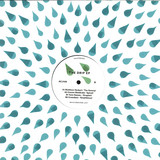
The Drip EP brings together four distinctive producers and one set of sounds - The Drips. The result is a compilation of 4 tracks that bring the swing and sampling of some of Accidental Jnr's finest to produce a soaking wet dancefloor.
First up is label boss Matthew Herbert with a trademark groove that harks back to his Wishmountain moniker albeit found lurking in the swamp. Cosmo Sheldrake takes a slight departure from his usual multi-instrumentaling live-looping avant-folk to deliver a track that could only be described as travelling circus aqua-techno. Bahraini born, French / US bred and now Edinburgh dwelling video game builder, sound designer and sometime Scottish league football referee Yann Seznec opens the B-side with an absolute stormer of a rain drenched club hook. Sussex based producer Crewdson and builder of such electronic instruments as the Eggiophone and Concertronica closes proceedings with a drizzling evolving 2-step number.
Suche:together
#40 ON ROLLING STONE'S 500 GREATEST ALBUMS OF ALL TIME: ANTICIPATES LATE 1960S TURBULENCE VIA PROPHETIC SONGS AND DARK THEMES
1/4" / 15 IPS analogue master to DSD 256 to analogue console to lathe
Any discussion about the finest psychedelic rock record ever recorded is incomplete if it doesn't grant consideration to Love's Forever Changes. Ranked by Rolling Stone as the 40th greatest album ever made, and named by Mojo the second-greatest psychedelic set in history, the effort is an internationally recognized seminal work of art. Transcending language and convention, its magnitude and magnificence need to be heard again and again. For here is an effort whose mind-boggling acoustic complexities and kaleidoscopic nuances are tailored for high-fidelity playback.
Nearly unlimited headroom, vast instrumental separation, transparent clarity, artifact-free atmospherics, and faithful balances appear out of jet-black backgrounds. Turn it up as loud as you want; the sole limitation will be your system's potential.
Commercially ignored upon release in November 1967, Forever Changes confronts the alienation, paranoia, violence, and strife that would soon plague the countercultural movement and send the Summer of Love into a tailspin. Apart from its lyrical themes and prescient malaise, the record's enduring nature equally owes to intertwined arrangements sewn together with Latin guitar-picked lines, finessed folk harmonies, mariachi-inspired horn charts, and subdued strings.
The seemingly opposing combination – ominous, dark reflections situated amidst lush, light melodic beds – affords Forever Changes a distinguished tension of claustrophobia and openness, dourness and ecstasy, ugliness and elegance enjoyed by no other record in the rock canon. Much of the contrast owes to leader Arthur Lee's mental state and pertinent observations. Lee, whose suppressed romanticism often surfaces even amidst the blackest shadows and most cynical moments, believed he would soon die, and hence channeled everything from lasting hopes to acid-addled decay to the chilling testimony of a Vietnam veteran in his narratives.
Alternatively sad and beautiful, the album-opening and flamenco-inspired "Alone Again Or" establishes the mood for what follows. Vocals overlap and soar; tempos rise and fall; surrealism trades places with reality.Forever Changes thrives both because of and in spite of a surfeit of labyrinthine chords and difficult notes that never repeat. Its ambitious construction almost forced the already fractured band to cede responsibilities to session musicians, which appear on two tracks. The quintet's resolve to not only complete the album, but to do so with such poignancy and curiosity, further enhances Forever Changes' standing.
No wonder that, in the twilight of his troubled career, Lee performed the record in its entirely during concerts met with overwhelming critical acclaim. It was, and will always be, a personal manifesto of timeless relevance and appeal.
Trailblazing instrumental synth pop experiments created to soundtrack Japan’s booming 1980s cartoon and comic industries. The brightly futuristic instrumentals on this collection reflect the mindset of composers and musicians who believed in a technological future where everything was possible.
In the late 1980s Japan experienced a brief but heady period where societal changes combined with new-found wealth to open up a world of possibilities. A huge influx of cash - artificially created by slashed interest rates after an agreement with the US to weaken the dollar relative to the yen - resulted in the inflation of real estate and stock market at a rapid pace. While the economic bubble it created was unprecedented and impossible to sustain, for a while money was in plentiful supply.
The musical genre City Pop reflected the aspirations of the country’s booming leisure class. Video games flourished with Nintendo's 1983 launch of their Family Computer (or FamiCom). Studio Ghibli was founded 1985 to later became one of the most famous and respected animation studios in the world, and Anime and Manga were established as major forms of entertainment for all generations of the Japanese public.
Music was no mere footnote to the anime and manga boom: the two forms of media often went hand in hand, and not simply through the presence of background melodies. With generous budgets available, even two-dimensional static manga comics could be released with an accompanying soundtrack of original music known as an ‘Image Album’.
Composer and arranger Kazuhiko Izu was one such beneficiary of this open budget approach. Written to accompany artist Katsuhiro Otomo’s manga comic Domu, the composer and arranger took advantage of the world-leading (and wallet-busting) Japanese synthesiser technology available at King Records’ fully equipped studio. Featured on this compilation, A3: Act 2 Scene 26 reflected the story’s sci fi themes with a blazingly futuristic yet warmly funky slice of synth pop that presents a joyful celebration of synthesisers and their seemingly endless possibilities.
Kan Ogasawara was another composer who made early mastery of the litany of synthesisers, drum machines and sequencers that had become available. Two tracks written to accompany the 1985 period manga Yume No Ishibumi are featured here; Honowo’s experimental electronic textures add spice to a jaunty electro pop melody that recalls the Rah band’s 1983 hit Messages From Stars; the jazz-tinged Utage rounds out Ogasawara’s shimmering synth textures with beautifully crafted backing from legendary musicians Yuji Toriyama (guitar), Pecker (percussion) and Jun Fukamachi (piano).
Before becoming one of the pioneers of Japanese Kankyo Ongaku (Ambient Music), Takashi Kokubo worked on the proto techno track Kiki (Jungle At Night). It was put together for the 1984 anime film Shonen Keniya (Kenya Boy) using some of the most expensive music technologies available at the time. This Africa-Inspired dance track offers a contemporary parallel to the early techno music that young Detroit based producers were then creating using cheap Japanese Roland drum machines and synthesisers.
This is the first compilation of Japanese anime and manga soundtracks curated by Kay Suzuki and Rintaro Sekizuka from Vinyl Delivery Service (a Tokyo based online record shop which also operates in East London's renowned wine and hifi shop Idle Moments). With a cover by artist Kazuki Takakura and two pages of liner notes, this vinyl only compilation of music never before released outside of Japan, captures a vital aural snapshot of an era whose forward-thinking sounds went hand in hand with cutting edge technology.
Boukou Groove – the soul-funk band from New Orleans – consisting of the charismatic singer/keyboardist/songwriter Donnie Sundal and the virtuoso guitarist/songwriter Derwin 'Big D' Perkins, is the best-kept American soul secret of the moment. Donnie, the frontman of Boukou Groove, is rightly considered one of the best white soul singers of the past fifty years. His soulful and funky voice evokes comparisons with greats such as Curtis Mayfield and Ronald Isley.
But let's not forget Big D, who is celebrated as one of the best guitarists in New Orleans. As a regular session musician, Big D regularly showcases his unique mix of jazzy and funky guitar playing on albums by icons such as Maceo Parker, Dr. John and Snarky Puppy. The latest album, 'Groovin'', released for the first time on vinyl under the 'Juicy Records' label, is a collection of their best work to date. After two successful tours in Japan with performances at the Live Magic! Festival and at the Blue Note in Tokyo, the album serves as a wonderful introduction before the European tour begins. While Donnie controls the vocals and bass role with his funky Moog Bass, Big D enchants with catchy guitar riffs and sublime guitar solos. Together with a talented drummer and sometimes horn players, they create an irresistible mix of New Orleans Funk, Southern Soul and Rhythm 'n' Blues. Boukou Groove has delivered one of the most enchanting modern funky soul records of this decade with 'Groovin''.
- A1: The Lamb Lies Down On Broadway
- A2: Fly On A Windshield
- A3: Broadway Melody Of 1974
- A4: Cuckoo Cocoon
- B1: In The Cage
- B2: The Grand Parade Of Lifeless Packaging
- C1: Back In N.y.c
- C2: Hairless Heart
- C3: Counting Out Time
- D1: Carpet Crawlers
- D2: The Chamber Of 32 Doors
- E1: Lilywhite Lilith
- E2: The Waiting Room
- E3: Anyway
- F1: Here Comes The Supernatural Anaesthetist
- F2: The Lamia
- F3: Silent Sorrow In Empty Boats
- G1: The Colony Of Slippermen
- A) The Arrival
- B) A Visit To The Doktor
- C) The Raven
- G2: Ravine
- G3: The Light Dies Down On Broadway
- H1: Riding The Scree
- H2: In The Rapids
- H3: It
Analogue Productions (Atlantic 75 Series)
Celebrating the 75th Anniversary of Atlantic Records!
The Lamb Lies Down On Broadway — Genesis' gold-selling sixth studio album!
180-gram 45 RPM 4LP
Mastered directly from the original master tape by Chris Bellman at Bernie Grundman Mastering
Pressed at Quality Record Pressings and RTI
Tip-on old style gatefold double pocket jackets with film lamination by Stoughton Printing
Genesis' sixth studio album was released as a double album in November 1974 by Charisma Records and is the last to feature original frontman Peter Gabriel. The group's longest album to date, The Lamb Lies Down on Broadway peaked at No. 10 on the U.K. Albums Chart and No. 41 on the Billboard 200 in the U.S..
The album is a concept album and tells the surreal story, devised by Gabriel, of a young Puerto Rican named Rael who embarks on a journey through a series of strange and bizarre events in New York City.
Musically, the album is a departure from the band's previous works, incorporating a wide range of styles including progressive rock, art rock, funk, and jazz fusion. The album features complex rhythms, intricate melodies, and dense layers of instrumentation, showcasing the band's virtuosic musicianship.
The album is notable for its use of storytelling, with each track contributing to the larger narrative of Rael's journey. The lyrics are often cryptic and abstract, and the album's surreal imagery has been interpreted in a variety of ways by listeners and critics.
The Lamb Lies Down On Broadway gained acclaim in the years after its release, reaching gold certification for sales in the U.K. and U.S.. In 1978, Nick Kent wrote for NME that it "had a compelling appeal that often transcended the hoary weightiness of the mammoth concept that held the equally mammoth four sides of vinyl together." In a special edition of Q and Mojo magazines titled Pink Floyd & The Story of Prog Rock, The Lamb ranked at No. 14 in its 40 Cosmic Rock Albums list. The album came third in a list of the 10 best concept albums by Uncut magazine, where it was described as an "impressionistic, intense album" and "pure theatre (in a good way) and still Gabriel's best work." A Rolling Stone poll to rank readers' favourite progressive rock albums of all time placed The Lamb fifth in the list.
The Lamb Lies Down On Broadway is widely regarded as one of Genesis's most important and influential works, inspiring generations of progressive rock musicians.
A real soul gem from 1970 on the James Brown affiliated Deluxe label, the first and only album by this mysterious singer: Marie Queenie Lyons.
It is perhaps apropos that Queenie Marie Lyons’s best known song is titled ‘See And Don’t See.’ For all the acclaim that song has accrued, and all the times it has been compiled, reissued and, yes, bootlegged — for all the times it has been seen — Queenie herself has somehow remained unseen. How did a singer from Ashtabula, Ohio record one of the great female-led soul albums and then simply fall off the map, never to record or perform again? Queenie was a natural performer and a gifted singer. At the age of fifteen, she was doing three shows a week at a local venue. In early 1962, Queenie moved to Queens and was soon playing gigs across the city — an early engagement was with Gene Krupa at the famous Metropole Café in Times Square — as well as touring with established acts like Fats Domino and Ray Charles. The following year, Queenie made her debut recording, for a subsidiary of RCA called Groove, credited to an entirely fictitious “Shelley Shoop and the Shakers.” It remained Queenie’s only presence on wax until early 1968, when a Nashville-based label called Sims gave her her first accurately attributed single, “A Minute Of His Goodtime / Good Soul Lovin’.” Although the 45 is now a highly collectible part of the Northern Soul and Lowrider Oldies pantheons, it made no impact at the time, as Sims was focused on more typical Nashville sounds. A few months later Queenie was back in New York City, performing R&B and pop covers with her band when a man passed her his business card at a performance. The card read James Brown Enterprises. James Brown “was my idol,” she says, and someone whose business acumen and stage presence she strove to emulate. Although Queenie ended up on tour with James Brown for only a month or so, when the group reached Cincinnati in mid-’68 she entered the King Records studio there to record what would become the
album you hold in your hands. The songs were a combination of covers, some of which she’d been doing in her live shows, like ‘Fever’ and ‘Try Me,’ and originals written by producer Henry Glover and pianist Don Pullen, who was the bandleader on the session. The album opener, ‘See And Don’t See,’ was also recorded by the veteran R&B singer Maxine Brown, but Queenie’s version blows hers away. “Soul Fever” is a supremely funky and soulful affair, with Queenie’s powerful and captivating voice magnetically attractive, with an urgency that is impossible to ignore. ‘Your Thing Ain’t No Good Without My Thing,’ ‘Your Key Don’t Fit It Anymore,’ and ‘I Don’t Want Nobody To Have It But You’ are as funky and soulful as the best of Tina Turner and Aretha — a statement not to be made lightly!
The album was critically acclaimed — the October 10, 1970, issue of Billboard listed it as their sole “four star” pick in the Soul category — but perhaps due to the tumult at Starday-King, whose stewardship had turned over several times in only a few years, it never seemed to be able to break through to a larger audience.
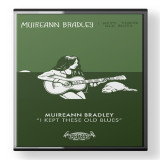
Muireann Bradley is a young blues, ragtime, roots and folk guitarist and singer based in Ballybofey in County Donegal Ireland. “This is my first album. Most of these tunes were originally recorded by the great blues men and women who were making records from the 1920s and 1930s right up in some cases to the early 1970s. I have also found inspiration for the renditions recorded here in the playing of some of the musicians who began recording this music in the 1960s and later, and who in some cases learned at the feet of the greats. Many of these guitarists played pivotal roles in the 1960s blues revival and subsequent “rediscovery” of many of the greats of country blues. I grew up steeped in these old blues in the hills overlooking the valley of the River Finn just outside the town of Ballybofey in County Donegal. My father would play this music constantly at home and wherever we went in the car and talk about it endlessly whether anyone was listening or not, telling stories about the lives of these musicians as if they were legend, mythology or the evening news. My father could of course play all this stuff on guitar, I remember watching him when I was very young and thinking “I want to be able to do that”. When I was nine he agreed to teach me and bought me my first little travel guitar. I worked hard to learn how to play but as time wore on I seemed to have less and less time to practice as I became more and more invested in the combat sports I was regularly training and competing in. Then in March 2020 the first Covid lockdowns happened and all contact sports were shut down. I was lost for a while but soon found my way back to the guitar. I was now listening, playing and practicing with a new intensity and focus. In a very serious moment, I wrote out a list of tunes I was going to learn. The first tune on that list was Blind Blake’s “Police Dog Blues”. I’m not sure now how long it took to get that arrangement together but when it was ready we videoed me performing it and posted it on YouTube. It ended up getting a lot of attention, I remember my parents being quite shocked and soon after that Josh Rosenthal got in touch… and here we are! Each individual track on this album was recorded live in the studio and represents one entire take with me singing and backing myself up on guitar simultaneously. Most are either first or second takes. Nothing has been added or taken away, no overdubs or modern recording tricks of any kind have been used at all so at least in some respects this album has been recorded in the same way as those classics of the 1920s and 1930s
Gonzalez Smith's debut album: "Roll Up A Song" is an album of classic popular songs with music by Jay Gonzalez and lyrics by Pete Smith. Best known as the guitarist/keyboardist for rockers Drive-By Truckers, Jay's musical tastes range from 'baroque' to 'A.M. Gold' and 'power' pop. His collaborations include local pop legends The Possibilities, power pop stalwart Scott McCaughey (The Young Fresh Fellows), and performances with Chris Stamey of The dB's and Bill Berry of R.E.M. Pete Smith, acclaimed lyricist, made waves with his contributions to the legendary jazz composer Gary McFarland's album "Butterscotch Rum". His journey led him to comedy writing for Adult Swim's animated shows. Classic pop composer Brent Cash's exceptional string arrangements elevate the album's depth and emotion, enriching Gonzalez and Smith's melodies and lyrics. Jay Gonzalez and Pete Smith are like a modern day Bacharach/David, if Burt spent his nights tearing it up with one of the best live rock bands in America, and Hal was a writer for Space Ghost Coast to Coast and The Brak Show. Their debut album as Gonzalez Smith, "Roll Up a Song," is a seamless fusion of power pop, piano ballads, bossa nova, and pure spun sugar confection. Jay brings the same multi-instrumental compositional skills found on his first three solo albums, and Pete pens lyrics by turns honest, romantic, arch and comedic, sometimes in the same verse. The results are so stellar, it's a shock to find out that the Drive-By Truckers guitarist/keyboardist and the Adult Swim comedy scribe haven't been writing together for decades. Arriving in December 2023, via Bobo Integral Records, "Roll Up A Song" transcends eras and genres. It's a harmonious journey, uniting melodies and lyrics into a timeless masterpiece. Get set to roll up the music, immersing in captivating soundscapes.
Bring back my Bass Butches! They’re bossy & they mean business. Rag-tag rhythm riders Maara and Roza Terenzi come together for a freaky friday sound swap; trading auditory secrets only a mixologist would know to conjure up a 2 track tek-trailblazer. Not for the faint hearted deejay, the record flaunts their distinct signature sounds as they reincarnate the status quo of experimental club music one snare at a time.
Percussively penetrating the core ethics of composition, the A side flirts and squirts all over a rhythm so raucous, the bass battens down the hatches. Stir the pot, rock the boat, roll the dice and ride the bass, surrender to the unruly structure as the groove gets full custody.
The bareback B side breaks rules and regulations; leading you to high-tech temptation, fast and furious with an explosive temper that can’t be tamed.
Tickling the rim of electro and bass yet ditching the doctrine, Loose Lips Sink Ships is a take-no-prisoners secret source of dancefloor dopamine, the sleek modern rendition of a ritualistic beatdown destined to weave motifs together and breed atmosphere.
It takes 2 to techno, but these are the number 1 drum degenerates of the future wave party starters.
A collaboration between two prestigious Italian bands, the wizards of dub and the masters of big-band ska-jazz, in perfect symbiosis. An album full of dub atmospheres mixed with orchestral patterns; compelling rhythms of the ska and reggae traditions together with dilated and hypnotic electronic sounds. A recording fruit of a challenge and a celebration of music, something that is undoubtedly reflected in the spectacular outcome. 22 musicians locked in a large studio to rediscover the beauty of sharing after months away from the stage due to the pandemic, without even being able to rehearse.
The decision to record a live album was instantaneous, it was just about enjoying the energy of the moment. All tracks were recorded strictly live in the studio, without overdubs, with the aim of apprehending something unrepeatable.
The electronics, the melodies of the wind section and the vocal power come together in this work, recorded live at Deep Studio in Treviso (Italy) and mastered by Ibon Larruzea (Bilbao), full of dub atmospheres mixed with orchestral patterns.
All this merges into a unique and explosive sound in which the strength of the big band meets the deep and hypnotic beats of dub music. The instrumental "Cascade Dub" opens the album with a rootsy, majestic brass-led track.
From there on, Michela Grena, Rosa Mussin and Freddy Frenzy jump into their vocal games, inducing a trance-like state from which you can't (don’t want to) get out. A succession of untamed riddims and expansive sounds in which, in many cases, the wind section remains crouched in the background leaving the creative element in the hands of the dubmaster unit. As small depth charges "You Can Fly", "Lion", "Moon", "Beating Heart", generate submission to the beat and texture. "Mama", the successful first collaboration between the two bands, celebrates the bright sounds and colours of mother earth, a glorious song to our home. In the face of inequality, the senselessness of war, injustice, it becomes necessary to "Shine a Light" that offers hope and, at the same time, to "Give Thanks" for what we are fortunate enough to enjoy. The power of the big band merges with the heavy and deep step of the dub.
A progression of organic, pressing cadences, as in the solidest of the ska and reggae traditions and, at the same time, electronic resonances, dilated and deep. "Sinking Sand" closes the album in a sort of sonorous fencing of styles that makes us guess (as well as the title of the album itself) that WDD and NESJO still have a lot to debate. WDD began their journey as a quartet in 2014 and prior to Studio Session #1 they had already released two albums and several singles. NESJO formed in 2012 and have previously released two albums (both available on Brixton Records) and are working on what will be the recording of their next full-length.
Northeast Italy is a border area and it's easy to connect with each other in those territories made of enchanted landscapes. That energy, that desire to experiment and get involved, have made possible this ambitious project in which a ska-jazz orchestra and a dub band, each with its own language, are assembled in an amazing sonority
Continuing their jazz inspired roots reggae releases here comes another heavily horns driven instrumental riddim from Tribe 84 Records camp. Coming from France - Benyah, together with Artz and Drop – here under the name of Palapa Brass Band premiering their material on Tribe 84 Records with great deep, skanking riddim with warm bubbling keys and sharp horn section. All played with live instruments and as always delivered in beautifully designed label.
African Queen is a departure from the sound of the Amarra’s debut Ariwa release. This time Toots Hibbert’s Bam Bam provides the template for African Queen. Over the past 30 years this rhythm track has been associated with several hits including Sister Nancy’s Bam Bam and Chaka Demus and Pliers Murder she wrote.
African Queen has a catchy chorus with a touch of modern day electronics using the warbler and filter effects. An interesting song, drawing from some unlikely quarters of the 21st century, and blending them together.
Clear Vinyl
On Rock Island, their second LP, Palm produces evidence of a distinct musical language, developed over time, in isolation, and out of necessity. On the island, melodies are struck on what might be shells or spines. Rhythms are scratched out, swept over, scratched again. Individual instruments, and sometimes entire sections, skip and stutter. There is the sense of a music box with wonky tension or a warped transmission in which all the noise is taken for signal.
Like other groups so acclaimed for their compulsive live show, Palm has been burdened by the constant comparison between their recorded material and their touring set. On Rock Island, they render this tired discussion moot, using the album form to present that which could never be completely live, reserving for performance that which could never be completely reproduced.
Despite appearing behind the instruments typical of rock music, Palm trades in sounds of their own making. On these songs, one of the guitars and the drum kit are used as MIDI triggers, producing an index that can be combed through later and replaced with new information. The percussion is sometimes augmented so as to suggest a multiplication of limbs. The strings are manipulated to choke, crack, and hum like other instruments, or other bodies, might.
Working again with engineer Matt Labozza, the band spent the better part of a month in a rented farmhouse in Upstate New York. With the benefits of time and space, Palm recorded the various elements piecemeal, only rarely playing together in groups larger than two or three. While some members tracked, others holed up in the next room, experimenting with quantization, beat replacement, and other methods borrowed from electronic music. Even accounting for the many labors that brought them to be, these materials seem produced by an organic logic. Their complex friction forms a habit of thought, scores a network of grooves on the floor of the mind.
This is music with dimensionality. Sonic objects are deployed, developed, and dissected in various states of mutation. The listener flits about between the field and the lab. The tone is warm in a way only the sun could make, the pace as forceful and as variable as a gale. Whether one locates Rock Island in a sea or in a refinished attic (as in Greg Burak's album cover), whether one escapes to there or is banished, its psychic environs are charted clearly enough. Only at this remove from the mainland can we sense the conditions necessary for such a strange species of sound.
High Vis were formed in 2016 from the ashes of some of the UK's best hardcore bands. Gild-toothed frontman Graham Sayle's anguished lyrics about life in working class Britain were familiar to fans of Tremors' full-throttle thrash, but alongside his former bandmate Edward `Ski' Harper and veterans of Dirty Money, DiE and The Smear, High Vis sought to transform that energy and intensity into something entirely new.Like scene-mates Chubby and the Gang did by pulling in unlikely source material from classic doo-wop or Micromoon have by combining everything from psychedelia and metal into their high potency mix, High Vis' 2019 debut album, No Sense No Feeling showed the band were never going to be constrained by any sense of genre rules or regulations. Its claustrophobic rattle bore traces of Joy Division, Bauhaus, Crisis, The Cure and Gang Of Four lurking in the shadows. 2020's synth-driven EP, Society Exists, was further evidence of the band's restless creative MO.High Vis' second album Blending sees them open their viewfinder wider than ever before. Alongside longstanding favourites such as Fugazi and Echo and The Bunnymen; Ride and even Flock Of Seagulls were shared reference points as the band worked on the album together.From the anthemic sweep of opener "Talk For Hours", through the title track's psychedelic swirl and "Fever Dream"'s baggy groove, it sees High Vis' sound blossoming into something with an unlimited richness. The hazy drift of "Shame" or the melodic jangle of "Trauma Bonds" may take them until uncharted waters, but they still have all the power and bite that made No Sense No Feeling so remarkable.Lyrically, the album represents another leap forward too. Talking frankly about poverty, class politics, and the challenges of everyday life, Sayle's lyrics have always addressed the downtrodden and discarded communities across Britain slipping below the waterline. This time around, Sayle's lost not of that social consciousness, but he's looked at himself and his own emotional landscape, and in the process created something that feels more universal, that reaches a hand-out to people and ultimately gives a message of hope."To me, the lyrics are less selfish," reflects Sayle. "In the past, I couldn't see past whatever was going on with me. It's about accepting things and being open to conversations and learning to talk to people rather than just thinking that we're all doomed."The song "Talk for Hours" is a prime example of that. Born out of an afternoon meeting up with an old group of mates "repeating the same thing and not actually learning anything about each other" it offers to actually break the cycle and to listen and speak frankly about shared feelings and experiences. "Trauma Bonds", meanwhile, traces the broken lines of those living in lost communities, but ultimately realises that despite our shared scars, there's still hope to move on to a better future."The message of the album is you're not who you're told you are," Sayle summarises. "You're not your class background. Whatever it is, you're not that. Don't resign yourself to thinking you can't be this and you can't be that."It's a vitally important message right now, and one that could be the motto for not only Blending, but for High Vis themselves.
"Dance My Hurt Away" is the first single from the debut album by The Faithful Brothers from Tel Aviv/Israel.
Is there a Northern Soul scene in Tel Aviv? The surprising answer is – yes, there is. If you're a soulie and in town, look for the Tel Aviv Soul Club, and you might find yourself swaying across a talcum-powder covered floor to Tel Aviv's own unique blend of classic Northern Soul 45s and early 1960s R&B sounds.
Chances are that those 45s will come out of the record boxes of one of the brothers Neeman, Johnnie and Bin. Tel Aviv Soul Club, aka TASC, is the brainchild of Yashiv Cohen, a DJ who, in 2006, lured the brothers Neeman, whose massive soul collections been hitherto confined to their respective living rooms, into playing their records to the Tel Aviv public. Yashiv is also the lead singer of Men of North Country (MONC), a Tel Aviv band with a distinct sound, blending rock, British pop and soul. Since Neeman means Faithful in Hebrew, Yashiv woke up one morning with the crystallization that MONC must create a spin-off, a more puristic soul band, called the Faithful Brothers. It took a few more years, but gradually the brothers succumbed to their fate, to continue their musical progression, from collectors to DJs to musicians. Johnnie took his guitar, Bin took to the piano, and the brothers began pouring out some of their influences, creating new songs. It is finally all coming together now.
Big Crown Records is proud to present the debut full length offering from Les Imprimés, Rêverie. The stirring and ethereal sounds of Les Imprimés have been making fans of anyone who hears them since their first 7” single hit the speakers. Morten Martens is the man behind the band. Born, raised, and working in Kristiansand, Norway, he keeps a low profile while making his heartfelt, highly infectious, and unique music. This album is a long time coming for Martens and it is sure to make him a name to be reckoned with.
The first thing you notice listening to Les Imprimés is the high level of musicianship. Martens plays nearly every instrument on the recordings and handles the production and arranging. He has been making records for decades, winning a Spellemann Award (aka, the Norwegian Grammy) in 2006 for producing a Hip Hop album as well as getting nominations across three other genres. While awards and accolades speak to the level of his talent, this new album really shows who he is as an artist on his own terms.
Moving away from being a hired gun on the touring scene naturally led him to start doing more studio work. Slowly collecting gear and getting more experience behind the boards he built his own studio on the island of Odderøya and was making a living playing with and recording other people's music. As the story goes, after those sessions would end he would work on his own project into the wee hours of the night. From these late night sessions, Les Imprimés was born and Rêverie began to take shape.
However, "it wasn't until COVID, when things locked down, that I was really able to find the time to focus on Les Imprimés" Morten says about creating and leading his own solo project. "It was a scary time. But I knew I had to do something with it." He took the sum of his influences, combined them with his own vibe and got busy writing the music, playing the instruments, and singing the songs. "It's soul music, but I don't exactly have the soul voice," Morten explains humbly. "But I do it my own way, in a way that's mine."
It is his sound, his fingerprint, his sensibility, that makes his music hard to categorize. He has crafted an album of songs with different energies that all fit together to make one gorgeous record. The lead single “Falling Away” starts with a raw drum break and turns into a lushly arranged tune that paints the picture of love when it slips away. On “Still Here” he professes his resilience through life’s twists and turns over a thundering track that puts a new spin on the B side ballad genre. Songs like “You” and “Our Love” mix tones from 60s and 70s Soul with arrangement nods to Doo Wop records while Martens’ lyrics and delivery leave you singing the melodies long after they finish. “Love & Flowers” finds Martens in a moment of clarity with a song that fits the niche sub genre of happy break up tunes, the four on the floor track will move the dancefloor while the message will resonate with anyone who put too much effort into the wrong situation in their lives. However, it is songs like “Muse” and “Chess” that really encapsulate the uniqueness of Les Imprimés as they push the boundaries of genre, one a profession of love for music and the other a cover of an electronic record respectively. Martens’ lyrics, emotion, and delivery truly make the whole thing come together and stand out from any of his peers. There’s an infectiousness and a pop sensibility in the writing that is done with the utmost class and taste giving Les Imprimés the rare quality of immediate attraction that only deepens the more you listen.
After her stunning and well acclaimed debut album 'For Trainspotters Only' Ann Eysermans now releases 'Moonlight Shadoh', a tribute to her dog Shadoh. A record on which she explores the bond between herself and her faithful canine friend, Shadoh, through an extraordinary musical odyssey.
Ann Eysermans masterfully weaves together a tapestry of field recordings, candy-like harmonies,and Shadoh's distinctive houndly expressions. Creating otherworldly compositions that transcend genres which include recorded and integrated snarling feedback sounds. From the hauntingly beautiful melodies to the experimental sonic landscapes, every track tells a story that resonates deep within your soul.
Feel the heartbeat of Shadoh as his barks, whimpers and playful antics merge seamlessly with Ann's soothing vocals,harp and viola da gamba. These evocative arrangements will transport you to a realm where the bond between human and dog is translated into an aural spectrum swaying between desolate harp sounds, recollecting the eerie Jandek spirit lacing with doomy, and catchy as hell, new beat vibes.
Moonlight Shadoh is an exceptional journey blending acoustic instruments, phonic melancholy, analogue tape footage of Ann's personal sound archive and audio poetry.
RIYL:
Cross dressed Jandek in a vegan mood, Claire Rousay on expired XTC, Andy Stott with a hangover, William Bassinski on a happy moment, Kali Malone discovering new beat, Mica Levi in a dog shelter and other excellent music.
- A1: Jeito Bom De Sofrer
- A2: Papo Furado (Jive Talking)
- A3: Xibaba (She-Ba-Ba)
- A4: Andei
- A5: Back Streets Of Havana
- B1: Flora's Song
- B2: San Francisco River
- B3: Vera Cruz
- C1: Celebration Suite
- C2: Casa Forte
- C3: From The Lonely Afternoon
- C4: Black Narcissus
- D1: When Angels Cry
- D2: O Sonho (Moon Dreams)
- D3: Summer Night
- E1: A Secret From The Sea
- E2: O Cantador / I Just Want To Be Here
- E3: Light As A Feather
- E4: O Canto Da Sereia
- F1: Open Your Eyes You Can Fly
- F2: Hot Sand
- F3: Parana
- F4: Jump
- G1: Fingers (El Rada)
- H1: Samba De Flora
- H2: Amajour
- H3: The Road Is Hard (But We're Going To Make It)
- I1: Above The Rainbow
- I2: Love Lock
- I3: What Can I Say
- I4: Musikana
- J1: The Happy People
- J2: Peasant Dance
- J3: Dom-Um (A Good Friend)
- J4: Outernational Meltdown - Hungry On Arrival
- G2: Toque De Cuíca
- G3: Romance Of Death
Airto Moreira and Flora Purim, the legendary King and Queen of Brazilian Jazz, have captivated audiences for over six decades with their vibrant albums and exhilarating live performances. With a dedicated global fan base including the UK's jazz funk and jazz dance scene to Japan's concert halls, the power couple continues to make waves in the industry – Flora's 'If You Will' (2022) album was even nominated for a Grammy! The duo met and came together musically in Sambalanço and the Sambrasa Trio. The mixture of Airto's rural Brazilian background and percussion talents and Flora's classical training and involvement in the underground Bossa Nova movement, created a unique blend of sounds that resonates across generations. They have not only collaborated with music legends like Miles Davis and Chick Corea but have also produced ground-breaking music alongside the likes of Hermeto Pascoal. Despite facing numerous challenges, including Flora's arrest and incarceration in 1974, the duo's close connection with friends-musicians like Thelonius Monk and Cannonball Adderley, their persistence and absolute passion for music have propelled them to the pinnacle of success. They worked with renowned musicians like Wayne Shorter, Jaco Pastorius, Herbie Hancock, Joe Henderson, McCoy Tyner, George Duke and producers such as Orin Keepnews and Creed Taylor. Having been a part of numerous prestigious ensembles, including Dizzy Gillespie's United Nations ensemble, Airto and Flora's journey is a testament to their innovation and devotion to their craft. This collection offers a glimpse of that incredible journey, showcasing their extraordinary talent and unique sound and it’s also the first comp scanning their 60 year careers Compiled by Straight No Chaser editor/publisher Paul Bradshaw & Totally Wired Radio presenter Roberta Cutolo. Àṣẹ.
The A side of this 45, a brand new track from Aaron Frazer, is about how pressure makes diamonds. The last couple years have been really challenging, especially for those navigating relationships amidst the chaos. This song celebrates the connections of love that are strong enough to weather any storm, and the certainty that comes from making it through together. The B side features a track from Aaron's first solo LP, Introducing. Lyrically, Frazer sounds lovesick; the imagery he paints of demons "so close behind" and the repetition of these lyrics emphasize his longing. The song starts with piercing guitar, dark bass, and chime piano and Frazer himself drums throughout the song. The orchestration is swell while the strings and voices blend well with the transcendent feel of the music.
Gaucho — Steely Dan's Grammy-winning seventh studio album now on UHQR!
Definitive reissue Ultra High Quality Record, the pinnacle of high-quality vinyl!
45 RPM LP release limited to 20,000 numbered copies
Mastered by Bernie Grundman from a 1980 analogue tape copy originally EQ'd by Bob Ludwig
Pressed at Quality Record Pressings using 200-gram Clarity Vinyl®
Purest possible pressing and most visually stunning presentation and packaging!
Tip-on old style gatefold double pocket jackets with film lamination by Stoughton Printing
Gaucho — the iconic seventh studio album by Steely Dan, released in November 1980 — and Grammy-winner for Best Engineered Non-Classical Recording, was also Grammy-nominated for Album of the Year and Best Pop Performance by a Duo or Group with Vocals. The album represents the band's musical evolution towards a more polished and sleek sound, featuring a collection of meticulously crafted songs that blend jazz, rock, and pop music, while exploring themes of decadence, longing, and disillusionment.
Gaucho opens with the title track, a jazzy instrumental piece that sets the tone for the rest of the album. The standout tracks on the album include "Hey Nineteen," a catchy and upbeat tune that features a memorable saxophone riff and lyrics about an older man's attraction to a young woman, and "Babylon Sisters," a funky and groovy track that showcases the band's impeccable sense of rhythm and melody.
The sessions for Gaucho represented the band's typical penchant for studio perfectionism and obsessive recording technique. To record the album, the band used at least 42 different musicians, spent more than a year in the studio, and far exceeded the original monetary advance given by the record label. Still, the album features multiple layers of instrumentation, carefully crafted arrangements, and the use of top-notch session musicians to create a lush and sophisticated sound that is uniquely Steely Dan.
Despite its critical and commercial success, Gaucho was a challenging album to make. During the two-year span in which the album was recorded, the band was plagued by a number of creative, personal and professional problems. MCA, Warner Bros. and Steely Dan had a three-way legal battle over the rights to release the album. After it was released, jazz musician Keith Jarrett was given a co-writing credit on the title track after threatening legal action over plagiarism of Jarrett's song "'Long As You Know You're Living Yours."
Gaucho marked a significant stylistic change for the band, introducing a more minimal, groove- and atmosphere-based format. The harmonically complex chord changes that were a distinctive mark of earlier Steely Dan songs are less prominent on Gaucho, with the record's songs tending to revolve around a single rhythm or mood, although complex chord progressions were still present particularly in "Babylon Sisters" and "Glamour Profession." Gaucho proved to be Steely Dan's final studio album that Donald Fagen and Walter Becker would make together until the year 2000.
Gaucho reached No. 9 on the U.S. album chart and was certified platinum-selling. "Hey Nineteen" reached No. 10 on the U.S. Singles Chart and went to No. 1 in Canada. Pitchfork, in its review, describes the almost "pathologically overdetermined production" as elegant, arid and a little forbidding. "Every last tinkling chime sounds like it took 12 days to mix, because chances are, it did." The New York Times deemed Gaucho the best album of 1980, beating out Talking Heads' Remain in Light and Joy Division's Closer.
Founded by core members Walter Becker (bass) and Donald Fagen (vocals, keyboards), Steely Dan's popularity rose throughout the late 1970s on, and their seven albums throughout that period of time blended elements of jazz, rock, funk, R&B, and pop. Steely Dan created a sophisticated, distinctive sound with accessible melodic hooks, complex harmonies and time signatures, and a devotion to the recording studio. Becker and Fagen, with producer Gary Katz, gradually changed Steely Dan from a performing band to a studio project, hiring session musicians to record their compositions. The duo didn't perform live between 1974 and 1993. But their popularity nevertheless grew throughout the '70s as their albums became critical favorites and their singles became staples of Adult Oriented Radio and pop radio stations.
After a brief battle with esophageal cancer, Walter Becker died on September 3, 2017 at the age of 67. Steely Dan has sold more than 40 million albums worldwide and were inducted into the Rock and Roll Hall of Fame in March 2001. VH1 ranked Steely Dan at No. 82 on their list of the 100 Greatest Musical Artists of All Time. Rolling Stone ranked them No. 15 on its list of the 20 Greatest Duos of All Time.
This stereo UHQR reissue will be limited to 20,000 copies, with gold foil individually numbered jackets, housed in a premium slipcase with a wooden dowel spine.
Gaucho remains a testament to Steely Dan's enduring musical legacy and their ability to create timeless music that transcends genre and style.