Frederiksberg Records was founded in New York in 2013 by Danish video journalist and music lover Andreas Vingaard. The name, Frederiksberg, is the part of Copenhagen where Andreas grew up and rst discovered his passion for music. As a collector of vinyl records, he's travelled extensively to acquire fresh sounds - Sudan, Ethiopia, Togo, Benin, Trinidad among other places.
The idea for the label emerged when Andreas befriended renowned Jazz saxophonist, Carsten Meinert. Committed to telling the story of Meinert's music the right way, Andreas resolved to take full ownership of the To You re-release (2015). The result has been a rollercoaster journey of running an independent record label.
Frederiksberg Records, with roots in Scandinavian Jazz, will include a wide spectrum of genres - electronic, disco, ambient and more.
Suche:togo
2024 Transparent Vinyl Repress
With seemingly effortless precision and a sense for the imperfect, Popp merges Ambient, Third Stream and Minimal Music on his debut album "Laya". The title derives from the Sanskrit language and signifies a place of rest and mental inactivity. In the spring of 2019 Popp created these 8 tracks from hours of improvisation in his own studio. The moments thus captured were then enriched with more sounds and effects to add layers and shed the manually played percussion of all its earthliness. The result is an album of concealed complexity and unadorned beauty.
Raised on an old farm in rural Bavaria, Simon Popp started playing the drums at the age of 9. During his studies at the Academy of Music and Theatre in Munich, he extensively studied African music from countries like Togo, Ghana and Benin where rhythm is central to culture. On his quest for this world's sounds, Popp collected and recorded a wide variety of drums and other instruments, adding to the placelessness of Laya.
- A1: Play For The Prisoners
- A2: Gaffer With Cedis
- A3: Major T-Bay Loves Girls
- B1: Shake A Leg High Life
- B2: One Touch
- B3: African Thriller
- B4: Lonely Nights Of Lome
- C1: All Night In Accra
- C2: Jah Bless Africa
- C3: No Show In Togo
- D1: Thrilla - Night Of The Assasin Remix
- D2: Midnight In Accra Remix
- D3: No Show In Togo Remix
- D4: Where Did The Major Go Remix
Referred to as "one of Reggae's quietest superstars" Jackie Mitto aka "The Keyboard King" had a remarkable path in Reggae music, a protege of Sly Stone, he started his career as part of Studio One's in house recording band and later went on to work with artists such as Bob Marley, UB40, Barry White, Peter Tosh and Oscar Peterson. This album was the result of a rare occasion of being on tour in Africa and establishing musical connections with musicians from Ghana, recorded in Accra and mixed in London. Predominantly instrumental, this album is essential to any dub conscientious record collection, as it culminates the career of a Reggae legend whilst under new influences in West Africa resulting in an unmistakably characteristic modern dub sound. Re-issued on vinyl with remixes previously only availably on CD format.
Don Cherry, Dewey Redman, Charlie Haden und Ed Blackwell verbündeten sich ursprünglich, um das Werk ihres Mentors Ornette Coleman zu würdigen, aber das Repertoire ihres Quartetts Old and New Dreams entwickelte sich bald zu einem Projekt von viel größerer Tragweite, das auch die musikalischen Erfahrungen einbezog, die die Spieler auf ihren Reisen rund um die Welt gemacht hatten. Neben einzigartigen Versionen von Ornettes ”Lonely Woman” und ”Open or Close” umfasst dieses einflussreiche, heute als Klassiker geltende Album von afrikanischer Musik inspirierte Stücke von Cherry und Blackwell, Redmans rätselhaftes ”Orbit of La-Ba” und Hadens impressionistisches ”Song for the Whales”. Das Album wurde im August 1979 in Oslo aufgenommen und von Manfred Eicher produziert. Die Vinyl-Neuauflage der Luminessence Serie enthält einen neuen Begleittext, der historischen Kontext und Hintergrundinformationen liefert.
- 1: Level Up (Feat. Youssou N’dour)
- 2: Alarm Clock
- 3: Way Too Big
- 4: Bebo
- 5: Wonderful
- 6: Onyeka
- 7: Naughty By Nature (Feat. Naughty By Nature)
- 8: Comma
- 9 23:
- 10: Time Files (Featuring Sauti Sol)
- 11: Monster You Made (Feat. Chris Martin)
- 12: Wetin Dey Sup
- 13: Real Life (Feat. Stormzy)
- 14: Bank On It
GRAMMY NOMINATED AFRO-FUSION SINGER, SONGWRITER, AND PERFORMING ARTISTE The Nigerian singer-songwriter, Burna Boy, was born Damini Ogulu on the 2nd of July, 1991 in Port Harcourt city, Nigeria to Bosede and Samuel Ogulu and he is the only son and eldest of three children.
He started producing music when he was ten years old. After graduating from college, Burna relocated to London to attend university. After two years, he dropped out and moved back to Nigeria to pursue his passion. Coming from a family where music was loved but where a greater premium was placed on education, he spent most of his summer holidays in the UK and in language immersion summer camps in France, Togo and Cote d'Ivoire, before finally moving to the UK where he picked up the Brixton Patois accents which have become a signature in his music.
Young Damini attended Montessori International primary school in Port Harcourt (1993-2002) and Corona Secondary School, Lagos (2002-2008). It has always been music for Burna Boy as observed by his mum when he was still a teenager. She recounts that he was always hanging around his Grandfather, listening to classical music; little wonder his role model later became the man his grandfather managed, Fela Anikulapo Kuti.
His quest for knowledge took him outside the shores of Nigeria to the United Kingdom to study Media Technology at the University of Sussex (2008–2009) and Oxford Brookes University (2009–2010) to study Media Communications and Culture.
Thereafter, he did a one-year internship with Rhythm 93.7 FM Port Harcourt before officially launching his professional music career when he was signed on to Aristocrat records - prompting a permanent relocation to Lagos.
Burna Boy has released a series of EPs, singles, mixtapes, and albums including 2018’s extraordinary “Outside”. The award-winning collection led to Burna’s U.S breakthrough, debuting at #3 on Billboard’s “Reggae Albums” chart, which was partly fueled by the blockbuster single/video, “Ye”. His most recent album, “African Giant”, released in July 2019 has garnered praise from both Nigerian and international media.
Furthermore, the “African Giant” album got nominated for the 62nd Annual Grammy Award in the Best World Album category. Burna is among the contemporary African music’s brightest stars and also the pioneer of an enigmatic genre he simply dubs “Afro-fusion”. The gifted singer-songwriter got featured on American songstress Beyonce's curated Lion King soundtrack, “The Gift”. He also recently took home the 2019 BET Best International Act Award and 2019 MTV Europe Music Award for “Best African Act”.
In Togo, Gazo doesn’t need any special occasion to resonate with people. Like an everyday life soundtrack, it is present when everything is fine but also when sadness sets in. In France, electronic music is also a popular remedy at any time, but it is often far away when we look at the money we spent the night before with watery eyes. Ago Gazo set the scene for a hybrid genre in which the notions of trance and liberation are palpable. Percussion, instruments and traditional chants from Togo, analogical machines and modular synths share a common destiny in this project : bruising emotions like a boxer’s ears.
Since his introduction in the 60’s, Roger Damawuzan has lit stages on fire, whether it be with The Rickers Orchestra or with The Melo-Togo Orchestra (taking home 2nd place for the first National Festival of Tologese Music). His first 7" vinyl Wait For Me is a holy grail for diggers all around the world. It was such a hit that Togolese music is and will forever be stamped by Roger Damawuzan. He was principal in introducing Gazo, Akpesse and Kamou rhythms to modern day soul music. Relentless and unstoppable, Roger Damawuzan is now making a comeback with a heavy funk 7 inch!
This release contains an unreleased single from the album Seda , which will be available on October 14th 2022. Such a force of nature, this album could have been only captured, if not mastered, by one studio. Such mission was accomplished by the legendary studio OTODI (Office Togolese of Disks) by utilizing solely analog equipment to translate and to breath all of Damawuzan’s soul into this album. Roger Damawuzan could have been supported by only one group. Led by Peter Solo, the members of the Vaudou Game and Lomé’s most talented musicians are at Damawuzan’s disposal for this new soul DJ friendly vinyl.
"Social injustices are implanted into our society, and the powerful are not willing to make way for real change. Urgency is the force driving us both in musical improvisation and life. Our sounds are war sirens against an ongoing disaster."- Simon Grab & Francesco Giudici
Simon Grab & Francesco Giudici's 'No Surrender' is a strong and uncut manifest against social injustices, packed into screaming feedbacks and towering drones. Grab lures tender noises and pulsating frequencies from his fragile no-input-mixing-setup, while Giudici adds linear and visceral guitar drones, opening a dialogue between the two musicians, the room, and the surrounding context. Together, they create a uniquely soft but angry musical creature that feeds from emotions of loss and anger to become a haunting call for change.
The album's cover presents a portrait of 'Madame Rochat' by photographer and film maker Aline d'Auria. The seemingly indestructible concierge was stripped from her home of half a century on the day of her retirement. Still, she persistently continued to fight for the working class' rights. '
Focusing on reduction and the peculiarity of self-referential systems, Simon Grab plays fragile feedbacks, pulsating drones and opulent outbursts of noise on a no-input-mixing setup. His has previously released"Posthuman Species" and "Extinction" on -OUS, while "Diamonds", a collaboration with Togolese rapper Yao Bobby and Asian Dub Foundation's Dhangsha, came out via LavaLava.
Experimental musician and sociologist Francesco Giudici plays guitar in bands and creates music for films, installations and theatre pieces. He has released three albums with his band 'Black Fluo' on PulverUndAsche Records. His research as sociologist and demographer focuses on social and economic inequalities, social gradient in health, gender inequalities, occupational and familiar life trajectories.
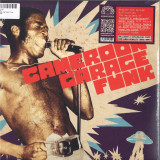
- A1: Jean-Pierre Djeukam - Africa Iyo
- A2: Joseph Kamga - Sie Tcheu
- A3: Los Camaroes - Ma Wde Wa
- A4: Los Camaroes - Esele Mulema Moam
- B1: Ndenga Andre Destin Et Les Golden Sounds - Yondja
- B2: Damas Swing Orchestra - Odylife
- B3: Charles Lembe Et Son Orchestra - Quiero Wapatcha
- B4: Louis Wasson Et L'orchestre Kandem Irenee - Song Of Love
- C1: Tsanga Dieudonne - Les Souffrances
- C2: Pierre Didy Tchakounte Et Les Tulipes Noires - Monde Moderne
- C3: Willie Songue Et Les Showmen - Moni Ngan
- C4: Mballa Bony - Mezik Me Mema
- D1: Johnny Black Et Les Jokers - Mayi Bo Ya?
- D2: Pierre Didy Tchakounte - Ma Fou Fou
- D3: Lucas Tala - Woman Be Fire
- D4: Ndenga Andre Destin Et Les Golden Sounds - Ngamba
We are extremely proud to announce our 32nd compilation from the Analog Africa regular serie, "Cameroon Garage Funk", highlighting Yaounde's 1970's underground music scene. The quest to assemble the puzzle-pieces of what seemed to be a long lost underground scene took us to Camroon, Benin and further on to Togo and it was in the cities of Cotonou, Lome? and Sotouboua that we managed to lay our hands on most of the songs presented in this compilation. Since there were no local labels, no producers, and almost nothing in way of infrastructure in Cameroon at that time, the artists had to be everything: musician, producer, executive producer, arranger, financier, promoter and sometimes even distributor. The sixteen tracks on Cameroon Garage Funk pulse with raw inspiration and sweat DYI mood uniting the featured diverse musicians around their willingness to do everything themselves in order to take a chance in the music scene.
African, funky, sarcastic, bewitching, green, ecstatic: these words collide to describe Vaudou Game and all of them are true.
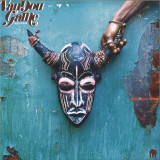
Noussin is the fourth album of the french Afro Funk band. Forced into lockdown, like much of the planet, Peter Solo and his Vaudou Game had no choice but to retreat into the studio. A reunion to once again invoke the spiritual forces of the Voodoo Deities. A reunion that was Initially imagined for an EP…yet these spiritual forces behind that imagination yearned for something more, and as we all know, these forces are impossible to push away once they have decided to stay.
Under the strain enforced by the current socioeconomic climate, as much as by the environmental peril that faces us all today - they diverted the course of the groove towards daring new vibrations. Without extinguishing or diminishing its highly communicative power, they released Vaudou Game from its origins of pure Afro-Funk to gradually engage into compositions which crystallized themselves into tones resembling more rock than funk.
On this fourth album, with an entirely revisited line-up, Peter Solo separates for the first time in his career from his brassy guard, leaving saxophone, trumpet and trombone outside to invite an arsenal of keyboards to define, with him, this new voodoo sound. A sound, as usual, built on vintage and precise analogical material - grime even on the white side of the tape, a blunt instrument used to blanket anything that strived to shine too much in the mix.
Graced with tapered guitars stringing out rhythmic bumps or withdrawing a few beats to indulge in infectious solos, this album is boisterously alive with vintage 70's Funk, infused with a few digressions into other ethers of the funk timeline, nicking different sounds and frequencies to render the black and white keys of an inspired keyboard to reach new euphoric levels of melodic acidity.
Tearing off the enigmatic mask to reveal his true face: on a few titles, Peter Solo ventures outside of his sacred voodoo range to reconnect with his London years, these titles feature small nods to the time he spent in “The Smoke” where the incantations of British music culture were written within him.
Noussin which means “Stay strong” in Mina, a dialect spoken in the south-west of Togo. Noussin, a message of hope as much as a call to come together to weather the turmoil and to come out better on the other side. Don’t let them grind you down…Noussin!
In 2019, Parisian cinema composer Jean-Gabriel Becker and Japanese composer and multi- instrumentalist Susumu Mukai embarked on the making of an album that was ultimately going to become ‘Time Very Near’.
The album was finally released to great acclaim in April 2020 through the strangest time in history for its singularity and originality. Prompted by a few unsolicited offers for remixes, Becker & Mukai saw an occasion to invite their community of musician and producer friends to re-invent, deconstruct and rebuild the songs on ‘Time Very Near’.
Joe Goddard (Hot Chip), who, from his studio next door, had witnessed the birth of the project from day one, was kind enough to unleash his killer beats on Spice War. Old friend Jas Shaw (Simian Mobile Disco) transformed the tropical sounds of Dark Fields Of The Republic into a dance-floor ready techno workout.
Long-time collaborator and friend Sasa Crnobrnja (In Flagranti, Mytron & Ofofo, Auf Togo) took Time Very Near on a trip to Jamaica. Label mate AMA//MIZU stripped Tout Azimuth down to its core to rebuild it with his unique production skills. Dreems delivered a sweltering 19 minute version of Dark Fields Of The Republic and a shorter version more suited for a vinyl listen. And finally Becker & Mukai chose to don their alternative monikers (Zongamin and Lux Prima) to re-interpret the duo’s own compositions.
Like the original album, this remix project gathers sounds and inspiration from an ever-expanding palette of influences, assembled into something amorphously intangible that’s simultaneously refreshing and sharp, meandering and cosmic, futuristic but timelessly vintage and manages to expand where the original album left off.
"Matasuna Records" has found another musical treat from the African continent for its latest release - a song by the Ghanaian musician "Mawuli Decker". It was released in 1983 on the rare and sought-after album "Ayo Special" and is available for the first time as a 7inch vinyl single, which is supplemented by an edit from "Renegades Of Jazz". The esteemed London label "Kalita Records" was able to provide the audio material for new masters and is also acting as music publisher with the new "Kalita Music Publishing".
Mawuli Decker was born in 1949 in Ghana, where he also grew up. His musicality has been given to him from an early age, so that he not only attracts attention as a singer, but also plays drums, percussion and bongo. He played in various dance bands, which were very popular in Ghana especially from the middle of the last century onwards and made the Ghanaian highlife known beyond the borders. He has played in various dance bands such as New Planets, Sawaaba Sounds, The Tops, Caprice 73, The Volta Pioneers and others, which have performed in Ghana and other West African countries.
His first release was in 1975 with the band "Dzobi Soundz" on the Polydor label. Further releases of projects with his participation followed, until 1983 when he recorded his album "Ayo Special" at "Otodi Studio" in Lome (Togo) with an illustrious group of musicians.
He is still deeply rooted in music and performs in West Africa and is still very active in recording.
On the A-side is the original version of the song "Lololi-Lomko", sung in the "EWE" language, which is spoken in the south of Ghana as well as the southern parts of Togo. "Lololi" means "There's Still More Love" and "Lomko" stands for "Please love me" - classical themes that have appeared in countless songs in music history. Although a certain catchiness of the track cannot be denied, it doesn't seem cheesy at any point. Mawuli, who also contributes the vocals, creates perfectly formed harmonies through his compositions and arrangements, which are especially apparent in the bassline, guitars & brass and of course the vocals.
This was certainly also the idea behind the edit of "Renegades of Jazz" on the B-side, which did not want to break up and alienate the organic composition. Listening closely reveals the approach: a steady tempo, a more powerful bassline and additional drums and percussions bring the song back directly to where it belongs: to the dancefloors of this world!
Mythology for the posthuman age. From "The New Kind" to "Posthuman Wonderland", Simon Grab's album "Posthuman Species" is a sonic journey through an astonishing land of fragile feedbacks, pulsating drones and opulent outbursts of noise.
Recorded on a no-input-mixing setup consisting of low frequency oscillators, filters, analogue effects and a mixer patched with itself, the album sneaks up on dub and leftfield electronica from the side. Over time, the self-oscillating setup falls in and out of tune with itself, emphasising its transient nature. The album is a work of science fiction, telling the story of a time when "The New Kind" shapes its own wonderland.
Swiss sound artist and musician Simon Grab explores new grounds by negating assumed borders. In his recent work, he focuses on reduction, and the peculiarity of self-referential systems.
The album "Posthuman Species" follows his recent EP "Extinction" on -OUS. His "Diamonds EP" in collaboration with Togolese rapper Yao Bobby and Asian Dub Foundation's Dhangsha releases on Bristol's LavaLava Records in September 2019. Simon Grab's recent works includes "Hirnmusik 1 & 2", in which he dives deep into musical imagery by transferring his sonic ideas directly from his brain to vinyl.
The vinyl LP comes with a printed inner sleeve designed by Hammer and a download card that includes the digital only tracks "Transformation" and "Posthuman Wonderland".
An exploration of traditional Chadian music with an electronic twist...
Chad is in many ways a blind spot on the map of today's global musical conversation. Overlooked, misunderstood and misrepresented, outside observers rarely concede the country an autonomous voice over its past, present and future. N'Djamena, the dusty capital of Chad with its well-kept stories of boundary-breaking musical collaborations and thirst for experimentation is a city that reflects the country's diversity: the arid North, bordering the Sahara, where nomadic tribes revere the endless desert with their handcrafted instruments. The lush tropical South, where the frenetic drumming of local initiation ceremonies blends with sounds of neighboring Congo and Cameroon. Right in the middle: N'Djamena, a forgotten melting pot of cultures and peoples bursting with unrecorded stories of life at the margins of the world's attention.
Tackling this view is precisely one of the aims of Pulo NDJ. In May 2018, Nickodemus accepted an invitation from Hape Collective to travel to N'Djamena to teach a group of young adults DJ'ing and electronic music production, which resulted in the encounter between and a group of talented artists from Cameroon, Chad, Congo and Togo. After a weeklong series of listening to original songs & demos, the recordings continued in a pop-up studio created by DJ Buosis & Nickodemus which culimated in Desert To Douala, an album featuring 11 songs, all originally written and recorded in N'Djamena.
The project found its inspiration in the city's un-narrated diversity and seeks to explore the possibilities offered by technology to demonstrate how the country's rich heritage connects with existing musical conversations. It strives to create bridges in a world of walls. It has been a yearlong creative process that built friendships and fostered understanding among people united by a passion for music and creation.
Rich, Deep, Percussive Soulful Folk Album From Master Togolese Singer, Akofa Akoussah.
The Album Moves Through Uptempo Afro-folk-funk On 'tango' To Deep Ballads Of 'ramer Sans Rame' And 'i Tcho Tchass' And Lighter Moments On 'g Blem Di' And 'mitso Aseye'. Akofas Exceptional Songs And Soaring Vocals Are Decorated With Percussion, Guitar Lines, Subtle Backing Vocals And Horns To Create A Unique, Rich Sonic. The Album Was Recorded For Release By French Label Sonafric In 1976. Produced By Gérard Akueson; Founder & Owner Of African Record Label, 'akue', Based In Paris.
Music Was Truly In The Blood Of Julie Akofa Akoussah. She Began Singing At The Age Of Three, Inspired And Led By Her Mother And Older Sister And Became Principal Soloist In Her School Choir, St. Peter & Paul Choir Of Our Immaculate Conception Parish Of Nyékonakpoé, At The Age Of 8. From There Her Career Blossomed, And Singing Often Took Precedence Over Her Studies. In Order To Master Her Art She Spent Time Studying And Working Closely With Local Groups Including Mélo Togo, Rocka Mambo, Rio Romamcero, Ok Fiesta, Eryco Jazz, Afro Cubano, Los Muchacho, Elégance Jazz And Togo Star Amongst Others. In Her Own Words: 'luck Opened The Door In January 1966 Where I Had The Honour Of Being Selected To Share The Stage With Bella Below - One Of The Best Voices Of
Africa - At The 1st 'negro Arts Festival' In Dakar. On My Return, I Was Approached By Ambroise Ouyi, The Highly Respected Singer & Poet, And We Wrote 'tu Ne M'écris Plus', My Very First Opus.'
The Popularity Of Her Work Led To An Increased Exposure For Togolese Music Outside Of The Country, In Neighbouring Ghana And Benin Most Notably. During Her Career She Collaborated And Performed With Greats Including Manou Djibango, Queen Pelagie, Abeti Massikini, Aycha Koné And Myriam Makeba. Akoussah Was Also Dedicated To, And Widely Recognised For, Her Work For Social Causes, Championing And Nurturing Young Musical Talent, And The Fight Against Aids. She Was President Of The National Union Of Artists Musicians Of Togo (unam) Before Sadly Passing Away In April 2007 After A Long Illness, At The Age Of 57.
Lost Futures is a new label that explores experimental and often radical approaches to dance music from the past. In a musical landscape that increasingly claims to seek and reward new forms and ideas, Lost Futures delves into the recent past to revisit forward-thinking, optimistic projects that, owing to the social, musical or outright political climate, perhaps struggled to find an audience. Allowing only time to re-contextualise these leftfield, sometimes misunderstood and ultimately human bodies of work, Lost Futures taps into the inherent idealism of rave.
LF001 trips back until the early nineties to revisit the alternative scene emerging from the Dutch city of Utrecht. Here, three young men - DJ Zero One (Sander Friedeman), TJ Tape TV (Arno Peeters) and DJ White Delight (Richard van der Giessen) - joined forces to form 'The Awax Foundation'. Inspired by the transcendent and revolutionary electronic music arriving on their shores imported from Chicago and Detroit, combining their knowledge, gear and ever-expanding vinyl collection allowed additional freedom in paying sincere tribute to these intoxicating sounds, while also developing their tastes in a more personal, eclectic direction.
The musical flavours of Awax initially leaned toward acid house and the roots of techno. However, with three different mindsets in the mix, their tastes were rarely fixed. One thing each shared in common was a devotion to collecting rare sounds, specifically more adventurous and international samples than those emanating from the increasingly-hard, masculine dance music emerging from the Netherlands during the period. Inspired by the cross-over global sound of bands like Suns of Arqa, or 'World Music', as it was perhaps patronisingly termed at the time, the trio became interested in the idea of making techno with 'ethnic instruments'.
Of course, this being 1992, none of The Awax Foundation had access to such instruments, instead, they had a vast, collective library of samples from all over the world. There were no collaborations and no clear plan. Instead, they set to work using a Yamaha TX16W sampler, the legendary Atari 1040ST computer, a cheap mixing desk and a couple of low-end synths and FX machines. When Richard mentioned the project to his friend, Akin Fernandez, the London DJ and owner of cult label Irdial Discs, Fernandez was intrigued enough to invite the trio to record a one-hour show for his 'Monster Music Radio' series on London's then-burgeoning Kiss FM.
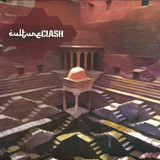
Forced to come up with a name, 'CultureClash' seemed like the obvious choice, even if the members of Awax were only creatively sparring among themselves. Along with the term 'ethno-techno', slightly dubious to a hopefully more conscious Western audience in 2017, these were the only guiding principles to the quietly ambitious project that soon combined cutting-edge machine rhythms with samples sourced from everywhere from Bolivia to Togo, and inspired by everything from Ravi Shankar's epic soundtrack to the Oscar-winning movie Ghandi, to the technical limits of their own setup requiring a dazzling degree of cut-and-paste work. Some tracks even emerged out of academic studies within the ethnomusicology department at The University of Amsterdam.
The show aired on October 2nd, 1992, recorded in one blistering take and without any rehearsals, traversing a huge variety of tempos and styles. If the performance wasn't seamless, it was undeniably thrilling, fresh and ambitious. As such, several labels, including Fernandez's aforementioned Irdial Discs expressed an interesting in commercially releasing CultureClash, while another imprint proposed a series of twelve-inches and an album. But the sheer complexity of the project meant that it never saw the light of day, while the trio embarked on different journeys ahead, both creative and personal.
Twenty five years later, and the original CultureClash lineup and founding members of The Awax Foundation provide the sound of the first release from Lost Futures. An otherworldly, ambitious and optimistic compilation, accompanied by extensive sleeve notes from the trio, CultureClash is a timeless ode to experimentation in dance music's ever-overlapping culture.
No one had been through those doors in years. Unchanged, seemingly untouched, just a Guard watching over it, one wondered whether the place would ever see the light of day again. Built in the 70s by Scotch, there were only twenty such places in the entire world. Twenty studios, all identical. Most had undergone a digital makeover in the 80s, but not this one; situated in Lomé, this studio had stayed true to its original form. Silent and uninhabited but waiting for one thing, and one thing only: for the sacred fire to be lit once again. That of the Togolese Recording Office, is studio OTODI for those in the know. Through thick layers of dust, the console was vibrating still, impatient to be turned on and spurt out the sound so unique to analog. That sound is what Peter Solo and his band Vaudou Game came to seek out.
The original vibrations of Lomé's sound, resonating within the studio space, an undercurrent pulsing within the walls, the floor, and the entire atmosphere. A presence at once electrical and mystical sourced through the amps that had never really gone cold, despite the deep sleep that they had been forced into. In taking over the studio's 3000 square feet, enough to house a full orchestra, Vaudou Game had the space necessary to conjure the spirits of voodoo, those very spirits who watch over men and nature, and with whom Peter converses every day.
For the most authentic of frequencies to fully imbibe this third album, Peter Solo entrusted the rhythmic section to a Togolese bass and drum duo, putting the groove in the expert hands of those versed in feeling and a type of musicianship that you can't learn in any school. This was also a way to put OTODI on the path of a more heavily hued funk sound, the backbone of which maintains flexibility and agility when moving over to highlife, straightens out when enhanced with frequent guest Roger Damawuzan's James Brown type screams, and softens when making the way for strings. Snaking and undulating when a chorus of Togolese women takes over, guiding it towards a slow, hypnotic trance. Up until now, Vaudou Game had maintained their connection to Togo from their base in France. This time, recording the entire album in Lomé at OTODI with local musicians, Peter Solo drew the voodoo fluid directly from the source, once again using only Togolese scales to make his guitar sing, his strings acting as channels between listeners and deities...
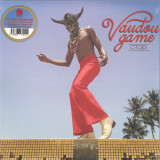
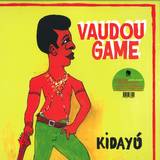
When faced with the decision to take a different direction at the risk of getting lost in a synthetic sound or to further explore the same musical path, Vaudou Game didn't need to consult the oracle for very long when putting together their new album. Since their first acclaimed album, Apiafo and its irresistible single "Pas Contente", these Lyon natives never turned down the heat on over 130 stages across Europe, Africa, America and Asia. Peter Solo has displayed his amulets, charisma and yellow pants around the globe.When time came for them to harness their Afro-Funk sound for the second time, they turned their attention once again to their analog strengths. Vintage material, instruments produced in the 70's and cassette tapes were the "grigris" (or lucky charms) which proved most effective to ward off digital corruption of their music and return them to a tight-knit group with a solid groove.This unbeatable trance rhythm, inherited from James Brown and Fela, icons of Funk and Afrobeat, becomes trident when joined by Mawu, the creative voodoo divinity hidden in each of the group's notes. This inspiration transcends their spirit of communion, plunges them deeply into Mother Earth and results in the telepathic trance which is directly connected to Togo Peter's native Togo.Each song then becomes a celebration where the listener becomes the group's voodoo doll, embraced by the rhythm, submitting itself to the mercilessly metronomic cutting of guitars, struck by the copper-colored flashes of lightning forged by the African voodoo deity Hevioso, pierced by the psychedelic visions generated by the organs and a six-string guitar, cheerful songs, and hypnotic incantations.KIDAYU means "sharing" in Kabye, the language spoken in northern Togo. Sharing, is the philosophy of Vaudou Game - both in their recorded music and on stage.Vintage African funk tinged with voodoo chanting: Togolese Peter Solo and his fellow musicians from Lyon electrify us in a frenzied ceremony" - Télérama