The great wealth of multifaceted skills is Ralph Heidel's core identity, evident in the attempt to classify his music into a genre. Drone Jazz, Organic Glitch, Neo Classic, Jazztronica, all these terms apply when we read about his music. He began his career as a saxophonist and by now has also become a highly requested composer and arranger for a wide variety of productions. The 28-year-old musician was signed by Mathias Modica (Gomma, ToyTonics) for the Kryptox label, while he was still studying at the Musikhochschule München. Heidel released his debut album"Moments of Resonance" (2019) with his eight-piece ensemble Homo Ludens, followed by his EP "Relief" (2021). This grandiose prelude received applause on an international level. BBC6 presenter Mary Anne Hobbs, decided right away to exclusively feature Ralph Heidel on her radio show.
Поиск:toy
Все
Kate NV's WOW offers listeners a prismatic shift in perspective and scale, a parallel dimension in which the mundane becomes funny, unfamiliar, and altogether sensational. Turning the contents of her 2020 album Room for the Moon upside down and spilling them across a floor checkered with intrigue and surprise, Kate places sound, object, and ritual under the microscope to magnify the delight hidden in plain sight of everyday life. WOW is Kate Shilonosova's fourth full-length release as Kate NV in six years, and third for RVNG Intl. Her prolific musical output aligns with a highly attuned aesthetic and a deep commitment to visual world building. WOW is one of many of these worlds in which music is fully saturated with color, deeply tactile and textural. Shiny, sproingy, plastic. Where Room for the Moon embraced structure (abstractly speaking) and veered pop, WOW happily abandons conventional song shapes, parsing the experience of musical time into ecstatic fragments. It's difficult to imagine a more fitting album title: pure exclamation, an organic pitch of delight leaving the mouth, with no clear etymological links. On Room for the Moon, Shilonosova's voice was layered and lyrical, with sweeping and urgent melodies. WOW finds her as a peripheral purveyor of high jinks, peeking out from the corners, commenting on her surroundings in non-verbal, and arguably non-human, utterances. Instead of employing lyricism, Shilonosova steps outside of language, and rewards us with a gum ball machine of textures: soda fizz and wind-up teeth and scraps of bubble wrap become comically huge, as if heard from an insect's perspective. Words are tasty plosives, onomatopoeias, percussive chirps and one-liners, and singing serves as another form of what Shilonosova refers to as "funny tiny sounds." WOW skews and skitters, trips over its own feet and laughs about it, plays out of tune on purpose, tilts and leans like a top-heavy flower. Shilonosova is a longtime user of Found Sound Nation's Broken Orchestra sample pack, a sound catalog of over one thousand dilapidated instruments sourced from Philadelphia public schools. These perfectly imperfect instruments are tightly spliced into WOW's patchwork of synthesizer and reworked snippets of Shilonosova's friends playing clarinet, flute, and marimba. It's central to the record's internal logic: a disregard for what is, and isn't, broken, what is, and isn't, a sentence or a song. A commingling of subject and object, with a firmly new wave sensibility. Shilonosova has long had an unusual relationship with inanimate objects (citing her bicycle as her best friend), as if the joys they evoke for her are personality traits of the objects themselves. On WOW, she evinces a kind of inverted anthropomorphism: she shrinks her voice and becomes an object among multitudes, toylike in size and perspective, cohabitating with sedentary, indifferent roommates. This pursuit of childlike perspectives is a thread that runs through much of her catalog, and places her work on a plane with that of her personal hero Nobukazu Takemura, who for decades has treated his music as a portal to childlike curiosity, both in subject matter and tone. With an invitation to pursue this curiosity, WOW further confirms Kate NV's deeply inventive, fluid and technically dizzying artistry. By refusing constraints and rules, Shilonosova embodies a profound freedom, allowing objects, sounds, and processes to unfold organically; or, as she puts it, a commitment to "accepting randomness." She succeeds terrifically at a breed of auditory defamiliarization that is all her own, and the rewards for listeners are many: through her lens, the small becomes monstrous, the abstract becomes sensorial, and the old becomes new. Kate NV's WOW will be released on February 10, 2023 on vinyl and digital formats. On behalf of Kate NV and RVNG, a portion of the proceeds from this release will benefit War Child, an organization that supports children and their families impacted by conflict, and working to build sustainable peace for generations to come.
Yellow Vinyl
Kate NV's WOW offers listeners a prismatic shift in perspective and scale, a parallel dimension in which the mundane becomes funny, unfamiliar, and altogether sensational. Turning the contents of her 2020 album Room for the Moon upside down and spilling them across a floor checkered with intrigue and surprise, Kate places sound, object, and ritual under the microscope to magnify the delight hidden in plain sight of everyday life. WOW is Kate Shilonosova's fourth full-length release as Kate NV in six years, and third for RVNG Intl. Her prolific musical output aligns with a highly attuned aesthetic and a deep commitment to visual world building. WOW is one of many of these worlds in which music is fully saturated with color, deeply tactile and textural. Shiny, sproingy, plastic. Where Room for the Moon embraced structure (abstractly speaking) and veered pop, WOW happily abandons conventional song shapes, parsing the experience of musical time into ecstatic fragments. It's difficult to imagine a more fitting album title: pure exclamation, an organic pitch of delight leaving the mouth, with no clear etymological links. On Room for the Moon, Shilonosova's voice was layered and lyrical, with sweeping and urgent melodies. WOW finds her as a peripheral purveyor of high jinks, peeking out from the corners, commenting on her surroundings in non-verbal, and arguably non-human, utterances. Instead of employing lyricism, Shilonosova steps outside of language, and rewards us with a gum ball machine of textures: soda fizz and wind-up teeth and scraps of bubble wrap become comically huge, as if heard from an insect's perspective. Words are tasty plosives, onomatopoeias, percussive chirps and one-liners, and singing serves as another form of what Shilonosova refers to as "funny tiny sounds." WOW skews and skitters, trips over its own feet and laughs about it, plays out of tune on purpose, tilts and leans like a top-heavy flower. Shilonosova is a longtime user of Found Sound Nation's Broken Orchestra sample pack, a sound catalog of over one thousand dilapidated instruments sourced from Philadelphia public schools. These perfectly imperfect instruments are tightly spliced into WOW's patchwork of synthesizer and reworked snippets of Shilonosova's friends playing clarinet, flute, and marimba. It's central to the record's internal logic: a disregard for what is, and isn't, broken, what is, and isn't, a sentence or a song. A commingling of subject and object, with a firmly new wave sensibility. Shilonosova has long had an unusual relationship with inanimate objects (citing her bicycle as her best friend), as if the joys they evoke for her are personality traits of the objects themselves. On WOW, she evinces a kind of inverted anthropomorphism: she shrinks her voice and becomes an object among multitudes, toylike in size and perspective, cohabitating with sedentary, indifferent roommates. This pursuit of childlike perspectives is a thread that runs through much of her catalog, and places her work on a plane with that of her personal hero Nobukazu Takemura, who for decades has treated his music as a portal to childlike curiosity, both in subject matter and tone. With an invitation to pursue this curiosity, WOW further confirms Kate NV's deeply inventive, fluid and technically dizzying artistry. By refusing constraints and rules, Shilonosova embodies a profound freedom, allowing objects, sounds, and processes to unfold organically; or, as she puts it, a commitment to "accepting randomness." She succeeds terrifically at a breed of auditory defamiliarization that is all her own, and the rewards for listeners are many: through her lens, the small becomes monstrous, the abstract becomes sensorial, and the old becomes new. Kate NV's WOW will be released on February 10, 2023 on vinyl and digital formats. On behalf of Kate NV and RVNG, a portion of the proceeds from this release will benefit War Child, an organization that supports children and their families impacted by conflict, and working to build sustainable peace for generations to come.
- A1: ) Siamese
- A2: ) First Day On A New Planet
- A3: ) Pow R Ball
- A4: ) Kewpies Like Watermelon
- A5: ) Phasers On Stun/ Sola Kola
- A6: ) Black Hole Love
- B1: ) Velvy Blood
- B2: ) Plastic Ashtray
- B3: ) Death 2 Everyone
- B4: ) Pachinko
- B5: ) (-)
- B6: ) Kernel
- B7: ) Road Song
- C1: ) It Is
- C2: ) On Yr Mind
- C3: ) Teen Dream
- C4: ) Majesty
- C5: ) Burriko Girl
- C6: ) Got The Sun
- D1: ) Silver Krest
- D2: ) Sucker/ Kitty Litter
- D3: ) Lo-Fi Scary Balloons
- D4: ) The Power Of Negative Thinking/ The Love That Brings You Down
Remastered reissue of “We Are Urusei Yatsura” (originally released in 1996), with bonus vinyl of unreleased demos and B-sides
Celebrating the 30th Anniversary of the founding of Glasgow “Geek Rock” band Urusei Yatsura
– Double Clear-Vinyl Reissue of 1996 Album
In the days before “landfill” indie, and in rebellion against a developing Britpop orthodoxy, there were some weird but melodic bands coming of age outside London that drew inspiration from the US underground and the sparkly retro-futurism of Japan. Primitive guitar noise with art rock leanings, post punk DIY and fanzine culture. The best known of these bands was maybe Urusei Yatsura; “noisy stars”, named in honour of Rumiko Takahashi, legendary manga creator.
Back in 1996, after several increasingly well-received 7’s, the band travelled to Leamington Spa to record their debut album with John Rivers, producer of Swell Maps and Glasgow scene godparents, The Pastels. The resulting album won the group legions of new fans and gained them their first Independent #1 chart placing, alongside peers Ash and Super Furry Animals.
“These were fertile years in Glasgow, a scene with no name, no single sound, where the magic thread tying everyone together was words and works so personal, they couldn’t be mistaken for anyone else’s. ‘We Are Urusei Yatsura’ is a cascade of ‘why not?’ thinking. The way ‘Phasers on Stun’ spirals into ‘Sola Kola’; the sunburned 23-second improv at the end of ‘Pachinko’; the slack-echoing strings of the outro to ‘Road Song’ sprayed with the shrapnel of toy electronics. Pure pop magic, Ren & Stimpy on upstairs, ray-guns, Ian’s homemade walkie-talkie speaker, a beatbox, all sealed with a “Talking Tina” doll’s emphatic endorsement: “I love it”” – Nick Soulsby
The vinyl-only double LP set comprises the original 1996 album recorded by John Rivers, accompanied with an extra disk of unreleased demos, rare singles and B-sides which have not been available since the 90’s. It documents the time leading up to the release of the LP and the singles that came from it, capturing the development, lost pop moments and essential experiments from the eccentric and joyful Glasgow band. The cover has been completely remixed using archive
photos and artwork from the time, with new interviews and extensive notes. The release marks 30 years since the official birthday of the band, 9/3/93.
“When I drove the transit van that took them down to Leamington Spa to record their first proper LP, there was a sense of quiet, assured anticipation. I couldn’t wait to hear it and when I came back a couple of weeks later to pick them back up, I remember so clearly when they played it from the van’s tape deck. Fergus and Graham were hunched over, focusing intently on what they wanted to change about the mix. The reverb wasn’t right or something. Maybe they didn’t like how high the vocals were in the mix. I said to them, you’re listening to the details, but missing what is most important–this is a fantastic record! It was. It is. It is a fantastic record. They were a brilliant live band and I am so lucky to have been able to have been there to see their formation.” – Alex Kapranos.
- A1: Signal
- A2: 2249
- A3: Inside
- A4: Intercept
- A5: The Box
- A6: Nephyr
- B1: Beacon
- B2: Hypersona
- B3: Juliet
- B4: Dream Window
- B5: Forever
- B6: Track 12
- C1: Point Of No Return
- C2: Movarian Fields
- C3: Two Doors
- C4: Vision
- D1: Point Of No Return
- D2: Sine Orphan
- D3: Fressa Fa (Slow Version)
- E1: Hollow
- E2: Find Me
- E3: Home
- F1: Tunnel
- F2: Geiga
- G4: Equassa
- H1: Freefall Peak
- H2: Arc
- H3: Lightout
- I1: Clear
- I2: Cocooni
- I3: Susurrus
- I4: Lithea
- J1: Deluge
- J2: Radio
- J3: Reunion
- J4: 1983
- J5: One
- K1: World After April
- K2: Seance
- K3: Dreamscape
- K4: Dayasan
- K5: Broken Toy
- K6: Leviatha
- L1: Levitate
- L2: Saphron
- L3: Another World
- F3: Ghostfields
- G1: Fiona's Room
- G2: Siren
- G3: Darkroom Distortion
Coloured[201,89 €]
UK producer Dennis Huddleston goes by the artist name of 36. He is a much-loved producer with a fine back catalogue which is investigated here with The Box, a new collection of his earliest and perhaps most admired works. They were all written between 2005 and 2012 and are drawn from albums such as 2009's Hypersona, 2010's Hollow and 2012's Lithea. The bumper six vinyl collection also features a bonus album, Orphans, of all new and previously unreleased tracks. There is a real depth of range and emotion to these tracks so it is no wonder the artist says they are some of the most personally cherished works he has written.
- A1: Breezeplate (2022 Remaster) 03 44
- A2: Squarewave Colorwheel (2022 Remaster) 04 33
- A3: Toypieceplate (2022 Remaster) 03 33
- A4: Dodecatheon (2022 Remaster) 04 21
- A5: Sunsculpture One (2022 Remaster) 03 10
- B1: Sienna (2022 Remaster) 02 42
- B2: Kekker (2022 Remaster) 04 45
- B3: Gauss (2022 Remaster) 02 30
- B4: Billionwatt (2022 Remaster) 03 44
- B5: Continentsunderclouds (2022 Remaster) 03 08
- B6: Sunsculpture Two (2022 Remaster) 04 30
»Holo« by the US-American three-piece Kiln, first released in 1998, is one of those rare records that managed to carve out a niche of its own while also building bridges to variety of genres like Chicago-style post-rock, the ambient mysticism of projects like Rapoon or the music made at the intersection of shoegaze, and electronic music in the late 1990s. Lush textures, subtle rhythms, jazzy inflections and electronic experimentation seamlessly blend into each other over the course of the eleven tracks. This reissue through the German label Keplar makes the fully revised version, self-released by the group in 2007 under the name »Holo re/lux,« available on vinyl for the very first time. »Twenty-five years later this newly mastered vinyl edition is evidence that the sound of ›Holo‹ continues to attract like-minded listeners,« says member Clark Rehberg III. »Which on many levels means that our mission was successful.«
Rehberg had embarked on this mission together with Kevin Hayes and Kirk Marrison in 1993. They had first worked together under the name Fibreforms as a live trio that used treated guitars, kit drums, and tapes of found sound to explore the balance between band composition and recording experiments, while Marrison made heavy use of the Akai S612 sampler as a fabricating strategy with the project Waterwheel. »Kiln seemed to encapsulate the evolution and melding of those previous approaches to one that insisted on the continual opening up of the compositional process, allowing more of the mystery that can be discovered through studio experiments—and accidents—to become important elements of creating our music,« says Rehberg of the trio that is still going strong after three decades. »The word Kiln implies heat and transformation, an attitude that we apply to every sound we use—we begin with notes and performance and then mosaic with shape and colour.«
»Holo« followed up on the trio’s debut self-titled EP that had been recorded in the summer of 1996. »That same year, during a lull in our collabs, Kirk began building pieces on a low-memory Mac using an early 8-channel DAW,« explains Rehberg. Enchanted by the unprecedented fidelity and energy of those recordings, the three reconvened to build upon them and make more music in that manner. »I’d say our intention was no different than any other time: create something immersive and compelling: dense melodic blasts of uniquely constructed but ultimately accessible audio moments.« The group worked individually and in pairs for about 18 months while being spread across the United States. »We poured everything into it that we had at the time, working dead-end jobs by day and on audio in every other open moment. I remember the struggle of that process, but also the pure joy as we pulled down countless moments of magic while the pieces took shape.«
Rehberg says that he still hears »a time-stamp of those efforts and the belief that we were creating a special audio experience« when listening back to »Holo,« a record the band itself chose to revise almost a decade after its initial release. »Ultimately we just felt those pieces needed more impact and we had the tools and ability to make that happen,« he explains. 16 years after that and a quarter of a century after it first introduced Kiln as a force to be reckoned with, the remastered version feels indeed timeless. It is both a snapshot of the first extensive album project by a group whose bond is still »diamond strong,« as Rehberg puts it, and a record that continues to sound fresh, if not visionary also today.
All tracks composed and recorded by Kevin Hayes, Kirk Marrison, Clark Rehberg III.
Originally released on Thalassa in 1998.
Remaster by Stephan Mathieu. Vinyl cut by LUPO.
Cover art by Kirk Marrison & Clark Rehberg III.
Text by Kristoffer Cornils.
Kouslin returns to Livity Sound with a second collection of slippery club tracks after the 2020 Vision E.P. With an emphasis on head-twisting sound design and a detailed line in percussive programming, the London-based producer continues to reach into intriguing new areas without forsaking soundsystem-ready physicality.
The tracks which make up the Patterns E.P. stemmed from a period of personal experimentation, where Kouslin returned to making music for its therapeutic benefits rather than a fixed purpose. The loops and sketches he returned to and expanded upon for this EP bristle with originality at every turn.
There is a continued exploration of dancehall rhythms on ‘King’, while ‘Five Four’ toys with time signatures for a jagged, fast-paced abstraction of techno. ‘Why Don’t You Don’t’ is harder to pin down thanks to its knotty beat and mutant synthesis, and ‘Michael’ flips the script further with an unexpected swerve into pearlescent melodic lead lines – the perfect demonstration of the honest and instinctive approach Kouslin took when making these tracks.
Livity Sound is a label set up by Peverelist in 2011 as a vehicle for a raw and exploratory strain of UK techno, rooted in the heritage of UK dance music and sound system culture. It has since become one of the UK's foremost protagonists for cutting edge underground electronic music.
The Origins of Power Pop.
Remastered and pressed on Gold Vinyl. Includes printed inner sleeve.
In these songs you’ll find the DNA of The Direct Hits. Although very Elvis Costello like in both style and vocal delivery, these early recordings, dating from 1979 show a remarkable pop sensibility that had come on leaps and bounds since the release of the band’s first single, the now highly sought after ‘Fashion Plague’ b/w ‘Cheam’ released a year prior to these being recorded. Songs like ‘We broke up today’ have all the hallmarks of classic merseybeat, while out and out power pop like ‘Holiday Shots’ and ‘Fool to fall in love’ encapsulate perfectly the sheer exuberance of the genre.
More than a few steps ahead of several of their contemporaries, the band’s built in tunesmiths Buckmaster and Swan were writing catchy songs that carried a powerful punch performed with the energy and excitement of the period. The Exits left behind a wonderful set of recordings that are worthy of a comprehensive vinyl retrospective release,
These recordings first saw the light of day on a CD only release back in 2007 when Cherry Red released the CD ‘The Legendary Lost Exits album’ through its Rev-Ola offshoot. Reportedly the band members were disappointed with the overall mix on the finished release for being a little Lo-Fi . There are no such issues with this specially remastered version for vinyl. The tracks sound fresh, punchy and full of annoyingly great hooks! We are delighted to bring you yet another great addition to our catalogue of long since undisturbed sleeping giants, the Exits, and their Legendary Lost album!
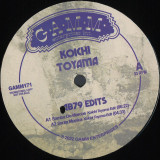
From the deep south in Louisiana comes a new debut on GAMM from producer Koichi Toyama.
Over this four-track EP Koichi has selected some of his favourite Japanese Jazz-funk and Jazz-fusion tracks from the 70's and 80s'.
With tasteful editing skills, the tracks are re-arranged and sometimes remixed into heavy Jazz club jams.
No pump, just thump of course!
The inaugural Volunteer Jam from the Charlie Daniels Band with very special guests. RECORDED LIVE AT THE WAR MEMORIAL AUDITORIUM, OCTOBER 4, 1974 SPECIAL GUESTS: TOY CALDWELL/MARSHALL TUCKER BAND/ GUITAR/STEEL GUITAR DICKY BETTS/ALLMAN BROTHERS/ GUITAR PAUL RIDDLE /MARSHALL TUCKER BAND/DRUMS PERCUSSION JAMIE NICHOL/PERCUSSION
Under the alias The Rodeo, French artist Dorothée has been curating her discography since 2010. An exercise in self-exploration that her fourth album, Arlequine, refines and reveals with the confidence of someone who has cast doubt aside. With these nine baroque, complex and catchy French pop tracks, the singer-songwriter reveals her many faces. Truly multi-faceted, she is as much a performer on stage as she is an artist in real life. She toys with appearances instead of falling victim to them. Backed by a group of loyal virtuoso musicians, Arlequine marries melancholy and melodic clarity, anger and orchestral density, loss and pop idealism, in ambivalent songs with powerful choruses that paint a portrait of "a battle-hardened woman with a smile (...), a woman warrior with makeup" ("Arlequine"): resilient, resolute, reborn. The Rodeo has played all over the world (Europe, USA, Canada, Brazil, South Korea, Taïwan) and shared the stage with many artists (Salif Keita, Stereophonics, Villagers, Nada Surf, The Do, Kazu...). She"s involved in the European program Keychange for increased parity in the music industry.
During the 60s and 70s, three distinguished old gentlemen who had built their careers playing "made in France" exotic jazz - Roger Roger, Nino Nardini and Eddie Warner - met every evening in the Ganaro recording studio, playing like kids with their new toys: souped-up keyboards that looked more like prototypes of spaceships to explore the Milky Way. Flying high on whimsical and joyful inspiration, the improbable trio used their strange instruments to sketch out the beginnings of something that, at that time, resembled the future of music. Let's take a trip with them toward a pop, light-hearted and electronic future.
Renoir Of The Toys is a deep dive into the world of Youri Kun, the nom de plume of Japanese guitarist, singer and songwriter Hiroshi Nar. It follows a similar compilation, Unheld Ball, released in 2022 on Japanese label Inundow; like that album, Renoir Of The Toys draws from the rich catalogue of outsider psych-garage and rock recorded by Youri Kun over the past two decades. Deeply wired into the history of Japanese underground music, Nar was a founding member of legendary ‘70s outfit Datetenryu, and a member of both Brain Police (Zuno Keisatsu) and Les Ralllizes Dénudés (Hadaka No Rallizes), appearing on the latter’s ’77 Live.
After going to ground during the 1980s, Nar started making music with Niplets in the mid-90s, and releasing music at a prolific pace in 2000 – an excellent run of (sometimes archival) CD-Rs on the Hello Goodbye Studio label, both solo, and with his groups Molls, Niplets and Port Cuss; an album on P.S.F. by Jokers, where he was joined by fellow Rallizes member Yokai Takahashi, and drummer Toshiaki Ishizuka (Brain Police, Vajra, Cinorama, etc.); and sixteen albums (and counting) as Youri Kun, for labels Gyunne Cassette, Inundow, and Hören. He’s also fallen in with the Acid Mothers Temple crowd, guesting on a few of their albums, and recording a live set with Kawabata Makoto’s Nishinihon trio.
All Nar’s music shares a deceptive primitivism; it moves with the simplicity of the best 1960s garage punk, but its edges are blurred and stretched, allowing for all kinds of weird, elliptical, and psychedelic moves to happen in its margins. His guitar playing on songs like “Kakunin” (from 2011’s Yamaimo Boogie) shimmies and slurs magnificently; “Kurokami”, from 2012’s Su, has clanking six strings scrawling over loose, spaced-out synth; there are clunky psychobilly moves (“Oshiro no Ninjya”), spirited rave-ups for rattling organ and sputtering guitar (“Totsugeki”), and some lovely, drowsy, melancholy moments (“Sora”).
The constant throughout is Nar’s blues-blurred, drawling voice, as unique a tool as the non-idiomatic speak-sing styles of solo Syd Barrett, Jad Fair, or Dave E. McManus. There are also three Les Rallizes Dénudés covers here, where Nar locates the pop genius at the heart of songs like “Shiroi Yoru” and amplifies this with his simple garage-reverential take on things. Renoir Of The Toys is yet more evidence that Hiroshi Nar was, and is, one of Japan’s musical visionaries, a lonesome voice dedicated to a singular, streamlined vision, one that’s in eternal pursuit of the joy and kicks at the heart of rock’n’roll, and a reminder of what a great, unpretentious rock’n’roller truly should be.
Endearing Montreal-based trio Afternoon Bike Ride announce their forthcoming second album "Glossover", set to be released via Friends of Friends. Consisting of Lia Kurihara (vocals, guitar, programming), David Tanton (vocals, guitar, drums, programming), and Éloi Le Blanc-Ringuette (vocals, keys, drums, programming), Afternoon Bike Ride is a lo-fi folk trio providing a comfort zone in audio form. It"s in the name. When all three artists are together, their chemistry culminates into one organic and lush sound. Sonics that feel natural and freeing, as if fireside with a handful of microphones and instruments and toys. The band has released a series of cohesive projects where field recordings blend with ambient, acoustic, folk, and pop. A cauldron of genres they stir during each song. With precision, Afternoon Bike Ride presents a soothing sound all their own, one that continues to expand and deliver with each new release.
Die Pioniere der elektronischen Popmusik sind zurück und feiern mit ihrem 14. Studioalbum “Point” ihr 40-jähriges Bestehen.
Mit der Debut-Single „Bostich“ eroberten Yello die afro- merikanischen Dance-Klubs von New York . Danach ging ihr Sound – eine Collage von Musik aus aller Welt – um die Welt. Alben wie „You Gotta Say Yes To Another Excess“ (1983), „Stella“ (1985), „Pocket Universe” (1997) und „Toy” (2016) waren Bestseller. Die Evergreens „The Race“, „Oh Yeah“ und „I Love You“ tauchen noch heute ständig im Kino auf. Laute und stille Stimmen wie Shirley Bassey, Billy Mackenzie, Stina Nordenstam und Fifi Rong haben im Yello-Studio gesungen.
Das am 28.08. erscheinende, von Boris Blank und Dieter Meier höchst persönlich produzierte Studioalbum “Point” besteht aus 12 Titeln, deren typische Yello-Klangbilder einen jeden Fan und Kenner sofort
aufhorchen lassen. Die Singles “Waba Duba”, “Out Of Sight” und “Spinning My Mind” sind darauf ebenfalls zu hören.
- A1: Gloria: In Excelsis Deo / Gloria (Version) - Patti Smith
- A2: Survive - The Bags
- A3: Iama Poseur - X-Ray Spex
- A4: I Gave My Punk Jacket To Rickie - Mary Monday & The Bitches
- A5: I Didn’t Have The Nerve To Say No - Blondie
- A6: You’re A Million - The Raincoats
- B1: Popcorn Boy (Waddle Ya Do?) - Essential Logic
- B2: Expert - Pragvec
- B3: My Cherry Is In Sherry - Ludus
- B4: Kray Twins - Mo-Dettes
- B5: Earthbeat - The Slits
- B6: Das Ah Riot - Bush Tetras
- C1: Bitchen Summer (Speedway) - Bangles
- C2: Shakedown - Au Pairs
- C3: It’s About Time - The Pandoras
- C4: Come On Now - The Pussywillows
- C5: Rules And Regulations - We’ve Got A Fuzzbox And We’re Gonna Use It!!
- C6: Her Jazz - Huggy Bear
- C7: Bruise Violet - Babes In Toyland
- D1: Rebel Girl - Bikini Kill
- D2: Pretend We’re Dead - L7
- D3: What’s Wrong With You - Bratmobile
- D4: Let Go Of The Past - The Tuts
- D5: Hot - The Regrettes
- D6: Silver Spoons – Skinny Girl Diet
• “Guerrilla Girls!”, Ace Records’ much-anticipated first release of 2023, takes us on a thrilling ride from punk’s mid-70s origins, via the left-field post-punk groups, jangly female combos, grunge bands and vigilante Riot Grrrls of the 80s and 90s, to the she-punk bands of recent years – a five-decade alternative to the macho hegemony of rock.
• The collection highlights songs that emerged out of a dynamic underculture of female creative expression. What unites the featured artists is a healthy disregard for the way the music industry ties up its female performers into pretty, neo-liberal packages. From Patti Smith, universal mother of the punk movement, to the Bags, Bikini Kill and Skinny Girl Diet, this music is anti-A&R. Including lesser-known names such as San Francisco street punk Mary Monday and London-based experimentalists pragVec, it shows that, rather than being a few novelty bands existing on the margins, these performers represent a stronger, more three-dimensional version of the female experience.
• Glorious resistance was on display in the first wave of UK female-fronted punk bands. Poly Styrene’s charged vocals on X-Ray Spex’s ‘Iama Poseur’, for instance, were a deliberate refusal to be a pretty punkette. With 15 year-old Lora Logic on saxophone, X-Ray Spex epitomised a fearless, self-defined agency that was at odds with the pastel shades and flowery, submissive Laura Ashley version of 1970s girlhood. By the early 80s, there was a hugely vibrant scene propelled by the diverse rhythms and voices of post-punk feminism. Lora Logic had left X-Ray Spex to form the interweaving textures of Essential Logic, the Mo-dettes mangled ska and off-kilter pop, and Birmingham band Au Pairs sliced political rigour into their lyrics and funky guitar work.
• Some female artists took that elemental energy into pop, creating pop-punk with a twist. We’ve Got A Fuzzbox And We’re Gonna Use It!! made a statement on music technology and female power with a cheeky play on words. Their song ‘Rules And Regulations’ shows that what Guerrilla Girls do well is debunking – taking genres of popular song and turning them inside out – like the way the Pandoras and the Pussywillows would amp up the driving beat and high vocals of the 60s girl group style, and subvert it with a DIY garage element.
• In its fanzine culture, use of montage and DIY music, 90s Riot Grrrl bands such as Bikini Kill and Bratmobile drew direct inspiration from 70s punk, articulated through the prism of Third Wave feminism. Too often, Riot Grrrl gigs were invaded by men intent on heckling “the enemy”. Liz Naylor, manager of British Riot Grrrl band Huggy Bear, says that their concerts became war zones. From the US grunge and Riot Grrrl scenes emerged more female instrumentalists, with bands such as L7 and Babes In Toyland proving that it was possible to recruit cutting-edge drummers, bass players and guitarists. Lori Barbero, whose relentless power drumming is a major element of Babes In Toyland, took the one instrument that has been a staple of male rock’n’roll and made it her muse.
• In the 2000s a new generation of girl-punk bands drew on the Riot Grrrl underculture to form their own sound. London trio the Tuts refashioned C86, Riot Grrrl and lush dream pop on songs like the ironically titled ‘Let Go Of The Past’, while the Regrettes injected shots of ska and doo wop into their explosive West Coast pop-punk. What began with Patti Smith and 70s punk has grown into a vast, spikey infrastructure of girl music. Many take inspiration from their foremothers, like Skinny Girl Diet whose vigilante feminism and punk distortion has been championed in return by Viv Albertine of the Slits. As long as these female artists stay aware of their musical vision and what they are trying to express – in a sense, A&R themselves – the underculture will continue to grow and flower. And this “Guerrilla Girls!” compilation is a celebration of that power.
• The back sleeve of the release features a scene-setting introductory essay by Lucy O’Brien (author of She Bop: The Definitive History Of Women In Popular Music). Each of the two discs come in a swanky inner bag containing a track commentary by compiler Mick Patrick (Ace Records’ long-serving champion of female artists of all persuasions) and exclusive interviews with many of the featured artists by Vim Renault and Lene Cortina (founders of the Punk Girl Diaries webzine).
Nixon was released in 2000 and immediately enshrined by the British music press. Uncutnamed it album of the year, Mojo ranked it 10th, and Q was still doing their lists alphabetically. The NME called Nixon “near to perfect” and the Guardian said that the band was “reinventing American music.”
Meanwhile, most people in America continued to have no idea who Lambchop were. (“I don’t think Nixon made much of an impression on anyone over here,” Wagner told a seemingly baffled interviewer in spring, 2001.) Lambchop’s take on America—sly, tender, mysterious but mundane—is less a realist’s portrait than a surrealist’s impression: funnier, more pathetic, more improbable than what actually exists. In 2007 I met a German man named Frank who told me he loved seeing the band overseas because it meant getting to sit in a plush, quiet room while drinking tons of beer and listening to Lambchop, which I guess he imagined Americans were mellow enough to actually do.
Nixon is still an improbable album. The band never sounds like they’re trying very hard and yet every song breaks some convention or another. Despite its showbiz arrangements, the music is tenuous and weird (a contrast that the band toyed with again on 2012's Mr. M), and Wagner’s falsetto—usually the most vulnerable part of a man’s singing range—sounds less like a Romeo
Eck Echo records is set to release a mixed bag of original songs and remixes by one of digital cumbia's founding fathers, Peru's Tribilin Sound. Plastic Toy Sounds turns "Virgenes del Sol" into a woozy cumbia-dub with bright, shimmering guitar lines. Loris, adds squiggly sawtooth synths to the already irresistible beat of "Sarita", and Chancha Via Circuito offers up an atmospheric take on "Condorcanqui" that sounds like DJ Shadow and Augustus Pablo soundtracking a Peruvian heist while Peruvian duo Dengue Dengue Dengue reinvent "El Carmen's" Afro-Peruvian festejo groove as ageless ambient techno. Eck Echo records is set to release a mixed bag of original songs and remixes by one of digital cumbia's founding fathers, Peru's Tribilin Sound. Jalea is the affectionate term used by seafood-craving Peruvians for one of the country's signature dishes. In this jalea the menu consists of four original tracks highlighting the artist's career on one side, and four selected remixes by iconic producers from Mexico, Argentina, and Peru. Tribi arrived on the scene as digital cumbia was busy spreading its wings from Buenos Aires, soon to take over Latin America (and later the world), with Lima the next city to catch the bug. Ernesto had been DJ'ing in clubs since the mid-90s, and experimenting with Peruvian cumbia since the mid-00s, but the birth of his alias Tribilin Sound allowed him to go wholesale into his beloved chicha, reinterpreting grooves by classic Peruvian groups like La Pintura Roja, Los Titanes and Chacalón y la Nueva Crema, as well as proving to be a dab hand at a mash-up. Soon, he found himself at the heart of a like-minded community, releasing a debut self-titled album with Peruvian label, Terror Negro, and following it up with Aquí Siempre Bailamos (2014) for pan-Latin collective Sello Regional. Coming from a club background, rhythm has always been central to Ernesto's approach, his adopting of Peruvian styles never deviating from the necessity to get bodies moving, and the remixers here seem to take delight in stretching out his rhythms. Mexico's Plastic Toy Sounds turns "Virgenes del Sol" into a woozy cumbia-dub with bright, shimmering guitar lines; another Mexican, Loris, adds squiggly sawtooth synths to the already irresistible beat of "Sarita", and Chancha Via Circuito offers up an atmospheric take on "Condorcanqui" that sounds like DJ Shadow and Augustus Pablo soundtracking a Peruvian heist while Peruvian thunder-duo Dengue Dengue Dengue reinvent "El Carmen's" Afro-Peruvian festejo groove as ageless ambient techno..
Classic Black Vinyl repress in soon note new price. LP with DL card. “a songwriter testing the limits of her sound and redefining herself in the process” - Pitchfork // “Rundle’s voice floats above the seething morass, graceful and triumphant, an angel welcoming the apocalypse” Stereogum // The cover to Emma Ruth Rundle’s fourth solo record, On Dark Horses, bears a blurry photo of the songwriter obscuring her face with a large toy horse with broken legs. The photo suggests something candid but also hidden, graceful but also fractured a fitting portrait for an artist who has established a career by vacillating between shrouding herself in mystery and exposing her wounds to the world. The first peek behind the curtain came with her Sargent House debut Some Heavy Ocean, where layers of distortion were excised in favor of acoustic guitar and Rundle’s beguiling vocals. There was a distinct difference by the time Rundle released Marked For Death, a stark and deeply personal meditation on mortality and self-destructive behavior. Her entire musical trajectory from the cinematic instrumentals of Red Sparowes to the lush haze of Marriages and onward through her solo career seems like a gradual disclosure of intimate secrets. With On Dark Horses, Rundle doesn’t shy away from uncomfortable realities or retreat into a private world, but it does capture an artist who has survived their personal nadir and come out stronger on the other side. Taking the full arrangements of Marked For Death on the road demanded a backing band, which Rundle pieced together from tour companions first Dylan Nadon from Wovenhand and Git Some and later Evan Patterson and Todd Cook from Jaye Jayle. Rundle’s budding romance with Patterson prompted a move to Louisville, Kentucky, which not only amplified the equestrian themes of the record but also yielded a new writing process. “This the first time I haven’t played all the guitars on my own record,” Rundle says of Patterson’s contributions to the writing process. “It was stressful letting go but it was also rewarding.” The collaboration worked both ways, with Rundle contributing to Jaye Jayle’s No Trails and Other Unholy Paths. That album’s “Marry Us” mirrors On Dark Horses’ “Light Song”, with the union of Rundle’s siren vocals and Patterson’s poised baritone conjuring a dizzying and feverish update on the duets of Johnny Cash and June Carter. The eight tracks of On Dark Horses capture the evolution of Rundle as an artist, with vestigial traces of the savvy guitar work of Electric Guitar: One, the siren song beauty of Some Heavy Ocean, and the amplified urgency of Marked For Death all factoring into the album’s rich tapestry. Rundle arrives at the end of the album with an ode to a traumatized and heartbroken friend on the grand and triumphant “You Don’t Have To Cry”. After laboring over the majority of the material for the album, she wrote the finale in one sitting, describing its easy birth as a gift from the gods. It’s a fitting closer, a song announcing Rundle’s newfound hope and reminding us to take control during our darkest moments instead of succumbing to them. Track Listing: 1 Fever Dreams 2 Control 3 Darkhorse 4 Races 5 Dead Set Eyes 6 Light Song 7 Apathy on the Indiana Border 8 You Don’t Have to Cry
Der lang vergriffene Longplayer als Vinyl-Wiederveröffentlichung im Original Cover von 1981! Ein Klassiker im DeeJay Genre - Toyan liefert hier sein bestes Album ab mit exzellentem Toasting über Riddims wie "Gunman", "Ice Cream Love", "Jacqueline", "Another One Bites The Dust". Die LP wurde im Channel One Studio mit den Roots Radics aufgenommen und bei King Tubby's von Scientist abgemischt!
Vinyl re-issue in the original LP artwork! - Classic DeeJay set from 1981 with the ranking Toyan riding a crucial selection of 'Junjo' rhythms including "Gunman", "Ice Cream Love", "Jacqueline", "Another One Bites The Dust". Housed in it's original cinematic Tony McDermott illustrated cover this crucial album showcases the Roots Radics at Channel One in full effect and was expertly mixed at King Tubby's by Scientist. Here are the ultimate DeeJay cuts to tunes by Clint Eastwood & General Saint, Michael Prophet, Johnny Osbourne, Hugh Mundell, a.o. and this recordings are the perfect addition to the much missed Scientist Dub albums series from 1980 to 1982.
Classic DeeJay set from 1981 with the ranking Toyan riding a crucial selection of 'Junjo' rhythms including "Gunman", "Ice Cream Love", "Jacqueline", "Another One Bites The Dust". Housed in it's original cinematic Tony McDermott illustrated cover this crucial album showcases the Roots Radics at Channel One in full effect and was expertly mixed at King Tubby's by Scientist.