On their sophomore effort Tusky, surrealist duet Robbie & Mona ascend beyond the lo-fi scrawlings of their debut album to something altogether more grandiose. Between the lights down drama of sprawling opener ‘Sensation’, to the ‘roll credits’ coda of closer ‘Always Gonna Be A Dead Man’, Tusky exists as a glitzy, lucid journey playing out before the listener.
While debut album EW captured William Carkeet and Ellie Gray as they were finding their feet with one another, creating Tusky was a wholly symbiotic process from day one. “We got better at knowing what each other wanted,” William offers. “This was the album that we were trying to make from the beginning.”
Simultaneously evoking multiple eras of music, the album drifts through worlds of synth pop, jazz, trap, drill, ballroom waltz and leftfield electronica, with the scatterbrain sound palette melded by a peppering of instrumental motifs and William’s addiction to sampling sounds across multiple tracks. “I wanted there to be this weird dimensional thing going on,” William explains, “where songs from the album are playing in multiple places.”
The record sees an expansive cast of musicians assembled, with a much heavier focus on live instrumentation than previous outings. Alongside the expected fare of crackly synths, samplers and drum machines, Tusky gets its glossy sheen from a rich tapestry of jazz drums, double bass, grand piano and saxophone.
Most of the tracks are laden with improvised saxophone from Campbell Baum (Sorry, Broadside Hacks) and Ben Vince (Housewives, Joy Orbison), much of which was scrambled by William in post-production, lifting scraps from one song and layering them atop an entirely different track. Elsewhere, session musicians were cherry picked, including Bingo Fury, his drummer Henry Terrett, and a string ensemble led by Caelia Lunniss and Jo Silverston (Spindle Ensemble).
Most surprising is a rap feature from Monika (of South-East London collective Nukuluk), who brings album centrepiece ‘Mildred’ to new heights with a fiery verse on pain. Aside from being the most unlikely addendum to a sombre piano ballad, it demonstrates Robbie & Mona’s natural state of playfulness, forever following emotions and sensuality over any notion of traditional compositional boundaries.
Many of Tusky's tracks owe their inception to cinema, be it the soundtrack to Betty Blue, the glowing films of Wim Wenders, or the surprising parallels between La Belle Et La Bete and Bad Boys. Equally, much of Robbie & Mona's new-found sense of tension and spectacle comes from William’s recent work soundtracking independent filmmakers, while Ellie gave greater priority to threading a narrative through her stream of consciousness writing style.
In all its majesty, Tusky celebrates creativity with creation. “If you begin to see fiction as real, you can reincarnate and become different things. You can grow,” Ellie implores. “Nothing stays the same. You can shed old characters in yourself. There’s great joy in that.”
Search:trap
'BATSUMI’s 1974 classic. Repressed at Pallas in Germany on 180g black vinyl. Cover printed on reverse board and includes printed inner sleeve with liner notes from Francis Gooding. Initial copies shipped with exclusive 30cm x 30cm print of Batsumi performing in 1974.
Batsumi is a masterpiece of spiritualised afro-jazz, and a prodigious singularity in the South African jazz canon. There is nothing else on record from the period that has the deep, resonant urgency of the Batsumi sound, a reverb-drenched, formidably focused pulse, underpinned by the tight-locked interplay of traditional and trap drums, and pushed on by the throb of Zulu Bidi’s mesmeric bass figures. The warm notes of Johnny Mothopeng’s guitar complete a soundscape that is at once closely packed with sonic texture and simultaneously vibrating with open space, and in whose shimmer and haze Themba Koyana and Tom Masemola soar. A sonorous echo emanating from an ancient well, reverberant with jazz ghosts and warmed by the heat of soul and pop, Batsumi is nothing short of revelatory.
Many groups from this period did not issue recordings at all, and Batsumi are unusual in even having left an official recorded legacy. Out of print since the 1970s, and never issued outside of South African in its entirety, Batsumi is a landmark South African jazz recording, and a key musical document of its time.'
- 1: ) I’m In Your Mind
- 2: ) I’m Not In Your Mind
- 3: ) Cellophane
- 4: ) I’m In Your Mind Fuzz
- 5: ) The Wholly Ghost
- 6: ) Sleepwalker
- 7: ) Am I In Heaven
- 8: ) Head On / Pill
- 9: ) Robot Stop
- 10: ) Hot Water
- 11: ) Trapdoor
- 12: ) I’m In Your Mind
- 13: ) I’m Not In Your Mind
- 14: ) Cellophane
- 15: ) I’m In Your Mind Fuzz
- 16: ) Gamma Knife
- 17: ) People Vultures
- 18: ) The River
- 19: ) Evil Death Roll
- 20: ) Cut Throat Boogie
This King Gizzard And The Lizard Wizard ‘Live In Austin’ bootleg album is comprised of two performances recorded at the 2014 and 2016 LEVITATION festivals in Austin, Texas. Capturing a historic moment for King Gizz, the 2014 set was the band’s first-ever North American show and includes raw early versions of fan favourites from the ‘I’m In Your Mind Fuzz’, ‘Oddments’ and ‘Float Along - Fill Your Lungs’ LPs.
The 2016 show on discs 2 and 3 captures their return to Austin two years later hot off the heels of the release of ‘Nonagon Infinity’, and also sees them storm through Gizz bangers from ‘Paper Mache Dream Balloon’, ‘Quarters’ and ‘12 Bar Bruise’. This bootleg is remastered exclusively for Fuzz Club and arrives as a triple LP box set with new and exclusive artwork by Elzo Durt. Each box-set also includes a 62cm x 62cm poster
- 07: Iuta Upopo (Pestle Song)
- 08: Cup Kamuy Ho (Wake Up Sun)
- 09: Battaki (Grasshopper Dance)
- 10: Oroho Raha (Mokor Mokor)
- 01: Drum Song
- 02: Kai Kai As To (Rippling Lake)
- 03: Iso Kaari Irehte (Bear Trap Rhythm)
- 04: Yaykatekar Dub (Love Dub)
- 05: Tonkori In The Moonlight
- 06: Afghan Herbal Garden
- 11: Wei Ne (Oh, My Heart!)
- A1: Lost (1 32)
- A2: Listen Here (4 18)
- A3: Hide Your Heart Away (4 52)
- B1: Send Me An Angel (4 48)
- B2: Leader Of The Band (4 29)
- B3: Yeah (4 46)
- C1: Please Help Me If You Can (4 20)
- C2: Let’s Hope Nobody Finds Us (4 42)
- C3: New Morning (5 45)
- D1: Say I Love You (4 43)
- D2: See My Way (4 01)
- D3: One More Mystery (4 49)
Lewis Taylor's legendary magnum opus: The Lost Album. "Now you're talking. That's my favourite LT album. Unlike all of the others, there isn't anything about it that embarrasses me." Straight from the genius's mouth. What can we say about this? Well, it's the most requested record ever at Be With Towers. The Lost Album was the intended follow-up to his first album but Island rejected it for fear of "confusing" the marketplace and its conception of Lewis as a soul artist. Their loss. It's a breezy sunset masterpiece.
The genesis of this incredible record needs unpicking a bit. Lewis stopped promoting the first album after a year and went home to record a completely different record that was the most un-R&B album you could probably ever hear: "I pushed in such an extreme direction the other way with what eventually became The Lost Album. It was a knee-jerk reaction to a perceived ‘trapped in R&B’ feeling I was going through at the time. Some people around me were in favour of it and others weren’t. In the end I think I lost confidence in it and did Lewis II instead." We did at least get Lewis II, which is a remarkable album, and he kept Island happy...for a bit. Not long after, Lewis was dropped. And what was to become The Lost Album could've been...er...lost. Forever.
Thankfully, however, Lewis and longtime partner Sabina Smyth revisited those scrapped demo tracks in 2003. They decided to re-arrange, re-record and then self-release them. So it was that the brand new version of The Lost Album finally dropped in late 2004. It's sheer perfection, and we don't say that lightly. The Lost Album was a fully 50/50 collaboration between Lewis and Smyth. As well as production, Sabina did a lot more writing on it, from the melody to "Listen Here" to the chord sequence for "Let's Hope Nobody Finds Us." Thankfully, Sabina is credited this time around.
No, it's not straight up "soul music" in the vein of his previous work. Yet, in its perfectly formed suite of one dozen songs, The Lost Album is dripping in soul. It's so warm, so effervescent and so alive with possibilities. It features deep, fresh imprints on well-loved, accessible sounds. It's a proper 70s style double album. Just one listen and the musical influences on The Lost Album are fairly self-explanatory, as Lewis recently told us, but it's always nice to hear that, in case we were in any doubt, he was definitely channeling Love, Yes, Brian Wilson, CSN, Laura Nyro and, of course, Todd Rundgren. The influences don't end there: "I’m particularly fond of my bass playing on that album, there’s a lot of Chris Squire going on which is cool."
Deep orchestral opener "Lost" is a sublime, harp-laced, string drenched gem, a cinematic, melancholic Axelrod-esque mini-epic that simply beguiles. Written by Smyth, it evokes Donny Hathaway's celestial "I Love The Lord, He Heard My Cry" from Extensions Of A Man. The only problem is the brief 90 seconds running time. It segues into the classic Brian Wilson-meets-power-pop-rock splendour of "Listen Here" which, with its outstanding extended harp-licked beatless intro, sounds like the younger cousin to Boston's "More Than A Feeling". We then drift into the ringing guitars of classic 70s rock anthem "Hide Your Heart Away". It's Lewis's personal favourite, "especially the multi-tracked guitar solo – I was listening to Boston at the time, which was fun." A-ha!
A new version of the heart-stopping, shoulda-been-a-massive-pop-hit "Send Me An Angel" opens Side B before the arrival of, in Lewis's completely correct words, "the clear standout, "Leader of the Band"; the perfect distillation of everything that album was trying to achieve." Soaring, piano-led Rundgren-esque power pop that makes the hairs on the back of your next stand on end. Truly, otherworldly. This is pure pop for now (and then) people. The simple jangly brilliance meets experimental prog-rock of "Yeah" sounds like simultaneously like prime CSNY and late 90s Radiohead (if they'd had a slightly more accessible bent and could write better tunes).
Oh, you wish The Beach Boys had continued writing amazing songs beyond Holland? Well, allow us to point you in the direction of the downlifting stunner "Please Help Me If You Can" and the warm textures and brilliant atmospherics of goosebump-inducer "Let’s Hope Nobody Finds Us". Words can't really describe the sheer beauty of these songs. So we'll stop trying. Just listen. Listen, listen, listen. Closing out this remarkable side of music, the accidentally Balearic "New Morning" should be blasting out at every sunrise set in Ibiza, this summer and forevermore.
The final side opens with the vaguely Beatlesey "Say I Love You". It's just classic, soaring pop-rock songwriting and should strictly be canonical. It's that good. The sassy, Stonesy swagger of "See My Way" injects enough rock'n'roll attitude to compensate for the rest of record's peace-loving, AOR sun-dappled vibe whilst album closer, "One More Mystery", emerging out of the rubble of the previous track, comes on initially like a Baroque-Pop George Harrison before piling crunching drums and screeching guitar solos atop the dreamy harmonies til close.
When asked what it means to have these records available on vinyl for the first time, Lewis is in no doubt: "It’s great and it’s really nice to be able to offer fans a different listening experience. There’s a whole other dimension with vinyl that taps into that whole nostalgia thing, well for me anyway. Something about the physical aspect of pulling it out of the sleeve and putting it on, it does tend to make you feel like you’re more engaged."
Lewis was adamant that he wanted all new artwork for The Lost Album vinyl sleeve and his brief was just the sort of classic tropical-beach-at-sunset you’d want to see on the front of a record that sounds like this. On the finished sleeve, the beach at sunset is just where we start out, before heading up through the painterly clouds and heading out into the stars. And yes, the lettering is a definite subtle nod to all those in-between-period Beach Boys bootlegs we all love. Simon Francis's sensitive mastering combines with Cicely Balston's precise cut for Alchemy at AIR Studios so the album sounds appropriately outstanding. The immaculate Record Industry double LP pressing will ensure this previously lost masterpiece stays forever found.
Marc Richter aka Black To Comm released his debut record 20 years ago. In 2023 he is still busy releasing music under various disguises and is currently signed to the Thrill Jockey label. To celebrate this anniversary his own Cellule 75 label is re-releasing some classic out-of-print vinyl albums that originally came out on the defunct Type and De Stijl labels. The LP will feature a full-colour printed inner sleeve exclusive to this edition.
In 2009 the Type Recordings label run by John Twells had just released seminal records by Grouper, Jóhann Jóhannsson and Yellow Swans when they signed Richter and put out his breakthrough Alphabet 1968 album. The LP sold out within two weeks, receiving a glowing full-page review in The Wire Magazine by the late Mark Fisher (later reprinted in his book Ghosts Of My Life), was selected for Boomkat's Top 10 releases of the year (alongside debut albums by Leyland Kirby, Demdike Stare and Oneohtrix Point Never) and was greeted with universal praise in the underground blog network as well as established magazines such as The New Yorker and Pitchfork.
The music itself played with the notion of nostalgia without being nostalgic itself. It's the sound of half-remembered dreams, a surreal distorted vision of the past, an aural polaroid of long forgotten musics, a ghostly voice from a non-existent era.
From the original Type one-sheet:
"The mission statement for Alphabet 1968 was to write an album of "songs" for want of a better word. Short tracks which represented genre points, the milestones which stuck in Richter's mind when he thought back to his favorite records. What we arrive at is a breathtaking 10-track album which, over the course of 45 minutes, explores world music, techno, noise, avant-garde, ambient music and even exotica. Each track is linked with a loose thread of radio static or environmental sound, dragging you through the album, as if tuning in to a stray broadcast or a particularly adventurous mix. Richter has pieced the album together from hours of recordings made at his studio with home made gamelan, small instruments and loops gathered from a collection of ancient vinyl and 78 records. The scope of the album is admirable, but ignoring this, it is simply a shockingly arresting collection of experimental oddities, with references ranging from Moondog to Basic Channel by way of Bernard Herrmann. It's not hard to fall in love with Alphabet 1968, far harder would be to place exactly where the record should fit into your collection."
Mark Fisher in The Wire:
"But what if we were to take Richter's provocation seriously - what would a song without a singer be like? What would it be like, that is to say, if objects themselves could sing? It’s a question that connects fairy tales with cybernetics, and listening to Alphabet 1968, I’m reminded of a filmic space in which magic and mechanism meet: JF Sebastian’s apartment in Blade Runner. The tracks on the LP are crafted with the same minute attention to detail that the genetic designer and toymaker brought to his miniature automata, with their bizarre mixture of the clockwork and the computerised, the antique and the ultramodern, the playful and the sinister. Richter’s musical pieces have been built from similarly heterogeneous materials - record crackle, shortwave radio, glockenspiels, all manner of samples, mostly of acoustic instruments. ….. JF Sebastian's apartment was itself an update of older spaces in which science and sorcery co-existed: the workshops of ETA Hoffmann's inventor-magicians, or of Pinocchio's creator, Geppetto. I think, too, of Auguste Villiers de l'Isle-Adam's astonishing 1886 tale The Future Eve in which Edison, using the expertise he has recently acquired from inventing the phonograph, sets himself the task of constructing an artificial woman. But if there are songs here, they are sung by the gramophone and other recording and playback machines. Richter so successfully effaces himself as author that it is as if he has snuck into a room and recorded the objects as they played (to) themselves. Rather than simply automating his music, as in the case of Pierre Bastien and his mechanical machines, Richter makes us feel that he has merely recorded the unlife of objects. ….. Indeed, the impression of things winding down is persistent on Alphabet 1968. Entropy has not been excluded from Richter's enchanted soundworld. It feels as if the magic is always about to wear off, that the enchanted objects will slip back into the inanimate again at any moment."
From Alehouse to Playhouse Bjarte Eike and his barnstorming Barokksolistene capture the vital spark of Restoration London’s entertainment scene with a captivating new recording for Rubicon Classics! The Playhouse Sessions will be released on 23 September 2022 to coincide with Barokksolistene’s concert double-bill at London’s Southbank Centre.
‘A smattering of Purcell, dances from Playford’s Dancing Master, shanties, reels and ballads succumb to a nine-piece ensemble drawing on Baroque, jazz and folk styles for a no holds barred hooley of riotous improvisatory give and take,’ (BBC Music Magazine review of The Alehouse Sessions, August 2019)
London’s musicians, pushed in the 1650s, to the margins of society by order of Oliver Cromwell, found room for new forms of entertainment in city-centre taverns and alehouses. They remained there long after the restoration of the monarchy, performing sets of dances, theatre songs and bawdy ballads to audiences glad to be free from Puritan constraints on pleasure.
Norwegian violinist Bjarte Eike and his Barokksolistene have restored the spirit and substance of those long-forgotten performances with their Alehouse Sessions, hailed by The Times as ‘irresistible’ and ‘fabulously unrestrained’ by The Guardian. Five years ago the Norwegian violinist and his band scored a best-selling album with The Alehouse Sessions on Rubicon Classics. They return to the label with another compelling collection of music and words of the kind on offer more than three centuries ago at Henry Purcell’s favourite Westminster watering holes. The Playhouse Sessions, set for release on Rubicon Classics on 23 September 2022, reflects the uplifting energy and engaging emotional contrasts of Barokksolistene’s Alehouse performances.
“The album contains a sort of inner narrative that runs through the recording,” says Bjarte Eike. “It has become like a play in its own right, with each track being a small tale within a larger story.” The recording’s tracklist includes Eike’s beguiling arrangements of music from Purcell’s semi-opera The Fairy Queen and his own original compositions on words from the play on which it is based, Shakespeare’s A Midsummer Night’s Dream; popular songs and ballads such as ‘The Irish Washerwoman’, ‘I often for my Jenny strove’ and ‘The Three Ravens’; tunes from Purcell’s welcome odes and stage shows, Come ye sons of art and Dido and Aeneas among them; the ‘Willow Song’ from Shakespeare’s Othello; Eike’s own voice in Puck’s monologue from Act 5 of A Midsummer Night’s Dream; and John Dowland’s sublime air ‘Can she excuse my wrongs’.
London’s theatres were closed at the start of the English Civil War in 1642 and remained shut until the Restoration. Alehouses offered redundant musicians, actors and dancers a place to scrape a precarious living and soon became their creative refuge. “Although a few surviving theatres reopened in 1660 with the return of Charles II, there was little money around to rebuild those that had been demolished,” observes Bjarte Eike. “And a generation of musicians had already found an audience in places like the Black Horse in Aldersgate Street. So popular were their alehouse sessions that Cromwell tried to abolish them! But they outlived him and became part of Restoration musical life.” The form of a Barokksolistene Alehouse, he adds, is like a creative room. “Within its framework I can frequently refurbish the show with new contents. The Playhouse project is likewise an extension of the ever-evolving Alehouse Sessions. Together they tell the story of music and theatre in London during Cromwell’s time and after the Restoration. Of course there’s an historical context to what we do. But there’s also the practical context – which is even more important to me – of connecting with a contemporary twenty-first century audience. An Alehouse / Playhouse performance is not something for the museum; it's about music made in the present moment, just as it was in the London alehouses of Purcell’s day -- with their playhouses annexed to the rear of the beer-drinking saloons. The encounter of musicians onstage and the audience in the hall is the real magic of it. We have to fuse the audience into the action of our performance!”
The Playhouse Sessions will be launched on Friday 23 September with a late-night concert at the Purcell Room and a post-concert Alehouse Session in the foyer of the Queen Elizabeth Hall. Soprano Mary Bevan is set to join Eike and his Alehouse Boys for the first half of their Southbank Centre double-bill, offering unique interpretations of songs from Purcell shows and other hits from the late seventeenth-century London stage. “The Southbank Centre is a direct descendant of concerts given in the 1650s in the alehouses of London,” notes Eike. “These alehouses after all staged some of the world’s first public concerts. Later, after the Restoration, it became common for promoters to advertise alehouse concerts in the press and offer subscription tickets. Purcell and his fellow musicians were thus just as at home performing there as they were in the chambers of the royal court or in London’s new theatres.”
Bjarte Eike launched his Alehouse Sessions in company with like-minded musicians 15 years ago. The ensemble comprises a core of regular performers, all of whom have committed to memory a huge setlist of up to four hours of music. Typically they meet a day or so before a concert tour to share a meal and make music together; then next day, re-grouping thirty minutes before the show, they discover Eike’s select-menu for the evening. “That ensures that every show is fresh,” he notes. “I make sure we never repeat the same programme twice. It’s therefore essential to work with people who share my outlook and dare to adventure. We’re into a high-risk sport, with lots of traps and places where the unexpected appears - for good or for ill. And so the audience knows we’re vulnerable. But our skill is seen in how we re-act on the hoof to the unpredictable. That’s authenticity and honesty - and above all it’s a performance that’s genuine.”
Armed with a classical training and a background in folk music and improvisation, Bjarte Eike was drawn naturally to Early Music in all its stylistic variety. “I never really felt at home with only one genre,” he recalls. “Early Music allowed me to study profound, complicated compositions, but performing it has also opened up the chance of rebellion and uproar! Early music offers wide, multi-faceted areas of musical exploration for me. You find, for instance, links to different types of music wherever you look in seventeenth-century English repertoire. And I am fascinated by all these connections. They offer a foundation for the Alehouse Sessions and for all Barokksolistene performance more generally. Every member of the group plays, sings, dances and improvises without limitation. We’re all interested in the many different fields of being a stage performer and pushing hard at the ‘normal’ boundaries of what it means to be a classical musician.”
- 01: Introduction / Purple Haze Feat. Zdechly Osa
- 02: Slayaz / Elf Island
- 03: Fifi Feat. Lil B
- 04: House On The Hill
- 05: Pet Cemetery
- 06: The Cheshire Cat
- 07: Wipeout
- 08: Afro Samurai / Quest
- 09: Cat Kingdom
- 10: Magic Carpet
- 11: Pinocchio Feat. Jehst
- 12: The Horsemen
- 13: Ice King Feat. Lealani
- 14: Cat In Oz
- 15: Heaven's Gates
- 16: Outsiders
- 17: Psychosis City
- 18: Age Of Aquarius
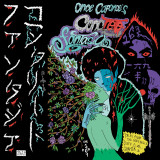
Psych-rap enigma Onoe Caponoe returns with his fifth studio album ‘Concrete Fantasia’ on High Focus Records. In crystal clear communication with the mothership; littered with striking references to fantastical realms and uncommon lore, but very much anchored in the inner city blocks and smoggy roadsides that inform his everyday, ‘Concrete Fantasia’ is a dark fantasy tape that expertly blurs the lines between genres, tones, moods and character profiles.
Of this world and out-of-this-world perfectly poised; Onoe offering up escape portals, before quickly pulling the listener back in with wave-upon-wave of catdelix riptides. ‘Concrete Fantasia’ is something of a tug-of-war; peppering movie samples, vignettes and complex go-betweens tickling the senses, combining with a cacophony of mind-bending lyricism resulting in a singular journey, with Onoe confidently filling the shoes of both author and narrator.
Pinocchio ducking feds in the hood, an Ice King ruling over a frostbitten kingdom, The Cheshire Cat trying to clean up Alice’s act, sweet serenades to off-shore mermaids, the trials and tribulations of life in a haunted trap house, big booty witches, flying carpets and beyond, ‘Concrete Fantasia’ is a real trip through the imaginative mind of Onoe Caponoe. With an eclectic line-up of featured artists and productional talent propping up the fictional cast, ‘Concrete Fantasia’ has all the makings of an alt-rap odyssey for the ages.
- 01: Introduction / Purple Haze Feat. Zdechly Osa
- 02: Slayaz / Elf Island
- 03: Fifi Feat. Lil B
- 04: House On The Hill
- 05: Pet Cemetery
- 06: The Cheshire Cat
- 07: Wipeout
- 08: Afro Samurai / Quest
- 09: Cat Kingdom
- 10: Magic Carpet
- 11: Pinocchio Feat. Jehst
- 12: The Horsemen
- 13: Ice King Feat. Lealani
- 14: Cat In Oz
- 15: Heaven's Gates
- 16: Outsiders
- 17: Psychosis City
- 18: Age Of Aquarius
Psych-rap enigma Onoe Caponoe returns with his fifth studio album ‘Concrete Fantasia’ on High Focus Records. In crystal clear communication with the mothership; littered with striking references to fantastical realms and uncommon lore, but very much anchored in the inner city blocks and smoggy roadsides that inform his everyday, ‘Concrete Fantasia’ is a dark fantasy tape that expertly blurs the lines between genres, tones, moods and character profiles.
Of this world and out-of-this-world perfectly poised; Onoe offering up escape portals, before quickly pulling the listener back in with wave-upon-wave of catdelix riptides. ‘Concrete Fantasia’ is something of a tug-of-war; peppering movie samples, vignettes and complex go-betweens tickling the senses, combining with a cacophony of mind-bending lyricism resulting in a singular journey, with Onoe confidently filling the shoes of both author and narrator.
Pinocchio ducking feds in the hood, an Ice King ruling over a frostbitten kingdom, The Cheshire Cat trying to clean up Alice’s act, sweet serenades to off-shore mermaids, the trials and tribulations of life in a haunted trap house, big booty witches, flying carpets and beyond, ‘Concrete Fantasia’ is a real trip through the imaginative mind of Onoe Caponoe. With an eclectic line-up of featured artists and productional talent propping up the fictional cast, ‘Concrete Fantasia’ has all the makings of an alt-rap odyssey for the ages.
- 01: Introduction / Purple Haze Feat. Zdechly Osa
- 02: Slayaz / Elf Island
- 03: Fifi Feat. Lil B
- 04: House On The Hill
- 05: Pet Cemetery
- 06: The Cheshire Cat
- 07: Wipeout
- 08: Afro Samurai / Quest
- 09: Cat Kingdom
- 10: Magic Carpet
- 11: Pinocchio Feat. Jehst
- 12: The Horsemen
- 13: Ice King Feat. Lealani
- 14: Cat In Oz
- 15: Heaven's Gates
- 16: Outsiders
- 17: Psychosis City
- 18: Age Of Aquarius
Psych-rap enigma Onoe Caponoe returns with his fifth studio album ‘Concrete Fantasia’ on High Focus Records. In crystal clear communication with the mothership; littered with striking references to fantastical realms and uncommon lore, but very much anchored in the inner city blocks and smoggy roadsides that inform his everyday, ‘Concrete Fantasia’ is a dark fantasy tape that expertly blurs the lines between genres, tones, moods and character profiles.
Of this world and out-of-this-world perfectly poised; Onoe offering up escape portals, before quickly pulling the listener back in with wave-upon-wave of catdelix riptides. ‘Concrete Fantasia’ is something of a tug-of-war; peppering movie samples, vignettes and complex go-betweens tickling the senses, combining with a cacophony of mind-bending lyricism resulting in a singular journey, with Onoe confidently filling the shoes of both author and narrator.
Pinocchio ducking feds in the hood, an Ice King ruling over a frostbitten kingdom, The Cheshire Cat trying to clean up Alice’s act, sweet serenades to off-shore mermaids, the trials and tribulations of life in a haunted trap house, big booty witches, flying carpets and beyond, ‘Concrete Fantasia’ is a real trip through the imaginative mind of Onoe Caponoe. With an eclectic line-up of featured artists and productional talent propping up the fictional cast, ‘Concrete Fantasia’ has all the makings of an alt-rap odyssey for the ages.
- A1: Kuami Eugene & Group Chat - I Feel Nice
- A2: Kizz Daniel - Cough (Odo) (Odo)
- A3: Tolani & Wande Coal - Slow Motion
- A4: Lax - Bank Alert
- A5: Kidi, Bnxn Fka Buju - Dance 4 Me
- A6: Wande Coal - Umbrella
- A7: Bad Boy Timz - Faya
- A8: Navy Kenzo & Fireboy Dml - Hold On
- B1: June Freedom - Thing For You (Feat Lax)
- B2: Olamide - Wound Someone
- B3: Black Sherif - Run
- B4: Leil & Bnxn Fka Buju - In The Middle
- B5: Cheque - Off White
- B6: Yaw Tog - Ring My Phone
- B7: Tiwa Savage & Asake - Loaded
In March 2022, EMPIRE assembled some of Africa's finest singers and songwriters, the musical equivalent of Ocean's Eleven, at a writing camp in San Francisco. The result is Where We Come From, Vol. 1, a 15-track compilation featuring Afrobeats royalty Wande Coal, Tiwa Savage and Olamide as well as Tanzanian duo Navy Kenzo, Cape Verde's June Freedom and a host of other stars across Nigeria and Ghana - KiDi, Fireboy DML, Kizz Daniel, Tolani and more. The sounds traverse East, West and South of the continent, incorporating drill, amapiano, trap and Afrobeats in fashioning an album that at once sandwiches luxury between lust and love while also being a flagpost to hedonism. The cover art, created by Nigerian artist Dricky Stickman, incorporates all 15 songs into the final product, illustrating unity, community and culture. “This project ‘Where We Come From, Vol. 1’ is a perfect example of music having no limitations,” Kareem Mobalaji, Regional Head West Africa said. “Yes we are from Africa, but we are truly determined to reach the entire world with our voice, which is music.”
- A1: Daytime Tv (Rainy Miller Remix)
- A2: It’s Hard To Get To Know You (Space Afrika Ambiv)
- B1: Pigeon Flesh (Mobbs' Butcher Mix)
- B2: Love Like An Abscess (Aho Ssan Remix)
- C1: Nervous Energy (Teresa Winter Remix)
- C2: I Was Born By The Sea (Morgane Polanski Remix)
- D1: I Was Born By The Sea (Fila Brazillia Remix)
- D2: Dream About Yourself (Bonus)
Richie Culver had been waiting his whole life to record I was born by the sea. His debut album immediately and messily inscribed the artist into the canon of outsider music and experimental electronics, serving both as an arresting statement of intent and a painful reckoning with the difficult path that lead up to it, stealing one last glance back at a place he always knew he had to escape. Between grim lamentations, faded memories and anxiety attacks, all told with searing honesty and disarming openness, I was born by the sea excavates a space for hope, finding Culver digging through Humberside silt to find a world weary optimism, the raw material from which his visual and sound art is shaped. For this collection of expansions and inversions, Culver invites a collection of kindred spirits, contemporary inspirations and old heroes to wade into the salt water of his formative years spent living for impromptu raves and afterparties, connecting vivid memories of his birth place of Withernsea to artists hailing from as nearby as Preston and Bridlington, further afield, from Manchester and London, Berlin and Paris, before returning back to Hull, to where it all began.
For some, responding to I was born by the sea means diving even deeper into the record’s furthest reaches. Space Afrika clear away the pummelling loops of noise from ‘It’s hard to get to know you,’ revealing a cool and cavernous expanse in its wake. Distant chatter, previously heard as though through thin, plasterboard walls, now echoes from outside the maddening claustrophobia of the original’s Sisyphean sonics, illuminated as a dense storm cloud suspended amidst a more open scene, washed clean by a lighter rain, allowing the tender heart of the track to beat clear. London producer MOBBS stretches out ‘Pigeon Flesh’ into an epic, 10-minute, cold-sweat spiral, strung-out tension wrung from disconnected phone tones twisted in unexpected directions, snatches of Culver’s voice turned inside-out and deep fried bass threatening to tip the track over into oblivion, the build-and-release of a nervous breakdown experienced in real time. In an act of subversive self-reflection, Morgane Polanski switches one kind of ennui for another in her adaption of ‘I was born by the sea,’ swapping the sea for the city, English seaside towns in January for summer evenings in Paris and flashing lighthouses and sparkling oil rigs for the Eiffel Tower and the traffic around L’Arc de Triomphe. Even Culver finds time to revisit ‘Dream About Yourself,’ a track taken from his EP Post Traumatic Fantasy, breathing new words into its glacial drift, the half-remembered testimony of a shut-in: Woke up in the evening / Pray for me / Don’t trust anyone / Pray for algorithm. Reframed in a more melancholy light, the track’s reverberant keys even more clearly evoke a mournful nostalgia, fresh pain felt in old wounds.
Others find a parallel universe in Culver’s visceral world building. Rainy Miller flips the script with a scorched, avant-drill rework of ‘Daytime TV’, threading puncturing hi-hats and queasy low-end surge through the track’s steady ambient cascade, invoking the irresistible Preston beat magic of Miller’s own essential debut album, Desquamation. Aho Ssan melts away the crystalline textures of ‘Love Like an Abscess’ with the ominous crackle of a nascent fire, building through swathes of organic Max/MSP squelch and brittle, nails-down-chalkboard scrape, swelling and metastasising the original to spill over Culver’s desperate hymn to corporeal desire, at once flesh and not. Teresa Winter transports us an hour up the coast from Withernsea to her native Bridlington, replacing the sea wall of synthesis on ‘Nervous Energy’ with muffled ASMR murk and fever dream whispers, transforming Culver’s unflinching observations into a haunting call-and-response, filling in the blanks with her own eerie utterances, a fleeting conversation with a ghost. In a touching victory lap, Fila Brazillia, eccentric stalwarts of beloved ‘90s trip hop imprint Pork Recordings, whose performances at Hull institution The Lamp convinced a young Culver of the necessity to make his mark on club culture, resurface for their first remix in 20 years. Steve Cobby and David McSherry lead a low-slung, heartfelt stroll back through a suite of tracks from I was born by the sea, tracing a full circle saunter from Culver’s origins to his current musical practice, the sounds of his present repurposed by the sound of his youth. In a gesture that reflects the emotional complexity of the project, Fila Brazillia find joy at the end of Culver’s troubled reflection, picking out an undeniable groove in the stasis of feeling trapped in your hometown. Underlining Hull’s vital musical legacy, from Baby Mammoth to Throbbing Gristle, Cobby and McSherry demonstrate that, though there are certainly storms, by the sea there is also sun and through the fog, if you listen, you can hear a singular sound, a sound now carried by Richie Culver.
Participant is a record label and creative studio run by William Markarian-Martin and Richie Culver
- A1: Welcome Wav
- A2: Life Is Perfecto
- A3: Nostalgic Body
- A4: Model Castings (Ft No Joy)
- B1: Suburbilude
- B2: Punksong
- B3: Night/Day/Work/Home
- B4: Gravure Idol
- C1: I Regret The Jet-Set
- C2: Self Service 1999
- C3: Slippery Plastic Euphoric
- C4: After The After
- D1: Dirty
- D2: End — Curve Of Forgetting
- D3: Heaven (Ft Sarah Bonito)
- D4: The Ultraviolet Room
Repress!
Montreal’s eclectic producer CFCF (aka Mike Silver) follows 2019’s effusive corporate jungle opus Liquid Colours with a kaleidoscopic capital-E Electronica album that takes a range of styles from his earliest formative listening years (1997-2000) and throws them in a blender. Elements of jungle, house, UK garage, trance, pop and post-grunge are blended to form a glossy picture of restless youth in an
identity crisis: memoryland.
Inspired as much by Sonic Youth and Smashing Pumpkins as the Chemical Brothers and Basement Jaxx; as much by films like Millennium Mambo, Demonlover, Morvern Callar, Safe and Perfect Blue as late 90’s Prada — CFCF jumps across genres as a means of portraying a breadth of overlapping milieus and identities in this hyperactive Y2K period-piece that both explores and criticizes our own nostalgic impulses. From the opening intro’s announcement of arrival to the final credits, it’s an album as film as RPG, with the listener as its protagonist.
Opener “welcome.WAV” functions as a start-up sound file for the journey ahead: from “Life is Perfecto”, a propulsive breakbeat-dreampop hybrid, to a grotesquely-remixed ultra-French-house version of previously released single “Self Service”, and the recursive, metaphysical garage of “After the After”. Two guest vocalists lend their talents: Montreal neo-shoegaze icons No Joy, fresh off their own genre-defying Y2K exploration Motherhood, laconically lists off advice for aspiring fashion ingenues with bite in the alt-rock-IDM “Model Castings”, while Kero Kero Bonito’s Sarah Bonito sweetly delivers the penultimate “Heaven”, grunge-pop paean to the myth of Icarus.
In CFCF’s words:
“I was feeling fatigued by an overabundance of ‘calming’, productivity-oriented music, and wanted to explore something angsty, messy, and dark, while also applying a pop sheen. I see a loose narrative across the album: your early 20’s, a new city, new people, new temptations and new traps. Losing your sense of self to the whims of your surroundings and trends in music and fashion; the wrong people, and trying to dig yourself out of that hole. There’s a hope of moving forward that glimmers in the last quarter of the album, but it’s out of reach and seems to come at a price. And then the looking back on it later with perspective; or the looking forward to it before with anticipation. As a kid I couldn’t wait to be in my 20’s; in my 30’s it’s bittersweet to look back. That’s the core of memoryland: the gulf between the fantasy, the reality, and the memory, and how we live inside each of those at different points.”
repress !
Striking back the way we like it.
With a primitive approach the duo Fractions initiates this ritualistic 12" with a hyper-disco trance induced big room smasher.
As it follows Lars Huismann burns it with a tune that could be directly extracted from a 2000's mighty label like Primate, danger funk alert.
Heavily influenced by the present music the hit of this record has a name, She Won't Make Me Sad. Jheal Bashta pushes once again the limits of the urban music transforming this trap track into a unique piece of dance floor techno music not easy to forget. Sang by his brother Metal Fence.
Closing the issue Kontain's Paradox, will melt the heart and the shoes of those who can still on the dance floor (one of the tracks that I've been playing in the last parts of my sets lately the most).
Discoteca Neanderthal for disc-jockeys and collectors.
Ex Wiish is a fleeting dream. The new musical project of Ben Shirken, a sound artist and composer based in New York City.
Shirken is the founder of record label & performance series 29 Speedway which features improvisational electronic music, 4-point guerrilla sound installations, live multimedia performances and has hosted Robert Aiki Aubrey Lowe, Poncili Creación, Debit, Pent, James K and various other New York-based artists. Shirken also produces for and plays modular synths in acclaimed free jazz group ‘Nu Jazz’ with Dan Orlowski of electronic hardcore staple Deli Girls.
Their debut record, “Shards of Axel'', is out on Incienso June 23, 2023. Born from a story-based video game composition; the listener finds themselves as the disoriented main player respawned into a harrowing, metallic landscape, wandering through cable ridden labyrinths, caught in progress traps as digital noises grind past submerged cityscapes.
- 1: Big Hair (Live)
- 1: 2 Through The Night (Live)
- 1: 3 Nothing (Live)
- 1: 4 Give You What You Came For (Live)
- 1: 5 Attack (Live)
- 1: 6 Fire (Live)
- 1: 7 Heart Strings (Live)
- 2: 1 Trapped Inside (Live)
- 2: Right About You (Live)
- 2: 3 Driver (Live)
- 2: 4 Shake It (Live)
- 2: 5 Anyway I Find You (Live)
- 2: 6 River Flows (Live)
- 2: 7 Sacred Ground (Live)
180g double LPs, 45 RPM. Hot off the back of this year's critically-acclaimed new album 'New York City', Brooklyn punk institution The Men are back already with a Fuzz Club Session album due out digitally and on limited double LP vinyl June 23rd. Recorded live to tape at Brooklyn's Serious Business Studio by Travis Harrison, the live session sees the Men storm through three tracks from 'New York City', one from 'Devil Music', a cover of English punk band Blitz and nine-brand new tracks that have never seen the light of the day until now, ranging from blistering noise-rock and cathartic rock'n'roll to lo-fi country-rock and hypnotising drones. This is the 20th release in the Fuzz Club Session series from London-based label Fuzz Club, which has previously hosted the likes of A Place To Bury Strangers, Night Beats, Holy Wave, The Entrance Band and more.
- A1: Electric Light Orchestra - Mr Blue Sky
- A2: Gerry Rafferty - Baker Street
- A3: Rod Stewart - Da Ya Think I'm Sexy?
- A4: 10Cc - Dreadlock Holiday
- A5: Justin Hayward - Forever Autumn
- A6: Wings - With A Little Luck
- A7: Kate Bush - The Man With The Child In His Eyes
- B1: Bonnie Tyler - It’s A Heartache
- B2: Suzi Quatro - If You Can't Give Me Love
- B3: Clout - Substitute
- B4: Crystal Gayle - Don't It Make My Brown Eyes Blue
- B5: Elton John - Part-Time Love
- B6: Billy Joel - Movin' Out (Anthony's Song) (Anthony's Song)
- B7: Joe Walsh - Life's Been Good
- B8: Blue Öyster Cult - (Don't Fear) The Reaper (Don't Fear)
- C1: Donna Summer - Macarthur Park
- C2: Chic - Le Freak
- C3: A Taste Of Honey - Boogie Oogie Oogie
- C4: The Three Degrees - Givin' Up Givin' In
- C5: Chaka Khan - I'm Every Woman
- C6: Yvonne Elliman - If I Can't Have You
- C7: Odyssey - Native New Yorker
- C8: Earth Wind & Fire - Fantasy
- D1: The Boomtown Rats - Rat Trap
- D6: Elvis Costello & The Attractions - (I Don't Want To Go To) Chelsea (I Don't Want To Go To)
- D7: The Jam - Down In The Tube Station At Midnight
- D8: Patti Smith - Because The Night
- E1: Abba - Take A Chance On Me
- E2: Baccara - Sorry, I'm A Lady
- E3: Boney M - Rivers Of Babylon
- E4: Althea & Donna - Uptown Top Ranking
- E5: Blondie - Denis
- E6: Olivia Newton-John - Hopelessly Devoted To You
- E7: Renaissance - Northern Lights
- E8: Dean Friedman - Lucky Stars (With Denise Marsa)
- F1: Marshall Hain - Dancing In The City
- F2: Eruption - I Can't Stand The Rain
- F3: Dee D Jackson - Automatic Lover
- F4: Sarah Brightman & Hot Gossip - I Lost My Heart To A Starship Trooper
- F5: Hot Chocolate - Every 1'S A Winner
- F6: Commodores - Three Times A Lady
- F7: Rose Royce - Wishing On A Star
- D2: The Undertones - Teenage Kicks
- D3: Buzzcocks - Ever Fallen In Love (With Someone You Shouldn’t’ve) (With Someone You Shouldn’t’ve)
- D4: Siouxsie & The Banshees - Hong Kong Garden
- D5: The Rezillos - Top Of The Pops
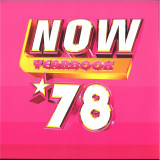
NOW Music is proud to present the next instalment in our ongoing ‘Yearbook’ series, NOW – Yearbook 1978; 85 tracks from a magical year in Pop! The 85 track special edition CD is housed in ‘hard-back-book’ packaging, including a 28-page booklet featuring a summary of the year, a track-by-track guide, a quiz, and original singles artwork. NOW – Yearbook 1978; 46 tracks on a 3LP set pressed on translucent pink vinyl - from a magical year in Pop!
Who would be better suited for remixing the Skudge classic? It's not a far-fetched idea, as we now see the remix 12" of Convolution featuring Levon Vincent.
Classic late 00s Levon Vincent style of rhythm and pace meets Skudge's hallmark sound.
It's been over a decade since Skudge took charge and urged us to "Give it all up". 'Convolution' forged two distinct genres while avoiding the trap of losing the attitude of both. The track was a strong take on Techno and House simultaneously and brought something new and interesting to the table.
Fast forward a decade since this effort marked the beginning of the Skudge journey, which not only caught the middle ground between Techno and House but also the ears of fellow producer Levon Vincent.
Levon is a prominent name in the oceanic underwater funk, touching strands of Dub, Techno, and House.
Levon delivers two versions, where the Scream Version captures the UK sound of anarchistic basslines similar to 'Basemental' from '95, on the A-side.
Flipping over to the B-side, one can hear the 'Convolution' atmosphere echoing between Levon and Skudge respectively.
For fans of Khruangbin, El Michels Affair, Tame Impala and Bonobo. “I spent a while thinking about the title for this album; it was quite hard to pin down the feeling I felt it represented. At a certain point I realised it was nostalgia, for everything; our life passed by, childhood, moments of happiness and sadness, where we grew up”. – Skinshape // Will Dorey aka Skinshape has proven himself time and again as a connoisseur for the cosmopolitan, across a prolific career expertly exploring understated sounds and theatrical textures. Taking his place alongside the likes of Khruangbin, Tame Impala, Bonobo and Madlib, Skinshape’s global kaleidoscopes are loaded with warmth and wisdom created on vintage analogue equipment applying a perfectionist’s touch. As a former member of indie band Palace, he has played everywhere from Glastonbury and BBC Maida Vale to headlining Shepherd’s Bush Empire. Conversely as a solo artist Skinshape has never played live preferring to record, releasing an album a year (two in 2020’s lockdown) and keeping away from the trappings of stardom.
‘Deep Blue Dreams’ ist das Debütalbum des in Berlin lebenden, 26jährigen Musikers, Sängers und Produzenten Lucas Herweg alias LLUCID. Inspiriert von Vorbildern wie Kendrick Lamar, J. Cole, Frank Ocean oder Ty Dolla $ign, lässt LLUCID jegliche Grenzen zwischen Rap und R&B konsequent verwischen. Die 12 Songs stehen fernab aller Stil- und Genreschubladen und liefern Banger zwischen Rap und Trap, sanfte Soundwellen mit exquisiten Beats und traurigem Autotune, hymnisch-sakralen Hip-Hop und ein ungewöhnliches Duo mit der britischen Sängerin Kimbra, die mit ‘A Reckoning‘ bereits eines der Alben des Jahres veröffentlichte. Nach Kollaborationen mit Samy Deluxe, Hundreds und Wallis Bird und der ersten 6-Track-EP ‘Getting In Touch’ im Frühjahr 2022 auf Grönland pusht LLUCID jetzt konsequent sein Solowerk.