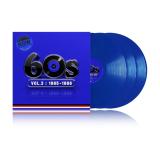
- A1: Wild Thing
- A2: Any Way That You Want Me
- A3: Feels Like A Woman
- A4: I Can't Control Myself
- A5: I Do I Do
- A6: I Love You, Baby
- A7: With A Girl Like You
- B1: Love Is All Around
- B2: Little Pretty Thing
- B3: Walking The Dog
- B4: Strange Movies
- B5: Maximum Overdrive
- B6: Always Something There To Remind Me
- B7: What You Doin' Here
quête:troggs
- 1
- Wild Thing (2.45)
- I Can’t Control Myself (3.10)
- Any Way That You Want Me (2.57) Love Is All Around (3.22)
- I Love You Baby (4.32)
- With A Girl Like You (2.15)
- Hot Days (3.03)
- Strange Movies (3.05
- Widge You (4.01)
- Black Bottom (2.58)
- I Do Do (2.54)
- Little Pretty Thing (3.06
- Feels Like A Woman (3.26)
- Last Night (3.06)
- A1: The Cure All Cats Are Grey
- A2: Black Sabbath Planet Caravan
- A3: Nino Rota O' Venezia Venaga Venusia
- A4: The Band I Shall Be Released
- B1: Georges Delerue Camille
- B2: Japan Ghosts
- B3: Scott Walker The Old Man's Back Again
- B4: Jeff Alexander Come Wander With Me
- B5: Cat Power Metal Heart
- C1: Minnie Riperton Lovin' You
- C2: Tan Dun For The World
- C3: Sébastien Tellier Le Long De La Rivière Tendre
- C4: Lee Hazlewood My Autumn's Done Come
- D1: Robert Wyatt P.l.a
- D2: Elliott Smith Let's Get Lost
- D3: The Troggs Cousin Jane
- D4: Air / Alessandro Baricco Musica
- D5: The Cleveland Orchestra Ravel: Pavane Pour Une Infante Défunte
- A1: Hurts And Noises
- A2: Wake Up
- A3: I Don't Wanna Be A Rich
- A4: Terrorist Bad Heart
- A5: Provocate
- A6: Lucifer Sam (Pink Floyd)
- B1: Happy!?
- B2: So Lazy
- B3: I Feel Down
- B4: Stupido
- B5: Guilty
- B6: Caroline Says (Loo Reed)
UILTY RAZORS, BONA FIDE PUNKS.
Writings on the topic that go off in all directions, mind-numbing lectures given by academics, and testimonies, most of them heavily doctored, from those who “lived through that era”: so many people today fantasize about the early days of punk in our country… This blessed moment when no one had yet thought of flaunting a ridiculous green mohawk, taking Sid Vicious as a hero, or – even worse – making the so-called alternative scene both festive and boorish. There was no such thing in 1976 or 1977, when it wasn’t easy to get hold of the first 45s by the Pistols or the Clash. Few people were aware of what was happening on the fringes of the fringes at the time. Malcolm McLaren was virtually unknown, and having short hair made you seem strange. Who knew then that rock music, which had taken a very bad turn since the early 1970s, would once again become an essential element of liberation? That, thanks to short and fast songs, it would once again rediscover that primitive, social side that was so hated by older generations? Who knew that, besides a few loners who read the music press (it was even better if they read it in English) and frequented the right record stores? Many of these formed bands, because it was impossible to do otherwise. We quickly went from listening to the Velvet Underground to trying to play the Stooges’ intros. It’s a somewhat collective story, even though there weren’t many people to start it.
The Guilty Razors were among those who took part in this initial upheaval in Paris. They were far from being the worst. They had something special and even released a single that was well above the national average. They also had enough songs to fill an album, the one you’re holding. In everyone’s opinion, they were definitely not among the punk impostors that followed in their wake. They were, at least, genuine and credible.
Guilty Razors, Parisian punk band (1975-1978). To understand something about their somewhat linear but very energetic sound, we might need to talk about the context in which it was born and, more broadly, recall the boredom (a theme that would become capital in punk songs) coupled with the desire to blow everything off, which were the basis for the formation of bands playing a rejuvenated rock music ; about the passion for a few records by the Kinks or the early Who, by the Stooges, by the Velvet mostly, which set you apart from the crowd.
And of course, we should remember this new wave, which was promoted by a few articles in the specialized press and some cutting-edge record stores, coming from New York or London, whose small but powerful influence could be felt in Paris and in a handful of isolated places in the provinces, lulled to sleep by so many appalling things, from Tangerine Dream to President Giscard d’Estaing...
In 1975-76, French music was, as almost always, in a sorry state ; it was still dominated by Johnny Hallyday and Sylvie Vartan. Local rock music was also rather bleak, apart from Bijou and Little Bob who tried to revive this small scene with poorly sound-engineered gigs played to almost no one.
In the working class suburbs at the time, it was mainly hard rock music played to 11 that helped people forget about their gruelling shifts at the factory. Here and there, on the outskirts of major cities, you still could find a few rockers with sideburns wearing black armbands since the death of Gene Vincent, but it wasn’t a proper mass movement, just a source of real danger to anyone they came across who wasn't like them. In August 1976, a festival unlike any other took place in Mont-de-Marsan – the First European Punk Festival as the poster said – with almost as many people on stage as in the audience. Yet, on that day, a quasi historical event happened, when, under the blazing afternoon sun, a band of unknowns called The Damned made an unprecedented noise in the arena, reminiscent of the chaotic Stooges in their early adolescence. They were the first genuine punk band to perform in our country: from then on, anything was possible, almost anything seemed permissible.
It makes sense that the four+1 members of Guilty Razors, who initially amplified acoustic guitars with crappy tape recorder microphones, would adopt punk music (pronounced paink in French) naturally and instinctively, since it combines liberating noise with speed of execution and – crucially – a very healthy sense of rebellion (the protesters of May 1968 proclaimed, and it was even a slogan, that they weren’t against old people, but against what had made them grow old. In the mid-1970s, it seemed normal and obvious that old people should now ALSO be targeted!!!).
At the time, the desire to fight back, and break down authority and apathy, was either red or black, often taking the form of leafleting, tumultuous general assemblies in the schoolyard, and massive or shabby demonstrations, most of the time overflowing with an exciting vitality that sometimes turned into fights with the riot police. Indeed, soon after the end of the Vietnam War and following Pinochet’s coup in Chile, all over France, Trotskyist and anarcho-libertarian fervour was firmly entrenched among parts of the educated youth population, who were equally rebellious and troublemakers whenever they had the chance. It should also be noted that when the single "Anarchy in the UK" was first heard, even though not many of us had access to it, both the title and its explosive sound immediately resonated with some of those troublemakers crying out for ANARCHY!!! Meanwhile, the left-wing majority still equated punks with reckless young neo-Nazis. Of course, the widely circulated photos in the mainstream press of Siouxsie Sioux with her swastikas didn’t necessarily help to win over the theorists of the Great Revolution. It took Joe Strummer to introduce The Clash as an anti-racist, anti-fascist and anti-ignorance band for the rejection of old-school revolutionaries to fade a little.
The Lycée Jean-Baptiste Say at Porte d’Auteuil, despite being located in the very posh and very exclusive 16th arrondissement of Paris, didn’t escape these "committed" upheavals, which doubled as the perfect outlet for the less timid members of this generation.
“Back then, politics were fun,” says Tristam Nada, who studied there and went on to become Guilty Razors’ frontman. “Jean-Baptiste was the leftist high-school in the neighbourhood. When the far right guys from the GUD came down there, the Communist League guys from elsewhere helped us fight them off.”
Anything that could challenge authority was fair game and of course, strikes for just about any reason would lead to increasingly frequent truancy (with a definitive farewell to education that would soon follow). Tristam Nada spent his 10th and 11th unfinished grades with José Perez, who had come from Spain, where his father, a janitor, had been sentenced to death by Franco. “José steered my tastes towards solid acts such as The Who. Like most teenagers, I had previously absorbed just about everything that came my way, from Yes to Led Zeppelin to Genesis. I was exploring… And then one day, he told me that he and his brother Carlos wanted to start a rock band.” The Perez brothers already played guitar. “Of course, they were Spanish!”, jokes their singer. “Then, somewhat reluctantly, José took up the bass and we were soon joined by Jano – who called himself Jano Homicid – who took up the rhythm guitar.” Several drummers would later join this core of not easily intimidated young guys who didn’t let adversity get the better of them.
The first rehearsals of the newly named Guilty Razors took place in the bedroom of a Perez aunt. There, the three rookies tried to cover a few standards, songs that often were an integral part of their lives. During a first, short gig, in front of a bewildered audience of tough old-school rockers, they launched into a clunky version of the Velvet Underground's “Heroin”. Challenge or recklessness? A bit of both, probably… And then, step by step, their limited repertoire expanded as they decided to write their own songs, sung in a not always very accurate or academic English, but who cared about proper grammar or the right vocabulary, since what truly mattered was to make the words sound as good as possible while playing very, very fast music? And spitting out those words in a language that left no doubt as to what it conveyed mattered as well.
Trying their hand a the kind of rock music disliked by most of the neighbourhood, making noise, being fiercely provocative: they still belonged to a tiny clique who, at this very moment, had chosen to impose this difference. And there were very few places in France or elsewhere, where one could witness the first stirrings of something that wasn’t a trend yet, let alone a movement.
In the provinces, in late 1976 or early 1977, there couldn’t be more than thirty record stores that were a bit more discerning than average, where you could hear this new kind of short-haired rock music called “punk”. The old clientele, who previously had no problem coming in to buy the latest McCartney or Aerosmith LP, now felt a little less comfortable there…
In Paris, these enlightened places were quite rare and often located nex to what would become the Forum des Halles, a big shopping mall. Between three aging sex workers, a couple of second-hand clothes shops, sellers of hippie paraphernalia and small fashion designers, the good word was loudly spread in two pioneering places – propagators of what was still only a new underground movement. Historically, the first one was the Open Market, a kind of poorly, but tastefully stocked cave. Speakers blasted out the sound of sixties garage bands from the Nuggets compilation (a crucial reference for José Perez) or the badly dressed English kids of Eddie and the Hot Rods. This black-painted den was opened a few years earlier by Marc Zermati, a character who wasn’t always in a sunny disposition, but always quite radical in his (good) choices and his opinions. He founded the independent label Skydog and was one of the promoters of the Mont-de-Marsan punk festivals. Not far from there was Harry Cover, another store more in tune with the new New York scene, which was amply covered in the house fanzine, Rock News (even though it was in it that the photos of the Sex Pistols were first published in France).
It was a favorite hang-out of the Perez brothers and Tristam Nada, as the latter explained. “It’s at Harry Cover’s that we first heard the Pistols and Clash’s 45s, and after that, we decided to start writing our first songs. If they could do it, so could we!”
The sonic shocks that were “Anarchy in the UK”, “White Riot” or the Buzzcocks’s EP, “Spiral Scratch” – which Guilty Razors' sound is reminiscent of – were soon to be amplified by an unparalleled visual shock. In April 1977, right after the release of their first LP, The Clash performed at the Palais des Glaces in Paris, during a punk night organised by Marc Zermati. For many who were there, it was the gig of a lifetime…
Of course, Guilty Razors and Tristam were in the audience: “That concert was fabulous… We Parisian punks were almost all dressed in black and white, with white shirts, skinny leather ties, bikers jackets or light jackets, etc. The Clash, on the other hand, wore colourful clothes. Well, the next day, at the Gibus, you’d spot everyone who had been at this concert, but they weren’t wearing anything black, they were all wearing colours.”
It makes sense to mention the Gibus club, as Guilty Razors often played there (sometimes in front of a hostile audience). It was also the only place in Paris that regularly scheduled new Parisian or Anglo-Saxon acts, such as Generation X, Siouxsie and the Banshees, the Slits, and Johnny Thunders who would become a kind of messed-up mascot for the venue. A little later, in 1978, the Rose Bonbon – formerly the Nashville – also attracted nightly owls in search of electric thrills… In 1977, the iconic but not necessarily excellent Asphalt Jungle often played at the Gibus, sometimes sharing the bill with Metal Urbain, the only band whose aura would later transcend the French borders (“I saw them as the French Sex Pistols,” said Geoff Travis, head of their British label Rough Trade). Already established in this small scene, Metal Urbain helped the young and restless Guilty Razors who had just arrived. Guitarist for Metal Urbain Hermann Schwartz remembers it: “They were younger than us, we were a bit like their mentors even if it’s too strong a word… At least they were credible. We thought they were good, and they had good songs which reminded of the Buzzcocks that I liked a lot. But at some point, they started hanging out with the Hells Angels. That’s when we stopped following them.”
The break-up was mutual, since, Guilty Razors, for their part, were shocked when they saw a fringe element of the audience at Metal Urbain concerts who repeatedly shouted “Sieg Heil” and gave Nazi salutes. These provocations, even still minor (the bulk of the skinhead crowd would later make their presence felt during concerts), weren’t really to the liking of the Perez brothers, whose anti-fascist convictions were firmly rooted. Some things are non-negotiable.
A few months earlier (in July 1978), Guilty Razors had nevertheless opened very successfully for Metal Urbain at the Bus Palladium, a more traditonally old-school rock night-club. But, as was sometimes the case back then, the night turned into a mass brawl when suburban rockers came to “beat up punks”.
Back then, Parisian nights weren’t always sweet and serene.
So, after opening as best as they could for The Jam (their sound having been ruined by the PA system), our local heroes were – once again – met outside by a horde of greasers out to get them. “Thankfully,” says Tristam, “we were with our roadies, motorless bikers who acted as a protective barrier. We were chased in the neighbouring streets and the whole thing ended in front of a bar, with the owner coming out with a rifle…”
Although Tristam and the Perez brothers narrowly escaped various, potentially bloody, incidents, they weren’t completely innocent of wrongdoing either. They still find amusing their mugging of two strangers in the street for example (“We were broke and we simply wanted to buy tickets for the Heartbreakers concert that night,” says Tristam). It so happened that their victims were two key figures in the rock business at the time: radio presenter Alain Manneval and music publisher Philippe Constantin. They filed a complaint and sought monetary compensation, but somehow the band’s manager, the skilful but very controversial Alexis, managed to get the complaint withdrawn and Guilty Razors ended up signing with Constantin with a substantial advance.
They also signed with Polydor and the label released in 1978 their only three-track 45, featuring “I Don't Wanna be A Rich”, “Hurts and Noises” and “Provocate” (songs that exuded perpetual rebellion and an unquenchable desire for “class” confrontation). It was a very good record, but due to a lack of promotion (radio stations didn’t play French artists singing in English), it didn’t sell very well. Only 800 copies were allegedly sold and the rest of the stock was pulped… Initially, the three tracks were to be included on a LP that never came to be, since they were dropped by Polydor (“Let’s say we sometimes caused a ruckus in their offices!” laughs Tristam.) In order to perfect the long-awaited LP, the band recorded demos of other tracks. There was a cover of Pink Floyd's “Lucifer Sam” from the Syd Barrett era – proof of an enduring love for the sixties’ greats –, “Wake Up” a hangover tale and “Bad Heart” about the Baader-Meinhof gang, whose actions had a profound impact on the era and on a generation seeking extreme dissent... On the album you’re now discovering, you can also hear five previously unreleased tracks recorded a bit later during an extended and freezing stay in Madrid, in a makeshift studio with the invaluable help of a drummer also acting as sound engineer. He was both an enthusiastic old hippie and a proper whizz at sound engineering. Here too, certain influences from the fifties and sixties (Link Wray, the Troggs) are more than obvious in the band’s music.
Shortly after a final stormy and rather barbaric (on the audience’s side) “Punk night” at the Olympia in June 1978, Tristam left the band ; his bandmates continued without him for a short while.
But like most pioneering punk bands of the era, Guilty Razors eventually split up for good after three years (besides once in Spain, they’d only played in Paris). The reason for ceasing business activities were more or less the same for everyone: there were no venues outside one’s small circuit to play this kind of rock music, which was still frightening, unknown, or of little interest to most people. The chances of recording an LP were virtually null, since major labels were only signing unoriginal but reassuring sub-Téléphone clones, and the smaller ones were only interested in progressive rock or French chanson for youth clubs. And what about self-production? No one in our small safety-pinned world had thought about it yet. There wasn’t enough money to embark on that sort of venture anyway.
So yes, the early days of punk in France were truly No Future!
- A1: Warm Slime
- A2: I Was Denied
- A3: Everything Went Black
- B1: Castiatic Tackle
- B2: Flash Bats
- B3: Mega-Feast
- B4: Mt Work
The ridiculously prolific Bay Area band Thee Oh Sees are back with another full-length long-player. Warm Slime is guaranteed to please fans of their whacked-out garage / psych / punk jams. Recorded by Sacramento sultan of sound Chris Woodhouse, Warm Slime carries on in the same tradition as the group's previous In The Red release, Help, showcasing their more electrified and rocking side, in comparison to other recent home-recorded releases. The centerpiece is undoubtedly the mind-bending title track, which clocks in at nearly 14 minutes and takes up the entirety of the album's first side. It's a psychedelic epic of "Inna Gadda Da Vida" proportions! John Dwyer's guitar playing is at its quadraspazzed best here, and the vocal interplay with Brigid Dawson gives it a B-52s-at-their-least-cheesy-crossed-with-the- Troggs vibe. The results are stunning. "Thee Oh Sees incorporate the oft-referenced Nuggets stuff in a way that feels reverential. With grinding guitars and bah-bah-bah vocals, but with the punk and new-wave elements also at play, they don't feel trite or plagiarized. This is like meat and potatoes prepared by a master chef-totally familiar but utterly delicious." -Pitchfork Recorded by Chris Woodhouse (Mayyors' guitarist and producer for The A-Frames, Hospitals, Coachwhips, Erase Errata, etc.) This is one of the best sonic blasts you will trash your speakers with this year....Raw, and real! Opening track is 13 minutes long, yes, we'll take it...
- Christine
- Like Fire
- Missionary Girl
- One Horse Town
- Dubrovnik Girls
- Freezing Rain
- Speedway Girls
- Twist Me Around
- I Had A Dream
- I'd Walk The Plank For You Baby
- Run Baby Run
- Angel Love
"Dubrovnik Blues" on Vinyl: The Australian Super-Band That Changed Everything! Attention all lovers of raw, unfiltered rock'n'roll! Bang! Records proudly presents the vinyl reissue of "Dubrovnik Blues", the celebrated debut LP from The Dubrovniks - the Australian super-group born straight from the beating heart of the country's punk underground. Formed in Sydney in 1986 (originally as The Adorable Ones), The Dubrovniks brought together true icons of the Aussie scene: James Baker, legendary drummer for Beasts of Bourbon, founding member of Hoodoo Gurus, and a driving force in The Scientists; Roddy Radalj, co-founder of Hoodoo Gurus and veteran of The Scientists; and Boris Sujdovic, who also played with both The Scientists and Beasts of Bourbon. Far from being "just another debut," Dubrovnik Blues was an instant statement of intent - a wild blend of garage rock grit, glam swagger, punk attitude and classic rock'n'roll hooks. Think The Troggs and T. Rex colliding with the spirit of the New York Dolls. Originally released in August 1989 on Timberyard Records, the album went on to earn a nomination for Best Independent Release at the ARIA Awards in 1990. Now, Bang! Records brings this cult gem back to life on vinyl - a must-have for collectors, vintage-sound purists, and anyone ready to relive (or discover) the raw, electric energy of late-80s Australian rock at its finest.
- Cold Outside
- Nick Of Time
- Lonely One
- It's My Time
- Left Unsaid
- Try Try Try
- Hall Of Mirrors
- Much Too Much
- Your Kinda Thing
- New Questions
- Kill City
- I'm Not Gonna Do It
- Don't Wanna Play
- Nashville Nights
- Today I Shot The Devil
- Tell Me Things
- Live With Me
- Just Another Day
The Fluid are arguably the great unsung band from the fertile underground rock scene of the late '80s and early '90s. The Denver five-piece - John Robinson (vocals), James Clower (guitar), Matt Bischoff (bass), Garrett Shavlik (drums), and the dear departed Ricky Kulwicki (guitar) - fused the fire of '80s hardcore with crunching Detroit protopunk, '60s garage rock, and '70s rock swagger. Think MC5, Faces, '70s Stones, all cranked up and really high on Sex Pistols and Black Flag singles. Rising from the ashes of early-'80s Denver bands Frantix (whose "My Dad's a Fuckin' Alcoholic" is a true gem of American punk) and White Trash, The Fluid were the first non-Seattle band to sign to Sub Pop, and Clear Black Paper was the second full-length album the label ever released. The label honchos were fans of Frantix, and happily got involved with The Fluid when the opportunity arose via the label's European licensing partner, Glitterhouse. Witnessing The Fluid's dominant live presence helped - a particularly fiery early show at Seattle's Central Tavern featured The Fluid, Mudhoney, Mother Love Bone, and Soundgarden all trying to outdo one another on stage. The band fit right in on Sub Pop's nascent roster of acts who, wherever they stood on the spectrum of punk/rock/metal, shared a commitment to thunderous riffs and explosive live shows. Legendary for their ferocious stage presence, The Fluid toured all over the US and Europe, holding their own and then some on bills with Mudhoney, Nirvana, Soundgarden, Dinosaur Jr., and other powerhouses of the era. From 1986 to 1993, The Fluid put out four albums and a number of EPs and singles, including a split 7" with Nirvana in 1991, before doing one album for a major label and promptly disbanding. Yet, while their partners-in-crime bulldozed into the mainstream, The Fluid remained something of a cult band, their audience confined to those who got hip during the band's existence, and crate diggers who nabbed original vinyl or CDs, which had quickly become rarities after selling through their original runs. Why? Record industry machinations? The fickle finger of pop culture? Being from Denver, not Seattle? Who the hell knows_ and who cares! The point is the band ripped, and the world deserves to hear them again. The Fluid took influences they shared with their contemporaries and ran in their own direction, focused on ass-shaking grooves more than misanthropic sludge. Rock anthems like "Cold Outside" sit alongside Stooge-oid rhythmic poundings ("Black Glove"), bluesy romps ("Leave It"), the occasional grungy dirge ("Wasted Time"), and raw punk bangers ("Is It Day I'm Seeing?" from the seminal 1988 Sub Pop 200 compilation). The band wasn't shy about their inspiration, either: scattered through their catalog are covers of The Troggs, The Rolling Stones, MC5, Iggy Pop and James Williamson, and Rare Earth. The Fluid stand out as champions of a feral, urgent, exuberant approach to rock 'n roll. As it turns out, that wasn't a recipe for stardom in the era of hyper-slick pop, boomer dinosaurs crying tears in heaven, and hair-metal power-ballads. But someone had to do it. To set things right, Sub Pop, The Fluid, and producer Jack Endino (Nirvana, Soundgarden, High on Fire, Mudhoney) teamed up to refresh and reissue The Fluid's entire indie-label catalog: their 1986 debut, Punch N Judy; 1988's Clear Black Paper; 1989's Roadmouth; the 1990 Glue EP (produced by Butch Vig, of Nevermind fame); and a treasure trove of rarities and previously unreleased material. All the music has been remastered from original tapes by Endino and JJ Golden, and the bulk of it has been meticulously remixed by Endino and the band, righting some sonic quirks that diminished the impact of the original records. Now, with their definitive material sounding better than ever, it's high time The Fluid get their due.
- You
- Goin' Away
- Saccharine Rejection
- Mouse Trap
- Turn Away
- Static Cling
- Preacher Man Blues
- My Future
- Madhouse
- 13: Th Nite
- Graveyard Tramps
The Fluid are arguably the great unsung band from the fertile underground rock scene of the late '80s and early '90s. The Denver five-piece - John Robinson (vocals), James Clower (guitar), Matt Bischoff (bass), Garrett Shavlik (drums), and the dear departed Ricky Kulwicki (guitar) - fused the fire of '80s hardcore with crunching Detroit protopunk, '60s garage rock, and '70s rock swagger. Think MC5, Faces, '70s Stones, all cranked up and really high on Sex Pistols and Black Flag singles. Rising from the ashes of early-'80s Denver bands Frantix (whose "My Dad's a Fuckin' Alcoholic" is a true gem of American punk) and White Trash, The Fluid were the first non-Seattle band to sign to Sub Pop, and Clear Black Paper was the second full-length album the label ever released. The label honchos were fans of Frantix, and happily got involved with The Fluid when the opportunity arose via the label's European licensing partner, Glitterhouse. Witnessing The Fluid's dominant live presence helped - a particularly fiery early show at Seattle's Central Tavern featured The Fluid, Mudhoney, Mother Love Bone, and Soundgarden all trying to outdo one another on stage. The band fit right in on Sub Pop's nascent roster of acts who, wherever they stood on the spectrum of punk/rock/metal, shared a commitment to thunderous riffs and explosive live shows. Legendary for their ferocious stage presence, The Fluid toured all over the US and Europe, holding their own and then some on bills with Mudhoney, Nirvana, Soundgarden, Dinosaur Jr., and other powerhouses of the era. From 1986 to 1993, The Fluid put out four albums and a number of EPs and singles, including a split 7" with Nirvana in 1991, before doing one album for a major label and promptly disbanding. Yet, while their partners-in-crime bulldozed into the mainstream, The Fluid remained something of a cult band, their audience confined to those who got hip during the band's existence, and crate diggers who nabbed original vinyl or CDs, which had quickly become rarities after selling through their original runs. Why? Record industry machinations? The fickle finger of pop culture? Being from Denver, not Seattle? Who the hell knows_ and who cares! The point is the band ripped, and the world deserves to hear them again. The Fluid took influences they shared with their contemporaries and ran in their own direction, focused on ass-shaking grooves more than misanthropic sludge. Rock anthems like "Cold Outside" sit alongside Stooge-oid rhythmic poundings ("Black Glove"), bluesy romps ("Leave It"), the occasional grungy dirge ("Wasted Time"), and raw punk bangers ("Is It Day I'm Seeing?" from the seminal 1988 Sub Pop 200 compilation). The band wasn't shy about their inspiration, either: scattered through their catalog are covers of The Troggs, The Rolling Stones, MC5, Iggy Pop and James Williamson, and Rare Earth. The Fluid stand out as champions of a feral, urgent, exuberant approach to rock 'n roll. As it turns out, that wasn't a recipe for stardom in the era of hyper-slick pop, boomer dinosaurs crying tears in heaven, and hair-metal power-ballads. But someone had to do it. To set things right, Sub Pop, The Fluid, and producer Jack Endino (Nirvana, Soundgarden, High on Fire, Mudhoney) teamed up to refresh and reissue The Fluid's entire indie-label catalog: their 1986 debut, Punch N Judy; 1988's Clear Black Paper; 1989's Roadmouth; the 1990 Glue EP (produced by Butch Vig, of Nevermind fame); and a treasure trove of rarities and previously unreleased material. All the music has been remastered from original tapes by Endino and JJ Golden, and the bulk of it has been meticulously remixed by Endino and the band, righting some sonic quirks that diminished the impact of the original records. Now, with their definitive material sounding better than ever, it's high time The Fluid get their due.
- You Make Me Die
- Archive From 1959
- For She
- You Gotta Move
- Fingers In The Sun
- Headlong Fly The Achaens
- Punk Rock Ist Nicht Tot
- Last Punk Standing
- Bob Dylan's Got A Lot To Answer For
- Troubled Mind
- I Don't Like The Man I Am
- Loins
- Upside Mine
- Moon Of The Popping Trees
- All Our Forts Are With You
- Christmas 1979
- I Feel Like Giving In (French)
- Thatcher's Children
- Lie Detector
- Fun In The Uk
- Hurt Me
- A Song For Kylie Minogue
- It's So Hard To Be Happy
- Brimful Of Hate
- Joe Strummer's Grave
- Medway Wheelers
- You Can't Capture Time (Slight Return)
- A Shropshire Lad
- Sex And Flies
- The Same Tree
- Cowboys Are Square
- Billy Childish And The Singing Loins Song Of The Medway
- Failure Not Success (Alt)
- Davey Crockett
Dieser Tage erscheint das Ted Kessler Buch "To Ease My Troubled Mind: Die autorisierte unautorisierte Geschichte von Billy Childish". Als die Idee für das Buch die Idee für das Buch aufkam, wollte Billy ein prägnantes Doppelalbum zusammenstellen, das die 47 Jahre seines musikalischen Schaffens zusammenfasst. Dies ist das Ergebnis. Mein Name ist William Ivy Loveday, alias Steve Hamper, alias Guy Hamper, alias Jack Ketch, alias Billy Childish. Ich wurde in Medway, Kent, geboren, wo ich immer noch lebe. Ich verließ die Schule 1976, als ich 16 war. Da ich keinen Schulabschluss hatte, wurde ich von der Kunstschule abgelehnt und ging in der Werft von Chatham als Steinmetzlehrling arbeiten. Später schaffte ich es, aufgrund meiner Bilder in einen Malkurs an der St. Martin's School of Art aufgenommen zu werden. Ich, Bruce, Big Russ und Little Russ gründeten 1977 The Pop Rivets und machten unsere ersten Aufnahmen. Unsere Inspiration war Punkrock, TV21 und The Swinging Blue Jeans. Ich lernte Gitarre zu spielen und arbeitete 1979 vier Wochen lang im Oakwood Mental Hospital als Pförtner, dann gründeten ich, Mick und Bertie The Milkshakes. Unsere Inspirationen waren Link Wray, die Beatles-Live-at-the-Star-Club-LP, der Song "Gotta Get the First Plane Home" von den Kinks und unser Hass auf die New Romantics-Szene. Dann wurde ich von der St. Martin's School of Art verwiesen, weil ich etwas geschrieben hatte, das als "die schlimmste Art von Toilettenwand-Humor" bezeichnet wurde. Ich verprügelte meinen Vater, als er aus dem Gefängnis kam, wo er wegen Drogenschmuggels gesessen hatte. Wir haben uns bei The Milkshakes nie selbst bezahlt und das ganze Geld in die Herstellung unserer eigenen Platten gesteckt. Ich bewahrte das Geld auf einem Bankkonto unter dem Namen Kurt Schwitters auf. Ich lebte 12 Jahre lang von der Sozialhilfe. Im Jahr 1985 gründeten wir Thee Mighty Caesars. Unsere Inspiration waren Bo Diddley und The Troggs. Ich wurde Mitglied von Greenpeace. 1989 gründeten Bruce und ich Thee Headcoats. Unsere Inspiration waren Son House und Downliners Sect. 1999 gründeten ich, Wolf und Johnny Barker The Buff Medways. Unsere Inspiration war Jimi Hendrix in Beatle-Stiefeln und The Who, bevor Roger Daltry anfing, die Vorhänge seiner Oma zu tragen. Etwa 2008 gründeten Julie und ich The Musicians of the British Empire. Daraus wurde dann CTMF. Daraus wurden dann die Chatham Singers. Unsere Inspiration basierte auf uns selbst. Als Nächstes war es an der Zeit, dass Neil und ich die Spartan Dreggs gründeten, inspiriert von Homer und A. E. Housman. Andere Gruppen entstanden und zerfielen - damit niemand wusste, wer wir waren oder warum. Im Jahr 2019 entstand The William Loveday Intention - inspiriert von Hollis Brown und den Mississippi Sheiks. Das Guy Hamper Trio tauchte noch einmal auf, zusammen mit Jamie an der Hammond. Einige dieser Gruppen sind geblieben, viele haben sich zu fernen Ufern mit scharfen, versteckten Felsen aufgemacht. Hauptsächlich male ich und schreibe Gedichte und Romane. Zusammen mit der Musik, die ich spiele, ist nichts, was ich tue, jemals besonders modisch gewesen, aber genau darum geht es auch. Schon 1977 haben wir gerne Nein gesagt. Dann, als der Punk sich in New Romantic verwandelte, fielen wir in den frühen Rock 'n' Roll und den Blues zurück. Bei The Milkshakes sagte man uns, dass wir zu viele LPs veröffentlichten und damit kommerziellen Selbstmord begingen, also brachten wir an einem Tag vier verschiedene LPs heraus. Ab und zu kommt jemand Berühmtes vorbei und ein kleiner Krümel rollt über den Tisch und spritzt in unsere lauwarme Suppe. Ein anderes Mal eifern uns Unbekannte nach und erweisen sich nur als besser. Ich liebe Pop, aber keine Popstars. Ich interessiere mich nur für Klang und Farbe und das in einem kleinen Maßstab zu sein. Ich verstecke mich nicht hinter Lautstärke und Off-Stage-Mixing. Ich brauche keine Show zu spielen, weil ich lieber daheimsitze und eine Tasse Tee trinke. Meine Arbeit gehört nach unten, zum Instinkt und zum Elementaren, und ist nahe am Boden. Ich glaube an selbstgemachte Musik, selbstgemachte Kunst und selbstgemachtes Kochen. Die Musik war über die Jahre hinweg ein lohnendes Hobby. Ich habe viele gute Freunde getroffen und mit ihnen gearbeitet, und Gott hat mich vor dem Ruhm bewahrt. Ich möchte die Straßenbahn und das Pferd zurückbringen.
Doppel-Vinyl inklusive CD-Kopie! 2019 waren DESTINATION LONELY unermüdlich und schamlos kreativ, getrieben von vielen Shows und die durchgedrehte Situationen, welche derzeit auf unserem Planeten passierten. Sie buchten das Studio für zwei Wochen, nahmen 17 Songs auf, alles Killertracks, hauptsächlich Originale gespickt mit einigen Coverversionen u.a. von THE TROGGS (I Want You), THE STOOGES (Ann). Arthur Larregle (JC SATAN) und Stefano Isaia (MOVIE STAR JUNKIES) steuerten auch noch Songs bei. VVR/Beat-Man: "Ich könnte einige Track wegschneiden, um ein normales Album zu veröffentlichen, aber was solls !! Sie sind alle so verdammt gut !!! Deshalb haben wir beschlossen, dieses Doppelalbum heraus zu bringen, und du wirst nicht enttäuscht sein und es lieben, wie wir es auch Lieben. Das ist Raw Super Filthy Garage Noise Trash Rock'n'Roll in seiner besten Tradition, und für alle Gitarren-Wichser gibt es einen 13-minütigen Gitarren-Orgasmus (Nervous Breakdown). Und für alle ELECTRO- und SYNTH-Nerds haben wir hier den Re-Mix von Schizo MF !!! DESTINATION LONELY, drei Agressiv-Negativ Junge Männer aus Toulouse/Bordeaux, entsprungen einer reichen ROCK'N'ROLL GARAGE NOISE TRASH-Kultur in Südfrankreich. Sie spielten und formierten legendäre Bands wie "Blew Up", "THE FATALS", "Space Beatnicks", "Jerry Spider Gang", "Beach Bitches" oder "Kung Fu Escaelators", um nur einige zu nennen, im In- und Ausland tourten sie und veröffentlichen Schallplatten auf unzähligen Labels und sind jetzt auf dem Weg ins Nirgendwo als DESTINATION LONELY. Lo Spider hat sein eigenes Aufnahmestudio "Swampland", in dem er Bands wie THE SPITS, THE MONSTERS, MAGNETIX, BAD MOJOS oder DEAD GHOSTS aufnimmt, um nur einige zu nennen.
Clear Vinyl. They say there's always something special about the first time and this record is that first time for the Folk Implosion. The band left the acoustic guitars and fragmentary sketch modus operandi of their earlier cassette behind to focus on an eccentric version of home studio craft, held together by a few cheap microphones (including a Radio Shack PZM) and a Tascam cassette 4-track recorder sequestered under the eaves of a 3rd floor, Cambridge Massachusetts double-decker house apartment. Wood floors and Christmas lights were as much a part of the vibe as an Ampeg VT 40 guitar amp and a small chord organ. The duo would wait until the downstairs neighbor went to work in the morning and then would play until the tunes snapped like a high-pitched snare drum. The setup would close down just before the neighbor came home from work, keeping the peace long enough to see the project through to completion.Once tracked, the band snuck into Fort Apache studios with Tim O'Heir (producer of Sebadoh's `Bakesale' LP) early one morning, freeloading off the Sebadoh sessions that were set to get going that afternoon. Tim mixed the songs through a very hi-fi Neve board in a matter of hours with the Tascam sitting right on the giant board like a tugboat keeping time with an oil tanker. The duo hoped that the spirits of ancestors like The Troggs, Devo, Al Green, and The Bee Gees would be pleased with the scent of tribute that arose from the ashes of the pyre. Today, they are pleased to see the Slaps and the Sputniks on view again nearly 30 years later.
- A1: Scott Mckenzie - San Francisco (Be Sure To Wear Some Flowers In Your Hair)
- A2: The Byrds - Mr Tambourine Man
- A3: Cher - Blowin' In The Wind
- A4: Tommy James & The Shondells - Crimson And Clover
- A5: Cream - Sunshine Of Your Love
- A6: The Beach Boys - Good Vibrations
- B1: Zager & Evans - In The Year 2525 (Exordium & Terminus)
- B2: The Mamas & The Papas - California Dreamin
- B3: The Troggs - With A Girl Like You
- B4: Free - All Right Now
- B5: The Moody Blues - Nights In White Satin
- B6: Albert Hammond - It Never Rains In Southern California
- C1: John Lennon - Imagine
- C2: Tim Hardin - If I Were A Carpenter
- C3: The Spencer Davis Group - Gimme Some Lovin
- C4: The Kinks - Lola
- C5: Joan Baez - Love Song To A Stranger
- C6: Cat Stevens - Peace Train
- D1: The Animals - The House Of The Rising Sun
- D2: Melanie - Brand New Key
- D3: Joe Cocker - Feelin' Alright
- D4: Procol Harum - A Whiter Shade Of Pale
- D5: The Who - Pinball Wizard
- D6: Canned Heat - On The Road Again
Die Kopplung „Flower Power – Best Of Love, Peace and Happiness” erinnert an die Zeit von Woodstock, Hippiebewegung und nicht zuletzt an ziemlich gute Musik.
Das Lebensgefühl der damaligen Zeit spiegelt sich in diesen Songs wieder: Freiheit, Liebe, Verbundenheit.
Auf 2LPs bzw. 1CD befinden 24 Songs aus den 60er und frühen 70er-Jahren. Von Künstlern, wie Joe Cocker, Cat Stevens, The Mamas & The Papas, Joan Baez, The Beach Boys, Melanie, The Who und
vielen anderen.
Die 2LP kommt im Gatefold-Cover und in farbigem Vinyl.
Ace Records freut sich, mit Singer-Songwriter, Ex-Pulp-Tour-Gitarrist und Sheffield-Legende Richard Hawley an diesem ersten Teil einer Compilation-Reihe mit von Hawley ausgewählten Lieblingssingles zusammenzuarbeiten. Dies ist eine Auswahl von 28 7inch-Singles, die Hawley auf seinen Tourneen gesammelt hat: Secondhand-Shop-Funde, Kneipen-Jukebox-Juwelen und alles dazwischen. Hawley bezeichnet den Klebstoff, der diese Auswahl zusammenhält, als "Little Bangers", da es sich bei allen um Mini-Handgranaten handelt; helle Lichter, die explodieren und verpuffen, einige große Namen, einige Raritäten, einige verlorene Seelen, einige Obskuritäten, einige von Künstlern, von denen er fast nichts weiß, außer dass sie ihn zum Tanzen bringen wollen. Viele sind Garagen-Instrumentals mit Gitarrenlinie als Lead-Melodie und der Kunst, eine Geschichte ohne Text zu erzählen. Eine 7inch-Single kann nur eine limitierte Menge an musikalischer Info enthalten - es muss knallen. The Shadows, Link Wray, The Troggs, The Champs, Jimmy Gordon und viele mehr zeigen wie das funktioniert. Kuratiert von Richard Hawley für CD und Doppel-LP mit umfangreichen, informativen Liner Notes.
This blue coloured vinyl is exclusive to Indie stores, very probably including a DLC as extra bonus. The classic third album from the Black Lips, originally released in 2005 and now back on vinyl and part of a series of Fire re-issues celebrating 20 years of the legendary garage rock gurus from Atlanta, Georgia. 16 tracks of grimy and chaotic punk, scuzzy and raw, and catchy as hell. The band at their trashy best, more melodic but every bit as psychotic. If The Royal Trux had listened to the Troggs instead of the Rolling Stones, they might have recorded this album. This baby is a masterpiece. Unapologetic southern-fried twang, crunching through the gears in a blitz of grimy bravado. Their music twitches with an engaging, wired vigour." **** Uncut - "Their strongest effort to date." All Music
- A1: Hornet's Nest - Curtis Knight & The Squires Feat. Jimi Hendrix
- A2: Nasty - The Timekeepers
- A3: Path Through The Forest (Version) - The Factory
- A4: Get On This Plane - The Premiers
- A5: Scotch On The Socks - The Shadows
- A6: Quasimoto - The Road Runners
- A7: Lazy Rebel - Twangy Rebels
- B1: Swinging Drums - Ronny Kae
- B2: Cuttin' Out - Rockin' Ronald & The Rebels
- B3: Honky - The Ho-Dads
- B4: Black Night - Cheryl Thompson
- B5: Long Line Rider - Bobby Darin
- B6: Poppin' Popeye - Link Wray & The Ray Men
- B7: Hot-Rod - King Curtis
- C1: Feels Like A Woman - The Troggs
- C2: Cuttin' Out - The Pirates
- C3: Where You Gonna Go - Art Guy
- C4: Neb's Tune - Ahab & The Wailers
- C5: Buzzzzzz - Jimmy Gordon
- C6: Jungle Walk - The Dyna-Sores
- C7: Surfin' & Swingin' (Shorter Version) (Shorter Version) - Les Brown Jr
- D1: Tahiti - Jimmy & Stan
- D2: Bawana Jinde - Al Duncan
- D3: Dead End Part 1 - The Executioners
- D6: El Gato - The Chandelles
- D7: It's Nothing To Me - Sanford Clark
- D4: Requiem For Love - Bobbie Gentry & Jody Reynolds
- D5 3: 4 Mash - The Champs
From Chile now Rotterdam comes that extraordinary One Lady Rock'n'Roll Orchestra giving you the most obscure Covers of the Cramps, Motörhead or the Drifters, Recorded in Peru and the NL Ladies & Gentlemen welcome to violence, der künstlerischen Gewalt der emotionalen Kraft, Sinnlichkeit und grenzenloser Stärke... Willkommen in der Welt von Bang Bang Band Girl, der allmächtigen ein Damen-Band, die dieses fabelhafte Album komponiert und gassenhauer neu um-komponiert, spielt, singt und produziert. In Chile geboren, dann auf der ganzen Welt gelebt und jetzt im niederländischen Rotterdam heimisch, ist das Album ein echtes Sonic-Meisterwerk, das wie eine Jukebox die grandiosen Hits unseres Bang Bang Band Girl spielt. Eine wild abgespacte Wand aus Fuzz gitarren, Theremin, Reverberation-Feedback und einer warmen, gefährlichen und doch süßen Stimme bringt Ihnen die Hits von The Troggs (Wild Thing) Wanda Jackson (Funnel Of (trash) Love) Hasil Adkins (No More Hot Dogs) Nancy Sinatra (bang bang) Motorhead (the Watcher) The Drifters (Up On the Roof) Dave Diddle Day (Blue Moon Baby) The Heartbreakers (All By My Self) Elvis Presley (Heartbreak Hotel) the Cramps (Call Of The Wighat) alles selbst aufgenommen und gespielt in Rotterdam oder Lima, Peru, ausgenommen Walter Daniels (daddy long legs, Oblivians, john schooley etc) spielt Saxophon in Blue Moon Baby und Veronik spielt das Theremin in Heartbreak Hotel, wir können nur aufstehen mit den Füssen stampfen und laut applaudieren und eine weitere Münze in die Jukebox werfen, nur um in den Tiefen der Nacht zu tanzen. (Frank Zwiler) Vinyl-LP mit DLC, Poster-Booklet-Inlay und Gratistrip ins All, CD in Karton-Digisleeve inklusive 12seitigem Insert, kein Kunststoff bis auf die CD
Folk Implosion's fan favorite album is available on cassette for the first time! They say there's always something special about the first time and this record is that first time for the Folk Implosion. The band left the acoustic guitars and fragmentary sketch modus operandi of their earlier cassette behind to focus on an eccentric version of home studio craft, held together by a few cheap microphones (including a Radio Shack PZM) and a Tascam cassette 4-track recorder sequestered under the eaves of a 3rd floor, Cambridge Massachusetts double-decker house apartment. Wood floors and Christmas lights were as much a part of the vibe as an Ampeg VT 40 guitar amp and a small chord organ. The duo would wait until the downstairs neighbor went to work in the morning and then would play until the tunes snapped like a high-pitched snare drum. The setup would close down just before the neighbor came home from work, keeping the peace long enough to see the project through to completion. Once tracked, the band snuck into Fort Apache studios with Tim O'Heir (producer of Sebadoh's 'Bakesale' LP) early one morning, freeloading off the Sebadoh sessions that were set to get going that afternoon. Tim mixed the songs through a very hi-fi Neve board in a matter of hours with the Tascam sitting right on the giant board like a tugboat keeping time with an oil tanker. The duo hoped that the spirits of ancestors like The Troggs, Devo, Al Green, and The Bee Gees would be pleased with the scent of tribute that arose from the ashes of the pyre. Today, they are pleased to see the Slaps and the Sputniks on view again nearly 30 years later. Tracklisting: 1. Blossom 2. Sputnik's Down 3. Slap Me 4. Chicken Squawk 5. Spiderweb-Butterfly 6. Had To Find Out 7. Better Than Allrite 8. Why Do They Hide 9. Winter's Day 10. Boyfriend, Girlfriend 11. Shake A Little Heaven 12. Waltzin' With Your Ego 13. Take A Look Inside 14. Start Again
- 1