James Cullen and Dan Cobb formed TENDER in
2015, as the bedroom project of two flatmates tired
of the design by committee nature of larger
musical groups.
TENDER’s ‘Modern Addiction’ provides fresh
perspective to the idea of addiction, through the
lens of love. It is unafraid to admit or to accuse,
eager to confide and to provide, in direct,
shimmering confessionals.
Original pressing sold out - ‘Modern Addiction’ has
been out of print for several years. Now available
again, on black vinyl.
“Mysterious duo Tender specialise in marrying
polarising elements that could well soundtrack
parties as well as the loss of love” - DIY
“An enthralling, minimalist pop gem” - CLASH
“Gliding over guttural electro swoons, it’s the sort
of glacial pop that’d soundtrack late-night
contemplation no matter where you are in the
world” - Dork
Search:two electro
Once again, accordionist Vincent Peirani
reshuffles the cards. As a good jazz musician, he
likes to venture into unexplored territories. As a
good music fan and a very good musician in
general, he is curious, enthusiastic, and eager to
make new discoveries and find new things to listen
to or play. ‘Jokers’, his first album in trio, goes
even further, and elsewhere.
Vincent chose to turn to the jazz trio for the first
time, a formula with such a long history that it is
almost sacred, and certainly intimidating. But
typically, he used that framework only to escape
from it. His two accomplices, Federico Casagrande
on guitar and Ziv Ravitz on drums and keyboards,
both have a wealth of experience and skills, an
interest in rock and electronic music, and a taste
for musical hybridity.
Now available on vinyl with digital download code.
- A1: Bonjour (Feat Julie Normal & Bob Junior)
- A2: Lungo Il Fiume E Sull'acqua
- A3: Desire (Feat Egeeno)
- A4: Gli Inglesi E Gli Americani (Feat Emanuela Villagrossi)
- A5: Turn To See Me (Feat Chiara Castello)
- A6: I Am Here
- B1: Energy & Love
- B2: Empty Window/Empty Space
- B3: What's Your Path, Man (Feat Jonathan Clancy & Maurizio Marsico)
- B4: Water & Sea
- B5: Pronuncia Di Levante
- B6: Notturno Cileno (Feat Gianpiero Kesten)
"Turn To See Me" is yet another step forward for The Dining Rooms, an artistic duo that never lacked creativity. This ninth album of theirs is a further confirmation: an intense record, inevitably influenced by the events of the last two years and therefore imbued with dark and melancholy sounds, but at the same time positive and aimed at a hopefully better future. Once again, there are numerous collaborations and blends of various musical genres (hip-hop, folk, jazz, electronic, trip hop) that do not, however, betray the 'cinematic' trademark of the Milanese outfit.
After more than two decades flexing his muscles on the local underground scene and gaining a legendary cult status on his Tenerife home turf, the island’s most famous postman, as he’s affectionately known by his consorts, Tomás de la Rosa aka Postman breaks radio silence to bulldoze his way through the canyons surrounding his hometown of Santa Cruz into an unknown and unsuspecting world. We present thus, Postman’s first ever album of original bangers, micro chopped two steppers and rage induced breakbeat anthems.
Constructed over the course of global confinement, Seeds of Light marks a return to creative activity from the man who regularly delivers your post (its not just a random artist name). Postman aka Tomás de la Rosa has taken his time, compiling sketches and unfinished songs, rummaging through the deep ends of his hardrive, stitching early production sketches with recent compositions, revising, reediting and rebuilding with a more mature and concise attitude, eventually completing, almost unintentionally, the perfect self referential retrospective album. Far from being just a compilation album, Tomás managed to create an explosive document, suspended in time, in which styles are intertwined regardless of fashions and fads – letting go of the ‘modern’ or ‘up to date’ burden - so common these days in electronic music.
It is not an easy album, like many of his previous work it demands extra attention to experience the full crystallization of his complex sound structures. We find ourselves in front of a truly surgically precise work of art whose result comes as a waterproof war machine, refined and incisive, resonating deep with soul and groove.
Postman develops his sound palette throughout the album from very basic sound snippets into a concrete dance world of synthetic sounds eventually creating a parallel reality where J. Dilla could be living in Chemnitz instead of Detroit and releasing records for a label called Raster-Throw. Glitch sampladelics!
Incursions into Grime are also abundant with nods to the ineffable East Man, reunions with his beloved Funkstörung or many other stimulating revisions of lifelong genres and breaks populate this multidimensional sound space, see soul, dancehall, breakbeat, two step and the UK hardcore continuum.
Special mention to the magnificent fluid artwork by the very talented Catalan visual artist Alba de Corral. A still photo from one of her kinetic AI systems programmed directly in code, which matches perfectly the essence of Postman's brutalist alien sound.
Vinyl limited to 200 copies
The British composer, musician and audio engineer Daphne Oram was a pioneering figure in the use of electronic music. Coming to prominence through her work with the BBC Radiophonic Workshop, which she co-founded, Oram was one of the first British composers to feature electronic instruments in her work and has been rightly hailed as helping musique concrete to become accepted in Britain. Born in 1925 and raised in rural Wiltshire, close to Stonehenge and the ancient stone circle at Avebury, Oram eschewed a place at the prestigious Royal College of Music to take a junior engineering role at the BBC in 1942, she was often tasked with creating sound effects, leading to cut-up experiments with tape recorders and the development of synthetic sound; her composition Still Point, involving two orchestras, two turntables and five microphones, was deemed too radical by the BBC, though she was promoted to studio manager in 1950, leading to the gradual introduction of electronic music and musique concrete techniques on BBC soundtracks. In 1957, she composed the music for the play Amphitryon 38, using a sine wave oscillator and homemade filters, and this and other subsequent works led to the establishment of the BBC Radiophonic Workshop the following year, but Oram soon tired of the conservative constraints of the BBC, leading to her resignation in 1959 to pursue her own vision at the Oramics Studios for Electronic Composition, located in Tower Folly, a former hop kiln located at Fairseat, near the village of Wrotham in rural Kent. Oramics was a radical sound composition technique that sought to transform images to music, enacted by drawing onto 35mm film, which would then be read by photo-electric cells; in addition to its use in Radiophonic Workshop material, Oramics was also employed for sound installations, theatre productions and feature films, such as The Innocents, though financial pressures forced Oram to seek a range of commercial engagements in addition to creating her own artistic works. The Listen Move And Dance series of BBC programmes were devised as a radical new technique to help British schoolchildren learn how to dance; on the LP releases, Vera Gray arranged short adaptations of classical pieces by Bartok, Stravinsky, Shostakovich and others, designed for “stamping, punching, kicking and jumping” movements, as well as “running lightly, dancing on toes” and “shaking all about,” which contrasted sharply with Oram’s electronic abstractions, which seemed to have been beamed in from outer space.
BT50 sees the return to the fold of XY0815.
Showcasing his ever-expanding palette, Gates Need Inputs Vol. I sees the Weimar based producer stepping away from the dancefloor.
Brighter in mood than previous contributions, the first volume of two, presents XY0815 displaying his typical finesse and restrained flex on electronica and downtempo.
Edition of 300 copies.
Limited 300 180g white vinyl LPs with printed inner Discobag and digital download.
500 CDs in gatefold digifile sleeve.
Each drum controls a virtual musical instrument (synthesizers, samplers, arpeggiators, etc.) within Ableton Live music software that, in combination with a custom step sequencer developed with MaxforLive app, allows Davide to perform real melodies/electronic orchestration without the use of any backing track. 100% live. In addition to that, he also uses a microphone set up in the middle of the drumkit to capture the dynamics of the acoustic drums and translate them through an 'envelope follower' into electronic parts in several ways. About ‘Perceive Reality’: Opener Belief bursts the record into life, as skittering arpeggios spin across a vast open plain of pad synths, before the ground splits beneath it with thrashing drums. On Conceived, Davide creates a simultaneously dark and euphoric wall of crystallised sound, a cacophony of pounding drum hits and icy electronic stabs, with an intensity that continues into Collide. With its shuddering, cut-out reverbed synth pads split in two by crashing cymbals and snares, the song spins itself into a transformative cycling trance, before slowly fading and washing away into silence, only to be broken by Conjectures’ sudden cymbal slams and transfixed toms that roll like thunder into a frenzy, before their final lightning strike. On Subjective, arpeggios twist around beating kick drums and toms, quickly scaling to a furious yet tightly wound sequence that envelops the listener, before Relief, where the album finally takes the shape of a huge wave of calm, glimmering hope and reflection. About the concept behind this latest album, Davide says, “Perceive Reality is a vivid exhortation to deepen the relationship with reality, avoiding simple and often illusory visions. In a historical context that fosters the proliferation of dual information and visions, individuals are increasingly exposed to the danger of perceiving less the complexity of events, thus losing the training to express complex and articulated opinions, the result of a reflection, whether individual or collective. Without having the presumption of resolving epochal issues, the project alerts to the fact that univocal answers do not exist and that only by developing a path of knowledge and giving ourselves the opportunity to examine things in depth, can we enter into the relationship with the existing.” Press highlights so far: Video premiere on Rumore.IT (Italy).
After releasing two EPs from rising talent MOY, Batrachian’s journey through mystical synths, breakbeat and electro rhythms, and ear-worm melodies continues in the capable hands of Bristol-based Jack Wiles. On Wiles’ debut EP, ’Too Real Eyez’ is a slow-burning spiral of acidic frequencies and tough breaks with a killer vocal snippet, while ‘Bientam’ is a rolling junglist piece driven by chopped drums, meandering bass and an intricate bell melody: the perfect mix of rhythmic heft and IDM intrigue. ‘Slowrush’ matches offbeat electro drums with a bittersweet synth part, and finally, Wiles remixes MOY’s ‘Echolab’ (recently released on the EMOTEC label) into an early Warp-style acidic masterpiece.
The sound mutations of Estonian based museum security guard Mihkel Kleis, aka Ratkiller, has found its nest on the upcoming oeuvre "Leather Squeaking Softly". A unique sound composition and rare glimpse into visions of being stuck in a whirlpool of forgotten debris and plastic remains, discarded non-recyclable objects and broken hi-fi equipment. An audio memorandum rendering irregular sound compositions of desolated dumping grounds, faulty drum machines and field recordings of distorted memories. It's as if your whole life was a theme park built on a hazardous waste site. Leather Squeaking Softly consists of two different Movements extending a bit over 33 minutes. The cassette release is due in April on Possible Motive and comes as a pro dubbed C-30 coloured cassette with 4–colour pro printed inlays.
“Electronic music’s equivalent of dragging an unwilling teenager to a family function”
Richard Foster — Louder Than War
Stars of the Lids, Tim Hecker, Brian Eno, Manuel. Duo Consists of Jonas Munk (aka Manual) and Jason Kolb (guitarist from Auburn Lull). 4th album, 2nd for Felte and first one since 2012. Initially on blue vinyl. Past press by Pitchfork, XLR8R, Impose. Past project Releases on Morr Music, Darla, and more. Billow Observatory is the project of trans-Atlantic duo Jonas Munk (Denmark) and Jason Kolb (Michigan). Initially planned as a small sideproject from their main work in Manual and Auburn Lull respectively, the two quickly realized their collaborative experiments merited more time and attention. Using heavily treated cavernous guitars, subtle synths, and crackling radio transmissions, their self-titled debut was released in 2012 as a double LP and established Billow Observatory as purveyors of unhurried, highly detailed ambient immersion. The release pair of II: Plains/Patterns in 2017, and III: Chroma/Contour in 2019, on Munk's own Azure Vista Records, introduced a subtle underpinning of rhythm, pulse, and stutter among the washes, expanding their sound with a hint of understated electronica. Marking 10 years since debuting on Felte, 2022 sees the release of Stareside, their most forcefully elegant undertaking to date. A record of swaying quarantine temperament, Stareside's 9 tracks thread the needle between hope and hopelessness - daydreaming whilst watching the world go mad in the blink of an eye. Not shy of overt rhythm, soaring motifs, and daunting undercurrents, Stateside veers wildly in new directions, yet keeps one hand near the record bin of comforting nostalgia (think early Warp Records, Jon Hassel, and Conny Plank to name a few).
Back in 2017, Moderat announced that they’d be taking an extended break following a final concert in front of 17.000 people in their hometown of Berlin. And now they return. MORE D4TA, the group’s fourth album, arrives more than six years after its predecessor (2016’s III). Created largely during a time when touring (and most traveling) was off the table, MORE D4TA is an album that wrestles with feelings of isolation and information overload—issues that have become particularly pronounced over the past two years. The ten songs on MORE D4TA are rooted in collaboration, but long before any of its tracks were laid down, Moderat spent months hanging out and getting musically reacquainted, indulging in extended bouts of experimentation and slowly fleshing out ideas as they dove into modular composition, field recordings and other sonic oddities.
But no matter how far the band ventures into music’s outer realms, they always wind up back in their own unique soundworld, a place where emotive pop and fluttering electronic soundscapes walk hand in hand. Many of its lyrics are rooted in Ring’s frequent trips to Berlin’s Gemäldegalerie museum (often with his infant daughter in tow), where he’d seek refuge in the great paintings of the past while worrying about the future.
What they make isn’t necessarily dance music, but it is something that shines brightest in the dark of night, the group’s rich melodies and Ring’s ethereal vocals emitting a warm, almost bioluminescent glow. After spending the better part of two decades making music together, they’ve carved out a sound and aesthetic that are all their own, and MORE D4TA showcases a group that’s creatively recharged and fully dedicated to its craft.
Deluxe Edition / LP+Poster
Back in 2017, Moderat announced that they’d be taking an extended break following a final concert in front of 17.000 people in their hometown of Berlin. And now they return. MORE D4TA, the group’s fourth album, arrives more than six years after its predecessor (2016’s III). Created largely during a time when touring (and most traveling) was off the table, MORE D4TA is an album that wrestles with feelings of isolation and information overload—issues that have become particularly pronounced over the past two years. The ten songs on MORE D4TA are rooted in collaboration, but long before any of its tracks were laid down, Moderat spent months hanging out and getting musically reacquainted, indulging in extended bouts of experimentation and slowly fleshing out ideas as they dove into modular composition, field recordings and other sonic oddities.
But no matter how far the band ventures into music’s outer realms, they always wind up back in their own unique soundworld, a place where emotive pop and fluttering electronic soundscapes walk hand in hand. Many of its lyrics are rooted in Ring’s frequent trips to Berlin’s Gemäldegalerie museum (often with his infant daughter in tow), where he’d seek refuge in the great paintings of the past while worrying about the future.
What they make isn’t necessarily dance music, but it is something that shines brightest in the dark of night, the group’s rich melodies and Ring’s ethereal vocals emitting a warm, almost bioluminescent glow. After spending the better part of two decades making music together, they’ve carved out a sound and aesthetic that are all their own, and MORE D4TA showcases a group that’s creatively recharged and fully dedicated to its craft.
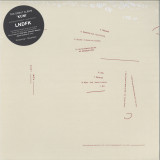
LNDFK (aka Linda Feki) presents her ground-breaking debut album, "Kuni" on Brooklyn-based Bastard Jazz Recordings. Undeniably on the rise after her 2019 breakout performance at Primavera Sound, LNDFK has already caught the attention of Pitchfork, Rolling Stone, Clash Magazine, Noisey, and Brooklyn Vegan (among many others) while being championed by the likes of Gilles Peterson, Tom Ravenscroft, and Jamz Supernova & landing spots on tastemaker playlists like Spotify's "Pollen" and "Fresh Finds."
"Kuni" is a spellbinding exploration of dichotomies: Love & Death (Eros & Thanatos), Flower & Fire, Delicacy & Violence, Poetry & Realism, Purification & Destruction. These opposites are reified in the 10-track LPs multifarious and multifaceted sounds, elegantly meandering through a variety of styles and genres, spearheaded by Linda and features the production wizardry of Darrio Bassolino who co-wrote the album.
"Kuni" opens with "Hana-bi," an ambient instrumental piece that sets the tone for the album. Inspired by the Takeshi Kitano 1997 film of the same name – particularly Joe Hisaishi's stunning soundtrack, as well as Kitano's paintings which appear in the film. "Hana-bi" expresses the dialoguing opposites of flowers and fire, the first of many dichotomous representations throughout the album. "Takeshi" acts as an extension and to "Hana-bi," albeit one of opposing sound, with its driving, highly syncopated drums (which reappear throughout "Kuni") – à la Karriem Riggins, Questlove, or Yussef Dayes – frenetic bass line, and jazz chords. Linda's sultry voice is interspersed, initially jumping around in scat fashion, being triggered as if a sample, before her lyrics come in; her vocals are used like an additional instrument, adding to the song's rich texture. "Kuni" truly hits its stride with the next song, "Smoke – a moon or a button" (its title lifted from the 1959 book by Ruth Krauss and Remy Charlip), which is structured like a jazz standard yet flows into neo-soul territory sonically with those prodigious drums a highlight once again.
LNDFK touches on experimental hip hop in two songs on the record (both of which were released as singles in 2021): "Don't Know I'm Dead or Not (feat. Chester Watson)" – track #4 – and "How Do We Know We're Alive (feat. Pink Siifu)" – track #9. Although they embrace a more hip hop-leaning sound, these songs by no means shy away from the exploratory theme, and feature two of the alt-rap scenes rising stars with Chester Watson and Pink Siifu who offer provocatively impressing verses, combining dense word play with unconventional flows. While these tracks may first appear to be outliers on the album, they are undeniably in tune with "Kuni's" message and sonic palette, acting as testaments to LNDFK's willingness to explore and experiment.
Meanwhile, "Ku" – the third and last single before the album release – furthers the pre-established future soul sound while meandering through nu jazz and left-field electronic. Inspired by the graphic novel and film, "Sin City," and its female assassin protagonist Miho, "Ku" is a musical interpretation of Miho's story, incorporating both her beauty – the first half of the song – and murderous tendencies – the second half – to create a stunning juxtaposition, culminating in an ambient finale that suggests the character's vulnerability and inner peace. The song gracefully bridges the gap between Hiatus Kaiyote-esque songwriting, Dilla's rhythmic syncopation, and Thundercat's instrumental prowess (LNDFK has shared a stage Brainfeeder labelmate Kamasi Washington).
Mixed in throughout "Kuni" are a series of instrumental pieces that function as something akin to an interlude. The aforementioned intro, "Hana-bi," and the album closer "se mi stacco da te, mi strappo tutto:" act as bookends, while "Om" indicates the half-way mark, and "Ktm" sees Jason Lindner add his sound the album. These tracks are the ambient foundation of "Kuni," representing the thematic duality of the work. Clocking in at only 24 minutes, "Kuni" packs an astonishingly diverse array of sounds, styles, and themes, all while showcasing virtuosic musicianship and instrumental prowess.
Appearing on "Hana-bi" and "Ktm," renowned international artists Asa-Chang and Jason Lindner add an additional perspective to "Kuni": Asa-Chang on "Hana-bi," and Jason Lindner on "Ktm." Asa-Chang - famously of the Japanese avant-garde group Asa-Chang & Junray - provides vocals and percussion to an alternate version of the instrumental opener, while the acclaimed keyboardist Jason Lindner offers his synth expertise on "Ktm." These features highlight the spirit of collaboration found in LNDFK's music, always willing to try out new ways of working.
LNDFK is a singer and songwriter, born of two cultures – an Italian mother and Arab father. She grew up in Naples, away from her father, the Sahara, her homeland and traditions, which has helped nourish the desire to rediscover – through art – an engagement to her roots. Her music melts with jazz, neo-soul and hip-hop influences, filtered through her experiences and sensibility.
Her first EP, "Lust Blue," was composed with the artistic production of Dario Bass and released by Feelin' Music; after that she released several singles that saw international radio support (BBC, NTS, Wordwide FM) and gained a massive audience on digital platforms. Together with her band, she toured around Europe, performing alongside such notable artists as Kamasi Washington and Mndsgn, among others. Most recently she toured Italy, and performed at Primavera Sound Festival 2019 in Barcelona.
"Kuni," is due out on NYC label Bastard Jazz Recordings in February, 2022, while the vinyl LP will follow shortly after.
Having embraced the wide wired world of modular synthesis, Prince of Queens aka Felipe Quiroz has already proved fit and formidable in dialing in the necessary sonic component of his current stargazing outfit Combo Chimbita. His first two solo records on NYCT have only added to an already wide-ranging electronic fluency, yet have also brought a flare and understanding of dance music foundation that in combination is rarely matched.
For his next release, Prince of Queens teams up with the voice of El Julius, his Colombian countryman and New York neighbor. As a seasoned member of Names You Can Trust alumni, Bulla En El Barrio, El Julius helps to bridge the classic with the contemporary. "Rompe Cadenas" is a traditional arrangement with poignant lyrics, but it's still funneled through the unpredictability of POQ's machinery. It's a modern day reinterpretation of sound system cumbia at its heart, and just a further example of the breadth of POQ's production possibilities. Much of that potential is realized on the second track of this double-sided release, "Acidosa." Like his earlier releases, POQ's quintessential future leanings are on display here with all of his remarkable synthesis. It's worth the trip alone. Just imagine a wild and hypnotic meeting of cumbia and pitched-down acid and off we go.
TANGERINE DREAM'S 'MALA KUNIA' IS BACK AVAILABLE ON VINYL -
'Mala Kunia', the mini-album & roughly Tangerine Dream's 140th release
was originally released in tangent with the bands' 2014 Australian
concerts - The album features seven new compositions including two of
which were co-composed by new band member Ulrich Schnauss together
with Edgar Froese
With this release, a new Tangerine Dream era began, "The Quantum Years", which
focused on a more back to basics approach to composition influenced by
quantum physics. The album itself is named after two Aboriginal tribes, which,
according to Aboriginal mythology, living a long time ago around Uluru, also
known as Ayers Rock. The Mala tribe lived on the sunny side & the Kunia on the
shady side of the rock.
Tangerine Dream have been a fundamental influence on electronic music since
Edgar Froese founded the band in West Berlin, 1967. Providing the groundwork
for multiple electronic music genres including ambient & electronica, inspiring
musicians & other art forms.
The group have also received seven Grammy nominations, written over 100
studio albums & were led by Froese, who developed an instantly recognisable
synth-based instrumental music based on a meditative musical experience that
came to prominence in the 70's & 80's.
Although Edgar Froese passed away in 2015 with a new phase in the bands
history only just beginning, he left direct orders to remaining members: "Carry on
& make my vision for the Quantum Years phase of the band happen!"
'MALA KUNIA' WILL BE ISSUED VIA KSCOPE ON GATEFOLD DOUBLE LP
- A1: 日が昇る / Higa Noboru / The Sun Rises (2022 Remaster) 04 39
- A2: ひこうき / Hikoki / Airplane (2022 Remaster) 08 12
- A3: 空気の底 / Kuki No Soko / The Bottom Of The Air (2022 Remaster) 04 29
- A4: パパイヤ / Papaya (2022 Remaster) 04 42
- A5: さっぽろんどん / Sappolondon (2022 Remaster) 03 57
- A6: ニュー・シーズンズ・デッド / New Seasons Dead (2022 Remaster) 05 15
- B1: ポー・フローデン / På Floden / On The River (2022 Remaster) 03 27
- B2: 砂漠 / Sabaku / Desert (2022 Remaster) 06 00
- B3: 誕生日の予感 / Tanjobi No Yokan / Expectation Of Birth (2022 Remaster) 04 10
- B4: 濁る空気わるくない / Nigor / Cloudy Air Is Not So Bad (2022 Remaster) 02 11
- B5: Come Maddalena (2022 Remaster) 05 17
- B6: ルーティー・ルーティー / Lutie Lutie (2022 Remaster) 04 17
Just over a decade ago, Japanese indie-pop duo Tenniscoats recorded »Papa's Ear« (2012) and »Tan-Tan Therapy« (2007), two albums made with musical and production help from Swedish post-rock/folk trio Tape. Originally released on Häpna, they are beautiful documents of the exploratory music made by a close-knit collective of musicians, fully at ease with each other, playing songs written by Tenniscoats and arranging them in gentle and generous ways. Released during a particularly productive time for Tenniscoats – during the late ‘00s and early ‘10s, they would also collaborate with Jad Fair, The Pastels, Secai and Pastacas – they have, however, never been available on vinyl. In collaboration with Alien Transistor, Morr Music is now reissuing these albums both digitally and on double vinyl, with extra tracks.
This reissue mini-series starts with »Papa’s Ear«. The second album from this expanded line-up of Tenniscoats, you can hear the musicians are immediately comfortable in each other’s presence, and they’ve almost intuitively understood what they can offer to one another. Saya and Ueno of Tenniscoats bring their magical, gentle folk-pop sensibility, and their winning way with straightforward, yet lush melodies. Johan Berthling, along with fellow Tape member Tomas Hallonsten, plus guests Fredrik Ljungkvist, Lars Skoglund, Andreas Söderstrom and Andreas Werlin, all generous and creative presences in the Swedish jazz underground, shades in the songs with endlessly inventive arrangements, highlighting the warmth and curiosity at the core of the Tenniscoats’ aesthetic – sometimes taking the songs in unexpected directions, other times pillowing the melodies with the softest of brushstrokes and the kindest of tones.
»Papa’s Ear« includes some of Tenniscoats’ most memorable songs. »Papaya« is a lustrous dreamland of a song, with the Swedish musicians singing ‘pa-pa-ya’ as an enchanted tattoo, while Saya’s piano and melodica clank and huff out, further expanding the song’s horizon. It’s followed by the spindly and mysterious »Sappolondon«, where drums and double-bass shuffle and pulse under weeping accordion and bittersweet clarinet. Saya’s voice sighs into the frame while the musicians breathe lungfuls of sweet drones and flick glittering countermelodies across the song’s surface. It reminds a little of the wild kindness of Movietone, or the regal charm of Carla Bley’s compositions.
Elsewhere, you can hear Tape and their friends embracing the freedom offered by the songs of Tenniscoats: see, for example, the glistening electronics in »På floden«, like a keyboard conducting a music box on a distant planet; or the descending phrase for winds on »Sabaku«, dovetailing beautifully into a creek of moon-lit texturology. The double-LP ends with two extra tracks, drawn from the 2008 Tenniscoats/Tape split single, also released by Häpna., »Lutie Lutie« is a sweet delight, driven by a clacking drum machine, the Tenniscoats duo joined by Hallonsten on glockenspiel and synthesizer, and special guest, Japanese indie-pop legend Kazumi Nikaido, as choir. »Come Maddalena« rounds off the set, a brooding cover of an Ennio Morricone tune, the music by Tape, the vocals by Tenniscoats and Nikaido. Open-hearted and full of puckish spirit, »Papa’s Ear« is an album of great tenderness and warm friendship.
JOYFULTALK returns with its third album for Constellation; another vibrantly divergent stylistic take on the analog materiality and sensibility of electronic composer-producer Jay Crocker, whose previous two records forged trance-inducing polyrhythmic intricacy, each from a distinct angle and sound palette, each enlisting a single instrumental collaborator. Familiar Science rallies contributions from a larger cast of musicians into a looser, cosmic recombinant combo_still shot through with JOYFULTALK's singular mixing desk kinetics, but this time deep-diving into gnarled and twisted, spliced and diced out-jazz. Crocker draws inspiration from 1980s M-Base music and Ornette Coleman's harmolodic funk period, while his own prior history as an improv guitarist also resurfaces for the first time in many years_an element in this polyvalent artist's chemistry set that hasn't appeared prominently in his own music for over a decade. Familiar Science finds Crocker folding time (as lockdown will do), immersed in his present-day kaleidoscope of solitary art and music practices in rural Nova Scotia, while channeling his former life as a bustling jazz collaborator in Calgary, Alberta. Building outwards from roiling resampled acoustic drums, Crocker extracted additional sonic and rhythmic textures, then formed the head of each song using dusted-off archival recordings and his own bass, keys and midi sequencing. Albertan percussionists Eric Hamelin (Ghostkeeper, Chad Vangaalen) and Chris Dadge (Lab Coast, Alvvays) provided improvised drum tracks to be chopped and harvested; Nova Scotia-based Nicola Miller (Ryan Driver, Doug Tielli) laid down resplendent excursions on saxophone and flute; Crocker's own dexterous guitar appears on several cuts. Familiar Science also poignantly features samples from live recordings by the late Calgary saxophonisticonoclast Dan Meichel, catalysing some of the album's heaviest contortions. Crocker weaves all these raw materials into exuberant compositions that blur the line between sizzling corporeal combo and sampledelic futurist jamz, variously conjuring (leftfield) Flying Lotus, (later) Tortoise, BADBADNOTGOOD and Squarepusher's Music Is Rotted One Note. The rubbery hyper-compression of boom-bap opener "Body Stone" initiates the séance, and the album offers a panoply of skittering grooves and soaring melodic pathways thereafter, through quags of heady jazz alternately streaked with dayglo delirium and other more vaporous states of revelry. Crocker's own wordless stacked vocals are the giddy secret sauce on several cuts, and his lead guitar work (in kinship with the lean progressions of Mary Halvorson or Jeff Parker) features on "Take It To The Grave", "Stop Freaking Out!" and the album's title track. More honeyed passages on songs like "Blissed For A Minute" and "Ballad In 9" center around Miller's bouyant alto sax and flute. Familiar Science is a rousing feast of noise-tinged polychrome electronic avant-jazz: richly harmolodic compositions teeming with intersecting textures and turbulences; exploratory, exhilarated and indeed joyful.
HIGHLIGHTS: 1984 Brazilian electro funk/early rap by Sao Paulo crew Electric Boogies, recorded under the influence of New York's B-Boy culture and local artists like Black Juniors, Villa Box_ First time vinyl reissue. DETAILS: Following the success of the early Brazilian rap artists Black Juniors, Villa Box, Buffalo Girls_ Electric Boogies emerged out of Sao Paulo, Brazil, as a crew devoted to breakdancing under the influence of New York's B-Boy culture. They would record "Break Mandrake" in 1984, originally released on RGE Records. This single has two fabulous electro-funk tracks, side A is vocal and on the flipside we find the instrumental version with some extra keys that give it a more jazzy touch. DJ Irai Campos would provide the scratches while the arrangements and keyboards were credited to Eduardo Assad, who also worked with Black Juniors, Sasha and others.
- A1: A Little Soul
- A2: Play Dis Only At Night
- A3: Something Funky
- A4: For The People
- B1: To My Advantage (Feat. Nature)
- B2: Smooth Sailing
- B3: Pete's Jazz
- B4: Back On The Block (Feat. Cl Smooth)
- C1: The Boss
- C2: Get Involved
- C3: Nothin' Lesser (Feat. The Un)
- C4: Walk On By
- D1: Take The D Train
- D2: Mind Frame (Feat. Freddie Foxxx)
- D3: Cake (Feat. The Un)
- D4: Outro
Best known for his work with CL Smooth, and his remixes for Public Enemy, House of Pain, Mary J Blige and Mick Jagger to mention a few. Hailing from the little town of Mt. Vernon, NY, right next to the Bronx, Pete Rock & CL Smooth pretty much got together in their local high school when Pete noticed CLs dope and unique voice. After high school, Pete hooked up a weekend hip-hop show on WBLS-FM and was considered one of NYs premier DJs during his four year stint on the show. All Souled Out was Pete & CLs debut EP, it was the phenomenal production by Pete Rock which really drew people to this EP. If the legendary DJ Mark The 45 King was the first producer to incorporate horns, Pete Rock was the first to really perfect this new style of production with his trademark echoing horns laced throughout his music. This was done very nicely on two of the cuts off the EP, Creator and Mecca & The Soul Brother, and people were taking notice in a big way.
After the solid Mecca/Creator 12 inch, the duo unleashed one of those all-time classic LPs every MC dreams of having, Mecca & The Soul Brother featuring the monumental: They Reminisce Over You, Straighten It Out, Ghettos Of The Mind, and Lots Of Lovin. Songs to make you cry - damn, they were playing TROY at funerals everywhere. One of the greatest hip hop records ever made ...it never leads my box man...- (Tim Westwood)
Pete Rock on hip hop: Hip hop to me today is still important but we are going through a phase right now. Hip Hop as been injected by a virus, and right now weve got to find a cure to this. Which brings along myself. (Frank 151)
The Press ...from downtempo, funkdified sounds to hypnotic hip-hop beats, this is a wonderfully crafted album - (BPM July 2001)
This hypnotic ... album represents hip hops incredible ability to morph and manipulate a hodgepodge of sounds to create something unique...although the sound is now industrial, electronic and everything but natural Pete's version of hip hop will remain a classy affair that merges the elements of an orchestra, the roots of black music and the cacophony of the streets. - (Mass Appeal July 2001)
The first release on the brand new DigBig Records comes from prolific Swedish composer, producer and DJ Joey FDH. In Level 7, Joey steps away from the harder electro beats she's known for and goes inward to explore the depths and corners of her own shadow through four slow burners. The EP rides a soft yet sinister groove with two acidic workouts on the A side - the beautifully atmospheric Acid Girl and the cosmic-dreamy eponymous Level 7. B side morphs effortlessly onto heavier but just as funky vibes with Shadow Play that slaps in the face with infectious breaks and the hypnotically thumping Shift Shaper. Spending over a decade in Berlin honing her signature dark sound, Joey FDH has recently returned to her homeland to find new inspiration in the forests and mo