quête:two make one

Genres
Tout
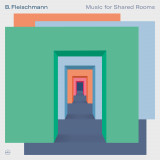
B. Fleischmann - Music for Shared Rooms LP 2x12"

»Music for Shared Rooms« is B. Fleischmann’s eleventh solo album and his first since 2018. It is also not an album, or at least not in the conventional sense of the word. These 16 instrumental pieces provide a kaleidoscopic glimpse of a forward-thinking musician at home in many different musical worlds, including experimental and abstract music, pop and more classically-minded compositional forms. These pieces were culled from an archive of roughly 600 compositions for theatre pieces and films written throughout the past twelve years. The Österreichischer Filmpreis-awarded composer, however, aimed for more than simply documenting his extensive work in and with different media. To do so, he edited and re-mixed the individual recordings for this release, taking them out of their contexts and reworking them for an audience who can experience them in a different setting. »Music for Shared Rooms« makes it possible for its listeners to engage with the sounds and to fill the spaces they open up with their own imagination.

Roughly speaking, music for theatre or film can serve two functions: it either takes the lead, or underscores what is happening on stage or screen. The marvelous thing about these pieces is that they manage to do both. Fleischmann’s work as a prolific producer has always drawn on contrasts, at times combining pop sentiment with rigid experimentation, the seemingly naive with the intricate and complex. This approach also marks the tracks collected here: bringing together acoustic elements and electronic sounds, at times working with conventional structures but always de- and re-contextualising them, Fleischmann constructs a vivid dramaturgy out of discrete singular compositions, letting them interact across the record.

Take, for example, the opener »Träumerei« and the following »Brenne«: after the soothing acoustic sounds of the former, the latter quickly picks up speed with hard-hitting drum machine rhythms. It’s a stark contrast sonically and stylistically, however both tracks are tied together by a certain harmonic sensibility. This sort of dramaturgical interconnectedness of varied musical materials is the thread that runs through »Music for Shared Rooms«. A droney piece for string instruments like »Sehnsucht« is followed by a trip-hop beat, before »Schock« lives up to its title with skittering beats and piercing high frequencies. The differences between the pieces may be striking, but the progression from one to the other is subtle. It goes on like this through different moods and tempos. There’s soothing-yet-eerie piano pieces like the »Für Elise«-inspired »Der Lärmkrieg«, gentle house grooves, joyful synthesizer excursions and, finally, »Die Erde ist mir fremd geworden«, a collage of abstract textures and concrete sounds.

All these pieces create distinct situations through the juxtaposition of diverse musical elements, but are also bound together by a single vision. Writing music for theatre pieces or film requires a composer and his pieces to engage with people and their movements in space, which is exactly what Fleischmann offers on this record. He breaks down the fourth wall and invites his listeners into his world, a wide-ranging musical panorama. »Music for Shared Rooms« is indeed not an album in the conventional sense of the word, but more like a photo album in which each page opens up a new space to get lost in; recreates different scenes in which you can immerse yourself. These are shared rooms indeed.

pas en stock

Commandez maintenant et nous commanderons l'article pour vous chez notre fournisseur.

28,53
TOBA - Make Your Mind Up / Don't Take It

The long-awaited reissue of Toba makes it clear, once and for all, to fans and industry insiders that disco music produced in Italy between the late 70s and early 80s had no chance of success. What was disparagingly called "spaghetti disco", considered a poor imitation of real American disco music, only good for Japanese cartoons. This was the main reason that prompted Italians to record their songs abroad, as Fratelli La Bionda with their pseudonym D.D.Sound in Munich. Luigi Figini, with "Supercool" and "Percussion Sundance" by Edo Martin and Pino Santapaga (the same as "Step By Step" by Koxo), claimed that Kash was a one-off Swedish disco project, a lie that came to light when an Italian test pressing from the previous year, made by GDB, was posted !!! Amin-Peck followed the trend of passing off their songs as foreign music on the intuition of their Roman producers. So ''Love Disgrace'' was released on 7'' by a label called Connection, which never really existed, created for the purpose by Giancarlo Meo, confident that this would bring success to the Bolognese duo who were already creating 'proto Italo-Disco tracks' with a new-wave trend. To make the whole operation seem real, the London agency Ellie Jay Ltd. was involved, contacting Andy Fernbach of Jacobs Studios Ltd. The vinyl was also produced in the UK, otherwise the deception would have been discovered, then imported to Italy by Best Record. Italo-Disco was officially born after this, in 1982, not before! Everything makes sense now ! Real events that actually happened and purely invented names and anecdotes. Just think, even the image of Tony Balch used for the cover of Toba was taken from Grand Theft's 1978 album "Have You Seen This Band?" and reproduced on the new redesigned cover, as were the heads of the other musicians. The idea of a real band called Toba had finally come to fruition and would lead to a second sensational success the following year. Now it all makes sense! Facts and anecdotes that really happened and names and circumstances that are purely fictional. Finally, everything adds up! Real things and invented names of musicians and collaborators. It's important to clarify what we've said above, but we haven't talked about "Make Your Mind Up" and "Don't Take It" and the two masterful remixes performed by Dave Mathmos. In short: with the original versions we'll make Italo-Disco purists happy, with the remix versions we'll please new younger followers with more modern sounds and versions more in line with today's tastes and trends.

pré-commande

Cet article n'a pas encore été publié. Vous pouvez pré-commander le produit maintenant.

18,91
Mana Terra (DJ TOOL & Whrikk) - Initiation EP

This release is an act of breaking out of conventional categories for Seismic records. Established boundaries of genres are completely dissolved into an unpredictable flow of sonic associations. It’s an unexpected collaboration, yet it makes perfect sense from the first kick. Two artists from seemingly opposite ends of the musical universe come together to create a project which fearlessly embarks on the synthesis of hypnotic trance-techno and utter sonic chaos. This project is anything but predictable.

The duality is noticeable from the very first moment. One side brings relentless movement forward in the project: a raw, hypnotic pulse based on rhythm and precision, locking the listener in the present moment and not letting go. Unpredictable textures and psychedelic ornaments are constantly weaving through the rhythmic framework.

A dedicated listener may recognize that the whole EP carries the legacy of David Lynch’s work. The sense of peculiar uneasiness and indecipherability, overridden by the desire to find out what comes next, are exactly what the artists manage to capture and what is so characteristic of Lynch himself. At one point, the EP even reveals a moment as if a red curtain parts in the depths of the track and the listener momentarily catches echoes from the town where owls are not what they seem. Hidden within is a playful nod to the iconic Twin Peaks soundtrack.

pas en stock

Commandez maintenant et nous commanderons l'article pour vous chez notre fournisseur.

12,56

Derniere entrée: 4 jours
DAGMAR ZUNIGA - IN FILTH YOUR MYSTERY IS KINGDOM / FAR SMILE PEASANT IN YELLOW MUSIC

Nicaraguan-American artist Dagmar Zuniga makes music that feels both intimate and expansive: songs drift like disrupted signals, carried by harmony, tape hiss, and a strong sense of touch. Her debut solo album in filth your mystery is kingdom / far smile peasant in yellow music — written and recorded in New York, Norway, and Athens, Georgia over a period of five years on her longtime companion, the Tascam 424 — was uploaded to Bandcamp and YouTube in January 2025, quickly garnering over two hundred thousand views and the attention of artists such as Mount Eerie, who invited her to tour with them that summer. This year, what was once a jewel of tapped-in algorithms and message boards will meet the world at large, with in filth arriving digitally on March 4, and physically on April 10, via AD 93.

in filth is an atmospheric, devotional collage where one voice multiplies into a chorus of selves, sometimes delicate, sometimes severe; an effect created by Zuniga’s masterful layering of texture and complex harmonies. Synths glitter out like spears of sunlight from beneath clouds of moody, time-distorted guitars, and songs spin about themselves like tightly-wound music boxes, making use of a kind of hypnotic repetition, before melting apart into their components or slipping into the following track.

Zuniga began recording to tape as a teenager, drawn to the physicality of the medium — how a tape recording is fragile, mutable, and alive. Though her ethereal sound may draw easy comparisons to other female pioneers of psychedelic folk, she is influenced just as much by the darker sounds of Syd Barrett and The Fall. Like Barrett, Zuniga is a painter, and she is interested not only in recording music but in creating a full, self-contained artistic universe: she creates her own artwork, merchandise, music videos, and bootleg tapes of new and unfinished music that she exclusively sells at live shows (“If something is not material, it does not exist,” she insists). Her world has not gone unvisited, garnering her a monthly show on NTS Radio ‘World of Pain’, as well as a forthcoming appearance at Rewire Festival in April 2026.

Though Zuniga’s work explores themes of solitude and suffering, the suffering in her songs is not borrowed or displayed; it is held, then opened outward through empathy — an exacting practice of attention that insists on shared ground. Solitude, in her work, is not withdrawal but a starting point for connection. Likewise, over time, her recording process has become increasingly communal, with in filth featuring musicians Hayes Hoey, Austyn Wohlers (Tomato Flower), and Zach Phillips (Fievel Is Glauque). Newer recordings widen the circle even more. For Zuniga, collaboration is a way to “find a place between worlds,” echoing Badiou’s idea of love as a vision refracted through the prism of difference. Meaning emerges there — in the space between voices, between artist and listener. “I hope my music helps people work through difficult experiences,” she says. “The same way it helps me.”

pas en stock

Commandez maintenant et nous commanderons l'article pour vous chez notre fournisseur.

23,11

Derniere entrée: 4 jours
DAGMAR ZUNIGA - IN FILTH YOUR MYSTERY IS KINGDOM / FAR SMILE PEASANT IN YELLOW MUSIC (TAPE)

Nicaraguan-American artist Dagmar Zuniga makes music that feels both intimate and expansive: songs drift like disrupted signals, carried by harmony, tape hiss, and a strong sense of touch. Her debut solo album in filth your mystery is kingdom / far smile peasant in yellow music — written and recorded in New York, Norway, and Athens, Georgia over a period of five years on her longtime companion, the Tascam 424 — was uploaded to Bandcamp and YouTube in January 2025, quickly garnering over two hundred thousand views and the attention of artists such as Mount Eerie, who invited her to tour with them that summer. This year, what was once a jewel of tapped-in algorithms and message boards will meet the world at large, with in filth arriving digitally on March 4, and physically on April 10, via AD 93.

in filth is an atmospheric, devotional collage where one voice multiplies into a chorus of selves, sometimes delicate, sometimes severe; an effect created by Zuniga’s masterful layering of texture and complex harmonies. Synths glitter out like spears of sunlight from beneath clouds of moody, time-distorted guitars, and songs spin about themselves like tightly-wound music boxes, making use of a kind of hypnotic repetition, before melting apart into their components or slipping into the following track.

Zuniga began recording to tape as a teenager, drawn to the physicality of the medium — how a tape recording is fragile, mutable, and alive. Though her ethereal sound may draw easy comparisons to other female pioneers of psychedelic folk, she is influenced just as much by the darker sounds of Syd Barrett and The Fall. Like Barrett, Zuniga is a painter, and she is interested not only in recording music but in creating a full, self-contained artistic universe: she creates her own artwork, merchandise, music videos, and bootleg tapes of new and unfinished music that she exclusively sells at live shows (“If something is not material, it does not exist,” she insists). Her world has not gone unvisited, garnering her a monthly show on NTS Radio ‘World of Pain’, as well as a forthcoming appearance at Rewire Festival in April 2026.

Though Zuniga’s work explores themes of solitude and suffering, the suffering in her songs is not borrowed or displayed; it is held, then opened outward through empathy — an exacting practice of attention that insists on shared ground. Solitude, in her work, is not withdrawal but a starting point for connection. Likewise, over time, her recording process has become increasingly communal, with in filth featuring musicians Hayes Hoey, Austyn Wohlers (Tomato Flower), and Zach Phillips (Fievel Is Glauque). Newer recordings widen the circle even more. For Zuniga, collaboration is a way to “find a place between worlds,” echoing Badiou’s idea of love as a vision refracted through the prism of difference. Meaning emerges there — in the space between voices, between artist and listener. “I hope my music helps people work through difficult experiences,” she says. “The same way it helps me.”

pré-commande11.04.2026

il devrait être publié sur 11.04.2026

16,77
Guilty Razors - Complete Recordings 1977 - 1978

UILTY RAZORS, BONA FIDE PUNKS.


Writings on the topic that go off in all directions, mind-numbing lectures given by academics, and testimonies, most of them heavily doctored, from those who “lived through that era”: so many people today fantasize about the early days of punk in our country… This blessed moment when no one had yet thought of flaunting a ridiculous green mohawk, taking Sid Vicious as a hero, or – even worse – making the so-called alternative scene both festive and boorish. There was no such thing in 1976 or 1977, when it wasn’t easy to get hold of the first 45s by the Pistols or the Clash. Few people were aware of what was happening on the fringes of the fringes at the time. Malcolm McLaren was virtually unknown, and having short hair made you seem strange. Who knew then that rock music, which had taken a very bad turn since the early 1970s, would once again become an essential element of liberation? That, thanks to short and fast songs, it would once again rediscover that primitive, social side that was so hated by older generations? Who knew that, besides a few loners who read the music press (it was even better if they read it in English) and frequented the right record stores? Many of these formed bands, because it was impossible to do otherwise. We quickly went from listening to the Velvet Underground to trying to play the Stooges’ intros. It’s a somewhat collective story, even though there weren’t many people to start it.
The Guilty Razors were among those who took part in this initial upheaval in Paris. They were far from being the worst. They had something special and even released a single that was well above the national average. They also had enough songs to fill an album, the one you’re holding. In everyone’s opinion, they were definitely not among the punk impostors that followed in their wake. They were, at least, genuine and credible.

Guilty Razors, Parisian punk band (1975-1978). To understand something about their somewhat linear but very energetic sound, we might need to talk about the context in which it was born and, more broadly, recall the boredom (a theme that would become capital in punk songs) coupled with the desire to blow everything off, which were the basis for the formation of bands playing a rejuvenated rock music ; about the passion for a few records by the Kinks or the early Who, by the Stooges, by the Velvet mostly, which set you apart from the crowd.
And of course, we should remember this new wave, which was promoted by a few articles in the specialized press and some cutting-edge record stores, coming from New York or London, whose small but powerful influence could be felt in Paris and in a handful of isolated places in the provinces, lulled to sleep by so many appalling things, from Tangerine Dream to President Giscard d’Estaing...
In 1975-76, French music was, as almost always, in a sorry state ; it was still dominated by Johnny Hallyday and Sylvie Vartan. Local rock music was also rather bleak, apart from Bijou and Little Bob who tried to revive this small scene with poorly sound-engineered gigs played to almost no one.
In the working class suburbs at the time, it was mainly hard rock music played to 11 that helped people forget about their gruelling shifts at the factory. Here and there, on the outskirts of major cities, you still could find a few rockers with sideburns wearing black armbands since the death of Gene Vincent, but it wasn’t a proper mass movement, just a source of real danger to anyone they came across who wasn't like them. In August 1976, a festival unlike any other took place in Mont-de-Marsan – the First European Punk Festival as the poster said – with almost as many people on stage as in the audience. Yet, on that day, a quasi historical event happened, when, under the blazing afternoon sun, a band of unknowns called The Damned made an unprecedented noise in the arena, reminiscent of the chaotic Stooges in their early adolescence. They were the first genuine punk band to perform in our country: from then on, anything was possible, almost anything seemed permissible.

It makes sense that the four+1 members of Guilty Razors, who initially amplified acoustic guitars with crappy tape recorder microphones, would adopt punk music (pronounced paink in French) naturally and instinctively, since it combines liberating noise with speed of execution and – crucially – a very healthy sense of rebellion (the protesters of May 1968 proclaimed, and it was even a slogan, that they weren’t against old people, but against what had made them grow old. In the mid-1970s, it seemed normal and obvious that old people should now ALSO be targeted!!!).
At the time, the desire to fight back, and break down authority and apathy, was either red or black, often taking the form of leafleting, tumultuous general assemblies in the schoolyard, and massive or shabby demonstrations, most of the time overflowing with an exciting vitality that sometimes turned into fights with the riot police. Indeed, soon after the end of the Vietnam War and following Pinochet’s coup in Chile, all over France, Trotskyist and anarcho-libertarian fervour was firmly entrenched among parts of the educated youth population, who were equally rebellious and troublemakers whenever they had the chance. It should also be noted that when the single "Anarchy in the UK" was first heard, even though not many of us had access to it, both the title and its explosive sound immediately resonated with some of those troublemakers crying out for ANARCHY!!! Meanwhile, the left-wing majority still equated punks with reckless young neo-Nazis. Of course, the widely circulated photos in the mainstream press of Siouxsie Sioux with her swastikas didn’t necessarily help to win over the theorists of the Great Revolution. It took Joe Strummer to introduce The Clash as an anti-racist, anti-fascist and anti-ignorance band for the rejection of old-school revolutionaries to fade a little.

The Lycée Jean-Baptiste Say at Porte d’Auteuil, despite being located in the very posh and very exclusive 16th arrondissement of Paris, didn’t escape these "committed" upheavals, which doubled as the perfect outlet for the less timid members of this generation.
“Back then, politics were fun,” says Tristam Nada, who studied there and went on to become Guilty Razors’ frontman. “Jean-Baptiste was the leftist high-school in the neighbourhood. When the far right guys from the GUD came down there, the Communist League guys from elsewhere helped us fight them off.”
Anything that could challenge authority was fair game and of course, strikes for just about any reason would lead to increasingly frequent truancy (with a definitive farewell to education that would soon follow). Tristam Nada spent his 10th and 11th unfinished grades with José Perez, who had come from Spain, where his father, a janitor, had been sentenced to death by Franco. “José steered my tastes towards solid acts such as The Who. Like most teenagers, I had previously absorbed just about everything that came my way, from Yes to Led Zeppelin to Genesis. I was exploring… And then one day, he told me that he and his brother Carlos wanted to start a rock band.” The Perez brothers already played guitar. “Of course, they were Spanish!”, jokes their singer. “Then, somewhat reluctantly, José took up the bass and we were soon joined by Jano – who called himself Jano Homicid – who took up the rhythm guitar.” Several drummers would later join this core of not easily intimidated young guys who didn’t let adversity get the better of them.

The first rehearsals of the newly named Guilty Razors took place in the bedroom of a Perez aunt. There, the three rookies tried to cover a few standards, songs that often were an integral part of their lives. During a first, short gig, in front of a bewildered audience of tough old-school rockers, they launched into a clunky version of the Velvet Underground's “Heroin”. Challenge or recklessness? A bit of both, probably… And then, step by step, their limited repertoire expanded as they decided to write their own songs, sung in a not always very accurate or academic English, but who cared about proper grammar or the right vocabulary, since what truly mattered was to make the words sound as good as possible while playing very, very fast music? And spitting out those words in a language that left no doubt as to what it conveyed mattered as well.
Trying their hand a the kind of rock music disliked by most of the neighbourhood, making noise, being fiercely provocative: they still belonged to a tiny clique who, at this very moment, had chosen to impose this difference. And there were very few places in France or elsewhere, where one could witness the first stirrings of something that wasn’t a trend yet, let alone a movement.

In the provinces, in late 1976 or early 1977, there couldn’t be more than thirty record stores that were a bit more discerning than average, where you could hear this new kind of short-haired rock music called “punk”. The old clientele, who previously had no problem coming in to buy the latest McCartney or Aerosmith LP, now felt a little less comfortable there…
In Paris, these enlightened places were quite rare and often located nex to what would become the Forum des Halles, a big shopping mall. Between three aging sex workers, a couple of second-hand clothes shops, sellers of hippie paraphernalia and small fashion designers, the good word was loudly spread in two pioneering places – propagators of what was still only a new underground movement. Historically, the first one was the Open Market, a kind of poorly, but tastefully stocked cave. Speakers blasted out the sound of sixties garage bands from the Nuggets compilation (a crucial reference for José Perez) or the badly dressed English kids of Eddie and the Hot Rods. This black-painted den was opened a few years earlier by Marc Zermati, a character who wasn’t always in a sunny disposition, but always quite radical in his (good) choices and his opinions. He founded the independent label Skydog and was one of the promoters of the Mont-de-Marsan punk festivals. Not far from there was Harry Cover, another store more in tune with the new New York scene, which was amply covered in the house fanzine, Rock News (even though it was in it that the photos of the Sex Pistols were first published in France).
It was a favorite hang-out of the Perez brothers and Tristam Nada, as the latter explained. “It’s at Harry Cover’s that we first heard the Pistols and Clash’s 45s, and after that, we decided to start writing our first songs. If they could do it, so could we!”
The sonic shocks that were “Anarchy in the UK”, “White Riot” or the Buzzcocks’s EP, “Spiral Scratch” – which Guilty Razors' sound is reminiscent of – were soon to be amplified by an unparalleled visual shock. In April 1977, right after the release of their first LP, The Clash performed at the Palais des Glaces in Paris, during a punk night organised by Marc Zermati. For many who were there, it was the gig of a lifetime…
Of course, Guilty Razors and Tristam were in the audience: “That concert was fabulous… We Parisian punks were almost all dressed in black and white, with white shirts, skinny leather ties, bikers jackets or light jackets, etc. The Clash, on the other hand, wore colourful clothes. Well, the next day, at the Gibus, you’d spot everyone who had been at this concert, but they weren’t wearing anything black, they were all wearing colours.”

It makes sense to mention the Gibus club, as Guilty Razors often played there (sometimes in front of a hostile audience). It was also the only place in Paris that regularly scheduled new Parisian or Anglo-Saxon acts, such as Generation X, Siouxsie and the Banshees, the Slits, and Johnny Thunders who would become a kind of messed-up mascot for the venue. A little later, in 1978, the Rose Bonbon – formerly the Nashville – also attracted nightly owls in search of electric thrills… In 1977, the iconic but not necessarily excellent Asphalt Jungle often played at the Gibus, sometimes sharing the bill with Metal Urbain, the only band whose aura would later transcend the French borders (“I saw them as the French Sex Pistols,” said Geoff Travis, head of their British label Rough Trade). Already established in this small scene, Metal Urbain helped the young and restless Guilty Razors who had just arrived. Guitarist for Metal Urbain Hermann Schwartz remembers it: “They were younger than us, we were a bit like their mentors even if it’s too strong a word… At least they were credible. We thought they were good, and they had good songs which reminded of the Buzzcocks that I liked a lot. But at some point, they started hanging out with the Hells Angels. That’s when we stopped following them.”

The break-up was mutual, since, Guilty Razors, for their part, were shocked when they saw a fringe element of the audience at Metal Urbain concerts who repeatedly shouted “Sieg Heil” and gave Nazi salutes. These provocations, even still minor (the bulk of the skinhead crowd would later make their presence felt during concerts), weren’t really to the liking of the Perez brothers, whose anti-fascist convictions were firmly rooted. Some things are non-negotiable.
A few months earlier (in July 1978), Guilty Razors had nevertheless opened very successfully for Metal Urbain at the Bus Palladium, a more traditonally old-school rock night-club. But, as was sometimes the case back then, the night turned into a mass brawl when suburban rockers came to “beat up punks”.

Back then, Parisian nights weren’t always sweet and serene.

So, after opening as best as they could for The Jam (their sound having been ruined by the PA system), our local heroes were – once again – met outside by a horde of greasers out to get them. “Thankfully,” says Tristam, “we were with our roadies, motorless bikers who acted as a protective barrier. We were chased in the neighbouring streets and the whole thing ended in front of a bar, with the owner coming out with a rifle…”
Although Tristam and the Perez brothers narrowly escaped various, potentially bloody, incidents, they weren’t completely innocent of wrongdoing either. They still find amusing their mugging of two strangers in the street for example (“We were broke and we simply wanted to buy tickets for the Heartbreakers concert that night,” says Tristam). It so happened that their victims were two key figures in the rock business at the time: radio presenter Alain Manneval and music publisher Philippe Constantin. They filed a complaint and sought monetary compensation, but somehow the band’s manager, the skilful but very controversial Alexis, managed to get the complaint withdrawn and Guilty Razors ended up signing with Constantin with a substantial advance.

They also signed with Polydor and the label released in 1978 their only three-track 45, featuring “I Don't Wanna be A Rich”, “Hurts and Noises” and “Provocate” (songs that exuded perpetual rebellion and an unquenchable desire for “class” confrontation). It was a very good record, but due to a lack of promotion (radio stations didn’t play French artists singing in English), it didn’t sell very well. Only 800 copies were allegedly sold and the rest of the stock was pulped… Initially, the three tracks were to be included on a LP that never came to be, since they were dropped by Polydor (“Let’s say we sometimes caused a ruckus in their offices!” laughs Tristam.) In order to perfect the long-awaited LP, the band recorded demos of other tracks. There was a cover of Pink Floyd's “Lucifer Sam” from the Syd Barrett era – proof of an enduring love for the sixties’ greats –, “Wake Up” a hangover tale and “Bad Heart” about the Baader-Meinhof gang, whose actions had a profound impact on the era and on a generation seeking extreme dissent... On the album you’re now discovering, you can also hear five previously unreleased tracks recorded a bit later during an extended and freezing stay in Madrid, in a makeshift studio with the invaluable help of a drummer also acting as sound engineer. He was both an enthusiastic old hippie and a proper whizz at sound engineering. Here too, certain influences from the fifties and sixties (Link Wray, the Troggs) are more than obvious in the band’s music.

Shortly after a final stormy and rather barbaric (on the audience’s side) “Punk night” at the Olympia in June 1978, Tristam left the band ; his bandmates continued without him for a short while.

But like most pioneering punk bands of the era, Guilty Razors eventually split up for good after three years (besides once in Spain, they’d only played in Paris). The reason for ceasing business activities were more or less the same for everyone: there were no venues outside one’s small circuit to play this kind of rock music, which was still frightening, unknown, or of little interest to most people. The chances of recording an LP were virtually null, since major labels were only signing unoriginal but reassuring sub-Téléphone clones, and the smaller ones were only interested in progressive rock or French chanson for youth clubs. And what about self-production? No one in our small safety-pinned world had thought about it yet. There wasn’t enough money to embark on that sort of venture anyway.

So yes, the early days of punk in France were truly No Future!
pas en stock

Commandez maintenant et nous commanderons l'article pour vous chez notre fournisseur.

21,43

Derniere entrée: 7 jours
Stephan Eicher - Spielt Noise Boys

2025 Reissue.


Münchenbuchsee, a suburb of Bern, Switzerland. Stephan Eicher is the youngest of three children. His father, a radio and TV repairman, is also a jazz violinist and a sound tinkerer in his spare time. In the family home's converted fallout shelter turned studio, Mr. Eicher experiments with homemade sequencers, tortures handcrafted drum machines, and abuses reel-to-reel tape recorders—all under the fascinated gaze of young Stephan.

The boy quickly develops a musical curiosity, exploring sound through various experiments and wanderings. Alongside his younger brother Martin, Stephan crafts audio plays on a homemade multi-track recorder (essentially several cassette decks hooked together!), which they write, record, add sound effects to, and perform for family and friends. Just a couple of nice kids, really...

Then comes 1972, and Lou Reed's Transformer album changes everything for the Eicher kids. For 13-year-old Stephan, it's a revelation—especially "Vicious", the opening track, which he plays on repeat for months. He convinces his father to buy him an electric guitar. Not stopping there, his father also builds him a tube amp using an old radio.

Then comes adolescence. A rough one. Stephan leaves home at 16 and moves to Zurich. With obvious artistic talent, he persuades his art teacher to help him get into F+F, a radical, alternative art school—despite his young age. Accepted, he starts learning video techniques, determined to become a filmmaker.

At F+F, Stephan organizes Dada-style happenings and concerts with a group of friends known as the Noise Boys. Among them: one of his teachers on bass, Veit Stauffer on drums (who would later found ReR/Recommended Records), his girlfriend Sacha on vocals, and Stephan on guitar. In one of their early performances, they release a remote-controlled mouse covered in dull razor blades into the audience to create panic and chaos. Keeping with this aggressive, confrontational spirit, they once played a concert while wearing headphones blasting Tristan and Isolde, trying to perform their own songs simultaneously—to maximize the cacophony. The goal was always the same: clear the room.

Their “songs,” if you can call them that, followed suit. Take "Hungeriges Afrika", for instance—performed entirely with power drills and some drum feedback.

To make ends meet, Stephan returns to Bern on weekends to work as a waiter at the Spex Club, the city’s main punk venue. On September 16, 1980, during a show by proto-electro group Starter, the police raid the club and arrest everyone. Stephan, who manages to avoid arrest, seizes the opportunity to “borrow” Starter’s gear left behind. He suddenly finds himself in possession of a Roland Promars synth, a Korg MS20, and a gorgeous CR78 drum machine, which he runs through a Big Muff distortion pedal to get that perfect gritty sound.

He then sets out to reinterpret some Noise Boys tracks, reworking them during impromptu sessions recorded on a dictaphone (yes, a dictaphone—now the lo-fi sound makes more sense, doesn’t it?). He ironically titles the resulting cassette "Stephan Eicher spielt Noise Boys" ("Stephan Eicher plays Noise Boys"). This gem features seven tracks, which are the ones reissued here.

Back in Zurich, he visits his friends Andrew Moore and Robert Vogel, who have a DIY cassette duplication setup. They make 25 copies of Stephan Eicher spielt Noise Boys for Stephan and his friends. Robert encourages him to visit Urs Steiger of Off Course Records and play him the tape.

Without much hope, Stephan shows up at Urs’s office. But Urs is instantly hooked and suggests releasing a 7” single. Due to space constraints, they reluctantly drop two of the seven tracks ("Hungeriges Afrika" and "One Second"). As for the musical score featured on the cover—it was randomly chosen and remains a mystery to this day. Calling all music theory nerds!

The 7-inch is pressed in 750 copies and released in the first week of December 1980—a date Stephan remembers well, as it’s the same week John Lennon was killed. Smartly, Urs sends a promo copy to François Murner, Switzerland’s answer to John Peel, who hosts a show on alternative station Sounds. Murner falls in love with the record and starts giving it airtime. To Stephan’s surprise, sales follow—and people actually seem interested in his music.

Even this modest underground success scares Stephan a bit. He stops making music for a year and moves to Bologna, where he works as a programmer at Radio Città, a feminist radio station.

Meanwhile, Stephan’s younger brother Martin, who’s also involved in the punk scene, joins the band Glueams as a singer and guitarist. Glueams, named after the fanzine run by two of its members (drummer Marco Repetto and bassist GT), eventually rebrands as Grauzone. Stephan is invited to their shows to project hacked Super 8 visuals live on stage.

Urs Steiger, now working on a compilation titled Swiss Wave – The Album, asks Grauzone to contribute alongside bands like Liliput, Jack and the Rippers, The Sick, and Ladyshave (Fall 1980).

For the album, Martin tasks Stephan with producing their recording sessions. Under Stephan's artistic direction, two tracks emerge: "Raum" and "Eisbär". During "Eisbär", Martin plays a minimalist bass line borrowed from post-punk band The Feelies (just an open string). Drummer Marco Repetto struggles to keep time. Later that evening, unhappy with the takes, Stephan builds a four-bar drum loop from a ¼-inch tape and uses it instead of the flawed original. He then adds bleepy synths and wind sounds to complete the track’s icy vibe before handing it over to Urs.

The Swiss Wave – The Album compilation is released quietly at first, but things snowball thanks to "Eisbär", which eventually becomes a smash hit—selling over 600,000 singles.

Meanwhile, Stephan plays in a rockabilly band called SMUV (named after Switzerland’s social security agency) and begins producing artists, including the debut album of Starter (1981), which includes a more pop-oriented version of "Minijupe".

By early 1982, Stephan starts spending time with the post-punk girl band Liliput (formerly Kleenex). They’re older than him, and he happily drives them around in his Renault Major, acting as their roadie.

By 1983, Grauzone—signed to the major label EMI, which turned out to be a misstep—is falling apart. Stephan begins to pivot toward a more mainstream pop sound with his debut solo album Les Chansons Bleues.

But that... is already another story.

pas en stock

Commandez maintenant et nous commanderons l'article pour vous chez notre fournisseur.

23,11

Derniere entrée: 7 jours
The Appetizers - Keep Your Step LP
  • 01: Feel Like Dancing
  • 02: Thicker Than Water
  • 03: A Message From The Meters
  • 04: Catch This
  • 05: Fussy Girl
  • 06: Cool And Deadly
  • 07: The Life
  • 08: Keep Your Step
  • 09: Make It Reggay
  • 10: Behind My Shoulders
  • 11: Stormy Weather
  • 12: We Shall Overcome

Killer Groove Records proudly presents "Keep Your Step", the explosive comeback by Italian rock steady & early reggae ambassadors The Appetizers, a soulful celebration of reggae's timeless spirit.


"Keep Your Step" marks the band's much-awaited return, landing April 10th on limited edition LP, CD digipack and digital format featuring two exclusive bonus tracks.

The Appetizers deliver a masterclass in roots reggae music with their highly anticipated second studio album, bridging Jamaica's golden age with contemporary relevance. "Keep Your Step" is a heartfelt sonic journey where the band blends rocksteady and early reggae with funk and soul influences to create a sound that's both genuine and refreshingly modern.

The fourteen tracks move fluidly between infectious dancefloor fillers and socially conscious lyrics. From the laid-back swing of "Feel Like Dancing" to the hypnotic rhythm of "Thicker Than Water", the band demonstrates their versatility while remaining true to the roots of Jamaican sound. "A Message from The Meters" pays tribute to the legendary funk pioneers, while the instrumental "Catch This" and "Make It Reggay" highlight the band's musical prowess and the deep connections between reggae and funk.

Meanwhile, tracks like "Fussy Girl" and "Behind My Shoulders" explore love's complexities with humor and soul. The album's heart lies in its social consciousness. "Cool and Deadly", "The Life", "Stormy Weather" and the album title track "Keep Your Step" tell stories of perseverance through life's struggles.

With the hopeful anthem "We Shall Overcome," The Appetizers deliver a timely message about genuine human connection in a social media-dominated era. The digital edition closes with "Get Some Rollin'" and "Swing and Sway," rounding out the journey with two additional gems.

"Keep Your Step" pays homage to Jamaican music legends, from Jackie Mittoo and Tommy McCook to Toots & the Maytals, while carving out The Appetizers' own distinctive sound. This is a groove made for both the dance floor and the soul, proving that reggae's power to inspire, unite, and uplift remains as vital as ever.

The production stays true to The Appetizers' signature sound: organic tones, deep groove, and that live-room vibe you only get when real musicians are locked in together. Luca Monza and Claudio Mambrini, the band's core members, handled the artistic production. Mastering came courtesy of the great JJ Golden (Black Pumas, Sharon Jones & The Dap-Kings, Jr. Thomas & The Volcanos, The Frightnrs) at Golden Mastering in Ventura, California. JJ is one of the most trusted engineers working in this sound, ensuring every ounce of warmth and authenticity came through.

The Appetizers are a rocksteady and early reggae band formed in Milan in 2020 by musicians deeply embedded in the Italian and international reggae scene. Musicians from different paths united by a shared vision: recreating that vintage Caribbean and American sound with authenticity, respect and a forward-thinking edge.

Drawing inspiration from Jamaica's golden era and channeling the soul of Delroy Wilson, Alton Ellis, the early Wailers, and The Upsetters, The Appetizers carry forward the essence of bass culture with a pure, fully organic approach.

Their debut album Listen Up! (2022), released via Belgian imprint Badasonic Records (home to The Slackers, The Aggrolites, David Hillyard & Victor Rice), featured ten original tracks and a dub cut by Victor Rice. Distributed across Europe, the UK, the US, and Japan, it quickly earned international recognition among reggae connoisseurs and selectors worldwide.

Following extensive touring, including shows with The Slackers, Black Uhuru, Skip Marley, and more, the band returned to the studio to record "Keep Your Step", their second album produced by Killer Groove Records. Here the band expands its musical language, weaving together the spirit of historic Jamaican labels like Studio One and Treasure Isle with '60s funk, arriving at a warm, organic, and timeless sound: soul, Jamaican roots, and modern sensibility in perfect balance. Their lyrics explore heartbreak, social issues, and reflections on life and music, performed with dedication and respect for tradition while always pushing forward.


If you're into The Skatalites, The Ethiopians, and those classic Caribbean rhythms, this one's for you.

pré-commande10.04.2026

il devrait être publié sur 10.04.2026

23,32
PAN•AMERICAN - Fly The Ocean In A Silver Plane LP
  • Death Cleaning
  • Silver Plane, Now Boarding
  • Entrance To The Afterlife
  • Desert Under Bridge
  • Heaven's Waiting Room
  • Silver Tramway (In Snow)
  • Honeyman-Scott
  • Taxi To The Terminal Gate
  • A Window In The Strings
  • Golden Gate, Silver City

“The music on this record is a reflection of journeys and travel. The real world kind and the metaphorical ones as well. Having experienced the arrival of my children, the decline and departure of my parents, and the many years of venturing out and returning home in my own life, travel feels like the perfect tropology to consider the mysteries we inhabit. Travel and its impressions, rituals, superstitions—the possibilities and risk-all open up onto the landscape of our biggest questions, fear and wonder.

“Two songs established the spine of this music. Songs I’ve always loved, it seems even before I’d heard them. The first one, and the source of the title is ‘You Belong to Me’ by Jo Stafford. Colonial overtones unmissable to our modern ears aside, it’s also a beautiful mid century romance—and an ode to the threat of a shrinking world. The song represents the loneliness and the mystery of being alone and left behind. The singer is not asking their loved one to shut down horizons, merely reminding them to return when the traveling is done. To set aside The Silver Plane of transition, change and the in-between for the intimacy of solid earth.

“The second song is ‘Promised Land’ by Chuck Berry. Also about a journey and another one that moves easily between allegory and narrative. The singer is on the move across segregated America trying to get to the promised land of California. The song is both a tall tale that evokes Mark Twain, and an American epic that can keep good company with Herman Melville. When the hero finally makes it to California, his first instinct is to call home and reassure the Old World that he’s safely arrived in the new one.

“The songs on Fly the Ocean in a Silver Plane were recorded at home over the last couple years. I played electric guitar, rubber bridge acoustic guitar, Ableton Live and an Electron Digitone synth. My friend Mallory Linnehan aka Chelsea Bridge contributed beautiful violin and vocals to a couple of the songs. We recorded those performances on a summer afternoon in Chicago at the Not Not space with the windows open.

“The cover is a photo of my mom—one I never saw when she was alive. With the headscarf and that excited, nervous expression, she looks about to embark on a journey. Ready, finally, to cross the tarmac and board the Silver Plane. “Wishing safe travels to all.” — Mark N / Pan•American


b DEATH CLEANING listen


b DEATH CLEANING [listen]


[b] DEATH CLEANING [listen]


[b] DEATH CLEANING [listen]

pré-commande

Cet article n'a pas encore été publié. Vous pouvez pré-commander le produit maintenant.

25,17
Bodysnatcher - Hell Is Here, Hell Is Home
  • 1: The Maker
  • 2: Writhe And Coil
  • 3: Plague Of Flies
  • 4: May Your Memory Rot
  • 5: Violent Obsession
  • 6: No Savior
  • 7: Blade Between The Teeth
  • 8: Two Empty Caskets
  • 9: Survive Or Die
  • 10: Hell Is Home

Florida deathcore heavyweights Bodysnatcher return with their most punishing and purposeful statement to date. ‘Hell Is Here, Hell Is Home’, out April 10, is not an escape record, it is a confrontation. Brutal, unrelenting, and emotionally unfiltered, the album captures a band fully locked into its identity while sharpening every weapon in its arsenal. True to their roots, Bodysnatcher deliver a sound steeped in suffocating grooves, bone-crushing breakdowns, and feral intensity. ‘Hell Is Here, Hell Is Home’ pushes beyond pure aggression. The record explores cycles of trauma, self-destruction, survival, and the uncomfortable truth that for many, suffering is not a phase, it is a place.

This is deathcore grounded in lived experience, written from inside the fire rather than in hindsight. Across the album, Bodysnatcher balance sonic violence with a disciplined sense of control. Downtuned riffs grind with oppressive weight, drums hit with mechanical precision, and vocals swing between outright hostility and grim reflection. Each track feels deliberate, built not just to hit hard, but to linger. With this release, Bodysnatcher continue to cement their position as one of modern deathcore’s most uncompromising voices. ‘Hell Is Here, Hell Is Home’ is a record built for the pit, rooted in truth, unflinching and heavy in every sense, delivered with absolute conviction.

pré-commande10.04.2026

il devrait être publié sur 10.04.2026

21,81
SLUTET - Slutet LP

SLUTET

Slutet LP

12inchCRYPTMETAL038
Crypt Of The Wizard
10.04.2026
  • 1: Seven Days Of The Weak
  • 2: We Reap Our Crops
  • 3: Raped Beauty Sleep
  • 4: Old Blood Kapala
  • 5: O Ziemia!

Crypt of the Wizard is proud to make available two legendary underground albums by Slutet on vinyl and digital formats. Here we present the debut self titled LP Slutet - Slutet
Slutet originated in Uppsala well over a decade ago, first emerging as a loose idea around 2010. The original cluster of strangely like minded individuals - Dingir, Ryttersson, J.P., Sviatopolk, were equally set on starting a cult as they were a band, the former emerging as a loose collective known as The End Commune, while the latter eventually began rehearsing together as Slutet on September 1, 2013.
From this constellation three notorious demo tapes sprung which were self-released in very limited numbers, and only available by trading bodily fluids, blood, and/or hair for the cassettes. “A very loose guess but we made probably around 20-30 hand-drawn/custom demo tapes of the first three releases. We got blood and hair from many places, actually the very first offering was from INDONESIA. Slovakia, Germany, USA, Argentina, Norway, Canada, Finland followed.... if my memory serves..... hazy years indeed”
J.P. left early 2015. Later that year, after trying the band as a bass-drum-vocals outfit for a while, Fjalar joined on guitar. This is the classic constellation. Dingir, Ryttersson, Fjalar, Sviatopolk. The same troupe playing to this very day.
While the difficulty of obtaining the demos certainly added to the band’s bottomless mystique, the subsequent release of the self-titled compilation / LP secured their reputation as one of the most interesting and unorthodox bands recording under the somewhat ill-fitting moniker of ‘underground black metal’.
First released as a cassette by Berlin label Teratology Sound & Vision, and later on vinyl in an edition of 100 by Goatowarex, the self-titled LP is the definitive document of the very early and very wild years of the band as they begin to take form, fulminating against whatever was on offer.
“Between September 2013 and September 2014 we rehearsed and recorded 3 very crude demo cassettes; although sub-par in many musical and performance-wise aspects, the passion seeping through those recordings were evidently very real.”

pré-commande10.04.2026

il devrait être publié sur 10.04.2026

25,00
Various - Just Noise

Various

Just Noise

12inchDB050
Deadbeat Records
07.04.2026

London Based Deadbeat is a techno label founded in 2000 as an outlet for the more eclectic, risk taking and aggressive elements of the genre. Dedicated to unveiling forward thinking new talent, championing cult underground producers and celebrating established global acts the label has created a loyal fan base and now after more than two decades presents its first vinyl release, a massive six track EP that covers a lot of creative ground and features three artists well known for pushing boundaries while delivering face melting, dancefloor destroying beats.

Sane ( Don't Recordings / Fun In The Murky ) is a Uk based producer and techno DJ who has featured multiple times on the 'Best electronic music on bandcamp' pages. Described there by music journalist Joe Muggs as 'Filthy, dirty, vile and brilliant. His techno will tear the top off your head and make soup with the contents. It screeches, it blurts, it whistles, and it roars. Above all, it crashes and clangs like a dancing mech warrior, crushing all before it. What more do you need to know?'

TSR ( Analog Records / Hörspielmusik ) are a highly regarded creative force of Swedish musical mentalists, a crazed, technologically berserk band of electronic wizards who relentlessly conjure up the most brilliant, silliest, toughest, most dance bootable funky techno on this train of existence. Known for high-energy, raw, and sometimes humorous tracks they have released to high acclaim on many notable labels and played all over the world.

DJ Ze MigL ( Djax-Up-Beats / Minimalistix ) is first and foremost a DJ, but also a producer & a Dude! Creating crazy, funky and sometimes brutal techno mayhem. Residentially from Portugal, he’s been the one of most prolific Portuguese techno producer/ DJ during the last 25 years. Producing and Spinning his own special brand of honkin’ techno, not changing a single cowbell. Never too serious or dark, always with proper party ON!

The record additionally features full sleeve artwork by Ed Twist ( of the influential 'Ugly Funk' label ) and is pressed on yellow vinyl.

pas en stock

Commandez maintenant et nous commanderons l'article pour vous chez notre fournisseur.

17,86
DOODSESKADER - THE CHANGE IS ME
  • 01: Glass Mask On
  • 02: Celebrity Culture Simp Farm
  • 03: Please Just Make It Stop
  • 04: No Laughter Left In Me
  • 05: Weaponizing My Failures
  • 06: Unthinking My Every Thought
  • 07: Insignificant Other
  • 08: It Keeps On Stinging
  • 09: I Took A Pill In Vilvoorde
  • 10: Suffering In Technicolor

DOODSESKADER clearly haven’t had enough of redefining boundaries – they’ve only just gotten started. Tim De Gieter and Sigfried Burroughs return on April 3rd, 2026 with their third full-length album, The Change Is Me, a rollercoaster that can only be described as the unstable lovechild between witch house, hip-hop, industrial dream pop, and stadium rock that can’t decide if it wants to watch the world burn or shout from the rooftops that we need to save it. Their combination of grungy 90s melodies with distorted synths, sludgy bass, hard tuned vocals, rapping, singing, and explosions of undiluted rage at the current state of the world leave you wondering just exactly what it was you smoked last night, and if it was too much or not enough. The Change Is Me is an album that grabs you by the arm and asks if you’re ready to go on a grand adventure, then pulls you into its chaos before you can say “yes” or “no.”

Tim and Sigfried aren’t just breaking the boundaries between genres; they’re breaking out of their own Year cycle, a path they had laid out for themselves at the band’s inception in 2020. Up until now, the duo had set out to document their “journey to getting better” through writing one album each year: Year Zero (2020), Year One (2022), and most recently Year Two (2024). After spending eight months throughout 2024 and 2025 writing, recording, producing and mixing Year Three, the band scrapped the finished record entirely. Playing shows while simultaneously navigating the process of mixing Year Three created a sort of disconnect – the people that they were when they wrote that record and the people that playing shows made them become were no longer one and the same. “We’re people with faults and strengths, and we realized we needed to accept it. That’s equal parts bleak and liberating. If you’re so focused on self-improvement, you can’t even applaud yourself for how far you’ve come,” the band explains. “This project is meant to be a document of us and of the human condition, not a self-improvement handbook designed to keep us all stuck on what may or may not have happened to us or because of us in the past.”

DOODSESKADER chose instead to embark anew on a week-long creative journey in Tim’s own Much Luv Studio with one goal in mind: to make an album that captures who they are right now. Finally writing everything together in the same room for the first time in years, the process of bringing "The Change Is Me" to life was captured by Diana Lungu in their latest documentary, "Now I Know You See Me", out December 2nd, 2025.

"The Change Is Me" marks the beginning of DOODSESKADER’s shift into a more positive era, both musically and conceptually. Over the course of the 40-minute record we hear the two friends unite in a fight against a world that grows more and more disappointing, a concept made crystal clear in tracks like “Celebrity Culture Simp Farm,” “It Keeps On Stinging,” and of course the album’s epic closer “Suffering In Technicolor.” While their previous albums saw them trying to outrun their pasts and arrive at a better version of themselves, here the search for some external or internal revelation that will “make them better” is no more. It’s been replaced by the realization that change isn’t something we force: it’s gradual, and more importantly, it’s something that’s already there – we just need to reach out and accept it.

The band’s live appearances over the last several years have been instrumental in shaping their ideology. On stage is where the duo find connection; not only with the audience, but also with each other. Their sold-out release shows at Ancienne Belgique (2022) and VierNulVier (2024) have proven that they are one of Belgium’s must-see acts. Abroad, their energy has translated into a month-long EU/UK tour with French band Alcest in 2024, as well as appearances at festivals such as Roadburn Festival (NL), Eurosonic (NL), Hellfest (FR), Mystic Fest (PL), Jera On Air (NL), ArcTanGent (UK), Fluff Fest (CZ) and more.

"The Change Is Me" is out April 3rd, 2026 on DOODSESKADER’s own label, 45 Records.

pré-commande03.04.2026

il devrait être publié sur 03.04.2026

25,17
Loula Yorke - Salix ft. Charlotte Jolly (TAPE)

Salix is a bold new departure for modular synthesist Loula Yorke, seen here using an antique reed organ to explore the ancient roots of willow trees in magic, myth and medicine, as well as inviting another musician into her recording studio for the first time, clarinettist Charlotte Jolly.

The EP forms a sonic archive of a singular instrument: an antique free reed organ left behind by a previous encumbent of Asylum Studios, (the artists' co-operative in Suffolk where Yorke's Truxalis labelmate and life collaborator, Seiche, has a studio space). The organ is in poor condition and fascinatingly, painfully detuned. Yorke's recordings bring out its host of unusual quirks exacerbated by age and neglect: the powerful rhythmic creaking of the wooden treadles; the bone-shaking resonance emanating from its body at specific pitches; unexpected exclamations of harmonic collision from within the carcass redolent of a human voice; the piercing, shrieking whistles of broken reeds, and the powerful timbres unlocked via Yorke's experiments with various combinations of stops.

The three tracks that form Salix are inspired by a local weeping willow tree, a constant companion photographed over the course of a year. Boughs caught in a gyre. A maiden in mourning. Branches that gesture in the wrong direction. A tree turned upside down. A hand-woven willow basket, an old technology to gather and store. The journey of a lovelorn bard through the underworld, a bundle of willow under one arm for protection.

For the opening track, The Carrier Bag Theory of Fiction, Yorke recorded herself playing a simple unaccompanied improvisation on the organ, the only ornamentation being the processed sounds of the keys being struck and returning to their positions.

For Bundle of Styx, a spell of protection is cast and then broken. Yorke invited virtuoso clarinettist Charlotte Jolly into the studio to test combining the breathy textures of both brass and natural reeds, the instruments uniting and obsuring each other in turn during this one-take improvisation. The organ's unpredictable sharpened tunings take centre stage here, with Jolly using them as a point of departure to conjure a set of peerless harmonic improvisations live in the moment. Throughout the improvisation, Yorke, a self-taught musician, unpracticed on the organ, supports and challenges, freely admitting that she's not always sure what effect her decisions to move up and down the keyboard or pull out certain stops will have. Jolly's genius lies in her ability to meet and build on every uncertain pitch thrown her way, saying of the experience, "I love that Loula isn't classically trained, I can't predict at all what she's about to do."

For the final track, With the Red Dawn, Yorke has come up with another unique combination of textures, this time bringing her own specialism in modular synthesis to the fore. A ten-minute reed organ drone characterised with ever-shifting bass swells and overtones is layered with tuned sines, often shudderingly wave-folded, that ebb and flow both in intensity and harmonic colour according to the duty cycles of eight interrelated LFOs. These recordings are collaged with Yorke's singing voice and a langorous, ascending sequence across two octaves on Jolly's clarinet, all arranged to form a cohesive whole far greater than the sum of its parts. Smatterings of untuned percussion and a fragment of a conversation between the duo left in the final mix cements Yorke's unprecious DIY aesthetic into the release.

At its heart, Salix is like watching the wind in the willows; hundreds of thousands of identical tiny leaves moving in confluence on its branches; at once one thing and many things; moment-to-moment our perception makes out different individuals parts within this expanse of texture, before sinking back into the whole.

pré-commande03.04.2026

il devrait être publié sur 03.04.2026

13,87
The Beths - Expert In A Dying Field LP

REPRESS ON SILVER VINYL . COMES WITH 24”x24” POSTER + DOWNLOAD CARD + GATEFOLD JACKET.


On The Beths’ album Expert In A Dying Field, Elizabeth Stokes’ songwriting positions her somewhere between being a novelist and a documentarian. The songs collected here are autobiographical, but they’re also character sketches of relationships – platonic, familial, romantic – and more importantly, their aftermaths. The shapes and ghosts left in absences. The question that hangs in the air: what do you do with how intimately versed you’ve become in a person, once they’re gone from your life?

The third LP from the New Zealand quartet houses 12 jewels of tight, guitar-heavy songs that worm their way into your head, an incandescent collision of power-pop and skuzz. With Expert, The Beths wanted to make an album meant to be experienced live, for both the listeners and themselves. They wanted it to be fun -- to hear, to play -- in spite of the prickling anxiety throughout the lyrics, the fear of change and struggle to cope.

Most of Expert was recorded at guitarist Jonathan Pearce’s studio on Karangahape Road in Tāmaki Makaurau, Aotearoa (Auckland, New Zealand) -- and sometimes in the building's cavernous stairwell at 1am -- toward the end of 2021, until they were interrupted by a four-month national lockdown. They traded notes remotely for months, songwriting from afar and fleshing out the arrangements alone, the first time they’d written together in such a way. The following February, The Beths left the country for the first time in more than two years to tour across the US, and simultaneously finish mixing the album on the road. That latter half felt more collaborative, with everyone on-hand to trade notes in real time, until it all culminated in a chaotic three-day studio mad-dash in Los Angeles. There, Expert finally became the record they were hearing in their heads.

Expert is an extension of the same skuzzy palette the band has built across their catalog, pop hooks embedded in incisive indie rock. The album’s title track “Expert In A Dying Field” introduces the thesis for the record: “How does it feel to be an expert in a dying field? How do you know it’s over when you can’t let go?” Stokes asks. “Love is learned over time ‘til you’re an expert in a dying field.”

The rest is a capsule of The Beths’ most electrifying and exciting output, a sonic spectrum: “Your Side” is a forlorn and sincere love song, emotive; while “Silence is Golden,” with its propulsive drum line and stop-start staccato of a guitar line winding up and down, is one of the band’s sharpest and most driving. “When You Know You Know” skews a bit groovier, pure pop and a natural addition to the band’s live set. “Knees Deep” was written last minute, but yields one of the best guitar lines on Expert. There’s a certain chaos across the 12 tracks, the palpable joy of playing music with long-time friends colliding with the raw nerves of pain.

Stokes strings it all together through her singular songwriting lens, earnest and self-effacing, zeroing in on the granules of doubt and how they snowball. Did I do the wrong thing? Or did you? And are we still good people at the end of it? She isn’t interested in villains, but instead interested in just telling the story. That insecurity and thoughtfulness, translated into universality and understanding, has been the guiding light of The Beths’ output since 2016. In the face of pain, there’s no dwelling on internal anguish - instead, through The Beths’ music, our shortcomings are met with acceptance. And Expert In A Dying Field is the most tactile that tenderness has been.

pré-commande03.04.2026

il devrait être publié sur 03.04.2026

21,43
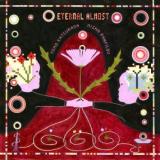
TOMO KATSURADA X MISHA PANFILOV - ETERNAL ALMOST

TOMO KATSURADA X MISHA PANFILOV

ETERNAL ALMOST

12inchFDR01
FUTURE DAYS RADIO
03.04.2026

Ltd edition - Random Coloured Vinyl..

“Eternal Almost” is a collaborative album by Japanese musician Tomo Katsurada and Estonian composer Misha Panfilov. Born from the simple joy of songwriting and creative exchange, Tomo and Misha had long admired each other’s music from afar.

When the opportunity to collaborate finally arrived, it felt completely natural, and by the time the album was finished, it almost seemed as though the two had known each other always.

United by a shared sense of humour and musical curiosity, Tomo and Misha poured a raw, honest energy into these songs — one shaped by their intuitive rapport. In an increasingly artificial world, “Eternal Almost” subtly celebrates the qualities that make music feel most alive.

Amid the weight of our current times, the pair hope this album brings listeners a sense of lightness, joy, and of course—a gently surreal journey from beginning to end.

pré-commande03.04.2026

il devrait être publié sur 03.04.2026

22,65
Foote/Dickow - High Cube LP

High Cube is the beat-focused brainchild of Brian Foote (Peak Oil, Leech) and Paul Dickow (Strategy, Community Library), two low-key legends of the American experimental underground. After some 30-odd years of making music separately and together, Foote and Dickow are collaborating in earnest for the first time as a duo. For this debut, the pair enforced a simple, stringent set of rules: five instruments, a one-hour timer, and a total ban on overthinking.

The result is a record that is the sound of two old friends unplugging the usual levers and letting the "accident" of their chemistry take the wheel. It is drier, sparser, and decidedly "chunky"—a fictional band stepping into a suit to drive around for a while. It is neither dance nor chill-out, but a moody, complex trajectory defined not by the gear used to make it, but by the narrative mood it compels.

"Volcano Snail” starts things off in a disheveled shuffle, locking into gear with blurred and bubbling effluence. The shimmering dimness is lit low, with a woozy gait that recalls the headiest highs and luminescent lows of Jan Jelinek. “Underwater Welder” is a foggy, neon-lit cruise of skittering low-ends suspended in a permanent fall of color, while “A Dragon’s Treasure is its Soul” offers blown-apart, low-end city pop fragmented into an array of rhythmic detritus. Chordal textures hover in the air as a percussive loop takes its beguiling and frolicking shape.

B-side opener “Yonaguni” shapeshifts in real time, drifting with the grace of a glacier before bobbing in a frigid pool of vibrating clatter, static, and synth stabs. “Ofid+wor” offers a tried and true blitz of braindance, nodding to an endless list of 20th and 21st-century electronic body music. Buoyant closer “Mother of Thousands” holds a gravity-defying tenderness, pirouetting on a breeze with the elegance of effervescent longing. Woven together, the six extended tracks of High Cube are tethered to nothing but the ether—a giant sonic leap of peripheral absurdity from two artists with a lifetime of shared rhythm.

pas en stock

Commandez maintenant et nous commanderons l'article pour vous chez notre fournisseur.

25,17

Derniere entrée: 17 jours
Nené Vasquez & Super Oud - Agogo Makes The World Go Round 2 (7")

This 7" record by Agogo Records features two remixes by Mo' Horizons. Track one is a cover of Nat King Cole's "Calypso Blues", performed by percussionist and singer Nené Vasquez, who is part of the Mo' Horizons family and used to play in Shakira's band in a former life. Super Oud is a musical project from Bremen, Germany, combining traditional Middle Eastern sounds with modern electronic grooves.

a. Nené Vasquez - Calypso Blues (Mo' Horizons Remix)
Written by Nat King Cole & Don George. Published by Crestview Music.
Original production by Nené Vasquez. Remix production by Ralf Droesemeyer.
Lead Vocals by Inna Vizotska. Additional Remix Vocals by Frankie Figueroa.

b. Super Oud - Zala (Mo' Horizons Remix)
Written by Claas Bösling & David Niedermayer.
Original production by Claas Bösling. Remix production by Ralf Droesemeyer.
Oud by David Niedermayer. Remix Vocals by Marriam.

pas en stock

Commandez maintenant et nous commanderons l'article pour vous chez notre fournisseur.

12,82

Derniere entrée: 17 jours
Cruel Force - Haneda LP

While many have tried to emulate the ancient German (black)thrash sound, CRUEL FORCE brimmed with an authenticity that could not be denied, as well as songwriting that added to that noble tradition rather than lazily picking at its corpse. Their two successive albums, 2010's The Rise of Satanic Might and 2011's Under the Sign of the Moon, made CRUEL FORCE a certifiably CULT name in the international metal underground. Sadly, the band fell into a hiatus following that second album, but returned reinvigorated with the comeback 7" EP Across the Styx in 2022 and, a year later, the glorious full- length Dawn of the Axe at the hands of new label home SHADOW KINGDOM. Continuing to make up for lost time, CRUEL FORCE storm back with swords gleaming high on their fourth full- length, Haneda.

Where a line could be drawn between the band's "first era" of The Rise of Satanic Might / Under the Sign of the Moon, so continues this Second Era that began with Dawn of the Axe - one that harkens to the "Jurassic period" of heavy metal, when everything was rawer, less polished, and more energetic and powerful. As displayed by that pivotal predecessor, Haneda further proves that CRUEL FORCE are more so an old-style speed metal band, largely bereft of that blackened edge during their First Era. The tradeoff is that there's a prominent mysticism coursing through that speed, and the blue-collared aspect of Dawn of the Axe is now spit-shined to a lethal slickness that makes Haneda hit that much harder.

However, it must be stressed that, while it follows logically from Dawn of the Axe, Haneda is very much its own headspace, its own continuation of a still-vital aesthetic. At times more epic, exuding both more and different atmospheres, CRUEL FORCE here take the listener on a journey from old temples to desert planes, from deep jungles to mountain tops, and other mysterious locales beyond; indeed, the whole record is like a journey through mystical realms. Although no concept album, Haneda is very conceptual in its aesthetics, even down to its production: BIG and naturaltoned, from the guitars to especially the drums, everything here is as '80s and authentic as possible, underlining

pré-commande27.03.2026

il devrait être publié sur 27.03.2026

22,06
THE ROOTS - Undun LP

THE ROOTS

Undun LP

12inch6788928
Def Jam
24.03.2026
  • A1: Dun
  • A2: Sleep
  • A3: Make My Feat Big Krit & Dice Raw
  • A4: One Time Feat Phonte & Dice Raw
  • A5: Kool On Feat Greg Porn & Truck North
  • A6: The Otherside Feat Bilal Olivier & Greg Porn
  • B1: Stomp Feat Greg Porn
  • B2: Lighthouse Feat Dice Raw
  • B3: I Remember
  • B4: Tip The Scale Feat Dice Raw
  • B5: Redford (For Yia-Yia & Pappou) (Redford Suite)
  • B6: Possibility (2Nd Movement)
  • B7: Will To Power (3Rd Movement)
  • B8: Finality (4Th Movement)

Undun is the story of a man, Redford Stevens, dying in reverse, rewinding from the moment he became a statistic and hitting the points in his life where he's at his most self-aware. That he's a criminal who got caught up in the familiar street-hustle trappings that the modern media's documented countless times is a pivotal detail-- it's hit at an angle that seems to emphasize the futile inevitability of it all. His life could be any number of misdirected narratives that ends with a toe tag, and what details listeners learn about him are hazy, buried under archetypal turns of fate and decisive struggles. That this protagonist is a fictionalized composite of a handful of real people, filtered through a matter-of-fact narrative that splits character ambivalence with journalistic impartiality, only makes his lack of direction and the failure of any real closure stand out even more. "Lotta niggas go to prison," Dice Raw states on "Tip the Scale", "how many come out Malcolm X?"

So the Roots' latest album isn't a sprawling, rise-and-fall crime story, not a condemnation or a veneration of a man living outside the law, not a bullet-riddled grand guignol heavy on explicit details of soldiers getting cut down. It's a character study of a man whose existential crisis ends only with his death-- a death gone largely unspecified, the glamor and tragedy washed over with a doomed resignation. That's a hard thing to pull off, even for a band as given to deep-thinking concepts as the Roots are. And when your main lyrical catalyst is Black Thought-- a man more given to allusions than direct statements-- it's likely that it'll take a while for the full scope of Undun to really sink in.

If and when it does, it might strike listeners as a bit skeletal: omit the mood-setting instrumental bookends, including a brief, four-part orchestral suite that builds off Sufjan Stevens' "Redford (For Yia-Yia and Pappou)", and you've got maybe a half hour's worth of material. By ?uestlove's accounts, writing Redford's story introduced the headaches and challenges that come with scriptwriting into their songwriting, and what's left on Undun is the end result of frequent revisions and rewrites that attempt to reconcile character, theme, and continuity. If it comes at the expense of nuance, it's not always obvious: There's an easy-to-trace narrative line from Redford's acceptance of his fate ("Sleep") to his acknowledgement of how close it's approaching ("Make My"), back through declarations of aggravated toughness ("One Time"), and celebratory fatalism ("Kool On"), along ups and downs that juxtapose motivation ("Stomp") and helplessness ("Lighthouse"). When the vocal portion of the album ends with two of the bleakest sets of verses in the Roots discography, peaking with the estrangement of "I Remember" and the desperation of "Tip the Scale", Undun reveals itself as a story where a man's actual death isn't quite as tragic as the circumstances that pushed him to it.

pas en stock

Commandez maintenant et nous commanderons l'article pour vous chez notre fournisseur.

31,05

Derniere entrée: 24 jours
Articles par page:
N/ABPM
Vinyl