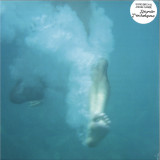
Quartier Groove Records releases its first EP “Ritmo del Barrio” that features two club weapons from the Spanish electronic music vaults of the 90s, TYU’s remix of Bravo & Dj’s 1989 one-hit wonder “Difacil Rap”, and Richard Fribert’s rework of the early electronic rumba track “Sueño Almohade” by Sombra y Luz. Both tracks have been licensed and agreed with the original labels and writers, and will be limited to 300 copies.
On the a-side, an edgy club revision of a 90s hip-house track that was originally written by a group of DJs compelling us to join them for a wild night out. TYU’s remix, that only makes use of the rad rapapella, makes a perfect match to the daring call and takes us to a 90s rave of today in full style, with its bold drums, slappy snares, trancy synths and road-paving bassline.
The flip comes with Richard Fribert’s powerful and fearless hi-NRG rework of the experimental rumba song “Sueño Almohade” by Sombra y Luz, a track that makes a clear flirt with the history of Spain, a country that was once the Muslim ruled area of “Al-Andalus”. Spanish passion meets Arabic mystique in this hard, slamming, acid ride of an update. The result, a DJ weapon to be reckoned with.
The two tracks comes together to form Ritmo del Barrio EP, “Quartier Groove” in Spanish, the project by label heads Richard Fribert & MOQST that was designed to encourage listeners to search for more unknown and forgotten music in the most unexpected of corners of the world.
Search:two make one
In the most literal sense, globally renowned whistler Molly Lewis makes her gorgeous
and curious compositions out of thin air.
New entrees into the Exotica canon; sprawling, would-be Spaghetti Western scores;
and a dash of Old Hollywood glamour - the whistle-led songs on her debut EP ‘The
Forgotten Edge’ are as complex, delicate and indelible as anything performed with
viola or piano.
“Whistling is like a human theremin,” said Lewis, an Australian native who’s spent the
last several years in LA and whose performances there and around the world are
changing any preconceived notions of whistling by the room-full.
That’s not to say Lewis is all serious and snooty about the craft. Quite the contrary.
Her sense of humour is witty, self-deprecating and zany. She’s as likely to reference
the slapstick Leslie Nielsen film series ‘Naked Gun’ for music video concepts as she
is a classic piece of noir cinema.
Look no further than the equatorial and breezy opening cut ‘Oceanic Feeling’, a
lovely walk across the flotsam-sprinkled sands in the rum-pumping vein of Les
Baxter. Meanwhile, the title track - and really, the entire collection here - is a loving,
albeit rather haunting, salute to one of Lewis’s heroes, the Italian composer and
musician Alessandro Alessandroni, whose whistle and guitar you hear on the title
theme of Ennio Morricone’s ‘A Fistful of Dollars’. Lewis and her ensemble create
classic cinema for your mind.
Her own love for the artform began when, around the age of twelve she was given
the CD ‘Steve ‘The Whistler’ Herbst Whistles Broadway’. Something contained in it
clicked. “It wasn’t that I was immediately obsessed, but I knew it was something I
could do well,” Lewis said.
The daughter of a musician mother and a documentary filmmaker father who often
focused his films on niche communities and topics, Lewis recalls watching a
television documentary with her parents about The International Whistlers
Convention in Louisburg, North Carolina. “My dad said, ‘If you ever make it into the
competition, I’ll take you there’,” Lewis said. Turns out, there was no bar to entry, just
a small fee. And so, several years later, she and her father travelled to the
convention. New to the form, Lewis didn’t take home one of the bigger prizes but they
were awarded the prize for Whistler Who Traveled The Greatest Distance. “We really
just used the trip to drive around the United States,” she said.
After studying film in Australia, Lewis moved to Los Angeles to be close to the film
industry. There, her circle of artist friends grew naturally and with providence - her
unique talent drawing more and more recognition. And over the last few years,
Lewis’s Café Molly events at LA spots like Zebulon, Non Plus Ultra and The Natural
History Museum have become fabled, elegant happenings with appearances from
guests like John C. Reilly, Karen O and Mac DeMarco.
Recorded with a crack team of friends and musicians during 2020’s quarantine, ‘The
Forgotten Edge’ is rife with incredible performances from Thomas Brenneck (Sharon
Jones & The Dap-Kings / Budos Band), Joe Harrison (Charles Bradley, Lee Fields),
Eric Hagstrom (Brainstory), Abe Rounds (Meshell Ndegeocello, Andrew Bird, Blake
Mills), Leon Michels (El Michels Affair), Gabriel Rowland and Dave Guy.
Tape
Pauline Oliveros' Tara's Room has long been a favorite in the Imprec office and it's a great honor to be able to release it on LP for the very first time. Tara's Room was cut by John Golden and pressed at RTI in order to achieve a quiet, dynamic pressing. Originally released on cassette in 1987 following the 1986 release of "Sounding / Way" with Guy Klucevsek which is also available on LP via Imprec.
"Both pieces are intended to aid the listener in times of spiritual change, but are just fine for 'everyday' use as well. Highly recommended." Charles S. Russell, Ear Magazine
This LP features two long sides of infinite depth and sensitivity. Oliveros performs these pieces using a Just Intonation accordion and her Expanded Instrument System in order to bend both time and pitch.
Pauline Oliveros, composer, performer and humanitarian is an important pioneer in American Music. Acclaimed internationally, for four decades she has explored sound - forging new ground for herself and others. Through improvisation, electronic music, ritual, teaching and meditation she has created a body of work with such breadth of vision that it profoundly effects those who experience it, and eludes many who try to write about it. Oliveros has been honored with awards, grants and concerts internationally. Whether performing at the John F. Kennedy Center in Washington D.C., in an underground cavern, or in the studios of West German Radio, Oliveros' commitment to interaction with the moment is unchanged. She can make the sound of a sweeping siren into another instrument of the ensemble.
"On some level, music, sound consciousness and religion are all one, and she would seem to be very close to that level." John Rockwell
"Through Pauline Oliveros and Deep Listening, I now know what harmony is. It's about the pleasure of making music." John Cage
In 1970, Kevin and David met whilst they were working in the Labour Exchange Office on Aytoun St, Manchester. Both played guitar and had been searching for other musicians who played atmospheric music. Kevin had been playing in small clubs in Manchester and David performed in a few local bands. One evening, they jammed together at Kevin’s family home, and quickly realized that their playing blended together to form the basis of the sound they had been looking for. In the late ‘70s, the music scene in Manchester was bursting with new bands and music.
However, Kevin and David had little in common with the local acts, being disciples of a more meditative approach. They followed a path of their own, reaching for an otherworldly sound that they heard from artists like John Martyn, David Crosby, Erik Satie, Terry Riley, Eberhard Weber, Alice Coltrane, and Ralph Towner. They experimented combining their acoustic guitars and David’s bass with various effects pedals and techniques to try and achieve a warm and expansive sound that rides the line between ambient, jazz, and psychedelic folk Music.
Towards 1981, they had written eleven songs and accompanied a few with Moog synthesizer laid down by Rob Baxter. All were recorded on cassette decks in their simple home studios. They named this collection of music “Light Patterns”, after a poem Kevin had written. With Light Patterns complete, they set out to find a label to represent their music. They started playing a few gigs in Manchester; Band On The Wall, the Gallery, and other venues, such as Rotters which local promoter Alan Wise had organized. They set up with small amps along with their effects and played as though they were back at home. As Kevin remarks, “It was unusual, to say the least, to play such venues in a low volume chilled out way. However, people listened, often in shocked curiosity, and some even asked for tapes.”
Peter Jenner, of Blackhill Enterprises, eventually picked up the album for his new label, “Sheet”. Peter had managed lots of experimental bands and solo artists, including Pink Floyd in their early Syd Barrett days. He always favored outsiders! The tapes were taken to Strawberry Recording Studios in Manchester, who were surprised when Kevin and David walked in with just a couple of home-produced cassette tapes. Fortunately, they liked them and agreed to master the album. It was then sent to Portland Recording Studios in London for final mastering to vinyl. George Peckham, aka “Porky”, did the pressing with a personal message in the deadwax; “Kaftans, Candles and be Cool Man”. The artwork for the album cover was done by the late Barney Bubbles, a truly visionary artist.
After the album’s release, the pair continued to play together regularly until David moved away from the city. Kevin still resides near Manchester in the rolling hills outside of the city. He continues to experiment with dreamy music in his loft, and we are set to share a selection of his ethereal archival and current compositions in the coming months. David lives a quiet life in a small coastal town in the South, he likes to sail and is an avid cricket fan. We’re excited to make Light Patterns accessible again for the first time in nearly 40 years, remastered from the original tapes. As the original press release said, “Put the album on, lie back and enter the land of no floors”.
Analha was one of the first approaches I had with the design of analog basses and drums, to understand the way in which we can involve so many sounds and transform them to our own liking, to give it its own narrative, a sense, an identity in which it can be navigated about different styles without problem.
They are two pieces that make up totally different break paths where "Mi ama Dic K no" A1 is my own exploration and vision of the break beat, three melodies written in F # that count the subtlety, while the bass contrasts in an aggressive idea to the beat of many changing rhythms in the drums, which sorfs between a Mpc, 808, Dsm & V Modular ; Classic trip hop voices samples that guide the way this own idea progresses on the breaks and pads that generate a more complete environment with a very energetic atmosphere that is constantly on the rise in the active and natural development of the track.
Towards the B side "Run mami run" B1 is composed by a classic intro of acid cut while some seconds of drums interpose which are accompanied by a radio narration of a chase, a return change is present with a vinyl spin between voices from GTA & WU TANG CLAN which make an intro for an infusion of breaks fully aligned to the beginnings of oldskool drum and bass which are accompanied by voices recorded, treated and edited to connect more directly between the spaces interrupted by the glitch acid chords.
Among contrary structures "Analha" contains hidden but marked criticisms, it is a project that comes from 2018 and ended at the beginning of 2019 which made him think about how to involve more than music within his own sound narrative.
The sonorous identity of rachiid today is different, he understands his environment but does not believe in adapting, he tells us that each exploration and discovery during these years have led him to think how this first release was born until now but is not connected at all with what nowadays, describes his sonority today as changeable, essential and highly with IDM, experimental and breaks.
Brian Leeds a.k.a. Huerco S' West Mineral label present a groggy Midwestern ambient doozy with Chat, the first collaborative release by Pontiac Streator and Ulla Straus
Pontiac Streator previously appeared as a guest on the first West Mineral LTD release, Pendant's Make Me Know You Sweet, while Ulla Straus is perhaps best known for her part on the cultishly adored bblisss compilation tape which introduced Huerco S.'s Pendant alias to the world at large.
Their first album together is a bedroom-crafted confection where drowsy blues and raga smudge with lounging exotica themes in a blunted style to properly heavy-lidded effect.
Chat was recorded on July 5th in Pilsen, Chicago on Ulla's bed after a long week spent dancing with friends, staying up all night typing in chatrooms, and hate-watching Fox news. The results channel that experience into four lop-sided creations that feel satisfyingly burned out and immersive, like the murmur of zonked chat between close friends.
In four parts; Chat One thru Chat Four, the record unfurls with a muggy mid-fi tension between its illusive fidelities, kindling a smoky atmosphere that colours listening spaces with seductive smells
and a muggy, keening tension that recalls the minutes before sundown
This balmy feel of the surreal comes out in a sylvan patina of sweetened cicadas and curling pads urged along by a stream of wooden drums, variously recalling Spencer Clark on some kind of
Aguirre soundtrack mission in the tropics, a heatsick Rainforest Spiritual Enslavement piece, or, in the dream-pop drift of the last part, like Leven Signs smudged by Muslimgauze.
Coolly serving to expand West Mineral LTD's remit after that spellbinding Pendant album and a 12" of ectoplasmic dubs from uon, the flux of arid/fluid textures and para-dimensional fidelities in
Chat feels somehow calming yet fraught with a somnambulant appeal that's dangerously easy to
Jimmy Tamborello returns with a collection of 10 pop-infused vocal hymns – simultaneously perfect dance floor fillers and lullabies. "Away" is the second of two Dntel albums to be released in 2021 by Morr Music in collaboration with Les Albums Claus. While "The Seas Trees See" showcased Tamborello's more intricate and quiet side, "Away" embraces his love for pop music. A genre which like no other has been resonating the advancements of technology from the very beginning. Songwriting was sequenced and computerized on such a large scale that it would change the sonic aesthetics of the charts forever.
Dntel is a musician who changed pop music forever – and still works in this never-ending labour of love, both effortless and highly focused, constantly tweaking the universe of our musical perception. Whether beatless or uncompromisingly embracing the limelight of collective ecstasy with one of his most remembered tunes "(This Is) The Dream Of Evan And Chan", his almost forgotten anthem "Don’t Get Your Hopes Up" or his work as James Figurine. "Away" features 10 of these extravaganzas – uniting his audience once more in hope and future-bound optimism.
"I grew up with 80s techno-pop – these influences always come through in my music", Jimmy writes from Los Angeles. For this album, though, "I was thinking more of 80s indie pop or labels like 4AD. It is a mix of those influences along with trying to figure out what elements of my own discography I still connect with. I wanted it to reflect old Dntel records as well as the techno-pop band Figurine I used to be in. I have always considered my music basically being techno-pop, but not referring to pop as popular music – I just like pretty melodies. But with the Dntel moniker, I never had the ambition to produce music for a really big audience.”
It is exactly that looseness in approaching music which makes Tamborello’s style of composing so unique. On "Away" he combines a healthy dose of distortion with the most-sticking melodies, vocals and bitter-sweet lyrics he ever came up with – performing all vocals himself, with the help of technology. "My voice has a limited range. When I applied this vocal processing it seemed to bring out the emotions more. I don’t see it as the same as the more artificial, autotuned style of modern pop music. I think it still sounds like it could be a real person singing, just not me."
Using this technique, Dntel disembodies himself from his own art, welcoming all kinds of interpretations re. his current state as an artist. "Somehow this processed voice feels closer to how I see myself than my normal voice, for better or worse…", he writes. Pop music is a fragile entity, making its kingpins vulnerable. Many emotions reveal a lot of the originator’s personality –this is something one has to be prepared for. On "Away", Jimmy Tamborello finds the perfect way of marrying his unique musical personality with both the demands and possibilities of pop music. Just listen to "Connect" and you’ll know what we’re talking about. A perfect, yet timeless album for less than perfect times.
Emerging from the Toronto warehouse scene, Tush is a rising electronic music act powered by Kamilah Apong and Jamie Kidd. Taking inspiration from electro funk, early disco, post-punk and '90s house; their debut album 'Fantast' embodies the rawness, vulnerability, and intimacy of the dancefloor.
'Fantast' kicks off with the slow burning 'Wavy Baby', an invitation to get close, get intimate and submit to the groove: "Vulnerability is the key to us getting to that next step of intimacy". Up next is lead single 'Chrysalis', a high octane ride through a technicolour fantasy world of heady synths and driving rhythms that propel Kamilah's voice into an erotic stratosphere.
'Don't Be Afraid' is about having the courage to love defiantly, urgently, and with intention. Driven by Jamie's infectious bass lines and FX blasts, it smoothly transforms into an uplifting gospel-infused track.
Two high points of the album, 'Jessica F***' and 'Marathons', highlight Tush doing what they do best. These tracks are the sound of the warehouse scene that birthed the project in the first place and the late night jam sessions that were full of possibility pre-pandemic. Here, Tush really stretch their improvisational muscles - the interplay of raw soulful vocals, hypnotic basslines, synth pads, and heavy disco rhythms is at the core of what makes them so invigorating.
'Fantast' closes with the uplifting sunrise energy of 'My Joy', the light at the end of the tunnel. "This song is enchanted by the backing vocals of my friends and chosen family, who are my cornerstones to working through the wonderful mess that I am". Kamilah adds "The track gives me this feeling that - no matter how hard the world tries to beat it out of me - I can and I have had to work hard to cultivate my own happiness in my own sacred spaces - one of those being Tush. Ultimately, this is all I really need".
Repress
Nina Kraviz launches her (pronounced 'trip') label with a double-EP compilation entitled 'The Deviant Octopus', featuring a pair of brand new productions from Kraviz alongside material from Terrence Dixon, emerging talent Parrish Smith & Bjarki, and veteran producers Exos & Steve Stoll.
The idea for has been gestating for some time with Nina Kraviz, an avid crate-digger and frequenter of numerous second-hand record stores, who has long wanted to begin a label of her own which would build on some of the principles of her beloved 90s techno labels in terms of attitude and aesthetics, whilst looking for forward-thinking modern productions that reflect her core tastes for idiosyncratic electronic music.
The art and title of 'The Deviant Octopus' comes from a single-sentence scenario dreamt up by Kraviz: 'Without a moment's notice an Octopus appeared and devoured everyone in sight'. Supplied with this scenario, artist Tombo rendered his own unique visualization for the artwork that adorns the release sleeve. It's Kraviz's own nod to the labels that inspire her and grab her attention while digging through second hand records, the best of which were imbued with the unique personality of the people behind them. This extends to the sound Kraviz intends for : dusky, divergent and trippy music to stimulate brains, dreams and fantasies.
In this respect 'The Deviant Octopus' is a perfect introduction: Kraviz herself is represented on the tracklist by two new tracks that take up the mantle of last year's Mr Jones EP by returning to the vocal-flecked hypnotic techno that marked out that release. Complimenting those are two new cuts from a true master of hallucinatory off-kilter techno, Terrence Dixon in his Population One guise.
Joining them will be a pair of names from the techno pantheon who have been huge influences on Kraviz: with a career that's taken in releases on Synewave, Trax, Novamute and Richie Hawtin's early-90s Probe Records, Steve Stoll has been mining his own variant on techno and acid minimalism for over twenty years, heading up the Proper NYC label and releasing under various pseudonyms, such as Cobalt, of which Kraviz has been a long-term fan. His counterintuitively titled 'Pop Song' sits alongside a 13-minute 90s techno excursion from Reykjavik's Exos - the only previously-released cut (originally appearing on Thule Records sub-label Plast Trax in 1998) - together illustrating that will also live up to its name in the geographical sense: showcasing great music from historically vibrant electronic music scenes outside of the usual Detroit-Berlin axis.
With Kraviz looking to build a small repertory of talent around , this first release also makes room for two newer names: Bjarki is an Icelandic talent to keep a firm eye on, who drew Kraviz's attention in a chance meeting after a gig at Copenhagen's Culturebox club, after which he passed her a collection of mind-bendingly odd demos; while Parrish Smith is a talented Netherlands-based producer whose short yet impactful sketch '1.0 / 8.0 Afrika Genocide' brings the second 12' to a bewitching close.
Demon Records presents the narrated TV soundtrack of a ‘lost’ four-part adventure set in ancient
Greece, starring William Hartnell as the Doctor.
When the TARDIS lands on the plains of Asia Minor, not far from the walled city of Troy, the
Doctor is hailed as the great god Zeus. He’s enlisted by the Greek army – led by Odysseus and
Agamemnon – to come up with a strategy for defeating the Trojans. With his companions already
prisoners of the opposing side, the Doctor draws his inspiration from the legend of a certain
wooden horse…
Presented across two 140g vinyl Trojan Sunset splatter discs, this 1965 TV soundtrack – no
episodes of which survive as film recordings - is narrated by Peter Purves, who co-stars as the
Doctor’s companion Steven, with Maureen O’Brien making her final appearance as Vicki. The
guest cast includes Max Adrian as King Priam, Barrie Ingham as Paris, Frances White as Cassandra
and Ivor Salter as Odysseus. Incidental music is by Humphrey Searle, and the familiar strains of
the Doctor Who theme are courtesy of the BBC Radiophonic Workshop.
The coloured LPs are presented in a gatefold sleeve with fully illustrated inner sleeves. Original
episode billings, and full cast and credits, are included.
Dummedy-dum, Dummedy-dum, Dummedy-dum, Dum-dum…
Thyrfing emerged from the ever-growing underground scene in Sweden
back in 1995.
After seven full-length albums and numerous live performances all over the
world, the band have gained a strong following over the years and an exquisite
standing within the metal scene.
They are considered one of the top bands within the so-called Viking/pagan
metal genre - but on the other hand, Thyrfing are so much more with their truly
outstanding and self-contained musical offering.
The name of the band is taken from the sword “Tyrfing” in Norse mythology - a
cursed blade that appears in several tales and myths. Ever since the start, the
mythology has played a huge part in the scenery and imagery of the band’s
music and lyrics, something which is still intact today.
‘Vanagandr’ (an alternate name for the wolf creature known by the more familiar Fenrir) is a celebration of the tales and stories of Scandinavia - the track
‘Undergangens lankar’ is a conceptual piece focusing on Vanagandr/Fenrir and
a track that carries the spirit and hallmarks that make Thyrfing so unique.
‘Dop dem i eld’ is both the opening song on the album and the first video, one
of two produced for the band by Patric Ullaeus (Dimmu Borgir, Europe, Arch
Enemy). A powerful, heavy, and aggressive track packed with groove and melody. Elsewhere ‘Tr ldomsord’ is regarded as possibly the band’s most intense
song to date, whereas ‘Jordaf rd’ closes the album in epic fashion - a mournful
and moody longing for the end to come. The perfect way to end the album!
Co-recorded and co-produced by Jakob Herrmann (In Flames, Machine Head,
Evergrey) in Top Floor Studios, Gothenburg, with the renowned Jacob Hansen
(Volbeat, U.D.O., Katatonia) looking after the mix and mastering, all of which
ensures at ‘Vanagandr’ sounds massive!
The art concept was executed perfectly by Niklas Sundin of Cabin Fever Media
(ex-Dark Tranquillity) who reconnects with the band once again (he also did
the “Vansinnesvisor” album back in 2002.)
‘Vanagandr’ is the first release via the band’s new record label, Despotz Records. Who recently also signed over the rights to the band’s first four albums
Thyrfing (1998), Valdr Galga (1999), Urkraft (2000), Vansinnesvisor (2002) and
have announced exclusive physical re-issues are in the making.
“... a successful voyage into an oaken woods where death metal, traditional
thrash, and Scandinavian folk commingle harmoniously” // John Serba, Allmusic
“This album gives you an epic feel, and that’s the big strength of Thyrfing,
their music can do something like that to you.” // folk-metal.nl
Thyrfing emerged from the ever-growing underground scene in Sweden
back in 1995.
After seven full-length albums and numerous live performances all over the
world, the band have gained a strong following over the years and an exquisite
standing within the metal scene.
They are considered one of the top bands within the so-called Viking/pagan
metal genre - but on the other hand, Thyrfing are so much more with their truly
outstanding and self-contained musical offering.
The name of the band is taken from the sword “Tyrfing” in Norse mythology - a
cursed blade that appears in several tales and myths. Ever since the start, the
mythology has played a huge part in the scenery and imagery of the band’s
music and lyrics, something which is still intact today.
‘Vanagandr’ (an alternate name for the wolf creature known by the more familiar Fenrir) is a celebration of the tales and stories of Scandinavia - the track
‘Undergangens lankar’ is a conceptual piece focusing on Vanagandr/Fenrir and
a track that carries the spirit and hallmarks that make Thyrfing so unique.
‘Dop dem i eld’ is both the opening song on the album and the first video, one
of two produced for the band by Patric Ullaeus (Dimmu Borgir, Europe, Arch
Enemy). A powerful, heavy, and aggressive track packed with groove and melody. Elsewhere ‘Tr ldomsord’ is regarded as possibly the band’s most intense
song to date, whereas ‘Jordaf rd’ closes the album in epic fashion - a mournful
and moody longing for the end to come. The perfect way to end the album!
Co-recorded and co-produced by Jakob Herrmann (In Flames, Machine Head,
Evergrey) in Top Floor Studios, Gothenburg, with the renowned Jacob Hansen
(Volbeat, U.D.O., Katatonia) looking after the mix and mastering, all of which
ensures at ‘Vanagandr’ sounds massive!
The art concept was executed perfectly by Niklas Sundin of Cabin Fever Media
(ex-Dark Tranquillity) who reconnects with the band once again (he also did
the “Vansinnesvisor” album back in 2002.)
‘Vanagandr’ is the first release via the band’s new record label, Despotz Records. Who recently also signed over the rights to the band’s first four albums
Thyrfing (1998), Valdr Galga (1999), Urkraft (2000), Vansinnesvisor (2002) and
have announced exclusive physical re-issues are in the making.
“... a successful voyage into an oaken woods where death metal, traditional
thrash, and Scandinavian folk commingle harmoniously” // John Serba, Allmusic
“This album gives you an epic feel, and that’s the big strength of Thyrfing,
their music can do something like that to you.” // folk-metal.nl
An album evolving around disruptive and chaotic life events. A testament to putting the pieces back together through love and support from friends and loved ones.
All tracks are built on two improvised live sessions recorded on a Roland Juno-60, Moog Sub 37, Roland XP 30 by Sofie Birch and Johan Carøe in Copenhagen in 2019.
Edited and reworked to 11 tracks during residency at Andersabo in Sweden the summer of 2020 with new recordings of acoustic elements.
- A1: The Boys Are Back In Town
- A2: Jailbreak
- A3: Don't Believe A Word
- A4: Dancing In The Moonlight (It's Caught Me In Its Spotlight) (It's Caught Me In Its Spotlight)
- A5: Waiting For An Alibi
- A6: Rosalie/ Cowgirl's Song (Live)
- B1: Do Anything You Want To
- B2: Chinatown
- B3: Sarah (Version 3)
- B4: Fighting My Way Back
- B5: Killer On The Loose
- B6: Hollywood (Down On Your Luck) (Down On Your Luck)
- C1: Thunder & Lightning
- C2: Renegade
- C3: Still In Love With You
- C4: The Sun Goes Down
- D1: Whiskey In The Jar
- D2: Bad Reputation
- D3: The Rocker
- D4: Showdown
- D5: Cold Sweat
- D6: Wild One
Formed in Dublin in 1968 few would dispute that Thin Lizzy helped define the genre Hard Rock.
The band scored 8 top 20 hits over 8 years and place no less than 8 albums in the UK top 20, 3 of which would make the top 10 and 4 the top 5.
From the mid-70s onwards, they championed the use of two lead guitars, it gave them a unique sound which evolved down the years and influenced the likes of Def Leppard, Metallica and Iron Maiden
After numerous line-up changes, Thin Lizzy called time in 1983
With 1986 just 4 days young lead singer and main songwriter Phil Lynott died aged 36. All music’s John Dougan wrote, “As the band’s creative force, Lynott was a more insightful and intelligent writer than many of his ilk, preferring slice-of-life working-class dramas of love and hate influenced by Bob Dylan, Bruce Springsteen and virtually all of the Irish literary tradition.”
This 2-LP set contains all that is great about the band – the tracklisting overseen by Lizzy Expert Nick Sharp covers what is the best of the band’s output throughout the years.
After his first adventure in the endless universe of instrumental music where he made known “Man With a Plan” in 2018, Minus & MRDolly now presents the new EP Broken Hearts Make Broken Beats. This new work is the result of a recording session at the Groove-Wood studios promoted by João André - who mixes two of the three originals of the EP - to which Hugo Danin joined on drums and Sérgio Alves on keyboards and electric piano. In trio, Minus, Hugo and Sérgio rearranged and explored the original sketches, previously composed by Minus & MRDolly.
Floating, or as if to say, with one “foot inside and the other outside” of his so familiar home that is Hip Hop, “BHMBB” is the reflection of some musical references previous to that house, where “Britfunk” or “Broken Beat” serves as an example. This EP intends to marry the acoustic character of the interpretation with the aesthetic and electronic universe of dance music.
“Salame”, “The Break” and “A Thousand Miles”, the three originals that make up the EP Broken Hearts Make Broken Beats, also count on the participation of percussionists Manu Idhra and Rui Ferreira, the voice of Mary Raisekings, and the Pardal saxophone. The theme "The Break" has remixes by Pedro and Max Graef.
- A1: Miguel A Ruiz - Transparent
- A2: Camino Al Desvan - La Contorsion De Pollo
- A3: Mecanica Popular - Impresionistas 2
- A4: Finis Africae - Hybla
- A5: Orfeon Gagarin - Ultima Instancia
- B1: Victor Nubla - 2000 Lenguas
- B2: Javier Segura - Malaguenas 2
- B3: Jabir - Vuelo Por Las Alturas De Xauen
- B4: Miguel A Ruiz - Trivandrum
- B5: Mecanica Popular - Impresionistas 1
- C1: Finis Africae - Hombres Lluvia
- C2: Esplendor Geometrico - Sheikh
- C3: Victor Nubla - Chandernagor
- C4: Luis Delgado - El Llanto De Nouronihar
- C5: Camino Al Desvan - Adjudicado A La Danza
- D1: Mataparda - Me Llena La Cachimba
- D2: Suso Saiz - Horizonte Paseo
- D3: Camino Al Desvan - Fock Intimida A Gordi
- D4: Mataparda - La Papa Suave
- D5: Eli Gras - Flu
Following “La Contra Ola” (BJR015), Bongo Joe presents 'La Ola Interior', a compilation exploring the ambient side of the Spanish electronic music produced in the 80’s, bringing together 19 little-known and innovative pieces from the golden age of Spanish electronic music !
It gathers musicians from various horizons and of many generations, who shared the desire to create an immersive soundscape and to combine electronic music with non-Western musical traditions. As a general rule, the Anglo-Saxon tropism did relate the spanish peninsula’s ambient music to the Balearic Sound, that is to say to the relaxing music played in Ibiza’s nightclubs. But this music takes place in the productive territory of experimental musics, and particularly in its two main breeding grounds: the tape recording underground and the independent musicians-producers scene.
Inseparable from the processes of self-publishing, distribution and exchange of music that were then taking place in Spain in an artisanal way, the vast underground movement of cassettes was divided between an "ethno-trance" combining industrial beats and oriental sounds on the one hand (Esplendor Geométrico, Miguel A. Ruiz / Orfeón Gagarin) and unclassifiable low-fi tinkerers on the other hand (Camino al desván, Eli Gras, Mataparda, Victor Nubla). Hyperactive, this scene is radical and strongly dominated by the hardest musical styles, but the ambient, influenced by the German Kosmische Musik and "krautrock", also develops here.
The second vein of Spanish ambient comes from some of the independent labels of the peninsula (DRO, GASA, El Cometa de Madrid, EGK) whose activity will mark the return of some of the most adventurous musicians-producers of the 70s. Some were influenced by American minimalism (Luis Delgado / Mecánica Popular, Suso Saiz, Javier Segura), others by Fourth-World Music conceived by Jon Hassell and Brian Eno (Finis Africae, Jabir). Having passed through folk, ancient, traditional or contemporary music, and being familiar with improvisation and studio techniques, these artists come from a mutant hippie culture, capable of phagocyting many musical styles from electronic ambient to ethnic improvisation and modal jazz.
These two scenes and generations that make up LA OLA INTERIOR intersect around a common interest in non-Western musical traditions. Their exploration may be that of the tribal origins of electronic rhythms or the Arab heritage of Spain. Above all, it is a dreamy exoticism, an immobile journey as the sounds, rhythms or instruments of these traditions are scrutinized by Western practices (avant-garde music, electronic technology). The result is a hybrid music, filtered and reinvented, neither Western nor extra-Western, with a pronounced taste for the fusion of opposites, which we have called "Acid Exoticism" because of its permanent search for trance or contemplation. Atmospheric, contemplative and serial, these musics still plunge us today into a sensorial journey, at the same time interior and distant, organic and technological, between exotic reminiscences and interior visions.
With or without a drink in hand, moderate temperature, no need to jump into the wet. One night AT the pool, not inside. Palm trees or succulents - not far from here, the vegetation has adapted to the situation. A soft rustling: Possibly crickets, probably also the wind. No traffic and certainly no civilization, which right now would probably only disturb with its long agenda of responsibilities. HYPNOSIS AND MUD - Healing hypnosis, healing mud. The half-frustrating, half-liberating feeling of saturated soil between the toes. A state of inner peace. Instead of a voice, you hear primitivist percussive explorations. A groping and grasping of the bare feet, with delicate toes. Abstraction is followed by the concrete: a walk through the ORCHIDEENGARTEN RUSE, an orchid garden close to the Bulgarian town and not far from the Romanian border. Digitally, but not unreal. Perhaps even better than reality - anyone can do that. The (unofficial) soundtrack to this would not only make the Canadian composer Mort Garson happy. A lady‘s shoe kindly looks at us. If you turn around, you arrive on the other side: A LINE HAS TWO SIDES. Conundrum-like images, dissolved one-dimensionality. Candid narrative ambiance. A clarinet calls to duty. Civilization and traffic after all? SUNBEAMS ON YOUR CAR. Urgency, a clamor of voices - both in their best form. Yet again – the clarinet, the blunt reality: ONE NIGHT AT THE POOL. We are still standing here, we probably never left. A three-part journey – with delicate transitions. Three destinations: Now forever united. Dissonant and yet pensive. In the far distance the advertisement for the collected works of Meredith Monk. Hair erect, the little skin nerves contract, goosebumps - at last!
’Angelo lost his shit over it. Aaliyah’s 3rd favourite track of all time is on it. David Bowie rocked up with it to a TV interview, declaring it “the most exciting sound of contemporary soul music”.
In 1996, Lewis Taylor released his self-titled masterpiece. A true modern classic, it’s an album that was years ahead of its time. Forget 25 years ago, it could easily have been made in 2021. An effortless blend of neo-soul, sophisticated pop, smart grooves and laid-back white funk, it enjoyed rapturous reviews from critics and music legends alike. But the album never managed to make an impact and given what was likely a token vinyl release at the time, the original records have long since been near-impossible to find. Lewis Taylor’s Lewis Taylor remains a holy relic for some and criminally unknown to most.
Lewis Taylor’s impeccable influences created a dazzling sonic palette: the LP as a whole suggests the visionary brilliance of Prince; the vocal stylings evoke the yearning power of Marvin Gaye; the effortless guitar playing shares the virtuosity of Jimi Hendrix; the haunting tones conjure Tricky; the innovative production and engineering invite comparisons to studio mavericks like Todd Rundgren and Brian Eno; the multi-layered, complex harmonies flash on Pet Sounds-era Brian Wilson; the dark, drama is reminiscent of both Scott Walker and Stevie Wonder; the complex arrangements create textures and moods with the feel of Shuggie Otis on Inspiration Information; the bold experimentation is akin to progressive artists like Faust and Tangerine Dream; the atmosphere is in conversation with Jeff Buckley’s Grace… and we could go on. That might all sound like marketing hyperbole, but not as far as Be With is concerned. It is a genuine wonder how an album this good could’ve passed so many people by.
But despite all the reference points, the similarities are really only skin-deep because the album sounds truly original. It occupies its own distinct, strange universe that feels dark and brooding one moment, bright and joyous the next. Ultimately, Taylor sounds like Taylor.
Although you wouldn’t know it from the credits, the album wasn’t the work of Lewis alone. Sabina Smyth gets an executive producer credit on the original sleeve, but in fact she worked with Lewis on the production and arrangements, did a lot of the backing vocals and she co-wrote Track, Song, Lucky and Damn with Lewis.
Lewis clarified all this in a Soul Jones interview with Dan Dodds in 2016. He explains how not giving Sabina the credit she was due at the time was an unfortunate consequence of where his head was at and he’s now trying to set the record straight.
Together they created an exquisite and sensually-charged record, with a freshness to the writing that makes the songs catchy, melodic-yet-deep and sometimes even funky. The music is predominantly guitar-led and a mixture of organs and synths, live drum loops and electronic percussion make for a sort of modern soul backing orchestra.
On the surface the album is gorgeously laidback, but beneath the lush, sometimes slick, production there’s a murkiness in the seriously gritty funk/hip-hop instrumentation. Lewis Taylor can be a claustrophobic listen. Even its one-word, often seemingly throw-away track titles add to the sense of unease. In its most positive moments, there’s still a sense that things aren’t quite right. The magic comes from this compelling tension.
The languid, strutting “Lucky” is a sensational opening statement. Sinuous electric guitar winds around the shaking percussion with a killer bass line rattling your bones, and Lewis’s voice is sublime. Its six-and-a-half unhurried minutes manage to distill the work of Marvin, Al Green and Bobby Womack because yes, it’s *that* good. Up next is the tough, dusty drum and jazzy, unsettling psych-guitar workout of “Bittersweet”. Aaliyah described it the “perfect song”, which says it all. By turns loping and soaring, tightly coiled and blasting free, 25 years on its discordant, swaggering majesty still sounds like future R&B.
The swinging, blue-eyed funk of “Whoever” oozes sophisticated sunshine soul for hazy days before “Track” sweeps in. The music tries to lift us up, beyond the reach of the vocals trying to drag us back down as Taylor sings “my mood is black as the darkest cloud”. The spare, dubby electro-soul of “Song” closes out the first half of the album with barely contained dread as it creeps towards the lush, synth-heavy coda.
The smouldering “Betterlove” eases us into the second half, coming on like a languorous response to the call of “Brown Sugar”, before sliding into the shuffling, softly-rocking “How”. Somehow the remarkable “Right” manages to both warm things up and smooth things out even more. Taut yet luxurious, it’s definitely not wrong.
“Damn” was to have been the album’s title track and you might also be able to hear its influence on D’Angelo’s Voodoo, maybe most obviously in the chaotic closing moments of “Untitled (How Does It Feel)”. Building to a screeching wall of noise that suddenly cuts dead, “Damn” sounds like the natural end to the album, with the celestial a cappella “Spirit” serving as a heavenly reprise.
When it came to the sleeve, art director Cally Callomon heard Taylor’s music as “sideways off-camera glances at a plethora of influences he had” and wanted to interpret that visually: “I went off into night-time London to see if I could find his song titles in off-beam low-fidelity photographs. I even found a shop called Lewis Taylor”. With a slide for each of the album’s ten tracks, nine of them are on the inner sleeve and the slide for “Damn” makes the front cover. It should’ve been the album’s title, but concerns over distribution in the US scuppered this.
One of UK soul’s most fascinating artists, Andrew Lewis Taylor is an enigmatic figure and a hugely under-appreciated talent. A prodigious multi-instrumentalist who got his start touring with heavy blues/psych outfit the Edgar Broughton Band, he released two albums of psychedelic-rock as Sheriff Jack before Island signed him on the strength of a demo alone. But Taylor was destined to be one of those artists unable (or unwilling) to be pigeonholed and despite the best efforts of Island’s publicity department the music never sold in the quantities it needed to or deserved to. Island eventually let him go in the early 2000s and in June 2006, Lewis Taylor retired from music.
Typical for the mid-90s, this CD-length album was squeezed onto a single LP for its original vinyl release. Simon Francis’s fresh vinyl mastering now spreads out the ten tracks over a double LP so nothing is compromised. And as usual, the records have been cut by Pete Norman and pressed at Record Industry. The original artwork has been restored at Be With HQ and subtly re-worked to work as a double.
This sprawling psychedelic soul opus really is a forgotten should-be-classic. We know that there are those of you who know, and as for the rest of you, we’re a bit jealous that you’re getting to hear Lewis Taylor for the first time.
Black vinyl w/ standard sleeve. Juju is the brainchild of Sicilian multi-instrumentalist Gioele Valenti (Lay Llamas, Herself) and this Fuzz Club Session LP finds Valenti and band (Vincenzo Schillaci, Simone Sfameli) storming through four tracks at I Candelai in Palermo, Italy. The resulting session is released as a series of videos and pressed on vinyl. Due for release August 13th on London-based label Fuzz Club, the session comprises two tracks from their 2017 second album 'Our Mother Was A Plant' ('In A Ghetto' and 'And Play A Game') and two from 2019's 'Maps and Territory' LP ('Master and Servants' and 'Motherfucker Core'). Juju's worldly, genre-bending experimentalism fuses psychedelia, new wave and krautrock with touches of afrobeat, funk and zamrock and it's in a live setting, such as that captured here, where that captivating blending of sounds is at its most spellbinding and hypnotic. Juju's Fuzz Club Session (the latest in a series which has previously included the likes of A Place to Bury Strangers, Night Beats, Holy Wave, The Entrance Band and more) makes all too clear why the band have been praised as one that "resets the coordinates and makes the past seem startling new again" (The Quietus).
Limited Coke Bottle Green vinyl, 250 copies only for the UK. Any future pressing will be on black vinyl. Massage feature Alex Naidus from Pains At Being Pure At Heart. Recorded by Lewis Pesacov (Fool’s Gold, Foreign Born, Peel’d). Massage was supposed to be low-stakes, no big deal "anti-ambition," as Andrew Romano, guitarist and vocalist, put it. The L.A.based jangle-pop group's first album, 2018's Oh Boy, was a sweet and simple weekend warrior's affair, or more specifically, an every-other-Monday one, as the band members gathered to bash out songs that offered messy but heartfelt tribute to their chosen heroes: The Feelies, the Go-Betweens, Twerps, Flying Nun. For Romano, not taking things too seriously is a dead-serious affair: “Nothing kills the kind of music we want to make faster than the sense that a band is trying too hard,” he says. The kind of music Massage makes sunny, bittersweet, tender is less a proper genre than a minor zip code nested within guitar pop. Take a little "There She Goes" by the La's, some "If You Need Someone" by the Field Mice; the honey-drizzled guitars from The Cure's "Friday I'm In Love," a Jesus & Mary Chain backbeat, and you're almost all the way there. Indie pop, jangle pop, power pop whatever you call it, pushing too hard scares the spirit right out of this sweet, diffident music, and Massage have a touch so light the songs seem to form spontaneously, like wry smiles. Still, on their sophomore effort, Still Life, they manage to take a quantum leap forward in songwriting, production, and depth, all somehow without seeming to try. These 12 deft songs are full of late-summer sunlight and deep shadows, pained grins and shared jokes, shy declarations of love and quietly nursed heartbreak. Still Life resurrects a brief, romantic moment in the late-'80s, right after post-punk and immediately before alt-rock, when it seemed like any scrappy indie band might stumble across a hit. When Andrew Romano and Alex Naidus first met in 2007, Naidus had just joined a band with his friends Kip Berman and Peggy Wang that was about to stumble into many of them. When Naidus finally left Pains for L.A. in 2013, two hit albums and a few world tours later, he started playing with Romano to recapture the no-stakes, suburban-garage joy of making music for its own sake. It was "friendship incarnate," Naidus remembers. The other members came from within the friend circle Gabrielle Ferrer (keyboard/vocals) is Romano's sister-in-law, Michael Felix (drums) is one of Naidus’ best friends, and David Rager (bass) is a childhood friend of Felix’s. When Felix moved to Mexico City in early 2020, Naidus’ wife, Natalie de Almeida, stepped in. The result is the finest batch of songs they've ever produced. From Naidus' velvet-lined JAMC tribute "Half A Feeling" to Ferrer's Let It Be-era Replacements-tinged lament "The Double" to Romano's "In Gray & Blue," these are gold-standard indie-pop gems from emerging masters of the form. Still Life glows with the sincerity and unfakeable warmth of the era they so lovingly channel. Like the best Gin Blossoms chorus you still remember, the songs on Still Life stir big, pure emotions, but beneath them, uneasy truths about adulthood linger, just below the surface. Maybe the exact mix of ringing guitars and two-part harmonies can chase those feelings away, or redeem them, for at least a minute or three. Massage won't stop trying.