The Rhythm Makers's Soul On Your Side is flawless proto-disco funk. The Bronx-based band - that later went on to form heavyweight disco outfit GQ - originally released this treasure in 1976 and it's long been a hard to find record. It's also rare to find a record this hard. Captivating funk at its rawest, no doubt.
Storming out the gate with the rollicking Loft/Garage staple "Can You Feel It (Part 1)", the listener is immediately put on notice that this LP is just a little bit special. The title track, "Soul On Your Side", is a classic dancer and the basis of GQ's future hit "Disco Nights". But it's perhaps "Zone", a huge Baldelli track, that the record is best known for. Hypnotic psyched-out cosmic-disco / cosmic funk, it's an unrelenting groove that really thrusts the party into hyperdrive. With doses of scintillating Latin and pulsating African rhythms driving the pumping tune, atop an unstoppable bassline and imaginative, soul-slathered keyboard figures, it's basically a full-on funk assault. You might need a lie-down after this.
But there's no let-up on the B-Side, immediately grooving thanks to "Funk-N-You", a laidback glider that just rolls in the sleek style. Gorgeous harmony skills are displayed on "Street Dreamin'". Beautiful and gritty funk, by turns. "You're My Last Girl" is an airy ballad with two leads before the legendary "Monterey" enters the fray. A much-sampled instrumental and heavy disco-funk nugget, it contains an amazing B-Boy drum break making the whole LP worth the price of admission. "Can You Feel It (Part 2)" closes out this spectacular set.
The Rhythm Makers had been gigging around New York City since the late ’60s, having initially come together as Sabu and the Survivors, named after bassist Keith “Sabu” Crier. They eventually - for this album at least! - settled on The Rhythm Makers and cut one record for the small De-Lite subsidiary Vigor. The core lineup featured Crier, keyboardist Herb Lane, drummer Kenny Banks and rhythm guitarist Rahiem Leblanc.
Mastered for vinyl by Simon Francis, cut by Cicely Balston for Alchemy at AIR Studios with artwork restored at Be With HQ, this new edition should hopefully bring this album into the homes and record boxes of many more people.
Search:u key
- The Slammer
- Bruiser
- Incarcerate The Rich
- Disco Misfits
- Their Law
- Vive Le Rok
- Mofo Face
- Superficial Intelligence
- Never Mind The Botox
- Built For Fun
- Play A Fast 'Un
- Where There's Hope
Formed in the mid-eighties Midlands, they are still not only eating pop but spewing it up in a chaos of thrilling ideas on new album ‘Delete Everything’. Their eighth record sees them further refine, define and deconstruct their melange of industrial rock, loop da loop techno, gonzoid hip hop and punk rock into a series of captivating sci-fi anthems. The band still look and sound like they have stepped out the pages of 2000 AD magazine with Graham Crabb and Mary Byker trading vocals like bouncing Duracell bunnies to the itching, compulsive beats surrounding them. Davey Bennett brings the bottom end and Cliff Hewitt plays the beats whilst Adam Mole delivers guitar aggro and sometimes waves his keyboard around with a delinquent glee. Still creative, still in a world of their own Pop Will Eat Itself have deleted everything and started all over again.
- Yamate Hotel
- Bad Junkie Blues
"TIME" was the second album released in 1977 by keyboardist Sato Hiroshi, whose albums "AWAKENING" and "ORIENT"continue to receive acclaim around the world. The 7-inch title "Yamate Hotel c/w Bad Junkie Blues", released as a pre releasepromo single and now it has finally been reissued officially with new artwork!! SIDE A "Yamate Hotel" is a mellow sophisticated soul/reggae superb track that starts with beautiful synth work, with lyrics by Matsumoto Takashi and percussion by Saito Nobu. It is a fantastic double-sider along with SIDE B "Bad Junkie Blues", which features a New Orleans funk-flavored arrangement that has been praised by Hosono Haruomi and others
- A1: Burning Man Of Calcutta
- A2: Master Blaster Tendulkar
- A3: Nehru Jacket Required
- A4: Indian Summer Of Love
- A5: Kathakali Eye Dancer
- B1: Acid Test Angel
- B2: Baadshar Of Bollywood
- B3: Mucha Mushroom Man
- B4: Beyond The Perfumed Garden
- B5: Human Be In
- B6: Farewell To Varanasi
Black Vinyl[23,32 €]
Indian Summer of Love finds The Bongolian immersed in a new set of sounds and influences for a new Belle Epoch. It’s a musical landscape informed by the Sixties psychedelia of India via a Haight Ashbury happening.
It’s a kaleidoscopic vision that takes us from a 20th century Fin de Siècle and lands us in the here and now of the 21st Century. It’s for dancers, for seekers and is all underscored by The Bongolian’s trademark heavy rhythms and breaks. It’s another fine instalment of essential cuts for the dancefloor and for high fidelity listening, quality is guaranteed.
From the East to the West, welcome to the Indian Summer of Love. Nasser Bouzida performs drums, percussion, guitars and keys whilst the album features several new flavours to the Bongolian sound with the prominent instrumentation of sitars and bansuri, along with flute, trumpet, saxophone and trombone performances from several stellular international guest musicians.
Formed in the mid-eighties Midlands, they are still not only eating pop but spewing it up in a chaos of thrilling ideas on new album ‘Delete Everything’. Their eighth record sees them further refine, define and deconstruct their melange of industrial rock, loop da loop techno, gonzoid hip hop and punk rock into a series of captivating sci-fi anthems. The band still look and sound like they have stepped out the pages of 2000 AD magazine with Graham Crabb and Mary Byker trading vocals like bouncing Duracell bunnies to the itching, compulsive beats surrounding them. Davey Bennett brings the bottom end and Cliff Hewitt plays the beats whilst Adam Mole delivers guitar aggro and sometimes waves his keyboard around with a delinquent glee. Still creative, still in a world of their own Pop Will Eat Itself have deleted everything and started all over again.
- A1: Always
- B1: Looking Up To You
Expansion erobert 2025 die britischen Soul-Charts im Sturm und präsentiert vor dessen Live-Auftritt beim Luxury Soul Weekender 2026 zwei Keytracks aus dem bisher nur digital erschienenen Album "Love You For All Time" von Philadelphias neuestem Soul-Star Ashley Scott. Ashley ist der Neffe von Helen Scott (The Three Degrees) und zollt seinem Mentor und Musiklehrer Webster Lewis Tribut, indem er den Michael Wycoff-Klassiker "Looking Up To You" (ursprünglich von Lewis produziert) covert und Zhanés "Hey Mr. DJ" lobt, das den Track sampelte. Und das ist nur die B-Seite! Der Leadtrack ist das Meisterwerk "Always", co-geschrieben und produziert von der Neo-Soul-Legende Frank McComb.
Vinyl AudiophilAls Pavlov's Dog im vergangenen Jahr die Veröffentlichung des karriereübergreifenden Boxsets Essential Recordings 1974 - 2018 feierten, arbeitete die Band bereits hart an einem neuen Album mit Originalmaterial. Dieses Album, genannt Wonderlust, ist 2025 erschienen. Und das ein halbes Jahrhundert, nachdem ihre Debüt-LP Pampered Menial und der darauf enthaltene Hit „Julia“ Pavlov's Dog kurzzeitig zu den Lieblingen der Progressive-Rock-Szene der 1970er Jahre machte. Das neue Album ist ein äußerst kreatives Werk mit Songs, die auf intelligentem Songwriting, erstklassiger Musikalität und einem untrüglichen Gespür für das Dramatische aufbauen, das den Sound der Band über all die Jahre geprägt hat.
Pavlov‘s Dog wurde Anfang der 1970er Jahre in St. Louis, Missouri, gegründet und erlangte mit seiner einzigartigen Mischung aus Rock, Klassik und Folk Kultstatus. Ihr damaliger Erfolg war jedoch nur von kurzer Dauer: Bereits 1977 löste sich die Originalbesetzung auf. Leadsänger, Gitarrist und Hauptkomponist David Surkamp machte weiter und schloss sich 1990 mit seinem Gründungsmitglied Doug Rayburn zusammen, um das Album Lost in America aufzunehmen. Doch das zweite Kapitel in der Karriere von Pavlov Dog kam erst nach der Jahrtausendwende so richtig in Schwung, als eine talentierte Gruppe von Musikern der nächsten Generation das Erbe weiterführte. Unter der Leitung von Surkamp hat sich die Band in den letzten Jahren weiterentwickelt. Eine neue Welle des Interesses an Prog-Rock ermöglicht es ihr, regelmäßig zu touren. Die aktuelle Besetzung hat die ursprüngliche Version von Pavlov's Dog in puncto Langlebigkeit inzwischen weit übertroffen: Sängerin Sara Surkamp, Geigerin Abbie Steiling, Bassist Rick Steiling und Keyboarder Mark Maher bilden zusammen mit dem Gründer David Surkamp seit sieben Jahren den Kern der Band.
Bereits auf dem gefeierten Album Prodigal Dreamer aus dem Jahr 2018 vertreten, beweist dieses erfahrene Team von Musikern – mit Unterstützung von u.a. Schlagzeuger Steve Bunck und Gitarristen Phil Ring – nun auf Wonderlust einmal mehr sein Können. Schon beim ersten Hören sind die große Tiefe, Reife und Vision der elf Tracks spürbar. Einige Songs, wie der Opener „Anyway There's Snow“, bei dem Abbie Steilings wunderschöne Geige im Vordergrund steht, glänzen durch große Dramatik. Das von Streichern durchtränkte „Another Blood Moon“ ist ein weiteres Beispiel der für Pavlov’s Dog typischen, musikalischen Melancholie. Auf einem Album voller eindringlicher Gesangsperformances erreicht Surkamp hier wohl seinen Höhepunkt.
Dennoch sollte man nicht vergessen, dass Pavlov's Dog in erster Linie eine Rockband ist. Stücke wie das treibende „Mona“ und das knallharte „Collingwood Hotel“ treffen ins Schwarze. „Jet Black Cadillac“ klingt wie der Titel einer klassischen Rock'n'Roll-Nummer, doch der Song beginnt wehmütig. (Seien wir ehrlich: Pavlov's Dog klingt fast immer zumindest ein bisschen wehmütig.) Doch sobald der titelgebende Cadillac im Refrain auftaucht, erhebt sich der Song und das Traumauto fungiert als Mittel zur Flucht vor dem Blues. Hinzu kommen der freche Charme von „Solid Water, Liquid Sky“ und die Hardrock-Anleihen von „Can't Stop The Hurt“.
Besonders langjährige Fans, die mehr von dem wollen, was typischerweise „Prog“ ausmacht, können sich über die zweite Hälfte des Albums freuen. Auf dem von Abbie Steiling geschriebenen, instrumentalen Prunkstück „Calling Sigfried“ entfesselt die Band kurzerhand ihre gesamte musikalische Brillanz. Das Album schließt mit einem Trio von Songs, die Surkamp gemeinsam mit seinem früheren Songwriting-Partner, dem inzwischen verstorbenen Doug Rayburn, geschrieben hat. Von diesen verströmt vor allem „Canadian Rain” die abenteuerlichen Vibes des Progressive Rock der 1970er-Jahre mit zahlreichen Tempowechseln und einem elektrischen Slap-Bass-Solo wie aus heiterem Himmel.
Auf Wonderlust klingen Pavlov's Dog wie die Veteranen, die sie sind; diese Musiker sind schon lange genug dabei, um zu wissen, was sie tun. Doch gleichzeitig beweisen sie, dass ihre kreative Quelle immer noch sprudelt. Das langersehnte Wonderlust ist ein Album voller geschickt eingespielter, vollständig realisierter Rockmusik, bei dem Surkamp zeigt, dass er stimmlich keineswegs nachgelassen hat und, dass ein alter Hund doch ein paar neue Tricks lernen kann.
Gute Musik wie diese wird nie aus der Mode kommen.
The Alien Dub Orchestra is ragtag collective of Bavarian musicians, featuring members of The Notwist and G.Rag y los hermanos Patchekos. The cohort formed around the idea of performing the standards of the fabled Breadminster Songbook, aka the back-catalogue of lone dubman Elijah Minnelli. Minnelli is known for constructing wheezy, forlorn odes to his hometown, both as highly sought-after self-released 7" singles, and a critically-acclaimed debut album, ‘Perpetual Musket’ for FatCat Records, lauded by the likes of The Guardian, The Wire, and The Quietus. ‘The Alien Dub Orchestra: Plays the Breadminster Songbook’ finds group covering Minnelli’s cumbia-infused dub reggae with full band, playing an eclectic array of instruments including: guiro, accordion, melodica, sousaphone, trumpet and assorted percussion.
The tale begins in 2022, when Minnelli was invited to lend his unique dubbing style to a pair of remixes for The Notwist, and what followed was an ever-flourishing relationship between the Breadminster native and the wider Munich scene. The seeds of the Alien Dub Orchestra were sown during a support gig for The Notwist, where assorted musicians joined Minnelli for a encore, reinterpreting one of his dub remixes across woodwind, brass and assorted percussion.
“The idea of real, competent professionals playing something you’ve muddled together on a computer in a damp basement is quite overwhelming,” reflects Minnelli on the process, “hearing them interpret and improve these melodies is a real joy and privilege.”
Despite the non-traditional origins of the source material, the inherent musicality of Minnelli’s songwriting shines through across his releases, and this creative kinship is what attracted the Orchestra to reimagining his work. The first live collaboration led to recording sessions and further gigs, with the Orchestra building a full set of Minnelli’s music.
The resulting album puts forward the strongest case yet of the shared musical throughline between the acts, where cumbia, dub and folk sensibilities coalesce to something all together unique. The tracks are wrought new, with melodies fleshed out and broader instrumentation expanding the sonic possibilities of the compositions. The tactility of the tracks is perhaps best demonstrated on the gorgeous ‘Vine and Fig Tree’, with it’s layed vocals and expressive bassline returning as a cavorting sousaphone line. Elsewhere, fan favourite ‘SLATS’ sounds as if it was simply written to be performed this way.
To further instill the cylindrical nature of these collaborations, the entire second half of the album is made up of dub versions of the Orchestra’s renditions. For these dubs, Minnelli is joined by Raimund Wong, who had caught his ear with his ambitious live sets, a daisy chain of tape machines and FX pedals. Again, despite their differing creative processes, the two bonded over a shared love of dub music. Each dub was a one-take, with Minnelli riding the faders and Wong’s filters and FX supplying a sound that doesn’t seek to imitate dub, so much as it tries to be it’s own chaotic self. The droning, psychedelic hypnosis of ‘Pundit Dub’ stretches the material to a whole new realm that feels outside of anything else Minnelli has produced before, an ode to the benefits of recycling sound if ever there was one. The whole second half is a perfect closing note to an album that is undoubtedly a love letter to folk tradition, dub ideology and, most importantly, the joy of uninhibited collaboration.
Elijah Minnelli - voc, guiro, percussion
Philip Gross - accordion, melodica
Theresa Loibl - clarinet, melodica
Cico Beck - electronics, keyboards
Sascha Schwegeler - congas, steel drum, percussion
Micha Acher - sousaphone, trumpet
Markus Acher - drums, voc
Dub mixes performed live by Elijah Minnelli & Raimund Wong at Breadminster County Council Studios
Ostinato as resistance: Rafael Anton Irisarri’s landmark work reimagined. Marking the tenth anniversary of the American composer’s critically acclaimed album 'A Fragile Geography', this new edition arrives renewed, both sonically and visually.
First released in 2015 (Room40) during a period of personal upheaval and creative reinvention, it endures as a testament to resilience, transformation, and the connection we hold with the places that shape us.
Written in the aftermath of a devastating theft, A Fragile Geography was born out of loss. Just days before a cross-country move to New York, Irisarri’s entire Seattle-based studio was wiped out. Instruments. Recordings. Archives. Gone without a trace. He arrived on the East Coast to an empty room and the daunting task of starting over.
“This album wasn’t just a record; it was a lifeline,” Irisarri reflects. “It became a way to process the emotional chaos that followed: uprooting, instability, and ultimately, the slow, intuitive rebuilding of a life.”
Composed and recorded in the rural woods of the Hudson Valley, the album took shape in seclusion, surrounded by nature, and through a process guided by improvisation. Embracing limitations, Irisarri wove textural layers of field recordings with half-remembered melodies from his Seattle years, piecing them together like fragments of memory. Tracks like “Displacement,” “Hiatus,” and “Persistence” juxtaposed haunting stillness with restless momentum, mapping an inner terrain of grief, catharsis, and rebirth.
Among its defining sounds is “Empire Systems,” a monumental centerpiece built around a simple four-chord progression, organ textures, and guitar drones. Gradually, the track expands into layers of immersive loops and thick, enveloping distortion that wash over the listener like a rolling wave. Often cited as the album’s most majestic passage, it captures Irisarri at his most sonically ambitious. With a harmonically saturated structure crafted from restraint and repetition, it remains one of his most recognizable compositions: an exercise in the art of maximal minimalism.
From the outset, “Reprisal” received praise from BBC’s Mary Anne Hobbs, who championed the track on her radio show. Her support played a key role in introducing Irisarri’s work to wider audiences and solidifying his place within the lineage of electronic, drone, and experimental sound artists. A slow-burning elegy, the piece emerges from a haze of distortion and sub-bass, with dense, unrelenting drones carrying a sense of mounting tension. Just as it seems to collapse under its own weight, flickers of guitar emerge like distant light through fog. It’s a meditation on dissonance, resolve, and the elusive possibility of release.
The closing track, “Secretly Wishing for Rain,” is steeped in saudade: a longing for Seattle’s dour grey skies, lush green landscapes, and desaturated sunsets. Through it, Irisarri mourns a vanished chapter of life bound to the city, a time documented in scattered mementos and cherished collections, now permanently gone. A reflection on what could never be recovered: an era lost to time. Julia Kent’s looped cello motifs added a melancholic warmth to the track, marking the first collaboration between the two artists and sparking a musical dialogue that would keep growing in the years that followed.
More than a career highlight, A Fragile Geography has laid the foundation for Black Knoll studio, which Irisarri rebuilt from the ground up. The studio has since grown into a creative hub for countless projects, with Irisarri engineering records for iconic music figures like Terry Riley, Ryuichi Sakamoto, William Basinski, MONO, Devendra Banhart, Grouper, Emeralds, Steve Hauschildt, Julianna Barwick, and many others. Carried by its lasting influence, the album has quietly captured the ear of a younger generation, its sound and emotional arc finding new listeners in unexpected corners.
The album’s new visual language was reimagined in collaboration with Mexico City–based designer Daniel Castrejón. Irisarri captured ghostly images at Gaztelugatxeko Doniene, a historic coastal site in Bermeo, Euskal Herria. Castrejón then treated the photographs with distressed textures and spectral overlays. The final artwork channels the rugged, elemental forces that shaped both the music and Irisarri’s aesthetic, renewing his ties to ancestral ground inspired by the Basque homeland of his bloodline.
Mastered by Stephan Mathieu with exceptional attention to detail, this anniversary edition uncovers every nuance in the sound design, enhancing clarity and presence. With each listen, new elements emerge, inviting discovery and reconnection.
“I don’t experience this album as a document of grief anymore,” says Irisarri. “I hear adaptation and I'm reminded that when everything falls apart, something meaningful, maybe even beautiful, can emerge.”
Ostinato as resistance: Rafael Anton Irisarri’s landmark work reimagined. Marking the tenth anniversary of the American composer’s critically acclaimed album 'A Fragile Geography', this new edition arrives renewed, both sonically and visually.
First released in 2015 (Room40) during a period of personal upheaval and creative reinvention, it endures as a testament to resilience, transformation, and the connection we hold with the places that shape us.
Written in the aftermath of a devastating theft, A Fragile Geography was born out of loss. Just days before a cross-country move to New York, Irisarri’s entire Seattle-based studio was wiped out. Instruments. Recordings. Archives. Gone without a trace. He arrived on the East Coast to an empty room and the daunting task of starting over.
“This album wasn’t just a record; it was a lifeline,” Irisarri reflects. “It became a way to process the emotional chaos that followed: uprooting, instability, and ultimately, the slow, intuitive rebuilding of a life.”
Composed and recorded in the rural woods of the Hudson Valley, the album took shape in seclusion, surrounded by nature, and through a process guided by improvisation. Embracing limitations, Irisarri wove textural layers of field recordings with half-remembered melodies from his Seattle years, piecing them together like fragments of memory. Tracks like “Displacement,” “Hiatus,” and “Persistence” juxtaposed haunting stillness with restless momentum, mapping an inner terrain of grief, catharsis, and rebirth.
Among its defining sounds is “Empire Systems,” a monumental centerpiece built around a simple four-chord progression, organ textures, and guitar drones. Gradually, the track expands into layers of immersive loops and thick, enveloping distortion that wash over the listener like a rolling wave. Often cited as the album’s most majestic passage, it captures Irisarri at his most sonically ambitious. With a harmonically saturated structure crafted from restraint and repetition, it remains one of his most recognizable compositions: an exercise in the art of maximal minimalism.
From the outset, “Reprisal” received praise from BBC’s Mary Anne Hobbs, who championed the track on her radio show. Her support played a key role in introducing Irisarri’s work to wider audiences and solidifying his place within the lineage of electronic, drone, and experimental sound artists. A slow-burning elegy, the piece emerges from a haze of distortion and sub-bass, with dense, unrelenting drones carrying a sense of mounting tension. Just as it seems to collapse under its own weight, flickers of guitar emerge like distant light through fog. It’s a meditation on dissonance, resolve, and the elusive possibility of release.
The closing track, “Secretly Wishing for Rain,” is steeped in saudade: a longing for Seattle’s dour grey skies, lush green landscapes, and desaturated sunsets. Through it, Irisarri mourns a vanished chapter of life bound to the city, a time documented in scattered mementos and cherished collections, now permanently gone. A reflection on what could never be recovered: an era lost to time. Julia Kent’s looped cello motifs added a melancholic warmth to the track, marking the first collaboration between the two artists and sparking a musical dialogue that would keep growing in the years that followed.
More than a career highlight, A Fragile Geography has laid the foundation for Black Knoll studio, which Irisarri rebuilt from the ground up. The studio has since grown into a creative hub for countless projects, with Irisarri engineering records for iconic music figures like Terry Riley, Ryuichi Sakamoto, William Basinski, MONO, Devendra Banhart, Grouper, Emeralds, Steve Hauschildt, Julianna Barwick, and many others. Carried by its lasting influence, the album has quietly captured the ear of a younger generation, its sound and emotional arc finding new listeners in unexpected corners.
The album’s new visual language was reimagined in collaboration with Mexico City–based designer Daniel Castrejón. Irisarri captured ghostly images at Gaztelugatxeko Doniene, a historic coastal site in Bermeo, Euskal Herria. Castrejón then treated the photographs with distressed textures and spectral overlays. The final artwork channels the rugged, elemental forces that shaped both the music and Irisarri’s aesthetic, renewing his ties to ancestral ground inspired by the Basque homeland of his bloodline.
Mastered by Stephan Mathieu with exceptional attention to detail, this anniversary edition uncovers every nuance in the sound design, enhancing clarity and presence. With each listen, new elements emerge, inviting discovery and reconnection.
“I don’t experience this album as a document of grief anymore,” says Irisarri. “I hear adaptation and I'm reminded that when everything falls apart, something meaningful, maybe even beautiful, can emerge.”
Offthesky (Jason Corder) is experimental-ambient multimedia artist based in Denver, CO. He has been producing music, video art, audio software, and the occasional interactive sound sculpture, for over 20 years. He teaches private courses on generative music and occasionally lectures on various sound design topics at Denver University. He currently is the Audio Director at the Denver based videogame studio Dire Wolf. Over the years, he has worked with labels such as Home Normal, 12k's term, Facture, LAAPS, IIKKI and more. Over the years he has performed at Mutek, Decibel, Communikey and other festivals, sharing the bill with likeminded artists Pole, Matmos, William Basinski, and more.
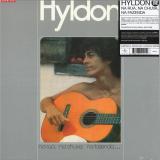
"Na Rua, na Chuva, na Fazenda" is a landmark 1975 album by Hyldon, a key figure in Brazilian soul music. His debut release was one of the top-selling albums that year, capturing the vibrant musical spirit of the 1970s and reflecting the influence of the black power movement alongside artists like Tim Maia and Cassiano. With a mix of MPB, soul, and funk, Hyldon brought his unique sound to life, collaborating with influential artists and contributing to the Brazilian music scene. With a mix of MPB, soul, and funk, Hyldon brought his unique sound to life, collaborating with influential artists like Azymuth. The album, which features the iconic title track, is a celebration of love with timeless songs like 'As Dores do Mundo', 'Na Sombra de uma Arvore' and 'Meu Patuá.' Produced by Guti Carvalho with arrangements by Hyldon and Waldir Arouca Barros, the studio band included the talented musicians from Azymuth (José Roberto Bertrami, Alex Malheiros and Ivan Conti "Mamao"), making it a memorable piece of Brazilian musical history. This album has earned cult status over the years, securing its place as one of the most coveted Brazilian records of all time. Once incredibly rare and expensive, it's now at the top of every serious collector's wishlist. After being unavailable outside of Brazil for years, it's finally been reissued - don't miss your chance to own this legendary piece of music history.
Kerala Dusts großartiges neues Album 'An Echo of Love' ist ein Paradebeispiel dafür, niemals stillzustehen. Im Mittelpunkt seiner musikalischen Hybridität - wo Artrock auf innovative Elektronik trifft und die warme Umarmung der Tanzfläche Raum für weite Ausblicke auf Americana, Wüstenblues und dämmrige Fahrten durch eine neonbeleuchtete Stadt lässt - steht ein Album, das die Möglichkeiten des ständigen Wandels lebt.
Es ist ein wunderbar wandelbares Album; eine rastlose Fusion, deren Bedeutung eher in Fragmenten als in etwas Festem oder Statischem liegt. Kurz gesagt: Es dreht sich alles um Dynamik. Dieses Gefühl der ständigen Bewegung spiegelt sich nicht nur in der wechselnden Besetzung der Band wieder - Keyboarder Tim Gardner und Schlagzeuger Pascal Karier sind Neuzugänge und gesellen sich zu den langjährigen Mitgliedern Edmund Kenny (Gesang und Elektronik) und Lawrence Howarth (Gitarre) -, sondern auch in den Orten, an denen das Album geschrieben und aufgenommen wurde. Die Sessions fanden in der Toskana, Austin, Berlin, Zürich und schließlich Rom statt. Für Sänger Edmund "existiert das Album in gewisser Weise an all diesen Orten". Im Oktober und September ist die Band auf GSA-Tour!
Some things simply need time to brew. Loek Frey returns to Omen Wapta with his third release on the label: Nayan. The Amsterdam-based artist shares a long-standing friendship with label head Woody92 - keeping each other in motion as artistic peers since the label's inception. Over time, they've built a shared archive of material: sound sketches, tracks, and sonic touchpoints - an ever-evolving third space where their paths continue to meet as they move in parallel. Nayan emerges from this deep-rooted exchange: a distilled six-track release that fuses Frey's cerebral intricacy with the label's primordial uncanniness, reaffirming both as key voices in a yet-to-be-defined sonic realm. Diving into the release, Frey's signature remains intact - tactile, spatial, and rhythmically precise - but a subtle shift is at play. A paring down. A move toward something more reduced, maybe even more patient, yet no less absorbing. The A side leans inward: deep pressure, spectral traces, and an undercurrent of tension that never quite resolves. It's music for staying with, not escaping from. Flip to the B side and the palette widens - kicks land heavier, patterns loosen, textures fill the full frequency field. Still deeply rooted in the Wapta world, but with an assertiveness that whispers rather than shouts. Somewhere between absence and force. With Nayan, Loek Frey carries his Omen Wapta narrative into new territory - merging restless experimentation with dancefloor intention.
- A1: The Key
- A2: Funk With Me
- A3: Touch
- A4: We Need The Funk
- B1: Eternally
- B2: No!
- B3: All Right
- B4: One Love Song
Q.A.S.B.'s Debut Album Finally Released on LP!
Before the release of “The Mexican” (produced by RYUHEI THE MAN), Q.A.S.B.'s self-titled debut album "Q.A.S.B" was originally released in 2009 on CD only, during the late Deep Funk movement. Now, in 2025, as the band celebrates its 20th anniversary, the album is finally available on vinyl for the first time!
Recorded in a single take with no edits using analog tape to recreate the sound of the 1970s, the raw and vivid energy of the album remains intact even after 16 years.
This album captures the essence of Q.A.S.B., featuring passionate performances by the original members, including the first vocalist amy-A (at the time). Most of the tracks were composed by Rob.T, who is now known as the sound producer for Hannah Warm. The 7-inch single “The Key” received high praise both domestically and internationally. Its explosive power on the dance floor was undeniable. I was really looking forward to the full album release from Q.A.S.B., and honestly, it blew me away. This is not imitation or homage—this is authentic, homegrown Japanese soul and funk music.
— Yusuke Ogawa (universounds / Deep Jazz Reality)
Japan’s proud funk band Q.A.S.B. finally releases their long-awaited debut album! About six months after their sensational debut single “The Key” took the world by storm, this much-anticipated album is here! With uptempo danceable tracks, heavy mid-tempo grooves, and soulful tunes that evoke the golden era, the album showcases both musical depth and confidence. Vocalist amy-A’s passionate singing and the band’s rock-solid performance come together in a stunning fusion of future funk. This is the crystallization of music sung and played from the heart!
— Ryuhei The Man (universounds)
It’s finally coming out! I’ve been waiting!
Sometimes gentle, sometimes powerful—amy’s voice breathes life into each track. Singing really is a wonderful thing.
By the way, does Q.A.S.B. stand for something? Whisper it in my ear next time.
— Naoichi “Bobsan” Kobayashi (MOUNTAIN MOCHA KILIMANJARO)
After years of exploration and experimentation, a new wave of artists from the Andes is now gaining some deserved global recognition. One such artist is Guillermo aka Existencia Pasajera, whose work has been shaped in southern Chile and so smartly reflects the region's newly emerging creative depth. This new release captures his fluid, expressive keyboard style and opens with the trippy and psychedelic loops of 'Haunted House' before 'The Brujo' gets more dark and menacing. The EP also features a remix by Minus legend Magda. Her label debut blends acid, stripped back rhythm and heady grooves, while closing the release is Map.ache of the Giegling collective, whose minimalist approach offers a meditative counterpoint.
Born from a chance encounter in a Villejuif squat over a decade ago, Ciccio & 2mo have cultivated a singular musical language through spontaneous and genre-defying collaborations — notably around cult French band Cheveu.
The duo brings together two key figures from the fringes of the European underground: Olivier Demeaux (aka 2mo), a pioneer of France’s electronic avant-garde, leading projects like Heimat and Accident du Travail (Teenage Menopause, Bruit Direct), known for his explorations across lo-fi synthwave, spectral post-punk, and drone-infused textures; and Francesco Pastacaldi (Ciccio), a jazz-punk drummer and member of the explosive trio Jean-Louis and the angular groove unit Abacaxi (Carton Records), also a longtime collaborator of the maverick performer Fantazio.
Their debut album 24 96 (The Trilogy Tapes, 2021), born from a series of abrasive studio improvisations, was followed by a sold-out show at London’s Café OTO. That performance, released as Maremoto, captured the duo’s raw, physical energy in its purest form.
Since then, Ciccio & 2mo have brought their visceral live act to stages across Europe — from Sonic Protest in France to the Meakusma Festival in Belgium, where their live set was released as Live at Meakusma Festival 2024.
Now, the duo returns with Bouc & Rouages, a bold and hallucinatory second album commissioned by Hublotone. This new opus introduces three singular voices into the mix: operatic singers Léa Trommenschlager and Bianca Iannuzzi, and genre- blurring rapper Pauline Sampler (aka Frizzy P, known for her work with M. Cole). The result is a soundscape in constant tension — pulsing drum machines, organic percussion, saturated synth layers, and hypnotic, looping riffs.
Equal parts physical and disenchanted, the music of Ciccio & 2mo traces a thrilling, unstable path through noise psychedelia, industrial memory, and experimental pop.
Imagine Cosey Fanni Tutti rubbing up against pop, with Charles Hayward (This Heat) on drums — and you’re getting close.