Search:u man

Styles
All
Various - Wizzz! French Psychorama Volume 5 (67-75)

The journey through French-speaking pop archives continues with this fifth volume, packed with fuzz, gimmicks, and dissent. Far from the charts, the selected tracks display a great creative freedom, often backed by corrosive humor. Welcome to the surprising, kaleidoscopic, and colorful world of the late sixties and early seventies, Wizzz!
Born in Montauban, Robert Pico stumbled into music by chance when he met René Vaneste, then artistic director at Pathé-Marconi. René brought him to Paris to record his first 45 RPM EP in 1964. A year later, Pierre Perret introduced him to Vogue, where he recorded his second album with Claude Nougaro’s orchestra. Sylvie Vartan then introduced him to RCA, where he recorded four singles, including the astonishing "Chien Fidèle," a track backed by a hair-rising fuzz guitar. Alongside his solo career, he also composed for other artists like Alain Delon (the song was recorded but remains unreleased), Magali Noël, Bourvil, and Georges Guétary. In the Paris of the sixties, he mingled with Mireille Darc, Elsa Martinelli, Marie Laforêt, France Gall, Françoise Hardy, Petula Clark, Régine, Dani, Serge Gainsbourg, Joe Dassin, Franck Fernandel, Charles Level, and Roland Vincent. Despite his efforts and winning a Grand Prix Sacem for his final record, Robert Pico didn’t achieve the expected success in show business and decided to leave Paris and return to the Southwest, where he devoted himself to writing. He is the author of 23 books (including Delon et Compagnie, Jean-Marc Savary Editions 2025, a memoir about his youth and his many encounters). Today, he is relieved to never have become a celebrity and devotes himself to his work with passion.
In 1969, the Franco-Italian movie Erotissimo was released, directed by Gérard Pirès (who later directed Taxi in 1998, written and produced by Luc Besson). This pop comedy features Annie Girardot, Jean Yanne, Francis Blanche, Serge Gainsbourg, Nicole Croisille, Jacques Martin, and Patrick Topaloff. The soundtrack was written by Michel Polnareff and William Sheller, with lyrics by Jean-Lou Dabadie. "La Femme Faux-cils," performed by Annie Girardot. It recounts the feelings of a rich CEO's wife who seeks to develop her sex appeal under the influence of advertisement and magazines. Groovy, sparkling and light, this track, with ITS lush arrangements humorously critiques consumer society and feminine beauty standards.
“Je suis l’Etat” (1967) is the flagship track of the first EP by singer-songwriter Spauv Georges, aka Georges Larriaga, better known as Jim Larriaga (1941-2022). Born into a family of bakers, the young man was initially planning to become a hairdresser when he discovered English-speaking music through Elvis Presley and the Beatles. After this revelation, he decided he would become a songwriter and gave himself five years to succeed. He recorded his first two EP’s independently for RCA under the pseudonym Spauv Georges; meaning “that poor George”, a nickname given to him by the mother of her friend Jean-Pierre Prévotat (future drummer of the Players, Triangle, or Johnny Hallyday). Portraying a depressed and eccentric young man, Spauv Georges created corrosive and amusing songs that didn’t reach a wide audience, despite a TV appearance with Jean-Christophe Averty.
Supported by his loyal friend and fellow songwriter Jean-Max Rivière, Georges Larriaga met the future singer Carlos in the early '70s, then Sylvie Vartan’s assistant. He wrote songs for Carlos, including the popular "La vie est belle," "Y’a des indiens partout," and "La cantine", which went onto become a huge hit in 1972. He also composed for Claude François (“Anne-Marie”, 1971), Charlotte Julian (“Fleur de province”, 1972), helped launch child singer Roméo (who sold 4 million records), and later wrote the hit "Pas besoin d’éducation sexuelle" (1975) for the young Julie Bataille. In 1971, Jim recorded an album for Disc'Az: “L’univers étrange et fou de Jim Larriaga”, which featured pop gems like “La maison de mon père”.
The story of the song "Zoé" began when Pierre Dorsay, artistic director at Vogue Records, asked Swiss singer and musician Pierre Alain to write a song for a new female singer. The inspiration came when he realized that Zoé (the artist's name) was also the name of France's first atomic battery, created in 1948, which consisted of uranium oxide immersed in heavy water! The lyrics reflect a bubbling energy that must be handled with caution, while the instrumentation echoes this atomic theme, notably with the use of a theremin.
Zoé’s career lasted only as long as a single 45 RPM, but it seems Christine Fontane was the vocalist behind this pseudonym, who is known for several EPs, a good "popcorn" album in 1964, and a handful of children’s singles in the '70s. Regardless, the photograph on the cover is of a different girl entirely.
Later, Pierre Alain continued his career, writing songs for himself, Marie Laforêt, Danièle Licari, Alice Dona, Arlette Zola (3rd place in Eurovision 1982), and achieving multiple gold and platinum records in Canada. Also an inventor with several patents, president of the Romande Academy, and head of the French Alliance in Geneva, he now composes atonal music, books, and poetry. Moreover, he is also the host of "Les Mardis de Pierre Alain" at "Le P'tit Music'Hohl" in Geneva.
Filled with oriental choruses and fuzz guitar, "Fou" is from Jacques Da Sylva's only EP released by Vogue in 1967. Despite the quality of this recording, all traces of this singer disappear after this first effort.
Valentin is a baroque pop singer born in Belgium. He is the songwriter and composer of most of the tracks on his three singles released in the late 60s in Canada. A legend says that he reincarnated himself as Jacky Valentin during the 1970s for a rock'n'roll revival career in Belgium, but his older brother sadly debunked this story. Valentin's first two singles were arranged by Claude Rogen, a Parisian session pianist who had come to Canada to promote the song “Mister A Gogo”, a cover of David Bowie’s “Laughing Gnome”, adapted by singer Delphine, his wife at the time. Far from his usual network, Claude Rogen arranged music for Polydor, including the arrangements for “Je suis un vagabond” in 1969, a jerk tune with string arrangements and a furious optimism.
Jacques Malia wrote, composed, and recorded his only 45 EP for Festival in 1966. “Histoire de gitan” is an incredible beat track with bohemian scat that tells the story of a gypsy musician who came to Paris to make it in the Music-Hall, to no avail. The hero of the song and its author probably shared a similar fate, as Jacques Malia faded into anonymity after this remarkable attempt.
Bernard Jamet recorded two EPs for Barclay in the late sixties and co-wrote several songs with Christine Pilzer, Pascal Danel, and prolific songwriters Michel Delancray and Mya Simile. The track “Raison Légale” (1968), his masterpiece, immerses the listener in a courtroom right when a murderer is being judged, with jerk rhythm and free arrangements. A unique, paranoid, judicial, and psychedelic oddity.
Jean-Pierre Lebrot-Millers started his career in show business in 1967 as a singer and songwriter for the Philips label. After three singles, he wrote several songs of a new kind with his friend Pierre Halioche, in the midst of the sexual liberation movement and the democratization of drugs. With provocative lyrics, “Les filles du hasard” and “Barbara au Chapeau Rose” were released on a Philips singles in 1968. The character of Barbara was inspired by a queen of Parisian nightlife during the psychedelic years: model Charlotte Martin, who dated Eric Clapton from 1965 to 1968, then Jimmy Page from 1970 to 1983. Jean-Claude Petit’s arrangements, with a table-filled intro, soul brass, and Hendrixian guitar, emphasize the flamboyance of a hedonistic and sexy character, whose dog is named Junkie because “Junkie est un nom exquis”! The track was recorded live in three takes with a full orchestra.
Upon its release, the record was censored by Europe 1 and RTL due to its references to drug use. Jean-Pierre Lebrot was then banned from the airwaves and later dismissed by his record label. He changed his artist name to Jean-Pierre Millers, while his companion Pierre Halioche became D. Dolby for a new dreamy composition, “Chilla”, which Jean-Pierre produced himself with arrangements by Jean Musy. Once again, the song was immediately censored everywhere. After this setback, he decided to stop singing and started taking on odd jobs to support his Swedish wife and their son until the day he met Jean-Pierre Martin, then production manager at Decca, who had worked with Manu Dibango. Martin offered Jean-Pierre Lebrot-Millers, then employed at Rank Xerox, the position of artistic director at Decca. He accepted and became, a year later, promotion director (radio, press, TV). He worked on Julio Iglesias’s first album for Decca, which became a massive hit and allowed him to meet Claude Carrère. The latter asked him to write new songs and find their performers, much like a “talent scout.” It’s through him that Jean-Pierre discovered Julie Pietri and Corinne Hermès. He composed “Ma Pompadour” for Ringo, Sheila’s husband, and took the microphone again for the syncope hit “Rendez-Vous” in 1982.
That same year, Jean-Pierre Lebrot-Millers tried to release a track for which he had heavily gone into debt: “Si la vie est un cadeau”. Having recorded it in London, he presented it to numerous professionals, all of whom refused to get involved. The same thing happened with Antenne 2 and the Sacem when he proposed the song as France’s entry for Eurovision. He then met Haïm Saban, who was producing cartoon soundtracks and had just launched the Goldorak theme song. Saban, having listened to the song, declared it had the potential to become a hit. He sent Jean-Pierre and Corinne Hermès to meet the CEO of the Luxembourg radio and television network. The latter received them, asked to hear a verse and chorus a cappella in his office, and immediately hired them to represent Luxembourg at Eurovision 1983. They reworked the arrangements and recorded a new version with Haïm Saban as co-producer. The song ended up winning Eurovision 1983, a great comeback for our hero. He continued producing and hung out with the band Nacash in Belgium when a couple came to introduce their daughter for an impromptu audition in a hotel room. The girl sang “Les démons de minuit” while dancing to a radio cassette. Impressed, he had her take singing lessons for a year and composed a song for her (for which he had the melody and title, but no lyrics). This required him to go on the hunt for a lyricist, who ended up being Guy Carlier. They recorded the song, which was initially a ballad, at Bernard Estardy’s CBE studio, and gave the singer a new name: Melody. They showed the song around their industry network without success. Later, Estardy called Jean-Pierre to suggest changing the rhythm and making it pop-rock. Orlando, Dalida’s brother, liked the result and decided to co-produce the track. “Y’a pas que les grands qui rêvent » became a classic hit. The song has since been covered by Juliette Armanet (as a ballad, like the original) and Valentina.

Born into an aristocratic Breton family, Hervé Mettais-Cartier worked as a DJ at Queen Kiss, a nightclub in Poitiers, where he formed the band Les Concentrés with Michel (an actor) and Christian (a radio technician). Together, they created a repertoire of whimsical songs (“Ma bique est morte”, “J’suis un salaud”, “Fils de dégénéré”...) that they performed on stage dressed in white (in homage to “concentrated milk”). They performed at Bliboquet and Olympia in 1968 for the 10th edition of the “Relais de la chanson Française” organized by L’Humanité-Dimanche and Nous les Garçons et les Filles, sponsored by Pepsi Cola. Winners in the author-composer category, alongside Danish singer Dorte, their visibility allowed them to record a 45, and appear on television in Jean-Christophe Averty’s show. The A-side of the disc features Bruno le ravageur, a casatchok dedicated to Bruno Caquatrix, the director of Olympia, nicknamed in the song “Coq Atroce” or “croque-actrices”. The B-side is dedicated to “Fils de dégénéré”, a quirky tribute to Hervé's aristocratic roots, mixing absurdity with sophisticated vocal harmonies.
After Les Concentrés, Hervé Mettais-Cartier formed the duo La Paire et sa Bêtise with his friend Olivier Robert. They performed in Parisian cabarets and toured with Pierre Vassiliu. In the late 1970s, Hervé began a solo career. He recorded two albums for the Motors label in 1978 and 1979, which did not achieve their anticipated success due to lack of promotion. In 1980, he met Bernadette, with whom he started a family and created a “Chansons à voir” (songs to see) show that he performed until his death at the end of 2024.

Publicité comes from the final EP by the Missiles (Ducretet Thomson, 1966), a disc that also includes “La (nouvelle) guerre de cent ans”, featured on Volume 4 of our Wizzz! series. Please refer to the booklet for the story of the band.

“He’s 1.82 meters tall, 28 years old, weighs 135 kg, is black and Belgian”: this is the description of singer Hegesippe on the back of his sole single (Decca, 1967). He appears on the album cover wearing a Greek toga, like a hippie gag – we are at the end of the year 1967. In “Le crédo d’Hegesippe”, this former bodyguard of Antoine and the Charlots plays the delightful card of the thick brute converted to Flower-Power and non-violence, with arrangements by Jean-Daniel Mercier, aka Paul Mille.
“Ethéro-disco” was released on a promotional record for clients of the Maréchal company (Liège, Belgium) for the New Year 1979. Over a funky rhythm, celebrity impersonations (Brigitte Bardot, Jacques Dutronc, Fernandel…) deliver an enigmatic text about pharmaceutical products like ether, bismuth, and aspartate. The track was composed by Dan Sarravah (responsible for Joanna's “Hold-up inusité” featured on Wizzz! Volume 3) and Tony Talado, who was also a singer (one 45 in 1967), songwriter (with over a dozen credits between 1964 and 1985 in various styles from surf music to disco), author (Devenez Végétarien, Dricot Editions, 1985), ad designer, and psychologist.

Décollez-les is on the A-side of Mamlouk's only single, a pseudonym for Marsel Hurten, who is known for his work on several EPs in the late sixties, as well as composing music for Hervé Vilard’s “Capri, c’est fini”, Claude Channes' “La Haine”, Annie Philippe’s “On m’a toujours dit”, and Nancy Holloway’s “Panne de Cœur”.
This strange song, with Afrobeat horns and absurd dialogues between a chef and his kitchen staff, is the result of a collaboration between Marsel Hurten and one of his neighbors, a photographer from Pavillon-sous-Bois (93), where the musician settled after returning from the Algerian War. A music video was shot to promote the record.
Marsel Hurten was born in Tourcoing (59) into a musical family. At a young age, he joined the brass band founded by his grandfather, playing the piston before studying trumpet at the conservatory, as well as teaching himself how to play the guitar. As an orchestra musician, he toured in France, Belgium, Germany, and England. He released a series of solo 45’s between 1965 and 1968 for the DMF and Az labels before stopping recording to focus on working for other artists (Gilles Olivier, Noëlle Cordier…).
“L’amour nu” (Vogue, 1971) is the work of the short-lived Belgian band Mozaïque. The track, written by singer Jacques Albin, closely resembles another of his compositions, “Carré Blanc”, which he recorded in 1969 for Disc’AZ.
Represented by the Lumi Son micro-label based in Marignane (Côte d'Azur), Jean-Marc Garrigues released two 45 RPMs in the late sixties, defending the French jerk sound. The song “Je dis Non” is a short, joyful ode to youth, pop music, and rebellion.
Songwriter and performer Jacques Penuel released three singles. The first one, “Astronef 328” (Fontana, 1969), features a dizzying series of chords punctuated by sound effects, a sci-fi story, and arrangements by Jean-Claude Vannier.

We would like to sincerely thank Pierre Alain, Moon Blaha, Marsel Hurten, Bastien Larriaga, Jean-Pierre Lebrot-Millers, Bernadette Mettais-Cartier, Robert Pico, Olivier Robert, Claude Rogen, Micky Segura.

out of Stock

Order now and we will order the item for you at our supplier.

23,11

Last In: 3 months ago
The Mars Volta - Noctourniquet

The Mars Volta

Noctourniquet

2x12inch4250795604969
CLOUDS HILL
30.01.2026
  • A1: The Whip Hand
  • A2: Aegis
  • A3: Dyslexicon
  • B1: Empty Vessels Make The Loudest Sound
  • B2: The Malkin Jewel
  • B3: Lapochka
  • C1: In Absentia
  • C2: Imago
  • C3: Molochwalker
  • C4: Trinkets Pale Of Moon
  • D1: Vedamalady
  • D2: Noctourniquet
  • D3: Zed And Two Naughts

Noctourniquet And then everything went black, at least for a while, at least for The Mars Volta. In the months and years following their fifth full-length, Octahedron, Omar kept on at his usual fearsome creative pace. In fact, he ramped up his output considerably, starting up his own Rodriguez Lopez Productions label and releasing a slew of solo albums. It was a practice he’d begun shortly after De-Loused’s release, with his solo debut A Manual Dexterity: Soundtrack Volume One, but as the decade reached its close, Omar grew to rely upon his solo recordings as an outlet for his prolific creativity, these albums often exploring musical pastures far beyond even The Mars Volta’s wide-ranging parameters. Before choosing to release music under his own name, Omar would always play it to Cedric first, to see if the frontman thought it had potential to become Mars Volta music. Shortly after Octahedron’s completion, Cedric flagged one batch of tracks Omar had cut with Deantoni Parks, a brilliant drummer and composer who’d briefly occupied the Mars Volta drumstool in-between Jon Theodore and Thomas Pridgen’s tenures, and whose volcanic creativity and unique, unpredictable approach to rhythm and composition had quickly made him one of Omar’s favourite artistic foils.

As with the music that made up Octahedron, the new tracks Cedric had optioned for The Mars Volta often veered far from the riotous, Grand Guignol visions of their earlier releases. It possessed the punchy, song-based focus of Octahedron, though this was a considerably darker, more menacing strain of pop, with synthesisers figuring heavily in the productions. Cedric took the tracks in 2009 and set about writing songs to the music. But no more new Mars Volta music would be heard until 2012. The years that passed in-between were nonetheless momentous, and busy, witnessing an unexpected reunion of the members of At The Drive-In, and Cedric joining his own side-project, Anywhere. But there wasn’t any sign of life within the Mars Volta until Omar, Cedric and their bandmates took to the road for a series of live shows in the spring of 2011, billed as The Omar Rodriguez-Lopez Group, debuting the songs that would become Noctourniquet. The album followed the next year, and it remains one of The Mars Volta’s finest, its electronic textures staking out unfamiliar but fertile new ground.

An unsettling, subtly turbulent listen, Noctourniquet found Cedric sketching out a story about “some sort of device that stops the darkness from bleeding”, drawing influence variously from the nursery rhyme Solomon Grundy, the Greek myth of Hyacinthus and the song Birth, School, Work, Death by British underground rockers The Godfathers. It was an album of dystopian futurism, signalled by the paranoid cyber-rock of opener The Whip Hand and its unnerving chorus, “That’s when I disconnect from you”. But it was also an album of inspired, unexpected moves and uncanny invention, like how Dyslexicon seemed to eerily evoke Blondie’s Rapture, before rushing headlong into its bruising chorus, tempos shifting restlessly throughout like quaking earth beneath the listener’s feet, or how Aegis put a brave new spin on The Mars Volta’s trademark rewiring of salsa’s overdriven passions, or how Cedric had never sounded as scary as he did on The Malkin Jewel’s mutant burlesque shuffle. Tracks like Molochwalker were sleek and concise in a way The Mars Volta had never really attempted before – which was all part of Omar’s plan.

“It had all been guitar, guitar, guitar, overdubs, everything fighting for space in the same frequency,” he explains. “So for Noctourniquet, it was all about subtracting elements, of sticking to how I made demos.” Deantoni’s presence helped revivify the group, playing against cliché and expectation, and taking each song in unexpected directions. “I’d beatbox a rhythm for him to play, to go with my guitar part, and he’d come back with three or four alternate options. It was so great.” Similarly, Cedric had never sung better than on Noctourniquet, staking out a fearsome spectrum from the chilling Tom Waitsian growl of The Malkin Jewel to the keening, beautiful vocalisation on Vedamalady, rising to match some of Omar’s most deft, most immediately effective and melodic songs yet. Indeed, Noctourniquet is the sound of a band discovering new ways to do familiar things, renewing their commitment to their mission, finding fresh inspiration a decade in, and shaking off any complacency that might have come with ten years of acclaim and success.

pre-order now30.01.2026

expected to be published on 30.01.2026

27,69
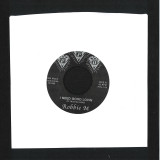
Midnight Express / Robbie M - Danger Zone / I Need Good Loving

CULT boogie funk release from ROBBIE M & The Midnight Express Show Band of Rock Island Illinois. A PPU follower's favorite, and after many requests the 7" reissue is now available..Includes the newly remastered 1983 7" version of "Danger Zone" and Robbie M's "I Need Good Lovin" from 1989.

out of Stock

Order now and we will order the item for you at our supplier.

12,56

Last In: 19 months ago
Voivod - Killing Technology (LP)
  • Killing Technology
  • Overreaction
  • Tornado
  • Too Scared To Scream
  • Forgotten In Space
  • Ravenous Medicine
  • Order Of The Blackguards
  • This Is Not An Exercise
  • Cockroaches
also available

Picture Disc[24,79 €]

Cassette Green Shell[11,35 €]


Voivod wurde 1982 in Jonquière, Quebec, von Sänger Denis „Snake“ Belanger, Gitarrist Denis „Piggy“ D'Amour, Bassist Jean-Yves „Blacky“ Thériault und Schlagzeuger Michael „Away“ Langevin gegründet und nahm eine Reihe von Demos auf, bevor Brian Slagel auf die Band aufmerksam wurde und einen Vertrag mit Metal Blade Records unterzeichnete. Das Ergebnis war das furiose Debütalbum „War And Pain“, das im August 1984 veröffentlicht wurde. Zu dieser Zeit teilten sich alle vier Mitglieder eine Wohnung in Montreal und lebten von 150 Dollar Sozialhilfe pro Woche. Da sie die Schule bereits hinter sich hatten, konnten sie fast jeden Tag proben, was zur Entstehung ihres zweiten Albums „Rrröööaaarrr“ führte. Während der Aufnahme des Albums wurde fast die gesamte Ausrüstung aus dem Proberaum gestohlen. Um Geld aufzutreiben, organisierte die Band zusammen mit ihrem Manager Maurice Richard das legendäre „World War III“-Festival. Dort lernten sie Karl-Ulrich Walterbach kennen, der Voivod davon überzeugte, bei seinem Label Noise Records zu unterschreiben. Nach „Rrröööaaarrr“ von 1986 hieß Voivods zweites Album für Noise „Killing Technology“ und gilt weithin als der größte kreative und klangliche Sprung der Band. Es wurde in West-Berlin unter den wachsamen Augen von Harris Johns aufgenommen und kam 1987 auf den Markt. Weniger hektische Kompositionen wie „Tornado“, „Ravenous Medicine“ oder „Killing Technology“ hoben die Kanadier schnell von ihren Thrash-Zeitgenossen ab. „Rrröööaaarrr„ haben wir mit unserem Tontechniker in einer heruntergekommenen Schule ohne Geld selbst produziert“, erklärt Michael Langevin in dem Buch „Damn The Machine. The Story Of Noise Records“ des amerikanischen Autors David E. Gehlke. „Plötzlich hatten wir ein professionelles Umfeld, ein richtiges Studio mit einem richtigen Produzenten und ein Label, das die Finanzierung sicherstellte. Es ging Schritt für Schritt. Für „Killing Technology“ haben wir vielleicht ein bisschen langsamer gemacht. Wir konnten die Rollen spielen, und es hat viel Abwechslung. Es ist mein Lieblingsalbum und in meinen Ohren die perfekte Mischung aus Thrash, Prog und Hardcore. Es ist definitiv ein entscheidendes Album.“

pre-order now30.01.2026

expected to be published on 30.01.2026

31,56
KAFFKIEZ - WIR

KAFFKIEZ

WIR

12inchEB831
SUPERPOLRECORDS
30.01.2026

Rote splatter Vinyl. Nach über 16 Monaten ohne frische Musik sind KAFFKIEZ zurück und kündigen direkt ein neues Album für den 30.01.2026 an. Noch vor 5 Jahren waren die Shows dieser Band nur von Freunden & Verwandten besucht. Mittlerweile finden die Familientreffen der Rosenheimer Bande in großen Hallen statt und die ansteckende Leichtigkeit der Band verbindet weit über ihre Musik hinaus. Wie die Nachbarsjungs, mit denen man immer noch gerne eine Runde um den Block dreht, stehen KAFFKIEZ für eine durchdringende Befreiung von Alltagslasten und ein Augenzwinkern, das die Sorgen auf morgen vertagt. Die Jungs der Band machen klar, um was es ihnen geht. WIR. Ein Album das Zusammenhalt und Gemeinschaft durch und über die Musik hinaus manifestiert. Eine Einladung an alle Fans von lebenshungrigen Gefühlen, langen Sommerabenden und treibender Leichtigkeit. Wer schon länger Teil der KAFFKIEZ Family ist, wird sich über die gut bekannten und unaufhaltsam nach vorne marschierenden Rhythmen & die schrammelnden Gitarren direkt abgeholt fühlen. Doch der Sound des kommenden & dritten Studioalbums der Band hat an Druck und Kraft gewonnen. Elemente wie Bläser und Synths strecken die Hände in neue Richtungen aus ohne zu vergessen, wo sie herkommen. Ein Familienausflug der Extraklasse.

pre-order now30.01.2026

expected to be published on 30.01.2026

27,31
Original Soundtrack - Cinema Serenade LP
  • A1: The Color Purple: Main Title Theme
  • A2: Scent Of A Woman: Tango (Por Una Cabeza)
  • A3: Yentl: Papa, Can You Hear Me?
  • A4: Il Postino: Theme
  • A5: The Age Of Innocence: Theme
  • A6: Far And Away: Theme
  • B1: The Umbrellas Of Cherbourg: I Will Wait For You
  • B2: Four Horsemen Of The Apocalypse: Theme
  • B3: Sabrina: Theme
  • B4: Out Of Africa: Main Title Theme
  • B5: Black Orpheus: Manha De Carnaval
  • B6: Schindler's List: Main Theme
  • B7: Cinema Paradiso: Love Theme

Cinema Serenade is an album by John Williams and Itzhak Perlman, featuring orchestral performances of famous and notable film themes,
with Perlman's violin at the forefront.. Amongst others, it features work by Michel Legrand, Elmer Bernstein, John Barry, André Previn and John Williams himself.

All the work on this album is conducted by Williams and performed by the Pittsburgh Symphony Orchestra. It also features exclusive liner notes from well-known film critic,
musicologist and professor Royal S. Brown,
Cinema Serenade is available as a limited edition of 500 numbered copies on aquamarine coloured vinyl.

pre-order now30.01.2026

expected to be published on 30.01.2026

34,24
JOYCE MANOR - I USED TO GO TO THIS BAR
  • I Know Where Mark Chen Lives
  • Falling Into It
  • All My Friends Are So Depressed
  • Well, Whatever It Was
  • I Used To Go To This Bar
  • After All You Put Me Through
  • The Opossum
  • Well, Don't It Seem Likeyou've Been Here Before?
  • Grey Guitar
also available

Clear Vinyl[23,49 €]


Joyce Manor are California pop-punk legends and I Used To Go To This Bar is this epochal band operating at the top of their game. They continue to deliver relentlessly satisfying rock music in a manner that makes it look simply effortless. The Torrance, California-hailing trio of Barry Johnson, Chase Knobbe, and Matt Ebert are at a point in their career where their position as one of the most beloved rock bands is a foregone conclusion. Their seventh album finds the group continuing to find rich new veins to tap in their short-and sweet songcraft without losing an ounce of bite that gained them such repute in the first place. I Used To Go To This Bar further situates Joyce Manor in the rich lineage of their influences and inspirations. Think AFI"s rapid-fire burn, Weezer"s indelible power-pop acumen, and the dusky emotionalism of The Smiths while further establishing them as leading lights in the current rock landscape. The fresh burst of inspiration that fuels I Used To Go To This Bar proves that Joyce Manor are far from content to rest on such laurels, moving forward with their sound and style in a way that reminds you of how they got to this point in the first place. Catch them live at Coachella 2026.

pre-order now30.01.2026

expected to be published on 30.01.2026

22,65
SÉBASTIEN TELLIER - Kiss the Beast LP
  • A1: Kiss The Beast
  • A2: Naïf De Cœur
  • A3: Refresh
  • A4: Mouton
  • A5: Thrill Of The Night Feat. Slayyyter & Nile Rodgers
  • A6: Romantic
  • B1: Parfum Diamant
  • B2: Copycat
  • B3: Animale
  • B4: Amnesia Feat. Kid Cudi
  • B5: Loup
  • B6: Un Dimanche En Famille

“The album explores the duality between nature and mankind, and the blurred line where we become both the executioner and the victim. I’ve always felt this inner struggle, the pull between instinct and reason, between animality and humanity. This album reflects that ambivalence: an intimate journey where I allow myself to be consumed by my contradictions in order to be reborn. It’s a cry, a waking dream where we shed our masks to become whole again. I blend wildness with tenderness, fury with poetry — because deep down, I’m an animal who dreams, and a man who roars.” Sébastien Tellier

pre-order now30.01.2026

expected to be published on 30.01.2026

25,84
Various - MIX PLATE

Various

MIX PLATE

12inchAGS-093
Aloha Got Soul
30.01.2026

Compilation of contemporary Hawaiian music on Aloha Got Soul. Inspired by a 1970s compilation series that featured emerging talent from the Hawaiian Islands, Aloha Got Soul’s Mix Plate provides a snapshot of what Hawaii sounds like today. This is the second installment in the ongoing series.

pre-order now30.01.2026

expected to be published on 30.01.2026

26,68
Sweatmaster - More!

Sweatmaster

More!

12inchSVART359LP
Svart Records
30.01.2026
  • 1: Dirty Water
  • 2: Destroyer
  • 3: Scream Out Loud For Love
  • 4: Police Bastard
  • 5: More!
  • 6: Hole In The Ground
  • 7: We Take All
  • 8: Eazy
  • 9: Spring That Never Ends
  • 10: Sad Song Man
  • 11: Chevy Van
  • 12: Tail Down
  • 13: Leather
  • 14: All Right, All Night

Sweatmaster releases a new full-length album after a 15-year hiatus via Svart Records Sweatmaster, one of the aristocrats of Finnish garage rock, is making a big comeback with the release of their fifth album More! in January 2026. After the release of their 2010 album Dig Up the Knife, the band took a long break, which ended a few years ago with live performances both domestic and abroad. At the same time, new material began to emerge in the rehearsal room, and the band quickly found a common strategy for working on it. "We were unanimous about the strengths of our band and decided to get to the heart of the matter. The main idea was to make straightforward songs carried by the vocals. The kind that would work well live with our aggressive playing style," says the band's drummer Matti Kallio. Svart Records will release Sweatmaster's fifth album early next year. More! is a sharp package of fourteen songs that has not been polished to death. "We wanted a raw and electric sound for the new album, built tightly around the three of us playing. The aim was to stick to Sweatmaster's original energy and not spread ourselves too thin. However, despite our efforts, the intervening years brought some new tones with them," guitarist Mikko Luukko explains the background of the new album. The album's first single will be released on Friday, September 19th, and according to singer-bassist Sasu Mykkänen, Destroyer is the essence of Sweatmaster. "The drum fill draws you into the pull of the electric triangle. The guitar taps at the ballads and wants nothing more than to drive the rhythm until the passionate vocals take over. The song doesn't lead anywhere, it's already there. 2 minutes, 37 seconds. Wham bam. Here you go." More! is available for pre-order now at Svart’s webstore on Svart exclusive vinyl, limited coloured vinyl, classic black vinyl, and CD. Release date January 30th, 2026.

pre-order now30.01.2026

expected to be published on 30.01.2026

23,49
Francis Rossi - The Accidental LP

Francis Rossi

The Accidental LP

12inch4029759209256
earMUSIC
30.01.2026
  • 1: Much Better
  • 2: Go Man Go
  • 3: Push Comes To Shove
  • 4: Back On Our Home Ground
  • 5: Dead Of Night
  • 6: Going Home
  • 7: Bye My Love
  • 8: Something In The Air (Stormy Weather)
  • 9: Picture Perfect
  • 10: November Again
  • 11: Things Will Get Better
  • 12: Oh So Good
  • 13: Beautiful World
  • 14: Time To Remember
also available

Clear Vinyl[29,83 €]


pre-order now30.01.2026

expected to be published on 30.01.2026

27,69
Francis Rossi - The Accidental LP

Francis Rossi

The Accidental LP

12inch4029759211068
earMUSIC
30.01.2026
  • 1: Much Better
  • 2: Go Man Go
  • 3: Push Comes To Shove
  • 4: Back On Our Home Ground
  • 5: Dead Of Night
  • 6: Going Home
  • 7: Bye My Love
  • 8: Something In The Air (Stormy Weather)
  • 9: Picture Perfect
  • 10: November Again
  • 11: Things Will Get Better
  • 12: Oh So Good
  • 13: Beautiful World
  • 14: Time To Remember
also available

Black Vinyl[27,69 €]


pre-order now30.01.2026

expected to be published on 30.01.2026

29,83
Lily Allen - West End Girl LP
  • 1: West End Girl
  • 2: Ruminating
  • 3: Sleepwalking
  • 4: Tennis
  • 5: Madeline
  • 6: Relapse
  • 7: Pussy Palace
  • 8 4: Chan Stan
  • 9: Nonmonogamummy
  • 10: Just Enough
  • 11: Dallas Major
  • 12: Beg For Me
  • 13: Let You Win
  • 14: Fruityloop

Lily Allen returns with West End Girl, her long-awaited fifth studio album. Written and recorded over an intense 10-day period, blending raw honesty with infectious pop craftsmanship, documenting elements of her time in New York with piercing clarity and insight.

pre-order now30.01.2026

expected to be published on 30.01.2026

26,47
DIRTY SOUND MAGNET - ME AND MY SHADOW

DIRTY SOUND MAGNET

ME AND MY SHADOW

12inchTPM192
Tonzonen Records
30.01.2026

In der Rock-Mythologie traf Robert Johnson 1930 an einer Kreuzung auf den Teufel und begründete damit den Rock'n'Roll. Fast hundert Jahre später, im Mai 2024, steht Dirty Sound Magnet vor seinem eigenen Schicksal, als es an der Zeit ist, ein neues Album aufzunehmen.Zum ersten Mal in ihrer Geschichte hat das Trio nicht den Luxus, jeden Schritt des Aufnahmeprozesses sorgfältig zu planen. Seit 2022, nach der Veröffentlichung ihres vielgelobten Albums DSM-III, spielt die Band 120 Konzerte pro Jahr und managt alle Aspekte ihrer Karriere selbst. Daher ist es 2024 für das Trio die einzige Möglichkeit, ein neues Album zu produzieren und aufzunehmen, indem es seinem Instinkt folgt. Me and My Shadow ist das Album, zu dessen Entstehung die Band bestimmt war - ein Album, auf dem alles auf elegante Weise zusammenkommt.Wie immer in der Rockgeschichte war die Tragödie nie weit entfernt, und das Album wäre beinahe nicht entstanden. Zwei Wochen vorden ersten Aufnahmesessions entgeht Stavros nur knapp dem Tod durch eine versehentliche Vergiftung. Auf einem Krankenhausbett, halb bewusstlos und umgeben von aufgeregten Ärzten, tauchen die Themen des Albums in seinem Unterbewusstsein auf. Inmitten des Geflüsters der besorgten Ärzte, die um sein Leben fürchteten, wuchs in ihm die Gewissheit und Klarheit: ,Das kann unmöglich das Ende sein - wir müssen noch ein Album aufnehmen." Dieses Licht, das ihn aus den Schatten zurückholte, ist dasselbe Licht, das vor hundert Jahren Robert Johnson und seitdem unzählige Musiker inspiriert hat.

pre-order now30.01.2026

expected to be published on 30.01.2026

31,51
Megadeth - Endgame LP

Megadeth

Endgame LP

12inchBMGCAT247LP
BMG Rights Management
30.01.2026
  • 1: Dialectic Chaos
  • 2: This Day We Fight!
  • 344: Minutes
  • 41: 320
  • 5: Bite The Hand
  • 6: Bodies
  • 7: Endgame
  • 8: The Hardest Part Of Letting Go... Sealed With A Kiss
  • 9: Head Crusher
  • 10: How The Story Ends
  • 11: The Right To Go Insane
pre-order now30.01.2026

expected to be published on 30.01.2026

30,67
Megadeth - Th1rt3en 2x12

Megadeth

Th1rt3en 2x12

2x12inchBMGCAT248DLP
BMG Rights Management
30.01.2026
  • 1: Sudden Death
  • 2: Sudden Death
  • 3: Public Enemy No.1
  • 4: Public Enemy No.1
  • 5: Whose Life (Is It Anyways?)
  • 6: Whose Life (Is It Anyways?)
  • 7: We The People
  • 8: We The People
  • 9: Guns, Drugs & Money
  • 10: Guns, Drugs & Money
  • 11: Never Dead
  • 12: Never Dead
  • 13: New World Order
  • 14: Fast Lane
  • 15: Black Swan
  • 16: Wrecker
  • 17: Millennium Of The Blind
  • 18: Deadly Nightshade
  • 1913:
  • 1: New World Order
  • 2: Fast Lane
  • 3: Black Swan
  • 4: Wrecker
  • 5: Millennium Of The Blind
  • 6: Deadly Nightshade
  • 713:
pre-order now30.01.2026

expected to be published on 30.01.2026

37,77
Anar Band with E.M. de Melo e Castro - Dou Dou Doudo: Ao Vivo Na Cooperativa Árvore

Audio taken from a live performance by Anar Band (Jorge Lima Barreto and Rui Reininho) with E.M. de Melo e Castro in November of 1978 at Cooperativa Árvore, Porto. The performance was filmed. A segment was included in »Obrigatório Não Ver«, a weekly programme presented by Ana Hatherly on Public Television’s Second Channel. It was not possible to determine the exact date of the event, and no documentation seems to be available in the relevant archives.

»Encontro que Tenho« and »Profissões«: these titles are specific to this release. Having failed to locate the respective poems after a thorough search in E.M. de Melo e Castro’s body of work, it was deduced both texts were created for the occasion.

Even without a full contextualisation, the sound transmits the spirit of cultural agitation proper to these sessions. When this show happened, Anar Band were Jorge Lima Barreto (ARP Odyssey synthesizer) and Rui Reininho (Ibanez double-neck guitar), with the addition of E.M. de Melo e Castro, whom we shall call a poet but whose creative intervention was far reaching. Besides poetry, also continued his efforts in linking up diverse artistic areas (painting, drawing, collage, performance, video) and his official training in textile engineering. He was one of the artists featured in Henri Chopin's »OU Revue« in 1966, establishing his natural connection to the European concrete/visual/sound-poetry avant-garde. Melo e Castro was also proficient in the agitation of minds and political awareness. A good example in »Profissões«, where initially separate professionals (an intellectual, a fisherman, a soldier, a factory worker) are gradually mixed in a show of interdependency. Symbolically, through his words one listens to a transformation of society, although the same conclusion arises twice: surplus always finds its way to the hands of the capitalists.

That was the state of affairs many were looking to change, an economic and social malaise that the 1974 Revolution in Portugal fully uncovered, when dissident voices could finally be heard in public. Each in his own way, all three participants in this recording were non-believers in the structure of society such as it was presented. Through his books and press writings, mainly concerned with Jazz, Jorge Lima Barreto pushed his way into Portuguese artistic and critical circles since the late 1960s. Consciously and unwittingly, he collected enemies and pointed them by name, people he labelled as reactionary, people who delayed progress, social and cultural mixes, the avant-garde; they even delayed the chaos from which new forms and attitudes arise.

Rui Reininho, a non-conformist by heart, experienced incomprehension from an early age. His anarchic ways, a tendency to baffle others, were revealed through the choice of clothes and accessories, public behaviour, and »real life« performances. Just as Lima Barreto, and even together with him, he enjoyed provoking the extremes: Maoists on one side, right-wing conservatives on the other. He translated leftist books and joined Anar Band precisely on the day a duck or swan or goose (one of them) was thrown on stage in Porto, 1976.

This record documents a concrete action, a snapshot of the agitation, something we have no problem calling punk activism, something which allowed two people with little to no musical training to play and record music. By then, Anar Band had managed to release their only LP in 1977. It’s this performance, however, that reveals the naked rawness of the music: improvisation, mutual listening, and choice of intervention between both musicians and Melo e Castro, clearly sensing when the synth has to change tone, the voice has to make pauses, the guitar punctuates both and finds the space to… scream. The sound was captured by the film crew, adding to the rawness: the instruments are palpable, the voice often too close to the mic. Everything was preserved. First time on disc.

pre-order now30.01.2026

expected to be published on 30.01.2026

23,95
Various - Music from the Caucasus – The Archive of ORED Recordings, 2013–2023

The label ORED Recordings was founded in 2013 by Circassian friends and fellow musicians Bulat Khalilov and Timur Kodzoko, in order to start an activity which is dedicated to documenting and preserving the traditional and post-traditional music of the North Caucasus. Khalilov and Kodzoko, were just as excited about this music as it sounded like a force that transcends borders and in which time dissolves and community becomes the only compass.

Through hundreds of field recordings, which have been made at communal gatherings, local festivities or family meetings, the label has captured a wide range of individual voices and their unique acoustic manifestations. All recordings on this album capture the raw expressiveness of the mountainside villages. Music performances being played by people who dedicate their love to music and an additional willingness to share intimate emotions.

Whereas most academic ethnomusicologists travel around the world in order to study foreign cultures, Bulat Khalilov and Timur Kodzoko were fascinated by what they just heard in the familiar regions of their then home town Nalchik. In resolute contrast to Russian academic circles, they soon developed a DIY Punk ethos for their far reaching work, beginning to formulate their own language in the field of ethnomusicology and to push the traditions forward.

However, the label’s work goes far beyond mere preservation. »We started traveling around the North Caucasus and did recordings with people from many different ethnic groups. In the North Caucasus, our work had a political dimension because there used to be (and still are) a lot of conflicts between different ethnic groups. We quickly understood that our work is not just about music and art,« states Bulat Khalilov.

The work of the label aims to reflect not only the great music of the Caucasus and its various communities but also to tell the stories behind it. They are stories of struggle, of independence, of working with historical memory in the present times of the 21st century.

Since Bulat Khalilov and Timur Kodzoko are now based at the University of Göttingen, we were able to meet each other many times and to eventually exchange ideas which resulted in the release of this collection of recordings. The compilation »Music from the Caucasus« provides a first introduction to the comprehensive work of ORED Recordings. For this collaborative release on TAL the recordings are being made accessible for the first time ever on vinyl, CD and various digital formats, all coming with extensive liner notes and yet unpublished photographs.

Bulat Khalilov and Stefan Schneider, November 2025

pre-order now30.01.2026

expected to be published on 30.01.2026

23,95
GRUPO UM - NINETEEN SEVENTY SEVEN

Grupo um celebrate 50 years with release of lost dictatorship-era album nineteen seventy seven!

First time release - vinyl comes with printed innersleeves

Brazilian avant-jazz vanguardists Grupo Um celebrate their 50th anniversary, sharing a second previously lost 1970s album from the vaults. Nineteen Seventy Seven (titled after the year it was recorded) is another rip-roaring instrumental fusion treasure from the band which spawned from within Hermeto Pascoal’s famed mid-1970s São Paulo collective.

Like their debut album Starting Point, Grupo Um’s Nineteen Seventy Seven was recorded when Brazil's military dictatorship was at its most repressive. “There were no open doors to those who dreamt to be protagonists in creative instrumental music”, remembers drummer Zé Eduardo Nazario, “even popular composers and singers had to submit their songs to censors and many records were banned and confiscated from the stores.”

Just like Hermeto Pascoal's Viajando Com O Som (1977) and Grupo Um's previous album Starting Point (1975), both of which remained unreleased until the 21st century, Zé Eduardo asserts that the 1977 album was flatly 'without any chance to be released at that time."

Recorded at Rogério Duprat’s Vice-Versa Studios in São Paulo, the group were under both time and space restraints, “we chose the small Studio B,” Lelo Nazario recalls, “which had a Tascam (TE AC) 12x8 console and a 4-channel AMPEX AG 440 machine. Therefore, we had to record without overdubs, everything straight to tape.”

Expanding from a trio to a quintet, original Grupo Um members Lelo Nazario (keys), Zé Eduardo Nazario (drums), and Zeca Assumpção (bass) were joined by saxophonist Roberto Sion and percussionist Carlinhos Gonçalves. Carlinhos, Zé and Zeca had already played together in the group Mandala, while brothers Lelo and Zé had just finished a stint backing Hermeto Pascoal during his years in São Paulo.

Lelo was deeply immersed in modular synthesizer experimentation during this period, working extensively with the ARP2600 and EMS Synthi AKS. These electroacoustic explorations formed the sonic foundation for "Mobile/Stabile," one of his first compositions to merge modular synthesis with Brazilian music, a fusion that would ripple throughout the Brazilian jazz scene. The piece premiered at the first São Paulo International Jazz Festival in 1978, performed by Grupo Um with guest trumpeter Márcio Montarroyos. In a shocking moment, festival organizers interrupted the show mid-performance, sparking fierce backlash from both audience members and journalists who denounced the incident as artistic censorship during Brazil's era of political and cultural repression. The version on Nineteen Seventy Seven is the first recording of the composition.

Nineteen Seventy Seven combines Afro-Brazilian rhythm, modular synthesis and a plethora of whistles, percussion and effects pedals. Album opener “Absurdo Mudo” - so titled for the absurd difficulty it poses to the musicians performing it - starts out in a cloud of mysterious dissonance, before the haze breaks for a glorious keyboard and saxophone interplay atop an uptempo samba groove. “Cortejo dos Reis Negros (Version 2)” (Procession of the Black Kings), based on the maracatu rhythm, inverts the traditional jazz song structure by beginning with improvisations, which are followed by the theme and a final coda. “The studio also had two Parasound electronic reverb units,” Lelo notes, “and the timbre is very audible on the soprano sax and percussion.”

Grupo Um’s daring music represents a manifesto of resistance during the dictatorship years, but it’s one which remains just as relevant today. As Lelo puts it: “For me, the aesthetic issue has always been about combining contemporary avant-garde languages with Brazilian music, independent of categories and commercial interests. The result of this fusion takes music to a new level.”

Recording credits (1977)
Recorded at Vice-Versa B Studio, São Paulo, November 9, 1977
Produced by Lelo Nazario and Zé Eduardo Nazario
Engineered by Ricardo “Franja” Carvalheira


Lelo Nazario – Wurlitzer electric piano, acoustic piano, signal generator, percussion

Zé Eduardo Nazario – drums, percussion

Zeca Assumpção – electric bass

Carlinhos Gonçalves – percussion

Roberto Sion – soprano sax, clarinet

Release credits (2025)
Produced by UTOPIA Studio, São Paulo
Project Coordination in Brazil by Irati Antonio (Utopia Studio)
Tape Restoration and Digital Mastering by Lelo Nazario at Utopia Studio, July 2025
Liner Notes by Lelo Nazario and Zé Eduardo Nazario
Photography by Jorge Las Heras, Lelo Nazario, and artists' personal archives
Photo Restoration by Lelo Nazario
Artwork and Design by Alessandro Renaldin

pre-order now30.01.2026

expected to be published on 30.01.2026

23,11
Items per Page:
N/ABPM
Vinyl