Rio-born, Joyce Moreno, is one of the greatest Brazilian artists of all time. The voice, the playing, the writing, they all combine to make her a true allrounder. She possesses the ability to transport, captivate and transcend listeners. With a career that has spanned more than 30 albums and over 50 years, she continues to record and tour the world.
‘Aldeia de Ogum’ is one of her most well-known songs. With a joyfully jazzy arrangement, building Latin percussion, Brazilian flute and tropical atmosphere, this full-bodied samba smash became an anthem amongst London’s DJs and dancers in the Acid Jazz days. A favourite of Patrick Forge and Gilles Peterson, it was regularly spun at their legendary Dingwalls sessions.
Originally featured on her sought after Feminina LP from 1980, it also appears on our 'Essential' Joyce compilation from 1997. The original pressing of this Brazil 45 was the first time the track had been released on 7".
A fellow Rio native, Rosinha was a highly acclaimed composer, arranger and guitarist who played with legends including Baden Powell, Sérgio Mendes and Sivuca.
Here we present her stunning cover of the Gershwin classic, ‘Summertime’. Rosinha’s elegant, instrumental interpretation showcases her majestic guitar playing, and what a player she was! Backed with beautifully arranged, emotion-drenched strings, this track is guaranteed to stir your soul.
'Summertime' is taken from her 1975 RCA LP entitled Um Violão Em Primeiro Plano. The original pressing of this Brazil45 was the first time the track had been released on 7".
Remastered with refreshed artwork.
quête:u samba
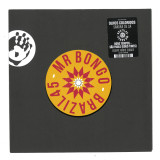
Two 1980s Brazilian boogie bombs from Sandra de Sá and Equipe Rádio Cidade get a remastered reissue as part of Mr Bongo Brazil 45’s series.
Sandra de Sá’s ‘Olhos Coloridos’ is an ‘80s MPB/boogie jam, taken from her self-titled 1982 LP on RGE Brazil, that sits perfectly alongside the likes of Tim Maia, Marcos Valle, Robson Jorge and Lincoln Olivetti. No surprise then that Lincoln Olivetti and Robson Jorge feature on the track, backed by some of the members from Banda Black Rio. A joyous combination of funk basslines and dreamy Rhodes that marry with jubilant horns and Sá’s incredible vocal tones.
On the B side, Equipe Rádio Cidade ‘Bons Tempo Sao Paulo (Good Times)’ was originally released on a rare promo only 7 inch from 1980. Giving a Brazilian boogie makeover to Good Times by Chic / Rapper’s Delight by Sugarhill Gang, the track is voiced by radio DJs from Sao Paulo wishing their listeners a Merry Christmas and Happy New Year.
This replayed version, heavy on the clavinet with a samba-infused, cuica-laced percussion breakdown, gives a true Brazilian spin on one of the most distinctive melodies out there.
Remastered with refreshed artwork.
Two classic cuts from Jorge Ben and Miriam Makeba take either side of this Mr Bongo Brazil 45 reissue.
’Xica Da Silva’ is one of Jorge Ben’s most well-known and well-loved cuts, housed on the legendary Africa Brazil LP that deserves a place in every collection. A magical MPB cut, it instantly transports you to the shores of Rio de Janeiro. With a low-slung funky samba flavour, Ben’s absorbing vocal recounts the legend of one of Brazil's oldest black icons.
On the flip side, Miriam Makeba serves up an entrancing, slowed-down, grooved-out version of ‘Xica da Silva’. A highly influential singer, songwriter, and civil rights activist from South Africa, this low and slow interpretation is doused in strutting guitar, off-beat piano stabs and hypnotic drums providing the perfect platform to let Miriam’s vocal shine through.
Remastered with refreshed artwork.
Erste Vinyl-Neuauflage dieses fantastischen Albums von 1981 von Marcos Valle, eines der bedeutensten Künstler der brasilianischen Musik. In Brasilien aufgenommen, nachdem er Ende der 70er Jahre in den USA gelebt hat, brachte Valle sein angeborenes Talent für Arrangements und seine vielfältigen Einflüsse auf diesem unwiderstehlichen Album zusammen. Gäste sind u.a. Sivuca, Chicago's Peter Cetera, Robson Jorge und Joses Azymuth Roberto Bertrami. Valle ist einer der wenigen Künstler, die man sich nicht entgehen lassen sollte, wenn man auch nur das geringste Interesse an brasilianischer Musik hat. Ob Sie nun Bossa Jazz, Samba, Psych Folk oder Soul mögen, Valle hat mit Sicherheit ein großartiges Album für Sie aufgenommen. Ende der 60er Jahre hatte er bereits genug qualitativ hochwertige Platten veröffentlicht, um sich einen Platz unter den besten brasilianischen Songwritern aller Zeiten zu sichern, aber seine Karriere war glücklicherweise noch nicht zu Ende, und er veröffentlichte in den folgenden Jahrzehnten weiterhin erstaunliche Musik. Mitte der 70er Jahre ließ er sich in Los Angeles nieder, weil er es leid war, unter der brasilianischen Militärdiktatur zu leben, und begann, mit so talentierten Künstlern wie Leon Ware oder Chicago zusammenzuarbeiten. ,Vontade de rever você" (1981) ist sein erstes Album nach der Rückkehr nach Brasilien und zeigt all die musikalischen Einflüsse, die er während seiner Zeit in den USA erhalten hat, insbesondere Boogie, Soul und Funk, mit hervorragenden Mitwirkenden: Sivuca, Peter Cetera aus Chicago, Robson Jorge und sogar José Roberto Bertrami von Azymuth am Rhodes. Das Eröffnungsstück ,A Paraíba nao é Chicago" ist Marcos Valles eigene Interpretation von Leon Ware's ,Baby Don't Stop Me" und macht deutlich, dass das, was er in LA erreicht hat, nun auch in Brasilien ankommt. Dies ist ein unverzichtbares Album für Boogie-Liebhaber. Hören Sie sich den unwiderstehlichen Groove von ecados de amor, (Valles eigene Komposition, die allerdings zuvor von Cristina Camargo aufgenommen wurde) oder elhos surfistas querendo voar" an, und Sie werden schnell feststellen, dass dieses Album zu den solidesten Leistungen in seiner gesamten Diskografie gehört. Selbst wenn das Tempo im Midtempo gehalten wird, wie beim abschließenden Stück ao pode ser qualquer mulher", schaffen es Valles Songs, die Tanzfläche mit seiner sehr gut gelungenen Mischung aus brasilianischen Klängen und funkigen Rhythmen zu erschüttern.
Wilson Simonal and Trio Mocotó provide a double dose of Brazilian classics for this Brazil 45’s 7 inch.
First up, an infectious, samba-MPB hit from one of Brazil’s most popular artists of the ‘60s and early ’70s, Wilson Simonal. Originally released on 7 inch by Odeon in 1967 and landing on Simonal’s Alegria, Alegria !!! album in the same year, ‘Nem Vem Que Nao Tem’s fame had a new lease of life in 2002 when it was used as part of the soundtrack to the critically acclaimed film, ‘City Of God’.
On the B side, one of Jorge Ben’s main backing bands and a group that was highly influential to his sound, Trio Mocotó. Alongside recording with Ben on the seminal Força Bruta, Negro É Lindo and Tábua de Esmeralda LPs, they were also key figures in the development of the samba rock sound – a fusion of samba, soul and rock influenced by music from the USA.
First appearing on Trio Mocotó’s self-titled 1977 Arlequim LP, ‘Nao Adianta’ is a dynamic orchestral-infused gem, laced with that sun-kissed, samba flavour.
Remastered with refreshed artwork.
*BLACK VINYL*Asher White's third album in two years (and fifteenth overall), Home Constellation Study is less a refinement of last year’s sly, quaint New Excellent Woman and more an explosion of it. Her meticulous chamber pop has given way to resplendent swells of horns and squeals of noise, throbbing bass and queasy orchestral loops. The cover, painted by White, frames a burst of flowers against a dark blue abyss, mimicking the music: over frenzied sambas, bleary slacker rock, hushed ambient meditations, and surprisingly slick disco. The past year has found the prolific Providence-based singer-songwriter ascending through her city’s fertile experimental rock scene alongside the breakout synth-punk act BabyBaby_explores and her labelmates Or Best Offer. Live, White’s band plays riotous, unpredictable noise rock that nods to their city’s storied DIY scene; on Home Constellation Study, mid-album highlights like “Downstate Prairie” and “Hymn” nod to Providence’s bands of yore with their blistering sheets of feedback and pummeling drums, placing White, improbably, within the lineage of local heroes Les Savy Fav or the broken pop dispatches of Black Pus. At its core, however, Home Constellation Study is the product of studied, monastic auteurism. Like New Excellent Woman, it was arranged, performed, recorded and mixed by White alone in her basement studio in Providence. “Happy Birthday” is an earnest psalm, a paean of devotion and remorse to God a la Beverly Glenn-Copeland that drifts along with Panda Bear haziness. White’s concept of “toxic femininity” undergoes further investigation on “Good luck!” and “Runes,” both with Elliott Smith-like chord changes and the barbs of cynical romantics like Aimee Mann. Asher White’s vision has never been so expansive and unpredictable.
Dom Salvador, released in 1969, is a landmark album by Brazilian pianist and composer Dom Salvador. This instrumental jazz record showcases Salvador's mastery of blending Brazilian rhythms with American jazz influences. The album features a mix of samba, bossa nova, and hard bop, highlighting Salvador's innovative approach and technical prowess. Known for tracks like ""Samba do Malandrinho"" and ""Tio Macrô,"" the album stands out for its vibrant, sophisticated arrangements and improvisational flair. ""Dom Salvador"" is celebrated for its contribution to the evolution of Brazilian jazz and remains a significant work in Salvador's extensive discography. Dom Salvador is available as a limited edition of 500 copies on translucent magenta coloured vinyl.
-Daniel Zelonky (aka Low Res) has been producing records since 1978. Notable credits span from The Misfits to his own iconic club track "Amuck".
-His 2022 orchestral funk celebration of "Marvin Gaye's Trouble Man" has earned critical acclaim. This record, featuring many outstanding musicians, breaks the mold of history-conscious record making, eschewing the slavish copying of past styles which has become so common, and exemplifying the label’s stated mission of “Reimagining a futuristic past” where “weird vistas of fresh possibilities unfold before us...”
Suite Crude Revue is a rotating cast of outstanding performers committed to an unshackled aesthetic. Produced, composed, and arranged by Daniel Zelonky, this single presents songs for imagined films.
“Cowpoke Detox” might be termed “spaghetti jazz”. It’s a strange hybrid of spaghetti western style baritone guitar lines supporting jazz noir harmonies, creating a surreal backdrop for the tale of an unrepentant murderer, who feels regret only in terms of the consequences he’s facing.
“Blue Ramen #1” is a lover’s lament, set to what might be termed a “Hollywood samba”: One imagines Los Angeles session players emulating samba for a commercial film, not an authentic Brazilian band. The lush aural environment culminates in a dreamy closing vamp with the impassioned vocal set amid a swirl of improvised trumpet, violin, and piano. This haunting, yet ironic song may well have found its way into the popular consciousness ... if the movie had actually existed!
Marking sixty years of Bossa Nova, and twenty years since Marcos Valle’s first release for Far Out Recordings, what better time to bring back this era-defining classic from the Brazilian master composer?
Throughout his astounding six-decade career, infiltrating pop, bossa nova, samba, delicate psychedelia, jazz and funk, Marcos Valle has consistently shown a dogged determination to transcend the traditions and structures of bossa nova, whilst never veering away from the movement’s inherent, fundamental spirit. To some extent, his epithet ‘the original Rio beach boy’ is a handy one: it reflects the origin and character of his often sun-soaked sound, but expounding his importance in the lineage of Brazilian music, he is more discerningly known as ‘the renaissance man of Brazilian pop’. He is indeed one the very greatest and most important composers, arrangers, writers and performers in Brazil.
Up until Nova Bossa Nova, Marcos Valle hadn’t released an album for well over a decade. After 1983, he resented the way the music industry had changed with commercialisation and new demands curtailing his creative freedom. This was until 1994 when Marcos met Far Out boss Joe Davis and they recorded a track for Far Out’s first Friends From Rio album. This new collaborative partnership resulted in a new solo album, which commenced recording in 1996.
Nova Bossa Nova brought Marcos bouncing back into the 90s, slotting nicely in place alongside the acid jazz movement as well as a voracious new demand for Brazilian music on dancefloors from London to Tokyo. It was witnessing the London club scene’s growing appetite for Brazilian music, as well as a lack of new sounds coming out of Brazil at the time, that a young Joe Davis put in a proposal to record a new album with one of his musical idols. Joe wanted to facilitate an album which would combine the latest technologies and production techniques, with live to analogue tape recording: a Marcos Valle album tailor-made for London’s clubs. Always open to modern influences and possibilities, Marcos agreed to the project, and Joe and his production partner Roc Hunter flew to Rio in ‘96. The record wasn’t released until ’98, as the original ½ inch tapes were stolen from Far Out’s London studio, meaning parts of the album had to be re-recorded.
Nova Bossa Nova was unveiled at the peak of the of the Brazilian movement, the record would also prove to be something of a revolution, inspiring a new generation of artists like Bebel Gilberto, Sabrina Malheiros, Da Lata and Bossacucanova, who continued to fuse Brazilian influences with modern electronic sounds.
180g vinyl + Deluxe hard-cardboard sleeve + OBI + resealable outer sleeve
This isn’t just a seminal album. It is an estuary. All the black rivers that would form Brazilian funk/hip-hop flow through it. Led by Paulista pianist Salvador Silva Filho – Dom Salvador – “Som, Sangue, e Raça” from 1971, one year after the explosion of Tim Maia on the scene, catalyzed the bossa nova and jazz background of its leader with the rhythm and blues of its members like saxophonist Oberdã Magalhães, nephew of samba-enredo master Silas de Oliveira and future leader of Banda Black Rio, who since the group Impacto 8 (which had, among others, Robertinho Silva on drums and Raul de Souza on trombone) had already been trying to reconcile MPB with Stevie Wonder and James Brown. Add to all this a mixture of samba, Nordestino accent, and even the black side of the Jovem Guarda represented by the authorial presence of Getúlio Cortes (older brother of Gerson King Combo, our James Brown “cover”) in ‘Hei! Você’. Alongside these elements and the presence of Rubão Sabino (bass), who still called himself ‘Rubens’, drummer Luis Carlos (another member of Black Rio), the record enlists the trumpet and flugelhorn of symphonic musician Darcy in place of the original Barrosinho (yet one more founder of Black Rio), who was traveling during the recording but would end up being a leading force of the band.
The album ‘Som, Sangue e raça’ paves the way for future generations of musicians and producers of the Carioca scene at the beginning of the 1970s. The lyrics that dealt with the question of race and the explosive fusion of samba, soul, jazz, and funk, elaborated by Dom Salvador and his troupe, Abolição, established the bases for the development of new sounds and tendencies in Brazilian music.
Comes with insert and download coupon.
Imagine a Latin remake of Back to the Future. The mad scientist is Arsenio Rodriguez (the godfather of salsa) and the young student who travels through time with him is Eblis Alvarez (Meridian Brothers). This album can only be described as the perfect soundtrack for that movie that never was.
After the massive buzz generated by his first solo album, Mentallogenic, Alex Figueira got back in the studio to work in a more collective fashion this time, carefully assembling the second album of his largest project to date, Conjunto Papa Upa; a team of 6 musicians, spanning 3 generations of some of the best talent in the Latin and avant-garde scenes.
In an era where tropical music is dominated by purely electronic and rhythmically uniform sounds, the ten songs encompassed in “Fruta Madura” (“Ripe Fruit”) wander through the most diverse tempos, rhythms, and motifs effortlessly. A real breath of fresh air that gracefully incorporates soul, funk, jazz, psychedelia, and electronics into a solid tropical, irresistibly polyrhythmic foundation, without ever succumbing to the many genre clichés.
The distinctive production and catchy songwriting of Figueira shine in a very distinctive light on this second full-length. Living up to his reputation (Miles Cleret, founder of Soundway Records, called him “one of the scene's truly authentic and eccentric producers”), he takes the opportunity to show he’s not afraid to keep walking his own path.
Taking the band for a wild ride through the traditions of Africa, America, and the Caribbean; contrasting them with a ridiculously wide plethora of vintage, contemporary, and futuristic sounds, and pivoting on the exuberant musicality displayed by his musicians; the result leaves no doubt: this album is destined to be considered a future classic of the exciting tropical psychedelic music of the 21st century.
Addressing the most diverse themes in this new collection of songs, things take on a much more mature tone, as the title clearly suggests.
The opening track “El segundo es más sabroso” (“The second one is tastier”) sets the tone in the most assertive way imaginable, with the band boldly declaring, through multiple metaphorical references (laid upon a crazy mix of Dominican merengue, Detroit techno, classic and free jazz, dub, and electro), that the bar will be set higher with this second album.
The remaining compositions touch upon the most diverse subjects, with a fair dose of humor, sarcasm, and postmodern “magic realism”. “El Algoritmo” (The Algorithm) is a parranda-cumbia hybrid (for lack of a specific term) about the omnipresence of technology in our lives. The sophisticated Latin soul of the titling track “Fruta Madura” makes a case for the beauty of the maturity process. Some key philosophical teachings of Marcus Aurelius (the role of causality, the impositions of “the logos” and the importance of self-control) get a twisted cumbia treatment on “Reos del Deseo” (Prisoners of Desire). “No le pongas Coca-Cola” (“Don’t put Coca Cola in it”) shows us the most satirical side of the band, accusing those who mix Coca Cola with Rum of committing "sacrilege", on a powerful base of Dem Bow (the grandfather of Reggaeton), intertwined with touches of soul, salsa, and Cuban comparsa.
"Háblame Claro" (“Talk to me clearly”) is a story of heartbreak that evokes in its first part the spirit of the erotic salsa of the 80s (a subgenre deeply despised by purists), and after an unexpected samba interlude, leads to the hardest salsa of the 70s (a subgenre adored by purists), to end up in the surprising form of pure Afro-Cuban ceremonial music.
“Tu mamá tenía razón” ("Your Mom Was Right") is an attempt to exalt the spirit of the Latin American soap opera in the key of “acid bachata”, to recount a real-life case, witnessed by the band on countless occasions: the partying woman who arrives at the show accompanied by her bitter husband, who obviously does not like to dance. A very cheeky song to talk about the very serious and pertinent topic of female empowerment.
“La misma vaina” (“The same thing”) with its indescribable blend of bantú, candomblé, and Mozambique rhythms with abstract synthesizers, is an ode to adventure in favor of the aversion to taking risks and seeking predictability.
“Amigas picadas” (“Salty friends”) is another humorous song recounting another real-life case witnessed by the band on countless occasions: a love encounter sabotaged by the girlfriend's friends, who all happen to fancy the same guy. A jazzy take on the ancient Dominican rhythm of pambiche (grandfather of merengue), with generous psychedelic touches, resembling the classy late 60s releases of Guadeloupe's legendary producer / label owner Henri Debs.
“Vinimos a hablar” (“We came to talk”) takes sarcasm to the highest level, to ridicule the absurdity (also experienced by the band firsthand) seen in live music venues where people pay a ticket to go and have conversations that could be carried out much better on any bar, where no band is playing. The music alternates between a delicate melody with loose, sparse percussion and a full-on, pumping Angolan semba, with a techno kick drum included; bringing things to an apotheotic grooving finale, where the peculiar swing of Venezuelan calypso from the Callao region is thrown on top of all the precedent elements; closing the album in the most uplifting, “end of the carnival parade” feel.
The artwork is a delicate and impactful oil painting by Colombian artist Kevin Simón Mancera, who has collaborated many times with the label before (“Maracas, tambourines and other hellish things” tape and the Lola’s Dice LP).
What the experts are saying:
“Alex (Figueira) dove into this work with a brutal cohesion between lyrics and synths. Timbre poetry, sound poetry (you name it). And that, superimposed on his always impeccable percussive base, confirms the title of “avant-garde visionary of our beautiful Latin music”".
EBLIS ALVAREZ (MERIDIAN BROTHERS)
“Papa Upa's infectious quirkiness is a balm against boredom. A mature album, but without an expiration date”.
GLADYS PALMERA
“Here there is a lot of strength, drum, cadence and psychedelia, lost dance rhythms, united in an intercontinental Latin/African/and Caribbean journey, a unique winning combination that we could consider the new “Ritmo Figueira”.
DISCODELIC
Conjunto Papa Upa are:
Alex Figueira - Timbales, percussion, vocals.
Gerardo Rosales - Congas, percussion, vocals.
Ramón Mendeville - Bongos, percussion, vocals.
Randy Winterdal - Bass.
Andrew Moreno - Guitar.
Nico Chientarolli - Organ, piano, synths.
All songs written by Alex Figueira.
Arranged and performed by Conjunto Papa Upa.
Recorded, produced, mixed and mastered by Alex Figueira at Heat Too Hot, Amsterdam.
Repress!
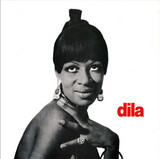
Far Out Recordings proudly presents the first and only album from the mysterious Brazilian vocal sensation Dila (pronounced “Jee-la”). Having reportedly died in a car crash shortly after the album’s release in 1971, there is very little known about the woman behind the voice. But the joyous music Dila left behind, gives us a picture as good as any, of a powerful feminine soul at the top of her game.
The liner notes on the elusive original LP, written by composer Arnoldo Medeiros attest: “Friend, look out! Because when this girl starts to sing, you’re in trouble. Hold the railing so you don’t fall down the stairs, because she’s coming this way and shaking up everything.”
Arranged and produced by Durval Ferreira, alongside his studio band affectionately known as “Os Grillos” (The Crickets), Dila (1971) is a rare glimpse into the authentic soulful Samba sound of Rio’s favelas in the late sixties and early seventies.
A blast of funky, percussive Brazilian breaks, scorching hot brass and swing-laden piano, the music is as iconic as the album’s stark cover, as is clear on opener ‘Inez’, composed by The Crickets’ bassist Romildo. There’s a fantastic interpretation of the Ivan Lins classic ‘Madalena’ (made famous by Elis Regina), a moving version of the Tom Jobim and Vinicius De Moraes classic ‘O Morro Não Tem Vez’, and a number of sunny original compositions by Arnold Madeiros, who’s other writing credits include music for Marcos Valle, Wanderlea, Evinha and Dom Salvador.
With original LPs extremely hard to come by, this rare treasure of Brazilian soul, which fans of Gal Costa, Celia, Evinha and Elis Regina will love, gets a much-deserved official reissue: remastered and pressed to 180g vinyl.
- A1: Princess Aya Sarah – O Wina Tienge
- A2: Meta & Feza – Mivé Temoin
- B1: The African House Party Project Feat. Splash, Patricia Majalisa & Dalom Kids – P-Coq
- B2: V-Mash – Naughty Boy
- B3: Di Groovy Girls – Ririmi Rotsombela
- B4: Tshala Muana – Djepué
- C1: Lady Isa – Djambo
- C2: Pembey Sheiro – Sala Ni Toto
- C3: Princesse Mansia M’bila – Ngoma Mansia
- D1: Samba Mapangala And Orchestra Virunga – Mashariki
- D2: International Zaistars & Nene Tshaku – Je T’aime Au Pluriel
- D3: M.d. Shirinda & Gaza Sisters – Mabazi
- D4: “Bwaluka” Founders Band – Kimbera
Strut introduces a pioneering new compilation 'A Dancefloor In Ndola,' curated by revered East African DJ, Kampire. This release marks an evolution in Strut's approach to compilations, showcasing emerging DJ talent from across the world and embracing an innovative approach to musical discovery from the next wave of selectors. Forging her reputation through memorable sets for the Nyege Nyege Festival in Uganda over the last decade, Kampire now tours worldwide and is celebrated for her brilliantly curated sets spanning the full range of African music styles from the ‘70s and ‘80s to the present day.
Although born in Kenya to Ugandan parents, Kampire spent her formative years in Ndola, Zambia. ‘A Dancefloor In Ndola’ is inspired by artists and songs that formed part of her soundtrack during that time. “It is important for me to continually reference Africa’s own musical history,” she explains. “At 17, I didn’t pick up on my Dad’s music but now I love and collect those records. I’m constantly referencing them in my music sets today. I love that feeling of shared nostalgia where people recognise a song they haven’t heard in a long time. It is a touchstone for me when I’m playing.”
The compilation flows through different East African and South African genres from Congolese rumba and soukous to 1980s township bubblegum and the rich guitar-led sounds of Zambian kalindula. “There are styles of music on the compilation which are often considered unsophisticated from rural areas. I and other contemporary African artists and DJs draw inspiration from them; it is part of what makes us ourselves.” Kampire also shines the spotlight on many incredible women in African music from the ‘80s, including Congolese legends like Pembey Sheiro, Feza Shamamba and Princesse Mansia M’bila to V-Mash and Di Groovy Girls from South Africa.
‘A Dancefloor In Ndola’ is released on 2LP and CD and features exclusive new edits by Kampire alongside personal liner notes tracing her links to the music. Cover artwork montage is by Canon Rumanzi and vinyl restoration / mastering by The Carvery
Debut compilation by one of East Africa’s leading new generation DJs, Kampire.
Mix of African classics and rarities spanning 1970s – 1990s from Congolese soukous, South African bubblegum and Zambian kalindula.
Shining the spotlight on women in African music Pembey Sheiro, Feza Shamamba and Princesse Mandisa M’bila.
Exclusive cover artwork collage by Canon Rumanzi.
Worldwide DJ dates supporting release during Summer and Autumn 2024.
- A1: Ponta De Lança Africano (Umbabarauma) 3:58
- A2: Hermes Trismegisto Escreveu 3:04
- A3: O Filósofo 3:30
- A4: Meus Filhos, Meu Tesouro 3:53
- A5: O Plebeu 3:18
- A6: Taj Mahal 3:10
- B1: Xica Da Silva 4:00
- B2: A História De Jorge 3:53
- B3: Camisa 10 Da Gávea 4:18
- B4: Cavaleiro Do Cavalo Imaculado 4:43
- B5: África Brasil (Zumbi) 3:48
África Brasil is a 1976 release by Brazilian artist Jorge Ben. It was Ben's 14th studio album and a milestone in his career with a switch to electric guitar and funk music leaks. For África Brasil Ben reworked three of his earlier compositions: "A Princesa e o Plebeu" from Sacundin Ben Samba, "Taj Mahal" from Ben, and "Zumbi" from A Tábua de Esmeralda. The album's opening track "Ponta de Lança Africano (Umbabarauma)", a song about an African football striker, became a well known soccer-associated track and it was later included on David Byrne's 1989 compilation Brazil Classics Beleza Tropical, prompting rotation of a video for the track on VH-1
We Could Be Flying" is a rare and classic album by KARIN KROG, a world-class jazz singer from Norway, which has been loved since its original release in 1975. The presence of New York pianist Steve Kuhn, who also composes four of the nine tracks, creates a masterpiece that combines a mellow, gentle comfort with a jazz-like groove. The album starts off with the title track "We Could be Flying" with its solidly sounding rhythm and soulful Karin's vocals, followed by "Meaning Of Love," and the album starts off with a sound that is sure to please fans of jazz-rock. The fourth track is a cover of Joni Mitchell's "All I Want," which not only has a pleasant jazz feel, but also a groove that reaches its peak with the interplay of drums and piano and other instruments, making it a must for fans of jazz, rock, and American music. The sixth track, "Raindrops, Raindrops," and "Hold Out Your Hand" also challenge the listener with a danceable samba style, making this an excellent album in its own right!
This isn't just a seminal album. It is an estuary. All the black rivers that would form Brazilian funk/hip-hop flow through it. Led by Paulista pianist Salvador Silva Filho - Dom Salvador - 'Som, Sangue, e Raça' from 1971, one year after the explosion of Tim Maia on the scene, catalyzed the bossa nova and jazz background of its leader with the rhythm and blues of its members like saxophonist Oberdã Magalhães, nephew of samba-enredo master Silas de Oliveira and future leader of Banda Black Rio, who since the group Impacto 8 (which had, among others, Robertinho Silva on drums and Raul de Souza on trombone) had already been trying to reconcile MPB with Stevie Wonder and James Brown. Add to all this a mixture of samba, Nordestino accent, and even the black side of the Jovem Guarda represented by the authorial presence of Getúlio Cortes (older brother of Gerson King Combo, our James Brown 'cover') in 'Hei! Você'. Alongside these elements and the presence of Rubão Sabino (bass), who still called himself 'Rubens', drummer Luis Carlos (another member of Black Rio), the record enlists the trumpet and flugelhorn of symphonic musician Darcy in place of the original Barrosinho (yet one more founder of Black Rio), who was traveling during the recording but would end up being a leading force of the band.
The album 'Som, Sangue e raça' paves the way for future generations of musicians and producers of the Carioca scene at the beginning of the 1970s. The lyrics that dealt with the question of race and the explosive fusion of samba, soul, jazz, and funk, elaborated by Dom Salvador and his troupe, Abolição, established the bases for the development of new sounds and tendencies in Brazilian music.
2024 Restock
BaianaSystem are from Bahia, the state with the strongest African cultural heritage in the country and a motherlode for Brazilian music. BaianaSystem manifest and champion the sound of the Black Atlantic, deep and future connections between Africa, Brazil and the Caribbean, from the roots of samba to global bass culture.
It was on the occasion of the bicentennial of the USA (1776 – 1976) that I recorded this album which had an international success. The musicians were perfect and the sound great; it gave me the idea and the crazy desire to make a record on the Africa that I love. Here too, I’ll let you know.
Som, Sangue e Raça is still one of the milestones in Brazilian music. The music of Dom Salvador e Abolição is a funky and smooth blend of samba, soul, rock, jazz, forro and baião. The band's sound was a major influence on the successful group Banda Black Rio. Som, Sangue e Raça still stands out for its catchy and groovy melodies and shows the wide range of the band. All this makes this samba/soul classic a must for all music collectors.
Som, Sangue e Raça is available as a limited edition of 1000 individually numbered copies on translucent red coloured vinyl.