Suche:uncle dog

Styles
Alle
  • 1
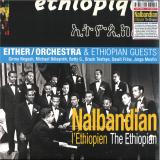
NALBANDIAN THE ETHIOPIAN & EITHER/ORCHESTRA - NALBANDIAN THE ETHIOPIAN (ETHIOPIQUES)

The Éthiopiques series returns! Essential archive recordings from an extremely fruitful period in Ethiopian music.

Before “Swinging Addis” took over the world, there was Moussié Nerses Nalbandian — the Armenian-born composer who shaped modern Ethiopian music. Mentor, arranger, and pioneer, he laid the foundations of Ethio-jazz.

This Éthiopiques volume revives his forgotten legacy, recorded live by Either/ Orchestra First issue ever with new exclusive photos and in depth liner 8-page insert.

“Ethiopian jazzmen are the best musicians that we have seen so far in Africa.
They really are promising handlers of jazz instruments.”

Wilbur De Paris
(1959, after a concert in Addis Ababa)

አዲስ፡ዘመን። *Addis zèmèn* **A new era.**
The time is the mid-1950s and early 1960s, just before "Swinging Addis" bloomed – or rather boomed – onto the scene. Brass instruments are still dominant, but the advent of the electric guitar, and the very first electronic organs, are just around the corner. Rock’n'Roll, R’n’B, Soul and the Twist have not yet barged their way in. Addis Ababa is steeped in the big band atmosphere of the post-war era, with Glenn Miller's *In the* *Mood* as its world-wide theme song, neck and neck with the Latin craze that was in vogue at the same period. Life has become enjoyable once again, with the return of peace after the terrible Italian Fascist invasion of Ethiopia (1935-1941). The redeployment of modern music is part and parcel of the postwar reconstruction. *Addis zèmèn* – a new era – is the watchword of the postwar period, just as it was all across war-torn Europe.
The generation who were the young parents of baby boomers** were the first to enjoy this musical renaissance, before the baby boomers themselves took over and forever super-charged the soundtrack of the final days of imperial reign. Music is Ethiopia's most popular art form, and very often serves as the best barometer for the upsurge of energy that is critical for reconstruction. Whether it be jazz in Saint-Germain-des-Prés or the *zazous* who revolutionised both jazz and French *chanson* after the *Libération*, be it Madrid's post-Franco Movida, or Dada, the Surrealists and *les années folles* that followed World War I, the periods just after mourning and hardship always give rise to brighter and more tuneful tomorrows. Addis Ababa, as the country's capital, and the epicentre of change, was no exception to this vital rule.

**Two generations of Nalbandian musicians**
Nersès Nalbandian belonged to a family of Armenian exiles, who had moved to Ethiopia in the mid-1920s. The uncle Kevork arrived along with the fabled "*Arba Lidjotch*", the** "*40 Kids*", young Armenian orphans and musicians that the Ras Tafari had recruited when he visited Jerusalem in 1924, intending to turn their brass band into the official imperial band. If Kevork Nalbandian was the one who first opened the way of modernism, pushing innovation so far as to invent musical theatre, it was his nephew Nersès who would go on to become, from the 1940s and until his death in 1977, a pivotal figure of modern Ethiopian music and of the heights it. Going all the way back to the 1950s. Nothing less. And it is Nersès who is largely to thank for the brassy colours that so greatly contributed to the international renown of Ethiopian groove. While the younger generations today venture timidly into the genealogy of their country's modern music, often losing their way amidst a distinctly xenophobic historiographical complacency, many survivors of the imperial period are still around to bear witness and pay tribute to the essential role that "Moussié Nersès" played in the rise of Abyssinia's musical modernity.
Given the year of his birth (15 March 1915), no one knows for sure if Nersès Nalbandian was born in Aintab, today Gaziantep (Turkiye/former Ottoman Empire) or on the other side of the border in Alep, Syria... What is certain is that his family, like the entire Armenian community, was amongst the victims of the genocide perpetrated by the Turks. Alep, the place of safety – today in ruins.
Before Nersès then, there was uncle Kevork (1887-1963). For a quarter of a century, he was a whirlwind of activity in music teaching and theatrical innovation. *Guèbrè Mariam le Gondaré* (የጎንደሬ ገብረ ማርያም አጥቶ ማግኘት, 1926 EC=1934) is his most famous creation. This play included "ten Ethiopian songs" — a totally innovative approach. According to his autobiographical notes, preserved by the Nalbandian family, Kevork indicates that he composed some 50 such pieces over the course of his career. This shows just how much he understood, very early on, the critical importance of song as Ethiopia's crowning artistic form. Indeed, for Ethiopian listeners, the most important thing is the lyrics, with all their multifarious mischief, far more than a strong melody, sophisticated arrangements or even an exceptional voice. (This is also why Ethiopians by and large, and beginning with the artists and producers themselves, believed for a long time — and wrongly — that their music could not possibly be exported, and could never win over audiences abroad, who did not speak the country's languages).

Last but not least, one of Kevork's major contributions remains composing Ethiopia's first national anthem – with lyrics by Yoftahé Negussié.
Nersès Nalbandian moved to Ethiopia at the end of the 1930s, at the behest of his ground-breaking uncle. Proficient in many instruments (pretty much everything but the drums), conductor, choir director, composer, arranger, adapter, creator, piano tuner, purveyor of rented pianos,... he was above all an energetic and influential teacher. From 1946 onwards, thanks to Kevork's connexion, Nersès was appointed musical director of the Addis Ababa Municipality Band. In just a few years, Nersès transformed it into the first truly modern ensemble, thanks to the quality of his teaching, his choice of repertoire, and the sophistication of his arrangements. It was this group that would go on to become the orchestra of the Haile Selassie Theatre shortly after its inauguration in 1955, which was a major celebration of the Emperor's jubilee, marking the 25th anniversary of his on-again-off-again reign.

At some point or other in his long career, Nersès Nalbandian had a hand in the creation of just about every institutional band (Municipality Band, Police Orchestra, Imperial Bodyguard Band, Army Band, Yared Music School…), but it was with the Haile Selassie Theatre – today the National Theatre – that his abilities were most on display, up until his death in 1977. To this must be added the development of choral singing in Ethiopia, hitherto unknown, and a sort of secret garden dedicated to the memory of Armenian sacred music, and brought together in two thick, unpublished volumes. Shortly before his death (November 13, 1977), he was appointed to lead the impressive Ethiopian delegation at Festac in Lagos, Nigeria (January-February 1977).

His status as a stateless foreigner regularly excluded him from the most senior positions, in spite of the respect he commanded (and commands to this day) from the musicians of his era. Naturally gifted and largely self-taught, Nerses was tirelessly curious about new musical developments, drawing inspiration from the very first imported records, and especially from listening intensely to the musical programmes broadcast over short-wave radio – BBC *First*. A prolific composer and arranger, he was constantly mindful of formalising and integrating Ethiopian parameters (specific “musical modes”, pentatonic scale, and the dominance of ternary rhythms) into his “modernisation” of the musical culture, rather than trying to over-westernise it. It even seems very probable that *Moussié* Nerses made a decisive contribution to the development of tighter music-teaching methods, in order to revitalise musical education during this period of prodigious cultural ferment. Flying in the face of all the historiographical and musicological evidence, it is taken as sacrosanct dogma that the four musical modes or chords officially recognised today, the *qǝñǝt* or *qiñit* (ቅኝት), are every bit as millennial as Ethiopia itself. It would appear however that some streamlining of these chords actually took place in around 1960. It was only from this time onward that music teaching was structured around these four fundamental musical modes and chords: *Ambassel*, *Bati*, *Tezeta* and *Antchi Hoyé*. A historical and musical “details” that is, apparently, difficult to swallow, especially if that should honour a *foreigner*. Modern Ethiopian music has Nersès to thank for many of its standards and, to this day, it is not unusual for the National Radio to broadcast thunderous oldies that bear unmistakable traces of his outrageously groovy touch.

Auf Lager

Bei uns am Lager und sofort versandfertig

22,06
Masta Killa - Balance

Masta Killa

Balance

12inchNSD257LP
Nature Records
29.08.2025
  • 1: Hip Hop Forever
  • 2: Eagle Claw (Feat. Raekwon And Capadonna)
  • 3: Bk Harlem (Feat. Head I.c.e)
  • 4: Building With The Abbott (Feat. Rza)
  • 5: City (Feat. Jamall Ray)
  • 6: Glad To Meet You (Feat. Method Man And Snoop Dogg)
  • 7: It's Been A Long Time
  • 8: Trumpets (Feat. N.o.r.e., Az, And Uncle Murda)
  • 9: King Custom
  • 10: Again (Feat. Ab Money And Big Bub)

More than thirty years after their seismic arrival, the legendary Wu-Tang Clan remains as relevant as
ever, whether inspiring an acclaimed TV series or securing a historic Las Vegas artist residency. With a wealth of talent that may never be duplicated, the group’s impact has been amplified by the solo careers of all nine members. Masta Killa has been an important part of this legacy, with four acclaimed solo albums containing countless Wu classics. Now, in the midst of the last Wu-Tang Clan tour ever, Masta Killa is back with the highly anticipated new album Balance. Executive produced by Wu-Tang mastermind RZA, the collection is vintage New York hip-hop at its finest, with thunderous drums courtesy of beatsmiths like Easy Mo Bee, PF Cuttin, Nick Price, and RZA himself. Lyrically, Killa proves his sword is sharper than ever, sharing wise words alongside a diverse set of guests including Method Man, Snoop Dogg, RZA, Raekwon, N.O.R.E., Cappadonna, AZ, Uncle Murda, and more. “What the world and the musical universe needs now is balance,” Masta Killa explains. Capturing a wide spectrum of moods and content, Balance embodies its title perfectly.

vorbestellen29.08.2025

erscheint voraussichtlich am 29.08.2025

30,21

Last In: vor 2026 Jahren
Frank Zappa - Cheaper Than Cheep LP 3x12"
  • A1: “Cheaper Than Cheep”
  • A2: Cosmik Debris
  • A3: Inca Roads
  • B1: Rdnzl
  • B2: Village Of The Sun
  • B3: Montana
  • B4: Duke Goes Out
  • C1: “Get Down Simmons”
  • C2: Penguin In Bondage
  • C3: T’mershi Duween
  • C4: The Dog Breath Variations
  • C5: Uncle Meat
  • D1: How Could I Be Such A Fool
  • D2: I’m Not Satisfied
  • D3: Wowie Zowie
  • D4: I Don’t Even Care
  • D5: Let’s Make The Water Turn Black
  • E1: Oh No
  • E2: Son Of Orange County
  • E3: More Trouble Every Day
  • F1: Dupree’s Paradise
  • F2: Apostrophe’
  • F3: Camarillo Brillo
auch erhältlich

Basic[83,99 €]


vorbestellen27.06.2025

erscheint voraussichtlich am 27.06.2025

184,83

Last In: vor 2026 Jahren
Orchestroll - Corrosiv LP 2x12"

Corrosiv, the sophomore album from Orchestroll, reveals the duo at their most mature and vulnerable. Originally conceived as a reflection on hybridity and bastardization, the album deploys New Age and ambient compositional tropes as a launchpad, exposing their trite sanctity to the realities of corrosion. Having come of age in the 1970s and 1980s, the New Age movement perdures today as a domain of contradictions; its promise of transcendence riddled with the very commercialized dogma from which its adherents claim to flee. Healing modalities such as reiki, crystal therapy, and sound baths are simultaneously pathways to solace and sites of exploitation; their sonic counterparts—ethereal synth pads, shimmering textures, celestial drones—claim to facilitate meditation and enlightenment while devolving into empty signifiers of vitality. With Corrosiv, Orchestroll displays neither reverence nor disdain toward New Age: they exhume it instead, revealing the saccharine effervescence and commodified murk undergirding its aesthetics. The result is intoxicating—disquieting.

Born from a two-week residency at EMS Studios and expanded through a performance at MUTEK Montreal’s 25th anniversary, Corrosiv has since outgrown its original conceptual nucleus, taking on a broader scope. Its inquiry into New Age ideology’s voided rhetoric and aesthetic mysticism now informs a broader interrogation of cultural mediocrity, anti-authoritarianism, gatekeeping, music industry toxicity, and the crumbling edifice of late capitalism and techno-feudalism—all the mechanisms by which meaning is stripped from ceremony, and once-potent forms of knowledge are subsumed into the machinery of economic extraction, severed from their original essence, and transformed into hollow simulacra. Corrosiv distills these themes through a loose narrative: a soul, fixated on wellness as dictated by cosmetic economism, becomes ensnared in an endless afterlife, unable to transcend and shed its dilapidated consciousness.

Framed as an act of audio dissolution, the album thus engages in an alchemical process, whereby complex waveshaping, morphing synthesis, and distortion enact a ritual of fragmentation. There is also friction: between the rigid, mechanical imposition of systematized order and the untamed, chaotic force of organic metamorphosis. Here corrosion and confinement are not solely conceptual motifs; they are enacted in real time, sculpting the album’s terrain. Scraping, tarnishing, degradation—the languid wear of form and substance—become instruments in their own right: buffing as abrasion, entrapment as transformation, corrosion as a means of reconfiguration. The ‘protagonist,’ if there must be one, is the listener, caught within the throes of structural determinism and the potential for emancipation, unable to pass into something greater as the specters of collapsed futures accumulate in the margins.

Corrosiv extends its reach through collaborations with familiar voices: Heith (PAN), VISIO (Haunter), Femminielli (Drowned by Locals), Habib Bardi (Interzone), and Jiyoung Wi (Enmossed, Psychic Liberation, Doyenne) each leave their imprint on its sprawling landscape. At 1h16m, it is a procession, dense with earworms that burrow into the listener’s unconscious.

Misshapen, broken-down metals leach copper into blood, acid reflux burning through the core. Psyche disaggregates into cosmic turmoil, drifting between planes—tongue on rustline, gullet laced with solvent hymns, molars unlatching, bitcrushed to marrowspill. A spasm of brine, ferrous scripture, venomtext blooming in leaden rivulets, cartilage smoldering in phosphor decomposition, synapses drowning in a quicksilver choir. Crest of bile, churning ore, breath clotting into arsenic mist, vein-thread cinched, a corrosive gospel, limb by limb, oxidized to silence.

Ultimately, as the music exhales its final breath, its residue refuses to dissipate—and stillness alone remains. There are no conclusions here—no resolution, no collapse—only the slow drift outward of a vessel unmoored, lost in the sea of symbolic souring. Corrosiv sings the song of a world barren of prophecy, littered with aesthetic detritus. Whether this magic has been transfigured or simply worn away is unclear: the last breath dissipates, but the oxidation does not stop. The silence, too, will decay.

Conceptualized, composed, performed, recorded, mixed, engineered and produced by Jesse Osborne-Lanthier, and Asaël Richard-Robitaille in 2023 and 2024 at Elektron Musik Studion (EMS) - Stockholm, Sweden and Landsc8pe Studio - Montréal, QC, Canada.
Artwork by Jesse Osborne-Lanthier.
Mastered by Stephan Mathieu @ Schwebung Mastering.

vorbestellen02.06.2025

erscheint voraussichtlich am 02.06.2025

30,21

Last In: vor 2026 Jahren
Warrant - The Best of Warrant LP 2x12"
  • Down Boys
  • 32: Pennies In A Ragu Jar
  • Heaven
  • D.r.f.s.r
  • Big Talk
  • Sometimes She Cries
  • Cherry Pie
  • Thin Disguise
  • Uncle Tom's Cabin
  • I Saw Red (Acoustic Version
  • Bed Of Roses
  • Mr. Rainmaker
  • Sure Feels Good To Me
  • Hole In My Wall
  • Machine Gun
  • We Will Rock You

"The Best of Warrant is the first greatest hits compilation album by the American rock band Warrant, released in 1996 on CD. This is the first time the album is available on vinyl. It features the band's greatest hits from their first three studio albums, Dirty Rotten Filthy Stinking Rich, Cherry Pie and Dog Eat Dog. It also includes the track ""We Will Rock You"", which is a cover of the Queen song that was released on the soundtrack to the 1992 film Gladiator starring Cuba Gooding Jr. The Warrant version of ""We Will Rock You"" charted at number 83 on The Billboard Hot 100 and the version of ""I Saw Red"" is the acoustic version previously released as a B-side from the single of the same song. The Best Of Warrant is available as a limited edition of 2000 individually numbered copies on red coloured vinyl and includes a renewed insert with lyrics and liner notes.

vorbestellen10.01.2025

erscheint voraussichtlich am 10.01.2025

40,97

Last In: vor 2026 Jahren
The Unattached - Requiem For Dead Dogs LP

A cycle of songs about dead dogs. Dealing with loss, grief and loneliness, they recount the tales of lost dogs both real, metaphoric and mythic, and use our relationship with and treatment of dogs as a measure of our humanity.

Collaborating as The Unattached on this record are Joad R Wren, sister Gwenifer Raymond, uncle Neil White, and daughter Celia, along with friends Darren Hayman, Ian Button, John McGrath and Holly Rogers.

Joad notes: "The album was written and recorded during the height of the pandemic. I've no idea why it's taken so long to release it. I do know that it's a great pleasure to work – even at a distance – with such talented musicians, with many amazing albums in their back catalogues."

The final song was a surprise – especially to Joad – as Neil wrote it years ago about a forgotten dog, and it fitted beautifully as a coda here.

The songs are at once lush, sensitive, bleak and unflinching - there's a similar feeling to something like Lou Reed's 'Berlin', or the darker moments of Roy Harper. The LP comes in a numbered, hand-printed linocut sleeve with a 20 page booklet of lyrics and art.

The sleeve is a bit special. The oil-based ink used on this hand-printed sleeve may feel sticky to touch, and can potentially transfer to other surfaces. Please handle and store this record carefully.

It's an edition of 100, and because of the hand-printing process each cover is imperfectly unique and uniquely imperfect (and hand numbered).

vorbestellen26.02.2024

erscheint voraussichtlich am 26.02.2024

23,32

Last In: vor 2026 Jahren
Various - Hip-Hop At Fifty (50 Jahre Hip-Hop) LP 4x12"
 
41

”Guess Who’s Back” - Hip-Hop is! Das beliebte Genre ist aus der Musiklandschaft nicht mehr wegzudenken und feiert dieses Jahr sein 50-jähriges Jubiläum! Zu diesem Anlass erscheint das brandneue Album „HipHop At Fifty (50 Jahre Hip-Hop)“ mit vielen Hits aus den Anfangsjahren des Genres sowie zahlreichen deutschen und internationalen Chartstürmern. Eins ist sicher – dieses Album kommt ”Straight Outta Compton”!
Mit Oldschool-Pionier*innen wie Dr. Dre, Eminem, Snoop Dogg, Busta Rhymes, LL COOL J, 50 Cent, DMX, Lil’ Kim, Fugees als auch mit deutschen Rap-Größen wie Die Fantastischen Vier, Luciano, Sido, Apache 207, Seeed oder Deichkind hat das Album einiges zu bieten.

Ob die groovigen Sounds von ”Super Freaky Girl”, die explosive Rap Power von ”Bamba”, der weltweite Club-Klassiker ”In Da Club” oder der funky Vibe mit harschen Lyrics des Klassikers von ”The Real Slim Shady” – diese Mischung sorgt für die volle Ladung Hip-Hop!

Erhältlich als 4LP, 3CD, eAlbum und im Streaming ab dem 29. September 2023!

nicht am Lager

Bestelle jetzt und wir bestellen den Artikel für dich beim Lieferanten.

38,03

Last In: vor 14 Monaten
Dr. Demento - First Century Dementia LP 2x12"
 
24

1900 to 1930: The Dawn of Dementia; The Oldest Novelty Records of All
Time from Dr Demento.The world famous Dr
Demento's influence on pop culture is undeniable and to commemorate his 50th
anniversary, we celebrate the earliest days of novelty and comedy records.
He is a world- renowned record collector and music historian, whose lifelong
passion for music of all kinds (from Frank Zappa to punk rock and everything in
between) is reflected in his radio show and most importantly, in this unique
collection of rare songs from the early days of records.

vorbestellen05.05.2022

erscheint voraussichtlich am 05.05.2022

32,56

Last In: vor 2026 Jahren
BILL JENNINGS - Enough Said

Bill Jennings

Enough Said

12inchGOT006LP
Got It!
23.04.2021

American jazz guitarist Bill Jennings released this highly collectible album in 1959 on the influential label Prestige. The long awaited reissue is finally here, please enjoy. During his lifetime Louis has been working with many luminaries such as Louis Jordan (and his Tympany Five), Wild Bill Davis (Trio), Jack McDuff, Willis "Gator" Jackson, Bill Doggett, Louis Armstrong and Hot Lips Page.

vorbestellen23.04.2021

erscheint voraussichtlich am 23.04.2021

25,17

Last In: vor 2026 Jahren
PALE SPRING - CYGNUS

Pale Spring wrote and recorded CYGNUS in Baltimore, whose fertile music scene has seen acts like Lower Dens, Ami Dang and Beach House build rich, self-contained worlds of sound.
CYGNUS expands on this foundation, with stately, smooth pop songs incorporating layered harmonies, glitches, and, on “Old Sounds” dog barks. Music runs in Harper Scott’s family: a classically trained musician herself, her grandfather studied at Juilliard under his uncle, who played for the New York Philharmonic.
Scott’s grandfather sang doo wop, and his influence paved the way for Scott to explore music; eventually, he taught himself how to sample. His accompaniment provides an underpinning for Harper Scott’s vocals and instrumentals.
Critics noticed CYGNUS when it first came out last year, with glowing reviews in Bandcamp, Tiny Mix Tapes and DAZED.
American Dreams Records’ vinyl reissues of CYGNUS and DUSK mark the first time they’ve been made widely available as physical media.

vorbestellen19.03.2021

erscheint voraussichtlich am 19.03.2021

25,17

Last In: vor 2026 Jahren
MIDNIGHT SISTER - Painting The Roses

As Midnight Sister, multi-disciplinary LA artists Juliana Giraffe and Ari Balouzian make motion pictures. Yes, sometimes with moving images _ but most often only with the music they create together. Balouzian's serpentine, string compositions are movie scenes that allow Giraffe, a brilliant character actor, to cloak herself in a new roles and voices. A bit of Jon Brion's score work; some old Hollywood strings; a solid dose of glam and outsider disco from 70s independent cinema. Any perceived artifice is always matched by an indelible human fingerprint, something perfectly off. Giraffe and Balouzian's respective work in fashion, visual art, video and film scoring _ along with the gang of virtuosos with which they surround themselves _ all wonderfully coalesce as Midnight Sister. And if 2017's `Saturn Over Sunset' was their collection of short films about outcast life in The San Fernando Valley, then their new album `Paining the Roses' is the inventive, meta motion picture that cements them as auteurs. `Painting the Roses' is in many ways a fairy tale -- not so much the sweet-and-happyending kind as something richer, packed with imagination and rooted in the complex human messiness beneath a story's artifice. Frontwoman Giraffe describes it as "this tightrope of being real yet synthetic, organic yet staged, light yet dark, logical yet irrational, beautiful yet dilapidated. Joyful nonsense." Here, disguises like masks and paint are not meant to hide but to liberate, to "set a part of us free", and Midnight Sister often embody this themselves, appearing highly stylized, curious, warm and inviting but a little askew. `Painting the Roses' is a story told through the looking glass, one where we examine ourselves in a funhouse mirror but find clarity in its twists. Giraffe traveled to visit family in Argentina during the making of the album and reconnected greatly with that part of her family history, art and culture. Balouzian created the core album opener "Doctor Says" during a session in the desert outside of LA. The guitar, which reminded Giraffe of South America, has a slow, sweltering surf-tango to it, like Dick Dale doing Carlos Gardel. And even though the song was inspired by Giraffe's reconnection with Argentina, the song is about the fading of some close friendships during the making of the album. "Man, you have changed," Giraffe sings, unclear if tis directed to a friend or to herself. Later on the album, "Wednesday Baby" _ named after Giraffe's rescue dog _ is patient, subtly baroque pop. It follows Giraffe through one of those gloomy days spent in tunnelvision doldrums from which only a sunbathing turtle or your canine companion can pull you out. By the time collaborator Max Whipple's saw comes beaming down from heaven in the song's 3rd part, we're hypnotized by the song's charming ennui. The song lands someplace both familiar and aloof, a little slice of timelessness taken straight from The Cake of Perfect Songcraft.

vorbestellen15.01.2021

erscheint voraussichtlich am 15.01.2021

19,87

Last In: vor 2026 Jahren
  • 1
Artikel pro Seite:
N/ABPM
Vinyl
