Long time supporters of Kniteforce will be well aware of the truly amazing series, Remix Records & Kniteforce presents ‘The Remix’s’, and here we have Part 17! All the records in this series are insanely good and this EP does not disappoint. To start we have the mighty Bay B Kane taking one of Phuture Assassins newer tracks and turning it into an amazing jungle track, using the original vibe and cranking it up to the maximum with a proper early Bay B Kane style. Next is an absolutely mental remix from Heavy Systems Inc. of an already mental track! One of NRG’s most insane tracks gets the rough and raw treatment that HSI is known for, drawing on the underground sound of 1992. The action doesn’t stop on the other side either! The living legend that is Austin takes an already hugely popular track from Sunny & Deck Hussy and absolutely sprinkles it with awesome. This is Austin at his best, and it shows how he has not missed a step in 3 decades of music production. Rounding out this installment is The BradderCase remix of Stu Chapman’s Rude Boy. The duo of BradderCase, aka Paul Bradley and The Lowercase, took this Stu Chapman track and flipped it on its head. Extracting the energy from the original and lighting a fire under it, showing that hardcore can be fun and serious at the same time.
Club / DJ Support
Jay Cunning, Billy Bunter, the Fat Controller, Liquid, Hyper On Experience, Glowkid, Slipmatt, Dj Jedi, Dj Luna-C, Dj Brisk, Paul Bradley, Jimni Cricket, Bustin, Jimmy J, Doughboy, Lowercase, Dave Skywalker, Ponder and many others
quête:under fire records
Musicking is Old Time Relijun's tenth studio album.The record pounces fierce with the protest anthem "Break Through". Arrington De Dionyso's voice has gained some grit and even more gravitas. Like an overloaded speaker, he booms the words into the stratosphere. "Break through the wickedness, break through the lies, Break through the glass; don't stand in my way!" The band hits the groove and the vibe moves through the eleven songs swiftly - like Panther Juice and Rum. It does not stop, it does not let up, it does not let you sleep.Musicking is the latest example of the Old Time Relijun push and pull. They are the rarest breed of musical combo - - - insatiable, living raw, always on the margins, consistent as hell. You know what to expect, and yet haven't a clue what's coming next. Old Time Relijun conduct sweaty, compulsively danceable performances that never fail to inflame. Their songs are simple, but no one in the world could imitate them. Their albums are packed with sing-along hits mixed with sonic experiments and cosmic jests. The loose swagger belies years of practice, fastidious arrangements and a gut-level understanding of musical how and why.
LP comes with a Side D etching in triple gatefold jacket + full album download. The Will to Live was produced by Titus Andronicus singer-songwriter Patrick Stickles and Canadian icon Howard Bilerman (Arcade Fire, Leonard Cohen, The Whole Nine Yards) at the latter’s Hotel 2 Tango recording studio in Montreal. Drawing on maximalist rock epics from Who’s Next to Hysteria, Bilerman and Stickles have crafted the richest, densest, and hardest hitting sound for Titus Andronicus yet. All at once, the record matches the sprawl and scope of the band’s most celebrated work, while also honing their ambitious attack to greater effect than ever before. “It may strike some as ironic we had to go to Canada to record our equivalent to Born in the USA,” quips Stickles, “but the pursuit of Ultimate Rock knows no borders. ”For his recent stretch of personal stability, he credits a newfound domestic bliss and steadfast mental health regimen (“Lamictal is a hell of a drug”) as well as the endurance of what has become the longest-running consistent lineup of Titus Andronicus—Liam Betson on guitar, R.J. Gordon on bass, and Chris Wilson on drums. On the crueler side of the coin, however, The Will to Live was created in large part as an attempt to process the untimely 2021 death of Matt “Money” Miller, the founding keyboardist of the band and Stickles’ closest cousin. Stickles explains: “The passing of my dearest friend forced me to recognize not only the precious and fragile nature of life, but also the interconnectivity of all life. Loved ones we have lost are really not lost at all, as they, and we still living, are all component pieces of a far larger continuous organism, which both precedes and succeeds our illusory individual selves, united through time by (you guessed it) the will to live.” “Naturally, though, our long-suffering narrator can only arrive at this conclusion through a painful and arduous odyssey through Hell itself,” he qualifies. “This is a Titus Andronicus record, after all.” When Titus Andronicus made their long-awaited return to the stage in 2021, it was to celebrate the anniversary of their landmark breakthrough The Monitor, and the act of playing that material before an ecstatic audience left the band determined to deliver an album that would reach for those same lofty heights, relying this time less on the reckless fire of youth and more on the experience and perspective at which a band only arrives with a thousand shows under their belt. Through this golden ratio, Titus Andronicus have arrived at the peak of their creative powers. From its adrenalizing opening instrumental “My Mother Is Going to Kill Me” to its wistful closing benediction “69 Stones,” The Will to Live conjures a vast landscape and sends the listener on a rocket ride from peak to vertiginous peak. Rock fans will find themselves a feast, whether they crave barn-burning rock anthems such as “(I’m) Screwed” and “All Through the Night,” rapid-fire lyrical gymnastics (“Baby Crazy”), symphonic punk throwdowns (“Dead Meat”), or an adventurous excursion into the darkness that delivers thrills as it breezes boldly past the 7 minute mark, “An Anomaly.” As if that wasn’t enough gas for the tank, The Will to Live features sterling contributions from members of the Hold Steady, Arcade Fire, and the E Street Band, as well as duets with the aforementioned Betson, former Titus Andronicus drummer Eric Harm, and Josée Caron of the Canadian rock band Partner. The album comes packaged with gorgeous triple-gatefold artwork by illustrious illustrator Nicole Rifkin, a Hieronymus Bosch–inspired triptych which mirrors the three-part structure of the narrator’s perilous voyage across the corresponding three sides of vinyl. All together, this esteemed ensemble, with Stickles and Bilerman determined and defiant at the helm, have found The Will to Live—now, the question is… will you?
SIDE A 1. My Mother is Going to Kill Me 2. (I’m) Screwed 3. I Can Not Be Satisfied 4. Bridge and Tunnel SIDE B 5. Grey Goo 6. Dead Meat 7. An Anomaly SIDE C 8. Give Me Grief 9. Baby Crazy 10. All Through the Night 11. We’re Coming Back 12. 69 Stones SIDE D Etching
Obscure congregation SPECTRUM MORTIS was formed in somber MMXV and under the sign of Baal. The gates of hell were opened to emerge their malevolent entrails to the black spell of death and destruction. Among the shadows arise Aataa and Aath to celebrate a black mass and closed with the arrival of Sheram and Ta’ao. These four reptiles complete to the perfect black circle for the enhancement to the necrosophia and the arts of the occult sciences.?The band released two mini albums : "Blasphemare Nomen Eius" in 2016 and "??????" in 2018 and a split album with Mexico's Hacavitz. SPECTRUM MORTIS played many live ceremonies as an authentic celebration of the fall of light and the cult of black fire under the sign of Baal. After signing with Listenable records, SPECTRUM MORTIS focused on the writing of their debut full-length album, immersed in ancient worlds between infinite passages buried in the sands of time, going back to the Sumerian saga of Apkallus and Ziggurats. Under that primordial influence, the band entered The Empty Hall studios in Madrid in 2021 and recorded “BitMeseri - The Incantation” scheduled for a September 2022 release. The band elaborates about 'Bit Meseri -The Incantation‘ : "We wanted to recover the essence of both mini albums and translate them into an authentic black celebration to continue enhancing the obscure arts and dimensions that we have managed to create with these works. This congregation will continue to write cold riffs of death under the path of ancestral rites and traditions, always low extreme care and obscure dedication. " SPECTRUM MORTIS transcends the listener with its inspired ceremonial occult death metal and their ‘Bit Meseri - The Incantation’ deeply masters that genre with great atmosphere and conviction. For fan of early MORBID ANGEL, IMMOLATION, NECROS CHRISTOS, DEAD CONGREGATION
Following the highly acclaimed album Dream Violence
(2021) and the recent LP re-issue of his modern underground
classic Gravity/ Repulsion, Michael Beach has announced
a new self-titled 12-inch EP, to be released via Goner and
Poison City Records.
Recorded during the winter of 2021, the new record is
made up of both 8-track tape and full studio recordings,
interspersed with experimental, moody interludes, and
features Beach’s Australian bandmates Bonnie Mercer
(guitar), Peter Warden (drums) and Carla Oliver (bass)
throughout. The EP’s stunning closer “Only A Memory”
is a collaboration with Lloyd Swanton of renowned
Australian minimalist trio The Necks, recorded in NSW’s
Blue Mountains.
“Out In A Burning Alley,” the EP’s lead single, combines
Beach’s soulful abstracted lyrics over two minutes and fifty
eight seconds of blazing garage-rock, where the sounds
of the Melbourne and Oakland / Bay Area underground
collide.
In support of the upcoming EP and recent Dream
Violence album, Beach will be returning to tour the US in
September/ October, headlining dates on the East and West
coast and performing at the iconic Gonerfest in Memphis,
TN. The touring outfit will also feature Beach’s long time
collaborator Utrillo Kushner (Comets On Fire / Personal
and The Pizzas) on drums.
REISSUE
2004 saw the release of Monster Magnet’s sixth studio album Monolithic Baby, the follow-up to 2000’s “God Says No”, which cemented the Red Bank, NJ rockers in the world of space rock and roll. This 14-track journey of masterful hard rock features 11 ripping originals and three cover songs recorded in true classic Magnet style, including covers of The Velvet Underground, David Gilmour and Robert Calvert. Monolithic Baby is being reissued on August 19th via Napalm Records on orange vinyl with white and black splatter, as well as in a limited glow in the dark vinyl variant! Don’t miss the album Ultimate Classic Rock calls “a revitalized, fire-breathing Monster Magnet” and All Music calls “another collection of undeniably Wyndorfian tunes.”
Forged in Hell’s Fire, November 2018 Singapore, by SHYAITHAN – Guitars (also from IMPIETY). The band at present consists of long time komrades HADES - Vocals (also from and founder of BATTLESTORM), ASURA – Guitars (also from and founder of DEUS EX MACHINA), CRYPTOR – Bass (ex-founding member of DEMISOR) and lastly DIZAZTER on Drums (also from IMPIETY/ DEPRAVITY). XUL ANTICHRISTO from INFERNAL EXECRATOR held Vocal duties at the very beginning, but had to leave after the first EP recording due to his tight schedule (work commitment). DEVOUROR defines it’s sonic wrath arrogantly as ‘Bestial Deathcult Warfare’ with late 80s/early 90s influence from Possessed, Sarcofago, Necrovore, Blasphemy, Death, Sodom. With this being said, DEVOUROR is Not a project of sorts, but a brutal 5 Beast Blackened Metal of Death Squadron that scoffs, hacks and slays the rest of mediocre rubbish that currently saturates the underground. All members are Veteran Diehards with filthy back-grounds of over 25 long years of dedication and commitment raising the old glorious flag of unholy Black Death!
- A1: Rock This Mother
- A2: Talk To Me Girl
- A3: You Can Find Me
- A4: Check This Out
- A5: Jesus Going To Clean House
- A6: Hope You Understood
- A7: Is It What You Want
- A8: Love Is Everlasting
- A9: This Is Hip-Hop Art
- A10: Opposite Of Love
- A11: Do You Know What I Mean
- B1: Saving All My Love For You
- B2: Look Out Here I Come
- B3: Girl You Always Talking
- B4: Have A Great Day
- B5: Take My Hand
- B6: I Need Your Love
- B7: Your Town
- B8: Talk Around Town
- B9: Booty Head/Take A Little Walk
- B10: I Love My Mama
- B11: I Never Found Anyone Like You
Cassette[11,72 €]
As the sun sets on a quaint East Nashville house, a young man bares a piece of his soul. Facing the camera, sporting a silky suit jacket/shirt/slacks/fingerless gloves ensemble that announces "singer" before he's even opened his mouth, Lee Tracy Johnson settles onto his stage, the front yard. He sways to the dirge-like drum machine pulse of a synth-soaked slow jam, extends his arms as if gaining his balance, and croons in affecting, fragile earnest, "I need your love… oh baby…"
Dogs in the yard next door begin barking. A mysterious cardboard robot figure, beamed in from galaxies unknown and affixed to a tree, is less vocal. Lee doesn't acknowledge either's presence. He's busy feeling it, arms and hands gesticulating. His voice rises in falsetto over the now-quiet dogs, over the ambient noise from the street that seeps into the handheld camcorder's microphone, over the recording of his own voice played back from a boombox off-camera. After six minutes the single, continuous shot ends. In this intimate creative universe there are no re-takes. There are many more music videos to shoot, and as Lee later puts it, "The first time you do it is actually the best. Because you can never get that again. You expressing yourself from within."
"I Need Your Love" dates from a lost heyday. From some time in the '80s or early '90s, when Lee Tracy (as he was known in performance) and his music partner/producer/manager Isaac Manning committed hours upon hours of their sonic and visual ideas to tape. Embracing drum machines and synthesizers – electronics that made their personal futurism palpable – they recorded exclusively at home, live in a room into a simple cassette deck. Soul, funk, electro and new wave informed their songs, yet Lee and Isaac eschewed the confinement of conventional categories and genres, preferring to let experimentation guide them.
"Anytime somebody put out a new record they had the same instruments or the same sound," explains Isaac. "So I basically wanted to find something that's really gonna stand out away from all of the rest of 'em." Their ethos meant that every idea they came up with was at least worth trying: echoed out half-rapped exhortations over frantic techno-style beats, gospel synth soul, modal electro-funk, oddball pop reinterpretations, emo AOR balladry, nods to Prince and the Fat Boys, or arrangements that might collapse mid-song into a mess of arcade game-ish blips before rallying to reach the finish line. All of it conjoined by consistent tape hiss, and most vitally, Lee's chameleonic voice, which managed to wildly shape shift and still evoke something sincere – whether toggling between falsetto and tenor exalting Jesus's return, or punctuating a melismatic romantic adlib with a succinct, "We all know how it feels to be alone."
"People think we went to a studio," says Isaac derisively. "We never went to no studio. We didn't have the money to go to no studio! We did this stuff at home. I shot videos in my front yard with whatever we could to get things together." Sometimes Isaac would just put on an instrumental record, be it "Planet Rock" or "Don't Cry For Me Argentina" (from Evita), press "record," and let Lee improvise over it, yielding peculiar love songs, would-be patriotic anthems, or Elvis Presley or Marilyn Monroe tributes. Technical limitations and a lack of professional polish never dissuaded them. They believed they were onto something.
"That struggle," Isaac says, "made that sound sound good to me."
In the parlance of modern music criticism Lee and Isaac's dizzying DIY efforts would inevitably be described as "outsider." But "outsider" carries the burden of untold additional layers of meaning if you're Black and from the South, creating on a budget, and trying to get someone, anyone within the country music capital of the world to take your vision seriously. "What category should we put it in?" Isaac asks rhetorically. "I don't know. All I know is feeling. I ain't gonna name it nothing. It's music. If it grabs your soul and touch your heart that's what it basically is supposed to do."
=
Born in 1963, the baby boy of nine siblings, Lee Tracy spent his earliest years living amidst the shotgun houses on Nashville's south side. "We was poor, man!" he says, recalling the outhouse his family used for a bathroom and the blocks of ice they kept in the kitchen to chill perishables. "But I actually don't think I really realized I was in poverty until I got grown and started thinking about it." Lee's mom worked at the Holiday Inn; his dad did whatever he had to do, from selling fruit from a horse drawn cart to bootlegging. "We didn't have much," Lee continues, "but my mother and my father got us the things we needed, the clothes on our back." By the end of the decade with the city's urban renewal programs razing entire neighborhoods to accommodate construction of the Interstate, the family moved to Edgehill Projects. Lee remembers music and art as a constant source of inspiration for he and his brothers and sisters – especially after seeing the Jackson 5 perform on Ed Sullivan. "As a small child I just knew that was what I wanted to do."
His older brother Don began musically mentoring him, introducing Lee to a variety of instruments and sounds. "He would never play one particular type of music, like R&B," says Lee. "I was surrounded by jazz, hard rock and roll, easy listening, gospel, reggae, country music; I mean I was a sponge absorbing all of that." Lee taught himself to play drums by beating on cardboard boxes, gaining a rep around the way for his timekeeping, and his singing voice. Emulating his favorites, Earth Wind & Fire and Cameo, he formed groups with other kids with era-evocative band names like Concept and TNT Connection, and emerged as the leader of disciplined rehearsals. "I made them practice," says Lee. "We practiced and practiced and practiced. Because I wanted that perfection." By high school the most accomplished of these bands would take top prize in a prominent local talent show. It was a big moment for Lee, and he felt ready to take things to the next level. But his band-mates had other ideas.
"I don't know what happened," he says, still miffed at the memory. "It must have blew they mind after we won and people started showing notice, because it's like everybody quit! I was like, where the hell did everybody go?" Lee had always made a point of interrogating prospective musicians about their intentions before joining his groups: were they really serious or just looking for a way to pick up girls? Now he understood even more the importance of finding a collaborator just as committed to the music as he was.
=
Isaac Manning had spent much of his life immersed in music and the arts – singing in the church choir with his family on Nashville's north side, writing, painting, dancing, and working various gigs within the entertainment industry. After serving in the armed forces, in the early '70s he ran The Teenage Place, a music and performance venue that catered to the local youth. But he was forced out of town when word of one of his recreational routines created a stir beyond the safe haven of his bohemian circles.
"I was growing marijuana," Isaac explains. "It wasn't no business, I was smoking it myself… I would put marijuana in scrambled eggs, cornbread and stuff." His weed use originated as a form of self-medication to combat severe tooth pain. But when he began sharing it with some of the other young people he hung out with, some of who just so happened to be the kids of Nashville politicians, the cops came calling. "When I got busted," he remembers, "they were talking about how they were gonna get rid of me because they didn't want me saying nothing about they children because of the politics and stuff. So I got my family, took two raggedy cars, and left Nashville and went to Vegas."
Out in the desert, Isaac happened to meet Chubby Checker of "The Twist" fame while the singer was gigging at The Flamingo. Impressed by Isaac's zeal, Checker invited him to go on the road with him as his tour manager/roadie/valet. The experience gave Isaac a window into a part of the entertainment world he'd never encountered – a glimpse of what a true pop act's audience looked like. "Chubby Checker, none of his shows were played for Black folks," he remembers. "All his gigs were done at high-class white people areas." Returning home after a few years with Chubby, Isaac was properly motivated to make it in Music City. He began writing songs and scouting around Nashville for local talent anywhere he could find it with an expressed goal: "Find someone who can deliver your songs the way you want 'em delivered and make people feel what you want them to feel."
One day while walking through Edgehill Projects Isaac heard someone playing the drums in a way that made him stop and take notice. "The music was so tight, just the drums made me feel like, oh I'm-a find this person," he recalls. "So I circled through the projects until I found who it was.
"That's how I met him – Lee Tracy. When I found him and he started singing and stuff, I said, ohhh, this is somebody different."
=
Theirs was a true complementary partnership: young Lee possessed the raw talent, the older Isaac the belief. "He's really the only one besides my brother and my family that really seen the potential in me," says Lee. "He made me see that I could do it."
Isaac long being a night owl, his house also made for a fertile collaborative environment – a space where there always seemed to be a new piece of his visual art on display: paintings, illustrations, and dolls and figures (including an enigmatic cardboard robot). Lee and Issac would hang out together and talk, listen to music, conjure ideas, and smoke the herb Isaac had resumed growing in his yard. "It got to where I could trust him, he could trust me," Isaac says of their bond. They also worked together for hours on drawings, spreading larges rolls of paper on the walls and sketching faces with abstract patterns and imagery: alien-like beings, tri-horned horse heads, inverted Janus-like characters where one visage blurred into the other.
Soon it became apparent that they didn't need other collaborators; self-sufficiency was the natural way forward. At Isaac's behest Lee, already fed up with dealing with band musicians, began playing around with a poly-sonic Yamaha keyboard at the local music store. "It had everything on it – trumpet, bass, drums, organ," remembers Lee. "And that's when I started recording my own stuff."
The technology afforded Lee the flexibility and independence he craved, setting him on a path other bedroom musicians and producers around the world were simultaneously following through the '80s into the early '90s. Saving up money from day jobs, he eventually supplemented the Yamaha Isaac had gotten him with Roland and Casio drum machines and a Moog. Lee was living in an apartment in Hillside at that point caring for his dad, who'd been partially paralyzed since early in life. In the evenings up in his second floor room, the music put him in a zone where he could tune out everything and lose himself in his ideas.
"Oh I loved it," he recalls. "I would really experiment with the instruments and use a lot of different sound effects. I was looking for something nobody else had. I wanted something totally different. And once I found the sound I was looking for, I would just smoke me a good joint and just let it go, hit the record button." More potent a creative stimulant than even Isaac's weed was the holistic flow and spontaneity of recording. Between sessions at Isaac's place and Lee's apartment, their volume of output quickly ballooned.
"We was always recording," says Lee. "That's why we have so much music. Even when I went to Isaac's and we start creating, I get home, my mind is racing, I gotta start creating, creating, creating. I remember there were times when I took a 90-minute tape from front to back and just filled it up."
"We never practiced," says Isaac. "See, that was just so odd about the whole thing. I could relate to him, and tell him about the songs I had ideas for and everything and stuff. And then he would bring it back or whatever, and we'd get together and put it down." Once the taskmaster hell bent on rehearsing, Lee had flipped a full 180. Perfection was no longer an aspiration, but the enemy of inspiration.
"I seen where practicing and practicing got me," says Lee. "A lot of musicians you get to playing and they gotta stop, they have to analyze the music. But while you analyzing you losing a lot of the greatness of what you creating. Stop analyzing what you play, just play! And it'll all take shape."
=
"I hope you understood the beginning of the record because this was invented from a dream I had today… (You tell me, I'll tell you, we'll figure it out together)" – Lee Tracy and Isaac Manning, "Hope You Understand"
Lee lets loose a maniacal cackle when he acknowledges that the material that he and Isaac recorded was by anyone's estimation pretty out there. It's the same laugh that commences "Hope You Understand" – a chaotic transmission that encapsulates the duality at the heart of their music: a stated desire to reach people and a compulsion to go as leftfield as they saw fit.
"We just did it," says Lee. "We cut the music on and cut loose. I don't sit around and write. I do it by listening, get a feeling, play the music, and the lyrics and stuff just come out of me."
The approach proved adaptable to interpreting other artists' material. While recording a cover of Whitney Houston's pop ballad "Saving All My Love For You," Lee played Whitney's version in his headphones as he laid down his own vocals – partially following the lyrics, partially using them as a departure point. The end result is barely recognizable compared with the original, Lee and Isaac having switched up the time signature and reinvented the melody along the way towards morphing a slick mainstream radio standard into something that sounds solely their own.
"I really used that song to get me started," says Lee. "Then I said, well I need something else, something is missing. Something just came over me. That's when I came up with 'Is It What You Want.'"
The song would become the centerpiece of Lee and Isaac's repertoire. Pushed along by a percolating metronomic Rhythm King style beat somewhere between a military march and a samba, "Is It What You Want" finds Lee pleading the sincerity of his commitment to a potential love interest embellished by vocal tics and hiccups subtlely reminiscent of his childhood hero MJ. Absent chord changes, only synth riffs gliding in and out like apparitions, the song achieves a lingering lo-fi power that leaves you feeling like it's still playing, somewhere, even after the fade out.
"I don't know, it's like a real spiritual song," Lee reflects. "But it's not just spiritual. To me the more I listen to it it's like about everything that you do in your everyday life, period. Is it what you want? Do you want a car or you don't want a car? Do you want Jesus or do you want the Devil? It's basically asking you the question. Can't nobody answer the question but you yourself."
In 1989 Lee won a lawsuit stemming from injuries sustained from a fight he'd gotten into. He took part of the settlement money and with Isaac pressed up "Saving All My Love For You" b/w "Is It What You Want" as a 45 single. Isaac christened the label One Chance Records. "Because that's all we wanted," he says with a laugh, "one chance."
Isaac sent the record out to radio stations and major labels, hoping for it to make enough noise to get picked up nationally. But the response he and Lee were hoping for never materialized. According to Isaac the closest the single got to getting played on the radio is when a disk jock from a local station made a highly unusual announcement on air: "The dude said on the radio, 107.5 – 'We are not gonna play 'Is It What You Want.' We cracked up! Wow, that's deep.
"It was a whole racist thing that was going on," he reflects. "So we just looked over and kept on going. That was it. That was about the way it goes… If you were Black and you were living in Nashville and stuff, that's the way you got treated." Isaac already knew as much from all the times he'd brought he and Lee's tapes (even their cache of country music tunes) over to Music Row to try to drum up interest to no avail.
"Isaac, he really worked his ass off," says Lee. "He probably been to every record place down on Music Row." Nashville's famed recording and music business corridor wasn't but a few blocks from where Lee grew up. Close enough, he remembers, for him to ride his bike along its back alleys and stumble upon the occasional random treasure, like a discarded box of harmonicas. Getting in through the front door, however, still felt a world away.
"I just don't think at the time our music fell into a category for them," he concedes. "It was before its time."
=
Lee stopped making music some time in the latter part of the '90s, around the time his mom passed away and life became increasingly tough to manage. "When my mother died I had a nervous breakdown," he says, "So I shut down for a long time. I was in such a sadness frame of mind. That's why nobody seen me. I had just disappeared off the map." He fell out of touch with Isaac, and in an indication of just how bad things had gotten for him, lost track of all the recordings they'd made together. Music became a distant memory.
Fortunately, Isaac kept the faith. In a self-published collection of his poetry – paeans to some of his favorite entertainment and public figures entitled Friends and Dick Clark – he'd written that he believed "music has a life of its own." But his prescience and presence of mind were truly manifested in the fact that he kept an archive of he and Lee's work. As perfectly imperfect as "Is It What You Want" now sounds in a post-Personal Space world, Lee and Isaac's lone official release was in fact just a taste. The bulk of the Is It What You Want album is culled from the pair's essentially unheard home recordings – complete songs, half-realized experiments, Isaac's blue monologues and pronouncements et al – compiled, mixed and programmed in the loose and impulsive creative spirit of their regular get-togethers from decades ago. The rest of us, it seems, may have finally caught up to them.
On the prospect of at long last reaching a wider audience, Isaac says simply, "I been trying for a long time, it feels good." Ever the survivor, he adds, "The only way I know how to make it to the top is to keep climbing. If one leg break on the ladder, hey, you gotta fix it and keep on going… That's where I be at. I'll kill death to make it out there."
For Lee it all feels akin to a personal resurrection: "It's like I was in a tomb and the tomb was opened and I'm back… Man, it feels so great. I feel like I'm gonna jump out of my skin." Success at this stage of his life, he realizes, probably means something different than what it did back when he was singing and dancing in Isaac's front yard. "What I really mean by 'making it,'" he explains isn't just the music being heard but, "the story being told."
Occasionally Lee will pull up "Is It What You Want" on YouTube on his phone, put on his headphones, and listen. He remembers the first time he heard his recorded voice. How surreal it was, how he thought to himself, "Is that really me?" What would he say to that younger version of himself now?
"I would probably tell myself, hang in there, don't give up. Keep striving for the goal. And everything will work out."
Despite what's printed on the record label, sometimes you do get more than one chance.
- A1: Mallo Cup
- A2: Glad I Don't Know
- A3: 7 Powers
- A4: A Circle Of One
- A5: Cazzo Di Ferro
- B1: Anyway
- B2: Luka
- B3: Come Back Da
- B4: I Am A Rabbit
- B5: Sad Girl
- B6: Ever
- C1: Strange (Mp3)
- C2: Mad
- C3: Sad Girl
- C4: Nothing True/Glad I Don't Know
- C5: Luka (Live On Vpro 1989)
- C6: Interview With Lemonheads (Holland 1989)
- C7: Mallo Cup (Live On Vpro 1989)
- C8: Glad I Don't Know (Original Ep Version)
- C9: I Like To (Original Ep Version)
- C10: I Am A Rabbit (Original Ep Version)
- C11: So I Fucked Up (Original Ep Version)
Repress!
Note - Sleeve says contains a bonus CD, these represses do not have a bonus CD, they have a download card.
Fire Records will be reissuing the first 3 albums by the Lemonheads, Hate Your Friends (1987), Creator (1988) and Lick (1989), featuring copious bonus tracks and many never-before released rarities and live recordings on the download card. Together, these seminal albums showcase the band's early punk rock roots and trace the Lemonheads’ transformation towards becoming one of the most successful and influential bands in indie rock. Before the 90s. Before the internet. Before Nevermind. Back when something called “independent music” first began reaching a wider audience, through college radio, word-of-mouth, and that small “underground” record store you seem to find in every town…there was a band from Boston called Lemonheads. High school friends Ben Deily and Evan Dando, Lemonheads’ primary songwriters, co-guitarists and co-vocalists, first recorded together on 4-track cassette in the spring of 1985; by the end of the decade they—together with bass player Jesse Peretz, sometimes-guitarist Corey Brennan, and successive drummers Doug Trachten and John P. Strohm—had created a body of recordings which would see them on MTV’s fledgling “120 Minutes,” beating out the Grateful Dead on college radio charts, and entering the consciousness of a generation of music fans. Cited as influences by artists as varied as Billie Joe Armstrong and Ryan Adams, these fledgling Lemonheads recordings—part rock, part pop, part unique hybrid of the 80s punk styles beloved by the band members—mark the start of the trajectory that would eventually lead to “mainstream” success and stardom for a later version of the band. But they also represent a distinct, never-repeated phase of the band’s history: one that is finally receiving the attention it deserves. Lick is the third full-length album by the Lemonheads, and the last to feature founding member Ben Deily. It was the group's last independent label-released album before signing to major label Atlantic. An odd mixture of brand-new, and considerably older, sounds, 1989’s Lick brings together the output of several distinct recording sources: six brand new songs recorded with Minneapolis-based band friend and producer Terry Katzman, and a collection of older, B-side and never-released material originally overseen by producer and engineer Tom Hamilton. The difficulties of writing and creating a new full-length album every year (Hate Your Friends and Creator were released in 1987 and 1988, respectively) are clearly in evidence on Lick. While the newest material (“Mallo Cup,” “A Circle of One,” “7 Powers,” “Anyway”) hints at promising new song writing directions for both Deily and Dando, there’s an almost valedictory sense of the past in the inclusion of versions of “Glad I Don’t Know” and “I Am a Rabbit” (from the band’s first-ever, self-released EP), and the now-classic track “Ever,” a previously-unreleased tune from the original 1986 Hate Your Friends sessions. At moments, Lick almost sounds like an elegy for itself—or an elegy for a band that has reached the end of the beginning. Also audible in the heterogeneous songs are the tensions of line-up changes—and inchoate, growing frustrations. After various band break-ups or threatened break ups (such as Dando’s brief departure to play bass for Boston band the Blake Babies), the Lemonheads convened to record new material for Lick now featured Dando on drums, Peretz on bass, Deily on guitar (and “piano,” according to the album credits) along with the addition of long-time band friend—and former member of TAANG! labelmates Bullet LaVolta—Corey Loog Brennan on lead guitar. And yet the frenzied, quasi-ironic hammer-ons of Corey’s axe provide some of Lick’s most entertaining moments—like the unaccountably-translated-into-Italian paen to 70s detective Ironside, “Cazzo Di Ferro.” (The song’s music was originally composed by Brennan for his Italian punk band, Superfetazione.) After the album’s completion, Deily opted out of the subsequent European tour, before leaving the band permanently. Jesse Peretz stayed on to record their Atlantic records debut Lovey, but left after the supporting tour in '91. Since then, Dando has been the Lemonheads' sole permanent member. BONUS TRACKS: Features bonus tracks including several never-before-released live tracks from a 1987 radio session, live tracks and an interview from the 1989 European tour, and the 4 tracks of the Lemonheads self-released debut EP, Laughing all the way to the cleaners.
- A1: In And Out
- A2: Isola Natale
- A3: Black Cat
- A4: Lament For Miss Baker
- A5: Goodbye Jungle Telegraph
- B1: Tramp
- B2: Why (Am I Treated So Bad)
- B3: A Kind Of Love In
- B4: Break It Up
- B5: Season Of The Witch
- C1: A Day In The Life
- C2: George Bruno Money
- C3: Far Horizon
- C4: John Brown’s Body
- D1: Red Beans And Rice
- D2: Bumpin’ On Sunset
- D3: If You Live
- D4: Definitely What
- E1: Tropic Of Capricorn
- E2: Czechoslovakia
- E3: Take Me To The Water
- E4: A Word About Colour
- F1: Light My Fire
- F2: Indian Rope Man
- G1: Ellis Island
- G2: In Search Of The Sun
- G3: Finally Found You Out
- G4: Looking In The Eye Of The World
- H1: Vauxhall To Lambeth Bridge
- H2: All Blues
- H3: I’ve Got Life
- H4: Save The Country
- I1: I Wanna Take You Higher
- I2: Pavane
- I3: No Time To Live
- I4: Maiden Voyage
- J1: Listen Here
- J2: Just You Just Me
- F3: When I Was A Young Girl
- F4: Flesh Failures (Let The Sunshine In)
The ground- breaking, unique jazz/R&B/pop group Brian Auger & The Trinity were formed from the ashes of Long John Baldry’s and Brian Auger’s previous group bandThe Steampacket, an R&B Revue collective, which also featured a then barely known Rod Stewart and Julie Driscoll.
Adding the UKs then greatest soul/pop singer Julie Driscoll to this new collective meant that not only did the band have a unique, beautiful voice and face to front the group – Driscoll also embodied everything about the 1960s fashionable It Girl; her sound, her clothes, hair styles and make up assured that nearly as many column inches were dedicated to her stylish demeanour as much as the band’s genre bending music.
The group were the one of the first too to intentionally set out to break down musical barriers – Brian himself specifically stated in the sleeve notes for 1968s ‘Definitely What!’ album that his concept “lies along a straight line drawn between pop and jazz and aims at the ‘fusion’ of both elements”. ‘Fusion’ at that time was not even a recognised musical term, reinforcing Auger’s credentials as an originator and innovator.
“Back then the jazz audiences were purists. They really looked down on rock and pop,” he explains. “I had people cross the road when they saw me coming, I was persona non grata at Ronnie Scotts because of themusic we were doing and the clothes we were wearing”.
Happily – audiences of the time didn’t take the same dismissive approach, Julie Driscoll, Brian Auger & The Trinity toured the US and had exploded onto American TV screens as guests of The Monkees, and also scored hits across Europe's pop charts via the singles ‘This Wheels On Fire’ & ‘Save Me’ – but simultaneously appeared on the UK’s ‘Top Of The Pops’ in the same month as headlining major European Jazz Festivals – a feat no other act has equalled since.
Between 1967 and ’70, Brian Auger experienced a four year run of unprecedented creativity – 1967’s Open with Julie Driscoll, 1968’s Definitely What!, 1969’s Streetnoise again with Driscoll and 1970’s Befour – taking the Hammond Organ in new directions with their thrilling fusion of club R&B, jazz and psychedelic cool, engaging both the underground and the mainstream, and bringing the group chart success in the UK and Europe. “I look back on my years with The Trinity as aperiod of discovery,” Auger concludes. “I didn’t know what would happen or where it would take me but we were breaking down barriers and going someplace new.”
King Britt “The Multi-Genre Maestro, Brian Auger is every producer and DJ’s secret weapon. A hero who deserves his flower now”
DJ Format “I have more Brian Auger records in my collection than any other British artist, which says more about my love of his music than words ever could"
FOR FANS OF:
Jimmy Smith, Aretha Franklin, The Spencer Davis
Group, Nina Simone, Georgie Fame, Traffic. Sly &
The Family Stone, Jimmy McGriff.
This album presents two multichannel works recorded at the seminal INA GRM Studio in Paris and ZKM Institute in Karlsruhe respectively, mixed to stereo at the composer's Cellule 75 Studio in Hamburg with excellent mastering by Rashad Becker. While his releases under the Black To Comm moniker often touched the fringes of acousmatic techniques and Musique Concrete this is Richter's first foray into a more abstract spatial music.
Recorded in the week leading up to the Paris terror attacks at the GRM studio, "Diode, Triode" (21:57) is loosely based on a reading of (and, in parts, a failure to understand) "Le Parasite" (1980) by Michel Serres, a philosophic metaphor about human interaction and communication (which can also be interpreted as a lyrical essay on capitalism; part confusion, part enlightenment).
As core elements Richter is using speech synthesis and the transformation and distortion of concrete sounds, instruments, voices and breathing. Abstract incognisable sounds are combined with strings, reeds and percussion while dismembered musical fragments emerge and vanish rapidly. Chunks of interfering noise are followed by long periods of silence; chaos and order are alternating. Choirs of synthetic and processed human voices are recounting stock market values, seemingly random sequences of numbers and inscrutable lyrics while parasitic sounds are trying to crack, collapse and fractionise the compositional stream and sonic interactions. Finally, a haunting piano chord is wrestling with a broken Publison machine. Like the book, it's part confusing, part enlightening - and a radical piece of sonic art.
"We are buried within ourselves; we send out signals, gestures, and sounds indefinitely and uselessly. No one listens to anyone else. Everyone speaks; no one hears; direct or reciprocal communication is blocked." (Le Parasite)
"Diode, Triode" was premiered on the Acousmonium at INA GRM's Akousma Festival in Paris, January 22, 2016 alongside new works by François Bayle, Robert Hampson, Leo Kupper and Ragnar Grippe.
The second piece "Spiral Organ of Corti" (17:00) has been composed in 2014 for the 47-speaker Klangdom concert hall at ZKM Karlsruhe at the foot of the Black Forest (where Richter was born and raised).
How does one listen with closed ears? Sine tones, alienated human voices and breathing noises build a labyrinthine puzzle alternating between the natural and the artificial. Human sounds merge with winds and strings, sine tones morph into metal sounds. Acoustic illusions confuse the listener, and dense noise-clouds slowly emerge from deceptive silence. Deep base sounds define space. Temporary focus glides into chaos. "Spiral Organ of Corti" is yet another extended composition that proves Richter is on a path of his very own.
"Spiral Organ of Corti" is dedicated to the late Gary Todd.
"Tongues that came from wind and noise. To speak in tongues after the fire." (Le Parasite)
Marc Richter records as Black To Comm for Thrill Jockey, Type and Dekorder and under the Mouchoir Ètanche and Jemh Circs monikers for his own Cellule 75 imprint. He collaborated with visual artists such as Ho Tzu Nyen, Jan van Hasselt and Mike Kelley. Under his own name he is composing for film and installations.
Gazelle Twin, Lali Puna, This Mortal Coil, Slow Walkers, Atlas Sound, Bowery Electric, Broadcast Press Release: Snakeskin is an album of visionary electronic dream pop, shapeshifting above ambient and industrial undercurrents. It is moody, unsettling, luminous – the culmination of a decade of collaboration and friendship between Lebanese producer/musician/ engineer Fadi Tabbal and singer-songwriter Julia Sabra from Beirut-based indie trio Postcards. The duo began working on Snakeskin in the aftermath of the August 2020 Beirut port explosion, which killed at least 218 people, injured 7,000, and left over 300,000 people homeless. Indeed, Julia's home was destroyed by the explosion and her partner and bandmate Pascal badly injured. The first song that they wrote together afterwards was 'Roots', which closes out the album and was composed for the Ruptured-curated series The Drone Sessions in the fall of 2020. Snakeskin utilizes tape loops, synthesizers, vocals, and drum machines, combining Julia’s pop-inspired melodies and choral roots (an echo from her religious upbringing) with Fadi’s affinity for minimalism and musique concrète. The album seamlessly incorporates the melancholy electro-pop of 'All The Birds', the quiet menace of 'In Our Garden' (long-lost treasures, ancient lies / another buried paradise), and the beat-driven 'Signs'. The title track sums up their frame of mind, beginning as a lullaby and evolving into a glittering tapestry of distortion and feedback. As the artists write, Snakeskin is a product of "the disappearance of life as we know it, and with it the decay of nature and living creatures. There is no rebirth, no renewal. It’s about what it means to feel at home in such a place." Some tracks were also inspired by events happening in the surrounding region, such as the invasion of Armenia by Azerbaijan and the Palestinian uprising of May 2021 in Sheikh Jarrah - both events shedding light on relationships to home and land across the wider region. That such compelling art can emerge from unceasing tragedy may be the ultimate testament to human resilience and the pursuit of freedom and justice. "The moon speaks in tongues we can't discern / A plastic dove hangs from a cypress branch / Haven't you heard? / Nothing grows here anymore / The air is burnt / Nothing grows..." Highlights: – This is the second volume in the Corrosion Series, a collaborative effort by Beacon Sound and Ruptured, and the sixth collaboration between the two labels. – Fadi used samples of Julia's voice on his fifth solo album Subject to Potential Errors and Distortions (2020, Beacon Sound/Ruptured) – The Tunefork Studios team, led by Fadi, administered the Beirut Musician's Fund after the port explosion, as covered by Pitchfork, NME, and the Financial Times. – Julia's band Postcards released their third full-length album After The Fire, Before The End on Berlin label T3 Records in 2021 and are currently touring Europe. Credits: All music composed, performed and produced by Julia Sabra and Fadi Tabbal between November 2020 and December 2022. Lyrics by Julia Sabra. Drum samples by Pascal Semerdjian. Recorded by Fadi Tabbal, mixed by Sary Moussa and Fadi Tabbal at Tunefork Studios, Beirut. Cover photo by Lujain Jo. Design by Josette 'ZOoz' Khalil. Mastered by Rashad Becker. Bios: Julia Sabra is a Lebanese musician, songwriter and composer. She co-founded acclaimed Lebanese dream-pop outfit Postcards in 2013 and is the band’s multi-instrumentalist, lead singer and lyricist. Postcards have released two EPs (2013, 2015) and three albums (2018, 2020, 2021) and have been regularly touring Europe and the Middle East since 2015. She has been the manager of Tunefork Studios since 2017. Lebanese musician, producer, and sound engineer Fadi Tabbal’s work consist of minimalist pieces ranging from ambient and electronic to drone and contemporary classical. He has released six solo albums and has collaborated with various musicians, artists and filmmakers through the years. Often referred to as “the hardest-working person in Lebanon’s alternative music scene”, Tabbal established Tunefork Studios, a collective of producers, engineers and musicians, which has helped shape Beirut's contemporary music scene since 2006.
Finally it’s here! After many years, the repress arrived. This time how it was supposed to be. With new cover artwork and newly mixed songs. It's a rare but exhilarating occasion when you put on a new LP and are utterly blown away by what you hear. Every now and then, music makes you feel magically alive -- makes you want to jump around, pound your fist in the air, and shout "Oh, yeah!" Listening to Grand Fury, the second major release by Los Angeles quartet the Bellrays, is such an experience. Imagine the Funhouse-era Stooges fronted by a female R&B singer instead of Iggy Pop, and you'll have a vague understanding of what the Bellrays call "maximum rock 'n' soul". Although they've drawn comparisons to the Stooges or the MC5 fronted by Tina Turner, Etta James, or Aretha Franklin, the Bellrays rightly point out that soul was an important element in those Detroit-area punks' sounds. So, in some ways, the Bellrays are just bringing out an element of early punk music that was there all along. Nonetheless, the resulting sound is startlingly unique. Lead singer Lisa Kekaula has also sung jazz, and it's obvious she has technical skill, but she tears into these songs with a venom and passion that is pure rock 'n' roll. Bandmates Tony Fate, Bob Vennum, and Ray Chin provide a raw, blues-edged backing that is loose enough to allow Kekaula considerable room to go wild. And does she ever. With her raucous voice and the aggressive songs penned by guitarist Fate, Kekaula makes you believe she'd sooner spit in your face than look at you. "I'm stuck inside a moment / Can't find my way out / And time keeps draggin' on" she sings on "Fire on the Moon", but the confident way she spits out the words makes you believe she could claw her way out of anything. Likewise, Kekaula's indictment of "Stupid Fuckin' People" is so fierce it's almost scary. When she snarls, "Stupid fuckin' people always get in my way / Want to ruin my piece of the world" you know you'd better get out of her way. The only time this sonic assault slows down is on "Have a Little Faith in Me", a sexy soul number that Janis Joplin would have been proud to sing. While Kekaula's amazing voice and charisma are key to the Bellrays' sound, the rest of the band has to be commended for rocking so hard without drowning out that fierce set of pipes. With all the over-produced pap dominating the airwaves, hearing a band this raw and raucous is a dream come true.
- A1: Roll Tape
- A2: Gimme Some Sugar
- A3: Daddy's Diddies
- A4: Gotta Dig It To Dig It
- A5: No Credit For This
- A6: Roadtrip
- A7: On Your Face
- B1: That's The Way Of The World
- B2: Imagination
- B3: In The Basement
- B4: Business
- C1: Look B4U Leap
- C2: Around The House
- C3: Funky Sci Fi
- C4: Mini Mugg
- C5: Chicago Independent
- D1: Surround Stereo
- D2: Black Gold
- D3: Denim Groove
- D4: Notes From Dad
- D5: Rubie & Charles
- D6: Greatness
- D7: Step On Step
Gold Vinyl[30,46 €]
Chicago-born composer, producer and arranger Charles Stepney is known to some for his work with Earth, Wind & Fire, Deniece Williams, and Ramsey Lewis, or for his work with Chess Records in the 1960s, where he was an essential creative force behind seminal recordings by Rotary Connection, Minnie Riperton, Marlena Shaw, Muddy Waters, Howlin Wolf, Terry Callier, The Dells, The Emotions, and many many more. In the decades since his untimely death in 1976, the presence of his name in liner notes and on vinyl labels has become a seal of quality for record collectors, music historians, and aficionados, while his sound has been used by countless samplers in the hip-hop world including Kanye West, A Tribe Called Quest, The Fugees, MF Doom, and Madlib. But in comparison to the post-mortem renown of his sound, or the music he created and the artists he supported while he was alive, Stepney is a greatly under-appreciated figure... a genius relegated to the shadows.
(Cargo Collective Title) RIYL: Silver Mt Zion, Rachel’s, Grails & Do Make Say Think. 180g LP, custom window-cut letterpress jacket with artworked 300gsm inner + DL. Esmerine presents Everything Was Forever Until It Was No More, its first album in five years, following a celebrated run of Juno Award winning and nominated records throughout the preceding decade. Founded by ex-Godspeed You! Black Emperor percussionist Bruce Cawdron and cellist Rebecca Foon (Saltland, Silver Mt Zion, Set Fire To Flames), the acclaimed instrumental music ensemble and has long embroidered emotive chamber works using threads of post-classical, post-rock, Minimalism, neo-Baroque, jazz, pop and a wide array of folk traditions. Esmerine conjures a distinctive and immediately identifiable sound that consistently defies the trappings of “fusion”, forging emotive cinematic soundtracks under the overriding sonic sensibilities of postpunk grit, Wall-of-Sound, drone and dark ambient. Recorded by longtime co-producer Jace Lasek (The Besnard Lakes), the new album manifestly carries on in this fine tradition. Everything Was Forever Until It Was No More completes Esmerine’s “Anthropocene” triptych: a series of album-length meditations that began in 2015. The album title itself has minor meme status in eco-artistic circles, appropriated from its original context Alex Yurchak’s 2005 book about the collapse of Soviet Russia by several exhibitions and works interrogating artistic production in the age of environmental crisis. (Foon is also well-known for her climate activism as co-founder of Pathway To Paris.) The album grapples with existential tensions between atmosphere and airlessness, seclusion and claustrophobia, forbearance and satiation, scarcity and abundance; it is one of Esmerine’s most restrained and wistful works. Instrumental densities ebb and flow, melding into each other with gauzy timbral warmth, sometimes tracing fleeting tendrils outwards, but always rotating around the saturnine gravitational force of a darkly glowing sonic center. Everything Was Forever Until It Was No More is like a somber forest lit by a closely-orbiting opalescent planet; it could be the alternate score to Von Trier’s Melancholia or Cormac McCarthy’s The Road.Esmerine planted these compositional seeds before pandemic rooted everyone in place, under the auspices of a grant from the Canada Council for the Arts and a 2019 residency at Le Château de Monthelon in France. Lasek then began documenting the band between lockdowns in various stripped-down configurations with spartan remote equipment at the rural Québec homesteads of Cawdron and Foon, culminating in final sessions at Foon’s converted barn in summer/fall 2021, notably with extensive use of the barn’s resonant acoustic piano. Brian Sanderson appears on his fourth Esmerine album since joining in 2012, continuing to expand the ensemble’s ethnomusicological sensibility and melodic sound palette with guitars, ngoni, ekonting, hulusi, and brass horns of all sorts. Everything Was Forever… also signals the full integration of bassist Philippe Charbonneau, who joined Esmerine as a touring member pre-pandemic and plays throughout the new album, along with sound design contributions via synth, tape echo and other processing. Everything Was Forever Until It Was No More features the pandemic collage artwork of Maciek Sczcerbowksi, in a second Esmerine album art collaboration following their Juno award for Album Package of the Year for Lost Voices in 2015.
Deluxe 180gram vinyl edition comes in a foil-embossed and die-cut cardstock jacket with printed inner sleeve and additional 12x12 art cards featuring the collages of Maciek Szczerbowski. All the art interacts with the die-cut jacket framing. Edition of 300. Rooted in a distinct and immediately identifiable sound_with the cello of Rebecca Foon (Saltland, Set Fire To Flames, Thee Silver Mt Zion) and the marimba of ex-Godspeed You! Black Emperor percussionist Bruce Cawdron at its core_Esmerine has long embroidered emotive chamber works using threads of post-classical, post-rock, Minimalism, neo-Baroque, jazz, pop and a wide array of folk traditions. Multi-instrumentalist Brian Sanderson, who joined the group in 2012, has furthered Esmerine's melodic and ethnomusicological sensibility ever since, expanding the ensemble's palette as its third core member with guitars, ngoni, ekonting, hulusi, brass horns of all sorts, and more. Since 2003, six stately and filmic instrumental albums have inscribed compositional landscapes through epigrammatic miniatures, longform multi-movement chronicles, and all manner of evocative musical prosody between. Marked by an inimitably turbid yet tempered pastoralism, alternately lit by dappled dawn and disquieted dusk, Esmerine's musical narratives balance asceticism and romanticism, melancholy and hope, stillness and wanderlust. Esmerine now shares Everything Was Forever Until It Was No More, its seventh full-length album and first in five years. The band surprise-dropped the full album digitally on 06 May 2022, with the CD and Deluxe 180gram LP editions hitting stores on official release date 26 August 2022. Following an acclaimed run of mid-career records on Constellation through the 2010s_the last three of which have all been finalists or winners of Juno Awards for Instrumental Album of the Year and/or Album Packaging of the Year_Esmerine began working on new music at decade's end. Under the auspices of a grant from the Canada Council for the Arts, and a summer 2019 residency at Le Château de Monthelon (an artist commune in France where the band has cherished long-standing spiritual, creative, and personal connections), compositional seeds were planted_and then pandemic rooted everyone in place. In between lockdown waves, at the respective rural Québec homesteads of Cawdron and Foon, longtime co-producer Jace Lasek (The Bernard Lakes) began capturing the band in various stripped-down configurations with spartan remote equipment. More fulsome arrangement and overdub sessions at Foon's converted barn during the summer of 2021 brought the album to full fruition_where a notable increase in the use of acoustic piano also poured forth, with just about every band member having a go. The record also signals the definitive integration of bassist Philippe Charbonneau_having joined Esmerine as a touring member pre-pandemic, he plays throughout the album on upright and electric bass, with turns on piano and synth, as well as sound design contributions via tape echo and other processing. Everything Was Forever Until It Was No More grapples with the existential tensions between atmosphere and airlessness, seclusion and claustrophobia, forbearance and coalescence. In many ways it is one of Esmerine's most restrained records. Only a few passages are driven by full percussion. There is palpably less Sturm and Drang or overt crescendos compared to its recent predecessors. The new album roils with a different sort of dynamic intensity, where instrumental densities ebb and flow within an overtonal centre, melding into each other with gauzy timbral warmth, sometimes tracing fleeting tendrils outwards, but always rotating around a saturnine gravitational force. Everything Was Forever Until It Was No More is like a dark forest lit by a closely-orbiting opalescent planet; it could be the alternate score to Von Trier's Melancholia or Cormac McCarthy's The Road.
After 11 years of existence, Gratitude Trio releases on September 2nd, 2022 its 4th album " Birth" on the remarkable Belgian label W.E.R.F. RECORDS in partnership with Mercury and Collectif Koa from Montpellier, France.
Protagonists Jeroen Van Herzeele (sax, analog synths), Alfred Vilayleck (electric bass, fx) and Louis Favre (drums, fx) worked for more than a year on this new album, continuing to develop the musical framework of the previous album: a blend of sensitivity and groove, contemplative vocals and raging solos.
Mixing acoustic and electronic sounds, the compositions of reflecting realities that inhabit them: to let oneself be touched by the beauty and the dark sides of life, to be amazed by nature, to accept what we cannot change, to create bonds, to commit ourselves to fulfill ourselves.
Music that is both sophisticated and organic, with an energy and boldness that characterize them.
Gratitude Trio is a Belgian/French band based in Brussels known for their strength and sensitivity that open people's hearts. The music of this power trio is tinged with spacy sounds, African rhythms, sexy grooves, endless trances, sensitive ballads, crazy free jazz, and a large dose of unpredictability. Gratitude exists since 2010 and has performed in prestigious venues in Europe. Their two first albums «Gratitude» and «alive» released in 2012 and 2015 under the label El Negocito Records have been very well received by the critics and the enthusiastic audience. The 3rd album «Gratitude III» was released in April 2018: new sound, new approach, but same soul. Gratitude Trio impressed! Indeed, voices and EWI (Electronic Wind Instrument) enrich the sound palette while the musicians have developed a new way to create together.
The brand new 4th album "Birth" is an absolute masterpiece, a synthesis of a decade of adventurous musical explorations.
Big City - "Liquid Times". A Recurring Daydream on zero gasoline Pixelating to exaltation on a big city night cantaloupe runs hard in the dungeoun then car home at 6am. "Firestarter walk with me" you like saxophones I like the kinks a guitar virtuoso and a big bass bliss. 5 songs 45 RPM. BIg City is the love child of guitar mastermind Katayoon Yousefbigloo (Puzzlehead, Hotline TNT) and underground dance instigator Davey Biddle (Copyright Linda Fox).
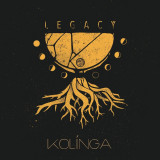
"I wanted to talk about what I know best, which life from my perspective" Rébecca M’Boungou is not unaware of the universal part of her mixed race life so many upheavals, splendors, melancholies, pleasures or pains present in this century.Kolinga tells much more than the musical adventure of a dark-skinned country girl from southwestern France who expresses herself in French, English and Lingala on a music which drawsfrom pop, Congolese rumba, jazz, soul, song, hip hop...
Ever Crashing, the second LP by Kennedy Ashlyn aka SRSQ pronounced ‘seer-skew’, is the summation of a nearly three-year journey of soul searching, songwriting, and self-discovery: “I became myself in the process of making this record.” From the first choral swells of opener “It Always Rains,” it’s clear this collection exists on an ascendant plane, capturing an artist in super bloom. Every song hits like a single, heaving with guitar, synth, strings, live drums, and oceans of Ashlyn’s astounding voice, balletic and illuminated. The tracks gleam with detail, often assembled from as many as 100 separate tracks, all of which were written and played solely by Ashlyn – a feat of world-building as daunting as it is devastating.
For her, however, the process is intrinsic and intuitive – even a matter of survival. Her 2018 solo debut emerged in response to the tragic Ghost Ship fire in Oakland, which took the life of her bandmate and best friend Cash Askew. Similarly, Ever Crashing began materializing in the wake of an ADHD and bipolar disorder diagnosis, prompting a profound personal overhaul. Ashlyn cites such periods of turmoil as a muse of sorts, when “songs begin to echo within me,” gradually reverberating clearer and more vividly. As melodies and arrangements come into focus, the songs act like containers, vessels in which to externalize and exorcise tumultuous emotions, a transformation she memorializes in the climax of “Élan Vital:” “Reeling in and out of deep despair / I am saved by song.”
From swooning end credits balladry (“Dead Loss”) to orchestral slow-burn torch songs (“Abyss”) to dizzying shoegaze heavens (“Someday I Will Bask In The Sun”), the album exudes a sense of aching grandeur and bewildered joy, rich with triumphs hard won and lost loves never forgotten. Melodies pirouette and crescendo in dazzling, elevated acrobatics, somewhere between Kate Bush and The Sundays, threaded with ethereal undercurrents of shimmering shadow. Riffs brood and sparkle over crystalline synths, buoyant bass, and patient percussion, steadily building to holy moments of tidal power, finessed to perfection by producer Chris Coady (Beach House, Slowdive, Zola Jesus). Ashlyn’s is a dream-pop of questing catharsis, vulnerable but orchestral, as dense with hooks as heartbreak.
The album’s title refers to Ashlyn’s recurring sensation of being trapped in the crest of a wave, turned and churned in the surf, mirroring the cycles of self-flagellation and surrender that she battles being bipolar. But as the poetic raptures of these songs attest, her creative process thrives at transmuting trauma into potent music of arresting beauty and hidden divinity. Ever Crashing is an aching, rare work, shaded with gradients of reverie and regret, loss and letting go, “mourning the person I thought I should be, mourning the person I never was.” But even in its pain, Ashlyn’s voice exerts a redemptive gravity, yearning to transform and transcend: “Even on the inside / I’m bracing for impact / I’m waiting to destroy my life / To become sunlight.”