678 records are proud to present an historical concert recording of the legendary ethnic kraut-jazz formation Pork Pie. It is difficult to define the music of Pork Pie. It ranges from rhythmic Jazz-rock and meditative Indian sounds to Brazilian songs, and from acoustic improvisations to electric “space” sounds. Paris, December 1973: Pork Pie was founded by piano player Jasper van 't Hof (then 27 years old) and guitarist Philip Catherine (then 31 years old). They had met up with Charlie Mariano, who was 51 years old then, and whom they knew from his playing with Charles Mingus in the fifties and sixties. He had left America, lived in India for some years and founded his new home in Europe. Jasper and Philip were nervous to ask him if he would like to start a band with them but he immediately accepted the invitation. After some concerts in Holland, Germany and France the group recorded their debut album Transitory in May 1974 in the studio of the legendary engineer Conny Plank for MPS-BASF. It became an immediate success and Pork Pie were subsequently booked for many European jazz festivals. Their legendary concert on the first of November 1974 in the Berliner Philharmonie during the Berliner Jazztage was a milestone in the bands existence. The concert hall was packed to the rafters with 2500 over enthusiastic people who were totally overwhelmed by the amazing live sound of Pork Pie in which each of the five individual musicians took his own part, but never once lost the unique togetherness.
In the past 44 years Jasper van 't Hof always retained fond memories about this special concert. Fortunately, in his personal archive (which was for a while stored under a tarpaulin in his garden!) a master tape was discovered & had survived intact. P-Dog & Zembie (a.k.a. Sander Huibers & Frank Jochemsen) dug it up, played it on a tape machine, were totally blown away by the music and initiated this limited vinyl only release. It comes in a hand silkscreened cover designed by Piet Schreuders.
line up
quête:uni son
Tin Pan Alley is the name given to a collection of New York City music publishers and songwriters who dominated the popular music of the United States in the late 19th century and early 20th century. It originally referred to a specific place: West 28th Street between Fifth and Sixth Avenues in the Flower District of Manhattan. Haruomi Hosono (Apryl Fool, Happy End, YMO), Masataka Matsutoya (music producer, arranger, keyboard player and composer married to popstar Yumi Arai), Shigeru Suzuki (also guitarist in Happy End) and drummer Tatsuo Hayashi (later on in fusion prog-bands such as Aragon and Parachute) took the name for granted. Their 1975 self-titled debut is stil one of the most sophisticated venture in the so called city pop scene.
On her second album Ursgal Mongolian singer Enji creates a unique blend of Jazz and Folk with the thousand-year-old traditions of Mongolian music. Currently based in Munich, her lyrics tell personal stories about unbearable distances, the oddness of being on earth and the simple truths in life.
She's accompanied by Paul Brändle on guitar and Munguntovch Tsolmonbayar on double bass.
Born in Ulaanbaatar, Enji grew up in a yurt to a working-class family. Having always been drawn to music, dance and literature, she initially wanted to become a music teacher with little ambitions to compose or be on stage. A program by the local Goethe Institute sparked her passion for Jazz and eventually led her to become a performing artist. Inspired by the music of Carmen McRae, Ella Fitzgerald and Nancy Wilson, Enji started writing songs of her own, cherishing this newfound means of expression. Ursgal is the first record featuring her original compositions.
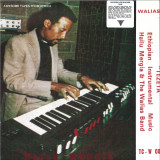
From their genesis as members of the Venus club in-house band in the early 70s, Hailu Mergia and the Walias Band were at the forefront of the musical revolution during an era where modern instruments and foreign styles superseded the traditional fare to become the staple sound of Ethiopia. No one would argue that the Walias were the trailblazing powerhouse of modern Ethiopian music. They were the first band to form independently without affiliation to a theatre house, a club or a hotel; unprecedented and risky as they had to raise all funding for expenses by themselves including buying equipment. They were the first to release full instrumental albums, considered to be commercially unviable at the time. They opened their own recording studio, with band members Melake Gebre and Mahmoud Aman doubling as technical buffs during sessions. They were also the first independent band to tour abroad. In short, they were the pioneers every band tried to emulate; some more successfully than others.
Odds are, any Ethiopian over the age of 35 who had access to TV or radio by the early 90s, will instantly recognize the sound of Walias. What is not a given is, how many would actually identify the band itself. Barely a day went by without hearing the Walias either in the background on radio or as an accompaniment to various programs on TV.
This Tezeta album, the band’s second recording, released in 1975, is one of those that have been impossible to find for nearly three decades. Sourced by Awesome Tapes From Africa and expertly remastered by Jessica Thompson, its unique and funky renditions of standards and popular songs of the day are so quintessentially Walias, flavorful and evocative. Hailu's melodic organ, unashamedly front and center in every track, makes even the complex pieces accessible.
Profoundly engaging; it's an immersive trip down memory lane for those of us getting reacquainted with it, while also an enthralling and gratifying experience for fresh ears.
Virtually unknown recording outside Ethiopia.
Documents Mergia & Walias legendary early period.
Follow-up to reissue of hugely popular seminal Ethiopian instrumentals LP Tche Belew (ATFA012)
Cassette-only, released in 1975 on the band’s in-house label to fund their record store.
Beautifully-rendered instrumentals of classic Ethiopian standards.
• The tracks from the group’s two 1984 EPs together on a swanky 10-inch vinyl LP. Inner bag features liner notes by Kris Needs incorporating new interviews with all three Delmonas and a series of great photos by Eugene Doyen.
• Sarah Crouch, Hilary Wilkins and Louise Baker started singing together as a unique spark of spontaneous magic inextricably linked to their boyfriends in the Milkshakes, then rocking a garage-punk antidote to shiny synth-pop and brash chart stars with a direct lifeline back to rock’n’roll’s original simplicity and wildness. After Billy Childish and Bruce Brand formed the Pop Rivets in 1978, the guys hooked up with Micky Hampshire and Russell Wilkins to found the Milkshakes. Sarah shared a student house with boyfriend Micky plus Billy. After she and Hilary, then dating Russell, sang backing vocals on the Milkshakes’ rollicking Beatles-translated take on the Shirelles’ ‘Boys’, Louise’s arrival turned them into a girl group pretty much by accident.
• “I loved the music the Milkshakes were playing,” Louise recalls. “Loved the small, intimate venues and most of the bands that played with them, especially the Prisoners. I’d gone with the Milkshakes to Belgium and was somehow persuaded to get up on stage and sing something. Next thing I knew, there was some kind of plan to get the three of us in the studio.” At first the three girls were called the Milk-boilers, renaming themselves the Delmonas by the time Ace Records’ Roger Armstrong and Ted Carroll suggested recording the EPs that furnish this collection. “I think we were asked to each think of three songs and turn up,” says Louise. “I mostly listened to music from the 60s: lots of girl groups, Irma Thomas, Dusty Springfield, Bo Diddley, Velvet Underground, Kinks. Bruce had the best record collection; Mel Tormé was in there somewhere and one of my faves. Sarah came up with doing the Doors cover.”
• ‘Comin’ Home Baby’ was written as an instrumental before Bob Dorough added lyrics and Mel Tormé recorded it in 1962. The Delmonas’ finger-clicking, noir-dynamic version kicked off their first EP with authentic-sounding 60s production resonance, iced with mysterioso organ. The Cookies scored a hit with Goffin & King’s ‘Chains’ in 1962, the Beatles’ version providing the Hamburg Star-Club template for the Delmonas’ energised rendition. The first EP, “The Delmonas Volume 1”, rounded off with two songs from the Childish-Hampshire songwriting partnership: ‘Woa’ Now’ and ‘He Tells Me He Loves Me’, the latter recalling the New York Dolls covering the Shangri-Las’ ‘Give Him A Great Big Kiss’, mainly because it has similar chords.
• “The Delmonas Volume 2” opened with Sarah’s idea of covering the Doors’ hit. “We thought, ‘How would the Kinks have played it?’” she affirms. ‘Hello, I Love You’ had got the Doors into hot water with the Kinks’ publishers for its resemblance to ‘All Day And All Of The Night’. The Delmonas home in and highlight that similarity, adding bonkers psychedelic drop and evocative new coda. Their surf-tinged version of the Milkshakes’ ‘I’m The One For You’ is followed by the swampy screaming of ‘Peter Gunn Locomotion’, a cover of a 1963 single by Freddie Starr in his pre-stand-up comedian days as singer with the Midnighters. The set closed with the sultry organ-led vamp of the Milkshakes’ ‘I Want You’, the nearest the Delmonas get to the slowies Sarah helpfully points out they referred to as “shag songs”.
• All these tracks would re-appear on their “Dangerous Charms” album, along with out-takes and recordings from a BBC session, before the original trio splintered, leaving Sarah and Hilary to return for further adventures as Ludella Black and Ida Red. The eight tracks here capture a moment when three fun-loving friends got to live out some musical fantasies and had a blast doing it. 37 years later, it sounds just as contagious.
Superpuma Records is thrilled to announce the release of the much anticipated ‘Live’ release from Daniel Norgren.
This was 2020. A year meant for touring, but instead ended with just a handful
of dates. These are the recordings from that first & final tour. New arrangements and full band performances of songs from the past four Daniel Norgren
releases (Buck, Alabursy, The Green Stone, Wooh Dang). Much of this release is
centered around the unique guitar sound of Daniel Norgren and the comfortable feel of his longtime band. Listen to the songs, notice the guitar, feel his
voice, and find the moment with this superb band.
Live versions of fan favorite songs including ‘Moonshine Got Me’, ‘Howling
Around My Happy Home’, ‘People Are Good’, ‘Black Vultures’, and ‘Everything
You Know Melts Away Like Snow’. Mixed & Mastered in the Superpuma Studio
by Pelle Nyhage & Daniel Norgren.
She is the Moon soothed by the ancient lullaby of the Supernal Mother. An array of brightly coloured pebbles lie at her feet, a diadem of daffodils and dream-bits on her head, and a collection of reasonably priced records on her lap. She turns her gaze towards you, eyes filled with the howl of countless centuries and offers you an LP from her pile.
“Here, shove this on. It’s the new Purplehands. It’s class like.”
The record in question is ‘Intimate Fades’, an emotive meander through zones of bleepy ambient techno by way of electro, passing by sonic monuments to the likes of Golding and Rutter as it floats from A to B. In some distant, alternate universe the tracks on this LP soundtrack some 8-bit hero’s journey, a quest compelled by a sombre determination and Purplehands’ stylized sonic ruminations.
It is but the first star in an unfolding cosmos, mapped out to us by the High Priestess in her infinite wisdom.
Produced by long-time friend Cate Le Bon, ‘Boy from Michigan’ is Grant’s most
autobiographical and melodic work to date. Grant stopped being a boy in Michigan aged
twelve, when his family moved to Denver, Colorado, shifting rust to bible belt, a further
vantage point to watch collective dreams unravel. Across 12 tracks, Grant lays out his
past for careful cross-examination.
In a decade of making records by himself, he has playfully experimented with mood,
texture and sound, all the better for actualizing the seriousness of his thoughts. At one
end of his musical rainbow he is the battle-scarred piano-man, at the other a robust
electronic auteur. ‘Boy from Michigan’ seamlessly marries both.
With Le Bon at the helm, Grant pared back his zingers, maximizing the emotional impact
of the melodies. A clarinet forms the bedrock of a song. One pre-chorus feels lifted from
vintage Human League. There is a saxophone solo.
‘Boy from Michigan’ ultimately swings between ambient and progressive, calm and livid.
The album’s narrative journey opens with Grant at his artistic prettiest, three songs drawn
from his pre-Denver life (the Michigan Trilogy, as Grant calls them): the title track, ‘The
Rusty Bull’ and ‘County Fair’. Each draws the listener in to a specific sense of place,
before untangling its significance with a rich cast-list of local characters, often symbolizing
the uncultivated faith of childhood.
Elsewhere, tracks like ‘Mike and Julie’ and ‘The Cruise Room’ offer an affecting plunge
deep into Grant’s late teenage years in Denver, while the midpoint of the album is
highlighted by ‘Best In Me’ and ‘Rhetorical Figure’, a pair of skittish, scholarly dance tunes
that build on the lineage of Grant’s electropop heroes, Devo.
Childhood as a horror narrative is the theme of ‘Dandy Star’, which observes a tiny Grant
watching the Mia Farrow horror movie ‘See No Evil’ on an old family TV set and finally, on
‘The Only Baby’, Grant removes his razor blade from a pocket to cleanly slit the throat of
Trump’s America, authoring a scathing epitaph to an era of acute national exposition.
Though he has lived in Iceland since 2011 - the same year he was also diagnosed HIVpositive - Grant spent his childhood and formative years in the US and maintains US
citizenship. Growing up, Grant was subjected to a deeply ingrained hatred of anyone
perceived as homosexual at school. Following the demise of his first band The Czars,
Grant left music entirely for over five years, only to achieve greater success as a solo
artist (his acclaimed 2015 solo LP ‘Grey Tickles, Black Pressure’ went Top Five in the
UK). Grant has sold out Royal Albert Hall, performed at Glastonbury, Latitude and more
and his song ‘Snug Snacks’ was featured on Pitchfork’s Songs That Define LGBTQ Pride.
BBC Radio 6 host Mary Anne Hobbs described Grant’s music: “Most songwriting, even if
it’s based on a true story ... is embellished in some way. But John's lyrics - they’re so true
they might as well be written in blood.”
Deluxe 2LP pressed on 140g black vinyl in inner sleeves with paintings by Gil Corral, 2
unique prints, 36-page photo booklet, pull out lyric sheet and digital download card, all
housed in a beautiful black velvet O-Card gatefold sleeve with Glitter Spark Eye.
Produced by long-time friend Cate Le Bon, ‘Boy from Michigan’ is Grant’s most
autobiographical and melodic work to date. Grant stopped being a boy in Michigan aged
twelve, when his family moved to Denver, Colorado, shifting rust to bible belt, a further
vantage point to watch collective dreams unravel. Across 12 tracks, Grant lays out his
past for careful cross-examination.
In a decade of making records by himself, he has playfully experimented with mood,
texture and sound, all the better for actualizing the seriousness of his thoughts. At one
end of his musical rainbow he is the battle-scarred piano-man, at the other a robust
electronic auteur. ‘Boy from Michigan’ seamlessly marries both.
With Le Bon at the helm, Grant pared back his zingers, maximizing the emotional impact
of the melodies. A clarinet forms the bedrock of a song. One pre-chorus feels lifted from
vintage Human League. There is a saxophone solo.
‘Boy from Michigan’ ultimately swings between ambient and progressive, calm and livid.
The album’s narrative journey opens with Grant at his artistic prettiest, three songs drawn
from his pre-Denver life (the Michigan Trilogy, as Grant calls them): the title track, ‘The
Rusty Bull’ and ‘County Fair’. Each draws the listener in to a specific sense of place,
before untangling its significance with a rich cast-list of local characters, often symbolizing
the uncultivated faith of childhood.
Elsewhere, tracks like ‘Mike and Julie’ and ‘The Cruise Room’ offer an affecting plunge
deep into Grant’s late teenage years in Denver, while the midpoint of the album is
highlighted by ‘Best In Me’ and ‘Rhetorical Figure’, a pair of skittish, scholarly dance tunes
that build on the lineage of Grant’s electropop heroes, Devo.
Childhood as a horror narrative is the theme of ‘Dandy Star’, which observes a tiny Grant
watching the Mia Farrow horror movie ‘See No Evil’ on an old family TV set and finally, on
‘The Only Baby’, Grant removes his razor blade from a pocket to cleanly slit the throat of
Trump’s America, authoring a scathing epitaph to an era of acute national exposition.
Though he has lived in Iceland since 2011 - the same year he was also diagnosed HIVpositive - Grant spent his childhood and formative years in the US and maintains US
citizenship. Growing up, Grant was subjected to a deeply ingrained hatred of anyone
perceived as homosexual at school. Following the demise of his first band The Czars,
Grant left music entirely for over five years, only to achieve greater success as a solo
artist (his acclaimed 2015 solo LP ‘Grey Tickles, Black Pressure’ went Top Five in the
UK). Grant has sold out Royal Albert Hall, performed at Glastonbury, Latitude and more
and his song ‘Snug Snacks’ was featured on Pitchfork’s Songs That Define LGBTQ Pride.
BBC Radio 6 host Mary Anne Hobbs described Grant’s music: “Most songwriting, even if
it’s based on a true story ... is embellished in some way. But John's lyrics - they’re so true
they might as well be written in blood.”
Deluxe 2LP pressed on 140g black vinyl in inner sleeves with paintings by Gil Corral, 2
unique prints, 36-page photo booklet, pull out lyric sheet and digital download card, all
housed in a beautiful black velvet O-Card gatefold sleeve with Glitter Spark Eye.
Imperium Droop brings two mavericks of sweeping exploration together into new avenues of musical expression. Kid Millions and Jan St. Werner explore a liminal space between improvisation and composition, a fluid yet defined sound-space, founded on the unique chemistry of their friendship and pushing into the future. Kid Millions stands as one of the most sought after drummers and improvisers in NYC, known for his work as the drummer for Oneida, his expansive solo work as Man Forever, as well as collaborations and performances with the likes of Laurie Anderson, Philip Glass, Royal Trux, Boredoms, White Hills, and Spiritualized. Regardless of who he's working with Kid Millions radically redefines the drums as an instrument. Jan St. Werner has consistently remained at the vanguard of electronic music. In his work as one half of the visionary duo Mouse On Mars, as well as his acclaimed solo work both as a composer and sound artist, and in collaborations with The Fall's Mark E Smith, Oval's Markus Popp, Stereolab, and The National St. Werner constantly pushes the limits of recorded sound. Together, Millions and Werner have crafted a monument of unpredictable beauty built on breathless forays into the unknown. Werner's application of a seemingly infinite arsenal of textures unleashes colorful swaths of energy. Mats Gustaffson joins Werner on the maximalist "Color Bagpipes," unleashing torrents of swiveling melody and breathy clicks over the exponential thunder of Millions' drum kit. Pieces like "Dark Tetrad" and "Astral Stare" demonstrate the duo's mastery of space and surprise. Dark flutters flow in slow pulses across "Apotropaic" where erratic swirls of sound twist and mutate on "Sorrows and Compensations," unified as a single force by the overwhelming diversity of sounds. Millions' drums effortlessly rides each wave of Werner's prismatic deluges and channels their energy into dynamic movements. Through his singular prowess, Millions' tireless rhythms and subtle gestures mirror Werner's boundless textural palette and drive each piece towards transcendence. On Imperium Droop, Kid Millions and Jan St. Werner have combined their powers into an incomparable work of gripping and intrepid sonic fluctuations.
LTD COLOUR[29,79 €]
Classic black LPs housed in gatefold w/ special canvas cardboard stock and silver hot foil! Nordic pop diva KARIN PARK of ÅRABROT adds her ethereal, mournful voice and keys to the primordial sound of legendary electronic pioneer LUSTMORD for this sublime and poignant collaboration. ALTER is a ritual of our times. On the pair's frst collaborative work, the nine tracks that make up ALTER are every bit as heart-wrenching as they are terrifying, mining new sonic territory, it is a fascinating study of light and shade that delves deep into vast uncharted darkness. Their ability to create atmosphere on the album opener "Hiraeth" is second to none, perfectly assembling a harrowing backdrop for Park's lilting sound of longing. From there, Park's vocals add all of the emotional depth and power found in names like Kate Bush, Maynard J Keenan and Elizabeth Frasier, perfectly playing against Lustmord's waves of dark drama and creating a wholly unique record that recalls Dead Can Dance, Massive Attack and Portishead at their greatest. Considering Park's credentials, it might be surprising that a collaboration with Lustmord would ft so seamlessly. Utilizing a sound comprised of elements of industrial, synth pop and more, the celebrated Swedish solo artist and member of Norwegian rock band Årabrot utilizes experimentation in her work, blazing trails and bringing to mind the work of her peers The Knife, Scott Walker, Robyn, Depeche Mode and Burial with her darkly-rich compositions. Multiple winner of Norway's Spellemann award, Park co-wrote the Norwegian entry for the 2013 Eurovision, fnishing fourth overall. But it is the sensibility of the sacred music of her youth that Park adds to ALTER, contributing a powerful vocal that guides the listener through the cavernous, mystical depth of their collaborative work. "Lustmord is the Gustave Doré of music", Karin Park ofers pensively. "Painting magical pictures with a sound that is so vast, it gives space for your own imagination." Brian Williams grew up in North Wales, beginning his musical career as Lustmord in 1980 and becoming a pivotal fgure and pioneer in the early industrial music scene in the UK. A former member of SPK during arguably their most crucial era, Williams went on to work with Throbbing Gristle members Chris & Cosey and appeared on early albums by Current 93 and Nurse With Wound amongst others. After relocating to Los Angeles in 1993, Williams worked on dozens of motion picture soundtracks including The Crow, Underworld and Paul Schrader's First Reformed, as well as on several video game, television scores and solo albums. Williams has also contributed to and collaborated with artists as varied as the Melvins, Clock DVA, Jarboe, John Balance of Coil, Clock DVA, Paul Haslinger (Tangerine Dream), Wes Borland (Limp Bizkit), Puscifer and more, including Grammy Award-winners Tool from their much acclaimed eforts 10,000 Days and Fear Inoculum. FOR FANS OF Lustmord, Årabrot, Dead Can Dance, Hans Zimmer, Sunn O))), Fever Ray, Chelsea Wolfe, Boards of Canada, Heilung, Zola Jesus, Swans.
2LP[25,59 €]
Limited coloured LPs housed in gatefold w/ special canvas cardboard stock and silver hot foil! Nordic pop diva KARIN PARK of ÅRABROT adds her ethereal, mournful voice and keys to the primordial sound of legendary electronic pioneer LUSTMORD for this sublime and poignant collaboration. ALTER is a ritual of our times. On the pair's frst collaborative work, the nine tracks that make up ALTER are every bit as heart-wrenching as they are terrifying, mining new sonic territory, it is a fascinating study of light and shade that delves deep into vast uncharted darkness. Their ability to create atmosphere on the album opener "Hiraeth" is second to none, perfectly assembling a harrowing backdrop for Park's lilting sound of longing. From there, Park's vocals add all of the emotional depth and power found in names like Kate Bush, Maynard J Keenan and Elizabeth Frasier, perfectly playing against Lustmord's waves of dark drama and creating a wholly unique record that recalls Dead Can Dance, Massive Attack and Portishead at their greatest. Considering Park's credentials, it might be surprising that a collaboration with Lustmord would ft so seamlessly. Utilizing a sound comprised of elements of industrial, synth pop and more, the celebrated Swedish solo artist and member of Norwegian rock band Årabrot utilizes experimentation in her work, blazing trails and bringing to mind the work of her peers The Knife, Scott Walker, Robyn, Depeche Mode and Burial with her darkly-rich compositions. Multiple winner of Norway's Spellemann award, Park co-wrote the Norwegian entry for the 2013 Eurovision, fnishing fourth overall. But it is the sensibility of the sacred music of her youth that Park adds to ALTER, contributing a powerful vocal that guides the listener through the cavernous, mystical depth of their collaborative work. "Lustmord is the Gustave Doré of music", Karin Park ofers pensively. "Painting magical pictures with a sound that is so vast, it gives space for your own imagination." Brian Williams grew up in North Wales, beginning his musical career as Lustmord in 1980 and becoming a pivotal fgure and pioneer in the early industrial music scene in the UK. A former member of SPK during arguably their most crucial era, Williams went on to work with Throbbing Gristle members Chris & Cosey and appeared on early albums by Current 93 and Nurse With Wound amongst others. After relocating to Los Angeles in 1993, Williams worked on dozens of motion picture soundtracks including The Crow, Underworld and Paul Schrader's First Reformed, as well as on several video game, television scores and solo albums. Williams has also contributed to and collaborated with artists as varied as the Melvins, Clock DVA, Jarboe, John Balance of Coil, Clock DVA, Paul Haslinger (Tangerine Dream), Wes Borland (Limp Bizkit), Puscifer and more, including Grammy Award-winners Tool from their much acclaimed eforts 10,000 Days and Fear Inoculum.
Los Angeles-based singer, songwriter, and producer Tilian releases his brand-new full-length album, Factory Reset, via Rise Records:
Earlier this week, he shared his latest single “Caught in the Carousel” along with a new visualizer. They psychedelic visual emulates the introspective and thought-provoking lyrics of the song, “Am I good enough?”
Factory Reset is both highly personal and wholly universal. Tilian began writing the album just a few weeks after the pandemic forced California into lockdown. “I was searching for meaning in isolation and found it in creating this album,” Tilian shares about the process. He decided to write, record, and produce the album himself, eventually remotely bringing in drummer/frequent collaborator Kris Crummett to help button it up.
Having full creative control allowed Tilian to experiment more than ever, and truly be himself in the process. “I wanted to make the album that I want to hear. ‘What would be my favorite band?’ as opposed to, ‘What is everyone’s favorite band?’” This resulted in his most thrillingly eclectic work to date: a falsetto-laced brand of alt-pop that spans everything from trippy psychedelia and heavy prog riffs to warped hip-hop beats and dembow grooves.
Recently, Tilian released two other singles from the album – “Anthem” and “Dose.” These were first offerings since the release of his 2018 album The Skeptic, which debuted on the Billboard charts at #1 Alternative New Artist, #2 Top New Artists, and #5 Alternative. To date, the project has garnered over 40M global streams and two music videos with over 1M views each, proving the excitement and potential for the burgeoning alt-pop artist. More recently, he collaborated with Marigolds+Monsters and Travis Barker on the exciting single “Falling out of Rhythm.”
Finnish producer Sasu Ripatti has been torching the fringes of electronic music since the mid 1990s, a process that's found him melting a wide spectrum of musical innovation into his cult brand of experimental minimalism. From the skeletal jazz deconstructions of his 1997 Vladislav Delay debut "The Kind of Blue EP" to the blurred dub techno variations of 2000's "Multila" and 2012's "Kuopio", Ripatti has betrayed a restless, voracious passion for sound. "Fun is Not A Straight Line" builds on this impressive legacy, retaining his sonic signature and adding a playfulness that harks back to his beloved deep house smash, Luomo's "Vocalcity". After becoming frustrated by the inflexibility of the 4/4 house idiom, Ripatti found solace in rap and bass music's rhythmic complexity and anarchic structures. "I bought Nas's 'Illmatic' when it came out in '94 and have more or less been listening to rap since," he explains. "I'm not really sure why now, but that rap influence wanted to come through." Chopped rap vocals, booming subs and gritty, neck-snapping beats are the primary colors of "Fun is Not A Straight Line", painted into the foreground and blended into an immediately recognizable rhythmic palette. The tracks cross into the same continuum as Chicago footwork, with stuttering samples that build thick walls of bass and flurries of wordless rhymes amid a narcotic haze of beats. On 'monolith', Ripatti's love of New York rap is in full focus as he obscures chipmunked vocals with tight, crackling percussion that disintegrates into rolling kicks; 'speedmemories' is even more upfront, channeling the raw sunshine energy of So So Def electro into rhythms that are powerfully skeletal. Elsewhere, syrupy Southern-fried TR-808 bass womps are tangled with molasses-slow vocals on 'videophonekitty', fuzzed into textured, dissociated ambience. Since the beginning, Ripatti has tried to find a balance between his experimental urges and drive to create more universal music. As his more recent albums have traveled into darker, more extreme realms, he has craved something different for balance. By drawing a crooked line between DJ Premier, DJ Screw and DJ Rashad, Sasu Ripatti has emerged with the most accessible and unashamedly enjoyable album he's produced in years.
Tape
It might be easy to assume that the distinctly focused compositional voice unveiled on Rose Bolton's The Lost Clock is the product of its creator's rigorous, almost hermetic dedication to her own particular aesthetic universe. A quick survey of Bolton's artistic career, however, reveals that her carefully sculpted approach to abstract electronica has been forged through a longstanding engagement with a wide range of intertwining creative activities.
This album—coming out on Important Records' cassette imprint, Cassauna—demonstrates both the Toronto-based composer's unique mastery of colour and her gift for breathing a tactile, organic quality into synthetic landscapes. Bolton's distinctive sensibility is akin to that of a painter—every hue has been carefully mixed so as to imbue its accompanying gesture with its own life and personality. This tangible dimensionality her electronic work assumes, however, can be traced back to the work Bolton has been doing since the 1990's. She has produced a large and varied catalogue of work that includes pieces for solo performers, chamber ensembles, orchestra, electronics, voice, and to accompany installations and films. A number of her works reside in several of these zones simultaneously, such as Song of Extinction, an ambitious collaboration between herself, filmmaker Marc de Guerre, poet Don McKay, and multiple live ensembles, that was mounted in an abandoned power station for Toronto's Luminato Festival.
This quasi-instrumental vitality isn't the only feature of The Lost Clock that reflects Bolton's diverse artistic practice. It can also be heard within the structural realm. Each of the collection's four tracks trace a patient unfolding and favour a certain roundness of timbre, even as finer details begin to fidget along the perimeter of the music. As with her writing for the concert hall, Bolton doesn't shy away from the evocative here, yet she doesn't pursue this poignancy through conventional, direct or quasi-narrative means. Her compositions lead the listener gradually through their impressionistic sonic scenery, but neither the path they take nor their ultimate destination are at all predictable. The ostensible gentleness each piece exudes dissolves as dissonances slowly insinuate themselves, obscure textures writhe just out of earshot, percussive lattice work materializes, or as the overall blend begins to exert a heavier weight. Her lucid-dream vision of form functions in tandem with her acute micro-level attentiveness to engender a vivid and elusive soundworld that resists classification.
Over more than two decades Rose Bolton has been garnering acclaim and enthusiasm from audiences and major collaborators alike. Last year, her brooding string quartet The Coming Of Sobs was nominated for Classical Composition of the Year at the JUNO Awards, following earlier accolades such as SOCAN Awards for Young Composers, and the Canadian Music Centre's Norman Burgess Fund. Her music has been commissioned by the likes of the CBC, stalwart experimental music festival the Sound Symposium, as well as key interpreters and ensembles such as percussionist David Schotzko, accordionist Joseph Petric the Esprit Orchestra, Continuum, Arraymusic, the Kitchener-Waterloo Symphony, and guitar quartet Instruments of Happiness (led by Tim Brady). Together with Marc de Guerre, she produced an 8-speaker sound and video installation for Toronto's Nuit Blanche Festival. She's also been featured by the likes of revered pianist Eve Egoyan, The Vancouver Symphony, L'ensemble contemporain de Montréal, The Music Gallery, and AKOUSMA, while appearing in concert alongside the likes of Jerusalem in My Heart (Constellation Records), Tanya Tagaq, and Francis Dhomont. Bolton is also a respected film composer, notably contributing music to the highly regarded documentary Anthropocene: The Human Epoch (co-directed by Jennifer Baichwal, Nicholas de Pencier and Edward Burtynsky).
As a performer, she variously employs electronics, violin, and viola. Parallel to her engagement with exploratory approaches, she's invested in the fiddle traditions of the British Isles, and various Canadian regions. She teaches this repertoire at the Royal Conservatory of Music. Bolton has also performed with Rhys Chatham, Owen Pallett, opened for Charlemagne Palestine, and appears on recordings by the likes of Chatham and Aidan Baker. In 1999 she joined the Canadian Electronic Ensemble, whose fifty-years together make them the world's longest-running live-electronic music group. In February 2020, the CEE held a residency and provided guest lectures at Carnegie Mellon University's music department. Bolton has also led workshops at the Banff Centre, also founded the SOCAN/ Moog Audio-sponsored program EQ: Women in Electronic Music, which worked to foster community and mentorship among (trans/cis) women and non-binary individuals.
Phobophobes new album Modern Medicine follows the band’s critically acclaimed debut album Miniature World, released 2018 via Ra Ra Rok Records, which received the accolade of being 6Music’s ‘Album of the Day’ following heavy support from Lauren Laverne, Steve Lamacq and Iggy Pop. Press coverage was a who’s who of tastemakers clambering to define their undefinable sound ….”dark and dreamy” (DIY), “gothic” (Clash), “unique warped pop” (Best Fit); and live the band were invited to tour with Killing Joke including a date at London’s Roundhouse, and a headline slot at the Rise Stage at Green Man Festival.
All songs on Modern Medicine were written and arranged by Phobophobes** except ‘Hallow Body Boy’ which was written and arranged by Phobophobes and Jessica Winter. The album was produced by Phobophobes and recorded at El mirador Studios, Andalusia, Spain during the summer of 2018, mixed by Dave Emery at ‘Assault and Battery,’ and mastered by Nick Watson at Fluid Mastering.
**Phobophobes current line-up consists of original members Jamie Bardolph Taylor (guitar, vocals), Jack Hussey (guitar) and Chris Olivares Chandler (keyboard, vocals), alongside new members Daisy Smith (bass) & Lisa Martin (drums). Due to recent line-up changes the latter two musicians do not feature on Modern Medicine, instead credits include Nathan Ridley (drums/backing vocals) and Elliott Nash (lap steel/baritone guitar/keyboards/percussion), with additional appearances from Christo Mccracken (guitar/effects), Gamaliel Traynor (cello/violin) and Jessica Winter (keyboards on ‘Holly Body Boy’).
JP Harris has a secret: his name is actually “Squash.” Long before Harris
became a well regarded honky-tonker, he used his childhood nickname
while playing archaic “old-time” American tunes at underground fiddlers’
gatherings, engrossed in this punkish folk music world.
‘Don’t You Marry No Railroad Man’, his debut recording of traditional music
under the moniker JP Harris’ Dreadful Wind and Rain, features ten tracks spanning the breadth of American old-time repertoire. Harris wades between ancient ballads that traveled from the British Isles to Appalachia like “Barbry Ellen,” to droning banjo ditties such as Hobart Smith’s entrancing “Last Chance,”
here played on one of Harris’ coveted homemade banjos. Harris also works as a
serious carpenter which adds a unique authenticity to his versions of the classic
“House Carpenter” and lesser known “The Little Carpenter.”
Alongside Harris’ haunting vocals, the album prominently features the lowtuned fiddle and harmony singing of his longtime friend and Old Crow Medicine Show member Chance McCoy, who produced the record at his West Virginia studio in an old barn. On this sparse and arresting recording, Harris isn’t
mining his roots as a marketing pitch, he has the chops to back it up. In fact,
this collection of songs made him who he is today. Welcome home “Squash.”
Operation: Mindcrime is regarded as one of the greatest concept metal albums of all time. The band’s third album, originally released May 3rd 1988, is based around Nikki, a recovering drug addict, who becomes disillusioned with a corrupt society and joins a revolutionary group to assassinate political leaders. Operation: Mindcrime was produced by Peter Collins (Bon Jovi, Rush, Alice Cooper) and was recorded, mixed and mastered digitally on a Sony 24-track digital tape machine. It was certified platinum in 1991 in the US and was ranked in the Top 100 Metal Albums Of All Time by both Kerrang! and Billboard magazines. Available on multi-formats, this new version was remastered at Abbey Road Studios and brings together all the available recordings to tell the story of this remarkable album. The deluxe version, housed in a 10″ x 10″ box, is the final word on this exceptional album. It also contains a DVD which features the accompanying promotional videos and a live performance of the album. The expanded booklet features new sleeve notes by noted journalist Alex Milas who spoke with Geoff Tate about the making of the album and the concept behind it.
"Empire was originally released on 20th August 1990, and is the band’s most commercially successful album to date, reaching triple platinum status.
It featured the top 10 hit, “Silent Lucidity”, which was nominated for 2 Grammys, and “Jet City Woman”. The follow up to the groundbreaking Operation: Mindcrime, the album was produced by Peter Collins, and recorded in Washington and Vancouver in the spring of 1990. Empire features brilliant and intelligent lyrics and songwriting complimented by incredible musicianship, with the songs ranging from beautiful ballads, strong melodic rockers, and classic heavy fist pumpers. This version, newly remastered at Abbey Road Studios, brings together all the available recordings to narrate the story of this remarkable album. It also contains a DVD which features the accompanying promotional videos and a live performance of the album. The deluxe version features new sleeve notes by noted journalist Alex Milas who spoke with Geoff Tate at length, discussing the making of the album and the concept behind it, and is housed in a 10″ x 10″ box, providing the definitive package."
Transmeridian is the first album from Departure Lounge (ex-Bella Union) in 19 years. It features all four original members plus a guest appearance from legendary REM guitarist, Peter Buck, one of many long-standing admirers of a band that embodied a lost age of reflective, experimental pop music coming to the fore at the turn of the Millennium alongside The Beta Band, Tunng, Boards Of Canada and Gorky’s Zygotic Mynci.
The surprise new album, named after the defunct ‘golden age of aviation’ cargo airline for which singer/guitarist Tim Keegan’s dad was chief pilot, is released on Violette Records (formed by Michael Head (Shack, The Pale Fountains) and Matt Lockett ) on digital and vinyl formats on Fri 26 March 2021.
Originally scooped up by Simon Raymonde’s Bella Union label (labelmates with John Grant’s Czars) following the self-funded release of their debut album Out Of Here (1999), Departure Lounge’s sophomore outing, Too Late To Die Young (2002) was equally acclaimed and was honoured as the first ever Album Of The Week on the emergent BBC 6 Music. The band toured extensively in the UK, Europe and the US, including outings with The Go-Betweens, Morcheeba, Paul Heaton and Robyn Hitchcock, peers whose stylistic contrasts reflect the eclectic nature of Departure Lounge themselves.
Calling a halt in late 2002, citing family and geographical reasons (drummer Lindsay lives in Nashville, where their second album Jetlag Dreams (2001) was recorded), the four members remained firm friends and occasional collaborators, before reuniting in late 2019 for shows at The Green Door Store, Brighton and The Lexington, London, ostensibly to support the digital reissues of their first three cult-classic albums. With no plans other than to make some new music, the next day they set off for Middle Farm Studios, Devon.
Tim Keegan (vocals/guitar), Chris Anderson (lead guitars/keyboards/bass), Lindsay Jamieson(drums/keyboards) and Jake Kyle (bass/guitar/drums) channelled their evident joy at being back together into a complete 13-track album, largely conceived and recorded in just one 24-hour session in the company of studio owner and co-producer, Peter Miles. Ranging from soulful Americana to piano and mellotron-fuelled melancholia via pastoral musings on the nature of post-youth and eerie Spaghetti Western-tinged instrumentals, the next leg on the Departure Lounge journey is a multi-mood expression of pure artistic freedom.
The ‘leak’ of instrumental track Al Aire Libre (remixed by Parisian groovemeister Kid Loco) in October 2020 gave little away as to what fans could expect from a new Departure Lounge record, the track going gracefully everywhere and nowhere on a whistled Latino breeze. First single proper, Mercury In Retrograde, covered in the twinkling lights of a music box Casio CZ101 melody, turned the clock back - this was an old live favourite that never got past the studio door. Unfinished business brought to a happy conclusion, the single returned Keegan’s honest and distinctive lyrical voice back to British music at just the time listeners needed it.
It was an emotional thread, rather than one musical style, which gave the first three Departure Lounge albums their coherence. The songs told the story of the band. Transmeridian has the same sense of deeply connected musical energy. The purring, campfire acoustica of Timber and So Long bear no obvious resemblance to the ethereal, end-of-the-evening, piano-led interlude Paging Marco Polo, whilst the quasi-glam stomp of Mr Friendly would normally have no business sharing space with the strange, spacey Gurnard Pines (named after an abandoned holiday camp on the Isle Of Wight). Yet the journey’s ebb and flow, accelerations and pauses make for compelling, grown-up listening. Australia, showcasing the chiming Rickenbacker 12-string of Athens, GA’s finest guitar slinger, leaves no doubt that Departure Lounge’s pop sensibilities also remain solidly intact.
These four friends from different musical backgrounds came together originally with the stated aim of ‘creating music to soothe the troubled soul’. Citing their love of (and placing on record their debt to) influences including Robert Wyatt, Nick Drake, Talk Talk, Lou Reed, Arvo Pärt and Cocteau Twins, the band’s diversity of taste is reflected in the music they create.
Transmeridian is only the second full-length LP released by Violette Records, formed by Michael Head (Shack, The Pale Fountains) and Matt Lockett as a platform for Head’s work and developing into a respected independent label as well as multi-disciplinary event organiser, drawing in outsiders working in music, literature, art and design. The label continues to host live events whenever possible and recently initiated an ELP (halfway between and EP and an LP) vinyl series, putting out acclaimed releases by The Pistachio Kid and Studio Electrophonique.