
13
nicht am Lager
Bestelle jetzt und wir bestellen den Artikel für dich beim Lieferanten.
15,92 €
Bestelle jetzt und wir bestellen den Artikel für dich beim Lieferanten.

You Can Can is an echoed affirmation, an album which traces song forms around silence, field recordings, and degraded analog memories. This is folk music transmogrified and mutated, as if recorded and reconstructed in Pierre Schaffer’s GRM studio.
Not your typical Mariposa folk duo, the group is comprised of Toronto avant-music scene stalwarts, vocalist Felicity Williams (Bernice, Bahamas) and bricolage artist and synthesist Andrew Zukerman (Fleshtone Aura, Badge Epoch). The album feels like a somnambulant conversation, fragmented and half-remembered with Williams’ vocals traveling through a landscape of field recordings and Zukerman’s saturated concrète topographies. It is an electro-acoustic assemblage, both analog and digital, comprised of air, electricity, minerals, wood, and water. Although the album nods towards traditional forms of folk and musique concrète (if at this point it can be called a traditional form), it is outwardly and inwardly contemporary; non-linear, citational, opaque, and sui generis. In a way it feels like a sonic index of the narrative experiments found on the infamous Language school-related publisher The Figures, in the work of Lyn Hejinian, Clark Coolidge, and Lydia Davis. In the musical continuum, the album picks up where Linda Perhacs left off in the early 70’s—explored by Gastr Del Sol in the ‘90s—a convergence of rural acoustic idioms and urban avant-electronics. This is country music for the discerning cosmopolitan citizen of the 21st Century.
RIYL: Luc Ferrari, Brannten Schnüre, William Basinski, Oval, Eric Chenaux, Emmanuelle Parrenin About Everything In Time and Failure Figures, Felicity Williams says:
Everything In Time is indebted to the language of Brazilian author Clarice Lispector (as translated by Alison Entrekin). Drawing on insights from psychoanalysis, we trace the roots of melancholy to render them available to consciousness; words from the ghostly realm of the transpersonal filter through dreams and shine a beam of light onto a lone trillium in a forest at night. Other influences include the experience of not knowing, of being subject to a gestation outside of one’s control. This is an ode to the power of naming to obliterate, to set free.
Failure Figures is a meditation on the radical contingency of reality and the vicissitudes of the will. With Slavoj Zizek as my guide (think: “Hegel for dummies” - I’m the dummy in this scenario), I wander through the valley of the shadow of death, and take heart. The last verse refers to an experience I had recording at a studio in Brussels. I was singing in French, with which I have some fluency, and the producer was complaining to the artist whose song it was that my delivery was not convincing. Thinking I was out of ear shot, he said in French, “c’est comme elle n'est pas là”; I was pronouncing the words correctly, but I failed to express anything. So what or whom is responsible for conveying meaning, if not the form of the word itself? And if the connection between meaning and form is broken, how do we fix it?
Gratitude to Thom Gill (guitar) and Daniel Fortin (bass) who joined us on the recording of Failure Figures. Thanks as well to my old roommate Christopher Willes, who unwittingly left behind his hand bells deep in the hall closet. We unearthed them by accident, and the bells became an important sound element. Thanks to other past roomies Robin Dann and Claire Harvie, whose childhood piano and guitar respectively still reside with us, and were used in the recording. Field recordings were made in Toronto, Canada and Celestún, Mexico in 2020.
Bei uns am Lager und sofort versandfertig

The chronicle continues, deepening the legend… Out Under Streets serves as a milestone in the profuse and vastly intangible catalog of Bug Bus Piano – a decade into the cult project's existence, this album stands as its first LP. But Bug Bus Piano, the originator of Hard Ambient, is perhaps better understood as an outlook or world unto itself. At any given moment it is a spirited performance of hyper-ambivalence, a refuge and processing center for personal history, populist strife and achievement, a besieged utopian commune. Out Under Streets is the newest export of this philosophy and perhaps the finest point of entry yet into all that is Bug Bus Piano. Far from didactic, the journey underground and back again concept which structures the record serves as a vehicle to consider what lies beneath the potholes in our pavement and centuries of cracked sidewalk. Every demolition or collapse and each successive failure at putting the pieces back together again. Having received the blessing of Carriswheel, Stern Records is proud to inaugurate itself with a major handmade ambient statement by Bug Bus Piano.
erscheint voraussichtlich am 24.01.2025

Limited White VInyl Version
Solo Paraiso will be available on vinyl for the first time in 10 years and Digitally for the first time.
Solo Paraiso is Molly Nilsson’s mini-album from 2014 recorded during a 6 month residency in Buenos Aires, Argentina.
For it’s 10th Anniversary, Night School and Dark Skies Association is making the most sought after long player in Molly Nilsson’s catalogue available again on a new format with new artwork designed by Molly Nilsson and Jonas Raam.
Pop music rarely comes as honest and heartfelt as when delivered by Molly Nilsson. Having traveled around the world singing to the romantic and the doomed, Nilsson found herself in the Summer of 2014 in Buenos Aires. Inspired by the crumbling urban landscape and the heavy hearts that populate it, Sólo Paraíso is not only an ode to a specific time and space but a musical novella that meditates on youth, idealism and belonging. The soundtrack to a summer you thought you had when looking over bleached out old photo albums.
Sólo Paraíso has the feel of a bridge between the more lo fi, first phase of Nilsson’s career and the expanded sonic scope she has employed in the last decade. Recorded quickly, with instinct and feeling of paramount importance over rectitude or perfection, amongst the eight tracks of this mini LP are some of the biggest fan favourites of her career. As with all Molly Nilsson songs, each of these tracks is bursting with perfect moments. Opener Summer Cats sails over sun-kissed piano chords, chasing the sun eternally as it dips over the horizon, while show-stealer Blue Dollar draws parallels between the doomed Argentine economy and the failure of a love affair. It’s the most feel-good, romantic peon to an economic downturn you’ll ever hear. As Molly says “why is it so damn easy to break all the things that are so damn difficult to make?”
Using cracked synths, shimmering piano, heat-stroked drum machines and above all her direct, from-the-heart vocal delivery, Nilsson’s songs have never been so precise and on-point. For fellow doomed romantics, Sólo Paraíso is the perfect sound for an imperfect Summer.
Bestelle jetzt und wir bestellen den Artikel für dich beim Lieferanten.

Solo Paraiso will be available on vinyl for the first time in 10 years and Digitally for the first time.
Solo Paraiso is Molly Nilsson’s mini-album from 2014 recorded during a 6 month residency in Buenos Aires, Argentina.
For it’s 10th Anniversary, Night School and Dark Skies Association is making the most sought after long player in Molly Nilsson’s catalogue available again on a new format with new artwork designed by Molly Nilsson and Jonas Raam.
Pop music rarely comes as honest and heartfelt as when delivered by Molly Nilsson. Having traveled around the world singing to the romantic and the doomed, Nilsson found herself in the Summer of 2014 in Buenos Aires. Inspired by the crumbling urban landscape and the heavy hearts that populate it, Sólo Paraíso is not only an ode to a specific time and space but a musical novella that meditates on youth, idealism and belonging. The soundtrack to a summer you thought you had when looking over bleached out old photo albums.
Sólo Paraíso has the feel of a bridge between the more lo fi, first phase of Nilsson’s career and the expanded sonic scope she has employed in the last decade. Recorded quickly, with instinct and feeling of paramount importance over rectitude or perfection, amongst the eight tracks of this mini LP are some of the biggest fan favourites of her career. As with all Molly Nilsson songs, each of these tracks is bursting with perfect moments. Opener Summer Cats sails over sun-kissed piano chords, chasing the sun eternally as it dips over the horizon, while show-stealer Blue Dollar draws parallels between the doomed Argentine economy and the failure of a love affair. It’s the most feel-good, romantic peon to an economic downturn you’ll ever hear. As Molly says “why is it so damn easy to break all the things that are so damn difficult to make?”
Using cracked synths, shimmering piano, heat-stroked drum machines and above all her direct, from-the-heart vocal delivery, Nilsson’s songs have never been so precise and on-point. For fellow doomed romantics, Sólo Paraíso is the perfect sound for an imperfect Summer.
Bestelle jetzt und wir bestellen den Artikel für dich beim Lieferanten.
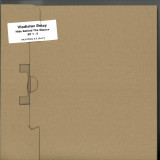
Vladislav Delay's complete "Hide Behind The Silence" series. Intuitive and raw music, momentary and reflective, released on Ripatti's own label Rajaton.
Stillness is a myth. Consider concepts such as ”still water”, or ”still air” for that matter. Go to a restaurant, ask them for a glass of still water, hold it against the light and see where we’re at. Even though the water itself has been captured and imprisoned in the glass, it never stops breathing. It’s filled with tiny particles, dancing. Everything can be explained on a molecular level, but since we’re not scientists – and even if you happen to be – it’s the natural world of perception that moves me.
Still air is very similar. A hot summer’s day with zero wind feels completely still. It’s the closest I have felt to complete stillness. Or for a more urban adaptation, imagine the same vibe inside a normal apartment. In those moments, revelations and mind- blowing experiences can be had with experiments in stillness.
Try this: Just sit down for a minute on a sunny day, making sure there’s enough natural light. Do absolutely nothing. Try not to breathe for a bit. (If you need a mental anchor, you can play Cage’s 4’33” in your head but nothing else.) Watch the tiny dots of dust dancing :..’ ̈.:; ́ ́*°.,’:,. ̈ ̈ ̈ ̈:,.’
The movement is crazy, but the feeling of stillness comes from witnessing how subtle it is. In (perceived) complete stillness, every act of microscopic mobility seems to speak volumes. Yet, it feels both reassuring and oddly threatening that the stillness is never complete. What if we would need absolute stillness? Or is it just enough that we can perceive something as such? Extremes attract, so for both water and air, extraordinary movement is equally fascinating. That is also a luxury item of sorts. For us to enjoy a very ”loud” body of water or air, we need to be safe, in enough control of the situation. So when you are, it’s worthwhile to pay attention and take it all in.
A rapid flowing free with extreme strength and just barely in control. Look at that water go! No still water on this one, only ”sparkling”. A windy day when birds seem surprised how hard it is to fly, but in the end they make it. Trees bend but don’t break. The wind shows you its movement but doesn’t hurt you. It feels friendly, like a big clumsy dog that doesn’t quite understand its size.
It’s beautiful to be a guest of the elements, but not at the mercy of them. A new kind of dialogue forms.
Q&A with Sasu Ripatti:
1) Tell us something about the EP series ”Hide Behind the Silence”, what’s the idea and what can we expect?
Exploration of inaction. Of many kinds. In arts and in personal life, or at bigger and more serious levels. Questioning myself as a human being as well as an artist. Acknowledging the growing activism all around, and the very clear need for it, and how it reflects my own inaction.
Musically speaking, after Rakka, Isoviha and Speed Demon, I finally found some relief, but more importantly lost the need to go musically ever more outward and intensive. I felt quite strongly certain periods/moods from the past and they made me revisit some musical ideas or states of mind I was exploring early on.
It’s about live moments being captured, not much premeditation or editing. More intuitive and raw, even though the end result (to me) feels and sounds quite introspective and calm. It’s not very ambitious. Momentary and reflective.
2) Your music doesn’t sound very silent. Does it come from somewhere behind the silence?
Oh, this time to me it sounds quite quiet and playing with space if not silence. I don’t know what’s actually behind silence, but I think silence is the source of everything. We just don’t understand it yet.
3) What kind of thoughts or experiences gave inspiration to this series?
Writing this in Nov ’22, it’s not a stretch to say the world has been really unwell. Sometimes, like Mika Vainio put it, the world eats you up. I feel a bit like that. And I try to hide in my studio and stay away from it all, but it’s getting harder by the day. I’ve been questioning myself and thinking if what us artists are doing is worth anything, and whether it’s just a selfish thing I’ve been doing for the past 25 years, running away from everything. I haven’t come to a conclusion yet.
4) Is it easy for you to be in silence, or around silence?
Absolutely. I not only hide behind silence but I also love silence. It’s only since I started going back to nature as a grown-up person that I sensed and was enveloped by silence, true silence. I have begun to appreciate it a lot. I think all the people should spend more time in silence.
All tracks composed and produced by Sasu Ripatti.
Artwork by Marc Hohmann, photography by Shinnosuke Yoshimori.
Mastering by Stephan Mathieu for Schwebung Mastering.
Vinyl cut by SST Brueggemann.
Publishing by WARP Music Ltd.
Bestelle jetzt und wir bestellen den Artikel für dich beim Lieferanten.

RIYL: Velvet Underground, Lou Reed, Nick Cave, Patti Smith, Leonard Cohen, Iggy Pop, Radiohead & Tom Waits. "If you have never heard the Doctors of Madness, you should. Musically they are the Velvet Underground, New York Dolls with shades of glam, hippie, prog and punk all rolled into one, yet are still totally original. Vastly underrated, they should have been huge. Pure genius" Vic Reeves…. The DOM are “the missing link between David Bowie & The Sex Pistols” (The Guardian May 2017). Exploding onto the music scene in 1975 with their theatrical, William Burroughs-inspired Sci-fi nightmare, they were misunderstood by many, but those who knew understood the importance of the band’s dangerous, uncompromising approach to lyrics, to music and to performance. Among the many fans of the band were acts as diverse as The Damned, Vic Reeves, Joe Elliott of Def Leppard, Spiritualized, Julian Cope, The Adverts, The Skids and Simple Minds. The Sex Pistols supported them, so did The Jam & Joy Division. They were the first to combine the avant-garde approach of The Velvet Underground with a distinctly European aesthetic. The blue hair, exotic stage-names, the lyrical themes of urban decay, political propaganda, mind control and madness were all taken up by the punk bands who followed in their wake. The DOM were trailblazers, pioneers, adventurers…pushing the boundaries of rock music and theatre to see how far it would go before it bust. What happened after them was due, in no small part, to what they achieved in 3 short years. They may not have been Jesus Christ, but they were, arguably, John the Baptist!!! Now, 40 years after they imploded, they are back…with an album seething with lyrical anger and passion. It is the most potent and incisive musical dissection of modern life and contemporary politics released the decade. With tracks titles like “So Many ways To Hurt You”, “Sour Hour”, “Make It Stop!” and the ground-breaking sonic assault of the title track “Dark Times”, Richard “Kid” Strange proves once again that he has his finger firmly on the pulse of our times, just as he had when he founded the band in 1974. Produced by John Leckie (Radiohead, Stone Roses, Pink Floyd), the new album, Dark Times, features contributions from Joe Elliott (Def Leppard), Sarah Jane Morris (Communards), Terry Edwards (PJ Harvey, Nick Cave etc), Steve ‘Boltz’ Bolton (The Who, Scott Walker) and the young protest singer Lily Bud, alongside the current thrilling and thunderous DOM rhythm section of Susumu Ukei (bass guitar) & Mackii Ukei (drums) of the Japanese extreme glam-metal band Sister Paul, and Dylan O Bates (violin and keyboards). Julian Cope, another rock star who, like Strange, found the confines of music too tight for his ambition, his energy and his imagination, was blown away when he first heard the songs, declaring, “These Dark Times are enormously informing: the RULES OF THE FUTURE are indeed being forged right now”. Top producer Martyn Ware (Human League/Heaven 17) said the album “…reminds me of Iggy Pop’s Kill City album – love it.” and Biba Kopf (The Wire) declared, “Still listening to new DOM album with immense interest and pleasure”. The first single, Make It Stop!, is an impassioned howl against the global drift to right wing extremism and persecution of minorities, and is already a live showstopper for the band. It features the thrilling cross-generational combination of Def Leppard’s Joe Elliott and Lily Bud on backing vocals. In the period since the last DOM gig in 1978, Richard has written a memoir, collaborated on a cantata with internationally celebrated composer Gavin Bryars, worked as an actor on films with Tim Burton, Martin Scorsese, Harmony Korine & Jack Nicholson, toured the world in a Russian version of Hamlet with James Nesbitt as his grave-digging co-star, played Glastonbury, sung baritone in the British premiere of Frank Zappa’s200 Motels at the Royal Festival Hall, directed a multi-media evening celebrating the life and work of William Burroughs, won Best Art Film Prize at the Portobello Film Festival last year, had his own live talk show, worked with Tom Waits and Marianne Faithfull on the William Burroughs/Robert Wilson stage play The Black Rider, curated events for the Tate Gallery, and sung Walt Disney songs with Jarvis Cocker.
erscheint voraussichtlich am 13.05.2022

Distorted classical choral recordings, synths, processed guitar… The exquisitely complex human-machine interface experiments conducted by Stefano Pilia are kept in a delicate balance by John Duncan‘s lyrics and the soulful quality of his vocals, for an album of electroacoustic songs that are a unique blend for both artists. Seeds and memories from the past are re-actualized in the present through a machine electroacoustic compositional process creating a dark, gloomy and terrifying image of the future. Duncan’s lyrics offer a counterpointing liberation to the machine processes in action here, poetically revealing the dark and intimate struggle between the human soul and its rapport with the machine.
These recordings are a point of departure for Matilde Piazzi‘s inspired liner notes and photos, that take this release to another level entirely, becoming a metaphor for contemporary efforts to reach the limits of knowledge and discovery, their heroic nature and their inevitable failure.
Both artists worked on their respective sections in isolation, Pilia in an industrial area of central Bologna, Duncan in the wilderness several kilometers south of the urban sprawl. Together, their recordings developed an almost magnetic attraction that seemed to meld effortlessly.
The experience of listening quickly takes on a cinematic quality, exquisitely moving from an oceanic uplifting (Try Again) to the depths of apocalyptic, unsettling vocals (Fare Forward), constantly maintaining a lush, richly complex tapestry. The linear understanding of time is suddenly gone, dominated by a crushing machine-defined present, with Duncan’s lyrics and vocals becoming a shamanic portal to a possible future.
‘Try Again’ is released on digital/LP and was written, recorded and mixed by Stefano Pilia and John Duncan. Mastered by Ivan Pjevcevic. LP edition comes with insert, lyrics obi and text/photography by Matilde Piazzi.
erscheint voraussichtlich am 07.05.2021

The ep comes in 300 copies packed in hand burnt sleeves on the front and a silkscreen print on the back
Eocity is the result of a study on technological failure and the imagination of a non-existent urban landscape.
This project features the use of a Yamaha ex5r, one of the rst synths to ever implement VL synthesis.
The "Yamaha Virtual Acoustic" Synthesis tone generation was born to try to accurately emulate the complex vibrations and other acoustic phenomena of real instruments and their sounds within space, but the dubious results of this technology gave birth to something more.
Its nal output sound happens to be cold and synthetic while being also organic and warm at the same time, welcoming the listeners into a feeling of an arti cial world that is neither digital nor analog.
In this world man is not around anymore and the binary language survived him, communicating with the rest of the natural environment, in respect of its laws and dynamics, becoming one indistinct entity.
Eocity is a place that exists in between the imaginary and the real one, gently oating as a digital tactile experience.
Bestelle jetzt und wir bestellen den Artikel für dich beim Lieferanten.
